Notes of UGC NET/WBSET, History Chapter 4 Indus civilisation.pdf - Study Material
Page 1 :
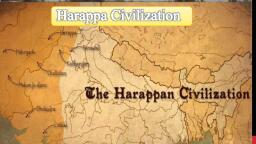
CHAPTER, , 04, , aw, , lndus/Harappa, Civilisation, Thousand year's ago, people start~d moving towards the valleys of Indus, gradually they, settled there and evolved as a civilisation called lndf!S Valley Civilisation. The Indus Valley, Civilisation was a Bronze Age Civilisation. This is the·earliest known urban culture in Indian, subcontinent., , Discovery of Indus Valley, Civi Iisation, About 5000 years ago, some people from the Eastern foothills of Baluchistan,, started moving into the river valleys of the Indus and Saraswati. They settled in, various sites of these valleys. Hence, slowly and gradually, they evolved a, civilisation called as the Harappan or the Indus Vallry Civilisation., • As Harappa happened to be first site excavated by Dayaram Sahni in I 921, the, entire culture came to be called the 'Harappan Culture'., • There was an unwritten understanding among scholars that the civilisation is, designated by the earliest site to be discovered. Mortimer Wheeler in his book, The Indus Civilisation used the term Indus Civilisation. John Marshall was the first, to use the term Indus Civilisation., , The Stages of Evolution, • Pre Harappan, • Mature Harappan, • Late Harappan, , 3500-2600 BC, 2600-1900 BC, 1900-1400 BC, , -@In this Chapter, • Discovery of Indus Valley Civilisation, • First Urbanisation in India, • Settlement Pattem of lndus/Hatappan, Civilisation, • Economy of lndus/Harappan, Civilisation Internal and External, Trade, • Decline of Indus Valley Civilisation
Page 2 :
51, , /ndus/Harappan Civilisation, , origin and Extent, , Indus Valley Civilisation (IVC) marks the first phase of, urbanisation in Indian subcontinent. The earliest evidence of, the civilisation was accidently discovered by Alexander, Cunningham in 1853. Historians give different estimates about, the chronology of the Indus Valley Civilisation., : 3250 BC to 2750 BC, • John Marshall, • Piggot and Wheeler : 2350 BC to 1770 BC, : 2000 BC to 1500 BC, • Walter Fairsems, : 2300 BC to 1750 BC, • DP Aggarwal, The Indus Valley Civilisation ,covered the whole of Punjab, (both in India as well in Pakistan) , Haryana, parts of Wester n, UP, Northern Rajasthan, Sindh, most of Gujarat, parts of, North-East and Southern Balochistan., , Debate on the Origin of lndus /Hara ppan, Civilisation, , The extensive excavation work conducted at Mehrgarh, near the Bolan Pass between l 973 and 1980 by French, archaeologists Richard H Meadow and Jean Francoise, Jarrige, solved that. Mehrgarh gives us an archaeological, record with a sequence of ocrupations., Archaeological research over the past decades has, established a continu ous sequence of strata, showing, the gradual develop ment to the high standar d of the, full-fledged Indus civilisation ., These strata have been named as pre-Ha rappan , early, Harappan, mature Harapp an and late Harapp an phases, or stages. By reviewing the main elements of the rural, cultures of the Indian subcon tinent, the origin of the, Indus civilisation can be traced. Any pre-Ha rappan, culture claiming ancestry to the Indus civilisation must, satisfy two con~itions., The first condition is that it must not only precede but, also overlap the Indus culture. The second is that the, essential elements of the Indus culture must have been, anticipated by the Proto-Harappan (Indus) rulture in its, material aspects, viz, the rudime nts of town planning,, provision of minimu m sanitary facilities, knowledge of, pictographic writing, the introdu ction of trade, mechanisms, the knowledge of metalhrrg_y and the, prevalence of ceramic traditions., , Much of the history of the Indus Valley Civilisation (IVC) and, its aftermath is shrouded in a pseudo-historical controversy., Different set of views have emerged over the time regarding the, same. Some of them are, • John Marshall, V Gordon Childe, Stuart Piggott and Nani, Gopal Majumdar emphasised on the indigenous origin of the, civilisation., • Sir Mortimer Wheeler believed that the civilisation came, appan culture of Kalibangan in Rajasth an is, from Mesopotamia. It was an extension of Mesopotamian The pre-Har, termed as Sothi culture by Amalan anda Ghosh, its, civilisation., excavator. The Harapp an were owed ·certain elements, • Heine Geldern considered the cities of Harappa and, such as the fish scale and pipal leaf to the Sothi ware., M_ohenjodaro to the colonial cities. He detected some, amoun t of foreign influence. Therefore, according to him it The four cultures from Balochistan, viz, Zhob, Quetta ,, Nal and Kulli, undoub tedly pre-Harappan, also have, was an extension of Mesopotamian civilisation., some minor common features with the Indus, • In Nani Gopal Majwndar's view a per Indus level, which he, civilisation, and cannot be considered as full-fledged, identified as a transition stage between the early Amri culture, Proto-Harappan cultures., and later Indus Civilisation. He termed it as pre Indus, and, pointed out that Amri culture had a very distinct feature. BB, The 'Zhob' culture named as the Zhob vallev the chief, all, gan,, Kaliban, of, ion, excavat, their, in, Lal and BK Thapar, among them being Ran~ Ghundai. This ✓ ~ulture is, three Majwndar, Lal and Thapar pointed out that Indus, characterised by black and red ware and terracotta, origin., ous, indigen, of, culture was, female figurines. Nal culture is characterised by the use, of white-clipped ware with attractive polychrome ., • Indus Valley Civilisation is called the 'Bronze Age civilisation, new, ed, develop, ans, Harapp, the, paintings and the observance of fractional burial., as inhabit ants of Indus valley,, and, techniques in metallurgy and produced copper, bronze, The characteristic pottery of the Quetta culture is the, lead. Hence, it belongs to the Chalcolithic or Bronze Age., buff-ware, painted in black pigment and decorated with, geometrical designs. Apart from the painted motifs such, Origin and Evolution, as the pipal leaf and sacred brazier, some pottery shapes, The discovery of India's earliest civilisation, posed a historical, are common to the Harappan and Kulli cultures ., puzzle, as it seems to have appeared suddenly on the stage of, pre-Harappan habitations preceding the phase, history, fu]l grown and fully equipped. The Harappan All these, of the Harappan civilisation show evidences of people, civilisation till recently showed no definite signs of birth and, living in houses of stone and mud-brick., growth.
Page 3 :
l, UGC NET Tutor • Hist°') ~, , 52, Si,milarities were found in the cultural tradition of the diverse, agricultural communities living in the Indus region in the 'early, Indus period' . During the urban phase, these little traditions were, fused into one great tradition., In the early ln<lus period' , use of similar kinds of pottery, terracotta,, mother Goddess, representation of the horned deity, and many sites, show the way to the emergence of a homogeneous tradition in the, entire area., The people of Balochistan had already established trading relations, with the towns of the Persian Gulf and Central Asia. KulH, situated, on the Southern foothills of the Balochi mountains near the, Makran coast., occupies an important position on theJrade route, between the Persian Gulf and the Indus valley., •·, Thus, the available evidence suggests that the Harappan culture had, its origin in the Indus valley. And even within the Indus valley,, several cultures seem to have contributed to evolve the urban, civilisation., There is no evidence to suggest that the Indus people borrowed, anything substantial from the Sumerians. It is thus difficult to accept, Sir Mortimer Wheeler's assumption that "the idea of civilisation, came to the Indus valley from Mesopotamia"., , First Urbanisation, in India, Harappan civilisation is considered to be the first urbanisation in, India. Population census, economic activities, technological, advancement and prospering commerce/trade are some of the, characteristics of the urbanised civilisation and Harappan, civilisation had all of them., Sites like Mohenjodaro, Harappa, Lothal, etc were important urban, centres of the civilisation., The towns were divided into two parts; The upper part or the, citadel and the lower part. Harappa and Mohenjodaro both had, their own citadel, which was possibly occupied by members of the, ruling class. Below the citadel in each city there lie a lower town, containing brick houses, possibly inhabited by the commoners., , Important Sites of lndus/Harappan, Civilisation, A number of cities and settlements have been found, mainly in the, fertile region of the Indus river and its tributaries. As Indus valley, civilisation developed into early and mature cultures. Some early, Harappan communities developed into large urban centers. These, include, Mohenjodaro,, Harappa,, Rakhigarhi,Ganeriwala,, Dholavira, Kalibangan, Ropar and Lothal., , Important Indus Valley sites are given below, , Mohenjodaro, Mohenjodaro (the mound of the dead) is situated in, Larkana district of Sindh (Pakistan). This city was, situated on right bank of river I nd us., Estimated population of Mohenjodaro in 'Mature, Harappan age' was between 41000 to 35000 people., Two major areas here : a high citadel to the West, consisting of a large granary and a water tank or bath ,, and ,a lower city of domestic dwelling to th~, East~this was the residential unit constructed on a, · grid pattern., Urban planning, uniform and carefully executed, layouts for water supply and drainage. The Great, Bath of Mohenjodaro was the most important, public place located at the centre of citadel, baked-brick houses facing the street; houses had a, courtyard with ·rooms around it. Some houses were, two-storeyed., The Great Granary was the largest building which ., was located within the citadel., ·, Great Granary is the largest building in Indus valley, civilisation which is 45. 71 m long and 15 .23 m wide., Mohenjodaro was excavated in 1922 by RD, Benarjee., Wheeler identifies the presence of temple with, monumental entrance in the lower town. There is, evidence of single room tenements at Mohenjodaro., Fragment of woven cloth was discovered here., , Harappa, It is an Indus valley urban centre which lies on river, Ravi, city was supported by extensive agricultural, production, commerce and trade in summer in, Southern Mesopotamia (modem Iraq)., , •, , Granaries at Harappa were located outside the, citadel. There is evidence of single room tenements., Harappa too follows plan of small, high citadel to, the West and a lower city to the East . Streets, arranged in a rectilinear grid pattern. North of, heavily fortified citadel at Harappa, two sets of, barrack-like dwellings for labourers and an, enormous granary for city's food supply., The vast mounds at Harappa, were first reported by, Masson in 1826. Alexander Cunningham identified, Harappa with po-fa-to-do by Hiuen Tsang. It was, the first Indus valley site to be excavated by Daya, Ram Sahni in 1921.
Page 5 :
UCC NET Tutor • Histol), , 54, Chanhu daro was clearly an importa nt centre of, craft ~ctivity. Some of the houses yielded raw, matenal s ~uch as carnelian, agate, amethyst, crystal, as well as finished and unfinished beads and drills., Copper objects like daggers, knives and agricultural, tools also found. Most striking was discovery of a, b:ad factory. It was the only Indus city without a, citadel. lnkpot was discovered over here., , Banawali, In Hissar district (Haryana) , Banawali, which is on, the bank of Rangoi river is a fortified site., Witness ed early, matu~e and late Harappa n phases., The citadel was semi-elliptical in design and had its, own mud-bri ck fortifications , surrounded by a, moat. The mud-brick houses had raised platforms, (chabutra s) outside., A house with large number of beads of gold, lapis, lazuli and carnelian , tiny weights and a 'touchstone', showing streaks of gold was excavated here may, have been a jeweller's house., Several houses at Banawali gave evidence of fire, altars in one place, these altars were associated with, an apsidal structure, which may have had some sort, of. ritualistic function . Evidence of Proto-Harappan, and Harappa n cultural phases is found here., , Allahd ino, It is a small ( 1.4 ha) unfortified village site about 40, km East of Karachi. Houses made of mud-brick,, often resting on stone foundation. The most, spectacular discovery was a small terracotta jar with, gold, silver and bronze ornaments., Water from the wells of Allahdino would have been, used to irrigate nearly fields . Allahdino is also, associated with textile manufacturing centre in, Indus Valley Civilisation, , Surko tada, Surkotada is a small site in the state of Gujarat. The, excavations have been significantly rewarding ·in, unfolding a sequence of three subculture periods, well-within the span of Harappa n chronology. At, Surkotada, a compact citadel and residential, annexed complex were found, but no city complex, been unearthe d., Also, it is the only site of the Harappa n civilisation, where remains of the horse are found ., , Major Harappan Sites and their Excavators, Discovered by, , Site, Harappa, Mohenjodaro, (Mound of Dead), Dholavira, , Year of, Escalation, , 1921, oayaram Sahni, MS Vats and Mortimer Wheeler, Sir John Marshall and, R D Bannerjee, JP Joshi (extensive work at the site was, conducted by RS Bisht), , Kalibangan, , BB Lal and B K Thapar, , Lothal, , SR Rao, , Sutkagendor, , Major Edward Mockler, , Allahdino, , Wa Fairserms, , Surkotada, , JP Joshi, , Banawali, , RS Bisht, , Chanhudaro, , NG Majumdar, , Kot Diji, , FA Khan, , 1922, 1967, 1953, 1954, 1927, 1976, 1927, 1953, 1931, 1957, , Alamg irpur, , It is an archaeological site of the Indus Valley Civilisation that, thrived along Yamuna River (c. 3300- l_ 30? BC) from the, Harappan-Bara period, located in Meerut d1stnct, Uttar Pradesh,, India. It is the Eastern most site of the civilisation., This site was also called Parasaram-ka-khera. This site was, discovered by Punjab University in 197 4., On excavation, the site showed four cultural periods with, intexvening breaks; the earliest of them represented by a thickness, of 6 feet, belonged to Harappan culture. Although kiln burnt bricks, were in evidence, no structure of this period was found , probably, due to the limited nature of the excavations., Brick sizes were, 11.25 to 11. 75 inch in length,5 .25 to 6.25 inch in, breadth and 2.5 to 2.75 inch in thickness; larger bricks averaged 14, inch x 8 inch x 4 inch which were used in furnace only. The date, range of 2600 to 2200 BC (calibrated) has been proposed for the, earliest level at Alamgirpur., , Amri, The site is located South of Mohenjodaro on Hyderabad-Dadu, Road more than I 00 kilometres North of Hyderabad, Pakistan., Situated near the foothills of Kirthar mountai ns, this was an, important earlier urban center in lower Sindh. Amri is close to, Balochistan, where development of earlier farming communities, from 6000 BC to 4000 BC ultimately led to urbanisation., ' The ancient mounds of 8 hectares on the West bank of Indus river, have been extensively excavated. The earliest phase was a fortified, town that flourished from 3600 to 3300 BC, and belonged to the, pre-Harappan stage of the Indus Valley Civilisation. Amri is dated, after Rehman Dheri.
Page 6 :
~--, , 1, , pan Clvlttsotion, , 55, , ( ,ndlls/HaraP, , i, , re had its own characteristics and, discovere d he, 1 d . ., '111"1.e patter)'~ f. W, Sohr Damb (Nal) is a re ate site m, l~., •, is l<JlOW11 as the West of Amrl. Their pottery is sometimes, saJoehistan to, 'bed as 'Amri-Nal Ware' . Like other, . ely descn, d, th' ·, c0ll<->eUV pa towns, no writings were foun at d1s2s5i0te0., ., •d spread fire at the town aroun, Prc-Harap, ·d nee indicates WI e, £VI e, 1, , scE., t(unal, , -Harappan settlement located in Fatehabad, It is a pre, India This Indus Valley Civilisation site, . t Haryana,, ·, stfl, di ' '·u e in comparison to towns like Kalibangan and, wa_s a Vlikag Rakhigarhi of IVC. This site is located on, clues I e ., Sarasvati plam., . . is recognised as earliest pre-Harappan site, with, This site, . ., cul, essive phases of pre-Harappan mdigenous, ture, C, three sue, ., ., araswati river who also traded wtth Kahbangan and, on the S, 1,othal,, . overies include woman's complete dress, tribal head, D!SC, •, ' al, . copper spearheads, steatite, seals wt'th geometric, ature,, . ., tterns (indicating seal making m IVC first begun here),, :rracotta antiques, arrowheads, fish hooks, two crowns,, bangles, silver beads, go~d pe~dants ~d ov_er 12000 beads, of semi precious stones mcludmg lapis lazuli., The first phase dating back to 5000 years ago is the oldest, habitation, which has large dwelling pits of 1.10 m depth, and 2 m diameter, whose omnivorous inhabitants also used, Chalcedony blades, fish hooks, wheel pottery wheels,, domesticated plants and animals., Second phase dwellings are made of moulded bricks., Third and final phase belong to agriculturists who also, reared domesticated animals, lived in houses containing, living rooms, kitchens, toilets, square and rectangular rooms, built with bricks of standardised length-breadth-height, ratio., , Kot Diji, The ancient site at Kot Diji was the fore-runner of the Indus, Civilisation. The occupation of this site is attested al_ready, at 3300 BCE., The site is situated at the foot of the Rohri Hills where a fort, (Kot Diji Fort) was built around 1790 by the Talpur, dyna;ty ruler of Upper Sindh, Mir Suhrab, who reigned, from 1783 to 1830 AD. This fort builts on the ridge of a, steep narrow hill, is well-preserved., , The remains consist of two parts; the citadel area on high, ground (about 12 m)., and outer area. The Pakistan, Department of Archaeology excavated at Kot Diji in 1955, and 1957 ., Pottery found from this site has designs with horizontal and, wavy lines, or loops and simple triangular patterns. Other, objects found are pots, pans, storage jars, toy carts, balls,, bangles, beads, terracotta figurines of mother goddess and, animals, bronze arrowheads, and well-fashioned stone, implements. Kot Diji is a toy cart, which shows that the, potter's wheel permitted the use of wheels for bullock carts., , Mittathal, The archaeological site dates to the Sothi-Siswal phase of, the Indus Valley Civilisation. It was excavated in 1968 by, Suraj Bhan., Mittathal, is an important site for scholars. Gregory Possehl, ( 1992) has called the Mittalhal as 'Eastern Domain' of the, Indus Valley or Harappan Civilisation. Recent studies have, provided a fresh glimpse into this ancient settlement and, the surrounding region during the later part of what is, commonly tenned the Mature Harappan period, (2600-1900 BC) of the Indus Valley Civilisation., , Rangpur, It is an ancient archaeological site, near Vanala on, Saurashtra Peninsula in Gujarat, Western India. Lying on, the tip between the Gulf of Khambhat and Gulf of Kutch, it, belongs to the period-.of the Indus Valley Civilisation, and, lies to the North-West of the larger site of Lothal., , It is the type of site for the Rangpur culture, a regional, form of the late phase of the Indus Valley Civilisation that, existed in Gujarat during the 2nd millennium BCE. Rice, husk was found in Rangpur,. it indicated the cultivation of, rice in Harappan civilisation., , Rupnagar/Ropad, It is one of the Indus valley site situated along the GhaggarHakrabeds. There is an Archaeological Museum in the city, which was opened in the year 1998 for general public. The, museum exhibits the archaeological remains of excavated. site, in the city, the first Harappan site of Independent India., These excavations reveal a cultural sequence from, Harappan to medieval times. Some of the important, exhibits include antiquities of Harappan times, gold coins, of Chandragupta and copper and bronze implements.
Page 8 :
,ndus/Harappan Civilisation, , 57, , Religion in lndus_~alley Civilisa~ion, do, , le. Rums, definite opinion abou t rehg1on of Indu s peop, ings that, ~o~ show any sign of temples and none of theforbuild, worship. But, en discovered can be take n ~s houses, have be, els, the num ber, according to pictures in seals and eart hen vess, est that they, f Goddesses were more than that of Gods, sugg, h', o, mother wors 1ppers., wer~, . The y, also worshipped trees, stones, animals and birds, le had faith in, wdrshipped the linga and yoni symbols. Peop, ~ of demons., animals and charms shows, that they were afrai, cl~ar idea abou t, Tuey also practised yoga. Dif~~ult to form a, nals unea rthe d, the contents of Hara ppan rehg1on from mate, •, j at the Indus valley sites., , nly, , Female Figurines, , female figurines, Most striking and extremely com mon are, Goddess) in, (representing the great mot her or natu re, foun d in large, terracotta. Similar figurines have also been, minor, Syria,, numbers from Iran, Mes opot amia , Asia, t., Palestine, Cyprus, Crete, the Balkans and Egyp, by figurines of, Presence of a fertility cult is also repr esen ted, ren. A com mon, pregnant women and of wom en with child, or with out a, figurine, a female wearing a loin cloth, with, -dress with two, girdle, a lot of jewellery and a fan-shaped head, cup-like objects near the ears., , Male Divinities, , -dress, which, Male divinities characterised by a hom ed head, wearing a, symbolised supernatural power. A thre e faced God, jewellery. John, pair of horns in the form of a tride nt with lots of, represented a, Marshall suggested that these male deities, upati aspect., prototype of the historic Lord Shiva in his Pash, , Trees and Animals, , d a place very, Trees and animals worship seems to have foun, representation, early in the life of the Indu s people earliest, olises the tree., occurs in the form of a peepal leaf, which symb, seals., Motifs of incense burn er have been found on, , rhinoceros,, Animals depicted on seals are the bison, the tiger, of composite, elephant and buffalo. The re was a class ti, b', ma ?n f the, monsters, ther ianth ropi c in form, a com, arumals with, human with the mos t ferocious and powerful, ~on g the, it}',, divin, horns of a bull, probably as a sign of, yoms., aniconic objects of worship are the lingas and, , ° ., , War Weapons, , or attacking, Variety of war weapons used for offensive, y. Weapons, valle, s, purposes have been discovered in the Indu, daggers, bQws,, made of copper bronze or stone. Axes, spears,, d. Defensive, arrows, maces ' and swords have been foun, urs were, armo, weapons like shields and helmets or, , ., comparatively few and far between H, ng, judgi, er,, owev, d., l, from small num ber of weapons , n us people we, l 'k, F . _re ~ot, very war- I e people. Cities were well fotified, ort1fication, ., ., ., ., ad, for, would be for two reasons (I), mm1strat1ve purpos es,, ), (2 to save cities from foreign aggression., , Burial Practices, . I, rgent traits are present in buna, Like religion, dive, II, ., as we . From the discovery of a cemetery, practices, . ., by Mortimer, cont amm ~ at least 6 7 graves at Harappa, rite. But the, Wheeler, 1t appears that burial was the usual, burial practices differed from site to site., y, ~~e~ f~rms o: burials have been found in Indus Valle, , burials, and, C1VIhsat1on, vzz. complete burials, fractional, burial of, post-cremation burials. Complete burial means the, forms,, us, vario, the whole body, ceremonially performed in, along with the grave furniture, offerings, etc., ls, have, Abo ut 30 skeletons, evidencing complete buria, ar to, appe, been found in different groups. Some of these, burials, have been victims of accidental death. All these, the, to, e, relat, appear, on stratigraphical evidence, to, declining years of Mohenjodaro., bones after, Fractional burial represents a collection of, birds. Five, the exposure of the body to wild beasts and, being an, imen, such burials have been found. The best spec, s, along, um containing a skull and some fragmentary bone, s are, bone, an, Hum, ls., with a number of earthenware vesse, after, use, not found in all specimens, probably beca, nment., exposure bones were ground to dust before inter, from large, Post-cremation burials have been inferred, of smaller, wide-mouthed urns containing a number, of birds, and, etc., ,, goats, vessels, bones of animals like Iambs,, beads,, as, or fish, and a variety of small objects, such, charcoal, bangles, figurines, etc. Sometimes mixed with, or a, floor, a, th, rnea, unde, ashes. These are generally found, ly, hard, are, s, street. Human bones are seldom found as bone, s, terie at, necessary for post-cremation burials. The ceme, located at, various Harappan settlements were also not, ., identical places, with varying burial practices, , d, At Kalibangan three types of burial practices are notice, , graves,, (i) extended inhumation in rectangular or oval, containing pottery and other grave go< ids;, besides the, (ii) pot-burial in a circular pit, containing,, like beads,, :., good, central urn, other pots and grave, etc; and, es., (iii) pottery deposit in rectangular or oval grav, followed., At Lothal, two types of burial practices were, e goods, a, While one type contained, besides the grav, etons buri ed, single skeleton, the othe r cont aine d two skel, together.
Page 9 :
58, , Society/Social Life in Indu s, Vall ey Civilisation, The ruins and several evidence of Harapp a and, Mohen jodaro reveal a great deal about social life of the, people of lndus valley civilisation ., lt is not proved, whether there existed any classes or, castes. But based upon the mounds, it can be assumed, that there did exist classes, based on the occupation of, the people like craftsmen, artisans. herdsmen etc., Dominance of Mother Goddess suggests that family, was matriarchal in nature. Some important aspects of social, life are, , Cloth ing, Cotton and wool were used as garments. Women wore, skirts with a cl.oak as an extra cover protection, covering, arms and shoulders. Men wore a piece of cloth around, their loins and a wrapper covering their left shoulder., , Hous ehold Articles, The kitchen utensils including vessels, dishers, Jars, were made of soil and stone, were found in Harappan, sites. Chairs and tables were used for decorating rooms, and for sitting comfortably., , I.JGC NET Tutor • History--:, Lang·uage and Script, , _, , ., , _ ages of the Harapp ans are stJll lLilk.nown,, The language or Iangu, . l , h, ., and must remain so. un til the Harapp an. script.• ts. c.:ectp ered., be two main col\testants as to the, Broadly, therew ou ld ap pe ar to, ., b bl, nature of the languag e-that is belonged-however_unpro a y to, the Indo- European or even lndo-A ryan fanuly or that it, belonged to the Dravidian family •, ., f th, eful analvsis of the corpus of Harappun, ~nsp1~e .o, e car . th:e , reoion of 3000, the task of, mscnpu ons, now in, o·, f, decipherment remains problematic and shortne ss o th,e, ., . .ons, near1 all on seals or amulet tablets. renders It, mscnpu, y, difficult to interpret., s have, Perhaps because -Of th is challenge the associated problem, ., ., attracte d a whole series of scholars to attemp t their solution., ., Smce,, no two attemp ts have so far been in agreem ent and .as, their number increases, only one thing becomes more ce~tam:, the probability of anyone being correct is correspondingly, reduced. Several arduous attemp ts to read the inscriptions'. have, been made by groups of scholars. using a variety of techniques,, including computers., , Decip herab ility Quali ty, Michael Witzel and Steve Farmar presents a numbe r of, arguments stating that the Indus script is non-linguistic., , Goblets, basins, pans and saucers, storage and drinking, vessels made of pottery. lamps made of copper, shell, and clay were also found . Characteristic pottery, painted red or black of various shapes and si.1.es., , Asko Parpola and Koskeniemi have produced an impressive, concordance of the known inscriptions, and proceed ed with a, hypothesis that the language was an ancestral language of the, Dravidian family and that the script relied upon homop hones., , Ornam ents and Toiletries, , This has been the most frequently and strongly supported, hypothesis since its adoption by Marshall ( l 931) and Hunter, ( 1934). A group of Soviet scholars have also concluded that the, language is closer to Dravidian than to any other known, languages, and an lndian scholar, Mahadevan, has also, published an impressive computer concordance., There appear some areas of agreement between all these, attempts, both in accepting the Dravidian hypothe sis and in, reconstructing from the inscription elements of an astronomical, system., , Men and women both fond of omame nts made of gold,, silver and copper decorated with precious stones like, jade, carnelian. agate and lapis lazuli., Vanity case and toilet jars discovered at Harappa, containing face paint and cosmetics. Some of the, artefacts and orname nts made of rare metals reflect, towards class division in society ., , Seals, Script and Lan gua ge, Majority of historians believed that Harapp an script is, pictographic and alphabetic. On the other hand,, Natwar Jha believed that the script was syllabic system., Language of script is also debated among historians, where some believe that it to be Inda-European while, others consider it to be Indo-Aryan or Dravadian, family., , The arguments for it are several; first, a cart:ful analysis has, shown 'beyond any reasonable doubt' that Elimite and the, Dravidian language family are 'truly' cognate . This would, suggest that at sometime in the past they were in closer, geographical proximity than the modem distributi_on _of, Dravidian indicates. Next, in spite of doubts regarding its, significance, the fact remains that a Dravidian langu~ge: Brahui, is still spoken by nomadic pastoralists in the Balluch1 hills ,
Page 10 :
/ndus/Harappan Civilisation, attemp t, thcr different approach is to be found in a recent, .m terms o f analogies, ., . uons, ., fth, . d the contents o e mscnp, . or groups of signs., . n signs, rea Harappan an d sumena, to tween, does not lead us to th~ language of the inscriptions, but, it may lead us to the meanmg of some of them., Ar'J, , ;is, , SR Rao has also produced quite a djfferent attemp t to read, the script as contain ing a pre Indo-A ryan language of the, Jndo-European farruly, and as clearly ancestral not only to, the later Indian Brahmj script, but also to the early Semitic, alphabet. This attemp t has. so far not been suppor ted by, other scholars., The script was written from right to left like modem Urdu., The number of signs indicat e that script is not related to any, of the contemporary Egyptian, Sumer ian or Babylonian, scripts. Some scholars call it the parent of the Brahmi script,, but this has not been conclusively proved., This mystery can only be solved when a bilingual, inscription including a known language or a long inscription, with significant recurre nt features is found., All the inscriptions discovered till now are short, with an, average of half a dozen letters, the longest has seventeen. It, will prove a turning point in the history of India the day this, Indus script is deciphered., , Polity of Har app an Civilisation, There is no clear cut idea on the political organisation of the, Harappans. But, if we take into accoun t the cultural, homogenity of the Indus civilisation, it can be said that this, cultural homogenity would not have been possible to, achieve withou t a central author ity., The type of polity in Indus Valley Civilisation has been, debated among histori ans DD Kosambi believes that the, priests constituted the ruling class while RS Sharma opines, that the merchants were the rulers. Administration was, highly centralised., We have no religious structu res of anykind, except for the, Great Bath. Therefore, it would be wrong to think that, priests ruled in Harapp a. Mohen jodaro , though has, revealed a seated image of a priest king. Thus, there is not, much evidence on the political situation of Indus valley, people., , Hierarchy System, Over time, various theories have developed regarding, Harappan systems of rule. One theory is that there was a, single state encompassing all the communities of the, civilisation; this theory is supported by the similarity in, artifacts, the evidence of planned settlements, the, ,,, standardised ratio of brick size, and the apparent, , 59, ent~, , ., , establishment of settlem, near sources r f ,, ·, . · ) raw material., An o th er theory posit~that thcr ,, e was no sm"'e rul b, Ut rather, ~ nu~ be•r of leaders representin each . Fy', the urban centers,, •.ncludtng Mohenjo<laro ' Harapp~a, an. d othof er, comm . ., It, seems likely that there was not one centraliun1t1es., d, sed, ., an, aII ·powerful state but that various cl<>s~- a d, pow, , er,, , "' ·"--> n centers of, •, •, er, ,, ,, were integrated into a decentralised struct.ure., Writte n records gave historians a great deal of. . h ., d mEs,g t mto, ., the civilisations of ancient Mesopota m,a, gypt, but, an, ., f, in th, red, discove, been, have, ls, materia, wntten, ew, very, to, seem, do, tions, In~us v_alley. T~ough, seal inscrip, wntten mfo~a t1on, scholars have not been able to decipher, ~e. Indus _script. As a result, they have had considerable, d1~f1~lty_ m understanding the nature of the state and, religious institutions of the Indus Valley Civilisation. We, know relatively little about their legal codes, procedures., and systems of governance., , hav;, , Town Administration, Indus valley civilisation was characterised by the density of, population in cities and close integation between economic, and social processes. Careful planning was the only tool to, provide better environment for trade and urban revolution,, which could not have been possible without the strong, central authority. The lay-out of the streets, the presence of, a large scale drainage system with its requirement for, constant trading. These all are indication of tendencies, towards a strong central govemmnet., , Economy of Ind us/ Harappan, Civilisation, External Trade, Evidence shows Harappans participated in a vast maritime sea-trade network extending from Central Asia to the, Middle East. The civilisation's economy appears to have, depended significantly on trade, which was facilitated by, major advances in transport technology., The Harappan Civilisation may have been the first to use, wheeled transport, in the form of oxcarts that are identical to, those seen throughout South Asia today., It also appears they built boats and watercraft a claim, supported by archaeological discoveries of a massive,, dredged canal, and what is regarded as a docking facility at, the coastal city of Lothal. Harap pans also engaged in, shellworking, and shells used in their crafts have origins, from as far away as the coast of modem -day Oman., Trade focussed on an import ant raw materials tq be used in, Harapp an city workshops, includ ing minerals from Iran and, Afghanistan, lead and copper from other parts of India, jade
Page 11 :
U<iC NET Tutor • Histol'), , 60, , \, , from China, and cedar wood floated down, rivers from the, Himalayas and Kashmir. Othe r trade, goods included, terracotta pots, gold, silver, metals, beads, flints, for making, tools, seashells, pearls and colored gemston, es, such as lapis, lazuli and turquoise., One of the ways historians know abou t the, maritime trade, network operating between the Harappan and, Mesopotamian, civilisations, is the discovery of Hara ppan seals, and jewellery, at archaeological sites in regions of Mesopot, amia, which, includes mos t of modem-day Iraq, Kuwait, and, parts of Syria., In various cities of Mesopotamia, the Hara, ppan seals have, been found, prove their relationship. The, description of, Meluha in the Mesopotamian literature refer, s to Harappan, Civilisation centers., Long-distance sea trade over bodies of wate, r-such as the, Arabian Sea, Red Sea and the Persian Gulf may, have become, feasible with the development of plank wate, rcraft, that were, each equipped with a single central most supp, orting a sail of, woven rushes or cloths., Historians have also made inferences abou, t networks of, exchange based on similarities between, artifacts across, civilisations. Between 4300 and 3200 BCE, -part of the, Chalcolithic period, also known as the Copper, age ceramics, from the Indus Valley Civilisation area show, similarities with, Southern Turk men istan and Nor ther n Iran., , Internal Tra de, Internal trad e is essential for sustenance of, livelihood and, blossoming of economy. Evidences which show, the existence of, 'internal trade are as following, • Knowledge of wheel and use of bullock, carts which show, movement of people and goods., • Granaries, which were used to store grain, s were traded in, the market., • Seals or different 'kinds of seals whic, h were used as, currency . Seven coinage system is supposed, to exist., • Use of varied weighing instr ume nts., • People in Indu s Hara ppan Civilisation, used to trade in, stones, minerals, textiles, etc which were mad, e from raw ,, materials purc hase d from anot her towns., • . The existence of artificial dockyard at Loth, al., Hence, we can say that inter nal trad e flou, rished during the, lndu s/Ha rapp an civilisation., , Other Im po rta nt Aspec~s of, Economy, Transport, Bullock carts, pack oxen were employed for land, transport, for sea and river tran spor t ships and boat, s were used ., Ther e is evidence of a dockyard at Lothal., Extensive canal network used, discovered by HP Francfort., , for, , irrigation was, , Agriculture, Agriculture was the main source of occupatio, n. The main, crops grown were whe at and barley. Cult ivati, on of rice is, evident from Lothal and R.angpur (Gujarat), . The re were, · two varieties of whe at prod uced in Indu, s Valley, Civilisation- club wheat and Indi an dwarf whe, at., Barley is found in Hara ppa and Moh enjo, daro . Other, crops cultivated were dates, mus tard , sesamum, , cotton, variety of leguminous plants such as peas. Suga, r cane was, not known with Indus valley civilisaion.Th e, fields were, not ploughed but dry up with light toot hed, instr ume nt., Oldest known agricultural settl eme nt, in Indian, subcontinent is Mehrgarh, Balochistan., , We igh t and Me asu rem ent s, The weights and measurments were calib, rated to a, considerable extent. The measures were stan, daradised, and perhaps there is binary system in use., A scate made up of Elephant tusk has been, found at, Mohenjodaro and Lothal., , Other Occupations, There were carpenters, gold smiths, jewe, llers, ivory, markers, stone cutters, black smiths, weavers and, potters., , Domestication of Animals, Humped cattle, sheep and goats were dom, esticated ., There is evidence of camel bones in the site of, Kalibangan., Animals hunt ed for food were sambar det'r, spot, ted deer,, hog deer and several varieties of tortoise. Consum, ption of, fish is also evident in Indus Valley Civilisation., Wild animals like: Unicorn bull, rhino , tiger, , bison goat, were known. The evidence of Indian rhino, is found in, seals of Amri. A seal of rhino is also found at, Kalibangan, (Rajasthan).



 Learn better on this topic