Page 1 :
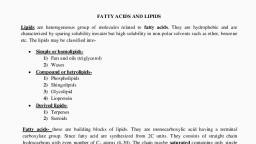
LIPIDS, , ce, , Zs”, & *, ~ 2. Complex (or compound) lipids : Esters of fatty, , acids with alcohols containing additional groups such, as phosphate, nitrogenous base, carbohydrate, protein etc. They are further divided :, , (a) Phospholipids : Lipids containing phosphoric, acid and frequently a nitrogenous base. This, is in addition to alcohol and fatty acids., , (i) Glycerophospholipids : These phospholipids contain glycerol as the alcohol, e.g., lecithin, cephalin., , (ii) Sphingophospholipids : Sphingosine is, the alcohol in this group of phospholipids e.g., sphingomyelin., , Glycolipids: These lipids contain a fatty, , acid, carbohydrate and nitrogenous base., , The alcohol is sphingosine, hence they are, , also called as glycosphin, , and phosphate are absent e.g., cerebrosides,, , gangliosides., , ) Lipoproteins : Macromolecular complexes, of lipids with proteins., , (d) Other complex lipids : Sulfolipids, amino, lipids and lipopolysaccharides are among, 6 the other complex lipids., , 3. Derived lipids: These are the derivatives, obtained on the hydrolysis of group | and group 2, lipids which possess the characteristics of lipids. These, include glycerol and other alcohols, fatty acids, monoand diacylglycerols, lipid soluble vitamins, steroid, hormones, hydrocarbons and ketone bodies., , 4. Miscellaneous lipids ; These include a large, number of compounds possessing the characteristics, of lipids e.g., carotenoids, squalene, hydrocarbons, such as pentacosane (in bees wax), terpenes etc., , at

Page 2 :
NEUTRAL LIPIDS: Tr, uncharged are r ft, mono-, di-, and triacyigly, cholesteryl esters, , , , orredt te, , , , , , Functions of lipids, , , , Lipids perform several important functions, , 7. They © concentrated fuel reserve of the, body (triacylglycerc, , 2. Lipids are the constituents of membrane, structure the n bilit, , , , , , , J choles, , , , , , Fo thew, 3. They s, , (A, D, E and K, , , , , , , , , , , , , , , , , , , , , urce of fat soluble vitamins, , 4. Lipids are important as cellular metabolic, regulators (steroid hormones and prost:, , #e FATTY ACIDS, , _ Fatty acids are carboxylic acids with hydrocarbon, side chain. They are the simplest form of lipids., , Occurrence, , , , aglandins,, , Fatty acids mainly occur in the esterified form as, Major constituents of various lipids. They are also, , present as free (unesterified) fatty acids., , and odd carbon fatty acids, , of the fatty acids that occur in natural lipids, yen carbons (usually 14C-20C). This is due to, biosynthesis of fatty acids mainly occ, addition of 2 carbon units. Palmitic, tearic acid (18C) are the most, , , , , , , , , , , , , , , , written firs, , followed, he (firsy, , , , , , , , annot be synthesized by the, re, should be supplied in the diet, EFA). Chemically,, mely linoleic, d linolenic acid (18 : 3; 9,, Arachidonic acid (20 : 4; 5, 8, 11, 14), SS precu linoleic acid is not, n sufficient amounts. The, , , , provided, , structure:, , , , , Functions of EFA : Essential fatty acids are required, for the membrane structure and function, transport, of cholesterol, formation of lipoproteins, prevention, of fatty liver etc are also needed for the, synthesis of another important group of compounds,, ly eicosanoids (Chapter 25)., , , , , , , , Deficiency of EFA: The deficiency of EFA, Its in phrynoderma or toad skin, characterized, by the presence of horny eruptions on the posterior, and lateral parts of limbs, on the back and buttocks,, loss of hair and poor wound healing., , Bist Ue aes), , Trans fatty acids (TFA) possess double bonds and, are formed during hydrogenation (saturation) of, natural oils. TFA are widely used in food industry, (fast foods and ready to eat packaged foods) to, increase the shelf life of various foods., , TFA are known to be highly detrimental to health,, as their consumption is associated with it, risk of various diseases including diabetes, and, cardiovascular diseases. (Refer chapter 23), , TRIACYLGLYCEROLS