Page 1 :
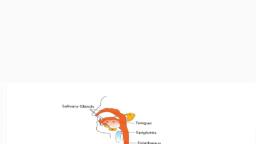
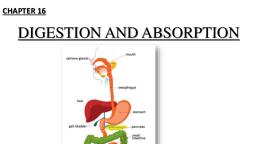
Digestion and Absorption, , CHAPTER 12, DIGESTION AND ABSORPTION, , Most people enjoy eating. In fact, the average person eats several hundred pounds of food every year., When you take time to think about it, it’s amazing that all we have co do to survive is shovel some, food in our mouths, drink some liquid, and let our bodies do the rest. If you are just eating for survival, this approach is fine. Bur, if your goal is to extend your life and improve athletic performance,, attaining an understanding of digestion is necessary. This chapter will cover the basics of digestion., These and related topics will be covered again in other chapters, which will get more into specifics., , The digestive system starts at the mouth, runs some 25 feet through the trunk of the body, and ends, at the anus. It is basically a strong muscular cube lined with thick epithelium with specialized cells,, which differ depending upon which part of the digestive system you examine. The digestive system, is also referred to as the alimentary canal, gastrointestinal system, and the gut. The digestive system, is the body's life support connection with the external environment. Food is eaten, and somehow the, body breaks it down into useful biomolecules to obtain the energy necessary for life and the building, blocks necessary for growth., , Digestion is therefore the process which breaks food down through chemical and physical means. By, doing so, the nutrients contained in food can be absorbed through the intestinal walls, transported, by the blood to the liver, and then transported further onto the trillions of cells via the blood stream., As you will soon discover, the digestive system is quite complex and remarkable., , The functions of the digestive system include:, , a) receipt, mastication (chewing), and transport of ingested substances and waste products, , b) secretion of acid, mucus, digestive enzymes, bile and other materials needed to break down food, c) digestion of ingested foodstuffs, , d) absorption of nutrients, , e) storage of waste products, , f) excretion, , g) certain auxiliary functions, , ‘THE DIGESTIVE SYSTEM-PHYSICAL COMPONENTS, , ‘The digestive system is made up of several anaromically different structures which make up the gut,, and several organs attached to the gut that provide essential functions to the entire process of digestion. ‘The pancreas, for example, supplies important enzymes co help break apart complex food substances. ‘The following will review these major structures and discuss their functions., , MOUTH, , Food enters the digestive system through the mouth. The mouth then has four functions it exerts on, the ingested food. First, it physically breaks apart food by chewing and reducing it in size, Second, it, mixes the food with saliva into a moist mass, called a bolus, which is then made ready for swallowing., In this way, saliva serves co lubricate the food for its journey down the esophagus into the stomach., , 183 Chapter 12
Page 2 :
Digestion and Absorption, , CHAPTER 12, DIGESTION AND ABSORPTION, , , , Most people enjoy eating. In fact, the average person eats several hundred pounds of food every year., When you take time to think about it, it’s amazing that all we have to do to survive is shovel some, food in our mouths, drink some liquid, and let our bodies do the rest. If you are just eating for survival, this approach is fine. But, if your goal is to extend your life and improve athletic performance,, attaining an understanding of digestion is necessary. This chapter will cover the basics of digestion., These and related topics will be covered again in other chapters, which will get more into specifics., , The digestive system starts at the mouth, runs some 25 feet through the trunk of the body, and ends, at the anus. It is basically a strong muscular tube lined with thick epithelium with specialized cells,, which differ depending upon which part of the digestive system you examine. The digestive system, is also referred to as the alimentary canal, gastrointestinal system, and the gut. The digestive system, is the body's life support connection with the external environment. Food is eaten, and somehow the, body breaks it down into useful biomolecules to obtain the energy necessary for life and the building, , blocks necessary for growth., , Digestion is therefore the process which breaks food down through chemical and physical means. By, doing so, the nutrients contained in food can be absorbed through the intestinal walls, transported, by the blood to the liver, and then transported further onto the trillions of cells via the blood stream., As you will soon discover, the digestive system is quite complex and remarkable., , The functions of the digestive system include:, , a) receipt, mastication (chewing), and transport of ingested substances and waste products, , b) secretion of acid, mucus, digestive enzymes, bile and other materials needed to break down food, c) digestion of ingested foodstuffs, , d) absorption of nutrients, , ¢) storage of waste products, , f) excretion, , g) certain auxiliary functions, , THE DIGESTIVE SYSTEM-PHYSICAL COMPONENTS, , The digestive system is made up of several anatomically different structures which make up the gut,, and several organs attached to the gut that provide essential functions to the entire process of digestion. The pancreas, for example, supplies important enzymes to help break apart complex food substances. The following will review these major structures and discuss their functions., , MOUTH, , Food enters the digestive system through the mouth. The mouth then has four functions it exerts on, the ingested food. First, it physically breaks apart food by chewing and reducing it in size. Second, it, mixes the food with saliva into a moist mass, called a bolus, which is then made ready for swallowing., In this way, saliva serves to lubricate the food for its journey down the esophagus into the stomach,, , 183 Chapter 12
Page 3 :
Intemational Sports Sciences Association, , Mucus also makes the food particles stick together with a protein it contains. The saliva also contains, the digestive enzyme ptyalin, which begins the chemical breakdown of starch (carbohydrates)., , The masticated food mass is swallowed and passed through the pharynx and then into the esophagus,, Chewing your food thoroughly is vital to the digestive process. By thoroughly chewing your food,, you will get the full benefit of the digestive enzyme ptyalin and physically reduce in size the other, foodstuffs, like protein, so the stomach can perform its digestion functions more easily., , Thirdly, the mouth regulates temperature by either cooling or warming the food. Temperature regulation is important as enzymes function at their best in a narrow temperature range. For the human,, this range is tightly held around body temperature. Also, delivery of cold food can hasten the emptying of the stomach and reduce the efficiency of digestion. One exception is when drinking fluid, before and during exercise or competition; emptying faster will rehydrate the body faster. The fourth, major function of the mouth is that it consciously initiates swallowing when the bolus is ready., , ESOPHAGUS, , inches per second. Once at the base of the esophagus, a ring-like muscle is reached, the esophageal, sphincter, which relaxes to let the food into the stomach. Keep in mind that at the same time food, is let into the stomach, the esophageal sphincter is keeping food from spurting out of the stomach,, back up the esophagus. If the sphincter weakens or malfunctions, the acidic contents of the stomach, may shoot up into the esophagus and produce an unpleasant, bitter sensation in the throat known as, heartburn, which has nothing to do with the heart, except that pain may develop in the area of the, heart. To reduce stress on the esophageal sphincter, it is a good practice to eat sitting up and to try, not to fillup your stomach with huge meals., , STOMACH, The stomach is a muscular sac about two quarts in size. It functions in the storage and gradual release, of food into the small intestine, digestion through chemical secretions and the physical activity of, churning the digesting food, and transport of ingested food down the gut., , Intrinsic factor is a secretion which binds with vitamin B12 and allows it to be absorbed in the small, intestine. The hormone gastrin is also secreted in the stomach and helps regulate stomach secretions, during digestion. The enzymes tennin, pepsin, and lipase are also secreted. They function to breakdown or begin the breakdown Process of several nutrients. Rennin works on milk protein (casein) to, prepare it for pepsin action, Pepsin breaks down protein in the presence of hydrochloric acid. Lipase, is the enzyme that breaks down fat molecules., , prereset, 184 Chapter 12
Page 4 :
International Sports Sciences Association, , Mucus also makes the food particles stick together with a protein it contains. The saliva also contains, the digestive enzyme ptyalin, which begins the chemical breakdown of starch (carbohydrates)., , The masticated food mass is swallowed and passed through the pharynx and then into the esophagus,, Chewing your food thoroughly is vital to the digestive process. By thoroughly chewing your food,, you will get the full benefit of the digestive enzyme ptyalin and physically reduce in size the other, foodstuffs, like protein, so the stomach can perform its digestion functions more easily., , Thirdly, the mouth regulates temperature by either cooling or warming the food. Temperature regulation is important as enzymes function at their best in a narrow temperature range. For the human,, this range is tightly held around body temperature. Also, delivery of cold food can hasten the emptying of the stomach and reduce the efficiency of digestion. One exception is when drinking fluid, before and during exercise or competition; emptying faster will rehydrate the body faster. The fourth, major function of the mouth is that it consciously initiates swallowing when the bolus is ready., , ESOPHAGUS, The esophagus extends between the pharynx and stomach and is the transport conduit for food and, , water traveling to the stomach. When the bolus enters the esophagus, an involuntary wave of muscle contractions is triggered which propels the food mass down into the stomach. This muscle contraction action is known as peristalsis. This peristaltic wave travels down the esophagus about three, inches per second. Once at the base of the esophagus, a ring-like muscle is reached, the esophageal, sphincter, which relaxes to let the food into the stomach. Keep in mind that at the same time food, is let into the stomach, the esophageal sphincter is keeping food from spurting out of the stomach,, back up the esophagus. If the sphincter weakens or malfunctions, the acidic contents of the stomach, may shoot up into the esophagus and produce an unpleasant, bitter sensation in the throat known as, heartburn, which has nothing to do with the heart, except that pain may develop in the area of the, heart. To reduce stress on the esophageal sphincter, it is a good practice to eat sitting up and to try, , not to fillup your stomach with huge meals., , STOMACH, The stomach is a muscular sac about two quarts in size. It functions in the storage and gradual release, , of food into the small intestine, digestion through chemical secretions and the physical activity of, churning the digesting food, and transport of ingested food down the gut., , The stomach secretes several types of substances to aid in the breakdown of food. Mucus acts as a protective layer to lubricate the stomach wall and buffer the acid secretions. Hydrochloric acid helps keep, the stomach relatively free of microorganisms (bacteria), and maintains a low pH in the stomach., Hydrochloric acid also acts to catalyze the action of pepsins, which begin the digestion of proteins., , Intrinsic factor is a secretion which binds with vitamin B12 and allows it to be absorbed in the small, , intestine. The hormone gastrin is also secreted in the stomach and helps regulate stomach secretions
Page 5 :
Digestion and Absorption, , When macronutrients are taken alone, they leave the stomach at different rates of time:, Carbohydrates will empty from the stomach the quickest. For this reason, pure carbohydrate drinks, taken during exercise can get into the blood stream fast and replenish the body's primary energy, source, glucose. Proteins empty from the stomach next in time sequence, and fats take the longest to, empty out. When carbohydrates, proteins, and fats are consumed together, because they will all be, , mixed up, the stomach will take longer to empty out. The stomach normally takes 1 to 4 hours to, empty, depending upon the amount and kinds of foods eaten., , While the intestines are known as the primary location for absorption, some nutrients can be, , absorbed by the stomach. In general, the following can _be absorbed by the stomach: some water,, alcohol, aspirin, glucose, some other drugs, and some vitamins, like niacin, These are the main substances and undoubtedly there are others of lesser importance, or new ones to be determined., , , , The fact that water and glucose can be partially absorbed through the stomach is a benefit for quick, replenishment of these nutrients during exercise. Some popular sports drinks take advantage of this, and contain glucose as an ingredient, along with fructose which is more slowly absorbed, and complex carbohydrates which release glucose at a slow rate as they are digested. Glucose ingestion can, help spare your body’s glycogen supply, but it must be ingested just prior to exercise, within one half, hour, or it can cause an influx of insulin which will upset energy generation during exercise., , The stomach only begins the process of breaking down complex molecules, like proteins, into their, smaller components, such as amino acids in the case of proteins. This breakdown process, also called, hydrolysis, continues in the intestines. The partially digested material of the stomach that enters the, small intestine through the pyloric sphincter muscle in squirts is called chyme., , THE SMALL INTESTINE, , The small intestine stretches about 12 feet long and is divided into three main regions: duodenum,, jejunum, and ileum. The duodenum is connected to the stomach and makes up the first part of the, small intestine. Some absorption takes place here, but it is a location of continued breakdown of food, , and storage. The next regions of the small intestine are responsible for the majority of nutrient, absorption. These are the jejunum and ileum., , To accomplish complete absorption, the inside surface of the small intestine has a very unique anatomy. Instead of being a flat surface, like that of the skin, the small intestine is lined with special cells, called villi. These villi are very small finger-like projections that line the entire inner surface of the, intestine. In this way, the surface area of the intestine is greatly increased. Each villus has blood ves, sels that run into it. When nutrients pass through the cells of the villus, they are transported into the, blood vessels, then transported to the liver., , Another transport system is also present in the villus. That is the lymphatic system. A small projection called a lacteal also extends into the villus. The lymphatic system mainly transports fats. About, 60 to 70% of the ingested fats are transported to the liver in this way. Shorter fats can be taken up, through the blood vessels and transported directly to the liver from the intestines. These short chain, and medium chain triglycerides have become popular in the diet of athletes for this reason, and, , because they do not convert easily to body fat. The medium chain triglycerides are most known and, used for this purpose., , 185 Chapter 12