Notes of NEET,JENPUS &ETC BATCH, Biology Virus.pdf - Study Material
Page 1 :
Viruses, , , , , , , , The term ‘virus! has been derived from Latin, which means, poison or venom or viscous fluid. They remain inactive outside a, living host but become active inside the host and multiply in it., ‘They represent a transitional form of life between non-living and, living world., , Luria (1953) defined virus as "Sub-microscopic entities, capable of being introduced into specific living cells and, reproducing inside such cells only. “Single virus is called ‘Virion’,, ‘most of the plant virus are RNA virus. Most of the animal virus are, DNA virus., , , , , , (i) Important discovery of virus, , Carolous causius (1576) recorded frst viral disease in tulips., , A, Mayer (1886) found a disease in tobacco caused by virus, and called it tobacco mosaic disease., , D. Ivanowski (1892), a Russian Botanist, discovered the, infectious nature of the viruses. He was the person, who, discovered the virus., , Beijerinck (1898) Beijerinck called them living infectious, fluid or "Cotagium virum fluidum.", , W. Twort (1915) and D. Herelle (1917) discovered, bacteriophages, a kind of virus which infected bacteria and, destroyed them., , W. M. Stanley (1935) first time isolated tobacco mosaic, virus (TMV) in erystalline form and showed that crystals were made, up of proteins. Nobel prize was awarded to him for this work, , , , , , , , (li) Nature of viruses : Viruses are regarded as intermediate, between non-living entities and living organisms. It is very difficult, to as certain whether they are living or norvliving. Some characters, of viruses suggest their non-living nature where as many other, characters suggest their living nature. The two views are listed, below , , , Viruses are non-living : The following characters state that, they are non-living., , (a) Viruses have no complete cellular structure. They are not, surrounded by cell membrane or cell wall., , (b) They do not show cellular metabolism and lack respiration., (c) They possess high specific gravity unlike living organisms., (4) Viruses are active only when they are inside the living host, , cells. Out side the host, they are good as chemical substances., Thus, they do not have their independent existence., , {e) Postulates of Robert Koch are not true for the viruses, Virus cannot grow in “invitro” condition in lab,, , (f] Absence of growth and division,, , Viruses are living organisms : The following characters, state that they are living organisms —, , (a) They have definite shape and morphology like that of a, living organism., , (b) They possess genetic material (DNA or RNA), which, determine their structure and development. Genetic material, passes from generation to generation in usual manner., , (c) All viruses are intracellular obligate parasite and attack, specific hosts. The bacteriophages recognise the real bacterial, surface,, , (d) They show property of mutation., , (2) They show irritability and respond to environmental, conditions such as heat, ultraviolet rays, humidity, drought,, alcohol, etc., , (f) They can grow inside the host and multiply enormously, showing one of the most important property of living organisms., , (iii) Chemical composition : Chemically viruses are, , nucleoproteins. They are made up of central core of nucleic acid., Nucleic acid is only one, either DNA or RNA. This nucleic ac
Page 2 :
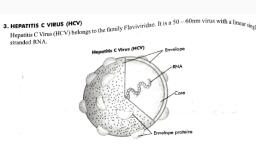
Viruses 105, , , , , , (DNA or RNA) represents the genetic characters of virus. TMV has, RNA (like most plant viruses have) 10% RNA and 90% protein is, present in influenza virus and PSTV (Potato Spindle Tuber Viroid), also has RNA but it does not have capsid (protein coat). Plant, viruses contain RNA but in cauliflower mosaic virus contain DNA., Bacteriophages contain DNA and almost half animal viruses, contain RNA and half contain DNA. But it is called that often, animal viruses contain DNA. Cancer causing viruses reovirus, contain both RNA and DNA, Only some enzymes are detected in, viruses such as - Lysozyme in bacteriophages, transcriptase in, vaccinia virus, reverse transcriptase and DNA or RNA polymerase, in retroviruses,, , Table : 1.5-1 Nucleic acid in viruses and no. of strands, , , , , , , , , , , , , , , , , , , , , , , , DNA Viruses [Strands RNA Viruses Strands, , ‘Adenoviruses | DNA(2) | Avian leukemia] RNAI), virus, , Bacteriophage | DNA(i) | Bacterial vinis F2 RNA (1), , 9x17, , Bacteriophage | DNA(1) | Bacteriophage RNA GQ), , M3 MS-2, , Coliphage DNA(@) | Coliphage R17 RNAi), , lambda (2), , Coliphage T2, | DNA (@) | Influenza virus RNAG), , 74, 76, , Coliphoge 73, | DNA (2) | Poliomyelitis vis] RNA (1), , 17, , Pox virus DNA (2) | Tobacco mosaic | RNA), vias (TMV), , Herpes viruses | DNA(2)_| Reovirus RNA (2), , Popilloma DNA(2) | Rice dwarf virus RNA (2), , vis, , Polyoma virus | DNA(2) | Wound Tumour] RNA 2), , sv40 virus, , , , , , , , , , (iv) Shape : There is variation in shapes of viruses. On the, basis of shape of viruses have been placed in the following, categories., , (a) Straight, rigid rods with helical architecture, eg. TMV,, Barley stripe mosaic virus (BSMV)., , (b) Long flexous thread-like rods, eg Potato latent mosaic,, Wheat sireak mosaic virus., , (c) Polyhedral virions, e.g. Turnip yellow mosaic, Tobacco, ing spot virus., , (d) Tadpole like — Bacteriophages., , (e) Spherical — Influenza virus,, , () Size : Viruses have a long range of size. They range from, 10 mp. to more than 300 mjt in size. The virus of foot and mouth, disease (FMD) of animals is smaller than the largest protein, molecule, Largest virus is smallpox. virus — variola (250 mit)., , (vi) General structure of virus, , Structurally viruses are made up of envelope, capsid, nucleoid, and occasionally one or two enzymes., , Envelope : Some viruses possess an outer thin loose, covering, called envelope. It is composed of proteins (from virus),, lipids and carbohydrates (both from host). It is found in some, animal viruses e.g, Herpes virus, HIV. The smaller subunits of, envelope are called peplomers The viruses, which do not possess, envelope, are called naked., , Capsid : It is the protein coat that surrounds the central, Portion of nucleoid and enzymes (if present). The capsid consists of, @ specific number and arrangement of small sub-units called, capsomeres. These sub-units possess antigenic properties., , Nucleoid : The nucleic acid present in the virus is called, rnucleoid, Its the infective part of virus which utilizes the metabolic, machinery of the host cell for synthesis and assembly of viral, Components. The genetic material of viruses are of four types :, , (a) Double stranded DNA (ds DNA) e.g,, Herpes virus, Hep., , B virus, , (b) Single stranded DNA (ss DNA) e.¢,, Coliphage., , (c) Double stranded RNA (ds RNA) e.g., Wound tumour virus., , (A) Single stranded RNA (ss RNA) e.g., Retrovirus, TMV, Polio, , virus., , , , (vii) Life cycle : The word reproduction is not appropriate in, case of viruses because they have no cellular components or cell, organelles. They do not reproduce themselves but divide by a, special mechanism as follows., , Attachment : The bacteriophage gets attached to bacterial, cell wall with the help of caudal fibres,, , Penetration : Bacteriophage dissolves the bacterial wall by, an enzyme Lysozyme and makes a pore in cell wall. Through this, pore DNA molecule enters in the cell after contraction of head, Protein, entire protein coat remains outside., , Latent period : Phage DNA controls hosts cellular, machinery. Instead of formation of bacterial protein, phage protein, formation begins. Cellular DNA and RNA is broken down and from, this cellular DNA, phage DNA is formed. Now protein covers the, DNA fragments to form a kid virus,, , , , Maturation : This young virion is changed into an adult virus, hence this process is called maturation., , Release : The viruses are mature, cell wall of bacterial cell is, weakened by enzyme lysozyme. The release of viruses takes place, ‘by bursting of host cell and these are again ready for next infection, or attack on other bacteri, , , , (viil] Economic importance of viruses, Uses of viruses, , (a) Specific viral strains are cultured and attenuated to be used, as vaccines against specific diseases., , (b) The addition of eyanophages LPP-1 and SM-1 are useful, in controlling water blooms., , (c) Bacteriophage was used by Hershey and Chase to prove, that DNNA is the chemical basis of heredity.
Page 3 :
106 Viruses, , , , (d) Bacteriophages are of interest to geneticists because these, bring about transduction., , (e) Water of river Ganga is believed to have phages which destroy, bacteria. That is why its water does not get spoiled., , Tobacco mosaic virus (TMV) : It was discovered by the, Russian worker D. Ivanowski, Franklin etal (1957) described the, ultrastructure of (TMV) ~ It is a rod-shaped virus having a central, core of RNA surrounded by protein coat (capsid) to form the, nucleocapsid. The nucleocapsid may be naked or may be, surrounded by a loose membranous envelope. The protein coat, (capsid) consists of 2130 identical subunits (capsomeres)., , Bacteriophage : The viruses which attack bacteria are called, bacteriophages. In outline they look like tadpole or sperm. The, body can be divided into a hexagonal head neck and a tail. The, hexagonal head has a central core of DNA, which is surrounded by, protein coat. The DNA is double helix. The cylindrical tall is hollow, and is entirely made up of proteins. At the end of this, there are six, long threads called tail fibres or caudal fibres. These fibres help the, virus while attaching to bacteria. Bacteriophage contain lysozyme, enzyme., , Cyanophages : Generally some of the viruses are found, which attack on blue green algae. Sofferman and Morris (1963), reported 11 filamentous forms of blue green algae (Lyngbya,, plectonema and phormidium, hence called LPP-1) which were, attacked by viruses. These viruses are usually called cyanophages., Cyanophages contain DNA as their genetic material. These viruses, resemble with bacteriophages in morphology and behaviour., , Mycophages : Some fungi such as, Mushrooms, Penicillium,, etc have also been found to be infected by viruses. These are, isometric in shape and contain double stranded RNA., , Phycophages : These are virus which attack on Algae., , Viroids ; Diener and Raymer (1967) discovered very, simple smallest infectious agents called Viroids. Viroids consist of, RNA only and capsid is lacking. Viroids contain only very low, mol. weight. Diener and Raymer reported that causal agent of, potato spindle tuber disease was a free RNA and no viral, nucleoprotein particles were present in the infected tissue. T.O., Diener (1971) termed it viroid. Viroids are single-stranded,, covalently closed circular as well as linear RNA molecules., Transmission is mechanical. The symptoms on host plants are, almost similar to those of viruses. Viroids cause persistent, infections. A number of other diseases caused by viroids are —, Cadang Cadang of coconut, Cucumber pale fruit,, Chrysanthemum stunt, Avacado sunblotch, etc., , Prions : Prusiner (1982) discovered it as a human disease, causal agents. Stanley B. Prusiner discovered infectious agents, , , , , , ‘which were prions. Prions are proteinaceous particles thought to, cause a number of diseases including the slow virus diseases,, therefore also called as slow viruses. They are made of protein, molecules only. Genetic material (DNA and RNA) is absent in, prions. Kuru, a disease of central nervous system found in few, canniblastic tribes of New Guinea is caused by prions, , Interferons : G.M. Findley and McCallum (1937) reported, a phenomenon called viral interference in which the cell infected, ‘with one type of virus becomes resistant to super infection by other, viruses. Alliac Issacs and Lindeman (1957) gave the term, interferons to the chemical substances responsible for viral, interference,, {i) Interferons are produced by cells in mammals, rodents, birds,, , etc., and provide resistance against viruses., , (ii) Interferons are protein molecules or polypeptides of low, molecular weight which prevent viral multiplication,, , Table : 1.5-2 Families of animal viruses, grouped by type, , , , , , , , , , , , , , , , , , of nucleic acid, Virion Examples, Family | «, Diameter (nm) aces, dsDNA, Papava | Naked 40-57 Papiloma (human, virus polyhedral warts, cervical, cancer); polyoma, (tumors in certain, animals)., ‘Adeno | Naked 70-80 Viruses that cause, virus polyhedral respiratory disease;, some that cause, tumors in certain, animals., Herpes | Enveloped 150-250 | Herpes simplex 1, virus polyhedral (cold sores); herpes, simplex Il (gental), varicella zoster, (chicken _pox,, shingles); Epstein—, Barr virus (infectious, mononucleosis,, Buckitts, iymphora)., Poxviris | Enveloped 200-350 | Variola_(smalipox);, complex ‘vaccinia; cowpox, ss DNA, Parvo | Naked 18-26 ‘Most depended on, virus polyhedral co infection with, adenoyinuses for, growth
Page 4 :
Viruses 107, , , , Table : 1.5-3 ss RNA that can serve as mRNA, , , , , , , , , , , , , , , , , , , , , , , , , , , , , , , , , , , , , , (+ strand RNA) S.No. Disease Host Causal organism, Picorma’ | Noked 18-38 Pollovins; ) | Encephatiis Man | Encephalits vins, vim polyhedral thinovinus (common (2), | Tafectious hepatitis Man | Hepatids virus, cold); enteric viruses So :, (3) _ | Herpetic Kerattis Man___| Herpes virus, Toga virus Enveloped 30-60) ube ys (@)_ [influenza ‘Man Influenza virus, Eee ite: ae (5) | Measles Man Measles virus, ise ey (@)_ | Viral bronchitis Man | Parainiluonea vis, insects). (7)_| Poliomyelitis Man (chicken) | Polo virus, Retovinss | Enveloped 100-120 RNA tumor viruses (8) || Small Rox ER Pox vinis, polyhedral (solid tumors and (9) | Common cold Man__| Rhino virus, two copies leukemia); AIDS (10)_| Yellow fever Man | Yellow fever virus, of genome, per virion,, , , , Table : 1.5-4 ss RNA that is a template for mRNA., (- strand RNA), , , , , , , , , , , , , , , , , , , , , , Rhabdovir ] Enveloped 70-180 Rabies, us helical, Paramyxo | Enveloped 150-300 Measles, mumps, virus helical, Onhomyx | Enyeloped 80-200 Influenza viruses, ovirus helical:, RNA in, eight, segments,, ds RNA, Reovirs ” |/ Naked 60-30 Diarthoea viruses, polyhedral;, RNA in ten,, segments,, ‘ds = double stranded; ss = single-stranded., , Table : 1.5-5 Important plant diseases caused by viruses, , , , ‘S.No. Disease Causal organism, , , , (1) | Abutiion mosaic Abutilon mosaic virus, , , , (2) _ | Bunchy top of banana _| Banana bunchy top virus, , , , 3) | Cucumber mosaie Cucumber mosaic virus, , , , (4) | Litt teat of brinjal Brinjal litle leaf virus, , , , (5) _| Little leaf of cotton Cotton little leaf virus, , , , , , , , , , , , (6)__| Papaya mosaic Papaya mosaic virus, (7) [Potato leat roll Potato leaf roll virus, , (8)_| Potato mild mosaic | Potato vinis X, , (9) | Potato rugese mosaic | Potato virus X and Y, (10) | Stunt of S.C, Ratoon stunt virus, , , , (11) _| Rosette of groundnut | Groundnut mosaic virus, , , , (12) | Sugarcane mosaic Sugareane virus |, , , , (13) | Tobacco mosaic ‘Tobacco mosaic virus, , , , (14) | Tomato teaf curt, (15) | Tristeza of eitrus, , Tomato curl virus, , Citrus Tristeza virus, , , , , , , , , , , , , , , , 4 Father of Virology W.M. Stanley (American Microbiologist),, 46 Edward Jenner (1796) developed the first successful, vaccine against viral disease small pox., , 4 D! Heralle (1917) coined the term “bacteriophage” for, bacterial virus,, , 6 Caulima virus (cauliflower mosaic virus) are double, stranded DNA virus, , 48 Lindemann (1957) did the first successful vaccination, against Polio., , 48 Single virus observed under electron microscope, outside, host is called “Viti, 46 The first virus to be cultured in human cells was Polio virus., 25, Most of the phase are DNA virus., , 4 Retroviruses and reverse transcription were reported by, Temin and Baltimore,, , 4S Viruses can pass through bacteria proof filters. These are, the intermediate connection between living and non living., , 45 Viruses have host specificity. A specific vinus infects only a, particular host., , 45 Inthe world which do not have cell are virus, virolds and, prions., , 5 Substance which can inactivate to viral activities are known, as antiviral agents or virucide., , 4 The synthesis of viral proteins takes place on host, ribosomes,, , 2 Viruses lack pigments metabolic activity, they are made up, of RNA the only movement and sex organ, but some enzymes, are found in them., , 25 AIDS is caused by HIV. It infects ‘T-lymphocytes, HIV virus, remains dormant for about 8 years, Infected person does not, suffer a symptoms during this period. AIDS day is 1 December., 46 Size of virus is 20nm —300 nm Largest virus is — vaccinia or, cow pox-virus (500nm). Smallest virus is — Alfa-alfa virus (17, nm),, , 2 Pox virus is also known as vip virus., , 4 Five genes are present in a simplest vinis,
Page 5 :
Ee si, , , , ‘Which of the following is the smallest virus, , , , , , , , i., (a) Foot and mouth virus, (b) Tobacco mosaic virus, (c) Coliphage lambda virus, (a) Wound tumour virus, a 12, Which of the following is the largest virus, Le poThe test fo pinta pent vis ved (a) Penicillium virus (b) Wound tumour virus, 0% Ce Le ae {e) Pox virus (a) None of the above, ‘The Tobacco mosaic virus was crystallized for ca ee ty : eS ee ie ee ee a,, (e) WM. Stanley (b) E.C.Stackmann (a) oe ers viet re FINA Vey, ij A Sen Peet (b) Most animal viruses are DNA viruses, 2. The viruses contain INCERT; J & K CET 2008] (Ty Gas dou poeanses a eee, : (a) T, bacteriophage has double stranded DNA molecule, (a) Proteins only : :, (b) DNA only 14. Which one is absent in viruses IAFMC 2008], (c) Nudeic acids only (a) Replication (6) Protein syrheats, (a) Proteins, DNA or RNA (nucleic acids) (G), Fomay Noerstion ey ee, 8. Caulimo virus (Caulilower mosaic virus) are a group of 1 Wound tumour vins has, ies atta hae (a) Double stranded DNA (b) Single stranded DNA, (a) Double stranded RNA (b). Single sanded RNA (c) Double stranded RNA (d) Single stranded RNA, (c) Single stranded DNA (a) Double stranded DNA 16. Which of the following is a DNA containing plant virus, 4, The rabies virus consists of [WB JEE 2009) Webs Beane), (a) Single stranded RNA (b) Double stranded RNA. (a) Tobacco mosaic virus (b) Tomato mosaic virus, (c) Single stranded DNA (4). Double stranded DNA (c) Cauliflower mosaic virus (d) Potato mosaic virus, 5. A virus containing ssRNA act as a template for DNA 17+ Algal viruses are known as (CBSE PMT:1998), synthesis is called as (a) Binal viruses (b) Cyanophages, (MP PMT 2007; DPMT 2007; Odisha JEE 2008) (c) Mycophages (d) Phycophages, (a). Polio virus (0). Retro virus 18, Arthropod borne viruses are, {c) Pox virus (d) Adeno virus (a) Ribo virus (b) Reo virus, 6. Viruses enter plant cells only through...» [VITEEE 2008] (c)_ Arbo virus (a) None of these, (a) Lenticels (b) Wounds 19. Which one of the following are intracellular obligate, (c) Stomata (d) Roots parasites IKCET 1998; DUMET 2009], 7. Influenza virus has got (a) Bacteria (b) Viruses, (a) Naked capsid (b) Enveloped capsid (c)_ Slime moulds (d) Blue-green algae, (©) Naked polyhedral capsid (d) No capsid at all 20, Select the wrong statements [AIPMT 2015], 8. The genetic material in viruses is NCERT; CPMT 1994; (2) W.M. Stanley showed that viruses could be crystallized, MP PMT 1995, 98, 2000; CBSE PMT 1997; (b) The term ‘contagium vivum fluidum’ was coined by, Pb, PMT 2000; BHU 2005) MW. beijerinck, (a) Only RNA (ce) Mosaic disease in tobacco and AIDS in human being, (b) Only DNA are caused by viruses, (c) RNA and DNA both (d) ‘The viroids were discovered by D.J, lvanowshi, (a) RNA or DNA Le. one nucleic acid in a virus 21. Helper virusis called, 9. Each capsomere of TMV contain amino acids whose (a) Perfect phage of virus, number is (b) A defective phage which helps another defective phage, (a) 158 (b) 185 (c) Alatent phage, (c) 815 (a) 581 (a) None of these, 10. Ribovira is a group of viruses which contains 22, Who discovered interferons, (a) dsDNA (b) ssDNA (a) Issacs and Lindman (b) Holmes and Knight, (c) RNA (d) None of these (c) Harshey and Chase (4) Enders



 Learn better on this topic