Notes of NEET,JENPUS &ETC BATCH, Biology Plant growth development - Study Material
Page 1 :
Chapter, , , , , , , , 4.5, , , , Plant Growth and Development, , , , Growth can be defined as a vital process which brings about, imeversible permanent change in any plant or its part with respect, to its size, form, weight and volume., , Regions of growth : In unicellular plants there is overall, growth and not confined to any specific region but in multicellular, plants growth is restricted to specific regions having meristematic, cells. On the basis of their position in the plant body (higher plants), meristems are divided into three main categories., , (1) Apical meristems : These meristems are found at shoot, and root apex. As a result of activity of these meristems plant, inereases in length. In angiosperms and gymnosperms there is a, group of meristematic cells but in bryophytes and pteridophytes, there is a single tetrahedral cell found at the shoot apex., , (2) Intercalary meristems : These meristems are found, above the nodes. As a result of the activity of these meristems, increase in length takes place. e.g,, Bambusa., , (3) Lateral meristems. : These meristems are made up of, cells which divide in radial direction only. They form laterally, placed new cells towards the centre and periphery, Cork cambium, (phellogen) and vascular cambium are the examples of lateral, meristems, Increase in girth of shoots and roots take place because, of the activity of this cambium., , Phases of growth, , (1) Cell division (Formative phase) : Growth is based on, mitotic cell di, , , , , , ion., , (2) Cell enlargement : Cell division is followed by cell, enlargement. The cell increases in size due to vacuolation (by, absorption of water), The cell enlargement has been explained in, two different ways. According to the first view, the turgor of the cell, is responsible for cell enlargement. The other view considers that as, a result of growth of the cel! wall the volume of the cell increases., , , , , , (3) Cell maturation (Differentiation) : Cell differentiation, followed by cell division and cell enlargement leads to the, development of specialized mature tissue cell. e.g., xylem tracheids, and trachea, sieve tubes and companion cells., , Growth curve : The rate of growth varies in different species, and different organs. The young leaf sheath of banana grows for a, time at the rate of almost three inches per hour, Growth begins, slowly, then enters a period of rapid enlargement, following which, it gradually decreases till no further enlargement occurs. The, mathematical curve which represents this variation in growth rate is, some what flatiened S-shaped curve or sigmoid curve. Time in, which growth takes place has been called grand petiod of growth., ‘This term was coined by Sachs. The analysis of growth curve, shows that it can be differentiated into three phases, , (1) Lag phase : The rate of growth is very slow in lag phase., More time is needed for little, growth in this phase., , (2) Log phase, (Exponential phase) : The, growth rate. becomes, maximum and more rapid., Physiological activities of cells, are at their maximum, The, log phase is also referred to, seared ted Last Fig: 4.5-1 A typical S-shaped, , (3) Final steady state grand period of growth curve, (Stationary phase) or Adult phase : When the nutrients become, limiting, growth slows down, so physiological activities of cells also, slows down, This phase indicates maturity of growth system. The, rate of growth can be measured by an increase in size or area of an, organ of plant like leaf, flower, fruit ete. The rate of growth is called, efficiency index.
Page 2 :
In many plants another phase is also evident in their growth, curve. This is called linear phase or phase of maximum growth, rate, Sachs called it as grand phase., , Measurement of growth, , The following methods are designed to measure growth in, length =, , (1) Direet method : Measurement is done between two, marked points by a scale at regular intervals., , (2) Horizontal microscope (Travelling microscope), , (3) Auxanometer : Several kinds of auxanometers have, been devised to measure the growth in length of a plant. Two of, them are:, , , , (i) Arch auxanometer, (ii) Pfeffer’, , (4) Bose’s crescograph : The crescograph invented by Sir, Jagdish Chandra Bose is a more delicate instrument and gives, ‘magnification upto 10,000 times. The rate of growth of root can be, measured by the use of a root auxanometer,, , Factors influencing rate of growth : Growth is affected by, the factors which affect the activity of protoplasm. It is affected by a, large number of factors both environmental and physiological., Physiological factors such as absorption of water, minerals,, photosynthesis, respiration etc, and environmental factors including, climatic and edaphic both. The effect on these factors on one region, of plant are also transmitted to other region of the plant., , Since growth is a resultant of many metabolic processes, it is, affected by many external and internal factors, which are as follows :, , External factors, , (1) Light : Light affects variously e.g, light intensity, quality, and periodicity, , (i) Intensity of light : In general, light retards growth in, plants. High light intensities induce dwarfing of the plant. Plants at, hill tops are short whereas those of a valley are quite tall. Very, weak light induces the rate of overall growth and also, Photosynthesis, Development of chlorophyll is dependent on light, and jin ils absence etiolin compounds are formed which gives, yellow colour to the plant. The phenomenon is called etiolation,, Similarly high light intensity affects indirectly and increases the rate, of water loss and reduces the rate of water growth., , (ii) Quality of light : The different colours (different, wavelengths) affect the growth of plant. In blue-violet colour light, intermodal growth is pronounced while green colour light reduces, the expansion of leaves as compared to complete spectrum of, visible light. The red colour light favours elongation but they, resemble etiolated plants. Infrared and ultraviolet are detrimental, to growth. However, ultraviolet rays are necessary for the, development of anthocyanin pigments in the flowers. Blue and, violet colour increases size of lamina of leaf., , , , uxanometer (Automatic auxanometer), , Plant Growth and Development 731, , , , (ii) Duration of light : There is remarkable effect on, duration of light on the growth of vegetative as well as reproductive, structures. The induction and suppresion of flowering are, dependent on duration. The phenomenon is termed, photoperiodism., , (2) Temperature : Temperature has pronounced effect on, the growth of plant. The temperature cardinals for growth vary, according to temperature zones. The minimum, optimum and, maximum temperatures are usually 5°C (arctic), 20 - 30°C, (temperate) and 35 - 40°C (tropical). The optimum temperature, needed for the growth of a plant is much dependent on the stages, of development., , (3) Water : As water is an essential constituent of the living, call, a deficiency of water causes stunted growth,, , (4) Oxygen : In poorly aerated soil there is low concentration, of oxygen and a high concentration of CO. Under such, conditions plants usually show stunted growth, Normal growth of, most plants occurs only when abundant oxygen is present since, , is important for respiration. It has been reported that oxygen, plays some important role during G, stage of cell division., , (5) Mineral salt : Absence of essential mineral salts results in, abnormal growth. For example, the absence of nitrogen prevents, protein-synthesis, while the absence of iron prevents chlorophyll, formation and thus leads to pale and sickly growth of plants,, known as chlorotic condition., , (6) Pollutants : Several pollutants such as automobile, exhaust, peroxyacetyl nitrate (PAN), pesticides ete have, detrimental effect on plant growth. Citrus and Gladiolus are very, sensitive to fluorides. Poor growth of tobacco is observed in, regions where ozone concentration is high. White pine cannot, survive under high Os concentration, Cotton plants are similarly, Very sensitive to ethylene., , (7) Carbon dioxide : CO, is essential for photosynthesis and, hence nutrition. Due to change in photosynthetic rate, with the, increase or decrease in CO, concentration, the plant growth is, also affected,, , , , Internal factors, , (1) Nutrition : It provides raw material for growth and, differentiation as well as source of energy. CIN, (Carbohydrate/Nitrogen) ratio determines the type of growth, High, CIN ratio stimulates wall thickening, Less protoplasm is formed., Low CIN ratio favours more protoplasm producing thin walled soft, calls, According to law of mass growth, the initial rate of growth, depends upon the size of germinating structure (seed, tubes,, rhizome, bulb, ete.), , (2) Growth regulators : These are manufactured by living, protoplasm and are important intemal growth regulators which are, essential for growth and development. These growth regulators, include several phytohormones and some synthetic substances.
Page 3 :
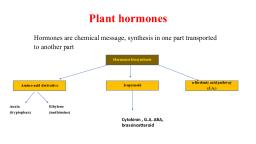
732 Plant Growth and Development, , , , , , Differentiation, Dedifferentiation and Redifferentiation, , The cells derived from root apical and shoot apical meristems, and cambium differentiate and mature to perform specific, functions, This act leading to maturation is termed as, differentiation. During differentiation, cells undergo few to major, structural changes both in their cell walls and protoplasm. For, example, to form a tracheary element, the cells would lose their, protoplasm. They also develops a very strong, elastic,, lignocellulosic secondary cell walls, to carry water to long distances, ‘even under extreme tension., , Plants show another interesting phenomenon. The living, differentiated cells, that by now have lost the capacity to divide can, regain the capacity of division under certain conditions. This, phenomenon is termed as dedifferentiation. For example,, formation of meristems — interfascicular cambium and cork, cambium from fully differentiated parenchyma cells. While doing, so, such meristems/tissues are able to divide and produce cells that, ‘once again lose the capacity to divide but mature to perform, specific functions, i., get redifferentiated., , Growth hormones and Growth regulators, , The term hormone was first used by Starling (1906). He called, it stimulatory substance. The growth and development in plants is, controlled by a special class of chemical substances called, hormones. They are needed in small quantities at very low, concentrations as compared to enzyme. They are rarely effective at, the site of their synthesis., , Thus, growth hormones are also called phytchormones term, given by Thimann (1948), it can be defined as ‘the organic, substances which are synthesized in minute quantities in one part, of the plant body and transported to another part where they, influence specific physiological processes’. A group of plant, hormones including auxins, gibberelins, cytokinins, ethylene and, abscisic acid are presently known to regulate growth., , Auxing : Auxins (Gk. cuxein = to grow) are weakly acidic, growth hormones having an unsaturated ring structure and capable, (of promoting cell elongation, especially of shoots (more pronounced, in decapitated shoots and shoot segments) at a concentration of less, than 100 ppm which is inhibitory to the roots. Among the growth, regulators, auxins were the first to be discovered., , Discovery : Jullus Von Sachs was the first to indicate the, presence of organ forming substances in plants. The existence of first, plant growth hormone came from the work of Darwin and Darwin, (1881), Darwin described the effects of light and gravity in his book,, “Power of movements in plants’. Darwin and his son found that, bending movement of coleoptile of Canary grass (Phalasis, canariensis) was due to exposure of tip to unilateral light. BoysenJensen (1910; 1913) found that the tip produces a chemical which, was later named auxin. Paal (1914, 1919) removed coleoptile tip, and replaced it asymmetrically to find a curvature. Auxin was first, collected by Went (1928) from coleoptile tip of Avena. Went also, developed Avena curvature tes for bioassay of auxin., , , , , , f br. ce d, Fig: 4.5-2 Experiment used to demonstrate, that tip of the coleoptile is the source of, auxin, Arrows indicate direction of light, , Types of auxins : There are two major categories of auxins, natural auxins and synthetic auxins,, , (1) Natural auxins : These are naturally occurring auxins in, plants and therefore, regarded as phytohormones. Indole 3-acetic, acid (IAA) is the best known and universal auxin. It is found in all, plants and fungi., , ‘The first naturally occurring auxin ci, was isolated by Kogl and Haagen‘Smith (1931) from human urine. It was, identified as auxin-a (auxenotriolic, , add, CyHf0.). Later, in 1934 Kog], 4b, Haager-Smith and Ersleben obtained, , another auxin, called auxin-b__‘Indole acetic acid (IAA), (auxenolonic acid, CygH0,) from com germ oil (extracted from, germinating com seeds), and heteroauxin from human. urine., Heteroauxxin (CyyH,O,N) also known as indole-3-acetic acid (IAA),, the best known nafural auxin. Besides IAA, indole-3-acetaldchyde,, indole 3.-pyruvic acid, indole ethanol, 4-chloro-idole acetic acid (4chloro-JAA) et, are some other natural auxins., , Natural auxins are synthesized (Young) in physiologically, active parts of plants such as shoot apices, leaf primordia and, developing seeds, buds (apex), embryos, from amino acid, tryptophan. In root apices, they are synthesized in relatively very, small amount. Auxins show polar movement. It is basipetal (from., apex to base) in stem but acropetal (from roo! tip towards shoot) in, the root. Auxins move slowly by diffusion from cell to cell and not, through the vascular tissues. Auxins help in the elongation of both, roo!s and shoo!s. However, the optimum concentration for the two, is quite different., , It is 10 ppm for stem and 0.0001 ppm for the root. Higher, concentration of auxins show inhibitory effect on growth., , (2) Synthetic auxins : These are synthetic compounds, which cause various physiological responses common to IAA., Some of the important synthetic auxins are 2, 4D (2, 4dichlorophenoxy acetic acid) is a weedicide, 2, 4, 5-T (2, 4, 5trichlorophenoxy acetic acid), IBA (indole 3-butyric acid), NAA, (naphthalene acetic acid, PAA (Phenyl acetic acid), IPA (Indole 3propionic acid). IBA is both natural and synthetic auxin. Certain, compounds inhibit action of auxin and compete with auxins for, active sites and are called antiauxins. e.g, PCIB (p- chlorophenoxy, isobutyric acid), TIBA (2, 8, Sti iodobenzoic acid). TIBA is used in, picking cotton balls., , Bioassay of Auxins : Testing of biological activity (growth), of a substance (auxin) by employing living material is called, bioassay., , (1) Avena coleoptile curvature test : Avena curvature test, cartied out by F.W. Went (1928) demonstrated the effect of auxins, on plant growth by performing some experiments with the oat, (Avena sativa) coleoptil., , COOH
Page 4 :
(2) Split pea stem curvature test : This test was also, discovered by Went, 1934., , (3) Root growth inhibition test (Cress root inhibition test), , Functions of auxins : Auxins control several kinds of plant, growth processes. These are as follows, , (1) Cell elongation : Auxins promote elongations and, growth of stems and roots and enlargement of many fruits by, stimulating elongation of cells in all directions,, , The auxins cause cell enlargement by solubilisation of, carbohydrates, loosening of microfibrils, synthesis of more wall, ‘materials, increased membrane permeability and respiration., , (2) Apical dominance : In many plants, the apical bud, grows and the lower axillary buds are suppressed. Removal of, apical bud results in the growth of lower buds. The auxin (IAA) of, the terminal bud inhibits the growth of lateral buds. This, phenomenon is known as apical dominance., , ‘This property of auxins has found use in agriculture. Sprouting, of lateral buds (eyes) of the potato tuber is checked by appiving, synthetic auxin (NAA)., , Moving on a grass lawn facilitates better maintenance, primarily owing to removal of apical dominance., , (3) Controt of abscission layer : Auxin inhibits abscission, of leaves and fruits, Abscission layer is produced when the auxin, content falls below a minimum,, , Premature drop of fruits such as apple, pear and citrus can be, prevented to a great extent by spraying the trees with a dilute, solution of AA, NAA or some other auxin,, , (4) Weed control : By the spray of 2, 4-D, broad-leaved, weeds can be destroyed but 2, 4-D does not affect mature, monocotyledonous plants., , (5) Root differentiation : Many new plants are usually, propagated by stem cutting e.g., Rose, Bougainuillea. If we dip the, ower cut end of a cutting in dilute solution of auxins (specially IBA., gives very good results) very soon large number of roots are, developed on the cut ends due to which these cuttings develop, into successful plants., , (6) Parthenocarpy : Parthenocarpy can be induced by, application of IAA in a paste form to the stigma of a flower or by, spraying the flowers with a dilute solution of IAA. Banana, oranges, and grapes are now-a-days grown parthenocarpically on, commercial scale. Auxins are applied in lanolin paste on stigma for, inducing parthenocarpy., , (7) Control of lodging : In some plants when the crop is, ripe and there is heavy rain accompanied by strong winds, the, plants bend as a result of which the ear (inflorescence) gets, submerged in water and decays. Ifa dilute solution of any auxin is, sprayed upon young plants the possibility of bending of plants is, reduced as the stem becomes stronger by the application of auxins., , (8) Flowering : In pineapple, NAA promotes flowering, In, lettuce, auuxins help in delaying the flowering. In cotton plants, the, use of auxins increases the cotton seeds production., , (9) Differentiation of vascular tissues : Auxins induce the, differentiation of xylem and phloem in intact plan's and also in, callus produced in vitro during tissue culture experiments., , (10) Sex expression : The spray of auxins increases the, number of female flowers in cucurbits, In maize, application of, NAA during the period of inflorescence differentiation can induce, formation of hermaphrodite or female flowers in a male, inflorescence., , , , , , Plant Growth and Developm:, , , , ‘Thus auxins cause femaleness in plants, , (12) Healing : Healing of injury is effected through auxin, induced division in the cells around the injured area, The chemical, ‘was formerly named traumatic acid or traumatin,, , (12) Nodule formation : In legumes, IAA is known to, stimulate nodule formation., , (13) Respiration : According to French and Beevers (1953), the auxin may increase the rate of respiration indirectly through, increased supply of ADP by rapidly utilizing the ATP in the, , , , expanding cells., , Gibberellins ; Gibberellins are weakly acidic hormones, having gibbane ring, structure which cause 9, , cell elongation of intact, plants in general and, increased —_internodal, length of genetically, dwarfed plants (te,, com, pea) in particular,, , Discovery, Gibberellins were first isolated from the fungus Gibberella fujikurot, (Fusarium moniliforme) the causal organism of Bakanae disease or, foolish seedling disease of rice plants in Japan by Kurosawa in, 1926., , Jn 1939, Yabuta and Sumiki and coworkers working in Tokyo, ‘isolated an active substance from the fungus and called it, Gibberellin A. This gibberellin preparation was probably a mixture, of several gibberellins. The first gibberellin to be obtained was, Gibberellin A-3. Cross et al. (1961) explained the detailed structure, of gibberellic acid. Now 60 gibberellins have been identified from, different groups of plants., , Many of them occur naturally in plants, Gibberelia fujikurot, has as many as 15 gibberellins. All the different types of, gibberellins, known so far, have gibbane skeleton and are acidic in, nature. Anti-gibberellins like malic hydrazide, phosphon D, Alar, and chorocholine cheoride (CCC) or cycocel are also called, antiretardants (stimulates flowering and inhibits the grawth of, nodes). Commercial production of GA is still cared out by, culturing this fungus in large vats., , Bioassay of gibberellin : Gibberellin bioassay is performed, through dwarf maize/pea test and cereal endosperm test., , Functions of gibberellin, , (1) Stem elongation : The gibberellins induce elongation of, the internodes. The elongation of stem results due to rapid cell, division and cell elongation induced by gibberellins., , (2) Leaf expansion : In many plants leaves become broader, and elongated when treated with gibberellic acid, This leads to, increase in photosynthetic area which finally increases the height of, the plant, Interestingly, albberellins show no effect on roots., , (3) Reversal of dwarfism : One of the most striking effects, of gibberellins is the elongation of genetic dwarf (mutant) varieties, of plants like com and pea. It is believed that dwarfism in the, mutant variety of plant is due to blocking of the capacity for, normal gibberellin production (deficiency of gibberellin). When, gibberellin is applied to single gene dwarf mutants e.g., Pisum, sativa, Vicia faba and Phaseolus multiforus, they grow to their, normal heights. It is further interesting to note that application of, gibberellins to normal plants fail to show any remarkable effects., , alee, , CH, COOH CH,, Gibberellic acid, , HO
Page 5 :
734 Plant Growth and Development, , , , , , , , , , (4) Bolting : Gibberellins induce stem elongation in ‘rosette, plants’ eg., cabbage, henbane, etc. Such plants show retarded, intermodal growth and profuse leaf development. In these plants, just prior to the reproductive phase, the intemodes elongate, enormously causing a marked increase in stem height. This is, called bolting,, , Bolting needs long days or cold nights. It has been further, noticed that if cabbage head is kept under warm nights, it remains, vegetative. The exogenous application of gibberellins induced, bolting in first year itself in plants like cabbage (normally bolting, ‘occurs next year due to effect of endogenous gibberellins), , (5) Flowering : Gibberellins also play an important role in, the initiation of flowering. Lang (1960) demonstrated that added, gibberellin could substitute for the proper environmental conditions, in Hyoscyamus niger which requires long day treatment for, flowering. Such effects of gibberellin are common among, vernalised and long day plants., , Gibberellin is also known to play essential role in germination, of cereal seeds., , (6) Enzyme formation : One of the most dramatic effects of GA, is its induction of hydrolytic enzymes in the aleurone layer of, endosperm of germinating barley seeds and cereal grains. GA, stimulates the production of digestive enzymes like proteases, aamylases, lipases which help to mobilise stored nutrients. GA treatment, stimulates a substantial synthesis of new mRNA. Thus GA acs to, uncover or depress specific genes, which then cause the synthesis of, these enzymes, It is assumed that GA acts on the DNA of the nucleus., , (7) Breaking of dormancy : Gibberellins overcome the, natural dormancy of buds, tubers, seeds, etc. and allow them to, ‘grow. Sprouting of potato in cold storage occur due to GA. In this,, function gibberellins act antagonistically to abscisic acid (ABA)., , (8) Parthenocarpy : Gibberellins have been considered to be, more effective than auxins for inducing parthenocarpy in fruits like, apple, tomato and pear. GA application has also resulted in the, production of large fruits and bunch length in seedless grapes., , (9) Sex expression : Gibberellins control sex expression in, certain plants. In general, gibberellin promote the formation of, male flowers either in place of female flowers in monoecious, plants such as cucurbits or in genetically female plants like, Cannabis, Cucumis., , (10) Substitution for vernalization : Vernalization is the, low temperature requirement of certain plant (ie., biennials) to, induce flowering. The low temperature requirement of biennials for, flowering can be replaced by aibberellins., , (11) Malt yield : There is increased malt production when, gibberellins are provided to germinating barley grains (due to, greater production of c-amylase)., , (12) Delayed ripening : Ripening of citrus fruits can be, delayed with the help of gibberellins. It is useful in safe and, prolonged storage of fruits,, , (13) Seed germination : Gibberellins induce germination, of positively photo-blastic seeds of lettuce and tobacco in, complete darkness., , Cytokinins (Phytokinins) : Cytokinins are plant growth, hormones which are basic in nature, either aminopurine or phenyl, urea derivatives that promote cell division (cytokinesis) either alone, or in conjugation with auxin,, , Discovery : The first cytokinin was discovered by Miller,, Skoog and Strong (1955) during callus tissue culture of Nicotiana, tobaccum (tobacco)., , , , , , , , , , It was synthetic product formed by autoclaving Herring sperm, , , , , , , , , , , , , , , , (fish sperm) DNA. This synthetic product was identified as 6furfuryl amino-purine and named as kinetin. He found that normal, cell division induced by adding yeast extract., , Various terms such as kinetenoid (Burstran, 1961),, phytokinin (Dendolph et al. 1963) phytocytomine (Pilet 1965), have been used for kinetin like substances but the term cytokinin, proposed by Letham (1963) has been widely accepted. Letham, et al, (1964) discovered first natural, cytokinin in unripe maize, grain (Zea mays). It was named as zeatin (6 hydroxy 3 methyl, trans 2-butenyl amino purine)., , About 18 cytokinins have been discovered, eg.,, dihydrozeatin, IPA (Isopentenyl adenine), benzyl adenine. The, most widely occurring cytokinin in plant is IPA. It has been isolated., from Pseudomonas tumefaciens. Many are found as constituents of, {RNAs, Cytokinins are synthesized in roots as well as endosperm of, seeds, Coconut milk and Apple fruit extract are rich in cytokinins., Cytokinins in coconut milk are called coconut milk factor., , Kinetin (6 furfuryl amino, purine) is a derivative of the |, nitrogen base adenine. NH—CH,, , Cytokinins are produced in H Oo, actively growing tissues such ao L, , ‘as embryos, developing fruits, , and roots. i, , Cytokinin is transported, to different parts of the plant Kinetin (6-furfuryl aminopurine), through xylem __ elements., , According to Osborne and Black (1964), the movement of, cytokinin is polar and basipetal., , Bioassay of cytokinins : Bioassay is done through retention, ‘of chlorophyll by leaf discs, gains of weight of a tissue in culture,, excised radish cotyledon expansion, root inhibition test etc., , Functions of cytokinins, , (1) Cell division : Cytokinins are essential for cytokinesis, and thus promote cell division. In presence of auxin, cytokinins, stimulate cell division even in non-meristematic tissues. In tissue, cultures, cell division of callus (undifferentiated mass of, parenchyma tissue) is enhanced when both auxin and cytokinin, are present. But no response occurs with auxin or cytokinin alone., , (2) Cell enlargement and Differentiation : Under some, conditions cytokinins enhance the expansion of leaf cells in leaf, discs and cotyledons. These cells considered to be mature and, under normal conditions do not expand. Cytokinins play a vital, role in morphogenesis and differentiation in plants. It is now, known that kinetin-auxin interaction control the morphogenetic, differentiation of shoot and root meristems., , (3) Delay in senescence : Cytokinin delay the senescence, {ageing) of leaves and other organs by controlling protein synthesis, and mobilization of resources (Disappearance of chlorophyll). It is, called Richmond Lang effect. It was reported by Richmond and, Lang (1957) while working on detached leaves of Xanthium., , (4) Counteraction of apical dominance : Auxins and, — act antagonistically in the control of apical dominance., , are responsible for stimulating growth of apical bud. On the, anes hand, cytokinins promote the growth of lateral buds. Thus, exogenous application of cytokinin has been found to counteract, the usual dominance of apical buds., , (5) Breaking of dormancy : Cytokinins break seeds, dormancy of various types and thus help in their germination., They also induce germination of positively photoplastic seed like, lettuce and tobacco even in darkness.



 Learn better on this topic