Page 1 :
See discussions, stats, and author profiles for this publication at: https://www.researchgate.net/publication/280224434, , Handbook of Inorganic Impurities in Pharmaceuticals, Book · February 2014, , CITATIONS, , READS, , 0, , 13,293, , 2 authors:, Parjanya Kumar Shukla, , Amita Verma, , Krishnarpit Institute of Pharmacy, , Sam Higginbottom University of Agriculture, Technology and Sciences, , 44 PUBLICATIONS 53 CITATIONS, , 140 PUBLICATIONS 1,280 CITATIONS, , SEE PROFILE, , Some of the authors of this publication are also working on these related projects:, , heterocyclic synthesis View project, , Prospective of Bioadhesive Nanoparticles as Novel Drug Delivery Systems View project, , All content following this page was uploaded by Parjanya Kumar Shukla on 21 July 2015., The user has requested enhancement of the downloaded file., , SEE PROFILE
Page 4 :
2, , Preface, Inorganic Impurities, their sources, control and limit test are the important topics of Inorganic, Pharmaceutical chemistry syllabus for all universities. The impurities in pharmaceuticals are, unwanted chemicals that remain with the active pharmaceutical ingredients (APIs) or develop, during formulation or upon aging of both API and formulation. The presence of these unwanted, chemicals even in trace amount may influence the efficacy and safety of pharmaceutical product., So in this book we discuss the sources of impurities in pharmaceutical products and their limit, test according to the Indian Pharmacopeia 2007., Point wise and tabular presentation of the topic is the main features of this small book. Hope this, book will help B. Pharm & D. Pharm students as well as chemistry students to understand, Inorganic Impurities and their limit test procedures in easy way., Parjanya Kumar Shukla, Dr. Amita Verma, , Handbook of Inorganic Impurities in Pharmaceuticals
Page 5 :
3, , Contents, Topic, , Page No., , 1. Impurities & their Sources, , 4, , 2. Limit test, , 9, , 3. Limit test of Chloride, , 10, , 4. Limit test of Sulphate, , 11, , 5. Limit test of Iron, , 12, , 6. Limit test of Lead, , 13, , 7. Limit test of Arsenic, , 16, , 8. Limit test of Heavy Metals, , 18, , 9. Important Questions, , 21, , Handbook of Inorganic Impurities in Pharmaceuticals
Page 6 :
4, , Impurities & their Sources, Introduction:, , , It is virtually impossible to have absolutely pure chemical compounds and even, analytically pure chemical compounds contain minute trace of impurities., , , , Impurities = a foreign unwanted matter present in a compound which are differ from the, actual molecular formula., , , , Chemically a compound is impure if it contains undesirable foreign matter i.e. impurities., Thus chemical purity is freedom from foreign matter., , Sources of Impurities:, , The various sources of impurities in pharmaceutical substances are as follows:, , Source of, Impurities, Raw Materials, , Method of, Manufacturing, *Reagents Used, *Intermediate, Products, *Reagents used to, eliminate impurity, *Solvents Used, *Atmospheric, Contamination, , Manufacturing, Hazards, *Contamination from, Matter, *Cross Contamination, *Contamination by, Microbes, *Errors in, Manufacturing, *Errors in Storage &, Packaging, , Flow chart of Sources of Impurities, , Handbook of Inorganic Impurities in Pharmaceuticals, , Instability of, Products, *Chemical Instabilities, , *Physical Instabilities, *Reaction with, Container, *Temprature
Page 7 :
5, , 1. Raw Materials:, , , Pharmaceutical substances are either isolated from natural sources or synthesized from, chemical starting materials which have impurities., , , , Impurities associated with the raw materials may be carried through the manufacturing, process to contaminate the final product., , 2. Method of Manufacture:, , , The Process or method of manufacture may introduce new impurities., , , , Due to impure reagents, catalysts and solvents, reaction vessels and reaction, intermediates employed at various stages., , (A) Reagents employed in the manufacturing process:, , , Calcium carbonate contains ‘soluble alkali’ as impurity, , , , Anions like Cl and SO, , -, , -2, 4, , are common impurities in many substances because of the, , use of hydrochloric acid and sulphuric acid respectively, , , Barium ion may be an impurity in hydrogen peroxide, , (B) Regents used to eliminate other impurities:, , , Barium is used to remove sulphate from potassium bromide, which can be found, itself (barium) as impurity at the end of process., , (C) Solvents:, , , Small amounts of solvents employed in preparation, and purification of the product, may also result in the contamination of the pharmaceutical substances., , Handbook of Inorganic Impurities in Pharmaceuticals
Page 8 :
6, , , , Water is the cheapest solvent which can be the major source of impurities as it, 2+, , 2+, , contains different type of impurities like Ca , Mg, , +, , -, , -2, , ,Na , Cl , CO, , 3, , -2, , and SO, , 4, , in, , trace amounts., (D) Intermediates:, , , Sometimes, an intermediate substance produced during the manufacturing process may, contaminate the final product, , , , e.g. Sodium bromide is prepared by reaction of sodium hydroxide and bromine in slight, excess., o 6 NaOH + 3 Br → NaBrO + 5 NaBr + 3 H O, 2, , , , 3, , 2, , …(1), , The sodium bromate an intermediate product is reduced to sodium bromide by heating, the, , residue with charcoal., NaBrO + 3 C → NaBr + 3 CO, 3, , , , …(2), , If sodium bromate is not completely converted to the sodium bromide then it is, likely to be present as an impurity., , (E) Atmospheric contamination during the manufacturing process:, , , Atmosphere may contain dust (aluminium oxide, sulphur, silica, soot etc.) and some, gases like carbon dioxide, sulphur dioxide, arsine and hydrogen sulphide., , , , These may contaminate the final product during the manufacturing process., , , , e.g. sodium hydroxide readily absorbs atmospheric carbon dioxide when exposed to, atmosphere., , , , 2 NaOH + CO → Na CO + H O, 2, , 2, , 3, , 2, , (3) Manufacturing hazards:, , , If the manufacturer is able to control and check impurities from the all above mentioned, sources there exists certain manufacturing hazards which can lead to product, contamination., , Handbook of Inorganic Impurities in Pharmaceuticals
Page 9 :
7, , (A) Contamination from the particulate matter:, , , The unwanted particulate matter can arise by accidental introduction of dirt or glass,, porcelain, plastic or metallic fragments from sieves, granulating, tabletting and filling, machines and the product container., , (B) Cross-contamination of the product:, , , Cross-contamination of product can occur by air-born dust arising out of handling of, powders, granules and tablets in bulk., , , , If 2 or more Products are manufactured in same time this type of contamination is, possible., , (C) Contamination by microbes:, , , Many products, like liquid preparations and creams intended for topical, applications are liable to contamination by microbes from the atmosphere during, manufacturing., , , , Microbes like Bacteria, fungi, Algae etc can contaminate the final product., , (D) Errors in the manufacturing process:, , , Sometimes in a liquid preparation, there is incomplete solution of the solute., , , , A error on the efficiency of mixing, filling, tabletting, sterilization etc arise, impurity in final product., , (E) Errors in the packaging:, , , Similar looking products, such as tablets of the same size, shape and colour,, packed in similar containers can result in mislabeling of either or both of the, products., , Handbook of Inorganic Impurities in Pharmaceuticals
Page 10 :
8, , (4) Instability of the product:, (A) Chemical instability:, , , Impurities can also arise during storage because of chemical instability of the, pharmaceutical substance., , , , Many pharmaceutically important substances undergo chemical decomposition, when storage conditions are inadequate., , , , This chemical decomposition is often catalyzed by light, traces of acid or alkali,, traces of metallic impurities, air oxidation, carbon dioxide and water vapours., , (B) Changes in physical properties:, , , Pharmaceuticals may undergo changes in physical properties during storage., , , , There can be changes in crystal size and shape, sedimentation, agglomeration and caking, of the suspended particles., , (C) Reaction with container material:, , , The possibility of reaction between the container material and the contents can be, possible., , , , Preparations susceptible to reaction with metal surfaces, , , , e.g. salicylic acid ointment must not be packed in metal tubes., , , , Plastic containers and closures have tendency to give undesirable additives, such as, plasticizers, particularly in the presence of non-aqueous solvents., , (D) Temperature:, , , The rate of chemical decomposition and physical changes of stored products depends, upon the temperature., , , , The susceptible substances may have temperature storage requirements assigned to them, in order to protect them against undesirable decomposition., , Handbook of Inorganic Impurities in Pharmaceuticals
Page 11 :
9, , Limit Test, , , Limit = a value or amount that is likely to be present in a substance, , , , Test = to examine or to investigate, , , , Limit test is defined as quantitative or semi quantitative test designed to identify and control, small quantities of impurity which is likely to be present in the substance., , , , Limit test is generally carried out to determine the inorganic impurities present in compound., In short, limit test is nothing but to identify the impurities present in the substance and, compare it with standard., , Importance of Limit tests:, , , To find out the harmful amount of impurities, , , , To find out the avoidable/unavoidable amount of impurities, , Handbook of Inorganic Impurities in Pharmaceuticals
Page 12 :
10, , Limit Test of Chloride, , Principle: Limit test of chloride is based on the reaction of soluble chloride with silver nitrate in, presence of dilute nitric acid to form silver chloride, which appears as solid particles, (Opalescence) in the solution., , Procedure:, Test sample, , Standard compound (25 ppm Cl-), , Specific weight of compound is dissolved in, , Take 1ml standard solution of chloride in, , water or solution is prepared as directed in the Nessler cylinder, pharmacopoeia and transferred in Nessler, cylinder, Add 10 ml of nitric acid, , Add 10 ml of nitric acid, , Dilute to 50ml in Nessler cylinder, , Dilute to 50ml in Nessler cylinder, , Add 1ml of AgNO3 solution, , Add 1ml of AgNO3 solution, , Keep aside for 5 min, , Keep aside for 5 min, , Observe the Opalescence/Turbidity, , Observe the Opalescence/Turbidity, , Standard chloride solution: 5ml of 0.0824 % W/V solution of sodium chloride in 100 ml of, water., Observation: The opalescence produce in sample solution should not be greater than standard, solution. If opalescence produces in sample solution is less than the standard solution, the sample, will pass the limit test of chloride and visa versa., , Reasons: Nitric acid is added in the limit test of chloride to make solution acidic and helps silver, chloride precipitate to make solution turbid at the end of process., , Handbook of Inorganic Impurities in Pharmaceuticals
Page 13 :
11, , Limit Test of Sulphate, , Principle: Limit test of sulphate is based on the reaction of soluble sulphate with barium, chloride in presence of dilute hydrochloric acid to form barium sulphate which appears as solid, particles (turbidity) in the solution., , Procedure:, Test sample, , Standard compound, , Specific weight of compound is dissolved in, , Take 1ml of 0.1089 % W/V solution of, , water or solution is prepared as directed in the potassium sulphate in Nessler cylinder, pharmacopoeia and transferred in Nessler, cylinder, Add 2ml of dilute hydrochloric acid, , Add 2ml of dilute hydrochloric acid, , Dilute to 45 ml in Nessler cylinder, , Dilute to 45 ml in Nessler cylinder, , Add 5ml of barium sulphate reagent, , Add 5ml of barium sulphate reagent, , Keep aside for 5 min, , Keep aside for 5 min, , Observe the Turbidity, , Observe the Turbidity, , Barium sulphate reagent contains barium chloride, sulphate free alcohol and small amount of, potassium sulphate., Preparation of ethanolic sulphate standard solution (10 ppm SO 2-): Dilute 1 volume of a, 4, , 0.181% w/v solution of potassium sulphate in ethanol (30%) to 100 volumes with ethanol (30%)., Preparation of sulphate standard solution (10 ppm SO 2-): Dilute 1 volume of a 0.181% w/v, 4, , solution of potassium sulphate in distilled water to 100 volumes with distilled water., , Handbook of Inorganic Impurities in Pharmaceuticals
Page 14 :
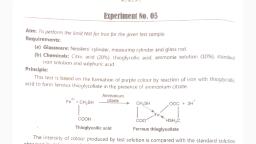
12, , Observation: The turbidity produce in sample solution should not be greater than standard, solution. If turbidity produces in sample solution is less than the standard solution, the sample, will pass the limit test of sulphate and vice versa., , Reasons:, , , Hydrochloric acid helps to make solution acidic., , , , Potassium sulphate is used to increase the sensitivity of the test by giving ionic, concentration in the reagent, , , , Alcohol helps to prevent super saturation., , Limit Test of Iron, , Principle: Limit test of Iron is based on the reaction of iron in ammonical solution with, thioglycollic acid in presence of citric acid to form iron thioglycolate which is pale pink to deep, reddish purple in color., , Procedure:, , Test sample, , Standard compound (20 ppm Fe), , Sample is dissolved in specific amount of, , 2 ml of standard solution of iron diluted with, , water and then volume is made up to 40 ml, , water upto 40ml, , Add 2 ml of 20 % w/v of citric acid (iron free) Add 2 ml of 20 % w/v of citric acid (iron free), Add 2 drops of thioglycollic acid, , Add 2 drops of thioglycollic acid, , Add ammonia to make the solution alkaline, , Add ammonia to make the solution alkaline, , and adjust the volume to 50 ml, , and adjust the volume to 50 ml, , Keep aside for 5 min, , Keep aside for 5 min, , Color developed is viewed vertically and, , Color developed is viewed vertically and, , compared with standard solution, , compared with standard solution, , Handbook of Inorganic Impurities in Pharmaceuticals
Page 15 :
13, , Iron Standard Solution (20 ppm Fe): Dilute 1 volume of a 0.1726 per cent w/v solution of, ferric ammonium sulphate in 0.05 M sulphuric acid to 10 volumes with water. Contains iron in, ferric state., , Earlier aamonium thiocyanate reagent was used for the limit test of iron. Since thioglycolic acid, is more sensitive reagent, it has replaced ammonium thiocyanate in the test., , Observation: The purple color produce in sample solution should not be greater than standard, solution. If purple color produces in sample solution is less than the standard solution, the sample, will pass the limit test of iron and vice versa., , Reasons:, , , Citric acid helpsin to prevent precipitation of iron by ammonia by forming a complex, with it., , , , Thioglycolic acid helps to oxidize iron (II) to iron (III)., , , , Ammonia to make solution alkaline, Limit Test of Lead, , Lead is a most undesirable impurity in medical compounds and comes through use of sulphuric, acid, lead lined apparatus and glass bottles use for storage of chemicals., , Principle: Limit test of lead is based on the reaction of lead and diphenyl thiocabazone, (dithizone) in alkaline solution to form lead dithizone complex which is read in color., , Dithizone is green in color in chloroform and lead-dithizone complex is violet in color, so the, resulting color at the end of process is red., , Handbook of Inorganic Impurities in Pharmaceuticals
Page 16 :
14, , Procedure:, Test sample, , Standard compound, , A known quantity of sample solution is, , A standard lead solution is prepared equivalent, , transferred in a separating funnel, , to the amount of lead permitted in the sample, under examination, , Add 6ml of ammonium citrate, , Add 6ml of ammonium citrate, , Add 2 ml of potassium cyanide and 2 ml of, , Add 2 ml of potassium cyanide and 2 ml of, , hydroxylamine hydrochloride, , hydroxylamine hydrochloride, , Add 2 drops of phenol red, , Add 2 drops of phenol red, , Make solution alkaline by adding ammonia, , Make solution alkaline by adding ammonia, , solution., , solution., , Extract with 5 ml of dithizone until it becomes Extract with 5 ml of dithizone until it becomes, green, , green, , Combine dithizone extracts are shaken for 30, , Combine dithizone extracts are shaken for 30, , mins with 30 ml of nitric acid and the, , mins with 30 ml of nitric acid and the, , chloroform layer is discarded, , chloroform layer is discarded, , To the acid solution add 5 ml of standard, , To the acid solution add 5 ml of standard, , dithizone solution, , dithizone solution, , Add 4 ml of ammonium cyanide, , Add 4 ml of ammonium cyanide, , Shake for 30 mins, , Shake for 30 mins, , Observe the color, , Observe the color, , Handbook of Inorganic Impurities in Pharmaceuticals
Page 17 :
15, , Preparation of standard lead solution (1 ppm Pb): Dissolve 0.400 g of lead nitrate in water, containing 2 ml of dilute nitric acid and add sufficient water to produce 250.0 ml. This gives, , standard lead solution (1% Pb). Standard lead solution (1 ppm Pb) is prepared by diluting 1, volume of standard lead solution (1% Pb) to 1000 volumes with water., , Preparation of dithizone extraction solution: Dissolve 30 mg of dithizone in 1000 ml of, chloroform and add 5 ml of ethanol (95%). The solution is stored in refrigerator. Before use, the, solution is shaken with about half of its volume of 1% v/v nitric acid solution and acid is, discarded., , Preparation of Dithizone standard solution: Dissolve 10 mg of dithizone in 1000 ml of, chloroform., , Observation: The intensity of the color of complex, is depends on the amount of lead in the, solution. The color produce in sample solution should not be greater than standard solution. If, color produces in sample solution is less than the standard solution, the sample will pass the limit, test of lead and vice versa., , Reasons:, , , Ammonium citrate, potassium cyanide, hydroxylamine hydrochloride is used to make pH, optimum so interference and influence of other impurities have been eliminated., , , , Phenol red is used as indicator to develop the color at the end of process, , , , Lead present as an impurities in the substance, gets separated by extracting an alkaline, solution with a dithizone extraction solution., , Handbook of Inorganic Impurities in Pharmaceuticals
Page 18 :
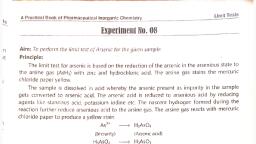
16, , Limit Test of Arsenic, Principle: Limit test of Arsenic is based on the reaction of arsenic gas with hydrogen ion to form, yellow stain on mercuric chloride paper in presence of reducing agents like potassium iodide., , It is also called as Gutzeit test and requires special apparatus., , Arsenic, present as arsenic acid in the sample is reduced to arsenious acid by reducing agents, like potassium iodide, stannous acid, zinc, hydrochloric acid, etc. Arsenious acid is further, reduced to arsine (gas) by hydrogen and reacts with mercuric chloride paper to give a yellow, stain., , The depth of yellow stain on mercuric chloride paper will depend upon the quality of arsenic, present in the sample., , Procedure:, Test solution: The test solution is prepared by dissolving specific amount in water and stannated, HCl (arsenic free) and kept in a wide mouthed bottle., , To this solution 1 gm of KI, 5 ml of stannous chloride acid solution and 10 gm of zinc is added, (all this reagents must be arsenic free), , Keep the solution aside for 40 min and stain obtained on mercuric chloride paper is compared, with standard solution., , Handbook of Inorganic Impurities in Pharmaceuticals
Page 19 :
17, , Standard solution:, A known quantity of dilute arsenic solution is kept in wide mouthed bottle and rest procedure is, followed as described in test solution., , Apparatus as per IP 1996:, This apparatus has following parts:, , , Approximately 60 ml generator bottle with 40 ml indicating line., , , , Glass tube with 6.5 mm inner diameter, , , , A ground joint glass tube with 6.5 mm inner diameter and 18 mm outer diameter at the, joint. Inner joint and the outer joint form a concentric circle., , , , Rubber stopper, , , , Narrow part of the glass tube B. Glass wool is inserted up to this part., , , , Lead acetate cotton plug or wool, , Reasons:, , , Stannous chloride is used for complete evolution of arsine, , , , Zinc, potassium iodide and stannous chloride is used as a reducing agent, , , , HCl is used to make the solution acidic, , , , Lead acetate pledger or papers are used to trap any hydrogen sulphide which may be, evolved along with arsine., , Handbook of Inorganic Impurities in Pharmaceuticals
Page 20 :
18, , Limit Test of Heavy Metals, Principle: Limit test of heavy metals is based on the reaction of metallic impurities with, hydrogen sulfide in acidic medium to form brownish colour solution., Metals that response to this test are lead, mercury, bismuth, arsenic, antimony, tin, cadmium,, silver, copper, and molybdenum., The metallic impurities in substances are expressed as parts of lead per million parts of the, substance. The usual limit as per Indian Pharmacopoeia is 20 ppm, , Procedure: The Indian Pharmacopoeia has adopted four methods for the limit test of heavy, metals., , Method A: Use for the substance which gives clear colorless solution under the specific, condition., Test sample, , Standard compound, , Solution is prepared as per the monograph and Take 2 ml of standard lead solution and dilute to, 25 ml is transferred in Nessler’s cylinder, , 25 ml with water, , Adjust the pH between 3 to 4 by adding dilute Adjust the pH between 3 to 4 by adding dilute, acetic acid or dilute ammonia solution, , acetic acid or dilute ammonia solution, , Dilute with water to 35 ml, , Dilute with water to 35 ml, , Add freshly prepared 10 ml of hydrogen, , Add freshly prepared 10 ml of hydrogen, , sulphide solution, , sulphide solution, , Dilute with water to 50 ml, , Dilute with water to 50 ml, , Allow to stand for five minutes, , Allow to stand for five minutes, , View downwards over a white surface, , View downwards over a white surface, , Observation: The color produce in sample solution should not be greater than standard solution., , Handbook of Inorganic Impurities in Pharmaceuticals
Page 21 :
19, , If color produces in sample solution is less than the standard solution, the sample will pass the, limit test of heavy metals and vice versa., Method B: Use for the substance which do not give clear colorless solution under the specific, condition., Test sample, , Standard compound, , Weigh specific quantity of test substance, moisten, , Take 2 ml of standard lead solution and, , with sulphuric acid and ignite on a low flame till, , dilute to 25 ml with water, , completely charred, Add few drops of nitric acid and heat to 500 °C, Allow to cool and add 4 ml of hydrochloric acid and, evaporate to dryness, Moisten the residue with 10 ml of hydrochloric acid, and digest for two minutes, Neutralize with ammonia solution and make just acid, with acetic acid, Adjust the pH between 3 to 4 and filter if necessary, , Adjust the pH between 3 to 4 by adding, dilute acetic acid or dilute ammonia, solution, , Dilute with water to 35 ml, , Dilute with water to 35 ml, , Add freshly prepared 10 ml of hydrogen sulphide, , Add freshly prepared 10 ml of hydrogen, , solution, , sulphide solution, , Dilute with water to 50 ml, , Dilute with water to 50 ml, , Allow to stand for five minutes, , Allow to stand for five minutes, , View downwards over a white surface, , View downwards over a white surface, , Observation: The color produce in sample solution should not be greater than standard solution., If color produces in sample solution is less than the standard solution, the sample will pass the, limit test of heavy metals and vice versa., , Handbook of Inorganic Impurities in Pharmaceuticals
Page 22 :
20, , Method C: Use for the substance which gives clear colorless solution in sodium hydroxide, solution., Test sample, , Standard compound, , Solution is prepared as per the monograph and Take 2 ml of standard lead solution, 25 ml is transferred in Nessler’s cylinder or, weigh specific amount of substance and, dissolve in 20 ml of water and add 5 ml of, dilute sodium hydroxide solution, Make up the volume to 50 ml with water, , Add 5 ml of dilute sodium hydroxide solution, and make up the volume to 50 ml with water, , Add 5 drops of sodium sulphide solution, , Add 5 drops of sodium sulphide solution, , Mix and set aside for 5 min, , Mix and set aside for 5 min, , View downwards over a white surface, , View downwards over a white surface, , Observation: The color produce in sample solution should not be greater than standard solution., If color produces in sample solution is less than the standard solution, the sample will pass the, limit test of heavy metals and vice versa., , Method D :, Standard Solution: Pipette 10.0 ml of either standard lead solution (1 ppm Pb) or standard lead, solution (2 ppm Pb) into a small Nessler cylinder labeled as “Standard”. Add 2.0 ml of the test, solution and mix., , Test Solution: Prepare as directed in the individual monograph and pipette 12 ml into a small, Nessler cylinder labeled as “Test”., , Procedure: Add 2 ml of acetate buffer pH 3.5 to each of the above Nessler cylinders, mix, add, 1.2 ml of thioacetamide reagent and allow to stand for 2 minutes. Compare the colour by viewing, vertically downwards over a white surface. The colour produced with the test solution is not, more intense that than produced with the standard solution., Handbook of Inorganic Impurities in Pharmaceuticals
Page 23 :
21, , Important Questions, I. very short answer, 1. Name 5 Sources of Impurities in pharmaceutical preparation., 2. Limit test is ................................... test designed to identify and control small, quantities of impurities., 3. Limit test for chloride has been based open Rx b/w…………and………..to obtain silver, chloride., 4. Limit test for sulphate has been basedupon the ppt of sulphate with……..in the presence, of…….., 5. In limit test for sulphate to prevent the supersaturation of BaSO 4 a small amount, of……….has been added in the reagent., 6. Limit test for iron is based upon reaction of Fe with ………in of a solution buffered with, ammonium citrate., 7. Limit test for iron purple color is due to formation of…………….., 8. In limit test for iron ...................... prevent the precipitate of iron as Fe(OH)3NH3, solution., 9. In, , limit, , test, , for, , iron, , Ferrous thioglycolate has stable pink to reddish purple, , colour in ........................ medium., 10. Limit test for Pb has been based upon Rxn b/w………. and……….. to form complex., 11. The structure of dithiazone ............, 12. The limit test for Arsenic is based upon……………. test., 13. In limit test for Arsenic ........... is converted into Arsenous acid/Arsinegas., 14. Arsine gas is carried and comes into contact with…………in produces a yellow or, brown stain., 15. In limit test for Arsenic, temp, should be maintained to…………….., 16. The function of granulated Zn in limit test for Arsenic is………………………, 17. If the test solution color, turbidity oropalesence is less than the standard solution it, ………............. the limit test., Handbook of Inorganic Impurities in Pharmaceuticals
Page 24 :
22, , 18. The main sources of ........impurities are sulphuric acid and lead apparatus., 19. The standard and test solution used for limit test are prepared in……………….., 20. Why nitric acid is added in the limit test of choride ?, 21. What is the role of citric acid, thioglycolic acid & ammonia in the limit test of Iron ?, 22. Limit test of Arsenic is also known as ?, 23. Why lead acetate cotton is used in the limit test of Arsenic?, 24. What is the use of stannous chloride in limit test of Arsenic?, Short Answer, 1. Discuss limit test of Iron., 2. Discuss the Principle and procedure for the limit test of sulphate., 3. Discuss the apparatus used in limit test of Arsenic., 4. Describe the principle of limit test of sulphate & Arsenic & chloride., Long answer, 1. Write a brief Essay on sources of Impurities in Pharmaceuticals., 2. Give complete Principle and Method as per IP of Limit test of following:, a. Lead, b. Sulphate, c. Chloride, d. Arsenic, e. Iron, f. Heavy Metal, , Handbook of Inorganic Impurities in Pharmaceuticals, , View publication stats