Page 1 :
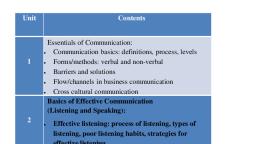
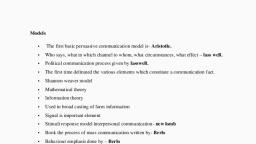
SYLLABUS, COMMUNICATION SKILLS [etx 104 / 204), , Unit i:, Communication and Communication Processes : Introduction to, , Communication, Forms and functions of Communication, Barriers to, Communication and overcoming them, Verbal and Non-verbal Communication,, , Reading : Introduction to Reading, Barriers to Reading, Types of Reading :, Skimming, Scanning, Past Reading, Strategles for Reading, Comprehension., , Listening : Importance of Listening, Types of Listening, and Barriers to Listening., , (Chapter - 1), Unit 2:, , Verbal & Non-verbal Communication : Use of Language in Spoken, Communication. Principles and Practice of Group Discussion, Public Speaking, (Addressing Small Groups and Making Presentation), Interview Techniques,, Appropriate Use of Non-verbal Communication, Presentation Skills, Extempore,, Efocution. (Chapter - 2), , Unit 3:, , Study of Sounds in English ;: Introduction to phonetics. Study of Speech Organs,, Study of Phonemic Script, Articulation of Different Sounds in English. (Chapter - 3), , Unit 4:, , English Grammar : Grammar : Forms of Tenses, Articles, Prepositions, Use of, Auxillaries and Modal Auxiliaries, Synonyms and Antonyms, Common Errors,, (Chapter - 4), , Unit 5:, , Writing Skills, Reading Skills & Listening Skills : Features of Good Language,, Difference between Technical Style and Literary Style, Writing Emails, Formal and, Informal English. Technical Reports : Report Writing : Format, Structure and Types,, Letter Writing : Types, Parts, Layouts, Letters and Applications, Use of Different, Expressions and Style, Writing Job Application Letter and Resume., , (Chapters - 5 and 6), , , , , , (tv), , , , Scanned with CamScanner
Page 2 :
SETS IIE, , , , SMT TIDE RE OE LEONI I TT, , , , , , , , UNIT - 1, , , , , , , , , , , , , , , , COMMUNICATION AND, COMMUNICATION PROCESSES, , , , , , , , , , , , , , , , , , , , 1,1: Introduction to Cummunication, , , , , , , , Q.1, What is communication ?, , Ans. : Communication is the process of transferring or exchange of, information from one source person to another. It includes facts,, emotions, values and feelings. Communication is a continuous, process; there may be time gap but it never stops. Communication is a, process of exchanging verbal and non-verbal messages. The word, communication has been derived from Latiry word ‘communicare’,, which literally mean to share, to give and to impart. Definition of, communication given by different scholars ;, , “Communication is the process of passing information and, understanding from one person to another”. Keith and Devis, , “Communication is the sum of all the things one person does when he, wants to create understanding in the mind of another. It is a bridge of, meaning. It involves a systematic and continuous process of telling,, listening and understanding”. Louis A. Allen, , So we can say that communication is the process of interaction between two, or more people., Q.2 What are the different elements of communication ?, , Ans, :The main components of communication process are as follows :, , e Sender / Encoder : A sender / encoder is a person who sends the, message. A sender makes use of symbols (words or graphic or visual, aids) to convey the message and produce the required response., Sender may be an individual or a group or an organization. The, views, background, approach, skills, competencies, and knowledge, of the sender have a great impact on the message. The verbal and, , , , (a -)), , , , ~ Scanned with CamScanner
Page 3 :
Communication Skills 1-2 Comnutnication & Conununication Processes, , non-verbal symbols chosen are essential in ascertaining, interpretation of the message by the recipient in the same terms as, intended by the sender., , e Message ; Message is a key idea that the sender wants to, communicate. It is a sign that elicits the response of recipient., Communication process begins with deciding about the message to, be conveyed. It must be ensured that the main objective of the, message is clear., , e Medium : Medium is a means used to exchange / transmit the, message. The sender must choose an appropriate medium for, transmitting the message else the message might not be conveyed to, the desired recipients. The choice of appropriate medium of, communication is essential for making the message effective and, correctly interpreted by the recipient. This choice of communication, medium varies depending upon the features of communication. For, instance - Written medium is chosen when a message has to be, conveyed to a small group of people, while an oral medium is, chosen when spontaneous feedback is required from the recipient as, misunderstandings are cleared then and there., , ° Recipient / Decoder : A recipient / decoder is a person for whom, the message is intended / aimed / targeted. The degree to which the, decoder understands the message is dependent upon various factors, such as knowledge of recipient, their responsiveness to the message,, and the reliance of encoder on decoder,, , e Feedback : Feedback is the main component of communication, process as it permits the sender to analyze the efficacy of the, message. It helps the sender in confirming the correct interpretation, of message by the decoder. Feedback may be verbal (through words), or non-verbal (in form of smiles, sighs, etc.). It may take written, , form also in form of memos, reports, etc., , , , , , Scanned with CamScanner
Page 4 :
Communication Skills 1-3 Communication & Communication Processes, , Q.3 What is the process of communication ?, , Ans. : The word process suggests that communication exists as a flow, through a sequence or series of steps. Communication is an exchange, of meaning and understanding. Meaning is central to communication, and transfer of meaning is central objective of communication, process. Communication is an interactive process. The communication, agents involved in the process of communication are the sender and, receiver. Thus we can say communication is dynamic and interactive, process., , There are five steps in the process of communication; Ideation,, Encoding, Transmission, Decoding , Feedback / Response., , , , , , , , , , , , , , , , Ideation >) Encoding +=} Transmission Decoding Response, , , , , , , , , , , , , , Fig. Q.3.4 Five steps of process of communication, , Ideation : It refers.to the formation of idea or selection of a massage, to be communicated. The scope of ideation is determined by the, sender’s knowledge, experiences and abilities as well as the purpose, of communication and the context of the communicative situation., Massages generally have two kinds of context; logical and emotional., Encoding : It is the process of changing information into some form, of logical coded massage in formal situations. Encoding involves;, , ° Selecting a language;, , o Selecting a medium of communication;, , o Selecting an appropriate communicative form. ;, Selecting a communicative form largely depends upon the sender,, receiver relationship and the overall goal of communicative situation., Oral communication may be in the form of face to face, communication or face off communication. Written communication, may be in the form of reports, letters, e-mails, memorandum,, , proposals etc., , , , Scanned with CamScanner
Page 5 :
Convnunication Skills 1-4 Communication & Communication Processes, , Transmission : Transmission refers to the flow of massage over the, chosen channel. Transmission confirms the medium selected during, the process of encoding and keeps the communication channel free, from interference or noise. So that message has reached the receiver, without any disturbance. It is also one of the most basic aspects of, communications. It also involves choosing the proper place (where to, communicate), a proper way (how to communicate) and the time, (when to communicate). For communication to be effective it is, essential that right time, the right place and the right method is chosen,, Decoding : It is the process of converting a massage into thoughts by, translating the received stimuli into interpreted meaning in order to, understand the message communicated. It is important to note that it is, the message that is transferred from one person to another. The, receiver has to assign message in order to understand it. The process, of decoding involves interpretation and analysis of a message., Decoding in oral communication includes listening and understanding, and in written communication it refers to reading and understanding a, written message. Effective decoding is very important for a successful, communication as any misinterpretation of a message may lead to, confusion and misunderstanding., Response / Feedback : It is the action and reaction of receiver to the, message. It has the sender to know that the message was received and, understood. It is the key to communication as the effectiveness of, communication depends on how congruent a receiver’s response is, with the meaning intended by the sender. Immediate answer of any, question is known as response while answer given after a time lag is, known as feedback., , , , 1.2 Forms and Functions of Communication, , , , , , , , Q.4 Describe different forms of communication., , , , Scanned with CamScanner