Page 1 :
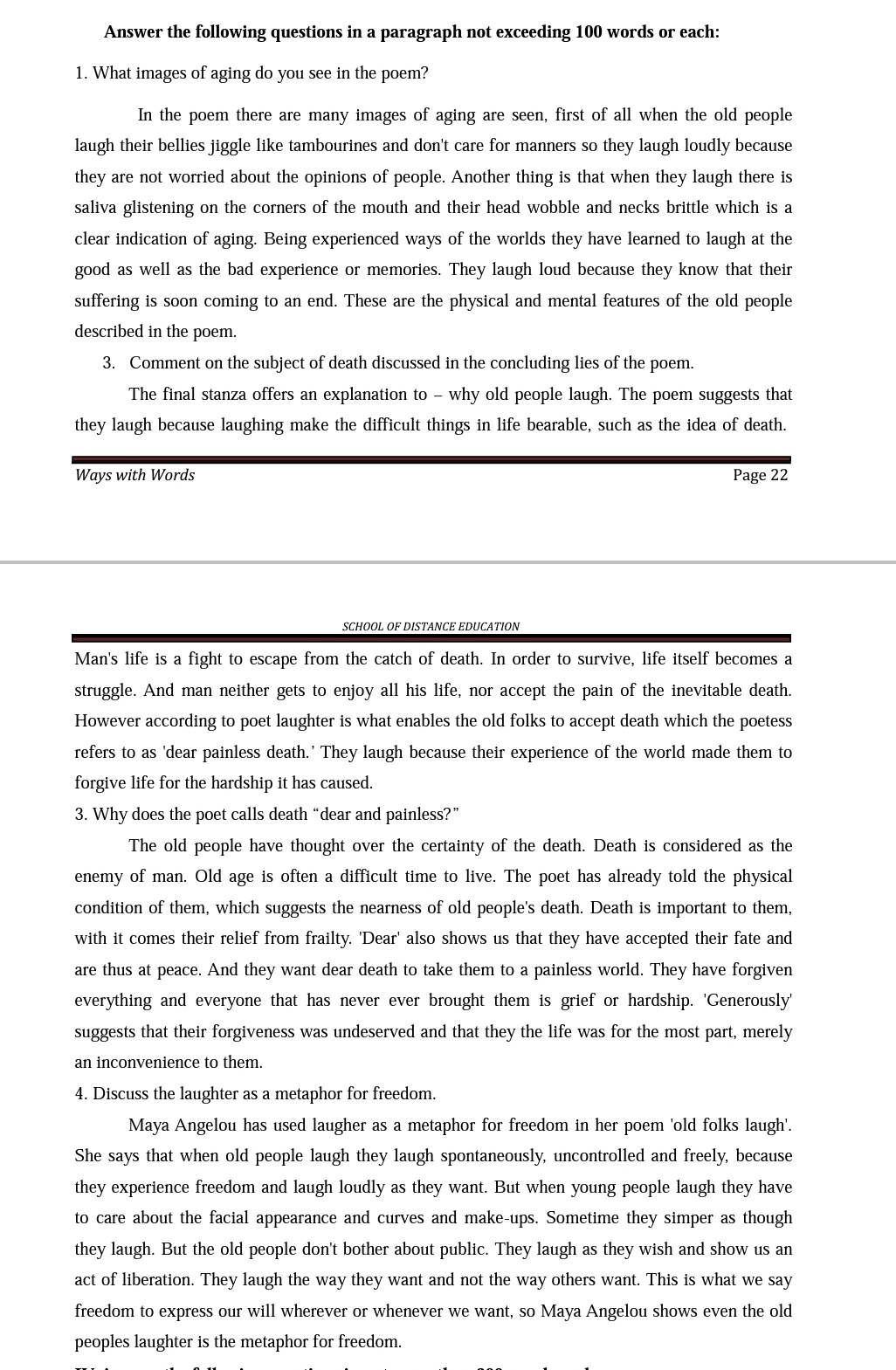
Answer the following questions in a paragraph not exceeding 100 words or each:, 1. What images of aging do you see in the poem?, , In the poem there are many images of aging are seen, first of all when the old people, laugh their bellies jiggle like tambourines and don't care for manners so they laugh loudly because, they are not worried about the opinions of people. Another thing is that when they laugh there is, saliva glistening on the corners of the mouth and their head wobble and necks brittle which is a, clear indication of aging. Being experienced ways of the worlds they have learned to laugh at the, good as well as the bad experience or memories. They laugh loud because they know that their, suffering is soon coming to an end. These are the physical and mental features of the old people, described in the poem., , 3. Comment on the subject of death discussed in the concluding lies of the poem., The final stanza offers an explanation to — why old people laugh. The poem suggests that, , they laugh because laughing make the difficult things in life bearable, such as the idea of death., , , , Ways with Words Page 22, , SCHOOL OF DISTANCE EDUCATION, Man's life is a fight to escape from the catch of death. In order to survive, life itself becomes a, struggle. And man neither gets to enjoy all his life, nor accept the pain of the inevitable death., However according to poet laughter is what enables the old folks to accept death which the poetess, refers to as ‘dear painless death.’ They laugh because their experience of the world made them to, forgive life for the hardship it has caused., , 3. Why does the poet calls death “dear and painless?”, , The old people have thought over the certainty of the death. Death is considered as the, enemy of man. Old age is often a difficult time to live. The poet has already told the physical, condition of them, which suggests the nearness of old people's death. Death is important to them,, with it comes their relief from frailty. 'Dear' also shows us that they have accepted their fate and, are thus at peace. And they want dear death to take them to a painless world. They have forgiven, everything and everyone that has never ever brought them is grief or hardship. ‘Generously’, suggests that their forgiveness was undeserved and that they the life was for the most part, merely, an inconvenience to them., , 4. Discuss the laughter as a metaphor for freedom., , Maya Angelou has used laugher as a metaphor for freedom in her poem ‘old folks laugh’., She says that when old people laugh they laugh spontaneously, uncontrolled and freely, because, they experience freedom and laugh loudly as they want. But when young people laugh they have, to care about the facial appearance and curves and make-ups. Sometime they simper as though, they laugh. But the old people don't bother about public. They laugh as they wish and show us an, act of liberation. They laugh the way they want and not the way others want. This is what we say, freedom to express our will wherever or whenever we want, so Maya Angelou shows even the old, , peoples laughter is the metaphor for freedom.