Page 1 :
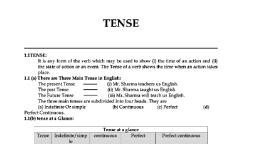
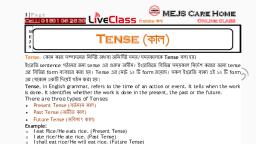
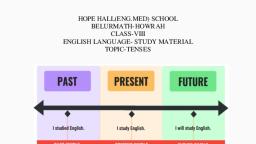
208, , occurs, Present Subjunctive, , The, , t n certain traditional phrases, where il rapresrs a wish or hope as, God bless you, , God save the King, Heaven help us, , (21, , In, , o n n claiase, , formal Englush, in a, , (, , 209, , epement, , avett eesting desare istention. tesolutton,, , haunas, , Mr Ciupta be appeoinded, I move thal, builh to relieve the congeatu, that, a tig soiad be, I1 saggested, inctrard to ten qpers, that tthe subactiption te, We Feenmended, used, Subjunctive is, The Past, or contrary, indicate a situation which is unreal, , verb wish, to, () Ater the, , nane (IwishI knew his, millionaire, Iwish Iwerea, She wishes the, , car, , m, , belonged, , know lius, s011y 1 don t, , or, , unreality, , express improbability, am, not do that (but I, you I should, , Ifl were, If we started, , (3) After, , as, , if, , now we, , as, , would be, , though,, , fart, , as, , thanie, , to you, , if, to, , (2) After, , etc, , in, , time, , (but, , in, , not you,, , and, , wife (but I, as if I were his, He orders me about, he were drunk (but he is, He walks as though, , never can, , be), , start now), , we cannot, , or, to indicate unreality, , present,as, , the, , improbability, , ,, , as, , am not), , not)., , (4) After, , it is time, , +, , subject,, , to, , imply that, , it, , is, , late;, , as,, , It is time we started., , subject,, (5) After would rather+, , to indicate, , preference;, , as,, , to go, went by air (= I should prefer you, I would rather you, them by cheque., They would rather you paid, , Chapter 24, 210. Read the, , by air), , TENSES: INTRODUCTION, , following, , sentences., , I write this letter to please you., 2. I wrote the letter in his very presence., letter tomorrow., 3. I shall write another, the Verb write refers to, 1., , In, , sentence, , 1,, , present time., , I wrote, , time., 2, the Verb wrote refers to past, write refers to future time., In sentence 3, the Verb shall, , In, , sentence, , Thus a Verb may refer, , (3) to future time., (2) to past time, or, present time,, said to be in the Present Tense; as,, 211. A Verb that refers to present time is, (1), , to, , I love., , I write., , from the Latin tempus, time.], the Past Tense; as,, A Verb that refers to past time is said to be in, I loved., I wrote., Future Tense;, A Verb that refers to future time is said to be in the, I shall love., I shall write., 212. Thus there are three main Tenses:, , [The word, , tense, , comes, , The Present, the Past, the Future., , The Tense of a Verb shows the time of an action or, , TENSES: INTRODUCTION, , event., , as,
Page 2 :
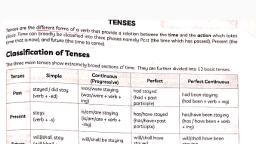
p r e s, , a, , wish, , I, , Let's, , past, , tense, , nay, ma, , to, , know, , don't, future tense), , I, , verb, , sorry, , (l'm, , answer., , knew the i, , he, wait till, , (Present, , Present time), , the, , p r e s e n t, , te-Sometimes, , Past, answer., , time,, , refer, , tense, , a, , and, , tense, , Mood), , to love., , ofthe, , Indicative, , comes., P, , R, , E, , S, , E, , N, , T, , T, , E, , N, , S, , E, , Voice,, , Plural Number, , ( A c t i v e, , 213. Below, , we, , givethe, , chief, , Tenses, , We love, S, , i, , n, , g, , u, , l, , a, , r, N, , u, , m, , b, , e, , r, , You love, They love, , I love, You love, , 1st Person, , He loves, , 2nd person, , Plural Number, , PAST TENSE, , 3rd Person, , We loved, , Singular Number, , You loved, I loved, , They loved, , You loved, , Ist Person, 2nd Person, , He loved, FUTURE TENSE, , Plural Number, , 3rd Person, Singular Number, , We shall/will love, , I shall/will love, , You will love, They will love, , 1st Person, , You will love, , 2nd Person, 3rd Person, , He will love, , 214. Read these sentences, , (Simple Present), , 1. I love., , (Present Continuous), , 2. Iam loving, , (Present Perfect), , 3. I have loved., , (Present Perfect Continuous), , 4. I have been loving., , and are therefore said to be in the hrerefer to the present time,, without anything heaction is mentioned simply,, 1, however, the Verb shows that the, , The Verbs in all of these, , sentences, , In sentence, the completeness or incompleteness of the action., , In sentence 2, the Verb shows that the action is mentioned as incomplete or continuous, that is, a-, , In sentence 3, the Verb shows that the action is mentioned as finished, complete, or perfect, at the, , speaking, The tense of the Verb in sentence 4 is said to be Present Perfect Continuous, because the verb sho, action is going on continuously, and not, at this, , Thus we, , see, , completed, present moment., only the time of an action or event, but also th=, , that the Tense of a verb shows not, , action referred to., 215., , Just as the Present Tense has four forms, the, Past Tense also has the following four forms:, 1. I loved., (Simple Past), 2. I was, , loving., , 3. Ihad loved., 4. I had been, , loving., , (Past Continuous), (Past Perfect), , (Past Perfect Continuous), , Similarly, the Future Tense has the, 1. I shall/will love., 2. I shall/will be, 3. I shall/will, have, 4. I shall have, , loving., , We may now, 216, A verb, , loved., been loving., , following four forms :, , Simple Future), (Future Continuous), (Future Perfect), (Future Perfect Continuous), , define Tense as that form of, a', Verb which shows the, agrees with its subject n, number and, time and the, Simple Present Tense, state of an, an actio=, person., actio, I speak, Study the verb forms state, Present Continuous Tenseof various tense, , 78, , I am speaking, , HiGH SCHOonu
Page 3 :
You are speaking, He is spraking, We are, , You speak, He speaks, , spe aking, , We speak, They speak, , They are ayeaking, Present Perfect, , Present Perfect Tense, , Continuous, , I have, , bee apeaking, You have been, He has been apeakin, spraking, We have been, speaking, They have been, speaking, Past Continuous lenae, , Thave spoken, You have spoken, , He has spoken, , We have spoken, They have spoken, Simple Past Tense, , lesse, , I was speaking, , I spoke, You spoke, He spoke, , We spoke, , You were speaking, He was speaking, We were speaking, , They spoke, , They were speaking, , Past Perfect Tense, , Past Perfect Continuous lense, , I had spoken, You had spoken, He had spoken, , I had been, , speaking, , You had been speaking, He had been speaking, We had been speaking, , We had spoken, , They had been speaking, , They had spoken, Simple Future Tense, , Future Contin uous Tense, , I shall/will speak, You will speak, He will speak, , I shall/will be speaking, You will be speaking, He will be speaking, We shall/will be speaking, , We shall/will speak, They will speak, , They will be speaking, , Future Perfect Tense, I shall/will have spoken, You will have spoken, He will have spoken, We shall/wll have spoken, They will have spoken, , Future Perfect Continuous Tense, I shall/will have been speaking, You will have been speaking, , He will have been speaking, He shall/will have been speaking, , They will have been speaking, , ., , EXERCISE IN GRAMMAR 45, , Point out the Verbs in the following sentences and name their Moods and Tenses., 1. The river flows under the bridge., 2. 1shall answer the letter to night., 3. I knew he was there, for I had seen him come., 4. It has been raining all night., 5., has passed all right., , Ihear he, , 6. I had finished when he came., 7. He takes but little pride in his work., 8. 1have been living, 9. Be good, sweet maid., , here for months., , 10., 11., 12., 13., 14., 15., , By this time to morrow I shall have reached my home., , It is time we left., He told me that he had finished the work., , God forgive you!, He is, , waiting for you in the compound., Piper, pipe that song again., , TENSES:INTRODUCTION, , 16. Iam hoping to get a holiday soon., , 17. Perhaps it were better to obey him., 18. Do noble, , 19., 20., 21., 22., 23., 24., , deeds, not dream them all the day., 1shall have plenty of time tomorrow., Though this be madness, yet there is method in it., The king had never before led his troops in battle., If he was guilty, his punishment was too light., We have heard a strange story., The travellers, all of whom had seen the chameleon,, , could not agree about its colour., 25. Beware lest something worse should happen to you., , 26. The farmer is cutting the corn which has ripened., , 27. Iwish my brotherwere here., 28. She would rather we stayed till tomorrow.
Page 4 :
PRESENT, , P, , R, , E, , S, , E, , N, , T, , T, TH E, , Chapter 25, 25, , THE, , JS, U, SE S, , . It has, , O, F, OF, , referer, , AND PAST TENSES, , warnir, , napter, , My, ., , The fc, , (1), PRESENT TENSESS, , (2), (3), , Simple Present Tensee, 217. The, , Simple Present, , (1), , To, , express, , is used:, , a habitual, , (4), , action; as,, , (5), , morning., He drinks tea every, o'clock., at five, , upeveryday, , get, good time., My watch keeps, truths, (2) To express general, The, , sun, , e.g, Wre, , , as,, , rises in the east., , what, , Honey is sweet., , brave., Fortune favours the, sentences, , n, , 4, , exclamatory, , the present ;, , is, , She, , express, , He, , HC, , as,, , in, actually taking place, Here comes the bus, There she goes, as,, Simple Past;, substitute for the, as, Rustam., In vivid narrative,, blow to, Sohrab, , now, , Immediately, , (5), , beginning, , with here and, , there to, , The, Ia, , To express, The next, , deals a heavy, rushes forward and, his capita., to, the Sultan hurries, , a, , future, , flight, , that is, , part of a, , tomorrow, , morning., , event, , is at 7.00, , Sh, , T, fixed timetable, , or, , fixed, , programme,, , es, 2., , o'clock., The match starts at 9, 5.20., The train leaves at, , When does the coffee house reopen?, Present Tense., , of the Simple, 218. Note also the other uses, used to introduce quotations; as,, , (1) Itis, , thing of beauty is a joy for ever., Future Tense, in clauses of time and of condition;, (2) It is used, instead of the Simple, I shall wait till you finish your lunch., Keats says, 'A, , as,, , If it rains we shall get wet., , G) As in broadcast commentaries on sporting events, the Simple Present is used, instead of the e, Continuous, to describe activities in progress where there is stress on the succession of happt, , than on the duration., (4) The Simple Present is used, instead of the Present Continuous, with the type ofverbs referred to, , Present Continuous Tense, 219. The Present Continuous is used:, , (1), , For, , an, , action, , going on at the time of speaking; as,, , She is singing (now)., The boys are playing hockey., , (2) For a temporary action wnich may not be, actually happening at the time of, L am reading David, l am not, speaking,, Coppertield, (but, at this, reading, (3) For an action that has, moment)., deen, to take, arranged, I am going to the cinemaalready, tonight., place in the near future ; as,, My uncle is arriving tomorrow., , 80, , HiGH SCHOoL, , ENGLISH GRAMMAR &CO
Page 5 :
u tout before, befc that the Simple Present is used for a habitual action. However, when the, , 220., , It has, , been pointed, , to, r e f e r e n c e is, , bit-something which persists, for example, in spite of advice or, withan adverblike always, continually, constantly, Present Continuous, arly obstinate, , particularly, , a, , use, , the, , warming-we, , My, 221., , silly, dog is very, , The following, , ; he, , verbs,, , 1s always, , on a c c o u n t, , perception,, (1) Verbs of, Verbs, , (2), , running out, , of appearing,, , eg,, , oftheir, t, , see,, , into the road., , meaning, are, , eg, appear,, , look,, , seem., , desire, feel, like, love,, , imagine, mean, mind., , ow,, , hate, hope, refuse, prefer, , remember, forget,, believe, agree, constder, trust,, , Right, These grapes taste sour., , Wrong, are, , These grapes, , tasting sour., , I am thinking you, , are, , I think you are wrong8, , wrong., , She seems sad., , is seeming sad., , He has a cellphone., , He is having cellphone., listed above, However, the verbs, a, , She is tasting, , (taste, I am, , know, understand,, , when used in the passive)., contain, consist of, be (except, possess, belong to,, , eg, , She, , normally used in the continuous form:, , hear, smell, notice, recognize, , wish,, emotion, eg, want,, (3) Verbs of, think, supp0se,, ( Verbs of thinking, eg.,, , (5) have(= possess),, , not, , =, , test, , tenses with, be used in the continuous, needs more salt., the soup to see if it, can, , a, , change of meaning:, , the flavour of), , thinking of going to Malaysia., , the idea of ), (think of consider, lunch. (have eat), They are having, =, , =, , Present Perfect Tense, is used:, 222. The Present Perfect, , To indicate, , (1), , completed activities in the, , immediate, , past (with just); as,, , He has just gone out., It has just struck ten., , whose time is not given, (2) To express past actions, , and not, , definite; as,, , Have you read Gulliver's Travels'?, I have never known him to be angry., , Mr. Hari has been to Japan., , of their effect in the present, (3) To describe past events when we think more, left for you)., Gopi has eaten all the biscuits (ie, there aren't any, , than of the action itself; as,, , I have cut my finger (and it is bleeding now)., I have finished my work (= nowI am free)., , (4) To denote an action beginning at some time in the past and continuing up, , to, , the present moment (often, , with since and for-phrases); as,, I have known him for a long time., He has been ill since last week., We have lived here for ten years., We haven't sen Padma for several months., , 223. The following adverbs or adverb phrases can also be used with the Present Perfect (apart from those mentioned, never,, above);, this month, etc., , ever, , THE USES, , OF THE, , (in questions only), so far. till now yet (in negatives and questions), already, today,, , PRESENT, , AND, , PAST TENSES, , this weer,, , 37
Page 6 :
Note-The Present Pe, , time. We should not sa, with adverbs of past, , never used, has gone to erfect, Kolkataisyesterday'., In such cases the Simple Past should be used, 1sed C, , Xan, , (He went, to, , yesterday' )., Present Perfect Continuous Tense, , 224. The Present Perfect Continuous is used for an action which began at some time, in the, past and is, He has, , still continuing; as, , been sleeping for five hours (and is still sleeping)., They have been building the bridge for several, , They have been playing since four o'elock., , montns, , 225. This tense is also sometimes used for an action already finished. n such cases the, , t y of the activity is emphasized as an explanation, , of something., , Why are your clothes so wet ?'- 'I have been wateringthe garden., , He has been, , PAST TENSES, , hours (and, , Simple Past Tense, 226. The Simple Past is used to indicate an action completed in the past. It often oceurs with adverbs, , phrases of past time., The steamer sailed, yesterday., I received his letter a week, ago., She left school last year, 227. Sometimes this tense is used without an adverb of time. In such cases the time may be, , either implied or indicated by the context., I, , learnt Hindi in, , Nagpur., , I didn't, , sleep well (i.e., last night)., Babar defeated Rana Sanga at Kanwaha., 228. The Simple Past is also used for past habits; as., He studied many hours everyday., She always carried an umbrella., He ava, , Past Continuous Tense, , 229. The Past Continuous is used to denote an action going on at some time in the past. The time ofthe:, or may not be indicated., We were listening to the radio all evening., It was getting darker., , The light went out while I was reading., When I saw him, he was playing chess., , As in the last two examples above, the Past Continuous and Simple Past are used together when a, , happened in the middle of a longer action. The Simple Past is used for the new action., 230. This tense is also used with always, continually, etc. for persistent habits in the past., , He was always grumbling., , Past Perfect Tense, 231. The Past Perfect describes an action completed before a certain moment in the past; as,, him in New Delhi in 1996. I had seen him last five years before., , I met, , 232. If two actions happenedin the past,it may be necessary to show which action happened earlie, Ps, and the, The Past Perfect is mainly usediin such situations. The Simple Past is used in one clause, ause, the other; as,, , COM, , HIGH, , SCHoOL ENGLISH, , GRAMMAR*
Page 7 :
station the train, I r e a c h e d the, done my, I had, , I had, , exercise, letter, , the, , writen, , w h e n Hari c a m e, , before, , he, , Continuous, , Past, , r, , 233., , to, , I couldn't get into the, , ain)., , s e e me., , arrived., , Tense, , Perfect, , Dast, , had started (so, , Perfect Continuous, , action that, is used for an, , began, , time ; as,, to that, two months., a novel for, had been writing, time he, 1995, Mr Anand had, i, n, that, school, At, to the, Mukerii came, , before a certain, , up, , already, , been, , point, , in the, , teaching there for five, , past and continued, , vears., , r, , -EXERCISEIN COMPOSITION 46., ----**, , brackets., form from those in, correct verb, Choose the, , 1. The earth, 2. My friends, , 5., 6., 7., 8., , 9. He., , 10., 11., , 12., 13., 14., , 15., 16., , 17., 18., , 19, 20., , 21., 22., 23., , the, , up, him only o n e letter, , to, , now., , (sent, have sent, send), is, , looking), , (looks, looking,, had played), worried about something., She, (are playing, were playing,, tennis., rain while we_, drove), was, driving,, It started to, accident happened. (is driving,, fast when the, has, fallen), He., fell,, was driving. (falls,, _asleep while he, had seen), He, last night. (saw, have seen,, him at the party has,, Im surel, is having), mill in this town. (have,, , 3. 1, , 4., , (move, moves, moved), round the sun., (see, have seen, saw), Prime Minister yesterday., , has been working), , a, , (worked, is working,, here for the last five years., He thanked, done, had done, have been doing), (have, me for whatI_, He, have been hearing), noise. (hear, am hearing,, a strange, a m knowing), have, known,, him for a long time. (know,, am, studying, have been studying), English for five years. (study,, a m doing), my homework. (do, isdid,, Don't disturb me.Idoctor., wanting)), (wants, wanting,, Abdul, to be a, tastes, is tasting), (taste,, good., The soup, is watch, is watching), (watches,, TV most evenings., He, had gone, went), (has, minutes, gone,, five, ago., _out, He., cinema once a week. (goes, went,, the, to, When he lived in Hyderabad, he, all morning. (cries, has been crying), The baby., Rahim at the zoo. (saw, have seen, had seen), I, am not seeing), Kumar this week. (haven't seen, did't see,, , was, , going), , ., , twice weekly. (is appearing, appearing, appears), the roof. (is mending, was mending, mended), he, , 24. This paper., 25. Ashok fell offthe ladder when, , --, , EXERCISE IN cOMPOSITION 47., * * * * *, , Choose the correct alternative from those given in brackets., to speak to you. (wants, is wanting, was wanting), 1. The Headmaster, new, Ia, bicycle lastweek., (bought, have bought, had bought), 3. Here are your shoes ;, them. (just clean, just cleaned, have just cleaned), 2., , since early morning, (rained, is raining, has been raining), , 4. It, , 5. I _ a lot of work today. (did, have done, had done), 6. 1, something burning. (smell, am smelling, have been smelling), 7. Look! The sun, over the hills. (rises, is rise, is rising), 8. She, unconscious since four o'clock. (is, was, has been), 9 He used to visit us every week, but he, now. (rarely comes, is rarely coming, has rarely come), , 10. We, , for his call since 4.20. (are waiting, have been waiting, were waiting), , 11. Everyday last, week my aunt. a plate. (breaks, broke, was breaking), 12. Tknow all about, that film becausel i t twice. (saw, have seen, had seen), , 13. Our guests, , ;they are sitting in the garden. (arrived, have arrived, had arrived), , 4. h i m since we meta year ago. (didn't see, haven't seen, hadn't seen), 15. We _our breakfast half an hour, ago. (finished, have finished, had finished), , THE USES, , OF THE, , PRESENT, , AND, , PAST TENSES
Page 8 :
movng), was, , moved, , had, imoved., , 16 She, , while it, the b s, off, the film, jamped, , When, , wr, , cierra, werd to the, wthen it, , foi half an, , 19 Dd you, 20, , 21, , p, , e, , a, , r, , a, , n, , 25 AMern, , K, , There, , e, , r, , wars, , abotish, , has packet,, , wwnt, , up to, , Present, , lerwela, , use, , I think, , sure, , As, , in, , tense, , Helen, , can use, , It, , raining, , is, , "Mr Sinha, , is, , and Nilaveh., (am not, , visited,, fvisitecd, washad, hadn't), haven, , t, , having,, , today, to do it, (never, had had), future, have had, in the, ihad,, bed, way, a, ind, to, they will, but maytbe, , ture. (never managed, have, manaaee, , now,, , talking, , about, , used to talk, , results in, , the, , tuture, , talk about what, , win, , n, , English., , the Simple, , Future, , Tense, , things, , which we, , cannot, , control, , It, , he yoing, to lE, , the, , sEs the utat, , expresses th., , think, , when, , I will take an, , often, , happen, , in, , the future, , use, , this, , tense, , and, with I think,, , Im, , sure., , We also, , say, , I, , exoers, , , etc., , we, , of speak1ng., at the time, decide to do something, , umbrella., , moment.", at the, very busy, , Going to, to form, 238. We use the going, , (begoing, , -, , "All, , right. lll wait.", , to- base, , about it., , to do?"- *"Yes. I, "Have you decided what, want to, , or, , class., , s e n t e n c e s , we, , tense, , we, , believe will, , the mateh., , wll get a first, , this, , about, , May, , , Probably, , We, , have vici, visited), , packed), , Saturday, , to, , will, , the above, , I believe, 237., , changing,, , week., , a, , our e x a m, , Pakistan, , Tm, , has changed), , FUTURE, , Future Tense is, , We will know, , We, , had peen wal, , never, , of, , ways, , next, , 236., , seen,, , Tense,etc, , I shall be twenty, Diwali im, it wall be, this, , bart, , managed), , will have, , several, , The Simple, , had, , Negomtws, , Sumple, Simple Future Tense, 235, , (is, , e, , kest, , í, , my, , managed, , are, , h, , e, , b, , Chapter 26 THE, 14, , t, , had, , time, , tte radia, repsair h n n e r i, , to, , w, , alrear., , walkino, , seeing), , changed,, , 198O, , look, , was, , 4 When, , e, , were, , seen,, , une, , ts, , herae,, , to, , nevw, , p, , in Ser tanka, , Imeant, , n, , rain, , (have, , completely, , a, , Sheila, , 2Wthenl, , w, , to, , would, , been, , have, , ihave, , before, , me, , think yo, , The town, , started, , suddenty, , had, , started,, , walked,, , aleady, , hout, , s, , started, , already, , am, , sell your motorbike?, , of the verb) when, , we, , have decided to do something ben, , going to resign thejob.", , - "Tm going to buy, , a, , car.", , been made, we should ue, and preparations have, decided, upon, is, instant decision, Remember that ifthe action already, Future Tense is used for an, The, Tense., Simple, Future, the Simple, going to form, not, is somethingintor certain, when there, to talk about what seems likely, form, to, the, use, going, 239. We also, us about the future., tells, which, present, clouds., It is going to rain; look at those, to sink., The boat is full of water. It is going, She is going to have a baby, , Why do you, , 240. The going to form may also express an action which is on the point of happening., The boatisfull, , Let's get into the train. It's going to leave., , of water.lt is, , Look! The cracker is going to explode., , going to s1nk., , Be about to, , 241. Be about to + base form can also be used for the immediate future., Let's get into the train. It's about to leave., Don't go out now. We are about to have lunch., COMPO, , 84, , HiGH SCHOoL ENGLISH GRAMMAR&COo
Page 9 :
art), , een walking), , Simple Present Tense, , The Simple, , 242., , Tense is used for oflicial progranes and lnetaides, Te:, , Present, , 23rd, , on, , Simple, , have, , won't, , I, , Present is often, , as s o o n, , and, by the time, it, , ntil,, , go, , some, , till, Let's wait, Please, , ring, , milk, , up, , Continuous, , 244., , 244,, , We, we, , I, , future as fact, , Mr, , You, , the Present, , are, , if,, , unless, when, while us(-while), before., , used, , in, , such, , going, , sfter, , cases, , work., , he, , comes., , Tense, , Continuous Tense, , when, , we, , talk about something that, , use, future., to do in the, have planned, , am, , We, , Future Tense, , is not, , goto, , his, , as, as soon, , Present, , the, the, , tiine in elatUNes wilh, , (not: will rain), bed, before I, , he finishes, , me, , as., , The, , uture, Simple, , ruins., , if, , out, , Can I have, , ing oto form, form,, , Jun, , opens, The college, at 9.00, 6.30 and finishes, starts at, The film, Chennai?, train leave tor, the next, When does, used tOr, , ), , to Shimla, , We are exting, out tonig, , tomorrow., , eating out tonight., this evening., Abdul Rehman is arriving, are, , advised to, , use, , the, , Present Continuous, , Future Continuous Tense, Future Continuous, , (not, , the, , Simple Present) for personal, , arrangements, , at, actions which will be in progress, Tense to talk about, , a time in, , the, , future, , the, 245. We use, when we start, will be raining, I suppose it, beach in Singapore., be sitting on the, t o m o r r o w I will, the tennis match on TV", This time, then. I will be watching, "Please don't c o m e, o'clock?", "Can I see you at 5, which a r e already planned, actions in the future, tense to talk about, this, use, I will be staying, c o u r s e of things., 246. We also, in the normal, -, , ct_, , or, , which, , are, , expected, , here till, I will be staying, , to, , happen, , here till Sunday., , Sunday., week., , meeting us next, soon., The postman will be coming, He will be, , beforetalkit, , Be to, , official plans and arrangements., to talk about, to + base form, be, use, We, 247., next month., is to visit America, The Prime Minister, Tests.", , discuss "Nuclear, The conference is to, often in, used in a formal style,, , g in the, , usually left out in, , Future Perfect Tense, 248., , The Future Perfect, , Tense is used to talk, exercise, , about actions, , that will be completed by, , by then., , I shall have written my, to see him., He will have left before you go, for five years., will have worked here, the end of this month I, , By, , Future Perfect Continuous, , Tense, , for actions which, Continuous tense is used, Perfect, Future, 249. The, in the future., of time that will end, be in progress over a period, four years., have been living here for, By next March we shall, next July., Tl have been teaching for twenty years, common., This tense is not very, , THE FUTURE, n O S 1 T, , Minister to, headlines, e.g. "Prime, , Be to is, visit America"., , ld use the, on., , news, , reports. Be is, , will1, , a, , certain future time.
Page 10 :
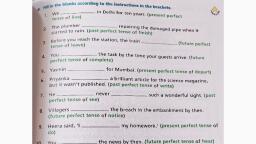
Choose the correct or, , .., more, , m o r e suitable, s, , 1. The plane, 2. Iwill, 3., , EXERCISE IN, - - ----, , forms, , ofthe, , GRAMMAR 48 ., ------, , verbs to fill in, , the blanks., , at 3.30. (arrives, will arrive), , phone you when he,, , back. (comes, will come), , Whenlget home, my dog, 4. 1, , at the gate waiting for me. (sits, will be sitting), , If the Subject, , the Joshis this, evening. (visit, am visiting), 5. Look, at those black clouds. It, (will rain,is going to rain), 6. The train., , Defore we reach the station. (arrives, will have arrived), , 7. Perhaps we., , 10., 11., 12., 13., 14., 15., 16., 17., 18., 19., 20., , For, , If the Subject, , Mahabaleshwar next month. (visit, will visit), , 8. Unless we., , 9, , as,, , He is here.He, , They are here, , now we can't be on time. (start, will start), , Note-In som, , nto town later on. Do you want a lift? (drive, will be driving), , The, , next term, Oh dear!, By 2020, robots, I'm sure she., ., , 1, , mode, , on 16th November. (begins, is beginning), (will sneeze, am going to sneeze), , perso, I speak., , many of the jobs that people do today. (will be taking over, will have take, , taken over, , the exam. (passes, will pass), , home next Sunday., , you one of these, , You speak, He speaks., , (go, am going), , e only excepti-, , days, I expect. (see, will be seeing), am going to), She has, bought some cloth; she, herself a blouse. (will make, is going to make), , Help!1, , fall. (will,, , I am., , You, , are., , ., , your house this afternoon. It is, , Hurry up!The programme, This book is not, , long.I, , on my way home from work. (will be passing,, is about to start), start,, (will, it by lunch time. (will be reading, will have read), , information about verb forms, , |Chapter 27, 250. The, , Verb, like, , 1. I speak., , in, , conditionals, see Book I, Chapter, , THE VERB: PERSON, , am, , He i, , passing), , r further stuc, , hapter, , 32., , Read these, , I want to, go, , AND NUMBER, , the Personal Pronouns, has three Persons -the, First, the Second and the Third., Thus, , 2. You, , speak. (Old English: Thou speakest.), This is because of the difference in Person of, the Subjects,, , They tried, The formns, The infi=, , 3. He speaks., , 1. To err is, , all the three are subjects of the, lo, singulke 2.3. Birds, is, of, the First Person, therefore the Verb is also of, To resp, Subiect, the First Person., 4. He refu, Subject is of the Second Person, therefore the verb is also of the Second, 5. Many r, Person., Subject is of the Third Person, therefore the Verb is also of the Third Person., In senter, We thus see that the Verb takes the same, Person as its Subject; or, that the Verb, with, its, agrees, 251. The Verb, like the Noun and the, SutyInsenter, Pronoun, has two Numbers: the, and, the, Plural., Singular, 1. He speaks, Thus we sg, sentc, In sentence 1, the, In sentence 2, the, In sentence 3, the, , as, , 2 They speak., , In senter, , This is because of the difference in Number of the, In sente, (as both the Subjects are of the third perst and is m, subjects, In sentence 1, the Subject is, Singular, therefore the Verb is, It will b, In sentence 2, the Subject is Plural, therefore the, Verb is Plural., object (, We thus see that the Verb takes the same, Number as its Subject; or, that the Verb, The wo, agrees with, Number., , Singular, , s, , have already seen that the Verb also, agrees with its Subject in Person; hence we have, the, The Verb must agree with its, Subject in Number and Person; that is, the Verb must be, o, Number and Person as its Subject. Thus, if the, Subject is of the Singular Number, First Person. t, of the Singular Number, First Person ; as,, , 252. But, , I, , am, , we, , here. I, , was, , there. I have, , a, , Thus, a, , Bid him, I bade hLet him, , 1will, nc, Make hi, I made, , bat. I play cricket., , cept whe, , E INFINI, , 86, , HiGH, , MAR&COW, , SCHooL ENGLISH GRAMMAR*