Page 1 :
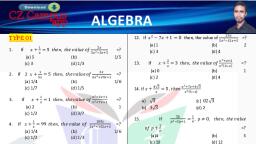
x +y = 4, 2x + 3y =3, x=, , 9, , 64.00, , , y=
Page 2 :
The Constitution of India, Chapter IV A, , Fundamental Duties, ARTICLE 51A, Fundamental Duties- It shall be the duty of every citizen of India(a), , to abide by the Constitution and respect its ideals and institutions,, the National Flag and the National Anthem;, , (b), , to cherish and follow the noble ideals which inspired our national, struggle for freedom;, , (c), , to uphold and protect the sovereignty, unity and integrity of India;, , (d), , to defend the country and render national service when called upon, to do so;, , (e), , to promote harmony and the spirit of common brotherhood amongst, all the people of India transcending religious, linguistic and regional, or sectional diversities, to renounce practices derogatory to the, dignity of women;, , (f), , to value and preserve the rich heritage of our composite culture;, , (g), , to protect and improve the natural environment including forests,, lakes, rivers and wild life and to have compassion for living, creatures;, , (h), , to develop the scientific temper, humanism and the spirit of inquiry, and reform;, , (i), , to safeguard public property and to abjure violence;, , (j), , to strive towards excellence in all spheres of individual and, collective activity so that the nation constantly rises to higher levels, of endeavour and achievement;, , (k), , who is a parent or guardian to provide opportunities for education, to his child or, as the case may be, ward between the age of six, and fourteen years.
Page 11 :
1, , Sets, , Let’s study., , • Sets - Introduction • Types of sets, • Equal sets, subset • Universal set, • Number of elements in a set, , • Venn diagrams, • Intersection and Union of sets, , Let’s recall., Some pictures are given below. It contains the group of things you know., 1, 2, 3, 4, 5, 6,, 7, 8, 9, 10, 11,, 12, ..., , Flower, bouquet, , Bunch of, keys, , Flock of birds, , Pile of notebooks, , Collection of, numbers, , We use special word for each of the collection given above. In all the above, examples we can clearly list the objects of that collection. We call the collection of, such objects as ‘Set’., Now, observe the collection. ‘Happy children in the village’, ‘Brilliant students of, the class’. In both the examples the words ‘Happy’ and ‘Brilliant’ are relative terms,, because the exact meaning of these words ‘to be happy’ and ‘to be brilliant’ differ, from person to person. Therefore, these collections are not sets., See the examples given below and decide whether it is a set or not., (1) Days of a week, , (2) Months in a year, , (3) Brave children in the class, , (4) First 10 counting numbers, , (5) Strong forts of Maharashtra, , (6) Planets in our solar system, , 1
Page 12 :
Let’s learn., Sets, If we can definitely and clearly decide the objects of a given collection then that, collection is called a set., Generally the name of the set is given using capital letters A, B, C,.....,Z, , The members or elements of the set are shown by using small letters, a, b, c, ..., If a is an element of set A, then we write it as ‘a Î A’ and if a is not an, element of set A then we write ‘a Ï A’ ., Now let us observe the set of numbers., N = { 1, 2, 3, . . .} is a set of natural numbers., W = {0, 1, 2, 3, . . .} is a set of whole numbers., I = {..., -3, -2, -1, 0, 1, 2, ...} is a set of integers., Q is a set of rational numbers., R is a set of real numbers., Methods of writing sets, There are two methods of writing set., (1) Listing method or roster method, In this method, we write all the elements of a set in curly bracket. Each of the, elements is written only once and separated by commas. The order of an element is, not important but it is necessary to write all the elements of the set., e.g. the set of odd numbers between 1 and 10, can be written as, as, A = {3, 5, 7, 9} or A = {7, 3, 5, 9}, If an element comes more than once then it is customary to write that element, only once. e.g. in the word ‘remember’ the letters ‘r, m, e’ are repeated more than, once. So the set of letters of this word is written as A = {r, e, m, b}, (2) Rule method or set builder form, In this method, we do not write the list of elements but write the general element, using variable followed by a vertical line or colon and write the property of the, variable., e.g. A = {x ½ x, , Î N, 1 < x < 10 } and read as 'set A is the set of all ‘x’ such, , that ‘x’ is a natural number between 1 and 10'., , 2
Page 13 :
e.g. B = { x | x is a prime number between 1 and 10}, set B contains all the prime numbers between 1 and 10. So by using listing method, set B can be written as B = {2, 3, 5, 7}., Q is the set of rational numbers which can be written in set builder form as, , , p, , Q ={ q | p, q, , Î I, q ¹ 0}, , p, , and read as ‘Q’ is set of all numbers in the form q such that p and q are integers, where q is a non-zero number.’, Illustrations : In the following examples each set is written in both the methods., Rule method or Set builder form , , Listing method or Roster method, , A = { x | x is a letter of the word ‘DIVISION’.} , , A = {D, I, V, S, O, N}, , B = { y | y is a number such that y2 = 9} , , B = { -3, 3}, , C = {z | z is a multiple of 5 and is less than 30} , , C = { 5, 10, 15, 20, 25}, , Ex. : Fill in the blanks given in the following table., Listing or Roster Method, , Rule Method, , A = { 2, 4, 6, 8, 10, 12, 14}, , A = {x | x is an even natural number less than 15}, , .................., , B = { x | x is a perfect square number between 1 to 20}, , C = { a, e, i, o, u}, , .................., , .................., , D = { y | y is a colour in the rainbow}, , .................., , P = {x | x is an integer and , -3 < x < 3}, , M = {1, 8, 27, 64, 125.......}, , .................., , Practice set 1.1, (1) Write the following sets in roster form., (i), , Set of even natural numbers, , (ii) Set of even prime numbers from 1 to 50, , (iii) Set of negative integers (iv) Seven basic sounds of a sargam (sur), (2) Write the following symbolic statements in words., (i), , 4, 3, , ÎQ, , (ii) -2 Ï N, , (iii) P = {p | p is an odd number}, , 3
Page 14 :
(3) Write any two sets by listing method and by rule method., (4) Write the following sets using listing method., (i), , All months in the indian solar year., , (ii) Letters in the word ‘COMPLEMENT’., (iii) Set of human sensory organs., (iv) Set of prime numbers from 1 to 20., (v) Names of continents of the world., (5) Write the following sets using rule method., (i), , A = { 1, 4, 9, 16, 25, 36, 49, 64, 81, 100}, , (ii) B = { 6, 12, 18, 24, 30, 36, 42, 48}, (iii) C = {S, M, I, L, E}, (iv) D = {Sunday, Monday, Tuesday, Wednesday, Thursday, Friday, Saturday}, (v) X = {a, e, t}, , Let’s learn., Types of sets, Name of set, Singleton Set, , Empty Set or, Null Set, , Finite Set, , Infinite Set, , Definition, , Example, A = {2}, , A set consisting of a single element, A is the set of even prime, is called a singleton set., numbers., If there is not a single element in B = {x | x is natural number, the set which satisfies the given, between 2 and 3.}, condition then it is called a Null, \ B = { } or f, set or an empty set. Null set is, represented by { } or a symbol, f (phi), If a set is a null set or number of C = {p | p is a number from, elements are limited and countable, 1 to 22 divisible by 4.}, then it is called as ‘Finite set’., C = {4, 8, 12, 16, 20}, If number of elements in a set is, N = {1, 2, 3, . . . }, unlimited and uncountable then the, set is called ‘Infinite set’., , 4
Page 15 :
Ex. Write the following sets using listing method and classify into finite or infinite set., (i) A = {x | x Î N and x is an odd number}, , (ii) B = {x | x Î N and 3x -1 = 0}, , (iii) C = {x | x Î N, and x is divisible by 7 }, (iv) D = {(a, b) | a, b Î W, a + b = 9}, , (v) E = {x | x Î I, x2 = 100}, , (vi) F = {(a, b) | a, b Î Q, a + b = 11}, Solution :, , (i) A = {x | x Î N and x is an odd number.}, , , , A = {1, 3, 5, 7, ......} This is an infinite set., , (ii) B = {x | x Î N and 3x -1 = 0}, , \ 3x = 1, , 3x -1 = 0, But, , 1, 3, , Ï N, , \B = {, , x=, , 1, 3, , }, , \ B is finite set., , (iii) C = {x | x Î N and x is divisible by 7.}, , , C = {7, 14, 21, . . . } This is an infinite set., , (iv) D = {(a , b) | a, b Î W, a +b = 9}, , , We have to find the pairs of a and b such that, a and b are whole numbers, , , , and a + b = 9., , , , Let us first write the value of a and then the value of b. By keeping this order, , , , set D can be written as, , , , D = {(0, 9), (1, 8), (2, 7), (3, 6), (4, 5), (5, 4), (6, 3), (7, 2), (8, 1), (9, 0)},, , , , In this set, number of pairs are finite and could be counted., , , , \ Set D is a finite set., , (v) E = {x | x Î I, x2 = 100}, , , E = {-10, 10}., , \ E is a finite set., , (vi) F = {(a, b ) | a, b Î Q, a +b = 11 }, , , F = {(6, 5), (3, 8), (3.5,7.5), (-15, 26),. . .} infinitely many such pairs can be, , written., , \ F is an infinite set., , Remember this !, N, W, I, Q, R all these sets are infinite sets., , 5
Page 16 :
Let’s learn., Equal sets, Two sets A and B are said to be equal, if every element of set A is in set B and every, element of set B is in set A., 'Set A and set B are equal sets', symbolically it is written as A = B., Ex (1), , A = { x | x is a letter of the word ‘listen’.} , , \ A = { l, i, s, t, e, n}, \ B = { s, i, l, e, n, t}, , B = { y | y is a letter of the word ‘silent’.} , Though the elements of set A and B are not in the same order but all the elements, are identical., \A=B, Ex (2) A = {x | x = 2n, n Î N, 0 < x £ 10}, A = {2, 4, 6, 8, 10}, , B = { y | y is an even number, 1 £ y £ 10}, B = {2, 4, 6, 8, 10}, \ A and B are equal sets., , Now think of the following sets., , C = {1, 3, 5, 7} , D = { 2, 3, 5, 7}, , Are C and D equal sets ? Obviously ‘No’, , Because 1 Î C, 1 Ï D, 2 Î D, 2 Ï C, \ C and D are not equal sets. It is written as C ¹ D, Ex (3) If A = {1, 2, 3} and B = { 1, 2, 3, 4}then A ¹ B verify it., Ex (4) A = {x | x is prime number and 10 < x < 20} and B = {11, 13, 17, 19}, , Here A = B. Verify,, , Practice set 1.2, (1) Decide which of the following are equal sets and which are not ? Justify your answer., A = { x | 3x -1 = 2}, B = { x | x is a natural number but x is neither prime nor composite.}, C = {x | x Î N, x < 2}, (2) Decide whether set A and B are equal sets. Give reason for your answer., A = Even prime numbers , , B = {x | 7x -1 = 13}, , (3) Which of the following are empty sets ? why ?, (i), , A = { a | a is a natural number smaller than zero.}, , (ii) B = {x | x2 = 0} (iii), , C = { x | 5 x - 2 = 0, x Î N}, , 6
Page 17 :
(4) Write with reasons, which of the following sets are finite or infinite., (i), , A = { x | x < 10, x is a natural number} , , (ii) B = {y | y < -1, y is an integer} , , (v) Set of apparatus in laboratory, (vi) Set of whole numbers, , (iii) C = Set of students of class 9 from your school., , (vii) Set of rational number, , (iv) Set of people from your village., , Let’s learn., Venn diagrams, British logician John Venn was the first to use closed figures to represent sets. Such representations are called 'Venn diagrams'. Venn diagrams are very useful, in order to understand and, illustrate the relationship among sets and to solve the examples based on the sets., Let us understand the use of Venn diagrams from the following example., e.g. A = { 1, 2, 3, 4, 5}, , John Venn is the first, Mathematician who gave, Set A is shown by Venn diagram. , the Mathematical form to, A, 1 2, ‘logic’ and ‘probability’., , 3, His famous book is ‘Logic, 1834-1923 of chance’., 5 , 4, B = {x | -10 £ x £ 0, x is an integer}, Venn diagram given alongside represents the set B., , -1, 0, -4 -5, -8 -9, , -2, -6, -10, , -3, -7 B, , Subset, If A and B are two given sets and every element of set B is also an element of set A then, , B is a subset of A which is symbolically written as B Í A. It is read as 'B is a subset of A' or, 'B subset A'., Ex (1), , A, , A = { 1, 2, 3, 4, 5, 6, 7, 8}, , 1, , B = {2, 4, 6, 8}, , , Every element of set B is also an element of set A., , \ B Í A., , , 5 , , , This can be represented by Venn diagram as shown above., , 7, , 8 2, , B, 6, , 3, , 4, , 7
Page 18 :
Activity : Set of students in a class and set of students in the same class who can, swim, are shown by the Venn diagram., , Students in, a class, Students, who can, swim, , Observe the diagram and draw, Venn diagrams for the following subsets., (1) (i) set of students in a class, (ii) set of students who can ride bicycles in the same class, (2) A set of fruits is given as follows., , , {guava, orange, mango, jack fruit, chickoo, jamun, custard apple, papaya, plum}, , , , Show these subsets. (i) fruit with one seed (ii) fruit with more than one seed., , Let’s see some more subsets., Ex (2) N = set of natural numbers. , Here N Í I., , I = set of integers., , because all natural numbers are integers., , Ex (3) P = { x | x is square root of 25}, , S = { y | y Î I, -5 £ y £ 5}, , Let’s write set P as P = {-5, 5}, Let’s write set S as, , S = {-5, -4, -3, -2, -1, 0, 1, 2, 3, 4, 5}, , Here every element of set P is also an element of set S., , \ PÍS, Remember this !, (i), , Every set is a subset of itself. i.e. A Í A, , (ii), , Empty set is a subset of every set i.e. f Í A, , (iii) If A = B then A Í B and B Í A, (iv) If A Í B and B Í A then A = B, Ex. If A = { 1, 3, 4, 7, 8} then write all possible subsets of A., i.e. P = { 1, 3},, , T = {4, 7, 8},, , V = {1, 4, 8},, , S = {1, 4, 7, 8}, , In this way many subsets can be written. Write five more subsets of set A., , 8
Page 19 :
Activity : Every student should take 9 triangular sheets of paper and one plate., Numbers from 1 to 9 should be written on each triangle. Everyone should keep, some numbered triangles in the plate. Now the triangles in each plate form a subset, of the set of numbers from 1 to 9., Sujata, , Hameed, , Mukta, , Nandini, , Joseph, , 1, , 1, , 3, , 2, , 5, , 7, , 6, , 9, , 1, , 4, , 4, 9, , 8, , 2, , 3, , 5, , 6, 8, , 4, 7, , 9, , 2, , 3, 5, , 7, , Look at the plates of Sujata, Hameed, Mukta, Nandini, Joseph with the numbered, triangles. Guess the thinking behind selecting these numbers. Hence write the, subsets in set builder form., , Let’s discuss., , , Ex.. Some sets are given below., A = { ..., -4, -2, 0, 2, 4, 6, ...} , , B = {1, 2, 3, ...}, , C = {..., -12, -6, 0, 6, 12, 18.....}, , D = {..., -8, -4, 0, 4, 8, ...}, , I = { ..., -3, -2, -1, 0, 1, 2, 3, 4, .....}, Discuss and decide which of the following statements are true., (i) A is a subset of sets B, C and D., (ii) B is a subset of all the sets which are given above., , Let’s learn., Universal set, Think of a bigger set which will accommodate all the given sets under consideration, which in general is known as Universal set. So that the sets under consideration are the, subsets of this Universal set., Ex (1) Suppose we want to study the students in class 9 who frequently remained absent., Then we have to think of all the students of class 9 who are in the school. So all, the students in a school or the students of all the divisions of class 9 in the school, is the Universal set., , 9
Page 20 :
Let us see the another example., Ex (2), , A cricket team of 15 students is to be selected from a school. Here all the students, from school who play cricket is the Universal set. A team of 15 cricket players, is a subset of that Universal set., , U, , All Students in school, who play cricket, , Generally, the universal set is denoted, by ‘U’ and in Venn diagram it is, , Team of cricket, represented by a rectangle. players, , Complement of a set, Suppose U is an universal set. If B Í U, then the set of all elements in U, which are not, in set B is called the complement of B. It is denoted by B¢ or BC., B¢ is defined as follows., , 3, 5, 2 A, U = { 1, 2, 3, 4, 5, 6, 7, 8, 9, 10} , 4 6, 8, A = {2, 4, 6, 8, 10}, , 10, , Ex (1), , 7, 9, , \ A¢ = {1, 3, 5, 7, 9}, , Ex (2), , A¢ U, , 1, , B¢ = {x | x Î U, and x Ï B}, , B¢ U, 18, , Suppose U = { 1, 3, 9, 11, 13, 18, 19} , B, , 1, , B = {3, 9, 11, 13}, , , , 3, , 11, \ B¢ = {1, 18, 19}, Find (B¢)¢ and draw the inference., (B¢)¢ is the set of elements which are not in B¢ but in U., is (B ¢)¢ = B ?, , 9, 13, , Understand this concept with the help of Venn diagram., Complement of a complement is the given set itself., , Remember this !, Properties of complement of a set., (i) No elements are common in A and A¢., (ii) A Í U and A¢ Í U , (iii) Complement of set U is empty set. U¢ = f, (iv) Complement of empty set is U., , 10, , f¢= U, , 19
Page 21 :
Practice set 1.3, (1) If A = {a, b, c, d, e}, B = { c, d, e, f }, C = {b, d}, D = {a, e}, then which of the following statements are true and which are false ?, (i) C Í B (ii) A Í D (iii) D Í B (iv) D Í A (v) B Í A (vi) C Í A, (2) Take the set of natural numbers from 1 to 20 as universal set and show set X, and Y using Venn diagram., (i) X = { x | x Î N, and 7 < x < 15}, (ii) Y = { y | y Î N, y is prime number from 1 to 20}, (3) U = {1, 2, 3, 7, 8, 9, 10, 11, 12}, P = {1, 3, 7, 10}, then (i) show the sets U, P and P¢ by Venn diagram. (ii) Verify (P¢)¢ = P, (4) A = {1, 3, 2, 7} then write any three subsets of A., (5) (i), , Write the subset relation between the sets., P is the set of all residents in Pune., , M is the set of all residents in Madhya Pradesh., I is the set of all residents in Indore., , B is the set of all residents in India., H is the set of all residents in Maharashtra., (ii) Which set can be the universal set for above sets ?, , (6*) Which set of numbers could be the universal set for the sets given below?, (i) A = set of multiples of 5, B = set of multiples of 7., C = set of multiples of 12, (ii) P = set of integers which are multiples of 4., , T = set of all even square numbers., (7) Let all the students of a class is an Universal set. Let set A be the students who, secure 50% or more marks in Maths. Then write the complement of set A., , Let’s learn., Operations on sets, Intersection of two sets, Suppose A and B are two sets. The set of all common elements of A and B is called, the intersection of set A and B. It is denoted as A Ç B and read as A intersection B., , \, , A, , Ç B = {x | x Î A and x Î B}, 11
Page 22 :
Ex (1) A = { 1, 3, 5, 7} , , B = { 2, 3, 6, 8}, , Let us draw Venn diagram., , 1, 5, , The element 3 is common in set A and B., , \ A Ç B = {3}, Ex (2) A = {1, 3, 9, 11, 13}, , 6, , 7, , B = {1, 9, 11}, , 8, , A, , B9, , But B = {1, 9, 11}, , 1, , 3, , 11, , B, , 13, , Here set B is the subset of A., , \ If B Í A then A Ç B = B,, , 2, , 3, , The elements 1, 9, 11 are common in set A and B., , \ A Ç B = {1, 9, 11}, \ AÇB=B, , B, , A, , similarly, if B Ç A = B, then B Í A, , Remember this !, Properties of Intersection of sets, (1) A Ç B = B Ç A, , (2) If A Í B then A Ç B = A, , (3) If A Ç B = B then B Í A, , (4) A Ç B Í A and A Ç B Í B, , (5) A Ç A¢ = f, , (6) A Ç A = A , , (7) A Ç f = f, , Activity : Take different examples of sets and verify the above mentioned properties., , Let’s learn., Disjoint sets, Let, A = { 1, 3, 5, 9}, , 1, , and B = {2, 4, 8} are given., , A, , 5, , Confirm that not a single element is common in set, , 2, , 3, 9, , B, 8, , A and B. These sets are completely different from each other., So the set A and B are disjoint sets. Observe its Venn diagram., Activity I : Observe the set A, B, C given by, Venn diagrams and write which of these are, disjoint sets., , 12, , 1, 4, , 2, 7, , A, 5, , 3, 6, , 8, , B, , 9, 10 C, 11 12, , 4
Page 23 :
Activity II : Let the set of English alphabets be, Q, , the Universal set., The letters of the word 'LAUGH' is one set, and the letter of the word 'CRY' is another set., We can say that these are two disjoint sets., , K, , Observe that intersection of these two sets is empty., , S, , E, , N, J, , I, , L A U G H, B, W, , X, Z, , M O, D, , T, , C RY, P, F, , V, , Union of two sets, Let A and B be two given sets. Then the set of all elements of set A and B is called the, Union of two sets. It is written as A È B and read as 'A union B'., A È B = {x | x Î A or x Î B}, A, B, Ex (1) A = {-1, -3, -5, 0}, -3, , 3, , 0, , B = {0, 3, 5}, -5, A È B = {-3, -5, 0, -1, 3, 5}, 5, -1, , Note that, A È B = B È A, Ex (2), U, , Observe the Venn diagram and write the following sets, A, B, using listing method., 1, 6, 2 8, (i) U (ii) A (iii) B (iv) A È B (v) A Ç B , 10 3, 4, 7, (vi) A¢ (vii) B¢ (viii)(A È B)¢ (ix) (A Ç B)¢, , 5, , , , 9, 12, 11, Solution :, , U = {1, 2, 3, 4, 5, 6, 7, 8, 9, 10, 11, 12}, A = {2, 4, 6, 8, 10}, , B = {1, 3, 5, 7, 8, 10}, A Ç B = {8, 10}, A È B ={1, 2, 3, 4, 5, 6, 7, 8, 10}, B¢ = {2, 4, 6, 9, 11, 12}, A¢ = {1, 3, 5, 7, 9, 11, 12}, (A Ç B)¢ = {1, 2, 3, 4, 5, 6, 7, 9, 11, 12}, (A È B)¢ ={9, 11, 12}, Ex (3) A = {1, 2, 3, 4, 5} B = {2, 3}, Let us draw its Venn diagram., 2, A, È B = {1, 2, 3, 4, 5}, A, 1, B, 4, Observe that set A and A È B have the same, 3, elements., , 5, , , , Hence, if B Í A then A È B = A, , 13
Page 24 :
Remember this !, Properties of Union of sets, (1) A È B = B È A, (3) A Í A È B, B Í A È B, (5) A È A = A, , (2) If A Í B then A È B = B, (4) A È A¢= U , (6) A È f = A, , Let’s learn., Number of elements in a set, Let A = {3, 6, 9, 12,15} is a given set with 5 elements., Number of elements in set A is denoted as n (A)., Let B = { 6, 12, 18, 24, 30, 36}, , \ n (A) = 5, , \ n (B) = 6, , Number of elements in Union and Intersection of sets., Let us consider the set A and set B as given above,, n (A) + n (B) = 5 + 6 = 11 ----(I), A È B = {3, 6, 9, 12, 15, 18, 24, 30, 36}, , \ n (A È B) = 9--------(II), , To find A Ç B means to find common elements of set A and set B., A Ç B = {6, 12} , , \ n (A Ç B) = 2--------(III), In n (A) and n (B) elements in A Ç B are counted twice., \ n (A) + n (B) -n (A Ç B ) = 5 + 6 -2 = 9 and n (A È B ) = 9, From equations (I), (II) and (III), we can write it as follows., , \ n (A È B ) = n (A) + n (B) -n (A Ç B) , Verify the above rule for the given Venn diagram., n (A) =, n (A È B )=, , , n (B) =, , A, 9, , , n (A Ç B)=, , 3, , 15, , B, , 6, 12, , 18, 24, 30 36, , \ n (A È B ) = n (A) + n (B) - n (A Ç B) , Remember this !, n (A È B ) = n (A) + n (B) -n (A Ç B), , means n (A) + n (B) = n (A È B ) + n (A Ç B), Ex. Let A = {1, 2, 3, 5, 7, 9, 11, 13} , B = {1, 2, 4, 6, 8, 12, 13}, Verify the above rule for the given set A and set B., , 14
Page 25 :
Let’s learn., Word problems based on sets, Ex., , In a class of 70 students, 45 students like to play Cricket. 52 students like to play, Kho-kho. All the students like to play atleast one of the two games. How many, students like to play Cricket or Kho-kho ? How many students like to play only, Cricket ?, , Solution : We will solve this example in two ways., Method I : Total number of students = 70, Let A be the set of students who likes to play Cricket., Let B be the set of students who likes to play Kho-kho., Hence the number of students who likes to play Cricket or Kho-kho is n (A È B ), , \ n (A È B ) = 70, Number of students who likes to play both Cricket and Kho-kho = n (A Ç B), n (A) = 45,, , n (B) = 52 , , We know, n (A È B ) = n (A) + n (B) - n (A Ç B) ., , \ n (A Ç B) = n (A) + n (B) - n (A È B ), , , =, , 45 + 52 - 70 = 27, , \ Number of students who likes to play both the games are 27,, Number of students who likes to play Kho-kho are 45., , \ Number of students who likes to play only Cricket = 45 -27 = 18, \ A Ç B is the set of students who play both the games. \ n (A Ç B)= 27, Method II :, , Given information can be shown by Venn diagrams as follows., Let n (A Ç B) = x, n (A) = 45, n (B) = 52,, , A, , (45-x), , B, x (52-x), , We know that, n (A È B ) = 70, , \ n (A Ç B) = x = n (A) + n (B) - n (A È B), , , = 45 + 52 - 70 = 27, , Students who like to play only cricket = 45 - 27, , , 15, , =18
Page 26 :
Practice set 1.4, If n (A) = 15, n (A È B ) = 29, n (A Ç B) = 7 then n (B) = ?, , (1), , (2) In a hostel there are 125 students, out of which 80 drink tea, 60 drink coffee and 20, drink tea and coffee both. Find the number of students who do not drink tea or coffee., (3) In a competitive exam 50 students passed in English. 60 students passed in Mathematics., 40 students passed in both the subjects. None of them fail in both the subjects. Find the, number of students who passed at least in one of the subjects ?, (4*) A survey was conducted to know the hobby of 220 students of class IX. Out of which, 130 students informed about their hobby as rock climbing and 180 students informed, about their hobby as sky watching. There are 110 students who follow both the hobbies., Then how many students do not have any of the two hobbies ? How many of them, follow the hobby of rock climbing only ? How many students follow the hobby of sky, watching only ?, (5) Observe the given Venn diagram and write the following sets. , , , , , (i) A, , (ii) B, , (iii) A È B, , (v) A¢, , (vi) B¢, , (vii) (A È B)¢, , (iv) U, , A, , x, y, , B, m, , p, , n, , r, z, , s, , , Problem set 1, (1), , Choose the correct alternative answer for each of the following questions., (i) If M = {1, 3, 5}, N = {2, 4, 6}, then M Ç N = ?, , , , (A) {1, 2, 3, 4, 5, 6}, , (B) {1, 3, 5}, , (C) f, , (D) {2, 4, 6}, , (ii) P = {x | x is an odd natural number, 1 < x £ 5}, How to write this set in roster form?, , , (A) {1, 3, 5}, , (B) {1, 2, 3, 4, 5}, , (C) {1, 3}, , (D) {3, 5}, , (iii) P = {1, 2, ........., 10}, What type of set P is ?, (A) Null set, , (B) Infinite set, , (C) Finite set, , (D) None of these, , (iv) M È N = {1, 2, 3, 4, 5, 6} and M = {1, 2, 4} then which of the following, , represent set N ?, , , (A) {1, 2, 3}, , (B) {3, 4, 5, 6}, , (C) {2, 5, 6}, , 16, , U, , (D) {4, 5, 6}, , q, t
Page 27 :
(v) If P Í M, then Which of the following set represent PÇ(P È M) ?, , , (A) P, , (B) M, , (C) PÈM, , (D) P¢ÇM, , (vi) Which of the following sets are empty sets ?, (A) set of intersecting points of parallel lines, , (B) set of even prime numbers., , (C) Month of an english calendar having less than 30 days., , (2), , (D) P = {x | x Î I, -1< x < 1}, , Find the correct option for the given question., (i), , Which of the following collections is a set ?, , , , (A) Colours of the rainbow , , (B) Tall trees in the school campus, , , , (C) Rich people in the village, , (D) Easy examples in the book, , (ii) Which of the following set represent N Ç W?, (A) {1, 2, 3, .....}, , (B) {0, 1, 2, 3, ....}, , (C) {0}, , (D) { }, , (iii) P = {x | x is a letter of the word ' indian'} then which one of the following is, , , set P in listing form ?, , , , (A) {i, n, d}, , (B) {i, n, d, a}, , (C) {i, n, d, i, a}, , (D) {n, d, a}, , (iv) If T = {1, 2, 3, 4, 5} and M = {3, 4, 7, 8} then T È M = ?, , , (A) {1, 2, 3, 4, 5, 7} , , (B) {1, 2, 3, 7, 8}, , , , (C) {1, 2, 3, 4, 5, 7, 8} , , (D) {3, 4}, , (3), , Out of 100 persons in a group, 72 persons speak English and 43 persons speak French., Each one out of 100 persons speak at least one language. Then how many speak only, English ? How many speak only French ? How many of them speak English and French, both ?, , (4), , 70 trees were planted by Parth and 90 trees were planted by Pradnya on the occasion of, Tree Plantation Week. Out of these; 25 trees were planted by both of them together. How, many trees were planted by Parth or Pradnya ?, , (5), , If n (A) = 20, n (B) = 28 and n (A, , (6), , In a class, 8 students out of 28 have only dog as their pet animal at home, 6 students have, only cat as their pet animal. 10 students have dog and cat both, then how many students, do not have a dog or cat as their pet animal at home ?, , È B) = 36 then n (A Ç B) = ?, , (7) Represent the union of two sets by Venn diagram for each of the following., (i) A ={3, 4, 5, 7} , , B ={1, 4, 8}, , (ii) P = {a, b, c, e, f} , , Q ={l, m, n , e, b}, , 17
Page 28 :
(iii) X = {x | x is a prime number between 80 and 100}, Y = {y | y is an odd number between 90 and 100 }, , , , (8) Write the subset relations between the following sets, X = set of all quadrilaterals , , Y = set of all rhombuses, , S = set of all squares , , T = set of all parallelograms, , V = set of all rectangles, (9) If M is any set, then write M È, , f and M Ç f., , (10*) , , U, , , 4, B, A, 2, 3, 1, 10, , 8, 7, 5, 9, 11, 13, , (11) If n (A) = 7, n (B) = 13,, , Activity, , Observe the Venn diagram and write the, given sets U, A, B, A, , n (A Ç B) = 4, then n (A, , È B and A Ç B., , È B} = ?, , I : Fill in the blanks with elements of that set., , U = {1, 3, 5, 8, 9, 10, 11, 12, 13, 15}, A = {1, 11, 13} B = {8, 5, 10, 11, 15}, , A¢ = {........} B¢ = {........}, , A Ç B = {............} , , A¢ Ç B¢ = {...............}, , A È B = {............} , , A¢ È B¢ = {............} , , , , (A Ç B)¢ = {............} (A È B)¢ = {............}, Verify : (A, Activity II, , (i), , Ç B)¢ = A¢ È B¢,, , (A, , È B)¢ = A¢ Ç B¢, , : Collect the following information from 20 families nearby your, house., , Number of families subscribing for Marathi Newspaper., , (ii) Number of families subscribing for English Newspaper., (iii) Number of families subscribing for both English as well as Marathi Newspaper., Show the collected information using Venn diagram., , ���, 18
Page 29 :
2, , Real Numbers, Let’s study., , • Properties of rational numbers • Properties of irrational numbers • Surds, • Comparison of quadratic surds • Operations on quadratic surds, • Rationalization of quadratic surds., Let’s recall., In previous classes we have learnt about Natural numbers, Integers and Real numbers., N, , = Set of Natural numbers = {1, 2, 3, 4, ...}, , W = Set of Whole numbers = {0, 1, 2, 3, 4,...}, I, , = Set of Integers = {..., -3, -2, -1, 0, 1, 2, 3,...}, , Q, , = Set of Rational numbers = {, , R = Set of Real numbers., N Í W Í I Í Q Í R., , p, | p, q Î I, q ¹ 0}, q, , Order relation on rational numbers :, , p, r, q and s are rational numbers where q > 0, s > 0, p, p, (i) If p ´ s = q ´ r then q = rs, (ii) If p ´ s > q ´ r then q > rs, p, (iii) If p ´ s < q ´ r then q < rs, Let’s learn., , Properties of rational numbers, If a, b, c are rational numbers then, Property, , Addition, , Multiplication, , 1. Commutative, , a+b=b+a, , a´b=b´a, , 2. Associative, , (a + b) + c = a + (b + c), , a ´(b ´ c) = (a ´ b) ´ c, , 3. Identity, , a+0=0+a=a, , a´1=1´a=a, , 4. Inverse, , a + (-a) = 0, , a´, , 19, , 1, =1, a, , (a ¹ 0)
Page 30 :
Let’s recall., Decimal form of any rational number is either terminating or non-terminating recurring type., Terminating type , (1), , 2, 5, , = 0.4 , 7, , (2) - 64 = - 0.109375, (3), , 101, = 12.625 , 8, , Non terminating recurring type, , (1), , 17, = 0.472222... = 0.472, 36, , (2), , 33, = 1.2692307692307... = 1.2 692307, 26, , (3), , 56, = 1.513513513... = 1. 513, 37, , Let’s learn., p, , To express the recurring decimal in q form., p, , Ex. (1), , Express the recurring decimal 0.777.... in q form., Solution : , Let x = 0.777... = 0.7, , \ 10 x = 7.777... = 7.7, , , , \ 10x -x = 7.7 - 0.7, , , , , , , \ 9x = 7, \ x=, , , Ex. (2), , 7, 9, , \ 0.777... = 79, p, , Express the recurring decimal 7.529529529... in q form., , Solution : Let x = 7.529529... = 7. 529, \, , 1000 x = 7529.529529... =7529. 529, , \ 1000 x - x = 7529. 529 - 7. 529, \, , , 999 x = 7522.0, , \ 7. 529 =, , \ x =, , 7522, 999, , 20, , 7522, 999, , Use your, brain power!, How to convert, p, 2.43 in, form ?, q
Page 31 :
Remember this !, (1) Note the number of recurring digits after decimal point in the given rational number., Accordingly multiply it by 10, 100, 1000., e.g. In 2.3, digit 3 is the only recurring digit after decimal point, hence to convert 2.3, p, in q form multiply 2.3 by 10., In 1. 24 digits 2 and 4 both are recurring therefore multiply 1. 24 by 100., In 1. 513 digits 5, 1 and 3 are recurring so multiply 1. 513 by1000., (2) Notice the prime factors of the denominator of a rational number. If the prime factors, are 2 or 5 only then its decimal expansion is terminating. If the prime factors are other, than 2 or 5 also then its decimal expansion is non terminating and recurring., , Practice set 2.1, 1. Classify the decimal form of the given rational numbers into terminating and, non-terminating recurring type., (i) 13, 2., , 5, , 2, , 11, , 11, (iii) 29 (iv) 17 (v), , (ii) 25, , 17, 4, (iii) 23 (iv) (v) 8, 5, 7, , (ii), , 16, , Write the following rational numbers in decimal form., (i), , 127, 200, , 99, , 6, , 125, , p, , 3. Write the following rational numbers in q form., , (i) 0.6 , , (ii) 0. 37, , (iii) 3. 17 , , (iv) 15. 89 , , (v)2. 514, , Let’s recall., The numbers 2 and 3 shown on a number line are not rational numbers means they are, irrational numbers., , D C B, - 3 - 2 -1, , A P, 1 2 3, , O, 0, , On a number line OA = 1 unit. Point B which is left to the point O is at a distance of 1 unit., Co-ordinate of point B is -1. Co-ordinate of point P is 2 and its opposite number - 2 is shown, by point C. The co-ordinate of point C is -, , 2 . Similarly, opposite of, , co-ordinate of point D., , 21, , 3 is -, , 3 which is the
Page 32 :
Let’s learn., Irrational and real numbers, 2 is irrational number. This can be proved using indirect proof., , Let us assume that, , 2 is rational. So, , p, , 2 can be expressed in q form., , p, q is the reduced form of rational number hence p and q have no common factor other, , than 1., , , p, 2 = q \, , P2, 2 = q2, , (Squaring both the sides), , \ 2q2 = p2, \ p2 is even., \ p is also even means 2 is a factor of p. ....(I), \ p = 2t , \ 2q2 = 4t2 (, , \ p2 = 4t2, , tÎI, , \ q2 = 2t2 \ q2 is even. \ q is even., , p2 = 2q2), , \, , \ 2 is a factor of q. .... (II), From the statement (I) and (II), 2 is a common factor of p and q both., This is contradictory because in, , factor except 1., , \ Our assumption that, \, , p, ; we have assumed that p and q have no common, q, , 2 is rational is wrong., , 2 is irrational number., , Similarly, one can prove that 3 , 5 are irrational numbers., Numbers 2 , 3 , 5 can be shown on a number line., The numbers which are represented by points on a number line are real numbers., In a nutshell, Every point on a number line is associated with a unique a 'Real number', and every real number is associated with a unique point on the number line., , We know that every rational number is a real number. But 2 , 3 , - 2 , p,, 3 + 2 etc. are not rational numbers. It means that Every real number may not be a rational, number., , 22
Page 33 :
Decimal form of irrational numbers, Find the square root of 2 and 3 using devision method., Square root of 2 , , , , 1.41421... , 1 2. 00 00 00 00 .... , +1 -1 , 24 100 , +4 -96 , 281 400 , + 1 -281 , 2824 11900 , + 4 -11296 , 28282, 60400 , + 2 - 56564, 28284 1 0383600, , \ 2 = 1.41421... , \, , Square root of 3, , 1.732...., 1 3. 00 00 00, +1 -1, 27 200, +7 -189, 343 1100, + 3 -1029, 3462 007100, + 2 -6924, 3464, 0176, , 3, , 00 ...., , = 1.732..., , Note that in the above division, numbers after decimal point are unending, means it is, non-terminating. Even no group of numbers or a single number is repeating in its quotient. So, decimal expansion of such numbers is non terminating, non-recurring., 2 , 3 are irrational numbers hence 1.4142... and 1.732... are irrational numbers too., , Moreover, a number whose decimal expansion is non-terminating, non-recurring is, irrational., , Number p, , Activity I, Draw three or four circles of different radii on a card board. Cut these circles. Take a thread, and measure the length of circumference and diameter of each of the circles. Note down the, readings in the given table., No. radius diameter circumference, 1, , (r), 7 cm, , 2, , 8 cm, , 3, , 5.5 cm, , (d), , (c), , Ratio =, , c, d, , From table the ratio, , c, is, d, , nearly 3.1 which is con-, , stant. This ratio is denoted, by p (pi)., , 23
Page 34 :
Activity II, To find the approximate value of p, take the wire of length 11 cm, 22 cm and 33 cm each., Make a circle from the wire. Measure the diameter and complete the following table., Ratio of, Circle Circumference Diameter, Verify ratio of circumference, (c) to (d), No., (c), (d), 1, 11 cm, to the diameter of a circle is, 2, 22 cm, 22, ., approximately, 7, 3, 33 cm, Ratio of the circumference of a circle to its diameter is constant number which is, irrational. This constant number is represented by the symbol p. So the approximate value, of, , p is, , 22, or 3.14., 7, , The great Indian mathematician Aryabhat in 499 CE has calculated the value of p as, 62832, = 3.1416., 20000, , We know that, 3 is an irrational number because its decimal expansion is non-terminating,, non-recurring. Now let us see whether 2 + 3 is irrational or not ?, Let us assume that, 2 + 3 is not an irrational number., p, , If 2 + 3 is rational then let 2 + 3 = q ., , \ We get, , p, 3 = q - 2., , In this equation left side is an irrational number and right side rational number, which is, contradictory, so 2 + 3 is not a rational but it is an irrational number., Similarly it can be proved that 2 3 is irrational. The sum of two irrational numbers can, be rational or irrational. Let us verify it for different numbers., i.e., 2 + 3 +(- 3 ) = 2, 4 5, 2 3, , ´, , 3 = 6 , , ¸, , 5, , 2, , = 4, , ´, , 5, , =, , (3 + 5 ) 10 ,, , , , (, , 5 ) = 3,, , 2 5- 5, , =, , 5, , Remember this !, Properties of irrational numbers, (1) Addition or subtraction of a rational number with irrational number is an irrational number., (2) Multiplication or division of non zero rational number with irrational number is also an, irrational number., (3) Addition, subtraction, multiplication and division of two irrational numbers can be either, a rational or irrational number., , 24
Page 35 :
Let’s learn., Properties of order relation on Real numbers, 1. If a and b are two real numbers then only one of the relations holds good., i.e. a = b or a < b or a > b, 2. If a < b and b < c then a < c 3. If a < b then a + c < b + c, 4. If a < b and c > 0 then ac < bc and If c < 0 then ac > bc, Verify the above properties using rational and irrational numbers., Square root of a Negative number, We know that, if, , a = b then b2 = a., , Hence if 5 = x then x2 = 5., Similarly we know that square of any real number is always non-negative. It means that, square of any real number is never negative. But ( -5 )2 = -5 \ -5 is not a real number., Hence square root of a negative real number is not a real number., , Practice set 2.2, (1) Show that 4, , 2 is an irrational number., , (2) Prove that 3 + 5 is an irrational number., (3) Represent the numbers 5 and 10 on a number line., (4) Write any three rational numbers between the two numbers given below., (i) 0.3 and -0.5 , (ii) -2.3 and -2.33, (iii) 5.2 and 5.3 , (iv) -4.5 and -4.6, , Let’s learn., Root of positive rational number, We know that, if x2 = 2 then x =, numbers. This we know,, , 3, , 7,, , 4, , 2 or x = -, , 2 , where., , 2 and - 2 are irrational, , 8 , these numbers are irrational numbers too., , If n is a positive integer and xn = a, then x is the nth root of a . x =, , 5, , 2 . This root may be, , rational or irrational., For example, 25 = 32 \ 2 is the 5th root of 32, but if x5 = 2 then x =, irrational number., , 25, , 5, , 2, , , which is an
Page 36 :
Surds, We know that 5 is a rational number but, , 5 is not rational. Square root or cube root of, , any real number is either rational or irrational number. Similarly nth root of any number is, either rational or irrational., If n is an integer greater than 1 and if a is a positive real number and nth root of a, is x then it is written as xn = a or, , n, , a =x, , If a is a positive rational number and nth root of a is x and if x is an irrational number, , then x is called a surd. (Surd is an irrational root.), In a surd, , n, , is called radical sign, n is the Order of the surd and a is, , a the symbol, , called radicand., (1) Let a = 7, n = 3, then, , 3, , 7 is a surd because, , (2) Let a = 27, n = 3 then, , 3, , 27 is not a surd because, , 3, , 7 is an irrational number., 3, , 27 = 3 is not an irrational number. ., , (3) 3 8 is a surd or not ?, Let, , 3, , 8 = p , , p3 = 8., , Cube of which number is 8 ?, , We know 2 is cube-root of 8 or cube of 2 is 8., , \, , 3, , 8 is not a surd., , (4) Whether, , 4, , 8, , is surd or not ?, , Here a = 8, Order of surd n = 4; but 4th root of 8 is not a rational number., , \, , 4, , 8 is, , an irrational number., , \, , 4, , 8 is, , a surd., , This year we are going to study surds of order 2 only, means 3 , 7 ,, The surds of order 2 is called Quadratic surd., , 42 etc., , Simplest form of a surd, , (i), 2,, , 48 = 16 ´ 3 = 16, 3,, , 5,, , ´, , 3 =4 3, , (ii), , 98 =, , 49 ´ 2 =, , 49 ´, , 2 =7 2, , .... these type of surds are in the simplest form which cannot be simplified, , further., Similar or like surds, 4, 2 , -3 2 , 5, , 2 are some like surds., , If p and q are rational numbers then p a , q a are called like surds. Two surds are said, to be like surds if their order is equal and radicands are equal., , 26
Page 37 :
45 and, , 80 are the surds of order 2, so their order is equal but radicands are not same,, , Are these like surds? Let us simplify it as follows :, 45 =, , \ 3, , 9´5 =, , ´, , 9, , 5 = 3 5 and, , 80 = 16 ´ 5 = 16, , ´, , 5 =4 5, , 5 and 4 5 are now similar or like surds, , means, , 45 and, , 80 are similar surds., , Remember this !, In the simplest form of the surds if order of the surds and redicand are equal then, the surds are similar or like surds., , Let’s learn., Comparison of surds, Let a and b are two positive real numbers and, If a < b then a × a < b × a, If a 2< ab ...(I) Similarly ab < b2 ...(II), \ a 2< b2 ...[from (I) and (II)], But if a > b then a 2> b2 and if a = b then a 2 = b2, hence if a < b then a2< b2, Here a and b both are real numbers so they may be rational numbers or surds. By using, above properties, let us compare the surds., , , , 2 , 5 5 , , (i) 6, 36, , ´, , ?, , 2, , 25, , 72 ?, , ´, , <, , 125 , , \6, , <, , 5, , , , 5, , 64 ´, , 5, , ?, , 3, , 192 ?, , 125, , But 72, 2, , (ii) 8 3 , 192 , , But 192, \, , \, , 8, , =, , 192, , =, , 3, , =, , 192, , (iii) 7 2 , 5 3, 49, , ´, , 192, , 192, 192, , 2, 98, , 25, , ?, , 75, , But 98, , >, , 75, , \7, , >, , 5, , 2, , ´, , 3, , 192 , , Or , , , , ?, , Or, , (5 5 )2, (7 2 )2, (5 3 )2,, , 72 < 125 , 98 > 75, , (6, , \6, , 2), 2, , 2, , <, , 5, , 5 , , 27, , \7, , 2, , >, , 5, , 3, , 3
Page 38 :
Operations on like surds, Mathematical operations like addition, subtraction, multiplication and division can be done, on like surds., Ex (1) Simplify : 7 3 + 29 3, , Use your, brain power !, 9 + 16 ?, = 9 + 16, 100 + 36 ?, = 100 + 36, , Solution : 7 3 + 29 3 = (7 + 29) 3 = 36 3 , Ex (2) Simplify : 7 3 - 29 3, Solution : 7 3 - 29 3 = (7 - 29) 3 = -22 3, 1, , Ex (3) Simplify : 13 8 + 2 8 - 5 8, Solution : 13 8 +, , 1, 2, , 8 - 5 8 = (13 +, , , , 1, -5), 2, , 26 + 1 − 10 ) 8, 8 =(, 2, , 17, 17, 8=, 4´ 2, 2, 2, , =, , 17, =, ´ 2 2 =17 2, 2, , Ex (4) Simplify :, Solution :, , =, , , , =, , , , = (8 + 2 - 5), , , , = 5 5, , Ex. (5) Multiply the surds 7, Solution : 7, , ´, , 42 =, , ´, , 7 ´ 42 =, , Ex. (6) Divide the surds : 125, Solution :, , 125, 125, =, =, 5, 5, , Ex. (7) 50, , ´, , 18 =, , ¸, , 5, , 42 ., 7´7´6 =7 6, , ( 7 6 is an irrational number.), , 5, , 25 = 5 , , 25 ´ 2 ´ 9 ´ 2 = 5 2, , (5 is a rational number.), , ´3, , 2 = 15 ´ 2 = 30, , Note that product and quotient of two surds may be rational numbers which can be observed, in the above Ex. 6 and Ex. 7., , 28
Page 39 :
Rationalization of surd, If the product of two surds is a rational number, each surd is called a rationalizing factor, of the other surd., Ex. (1) If surd, , \, , 2 is multiplied by, , 2 we get, , 2 is rationalizing factor of, , Ex. (2) Multiply, , ´, , 2, \, , 2, , ´, , 8, , 8 = 16 = 4 is a rational number., 8 ., , Similarly 8 2 is also a rationalizing factor of, , ´8, , 2, , 6 , 16, , 4 = 2 is a rational number., , 2 ., , 2 is the rationalizing factor of, , because, , 4., , 2´ 2 =, , 2 = 8, , 2, , ´, , 2, , 2 ., , = 8 ´ 2 = 16., , 50 are the rationalizing factors of, , 2 ., , Remember this !, Rationalizing factor of a given surd is not unique. If a surd is a rationalizing factor of a, given surd then a surd obtained by multiplying it with any non zero rational number is also, a rationalizing factor of the given surd., Ex. (3) Find the rationalizing factor of, Solution :, , 27, , =, , 9#3, , 27 ., , =3 3, , \ 3 3 ´ 3 = 3 ´ 3 = 9 is a rational number., , \ 3 is the rationalizing factor of 27 ., 27 = 3 3 means 3 3, , Note that,, , ´ 3 3 = 9 ´ 3 = 27., , Hence 3 3 is also a rationalizing factor of, also the rationalizing factors of, , 27 . In the same way 4 3 , 7 3 , ... are, , 27 . Out of all these, , 3 is the simplest rationalizing factor., , Ex. (4) Rationalize the denominator of 1 ., Solution :, , 1, 1, =, 5, 5, , ´, , 5, , 5, 5, =, 5, 5, , ....(multiply numerator and denominator by 5 .), , Ex. (5) Rationalize the denominator of, Solution :, , 3, 2 7, , =, , 3, 2 7, , ´, , 7, 7, , =, , 3, 2 7, , ., , 3 7, 3 7, =, 2´ 7, 14, , ...(multiply 2 7 by, , 29, , 7 is sufficient to rationalize.)
Page 40 :
Remember this !, We can make use of rationalizing factor to rationalize the denominator., It is easy to use the numbers with rational denominator, that is why we rationalize it., , Practice set 2.3, (1) State the order of the surds given below., (i), , 3, , (ii) 5 12, , 7, , (iii) 4 10, , (iv) 39, , (v) 3 18, , (2) State which of the following are surds. Justify., (i), , 3, , 4, (ii) 16, , 51, , 5, (iii) 81, , (iv), , (v), , 256, , 3, , 64, , (vi), , 22, 7, , (3) Classify the given pair of surds into like surds and unlike surds., (i) 52 , 5 13 , , (ii) 68 , 5 3, , (iii) 4 18 , 7 2, , (iv) 19 12 , 6 3, , (v) 5 22 , 7 33, , (vi) 5 5 ,, , 75, , (4) Simplify the following surds., (i), , (ii) 50, , 27, , (iii), , (iv) 112, , 250, , (v) 168, , (5) Compare the following pair of surds., (i) 7 2 , 5 3 , , (ii), , 247 ,, , (iii) 2 7 ,, , 274, , 28, , (vi) 5 3 , 9 (vii) 7, 2 5, , (iv) 5 5 , 7 2 (v) 4 42 , 9 2, (6) Simplify., , (i) 5 3 + 8 3 (ii) 9 5 - 4 5 + 125, (iii) 7 48 -, , (iv), , 27 - 3, , 7 -, , 3, 5, , 7 +2 7, , (7) Multiply and write the answer in the simplest form., (i) 3 12, , ´, , 18 , , (ii) 3 12, , ´7, , 15, , (iii) 3 8, , ´, , 5, , (iv) 5 8, , ´2, , 8, , (8) Divide, and write the answer in simplest form., (i) 98, , ¸, , 2, , (ii), , 125, , ¸, , 50, , (iii) 54, , ¸, , (9) Rationalize the denominator., (i) 3, , 5, , (ii), , 1, 14, , (iii), , 5, 7, , (iv), , 6, 9 3, , 30, , (v), , 11, 3, , 27, , (iv) 310, , ¸, , 5
Page 41 :
Let’s recall., We know that,, If a > 0, b > 0 then, , ab, ab=== aa×× bb, , (a + b)(a − b) = a 2 − b 2 ; , , ( a), , 2, , = a ; , , a2 = a, , Multiply., Ex. (1), , Ex. (2) ( 3 - 2 )(2 3 -3 2 ), , 2 ( 8 + 18 ), , ==, , 2 × 8 + 2 ×18, , = = 16 + 36, , , =, , 4+6, , , , =, , 10, , (, , ), , (, , ), , ==, , 3 2 3 −3 2 − 2 2 3 −3 2, , ==, , 3×2 3 − 3×3 2 − 2 × 2 3 + 2 ×3 2, , == 2 × 3 − 3 6 − 2 6 + 3 × 2, == 6 − 5 6 + 6, == 12 − 5 6, , Let’s learn., Binomial quadratic surd, , �yy, , 5 +, , 3 ; 3 + 5 are the binomial quadratic surds form., 4, , 5 -, , binomial quadratic surds., , 3;, , 35 are also, 4, , Study the following examples., y�y, , ( a + b ) ( a - b ) = ( a )2 - ( b )2 = a -b, , �yy (, , 5 +, , 3 )( 5 -, , 3 ) = ( 5 )2 - ( 3 )2 = 5 - 3 = 2, , y�y, , ( 3 + 7 )( 3 - 7 ) = ( 3 )2 - ( 7 )2 = 3 - 7 = -4, , �yy, , ( 2 + 5 )( 2 - 5 ) = ( 2 )2 - ( 5 )2 = - 5 =, 4, , 3, , 3, , 3, , 9, , 11, 9 - 20, =- 4, 4, , The product of these two binomial surds ( 5 + 3 ) and ( 5 - 3 ) is a rational number,, hence these are the conjugate pairs of each other., Each binomial surds in the conjugate pair is the rationalizing factor for other., Note that for 5 + 3 , the conjugate pair of binomial surd is 5 - 3 or 3 - 5 ., Similarly for 7 + 3 , the conjugate pair is 7 - 3 or, , 31, , 3 - 7.
Page 42 :
Remember this !, The product of conjugate pair of binomial surds is always a rational number., , Let’s learn., Rationalization of the denominator, The product of conjugate binomial surds is always a rational number - by using this, property, the rationalization of the denominator in the form of binomial surd can be done., 1, ., 5- 3, , Ex. (1) Rationalize the denominator, Solution : The conjugate pair of, , , 1, 5- 3, , 1, =, 5- 3, , 5 - 3 is 5 + 3 ., 5+ 3, 5+ 3, =, =, 5+ 3, ( 5 ) 2 -( 3 ) 2, , ´, , 8, 3 2+ 5, , Ex. (2) Rationalize the denominator, , , , 8, 8, =, 3 2+ 5, 3 2+ 5, , ´, , (, , -, , 5, , 3 2- 5, 3 2- 5, , ), (3 2 ) − ( 5 ), 8 3 2 −, , 5+ 3, 2, , ., , Solution : The conjugate pair of 3 2 + 5 is 3 2, , , 5+ 3, =, 5−3, , 5, , , , =, , , , = 8 ´ 3 2 - 8 5 = 24 2 - 8 5 = 24 2 - 8 5, , 2, , 2, , 9´ 2 - 5, , 18 - 5, , 13, , Practice set 2.4, (1) Multiply., (i), (2), , 3( 7 -, , 3 ) , , (ii) ( 5 - 7 ) 2 , , (iii) (3 2 - 3 )(4 3 - 2 ), , Rationalize the denominator., (i), , 1, 7+ 2, , , , (ii), , 3, 2 5 -3 2, , 32, , (iii), , 4, , 7 +4 3, , (iv), , 5- 3, 5+ 3
Page 43 :
Let’s learn., , Absolute value, If x is a real number then absolute value of x is its distance from zero on the number line, which is written as ½x½, and ½x½ is read as Absolute Value of x or modulus of x., If x > 0 then ½x½ = x, , If x is positive then absolute value of x is x., , , If x = 0 then ½x½ = 0, , If x is zero then absolute value of x is zero. , , If x < 0 then ½x½ = -x, , If x is negative then its absolute value is opposite of x., ½-3½, , Ex. (1) ½3½ = 3, , , = -(-3) = 3,, , ½0½, , =0, , The absolute value of any real number is never negative., Ex. (2) Find the value., (i) ½9-5½= ½4½, , = 4 (ii) ½8-13½= ½-5½= 5, , (iii) ½8½-½-3½= 5, , (iv) ½8½´½4½= 8 ´ 4 = 32, , Ex. (3) Solve ½x - 5½= 2., , \ x - 5 = +2, , or x - 5 = -2, , , , \x=2+5, , or x = -2+5, , , , \ x = 7 or, , x=3, , Solution :, , ½x, , - 5½= 2, , , , Practice set 2.5, , (1) Find the value., i) ½15 - 2½, , (ii) ½4 - 9½, , (iii) ½7½´½-4½, , (2) Solve., (i) ½3x-5½= 1, , (ii) ½7-2x½= 5, , (iii) ½, , 33, , 8- x, 2, , ½= 5, , x, , (iv) ½5+ 4 ½= 5
Page 44 :
Activity (I) : There are some real numbers, written on a card sheet. Use these numbers, and construct two examples each of, addition, subtraction, multiplication and, division. Solve these examples., Activity, , 2, , 12, 9, , 2, , 3, , -4, , ........., , 5, , -11, , 3, -3, , 11, , -9, 5, , 7, , 2, , Start, , (II) :, , ¯, , 3, , 4, , ´, , 6, , +10, , 465, ¸5, , 8, , ´2, 2, , 3, , 6, , ¸, , 3, , ´3, , 5, , ´, , 2, 5, , ´, , +3, 31, , End, , Problem set 2, (1) Choose the correct alternative answer for the questions given below., (i), , Which one of the following is an irrational number ?, 16, 25, , (B) 5, , 3, , (C) 9 , (D) 196, (ii) Which of the following is an irrational number?, (C) 0.2746 (D) 0.101001000....., , (A) 0.17 (B) 1 .513, (iii) Decimal expansion of which of the following is non-terminating recurring ?, , (A), , 2, , 3, , 3, , 137, , (B), (C) 11 , (D) 25, (A) 5, 16, (iv) Every point on the number line represent, which of the following numbers?, , (A) Natural numbers, (B) Irrational numbers, , , (C) Rational numbers, , (D) Real numbers, , p, (v) The number 0.4 in q form is ....., 40, 3.6, 4, (A), (B) 9, (C) 9, 9, , 36, , (D) 9, , 34, , -5
Page 45 :
(vi) What is, , n , if n is not a perfect square number ?, , , , (A) Natural number, , (B) Rational number, , , , (C) Irrational number , , (D) Options A, B, C all are correct., , (vii) Which of the following is not a surd ?, (A), , 7, , 3, (B) 17, , (C), , 3, , (viii) What is the order of the surd, , , (A) 3, , (B) 2 , , (D) 193, , 64, , 5 ?, , 3, , (C) 6 , , (D) 5, , (ix) Which one is the conjugate pair of 2 5 + 3 ?, (A) -2 5 + 3, , (B) -2 5 - 3, , (x) The value of ½12 - (13+7) ´, , (D) 3 + 2 5, , (C) 2 3 - 5, , 4½is ..............., , (A) -68 (B) 68 (C) -32, , (D) 32., , p, , (2) Write the following numbers in q form., (i) 0.555, , (ii) 29. 568, , (iii) 9.315 315 ..., , (iv) 357.417417..., , (v)30. 219, , (3) Write the following numbers in its decimal form., , (i), , -5, 7, , (ii), , 9, 11, , (iii), , 5, , (iv), , 121, 13, , (v), , 29, 8, , (4) Show that 5 + 7 is an irrational number., (5) Write the following surds in simplest form., (i) 3 8 , , (ii) -, , 4, , 5, 45, 9, , (6) Write the simplest form of rationalising factor for the given surds., (i) 32 (ii) 50, , (iii), , 27, , (iv), , 3, 10, 5, , (v) 3 72, , (vi) 4 11, , (7) Simplify., (i), , 4, 3, 1, 75, 147 + 192 7, 8, 5, , (iv) 4 12 - 75 - 7 48 , (8) Rationalize the denominator., 1, , (i) 5, , 2, , (ii) 3 7, , (iii), , 1, , 3, (v*) 2 48 - 75 - 1, 3, , (ii) 5 3 +2 27 +, , 1, 3- 2, , (iv), , 1, 3 5 +2 2, , ���, 35, , (iii), , (v), , 216 - 5 6 + 294 -, , 12, 4 3- 2, , 3, 6
Page 46 :
3, , Polynomials, Let’s study., , • Introduction to Polynomials, • Degree of the polynomial, • Value of the polynomial, , • Operations on polynomials, • Synthetic Division, • Remainder theorem, Let’s discuss., , p3 - 12 p2 + p ; m2 + 2n3 -, , 3 m5; 6 are all algebraic expressions., , 1, Dear Students, consider each term of the expressions p3 - 2 p2 + p,, m2 + 2n3 - 3 m5, 6 and state the power of each variable., 1, Madhuri : In the expressions p3 - 2 p2 + p powers of p are 3, 2, 1 respectively., : Sir, in the expression m2 + 2n3 - 3 m5 the powers of the variable are 2, 3,, Vivek, 5 respectively., Rahul : Sir, apparently there is no variable in the expression 6. But 6 = 6 × 1 =, 6 × x0. Therefore, the power of the variable is 0., Teacher : In all algebraic expressions given above the powers of the variable are positive, integers or zero. i.e. whole numbers., In an algebraic expression, if the powers of the variables are whole numbers, Teacher :, , then that algebraic expression is known as polynomial. 6 is also a polynomial., 1, 6, - 7, 2 , 0, 3 etc. are constant numbers can be called as Constant, polynomial. 0 is also a constant polynomial., Sara, , 1, - 3 polynomials?, y, , Are, , y + 5 and, , :, , y + 5 is not a polynomial, because, , Sir,, , 1, , y + 5 = y 2 + 5, here power of, , y is 12 which is not a whole number., 1, 1, John, : Sir, y - 3 is also not a polynomial because y - 3 = y-1 - 3, here power of, y is - 1 which is not a whole number., Teacher : Write any five algebraic expressions which are not polynomials., Explain why these expressions are not polynomials ? Justify your answer., � Is every algebraic expression a polynomial ?, � Is every polynomial an algebraic expression ?, , 36
Page 47 :
Types of polynomials (based on number of terms), , 2x , 5, , x4 + x , m2 - 3m, , Only one term, in the polynomial, , Two terms, in the polynomial, , Monomial, , Binomial, , 1 2, y, 2, , - 2y + 5, x3 -, , 3, , x2 + 5x, , Three terms, in the polynomial, Trinomial, , Polynomials are written as p(x), q(m), r(y) according to the variable used., For example, p(x) = x3 + 2x2 + 5x - 3,, , q(m) = m2 +, , 1, 2, , m - 7,, , r(y) = y2 + 5, , Let’s learn., Degree of a polynomial in one variable, Teacher : In the polynomial 2x7 - 5x + 9 which is the highest power of the variable ?, Jija, , : Sir, the highest power is 7., , Teacher : In case of a polynomial in one variable, the highest power of the variable is, called the Degree of the polynomial., Now tell me, what is the degree of the given polynomial?, Ashok, , : Sir, the degree of the given polynomial 2x7 - 5x + 9 is 7., , Teacher : What is the degree of the polynomial 10 ?, Radha, , : 10 = 10, , × 1 = 10 × x0 therefore the degree of the polynomial 10 is 0., , Teacher : Just like 10, degree of any non zero constant polynomial is 0. Degree of, zero polynomial is not defined., Degree of a polynomial in more than one variable, The highest sum of the powers of variables in each term of the polynomial is the, degree of the polynomial., Ex. 3m3n6 + 7m2n3 - mn is a polynomial in two variables m and n. Degree of the, polynomial is 9. (as sum of the powers 3 + 6 = 9, 2 + 3 = 5, 1 + 1 = 2), , 37
Page 48 :
Activity I : Write an example of a monomial, a binomial and a trinomial having variable x and, , degree 5., Binomial, , Monomial, , Trinomial, , Activity II : Give example of a binomial in two variables having degree 5., Types of polynomial (based on degree), Polynomial, in one, variable, Polynomial, in one, variable, , 1, , 7y 2y2 2y, 3x -3x1,- 7y, + 2y++y 1,+ -1,3x-2 3x2, Degree, 1 , Degree, 1 , , ++, 2x +3 , 3m, -mm-3 m3, x3 +x3x+2 +x22x, , Degree, 2 , Degree, 2 , , Degree, 3 , Degree, 3 , , Linear, polynomial, , Quadratic, polynomial, Linear, polynomial, , Quadratic, polynomial, , Cubic, polynomial, Cubic, polynomial, , Standard, , Standard, , Standard, formform, , Standard, formform, , , Standard, Standard, formform, , 2, 3 2, 2, axb , + b , ++, bxc , + c ax3 ax, + bx, cxd+ d, ax +, ax2 ax, + bx, + bx, + cx+ +, a and, b are herehere, a, cb,are , c are , a, c,b,dc,are, d are, herehere, a and, b are, a, b,, herehere, a, b,, coefficients, coefficients, coefficients, coefficients, andand, a ≠a0≠ 0 coefficients, andand, a ≠a0≠ 0, andand, a ≠a0≠ 0, coefficients, , Polynomial : anxn + an-1xn - 1 + ... + a2x2 + a1x + a0 is a polynomial in x with degree n, an, an-1, ....., a2, a1, a0 are the coefficients and an, , ≠0, , Standard form, coefficient form and index form of a polynomial, , p(x) = x - 3x2 + 5 + x4 is a polynomial in x, which can be written in descending, powers of its variable as x4 - 3x2 + x + 5. This is called the standard form of the polynomial., But in this polynomial there is no term having power 3 of the variable we can write it as, 0x3. It can be added to the polynomial and it can be rewritten as x4 + 0x3 - 3x2 + x + 5., This form of the polynomial is called Index form of the polynomial., , 38
Page 49 :
One can write the coefficients of the variables by considering all the missing terms in, the standard form of the polynomial. For example : x3 - 3x2 + 0x - 8 can be written as, (1, -3, 0, -8). This form of the polynomial is called Coefficient form., Polynomial (4, 0, -5, 0, 1) can be written by using variable y as, 4y4 + 0y3 - 5y2 + 0y + 1. This form is called Index form of the polynomial., Ex. p(m) = 3m5 - 7m + 5m3 + 2, Write the polynomial in standard form, , 3m5 + 5m3 - 7m + 2, , Write it in the index form by considering all, 3m5 + 0m4 + 5m3 + 0m2 - 7m + 2, the missing terms with coefficient zero., Write it in a coefficient form, , (3, 0, 5, 0, - 7, 2), , Degree of the polynomial, , 5, , Ex (1) Write the polynomial x3 + 3x - 5 in coefficient form., Solution :, x3 + 3x - 5 = x3 + 0x2 + 3x - 5, ∴ given polynomial in coefficient form is (1, 0, 3, - 5), Ex (2) (2, -1, 0, 5, 6) is the coefficient form of the polynomial. Represent it in index, form., Coefficient form of the polynomial is (2, - 1, 0, 5, 6), Solution :, , ∴ index form of the polynomial is 2x4 - x3 + 0x2 + 5x + 6 i.e. 2x4 - x3 + 5x + 6, Practice set 3.1, 1. State whether the given algebraic expressions are polynomials ? Justify., (i) y +, , 1, , y, , (iv) 2m-2 + 7m - 5, , (ii) 2 - 5 x , , (iii) x2 + 7x + 9 , , (v) 10, , 2. Write the coefficient of m3 in each of the given polynomial., (i), , m3, , (ii), , -3, 2 +, , m-, , 3m, , 3, , (iii), , -2 m3 3, , 5m2 + 7m - 1, , 3. Write the polynomial in x using the given information., (i) Monomial with degree 7, , (ii) Binomial with degree 35, , (iii) Trinomial with degree 8, , 39
Page 52 :
Let’s recall., Degree of one polynomial is 3 and the degree of other polynomials is 5. Then what, is the degree of their product ?, What is the relation between degree of multiplicand and degree of a multiplier with, degree of their product ?, , ÷ (x + 2) and write the answer in the given form., Dividend = Divisor × Quotient + Remainder, , Ex (5) Divide (2 + 2x2), , Solution : Let us write the polynomial in standard form. p(x) = 2 + 2x2, 2 + 2x2 = 2x2 + 0x + 2, , , 2x - 4, , Method I :, , x + 2) 2x2 + 0x + 2, - 2x2 + 4x, - - 4x + 2, - - 4x - 8, + +, , 10, , Dividend = divisor, , × quotient + remainder, , 2 + 2x2 = (x + 2) × (2x - 4) + 10, q(x), divisor = (x + 2), s(x), quotient = 2x - 4 and, r(x), remainder = 10, , ∴ p(x) = q(x) × s(x) + r(x)., , Method II : Linear method of division :, , ÷ (x + 2), , , , Divide (2x2 + 2), , , , To get the term 2x2 multiply (x + 2) by 2x and subtract 4x., , , , 2x(x+2) - 4x = 2x2, , , , ∴, , , , To get the term -4x multiply (x+2) by -4 and add 8., , , , -4 (x+2) + 8 = -4x, , , , ∴ (2x2 + 2) = 2x(x+2) - 4(x+2) + 8 + 2, , , , ∴ (2x2 + 2) = (x + 2) (2x - 4) + 10, , , , Dividend = divisor, , Dividend = 2x2 + 2 = 2x(x+2) - 4x + 2, , ´ quotient + remainder., , 42, , ...(I), , ...from (I)
Page 53 :
Remember this !, Euclid's division lemma, If s(x) and p(x) are two polynomials such that degree of s(x) is greater than or equal, to the degree of p(x) and after dividing s(x) by p(x) the quotient is q(x) then, s(x) = p(x) ´ q(x) + r(x), where r(x) = 0 or degree of r(x) < 0., , Practice set 3.2, (1) Use the given letters to write the answer., (i) There are ‘a’ trees in the village Lat. If the number of trees increases every year, by ‘b’, then how many trees will there be after ‘x’ years?, (ii) For the parade there are y students in each row and x such row are formed. Then,, how many students are there for the parade in all ?, (iii) The tens and units place of a two digit number is m and n respectively. Write, the polynomial which represents the two digit number., (2) Add the given polynomials., (i) x3 - 2x2 - 9 ; 5x3 + 2x + 9, (ii) - 7m4 + 5m3 +, , 2, , ; 5m4 - 3m3 + 2m2 + 3m - 6, , (iii) 2y2 + 7y + 5 ; 3y + 9 ; 3y2 - 4y - 3, (3) Subtract the second polynomial from the first., (i) x2 - 9x +, , 3, , ; - 19x +, , 3, , + 7x2 , , (ii) 2ab2 + 3a2b - 4ab ; 3ab - 8ab2 + 2a2b, (4) Multiply the given polynomials., (i) 2x ; x2- 2x -1, , (ii) x5-1 ; x3+ 2x2 +2, , (iii) 2y +1; y2- 2y3 + 3y, , (5) Divide first polynomial by second polynomial and write the answer in the form, ‘Dividend = Divisor, (i) x3- 64; x - 4, , ´ Quotient + Remainder’., (ii) 5x5 + 4x4-3x3 + 2x2 + 2; x2 - x, , (6*) Write down the information in the form of algebraic expression and simplify., There is a rectangular farm with length (2a2 + 3b2) metre and breadth (a2 + b2) metre., The farmer used a square shaped plot of the farm to build a house. The side of the, plot was (a2 - b2) metre. What is the area of the remaining part of the farm ?, , 43
Page 54 :
Activity : Read the following passage, write the appropriate amount in the boxes and, discuss., Govind, who is a dry land farmer from Shiralas has a 5 acre field. His family includes, his wife, two children and his old mother. He borrowed one lakh twenty five thousand, rupees from the bank for one year as agricultural loan at 10 p.c.p.a. He cultivated, soyabean in x acres and cotton and tur in y acres. The expenditure he incurred was as, follows :, He spent Rs. 10,000 on seeds. The expenses for fertilizers and pesticides for the, soyabean crop was 2000 x rupees and 4000 x2 rupees were spent on wages and cultivation, of land. He spent 8000 y rupees on fertilizers and pesticides and rupees 9000 y2 for, wages and cultivation of land for the cotton and tur crops., Let us write the total expenditure on all the crops by using variables x and y., +, , 2000 x, , + 4000 x2, , +, , 8000 y, , +, , , , rupees, , He harvested 5 x2 quintals soyabean and sold it at Rs. 2800 per quintal. The cotton, crop yield was, , 5 2, y quintals which fetched Rs. 5000 per quintal. The tur crop yield was, 3, , 4y quintals and was sold at Rs. 4000 per quintal. Let us write the total income in rupees, that was obtained by selling the entire farm produce, with the help of an expression, using variables x and y., , , +, , +, , rupees, , Let’s learn., Synthetic division, We know, how to divide one polynomial by other polynomial. Now we will learn an, easy method for division of polynomials when divisor is of the form x + a or x - a., Ex (1), , Divide the polynomial (3x3 + 2x2 - 1) by (x + 2)., , Solution : Let us write the dividend polynomial in the coefficient form., Index form of the dividend polynomial is 3x3 + 2x2 - 1 = 3x3 + 2x2 + 0 x - 1, , ∴ coefficient form of the given polynomial = (3, 2, 0, - 1), Divisor polynomial = x + 2, , 44
Page 55 :
Let us use the following steps for synthetic, , First row, , division., , Second row, Third row, , (1) Draw one horizontal and one vertical line, as shown alongside., (2) Divisor is x + 2. Hence take opposite, , - 2 , , number of 2 which is -2, , 3, , 2, , 0, , - 1 First row, , Write -2 to the left of the vertical line, as shown. Write the coefficient form of 3, , Third row, , the dividend polynomial in the first row., (3) Write the first coefficient as it is in the, third row., (4) The product of 3 in the third row with - 2 , , 3, , 2, -6, , 0, 8, , -1, -16, , 3, , -4, , 8, , - 17 Remainder, , divisor -2 is -6. Write this -6 in the , second row below the coefficient 2. , Addition of 2 and -6 which is -4, is, to be written in the third row., , Similarly by multiplying and adding, last addition is the remainder, which is (- 17), and coefficient form of the Quotient is (3, - 4, 8)., , ∴ Quotient = 3x2 - 4x + 8 and Remainder = - 17, ∴ 3x3 + 2x2 - 1 = (x + 2)(3x2 - 4x + 8) - 17, This method is called the method of synthetic division. The same division can be, done by linear method of division as shown below., 3x3 + 2x2 - 1 = 3x2 (x + 2) - 6x2+ 2x2 -1, = 3x2 (x + 2) - 4x2 - 1, = 3x2 (x + 2) - 4x2 -8x + 8x - 1, = 3x2 (x + 2) - 4x (x + 2) + 8x - 1, = 3x2 (x + 2) - 4x (x + 2) + 8x + 16 - 16 - 1, = 3x2 (x + 2) - 4x (x + 2) + 8 (x + 2) - 17 , , ∴, , 3x3 + 2x2 - 1 = (x + 2)(3x2 - 4x + 8) - 17, , 45
Page 56 :
Ex (2) Divide (2y4 - 3y3 + 5y - 4) ÷ (y - 1), Solution : Synthetic division : Dividend = 2y4 -3y3 + 5y -4 =2y4 - 3y3 + 0y2 + 5y- 4, Divisor = y - 1 Opposite of -1 is 1., , , , 1 2, , , -3, 2, , 0, -1, , 5, -1, , , , -1, , -1, , 4, , 2, , -4, 4, 0, , Remainder, , Coefficient form of the quotient is (2, -1, -1, 4) ., , ∴ Quotient = 2y3 - y2 - y + 4 and Remainder = 0, Linear method : 2y4 - 3y3 + 5y - 4 = 2y3( y - 1)+ 2y3 - 3y3 + 5y - 4, , , = 2y3( y - 1) - y2 ( y - 1) - y2 + 5y - 4, , , , = 2y3( y - 1) - y2 ( y - 1) - y ( y - 1) + 4y - 4, , , , = (2y3 - y2 - y + 4) (y - 1), , Remember this !, In the division by synthetic method the divisor polynomial is, in the form x + a or x - a whose degree is 1., , Practice set 3.3, 1. Divide each of the following polynomials by synthetic division method and also by, linear division method. Write the quotient and the remainder., (i) (2m2 - 3m + 10), , ÷ (m - 5), , ÷ (y - 6), (v) (x4 - 3x2 - 8) ÷ (x + 4), (iii) (y3 - 216), , ÷ (x + 2), (iv) (2x4 + 3x3 + 4x - 2x2 ) ÷ (x + 3), (vi) (y3 - 3y2 + 5y - 1) ÷ (y - 1), (ii) (x4 + 2x3 + 3x2 + 4x + 5), , Let’s learn., Value of a polynomial, In a polynomial if variable is replaced by a number then we get the value of that, polynomial. For example if we replace x by 2 in the polynomial x + 7 we get 2 + 7 = 9, which is the value of that polynomial., If p(x) is a polynomial in x then the value of the polynomial for x = a is written, as p(a)., , 46
Page 57 :
Ex (1) Find the value of the polynomial p(x) = 2x2 -3x + 5 for x = 2., Solution : Polynomial p(x) = 2x2 - 3x + 5, Put x = 2 in the given polynomial,, , ∴ p(2), , × 22 - 3 × 2 + 5, = 2 × 4 - 6 + 5, , , =, , =, , ∴ p(2), , , , =, , 2, , 8-6+5, 7, , Ex (2) Find the value of p(y) = 2y3 - 2y +, Solution :, , p(y) = 2y3 - 2y +, , for y = - 2, , 7, , 7, , ∴ p(- 2) = 2 × (- 2)3 - 2 × (- 2) +, , 7, , × (- 8) - 2 × (- 2) +, , 7, , , , =2, , , , = - 16 + 4 +, , , , = - 12 +, , 7, , 7, , ∴ For y = - 2 the value of polynomial is - 12 +, , 7, , ., , Ex (3) If p(x) = 2x2 - x3 + x + 2 then find p(0)., Solution :, , p(x) = 2x2 - x3 + x + 2, , ∴ p(0) = 2 × 02 - 03 + 0 + 2, = 2, , ×0-0+0+2, , = 2, Ex (4) If the value of the polynomial m2 - am + 7 for m = - 1 is 10, then find the, , , value of a., , Solution :, , p(m) = m2 - am + 7, , ∴ p(- 1)= (- 1)2 - a × (- 1) + 7 But p(- 1) = 10 (given.), = 1 + a + 7 , , ∴ 8 + a = 10, , ∴ a = 10 - 8, = 8 + a , , , 47, , ∴ a=2
Page 58 :
Practice set 3.4, (1) For x = 0 find the value of the polynomial x2 - 5x + 5., (2) If p(y) = y2 - 3, , 2y, , + 1 then find p (3, , 2), , ., , (3) If p(m) = m3+ 2m2 - m + 10 then p(a) + p(- a) = ?, (4) If p(y) = 2y3- 6y2 - 5y + 7 then find p(2)., , Remember this !, To find the value of a polynomial for a given value of the variable put the value in, place of the variable in each term of the polynomial., , Let’s learn., Remainder Theorem, , There is a relation between the value of p(x) for x = - (a ´ 1) that is p(- a),, and the remainder when p(x) is divided by (x + a)., To understand this relation let's learn the following example ., Ex. Divide p(x), , = (4x2 - x + 2) by (x + 1), , [Note that here (x + a) is (x + 1)], Solution :, , Let's divide by synthetic method., Coefficient form of p(x) is (4, -1, 2), , Dividend polynomial = 4x2 - x + 2, Divisor polynomial = x + 1, , Divisor polynomial = x + 1, Opposite of 1 is -1, , , 4x - 5 Division, Divisor x + 1) 4x2 - x + 2 Dividend, - 4x2 + 4x, - , , - 5x + 2, - - 5x - 5, + +, , 7 Remainder, , , - 1 , , , 4, , -1, -4, , 2, 5, , , , 4, , -5, , 7, , Quotient = 4 x - 5, , Quotient = 4x - 5 Remainder = 7 .... (I), , 48, , Remainder, , Remainder = 7
Page 59 :
Now we will find the relation between remainder and value of the polynomial as, follows:, In the dividend polynomial 4x2 - x + 2 put x = -1., , p(x) = 4x2 - x + 2, , ∴ p(-1) = 4 × (- 1)2 - (- 1) + 2, , , = 4× 1 + 1 + 2, , , , = 4+ 1 + 2, , , , =7, , ∴ value of the polynomial p(x) for x = - 1 is 7. ...... (II), From the statement (I) and (II), the remainder when p(x) = 4x2 - x + 2 is divided by, (x + a) that is x + 1 and the value of the polynomial p (x) for x = - 1, that is p(-1),, both are equal., Hence we get the following property., If the polynomial p(x) is divided by (x + a) then the remainder is p (-a) means it, is same as the value of the polynomial p(x) for x = -a, This is known as the Remainder theorem., Let's prove the theorem using Euclid's division lemma., If p(x) is divided by (x + a), , p(x) = q(x) × (x + a) + r(x), If, r(x), , [q(x) = Quotient, r(x) = Remainder], , ¹ 0, then by rule the degree of the polynomial r(x) is less than 1 means 0., , Therefore r(x) is a real number., , ∴ r(-a) is also a real number., Now, p(x) = q(x), , ´ (x + a) + r(x) ..........(I), , By putting x = -a in (I) we get,, , , , p(-a), , =, , q(-a) ´ (a - a) + r(-a), , =, , q(-a) ´ 0 + r(-a).........(II), , ∴, , r(-a) .........from (I) and (II), , p(-a), , =, , 49
Page 60 :
Activity : Verify the following examples., (1), , Divide p(x) = 3x2 + x + 7 by x + 2. Find the Remainder., , (2), , Find the value of p(x) = 3x2 + x + 7 when x = - 2., , (3), , See whether remainder obtained by division is same as the value of p(-2). Take, , one more example and verify., Ex (1) Divide x4 - 5x2 - 4x by x + 3 and find the remainder., Solution :, , By Remainder Theorem, , By Synthetic Divison, , Dividend polynomial p(x) = x4 - 5x2 - 4x, , , Divisor = x + 3, , take x = - 3., , , ∴ p(x) = x4 - 5x2 - 4x, , p(-3) = (-3)4 - 5(-3)2 - 4(-3), , , = 81 - 45 + 12, , Index form x4 + 0x3- 5x2 - 4x + 0, Coefficient form = (1, 0, -5, -4, 0), , - 3 , , , 1, , 0, -3, , -5, 9, , -4, -12, , 0, 48, , , , 1, , -3, , 4, , -16, , 48, , Remainder = 48, , p(-3) = 48, Ex (2) By using remainder theorem divide the polynomial x3 - 2x2 - 4x - 1 by x - 1, and find the remainder., Solution : p(x) = x3 - 2x2 - 4x - 1, , ∴ take x = 1, ∴ Remainder = p(1) = 13 - 2 × 12 - 4 × 1 - 1 ...(by remainder theorem), , , = 1- 2 × 1 - 4 - 1, , , , Divisor = x - 1, , , , p(1) = 1 - 2 - 4 - 1 = - 6, , ∴ Remainder = - 6, Ex (3) If the polynomial t3 - 3t2 + kt + 50 is divided by (t-3), the remainder is 62. Find, the value of k., Solution : When given polynomial is divided by (t-3) the remainder is 62. It means the, value of the polynomial when t = 3 is 62., p(t) = t3 - 3t2 + kt + 50, , 50
Page 61 :
By remainder theorem,, , × 32 + k × 3 + 50 , = 27 - 3 × 9 + 3k + 50 , , Remainder = p(3) = 33 - 3, , , , , , = 27 - 27 + 3k + 50 , , , , , , = 3k + 50 , , But remainder is 62. , , ∴, ∴, ∴, ∴, , 3k + 50 = 62, 3k = 62 - 50, 3k = 12, , k=, , 12, 3, , ∴ k=4, , Remember this !, If a polynomial p(x) is divided by (x + a) then the remainder is p(-a) where ‘a’, is a real number., , p(x) = s(x) × (x - a) + r(x) where degree of r(x) < 1 or r(x) = 0, In this equation by putting x = a we get, p(a) = 0 + r (a) = r (a)., Hence if r(a) = 0 means (x - a) is a factor of p(x)., , Let’s learn., Factor Theorem, If 21 is divided by 7 then remainder is 0, therefore we say that 7 is a factor of 21. In, the same way when a given polynomial is divided by the divisor polynomial and if the, remainder is 0 then we say that divisor polynomial is the factor of the dividend polynomial., Ex (1) If p(x) = (x3 + 4x - 5) is divided, , Ex (2) If p(x)= x3 + 4x - 5 is divided by, , by (x - 1) then find the remainder and, , x + 2 then find the remainder and hence, determine whether (x + 2) is a factor of, p(x) or not., , hence determine whether, factor of p(x) or not ?, , (x - 1) is a, , Solution : p(x) = x3 + 4x - 5, p(1) = (1)3 + 4(1) - 5, , , = 1+ 4 - 5, , , , =0, , Solution :, , p(-2) = (-2)3 + 4(-2) - 5, p(-2) = -8 -8 - 5, , , As per the remainder theorem,, , = -21, , As per the remainder theorem,, , Remainder = 0, , ∴ (x - 1) is a factor of p(x) ., , p(x) = x3 + 4x - 5, , Remainder = -21, , ∴ Remainder ¹ 0, , ∴ (x + 2) is not a factor of p(x)., , Activity : Verify that (x - 1) is a factor of the polynomial x3 + 4x - 5., , 51
Page 62 :
Remember this !, p(x) is a polynomial and a is any real number, and if p(a) = 0 then (x - a) is the, factor of p(x)., Conversely if (x - a) is the factor of the polynomial p(x) then p(a) = 0., Ex (1) Check whether, x - 2 is a factor of the polynomial x3 - x2 - 4 by using factor, theorem., Solution : p(x) = x3 - x2 - 4 Divisor = x - 2, ∴ p(2) = 23 - 22 - 4 = 8 - 4 - 4 = 0, ∴ By factor theorem (x - 2) is a factor of the polynomial (x3 - x2 - 4)., Ex (2) If (x - 1) is the factor of the polynomial (x3 - 2x2 + mx - 4) then find the value, of m., Solution : (x - 1) is factor of p(x). ∴ p(1) = 0, p(x) = x3 - 2x2 + mx - 4, p(1) = 13 - 2 × 12 + m × 1 - 4 = 0, ∴ 1- 2 × 1 + m - 4 = 0, , , ∴ 1- 2 + m - 4 = 0, , , ∴m-5=0, , ∴m=5, , Activity : We have seen the example of expenditure and income (in terms of, polynomials) of Govind who is a dry land farmer. He has borrowed rupees one lakh, twenty, five thousand from the bank as an agriculture loan and repaid the said loan at, 10 p.c.p.a. He had spent ` 10,000 on seeds. The expenses on soyabean crop was, ` 2000x for fertilizers and pesticides and ` 4000x2 was spent on wages and cultivation., He spent ` 8000y on fertilizers and pesticides and ` 9000y2 on cultivation and wages, for cotton and tur crop., His total income was rupees 14000x2 + 25000 y2 + 16000y., 3, , By taking x = 2, y = 3 write the income-expenditure account of Govind's farming., Solution :, Credit (Income) , Debit (Expenses), ` 1,25,000 Bank loan, ` 1,37,000 loan paid with interest for seeds, `, , Income from soyabean, , `, , For seeds, , `, , Income from cotton, , `, , Fertilizers and pesticides for soyabean, , `, , Income from tur, , `, , Wages and cultivation charges for soyabean, , `, , Total income, , `, , Fertilizers and pesticides for cotton & tur, , , , `, , Wages and cultivation charges for cotton & tur, , , , `, , Total expenditure, , 52
Page 63 :
Practice set 3.5, (1) Find the value of the polynomial 2x - 2x3 + 7 using given values for x., (ii) x = - 1 , (iii) x = 0, (i) x = 3, (2) For each of the following polynomial, find p(1), p(0) and p(- 2)., (ii) p(y) = y2 - 2y + 5 (iii) p(x) = x4 - 2x2 - x, (i) p(x) = x3, (3) If the value of the polynomial m3 + 2m + a is 12 for m = 2, then find the, value of a., (4) For the polynomial mx2 - 2x + 3 if p(- 1) = 7 then find m., (5) Divide the first polynomial by the second polynomial and find the remainder using, remainder theorem., (ii) (2x3 - 2x2 + ax - a) ; (x - a), (i) (x2 - 7x + 9) ; (x + 1) , (iii) (54m3 + 18m2 - 27m + 5) ; (m - 3), (6) If the polynomial y3 - 5y2 + 7y + m is divided by y + 2 and the remainder is 50 then, find the value of m., (7) Use factor theorem to determine whether x + 3 is factor of x2 + 2x - 3 or not., (8) If (x - 2) is a factor of x3 - mx2 + 10x - 20 then find the value of m., (9) By using factor theorem in the following examples, determine whether q(x) is a, factor p(x) or not., (i) p(x) = x3 - x2 - x - 1, q(x) = x - 1, , (ii) p(x) = 2x3 - x2 - 45,, q(x) = x - 3, (10) If (x31 + 31) is divided by (x + 1) then find the remainder., (11) Show that m - 1 is a factor of m21 - 1 and m22 - 1., (12*) If x - 2 and x -, , 1, both are the factors of the polynomial nx2 - 5x + m, then show, 2, , that m = n = 2, (13) (i) If p(x) = 2 + 5x then p(2) + p(- 2) - p(1)., (ii) If p(x) = 2x2 - 5 3 x + 5 then p(5 3 )., , Let’s recall., In previous classes we have learnt how to find the factors of the polynomials. Let's, revise it with some examples., Factorize., Ex (1) 4x2 - 25, Ex (2) 3x2 + 7x + 2, = 3x2 + 6x + x + 2, , = (2x)2 -(5)2, = 3x(x + 2) +1(x + 2), , = (2x + 5) (2x - 5), , = (x + 2) (3x + 1), , 53
Page 65 :
(2) Factorize the following polynomials., (i) (x2 - x)2 -8 (x2 - x) + 12, , (ii) (x - 5)2 -(5x - 25) - 24, , (iii) (x2 - 6x)2 -8 (x2 - 6x +8) - 64, , (iv) (x2 -2x +3) (x2 -2x +5) - 35, , (v) (y + 2) (y - 3)(y + 8) (y + 3) + 56, (vi) (y2 +5y) (y2 +5y -2) - 24, (vii) (x - 3)(x - 4)2 (x - 5) - 6, , Problem set 3, (1) Write the correct alternative answer for each of the following questions., (i), , Which of the following is a polynomial ?, (A), , x, y, , (C) x-2 + 7, , 2, (B) x - 3x, , (ii) What is the degree of the polynomial, (A), , 1, 2, , (B) 5, , (C) 2 , , 7, , (D), , 2x, , 2, , +, , 1, 2, , ?, , (D) 0, , (iii) What is the degree of the 0 polynomial ?, (A) 0, , (B) 1, , (C) undefined, , (D) any real number, , (iv) What is the degree of the polynomial 2x2 + 5x3 + 7 ?, (A) 3, , (B) 2, , (C) 5, , (D) 7, , (v) What is the coefficient form of x3 - 1 ?, (A) (1, - 1), , (B) (3, - 1), , (vi) p(x) = x2 - 7, (A) 3, , 7x, , (B) 7, , (C) (1, 0, 0, - 1), , + 3 then p(7, 7 , , 7), , (D) (1, 3, - 1), , =?, , (C) 42, , 7, , +3, , (D) 49, , 7, , (vii) When x = - 1, what is the value of the polynomial 2x3 + 2x ?, (A) 4, , (B) 2 , , (C) - 2, , (D) - 4, , (viii) If x-1 is a factor of the polynomial 3x2 + mx then find the value of m., (A) 2, , (B) - 2 , , (C) - 3, , (D) 3, , (ix) Multiply (x2 - 3) (2x - 7x3 + 4) and write the degree of the product., (A) 5, , (B) 3 , , (C) 2 , , 55, , (D) 0
Page 67 :
4, , Ratio and Proportion, Let’s study., , • Ratio, • Operations on equal ratios, • Continued proportion, , • Properties of ratios, • Theorem of equal ratios, • k method, Let’s recall., , In earlier standards, we have learnt about ratio and proportion. We have also solved, examples based on it. Let us discuss following example., Ex. The rawa ladoo prepared by Vimal are tasty, for which she takes 1 bowl of ghee, 3, bowls of rawa and 2 bowls of sugar., 3, , Here proportion of rawa and sugar is 3 : 2 or 2 ., If 12 units of rawa is used, how many units of sugar are required ?, Let the number of bowls of sugar required be x., , \ from above information,, , 3, 12, =, 2, x, , \ 3x = 24, , \x=8, , That is for preparation of ladoo, with 12 units of rawa requires 8 units of sugar., Alternatively we can solve the above example in the following way., 3k bowls of rawa, 2k bowls of sugar is required because, If 3k = 12 then k = 4, , 3, 3k, = 2, 2k, , \ 2k = 2 × 4 = 8 bowls of sugar is required., Let’s learn., , Ratio and proportion, The concept of ratio of two numbers can be extended to three or more numbers., Let us see the above example of ladoos. The proportion of ghee, rawa and sugar, is 1 : 3 : 2., Here proportion of ghee and rawa is 1 : 3 and that of rawa and sugar is 3 : 2,, This means the proportion of ghee, rawa and sugar is 1 : 3 : 2., Let us take k bowls of ghee, 3k bowls of rawa and 2k bowls of sugar., Hence for 12 bowls of rawa, how much quantity of ghee and sugar is required, can be found as follows., Now 3k = 12, , \ k = 4, , and 2k = 8., , \ 4 bowls of ghee and 8 bowls of sugar is required., , 57
Page 68 :
The same concept can be extended for proportion of 4 or more entities., If a, b, c, d are in the ratio 2 : 3 : 7 : 4 then let us assume that the numbers, are 2m, 3m, 7m, 4m. From the given information, value of m can be determined., For example if the sum of these four numbers is 48, we find these numbers., 2m + 3m + 7m + 4m = 16 m = 48, , \ m=3, \ 2m = 6, 3m = 9, 7m = 21, 4m = 12, \ required numbers are 6, 9, 21, 12, Ex (1) The proportion of compounds of nitrogen, phosphorous and potassium in certain, fertilizer is 18 : 18 : 10. Here compound of nitrogen is 18%, compound of phosphorous, is 18% and that of potassium is 10%. Remaining part is of other substances. Find the, weight of each of the above compounds in 20 kg of fertilizer., Solution : Let the weight of nitrogen compound in 20 kg of fertilizer be x kg., 18, x, 18 × 20, ∴, =, ∴, x=, = 3.6, , 100 20, 100, \ weight of nitrogen compound is 3.6 kg., , The percentage of phosphorous compound is also 18%., \ Weight of compound of phosphorous is 3.6 kg., If we assume the weight of potassium compound y kg then, , 10 = y \ y = 2, 100 20, , \ weight of potassium compound is 2 kg., Direct proportion, , A car covers a distance of 10 km consuming 1 litre of petrol., It will cover a distance of 20 ´ 10 = 200 km consuming 20 litre of petrol ., Consuming 40 litre of petrol, it will cover a distance of 40 ´ 10 = 400 km., Let us write this information in tabular form., Petrol : x litre, Distance : y km, , 1, 10, , 20, 200, , x, y, , 1, 10, , 1, 20, =, 200 10, , 40, 400, 40, 400, , =, , 1, 10, , x, y, , =k, , The ratio of consumption of petrol (in litre) and distance covered by the car (in kilometres),, is constant. In such case, it is said that the two quantities are in direct proportion or in direct, variation., , 58
Page 69 :
Inverse proportion, A car takes two hours to cover a distance of 100 km at the speed of 50 km/hr. A bullockcart travels 5 km in 1 hour. To cover a distance of 100 km at the speed of 5 km/hr, the, bullock-cart takes 20 hours., We know that, Speed ´ time = distance, By using the relation let us put the above information in a tabular form., Vehicle, , Speed/hr (x), , Time (y), , x´y, , Car, , 50, , 2, , 100, , Bullock-cart, , 5, , 20, , 100, , x´y=k, , Hence, we see that, the product of speed of the vehicle and time is constant. In such a case, it is said that the quantities are in inverse proportion or in inverse variation., , Let’s recall., Properties of ratio, , (1) Ratio of numbers a and b is written as a : b or, and b is called successor (Second term)., , a, . a is called the predecessor (first term), b, , (2) In the ratio of two numbers, if the second term is 100 then it is known as a percentage., (3) The ratio remains unchanged, if its terms are multiplied or divided by non-zero number., e.g.. 3 : 4 = 6:8 = 9:12, Similarly 2:3:5 = 8:12:20. If k is a non-zero number,, then, , a : b = ak : bk a : b : c = ak : bk : ck, , (4) The quantities taken in the ratio must be expressed in the same unit., (5) The ratio of two quantities is unitless., For example The ratio of 2 kg and 300 g is not 2 : 300 ,, but it is 2000 : 300 as (2 kg = 2000 gm) i.e. 20 : 3, Ex (1), , The ratio of ages of Seema and Rajashree is 3 : 1. The ratio of ages of Rajashree and, Atul is 2 : 3. Then find the ratio of ages of Seema, Rajashree and Atul., , Solution : Seema's age : Rajashree's age = 3 : 1 Rajashree's age : Atul's age = 2 : 3, , , Second term of first ratio should be the same as the first term of second ratio., , 59
Page 70 :
Hence to get the continuous ratio, multiplying each term of the first ratio by 2. We get, 3:1 = 6:2 ., 6, Seema's age, , = ,, 2, Rajashree's age, , Rajashree's age, 2, =, 3, Atul's age, , \ Seema's age : Rajashree's age : Atul's age 6 : 2 : 3., Ex (2), , The length of a rectangular field is 1.2 km and its breadth is 400 metre. Find the ratio, of length to breadth., Solution : Here the length is in kilometer and breadth is in meter. In order to find the ratio of, length to breadth, they must be expressed in same unit. Hence we convert kilometre to, meter., , , , 1.2 km= 1.2 ´1000 = 1200 m, , \ ratio of 1200 m , to 400 m is, , 1200 3, = , that is 3 : 1, 400 1, , Ex (3) The ratio of expenditure and income of Mahesh is 3 : 5. Find the percentage of expenses to, his income., Solution : The ratio of expenditure to income is 3 : 5. To convert it into percentage, convert, second term into 100., 3 3 × 20 60, \ Expenditure = 60 = 60%, =, =, 100, 5 5 × 20 100, Income, , \ Mahesh spends 60% of his income., , Ex (4) The ratio of number of mango trees to chikoo trees in an orchard is 2 : 3. If 5 more trees, of each type are planted the ratio of trees would be 5 : 7. Then find the number of mango, and chickoo trees in the orchard., Solution : The ratio of trees is 2 : 3., Let the number of mango trees = 2x and chikoo trees = 3x, From given condition, 2 x + 5 = 5, 3x + 5, , , , , , , 7, , 14x + 35 = 15x + 25, , \ x = 10, \ number of mango trees in the orchard = 2x = 2 ´10= 20, and number of chikoo trees = 3x = 3 ´10= 30, , 60
Page 71 :
Ex (5) The ratio of two numbers is 5 : 7. If 40 is added in each number, then the ratio becomes, 25 : 31, Find the numbers., Solution :, , Let the first number be 5x and and second number be 7x., From the given condition, 5 x + 40 = 25, 7 x + 40 31, , , 31( 5 x + 40 ) = 25 ( 7 x + 40 ), , 155 x + 1240 = 175 x + 1000, 1240 −11000 = 175 x − 155 x, , 240 = 20 x, x = 12, , , , , \ first number = 5 ´ 12 = 60 and second number = 7 ´ 12 = 84, \ given numbers are 60 and 84., Practice set 4.1, , (1) From the following pairs of numbers, find the reduced form of ratio of first number to, second number., (i) 72, 60, , (ii) 38,57, , (iii) 52,78, , (2) Find the reduced form of the ratio of the first quantity to second quantity., (i) 700 `, 308 ` (ii) 14 `,, , 12 `. 40 paise., , (iii) 5 litre, 2500 ml , , (iv) 3 years 4 months,, , 5 years 8 months, , (v) 3.8 kg, 1900 gm , , (vi) 7 minutes 20 seconds,, , 5 minutes 6 seconds., , (3) Express the following percentages as ratios in the reduced form., (i) 75 : 100, , (ii) 44 : 100, , (iii) 6.25%, , (iv) 52 : 100, , (v) 0.64%, , (4) Three persons can build a small house in 8 days. To build the same house in 6 days, how, many persons are required?, (5) Convert the following ratios into percentage., (i) 15 : 25, , (ii) 47 : 50, , (iii), , 7, 10, , (iv) 546, , 600, , (v) 7, , 16, , (6) The ratio of ages of Abha and her mother is 2 : 5. At the time of Abha's birth her mothers, age was 27 year. Find the present ages of Abha and her mother., (7) Present ages of Vatsala and Sara are 14 years and 10 years respectively. After how many, years the ratio of their ages will become 5 : 4?, (8) The ratio of present ages of Rehana and her mother is 2 : 7. After 2 years, the ratio of, their ages will be 1 : 3. What is Rehana's present age ?, , 61
Page 72 :
Let’s learn., Comparison of ratios, The numbers a, b, c, d being positive, comparison of ratios, using following rules :, , c, a, >, d, b, c, a, (iii) If ad = bc then =, d, b, , (ii) If ad < bc then, , (i) If ad > bc then, , a c, ,, can be done, b d, , a c, <, b d, , Compare the following pairs of ratios., 4 7, ,, 9 8, Solution : 4 ´ 8, , Ex (1), , Ex (2), ?, , 32 < 63, , \, , 7 ´ 9, , 13 7, ,, 8, 5, 13 × 5 ,, , ?, , 8× 7, , 65, , ?, , 56, , 65, , >, , 56, , 4 7, <, 9 8, , \, , 13, 7, >, 8, 5, , Ex (3) If a and b are integers and a < b, b > 1 then compare, Solution :, , a<b, , \ a - 1 < b -1, , Now consider the subtraction, , a +1, a -1, b +1, b -1, , , a +1, ( a − 1) ( b + 1) − ( a + 1) ( b − 1), a -1, =, b -1, , b +1, , a -1 a +1, ,, ., b -1 b +1, , ( b − 1) ( b + 1), ( ab − b + a − 1) − ( ab + b − a − 1), =, , b2 − 1, ab − b + a − 1 − ab − b + a + 1, =, b2 − 1, 2a − 2b, = 2, b −1, 2 ( a − b ) .......... (1), = 2, b −1, , 62, , Now a < b, , \a-b<0, , also b2-1 > 0 because b > 1, 2 (a − b), < 0 .......... (2), b2 − 1, a −1 a +1, −, < 0 .....from (1) & (2), b −1 b +1, a −1 a +1, <, b −1 b +1
Page 73 :
3, , a4 , If a : b = 2 : 1 and b : c = 4 : 1 then find the value of , 2 2 ., 32b c , , Ex (4), , b=4, a 2, \a=2b, c 1, b =1, a = 2 b = 2 ´ 4c = 8c, \a=8c, , \ b = 4c, , Solution :, , Now substituting the values, , a = 8 c, b = 4c, , 4, , , 8c ), (, , , 32 × 42 × c 2 × c 2 , , , , 3, , 4, a 2 2 =, 32b c , , 3, , 8 × 8 × 8 × 8 × c4 , 32 ×16 × c 2 × c 2 , , , , , , =, , , , = (8)3, , 3, , 3, , a4 , , 2 2 = 512, 32b c , , \, , Practice set 4.2, (1) Using the property, , a ak, =, , fill in the blanks substituting proper numbers in the, b bk, , following., 5, 7, , (i) =, , .... 35 ...., =, =, , 28 .... 3.5, , 9, 14, , (ii) =, , 4.5 .... ...., =, =, .... 42 3.5, , (2) Find the following ratios., (i) The ratio of radius to circumference of the circle., (ii) The ratio of circumference of circle with radius r to its area., (iii) The ratio of diagonal of a square to its side, if the length of side is 7 cm., (iv) The lengths of sides of a rectangle are 5 cm and 3.5 cm. Find the ratio of its, perimeter to area., (3) Compare the following pairs of ratios., (i), (iv), , 5, ,, 3, , 80, ,, 48, , 3, 7, , , , (ii), , 3 5, ,, 5 7, , 63, 125, , 45, , 27, , (v), , 9.2 3.4, ,, 5.1 7.1, , (iii), , 5, 17, ,, 18 121, , (4) (i), , �ABCD is a parallelogram. The ratio of ÐA and ÐB of this parallelogram is 5 : 4., Find the measure of Ð B., , (ii), , The ratio of present ages of Albert and Salim is 5 : 9. Five years hence ratio of their, ages will be 3 : 5. Find their present ages., , 63
Page 74 :
(iii) The ratio of length and breadth of a rectangle is 3 : 1, and its perimeter is 36 cm., Find the length and breadth of the rectangle., (iv) The ratio of two numbers is 31 : 23 and their sum is 216. Find these numbers., (v) If the product of two numbers is 360 and their ratio is 10 : 9, then find the numbers., a3 , (5*) If a : b = 3 : 1 and b : c = 5 : 1 then find the value of (i) 15b 2 c , , , a, (6*) If 0.04 × 0.4 × a = 0.4 × 0.04 × b then find the ratio b ., , 3, , a2, (ii), 7bc, , (7) (x + 3) : (x + 11) = (x - 2) : (x + 1) then find the value of x., , Let’s learn., Operations on equal ratios, Using the properties of equality, we can perform some operations on ratios. Let's study, them., Let us learn some properties of the equal ratios, if a, b, c, d, are positive integers., (I) Invertendo : If, , a c, b d, = then =, b d, a c, , a c, =, b d, , , \ a × d = b × c, , , \ b×c = a×d, b×c a×d, =, \ , a × c a × c ...(dividing both sides by a ´ c ), b d, =, a c, a c, b d, \ If b = d then a = c . This property is known as Invertendo., , , , a c, a b, = then =, b d, c d, a c, =, , b d, , (II) Alternando : If, , \, , a×d = b×c, a×d b×c, =, , ...(dividing both sides by c ´ d), c×d c×d, a b, =, c d, , , , , , If, , a b, a c, = then = . This property is known as Alternando., c d, b d, , 64
Page 75 :
a+b c+d, a c, =, = then, b, d, b d, a c, =, , b d, a, c, , + 1 = + 1 ...(adding 1 to both sides), b, d, a+b c+d, =, b, d, a+b c+d, a c, If = then, . This property is known as Componendo., =, b, d, b d, a −b c −d, a c, =, (IV) Dividendo : If = then, b, d, b d, , (III) Componendo : If, , a c, =, b d, a, c, − 1 = − 1 ...(subtracting 1 from both sides), \ , b, d, a −b c −d, =, \, , b, d, , \, , a −b c −d, a c, =, =, then, . This property is known as Dividendo., b, d, b d, a c a ca + b c + d, =, =, , a ¹ b, c ¹ d, (V) Componendo-Dividendo : If = then, b d b da − b c − d, a c, a+b c+d, =, If, =, \, ...(using componendo) ....(1), b d, b, d, , , a+b c+d, a −b c −d, =, =, \, ...(using dividendo) ....(2), b, d, b, d, a −b c −d, a+b c+d, , ...from (1) and (2), =, =, \, b, d, a −b c −d, a ca + b = ca ++ db c + d, =, If = a −then, . This property is known as Componendo-dividendo., b d b ca −− db c − d, , If, , General form of Componendo and Dividendo, If, , a c, = then a + b = c + d, b d, b, d, , a + 2b c + 2d, =, b, d, , ...(performing componendo twice), , a + mb c + md, =, b, d, , ... (performing componendo m times) ...(I) , , , Generally, , ...(performing componendo once), , a c, a − mb c − md, = then, =, ...(performing dividendo m time), b d, b, d, a c, = then a + mb = c + md, ...[dividing (I) by (II)], b d, a − mb c − md, , Similarly if, and if, , 65, , ...(II)
Page 78 :
x 4, 4 −, Ex (5) If y = 5 then find the value of the ratio, 4 +, Solution :, 4, x, =, , y, 4x, y, , \, , 4x + y, 4x − y, , \, , 4x + y, 4x − y, 4x − y, 4x + y, , \, , ., , 5, , ...(multiplying both sides by 4), , 16, 5, , =, , =, , 16 + 5, 16 − 5, , ...(using componendo-dividendo), , 21, 11, 11, =, 21, =, , \, , 3x 2 + y 2, Ex (6) If 5x = 4y then find the value of the ratio 3 x 2 − y 2 ., Solution :, , 4, x, =, 5, y, , \, \, \, \, , 16, x2, =, 2, 25, y, , ...(multiplying both sides by 3), , 3x 2, 48, =, 2, 25, y, , ...(using componendo-dividendo), , 3x 2 + y 2, 48 + 25, =, 2, 2, 3x − y, 48 − 25, 3x 2 + y 2, 73, =, 2, 2, 3x − y, 23, , Let’s learn., Application of properties of equal ratios, To solve some types of equations, it is convenient to use properties of equal ratios rather than, using other methods., Ex (1) Solve the equation., , 3x 2 + 5 x + 7 3x 2 + 4 x + 3, =, 10 x + 14, 8x + 6, , 3x 2 + 5 x + 7 3x 2 + 4 x + 3, =, 10 x + 14, 8x + 6, 2, 6 x + 10 x + 14, 6 x2 + 8x + 6, , =, 10 x + 14, 8x + 6, , Solution :, , (, , ) (, , ), , 68, , ....(multiplying both sides by 2)
Page 79 :
(6x, , 2, , + 10 x + 14 ) − (10 x + 14 ), 10 x + 14, , ∴, , (6x, =, , 2, , + 8 x + 6 ) − (8 x + 6 ), 8x + 6, , ...(using dividendo) , , 6x2, 6x2, =, 10 x + 14 8 x + 6, , This equation is true for x = 0, , \ x = 0 is a solution of the given equation., 1, , 1, , ¹ 0 then x2 ¹ 0, \ dividing by 6x2, 10 x + 14 = 8 x + 6, \ 8 x + 6 = 10 x + 14, \ 6 − 14 = 10 x − 8 x, \ −8 = 2 x, , , , \, x = −4, If x, , \ x = −4 or x = 0 are the solutions of the given equation., Ex (2) Solve., , x+7 + x−2 5, =, x+7 − x−2 1, ( x + 7 + x − 2) + ( x + 7 − x − 2) 5 +1, =, ...(using componendo-dividendo), ( x + 7 + x − 2 ) − ( x + 7 − x − 2 ) 5 −1, , Solution : , , \ 2 x+7 = 6, 2 x−2, , \, , x+7 3, =, x−2 2, , \, , x+7 9, =, x−2 4, , 4, , ...(squaring both sides of the equation), , \ 4 x + 28 = 9 x − 18, \ 28 + 18 = 9 x − 4 x, \, 46 = 5 x, \, , , , \, , 46, =x, 5, x=, , 46, is the solution of the given equation., 5, , 69
Page 80 :
Activity :, Take 5 pieces of card paper. Write the following statements, one on each paper., , a+b c+d, (i) b = d, , (ii), , b, a, =, d, c, , a, b, c, d are positive numbers and, , (iii), , a ac, =, b bd, , c-a, c, =, d -b, d, , (iv), , (v), , rc, a, = rd, b, , a, c, = is given. Which of the above statements are true, b, d, , or false, write at the back of each card, if false explain why., , Practice set 4.3, (1) If, , a 7, = then find the values of the following ratios., b 3, , 5a + 3b, (i) 5a − 3b, , 2a 2 + 3b 2, (ii) 2a 2 − 3b 2, , a 3 - b3, (iii) b3, , (iv), , 7 a + 9b, 7 a − 9b, , 15a 2 + 4b 2 47, =, then find the values of the following ratios., 15a 2 − 4b 2, 7, a, 7 a − 3b, b 2 − 2a 2, b 3 − 2a 3, (i) b (ii) 7a + 3b , (iii) 2, , (iv), b + 2a 2, b 3 + 2a 3, , (2) If, , 3a 2 − 7b 2, 3a + 7b 4, = then find the value of the ratio, (3) If, 3a 2 + 7b 2 ., 3a − 7b 3, , (4) Solve the following equations., x 2 + 12 x − 20 x 2 + 8 x + 12, (ii), =, 3x − 5, 2x + 3, (2 x + 1) 2 + (2 x − 1) 2 17, =, (iii), (iv*), (2 x + 1) 2 − (2 x − 1) 2 8, , (i), , (v), , (4 x + 1) 2 + (2 x + 3) 2 61, =, 4 x 2 + 12 x + 9, 36, , , , (vi), , 10 x 2 + 15 x + 63 2 x + 3, =, 5 x 2 − 25 x + 12, x −5, 4x +1 + x + 3 4, =, 4x +1 − x + 3 1, (3 x − 4)3 − ( x + 1)3 61, =, (3 x − 4)3 + ( x + 1)3 189, , Activity : In the following activity, the values of a and b can be changed. That is by, changing a : b we can create many examples. Teachers should give lot of practice to the, students and encourage them to construct their own examples., 5a 2 + 2b 2, 5a 2 − 2b 2, , a 2 + b2, b2, , = -----, , = ---, , 3a, =, 4b, , -----, , a 3, =, b 4, , 70, , 2a − b, =, 2a + b, , a, =, 2b, , -----, , -----
Page 81 :
Let’s learn., Theorem on equal ratios, a a+c c, =, If ba = dc then =, This property is called the theorem of equal ratios., b b+d d, Prrof : Let ba = dc = k ., \ a = bk and c = dk, a + c bk + dk k ( b + d ), \ b+d = b+d = b+d =k, \ a = c = a + c, b d b+d, al, , We know that, ba = bl, al cm al + cm, =, =, =k, \ If ba = dc = k , then, bl dm bl + dm, a c e, = ........ (finite terms) and if l, m, n are non-zero numbers, If = =, b, , d, , f, , then each ratio =, , , , al + cm + en + ..., (finite terms) is the general form of the above, bl + dm + fn + ..., , theorem., , Use your brain power !, In a certain gymnasium, there are 35 girls and 42 boys in the kid's section, 30 girls, and 36 boys in the children's section and 20 girls and 24 boys in the teens' section. What is, the ratio of the number of boys to the number of girls in every section ?, For physical exercises, all three groups gathered on the ground. Now what is the ratio, of number of boys to the number of girls ?, From the answers of the above questions, did you verify the theorem of equal ratios ?, Ex (1) Fill in the blanks in the following statements., a b 4a + 9b, = =, 3 7 .........., , x, , y, , z, , 5x − 3 y + 4 z, , (ii) 3 = 5 = 4 = ..............., a b, 4a + 9b, 4a + 9b 4a + 9b, Solution : (i) = =, =, =, 3 7 4 × 3 + 9 × 7 12 + 63, 75, (ii) x y z 5 × x −3 × y 4 × z, (i), , 3, , =, , 5, , ∴, , =, , 4, , =, , =, =, 5 × 3 −3 × 5 4 × 4, 5 x −3 y 4 z, =, =, =, 15 −15 16, 5x − 3 y + 4 z, =, ----(by the theorem of equal ratio), 15 − 15 + 16, 5x − 3 y + 4 z, =, 16, , 71
Page 82 :
a, , b, , c, , Ex (2) If ( x − 2 y + 3z ) = ( y − 2 z + 3x) = ( z − 2 x + 3 y ) and x + y + z ¹ 0, then prove that each ratio =, a, , b, , a+b+c, 2( x + y + z ), c, , Solution : Let ( x − 2 y + 3z ) = ( y − 2 z + 3x) = ( z − 2 x + 3 y ) = k., , \ by theorem of equal ratios, a+b+c, ( x − 2 y + 3z ) + ( y − 2 z + 3x) + ( z − 2 x + 3 y ), a+b+c, =, 2x + 2 y + 2z, a+b+c, =, 2( x + y + z ), a, b, c, a+b+c, ∴, =, =, =, x − 2 y + 3z, y − 2 z + 3x, z − 2x + 3y, 2( x + y + z ), a, b, c, y, z, x, =, =, Ex (3) If, then prove that z + x = x + y = y + z ., b+c −a c + a −b a +b−c, k=, , Solution : By invertendo, we get, , Now let, , b+c −a c + a −b a +b−c, =, =, y, z, x, , b+c −a c + a −b a +b−c, =, =, = k., y, z, x, , \ by theorem of equal ratios, (c + a − b ) + ( a + b − c ), z+x, 2a, =, .....(I), z+x, , k=, , , , \, \, , k=, , (a + b − c) + (b + c− a), x+ y, 2b, .......(II), =, x+ y, , k=, , (b + c − a ) + (c + a − b), y+z, 2c, .....(III), =, y+z, , 2a, 2b, 2c, =, =, z+x x+ y y+z, a, b, c, =, =, z+x x+ y y+z, , 14 x 2 − 6 x + 8 7 x − 3, =, Ex (4) Solve :, 10 x 2 + 4 x + 7 5 x + 2, , Solution : By observation, we see that multiplying by 2x the predecessor and the successor of, right hand side, we get two terms of the predecessor and the successor of the left hand, side., But before multiplying, we must ensure that x ¹ 0., , 72
Page 83 :
8, 14 x 2 − 6 x + 8, If x = 0 then 10 x 2 + 4 x + 7 = 7 and, 8 −3, \ 7 = 2 Which is a contradiction., , 7 x − 3 −3, =, 5x + 2 2, , \ x¹0, \ multiplying predecessor and successor of RHS by 2x., 14 x 2 − 6 x + 8 2 x(7 x − 3), =, =k, 10 x 2 + 4 x + 7 2 x(5 x + 2), 2, 2, \ 14 x2 − 6 x + 8 = 14 x2 − 6 x = k, , 10 x + 4kx + 7, , \, , 10 x + 4 x, , 14 x 2 − 6 x + 8 − 14 x 2 + 6 x 8, = =k, 10 x 2 + 4 x + 7 − 10 x 2 − 4 x 7, 8, k=, \, 7, 7x − 3 8, \, =, 5x + 2 7, \ 49 x − 21 = 40 x + 16, , \ 49 x − 40 x = 16 + 21, , , \ x=, , 9 x = 37, , \, , 37, 9, , Practice set 4.4, (1) Fill in the blanks of the following, (i), , x y 3x + 5 y 7 x − 9 y, = =, =, 7 3, ......., ......, , a, , b, , c, , (ii) 3 = 4 = 7 =, , a − 2b + 3c, ......, =, ......, 6 − 8 + 14, , (2) 5 m -n =3m +4n then find the values of the following expressions., m2 + n2, (i) m 2 − n 2 , , (3), , 3m + 4n, , (ii) 3m − 4n, , (i) If a(y+z) = b(z+x) = c(x+y) and out of a, b, c no two of them are equal, , , , then show that,, , (ii) If, , , y−z, z−x, x− y, =, =, ., a (b − c) b(c − a ) c(a − b), , x, y, z, =, =, and x+y +z ¹ 0 then show that the value of, 3x − y − z 3 y − z − x 3z − x − y, , each ratio is equal to 1., , 73
Page 84 :
a+b, (iii) If ax + by = bx + az = ay + bz and x+y +z ¹ 0 then show that, . , 2, x+ y, , (iv) If, (v) If, (4), , y+z, , x+z, , x, y, z, y+z z+x x+ y, =, =, then show that, ., =, =, b+c −a c + a −b a +b−c, a, b, c, , x, 3x − 5 y x + 5 z y − z, =, =, then show that every ratio = y ., 5z + 3 y y − 5x x − z, , Solve. (i), , 16 x 2 − 20 x + 9 4 x − 5, =, 8 x 2 + 12 x + 21 2 x + 3, , (ii), , 5 y 2 + 40 y − 12 y + 8, =, 5 y + 10 y 2 − 4 1 + 2 y, , Let’s learn., Continued Proportion, Let us consider the ratios 4 : 12 and 12 : 36. They are equal ratios. In the two ratios, the, successor (second term) of the first ratio is equal to the predecessor (first term) of the, second ratio. Hence 4, 12, 36 are said to be in continued proportion., If a = b then a, b, c are in continued proportion., b, , c, , If ac = b2, then dividing both sides by bc we get, , a b, = ., b c, , \ if ac = b2 , then a, b, c are in continued proportion., , When a, b, c are in continued proportion then b is known as Geometric mean, of a and c or Mean proportional of a and c., Hence all the following statements convey the same meaning., \ (1), , a b, =, b c, , (2) b2= a c, , (3) a, b, c are in continued proportion., , (4) b is the geometric mean of a and c., (5) b is the mean proportional of a and c., We can generalise the concept of continued proportion., If, , a, d e, c, b, = = = =, b, d, c, e, f, , then a, b, c, d, e and f are said to be in continued proportion., , Ex (1) If x is the geometric mean of 25 and 4, then find the value of x., Solution : x is the geometric mean of 25 and 4., , \ x2 = 25 ´ 4, , \ x2 = 100, , \ x = 10, , 74
Page 85 :
Ex (2) If 4 a2b, 8 ab2, p are in continued proportion then find the value of p ., Solution : From given information, 4 a2b, 8 ab2, p are in continued proportion., 4a 2b 8ab 2, =, 8ab 2, p, , ∴, , , , p =, , 8ab 2 × 8ab 2, = 16b3, 2, 4a b, , Ex (3) Which number should be subtracted from 7, 12 and 18 such that the resultant numbers are in, continued proportion?, Solution : Let x be subtracted from 7, 12 and 18 such that resultant numbers are in continued proportion., (7-x), (12-x), (18 - x) are in continued proportion., Tally, \, (12-x)2 = (7-x) (18 - x), (7-x) = 7-(-18) = 25, 2, 2, \ 144-24 x + x = 126 - 25x + x, (12-x) = 12 - (-18) =, , 30, , \ -24 x +25x = 126 - 144, , (18 - x) = 18 - (-18) = 36, , \, , 302 = 900 and 25 ´ 36 = 900, , x = -18, , 25, 30, 36 are in continued proportion, , , , \ If -18 is subtracted from 7, 12, 18 the resultant numbers are in continued proportion., k - method, The k-method is used to solve examples based on equal ratios, i.e. equal proportions., In this simple method every equal ratio is assumed to be equal to k., a c, 5a − 3c 7 a − 2c, = d then show that, =, b, 5b − 3d 7b − 2d, a c, Solution : Let = d = k \ a =bk, c = dk, b, , Ex (1), , If, , Substituting values of a and c in both sides,, , , , 5a − 3c 5(bk ) − 3(dk ) k (5b − 3d ), =, =, =k, 5b − 3d, 5b − 3d, (5b − 3d ), RHS = 7a − 2c = 7(bk ) − 2(dk ) = k (7b − 2d ) = k, 7b − 2 d, 7b − 2d, 7b − 2d, , LHS =, , , , \ LHS = RHS., , \, , 5a − 3c 7 a − 2c, =, 5b − 3d 7b − 2d, , 75
Page 86 :
(a + b) 2 (b + c) 2, Ex (2) If a, b, c are in continued proportion then show that, ab = bc ., , Solution : a, b, c are in continued proportion. Let, , a b, = = k ., b c, , \ b =ck, a = bk = ck ´ k = ck2, Substituting values of a and b., (a + b) 2 (ck 2 + ck ) 2 c 2 k 2 (k + 1) 2 (k + 1) 2, =, LHS = ab = (ck 2 )(ck ) =, c2k 3, k, 2, 2, 2, 2, 2, RHS = (b + c) = (ck + c) = c (k2+ 1) = (k + 1), , bc, , (ck )c, , \ LHS = RHS. , , ck, , \, , k, (a + b) 2 (b + c) 2, =, ab, bc, , Ex, , Ex (3) If a, b, c are in continued proportion, , proportion. The first term is 5 and the last, , a a 2 + ab + b 2, then show that = 2, c b + bc + c 2, , term is 80. Find these numbers., , Solution : a, b, c are in continued proportion., , Let,, , b, c, , a b, = =k, b c, , RHS =, , \ 5 ´ k4 = 80, , \b = ck and a =ck2, , a 2 + ab + b 2, b 2 + bc + c 2, (k 2c)2 + k 2c(ck ) + (ck )2, =, (ck )2 + (ck )(c) + c 2, k c +k c +c k, c2k 2 + c2k + c2, c 2 k 2 (k 2 + k + 1), = 2 2, c (k + k + 1), 4 2, , 3 2, , 2, , = k2, , \ LHS = RHS, 2, 2, \ a = a 2 + ab + b2, , b + bc + c, , , , \ k4 =16, , , , \k =2, , 24 = 16, , ak = 5 ´ 2 = 10, , ak2 = 5 ´ 4 = 20, , ak3 = 5 ´ 8 = 40, , ak4 = 5 ´ 16 = 80, , \ the numbers are 5, 10, 20, 40, 80., , 2, , =, , c, , proportion be a, ak, ak2, ak3, ak4., Here a = 5 and ak4 = 80, , a ck 2, 2, = = = k , c, c, , LHS, , Solution : Let the numbers in continued, , \, , a, , \b=, , (4) Five numbers are in continued, , 76
Page 87 :
Practice set 4.5, (1) Which number should be subtracted from 12, 16 and 21 so that resultant numbers are in, continued proportion?, (2) If (28-x) is the mean proportional of (23-x) and (19-x) then find the value of x., (3) Three numbers are in continued proportion, whose mean proportional is 12 and the sum, of the remaining two numbers is 26, then find these numbers., (4) If (a + b + c) (a - b + c) = a2 + b2 + c2 show that a, b, c are in continued proportion., (5) If, (i), , a b, =, and a, b, c > 0 then show that,, b c, , (ii), , (a + b + c) (b - c) = ab - c2 , (a2 + b2) (b2 + c2)= (ab + bc)2, , a 2 + b2 a + c, =, (iii), ab, b, , (6) Find mean proportional of, , x + y x2 − y 2, ,, x− y, x2 y 2, , Activity : Observe the political map of India from a Geography textbook. Study the, scale of this map., From the given scale find the straight line distances between various cities like, (i) New Delhi to Bengaluru (ii) Mumbai to Kolkata, (iii) Jaipur to Bhubaneshvar., , Problem set 4, (1) Select the appropriate alternative answer for the following questions., (i), , , If 6 : 5 = y : 20 then what will be the value of y ?, (A) 15 , , (B) 24 , , (C) 18 , , (D) 22.5, , (ii) What is the ratio of 1 mm to 1 cm ?, , , (A) 1 : 100, , (B) 10 : 1, , (C) 1 : 10, , (D) 100 : 1, , (iii*) The ages of Jatin, Nitin and Mohasin are 16, 24 and 36 years respectively. What, is the ratio of Nitin’s age to Mohasin’s age ?, , , (A) 3 : 2 , , (B) 2 : 3, , (C) 4 : 3, , 77, , (D) 3 : 4
Page 88 :
(iv) 24 Bananas were distributed between Shubham and Anil in the ratio 3 : 5, then how, many bananas did Shubham get ?, , , (A) 8, , (B) 15, , (C) 12 , , (D) 9, , (v) What is the mean proportional of 4 and 25 ?, , , (A) 6 , , (B) 8 , , (C) 10 , , (D) 12, , (2) For the following numbers write the ratio of first number to second number in the reduced, form., (i) 21, 48, , (ii) 36, 90, , (iii) 65, 117, , (iv) 138, 161 , , (v) 114, 133, , (3) Write the following ratios in the reduced form., (i) Radius to the diameter of a circle., (ii) The ratio of diagonal to the length of a rectangle, having length 4 cm and breadth, 3 cm., (iii) The ratio of perimeter to area of a square, having side 4 cm., (4) Check whether the following numbers are in continued proportion., (i) 2, 4, 8, , (ii) 1, 2, 3, , (iii) 9, 12, 16, , (iv) 3, 5, 8, , a, b, c are in continued proportion. If a = 3 and c = 27 then find b., (5) , (6) Convert the following ratios into percentages.., (i), , 37 : 500, , (ii), , 5, 8, , 22, , 5, , 144, , (7), , , , (iii) 30, (iv), (v), 1200, 16, Write the ratio of first quantity to second quantity in the reduced form., (i) 1024 MB, 1.2 GB [(1024 MB = 1 GB)], (ii) 17 Rupees, 25 Rupees 60 paise, (iii) 5 dozen, 120 units, , , , (iv) 4 sq.m, 800 sq.cm, , (v) 1.5 kg, 2500 gm, , (8) If a = 2 then find the values of the following expressions., , (9), , b 3, 5a 2 + 2b 2, 4a + 3b, (ii) 2, , (i), 5a − 2b 2, 3b, 7b − 4a, a 3 + b3, (iv), (iii), 7b + 4a, b3, , If a, b, c, d are in proportion, then prove that, , 11a 2 + 9ac a 2 + 3ac, =, (i), 11b 2 + 9bd b 2 + 3bd, a 2 + 5c 2, a, (ii*), = b, b2 + 5d2, a 2 + ab + b 2 c 2 + cd + d 2, =, (iii) 2, a − ab + b 2 c 2 − cd + d 2, , 78
Page 89 :
(10) If a, b, c are in continued proportion, then prove that, (i), , a, a − 2b, b, a −b, =, =, (ii), a + 2b a − 4c, b+c a−c, , 2, (11) Solve : 12 x 2 + 18 x + 42 = 2 x + 3, 18 x + 12 x + 58 3 x + 2, , (12) If, , 2x − 3y z − y, x + 3z, x, =, =, then prove that every ratio = y ., 3z + y, z − x 2 y − 3x, , (13*) If, , y z, by + cz cz + ax ax + by, x, =, then, prove, that, =, =, a b =c ., b2 + c2 c2 + a 2 a 2 + b2, , ���, , 79
Page 90 :
5, , Linear Equations in Two Variables, Let’s study., , • Introduction, •, , Linear equation in two variables, • Solving simultaneous equations, Simultaneous equations • Word problems based on simultaneous equations, , Let’s recall., Ex. Solve the following equations., (1), , m+3=5, m=, , (2) 3y + 8 = 22, , x, =2, 3, , (3), , y=, , x=, , (5) Which number should be added to 5, to obtain 14 ?, + 5 = 14, x + 5 = 14 , x=, , (6), , ( 4) 2p = p +, , 4, 9, , p=, , Which number should be subtracted, from 8 to obtain 2 ?, 8=2, 8-y=2, y=, , In all above equations, degree of the variable is 1. These are called as Linear equations., , Let’s learn., Linear equations in two variables, Find two numbers whose sum is 14., Using variables x and y for the two numbers, we can form the equation x + y = 14 ., This is an equation in two variables., We can find many values of x and y satisfying the condition., e.g. 9 + 5 = 14, (-1) + 15= 14, 100 + (-86) = 14, , 7 + 7 = 14, , 8 + 6 =14, , 4 + 10 = 14, , 15 + (-1) = 14, , 2.6 + 11.4 =14, , 0 + 14 = 14, , +, , (-100) + (114) = 14, , = 14, , +, , = 14, , Hence, above equation has many solutions like (x = 9, y = 5); (x = 7, y = 7); (x = 8, y = 6), etc., , 80
Page 91 :
Conventionally, the solution x = 9, y = 5 is written as an ordered pair (9, 5) where 9 is the, value of x and 5 is the value of y. To satisfy the equation x + y = 14 , we can get infinite ordered pairs like (9,5), (7,7), (8,6), (4,10), (10,4), (-1,15), (2.6, 11.4), … etc. All of these are, the solutions of x + y = 14., Consider second example., Find two numbers such that their difference is 2., Let the greater number be x and the smaller number be y., Then we get the equation x - y = 2, For the values of x and y, we can get following equations., 10 - 8 = 2, 15 - 13 = 2, , 9-7=2, , 8-6=2, , 100 - 98 = 2, , (-3) - (-5) = 2, = 2, , -, , -, , 5.3-3.3=2, , = 2, , Here if we take values x = 10 and y = 8, then the ordered pair (10, 8) satisfies the, above equation. Here we cannot write as (8, 10) because (8, 10) will imply x = 8 and, y = 10 and it does not satisfy the equation x - y = 2 . Therefore, note that, the order of, numbers in the pair indicating solution is very important., Now let us write the solutions of x- y = 2 in the form of ordered pairs., (7, 5), (-2, -4), (0, -2), (5.2, 3.2), (8, 6) etc. There are infinite solutions., Find the solution of 4m - 3n = 2., Construct 3 different equations and find their solutions., Now, observe the first two equations., , x + y = 14 ........ I, x - y = 2 ........ II, Solution of equation I : (9, 5), (7, 7), (8, 6)..., Solutions of Equation II : (7, 5), (-2, -4), (0, -2), (5.2, 3.2), (8, 6)..., (8, 6) is the only common solution of both the equations. This solution satisfies both the equations. Hence it is the unique common solution of both the equations., , Remember this !, When we consider at the same time two linear equations in two variables those equations, are called Simultaneous equations., , 81
Page 92 :
Activity : On the glasses of following spectacles, write numbers such that, , 29, , 13, , (i) Their sum is 42 and difference is 16 (ii) Their sum is 37 and difference is 11, , (iii) Their sum is 54 and difference is 20 (iv) Their sum is ... and difference is ..., Let’s recall., x+y = 5 and 2x + 2y = 10 are two equations in two variables. Find five different solutions of x+y = 5, verify whether same solutions satisfy the equation 2x + 2y = 10 also., Observe both equations., Find the condition where two equations in two variables have all solutions in common., , Let’s learn., Elimination method of solving simultaneous equations, By taking different values of variables we have solved the equations x + y = 14 and, x - y = 2. But every time, it is not easy to solve by this method, e.g. , 2x + 3y = -4 and, x - 5y = 11. Try to solve these equations by taking different values of x and y. By this method, observe that it is not easy to obtain the solution., Therefore to solve simultaneous equations we use different method. In this method, we, eliminate one of the variables to obtain equations in one variable. We can solve and find the, value of one of the two variables and then substituting this value in one of the given equations, we can find the value of the other variable., Study the following example to understand this method., , 82
Page 93 :
Ex (1) Solve x + y = 14 and x - y = 2 ., Solution : By adding both the equations we get an equation in one variable, , , , +, , x+y, , = 14, , .........I, , x-y, , = 2, , .........II, , , , 2x + 0, , , , 2x, , = 16, , , , x, , = 8, , = 16 , , , , Substituting x =8 in the equation (I), , x + y = 14, \ 8 + y =14, \ y =6, , , , Here (8, 6) is the solution of first equation. Let us check, whether it satisfies the second, equation also., , x - y = 8 - 6 =2 is true., , \ (8,6) is the solution for both the equations., Hence (8, 6) is the solution of simultaneous equations x + y = 14 and x - y = 2., Ex (2) Sum of the ages of mother and son is 45 years. If son's age is subtracted from twice of, mother's age then we get answer 54. Find the ages of mother and son., It becomes easy to solve a problem if we make use of variables., Solution : Let the mother's today's age be x years and son's today's age be y years., From the first condition x+y =45 .........I, From the second condition 2x-y = 54 .........II, Adding equations (I) and (II), , , , 3x+0 = 99, 3x = 99 , , x = 33, , Substituting x = 33 in equation (I), 33+y = 45, , , y = 45-33, , , , y = 12, , Verify that x=33 and y = 12 is the solution of second equation., Today's age of mother = 33 and today's age of son = 12., , 83
Page 94 :
General form of linear equation in two variables, The general form of a linear equation in two variables is ax + by + c= 0 where a, b, c, are real numbers and a and b are non-zero at the same time., , In this equation the index of both the variables is 1. Hence it is a linear equation., Ex (1) Solve the following equations, , Ex (2) Solve the following simultaneous, , 3x + y = 5........... (I), , equations., , 2x + 3y = 1........(II), , 3x – 4y – 15 = 0 ........... (I), , Solution : To eliminate one of the variables,, we observe that in both equations, not a single coefficient is equal or opposite number., Hence we will make one of them equal., , y +x + 2 = 0 ........(II), Solution : Let us write the equations by, shifting constant terms to RHS, 3x – 4 y = 15........(I), , Multiply both sides of the equation (I) by 3., , \ 3x ´ 3 + 3 ´ y= 5 ´ 3, \, 9x + 3y = 15, , x+ y = -2 ............. (II), To eliminate y, multiply second equation by, , .......(III), , 4 and add to equation (I)., , .......(II), , 3x – 4 y = 15, , Now subtracting eqn (II) from eqn (III), , + 4x + 4y = -8, , 2x + 3y = 1, , , , , , 9x + 3y = 15, , x = 1, , + 2x + 3y = 1, , -, , -, , -, , Substituting x = 1 in the equation (II)., , 7x = 14, x = 2, Substituting x = 2 in one of the equations., 2x + 3 y = 1, , \ 2 ´ 2 + 3y = 1, \ 4 + 3y = 1, \ 3y = -3, , , 7x = 7, , , , x+y = -2, , \1 + y = -2, \ y = -2 -1, , \ y = -3, , , , (1, -3) is the solution of the above equations., Verify that it satisfies equation (I) also., , \ y = -1, , Verify that (2, -1) satisfies the second equation., Use your brain power!, , 3x - 4y - 15 = 0 and y + x + 2 = 0. Can these equations, be solved by eliminating x ? Is the solution same?, 84
Page 95 :
Let’s learn., Substitution method of solving simultaneous equations, There is one more method to eliminate a variable. We can express one variable in terms of, other from one of the equations. Then substituting it in the other equation we can eliminate the, variable. Let us discuss this method from following examples., Ex (2) Solve. 3x – 4 y= 16 ; 2x – 3y = 10, , Ex (1) Solve 8x + 3y = 11 ; 3x – y = 2, , Solution : 3x-4y=16..........(I) , , Solution : 8x + 3y = 11.................. (I), , 2x – 3y = 10.............(II), , 3x – y = 2.......................(II), , Writing x in terms of y from equation (I)., , In Equation (II), it is easy to, , 3x – 4 y = 16, , express y in terms of x., , 3x = 16 + 4y, , 3x – y = 2, , x=, , 3x – 2 = y, , 16 + 4 y, 3, , Substituting this value of x in equation (II), , Substituting y = 3x -2 in equation (I)., , 2 x − 3 y = 10, , 8x + 3y = 11, , 16 + 4 y , 2, − 3 y = 10, 3 , , 32 + 8 y, − 3 y = 10, 3, 32 + 8 y − 9 y, = 10, 3, 32 + 8y – 9y =30, , \ 8x + 3(3x-2) = 11, \ 8x + 9x -6 = 11, \ 17x – 6 = 11, \ 17x = 11 + 6 = 17, \x=1, , 32 – y = 30, , Now, substituting this value of x in the, , \y=2, , Now, substituting y = 2 in equation (I), , equation y = 3x – 2., , , , 3x -4y =16, , \ 3x -4´2 = 16 , \ 3x -8 = 16 , \, 3x = 16 + 8, \, 3x = 24, x = 8 , \, \ x = 8 and y = 2 , \ (8, 2) is the solution of the given, , y=3´1–2, , \y=1, \ (1, 1) is the solution of, the given equations, , equations., , 85
Page 96 :
Practice set 5.1, (1) By using variables x and y form any five linear equations in two variables., (2) Write five solutions of the equation x + y = 7., (3) Solve the following sets of simultaneous equations., (ii) 2x + y = 5; 3x-y = 5, (i) x + y = 4 ; 2x – 5y = 1, (iv) 2y - x=0; 10x + 15y = 105, (iii) 3x - 5y=16; x-3y=8, (vi) 2x - 7y = 7; 3x + y = 22, (v) 2x + 3y+4 = 0; x- 5y = 11, , Let’s learn., Word problems based on simultaneous equations, While solving word problems, converting the given information into mathematical form, is an important step in this process. In the following flow-chart, the procedure for finding, solutions of word problems is given., , Example, Steps , Read the given word problem, carefully and try to, understand it., , Sum of two numbers is 36. If 9 is, subtracted from 8 times the first number,, we get second number. Find the numbers., , From given information,, use proper variables for, given quantities, , Let first number = x, and second number = y, Sum of the numbers 36 \x + y = 36, 8 times first number = 8x, 8 times first number – 9 = 8x – 9, \ Second number = y = 8x - 9, , Form the mathematical statements from above variables, , Use suitable method, to solve the equations, , x+y, + 8x – y, \ 9x, \ x, , = 36, =9, = 45, =5, , x + y = 36, \ 5 + y = 36, \ y = 36 -5, \ y = 31, x = 5, y = 31, , Find the solution, Substituting the values of the, variables in both the equations,, verify your result., , 31 + 5 = 36 ..........(I), 31 = 8 ´ 5 – 9 ..............(II), , Write the answer., , \ the numbers are 5 and 31., 86
Page 97 :
Word Problems, Now we will see various types of word problems., (1) Problems regarding age., (2) Problems regarding numbers., (3) Problems based on fractions., (4) Problems based on money transactions., (5) Problems based on geometrical properties, (6) Problems based on speed, distance, time., Ex (1) Sum of two numbers is 103. If greater number is divided by smaller number then the, quotient is 2 and the remainder is 19. Then find the numbers., Solution : Step 1 : To understand the given problem., Step 2, , : Use proper variables for given quantities. Also note the rule, , , , dividend = divisor ´ quotient + remainder., , , , Let the greater number be x and the smaller number be y, , Step 3 : Given information : Sum of the numbers = 103, , , x + y = 103 is the first equation., , , By dividing greater number by smaller numbers quotient is 2, and remainder is 19., x = 2 ´ y + 19 ...(dividend = divisor ´ quotient + remainder), x – 2y = 19 is the second equation., , Step 4 : Let us find the solution of the equations., x + y = 103, ................(I), , x – 2y = 19, ................(II), , , , Subtracting eqn. (II) from eqn. (I), , x + y = 103, x – 2y = 19, , , –, +, , 0 + 3y = 84, \ y = 28, , Step 5 : Substituting value of y in equation x + y = 103., \ x + 28 = 103, , \ x, = 103 – 28, , \ x, = 75, , Step 6 :, , Given numbers are 75 and 28., , 87
Page 98 :
Ex (2) Salil's age is 23 years more than half of the Sangram's age. Five years ago, the sum of, their ages was 55 years. Find their present ages., Solution : Let Salil's present age be x and Sangram's present age be y ., Salil's age is 23 years more than half of the Sangram's age \ x =, , y, +, 2, , Five years ago Salil's age = x – 5. Five years ago Sangram's age = y - 5, The sum of their ages five years ago = 55, +, , = 55, , Finding the solution by solving equations, 2x = y + 46 , , 2x – y = 46 .............(I), , (x - 5) + (y-5) = 55, x + y = 65 ............(II), , , Substituting x = 37 in equation (II), , Adding equation (I) and (II) , , 2x – y = 46, +, x + y = 65, , x+y = 65 , , \ 37 + y = 65 , , \ 3x = 111, , , \ y = 65 -37 , , \ x = 37, , \ y = 28 , , Salil's present age is 37 years and Sangram's present age is 28 years., Ex (3) A two digit number is 4 times the sum of its digits. If we interchange the digits, the, number obtained is 9 less than 4 times the original number. Then find the number., Solution : Let the units place digit in original number be x, and tens place be y., , For original number, Number obtained by, interchanging the digits, , Digit in, tens place, , Digit in, units place, , Number, , y, , x, , 10y + x, , x, , y, , 10x + y, , From first condition, 10y + x = 4 (y + x), , , \10y + x = 4y + 4x, , , , \ x – 4x + 10y – 4y = 0, , , , \ -3x + 6y = 0 \ -3x = -6y, 88, , \x = 2y .....(I), , Sum of, the digits, y+x, x+y
Page 99 :
10x + y, , =, , 2(10y+x)-9, , , , 10x+y, , =, , 20y + 2x-9, , , , 10x-2x+y-20y, , =, , -9, , , , 8x – 19y, , =, , -9, , .............(II), , x =, , 2y, , ..............(I), , From second condition,, , , , Substituting x = 2y in equation (II)., , , 16y – 19y = -9, , , , \ – 3y = -9, \ y = 3, , Substituting y = 3 in equation (I)., , x–2y = 0, x -2 x 3 = 0, , , , ...............(I), , \ x–6=0, , \x=6, , 10y + x = 10 ´ 3 + 6, , Original two digit number :, , = 36, Ex (4) The population of a certain town was 50,000. In a year, male population was increased, by 5% and female population was increased by 3%. Now the population became, 52020. Then what was the number of males and females in the previous year?, Solution : Let the number of males in previous year be x, number of females be y., By first condition, , +, , = 50000 .......(I), , Male population increased by 5%, , \ number of males =, , Female population increased by 3%, , \ number of females =, , From second condition, , , x+, , y, , = 52020, , x+, , y, , = 5202000, , .......(II), , y, , = 5150000, , .......(III), , Multiplying equation (I) by 103, , , x+, , Subtracting equation (III) from equation (II) ., 2x = 5202000 - 5150000, 2x = 52000, , \ number of males = x =, , \ number of females = y =, 89, , x, y.
Page 100 :
Activity I : There are instructions written near the arrows in the following diagram. From, this information form suitable equations and write in the boxes indicated by arrows. Select, any two equations from these boxes and find their solutions. Also verify the solutions., By taking one pair of equations at a time, how many pairs can be formed ? Discuss the, solutions for these pairs., , Sum of my length, If the breadth is, and breadth is 36., subtracted from, twice the length, the, answer is 27., I am a rectangle. My, , length is x units and, My breadth is, breadth is y units., 5, times of the, 7, The difference, length., between my length, and breadth is 6 units., , Practice set 5.2, (1) In an envelope there are some 5 rupee notes and some 10 rupee notes. Total amount of, these notes together is 350 rupees. Number of 5 rupee notes are less by 10 than number, of 10 rupee notes. Then find the number of 5 rupee and 10 rupee notes., (2) The denominator of a fraction is 1 less than twice its numerator. If 1 is added to, numerator and denominator respectively, the ratio of numerator to denominator is 3 : 5., Find the fraction., (3) The sum of ages of Priyanka and Deepika is 34 years. Priyanka is elder to Deepika by 6, years. Then find their today's ages., (4) The total number of lions and peacocks in a certain zoo is 50. The total number of their, legs is140. Then find the number of lions and peacocks in the zoo., (5) Sanjay gets fixed monthly income. Every year there is a certain increment in his salary., After 4 years, his monthly salary was Rs. 4500 and after 10 years his monthly salary, became 5400 rupees, then find his original salary and yearly increment., (6) The price of 3 chairs and 2 tables is 4500 rupees and price of 5 chairs and 3 tables is, 7000 rupees, then find the total price of 2 chairs and 2 tables., , 90
Page 101 :
(7) The sum of the digits in a two-digits number is 9. The number obtained by interchanging, the digits exceeds the original number by 27. Find the two-digit number., , D ABC, the measure of angle A is equal to the sum of the measures of Ð B and, Ð C. Also the ratio of measures of Ð B and Ð C is 4 : 5. Then find the measures of, , (8*) In, , angles of the triangle., (9*) Divide a rope of length 560 cm into 2 parts such that twice the length of the smaller part, 1, , is equal to 3 of the larger part. Then find the length of the larger part., (10) In a competitive examination, there were 60 questions. The correct answer would carry, 2 marks, and for incorrect answer 1 mark would be subtracted. Yashwant had attempted, all the questions and he got total 90 marks. Then how many questions he got wrong ?, , Problem set 5, (1) Choose the correct alternative answers for the following questions., (i), , If 3x + 5y = 9 and 5x + 3y = 7 then What is the value of x + y ?, , (A) 2 , , (B) 16 , , (C) 9 , , (D) 7, , (ii) 'When 5 is subtracted from length and breadth of the rectangle, the perimeter, becomes 26.' What is the mathematical form of the statement ?, (A) x - y = 8, , (B) x + y = 8, , (C) x + y = 23, , (D) 2x + y = 21, , (iii) Ajay is younger than Vijay by 5 years. Sum of their ages is 25 years. What is, Ajay's age ?, (A) 20 , , (B) 15, , (C) 10 , , (D) 5, , (2) Solve the following simultaneous equations., (i) 2x + y = 5 ; 3x - y = 5 , (ii) x - 2y = -1 ; 2x- y = 7, (iii) x + y = 11 ; 2x - 3y = 7 (iv) 2x + y = -2 ; 3x - y = 7, (v) 2x - y = 5 ; 3x + 2y = 11 (vi) x - 2y = -2 ; x + 2y = 10, (3) By equating coefficients of variables, solve the following equations., (i) 3x - 4y=7; 5x + 2y=3 , , (ii) 5x + 7y=17 ; 3x - 2y=4, , (iii) x - 2y= -10; 3x - 5y= -12, , (iv) 4x + y=34 ; x + 4y= 16, , (4) Solve the following simultaneous equations., x, y, x y, x y, − = 1 , + =4;, (i), (ii) + 5 y = 13 ; 2 x + = 19, 3, 2, 3 4, 2 4, (iii), , 5 4, 2 3, − = −2, + = 13 ;, x y, x y, , 91
Page 102 :
(5*) A two digit number is 3 more than 4 times the sum of its digits. If 18 is added to this, number, the sum is equal to the number obtained by interchanging the digits. Find the, number., (6) The total cost of 8 books and 5 pens is 420 rupees and the total cost of 5 books and 8, pens is 321 rupees. Find the cost of 1 book and 2 pens., (7*) The ratio of incomes of two persons is 9 : 7. The ratio of their expenses is 4 : 3. Every, person saves rupees 200, find the income of each., (8*) If the length of a rectangle is reduced by 5 units and its breadth is increased by 3 units,, then the area of the rectangle is reduced by 8 square units. If length is reduced by 3 units, and breadth is increased by 2 units, then the area of rectangle will increase by 67 square, units. Then find the length and breadth of the rectangle., (9*) The distance between two places A and B on road is 70 kilometers. A car starts from A, and the other from B. If they travel in the same direction, they will meet after 7 hours. If, they travel towards each other they will meet after 1 hour, then find their speeds., (10*) The sum of a two digit number and the number obtained by interchanging its digits, is 99. Find the number., Activity : Find the fraction., Numerator x, Denominator y, , If numerator is increased by 8 and, denominator is doubled then the, 1, resulting fraction is ., 2, , If numerator is multiplied by 3 and, 3 is subtracted from the denominator then the fraction obtained is, , 18, ., 11, , Equation I, , Equation II, , x-y+8=0, , 11x - 6y + 18 = 0, \ Given fraction =, Verify the answer obtained., , ���, 92
Page 103 :
6, , Financial Planning, • Introduction to, , financial planning, • Tax structure, , Let’s study., , • Savings and Investments, • Computation of Income -tax, Let’s discuss., , Anagha, Mother, Anagha, Mother, Anagha, Mother, , :, :, :, :, :, :, , Shall we buy computer ?, Ok, let's buy it next year., Mamma, why not now ?, Anagha, you don't know how expensive it is !, You mean we will have to save up for it, right ?, Yes, thats the thing., , We often hear such conversations., Everyone requires money to meet a variety of needs. That is why after spending on the, necessities of the present, everyone tries to save money to make provisions for the future, needs. That is what we call 'Saving' money. In order to protect our savings or even to make, them grow, we keep them as fixed deposits or buy immovable properties such as a house, land, etc. That is what we call 'investment'., Every investor, first spends the amount required to meet primary necessities and saves the, remaining amount. One also uses these savings to make a carefully considered investments., This is called financial planning. The main purpose of financial planning is protection and, growth of the wealth., Financial planning is useful for making provisions for the predictable and unpredictable, expenses that each of us has to meet in our life., (1), (2), (3), (4), (5), , Predictable expenses, Education of children and other expenses, for them, Capital for a profession or business, Buying a vehicle, Buying or building a house., Old age requirements., , Unpredictable expenses, (1) Natural disasters, (2) Medical expenses for a family member., (3) Loss due to an accident, (4) Sudden death, , The above considerations make it quite clear why financial planning is a must. However some, important points must be kept in mind as we plan our finances., , 93
Page 104 :
Let’s learn., , Savings, , (1) It is for our own benefit to keep our savings safe and to make them grow. Our savings, remain safe in a bank or in a post office. Money saved in a bank is also useful for cashminus, transactions. This way, we do not have to carry large amounts of cash or worry about losing it, or getting it stolen., (2) If the money we get or earn is in the form of cash and we keep it as it is, without, investing it, its value diminishes with time. For example, if today your can buy two pencils, for ten rupees, a few years hence, you may be able to buy only one for that amount., (3) If the amount invested is used for expanding a business, to start an industry or other, such purposes, it contributes to the growth of the national production., (4) If some part of the income is spent for a socially useful cause everyone benefits from, it in the long run., (5) After spending on necessities it is beneficial to limit spending on luxuries and to, save, instead for education, medical treatment etc.., , Let’s discuss., M, u, fu tua, nd l, N, fun SS, ds, , Shares, , nd, , Bo, , nce, , s, , Insura, , P, acc igmi, ou, nt, , e, , or, , ffic, , t, sec, , st O, , te, , ry, Sala unt, o, c, ac, , iva, , Po, , Pr, , R.D., , PPF, , B, , k, an, , ing, Recurr s, deposit, , en, itiz t, or ctmene, i, n, Se nveshem, i sc, , Fixed, s, deposit, , Postal Life, Insurance (PLI), , s, , Saving, , Nation, a, bank d lize, eposits, , Saving, accoun, t, , Savings & Investments, , bserve the above picture, which shows some modes of investment. Discuss them. Find, O, out other modes of investment and write them in the blank spaces in the picture., , 94
Page 105 :
Let’s learn., Investments, Investments are of many types. Investors often favour institutions like banks and postal, departments for investing their money because it is safe there. There is a certain risk in, investing money in shares, mutual funds, etc. That is because this money is invested in a, business or industry and if that incurs a loss, the investor suffers the loss too. On the other, hand, if it makes a profit the money is safe and there is the opportunity to get a dividend too., An investor must take two important points into account when making an investment, namely the risk and the gain. It is possible to make big gains by taking greater risk. However, it must be kept in mind that the greater risk can also lead to greater loss., Study the following examples based on income and investment., Ex(1) Shamrao's income in 2015-16 after paying all taxes is Rs. 6,40,000 . He pays Rs. 2000, per month for insurance and 20% of his annual income into his provident fund. He, puts aside Rs. 500 per month for emergencies. How much money does he have for, yearly spending ?, Solution : (i) Annual income = 6,40,000 rupees, (ii) Insurance premium = 2000 ´ 12 = 24,000 rupees, (iii) Contribution to provident fund = 6,40,000 ´, , 20, = 1,28,000 rupees, 100, , (iv) Amount put aside for emergency = 500 ´ 12 = 6000 rupees, , \ Total planned expenditure = 24,000 + 1,28,000 + 6,000 = 1,58,000 rupees, \ Amount available for yearly expenses = 6,40,000 - 1,58,000 = 4,82,000 rupees, Ex(2) Mr. Shah invested Rs. 3,20,000 in a bank at 10% compound interest . He also invested, Rs. 2,40,000 in mutual funds. At market rates he got Rs. 3,05,000 after 2 years. How, much did he gain ? Which of his investments was more profitable ?, Solution : (i) We shall first calculate the compound interest on the money invested in the bank., , Compound interest = Amount - Principal, , That is, I = A - P, n, , , , r , , = P 1 +, − P, 100 , , , , n, , , r , 1, +, = P 100 − 1, , , , , , , 2, , , 10 , 1, +, −, 1, , , = 3,20,000 100 , , , , , 95
Page 106 :
2, = 3,20,000 (1.1) − 1, = 3,20,000 [1.21 − 1], , = 3,20,000 ´ 0.21, , , = 67,200 rupees, Mr. Shah invested Rs. 3,20,000 in the bank and got Rs. 67,200 as interest., Let us see percentage of interest obtained on the investment., Percentage of interest =, , 100 ´ 67200, = 21, 3, 20, 000, , \ The investment in the bank gave a profit of 21%., (ii) The amount Mr. Shah got at the end of 2 years from the mutual fund = 3,05,000 rupees, , \ The gain from the mutual fund = 3,05,000 - 2,40,000 = 65,000 rupees, \ Percentage gain =, , 65000 ×100, = 27.08, 2, 40, 000, , The investment in the mutual fund yielded a profit of 27.08% ., It is clear that Mr. Shah's investment in the mutual fund was more profitable., Ex(3) Mr. Shaikh invested Rs. 4,00,000 in a glass industry. After 2 years he received, Rs. 5,20,000 from the industry. Putting aside the original investment, he invested his, gains in a fixed deposit and in shares in the ratio 3 : 2. How much amount did he, invested originally in each of the schemes ?, Solution : Mr. Shaikh's profit at the end of 2 years = 5,20,000 - 4,00,000 = 1,20,000 rupees, Amount invested in the fixed deposit =, , , , ´ 1,20,000, , = 3 ´ 24,000 , = 72,000 rupees , , , , , Amount invested in shares =, , , 3, 5, , 2, ´ 1,20,000, 5, , = 2 ´ 24,000, , , = 48,000 rupees, Mr. Shaikh invested 72000 rupees in the fixed deposit and 48,000 rupees in shares., Ex(4) The ratio of Mr. Anil's monthly income to expenditure is 5 : 4,. For Mr. Aman the same, figure is 3 : 2. Also, 4% of Aman's monthly income is equal to 7% of Anil's monthly, income. If Anil's monthly expenditure is 96,000 rupees, (i) Find Aman's annual income., , (ii) Savings made by Mr. Anil and Mr. Aman., , 96
Page 107 :
Solution: We know that savings = Income - Expenditure, , Anil's income to expenditrue 5 : 4, Aman's income to expenditrue 3 : 2, Suppose Anil's income is 5x., , Suppose Aman's income is 3y., , Anil's expenditure is 4x, , Aman's expenditure is 2y, , Anil's monthly income is 9600 rupees,, \ 5x = 9600, , x = 1920, , Monthly expenditure = 4x = 4 ´ 1920 = 7680 rupees., Anil's monthly expenditure is 7680 rupees., , \ Anil's saving is 1920 rupees., , 4% of Aman's income = 7% of Anil's income, 4, , , \ 100 ´ 3y = 9600 ´, , 7, 100, , \ 12y = 9600 ´ 7, , , \ y=, , 9600 ´ 7, = 5600, 12, , Aman's income = 3y = 3 ´ 5600 = 16,800 rupees, Aman's expenditue = 2y = 2 ´ 5600 = 11,200 rupees, , \ Aman's savings = 16,800 - 11,200 = 5,600 rupees, Aman's monthly income is Rs. 16,800 and Aman's saving is Rs. 5,600, Anil's monthly saving is 1,920 rupees., Activity I : Amita invested some part of 35000 rupees at 4% and the rest at 5% interest for, one year. Altogether her gain was Rs. 1530. Find out the amounts she had invested at the, two different rates. Write your answer in words., Invested Rs. x at 4% rate, Invested Rs. y at 5% rate, , +, , Interest, , = 35000, , ..... (I), , 4, x + 5 y = 1530 ..... (II), 100, 100, , x=, , y=, , 97
Page 108 :
Activity: (1) With your parent’s help write down the income and expenditure of your family for, one week. Make 7 columns for the seven days of the week. Write all expenditure, under such heads as provisions, education, medical expenses, travel, clothes and, miscellaneous. On the credit side write the amount received for daily expenses,, previous balance and any other new income., , (2) In the holidays, write the accounts for the whole month., Activity II : Study the Income Expenditure of Govind on page no.52 Discuss the methods, a farmer may use who does dry land farming to enhance his income. Some students have expressed their opinions., Sohil, , : Farmers get money only when they sell their produces. This profit must be sufficient, to sustain for the whole year. So, financial planning is very important for him., Prakash : His income will increase if agricultural products gets a reasonable price., Nargis : A law of economics states that if the supply of a commodity far exceeds its demand, then its price falls. Naturally profits will also be reduced., Rita, : If the farm production is in excess and if there is a fear of fall in prices, it can be, stocked and sent to the market only when prices recover again., Azam : For that, we need good warehouses., Reshma : Credit should be easily available to farmers at low rates of interest., Vatsala : Other farm based businesses like dairy and poultry can provide additional income., Besides, dung and urine obtained from farm animals, can also provide good quality, manure., Kunal : If then start agro-processing units and make preserves like squashes, jams, pickles,, pulps or dried vegetables they could sell these packed products all the year round., They could even start producing more of those tins which can be exported., , Practice set 6.1, 1. Alka spends 90% of the money that she receives every month, and saves Rs. 120. How, much money does she get monthly ?, 2. Sumit borrowed a capital of Rs. 50,000 to start his food products business. In the first year, he suffered a loss of 20%. He invested the remaining capital in a new sweets business and, made a profit of 5%. How much was his profit or loss computed on his original capital ?, 3. Nikhil spent 5% of his monthly income on his children's education, invested 14% in, shares, deposited 3% in a bank and used 40% for his daily expenses. He was left with a, balance of Rs. 19,000. What was his income that month ?, 4. Mr. Sayyad kept Rs. 40,000 in a bank at 8% compound interest for 2 years. Mr. Fernandes, invested Rs. 1,20,000 in a mutual fund for 2 years. After 2 years, Mr. Fernandes got, Rs. 1,92,000. Whose investment turned out to be more profitable ?, 5. Sameera spent 90% of her income and donated 3% for socially useful causes. If she left, with Rs. 1750 at the end of the month, what was her actual income ?, , 98
Page 109 :
Let’s discuss., , My father is a, farmer. He does not, have to pay income, tax on agricultural, income., , Whose, parents pay, taxes ?, My father is a, doctor. He pays, income tax and, professional tax., , Our electricity, bill includes a, service tax., , My mother is, a teacher she, pays income, tax., , What is a tax ? Which are different types of taxes ? Find out more information on, following websites., , , , , ICT Tools or Links www.incometaxindia.gov.in, www.mahavat.gov.in, www.gst.gov.in, Let’s learn., , Levying of taxes or Taxation, , The government makes many plans for the development of the country. It requires large, amounts of money for implementing these schemes. By charging different types of taxes the, funds are generated for implementation of these schemes., Utility of taxes, y Provision of infrastructure / basic amenities., y Implementing various welfare schemes., y Implementing schemes of development and research in various fields., y Maintaining law and order., y Giving aid to people affected by natural disasters., y Defence of the country and its citizens etc., Types of taxes, Direct taxes, Taxes which are paid directly by the, taxpayer are called direct taxes., Examples : Income tax, wealth tax,, professional tax, etc., , Indirect taxes, Taxes which are not paid directly by the, taxpayer are called indirect taxes, Examples : Central sales tax, value added, tax, service tax, excise duty, customs duty,, etc., The types of taxes listed above are in accordance with the existing tax structure., Project : Obtain more information about different types of taxes from employees and, professionals who pay taxes., , 99
Page 110 :
Let’s learn., Income tax, If the income earned in India by an individual, institute or authorised industry exceeds, the limit specified under the Income Tax Act, income tax is levied on it. In this chapter, we, shall consider only those taxes which are to be paid by individuals. Income tax is levied by the, central Government in India, income tax is levied under following two acts., (1), , Income Tax Act 1961 which came into force on. 01.04.1962., , (2), , The act passed every year by parliament which makes financial provisions., , Every year sometime in February the finance Minister presents the budget for the next, financial year. It has proposals for the income tax rates. Once parliament passes the budget the, proposed rates become applicable in the following year., Income tax rates are fixed every year in the budget., Some Income tax related terms :, yy, , An assessee : Any person liable to pay income tax according to the Income Tax, Rules is termed an assessee., , yy, , Financial year : The period of one year during which the taxable income has been, earned is called a financial year. In our country, at present, the financial year is from, 1st April to 31st March., , yy, , Assessment year : The financial year immediately following a particular financial, year is called the assessment year. The tax payable for the previous financial year is, calculated during the current year. i.e. the assessment year., Financial year and Assessment year will be clear from the table below., Financial Year, , Assessment Year, , 2016-17 : 01-04-2016 to 31-03-2017, 2017-18 : 01-04-2017 to 31-03-2018, , 2017-18, 2018-19, , •, , Permanent Account Number (PAN) : On applying for it, every tax-payer gets, a unique ten digit alphanumeric number from the Income Tax Department. (PAN). We are, required to mention this number in many important documents and financial transactions., Use of the PAN : It is binding to write our PAN, on the challan used for paying our income tax to the, IT Department or our Income Tax Returns and other, official correspondence. PAN card can also be used as, a proof of identity., , 100
Page 111 :
Let’s learn., Computation of income tax, As income tax is a tax levied on income, it is necessary to know about the different, sources of income., There are five main heads of income., (2) Income from house/property, (1) Income from salary , (3) Income from business or profession, (4) Income from Capital gain, (5) Income from other sources, Important considerations for computing the income tax payable by a salaried employee :, The total annual income (Gross Total Income) is taken into account for calculating the, tax payable. According to the sections 80C, 80D, 80G etc. of the Income Tax Act some, deductions can be availed from the total annual income. The amount remaining after these, deductions are made, is called taxable income. Income tax is levied on this taxable income., Every year, the rules for computing income tax are changed. Hence, it is important to, know the latest rules when actually calculating the tax payable., No tax is levied up to a certain limit of taxable income. This is called the basic exemption, limit., y Farmer’s income from agricultural produce is exempt from taxation., y Under section 80 G of IT Act donations to the Prime Minister's relief fund, Chief, Minister's Relief Fund and certain other donations recognized to institutions/, organizations are exempt from taxation., y Under section 80 D, installments of premium for health insurance are exempt from, taxation., y Generally, the maximum premissible deduction to various kinds of savings under, section 80C is Rs. 1,50,000., Sukanya Samruddhi Scheme, for girls ` 1.5 lakh, , General Provident Fund, (GPF), Mutual fund, , Housing Loan, (Principal), , Investment in the Post, Department for 5 years, , Deductions, from annual, income according, to various, rules., , Public Provident, Fund(P.P.F), , National Savings Certificate Scheme (NSC), , Life insurance policy, (LIP), , Tuition fees, (for 2 children), , Health Insurance, , 101
Page 112 :
Tax rates according to age of taxpayers are fixed in each year's budget. Samples of tables, showing tax rates for different income slabs are given below., Table I, Individuals (up to the age of 60 years), Taxable Income slabs, (In Rupees), Up to 2,50,000, 2,50,001 to 5,00,000, 5,00,001 to 10,00,000, More than 10,00,000, , Nil, , Secondary and, Higher Education cess, Nil, , 2% of, Income tax, , 1% of Income, tax, , 2% of, (On taxable income minus five lakh) Income tax, , 1% of Income, tax, , 2% of, Income tax, , 1% of Income, tax, , Income Tax, Nil, 5%, (On taxable income minus two lakh, fifty thousand), , Education, cess, , ` 12,500 + 20%, , ` 1,12,500 + 30%, , (On taxable income minus ten lakh), , (Surcharge equal to 10% of income tax payable by individuals having an annual income, of 50 lakh to one crore rupees and 15% of income tax by individuals having an annual, income greater that one crore rupees), Activity : Use Table I given above and write the appropriate amount/figure in the boxes for, the example given below., Ex. Mr. Mehta's annual income is Rs. 4,50,000, • If he does not have any savings by which he can claim deductions from his income, to, which slab does his taxable income belong ?, • What is the amount on which he will have to pay income tax and at what percent rate ?, percentage, on `, • On what amount will the cess be levied ?, Table II, Senior citizens (Age 60 to 80 years), Taxable Income slabs, Income Tax, Education Secondary and, (In Rupees), cess, Higher Education cess, Upto 3,00,000, Nil, Nil, Nil, 2% of, 1% of Income, 3,00,001 to 5,00,000, 5%, (On taxable income minus three lakh) Income tax, tax, 5,00,001 to 10,00,000, 2% of, 1% of Income, ` 10,000 + 20%, tax, (On taxable income minus five lakh) Income tax, More than 10,00,000, 2% of, 1% of Income, ` 1,10,000 + 30%, tax, (On taxable income minus ten lakh) Income tax, (Surcharge equal to 10% of income tax payable by individuals having an annual income of, 50 lakh to one crore rupees and 15% of income tax by individuals having an annual income greater that one crore rupees), , 102
Page 113 :
Activity : Use table II to carry out the following activity, Ex. Mr. Pandit is 75 years of age. Last year his annual income was 13,25,000 rupees. How, much is his taxable income ? How much tax does he have to pay ?, 13,25,000 - 10,00,000 = 3,25,000, According to the table he must first pay Rs. 1,10,000 as income tax. In addition, on, 3,25,000 rupees he has to pay 30% income tax., 3,25,000, , 30, , ´ 100 =, , rupees., +, , =, , Besides this, education cess willl be 2% of income tax, , ´, , Therefore, his total income tax amounts to, , 2, 100 =, , A secondary and higher education cess at 1% of income tax =, , ., 1, , ´ 100 =, , \ Total income tax = Income tax + education cess + secondary and higher education cess., +, , , , =, , , , = ` 2,13,725, , +, , Table III, Super senior citizens (Age above 80 years), Taxable Income slabs, Income Tax, Education, (In Rupees), cess, Upto 5,00,000, , Nil, Nil, 2% of, 20%, 5,00,001 to 10,00,000, (On taxable income minus five lakh) Income tax, 2% of, ` 1,00,000 + 30%, More than 10,00,000, (On taxable income minus ten lakh) Income tax, , Secondary and, Higher Education cess, Nil, 1% of Income, tax, 1% of Income, tax, , (Surcharge equal to 10% of income tax payable by individuals having an annual income of, 50 lakh to one crore rupees and 15% of income tax by individuals having an annual income greater that one crore rupees), Project : Obtain information about sections 80C, 80G, 80D of the Income Tax Act., , Study a PAN card and make a note of all the information it contains.., Obtain information about all the devices and means used for carrying out cash minus, transactions., , 103
Page 114 :
From the following solved examples we will learn how the tables given and the deductions, available to individuals are used to compute income tax., Ex(1) Mr. Mhatre is 50 years old. His gross total income is Rs. 12,00,000. He has invested in, the following amounts in different schemes., (i) Insurance premium : ` 90,000 , , (ii) Investment in provident fund : ` 25,000, , (iii) Investment in PPF : ` 15,000 , , (iv) National Savings Certificate : ` 20,000, , Find out the permissible deductions, taxable income, and the income tax payable., Solution : (1) Total Yearly income = 12,00,000 rupees., (2) Total savings under section 80C., Savings, , Amount of Savings (rupees), , (i) Insurance premium, (ii) Provident Fund, (iii) Public Provident Fund, (iv) National Savings Certificate, Total, , 90,000, 25,000, 15,000, 20,000, 1,50,000, , According to section 80C, a maximum deduction of Rs. 1,50,000 is permissible., (3) \ Taxable Income = Amount in [1] - Amount in [2], , , = 12,00,000 - 1,50,000 = 10,50,000, , (4) We shall use Table I to calculate Mr. Mhatre's total income tax ., Mr. Mhatre's taxable income = ` 10,50,000 which is greater than ten lakh rupees., , \ According to Table (I) Income tax = ` 1,12,500 + 30%, \ 10,50,000 - 10,00,000 = 50,000, \ Income tax = 1,12,500 + 50,000 ´, , , , (of total income minus 10 lakh), , 30, 100, , = 1,12,500 + 15,000, = 1,27,500, , We must also include 2% education cess and 1% secondary and higher education cess., 2, = 2550 rupees, 100, 1, Secondary and higher education cess = 1,27,500 ´, = 1275 rupees, 100, , , , Education cess = 1,27,500 ´, , \ Total income tax = 1,27,500 + 2550 + 1275 = 1,31,325 rupees, Mr. Mhatre’s tax payable = ` 1,31,325, , 104
Page 115 :
Ex(2) Mr. Ahmed, a 62 year old senior citizen is employed in a private company. His total, annual income is Rs.6,20,000. He has contributed Rs. 1,00,000 to the Public Provident, Fund and paid a premium of Rs. 80,000 for the year for health insurance and a donation, of Rs. 10,000 to CM's Relief Fund. What is tax payable ?, Solution : (1) Total Yearly income = 6,20,000 rupees, (2) Total deduction (According to 80C), , , (i) Public Provident Fund, , =, , 1,00,000 rupees, , , , (ii) Insurance, , =, , 80,000 rupees, , , , , , , 1,80,000 rupees, , (iii) Section 80C permits a maximum deduction of Rs. 1,50,000 rupees., , (3), , Amt. given to CM's Relief Fund (According to 80 G) = 10000 rupees., , (4), , Taxable income = (1) - [(2) + (3)], , , , = 6,20,000 - [1,50,000 + 10000], , , , = 4,60,000 rupees, , From table II we see that the taxable income is in the slab 3 lakh to 5 lakh rupees., , \ Income tax = (Taxable income - 3,00,000)´, , , = (4,60,000 - 3,00,000)´, , 5, 100, , 5, 100, , 5, 100, , , , = 1,60,000 ´, , , , = 8000 rupees, , Education cess is levied on income tax., Education cess = 8,000 ´, , 2, = 160, 100, , Secondary and higher education cess : 8,000´, , 1, = 80, 100, , \ Total Income tax = 8000 + 160 + 80 = ` 8,240, \ tax payable by Mr. Ahmed is ` 8,240., Ex(3) Mrs. Hinduja's age is 50 years. Last year her taxable income was Rs. 16,30,000. How, much income tax has she to pay ?, Solution : Mrs Hinduja's taxable income is in the bracket of Rs. 10,00,000 and above., Let us use Table I to compute her income tax. Accordingly, for income greater than, Rs. 10,00,000., , , Income tax = Rs. 1,12,500 + 30% of total income minus ten lakh, , 105
Page 116 :
Mrs. Hinduja's income minus ten lakh = 16,30,000 - 10,00,000, , , = 6,30,000 rupees, , From table I, Income tax = 1,12,500 + 6,30,000 ´, , , , 30, 100, , = 1,12,500 + 30 ´ 6,300, , , , , = 1,12,500 + 1,89,000, , , = 3,01,500 rupees, On this we compute, 1, , 1% secondary and higher education cess =, , 100, , , , 2, , 2% education cess = 100, , ´ 3,01,500 = ` 3015, , ´ 3,01,500 = ` 6030, , \ total income tax payable = 3,01,500 + 3015 + 6030, , , = 3,10,545, , \ total income tax payable is 3,10,545 rupees, Practice set 6.2, (1) Observe the table given below. Check and decide, whether the individuals have to pay, income tax., S. No., , Individuals, , Age, , (i), , Miss Nikita, , 27, , (ii), , Mr. Kulkarni, , 36, , (iii), , Miss Mehta, , 44, , (iv), , Mr. Bajaj, , 64, , (v), , Mr. Desilva, , 81, , Taxable Income, (`), , Will have to pay, income tax or not, , ` 2,34,000, ` 3,27,000, ` 5,82,000, ` 8,40,000, ` 4,50,000, , (2) Mr. Kartarsingh (age 48 years) works in a private company. His monthly income after, deduction of allowances is Rs. 42,000 and every month he contributes Rs. 3000 to GPF., He has also bought Rs. 15,000 worth of NSC (National Savings Certificate) and donated, Rs. 12,000 to the PM's Relief Fund. Compute his income tax., , 106
Page 117 :
Problem set 6, (1) Write the correct alternative answer for each of the following quesitons., (i) For different types of investments what is the maximum permissible amount under, section 80C of income tax ?, (A) 1,50,000 rupees (B) 2,50,000 rupees (C) 1,00,000 rupees (D) 2,00,000rupees, (ii) A person has earned his income during the financial year 2017-18. Then his, assessment year is ...., (A) 2016-17 (B) 2018-19 (C) 2017-18 (D) 2015-16, (2) Mr. Shekhar spends 60% of his income. From the balance he donates Rs. 300 to an, orphanage. He is then left with Rs. 3,200. What is his income ?, (3) Mr. Hiralal invested Rs. 2,15,000 in a Mutual Fund. He got Rs. 3,05,000 after 2 years., Mr. Ramniklal invested Rs. 1,40,000 at 8% compound interest for 2 years in a bank., Find out the percent gain of each of them. Whose investment was more profitable ?, (4) At the start of a year there were Rs. 24,000 in a savings account. After adding Rs. 56,000, to this the entire amount was invested in the bank at 7.5% compound interest. What will, be the total amount after 3 years ?, (5) Mr. Manohar gave 20% part of his income to his elder son and 30% part to his younger, son. He gave 10% of the balance as donation to a school. He still had Rs. 1,80,000 for, himself. What was Mr. Manohar's income ?, *, (6 ) Kailash used to spend 85% of his income. When his income increased by 36% his, expenses also increased by 40% of his earlier expenses. How much percentage of his, earning he saves now ?, *, (7 ) Total income of Ramesh, Suresh and Preeti is 8,07,000 rupees. The percentages of, their expenses are 75%, 80% and 90% respectively. If the ratio of their savings is, 16 : 17 : 12, then find the annual saving of each of them., (8) Compute the income tax payable by following individuals., (i), , Mr. Kadam who is 35 years old and has a taxable income of Rs. 13,35,000., , (ii) Mr. Khan is 65 years of age and his taxable income is Rs. 4,50,000., (iii) Miss Varsha (Age 26 years) has a taxable income of Rs. 2,30,000., , ���, ICT Tools or Links, , Visit www.incometaxindia.gov.in which is a website of the Government, of India. Click on the 'incometax calculator' menu. Fill in the form that gets, downloaded using an imaginary income and imaginary deductible amounts and, try to compute the income tax payable for this income., , 107
Page 118 :
7, , Statistics, Let’s study., , • Sub-divided bar-diagram, • Percentage bar-diagram, • Primary and secondary data, , • Grouped and ungrouped frequency distribution, • Cumulative frequency distribution, • Mean, Median and Mode for ungrouped data, Let’s recall., , In earlier standards, we have learnt how to draw a simple bar-diagram and a joint bardiagram. Also, we have observed various graphs from newspapers, magazines, television etc., and gathered information from them., It is very important to decide according to the nature of the data, what diagram or graph, would be suitable to represent it., A farmer has produced Wheat and Jowar in his field. The following joint bar diagram, shows the production of Wheat and Jowar. From the given diagram answer the following, questions :, , Production (in, Quintal), Year, , Y-axis, , Scale, Y-axis 1cm = 10 Quintal, , 50, Production (in Quintal), , (i) Which crop production has, increased consistently, in 3 years ?, (ii) By how many quintals the, production of Jowar has, reduced in 2012 as, compared to 2011?, (iii) What is the difference, between the production of, Wheat in 2010 and 2012?, (iv) Complete the following table, using this diagram., , 40, , Wheat, , 30, 20, 10, 2010, , Year, , 2011, , 2012, , Wheat, , Jowar, , Total, , 48, , 12, , 60, , 2010, 2011, 2012, , Jowar, , 108, , X-axis
Page 119 :
Let’s learn., , Production (in Quintal), , Sub-divided bar diagram, To compare the information in the, given data, we can also draw another type, of bar-diagram., Y-axis, Scale, To draw it, we add the numerical values, Y-axis 1cm = 10 Quintal, of the entities, decide a scale and show the, 60, Wheat, Jowar, total by a bar proportional to the scale. Then, we divide the bar in parts, proportional to, 50, the entities we had added. Hence this type, of diagram is called a sub-divided bar, diagram., 40, Now let us show the information in the, previous example by a sub-divided bar, diagram., 30, (i) Show the total production of the, year 2010 by a bar. The height of the bar, 20, should be to the decided scale., (ii) Show the production of wheat by, 10, lower part of the bar, the height of which is, to the scale., (iii) Obviously, remaining part of the, 2010, 2011, 2012, bar denotes the production of Jowar for the, X-Axis, Year, year., (iv) Similarly draw divided bars to show productions of the years 2011 and 2012., When two quantities are compared using percentages, it is more informative. We have, studied this before. For example, if there is Rs.600 profit on Rs.2,000 and Rs.510 profit on, Rs.1,500; Rs.600 looks greater amount. But if we calculate their percentages they are 30%, and 34% respectively. Hence it is clear that Rs.510 profit on Rs.1,500 is a more profitable, transaction., Percentage bar diagram, To, compare, the, given, information, in a different way, it is, converted into percentages and then, a sub-divided bar diagram is drawn., Such diagram is known as ‘Percentage, bar-diagram’., The information in the previous, example is converted into percentages, as shown in the adjacent table., , Year, , Produc- Production of, tion of, Wheat, Jowar, (Quintal) (Quintal), , 2010, , 30, , 10, , 2011, , 35, , 15, , 2012, , 48, , 12, , 109, , Percentage production of, Wheat as compared to, total production, , 30, 40, 35, 50, , ´ 100 = 75%, ´ 100 = 70%, , 48, 60, , ´ 100 = 80%
Page 120 :
The information is shown in the, percentage bar diagram by following steps, , Scale :, , On y-axis 2 cm = 10 quintal, , (i) Yearly productions of Wheat and, Jowar are converted into percentages., , y-axis, , (ii) The height of each bar to scale is, taken as 100., , 90, , Jowar, , Wheat, , Production, , 100, 80, , (iii) The percentage of production of, Wheat is shown by the lower part of the bar, to the scale., , 70, , 60, 50, , (iv) The remaining upper part of the bar, shows percentage production of Jowar., , 40, , Information of more than two entities, can be shown by a sub divided bar diagram, or by a percentage bar diagram., , 20, 10, , 30, , 2010, , 2011, , Year, , 2012, , x-axis, , Solved examples :, Ex. 1. In the neighbouring figure,, percentage bar-diagram is given., Percentage expenses on different, items of two families are given., Answer the following questions, based on it :, , 100, , (i) Write the percentage, expenses of every component for, each family., , 70, , (iii) What are the percentage, expenses on other items ?, (iv) Which family shows more, percentage expenses on electricity?, , Scale :, , On y-axis 1 cm = 10%, Others, Clothes, , 90, , Electricity, , 80, , Expenses %, , (ii) Which family spends more, percent of expenses on food as, compared to the other and by how, much ?, , y-axis, , Education, Food, , 60, 50, 40, 30, 20, 10, , (v) Which family's percentage, expense is more on education ?, , Family A, , 110, , Family B, , x-axis
Page 121 :
Solution :, (i), , Expenses, Family, , (ii), (iii), (iv), (v), , Food, , Clothes, , Education, , Electricity, , A, 60%, 10%, 10%, 5%, B, 50%, 15%, 15%, 10%, Food expenses of family A are more by 10% as compared with family B., Other expenses of family A are 15% and that of family B are 10%., Percentage expenses on electricity of family B is greater., Percentage expenses on education are more of family B., , Others, 15%, 10%, , Practice set 7.1, (1) The following table shows the number, of Buses and Trucks in nearest lakh, units. Draw percentage bar-diagram., (Approximate the percentages to the, nearest integer), Year, , No. of Trucks No. of Buses, , (2) In the table given below, the information, is given about roads. Using this draw, sub-divided and percentage bardiagram (Approximate the percentages, to the nearest integer), Year, , Permanent Roads, (Lakh km.), , Temporary Roads, (Lakh km.), , 2006-2007, , 47, , 9, , 2000-2001, , 14, , 10, , 2007-2008, , 56, , 13, , 2001-2002, , 15, , 11, , 2008-2009, , 60, , 16, , 2002-2003, , 17, , 13, , 2009-2010, , 63, , 18, , 2003-2004, , 20, , 19, , Activity : In the following table, the information of number of girls per 1000 boys is given, in different States. Fill in the blanks and complete the table., States, , Boys, , Girls, , Total, , Percentage of boys, , Percentage of girls, , Assam, , 1000, , 960, , 1960, , 1000 100, ×, = 51, .03%, 51%, 1960 1, , 100 - 51 = 49%, , Bihar, , 1000, , 840, , 1840, , Punjab, , 1000, , 900, , Kerala, , 1000, , 1080, , Maharashtra, , 1000, , 900, , Draw percentage bar-diagram from this information and discuss the findings from the, diagram., , 111
Page 122 :
On page 111, for the given activity, the information of, number of girls per 1000 boys is given for five states., The literacy percentage of these five States is given below., Assam (73%), Bihar (64%), Punjab (77%), Kerala (94%), Maharashtra (83%)., Think of the number of girls and the literacy percentages in the respective states. Can you, draw any conclusions from it ?, Use your, brain power!, , Let’s discuss., To show following information diagrammatically, which type of bar-diagram is suitable?, (1) Literacy percentage of four villages., (2) The expenses of a family on various items., (3) The numbers of girls and boys in each of five divisions., (4) The number of people visiting a science exhibition on each of three days., (5) The maximum and minimum temperature of your town during the months from, , January to June., (6) While driving a two-wheeler, number of people wearing helmets and not wearing, , helmet in 100 families., , Let’s learn., Statistics, Suppose, a large group (population) is to be studied with a particular aspect. (For example,, blood pressures of senior citizens in a locality) For the purpose, a sufficiently small part of the, group is selected randomly. This small group represents the large group (sample). The, necessary information is gathered from the representative group which, in general, is numerical, in most of the cases. The analysis of the information enables us to draw conclusions. The, study of this type is called 'Statistics'., The word Statistics is originated from the Latin word ‘status’, which means situation of, a state. This suggests that in ancient times statistics was used for administrative purposes., Today, it is used in many fields of knowledge., Sir Ronald Aylmer Fisher (17 February 1890 - 29 July 1962) is known as Father of, Statistics., Data collection, Teacher : Suppose, you want to know how much agricultural land is owned by every family, in the village. What will you do?, Robert : We will visit each house in the village and record the information about agricultural, land owned by them., Teacher : Correct, my dear students, when we collect information of a group it is called as, ‘data’. Generally it is numerical. We must know the purpose of collecting it. If, some one collects the information personally by asking questions, taking, measurements, etc. it is called as the 'Primary Data'., , 112
Page 123 :
Afrin, , : So, the data collected regarding agricultural land, as Robert said, is primary, data., , Teacher : Yes, well said Afrin !, Ramesh : But what to do if we want to collect the above data in a short time ?, Teacher : What Ramesh is saying is right. In this situation we have to use another method, of data collection. Think what it could be ?, Ketaki, , : We can go to villageTalathi office and can get the information from their records., , Teacher : Correct, in some situations, because of lack of time, lack of resources, we can’t, collect information personally. In such cases, we have to use the information,, already collected in the form of records, information published in journals,, case-studies etc. The data collected from such sources is known as ‘Secondary, data’. So as suggested by Ketaki, the data collected from village Talathi office,, regarding agricultural land is secondary data., See the following examples :, (i) The chart made from information published in news paper is secondary data., (ii) The feedback of customers in a restaurant regarding quality of the food is, , primary data., (iii) The heights of students recorded by actual measurements is primary data., , Primary data, , Secondary data, , 1., 1. It requires more time., 2. It is up to date and detailed information. 2., 3. It is correct and reliable., 3., , It is readily available, so needs less time, It is taken from already collected data. It, is not necesssarily up to date. It may lac, in details also., It may be less reliable., , Activity : You gather information for several reasons. Take a few examples and, discuss whether the data is primary or secondary., , Practice set 7.2, (1) Classify following information as primary or secondary data., (i) Information of attendance of every student collected by visiting every class in, a school., (ii) The information of heights of students was gathered from school records and, sent to the head office, as it was to be sent urgently., (iii) In the village Nandpur, the information collected from every house regarding, students not attending school., (iv) For science project, information of trees gathered by visiting a forest., , 113
Page 124 :
Let’s recall., Classification of data, Ex.(1) The record of marks out of 20 in Mathematics in the first unit test is as follows., 20, 6, 14, 10, 13, 15, 12, 14, 17, 17, 18, 11, 19, 9, 16, 18, 14, 7, 17, 20,, 8, 15, 16, 10, 15, 12, 18, 17, 12, 11, 11, 10, 16, 14, 16, 18, 10, 7, 17, 14,, 20, 17, 13, 15, 18, 20, 12, 12, 15, 10, What is the above information called ? , -Primary data, What is each of the numbers in the data called ? , -A score, Answer the following questions, from the above information., (i) How many students scored 15 marks ?, (ii) How many students scored more than 15 marks ?, (iii) How many students scored less than 15 marks ?, (iv) What is the lowest score of the group ?, (v) What is the highest score the group ?, , Let’s discuss., (1), (2), , Was it easy to find out the answers of the above questions ? Did you refer the data, frequently ?, What should we do to find answers easily ?, Shamim : We had to refer the data frequently. It was tedious and boring. If we, write the data in ascending or descending order the above answers, could be found easily., , According to Shamim’s suggestion, let us arrange the data in ascending order., , 6, 7, 7, 8, 9, 10, 10, 10, 10, 10, 11, 11, 11, 12, 12, 12, 12, 12, 13, 13,, 14, 14, 14, 14, 14, 15, 15, 15, 15, 15, 16, 16, 16, 16, 17, 17, 17, 17, 17, 17,, 18, 18, 18, 18, 18, 19, 20, 20, 20, 20, Verify that the ascending order of scores helps to find the answers of the questions in, Ex. (1) easily., , Let’s recall., Martin :, , , Teacher :, , , Writing the data in a tabular form can also make the above work easy,, We have studied this in previous year. This table is known as ‘frequency, distribution table’., Correct Martin ! Now let us prepare a table of the information given, in example (1)., , 114
Page 125 :
In example (1), the lowest score is 6 and the highest score is 20. Hence in the table, we, write, numbers from 6 to 20 in the column of scores. In second column we record tally marks, and in last column, frequency by counting the tally marks. (Complete the table.), , Frequency Distribution Table, , Score, , Tally Marks, , Frequency (No.of students), , 6, , |, , 1, , 7, , ||, , 2, , |||||, , 5, , ||||| |, , 6, , ||||, , 4, , 8, 9, 10, 11, 12, 13, 14, 15, 16, 17, 18, 19, 20, , Total N = 50, , Make it sure that the sum of all frequencies, N is 50., Let’s discuss., (i) Is the above table is very long ?, (ii) If the number of observations are more, is it difficult to make a table ?, Grouped frequency distribution table, Teacher : From above discussion, we conclude that, when number of observations is, large, preparing a table is time consuming. What can be done to condense, the data and save time ?, Rohit, , : In this situation, we can group the scores in the data., , 115
Page 126 :
Teacher : Well done Rohit! If we group the scores, that means if we make their classes,, then the data will be condensed and time can be saved., , Such a table is known as grouped frequency distribution table., These are two methods of preparing a grouped frequency distribution table., , (1) Inclusive method , (2) Exclusive method, (1) Inclusive method (Discrete classes), 6, 7, 7, 8, 9, 10, 10, 10, 10, 10, 11, 11, 11, 12, 12, 12, 12, 12, 13, 13,, 14, 14, 14, 14, 14, 15, 15, 15, 15, 15, 16, 16, 16, 16, 17, 17, 17, 17, 17, 17,, 18, 18, 18, 18, 18, 19, 20, 20, 20, 20, and the largest is, , In the above scores the smallest is, , . The difference between, , largest and smallest scores is 20 - 6 = 14. This difference is called as ‘Range of the data’., By noticing the range, how can we classify the data into convenient classes ?, We can take classes like this., (i) 6 to 8, 9 to 11, 12 to 14, 15 to 17, 18 to 20 or, (ii) 6 to 10, 11 to 15, 16 to 20., By taking classes 6 - 10, 11 - 15 & 16 - 20, let us prepare frequency distribution table., Grouped Frequency Distribution Table (inclusive method), Class, 6 - 10, , Tally marks, , Frequency (No.of students), , ||||| |||||, , 10, , 11 - 15, , ....., , ....., , 16 - 20, , ....., , 20, N = 50, , While preparing this table, 6, 10 and all scores between them are included in the class, 6-10 hence such classes are known as ‘Inclusive Classes’ of ‘discrete class system’ of the, data., , Let’s learn., , Basic terms in statistics :, (1) Class :, When the observations are divided into suitable groups, each of the groups, is called a ‘Class’., (2) Class-Limit : The end values of the classes are called class-limits., For the class 6-10, the lower class limit is 6 and the upper class limit is 10., (3) Frequency : The total number of observations in to each class is called the, ‘frequency’ of the that class., , In the above table, there are 20 observations in the class 11 to 15. Hence, frequency of the class 11 - 15 is 20., , 116
Page 127 :
4., , Class width or Class Size or Class-interval : When continuous classes are given, the, difference between upper class limit and lower class limit is known as class-width., For example, if 5 - 10, 10 - 15, 15-20, ...are given classes,, , class width of 5-10 is 10 - 5 = 5., 5. Class mark : The average of the lower class limit and the upper class limit for a given, class is known as class mark, Lower class limit + Upper class limit, Class mark =, 2, For example, class mark the for class 11 to 15 = +, , 2, , (2) Exclusive method (Continuous classes), , =, , 26, = 13 , 2, , Ex. 6, 10, 10.5, 11, 15.5, 19, 20, 12, 13 are the given observations. By taking classes, 6-10, 11-15, 16-20 prepare grouped frequency distribution table., Solution :, Classes, , Tally marks, , Frequency (f ), , 6-10, , ||, , 2, , 11-15, , |||, , 3, , 16-20, , ||, , 2, , In the above table, we could not include observations 10.3 and 15.7., Because the numbers 10.3 and 15.7 cannot be included in any of the classes 6-10, 11-15,, 16-20. Hence in order to include them, we have to change the structure of the classes. Therefore, if we take class intervals as 5-10 10-15, 15-20 the problem will be solved. The scores 10.3, and15.7 can be included in the classes 10-15 and 15-20 respectively. But still a question, arises. In which interval the score 10 should be included ? In 5-10 or 10-20 ? To overcome the, difficulty, we follow a convension. We will include the score 10 in the class 10-15 instead of, 5-10. That is the upper class limit of a class should be excluded from the class. Therefore, this, is called the exclusive method of classification., Now taking classes accordingly and as per the convention of exclusion, we can prepare, the table as follows., Grouped frequency distribution table (Exclusive method), Class interval, Marks, , Tally marks, , 5-10, , |, , 10-15, , |||||, , 5, , 15-20, , ||, , 2, , 20-25, , |, , 1, , 117, , Frequency, (No. of students), , 1
Page 128 :
Remember this !, Frequency Distribution Table, Grouped, , Ungrouped, Ages of 9th std., students, , No. of Students, , 14, , 12, , 15, , 23, , 16, , 10, , Inclusive Method, (Discrete classes), , Exclusive Method, (Continuous classes), , Shoe size, , No.of Students, , Height (cm), , No.of students, , 2-4, 5-7, 8-10, , 12, 29, 7, , 145-150, 150-155, 155-160, , 18, 27, 3, , Practice set 7.3, (1), (2), (3), (4), , For class interval 20-25 write the lower class limit and the upper class limit., Find the class-mark of the class 35-40., If class mark is 10 and class width is 6 then find the class., Complete the following table., Classes (age), , 12-13, 13-14, , Tally marks, , Frequency (No. of students), , |||||, ||||| ||||| ||||, , 14-15, 15-16, , ||||, , N=∑f = 35, , , , (5) In a ‘tree plantation’ project of a certain school there are 45 students of 'Harit Sena.' The, record of trees planted by each student is given below :, 3, 5, 7, 6, 4, 3, 5, 4, 3, 5, 4, 7, 5 , 3, 6, 6, 5, 3, 4, 5, 7, 3, 5, 6, 4, 4, 3,, 5, 6, 6, 4, 3, 5, 7, 3, 4, 5, 7, 6, 4, 3, 5, 4, 4, 7., Prepare a frequency distribution table of the data., , (6) The value of π upto 50 decimal places is given below :, 3.14159265358979323846264338327950288419716939937510, From this information prepare an ungrouped frequency distribution table of digits, appearing after the decimal point., , 118
Page 129 :
(7) In the tables given below, class-mark and frequencies is given. Construct the frequency, tables taking inclusive and exclusive classes., (i), , Class width, , Frequency, , 5, , (ii), , Class width, , Frequency, , 3, , 22, , 6, , 15, , 9, , 24, , 7, , 25, , 15, , 26, , 13, , 35, , 13, , 28, , 4, , (8) In a school, 46 students of 9th standard, were told to measure the lengths of the pencils, in their compass-boxes in centimeters. The data collected was as follows., 16,, 15,, 7,, 4.5,, 8.5,, 5.5,, 5,, 6.5,, 6,, 10,, 12,, 13,, 4.5, 4.9, 16,, 11,, 9.2,, 7.3,, 11.4, 12.7, 13.9, 16,, 5.5,, 9.9, 8.4, 11.4, 13.1, 15,, 4.8,, 10,, 7.5,, 8.5,, 6.5,, 7.2,, 4.5, 5.7, 16,, 5.7,, 6.9,, 8.9,, 9.2,, 10.2, 12.3, 13.7,, 14.5, 10, By taking inclusive classes 0-5, 5-10, 10-15.... prepare a grouped frequency distribution, table., (9) In a village, the milk, given below :, 27,, 75,, 5,, 77,, 90,, 92,, 16,, 20, 72,, 55,, 56,, 66,, 7, , 35., , was collected from 50 milkmen at a collection center in litres as, 99,, 72,, 81,, 67,, , 70,, 4,, 85,, 51,, , 12,, 33,, 10,, 57,, , 15,, 22,, 16,, 44,, , 20,, 15,, 9,, 43,, , 30,, 20,, 25,, 6,, , 35,, 28,, 23,, 65,, , 45,, 29,, 26,, 42,, , 80,, 14,, 46,, 36,, , By taking suitable classes, prepare grouped frequency distribution table., (10) 38 people donated to an organisation working for differently abled persons. The amount, in rupees were as follows :, 101,, 101,, 351,, 250,, , 500,, 351,, 170,, 100., , 401,, 251,, 225,, , 201, 301, 160,, 451, 151, 260,, 260, 290, 310,, , 210,, 360,, 360,, , 125,, 410,, 425,, , 175,, 150,, 420,, , 190,, 125,, 100,, , 450,, 161,, 105,, , 151,, 195,, 170,, , (i) By taking classes 100-149, 150-199, 200-249... prepare grouped frequency, distribution table., (ii) From the table, find the number of people who donated rupees 350 or more., , 119
Page 130 :
Let’s learn., Less than Cumulative frequency less than the upper class limit, Ex. : The following information is regarding marks in mathematics, obtain out of 40, scored, by 50 students of 9th std. in the first unit test., Class Interval Frequency (no.of students), 0-10, 02, 10-20, 12, 20-30, 20, 30-40, 16, Total N = 50, (1) From the table, fill in the blanks in the following statements., (i) For class interval 10-20 the lower class limit is, , and upper class limit is, , (ii) How many students obtained marks less than 10 ? 2, (iii) How many students obtained marks less than 20 ? 2 +, , = 14, , (iv) How many students obtained marks less than 30 ?, , +, , (v) How many students obtained marks less than 40 ?, , +, , = 34, = 50, , Remember this !, The sum of the frequency of a cenrtain class and all the frequencies of previous, classes is called as cumulative frequency less than the upper class limit for that given, class. In short, it is also called as ‘less than type’ cumulative frequency., The Meaning of less than type cumulative frequency :, Classes, marks, , Frequency, , 0-10, 10-20, , 2, 12, , 20-30, , 20, , 30-40, 16, Total 50, , Less than type, cumulative frequency, , Class, , Cumulative, frequency, , Meaning of less than type, cumulative frequency, , 0-10, 10-20, , 2, 14, , 2 students got less than 10 marks, 14 students got less than 20 marks, , + 20=34, , 20-30, , 34, , 34 students got less than 30 marks, , =50, , 30-40, , 50, Total 50, , 2, 2 + 12 =, 34 +, , 120, , 50 students got less than 40 marks
Page 131 :
(2) Cumulative frequency more than or equal to the lower class limit, Classes, , Frequency, , Clumulative freq., , 0-10, , 2, , 50, , 10-20, , 12, , 50 - 2 = 48, , 20-30, , 20, , 48 - 12 = 36, , 30-40, , 16, , 36 - 20 = 16, , Total 50, , Classes, , Cum., freq., , Meaning of cumulative frequency, more than or equal to the lower class limit, , 0-10, , 50, , 50 students got 0 or more than 0 marks, , 10-20, , 48, , 48 students got 10 or more than 10 marks, , 20-30, , 36, , 36 students got 20 or more than 20 marks, , 30-40, , 16, , 16 students got 30 or more than 30 marks, , Ex. A sports club has organised a table-tennis tournaments. The following table gives the, distribution of players ages. Find the cumulative frequencies equal to or more than the lower, class limit and complete the table., Solution : Equal to lower limit or more than lower limit type of cumulative table., Age (Year), , Tally marks, , Frequency, (No. of students), , 10-12, , ||||| ||||, , 09, , 12 – 14, , ||||| ||||| ||||| ||||| |||, , 14-16, , ||||| ||||| |||, , 16 – 18, , Equal to lower limit or, more than lower limit, 50, - 9 = 41, 41 - 23 =, , |||||, , 05, , - 13 =, , Total N = 50, , Practice set 7.4, (1) Complete the following cumulative freuqency table :, Class, (Height in cm), 150-153, 153-156, , Frequency, (No. of students), 05, 07, , 156-159, , 15, , 159-162, , 10, , 162-165, 165-168, , 05, 03, Total N = 45, , 121, , Less than, type frequency, 05, =, , 05 +, , + 15 =, +, = 37, 37 + 5=42, +, , = 45
Page 132 :
(2) Complete the following Cumulative Frequency Table :, Class, (Monthly income in Rs.), , Frequency, (No. of individuals), , More than or equal to, type cumulative frequency, , 1000-5000, 5000-10000, 10000-15000, 15000-20000, 20000-25000, , 45, 19, 16, 02, 05, Total N = 87, , .........., .........., .........., .........., .........., , (3) The data is given for 62 students in a certain class regarding their mathematics marks out, of 100. Take the classes 0-10, 10-20.. and prepare frequency distribution table and, cumulative frequency table more than or equal to type., 55, 60, 81, 90,, 45,, 30,, 85,, 20,, 45,, 65,, 52,, 10, , 75, 95, 09, 20,, 45,, 78,, 70,, 46,, 25,, 39,, 50,, 64, , 42, 58, 31, 82,, 78,, 07,, 22,, 27,, 27,, 11,, 97,, 36, , 35, 40, 75, 80,, 48,, 32,, 83,, 23,, 47,, 69,, 59,, 17, , 77, 45, 05, 23,, 35,, 46,, 57,, 68,, 37,, 38,, 25,, 45, , 47, 49., From the prepared table, answer the following questions :, (i) How many students obtained marks 40 or above 40 ?, (ii) How many students obtained marks 90 or above 90 ?, (iii) How many students obtained marks 60 or above 60 ?, (iv) What is the cumulative frequency of equal to or more than type of the class 0-10?, (4) Using the data in example (3) above, prepare less than type cumulative frequency table, and answer the following questions., (i) How many students obtained less than 40 marks ?, (ii) How many students obtained less than 10 marks ?, (iii) How many students obtained less than 60 marks ?, (iv) Find the cumulative frequency of the class 50-60., , Let’s learn., Measures of central tendency, Central Tendency : If the data collected in a survey of a group is sufficiently large, then, it generally shows a peculiar property. The numbers in the data tend to cluster around a certain, number. This property is called the central tendency of the group., The number around which the numbers in the data tend to cluster is called measure of, central tendency. It is supposed that the measure is a representative of the data., In statistics, the measures of central tendency mainly used are as follows., , 122
Page 133 :
The following measures of central tendency are used :, (1) Mean : The arithmatical average of all observations in the given data is known as its, ‘Arithmetic mean’ or simply ‘mean’., The sum of all observations in the data, , Mean =, Total number of observation, Ex. (1) Find the mean of numbers 25, 30, 27, 23 and 25., 25 + 30 + 27 + 23 + 25 130, =, = 26, Solution :, 5, 5, Ex. (2) The first unit test of 40 marks was conducted for a class of 35 students. The marks, obtained by the students were as follows. Find the mean of the marks., , 40, 35, 30, 25,, 23,, 20,, 14,, 15,, 16,, 20,, 17,, 37,, , 37, 20, 36, 16,, 30, 25,, 25,, 36,, 37,, 39,, 39,, 40,, 15, 16, 17, 30,, 16,, 39,, 40,, 35,, 37,, 23,, 16., Solution : Here, we can add all observations, but it will be a tedious job. Here 3 students, obtained 30 marks each. So their sum is 30 + 30 + 30 = 90, which is 30 ´ 3. In this way the, sum of marks of all students is worked out in the following table., In statistics, it is convenient to use the, Greek letter S (sigma) to show the sum, of numbers., , fi ´ xi, , Marks No. of students, (xi), , (fi), , 1, , 14 ´ 1 = 14, , 15, , 2, , 15 ´ 2 = ...., , 16, , 5, , 16 ´ .... = ...., , 17, , 2, , 17 ´ 2 = 34, , 20, , 3, , .... ´ 3 = ...., , 23, , 2, , 23 ´ 2 = ...., , The product of first frequency and first, score is 14 ´ 1, which we write as, f1 ´ x1., , 25, , 3, , 25 ´ 3 = ....., , 30, , 3, , .... ´ .... = ...., , 35, , 2, , 35 ´ 2 = 70, , The product of second frequency and, second score is 15 ´ 2, which we write, as f2 ´ x2., , 36, , 2, , .... ´ .... = ...., , 37, , 4, , ..... ´ .... = ...., , 39, , 3, , 39 ´ 3 = 117, , 40, , 3, , .... ´ .... = 120, , In the adjacent table, 956 is the sum of, the products 14 ´ 1 + 15 ´ 6+...+40 ´ 3., These are the products of the frequencies, and, the, scores;, in, short, of, f ’s and x’s., , In general, the product of ith frequency, and ith score is written as fi, , 14, , ∑ fi xi = 956, , N=, , ´ xi., , So, using the letter S, the sum of the, , , products f1 ´ x1 + f2 ´ x2+ ... + fi ´ xi,, , ∑fx, , 956, N, 35, = 27.31 marks (approximately), x, , is in , short written as S fi ´ xi, , =, , i i, , =, , \ mean of the given data is 27.31., , , , 123
Page 134 :
(2) Median : The scores are arranged in ascending or descending order. The number, appearing exactly at the middle position in this order is known as ‘Median’ of the, observations., If the number of observations is even then the median is the average of the, middle two numbers., Ex. (1) Find the median of 54, 63, 66, 72, 98, 87, 92., Solution : Let us write the given observations in the ascending order., , 54, 63, 66, 72, 78, 87, 92, ` Here the 4th number is at the middle position, which is 72, \ Median of the scores = 72, Ex. (2) Find the median of the data. 30, 25, 32, 23, 42, 36, 40, 33, 21, 43, Solution : Let us write the given observations in the ascending order., , 21, 23, 25, 30, 32, 33, 36, 40, 42, 43, Here number of observations = 10 which is an even number., \ the 5th and 6th numbers are in the middle position., , , , Those numbers are 32 and 33, 32 + 33 65, =, \ median =, = 32.5, 2, 2, , Let’s recall., If the number of observations is ‘n’ and, (i) if ‘n’ is odd, which observation is the median of the data ?, (ii) if ‘n’ is even, the average of which two numbers is the median ?, (3) Mode : The score which is repeated maximum number of times in the given data is, known as the ‘mode’ of the data., Ex. (1) Find the mode of 90, 55, 67, 55, 75, 75, 40, 35, 55, 95, Solution : If the data is arranged in ascending order, it is easy to find the observation, repeating maximum number of times., Ascending order of given data. 35, 40, 55, 55, 55, 67, 75, 75 90, 95, The observation repeated maximum number of times = 55., \ mode for the given data is 55., Ex (2) The ages of workers in a certain factory are given in the following table., Age (Year), , 19, , 21, , 25, , 27, , 30, , Workers, 5, 15, 13, 15, 7, Find the mode of their ages., Solution : Here the maximum frequency is 15; but this is the frequency is of two, , observations., \ Mode = 21 and 27 \ mode for ages is 21 years and 27 years., , 124
Page 135 :
Practice set 7.5, (1) Yield of soyabean per acre in quintal in Mukund's field for 7 years, was 10, 7, 5, 3, 9, 6, 9. Find the mean of yield per acre., (2) Find the median of the observations, 59, 75, 68, 70, 74, 75, 80., (3) The marks (out of 100) obtained by 7 students in Mathematics' examination are given, below. Find the mode for these marks., 99, 100, 95, 100, 100, 60, 90, (4) The monthly salaries in rupees of 30 workers in a factory are given below., , 5000, 7000, 3000, 4000, 4000, 3000, 3000, 3000, 8000, 4000, , 4000, 9000, 3000, 5000, 5000, 4000, 4000, 3000, 5000, 5000, , 6000, 8000, 3000, 3000, 6000, 7000, 7000, 6000, 6000, 4000, , From the above data find the mean of monthly salary., (5) In a basket there are 10 tomatoes. The weight of each of these tomatoes in grams is as, follows 60, 70, 90, 95, 50, 65, 70, 80, 85, 95., Find the median of the weights of tomatoes., (6) A hockey player has scored following number of goals in 9 matches., 5, 4, 0, 2, 2, 4, 4, 3, 3. Find the mean, median and mode of the data., (7) The calculated mean of 50 observations was 80. It was later discovered that, observation 19 was recorded by mistake as 91. What was the correct mean?, (8) Following 10 observations are arranged in ascending order as follows., 2, 3, 5, 9, x + 1, x + 3, 14, 16, 19, 20, If the median of the data is 11, find the value of x., (9) The mean of 35 observations is 20, out of which mean of first 18 observations is 15, and mean of last 18 observation is 25. Find the 18th observation., (10) The mean of 5 observations is 50. One of the observations was removed from the, data, hence the mean became 45. Find the observation which was removed., (11) There are 40 students in a class, out of them 15 are boys. The mean of marks, obtained by boys is 33 and that for girls is 35. Find out the mean of all students in, the class., (12) The weights of 10 students (in kg) are given below :, 40, 35, 42, 43, 37, 35, 37, 37, 42, 37. Find the mode of the data., (13) In the following table, the information is given about the number of families and the, siblings in the families less than 14 years of age. Find the mode of the data., No. of siblings, Families, , 1, 15, , 2, 25, , (14) Find the mode of the following data., Marks, 35, 36, No. of students, 09, 07, , 3, 5, 37, 09, , 125, , 4, 5, 38, 04, , 39, 04, , 40, 02
Page 136 :
Which is a suitable measure of Central Tendency ? The answer of this question is related, to the purpose of the survey., For example, the number of runs scored by a player in continuous 11 matches are 41, 58,, 35, 80, 23, 12, 63, 48, 107, 9, 73 respectively. To find his overall performance we have to, consider the runs he scored in each match. Hence, the suitable measure in this example is, mean., If a company has to decide, the number of shirts to be manufactured ‘different sizes’. For, this out of 34, 36, 38, 40, 42, 44, which size shirts are used by maximum customers are to be, found. By observation it can be found. Here the mode is useful to decide, how many shirts to, be manufactured of each size. �, Problem set 7, (1) Write the correct alternative answer for each of the following questions., (i) Which of the following data is not primary ?, (A) By visiting a certain class, gathering information about attendence of students., (B) By actual visit to homes, to find number of family members., (C) To get information regarding plantation of soyabean done by each farmer, , from the village Talathi., (D) Review the cleanliness status of canals by actually visiting them., (ii), , (iii), , (iv), , , What is the upper class limit for the class 25-35 ?, (A) 25 , (B) 35, (C) 60 , (D) 30, What is the class-mark of class 25-35 ?, (A) 25 , (B) 35, (C) 60 , (D) 30, If the classes are 0-10, 10-20, 20-30... then in which class should the observation 10, be included ?, (A) 0-10 (B) 10-20 (C) 0-10 and 10-20 in these 2 classes, (D) 20-30, , (v) If x is the mean of x1,x2............xn and y is the mean of y1, y2,…….yn and z, , is the mean of x1,x2............xn , y1, y2,……….yn then, (A), , x+ y, 2, , (B) x + y , , (C), , x+ y, , n, , (D), , z=?, x+ y, 2n, , (vi) The mean of five numbers is 80, out of which mean of 4 numbers is 46, find the, , 5th number :, (A) 4 , (B) 20, (C) 434, (D) 66, (vii) Mean of 100 observations is 40. The 9th observation is 30. If this is replaced by, , 70 keeping all other observations same, find the new mean., (A) 40.6, , (B) 40.4, , (C) 40.3, , (D) 40.7, , (viii) What is the the mode of 19, 19, 15, 20, 25, 15, 20, 15?, , (A) 15, (B) 20, (C) 19, (D) 25, , 126
Page 137 :
(ix) What is the median of 7, 10, 7, 5, 9, 10 ?, (A) 7, (B) 9, (C) 8, (D) 10, (x) From following table, what is the cumulative frequency of less than type for the, , class 30-40 ?, Class, , 0-10, 7, , Frequency, , 10-20, 3, , 20-30, 12, , 30-40, 13, , 40-50, 2, , , (A) 13, , (B) 15, (C) 35, (D) 22, (2) The mean salary of 20 workers is Rs.10,250. If the salary of office superintendent is, added, the mean will increase by Rs.750. Find the salary of the office superintendent., (3) The mean of nine numbers is 77. If one more number is added to it then the mean, increases by 5. Find the number added in the data., (4) The monthly maximum temperature of a city is given in degree celcius in the following, data. By taking suitable classes, prepare the grouped frequency distribution table., 29.2, 29.0, 28.1, 28.5, 32.9, 29.2, 34.2, 36.8, 32.0, 31.0,, 30.5, 30.0, 33,, 32.5, 35.5, 34.0, 32.9, 31.5, 30.3, 31.4,, 30.3, 34.7, 35.0, 32.5, 33.5, 29.0, 29.5, 29.9, 33.2, 30.2, From the table, answer the following questions., (i) For how many days the maximum temperature was less than 34oC ?, (ii) For how many days the maximum temperature was 34oC or more than 34oC ?, (5) If the mean of the following data is 20.2, then find the value of p., xi, , 10, , 15, , 20, , 25, , 30, , fi, , 6, , 8, , p, , 10, , 6, , (6) There are 68 students of 9th standard from model Highschool, Nandpur. They have, scored following marks out of 80, in written exam of mathematics., 70, 50, 60, 66, 45, 46, 38, 30, 40, 47, 56, 68,, 80, 79, 39, 43, 57, 61, 51, 32, 42, 43, 75, 43,, 36, 37, 61, 71, 32, 40, 45, 32, 36, 42, 43, 55,, 56, 62,, 66, 72, 73, 78, 36, 46, 47, 52, 68, 78,, 80, 49,, 59, 69,, 65, 35, 46, 56, 57, 60, 36, 37,, 45, 42, 70, 37,, 45, 66, 56, 47, By taking classes 30-40, 40-50, .... prepare the less than type cumulative frequency table, Using the table, answer the following questions :, (i) How many students, have scored marks less than 80 ?, (ii) How many students have scored marks less than 40 ?, (iii) How many students have scored marks less than 60 ?, , 127
Page 138 :
(7) By using data in example (6), and taking classes 30-40, 40-50... prepare equal to or more, than type cumulative frequency table and answer the following questions based on it., (i), , How many students have scored marks 70 or more than 70 ?, , (ii), , How many students have scored marks 30 or more than 30 ?, , (8) There are 10 observations arranged in ascending order as given below., 45,47,50,52,x, x+2, 60,62,63,74. The median of these observations is 53., Find the value of x. Also find the mean and the mode of the data., , ���, , Pascal’s, Fun with, maths, , , Triangle (Meru prastar), , 1, , 1 1, 1 2 1, 1 3 3 1, 1 4 6 4 1, , 1 5 10 10 5 1, , , , This arrangement is knowns as Pascal’s triangle. Write the remaining 3 lines of above, arrangement. The numbers obtained in above arrangement in horizontal lines denote, the coefficients of the expansion of (x + y)n. See the following expansions :, (x + y)0 = 1, (x + y)1 = 1x + 1y, (x + y)2 = 1x2 + 2xy + 1y2, (x + y)3 = 1x3 + 3x2y + 3xy2 + y3, (x + y)4 = 1x4 + 4x3y + 6x2y2 + 4xy3 + 1y4, Observe the degrees of x and y in the above expansions., Try to write the expansion of (x + y)10 from above arrangement., , 128
Page 139 :
Answers, , 1. Sets, Practice set 1.1, (1) (i), , {2, 4, 6, 8, ...} (ii) {2} (iii) {-1, -2, -3, ...} (iv) {sa, re, ga, ma, pa, dha, ni}, 4, (2) (i) 3 is an element of set Q. (ii), -2 is not an element of set N, (iii) Set P is a set of all p's such that p is an odd number., (4) (i) A = {Chaitra, Vaishakh, Jyeshth, Ashadh, Shravan, Bhadra, Ashwin, Kartik,, , Agrahayan, Paush, Magh, Phalgun}, (ii) X = {C, O, M, P, L, E, N, T}, (iii) Y = {Nose, Ears, Eyes, Tounge, Skin}, (iv) Z = {2, 3, 5, 7, 11, 13, 17, 19}, (v) E = {Asia, Africa, Europe, Australia, Antarctica, South America, North America}, (5) (i) A = {x | x = n2, n Î N, n £ 10}, (ii) B = {x | x = 6 n, n Î N, n < 9 }, (iii) C = {y | y is a letter in the word ‘SMILE’}, (iv) D = {z | z is a day of a week}, , (v) X = {y | y is a letter in the word ‘eat’ }, Practice set 1.2, , (1) A = B = C, (2) A = B (3) A and C are empty sets., (4) (i), (iii), (iv), (v) are finite sets (ii), (vi), (vii) are infinte sets, Practice set 1.3, , (1) (i), (ii), (iii), (v) are false and (iv), (vi) are true statements., (4) {1}, {3}, {2}, {7}, {1, 3}, {1, 2}, {1, 7}, {3, 2}, {3, 7}, {2, 7}, {1, 3, 2},, {1, 2, 7}, {3, 2, 7}, {1, 3, 2, 7} any three like these sets.., (5) (i) P Í H, P Í B, I Í M, I Í B, H Í B, M Í B (ii) set B, (6) (i) N, W, I any of these sets., (ii) N, W, I any of these sets., (7) Set of students getting marks less than 50% in Maths., Practice set 1.4, (1) n (B) = 21, (2) Number of students who do not take any of the drinks = 5, (3) Total number of students = 70, (4) The number of students who do not like rock climbing and sky-watching = 20, The students who like only rock climbing = 20,, The students who like only sky watching = 70, (ii) B = {p, q, r, m, n}, (5) (i) A = {x, y, z, m, n}, (iii) A È B = {x, y, z, m, n, p, q, r}, (iv) U = {x, y, z, m, n, p, q, r, s, t}, (v) A¢ = {p, q, r, s, t}, , (vi) B¢ = {x, y, z, s, t}, , 129, , (vii) (A È B)¢ = {s, t}
Page 140 :
Problem set 1, (1) (i) (C) (ii) (D) (iii) (C) (iv) (B) (v) (A) (vi) (A), (2) (i) (A) (ii) (A) (iii) (B) (iv) (C), (3) People speaking only English 57, People speaking only french 28,, People speaking both languages 15, (4) 135, (5) 12 (6) 4, (7) (i), , A, , l, a, 3, (ii) (iii), b, m, c, 5 4, 8, e, f, n, 7, P, , B, , Q, , X, , 91 Y, 83, 97 93 95, 89, 99, , (8) S Í X, V Í X, S Í X, T Í X, S Í Y, S Í V, S Í T, V Í T, Y Í T,, M Çf = f, (9) M È f = M,, (10) U = {1, 2, 3, 4, 5, 7, 8, 9, 10, 11, 13}, A = {1, 2, 3, 5, 7} B = {1, 5, 8, 9, 10}, M È B = {1, 2, 3, 5, 7, 8, 9, 10}, A Ç B = {1, 5}, (11) n (A, , È B) = 16, , 2. Real Numbers, Practice set 2.1, , (1) Terminating (i), (iii), (iv), , Non recurring non terminating (ii), (v), , (3) (i), , 0.635 (ii) 0.25 (iii) 3.285714 (iv) 0.8 (v) 2.125, 2, 37 (iii) 314 (iv) 1574 (v) 2512, (ii) 99, 99, 999, 3, 99, Practice set 2.2, , (4) (i), , Infinitely many numbers like -0.4, -0.3, 0.2, , (2) (i), , (ii) Infinitely many numbers like -2.310, -2.320, -2.325, (iii) Infinitely many numbers like 5.21, 5.22, 5.23, (iv) Infinitely many numbers like -4.51, -4.55, -4.58, Practice set 2.3, (1) (i) 3 (ii) 2 (iii) 4 (iv) 2 (v) 3, (2) (i), (iii), (vi) are surds and (ii), (iv), (v) are not surds., (3) Like surds : (i), (iii), (iv) and unlike surds : (ii), (v), (vi), (4) (i) 3 3, , (ii) 5 2, , (5) (i) 7 2 2 5 3, , (iii) 5 10 (iv) 4 7, (ii), , 247 < 274, , (iii) 2 7 =, , (iv) 5 5 < 7 5, (6) (i) 13 5, , (v) 2 42, 28, , (v) 4 42 > 9 2 (vi) 5 3 1 9 (vii) 7 > 2 5, 12, (ii) 10 5 (iii) 24 3 (iv) 5, 7, , 130
Page 141 :
(7) (i) 18 6, , (ii) 126 5 (iii) 6 10 (iv) 80, 5, (8) (i) 7 (ii), 2 (iii) 2 (iv) 62 ., 5 7, 14, 2, 3, (9) (i) 5 5 (ii) 14, (iii) 7, (iv) 9 3, , 11, (v) 3, , 3, , Practice set 2.4, (1) (i) -3 +, (2) (i), , 21 (ii), , 7- 2, 5, , (ii), , 10 -, , 14, , (, , 3 2 5 +3 2, 2, , ), , (iii) -18 + 13 6, (iii) 28 - 16 3 (iv) 4 - 15, , Practice set 2.5, , 4, (2) 2 or 3 (ii) 1 or 6 (iii) -2 or 18 (iv) 0 or -40, , (1) (i) 13 (ii) 5 (iii) 28, , Problem set 2, (1) (i) B, , (ii) D, , (iii) C, , (iv) D, , (v) A, , (vi) C (vii) C (viii) C (ix) A (x) B, 555, (2) (i) 1000, , (ii), , (3) (i) - 0.714285, 3, (5) (i) 2, (6) (i), , 2, , (iii), , (ii) 0. 81, , 5, (ii) - 3, , 2 (ii), , (7) (i) 6 3, 5, (8) (i) 5, , 29539, 999, , (iv), , 357060, 999, , (v), , 30189, 999, , (iii) 2.2360679... (iv) 9.307692 (v) 3.625, , 5, , 2 (iii), , 34, 3, 2 7, (ii) 21, (ii), , 9306, 999, , (iv), , 3, , (v), , 2, , (vi) 11, , 8, 6 (iv) -25 3 (v) 3 3, 6 4 3+ 2, 3 5 -2 2, (v), 3 + 2 (iv), 37, 23, , 3 (iii), (iii), , 10, , 15, 2, , (, , ), , 3. Polynomials, Practice set 3.1, 1, (1) (i) No, because index of y in y is (-1) ., 1, (ii) No, because index of x in the term 5 x is b 2 l ., (iii) Yes. (iv) No, because index of m in the term 2m-2 is (-2) ., 2, (2) (i) 1 (ii) - 3 , (iii) - 3, (3) (i) x7 (ii) 2x35 - 7 (iii) x8 - 2 x5 + 3 other polynomials like these., , (v) Yes., , (4) (i) 0 (ii) 0 (iii) 2 (iv) 10 (v) 1 (vi) 5 (vii) 3 (viii) 10, (5) (i) Quadratic, , (ii) Linear (iii) Linear (iv) Cubic, , 131, , (v) Quadratic (vi) Cubic
Page 143 :
(iii) (x - 8) (x + 2) (x - 4) (x - 2), (v), , (iv) (x2 - 2x + 10) (x2 - 2x - 2), , (y2 + 5y - 22) (y + 4) (y + 1), , (vi) (y + 6) (y - 1) (y + 4) (y + 1), , (vii) (x2 - 8x + 18) (x2 - 8x + 13), Problem set 3, (1) (i) D (ii) D (iii) C (iv) A (v) C (vi) A (vii) D (viii) C (ix) A (x) A, (2) (i) 4 (ii) 0 (iii) 9, (3) (i) 7x4 - x3 + 4x2 - x + 9 (ii) 5p4+ 2 p3 + 10p2 + p - 8, (4) (i), , (1, 0, 0, 0, 16), , (5) (i), , 3x4 - 2x3 + 0x2 +7x + 18, , (6) (i), , 10x4 + 13x3 + 9x2 - 7x + 12, , (7) (i), , 2x2 - 7y + 16, , (8) (i), , m7 - 4m5 + 6m4 + 6m3 - 12m2 + 5m + 6, , (ii) (1, 0, 0, 2, 3, 15), (ii) 6x3 + x2 + 0x + 7, , (iii) 4x3 + 5x2 - 3x + 0, , (ii) p3q + 4p2q + 4pq + 7, , (ii) x2 + 5x + 2, , (ii) 5m5 - 5m4 + 15m3 - 2m2+2m - 6, (9) Remainder = 19, (10) m = 1, 1, (12) b = 2, (13) 11m2 - 8m + 5, , (11) Total population = 10x2 + 5y2 - xy, (14) -2x2 + 8x + 11, , (15) 2m + n + 7, , 4. Ratio and Proportion, Practice set 4.1, (1), (2), (3), (4), (6), (8), , (i) 6 : 5 (ii) 2 : 3 (iii) 2 : 3, (i) 25 : 11 (ii) 35 : 31 (iii) 2 : 1 (iv) 10 : 17 (v) 2 : 1 (vi) 220 : 153, (i) 3 : 4 (ii) 11 : 25 (iii) 1 : 16 (iv) 13 : 25 (v) 4 : 625, 4 people (5) (i) 60% (ii) 94% (iii) 70% (iv) 91% (v) 43.75%, Abha's age 18 years, Mother's age 45 years, (7) After 6 years, Present age of Rehana is 8 years., Practice set 4.2, , (1) (i) 20, 49, 2.5 respectively, (2) (i) 1 : 2p, , (ii) 2 : r, , (iii), , (ii) 7, 27, 2.25 respectively, 2 :1, , (iv) 34 : 35, , 5, 3 5, 63, 3, 5, 17, (iii), (ii), 1, 2, =, 18, 121, 3, 7, 5 7, 125, 80, 45, 9.2, 3.4, =, (v) 5.1 2 7.1, (iv), 48, 27, , (3) (i), , 133
Page 144 :
(4) (i) 80o, , (ii) Present age of Albert is 25 years, Present age of Salim is 45 years, , (iii) Length 13.5 cm, Breadth 4.5 cm (iv) 124, 92, (5) (i) 729 (ii) 45 : 7, , (v) 20, 18, , (7) x = 5, , (6) 2 : 125, , Practice set 4.3, (1) (i) 22 : 13, , (ii) 125 : 71, , (2) (i) 3 : 5, , (ii) 1 : 6, , (4) (i) x = 8, , (ii) x = 9, , (iii) 316 : 27, , (iv) 38 : 11, , (iii) 7 : 43 (iv) 71 : 179, (iii) x = 2 (iv) x = 6, , (3) 170 : 173, 9, (v) x = 14 (vi) x = 3, , Practice set 4.4, , (ii) 16, 2a - 2b + 2c, , (1) (i) 36, 22, , (2) (i) 29 : 21, , (ii) 23 : 7, , (4) (i) x = 2, , (ii) y = 1, , Practice set 4.5, (1) x = 4, , 347, (2) x = 14, , (3) 18, 12, 8 or 8, 12, 18, , (6), , x+ y, xy, , Problem set 4, (1) (i) B, , (ii) C, , (2) (i) 7 : 16, (3) (i) 1 : 2, , (iii) B, , (ii) 2 : 5, (ii) 5 : 4, , (iv) D, , (v) C, , (iii) 5 : 9 (iv) 6 : 7, , (v) 6 : 7, , (iii) 1 : 1, , (4) (i) and (iii) are in continued proportion. (ii) and (iv) are not in continued proportion., (5) b = 9, (6) (i) 7.4%, , (ii) 62.5%, , (iii) 73.33%, , (7) (i) 5 : 6, , (ii) 85 : 128, , 17, (8) (i) 9, (11) x = 9, , 35, 13, (ii) 19 (iii) 27 (iv) 29, , (iv) 31.25%, , (iii) 1 : 2 (iv) 50 : 1, , (v) 12%, , (v) 3 : 5, , 5. Linear Equations in Two Variables, (3) (i) x = 3; y = 1, (iv) x = 6; y = 3, , Practice set 5.1, , (ii) x = 2; y = 1 , (v) x = 1; y = -2 , , 134, , (iii) x = 2; y = -2, (vi) x = 7; y = 1
Page 145 :
Practice set 5.2, (1) 30 notes of ` 5 and 20 notes of ` 10., 5, (3) Priyanka's age is 20 years, Deepika's age is 14 years, (2) 9, (4) 20 lions, 30 peacocks, (5) Initial salary ` 3900, Yearly increment ` 150, (6) ` 4000, , (7) 36, , (9) 420 cm, , (10) 10, , (8) ÐA = 900, ÐB = 400, ÐC = 500, Problem set 5, , (1) (i) A (ii) C, , (iii) C, , (2) (i) x = 2; y = 1, , (ii) x = 5; y = 3, , (iv) x = 1; y = -4, (3) (i) x = 1; y = -1, , (iii) x = 8; y = 3, , (v) x = 3; y = 1 (vi) x = 4; y = 3, (ii) x = 2; y = 1, , (iii) x = 26; y = 18 (iv) x = 8; y = 2, 1, 1, (4) (i) x = 6; y = 8 (ii) x = 9; y = 2 (iii) x = 2 ; y = 3 , (5) 35, (6) ` 69 (7) ` 1800 and ` 1400 is the monthly income of each person respectively., (8) length 347 units, breadth 207 units , (10) (i) 54, 45 , , (9) 40 km/hr, 30 km/hr, , (ii) 36, 63 etc., , 6. Financial Planning, Practice set 6.1, (1) ` 1200, , (2) Capital after second years ` 42,000, 16% loss on initial capital., , (3) Monthly income ` 50,000 , , (4) Shri. Fernandes , , (5) ` 25,000, , Practice set 6.2, (1) (i) Need not pay income tax, (iv) Needs to pay, , (ii) Needs to pay, , (iii) Needs to pay, , (v) Need not pay income tax, , (2) ` 9836.50, Problem set 6, (1) (i) A, , (ii) B, , (2), , Income ` 8750, , (3) 36.73% profit of Hiralal, 16.64% profit of Ramniklal. Hiralal's profit is more., (4) ` 99383.75, , (5) ` 4,00,000, , (6) 12.5%, , 135
Page 146 :
(7) Savings of Ramesh is ` 48000 ; Savings of Suresh is ` 51000 ; Savings of Priti is ` 36000, (8) (i) ` 213000 (ii) ` 7500 (iii) No tax., , 7. Statistics, Practice set 7.2, (1) Primary data : (i), (iii), (v), , Secondary data : (ii), (iv), Practice set 7.3, , (1) Lower limit of class = 20, Upper limit of class = 25, , (2) 37.5, , (3) 7-13, , Practice set 7.4, (3) (i) 38 (ii) 3 (iii) 19, , (iv) 62, , (4) (i) 24 (ii) 3 (iii) 43, , (iv) 43, , Practice set 7.5, (1) 7 quintal, (2) 74, (3) 100, (4) ` 4900, (5) 75 gram, (9) 20, (6) Mean = 3, Median = 3, Mode = 4, (7) 78.56 (8) x = 9, (11) 34.25, (12) 37 kg, (13) 2, (14) 35 and 37, Problem set 7, (1) (i), , C , , (vii) B , , (ii), , B, , (viii) A, , (2) ` 26000, , (3) ` 127, , (4) (i) 24 , , (ii) 06, , (iii) D, , (iv) B, , (ix) C, , (x) C, , (5) p = 20, (6) (i), , 66 , , (ii), , 14 , , (7) (i), , 11 , , (ii), , 68, , (8), , (iii), , 45, , x = 52, Mean = 55.9, Mode = 52, ���, , 136, , (v) A (vi) D, , (10) 70
Page 147 :
Practical Notebook for Standard IX, , Practical Notebook Cum Journal - Mathematics, •, , English, Medium, , •, , •, , Price, ` 55.00, , •, •, •, , Based, on, Government, approved syllabus and textbook, Inclusion of practicals based, on all chapters as per, Evaluation scheme., With full of various activities,, pictures, figures/ diagrams, etc., Inclusion of objective/multiple, choice questions, Inclusion of useful questions, for oral examination, More questions for practice, and separate space for writing, answers, , Practical notebooks are available for sale in the regional depots of, the Textbook Bureau., (1) Maharashtra State Textbook Stores and Distribution Centre, Senapati Bapat Marg, Pune 411004 25659465, (2) Maharashtra State Textbook Stores and Distribution Centre, P-41, Industrial Estate, Mumbai - Bengaluru, Highway, Opposite Sakal Office, Kolhapur 416122 2468576 (3) Maharashtra State Textbook Stores and, Distribution Centre, 10, Udyognagar, S. V. Road, Goregaon (West), Mumbai 400062 28771842, (4) Maharashtra State Textbook Stores and Distribution Centre, CIDCO, Plot no. 14, W-Sector 12, Wavanja, Road, New Panvel, Dist. Rajgad, Panvel 410206 274626465 (5) Maharashtra State Textbook Stores and, Distribution Centre, Near Lekhanagar, Plot no. 24, 'MAGH' Sector, CIDCO, New Mumbai-Agra Road, Nashik, 422009 2391511 (6) Maharashtra State Textbook Stores and Distribution Centre, M.I.D.C. Shed no. 2 and 3,, Near Railway Station, Aurangabad 431001 2332171 (7) Maharashtra State Textbook Stores and Distribution, Centre, Opposite Rabindranath Tagore Science College, Maharaj Baug Road, Nagpur 440001, 2547716/2523078 (8) Maharashtra State Textbook Stores and Distribution Centre, Plot no. F-91, M.I.D.C.,, Latur 413531 220930 (9) Maharashtra State Textbook Stores and Distribution Centre, Shakuntal Colony,, Behind V.M.V. College, Amravati 444604 2530965, , E-learning material (Audio-Visual) for Standards One to, Twelve is available through Textbook Bureau, Balbharati..., • Register your demand by scanning the Q.R. Code, given alongside., • Register your demand for E-learning material by using, Google play store and downloading ebalbharati app., www.ebalbharati.in, www.balbharati.in, ebalbharati
Page 148 :
x +y = 4, 2x + 3y =3, x=, , 9, , 64.00, , , y=