Page 1 :
POLLINATION AND FERTILIZATION, , , , I rieyllabes: Pollination : self and cross-pollination. |, Fertilization., , Explanation, advantages and disadvantages of self and cross-pollination, agents of pollination and the characteristic features of, , flowers pollinated by various agents such as insects, wind and water. |, I A brief idea as to how nature favours cross pollination. 1, ! Events taking place between pollination and. ee leading to the formation of zygote in the embryo sac. A brief explanation, l of the terms double fertilization and triple fusion. |, 5.1 POLLINATION flowers of a particular plant may receive all kinds of, , What is pollination ? You have read that the —_ pollen—of its own kind as well as of others. Similarly,, stamens of a flower are the male organs. The anthers 1. AUTOGAMY (Same flower), of the stamens produce powdery material called ott teens,, 5 f ‘ .., , pollen which consists of particles called pollen PLANT A .{SELF-POLLINATION, grains. Each pollen grain contains nuclei that, participate in reproduction. For initiating this process, , , , , , , of formation of fruit and seeds the first step is that AS, the pollen grains must reach the stigma. It may ASSO, happen in three principal ways (Fig. 5.1). Ke, 1. The pollen of the same flower may fall on its x, stigma by itself (autogamy) (auto : self, gamy:, marriage)., 2. The pollen of another flower of the same plant, may fall on the stigma (geitonogamy) (geitono: 3. ALLOGAMY, (Another plant of, , neighbouring)., , 3. The pollen of a flower of another plant of the, same species may fall on the stigma (allogamy), (allo : other). This transference can occur through, wind, insects, or other agents and the term used, for this transference is cross pollination., , Pollination is the process of transference of, pollen grains from the anther to the stigma., , Pollination must occur between plants of the, same species. Many different kinds of flowering plants, may be growing in the same vicinity. For example, an, orchard may have trees of mango, guava, litchi, etc.,, and even some wild trees like neem, jamun or, sheesham may also be growing in the neighbourhood., Similarly, various crops may be growing in, neighbouring agricultural fields—wheat, mustard,, pulses, vegetables and so on. The wind may blow Bway Fig. 5.1 Diagrammatic representation of self and, the pollen from all such plants together and thus the cross-pollination., , C34}, , same species), , , , CROSS-POLLINATION, , , , , , , , , , , , , , , , PLANT B
Page 2 :
insects like bees and butterflies generally do not, discriminate between plants and collect nectar from all, Kinds of flowers. In the process, the insects are carrying, different types of pollen on their bodies. Therefore, the, stigma of a flower of any one particular plant receives, pollen of its own species as well as of others. But, Nature has so designed that only the pollen of the, same species of plant will survive and grow further, to continue the processes for reproduction and the, rest of the types of pollen will fail to germinate and, perish., , Kinds of pollination. There are two kinds, of pollination : self-pollination and cross-pollination., 5.1.1 SELF-POLLINATION, , Self-pollination is the transfer of pollen from the, anther to the stigma of the same flower (autogamy),, or to the stigma of another flower of the same plant, (geitonogamy). Pollination between flowers of the, same plant is considered self-pollination on account, of the common genetic characters—i.e. the general, qualities or features of any one plant are the same in, the different flowers borne on it., , In some rare cases, as in pansy, some flowers, growing close to the ground level, do not open at all, (cleistogamy, cleisto : closed), the anthers and stigma, lie close to each other which mature at the same time, and self-pollination is assured., , When can self-pollination occur ?, , Self-pollination can occur in bisexual flowers,, ie. in flowers having both male and female organs,, or it can also occur in such unisexual flowers where, both male and female flowers are borne on the same, plant. To ensure self-pollination, it is necessary that, the anther and stigma of a flower must mature at, the same time, or if the flowers are unisexual and, borne on the same plant then they must also mature, at the same time., , Advantages and disadvantages of self-pollination., , A. Advantages of self-pollination, , 1. It is much surer in such bisexual flowers where, stamens and carpels mature at the same time., , 2. Parental characters are preserved indefinitely., , 3. There is no wastage of pollen grains. Even a, small quantity of pollen will suffice., , 4. The flowers need not be large and showy., , 5. Scent and nectar need not be produced by, flowers., , All the above advantages mean great economy, on the part of the plant. A lot of nutrient material, which would otherwise be used in the production of, pollen, nectar, scent and large petals, etc., is saved., , B. Disadvantages of self-pollination, , 1. Continued self-pollination, generation after, generation, may lead to weakening of the variety, or the species. The seeds produced through it are, poor in quality and give rise to less vigorous, offspring., , 2. The weaker or defective characters of the variety, or breed cannot be eliminated., , 3. It does not yield new varieties. The genetic traits, of the same plant with no change and without, any intermixing are passed on to the next, generation. Thus there is little chance for, improvement in the next generation., , 5.1.2 CROSS-POLLINATION, , Cross-pollination is the transfer of pollen from, the anthers of flowers of one plant to the stigma, of a flower of another plant of the same species., This too has advantages and disadvantages., , A. Advantages of cross-pollination, 1. The offspring are healthier., 2. The seeds produced are abundant and viable., 3. New varieties may be produced by crosspollinating two different varieties of the same, species or even two species., , B. Disadvantages of cross-pollination, , 1. The pollination is not always certain because, some pollinating agent is always needed which, may or may not be available at the proper time., , 2. The pollen has to be produced in large quantity, to ensure chances of pollination which means a, lot of wastage of pollen., , 3. The process is uneconomical for the plant, because the flowers have to be large, coloured,, scented and have to produce nectar—for, attracting pollinating agents., , The differences between self-pollination and, cross-pollination are summarised in Table 5.1., , Nature favours cross-pollination. The vast, majority of flowering plants are cross-pollinated., Some of the various devices (contrivances) or the, , , , € 35 >
Page 3 :
Table 5.1 : Differences between self—pollination and cross-pollination., , , , Self-pollination, , Cross-pollination, , , , , , 1. It is the transfer of pollen grains from the anthers to the, stigma of the same flower (autogamy)., , . No external agency or agent is required, , . Male and female parts mature at the same time., , . It can occur even when flower is closed., , It preserves parental characters, , . New variations are impossible, hence young ones cannot, adapt to changed environmental conditions., , 7. New varieties are not possible, , AWRWN, , , , Ty, , AYRYN, , . It does not preserve parental characters., . Offsprings are healthier to adapt to environmental changes., , It is the transfer of pollen grains from the anthers of, , one flower to the stigma of another flower of a, , different plant of the same species. (allogamy)., , An external agent (wind, water, insect) is always required., Anthers and stigma mature at different times., , It can occur when flower is open., , , , New varieties can be produced., , , , conditions which favour cross-pollination are as, follows :, 1, Unisexuality. The flowers may be either male or, female and they may be borne on separate plants., In this way cross-pollination is the only, possibility; e.g. palms and papaya. (Papaya, usually has separate male and female trees, but, less frequently there may also be a hermaphrodite, tree bearing both kinds of flowers). In cucumber,, gourd, etc., the male and female flowers may be, borne on the same plant., , 2. Dichogamy (Different timings of maturation of, androecium and gynoecium). In many bisexual, flowers the anthers and stigma of the same flower, mature at different times., , — In some plants anthers of the flower mature, earlier than the stigma (protandry), e.g., bhindi, sweet pea, salvia, sunflower., , — In some plants, the stigma of the flower, matures earlier than the anthers (protogyny,, protos : first, gyne : female), e.g. custard, apple, peepal., , In either case, cross-pollination is the only, , possibility., , 3. Self-sterility. This is a condition in which even, if the stigma receives pollen from the anthers of, the same flower, the pollen fails to undergo, further growth. In such cases, only the pollen, from another plant of the same species, can, effectively complete the process of setting of the, seeds e.g.— ray florets of sunflower, orchids, etc., , 4. Herkogamy (Mechanical or Structural barriers), (herkos : barrier). In some flowers the pollen of, a flower cannot reach the stigma of the same, , , , Fig. 5.2. Heterostyly : A-long styled flower B-short styled flower, , flower. For example, a hood covering the stigma, acts as a mechanical barrier in Pansy flowers,, Tris, etc., , 5. Heterostyly — In such flowers the stigma and, anthers grow at different heights which does, Inot favour self-pollination. e.g. prim rose, oxalis, (Fig. 5.2)., , 5.1.3 AGENTS OF CROSS-POLLINATION, , The two commonest agents of cross-pollination, , are insects and wind. But, some flowers are also, , pollinated by certain animals and birds, like squirrels,, bats, efc., or even by water in the case of some, , insect, phile :, following characteristics :, , aquatic plants. Each category has some special, features to promote chances of pollination., , Insect-pollinated (or entomophilous; entomon:, affinity) flowers usually have the, , . The flowers are large., , . They are usually brightly coloured to attract insects., , . They usually emit scent for attracting insects., , . They produce nectar which is food for the insects., , . The pollen grains are sticky or spiny to enable them, to be carried by the insects easily., , . The stigma is sticky and does not generally hang out, from the flower., , UPON, , a, , , , € 36 )
Page 4 :
7. The flowers tend to be in clusters to make them, conspicuous, especially in the cases where, individual flowers are small, e.g. Dahlia., Wind-pollinated (or anemophilous, anemo :, , wind; phile : affinity) flowers usually possess the, following special features. (Example : Maize), , 1. The flowers are small., , 2. They are usually not brightly coloured and often, dull green., , 3. They do not produce scent or nectar., , 4. The stamens are Jong and hang out of the flower, to be exposed to wind., , 5. The anthers are /arge and loosely attached to the, filaments so that the slightest wind may move, them (versatile)., , 6. Pollen is produced in very large quantities., , 7. Pollen grains are light, dry and smooth so that, they can easily be carried away by wind., , 8. The stigmas are feathery and hang out of the, flower to trap the pollen grains., Water-pollinated (or hydrophilous, hydro :, , water, phile : affinity) flowers are found only, in aquatic plants. They have the following, characteristics :, , 1. Pollen grains are produced in large numbers., , 2. In some plants the pollen grains have a specific, gravity almost equal to that of water so that they, remain floating below the surface of water., , 3. In some special cases male flowers are such that, they float on the surface of water till they meet, female flowers (Fig. 5.3) e.g. Vallisneria., , Some flowers are pollinated by birds, (ornithophily, ornitho : bird), e.g. Bignonia, canna., Elephophily is the pollination affected by elephants., Elephophily is found in Rafflesia whose flowers are, , , , Fig. 5.3. Vallisneria showing male and female plants;, note the free floating male flowers., , very large and are found at ground level. The pollen, grains of one flower get attached to the feet of, elephants and may be carried to the stigma of another, flower when trampled by those feet., , Artificial pollination. When man himself, transfers pollen to the stigma it is called artificial, pollination. In the ancient civilization of Babylonia,, it was a common practice to sprinkle “male flowers”, of palms on the “female” flowers; of course, at that, time they neither knew the sexuality of palm flowers, nor anything about pollination., , In modern times, artificial pollination (also called, artificial crossing) is a standard practice adopted by, , Table 5.2 : Differences between wind-pollinated and insect-pollinated flowers, , , , Wind-pollinated flowers, , Inséct-pollinated flowers. ~~, , , , 1. Flowers are unisexual, dull coloured, without scent and, nectar., , 2. Pollen grains are produced in large number, some go, waste. A, , 3. Pollen grains are small, light and smooth., , 4. Stigma long and hangs out of the petals, feathery or sticky, , 5. Stamens long and protrude above petals., e.g. Maize, grass, rice, wheat., , , , 1. Flowers are brightly coloured, scented and secrete, nectar., , 2. Less pollen grains are produced because they are, transported mechanically by insects., , 3. Pollen grains are larger, sticky and spiny., , Stigma often deep in corolla and small., , 5. Stamens may be within corolla tube., e.g China rose, Salvia, pea, sunflower, , be, , , , , , , , , , € 37
Page 5 :
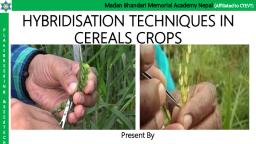
plant breeders and scientists in their efforts to evolve, new varieties. They remove the anthers in young, flowers (emasculation) and cover these flowers with, plastic bags. Later, they pollinate such flowers with, the pollen from the plants of the desired variety., , 5.2. SOME EXAMPLES OF POLLINATION, , (1) In insect-pollinated sweet pea (Fig. 5.4), the insects such as the bee, alight on the conspicuous, corolla. The bee thrusts its long tongue in search of, nectar. In this struggle, the ‘wing petals’ of the flower, are depressed. The ‘wing petals’ along with the ‘keel, petal’ are forced down and the stamens and stigma, touch the underside of the body of the insect. If this, insect has already visited another flower it may have, some pollen sticking on its body. The pollen is now, transferred to the stigma of this new flower thus, , WING, PETAL, , KEEL, PETAL, , SEPAL, , , , STANDARD PETAL, WHOLE FLOWER, , D, KEEL PETAL, , , , WING PETAL, , STIGMA, , , , , E FLOWER (Petals ) Pare, , removed), , , , , , POLLEN GRAIN CARPEL, , Fig. 5.4. Floral parts of sweet pea., , affecting pollination. When the insect flies away, it, may, in turn, carry some pollen of this flower to, other similar flowers. However, if cross-pollination, does not take place, there is every chance of selfpollination in this case, since both the stamens and, the carpels are enclosed within the keel and are more, or less at the same level., , (2) In wind-pollinated maize (Fig. 5.5), pollination is brought about by wind. As the wind, blows, the pollen from the outwardly hanging anthers, (in the tassel) is blown away easily because the, anthers are so loosely attached to the filament that, the slightest wind will shake them. The pollen blown, away by the wind may fall on the feathery stigmas, of the female flowers which have a large surface for, this purpose. The male flowers mature earlier than, the female ones, so that there are less chances for, self-pollination., , , , , MALE, INFLORESCENCE, (TASSEL), , STYLES (SILK), , FEMALE, INFLORESCENCE, (COB), , Fig. 5.5 Maize plant, , , , , , , , , , 2 PROGRESS CHECK, ot, 1, Match the items in Column I with those in Column II, Column I Column II, (i) Feathery stigma Rafflesia, hanging out Entomophilous _, (ii) Different timings for ies, maturation of anthers Wind-pollination —, and stigma a (iii) Pollination by elephant is, (iv) Flowers produce nectar Dichogamy —, , , , C38 D