Page 1 :
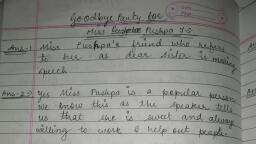
UNIT - 9 POEM, , _[ GOODBYE PARTY FOR MISS PUSHPA T. S., , + Nissim Ezekiel, Introduction, , This is a speech given by one of the colleagues of Miss. Pushpa T. S, who is going abroad. The poem is written in Indian English ie. an, Indian speaking English in Indian style and not in the British style., Summary, , The colleagues of Miss Pushpa T. S. have assembled together to, wish her Bon Voyage as she is going abroad. One of her colleagues, gives a speech on this occasion. He describes her as a very sweet, person who always has a pleasant smile on her face. She’ comes, from a well-to-do family and’her father is a renowned advocate in, Surat. The speaker says that she is popular both among men and, women. She never shirks any work and completes any task given to, her, would like quickly and instantly. She is going abroad to improve, her career prospects and everyone to wish her a bon voyage. The, , speaker concludes his speech requesting other colleagues to speak, and asks Pushpa also to speak., , Comprehension, C1. Read the poem silently and answer the following, questions., , 1. What do you think is the ‘occasion’ for the poem?, , Ans. The occasion for the poem is for her colleagues to wish, Miss. Pushpa.T.S.a bon voyage as she is going; abroad to impos, her prospects., , 2. What impression do you get about Miss Pushpa after, reading the poem? What kind of a person do you think, Miss Pushpa is?, Ans. Though Miss Pushpa hails from a well-to-do family, she does, not have any arrogance. She is always cheerful, is popular and, is hard working.
Page 2 :
SUPER COMPANION Made Easy -9, , 3., Ans., , 4., , Ans., , on, , Ans., , Ans., , Write 2 or 3 sentences about Miss Pushpa’s family., , Miss Pushpa hails from a well-to-do family in Surat. Her father, is a renowned advocate in Surat., , Pick out the lines from the poem which reveal or indicate, that Miss Pushpa was liked by all., , The lines, , “She is most popular lady., , with men also and ladies also” — _, , reaveal that Miss. Pushpa was liked by all., , . What traits of Miss Pushpa does the poet appreciate ?, Ans., , The poet appreciates Miss Pushpa for her cheerfulness. He, ‘says that she is a sweet person both externally as well as at, heart. Though she belongs to a well-to-do family, she does not, have any arrogance but is popular among not.only her female, colleagues but also male colleagues. She readily takes up any, work given to her and completes it in time without grumbling or, refusing. All these traits of Miss Pushpa are worth appreciation., , - How would you consider the poem? A farewell address, , or a welcome speech? Justify your answer., , The poem is a farewell address as all have assembled there to, bid bon voyage to Miss Pushpa who is going aborad to improve, her career prospects. The speaker and the audience are quite, knowledgeable about her character and aptitude which reveals, that they know her very well. This is not possible when a person, is just entering a company as an employee. There is also a, , mention in the poem twice that they have met that day to wish, her bon voyage., , There are a few ‘expressions’ in the poem which are, typically Indian. Indentify these expressions., , The expressions which are typically Indian are :, , (a) Calling Miss Pushpa as sister. ©, , (b) Speaking in present continuous tense like—we are meeting, today; you are all knowing, Ms. Pushpa is coming, his, , 180
Page 3 :
English-!, , , , appreciating, we are, , emembering etc., -to-do, , wife was cooking; ] am always, wishing her bon voyage, lam not r ae, (c) ‘very high family’ which actually means we, , family’. i,, (d) ‘simply: because she is feeling’ — means that she is a, cheerful person., (e) ‘just now only I will do it? — means that I will do it,, immediately., , (f) ‘She was saying’ means ‘she said’., , _ (g) ‘Once only’ means ‘only once”., , Would you consider Miss Pushpa as a handsome person?, , Justify your answer., , Miss Pushpa is a good looking person because the speaker, , mentions that not only is she a good looking person but alsoa, , beautiful person by heart. ;, , 9. Would you consider this poem as making a gentle fun of, the people who cannot speak English properly? Justify, your answer., , Ans. Though the poet is making a gentle fun of the people who cannot, speak the Queen’s English, he doesn’t intend to hurt anyone. He, has just shown us how we Indians have indianised epressions, from their mother tongues into English. Since Englishis not the, mother tongue or native language, there is this general tendency in, people to transliterate while speaking., , ‘C2. Imagine your are Miss Pushpa. Prepare a thanks, giving speech in response to this speech in the poem., , Ans. ‘My dear colleagues and friends. It gives me immense pleasure to, be a part of this meeting you have specifically arranged to wish, me Bon Voyage. I am deeply touched that you all have been able, to understand me so well and have recognized all my qualities and, appreciate it. Thank you very much for wishing me luck in my, pursuit of better prospects. I am indebted to you all for giving me, an opportunity of working with all of you and lear a lot. I shall, , i always cherish the time I spent here and learning I got here., , Thank you one and all., , Ans., , 181
Page 4 :
C3, , _, , Ans., , Ans., , Le,, , Explain the following extracts and answer the questions., that follow., , - Surat? Ah, yes once only I stayed in Surat - (a) Who does ‘I’ here refer to?, , ‘T’ here refers to the speaker giving the farewell address., (b) Why is the reference of Surat made here?, , Miss. Pushpa’s father is a renowned advocate in Surat, and she belongs to a well-to-do family in Surat. Hence, there a reference of Surat during the speech., , (c) Is this remark apt in the context?, , Ans. No, the speaker moves away from the farewell address, to talk about his personal experience in Surat., 2. “Just now only I will do it”., , Ans., , Ans., , Ans., , C4., , (a) Who does ‘I’ here refer to?, The ‘IT’ here refers to Miss Pushpa., (b) What does ‘it? mean here?, , ‘It, here means ‘any task given to Miss. Pushpa for, completion’., , (c) What does this show of the ‘I’ referred here?, , It shows that Miss Pushpa is a dedicated worker and does, any task given to her willingly, quickly and cheerfully., , Here are a few phrases / lines from the poem. Correct, the mistakes wherever necessary and rewrite them., , , , Lines from the poem Corrected lines / phrases, 1. Eg. In two three days. In two or three days., 2. Your are all knowing you are all aware, 3. External sweetness looking beautiful, 4. Internal sweetness , goodness of heart ; |, 5. smiling and smiling ever cheerful / always smiling, 6. very high family very well-to-do family, 7. lam not remembering Tid eAt Hates
Page 5 :
- with men also and, 10., , ll,, 13,, 13. , 14. always saying yes, , 3. appreciate, , Once only | Stayed in Surat, , ladies also, , Just now only I will do it, That is showing good spirit., Tam always appreciating, , wee aida. d anybody is asking’, , x. deprecate, , English-|, , only once did I stay in Surat, with both men and women, I shall do it immediately, That shows good spirit., , I always appreciate, anybody asks, , always says yes, , ~ 15. willdo summing up will sum up, Meaning (Glossary), , 1. foreign — abroad, , 2. bon voyage — happy Journey, , 3. renowned — famous, , 4. advocate — lawyer, , 5. prospects — opportunities, Opposites —, , 1. external * internal, , 2. popular x unpopular