Notes of 8th, English Order of Words.pdf - Study Material
Page 1 :
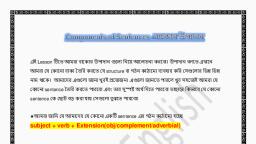
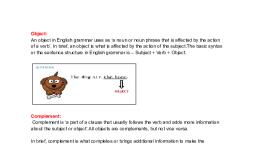
Compare the two sentences- ‘English is an easy language’ and, , Definitely, the first sentence is a winner here. What's, the problem with the second sentence? Just like every language’s grammar,, English grammar also follows an order of words., , In English grammar, the rule of thumb is that the subject comes before the, verb which comes before the object. This means that most of the, sentences conform to the SVO word order. Note that, this is for the, sentences that only have a subject, verb and object. Some examples are:, , , , Now as we know about the basic word order used in simple sentences, we, need to step our game up and learn about complex sentences. These, sentences can contain, adverbs of place, time, two verbs, an indirect object, etc. The most used word order is:, Subject + Verb + Object + Adverb Of Place + Adverb Of Time, , Again note that the verb and object are placed next to each other. An, important thing to realize is that the time usually comes after the place., Hence the adverb of the place is kept before the adverb of time. Try to, understand this with the help of the following example :, , We can also use the adverb of time at the beginning of a sentence in the, order of words (except early and late). For example,, , Note that there are some adverbs that can be used before the verb in the, sentence, Always, also, sometimes, probably, often, never, rarely, almost,, definitely, only are some examples.
Page 2 :
Some sentences contain more than one verb, i.e. a formal verb and other, informal verbs. In such cases, we usually put the adverb after the first verb, which is the finite verb. To recall, a finite verb is the main verb in the, sentence that directly relates to the subject of the sentence. Let's have a, look at some examples of such sentences:, , ee, , Types of the Order of Word in a Sentence:, , While speaking normally we do follow a certain pattern and while asking, questions or while enquiring we follow another pattern:, , 1. Standard Word Order: The standard word order is related to the, constituent order of clause, thus the main word orders will be SVO., , 2. Questions: We Follow a Different Order While Asking the Question,, , Example: Can she sing?, , , , If the ASV includes an object then the pattern will be:, , Example: Does she eat chicken?, Some of the Auxiliary verb or modal auxiliaries include:, , , , , , , , , , , , , , , , Auxiliary Verbs: “", , Be Do Have, | Is do have, | am did had, , been does has, | was having, | being, | are
Page 3 :
Modal Auxiliaries are Never Changing, , , , , , , , Form:, Can | Could Should, will must would, Ought to | may shall |, might, , , , , , , , , , , , Examples of Order Sentences:, 1. He is cleaning the house., , 2. She loves the cool breeze., , 3. Every day she visits the temple., , 4. She gave a presentation to her father., , 5. She was watching a movie when | called., Parts of the Sentence Order in English:, The majority of the sentence follows the SVO pattern, but still, we add, some of the words such as indirect objections, prepositions, modifiers, and, adverbs., , There are certain sentences that have an indirect object couples with a, direct object. Regardless of this, the sentence stays true to the SVO word, order. In such cases, we follow the SVOI or the SVIO word order. A key, point to remember is that if the indirect object is a noun or a pronoun we, follow the SVIO order. On the other hand, if the indirect object is preceded, by a ‘to’, then we follow the SVOI word order. We can understand this with, the help of the following examples:, , i. She gave her mother the present. ( SVIO), , ii. She gave the present to her mother. (SVO!), , Q: Arrange the following sentences:, i. she/there/ every day/to work/goes., ii. in this world/ looking/everybody/for happiness.
Page 4 :
iii. a movie/was/I/when you called/watching., i. She goes there to work every day., ii. Everybody is looking for happiness in this world., iii. | was watching a movie when you called., 1. Indirect Objects: These indirect objects are always added in between the, verb and object thus the new pattern will be, SVIO., , Example: | fed the birds some seeds., , a, | fed birds seeds, , , , , , indirect Direct, , mubjoct | ver object object, , , , , , , , , , , , , , 2. Prepositional Phrases: They have a special position in sentences if we, use the prepositions such as ‘to or for’ then the indirect objects act as a, part of prepositional phrases. Example: | fed some seeds to the birds., , 3. Adverbs: These are used to modify adjectives, verbs, or other adverbs. It, adds things like degree, time, and manner and these words end with ‘ly’., These are special because they can be used in more than one spot in the, same sentence. Thus to have the correct sentence we should follow some, rules such as:, , + While modifying an adverb or adjective, the adverb is placed before the, word that should be modified. Example: | was extremely hungry., , + While modifying a verb, an adverb should be added to the right side of the, verb. Example: She ran quickly to the bus., , + When the adverbs in the sentence are expressing the frequency of it, then, the adverb is placed after the subject. Example: He always speaks fastly., * The adverbs that express the time are always added either at beginning or, end of the sentence. E.g: She wants to go to the movie right now., Conclusion:, , Thus we got to know that it is important to follow the pattern or order to, have a meaningful sentence. Always place the subject first, a modifier such, as an adverb should be present as close to the one that is getting modified., A simple trick to follow is always after completing the sentence, reread it in, order to get the proper flow of the sentence.



 Learn better on this topic