Page 1 :
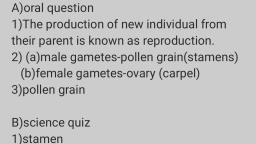
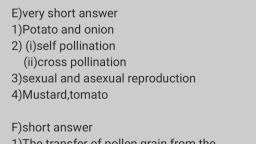
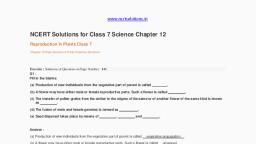
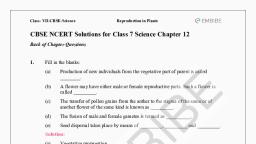
chapter 12: Reproduction in vl anis, , fe. Choice Questions, , ~ auitip |, , | 1. (b) 2 (d) 3. . a i s Page no.- 156, ' pultiple Choice Questions _ oo : a — :, Be no.- 159, 160, , 1 2 O 3 ) 4 | ¢, , d, ERG ; i, , A. Oral Questions. °, , 4. The production of new indies, rom ¢, reproduction, their parents ‘is known as, , 2, (a) Male gametes > “pollen grains (stamens), (b): Female gametes => ovary {carpel),, 3. Pollen grains: “eh, B. Sciénce Quiz. 7 ., 1. Stamen fi 2 Carpel 3. Wind, water and animals, C. Tick“) the correct-options. *, 1: (b) 2, (dy 3. -(d) 4. (a), D. Fillin the blanks.* ., 1, asexual 2. . sporahgiophore 3. wind 4. seeds, E. Very Short Answer Questions., 1. Potato and onion, 2. (i) Salf-pollination, (ii) Cross-pollination, 3. Sexual and asexual reproduction, 4. Mustard, tomato
Page 2 :
enke Short Answer Type-| Questions. ee, oe -Thetransfer of pollen grains from the anther to-the st, called pollination:, 2, a}. Rose, jasmine, .{b) Cotton, drumstick, {e) Coconut, lotus:, 3°" Etuitsof coconut and lotlis.a, 4,’ Pea, balsam ,, G. Short Answer Type-II Questions., 1. Vegetative propagation provides fo, {i} Itisa.quick method. ;, (ii) | Plants grown in this. way require less., than those grown from the seeds. pens, (iii) Even seediéss plants.can be easily grown, , : wea t., 2, th self-pollination, the pollen grain’ from the an, , ONS : ‘, transferred to the stigma of the same flower of 2n0 af, same plant, while.in cross-pollination,: the-pollen.& a ncthér plant, one plant are transferred tothe stigma of.a flower of an of, - the same kind. , ee, : 3. Seed dispersal p' ligw, , (i} it prevents overcrowding of plants.!, (ii) It prevents ihe-competition for water,, the same kindof plants: ~, (iii) Ithelps the'plantsto.grow-in new areas. ‘ a, ed bégins to. grow into a seedling (baby. plant), , 4. The process in whichia'se |, when suitable conditions,are'available is. called. germination of seeds,, , The: conditions necessary’ for germination: of seeds-are water, air and, , ma ofa FOwe,, , re dispersed bY water., , liowlng benefits:, , me to mature and.bear fru,, , by this method., , her of a flower ang, her flower Of the, a flower g, , rovides following penefits to the plants:, nanarea., minetals and sunlight among, , warmth. i es i,, 5, Seeds.and fruits dispersed by wind have following special features: :, (i) They’are smalland-lightweight. Thus, they are: easily blown by., wind. rs a — ro, (ii) They have wings orhair around them. Be f, 6. (a) The greenlsh-black patches found on bread are called bread mould., They reproduce through spores, a, (b)) Hygiene and kindness, H. . Long Answer Questions,, , 1, When a pollen grali falls or the sti acpi hin, : : igma.of-a flower, it. in, pollen tube which moves downwards. ? Brows, as-a thi
Page 3 :
gamete, , (fertilised egg), , _ pollen tube, , , , , , stigma, , ovule, female, (egg), , ovule, zygote, , ye, ovary, , Fertilisation in a flower, This pollen tube penetrates the stigma, passes through the style and, enters into the ovule. The male gamete moves down to the ovule through, the pollen tube. The tip of the pollen tube bursts open and male gamete, comes out of the pollen tube. The male gamete fuses with the female, gamete present in the ovule to form a fertilised egg called zygote. This, fusion of male gamete with the female gamete to produce zygote is called, fertilisation., , 2. Differences between asexual and sexual reproduction, , pollen ‘grain, , ‘malé gamete, moves clown the, pollen tube, , pollen tube enters, ovule and male, gamete fuses with, female gamete, , , , , , , , , , , , , , , , , , , , , , , , S.No. | Parameters | Asexual. reproduction |. Sexual reproduction, (i) | Involvement | Only ‘one-parentis Both parents, the, of parent involved. male and female are, involved., (ii) _| Involvement | No gametes are Gametes are involved., | of gametes | involved., (ii) | Production | Plants are obtained Plants are obtained, of seeds without the from existing parents, production of seeds, | through seeds., iv) | Similarity to | Newborn plants are | Newborn plants are, the parent | exactly identical to _| not identical to the, plant the parent plant. parent plant., , , , 3. Certain seeds are dispersed to far off places by certain animals. They, can be carried away by varlous means. For example,, , * Some fruits develop hooks on their surfaces by which they get, , attached to the fur of animals and are carried away to distant places, , before they get rubbed off from their bodies and fall to the ground.
Page 4 :
HOTS (Higher Order Thinking Skills) Questions., L., , The fruits of gokhru, Xanthium and Urena are disPe, due to their hooked surfaces., , Sometimes, animals.eat seeds. along. with the frul, remain undigested and:pass out with'faeces at som, place,, , ts. These Seeds, e other distant, , m t, there, bt e, below the same plant,, If all the seeds of a: plant fall.at same plac eae, , will be a struggle for space; water and nutrients for the ‘, , into a plant. Thus, probability of healthy growing plants will be reduced,, Flowers are generally colourful and fragrant to attract the po, like insects and other animals. If flowers are not fragrant and colourful,, pollination will probably occur by wind or-water and thus, fruits will be, formed. 0, , Insect:pollinated ‘flowers ‘are. more attractive. than wind-pollinated, flowers because insect:pollinated flowers need to attract insects by, , _ their good fragrance and. bright colours wheréas “wind ‘blows itself, , without beingattracted,’* Methods of artificial vegetative reproduction are so commonly used, nowadays because they are.a.quick.method of multiplying a plant. Also,, , plants grown this way-require less time to mature and bear more fruits, than those grown from’the seeds... ‘, , llinators, , rsed by-animal,, , (