Page 1 :
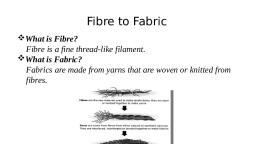
CHAPTER – 3, FIBRE TO FABRIC, •, , Fibres: There are two types of fibres:, (a) Natural Fibres: The fibres which are obtained from plants and animals. Example:, cotton, jute, silk and wool., (b) Synthetic Fibres: Man-made fibres which are not obtrained from plant and animals, sources. Examples: rayon, nulon, polyester, etc., , •, , Fibres from plant sources:, (a) Cotton: cotton is grown in black soil and warm climate., (b) Jute: jute is obtained from stem of jute plant., , •, , Fibres from animal sources:, (a) Wool: wool cloth is spun from yarn made from the fibres of the thick fleece of sheep., (b) Silk: silk thread is obtained from the saliva of an insect called silkworm., , •, , Processing of wool: It involves four steps:, (a) Shearing: The process of removal of wool from the sheep’s skin., (b) Grading: The process of separating fleece from damaged wool., (c) Carding: The process after the wool has been washed and dried, it is passed through, the rollers (that have teeth)., (d) Spinning: The process by which fibrs are gathered together and drawn into a long, rope and then twisted to make yarn., , •, , Fabrics are made from yarns, which in turn are made from fibres., , •, , Making Fabric from Yarn: It is done by two processes:, (a) Weaving: The process by two sets of yarns are arranged together to form fabric. It is, done on looms., (b) Knitting: The process by which a single yarn is used to make fabric. It is done by hand, or machines.