Page 1 :
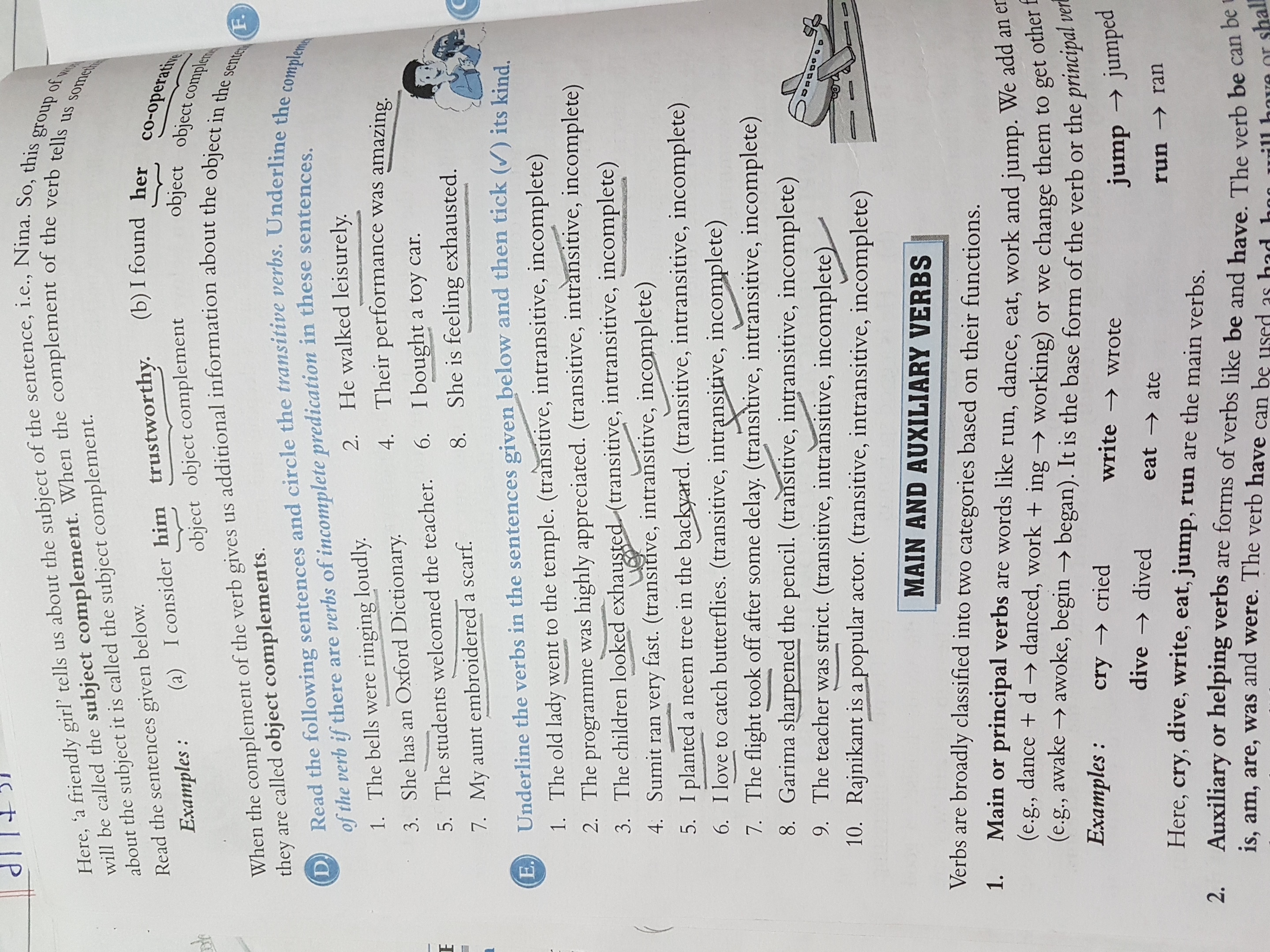
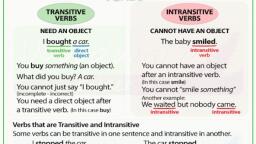
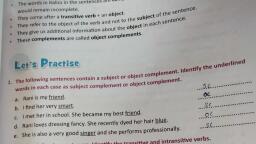
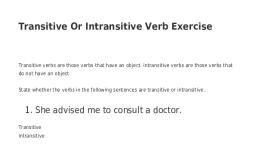
2., When the of the verb gives us about the in the s, Here, 'a tells us about the subject of the i.e., this of, about the subject it is called the subject complement., Read the sentences given below., Examples :, MJo dnor, (b) I found her, (a) I consider him trustworthy., object object complement, co-operative, senter, F., D), of the verb if there are verbs of incomplete predication in these sentences., 2. He walked leisurely., 4. Their performance was amazing., 1. The bells were ringing loudly., 3. She has an Oxford Dictionary., 6. I bought a toy car., 5. The students welcomed the teacher., 8. She is feeling exhausted., 7. My aunt embroidered a scarf., Underline the verbs in the sentences given below and then tick (/) its kind, E.), 1. The old lady went to the temple. (transitive, intransitive, incomplete), 2. The programme was highly appreciated. (transitive, intransitive, incomplete), 3. The children looked exhausted (transitive, intransitive, incomplete), 4. Sumit ran very fast. (transitive, intransitive, incomplete), 5. I planted a neem tree in the backyard. (transitive, intransitive, incomplete)., 6. I love to catch butterflies. (transitive, intransitive, incomplete), 7. The flight took off after some delay. (transitive, intransitive, incomplete), 8. Garima sharpened the pencil. (transitive, intransitive, incomplete), 9. The teacher was strict. (transitive, intransitive, incomplete), 10. Rajnikant is a popular actor. (transitive, intransitive, incomplete), MAIN AND AUXILIARY VERBS, Verbs are broadly classified into two categories based on their functions., Main or principal verbs are words like run, dance, eat, work and jump. We add an, (e.g., dance + d → danced, work + ing → working) or we change them to get ouler, other f, 1., (e.g., awake → awoke, begin → began). It is the base form of the verb or the principal vere, Examples :, cry → cried, write → wrote, dive → dived, jump → jumped, eat → ate, Here, cry, dive, write, eat, jump, run are the main verbs., run → ran, Auxiliary or helping verbs are forms of verbs like be and have. The verb be can be, is, am, are, was and were. The verb have can be used as had hoo uill hove Or, shal