Page 1 :
UNIT – 1, 1. FUNCTIONAL GRAMMAR AND USAGE, Objectives:, At the end of this unit, the students shall be able to, differentiate and use eight parts of speech in their communication, recognize different patterns of a sentence and make similar, structures in speech and writing., understand the difference between main verb and auxiliary verb, and frame sentences using them in day to day contexts., comprehend the frequently used tense forms in English and use, them in their academic, personal and professional contexts, frame yes/no type questions and use them in their conversations, understand the structure of Wh questions and employ them in their, conversations., differentiate the structure of active and passive voice and apply the, passive forms in their reports, presentations, and research articles., recognize the different uses of prepositions and avoid common, errors in their application, , 1. PARTS OF SPEECH, , Look at the following sentences:, “Where is Anand coming from?”, “My friend has told me that he is from Mumbai., Alas! he has lost his beloved wife recently “, The above sentence can be divided into certain group of words with common, grammatical properties. These categories of words are called parts of speech. Now, look at the picture:, , UNIT – 1 Functional Grammar and Usage, , Page 1
Page 2 :
These words with distinct nature and function are called parts of speech., , Exercise, Identify the parts of speech of the other words not underlined in the above example., 1. Where, 2. is, 3. coming, 4. my, 5. friend, 6. has told, 7. me, 8. Mumbai, 9. his, 10. wife, , -, , Adverb, , 1. Noun:, ACTIVITY, Look around you and tell the name of whatever you see. For example, teacher,, board, fan, window…Each one of you should tell minimum 10 words. Let us start., What is a Noun?, Whatever you have told now is a noun. Yes, the name of your friend (Ranjani?), the, name of your place (Classroom) and the name of anything that you know or see is, UNIT – 1 Functional Grammar and Usage, , Page 2
Page 3 :
known as a noun. Imagine, there is no noun in the world. How will you talk about, somebody or something?, Types of Nouns:, , Specific Names, , Proper noun, , Gandhi, Radha, Chennai, India, Titan, Sony…, , Names in general, , Common Noun, , man, woman, place, country, watch, television…, , Names of Groups, , Collective Noun, , team, audience, people, herd, flock, committee…, , Names of Materials, , Material Noun, , gold, silver, iron, plastic, rubber, paper, glass…, , Still there are some more types., If you can see and touch the things, their names are concrete nouns. If you, couldn’t, then they are abstract nouns., How can you see and touch love, wisdom, foolishness, beauty and laziness? Hence, these names of qualities are called abstract nouns., If you can count things, then they will come under the category of countable nouns., But how will you count sand, rice, water and sugar? Hence they are called, uncountable nouns. What do you say? Is God concrete noun or abstract noun?, , UNIT – 1 Functional Grammar and Usage, , Page 3
Page 4 :
ACTIVITY, Your friend will say the name of any three things or persons and you have to make a, sentence using that noun., Example: 1, Friend 1: book, Friend 2: This book is very useful., Friend 1: principal, Friend 2: Our principal is coming here., Friend 1: watch, Friend 2: My watch is not working., , Get it Right, , Nouns like furniture, information, advice, luggage and, scenery are always used only in singular form., Therefore, for instance, it is wrong to say ‘furnitures’, and ‘informations’., , 2. Pronoun, Look at the following sentences:, a), b), c), d), , Suresh went to canteen. He had a cup of coffee with his friends., Neela likes to book movie tickets online. She finds it easy., English is an international language. It is also easy to learn., My friends attended campus interview yesterday. They got selected in top, MNCs., , In the above sentences, you can notice that instead of repeating the nouns Suresh,, Neela, English and My friends, he, she, it and they are used. These words used, instead of a noun are called pronouns. How many times will you repeat the same, noun in your speech or in your paragraph? It is looking so awkward, isn’t it? Here, comes pronoun for your help., Types of Pronouns:, a) Personal Pronouns: I, we, you, he, she, it, they, me, us, him, her and them, I want him here now. They called me a leader. She asked them to keep, quiet., b) Possessive pronouns: my, mine, our, ours, your, yours, his, her, hers, its,, their and theirs., , UNIT – 1 Functional Grammar and Usage, , Page 4
Page 5 :
Examples: my book, our teacher, your friend, his project, her bag and it is, mine., c) Reflexive and intensive pronouns: myself, ourselves, yourself, himself,, herself, itself and themselves, Reflexive : He felt ashamed of himself. She was looking at herself on the, mirror., Intensive : I myself wrote this poem. We ourselves selected this branch., d) Demonstrative pronouns: this, these, that and those, This is useful for competitive exams. That won’t work out., e) Interrogative pronouns: Which, what, who, whom and whose, What is there on the table? Whom did you meet? Which is your bag?, f) Indefinite pronouns: anyone, anybody, someone, somebody, everyone,, everybody, none, nobody, anywhere, somewhere, everywhere, nowhere,, anything, something, everything and nothing, Someone is knocking at the door. Nobody is ready to help me., g) Relative pronouns: who, which, that, whose and whom, I know the person who came here. It is an important work that should be, done first., FACT STORE, , The word “that” is not only a demonstrative pronoun and a, relative pronoun, but also a conjunction., , ACTIVITY, Take any page in your English book. Identify and underline the pronouns you find in, that page. Replace the pronoun with some other suitable pronoun and make a new, sentence of your own for minimum 5 pronouns., 3. Adjective:, A word describing a person, place or thing is called an adjective. Here is a, description for you., , UNIT – 1 Functional Grammar and Usage, , Page 5
Page 6 :
toys., , ACTIVITY, The underlined words in the picture belong to different kinds of adjectives., Write what type of adjective each one is. Make a new sentence of similar, pattern by substituting some other suitable adjectives., Types of Adjectives:, a., b., c., d., e., f., , Adjectives of Quality: good, bad, old, new, beautiful, brilliant, colourful…, Adjectives of Quantity: little, much, more, some, enough, no, whole…, Adjectives of Number: one, two, first, second, several, many, all, few…, Demonstrative Adjectives: this, that, these, those and such, Distributive Adjectives: each, every, either, neither, any and both, Interrogative Adjectives: What, which and whose, FACT STORE, , “What” in “what do you want?” is an interrogative, pronoun. But, “what” in “what book do you want?” is, an interrogative adjective., , 4. Verb:, Look at the following pictures. What do you understand from them?, , UNIT – 1 Functional Grammar and Usage, , Page 6
Page 7 :
What does she have?, , A word that refers to what somebody does, what somebody has, and how, somebody or something is–(an action, possession, or status) is called a verb., Action words alone are not verbs., For example, in the above picture, in the second and third cases, no action is, referred through the verbs. Can you make any sentence without a verb? You can’t., Because verb is the soul of a sentence just as vowel sound is the soul of a word., Do you know the shortest sentence in English?, FACT STORE, Go. It’s an imperative sentence. Of course, all imperative, sentences just with verbs are shortest sentences ., Types of Verbs:, 1. Main Verb: A verb that stands alone or joins with auxiliary verbs to indicate an, action or event is called a main verb. (He runs fast. She sent a mail. We have, cancelled the ticket.) Each main verb has three forms – present, past and, past participle as in “write, wrote and written”or as in “call, called and called.”, Some main verbs remain the same in present, past and past participle as in, “cut, cut and cut.” The first form is used to frame sentences in simple present., The second form is used to make sentences in simple past whereas the third, form is used to make perfect tense forms and passive forms., i., , Transitive verbs: A verb which needs an object to describe an action, or even is called a transitive verb. (Example: He submitted his, project.) Sentences with transitive verbs can alone be converted into, passive voice., , ii., , Intransitive verbs: A verb which does not need an object to describe an, action or event is called an intransitive verb. (Example: She lives in, Chennai.), , UNIT – 1 Functional Grammar and Usage, , Page 7
Page 8 :
It is a general misconception that all sentences can be, change into passive voice. But, sentences with intransitive verbs cannot be changed into passive voice. (e.g., Uma smiled beautifully.), , Get it Right, , 2. Auxiliary Verb: A helping verb that assists a main verb to form tense forms, other than simple present and simple past is known as an auxiliary verb. They, are also helpful to form passive forms. In some cases, an auxiliary verb can, also function as a main verb, as in “He is my friend” and “He did this for me.”, i., , Be form auxiliaries: am, is, are, was, were, be, been and being, , ii., , Do form auxiliaries: do, does, and did, , iii., , Have form auxiliaries: have, has and had, , iv., , Modal auxiliaries: shall, should, will, would, can, could, may, might,, must, ought to, used to, dare to and need, , ACTIVITY, Students of each bench can form a team. One team should tell a verb and another, team should make a sentence for that. (maximum 5 verbs) Verbs and sentences, once used should not be repeated by any team., Example:, Team 1: speak, Team 2: They speak in Malayalam., Team 1: like, Team 2: I like to play Cricket., Team 1: attend, Team 2: She attended the meeting., Team 1: run, Team 2: He is running fast., Team 1: share, Team 2: We have shared the message on WhatsApp., , UNIT – 1 Functional Grammar and Usage, , Page 8
Page 9 :
5. Adverb, “Adjectives are the sugar of literature and adverbs, the salt.” – (Henry James), A word that is used to describe an action is called an adverb whereas a word that is, used to describe a person, place or thing is known as an adjective., Note the Difference:, 1. David is a sincere manager. (adjective describing a manager), We worked sincerely to complete the project before deadline. (adverb, describing the action), 2. The image is clear. (adjective), Speak clearly. (adverb), An adverb adds quality to a verb, adjective or to another adverb. For instance,, They made an attractive offer. (used as an adjective), They presented it attractively. (an adverb qualifying a verb), The product was very attractive. (an adverb qualifying an adjective), They presented it very attractively. (an adverbqualifying another adverb ), , no su, Get, it Right, , Remember that It is wrong to say “He ran fastly.” There is, no such word as ‘fastly’. In English, ‘fast’ functions as both, adjective and adverb. Say “He ran fast.”, , Types of Adverbs:, a) When did an action or event happen? (Adverb of Time) :, yesterday, today, tomorrow, now, later, earlier, recently, soon, sometimes,, always and never, b) Where did an action or event happen? (Adverb of Place):, here, there, near, off, in, out, everywhere, anywhere and nowhere, c) How did an action or event happen? (Adverb of Manner):, fast, slowly, quickly, neatly, successfully, creatively, carefully and cautiously., d) How many times did an action or event happen? (Adverb of Frequency):, often, rarely, seldom, always, never, usually, again and sometimes, e) To what extent did an action or event happen? (Adverb of Degree):, entirely, completely, totally, extremely, fairly, somewhat, enough, slightly,, quite and very., , UNIT – 1 Functional Grammar and Usage, , Page 9
Page 10 :
Exercise, , Fill in the blanks by choosing suitable adverbs from the brackets., 1) Read _________ the instructions given in the manual. (sometimes,, carefully, slightly), 2) He ________ made excuses for not doing the work. (quite, slowly,, often), 3) He received the letter _______. (entirely, yesterday, tomorrow), 4) Why are you talking _______? ( decently, loudly, cleverly), 5) We searched for him ________. (nowhere, fast, everywhere), 6. Prepositions:, Preposition is a grammatical word that is used to denote location, direction, and time. It is mostly used before a noun or pronoun and relates it to some, other word in the sentence. It often refers to where something is and towards, which direction something or somebody moves., For example., a. He is sitting near his sister. (where is somebody? ), b. The ball is on the table. (where is something?), c. He is going to college. (Towards which direction?), , FACT STORE, , In English, prepositions are used before a noun, but in Tamil, they are used at the end of a noun., Compare: In Chennai – nrd;idapy;, , Types of Prepositions:, 1. Place Prepositions:, on, above, below, under, near, off, in, out, between and among, Examples: We sat under a tree. It was near a theatre. Don’t sit on the, floor., 2. Direction Prepositions:, to, from, across, into, through, along, around, up and down, Examples: She was going to the hostel. We had a walk along the road., The boy was running across the road., , UNIT – 1 Functional Grammar and Usage, , Page 10
Page 11 :
3. Time prepositions:, at 5 p.m, at 6 o’clock, on Monday, in March, in 2006, in summer, for two, hours, since yesterday, in the morning, at night, on my birthday etc., Examples: The meeting started at 10 a.m. Meet me on Tuesday. He didn’t, talk to me since yesterday., 4. Phrasal Prepositions:, according to, in front of, because of , by means of , in addition to, instead, of, in spite of, out of, apart from, on behalf of, for the sake of, etc., Examples: Instead of making a call, meet him in person. Don’t park in front, of the gate. According to me, this is highly expensive., , ACTIVITY, Look at the picture given below and write 5 sentences describing the location of the, objects with suitable prepositions: Two sentences are done for you:, There is a sofa in the room. A tea table is in front of the sofa., , UNIT – 1 Functional Grammar and Usage, , Page 11
Page 12 :
7. Conjunction:, A word that is used to join two words, phrases or sentences is called a, conjunction., a) I am talking about Suresh and Praveen. (joining two words), b) The book may be in the bagoron the shelf. (joining two phrases), c) I offered him a chance but he was not interested.(joining two sentences)., , Types of Conjunctions:, a) Coordinating conjunctions:, A conjunction that joins together two sentences or clauses of equal rank is, called a coordinating conjunction. It is used to make compound sentences., Example: He was disturbed and he went away at once. (connecting two, sentences of equal rank), Common Coordinating conjunctions: and, but, so, or, yet, still, whereas and, while., b) Subordinating Conjunctions:, A conjunction that connects a main clause and a subordinate clause together, is called a subordinating conjunction. It is used to make complex sentences., Example: Though the movie was so creative, it didn’t reach the audience., (connecting a subordinate clause and a main clause), Common Subordinating Conjunctions: though, since, as, if, unless, that, as, soon as, when, till and than., c) Correlative conjunctions: Conjunctions which are used in pairs are known, as correlative conjunctions., Example: The manager will select either Rani or Vani., Common Correlative conjunctions: either… or, neither…nor, not only… but, also, not…but, whether…or and so…that, , Get it Right, , Subordinating conjunctions can be used either in the, beginning or in the middle but not in both places. (e.g. As, he was ill, he didn’t come to college. He didn’t come to, college as he was ill. As he was ill, so he didn’t come to, college.), , UNIT – 1 Functional Grammar and Usage, , Page 12
Page 13 :
Exercise, Combine the following sentences with suitable conjunctions given in the brackets:, (So…that, if, not only…but also, because, so), a) He came late. He could not attend the interview., b) She was creative. She was helpful to others., c) You cannot submit the application. The last date is over., d) The lesson was difficult. Many students could not understand that., e) Pay your fees in the counter. I will issue the receipt to you., 8. Interjection:, Interjection is a word that is used to express sudden feelings and emotions of, joy, sorrow, surprise, shock, disappointment and contempt. An exclamation, mark (!) usually follows such expressions., Look at the following sentences:, i., , Hurray! Our college team won the final! (expression of joy), , ii., , Alas! How many people are dying of Corona virus! (expression of, sorrow), , iii., , Oh! This is your plan! (expression of surprise at sudden finding), , iv., , Aha! Here is what I’m searching for! (expression of feelings at sudden, finding), , v., , Aah! What a lovely place! (expression of surprise), , vi., , Shh! My baby is sleeping! (expression of contempt at somebody’s, noise), , vii., , Oh my God! I forgot my hall ticket! (expression of shock), , viii., , Shit! What nonsense you are doing! (expression of disapproval), , ix., , Damn it! I’ll kill you! (expression of anger), , UNIT – 1 Functional Grammar and Usage, , Page 13
Page 14 :
Exercise, , Make sentences with suitable interjections to the following images., , UNIT – 1 Functional Grammar and Usage, , Page 14
Page 15 :
There are eight parts of speech : noun, pronoun, adjective, verb, adverb, preposition,, conjunction and interjection., The name of a person, place, thing or feeling is known as a noun., Pronouns are words used instead of a noun., Adjectives are words describing a noun., Verbs indicate an action, possession or state., Adverbs qualify a verb, adjective or another adverb., Prepositions are used to denote place, direction and time., Conjunctions connect two words, phrases or sentences., Interjections are words expressing sudden feelings of joy, sorrow, anger, surprise, and disappointment., , https://en.m.wikipedia.org/wiki/Part_of_speech, , UNIT – 1 Functional Grammar and Usage, , Page 15
Page 16 :
2. FUNCTIONAL UNITS, Sentence Pattern, Look at the following picture:, , Sentence Pattern, , There are two sentences in the above picture. Group of words that form a sentence can be, divided into various grammatical units. The first sentence has three units :, The first unit – I, , functions as a subject. (S), , The 2nd unit – love, , functions as a verb. (V), , The 3rd unit – children, , functions as an object. (O), , Since each unit has a function of its own, they are called functional units., Take the second sentence now. How many units are there? You may think that there are, more units but it has only three units:, The first unit – Our new manager, , functions as a subject. (S), , The 2nd unit – is going, , functions as a verb. (V), , The 3rd unit – to the head office, , UNIT – 1 Functional Grammar and Usage, , functions as an adjunct. (A), , Page 16
Page 17 :
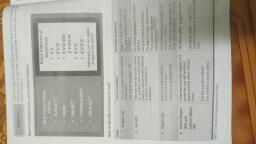
ACTIVITY, , Take any page in any book that you have. Select any three, sentences and write them in your note. Count and write how many, units are there in each sentence., , Basic Functional Units and Sentence Patterns:, , How to Identify a Functional Unit?, Units, , How to identify?, , Example sentences, , 1. Subject (S), , Ask the question Who?/ Which?, to the verb, The answer is subject. (S), , Ragu is crying. (Who is crying?), The dog is barking. (Which is, barking?), , 2. Verb(V), , The verb may be a main verb or, an auxiliary verb; it may be one, word or a group words referring, to action, possession or, existence., , My friends submitted the project., (action), He is my friend. (existence), He has two bags. (possession), This machine has been, manufactured in Pune., , 3. Object (O), , Ask the question-What? /, Whom? to the verb, The answer is Object. (O), , We booked a movie ticket. (we, booked - What?), She contacted the manager at, once. (She contacted – whom?), , 4. Direct Obeject, (DO) and, Indirect Object, (IO), , When there are two objects in a, sentence, one will be direct, object and the other, indirect, object., , My father gifted a watch to me., My father gifted – what? The, answer ‘a watch’ is a direct object, here., , Ask the question What?, , UNIT – 1 Functional Grammar and Usage, , Page 17
Page 18 :
The answer is direct object., Ask the question To Whom?/for, Whom?, The answer is Indirect Object, (IO), , My father gifted a watch – to, whom? The answer ‘to me’ is an, indirect object here., I bought this book for my sister. –, For whom? for my sister = indirect, object., Remember: The indirect object can, also come before the direct object, if we restructure the earlier, sentence as:, My father gifted me a watch., , 5. Complement(C), , That which completes, the meaning of a, sentence is complement., What somebody has is, complement., What something has is, complement., How somebody is or, appears is complement., How something is or, something appears is, complement., , She is our teacher. (without ‘our, teacher’ the sentence is, incomplete), He has two calculators. (Ask What, he has and the answer is, complement), A dog has four legs. (Ask what the, dog has and the answer is, complement), Meena is beautiful. / Meena looks, beautiful. (Ask how Meena is or, how Meena looks, and the answer, is complement., It is true / It sounds true. (Ask how, something is or how something, appears to be, and the answer is, complement., , 6. Adjunct (A), , Ask the question, When?, Where?, Why?, How?, towards the verb and the answer, is adjunct. (A), , We conducted the meeting, yesterday., (When ? Yesterday = adjunct), I met him in Chennai., (Where? in Chennai = adjunct), I met him to get back my mobile., (Why? to get back my mobile =, adjunct), He explained the thesis clearly., (How did he explain? clearly=, adjunct), , UNIT – 1 Functional Grammar and Usage, , Page 18
Page 19 :
FACT STORE, , Complement is a mandatory unit but adjunct is an additional, unit. Secondly, Complement is focused on a noun or pronoun, but adjunct is for describing an action (verb)., , Get it Right, , Identify whether the third unit is a complement or an adjunct., Uma is in the library.(Remember it completes the meaning of a, sentence and at the same time answers the question -Where?, that we use to identify an adjunct.), , Exercise, , Exercise, 1. Veena is not here., 2. The owner of the, shop was at home., 3. It is costly., 4. She has returned, from Bangalore., 5. They will have been, working in the US, after few years., 6. They completed the, work., 7. We welcomed the, chief guest with a, thundering clap., 8. The project leader, assigned me a lot of, work., 9. He gave this, appointment for me., 10. Our students are, creative., 11. The problem has, become complicated., 12. The incident, happened here., 13. Peter attended the, training in Chennai, last week ., 14. Children ran fast to, catch the kite., 15. She made me a, secretary ., , Task: Identify the, functional units, Subject, Subject, , UNIT – 1 Functional Grammar and Usage, , Write your answer, Veena, , Verb, Verb, Verb, , Object, Object, , Direct Object, , Indirect Object, Complement, Complement, Adjunct, Adjuncts, , Adjuncts, Complement, , Page 19
Page 20 :
ACTIVITY, Pair with your friend and write the pattern of the following sentences in the, boxes given. The first one is done for you., 1. Our college team won the match., , S + V + O =SVO, , 2. We were watching the programme yesterday., , 3. They paid the exam fees for me., , 4. I feel happy now., , 5. They walked slowly to pass away the time., , 6. They selected him the president., , 7. She donated blood to the sick person., , 8. Every Sunday I meet him at the, railway station to collect the parcel., , 9. Go fast., , 10. You are upset now., , UNIT – 1 Functional Grammar and Usage, , Page 20
Page 21 :
Exercise, , Sl. No, , Sentence patterns for you, , 1, , SVA, , 2, , SV, , 3, , SVO, , 4, , SVC, , 5, , SVIODO, , 6, , SVOC, , 7, , ASVO, , 8, , SVCA, , 9, , VA, , 10, , SVOAA, , Write your own sentences, here (one is done for you), He/ came/ late., , There are five functional units : subject, verb, object, complement and adjunct., Ask the question Who? or What? to the verb to identify a subject., The functional unit -verb may be a single word or a group of words describing an, action, possession or existence., The answer to the question “what?” is a direct object whereas the one to the question, “to whom?” or “for whom?” is an indirect object., That which completes the meaning of a sentence is a complement., Adjuncts answer any one of the four questions – when? where? why? and how?, , https://www.slideshare.net/mobile/priyamphil123/sentence-pattern-29443218, , UNIT – 1 Functional Grammar and Usage, , Page 21
Page 22 :
3. USE OF MAIN VERB &, AUXILIARY VERB, What is a Main Verb?, Verbs are action words in a sentence that describe what the subject is doing. The, subject can be someone or something. The verb shows an action or a state of being. In fact,, , Pattern, without a verb the complete thoughtSentence, cannot be properly, expressed or conveyed. The verb, that shows an action is the main verb. Actually, a verb can be a sentence by itself. Most, sentences have the action word as the verb, but in some sentences the verb cannot be, identified as action word. For example, in “ I know your name,” know is a non-action verb., In order to recognize the verb, one way to know is that the verb follows a subject of the, sentence. Another way is to ask the subject the question, what does/do/did the subject(s), do?, What is an Auxiliary Verb?, When a word is used to describe a state or occurrence it is called an auxiliary verb or, ahelping verb. A sentence may either have a main verb or a helping verb or both., Modal, might,, , - can, could, will, would, shall, should, may,, must, need, dare to, used to, , Auxiliary verb, Non modal (Be, Do& Have forms) - am, is, are, was, were, do,, does, did, has, have and had, , FACT STORE, , Do you know that sometimes auxiliary verbs can also function, as main verbs when they are not used with main verbs. For, instance, take the sentence – “He is a teacher.” Here the verb, is functions as a main verb though it is an auxiliary verb. But, the same auxiliary verb is a helping verb when it is used along, with a main verb to form tense forms as in “He is running fast.”, , Two Types of Main Verbs:, There are two types of verbs: One is transitive verb that requires an object to, complete the meaning and the other one is intransitive verb that requires no object., Examples:, , The teacher prepared the question paper. (Transitive verb), Peter cut the cake. (Transitive verb), Mr. John speaks loudly. (Intransitive verb), The ship sank into the water. (Intransitive verb), The department store opens at 6 o’clock. (Intransitive verb), , UNIT – 1 Functional Grammar and Usage, , Page 22
Page 23 :
Regular and Irregular Verbs:, An English verb can be regular or irregular. Regular verbs form their past and past participle, forms by adding –ed. Examples are given below., Walk – walked – walked, Dance – danced – danced, Paint – painted – painted, Work – worked – worked, Irregular verbs form their past and past participle forms in different ways., There are mainly three types of irregular verbs., Verbs in which all the three forms are the same (e.g. put – put – put), Verbs in which two of the three forms are the same (e.g. sit – sat – sat), Verbs in which all the three forms are different (e.g. drink – drank – drunk), Some verbs can be both regular and irregular. Examples are:, Burn – burnt – burnt (irregular), Burn – burned – burned (regular), Dream – dreamt – dreamt (irregular), Dream – dreamed – dreamed (regular), , Get it Right, , It is incorrect to say: I hanged the picture on the wall. The correct, past form is ‘hung’. But you can use ‘hanged’ to refer to the killing, of a person. For instance, as per the judgment, he washanged, last week., , Auxiliary Verbs:, Auxiliary verbs are sometimes called helping verbs because they are needed to form various, tense form. The most frequently used auxiliary verbs are the verbs to be, to do and to have., For example: the auxiliary to do is needed to ask questions in the present and past simple, tenses. To be is needed for the present and past continuous, and all the passive forms. The, auxiliary to have is used in the present and past perfect tenses. Some tenses, like the, present perfect continuous, need more than one auxiliary., , UNIT – 1 Functional Grammar and Usage, , Page 23
Page 24 :
Here are some examples of the common auxiliary verbs:, , , Do you like German food?, , , , Does your mother speak English?, , , , Did you come to school yesterday?, , , , Why are you talking? You should be listening to me!, , , , I was having a bath when you called!, , , , A new road is being laid behind the school., , , , Have you done your homework?, , , , My father has never visited the USA., , , , How long have you been living in Germany?, , , , By this time next year I will have been learning English for 35 years!, , Let’s take a look at how to use the auxiliary verbs be, have, and do., , FACT, STORE, , To give extra force to the main verb, do forms are used as in the, sentence “I did ask him to wait,” instead of the normal neutral, usage: “I asked him to wait.” This is called emphatic usage., Remember that in such cases, we should always use base form, of the verb after do, does and did., , UNIT – 1 Functional Grammar and Usage, , Page 24
Page 25 :
ACTIVITY, , Join with your friend and frame your own sentences with any main verbs, relevant to the pictures given below:, Task, , Pictures, , Your sentences with main verb, (One is done for you), 1. Children are playing football., , 1, , 2, , 3, , 4, , UNIT – 1 Functional Grammar and Usage, , Page 25
Page 26 :
ACTIVITY, Students in each bench may form a group and use suitable be form auxiliary, verbs to complete the following sentences: (am, is, are, was, were), 1. Tell me, _______ you coming to the party?, 2. What ________you doing at home yesterday?, 3. I _______ ready to do anything for you., 4. America __________________ discovered by Christopher Columbus in 1492., 5. It ______ not easy to pass the IAS exam., 6. Mercedes cars _______ made in Germany., 7. What do you say? ________I right?, 8. He said that he ________ not interested in watching movies., 9. There _________ many problems in this project., 10. __________ there any cheque book on the table?, , ACTIVITY, Join in pairs and use suitable ‘do’ form or ‘have’ form auxiliary verbs to, complete the following sentences: (do, does, did, have, has, had), 1. What _______ you do every Sunday?, 2. She _______ not want to stay at home., 3. He ________ called me twice., 4. Where _________ they go yesterday?, 5. Before the police came, the thief _________ run away from the spot., 6. _________ you published your research article?, 7. All the glasses are broken. Who ________ this?, 8. What _______ it mean?, 9. Where ________you buy this mobile?, 10. Somebody _________ come to see you., , ACTIVITY, , All students in the class can be divided into two groups – Group A and Group B., Anyone from Group A can stand and tell a modal auxiliary and anyone in Group B, should form a sentence by using the given verb. After this, Group B should tell a, modal auxiliary verb and Group A should frame a sentence., UNIT – 1 Functional Grammar and Usage, , Page 26
Page 27 :
Students once participated should avoid taking chances repeatedly so as to enable, maximum number of students to do the activity., The sentence once used or given below in the example should not be repeated., Each group should practice minimum 10 words, Example:, Ramesh (from Group A) : can, Suresh (from Group B) : Can I help you?, , Amala (from Group A): will, Vimala (from Group B) : I will tell you a story tomorrow., , Nandhini: (from Group A): may, Kalaiselvi: (from Group B): May I know your name?, , Kumar : (from Group A): must, Uma: (from Group B): You must bring your record note to the exam., , Gayathri (from Group A): could, Vanathi(from Group B): He could speak well on the stage., , Kannan: (from Group A): would, Karthick: (from Group B): Would you like coffee or tea?, , Malathi (from Group A): should, Natesan (from Group B): I should discuss with my father about this., , Balu (from Group A) : might, Raju (from Group B): I thought, he might be free., , Vignesh (from Group A): shall, Sundar (from Group B): Shall I do this work for you?, , Banu (from Group A): need, Lalitha(from Group B): We need not bring any books tomorrow., , UNIT – 1 Functional Grammar and Usage, , Page 27
Page 28 :
Exercise, Fill in the blanks with the correct auxiliary verb from the choices given:, 1. What ________________ the kids doing when you last saw them? (was, were, are, did,, been), 2. Chitra ________________ always wanted to try skydiving. (was, doesn’t, has, is, have), 3. Where __________________ you go on your summer vacation? (were, been, are, did,, does), 4. She _____________ listen to me. (didn’t, is, hasn’t, has been, have), 5. Arun _____________ going to be upset when he hears what happened. (will, don’t, is,, didn’t, has), 6. Shankar _____________ want to go to the movies; he wants to stay home instead., (doesn’t, isn’t, wasn’t, hasn’t, was not), 7. I _________________ appreciate his jokes. They weren’t funny. (did, have, been, didn’t,, haven’t), 8. I really like fish but I _______________ care for meat. (weren’t, been, don’t, is, was), 9. Where _____________ you going when I saw you last night? (were, was, is, do, did), 10. Swetha ________________ called yet; she’s late as usual. (are, were, has, hasn’t,, wouldn’t), , , , There are two types of verbs : main verbs and auxiliary verbs., , , , Main verbs are mostly action words describing what the subject is doing., , , , Auxiliary verbs are helping verbs used along with main verb to form different tense, forms., , , , There are four types of auxiliary verbs: be forms, do forms, have forms and modal, auxiliaries., , , , Be form auxiliaries are: am, is, are, was and were., , , , Do form auxiliaries are: do, does and did., , , , Have form auxiliaries are: have, has and had., , , , Modal auxiliaries are: can, could, will, would, shall, should, may, might, must, need,, dare to and used to, , , , Verbs used with object are transitive verbs and those used without object are, intransitive verbs., , https://youtu.be/p0oZ3kWjxkc, , UNIT – 1 Functional Grammar and Usage, , Page 28
Page 29 :
4. APPLICATION OF TENSE, FORMS, Tense Forms:, , Sentence Pattern, The word “tense”, as Oxford Dictionary defines, refers to “any of the forms of a verb that may, be used to show the time of action or state expressed by the verb.”, , As shown in the picture above, there are three tenses in English : Present Tense, Past, Tense and Future Tense and each tense has four forms : simple, continuous/ progressive,, perfect and perfect continuous., All tense forms are useful to refer to actions or events happening at different points of time, and let us learn the frequently used nine tense forms here in this lesson., , 1. Simple Present:, We use present tense For actions or events that are true, general, factual and universal, (e.g.) Nurses look after patients in hospitals. Babies drink milk., The sun sets in the west. The earth goes around the sun., , UNIT – 1 Functional Grammar and Usage, , Page 29
Page 30 :
For something that happens routinely, habitually and regularly, (e.g.) I usually go away at week ends. brush my teeth twice a day., I go to college by bus., To refer to an action or event that takes place at the time of speaking:, (e.g.) They play football. Your friend goes to library. I want to talk to you., To refer to a future action that is certain:, (e.g.) Our college reopens on Wednesday., He leaves for Chennai tomorrow., We contact you again next Friday., , 2. Present continuous/progressive:, We use it to refer to, an action or event that is going on at the time of speaking, (e.g.) You cannot see the children because they are hiding., Why are you worrying about him?, I am feeling well now., something that is likely to happen or about to happen in future, (e.g.) I am going to tell you a secret. (likely to happen), He is going to kill you for this mistake. (about to happen), It is going to rain. ( about to happen), Your uncle is coming here tomorrow. (about to happen), , 3. Present perfect:, It is used, to denote an action or event recently happened or completed, We have built a new home.(recently), He has gone to canteen. (just now), to talk about our previous experiences, (e.g.) I have already visited this place., We have seen him before., Have you ever been to Mumbai?, , Get it Right, , Present perfect should not be used when you mention a definite point, of time in the past. In such cases, simple past should be used., Compare: I have seen him before. (present perfect) I saw him, yesterday. (simple past), , FACT STORE, , Ever, never, already, just, before, recently, yet, and so far are, generally used with present perfect:, (e.g.) I have never hurt anyone like this., The train hasn’t arrived yet., You are the most intelligent student I have ever seen in, my life., , UNIT – 1 Functional Grammar and Usage, , Page 30
Page 31 :
4. Simple Past:, We use it to refer to, when an action or event took place, (e.g.) I attended a seminar last week., I published my first book in 2012., past habitual actions (here it is equivalent to the usage of ‘used to’), During my school days, I spent (=used to spend) two hours a day in the, library., Before marriage, I went (=used to go) to movies every Sunday., , 5. Past continuous:, We use it to refer to, an action or event that was going on sometime in the past, (e.g.) He was playing for Tiger Team., They were preparing well for their exam., an event that was going on at the time of another event, (e.g.) He was studying B.E., when he stayed with me here., The accident happened when I was going to my office., A past action that was interrupted by another action, (e.g.) Somebody knocked at the door when she was cooking., There was a power cut while we were watching the movie., , 6. Past perfect:, While describing two actions or events happened in the past, we use past, perfect to describe the action that happened first., (e.g.) Before he came to class, the teacher had completed the lesson., She explained how she had encountered a lot of struggles in life., When we started our work, we had already collected enough funds., it is used in the clauses in the reported speech while reporting in past., (e.g.) He complained that no one had helped him., The company announced that they had shut down the plant in Delhi., , 7. Simple Future:, It is used to, talk about something that will happen in future, (e.g.) They will certainly take you to the site., We will send you a mail if there is a change in our programme., To offer predictions, (e.g.) The share prices will fall after the election result., There will be heavy rain tomorrow., FACT STORE, , “Shall” used in question normally refers to suggestions or, seeking permission rather than expressing a question., (e.g.) Shall I carry your bag? Shall we go now? Shall I see this, book?, , UNIT – 1 Functional Grammar and Usage, , Page 31
Page 32 :
8. Future Continuous:, It is used to, denote an action or event that will be in progress in future, (e.g.) This time next week, we shall be travelling to our native place., Next Monday, TCS will be conducting its campus interview here., , Get it Right, , It is incorrect to say that it will be raining when you will reach Ooty., Future continuous can be used to refer to an action that will be, happening before another action in future but the second action in, future is described only in present tense., (e.g.), , It will be raining when you reach Ooty., I will be waiting till you come., , 9. Future Perfect:, It is used to represent, actions that will be completed before a specific time in future., (e.g.) We shall have finished our record note before the last working day., They will have completed half the work by next Sunday., Here is the table that will help you understand the different tense forms and their, structure., TENSES, SIMPLE, , PAST, I play, , I will play, , You Wrote, , You write, , You will write, , He/she/it went, , He/she/it goes, , He/she/it will go, , We/they sang, , We/they sing, , We/they will sing, , [V/Vs], , [will + V], , I was playing, , I am playing, , I will be playing, , You were playing, , You are writing, , You will be writing, , He/she/it was going, , He/she/it is going, , He/she/it will be going, , We/they were singing, , We/they are singing, , We/they will be, singing, , [was/were + V ing, form], PERFECT, , FUTURE, , I played, , [V (Past form)], CONTINUOUS, , PRESENT, , [am/is/are + V ing, form], , [will be + V ing form], , I had played, , I have played, , I will have played, , You had written, , You have written, , You will have written, , He/she/it had gone, , He/she/it has gone, , We/they had sung, , We/they have sung, , He/she/it will have, gone, , [had + V (past, participle form)], , [has/have + V (Past, participle form)], , We/they will have, sung, [will have + V (Past, participle form)], , UNIT – 1 Functional Grammar and Usage, , Page 32
Page 33 :
Exercise, Frame a sentence for the given verb in each of the nine tense forms you have learnt, now. One is done for you., Verb - send, (e.g.) Simple, Present, , Verb – call, , Your answer here, They send the parcel., , Your answer here, , (e.g.) Simple Present, , Present, Continuous, , Present Continuous, , Present Perfect, , Present Perfect, , Simple Past, , Simple Past, , Past Continuous, , Past Continuous, , Past Perfect, , Past Perfect, , Simple Future, , Simple Future, , Future, Continuous, , Future Continuous, , Future Perfect, , Future Perfect, , He calls his friend., , ACTIVITY, Join with your friend and choose the right tense form from simple present, present, progressive or simple past to complete the description of an event given below., , A Day at the Zoo, Every, , summer,, , our, , class, , ___________, , (go), , on, , a, , short, , trip., , Last, , year, , we__________ (go) to a zoo. Our teacher _____________ (take) us with motherly care., She _____________ (warn) us not to tease the animals. I _____________ (take) lots of, photos of a baby elephant with my cell phone. “This baby elephant ________ (look), so beautiful”, my friend _____ (say). "What ______________ you _____________ (do), there? Come to me!" our teacher _______________ (call). We __________ (enjoy) a, great day at the zoo and we _______ (return) late in the evening., , UNIT – 1 Functional Grammar and Usage, , Page 33
Page 34 :
Exercise, Add suitable tense forms of the verbs given in brackets., 1. I usually ________________ (go) to office by car, 2. Yesterday morning I _____________ (get) up at 5.30 a.m., 3. We needed some money, so we ___________ (sell) our car., 4. " ____________ (have) she ever _____________ (be) to Spain?", 5. "What _____________ (be) Prakash ____________ (do) now?", 6. I ______________ (study) for my online degree., 7. Water _______________ (boil) at 100 degrees Celsius., 8. Sita often _______________ (argue) with her father., 9. Now Rajesh _________________ (phone) Gita again. It ___________ (be) the third, time he ______________ (phone) her this evening., 10. It ___________ (rain) now. It ____________ (begin) raining two hours ago., , ACTIVITY, Narrate a story you like the most or a funny event happened in your life in the past tense, not, exceeding one minute., , There are ninefrequently used tense forms : simple present, simple past, simple, future, present continuous, past continuous, future continuous, present perfect, past, perfect and future perfect., Simple present : general, universal, habitual and routine actions/events, Simple past: actions or events happened in the past, Simple future: actions or events that will happen in future, Present continuous: an action or event that is going on at the time of speaking, Past continuous: an action or event that was going on sometime in the past, Future continuous: an action or event that will be progressive in future, Present Perfect: an action or event recently happened or completed, Past Perfect: first of the two actions happened in the past, Future Perfect: actions that will be completed before a specific time in future, Auxiliary verb is a must for all tense forms except simple present and simple past., https://youtu.be/hk4MjcRdTgc, , UNIT – 1 Functional Grammar and Usage, , Page 34
Page 35 :
5. FRAMING YES / NO, QUESTIONS, Two types of questions:, , , , Yes or no questions, Wh questions, , YES OR NO QUESTIONS, Yes or no questions are questions that are answered either "yes" or "no". It means, when we, are asking yes/no questions, we are expecting the answer, “yes” or “no”., FORMING YES/NO QUESTIONS, Yes / No questions are made, using the verb (am, is, are, was, were, have, had, do, does,, did, can, will, should etc.) at the beginning of a sentence. Namely, subject and verb, change their position in statement and question., Examples:, Affirmative, They are, students, , Yes or No Question, Are they students?, , She is a teacher Is she a teacher?, , Making Yes/No Questions With Be Form Auxiliaries:, Be ( am, is, are, was, were ) + Subject + …., ( Be as a main verb ), Sentence, , Question, , I am a teacher., , Am I a teacher?, , He is from Coimbatore., , Is he from Coimbatore?, , We are happy., , Are we happy?, , She was ready., , Was she ready?, , They were the same., , Were they the same?, , UNIT – 1 Functional Grammar and Usage, , Page 35
Page 36 :
Exercises, , Convert the following affirmative sentences into questions: (One is done for you), 1. Ragu is selected in the campus interview., Is Ragu selected in the campus interview?, 2. You are working here., 3. They are going to install the machine tomorrow., 4. I am wasting my time unnecessarily in chatting., 5. You were in the library yesterday., 6. Nalini was absent., 7. This book is very useful for engineers., 8. We are able to complete the project before deadline., 9. It is easy., 10. His friends were searching for him everywhere., (Be as an auxiliary verb), Sentence, , Question, , I am doing my homework., , Are you doing your homework?, , He is watching a serial., , Is he watching a serial?, , We are working in an organization, , Are you working in an organization?, , She was waiting at the bus stop., , Was she waiting at the bus stop?, , They were coming to take me away., , Were they coming to take you away?, , Questions and Short & Long Answers, , , Yes + Subject + Auxiliary Verb ( + …), , , , No + Subject + Auxiliary Verb + Not ( + ….), Question, , Answer ( Short -Long ), , Am I arrogant?, , Yes. / Yes, you are. / Yes, you are arrogant., , Is she coming?, , No. / No, she isn’t. / No, she isn’t coming., , Are they married?, , Yes. / Yes, they are. / Yes, they are married., , Was he happy?, , No. / No, he wasn’t. / No, he wasn’t happy., , Were you visiting your family?, , Yes. / Yes, we were. / Yes, we were visiting, our family., , Has the statue been painted?, , No. / No, it hasn’t. / No, it hasn’t been painted., , UNIT – 1 Functional Grammar and Usage, , Page 36
Page 37 :
Making Yes/No Questions with Do Form Auxiliaries, , , , The verb “Do” has two forms in the present; do and does., The verb “Do” has one form in the past; did., Present Form “Do”, Do, Does, , Subject, I, You, We, You, They, He, She, It, , Past Form “Do”, Did, Did, , Do ( as an auxiliary verb ) + Subject + Main Verb +…., Sentence, I play cricket on weekends., He gets up early in the morning., You like to spend time at home., They write letter once a week., We went to a shopping mall., He completed his homework, , FACT STORE, , Question, Do you play cricket on weekends?, Does he get up early in the morning?, Do you like to spend time at home?, Do they write letter once a week?, Did you go to a shopping mall?, Did he complete his homework?, , Questions like - Did you go to Ooty or Kodaikanal? may look, like yes or no questions but not . They are rather called ‘choice, questions’. The answer may be Ooty or Kodaikanal (any one of, the two choices.), The same applies to the polite question: Would you like coffee, or tea? These choice questions are also known as ‘alternative, questions.’, , Making Yes/No Questions with Have Form Auxiliaries, The verb “ Have” has two forms in the present; have and has., The verb “ Have” has one form in the past : had, , Subject, , Present Form “Have”, , Past Form “Have”, , I, We, You, They, , Have, , Had, , He, She, It, , Has, , Had, , Have ( as an auxiliary verb ) + Subject + Main Verb + …., Sentence, , Question, , I have studied English., , Have you studied English?, , He has finished his homework., , Has he finished his homework?, , The film had started., , Had the film started?, , We had locked the room., , Had we locked the room?, , UNIT – 1 Functional Grammar and Usage, , Page 37
Page 38 :
Making Yes/No Questions with Modal Auxiliaries:, There are many modal verbs in English. Here are some:, Can, , Will, , Shall, , Could, , Would, , Should, , May, , Must, , Ought to, , Modal + Subject + Main Verb + …., Sentence, , Question, , I may visit you tomorrow., , May I visit you tomorrow?, , I can do it., , Can you do it?, , She will pass the exam., , Will she pass the exam?, , We should stay here., , Should we stay here?, , They might come., , Might they come?, , Get it Right, , It is incorrect to ask – Can you able to bring your, book tomorrow? ‘Can’ and ‘able to’ both mean the, same. Therefore you should use only one of them,, both in the statement and in questions. The right way, to ask is either – “Can you bring your book, tomorrow?” or “Are you able to bring your book, tomorrow?”, , ACTIVITY, Teacher should call a student and may show any selected picture to, him. Students in each bench should frame a yes or no type question to, identify what the picture is about and its content. The student with picture will, just say yes or no. Based on the right guess, students may ask further, questions to identify its content. For each right guess, the group will be, awarded with five points., (e.g.) Is the picture with scenery?, No., Is it about Children., No., Are there animals in the picture?, No., Are there human beings in the picture?, Yes., , UNIT – 1 Functional Grammar and Usage, , Page 38
Page 39 :
Exercise, Frame Yes or No type questions for the following situations. One is done for, you:, 1. Talking to your friend about submitting assignments., Have you submitted your assignments?, 2. Talking to your father about availing leave next week., 3. Talking to your sister about watching TV serial., 4. Talking to your mother about having dinner., 5. Talking to your classmate about preparing for the seminar., 6. Talking to your friend about inviting friends for his birthday party., 7. Talking to your friend about buying vegetables at market., 8. Talking to your friend asking his opinion about the latest mobile phone., 9. Talking to your friend about watching a movie tonight., 10. Talking to your friend about visiting a picnic spot next week., 11. Talking to your friend about using his dictionary., 12. Talking to your brother about the usefulness of a Spoken English course., , UNIT – 1 Functional Grammar and Usage, , Page 39
Page 40 :
There are two types of questions – Yes or No questions and WH questions., Questions for which the answer is either yes or no are called yes or no questions., Yes or No questions can be formed with be form, do form, have form and modal, auxiliaries., Yes or No type questions are mostly formed by interchanging the subject and verb in the, statements., Do and does are used in present tense and did is used in past tense while forming Yes, or No type questions with do forms., Have and has are used in present tense and had is used in past tense while forming Yes, or No type questions with have forms., , https://youtu.be/xznMJLV3u58, , UNIT – 1 Functional Grammar and Usage, , Page 40
Page 41 :
6. FRAMING “WH”, QUESTIONS, , “Judge a man by his questions, not by his answers.”, – Voltaire, French Writer, Two Types of Questions, A question is an utterance that functions as a request for seeking information. There are two, types of questions in English. They are:, , , , Yes/No questions and, WH-question., , Get it Right, , Most of the people, especially Indians pronounce the, word question as /kwestin/ but the actual pronunciation is, /ˈkwestʃən/, , WH Questions:, WH-questions are those questions which require specific answers. They are questions, starting with “WH” letters that include:, , , what,, , , , when,, , , , where,, , , , who,, , , , whom,, , , , which,, , , , whose,, , , , why,, , , , how,, , , , how many,, , , , how much,, , , , how long,, , , , how far., , UNIT – 1 Functional Grammar and Usage, , Page 41
Page 42 :
Below is a list of question words and example sentences:, , Question, words, , Usages, , - What is he doing?, , What, Used to ask about things, , - What do you think about the serial?, - When will the movie start?, , When, Used to ask about time, , - When are they leaving?, - Where’s my computer?, , Where, Used to ask about places, Who, , Examples, , Used to ask about people, , - Where does he live?, - Who do you love the most in your, family?, - Who told you that secret?, , Whom, , Used to ask about people, (object of verb), , - Whom did you meet in the, morning?, , Which, , Used to ask about choices, , - Which pen do you like?, , Whose, , Used to ask about, possession, , - Whose car is that?, , Used to ask about, reasons/ causes, , - Why did they go to Chennai?, , Why, , - Whose books are these?, , - Why is he weeping?, , How, , Used to ask about manner/ - How was your exam?, process, - How can I get there?, , (how +, adj/adv), , distance, , How far is Madurai from, Coimbatore?, , how long, , length (time or space), , How long will it take to complete, the task?, , how many, , quantity (countable), , How many story books do you, have?, , how much, , quantity (uncountable), , How much do the apples cost?, , how old, , to ask about age, , How old are you?, , how far, , How old is your father?, , UNIT – 1 Functional Grammar and Usage, , Page 42
Page 43 :
How to Frame WH-Questions:, We usually form wh-questions with wh- + an auxiliary verb (be, do or have) +, subject + main verb or with wh- + a modal verb + subject + main verb:, , Be: Where are you going?, , Who’s been repairing the wash basin?, , Do: Where do they live?, , Why didn’t you call me?, , Have: What has she done, now?, , What have they decided?, , Modal: Who would she stay, with?, , Where should I park my vehicle?, , Get it Right, , It is incorrect to say – Tell me what is your name? and I don’t, know Where is he? In subordinate clause (also relative, clause), verb follows the subject without a question mark. But, in Question, subject follows the verb with a question mark at, the end. So the expressions are: Tell me what your name is, and I don’t know where he is., , Exercise, Fill in the blanks with suitable “Wh” words:, 1. …………..did you see earlier today?, 2. …………..did you go last weekend?, 3. …………..will she leave?, 4. …………..is your friend now?, 5. …………..gave you this gift?, 6. …………..computer is this?, 7. …………..did he not come?, 8. …………..suitcase is yours?, 9. …………..did it take to make such a big cake?, 10................ .was the weather on Monday?, 11................ .luggage do you have?, 12.................. is the bus stand from here?, , UNIT – 1 Functional Grammar and Usage, , Page 43
Page 44 :
ACTIVITY, Look at the picture given below. Use your imagination and, creativity to frame any five suitable WH questions that the persons in the, picture may have asked., (e.g.) 1. Why did you hide this from me?, 2. Who asked you to login my personal mail?, , ACTIVITY, Join with your friend and ask four questions each to the following, people you contact: One is done for you., 1., , To the librarian, How many books can I borrow?, Where can I find story books?, Who is the author of the book?, What is your opinion about this novel?, , 2., , To your classmate, , 3., , To your uncle, , 4., , To a bank clerk, , 5., , To a shopkeeper, , 6., , To your class teacher, , 7., , To your favourite actor, , 8., , To your favourite national leader, , 9., , To your village friend, , 10., , To your brother /sister, , UNIT – 1 Functional Grammar and Usage, , Page 44
Page 45 :
WH – questions are those that require specific answers., WH questions begin with the letters “WH”., What, when, where, why, who, whom, whose, which, why, how, how many and how, much are frequently used to frame WH questions in English., The structure of a WH question is – WH word + Aux. verb + Sub + Main verb., Adjective or adverbs are used along with the Wh word –how to ask questions about, distance, time, space, quantity and age., , https://youtu.be/mLefVAvKsRk, , UNIT – 1 Functional Grammar and Usage, , Page 45
Page 46 :
7. APPLICATION OF ACTIVE, VOICE & PASSIVE VOICE, What is Voice?, The voice of a verb tells whether the subject of the sentence performs or receives the, action., i) He wrote a poem., ii) A poem was written by him., , Types of Voice:, Active Voice: the subject performs the action expressed by the verb., Passive Voice: the subject receives the action expressed by the verb., Passive voice is generally used in research works, articles, formal letters, projects,, news reports as well as when the doer of the action is unknown or not to be revealed., , Steps for Converting Active into Passive Voice:, 1., , Identify the subject, the verb and the object: S+V+O, , 2., , Change the object into subject, , 3., , Put the suitable helping verb or auxiliary verb, , 4., , Change the verb into past participle of the verb, , 5., , Add the preposition "by“, , 6., , Change the subject into object, , Example:, Active Voice: Sankar wrote a letter., (Subject) + (verb) + (object)., Passive Voice: A letter was written by Sankar., (Object) + (auxiliary verb) + (past participle) + (by subject)., , Some Common Rules for Active and Passive Voice:, 1., , Subject is changed into object and vice versa., , 2., , Pronouns get changed when they change their positions as given in the box below., , 3., , Only Verb III (past participle form) is used in Passive Constructions., , 4., , While changing active voice into passive voice, aux. verb is a must., , UNIT – 1 Functional Grammar and Usage, , Page 46
Page 47 :
I, , ↔, , Me, , We, , ↔, , Us, , You, , ↔, , You, , He, , ↔, , Him, , She, , ↔, , Her, , It, , ↔, , It, , They, , ↔, , Them, , Get it Right, It is incorrect to use the preposition ‘ by’ while converting all active, sentences into passive. The preposition may change according to the, verb used., Active, Passive (incorrect), Passive (correct), , : The fire burnt the house., : The house was burnt by the fire., : The house was burnt in the fire., , Active, Passive (incorrect), Passive (correct), , : Your performance pleased him., : He was pleased by your performance., : He was pleased with your performance., , Active and Passive Voice, (Tense-wise) Simple Present, Active Voice - Sub + V1 + s/es + Obj ., Passive Voice - Obj + is/am/are/ V3 + by + Sub., Example:, She helps the poor., The poor are helped by her., , Simple Past, Active Voice - Sub + V2 + Obj., Passive Voice - Obj + was/were + V3 + by + Sub., , UNIT – 1 Functional Grammar and Usage, , Page 47
Page 48 :
Example:, They played cricket in the evening., Cricket was played by them in the evening., Simple Future, Active Voice - Sub + will/shall + V1 + Obj., Passive Voice - Obj + will/shall + be + V3 + by + Sub., Example:, We will complete the task now., The task shall be completed by us now., Present Continuous, Active Voice - Sub + is/am/are + V1 + ing + Obj., Passive Voice - Obj + is/am/are + being + V3 + by + Sub., Example:, She is singing a beautiful song now., A beautiful song is being sung by her now., Past Continuous Tense, Active Voice - Sub + was/were + V1 + ing + Obj., Passive Voice - Obj + was/were + being + V3 + by + Sub., Example:, My father was reading a novel., A novel was being read by my father., Present Perfect, Active Voice - Sub + has/have + V3 + Obj., Passive Voice - Obj + has/have + been + V3 + by + Sub., Example:, Children have taken their breakfast., The breakfast has been taken by children., Past Perfect, Active Voice - Sub + had + V3 + Obj., Passive Voice - Obj + had + been + V3 + by + Sub., Example:, I had completed the assignment., The assignment had been completed by me., , UNIT – 1 Functional Grammar and Usage, , Page 48
Page 49 :
Future Perfect, Active Voice - Sub + will/shall+ have + V3 + Obj., Passive Voice - Obj + will/shall+ have + been + V3 + by Sub., Example:, She will have completed her project., The project will have been completed by her., Voice Related with Modals, Active Voice - Sub + any Modal + V 1 +Obj., Passive Voice - Obj + same Modal + be + V3 + by + sub., Examples:, Active : She can speak English., Passive : English can be spoken by her., Active : You should not read this book., Passive : The book should not be read by you., , Remember that all sentences, especially the, following can’t be changed into Passive voices, Present Perfect Continuous, FACT STORE, , Past Perfect Continuous, Future Perfect Continuous, Future Continuous, Sentences having intransitive verbs, , UNIT – 1 Functional Grammar and Usage, , Page 49
Page 50 :
Exercise, , Fill in the blanks with suitable active or passive forms of the verbs given in, brackets: A few has been done for you., The servant ___________ by the master (punish), Ans. : is punished (Passive Voice), She___________ a letter now (write), Ans.: Is writing (Active Voice), 1. My teacher ___________English. (teach), 2. Meal ___________by my mother every day. (cook), 3. A house ___________by them. (build), 4. I ___________ the job. (finish), 5. The report ___________ by me yesterday. (send), 6. My grandfather ___________this house in 1971.(build), 7. The cleaner ___________the office. (clean), 8. A lot of money ___________by her. (pay), 9. The door ___________by him. (open), 10. He ___________by the professor not to talk in class. (tell), , Exercise, Sl., No, 1, , Active Voice, , Passive Voice with Errors, , He submitted Maths, , Maths assignment was, , assignment., , submitted by him., , 2, , Mother calls you., , You are called by her., , 3, , She will wash the clothes on, , The clothes will be washed by, , Sundays., , her on Sundays., , Uma has bought a smart, , A smart phone has been, , phone., , bought by Uma., , She attended the seminar, , The seminar were attended by, , last week., , her last week., , 4, , 5, , UNIT – 1 Functional Grammar and Usage, , Identify the error and, write your correct, answer here, , Page 50
Page 51 :
ACTIVITY, Join with your friend and write relevant active or passive voice sentence, against each picture., , UNIT – 1 Functional Grammar and Usage, , Page 51
Page 52 :
, , Voice is decided by whether the subject performs or receives the action., , , , Subject is the doer of the action in active voice whereas it is the receiver of the action in, passive voice., , , , Only eight tense forms can be changed into passive voice., , , , Four tense forms cannot be, , changed into passive voice: Future continuous, present, , perfect continuous, past perfect continuous and future perfect continuous., , , Atleast one Aux. verb + past participle (V3) is a must for passive voice., , , , Passive voice is generally used in formal letters, reports and research works and in, situations when the doer of the action is unknown or not intended to be revealed., , , , In passive voice, ‘being’ is used in progressive tenses whereas ‘been’ is used in perfect, tenses., , https://youtu.be/-K_eKC76jn4, , UNIT – 1 Functional Grammar and Usage, , Page 52
Page 53 :
8. USE OF PREPOSITIONS, , What is a Preposition?, Preposition is one of the eight parts of speech. Cambridge Online Dictionary defines, Preposition (UK /ˌprep.əˈzɪʃ.ən/ US /ˌprep.əˈzɪʃ.ən/ as a word that is used before a noun, a, noun phrase, or a pronoun, connecting it to another word. They are commonly used to show, a relationship in space or time or a logical relationship between two or more people, places, or things., Look at the following sentences., We jumped in the lake., She drove slowly down the track., The words “in” and “down” are prepositions., , What do prepositions do?, , , In a sentence, they indicate relationships between other words., , , , They tell us where something is or when something happened., , , , Most prepositions have several definitions and hence the meaning changes depending upon, the contexts., Prepositions are most commonly followed by a noun phrase or pronoun (as the underlined, ones in the following sentences)., , , The last time I saw him he was walking down the road., , , , I’ll meet you in the cafe opposite the cinema., , , , It was difficult to sleep during the journey., , , , It was the worst cyclone since the 1990s., , , , Give the book to me., , FACT STORE, , Do you know that the word preposition comes from the Latin, word – Praeponere. In Latin, Praemeans ‘before’ and ponere, means ‘to put’. In Latin, Greek and English (not in Tamil, Hindi, and Japanese), prepositions are put before a noun or a, pronoun and therefore they are named so., , UNIT – 1 Functional Grammar and Usage, , Page 53
Page 54 :
Common Prepositions in English:, There are many prepositions in English. The most common single-word prepositions are:, , About, , Beside, , near, , to, , above, , between, , Of, , Towards, , across, , beyond, , against, , within, , Off, , Under, , after, , by, , on, , without, , At, , From, , along, , behind, , before, , in, , Inside, , Outside, , among, , below, , With, , for, , Types of Prepositions, Prepositions indicate direction, time, location, and spatial relationships, as well as, other abstract types of relationships., , , Direction, , : Look to the left and you’ll see our destination., , , , Time, , : We’ve been working since this morning., , , , Location, , : We saw a movie at the theater., , , , Space, , : The dog hid under the table., , Get it Right, It is incorrect to use the preposition ‘to’ after the verbs let, make and help as follows : I, don’t let my friends to copy my notes. We made him to pay for the ticket. They helped, me to complete the task., The verbs – let, make and help are causative verbs that won’t take verb with ‘to’. Hence, the correct expressions are: I don’t let my friends copy my notes. We made him pay for, the ticket. They helped me complete the task., But other verbs with equal meaning of let, make and help can take infinitive with ‘to’, after them. For example, I don’t permit/allow my friends to copy my notes. We forced, him to pay for the ticket. They aided me to complete the task., , UNIT – 1 Functional Grammar and Usage, , Page 54
Page 55 :
How to Use Location/ Space Prepositions?, Location/ Space, , Prepositions, , Example Sentences, , on, , 1. The book is on the table., 2. He put his hand on my, head., , above, , under, , 1. The fan is above my head., 2. The flight was flying above, the building., 1. He was sitting under a tree., 2. What is under the pillow?, , near, , 1. The bus stop was near the, college., 2. Stand near the window., , in, , 1. Students are in Hall No.6., 2. We are living in Tirunelveli., , with, , without, , between, , among, , UNIT – 1 Functional Grammar and Usage, , 1. God is with you., 2. I’m with you. Don’t worry., 3. He is with a pen., , 1. She is without the hall ticket., 2. They were left without, money., 1. Lokesh was standing, between Vignesh and, Deepak., 2. The river was in between, two villages., 1. The leader was addressing, standing among the, employees., 2. How will you find him among, the crowd?, , Page 55
Page 56 :
How to Use Direction Prepositions?, Directions, , Prepositions, , Example Sentences, , to, , 1. She is going to library., 2. I was transferred to Delhi., , from, , 1. The manager is coming, from Pollachi., 2. We are expecting, favourable reply from head, office., , into, , 1. The teacher came into the, class., 2. You cannot get into his, room without permission., , along, , 1. We were walking along the, road., 2. Let’s move along the river., , across, , 1. The little boy was running, across the road., 2. Dark clouds were passing, across the sky., , around, , 1. The earth is rotating around, the sun., 2. He had a kerchief tied, around his head., , up, , 1. We were climbing up the, ladder., 2. My share prices were going, up this week., , down, , 1. The stone was rolling down, the hill., 2. Her tears ran down her, face., , Through, , UNIT – 1 Functional Grammar and Usage, , 1. They went through the, forest. She watched the, accident through the, window., , Page 56
Page 57 :
How to Use Time Prepositions?, Time References, , Prepositions, 1., , Days, , fixed time/ a, specific point of, time, , on, , 2., 1., , at, , 2., 1., , parts of the day, , in / at, , 2., 1., , duration of time, , for, , 2., 1., , Weekend, , Month, , Year, , at, , 2., , in, , 1., 2., , in, , 1., 2., 1., , Decade, , over/ for, , 2., 1., , Century, , in, , 2., 1., , throughout a, particular period, , during, , Seasons, , in, , 2., 1., 2., , Example Sentences, He will come back on, Monday., My birthday falls on 26th, October., The meeting will start at 10, a.m., The train will reach Chennai, at 6 O’ clock., I met him in the, morning/afternoon/evening., We made a call to him at, night., We have been waiting here, for two hours., He was staying here for two, weeks., Where are you going at the, weekend?, She will be available here at, the weekend., I was born in November., They will call for interview in, March., India got freedom in 1947., The company was started in, 2003., Our country has changed a lot, over the past decade., The impact of this disease will, last for decades., The Industrial Revolution, started in the 18th C., Both the World Wars took, place in the 20th C., During my school days, I, participated in many games., During the lockdown, workers, of daily wages suffer a lot., Many coaching classes were, conducted in summer., Tourists come here in winter., , Phrasal Prepositions:, , UNIT – 1 Functional Grammar and Usage, , Page 57
Page 58 :
A group of words without a subject and predicate is called a phrase. Phrasal, prepositions are those which are regularly used along with a noun, pronoun, verb or adjective, and form a fixed phrase. They can be learnt only with reference to dictionary and by usage., Such frequently used phrasal prepositions are given below for your ready reference., , ACTIVITY, Do the following activity in a pair., prepositions:, Phrasal, Prepositions, , Sentences, , Frame sentences for the given phrasal, , Phrasal, Prepositions, , by chance, , I met him in the market by, chance., , on the way, , fond of, , She is fond of music., , not at all, , on behalf of, , at once, , in favour of, , at regular, intervals, , lack of, , at my best, , out of, , agree with, , interested in, , disagree with, , in haste, , angry with, , in advance, , argue with, , meant for, , find fault with, , looking for, , stay with, , best, remembered for, , compromise with, , on leave, , at any cost, , depend on, , good at, , on campus, , look at, , on foot, , waiting for, , impact on, , responsible for, , UNIT – 1 Functional Grammar and Usage, , Sentences, , Page 58
Page 59 :
Exercise, Fill in the blanks with suitable prepositions:, 1., , Raja is playing cricket, , Sunday., , 2., , My brother's birthday falls, , 3., , I live, , 4., , He is going to see his parents, , 5., , My friend has been living in Chennai, , 6., , I have been waiting for you, , 7., , I will have finished this essay, , 8., , Stop worrying, , 9., , Stop concentrate, , the 5th of November., , Chennai., the weekend., seven o'clock., next week., , examination., your work., , 10. Mothers always worry, , their children., , 11. A lot of people borrow, 12. She hung a picture, 13. He graduated, 14. He goes, , two years., , the bank, the wall, , MK University, , 2000., , college by car., , 15. He poured the tea, , mug., , Preposition is a grammatical word used before a noun, a noun phrase, or a pronoun,, connecting it to another word., Prepositions are used in relation to location, space, directions and time., Phrasal prepositions are those which are regularly used along with a noun, pronoun,, verb or adjective and form a fixed phrase., The preposition ‘in’ is used before morning, afternoon and evening but ‘at’ is used before, night., The preposition ‘to’ is not used after the causative verbs such as let, make and help., , https://youtu.be/1Ex0sBf18i4, , UNIT – 1 Functional Grammar and Usage, , Page 59