Page 1 :
Department of Mechanical Engineering, , AUTOMOBILE ENGINEERING MCQ, , 1. Two door and four door type automobiles are classified as, a) Sedan, b) Convertible, c) Special purpose vehicles, d) Pick ups, 2. Which of these falls under LMV (Light Motor Vehicle) category based on capacity?, a) Motorbikes, b) Cars, c) Buses, d) Trains, 3. Most of the ______________ vehicles have automatic transmission., a) Indian, b) Japanese, c) American, d) British, 4. A delivery van falls under the category of which type of vehicles., A) Heavy passenger vehicles, b) Light passenger vehicles, c) Heavy goods vehicles, d) Light goods vehicles, 5. Abbreviation suvs stands for what, a) Supply Unit Vehicles, b) Sub-urban Utility Vehicles, c) Short Urban Vehicles, d) Super Utility Vehicles
Page 2 :
6. The transmission system transmits _________ from engine to wheels., A) Speed, b) Power, c) Current, d) Pressure, , 7. Which of the following is not a part of the transmission system, a) Clutch, b) Axles, c) Wheels, d) Gear box, 8. The loads supported by an automobile frame are, a) Weight of the body, passengers and cargo loads, b) Torque from engine and transmission, c) Sudden impacts from collisions, d) All of the mentioned, 9. An automobile chassis does not include which one of the following parts, a) Shock absorbers, b) Steering system, c) Differential, d) Brakes, 10. The electrical system of an automobile contains which of the following, a) Battery, b) Alternators, c) Lighting systems, d) All of the mentioned, 11. Which of these were or are used in automobiles to provide suspension., A) Leaf springs, b) Coil springs, c) Torsion bars, d) All of the mentioned
Page 3 :
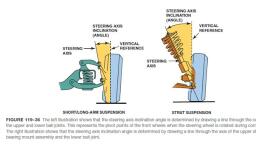
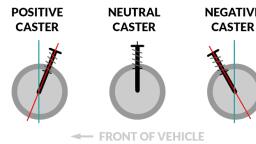
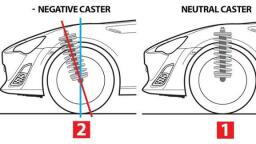
12. What are ‘Air Dams’, a) Spoilers at the front of a vehicle, b) Spoilers at the rear of a vehicle, c) Spoilers at the sides of a vehicle, d) Spoilers at the top of a vehicle, 13. What are ‘Wings’ of a vehicle, a) Spoilers at the front of a vehicle, b) Spoilers at the rear of a vehicle, c) Spoilers at the sides of a vehicle, d) Spoilers at the top of a vehicle, 14. Why ‘Bumpers’ are used in cars, a) To reduce the impact in case of low speed collisions, b) To improve the aerodynamics of a car, c) To increase the engine performance, d) None of the mentioned, 15. What is the angle between the steering axis and the vertical in the plane of the wheel?, A) Castor, b) Camber, c) Steering axis inclination, d) Kingpin inclination, , 16. Trucks and Buses use which type of fuel?, a) Petrol, b) LPG, c) CNG, d) Diesel, 17. A 4*2 drive vehicle implies that, a) It has 4*2=8 wheels, b) It has 2 auxiliary wheels and 4 drive wheels, c) It has 4 wheels out of which 2 are drive wheels, d) None of the mentioned
Page 4 :
18. If there are 7 clutch plates in a multi-plate clutch, what is the number of pair of contact, surfaces?, a)5, b)4, c)6, d)8, ., 19.Where is the clutch located?, a)Between transmission and engine, b)Between transmission and rear axle, c)Between transmission and propeller shaft, d)Between transmission and differential, , 20.Which of the following parts of the cover assembly that hold the pressure plate against the, clutch plate?, a)Springs, b)Thrust bearings, c)Struts, d)Lever, , ., 21.Which of the following is the disadvantage of the cone clutch??, a)It becomes difficult to disengage the clutch when the cone angle is less than 20°, b)It is silent in operation, c)The normal force on the contact surface is larger than the axial force, d)Same torque can be transmitted for the same size as the plate clutch, , ., , 22.Which of the following is the disadvantage of the cone clutch??
Page 5 :
a)It becomes difficult to disengage the clutch when the cone angle is less than 20°, b)It is silent in operation, c)The normal force on the contact surface is larger than the axial force, d)Same torque can be transmitted for the same size as the plate clutch, , ., , 23.Which of the following is the need of the gearbox?, a)To vary the speed of the vehicle, b)To vary the torque of the vehicle, c)To vary the power of the vehicle, d)To vary the acceleration of the vehicle, , 24.In which type of manual transmission the double-declutching is used?, a)Constant-mesh gearbox, b)Sliding mesh gearbox, c)Synchromesh gearbox, d)Epicyclical gearbox, , 25.In which of the gearbox all gears are always in contact?, a)Constant-mesh gearbox, b)Sliding mesh gearbox, c)Synchromesh gearbox, d)Epicyclical gearbox, , 26.In which of the gearbox sun and planet gear set is used?, a)Constant-mesh gearbox, b)Sliding mesh gearbox, c)Synchromesh gearbox
Page 6 :
d)Epicyclical gearbox, , 27.Where is the overdrive located?, a)Between transmission and engine, b)Between transmission and rear axle, c)Between transmission and propeller shaft, d)Between transmission and differential, , 28.Which of the following is not part of automatic transmission?, a)Epicyclic gearbox, b)Torque convertor, c)Multi-plate clutch, d)Sliding mesh gearbox, , 29.Which types of gears are used in constant mesh gearbox?, a)Spur gear, b)Helical gear, c)Bevel gear, d)Worm gear, , 30.The gear shift lever requires two separate motions to shift gears, and the first movement, a)moves the synchronizer, b)selects the synchronizer, c)meshes the gears, d)operates the clutch
Page 7 :
31.In a single dry plate clutch, torsional vibrations are absorbed by, a)coil springs known as torsional springs, b)cushion springs, c)central hub, d)clutch pedal, , 32.Which types of joints are used when the shafts are inclined?, a)Universal joint, b)Hinge joint, c)Ball and socket joint, d)Pivot joint, , 33.Where is the differential located?, a)Between transmission and rear axle, b)Between engine and transmission, c)Between two propeller shaft, d)Between steering wheel and steering column, , 34.Which one of the following statements correctly describes the construction of a planetary, gear type differential ?, a)The six planetary pinions rotate in constant mesh with the internal gears, b)One drive shaft is splined to the central gear and the other to the planetary gear., c)Each planetary pinion gear meshes with both the central gear and the internal gear., d)The internal gear is fixed to the planetary gear, , 35.Free pedal play in car clutches is about, a)15 mm, b)25 mm, c)40mm, d)60 mm
Page 8 :
36.The device for smoothening out the power impulses from the engine is called, a)clutch, b)differential, c)flywheel, d)torque converter, , 37.Clutch facings are usually attached to the plate by, a)steel rivets, b)brass rivets, c)aluminium screws, d)steel screws, , 38.The torque converter uses __________ to transfer torque., a)air, b)automatic transmission fluid (ATF), c)gears, d)steel belt, , 39.The sequence in which the force is transmitted through a brake system when the brake, pedal is depressed is, a)brake pedal - master cylinder - brake lines - vacuum servo mechanism - brake pads, b)brake pedal - vacuum servo mechanism - master cylinder - brake lines - brake pads, c)brake pedal - master cylinder - vacuum servo mechanism - brake lines - brake pads, d)brake pedal - brake lines - vacuum servo mechanism - master cylinder - brake pads, , 40. What is the need of the universal joint?, a) To change inclination, b) To bend sideways, c) To transfer torque at an angle, d) To change length
Page 9 :
41. The motion of the cam is transferred to the valves through, a)pistons, b)rocker arms, c)camshaft pulley, d)valve stems, , 42.Which of the following symptom is caused as a result of brake disc run out ?, a)Ineffectiveness of the brakes, b)Judder during braking, c)Localized wearing of the brake pads, d)Localized wearing of the brake pads, , 43.The condition that causes vapour locking in a brake system is, a)overheating of the fluid due to frequent brake application, b)overcooling of the brakes during high speed driving, c)keeping the vehicle without use for an extended period, d)an excessively high engine speed on a downhill road, , 44.If the engine coolant leaks into the engine oil, then engine oil, a)appears milky, b)becomes foamy, c)turns black, d)none of these, , 45. The axes of the two shafts are intersecting and are at 25° to each other. These two shafts, are connected by Hook’s joint. At which position of the drives shaft velocity ratio will be, maximum?, a) 90°, 270°, b) 0°, 180°
Page 10 :
c) 180°, 270°, d) 90°, 180°, 46. Which of the following is the disadvantage of the open differential?, a) High in cost, b) Not reliable, c) Complex design, d) Sends most of the power to the wheel having less traction, 47. Why do the hypoid gears require special lubricant?, a) Teeth are soft, b) Teeth are hard, c) Gears run faster, d) There is relative motion between teeth, 48. Where is the differential located?, a) Between transmission and rear axle, b) Between engine and transmission, c) Between two propeller shaft, d) Between steering wheel and steering column, 49. The axes of the two shafts are intersecting and are at 35° to each other. These two shafts, are connected by Hook’s joint. At which position of the drives shaft velocity ratio will not be, unity?, a) 42.145°, b) 222.145°, c) 317.85°, d) 141.52°, 50. What is the need of the universal joint?, a) To change inclination, b) To bend sideways, c) To transfer torque at an angle, d) To change length
Page 11 :
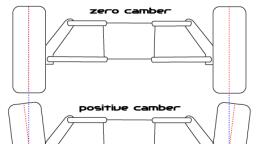
51. A two-piece propeller shaft requires one universal joint., a) True, b) False, 52. What is the angle between the steering axis and the vertical in the plane of the wheel?, a) Castor, b) Camber, c) Steering axis inclination, d) Kingpin inclination, 53. If the front of the front wheels is inside and rear of front wheels are apart when the, vehicle is at rest, then the configuration is called?, A) Toe-in, b) Toe out, c) Positive camber, d) Positive castor, 54. What is the name of the angle through which the wheel has to turn to sustain the side, force?, a) Slip angle, b) Castor angle, c) Camber, d) Kingpin inclination, 55.What is called the cornering force over the slip angle?, a) Castor trail, b) Cornering power, c) Self-righting torque, d) Pneumatic trail, 56. What is the angle between the vertical when the top of the wheel slants outward?, a) Negative camber, b) Negative castor, c) Positive camber, d) Positive castor
Page 12 :
57. The furniture rollers are provided with negative castor., a) True, b) False, 58. In a disc brake, which component provides the pad-to-disc adjustment?, a) Bleed screw, b) Piston, c) Caliper, d) Piston seal, 59. On what principle does the braking system in the car work?, a) Frictional force, b) Gravitational force, c) Magnetic force, d) Electric force, 60. Generally which brakes are on the front wheels?, A) Drum brake, b) Disk brake, c) Shoe brake, d) Double shoe brake, 61.The metering valve is used to proportion the braking effect between the front and the rear, axle., a) True, b) False, 62.Which of the following is the disadvantage of the magneto ignition system?, a) Magneto ignition system has a poor quality of spark during starting, b) Magneto ignition system occupies more space, c) Magneto ignition system has more maintenance problems, d) Magneto ignition system is used largely in four wheels, 63.For how many times the contact breaker must make and break the circuit for a fourcylinder engine operating at N rpm?, a) N times, b) 1.5N times
Page 13 :
c) N/2 times, d) 2N times, 64.What is actual power delivered by the engine known as?, A) Shaft power, b) Horse power, c) Brake power, d) None of the mentioned, , 65. If ‘T’ is torque(in Nm) and ‘N’ is speed(in rpm) then the required expression for Brake, power ‘B.P’ in kws is, a) 2πnt/6000, b) 2πnt/60000, c) πnt/6000, d) πnt/60000, 66.The torque available at the contact between road and driving wheel is called, a) Brake power, b) Friction power, c) Tractive effort, d) Engine torque, 67.If ‘V’ is vehicle speed(in metres/min) and ‘R’ is radius of driving wheel(in metres) then, the rpm of the driving wheel is given by, a) rpm = V/2πr, b) rpm = 2πv/R, c) rpm = πr/V, d) rpm = πv/R, 68.Which of these is not a power loss which takes place between engine and driving wheel, a) Power loss due to friction of piston bearings and gears, b) Power loss from clutch to drive wheel due to friction of various parts, c) Transmission line loss, d) None of the mentioned
Page 14 :
69.The force that opposes the motion of a vehicle is, a) Rolling resistance, b) Gradient resistance, c) Wind or air resistance, d) All of the mentioned, 70.Rolling resistance doesnot depend on which of the following factors, a) Load on each road wheel, b) Radius of driving wheel, c) Wheel inflation pressure, d) Nature of road surface, , 71.For an average type of road surface what percentage of vehicle’s weight constitutes rolling, resistance, a) 5 to 10%, b) 1 to 2%, c) 2 to 5%, d) 0 to 3%, 72.Wind or air resistance depends on which of the following factors, a) Shape and size of vehicle body, b) Air velocity, c) Speed of vehicle, d) All of the mentioned, 73.If ‘k’ is coefficient of air resistance, ‘A’ is frontal area projected by the vehicle in square, metres and ‘V’ is vehicle speed(in km/h) then the expession for air resistance ‘A.R’ on the, vehicle is, a) A.R = k*A*V^2, b) A.R = k*A*V^3, c) A.R = 2k*A*V, d) A.R = k*A*V
Page 15 :
74.The value of coefficient of air resistance for average cars is approximately equal to, a) 0.32, b) 0.032, c) 0.0032, d) 1.32, 75.Gradient resistance for a vehicle depends on which of the following factors, a) Weight of the vehicle, b) Size of the vehicle, c) Width of tyres, d) Speed of the vehicle, 76.Power to weight ratio for high performance cars can range upto, a) 150, b) 190, c) 230, d) 280, 77.The main task of a battery in automobiles is to, a. Supply electricity to the alternator, b. Act as a reservoir or stabilizer of electricity, c., , Supply electricity to the vehicle's electrical system at all times while the engine is, running, , d., , Supply a large amount of power to turn the starter motor when the engine is being, started, , 78.The air resistance to a car at 20 kmph is R. The air resistance at 40 kmph will be, a. R, b. 2 R, c. 4R, d. 4 R2
Page 16 :
79.The driveshafts are connected to the differential and wheel hubs through universal joints, because the universal joints, a. Absorb the vibrations transferred from the surface of the road, b., , Compensate for variations in the relative positions of the differential and the wheels, which result from bumpy road surfaces or other similar driving conditions., , c., , Absorb any difference in speed between the left and right wheels when the vehicle is, turning, , d. None of the above, 80.The function of antilock brake system (ABS) is that is, a. Reduces the stopping distance, b. Minimises the brake fade, c. Maintains directional control during braking by preventing the wheels from locking, d. Prevents nose dives during braking and thereby postpones locking of the wheels, , 81.A worm gear is used as the pinion for the rack and pinion type of steering gearbox,, because it, a., , Improves steering comfort when steering wheel is turned to effect small changes in the, direction of forward motion, , b. Allows the steering wheel to be turned by a greater amount when steering, c. Makes the steering more responsive, d. Reduces the amount of kick-back for large steering angles, 82.An imbalance wheel during vehicle operation, a. Makes large noise when its heavy point hits the road surface, b. Deflects in the vehicle's longitudinal direction, c. Bounces vertically or deflects from side to side (as seen from front or rear), d. Creates a standing wave
Page 17 :
83.Tachometer in a vehicle measures, a. Speed, b. Distance, c. Engine r.p.m., d. Fuel consumption, 84.The ignition coil is used to, c. Step up current, b. Step down current, c. Step up voltage, d. Step down voltage, 85.The main function of a master cylinder is to, a. Adjust the extent of brake pedal free play, b. Boost the force applied to brake pedal, c. Convert brake pedal force into hydraulic pressure, d. Ensure that all the wheel brakes are supplied with the same amount of fluid pressure, , 86.The basic purpose of a four wheel drive (4WD) system is that it, a. Delivers improved cornering on dry road surfaces, b. Eliminates the need of snow tyres, tyre chains, etc., c., , Ensures effective transmission of engine torque to all four wheels, even on slippery, road surfaces, , d. Ensures that effective braking can be performed, even on slippery surfaces, 87.The basic characteristics of a brake fluid is, a. A high boiling point, b. Low viscosity, c. Compatibility with rubber and metal parts
Page 18 :
d. All of these, , 88.The gradient resistance to a vehicle having a mass of 980 kg moving on an incline of 10°, is, a. 1.6694 N, b. 16.694 N, c. 166.94 N, d. 1669.4 N, , 89.The starting system includes, a. A battery, a starter, and an ignition switch, b. A battery, a distributor, and an ignition switch, c. A battery, a starter, and a distributor, d. A distributor, a starter, and an ignition switch, , 90.Caster is a, a. Forward tilt of the kingpin, b. Backward tilt of the kingpin, c. Either 'a' or 'b', d. None of these, , 91.A front stabilizer bar is used to, a. Increase vehicle load-carrying capacity, b. Provide a softer ride, c. Control suspension movement and body roll, d. All of the above
Page 19 :
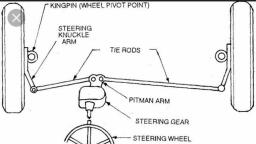
92.A battery can be charged by, a. Adding distilled water, b. Adding sulphuric acid, c. Applying voltage in the reverse direction to that of charging, d. Applying a voltage in the same direction to that of charging, , 93.When the front wheels of a vehicle are locked during braking, then, a. Stopping distance becomes extremely long, b. Front tyres skid across the road surface, and the vehicle spins around, c. Rear tyres skid across the road surface, and the vehicle spins around, d., , Driver loses control over the steering, and the vehicle continues moving in its current, direction, , 94.The order in which effort applied to the steering wheel is transferred to the front wheel is, a., , Steering wheel - steering gearbox - steering shaft - tie rod - steering knuckle - front, wheels, , b., , Steering wheel - steering shaft - steering gearbox - tie rod - steering kunckle -front, wheels, , c., , Steering wheel - steering shaft - steering gearbox - steering knuckle - tie rod - front, wheels, , d., , Steering wheel - tie rod - steering gearbox - steering shaft - steering knuckle - front, wheels, , 95.The most accurate ignition system of a spark ignition engine is, a. Magneto system, b. Battery system, c. Electronic control unit system, d. Magneto and electronic system, , 96.The basic function of the suspension is to, a. Absorb vibration and impact forces from the road surface
Page 20 :
b. Ensure that the steering wheel can deliver a suitable amount of steering force, c. Ensure that wheel alignment is not disturbed during driving, d. Automatically correct the effects of over steering, , 97.The rigid suspension is beneficial when, a. It is desired to reduce the unsprung mass, b. It is desired to have more flexibility in design, c. It is desired to improve tyre-to-ground contact characteristics, d. Large changes in load make it necessary to have a large suspension stroke, , 98.When turning a corner,, a. The front wheels are toeing out, b. The front wheels are turning on different angles, c. The inside front wheels has a greater angle than the outside wheel, d. All of the above, , 99.The basic purpose of providing caster angle on wheels is to, a. Prevent uneven tyre wear, b. Maintain directional control, c. Bring the road contact of the tyre under the point of load, d. Compensate for wear in the steering linkage, , 100.In a hydraulic power steering system, the power steering pump is driven by a, a. Belt-driven by camshaft, b. Chain-driven by crankshaft, c. Belt-driven by driveshaft, d. Belt-driven by crankshaft
Page 21 :
101.The correct way to rectify an imbalanced wheel is to, a. Adjust the tyre pressure, b. Rotate the tyres, c. Adjust the damper spring tension, d. Attach appropriate weights to the wheel at appropriate positions, , 102.The problems caused by the wheel imbalance are, a. Hard steering and hard ride, b. Poor acceleration and hard steering, c. Steering wheel vibrations and uneven tyre wear, d. Poor acceleration and reduced fuel efficiency, , 103.The brake pedal during ABS operation, a. Is pushed upward forcefully, b. Pedal stroke becomes longer, c. Transmits slight kickback to the driver's foot, d. All of the above