Page 2 :
LESSON - 9Cooking and Eating HabitsEXERCISE CW BOOK
Page 3 :
HARD WORDS, 1. Habits 10. Direct heating , 2. Discovery 11. Conserving , 3. Oven 12. vessel, 4. destroy 13. duration , 5. nutrients 14. pressurr cooker , 6. Boiling , 7. Steaming , 8. Baking , 9. Frying
Page 4 :
KEY WORDS, Ingredients - the components or , parts of a food item., , preservation - to keep something in , good condition for a long time, , utensils - a container that may be , used for cooking or storing food
Page 5 :
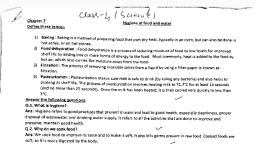
Q.E Answer the following questions in brief., 1. In what form, early man use toeat food ?, Ans. Early man used to eat food in raw form , only., , 2. Name any three methods of cooking , food., Ans. Boiling, baking and frying are three, methods of cooking food.
Page 6 :
3. List the methods of cooking which require water. Ans. Boiling and steaming are methods of cooking which require water. 4. Name the oldest method of cooking known to man.Ans. Direct heating is the oldest method of cooking known to man.
Page 7 :
5. How is baking done?Ans. Baking is done usually in an oven with or without using oil.
Page 8 :
Q. F Answer the following questions., 1. Write two benefits of eating cooked , food., Ans. Benefits of eating cooked food are :, 1. Cooked food is easy to digest. , 2. Cooked food is germs free and, safe to eat.
Page 9 :
2. What can happen to vegetables when they are over cooked?Ans. When the vegetables are over cooked, they can destroy many of the nutrients of vegetables.
Page 10 :
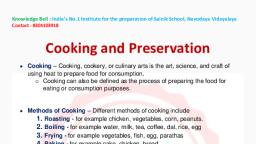
3. Differentiate between Boiling and Frying.Ans. BOILING 1. Food can be cooked by Boiling food in water. 2. It is advisable to eat boiled food. 3. For example- pulses, eggs
Page 11 :
FRYING -1. Food can be cooked frying it in hot oil. 2. It is advisable to avoid fried food. 3. For example - pakoda, jalebi
Page 12 :
INTERLEAF BOOK ACTIVITY, LESSON - 9, , Q. Name all the methods of cooking, food.Give two examples of each.
Page 13 :
THANK YOU