Page 1 :
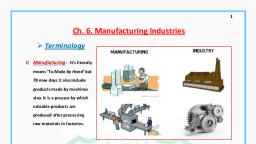
Chapter-6, Secondary Activities, , 1. What do you mean by secondary activities?, The economic activities which involves in manufacturing new materials by using the, products of primary activities as raw materials are called Secondary activities., Manufacturing of cloth from cotton, sugar from sugarcane, steel from iron ore etc. are the, example of secondary activities., 2. Differentiate between primary activities and secondary activities., Primary activities, , Secondary activities, , Primary activities are those activities Secondary activities are those which, which includes extraction and production include the processing of raw materials, of raw materials., into finished products., Primary activities includes hunting and Secondary, activities, includes, gathering, pastoralism, fishing, mining, manufacturing,, processing, and, agriculture etc, construction of various products like, textile, iron etc., ., Primary activities are almost the only Secondary activities have their direct, source of food supply and raw material impact on education, health, transport and, for industries., trade etc., Greater dependence on primary sector is a Shifting from primary to secondary sector, sign of underdeveloped economy., is a sign of developing economy., , 3. What is Manufacturing?, Manufacturing is a process through which the utility of the product increases and, some amount of value is added to the raw materials. The essence of manufacturing, process is the conversion of raw material to a finished product., 4. Discuss the characteristics of Modern Large Scale Manufacturing/industries, , , , Specialisation of Skill/Methods of production: Production process of modern large, scale manufacturing is different from small scale industries. These are highly skilled,, and so it also required highly skilled labours.
Page 2 :
, , , , , , , , Mechanisation: Mechanisation means to using gadgets which accomplish tasks., Modern large manufacturing industries are highly mechanised. They use modern tools, and technologies., Technological Innovation: Modern large scale manufacturing uses modern, technology for quality control, eliminating waste and inefficiency, and combating, pollution., Stratified organisational structure: The working process of modern large scale, industries is mainly mechanised. They are characterised by extreme specialisation and, division of labour for producing more goods with less effort and low costs, vast, capital, large organisations and executive bureaucracy., Uneven geographic distribution: Modern large manufacturing industries are, unevenly distributed in the world. Major modern industries are concentrates in a few, numbers of places. These cover less than 10 per cent of the world’s land area., , 5. Discuss the factors Influencing in Industrial Location, , , , , , , , , , Access to Market: Existence of a market for manufacturing goods is one of the most, important factors in the location of industries. Without proper and smooth access to, market, industries cannot be set up., Access to Raw material: Raw materials used by industries should be cheap and, easily available. Many industries are located close to the source of raw materials due, to the perishable nature of the raw materials., Access to Labour supply: Labour supply is an important factor to set up an industry., Some types of manufacturing require skilled and trained labour., Access to sources of energy: Industries requires power to perform. Heavy power, consuming g industries are located near to the source of power supply. It reduces the, cost of energy., Access to Transport and Communication: Good transport and communication, facility is required to set up an industry. It reduces the total time of transportation., Speedy and efficient transport facilities require to carry raw materials to the factory, and to move finished products to the market., , 6. What is foot Loose Industry?, Foot Loose Industries can be located at any location without effect from the factors, such as resources or weight losing. They largely depend on component parts which, can be obtained anywhere. The important factors in their location are accessibility by, road network. Example: Computer chips manufacturing, diamond manufacturing, etc.
Page 3 :
Classification of Industries, A. Industries based on Size, , , , , , , Household or cottage industries: Cottage industries are the smallest manufacturing, unit. Cottage industry is a production of goods by using local raw materials and, simple tools in homes or small workplace. It is done with the help of family member, or part time labour. Example: foodstuffs, fabrics, mat etc., Small scale industries: Small scale industries are those in which the manufacturing,, production and rendering services are done on a small scale. This types of, manufacturing uses local raw material, simple power driven machines and semi, skilled labour. It provides employments and raises local purchasing power. For, example: Bakeries, Toys industries, Napkins industries, Incense industries etc., Large scale industries: Large scale industries or manufacturing refers those, industries which require huge infrastructure, man power and huge capital. Large, scale manufacturing involves large market, various raw material, advanced, technologies, huge capital etc. For example: Iron & Steel industries, Automobile, industries, On the basis of the system of large scale manufacturing, the world’s major industrial, regions may be grouped into twoi), Traditional large scale industrial regions- which are thickly clustered in a few, more developed countries., ii), High-technology industrial regions- which have diffused to less developed, countries., , B. Industries based on Input/Raw material, , , , , , , , , Agro based industries: Agro based industries agro those, which obtain raw, materials from agriculture. These are consumer based industries. For example: tea, industry, cotton industry, rubber industry etc., Mineral based industries: Industries which uses minerals and metals as raw, materials are called as mineral based industries. The product of these industries feed, other industries. Some industries use ferrous metallic minerals which contain ferrous, (iron) like iron and steel industries. But some industries use non ferrous metallic, minerals like aluminium, copper industries., Chemical based industries: Industries which uses natural chemical as their raw, materials are called as chemical based industries. Chemical based industries are also, based on raw materials obtain from wood and coal. For example: synthetic fibre, industries, plastic, petroleum industries etc., Forest based industries: Industries which use forest products as their raw material, is called as forest based industries. For example: Paper industry, Plywood industry,, match industry etc.
Page 4 :
, , Animal based industries: Industries which obtain raw materials from animals are, known as animal based industries. For example: Ivory industries, Leather industries,, woollen industries etc., , C. Industries based on Output/Product, , , , , Basic industries: The industry whose products are used to make other goods by, using them as raw materials are known as basic industry. For example: iron and, steel industry., Consumer goods industry: The industries whose products are directly used by, consumers are known as consumer based industries. For example: biscuit industry,, tea industry, Soap industry, TV industry etc., , D. Industries based on Ownership, , , , , , , Public sector industries: Public sector industries are those industries, which are, owned and managed by government. Most of the heavy industries such as iron and, steel industries, petroleum industries, aircraft industries etc. are owned and managed, by government. For Example: Steel Authority of India, Coal India Limited, Gas, authority of India etc., Private sector industries: Private sector industries are those which are owned and, managed by individual investor or private organisations. For example: ICICI bank,, Reliance Industries Limited, Yes bank etc., Joint sector industries: Joint sector industries are those, which are jointly managed, by public and private sector. For example: Oil India Limited, Bharat Aluminium etc., , 7. Distinguish between household or cottage industries and small scale industries., , Household industry, , Small scale industry, , The location of cottage industry is based Small scale industries are basically, in village., located in urban and semi-urban areas., Cottage industries are mostly run by the Small scale industries are run by hired, family member or some part time labours. labour., Household industries are producing goods Small scale industries are producing, for meeting local requirements., goods to meet the demand for the wider, areas., Household or cottage industries use Small scale industries require more capital, simple tools with very little capital., for machinery which runs on power.
Page 5 :
8., , Distinguish between small scale manufacturing and large scale manufacturing., , Small scale manufacturing, , Large scale manufacturing, , Small scale industries do not require huge Large scale industries require, infrastructure and huge capital., infrastructure, man power and capital., It requires small amount of raw material., , huge, , It require huge amount of raw material., , It engaged semi skilled or non skilled labour It requires highly skilled labour., ., Production is low in small scale High amount of production., manufacturing., , 9. Write a short note on the Ruhr Coal field of Germany, Ruhr coal field has been one of the major industrial regions of Europe. Coal and Iron &, steel formed the basis of the economy. But as the demand for coal declined, the industry, started shrinking. Even after the exhausted of iron ore, the industry remained using imported, ore brought by waterways to the Ruhr. The Ruhr region is responsible for 80 per cent of, Germany’s total steel production. Changes in the industrial structure of it, have led to the, decay of some areas, and there are problems of industrial waste and pollution., , 10. Write a short note on iron and steel industry., Iron and steel industry forms the base of all other industries and so it is called a Basic, industry. It is basic industry because it provides raw material for other industries such as, machine tools used for further production. It is also called as heavy industry., Processing of iron and steel industry, Basic process is refinement of iron ore. Coal and limestone is used for the refinement process., Iron is extracted from iron ore by smelting in a blast furnace with carbon and limestone., When molten iron cooled, then it is called as pig iron. By adding manganese it converts into, steel., , 11. Write a short note on distribution of Iron and Steel Industry in the world, Iron and steel industries are mainly concentrated in Japan, USA, China,, Germany, Italy, India etc.
Page 6 :
Japan has not required raw material for iron and steel industry, but Japan, produces large amount of Iron and steel. Producing areas are TokyoYakohoma, Nagoa regions, Hokkaido regions etc., USA is one of the leading producers of iron and steel. Producing regions are, North Appalachian region, Great lake region and Atlantic coast., In China Southern Manchuria is the oldest steel producing area. Shantung,, Beijing, and Shensi are the iron producing area of Northern China., In UK, important iron and steel producing areas are Scun Thorpe, Port Talbot,, Birmingham and Sheffield., Jamshedpur, Kulti-Burnpur, Durgapur, Bhilai, Bokaro, Vishakhapatnam etc., are the leading iron and steel producing area., 12., , Write a short note on cotton textile industry., Cotton and textile is the oldest among all the manufacturing activities. Cotton and textile, industry is a labour intensive agro based manufacturing. It has three sub-sectorsHandloom, Powerloom and Mill sectors. Handloom sector involves spinning, weaving, and finishing of the fabrics. Powerloom sector introduces machines. So the volume of, production increases. Mill sector is highly capital intensive and produces fine cloths., , 13., , Write a short note on distribution of cotton textile industry in the world, India, China, USA, Pakistan, Uzbekistan, Egypt produces high amount of raw, cotton, which is more than half of the World’s raw cotton., USA is one of the leading producers of cotton textile. Cotton textile industries, are found in Georgia and North & South Carolinas., Another cotton textile manufacturer is China. Textile mills are found in, Sanghai, Manchuria, Beijing etc., India is one of the leading producer of cotton textile since a long past. In India, Cotton textile industries are found in Gujarat, Nagpur, Ganga plains etc., , 14., , What do you mean by High Technology (High-tech) Industry?, High technology or high tech industry using or involving advanced methods and the, most modern equipment. It is the latest generation of manufacturing activities. It is the, application of intensive research and development (R&D) efforts. Highly skilled, specialised workers are needed for high tech industries.
Page 7 :
15., , Explain why high-tech industries in many countries are being attracted to the, peripheral areas of major metropolitan countries., High-tech industries require professional and high skilled man power. Professional, workers are located in urban areas, but due to high rent in central areas, they lives in the, periphery. Land price is generally cheap in the peripheral area. There is a land scarcity in, the central region, but it is available in the peripheral areas.. The peripheral areas can be, well connected through land transport. Hence, these high-tech industries are set up near, the urban centres where adequate space is available., , 16., , Africa has immense natural resources and yet it is industrially the most backward, continent, comment., The reasons behind the industrial backwardness are as followsi) Climate: climate is one of the most important factors to set up industries. Due to, the adverse climatic conditions, it is unfavourable to set up some mineral based, industries., ii) Lack of technological innovation and mechanization: Technology and, modern machinery made the base of industrial development. Due to the, economic condition, African countries are lagging behind of technological, innovation. So they are industrially backward position yet., iii) Lack of transportation system: A well developed transportation facility is, basic factor for industrial development. It is necessary to development of trading, network both national and international level. But the transportation and trading, network of Africa is not highly developed. So, Africa is industrially backward., iv) Lack of proper utilization of energy resources: African countries are very, rich in energy resources like coal, petroleum, water etc. But lack of proper, utilization and use, Africa is industrially backward., , 17., , Write the important characteristics of secondary activities., Secondary activities add value to natural resources by transforming raw, materials into valuable products., Secondary activities concerned with manufacturing, processing and, construction., Secondary activities ultimately lead to industrialization., , 18., , Why iron and steel industry is called as basic industry?, Iron and steel industries use iron ore as raw material to produce iron and steel. All other, industries depend on it for their machinery. Steel is needed to manufacture a variety of, engineering goods, construction material etc. So, iron and steel industry is called as basic, industry.