Notes of 1st Sem ENGH MC 2021, English Literature & English & English Epic similes.pdf - Study Material
Page 1 :
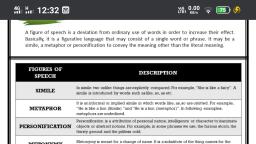
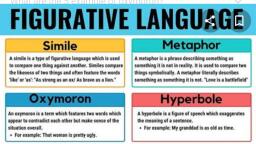
Epic Similes in Paradise Lost, Book I, A simile is an explicit statement of similarity existing between two different things. In other words, it is a, comparison by which something is illustrated. An epic simile or a Homeric simile is based upon a comparison of, one object with another, but it is something more elaborate, more magnified and more complex than a mere, comparison. The epic poet takes up a simile and then develops it into a complete independent picture. The main, comparison is simple, and consists of one or two elements, but the details are embellished, ornamented and, worked out with a poet’s artistic skill., Milton is a master of epic similes. He has employed his epic simile in Paradise Lost with great artistic, skill. The first epic simile in Paradise Lost, Book I, is the comparison of Satan’s huge bulk with that of the seabeast Leviathan:, “… or that sea-beast, Leviathan, which God of all his works, Created hugest that swim the ocean-stream., Him, haply, slumbering on the Norway foam,, The pilot of some night-foundered skiff, Deeming some island, oft, as seamen tell,, With fixed anchor in his scaly rind,, Moors by his side under the lee, while night, Invests the sea, and wished morn delays.”, (200—208), The comparison is elaborate in more than eight lines. Milton’s object here is to give us an impression of Satan’s, dangerousness because of its size and evil power, but other impressions are also produced. Leviathan, a seamonster, can be mistaken for a shelter and source of safety. But the sailors, once attaching themselves to him in, their ignorance, are in danger of death. Treachery, falseness of appearance, the lack of caution on the part of man, when close to danger----these are the ideas connected with Satan to be amplified later in Paradise Lost., Satan’s physical dimensions are emphasized with reference to his ponderous shield and exceptionally, long spear. The ‘broad circumference’ of the shield is ‘like the moon’:, “The broad circumference, Hung on his shoulders like the moon, whose orb, Through optic glass the Tuscan artist views, At evening from the top of Fesolè,, Or in Valdarno, to descry new lands,, Rivers, or mountains, in her spotty globe.” (286—91), But Milton departs from the point to make a reference to Galileo’s telescope, the ‘the optic glass’, and even to, mention the place of observation. He describes also what the telescope reveals: new lands, rivers or mountains in, the moon’s spotty globe., When Milton compares the fallen angels lying in the fiery lake to the autumnal leaves scattered on a, brook, the point of comparison is confined to mere number. But Milton gives a full, clear and definite picture of, the fallen and scattered leaves:, “Thick as autumnal leaves that strew the brooks, In Vallombrosa , where the Etrurian shades, High over-arched embower”., (301—3), Here the mention of Vallombrosa localizes the scene and adds to pictorial beauty. And the added reference to the, arched branches of Etrurian pines completes a picture that haunts the imagination. The main point of this, comparison is to emphasize the huge number of the fallen angels. But the reference to the autumnal leaves points, out indirectly the loss of power and brightness of the fallen angels., Milton has employed many other epic similes in the first book of Paradise Lost. The use of the epic, similes serves some very definite artistic purposes. In the first place, an epic simile adds to the vividness of, comparison. Secondly, an epic simile affords the readers of a long poem a certain diversion and thereby relieves, the mind for a moment from the obsession of the story. Thirdly, Johnson suggests that the purpose of the epic, simile is to elevate and ennoble the story. By introducing these independent pictures the poet raises the, imagination of the reader to a higher level. Thus in describing Satan’s assembled hosts, Milton refers to a series, of Greek, British and Italian stories, and thus enlarges the scope of imagination by a variety of associations., For all these reasons it is of the utmost importance that the epic similes are characterized by a wide range, and diversity. Selected from a vast field of scholarship and personal experience, they certainly succeed in freeing,, arousing and dilating the mind.



 Learn better on this topic