Page 1 :
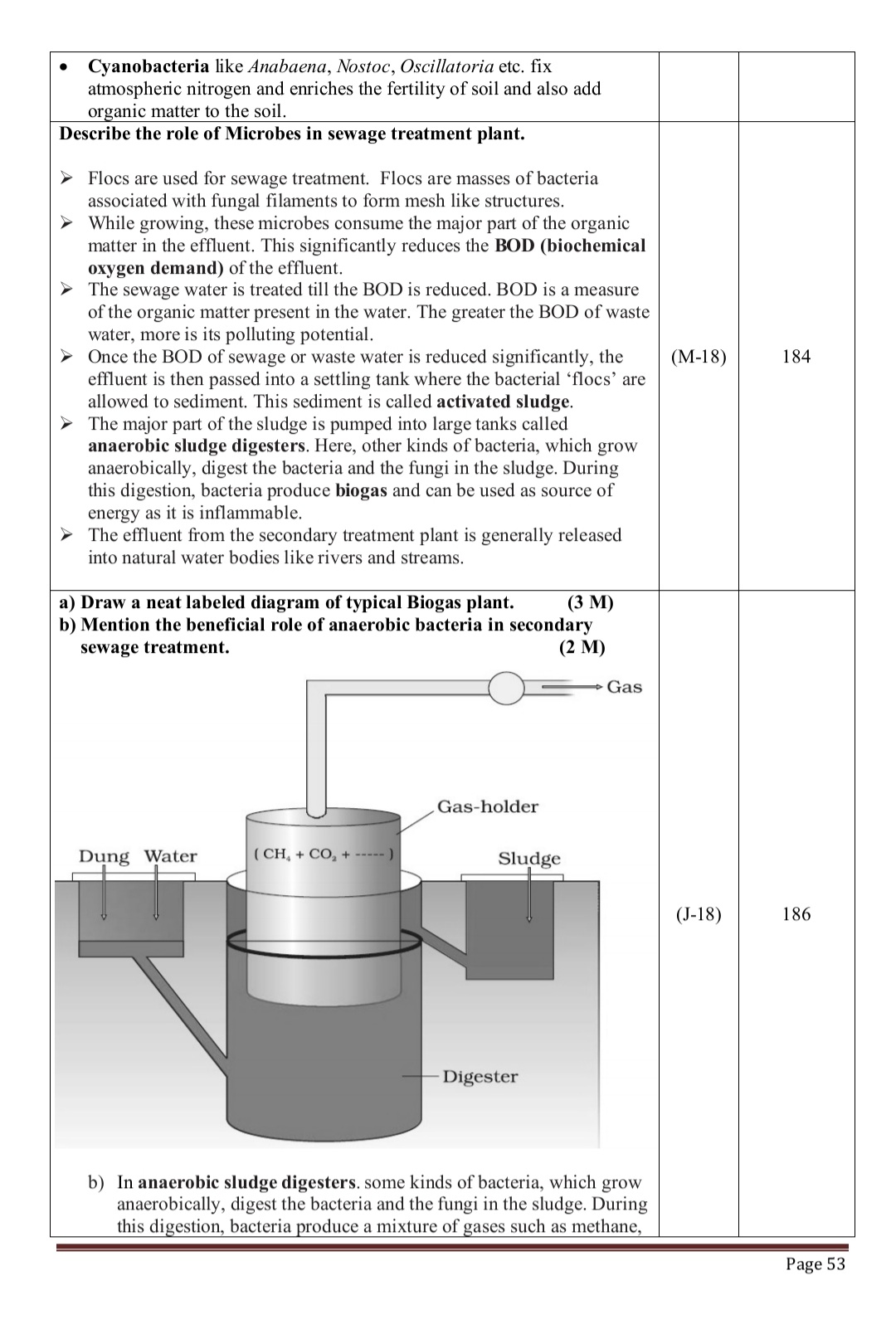
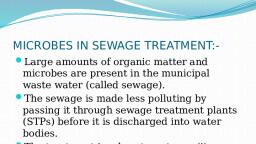
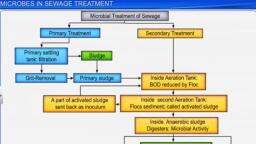
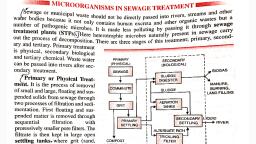
e Cyanobacteria like Anabaena, Nostoc, Oscillatoria etc. fix, atmospheric nitrogen and enriches the fertility of soil and also add, organic matter to the soil., , , , Describe the role of Microbes in sewage treatment plant., , » Flocs are used for sewage treatment. Flocs are masses of bacteria, associated with fungal filaments to form mesh like structures., , » While growing, these microbes consume the major part of the organic, matter in the effluent. This significantly reduces the BOD (biochemical, oxygen demand) of the effluent., , » The sewage water is treated till the BOD is reduced. BOD is a measure, of the organic matter present in the water. The greater the BOD of waste, water, more is its polluting potential., , » Once the BOD of sewage or waste water is reduced significantly, the (M-18) 184, effluent is then passed into a settling tank where the bacterial ‘flocs’ are, allowed to sediment. This sediment is called activated sludge., , » The major part of the sludge is pumped into large tanks called, anaerobic sludge digesters. Here, other kinds of bacteria, which grow, anaerobically, digest the bacteria and the fungi in the sludge. During, this digestion, bacteria produce biogas and can be used as source of, energy as it is inflammable., , » The effluent from the secondary treatment plant is generally released, into natural water bodies like rivers and streams., , , , a) Draw a neat labeled diagram of typical Biogas plant. (3 M), b) Mention the beneficial role of anaerobic bacteria in secondary, sewage treatment. (2M), , Gas, , , , , , Gas-holder, , Sludge, , (J-18) 186, , b) In anaerobic sludge digesters. some kinds of bacteria, which grow, anaerobically, digest the bacteria and the fungi in the sludge. During, this digestion, bacteria produce a mixture of gases such as methane,, , , , , , , , , , , , , , Page 53