Page 1 :
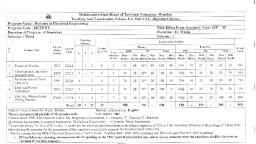
1 Maharashtra State Board Of Technical Education, Mumbai, , , , me Teaching and Examination Scheme for Post S.S.C. Diploma Courses, , , , Program Name : Computer Engineering Groups, , , , Program Code : CO/CM/IF/CW, , , , , , , , , , , , , , , , , , , , , , , , , , , , , , , , , , , , , , , , , , , , , , , , , , , , , , , , , , , , , , , , , , , , , , , , , , , , , , Duration of Program : 6 Semesters With Effect From Academic Year: 2017 - 18, Semester : Second Duration : 16 Weeks, Teaching ee, . Examination Scheme, Scheme, s. Bourse Tile course | Course Creait Theory Practical Grand, M viation | ©94@ | |r] p | @FT+P) exam ESE PA Total ESE | PA Total Total, Duration! Max | Min | Max | Min | Max | Min | Max | Min | Max | Min | Max | Min, | | in Hrs. | Marks |Marks| Marks |Marks| Marks |Marks| Marks |Marks Marks Marks | Marks) Marks, , jj || Elements ot Electrical -|2] 6 3 | 70 | 28 |30*| 00 | 100| 40 | 254 | 10 | 25 | 10 | so | 20 | 150, , Engineering |, 2 | Applied Mathematics |2| - 6 3 70 | 28 | 30* | 00 | 100 | 40 = = 25 = se - | 100, 3_| Basic Electronics -| 2 5 3 70 28 | 30* | 00 | 100 | 40 | 25@ | 10 | 25 10 50 20 | 150, 4_| Programming in'C’ 2| 2 J; 3 710 28 | 30* | 00 | 100 | 40 | 25@ | 10 25 10 | 50 20 | 150, , Business Communication 12 2 _ _ _ a _ _ — |35@ | 14 | is. | 06 | 50 | 20 50, , Using Computers, 5 | Computer Peripheral and lol a |. 1.1.!-1- )-— 1 - | soe boo | soe | 0 | 100} a0 | 100, , Hardware Maintenance |, , Web Page Designing with 19 _ _ _ _ _ i _ < a Ml, 7 HTML 2 4 50@ | 20 | 50 20 | 100 | 40 100, , Total | 18 | 4 | 12 34 -- | 280 = 120 = 400 = 210 | —~ | 190 | 400 | 800, , Student Contact Hours Per Week: 34 Hrs. Medium of Instruction: English ., Theory and practical periods of 60 minutes each. Total Marks : 800, , Abbreviations: ESE- End Semester Exam, PA- Progressive Assessment, L - Lectures, T - Tutorial, P - Practical, @ Internal Assessment, # External Assessment, *# On Line Examination, * Computer Based Assessment, * Under the theory PA, Out of 30 marks, 10 marks are for micro-project assessment (5 marks each for Physics and Chemistry) to facilitate integration of COs, and the remaining 20 marks is the average of 2 tests to be taken during the semester for the assessment of the cognitive domain LOs required for the attainment, of the COs., ~ For the courses having ONLY Practical Examination, the PA marks Practical Part - with 60% weightage and Micro-Project Part with 40% weightage, , > If Candidate not securing minimum marks for passing in the “PA” part of practical of any course of any semester then the candidate shall be, , , , declared as “Detained” for that semester. ATECHNICG, , MSBTE - Final Copy Dt. 30.10.2017
Page 2 :
lomenis of Bieta Engines i Seine Ekoment of Elotcal ginseng Sine, , Program Name: Computer Engineering Program Group This course map illustrates an overview of the flow and linkages of the topics at various levels, , pageant SQOICM/RIGW/IRIDREINENS of outcomes (details in subsequent sections) to be attained by the student by the end of the, course, in all domains of learning in terms of the industry/employer identified competency, , Semester : Second depicted at the centre of this map., , Course Title : Elements of Electrical Engineering, , Course Code 222218, , 1 RATIONALE, , A technologist is expected to have some basic knowledge of electrical engineering as they, have to work in different engineering fields and deal with various types of electrical machines, and equipment. Hence, it is necessary to understand magnetic circuits, AC fundamentals., polyphase circuits, different types of electrical machines. their principles and working, characteristics. This course deals with the basic fundamentals of electrical engineering and, working principles of commonly used AC and DC motors and their characteristics, The basic, concepts of electrical engineering in this course will be very useful for understanding of other, higher level courses, , 2. COMPETENCY, The aim of this course is to help the student to attain the following industry identified, competency through various teaching learning experiences, , * Use electrical equipment in industrial applications., , x COURSE OUTCOMES (COs), , The theory, practical experiences and relevant soft skills associated with this course are to be, taught and implemented, so that the student demonstrates the following industry oriented, COs associated with the above mentioned competency, , Use principles of magnetic circuits., , Use single phase AC supply for electrical and electronics equipment, , Use three phase AC supply for industrial equipment and machines,, , Connect transformers and DC motors for specific requirements., , Use FHP motors for diversified applications,, , Use relevant protective devices/switchgear for different requirements, , meaoges, , 4. TEACHING AND EXAMINATION SCHEME, , , , , , , , Credit Theory Practical, Lu] t] pe |"*TPh ee [ase | PA Total ESE PA Total, , | Hrs. [Max [Min | Max [Min | Max | Min) Max | Min | Max | Min | Max | Miw, , , , , , , , , , , , , , , , , , , , , , , , , , , , , , , , , , , , , , Sapte, eon, SS, , , , , , , , , , , , Sei, , i Grace, , , , -—Tosehin, CaaS, , oe, , UE, , , , , , , , , PO WO ARTY, Pmiatinons: the, , , , Figure 1 - Course Map, , 6. SUGGESTED PRACTICALS/ EXERCISES, The practicals in this section are PrOs (i.e. sub-components of the COs) to be developed and, , , , , , , , , , , , , , , , , , , , , , , , , , , , , , , , , , , , [4 Zz 6 3_| 70 | 28 | 30* | 00] 100 | 40 | 25¢ | 10 | 25 | 10 | 50 | 20 | assessed in the student for the attainment of the competency., , (*): Under the theory PA, Out of 30 marks, 10 marks are for micro-project assessment to s Unit SPDPFOx., facilitate integration of COs and the remaining 20 marks is the average of 2 tests to be taken No. Practical Outcomes (PrOs) No. Hr, during the semester for the assessment of the UOs required for the attainment of the COs. z, , Legends: L-Lecture; T — Tutorial/Teacher Guided Theory Practice; P - Practical; C— Credit. 1 Determine the permeability of magnetic material by plotting its B- T 02*, ESE - End Semester Examination; PA - Progressive Assessment. Hcurve., , 2 | Determine frequency, time period, peak value, rms value, peak Tl 02", COURSE MAP (with sample COs, PrOs, UOs, ADOs and topics) factor and form factor of a sinusoidal A.C. waveform on C.R.O., Ly, MSBTE Final Copy Dt 30.10.2017 Page 1 of 9 AS MSBTE Final Copy Dt. 30.10.2017 Page 2 0f9 2
Page 3 :
Bhs of Eee 1 Scheme, 7, . unit | APProx., Practical Outcomes (PrOs) Wi Hrs,, 0. i, Required, __| Part _ |, 3 | Determine frequency, time period, peak value, rms value, peak I 02, factor and form factor of a sinusoidal A.C. waveform on C.R.O, Part II, (4 | Find the phase difference between voltage and currentonC.RO. | Il 02, | for resistive, inductive and capacitive circuits. Part | |, | 5 | Find the phase difference between voltage and current on C.R.O 02, | for resistive, inductive and capacitive circuits. Part IL, 6 | Connect balanced star and delta load connections to get the il 02*, | required voltage and currents. Part I, | 7 | Connect balanced star and delta load connections to get the yr 02, required voltage and currents. Part I], 8 | Determine voltage and current ratio of single phase transformer |, 2 Operate the DC shunt motor using 3-point starter. 02, 10 | Operate the DC shunt motor using 4-point starter. 02, I1_| Reverse the direction of rotation of single phase induction motor. Vv 02*, 12 “| Reverse the direction of rotation of Universal motor. Vv 02, | 13” | Tdentify switches, fuses, switch fuse and fuse switch units, MCB, | VI 02, | MCCB and ELCB, —— __|, 14 Connect the switches, fuses, switch fuse and fuse switch units, VI 02, _MCB, MCCB and ELCB in a circuit, Part | eb, 15 _| Test circuit using series lamp and multimeter VI 02*, 16 Use the earth tester. VL 02, 17 | Use the insulation tester. VL 02, 18 | Use different types of digital clamp-on meters VI 02, l Total 36, , , , , , Note, , iA suggestive list of PrOs is given in the above table. More such PrOs can be added to, attain the COs and competency. A judicial mix of minimum 12 or more practical need to be, performed, out of which, the practicals marked as ‘*’ are compulsory. so that the student, reaches the ‘Precision Level’ of Dave's ‘Psychomotor Domain Taxonomy’ as generally, required by the industry., , ii, The ‘Process’ and ‘Product’ related skills associated with each PrO is to be assessed, according to a suggested sample given below:, , , , , , , , , , , , , , S.No. Performance Indicators _Weightage in %_, | Selection of suitable component, apparatus/instrument 20, 2 Preparation of experimental set up re 10, 2 Setting and operation 10, 4 Satety measures 10, 5 Observations and Recording 10, 6 ation of result and Conclusion 20, 7 Answer to sample questions _ i 10, 8 Submission of repor | 10, Total 100, MSBTE Final Copy Dt. 30.10.2017 Page 3 of 9, , , , , Elaments of Bleetaeal Engineering Shui, , The above PrOs also comprise of the following social skills/attitudes which are Affective, Domain Outcomes (ADOs) that are best developed through the laboratory/field based, experiences:, , a. Follow safety practices., , b. Practice good housekeeping., , c. Demonstrate working as a leader/a team member., , d. Maintain tools and equipment., , e. Follow ethical practices, , The ADOs are not specific to any one PrO, but are embedded in many PrOs. Hence, the, acquisition of the ADOs takes place gradually in the student when s/he undertakes a series of, practical experiences over a period of time, Moreover, the level of achievement of the ADOs, according to Krathwohl’s ‘Affective Domain Taxonomy’ should gradually increase as planned, below:, , * ‘Valuing Level’ in 1* year., , * ‘Organising Level’ in 2 year, , © ‘Characterising Level’ in 3 year, , 7. MAJOR EQUIPMENT/ INSTRUMENTS REQUIRED, The major equipment with broad specification mentioned here will usher in uniformity in, conduct of experiments, as well as aid to procure equipment by authorities concerned, , , , Equipment Name, , , , ith Broad Specifications, , 1 Single Phase Transformer: [kVA, single-phase, 230/115 V, air cooled,, _enclosed type —, 2 Single phase auto transformer (Dimmerstat) - Single-Phase. Air cooled,, _enclosed model, Input: 0 ~ 230, 10A, Output: 0~270Volts _ |, 3 CRO — 20 MHz, Dual channel | ee, 4 Three phase Auto Transformer -15 kVA, Input 415 V.3 phase, 50 Hz. Output | 4, 0-415 V.30A per Line, Cooling air natural, , , , , , , , , , , , , , , , 5 | Loading Rheostat - 7.5 kW, 230V, 3 phase, 4 wire, Balanced load (Each 4, | branch having equal load), Load : Wire Wound Fixed Resistors __ |, , 6 | Lamp Bank - 230 V 0-20 5, , 7_| DC shunt motor coupled with DC shunt Generator 67, [8 | Single phase Induction motor ~ 4 HP,230 V.50 Hz, AC supply I=], , 9 | Universal motor -1/4 Hp 9 |, 10 Digital Multimeter - 3 1/2 digit __ Comm, , L1_| DC and AC Ammeters: 0-5-10 Amp on, , , , (13 | Tachometer: Non contact type, 0-10000 rpm, , 14 | Reotifier: solid state, Input- 415 V, 3-Phase, AC, Output - 230 V DC, regulated, 20 Amp_, , 8. UNDERPINNING THEORY COMPONENTS, , The following topics/subtopics is to be taught and assessed in order to develop UOs for, , (12 | DC and AC Voltmeters: 0-150-300 V, , , , , , , , J -achieving the COs to attain the identified competency:, , , , =, OMSBTE Final Copy Dt 30.10.2017 Page 4 of 9 2
Page 4 :
Elements oF Bloeineal Enpineonins, , T Scheme, , Elsments of Electrical Engineering, , 1 Scheme, , , , , , , , , , , , , , , , , , , , , , , , , , , , Unit Unit Outcomes (UOs) Topics and Sub-topics, (in cognitive domain), Unit—I la. Describe the salient features of 1.1 Magnetic flux, flux density,, the given type of circuits magneto motive force, magnetic, Ib, Apply Fleming’s left hand rule field strength, permeability,, and Lenz’s law to determine reluctance, direction of induced EMF inthe 1.2 Electric and magnetic circuits, given circuit 13 Series and parallel magnetic circuits, ‘lc. Explain the given type(s) of 14 Faraday’s laws of electromagnetic, | induced emf. induction, Fleming’s right hand rule,, 1d. Interpret the B-H curve and Lenz’s law, hysteresis loop for the given 1.5 Dynamically and statically induced, material emf, self and mutual inductance |, 1.6 B-H curve and hysteresis, hysteresis, loop and hysteresis loss., Unit-11— | 2a. Describe the salient features of | 2.1 A.C. and D.C. quantity, advantages, AC the given type of power supply. of A.C. over D.C, Fundamen | 2b. Represent the given AC 2.2. Single phase A.C. sinusoidal A.C., tals quantities by phasors, wave: instantaneous value. cycle,, waveforms and mathematical amplitude, time period, frequency,, equations angular frequency, R.M.S. value,, 2c. Explain the response of the Average value for sinusoidal, given pure resistive, inductive waveform, Form factor, Peak factor, and capacitive AC circuits with 2.3. Vector representation of sinusoidal, sketches A.C. quantity, Phase angle, phase, 2d. Calculate the parameters of the difference, concept of lagging and, given circuit leading — by waveforms,, | 2c. Calculate impedance, current, mathematical equations and phasors, power factor and power ofthe | 2.4. Pure resistance, inductance and, given AC circuit. capacitance in A.C. circuit, 2.5 R-Land R-C series circuits, 2,6 Impedance and impedance triangle, 2.7 Power factor and its significance, 2.8 Power — active, reactive and, | apparent, power triangle, |, Unit- TIT 3a. Describe the salient features of 3.1 3 phase system over | phase system, Polyphase the given type of AC power 3.2. 3-phase emf generation and its wave, AC Cirenits, supply. form, 3b. Explain the concept of 3.3. Phase sequence and balanced and, symmetrical system and phase unbalanced load, sequence of the given AC 3.4 Phase and line current, phase and, supply. line voltage in star connected and, (3c. Distinguish the characteristics delta connected balanced system, of the given type(s) of star (or 3.5. Current, power, power factor in a3, delta) connections with phase balanced system, sketches. 3.6 Star and delta connections, 3d. Calculate the current and power, , of the given three phase, , , , Unit Unit Outcomes (UOs) Topics and Sub-topics, (in cognitive domain), balanced system., Unit-IV _|4a. Explain the working principle of 4.1 Transformer: Working principle, emf, Transform the given type of transformer. equation, Voltage ratio, current ratio, erand DC |4b. Distinguish the construction of and transformation ratio, losses, Motors the given type of transformer. 4.2. Auto-transformer ~ comparison with, 4c. Describe the construction and two winding transformer,, working of the given type of applications, DC motor. 4.3. DC motor construction - parts its, ‘4d. Select relevant type of DC function and material used, motor for the given application 4.4 DC motor -Principle of operation, with justification 4.5. Types of D.C. motors, schematic, diagram, applications of de shunt,, series and compound motors, Unit-V [5a Explain the working principle 5.1. FHP: Schematic representation,, Fractional | of the given type of FHP motor principle of operation and, Horse 5b. Select relevant FHP motor for applications of: split phase Induction, Power the given application with motor, capacitor start induction run,, (FHP) justification. capacitor start capacitor run and, Motors Sc, Describe the procedure to permanent capacitor motors, shaded, connect the given type of FHP pole motors, motor for the given application 5.2 Universal motor: principle of, with sketches, operation, reversal of rotation and, Sd. Describe the procedure to applications, connect stepper motor for the 5.3. Stepper motor: types, principle of, given application with sketches working and applications, Unit-VI_ 6a. Describe the features of the 6.1 Fuse: Operation, types, Protective given type of protective device. 6.2 Switch Fuse Unit and Fuse Switch, Devices _|6b. Select the relevant protective Unit: Differences, and device for the given application 6.3 MCB, MCCB and ELCB: Operation, Switchgear | with justification and general specifications, 6c. Select suitable switchgear for 6.4 Earthing: Importance of earthing., the given situation with factors affecting earthing, justification. 6.5. Methods of reducing earth resistance., , 6d., , State the LE. rule related to be, applied for the given type of, earthing with justification, , LE rules relevant to earthing, , , , , , , , , , MSBTE Final Copy Dt 30 10.2017, , Page 5 of9, , Note: To attain the COs and competency, above listed UOs need to be undertaken to achieve, the ‘Application Level’ and above of Bloom's ‘Cognitive Domain Taxonomy’, , , , , , Page 6 0f9, , 21
Page 5 :
9. SUGGESTED SPECIFICATION TABLE FOR QUESTION PAPER DESIGN, , , , , , , , , , , , , , , , , , , , , , , , , , , , , , , , , , , , , , , , , , , , Unit Unit Title Teaching | Distribution of Theory Marks, No. Hours R U A | Total, _ Level_| Level__Level__ Marks, , |_| Magnetic Circuits 10 02 04] 04 10, , I_| AC fundamentals 10 o2 | 04 | 0a 10, , IIt_| Polyphase AC sircuits 08 02 oa | 04 10, , IV_| Transformer and DC motors 14 | 04 04 | 06 14, , V_| Fractional Horse Power (FHP) 12 04 04) 06 14, , 1 motors, |_Vi_| Protective Devices and Switchgear 10 02, | 04 | «(06 12, Total 64 | 16 | 24 | 30 70, , , , , , , , , , Legends: R=Remember, U=Understand. A=Apply and above (Bloom's Revised taxonomy), Note: This specification table provides general guidelines to assist student for their learning, and to teachers to teach and assess students with respect to attainment of UOs. The actual, distribution of marks at different taxonomy levels (of R, U and A) in the question paper may, vary from above table., , 10. SUGGESTED STUDENT ACTIVITIES, Other than the classroom and laboratory learning, following are the suggested student-related, co-curricular activities which can be undertaken to accelerate the attainment of the various, ‘outcomes in this course:, a, Market survey regarding commonly used electrical equipment which are not covered in, the curriculum., b. Prepare power point presentation or animation for showing working of DC or AC, motors, c. Undertake a market survey of different domestic electrical appliances based on the, following points:, i, Manufacturers, ii, Specifications/ratings, iii Salient features, iv. Applications, , li, SUGGESTED SPECIAL INSTRUCTIONAL STRATEGIES (if any), These are sample strategies, which the teacher can use to accelerate the attainment of the, various outcomes in this course:, a Massive open online courses (MOOCs) may be used to teach various topics/sub, topics., b. ‘L’ in item No. 4 does not mean only the traditional lecture method, but different, types of teaching methods and media that are to be employed to develop the outcomes., . About 15-20% of the topics/sub-topics which is relatively simpler or descriptive in, nature is to be given to the students for self-directed learning and assess the, development of the COs through classroom presentations (see implementation, guideline for details), d. With respect to item No.10. teachers need to ensure to create opportunities and, provisions for co-curricular activities, Guide student(s) in undertaking micro-projects, , , , , , MSBTE Final Copy Dt. 3 10.2017 Page 7 of 9 a, , Elements of Bleesacal Engineuring Silene, , , , , , 12, SUGGESTED MICRO-PROJECTS, , Only one micro-project is planned to be undertaken by a student assigned to him/her in the, beginning of the semester. S/he ought to submit it by the end of the semester (0 develop -he, industry oriented COs. Each micro-project should encompass two or more COs which are i, fact. an integration of PrOs. UOs and ADOs. The micro-project could be industry application, based, internet-based, workshop-based. laboratory-based or field-based. Each student will, have to maintain dated work diary consisting of individual contribution in the project work, and give a seminar presentation of it before submission, The total duration of the microproject should not be less than 16 (sixteen) student engagement hours during the course, , , , In the first four semesters, the micro-project could be group-based However, in higher, semesters, it should be individually undertaken to build up the skill and confidence in every, student to become problem solver so that s/he contributes to the projects of the industry, A, suggestive list is given here. Similar micro-projects could be added by the concerned faculty:, , a Magnetic circuits: Each batch will collect B-H curves and hysteresis loops for, various types magnetic and non magnetic materials from internet. Based cn the, permeability and shapes of the curves, each student will decide the suitability of each, material for different applications., , b. Magnetic circuits: Each batch will prepare a coil without core. Students will ncte the, deflection of galvanometer connected across the coil for: movement of the North Pole, of permanent magnet towards and away from the coil (slow and fast movement),, movement of the South Pole of permanent magnet towards and away from the coil, (slow and fast movement). Students will demonstrate and prepare a report based on, their observations., , c. AC fundamentals: Each batch will visit a nearby sub-station or industry and observe, the arrangement for power factor correction/improvement. Each batch will prepare a, report based on their observation., , d_ Polyphase circuits: Each batch will observe the three phase power distribution panel, in their own Institute/Commercial complex/mall ete. and draw single line diagram and, prepare a report, , e. Transformer: Each batch will visit nearby pole mounted sub-station and prepare a, report based on the following points:, , i. Rating: kVA rating, primary and secondary voltage, connections, ii. Different parts and their functions, iii, Earthing arrangement, iv. Protective devices, f Fractional horse power motor: Each batch w:ll select a FHP motor for a particular, application (assume suitable rating), They will visit local electrical market (if the, market is not nearby you may use the Intemet) and prepare a report based on the, following points:, i. Manufactures, ii Technical specifications, iii, Features offered by different manufacturers, iv. Price range, ‘Then select the motor which you would like to purchese. Give justification for your, selection in short,, Each batch will visit Institute workshop and prepare a report which includes the, following points:, i. Different types of prime movers used, their spezifications and manufacturers, ii, Method of starting and speed control, , , , , , MSBTE Final Copy Dt 30.10.2017 Page 8 of 9 2




 Learn better on this topic