Page 1 :
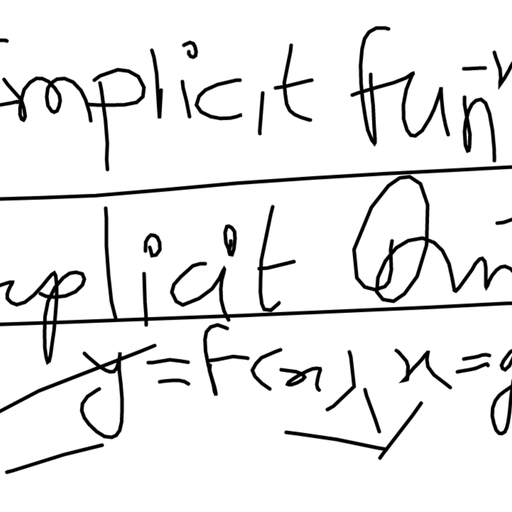
MCQ – Question Bank, Semester – II, Applied Mathematics (22201, 22206, 22210, 22224), Unit -I, Topic: Function.(Common to all), Q. Level, No., 1, R, , Question with options, f (x) = sin x is…, a. linear function, c. odd function, , 2, , R, , b. quadratic function, d. even function, , If f (– x)= f (x) for every number x in the domain of f, then f is, a. linear function, c. quadratic function, , 3, , R, , b. odd function, d. even function, , f (x) = log x is…, a. trigonometric function, c. exponential function, , 4, , 5, , b. periodic function, d. logarithmic function, , U, , If y is expressed in terms of a variable x as y = f(x) , then y is called, , U, , a. explicit function, b. implicit function, c. linear function, d. identity function, In the function y = f (x ) , the x is classified as, a. independent variable, c. upper limit variable, , 6, , b. dependent variable, d. lower limit variable, , U, , In the function quantity = f( price per unit ), the independent variable is, , 7, , U, , a. profit per unit, b. price per unit, c. demand per unit, d. cost per unit, The function of two variables in a way that u is dependent variable and v is independent, variable is written as, a. u = f ( v), b. f = u (v), c. v = f ( u), d. f = v ( u), , 8, , A, , If f ( x ) = x + 4 then f ( x – 4) =, , 9, , A, , a. x, b. x + 4, c. x – 4, d. 4, Equations x = 3 cost and y = 3sint represent the equation of, a. line, , 10, , A, , b. circle, , c. parabola, , d. ellipse, , If f ( x) = sin( x ) and g ( x ) = cos ( x) then ( g o f ) ( x ) = ?, a. sin( x ) cos ( x), , b. cos (sin( x )), , c. sin(cos ( x) ), , d. tan x
Page 9 :
8, , A, , 3, , ∫2, , 1, , 𝑑𝑥 = ?, , 2𝑥+5, , 1, , a), , 2, , 𝑙𝑜𝑔, , c) 2𝑙𝑜𝑔, 9, , 11, , 11, , 1, , 9, , 2, 1, , 11, 9, , b) 𝑙𝑜𝑔, , 9, , d), , 9, , 2, , 𝑙𝑜𝑔 11, , A, Which of the following correctly evaluates the definite integral, a) 97/3, b) 110/3, c)74/3, d) 4, , 10, , 2 5𝑥, , A, , ∫0, a), , 5, 2, , 𝑥 2+4, , 𝑑𝑥 = ?, 5, , log 8, , b) 2 log 2, , c) 1, , d) 0, , Topic: Application of Integration (Common to all), Q., No., 1, , Level, , Question with options, , R, , The area bounded by the curve 𝑦 = 𝑥 3 , x-axis & the ordinates x = 1, x = 3 is….., a) 20 sq. units, 26, c), sq. units, , b) 2 sq. units, d) 24 sq. units, , 4, , 2, , R, , The area bounded by the curve 𝑦 = 𝑠𝑖𝑛𝑥 and the x-axis from x=0 to x= 𝜋 is …, a) 1 sq. units, , 3, , A, , c), A, , 16, 3, 8, , A, , 3, , A, , sq. units, , A, , A, , 3, 32, 3, , sq. units, sq. units, , b) 16 sq. units, 32, d) 3 sq. units, , 1, 6, , sq. units, , 5, , d) 6 sq. units, , The area bounded by the curve 𝑦 2 = 𝑥 and 𝑥 2 = 𝑦 is ….., 5, 1, a) 3 sq. units, b) 6 sq. units, 2, 3, , sq. units, , d), , 1, 3, , sq. units, , The area of the region included between the parabola 𝑦 = 𝑥 2 + 1 and the line 𝑦 =2x+1, is ……, 4, 32, a) 3 sq. units, b) 3 sq. units, c), , 8, , d), 2, , 64, , The area between the parabola 𝑦 = 𝑥 2 and the line 𝑦 = 𝑥 is ….., 1, a) 6 sq. units, b) 4 sq. units, , c), 7, , b), , The area enclosed by the curve 𝑦 = 𝑥 and the line x = 4 is ….., , c), 6, , d) 3 sq. units, , 2, , sq. units, , a) 8 sq. units, 8, c) 3 sq. units, 5, , c) sq. units, , The area bounded by the curve 𝑦 = 4 − 𝑥 2 and the x-axis is……, a), , 4, , 1, , b) 2 sq. units, , 5, 3, , sq. units, , d), , 1, 3, , sq. units, , The volume of solid obtained by revolving the area bounded by 𝑦 2 = 8𝑥 and the line, x=2 about x-axis is……., a) 16𝜋 cu.units, b) 8𝜋 cu.units, c) 20𝜋 cu.units, d) 32𝜋 cu.units
Page 10 :
9, , A, , The loop of the curve 𝑎𝑦 2 = 𝑥 2 (𝑎 − 𝑥) rotates about x-axis, find the volume of the solid, formed?, a), c), , 10, , A, , 𝜋, 12, 𝜋𝑎 3, , 𝑎3, , 𝑐𝑢. 𝑢𝑛𝑖𝑡𝑠, , b), , 𝑐𝑢. 𝑢𝑛𝑖𝑡𝑠, , d) 𝜋𝑎 𝑐𝑢. 𝑢𝑛𝑖𝑡𝑠, , 12, , 𝑐𝑢. 𝑢𝑛𝑖𝑡𝑠, , 12, 3, , 3, , Find the volume of right circular cone generated by revolving the line 𝑦 = 4 𝑥 about xaxis between the ordinates x=0 to x=4., b) 12𝜋 cu.units, d) 3𝜋 cu.units, , a) 16𝜋 cu.units, c) 20𝜋 cu.units, Unit-IV, , Topic: Differential Equation and Its Application (Common to all), Q., No., 1, , Level, , Question with options, , R, , The Order & Degree of the Differential Eqn., a) 2,2, , 2, , R, , b) 2,1, , R, , R, , b) 1,2, , d) 2,0, , 𝑑2𝑦, , 𝑑𝑦, , c)2,0, , d) 3,2, 𝑑2 𝑦, , b. 2 , 6, , c. 2 , 2, , b. 2 , 2, , c. 0 , 2, , d. 1 , 1, [, , a. 2 , 1, , 7, , R, , R, , 𝑑𝑦, 𝑑𝑥, , d. 3 , 2, 𝑑2𝑦, , a. 2, b. 1, c. 4, d. 3, Find order of the following differential equation, , a. 2, , 9, , c. 2 , 3, , 3⁄, 2, 𝑑2 𝑦, +2𝑦], 𝑑𝑥2, , 𝑑𝑦, , Find the degree of given differential equation √𝑑𝑥 2 = √𝑑𝑥, , 𝑑𝑥 2, , R, , b. 2 , 0, , 3, , 𝑑2 𝑦, , 8, , 𝑥 (𝑦 2 −, , Find order and degree of the following differential equation, 1)𝑑𝑥 + 𝑦(1 + 𝑥 2 )𝑑𝑦 = 0, , R, , R, , 1, , 𝑑𝑦 2, , d. 2 , 1, , The order and degree of the differential equation is, , 6, , 3, , Find order and degree of the following differential equation [𝑑𝑥 2] = [1 + 𝑑𝑥 ], , a. 2 , 1, 5, , c) 1,2, 3, , a. 2 , -3, 4, , + 3 (𝑑𝑥 ) − 6𝑦 = 0 is…, 𝑑𝑥 2, , The Order & Degree of the Differential Eqn. √𝑑𝑥 2 = √𝑑𝑥 is…, a) 2,2, , 3, , 𝑑𝑦 2, , 𝑑2 𝑦, , 𝑑𝑦 2, , + 3 [𝑑𝑥 ] − 6𝑦 = 0, b. 1, , c. 4, , d. 3, , Find the degree of the given differential equation, 𝑑2 𝑦, , 𝑑𝑦 3, , 𝑑𝑥, , 𝑑𝑥, , √1 + ( ), 2 =, , a. 1, b. 4, c. 2, d. 3, Find the order of the given differential equation, , =2
Page 13 :
Unit-V (CE -22201), Topic: Numerical Integration, Q., No., , Level, , 1, , R, , Question with options, b, , For evaluation of, , f ( x)dx using the Trapezoidal rule. The interval (a,b) is divided into, a, , a), b), c), d), 2, , R, , 2n sub-intervals of equal width., 2n+1 sub-intervals of equal width., 3n sub-intervals of equal width., Any number of sub-intervals of equal width., 1, , By using trapezoidal rule, and if f(0) = 1, f(1) = 2.72 then, , f ( x)dx =, , ?, , 0, , a) 1.86, 3, , U, , b)1.68, , c)1.76, , d)1.67, , By using trapezoidal rule, and dividing the interval [1 , 3] into 4 equal sub- intervals, 3, , (2 x 3)dx, , is equal to, , 1, , a) 21, 4, , U, , b)28, , c)7, , d)14, 1, , By using trapezoidal rule, and taking n = 2,, , (1 x x, , x 3 )dx is equal to, , 2, , 1, , a) 3, 5, , U, , b)2.9, , c)2, , d)3.2, , , By using trapezoidal rule, and dividing the interval 0, into 3 equal parts, 2, , , , 2, , cos x dx, 0, , equal to, , a) 0.311π, 6, , A, , b)0.321 π, , c)0.310 π, , d)0.320 π, , 4, , By using trapezoidal rule, and following table, , , , x dx is approximate equal to, , 0, , x, , x, a) 5.5431, , b)5.4153, , 0 1, , 2, , 3, , 4, , 0 1 1.4142 1.7321 2, , c)5.3416, , d)5.1463, , is
Page 14 :
7, , , , A, By using trapezoidal rule, and following table, , 4, , tan x dx, , is equal to, , 0, , x, , 0, , , , 8, , tan x 0 0.4141, a) 0.1124π, 8, , A, , b)0.1142π, , c)0.1134π, , , , 4, , 1, d) 0.1143π, 4, , By using trapezoidal rule, and if e1 2.72, e2 7.39, e3 20.09, e4 54.60 then e x dx, , 0, , is, a) 58.00, 9, , R, , b)58.40, , c)58.60, , d)58.80, , Which of the following indicates the formula for Trapezoidal rule.?, a) I= ( h / 2)[ sum of first and last ordinates + 2 ( sum of remaining ordinates)], b) I= ( h / 2) [ sum of first and last ordinates + 2 ( sum of odd ordinates) + 2 (, sum of even ordinates)], c) I= ( h / 3) [ sum of first and last ordinates + 2 ( sum of odd ordinates) + 2 (, sum of even ordinates)], d) I= ( h / 2) [ sum of first and last ordinates + ( sum of remaining ordinates)], , 10, , R, , Which of the following indicates the formula for Simpson’s 1/3rd rule?, a), , I = ( h / 2) [ sum of first and last ordinates + 2 ( sum of odd ordinates) +, 2 ( sum of even ordinates)], , b) I = ( h / 3) [ sum of first and last ordinates + 4 ( sum of odd ordinates) +, 2 ( sum of even ordinates)], c) I = ( h / 3) [ sum of first and last ordinates – 4 ( sum of odd ordinates) +, 2 ( sum of even ordinates)], d) I= ( h / 2) [ sum of first and last ordinates + 2 ( sum of remaining ordinates)], 11, , U, , The area under curve y = f ( x ) between co- ordinates x0 and xn = x0 + n h is approximately, equal to sum of areas of trapeziums by Simpson’s 1/3rd rule is, a), b), c), d), , 12, , A, , I = (h / 3)[y0 – yn + 4 ( y1 + y3 + ….+ yn – 1 ) + 2 ( y2 + y4 + ….+ yn – 2 )], I = (h / 3)[y0 + yn + 4 ( y1 + y3 + ….+ yn – 1 ) – 2 ( y2 + y4 + ….+ yn – 2 )], I = (h /2)[y0 + yn + 2 ( y1 + y3 + ….+ yn – 1 ) + 2 ( y2 + y4 + ….+ yn – 2 )], I = (h / 3)[y0 + yn + 4 ( y1 + y3 + ….+ yn – 1 ) + 2 ( y2 + y4 + ….+ yn – 2 )], 2.2, , The value of, , e, , x, , rd, dx by using 2 – segments Simpson’s 1/3 rule most nearly is, , 0.2, , a) 6.8036, 13, , A, , b) 7.8423, , c) 8.4433, , d) 10.246, , 2.2, , The value of, , e, , x, , rd, dx by using 4 – segments Simpson’s 1/3 rule most nearly is, , 0.2, , a) 6.8036, , b) 7.8062, , c) 8.4433, , d) 9.246
Page 15 :
14, , A, , By using Simpson’s 1/3rd rule, and if, , e 0 1, e1 2.72, e 2 7.39, e 3 20.09, e 4 54.60 then, , 4, , e, , x, , dx is, , 0, , a) 53.8731, 15, , A, , b) 53.8732, , c) 53.8733, , By using Simpson’s 1/3rd rule, and following table find, , d) 53.8734, , 80, , f ( x )dx, 0, , x, , 0 10 20 30 40 50 60 70 80, 0, , f (x ), , a) 713, 16, , A, , 4, , 7, , b) 712, , 9, , 12 15 14, , c) 711, , 8, , 3, , d) 710, , By using Simpson’s 1/3rd rule, and following table find, , 4, , y dx, 1, , a) 15.73, 17, , A, , x, , 1 1.5, , y, , 2 2.5 2.7 2.8 3 2.6 2.2, , b) 15.63, , 2, , 2.5 3 3.5, , c) 15.37, , 4, , d) 15.36, , By using Simpson’s 1/3rd rule, and dividing the interval [ 0 , π ] into 4 equal sub- intervals, , , sin x dx , 0, , a) 2.0068, 18, , A, , b) 2.0069, , c) 2.0086, , d) 2.0096, , By using Simpson’s 3/8th rule dividing ( 0 , π ) into 6 equal parts. Evaluate, , , sin 2 x, 0 5 4 cos x dx, a) 0.4021928, , 19, , A, , b) 0.4021289, , c) 0.4021982, 6, , By using Simpson’s 3/8th rule, Evaluate, , d) 0.4021829, , 1, , 1 x dx , 0, , b) 1.9660, 20, , , , A, Evaluate, , 2, , e, , sin, , b) 1.9661, , c) 1.9662, , d) 1.9663, , d by Simpson’s 3/8th rule dividing the interval [ 0 , π/2 ] in 6 equal, , 0, , parts., a) 3.1012, , b) 3.1013, , c) 3.1014, , d) 3.1015
Page 16 :
Unit-V (ME /CH-22206), Topic: Probability Distribution, Q. Level, No., 1, R, , Question with options, Out of the following values, which one is not possible in probability?, a) P(x) = 1, c) P(x) = 0.5, , 2, , R, , In a discrete probability distribution, the sum of all probabilities is always?, a) 0, c) 1, , 3, , 4, , b) Infinite, d) Undefined, , U, , The mean of the binomial distribution is, , U, , a) npq, b) np, c) √npq, d) √np, In a binomial probability distribution it is impossible to find, a) P(X<0), c) P(X>0), , 5, , U, , 7, , 8, , b) P(X=0), d) P(0≤X≤n), , Binomial distribution is symmetrical when, a) p = q, c) np > npq, , 6, , b) ∑ x P(x) = 3, d) P(x) = – 0.5, , b) p > q, d) np = npq, , U, , Each trial in Binomial distribution has, , U, , a) one outcome, b) two outcomes, c) three outcome, d) four outcome, Probability of occurrence of an event lies between, , A, , a) -1 and 0, b) 0 and 1, c) -1 and 1, d) exactly 1, In binomial distribution n=6 and p=0.9, then the value of P(X=7) is, , 9, , A, , 10, , A, , 11, , A, , 12, , A, , 13, , A, , a) One, b) Less than zero, c) Zero, d) More than zero, A random variable X has binomial distribution with n=10 and p=0.3 then variance of X is, a) 10, b) 12, c) 2.1, d) 21, What is the probability that a ball is drawn at random from a jar?, a) 1, b) 0.1, c) 0.5, d) Cannot be determined from given information, A fair coin is tossed four times, the probability of getting four heads is, a) ¼, b) ½, c) 1/16, d) 1, If the coin is tossed 5 times, find the probability of getting head., a) 0.135, b) 0.156, c) 0.126, d) 0, If 20 % of the bolts produced by a machine are defective. Find the probability that out of 4, bolts drawn ,one is defective.
Page 17 :
a) O.4196, c) 0.4096, 14, , A, , 15, , A, , 16, , A, , 17, , A, , 18, , A, , 19, , A, , 20, , A, , b)0. 4396, d) 0.4296, , A person fires 10 shots at target .The probability that any shot will hit the target is 3/5., Find the probability that the target is hit exactly 5 times., a) 0.2517, b) 0.2007, c) 0.1007, d) 0.1527, On an average 2% of the population in an area suffer from T.B. What is the probability, that out of 5 persons chosen at random from this area, atleast two suffer from T.B. ?, a) 0.4710, b) 0.0470, c) 0.0047, d) 4.700, 10% of the component manufactured by company is defective. If twelve components, selected at random, find the probability that atleast two will be defective., a) 0.3409, b) 0.3314, c) 0.4319, d) 0.4309, Using Poisson distribution, find the probability that the ace of spades will be drawn from a, pack of well shuffled cards at least once in 104 consecutive trials., c) 0.90, b) 0.89, c) 0.99, d) 0.01, A company manufactures electric motors .The probability that an electric motor is defective, is 0.01.What is the probability that a sample of 300 electric motors will contain exactly 5, defective motors?, ( Given : e-3 = 0.0498), a) 0.1080, b) 0.1800, c) 0.8001, d) 0.1008, Weight of 4000 students are found to be normally distributed with mean 50 kgs and standard, deviation 5 kgs. Find the number of students with weights Less than 45 kgs, a) 635, b) 645, c) 665, d) 653, In a sample of 1000 students the mean of certain test is 14 and S.D. 2.5 assuming the, distribution to be normal. Find how many score above 18., ( Given area between z = 0, and z = 1.6 is 0.4452. ), a) 0.4452, b) 0.0548, c) 55, d) 445, , Unit –V (EE/EJ-22010), Topic: Complex Number., Q. Level, No., 1, R, , 2, , 3, , Question with options, Real and Imaginary parts of complex number z= -3 + 2i is…., , R, , a. R(z) = 3 & I(z) = 2i, b. R(z) = - 3 & I(z) = 2, c. R(z) = 2 & I(z) = -3, d. R(z) = - 3 & I(z) = 2i, Complex conjugate of z = -2 + 3i is…., , R, , a. 𝑧̅ = −2 − 3𝑖, b. 𝑧̅ = 2 − 3𝑖, c. 𝑧̅ = 2 + 3𝑖, d. None of these, If z = x + iy then modulus of z is …., a. √𝑥 2 + 𝑦 2, 𝑦, c. tan−1 ( ), 𝑥, , b. √𝑥 2 − 𝑦 2, d. None of these
Page 20 :
Unit -V (CM/IT-22224), Topic: Numerical Methods, Q., No., 1, , Level Question with options, R, , If a function is real and continuous in the region from a to b and f(a) and f(b) have opposite, signs then there is no real root between a and b., a. True, , 2, , R, , b. False, , If a function is defined at 2 points 3 and 7 as f (3) = 8 and f (7) = 12, it is sufficient to find, the roots through Bisection Method., a. True, , 3, , R, , b. False, , The function on which we use the bisection method is necessary to be continuous on the, interval we choose., a. True, , 4, , U, , 5, , U, , b. False, , The formula used for solving the equation using Regula Falsi method is, ((𝑎+𝑏 )×𝑓 (𝑏), 𝑥=, 𝑓 (𝑎 ), a. True, b. False, The other name for Regula - Falsi method is:, a. Method of chords, c. Method of False-Position, , 6, , U, , b. Method of tangents, d. Method of Convergence, , If it is provided that f(3) = 4 is one of the initial points. What can be the choice of second, point for solving by Bisection Method?, a. -5 such that f(-5) = -26, c. -3 such that f(-3) = -2, , 7, , U, , The equation f(x) is given as x3 – x2 + 4x – 4 = 0. By Newton Raphson method, considering, the initial approximation at x = 2 then the value of next approximation correct upto 2, decimal places is given as, a. 0.67, , 8, , U, , U, , b. 1.33, , b) 𝑓 ′′ (𝑥0 )= 0, , U, , d. 1.50, , c. 𝑓 (𝑥0 )= 0, , d. 𝑓 ′′′ (𝑥0 )= 0, , Which of the following is an iterative method?, a. Synthetic division, Gauss- Seidal, , 10, , c. 1.0, , The Newton Raphson method fails if __________, a. 𝑓 ′ (𝑥0 )= 0, , 9, , b. 0 such that f(0) = 5, d. 13 such that f(13) = 2, , b. Gauss Elimination, d. Factorization, , Gauss-Seidel iterative method can be used for solving a set of, a. Linear differential equations only, b. Linear algebraic equations only, c. Both linear and nonlinear algebraic equations, d. Both linear and nonlinear algebraic differential equations, , 11, , A, , In Newton Raphson method if the curve f(x) is constant then _________, , c.
Page 21 :
a. 𝑓 ′′ (𝑥)= 0, 12, , A, , c. 𝑓 ′ (𝑥)= 0, , b) f (𝑥)= 0, , d. 𝑓 ′ (𝑥) = c, , At which point the iterations in the Newton Raphson method are stopped?, a. When the consecutive iterative values of x are not equal, b. When the consecutive iterative values of x differ by 2 decimal places, c. When the consecutive iterative values of x differ by 3 decimal places, d. When the consecutive iterative values of x are equal, , 13, , A, , Find the values of x, y, z in the following system of equations by Gauss Elimination Method., 2x + y – 3z = -10,, -2y + z = -2 ,, z=6, a. 2, 4, 6, , 14, , A, , b. 2, 7, 6, , c. 3, 4, 6, , d. 2, 4, 5, , In Regula Falsi method, First approximation is given by,, a. x1={ b f(a)-a f(b)}/f(a)-f(b), b. x1={ bf(a)-af(b)}/f(b)-f(a), c. x1={ bf(b)-af(a)}/f(b)-f(a), d. x1={ a f(b)-bf(a)}/f(b)-f(a), , 15, , A, , The formula to find xn is, a. xn+1= xn +f '(xn)/f (xn), b. xn+1= xn –f '(xn)/f (xn), c. xn+1= xn –f (xn)/f '(xn), d. xn+1= xn +f (xn)/f '(xn), , 16, , A, , Find the approximated value of x till 4 iterations for e-x = 3 log(x) using Bisection Method., , 17, , A, , a. 1.197, b. 1.187, c. 1.167, d.1.176, Find the positive root of the equation x3 + 2x2 + 10x – 20 using Regula Falsi method and, correct upto 4 decimal places., a.1.3688, , 18, , A, , b. 1.3866, , c. 1.4688, , d. 1.6488, , Solve the given system of equation by Gauss Elimination method., 3x + 4y – z = -6,, -2y + 10z = -8 ,, 4y – 2z = -2, a. (-2, -1, -1), , b. (-1, -2 , -1), , c. (-1, -1, -2), , d. (-1, -1, -1), , 19, , A, , Solve the system of equations by Jacobi’s iteration method., 10x = y – x = 11.19, x + 10y + z = 28.08,, -x + y + 10z = 35.61, correct to two decimal places., a. x = 1.00, y = 2.95, z = 3.85, b. x = 1.96, y = 2.63, z = 3.99, c. x = 1.58, y = 2.70, z = 3.00, c. x = 1.23, y = 2.34, z = 3.45, , 20, , A, , Solve by Gauss Seidel method., 4x + y + 2z = 4, 3x + 5y + z = 7,, a. x = 0.5, y = 1, z = 0.5, c. x = 0.5, y = 1.5, z = 0.5, , x + y + 3z = 3, b. x = 0.3, y = 0.5, z = 0.5, d. x = 0.5, y = 1, z = 1.5