Page 1 :
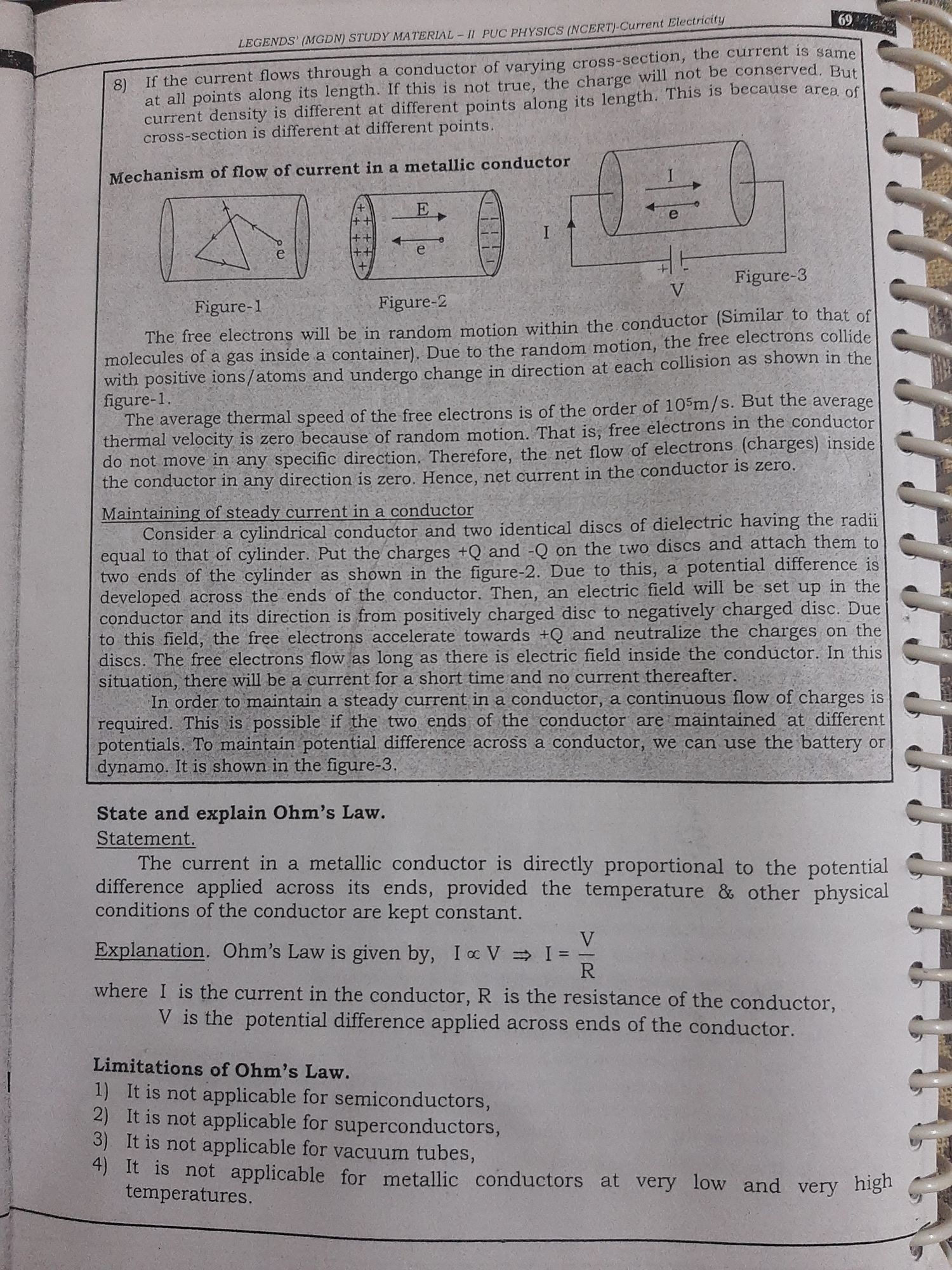
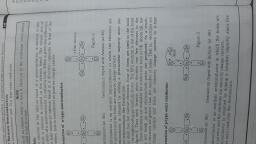
eT)-Current Electrictty, , , , , , , , , , , , , LEGENDS’ (MGDN) STUDY MATERIAL - I] PUC PHYSICS (NCE, , r ing cros, , current flows through a conductor of varying :, , 2 - a points along its length. If this is not true, the chat ah, current density is different at different points along its leng, cross-section is different at different points., , , , , , s-section, the current is same, will not be conserved. But, h. This is because area of, , , , Mechanism of flow of current in a metallic conductor, , , , , , , , , , , , , , , , , , Figure-1_ Figure-2 : See, Te ar to tha, , The free electrons will be in random motion within the Ce EE ccerons Be, , molecules of a gas inside .a container), Due to the random motion, t te Bc shown in he, , with positive ions/atoms and undergo change in direction at each collis S, , figure-1, piss, , The average thermal speed of the free electrons is of the order of 10°m/ les, , thermal velocity is zero because of random motion. That is; free electrons 1 ee ct a, , do not moye in any. specific direction, Therefore, the net flow of electrons. oy inside, the conductor in any direction is zero. Hence, net current in the conductor 1s zero., , , , , Maintaining of steady current in a conductor, , Consider a cylindrical conductor and two identi, equal to that of cylinder. Put the charges +Q and -Q on the two discs and attach them to, two ends of the cylinder as shown in the figure-2. Due to this, a potential difference is, developed across the ends of the conductor. Then, an electric field will be set up in the, conductor and its direction is from positively charged disc to negatively charged disc. Due, to this field, the free electrons accelerate towards +Q and neutralize the charges on the, discs. The free electrons flow as long as there is electric field inside the conductor. In this, situation, there will be a current for a short time and no current thereafter. y, , ‘In order’ aintain a steady current in a conductor, a continuous flow of charges is, required. Thi sible if the two ends of ‘the conductor are’maintained at different, potentials. To m tain potential difference across a conductor, we can use the battery or, dynamo. It is shown in the figure-3. Ee ae etek ete ae, , , , , , , , , , , , , , cal discs of dielectric having the radii, , Pe errr ees, , , , , >, oo, , , , , State and explain Ohm’s Law., Statement. j, , , , The current in a metallic conductor is directly proportional to the potential ¢., difference applied across its ends, provided the temperature & other physical |, conditions of the conductor are kept constant. a:, , S,, Explanation. Ohm’s Law is given by, I< V => I= x i, 5 : NS 5, where : is - current in the conductor, R is the resistance of the conductor " i, is the potential difference applied acro ¢, pp ss ends of the conductor. ws, Limitations of Ohm’s Law. e i, 7 It is not applicable for semiconductors, “&§, z It is not applicable for superconductors, e, elt 1s not applicable for vacuum tubes ey, 4) It is not ap, , licabl ;, ene € for metallic conductors at very low end very high, , 9