Page 1 :
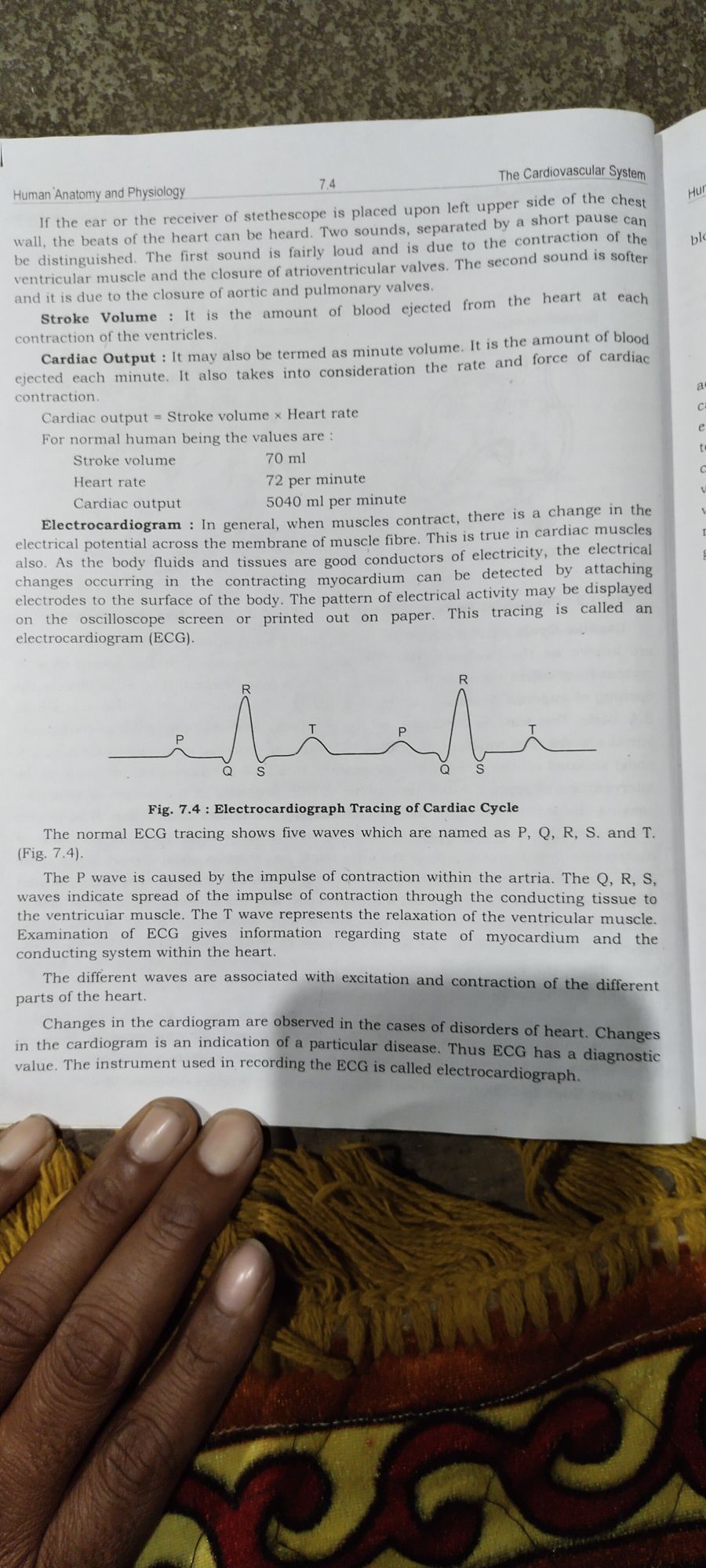
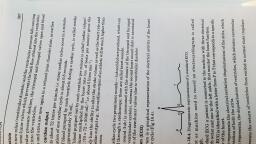
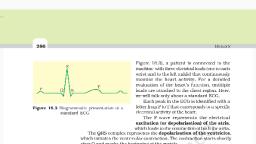
The Cardiovascular System, , , , , , , , , , ysiology i, he receiver of stethescope is placed upon left upper wide i OS ee y, fc of the heart can be heard, Two sounds, separated by & gente ;, i re ‘he first sound is fairly loud and is due to the contr Soe the pl, aATeie closure of atrioventricular valves. The second souns te eotter, the closure of aortic and pulmonary valves. he heat Ate, Stroke Volume : It is the amount of blood ejected from the hee ‘ach, of the-ventnGles » amount of bloog, Cardiac Output : It may also be termed as minute volume. It is on ee of canta, ich minute. It also takes into consideration the rate an<, ti a, jiac output = Stroke volume x Heart rate ‘, normal human being the values are e, ke vol 70 ml §, Heart rate 72 per minute, Cardiac output 5040 ml per minute, sre is a change in the, Electrocardiogram : In general, when muscles contract, there 1, irdiac muscles, , le fibre. This is true In ¢, lectricity, the ¢ lectrical, , , , potential across the membrane of mus, , the body fluids and tissues are good conductors of & :, can be detected by attaching, , may be displayed, , , , es occurring in the contracting myocardium, , odes to the surface of the body. The pattern of electrical activity ie, e oscilloscope screen or printed out on paper This tracing is called an, , , , ardiogram (ECG), , Q Ss Q Ss, , Fig. 7.4 : Electrocardiograph Tracing of Cardiac Cycle, , The normal ECG tracing shows five waves which are named as P, Q, R, S. and T., (Fig. 7.4), , The P wave is caused by the impulse of contraction within the artria. The Q, R, S,, waves indicate spread of the impulse of contraction through the conducting tissue to, the ventricuiar muscle. The T wave represents the relaxation of the ventricular muscle., Examination of ECG gives information regarding state of myocardium, conducting system within the heart, , and the, , The different waves are associated with excitation ‘i, and contraction o| iffere:, parts of the heart f the different, , Changes in the cardiogram are, , observed in the cases of di:, n the cardiogram is an indication Of @ particular disease. Tieden of heart. Changes, lue. The instrument used in recording the BGG is called aineeceatan ae diagnostic, lograph.