Page 1 :
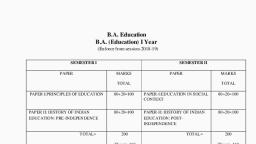
University of Lucknow, Department Education, B.A. Education Subject Syllabus of Four Years, w.e.f. Session 2021 onwards, Semester-wise Titles of the Papers in B.A. (Education as 1st Major Subject), Year, , Sem., , I, 1, II, , III, 2, IV, , V, , 3, , Paper, Number, P1, P2, P3, , Conceptual Framework of Education - I, Development and Challenges of Indian Education System - I, Conceptual Framework of Education - II, , 4, 4, 4, , P4, , Development and Challenges of Indian Education System - II, , 4, , P5, P6, P7, P8, , Philosophical and Sociological Perspectives of Education - I, Psychological Perspectives of Education - I, Philosophical and Sociological Perspectives of Education - II, Psychological Perspectives of Education - II, , 4, 4, 4, 4, , P9, P10, , Educational Assessment, Milestones and New Dimensions of Indian Education -I, Optional Paper:, Educational Administration and Management, Educational Statistics - Basic, Internship/Term Paper, Intelligence And Personality, Milestones and New Dimensions of Indian Education -II, Optional Paper:, Educational Leadership and Supervision, Educational Statistics - Advance, Minor Project, , 4, 4, 4, , Educational Technology, Inclusive Education, Guidance and Counselling, Optional Paper:, Innovations in Education, Education for Happiness, Optional Paper:, Environmental and Population Education, Value and Peace Education, Research Methodology, Major Project / Dissertation, , 4, 4, 4, 4, , P11A, P11B, P12, P13, P14, , VI, P15A, P15B, P16, P17, P18, P19, , 4, , VII, , VIII, , P20A, P20B, P21A, P21B, P22, P23, , Paper Title, , Credits, , 4, 4, 4, 4, , 4, , 4, , 4, 24
Page 2 :
Syllabus for B.A. (Education), ● Subject Prerequisites: To study this Subject, there will be no compulsion of subjects at 12th class., This is open for all., , Program Outcomes (POs) This course is meant for future educators and educational administrators. Education is a process of, acquisition of knowledge, values, culture and skills. After completion of the program, Graduates will, be able to correlate and apply Education with life situations. They will be able to understand its, interdisciplinary nature. Program will be helpful in conceptualization and synthesis of knowledge of, Educational aspects in relation to: Human Development, Human Behavior, Teaching-Learning,, Measurement and Evaluation, Society and Nation.
Page 3 :
B.A. 1st Year Education- CERTIFICATE COURSE IN BASICS OF EDUCATION, , Program Specific Outcomes This course provides the basic ideas and concepts of education and nature of education. This course, intends to clarify the educational aims and functions. This course will help students to understand, constitutional values and provisions for Education. This paper will help in developing analytical and, critical thinking based on the themes and issues of education., This course will also attempt to build an understanding about the agencies and structure of Indian, Education System, i.e. Pre Primary, Primary, Secondary and Higher level. Learners are introduced to, various governing/regulatory systems of the Education System., The course aims to acquaint students with modern education in contemporary India. It would, familiarize them with key debates prevalent during the anti-colonial struggle and subsequent, developments in post - independent India., This paper introduces the challenges faced by Indian Education and initiates a critical analysis of, concerns and solutions towards better education.
Page 4 :
B.A. 1st Year Semester I, Course I, Course Title: Conceptual Framework of Education – I, Total Credit: 4 (3Theory+1Practicum), Course Learning Outcomes On completion of this course, learners will be able to:, , ●, ●, ●, ●, , To understand the meaning, nature, scope and aims of education., To explain the factors of education and their interrelationship., To become aware of different agencies of education that influence education., To be acquainted with the Constitutional values and Educational provisions., , Unit, , I, , II, , III, , IV, , Topics, EDUCATION: CONCEPT AND AIMS, ●, Prachin Bhartiya Gyan Parampara: The Way of Life, Concept of Guru and, Shiksha., ●, Vidya - Gyan –Teaching, Training vs. Education., ●, Factors of Education., ●, Concepts of Educations- Meaning: Nature., ●, Aims of Education: Individualistic, Social, Democratic and Vocational., FUNCTIONS OF EDUCATION, ●, Individual and Social Development., ●, Preservation and Transmission of Cultural Heritage., ●, Acquisition of Skills., ●, Acquisition and Generation of Human Values., ●, Social Cohesion., ●, Education for National Integration & International Understanding, AGENCIES OF EDUCATION, ● Formal., ● Informal., ● Non – Formal., INDIAN CONSTITUTION AND EDUCATION, ● Inculcation of Constitutional Values through Education., ● Constitutional Provisions for Education., PRACTICUM (to be internally evaluated ), 1. Written assignment based on the content of the Paper., 2. Prepare a list of Articles related to Education, as enshrined in our constitution. Also, mention related amendments if any.
Page 6 :
Course II, Course Title: Development and Challenges of Indian Education System – I, Total Credit: 4 (3Theory+1Practicum), , Course Learning Outcomes, On completion of this course, learners will be able to:, , ●, ●, ●, ●, Unit, , I, , II, , III, , IV, , Understand the development of Indian Education during different ages,, Analyze the trends of Education running in the different educational systems., Narrate the major contributions of Indian Educational Heritage in the different fields of study., Discuss the views of foreign travellers about Indian cultural and educational heritage., Topics, ANCIENT EDUCATION SYSTEM, ● Vedic and Buddhist Period: Main, Characteristics, Aims of Education, Merits and Demerits of Education System,, Contribution to Modern Indian Education., ● Viewpoints of Travellers towards Ancient Indian System., EDUCATION IN MEDIEVAL PERIOD, ● Main Characteristics., ● Aims of Education., ● Merits and Demerits of Education System., ● Contribution to Modern Indian Education., EDUCATION IN COLONIAL PERIOD, Some Landmarks of British Period:, ● Charter Act of 1813 & 1833 and Oriental Occidental Controversy, ● Educational Surveys of different provinces of India from 1822-1830, ● Macaulay Minute, Filtration Theory., ● Wood’s Dispatch., ● Hunter Commission., ● Indian University Commission., ● Wardha Yojna., POST-INDEPENDENT ERA OF INDIAN EDUCATION, ●, Radha Krishna Commission, ●, Mudaliar Commission, ●, Kothari Commission., ●, National Policy of Education 1986 and 1992., ●, National Education Policy 2020., PRACTICUM (to be internally evaluated ), 1. Written assignment based on the content of the Paper., 2. Prepare a report on NEP 2020 based structure of Education at various levels.
Page 10 :
Course II, Course Title: Development and Challenges of Indian Education System – II, Total Credit: 4 (3Theory+1Practicum), , Course Learning Outcomes, On completion of this course, learners will be able to:, , ● Identify the problems of Indian education at different levels of education., ● Assess the root cause of challenges faced by Indian education system., ● Discuss various factors affecting Indian Education., Unit, , I, , II, , III, , IV, , Topics, PROBLEMS OF PREPRIMARY EDUCATION, ● Unsatisfactory Conditions of Preprimary Schools., ● Training of Preprimary Teachers., ● Unavailability of Teaching Material., ● Loopholes of Supervision and Administration., ● Problem of Uniformity., PROBLEMS OF ELEMENTARY AND SECONDARY EDUCATION, ● Problems of Access and Equity., ● Problems of Multilingualism, Child’s Home Language and the Language of, School- Classroom, Textbooks etc., ● Mass vs Class- Gap in Standards, Financial Load on Parent, Syllabus., ● Problem of Non-Availability of Technical and Vocational Guidance at, Secondary Level and NSQF., PROBLEMS OF HIGHER EDUCATION, ● Problems of Access - Gender (Masculine, Feminine and Transgender) and, Caste, Class, Religion, Region., ● Problem of over-emphasis on Examination System in India, Information, Explosion and its Validation., ● Problem related with Students- Aimlessness, Intolerance, Aggression,, Unemployment and Unhealthy Completion., AFFECTING FACTORS OF INDIAN EDUCATION, ● Urbanization., ● Population, ● Poverty., ● Brain Drain, ● Digitalization
Page 12 :
B.A. 2nd Year Education- DIPLOMA COURSE IN PERSPECTIVES OF EDUCATION, , Program Specific OutcomesThis course provides the basics of philosophical ideologies that have influenced the Education. It, introduces learners to Indian and Western philosophical perspectives of Education. It also attempts to, acquaint the students with philosophical and educational thoughts of thinkers., This course aims to acquaint students with the knowledge of Socio-Political-Economic perspectives of, Education. It would familiarize them with Social contexts, Social change and Social mobility. This, paper introduces the students about concept of Educational psychology. It explores the process of, development and learning in Human Beings. It elaborates the approaches of learning and basics of, human behavior. It examines the causes of individual differences and individuals with special needs., Mental health will also be discussed with students., , B.A. 2nd Year Semester III, Course I, Course Title: Philosophical and Sociological Perspectives of Education – I, Total Credit: 4 (3Theory+1Practicum)
Page 13 :
Course Learning Outcomes, On completion of this course, learners will be able to:, , ●, ●, ●, ●, , Define Education and Philosophy., Explain difference between Darshan and Philosophy., Define pluralism and diversity in Indian society., Relate Education with social concerns., Unit, , I, , II, , III, , IV, , Topics, EDUCATION AND PHILOSOPHY, ● Meaning and Concept of Philosophy and ‘Darshan’; Difference, between Philosophy and ‘Darshan’, its relationship with Education., ● Branches of Philosophy of Education., A BRIEF INTRODUCTION TO ANCIENT INDIAN PHILOSOPHIES, ● Vedant., ● Bhagavad Geeta., ● Sankhya, INTRODUCTION TO INDIAN SOCIETY, ● Pluralism and Diversity in Indian Society., ● Social Stratification of Indian Society: Caste, Class, Gender., SCHOOL EDUCATION AND SOCIETY, ● School as Social Organization., ● Social Change and Education., ● Social Mobility and Education., PRACTICUM (to be internally evaluated ), 1. Written assignment based on the content of the Paper., 2. Visit any nearby area/community/village and prepare its demographic report
Page 15 :
Course Learning Outcomes, On completion of this course, learners will be able to:, , ●, ●, ●, ●, ●, Unit, , I, , II, , III, , IV, , Define Education and Psychology, Relate Education and Psychology, Compare characteristics and needs of different stages of development., Name different approaches of learning., Distinguish between different psychological traits., Topics, EDUCATION AND PSYCHOLOGY, ● Psychology: Concept and Scope., ● Relation of Education and Psychology., ● Importance of Educational Psychology., ● Methods of Studying Educational Psychology., PROCESS OF DEVELOPMENT, ● Development/Meaning and Forms., ● Growth and Development., ● Stages of Development., ● Forms of Development-Physical, Mental, Emotional, Social, Motor, Development, Language Development., UNDERSTANDING LEARNING, ● Meaning, Nature and Factors Influencing Education., ● Learning Styles: VARK., ● Transfer of Learning and its classroom implications., ● Learning Theories: Pavlov's Classical Conditioning Theory, Skinners, Operant Conditioning Theory, Thorndike Trial and Error Theory, Gestalt, Theory and their Educational Implications., FOUNDATIONS OF BEHAVIOUR, ● Instincts., ● Sensation, Perception and Concept., ● Motivation., ● Memory., ● Attention and Interest., ● Thinking, Reasoning and Imagination., ● Habit., ● Fatigue, PRACTICUM (to be internally evaluated ), 1. Written assignment based on the content of the Paper., 2. Prepare a chart on Learning theories with their propounders.
Page 18 :
●, ●, ●, ●, ●, ●, , Cohen, B. Educational Thought: An Introduction. Macmillan, Britain. 1969, Dewey, J. The School and Society. Chicago, The University of Chicago Press. 1915, Durkheim, E. Education and Sociology. New York: The Free Press. 1956, Elmhirst, L.K. Rabindranath Tagore: Pioneer in Education. Delhi: Sahitya Chayan.1994, Freire, P. Pedagogy of the Oppressed. London, Penguin Books. N.p. 1970, Kneller, G.F. Foundations of Education. London and New York, John Wiley and Sons, Inc., 1963, ● Kumar, K. The Political Agenda of Education: A Study of Colonialist and nationalist Ideas., New Delhi, Sage Publications.1991, ● Shukla, S. and Kumar, K. Sociological Perspective in Education.New Delhi, Chanakya, Publications. 1985, ● Shukla, S. C. and Kaul, R. (eds.) Education, Development and Underdevelopment, New Delhi:, Sage. 1998, , B.A. 2nd Year Semester IV, Course II, Course Title: Psychological Perspectives of Education – II, Total Credit: 4 (3Theory+1Practicum), , Course Learning Outcomes, On completion of this course, learners will be able to:, , ● Identify Individual Differences.
Page 19 :
● Understand Special Need Learners, ● Examine the importance Mental Health., ● Illustrate Teaching Learning Process., Unit, , I, , II, , III, , IV, , Topics, INDIVIDUAL DIFFERENCES, ● Meaning, Types and Causes of Individual Differences., ● Individual Differences and Education., SPECIAL NEED LEARNERS, ● Mentally Retarded., ● Gifted Children., ● Divyang (Handicapped)., MENTAL HEALTH AND ADJUSTMENT, ● Concept and need of studying mental health., ● Affecting Factors of Mental Health., ● Mental Health and Education., ● Adjustment: Meaning and Process., ● Conflict , Anxiety & Frustration, TEACHING AND LEARNING PROCESS, ●, Concept of Teaching, ●, Relation between Learning and Teaching., ●, Conditioning vs Teaching., ●, The Objectives of Education is Learning., ●, Role of Teacher in Teaching- Learning., PRACTICUM (to be internally evaluated ), 1. Written assignment based on the content of the Paper., 2. Prepare a Case Study of a Special Need Learner., , Suggested Readings:, , ● भटनागरएस, शिक्षामनोशिज्ञान, सयमपिललकेश न, 1998, ● जायशसालएस.आर, भारतीयमनोशिज्ञानऔरशिक्षा, आयमबुकडीपोनईशिल्ली, ● ित्रपाठीश, , ािलग्राम, शिक्षणव्यव्हार, राधापिललकेश न, नईशिल्ली, , ● गुप्ताएस.पी, शिक्षामनोशिज्ञान, श, , ाखाप्रकाश न, मेरठ, , ● युगिकम्बल, शिक्षामनोशिज्ञानकीआधारशिला, शिनोश पुस्तकमंशिर, आगरा
Page 20 :
●, ●, ●, ●, ●, ●, , Aggarwal. J.C.(n.d.). Essentials of Educational Psychology: Vikas Publishing house, Bhatnagar Suresh (n.d.). Advanced Educational Psychology, Lal Book Depot, Meerut., Bigge, Morris. L (1971).Learning theories for teachers. New York: Harper &Row., Chauhan S.S. (1978). Advanced educational psychology. Vikas Publishing House., Dash M. (1994). Educational Psychology. New Delhi, Deep& Deep Publications., Dececco John, P. The Psychology of Learning and Instruction. New Delhi, Prentice Hall of, India. 1968, , ● Hilgand, E.R. &Bower, S.H., (1975). Theories of Learning. Englewood Cliffs New Jersey:, Prentice Hall., , ● Hurlock, E. B. (2004). Developmental Psychology: A Life span Approach. New Delhi, Tata, McGrawHill Publishing Co. Ltd., , ● Mathur, S.S. Educational Psychology. Agra, Vinod Pustak Mandir. 1986, ● Mazur, J.E. (1994). Learning and Behaviour. Englewood Cliffs. New Jersey; Prentice Hall., ● Rani, A. (2011). Psychology of learning Behavior. New Delhi, Centrum Press., , B.A. 3rd Year Education- BACHLOR OF ARTS DEGREE IN EDUCATION, Program Specific Outcomes-
Page 21 :
This course compiles the assessment and evaluation techniques used in Education. It acquaints the, student with measurement tools of different psychological traits that are essential for teaching and, learning. This course enables the students to understand concepts and needs of statistics in, education, it analyses the statistics of Continues and comprehensive evaluation techniques in, classroom., This course consists of the knowledge of Educational Administration and Management in student., It will develop an insight about the Organizational and Administrative structure of Education. This, course explains major landmarks in the journey of Indian Education. It discusses the evolving, modern tendencies that are creating paradigm shift in our Education System., , B.A. 3rd Year Semester V, Course I, Course Title: Educational Assessment, Total Credit: 4 (3Theory+1Practicum)
Page 22 :
Course Learning Outcomes, On completion of this course, learners will be able to:, , ●, ●, ●, ●, , Define Assessment, Measurement and Evaluation, Enumerate and Illustrate Characteristics of a good test., Classify different types of tests., Test Aptitude of a subject., Unit, , Topics, BASICS OF ASSESSMENT, ● Assessment, Measurement, Evaluation: Concept, Features and Difference., ● Physical vs Psychological Measurements., ● Continuous and Comprehensive Evaluation: Meaning, purpose and Aspects., , I, , NORMS, ●, ●, , II, , ●, , III, , Norms: Meaning and Significance, Marks vs Grades, Credit System, , ACHIEVEMENT TESTS, • Meaning, purpose and Types., • Subjective vs Objective tests., • Characteristics of a Good test., , APTITUDE, ● Aptitude: concept and type, ● Characteristics of Aptitude., IV, ● Measurement of Aptitude., PRACTICUM (to be internally evaluated ), 1. Written assignment based on the content of the Paper., 2. Prepare different types of Multiple Choice Questions.
Page 24 :
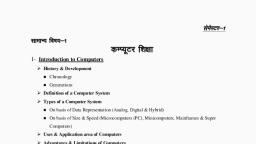
Course Learning Outcomes, On completion of this course, learners will be able to:, , ●, ●, ●, ●, , List and differentiate the different education programs and schemes., Use MOOCs and SWAYAM., , Collect and use material from OERs., Review e-journals and e-Magazines., Unit, , I, , II, , III, , IV, , Topics, , MILESTONES: MAIN PROGRAMS AND SCHEMES, ● ICDS, ● SSA., ● Mid-day Meal., ● RMSA., ● RUSA., ● NMEICT., ● RTE., ● PMMMNMTT., MILESTONES: EDUCATIONAL INSTITUTIONS OF INDIA, ● Shanti Niketan., ● Vanasthali Vidyapeeth, ● Rajghat Basent School, Varanasi, ● Sri Aurobindo Ashram School, Puducherry, ● Sainik School, EDUCATIONAL TECHNOLOGY, ● ICT: Meaning, Type, Concept and Need., ● ICT and Education., ● Approaches of Educational Technology., ● Computer and Internet: Application in Education, INITIATIVES AND INNOVATIONS, ●, EDUSAT, EDUCOM., ●, MOOCS, SWAYAM., ●, OERs., ●, e-journals and e-Magazines., ●, NAD, NIRF, e-Pathshala., PRACTICUM (to be internally evaluated ), 1. Written assignment based on the content of the Paper., 2. Prepare a Power Point Presentation of your assignment.
Page 26 :
Course Learning Outcomes, On completion of this course, learners will be able to:, , ● Describe different Educational Organizations., ● Compare Administration and Management., ● Identify functions of Educational administration., Unit, I, , II, , III, , IV, , Topics, EDUCATIONAL ORGANIZATIONS, ● Meaning and Types., ● Characteristics of Educational Organizations., EDUCATIONAL ADMINISTRATION, , •, •, •, •, , Meaning, Concept and Types of Educational Administration., Administration vs Management., Principles of Educational Administration., Administrative Skills., DEVELOPMENT OF EDUCATIONAL ADMINISTRATION AND, MANAGEMENT, • Classical School, • New Classical School, • New Management, FUNCTIONS OF EDUCATIONAL ADMINISTRATION, • POSDCORB, PRACTICUM (to be internally evaluated ), 1. Written assignment based on the content of the Paper., 2. Visit any Secondary School and make a report on its administrative system., , Suggested Readings:, ●भटनागरआर.पी, श िक्षकैशप्रासन, आरलालबुकडीपोट, 2015, , ● ओडएल.के ,श िक्षकै, , शप्रासन, राजस्थानिहंश, , ीग्रंथअकाश मी, जयपुर, , ● श माम, एल.एन. भारतीयशिक्षाव्यव्यस्थाशएं शप्रासनतंत्र, राजस्थानिहंश ीग्रंथअकाश मी, जयपुर., ● Bhatnagar S.S. & Gupta P.K. (Educational Administration and Management, (n.p.)., , ● Khawas, E. Accountability and Quality Assurance: New Issues for Academic Inquiry,, International Handbook of Higher Education, vol. (1) Springer Verlag, Berlin 2006 ●Kudesia,, U. Chandra(n.d.) Education Administration Management (n.p.)., ● Sharma, R.A. (n.d.). Education Administration and Management. Meerut, Loyal Book Depot., ● Sukhiya ,S.P. (n.d.) Vidyalaya PrashashanAvam Sangathan. Agra, Agarwal publication., ●http://mlrd.gov.in/school-education, , ●, , http://mlıd.gov.in/schemes-1
Page 27 :
B.A. 3rd Year Semester V, Optional Course III B, Course Title: Educational Statistics - Basic, Total Credit: 4 (3Theory+1Practicum)
Page 28 :
Course Learning Outcomes, On completion of this course, learners will be able to:, , •, •, •, , Define Statistical terms., Prepare graphical charts., Survey and collect data., , Unit, , Topics, INTRODUCTION TO STATISTICS, , I, , II, , •, •, •, •, , History of Statistics, Definition and Need of Statistics., Types of Statistics, Symbols in Statistics, , PRESENTATION AND ORGANIZATION OF DATA, •, Organization of data:, ○ Simple array, ○ Frequency array, ○ Frequency Distribution, •, Class Interval:, ○ Inclusive, ○ Exclusive, LEVELS OF MEASUREMENT & GRAPHICAL REPRESENTATION OF DATA, , III, , IV, , •, , Levels of Measurement, , •, •, •, , Bar diagram, Histogram, Pie chart, , NORMAL PROBABILTY CURVE, • Concept and Characteristics., PRACTICUM (to be internally evaluated ), 1. Written assignment based on the content of the Paper., 2. Depict a tabulated Data in various Graphical forms.
Page 30 :
B.A. 3rd Year Semester V, Course IV, Course Title: Internship/Term Paper, Total Credit: 4, , Course Learning Outcomes, On completion of this course, learners will be able to:, • Develop professional skill through hands-on experience., • Understand basic requirements of a work place, • Develop healthy attitude towards a workplace, • Acquire competency and proficiency to work
Page 31 :
B.A. 3rd Year Semester VI, Course I, Course Title: Intelligence and Personality, Total Credit: 4 (3Theory+1Practicum), , Course Learning Outcomes, On completion of this course, learners will be able to:, , ●, ●, ●, ●, , Define Intelligence and Personality, Describe various theories of Intelligence and Personality., Classify different Intelligence and Personality tests., Test Intelligence and Personality of a subject., Unit, , I, , II, , III, , IV, , Topics, INTELLIGENCE, ● Intelligence: Concept and Types, ● Concept of Emotional Intelligence., ● Concept of Spiritual Intelligence., MEASUREMENT OF INTELLIGENCE, ● Verbal, Non-Verbal test, ● Individual Tests and Group test, PERSONALITY, ● Personality: concept and types, ● Theories of Personality: Trait and Type, ASSESSMENT OF PERSONALITY, • Objective, Subjective and Projective Techniques., PRACTICUM (to be internally evaluated ), 1. Written assignment based on the content of the Paper., 2. Administration and Interpretation of Scores of any one Intelligence test and any one, Personality test
Page 33 :
Course Learning Outcomes, On completion of this course, learners will be able to:, , ●, ●, ●, ●, , List and differentiate the different education programs and schemes., Use MOOCs and SWAYAM., , Collect and use material from OERs., Review e-journals and e-Magazines., Unit, , I, , II, , III, , IV, , Topics, , SOCIETAL TRENDS AND EDUCATION, ● Inclusion., ● Human Rights., ● Value and Moral Education., ● Women Empowerment, CULTURAL TRENDS AND EDUCATION, •, Social Media., •, Demographic changes., •, Globalization, •, Peace Education, ENVIRONMENT: CONCEPT AND CONCERNS, • Environment and Ecosystems, • Environmental Pollution., ● Ozone layer depletion., ● Greenhouse effect., ● Global Warming., ENVIRONMENT AND EDUCATION, •, Environmental Education: Concept, Aims and importance., •, Awareness towards Environmental Issues., •, Conservation of Natural Resources and Utilization of Non-Conventional, Resources., , PRACTICUM (to be internally evaluated ), 1. Written assignment based on the content of the Paper., 2. Prepare a chart on any Environmental concern., Suggested Readings:, •, याश श एस.आरिूररतीशिक्षा, शिनोश पुस्तकमंशिर, 2001, •, श मामजी.आरशिक्षणतकनीकी, स्श िूपएं डसन्स, न्यशिल्ली, 1992, •, भाश आर.आर, साक्षरताशिक्षा, शएं शनाचार, हंसाप्रकाश न, जयपुर, •, सक्सेनाआर.आर, शनाचारीशिक्षणपद्धितयां , राजस्थानिहन्श ीग्रंथअकाश मी, •, Agarwal, S.P. and Aggarwal, J.C. Environmental protection, education and development. New, Delhi, New Concepts. 1996, •, Aggarwal J.C. Essentials of Educational Technology - Learning Innovations. New Delhi, Vikas, Publications. 1995, •, Kumar, K.L. Educational Technology, New Delhi, New Age International (P) Ltd. Publishers., 2000
Page 34 :
•, •, •, •, •, •, •, , Kaushal, S. & Mahapatra. Emerging Trends in Inclusive Education. Delhi, IVY Pub. 2007, Laxmi S. Innovations in Education, Delhi Sterling Publishers. 1989, Reddy, P. K. & Reddy, N. D. Environmental Education. Hyderabad: Neelkamal, publications. 2001, Sampath, K. et. Al. Introduction to Educational Technology, New Delhi, Sterling Publishers., 1998, Sharma, B. L., & Maheswari, B. K. Education for environmental and human value. Meerut,, R.Lall Books Depot. 2008, Singh, Y. K. Teaching of environmental science, New Delhi, APH Publishing 2009, Corporation. Underwood, Jean D.M., and Underwood, G. Computers and learning – helping, children acquire thinking skills, Oxford, Basil Blackwell. 1990, , B.A. 3rd Year Semester VI, Optional Course III A, Course Title: Educational Leadership and Supervision, Total Credit: 4 (3Theory+1Practical)
Page 35 :
Course Learning Outcomes, On completion of this course, learners will be able to:, , ● Describe Educational Leadership styles., ● Compare approaches of Educational Planning., ● Differentiate between inspection and supervision., Unit, , I, , II, , III, , IV, , Topics, LEADERSHIP, ● Meaning, Nature and types., ● Styles of Leadership., EDUCATIONAL PLANNING, • Meaning and Nature of Educational Planning., • Approaches of Educational Planning., EDUCATIONAL FINANCE, • Need and Significance., • Sources of Finance., EDUCATIONAL SUPERVISION, ● Meaning, Nature and types of Educational Supervision., ● Inspection vs Supervision., PRACTICUM (to be internally evaluated ), 1. Written assignment based on the content of the Paper., 2. Visit any school and prepare a report on the leadership style of its Principal., , Suggested Readings:, ●भटनागरआर.पी, श िक्षकैशप्रासन, आरलालबुकडीपोट, 2015, , ● ओडएल.के ,श िक्षकै, , शप्रासन, राजस्थानिहंश, , ीग्रंथअकाश मी, जयपुर, , ● श माम, एल.एन. भारतीयशिक्षाव्यव्यस्थाशएं शप्रासनतंत्र, राजस्थानिहंश ीग्रंथअकाश मी, जयपुर., ● Bhatnagar S.S. & Gupta P.K. (Educational Administration and Management, (n.p.)., , ● Khawas, E. Accountability and Quality Assurance: New Issues for Academic Inquiry,, International Handbook of Higher Education, vol. (1) Springer Verlag, Berlin 2006 ●Kudesia,, U. Chandra(n.d.) Education Administration Management (n.p.)., ● Sharma, R.A. (n.d.). Education Administration and Management. Meerut, Loyal Book Depot., , ●, , Sukhiya ,S.P. (n.d.) Vidyalaya PrashashanAvam Sangathan. Agra, Agarwal publication., ●http://mlrd.gov.in/school-education, , ●, , http://mlıd.gov.in/schemes-1
Page 36 :
B.A. 3rd Year Semester VI, Optional Course III B, Course Title: Educational Statistics - Advance, Total Credit: 4 (3Theory+1Practicum)
Page 37 :
Course Learning Outcomes, On completion of this course, learners will be able to:, , •, •, •, , Describe the data using various measures of Statistics, Analyze the data with Suitable Statistical methods, Draw inference from the data using various operations of statistics., , Unit, , I, , II, , III, , IV, , Topics, MEASURES OF CENTRAL TENDENCY, • Definition, Uses, • Computation of: Mean, Median, Mode, MEASURES OF RELATIVE POSITION, • Concept of Relative Position, • Percentile, • Percentile Rank, MEASURES OF VARIABILITY, •, Definition, Uses, •, Computation: Range, Quartile Deviation, Mean Deviation, Standard, Deviation., CORRELATION, •, Meaning, Types, Uses and Computation of: Coefficient of CorrelationSpearman’s Rank Difference Method and Karl Pearson’s Product moment, Method., , PRACTICUM (to be internally evaluated ), 1. Written assignment based on the content of the Paper., Suggested Readings:, , ● अस्थानाशििपन, श िक्षकै, , अनुसंधानशएं सांिययकी, अशग्रालपिललकेश न्स, 2011., , ● किपलएच.के ,अनुसंधानशििधयां , भागशमिप्रंटसम, आगरा, ●, ●, ●, ●, , पांडेयके.पी, श िक्षकै, , अनुसंधान, श, , ाराणसीशिश्वशिद्यालयप्रकाश न, , Agresti & Finlay, Statistical Methods for the Social Sciences. New Jersey, Prentice Hall. 2010, Garret H.E., Psychological Tests, Methods, and Results Nabu Press, 2011., Garret H.E., Statistics in Psychology and Education, Paragon International Publishers, 2005, (Hindi & English), , ● Ott and Longnecker. Statistical methods and data analysis. CA: Duxbury Pacific Grove, 2001, ●Patel, R.S. Statistical techniques for data analysis. (n.p.) Academic Publishing GmbH & Co., 2012
Page 38 :
● Shavelson, R.J. Statistical reasoning for the behavioral sciences. Boston, Allyn and Bacon., 1988, , B.A. 3rd Year Semester VI, Course IV, Course Title: Minor Project, Total Credit: 4
Page 40 :
Course Learning Outcomes, On completion of this course, learners will be able to:, •, •, •, , Know about basics of educational technology, Understand the concept of teaching, of teaching phase and levels of teaching, Understand communication, models and different methods of getting learning and, information, Familiarize with new trends and techniques in education along with web based Instruction, Become good practitioner of Educational technology, Use the e-learning materials and media for effective learning;, Develop an awareness about the recent innovations and future prospects of Education, Technology, , •, •, •, •, , Unit, , I, , Topics, EDUCATIONAL TECHNOLOGY, • Meaning & Definitions, scope and significance., • Development of Educational Technology, • Technology in Education and Technology of Education, • Forms of Educational Technology, • Difference among Ed uc at i on al Technology, Instructional, and Information Technology, • Concept of Systems Approach in Education, , Technology, , TEACHING TECHNOLOGY, , II, , III, , • Concept of teaching: Meaning, definition, nature and scope of teaching., • Taxonomy of teaching objectives; Writing teaching objectives in behavioral, terms, • Modalities of teaching: Conditioning, Training, Instruction and Indoctrination,, • Difference between teaching and Instruction, conditioning & training,, • Phases of teaching: Pre-active, Interactive and Post-active phase of teaching, • Levels of Teaching: Memory, Understanding and Reflective levels, UNDERSTANDING EDUCATIONAL TECHNOLOGY, • Concept of Communication, • Models of Teaching: -Definition and characteristics and Families, (i) Information processing models (ii) Inquiry training model (iii) Concept, attainment Model (iv) Advance organizer model (v) Social interaction, model (vi) Jurisprudential model. (vii) Personal development model (viii), Non directive teaching, modification: Programmed Instruction., • Teaching machines, Overhead projector (OHP), LCD Projector, Role of, Computers in Education, Instructional Television, Closed circuit television, (CCTV) and uses., • Blended learning; Mobile learning (M learning). Web Based Instruction, (WBI),, • Concept of OER and MOOCs, • Virtual Universities; Concept of Artificial Intelligence
Page 41 :
IV, , APPLICATION OF EDUCATIONAL TECHNOLOGY, • Edger Dale’s Cone of experience,, • Gagne’s Nine Events of Instruction,, • Programmed Instruction, • Five ‘E’s of Constructivism, • Role and Importance of major institutions of educational technology in India –, UGC, IGNOU, CIET, SIET, NOS, NIST, CEC and EMMR, PRACTICUM (to be internally evaluated ), 1. Written assignment based on the content of the Paper., , Suggested Readings:, •, •, •, •, •, •, •, •, •, •, •, •, •, •, •, •, •, •, •, , Aggarwal, J.C. (2001). Principles, methods and techniques of teaching. Delhi:, Vikas, Publication.Allison Little John (2003): Refusing Online Resources. A Sustainable Approach, to e‐Learning, Kogan Page Limited, Bengalee, Coomi (1986). Introduction to educational technology: innovations in education., Mumbai: Saith., Bhatia, K.K.(2001). Foundation of teaching learning process. Ludhiyana: Tandon Publishers., Bhatt, B. D.,Sharma, S. R.(1992). Educational technology: concept and technique. New Delhi:, Kanishka Publg House., Dahiya, S.S. (2008). Educational technology: towards better teaches preference. Delhi: Shirpa, Publication., Dangwal, Kiran L (2010) . Computers in Teaching and Learning. Vinod Pustak Mandir: Agra, Das, R. C. (1993). Education technology: a basic text. New Delhi: Sterling., Dasgupta, D. N. Communication and Education, , Pointer Publishers, Heinich, Robert, Molenda, Michael, Russell, James D.(1989). Instructional media and the new, technologies of instruction. New York: Macmillan., Information and Communication Technologies in Education: A Curriculum for School and, Programme of Teacher Development, Handbook of UNESCO, Information and Communication Technologies in Teacher Education: A Planning Guide,, Handbook of UNESCO, Jain, Purabi. (2004). Educational technology. New Delhi: Dominant., Joyce, Bruce (2009). Models of teaching. New Delhi: Phi Learning., Kumari, S. (2006). Increasing role of technology in education. Delhi: Isha., Mangal, S.K. (2002). Essentials of teaching learning and information technology. Ludhiyana:, Tandon Publishers., Mukhopadhyay, M. (1990). Educational technology: challenging issues. New York: Sterling., , B.A. 4th Year Semester VII, Course II, Course Title: Inclusive Education, Total Credit: 4 (3Theory+1Practicum)
Page 42 :
Course Learning Outcomes, On completion of this course, learners will be able to:, •, •, •, •, •, •, , Familiarize with the concept of Inclusive Education and appreciate its Philosophy in the, context of Education for All., Identify and understand the problems of socially disadvantaged children, Identify and address the diverse needs of all learners., Acquaint with the trends and issues in Inclusive Education, Develop capacity for creating an inclusive School, Appreciate various inclusive practices to promote Inclusion in the classroom., Unit, , I, , Topics, INCLUSIVE EDUCATION, • Concept, Meaning and Importance of Inclusive Education;, • Objectives of Inclusive Education;, • Models of Inclusion;, • Difference between Special Education and Inclusive Education., • Historical perspective of inclusive Education for children with special needs., SOCIALLY DISADVANTAGED CHILDREN, , II, , • Meaning of socially disadvantaged children (ST, SC, OBC, Minority, Girls, and Slum children)., • Discrimination based on gender, caste and minority, Forms of disadvantage,, • Problems of socially disadvantaged children, , III, , CHILDREN WITH SPECIAL NEEDS, • Concept, Meaning, Classification, Characteristic and identification of gifted, children., • Types of disabilities. Characteristics, Cause and identifications of the, Educational needs of mental disabilities, physical disabilities and learning, disabilities, , IV, , INCLUSION IN SCHOOLS, • Inclusive practices in the classroom. Pedagogical strategies: co-operative, learning strategies, peer tutoring, social learning and multisensory teaching., • Supportive services available in school to facilitate inclusive special teacher,, speech therapist, physiotherapy, occupational therapist and Counselor., PRACTICUM (to be internally evaluated ), 1. Written assignment based on the content of the Paper., , Suggested Readings:, •, •, •, •, •, , fof”k’V ckyd % अशमता बाजपेई, Baquer, A. & Sharma,A. (1997) .Disability: Challenges Vs. responses, Can Pub., Bartlett, L. D., Weisentein, G.R. (2003) Successful inclusion for educational leaders, Prentice, Hall, New Jersey., Bhargava, M. (1994), Introduction to exceptional Children, Sterling Publishers., Blackurst & Berdine (1981), Introduction to Special Education
Page 43 :
•, •, •, •, •, •, •, •, , Chaote Joyce,S. (1991) . Successful mainstreaming, Allyn & Bacon, Daniels, Harry (1999) .Inclusive Education, London: Kogan., Dash, M. Education of Exceptional Children. New Delhi: Atlantic Publisher and Distributors., Giuliani, G. A. & Pierangelo, R. (2007) Understanding, developing and writing JEPs Corwin, press, sage Pub, Hallahan & Kauffman (1978), Exceptional Children: Introduction to special Education, Prentice Hall, Hegarthy, S. & Alur, M. (2002) Education of children with special needs: From segregation to, inclusion, Corwin press, sage Pub, Joyce S. Choate (1997). Successful inclusive teaching, Allyn & Ba, Karant, P. & Rozario, J. ((2003). Learning Disabilities in India. Sage Pub., , B.A. 4th Year Semester VII, Course III, Course Title: Guidance and Counselling, Total Credit: 4 (3Theory+1Practicum)
Page 44 :
Course Learning Outcomes, On completion of this course, learners will be able to:, , ●, ●, ●, ●, , Know the meaning, importance and types of Guidance and Counselling, Sensitize towards the Educational and Vocational needs of the students, Understand the need of Guidance in Education, Understand the importance of Counselling in Education, , Unit, , I, , II, , Topics, GUIDANCE AND EDUCATION, • Guidance: Meaning, Concept, Nature and Scope of Guidance, • Objectives and Principles of Guidance, • Need and Methods of Guidance (Group and Individual), • Types of Guidance (Educational, Vocational and Personal), EDUCATIONAL GUIDANCE, •, •, •, , Meaning, Need, and Importance, Educational Guidance at Primary level, Educational Guidance at Secondary level, , III, , VOCATIONAL AND PERSONAL GUIDANCE, • Meaning, Need and Scope of Vocational Guidance, • Vocational Guidance at Secondary and Higher level, • Meaning, Need and Scope of Personal Guidance, , IV, , COUNSELLING, • Meaning, Scope and Need, • Types of Counselling: Directive and Non- Directive, • Difference between Directive and Non- Directive Counselling, • Public Relation and Guidance Program: Meaning and Importance, PRACTICUM (to be internally evaluated ), 1. Written assignment based on the content of the Paper., 2. Visit any Counselling Centre and report its functioning, , Suggested Readings:, •, •, •, •, •, •, , Aggarwal, J. C. (1991). Educational, vocational guidance and counseling. New Delhi: Doabai, House., Bhatnagar, R P, & Seema, R. (2003). Guidance and counselling in education and psychology., Meerut: R. Lal Book Depot., Chauhan, S. S. (2008). Principles and techniques of guidance, Vikas Publishing House Pvt, Ltd., Crow, L. D., & Crow, A. (2008).An introduction to guidance. Delhi: Surjeet Publications., Jones, A. J. (2008). Principles of guidance. (5ed). Delhi: Surjeet Publications., Kochhar, S. K. (1979). Guidance in Indian Education. New Delhi: Sterling Publishers Private, Ltd.
Page 45 :
•, •, •, , Sharma, N. R. (1989). Educational and vocational guidance. Agra: Vinod Pustak Mandir., Sharma, R. A. (2008). Career information in career guidance. Meerut: R. Lall Books Depot., Pandey, K.P. Advanced Educational Psychology. 2nd Ed. New Delhi: Konark Publishers Pvt., Ltd., 1988., , B.A. 4th Year Semester VII, Optional Course IV A, Course Title: Innovations in Education, Total Credit: 4 (3Theory+1Practicum)
Page 46 :
Course Learning Outcomes, On completion of this course, learners will be able to:, •, •, •, •, , Develop awareness of various innovative practices and experiments in education., Develop awareness in contemporary modern issues and inspiring Innovations around the, Globe., Develop innovative trends for growth and healthy living., Develop understanding of technical devices for inspiring innovations around the Globe., , Unit, , I, , Topics, INNOVATIVE CLASSROOM, • Innovation– Meaning, concept, need and scope in view of technological, social, change & scientific temper, Obstacles in innovation, role of Education in, overcoming obstacles and in bringing innovations., • Innovative Classroom: Musical & Theatrical, Classroom without four walls,, Drama in Education, Understanding social & environmental issues and local, culture, Self realization, Creative expression by drama., INNOVATIVE EXPERIMENTS, •, , II, , III, , IV, , •, , Case Studies of Innovations in reference to Educational Institutions (CASE, Baroda, Shantiniketan, Vidya Bhawan Udaipur), Innovative approach of, Inclusive Education., Innovative Experiments in Education: Banasthali Vidyapeeth, SNDT, University, People Science Movement, Hoshingabad Science Teaching, Project. Educational rights of Transgender Community with special reference, to Supreme Court judgment of 2014., , INNOVATIVE TRENDS, • Some Innovative trends in teaching: Cooperative Learning Strategies,, Constructivism, Concept Mapping, Simulation (Role Play), Reciprocal Peer, Teaching, Inter & Multi Disciplinary Approach., • Use of Statistical packages in Research with special reference to SPSS, INNOVATIVE PRACTICES, • Some Inspiring Innovations in Education around the Globe: Robert Teacher,, Forest Kindergarten, Free University Education, 3D Learning, Literacy, Brigades, Teacher Autonomy, the Paperless Classroom., • Changing face of School and University in the age of information and, communication technology, E-learning in Education, Interactive Radio,, EDUSET, Internet, Tele-conferencing, Virtual reality, Swayam., PRACTICUM (to be internally evaluated ), 1. Written assignment based on the content of the Paper., 2. Prepare a chart on any innovative practice., , Suggested Readings:, •, •, , Badheka, G. (1988). Divaswapna (K. Triwedi, Trans.). India: National Book Trust., Chauhan S.S. (1994). Innovations in teaching learning process. New Delhi: Vikas Publishing
Page 48 :
Course Learning Outcomes, On completion of this course, learners will be able to:, •, •, •, •, •, •, •, , Understand the concept of happiness and its interrelationship with education., Understand the role of happiness in education., Understand the demand of happiness in education and its reality (issues and problems) in, Indian education system., Accustom with the underpinnings of happiness in various schools of philosophy., To know the perspective of various eastern and western philosophers on happiness., Understand the concept of education for happiness and its salient features., Understand the importance of education for happiness and implement in their teaching, Unit, , I, , Topics, HAPPINESS, • Happiness: Concept, meaning and nature of happiness, domains of happiness, and its factors., • Demand of education for happiness in 21st century, issues and problems, (Primary, Secondary and Higher level of education)., • Role of happiness in education, • Relationship between happiness and education, positive discipline, HAPPINESS: EASTERN VIEWPOINT, , II, , III, , IV, , •, •, , Historical background of happiness: Eastern., Eastern: Upanishad, Bhagvad Gita, Buddha, Sad-Darshan, Charvaka,, Aurobindo, Vivekanand, J. Krishnamurti and Osho., , HAPPINESS: WESTERN VIEWPOINT, • Historical background of happiness: Western., • Western: Socrates, Aristotle, Kant, Russell, Bentham and Mill, Seligman, EDUCATION FOR HAPPINESS, • Education for happiness: concept and meaning and salient features., • National Policies and Committee recommendations on Education for, Happiness, • Centres of Happiness: Aims and vision., PRACTICUM (to be internally evaluated ), 1. Written assignment based on the content of the Paper., , Suggested Readings:, •, •, •, •, , Haribhadra (1986). Sad-Darsana Samuccaya (A Copendium of Six Philosophies). Delhi:, Eastern Book Linkers, Aurobindo (1977). Sri Aurobindo and the Mother on Happiness and Peace. Pondicherry: Sri, Aurobindo Society., Kapoor, Subodh (2002). Encyclopaedia of Upanisads and its Philosophy (Vol. 4). New Delhi:, Cosmo Publications, Osho (2008). Joy: The Happiness that comes from within. NY: St. Martin’s Press.
Page 49 :
•, •, •, •, , Russell (n.d.). The Conquest of Happiness., Kant (2012). Critique of Judgement. NY: Dover Publications, Inc., Wike, V.S. (1994). Kant on Happiness in Ethics. Albany: State University of New York Press., Krishnamurti (1927). The Kingdom of Happiness. NY: Boni & Liveright., , B.A. 4th Year Semester VII, Optional Course V A, Course Title: Environmental and Population Education, Total Credit: 4 (3Theory+1Practicum)
Page 50 :
Course Learning Outcomes, On completion of this course, learners will be able to:, • Understand and know the concept, importance scope and aims of environmental education., • Know about the various methods strategies and techniques of teaching environmental, education for realizing its objectives and feel and develop concern about environmental issues., • Know about the possible environmental hazards and enable them to combat, cope and, eradicate their possible negative effects., • Get acquainted with the various basic components of environment essentially required for, developing an environmental education curriculum., • Understand and become familiar with various projects, studies etc. being carried out in, different countries of the world and utilize the resources for solving their own problems., Unit, , I, , II, , III, , Topics, ENVIRONMENTAL EDUCATION, 1. Environment: Concept, types, components and socio-cultural determinants., 2. Human Ecology: Concept, environment and adaptation., • Impact of human activities on environment., • Environmental hazards: environmental pollution (its types also); extinction, of flora and fauna; deforestation; soil erosion., • Need for sustainable development and its meaning and implications., 3. Environmental Education: Concept, importance, scope, aims-objectives and, guiding principles and foundations., • Relationship between environment and education – ecological and, psychological perspective., • Content, objectives, methods and approaches (as a separate subject: as, topical unit, as integrated and interdisciplinary subject) and strategies of, environmental education at different educational levels., • Role of media., ISSUES IN ENVIRONMENTAL EDUCATION, 4. Environmental degradation: meaning and areas., • Causes and factors responsible for the lowering of environmental quality., 5. Eco-environmental concerns in India: Present scenario and future needs., 6. Environmental management: concept, planning, organization and agencies., • National schemes and movements related to environmental protection., • Environmental laws and constitutional provisions., POPULATION EDUCATION, 7. Population Education: concept, objectives, scope and approaches., • Population explosion and environment., 8. Population scenario in world perspective: size and composition of population., • Demographic distribution and density of population with special reference, to India., 9. Population Dynamics: determinants of population growth., • Traditional and sociological, economic and political, biological and, psychological Factors in population.
Page 51 :
IV, , ISSUES IN POPULATION EDUCATION, 10. Problems of Population Growth: family life, health and nutritional problems, (with special reference to developing countries), 11. Population growth and Population policies: major institutions involved in, population policies and implementation of programmes for population control., 12. Role of Teacher in Population Education:, - as facilitator of knowledge ., - as community leader in the process of social change., •, , PRACTICUM (to be internally evaluated ), 1. Written assignment based on the content of the Paper., , Suggested Readings:, •, •, •, •, •, •, •, •, •, •, •, •, •, •, •, •, •, •, •, •, •, •, •, •, •, •, •, •, , Agarwal, A and Narain, S,-Towards a Green World, Centre for Science and Environment New, Delhi., Agarwal, A. and Narain, S. (Eds.)-The state of India Environment, Centre for Science and, Environment. New Delhi., Agnihotri-Environmental planning, Wiley Ltd., New Delhi., Bandhu, D. & Berberet, G. (Eds.)- Environmental Education for conservation and development., Proceedings of second International conference on Environmental Education, New Delhi, 1985., Bandhu, D. and Ramanathan, N.L. (Eds.)-Education for Environmental planning and, conservation. Indian Environmental society, New Delhi, 1982., Botkin and Keller-Environmental Studies, Bell and Howell Co., U.S.A., Our common Future-Report of the world commission on Environment and Development, Oxford, University Press, New Delhi., Pandey, K.P. and Pandey, S-Paryavaran Shiksha avam Bhartiya Sandarbh, Bhartiya Prayavaran, Shiksha Parishad., Prakash, R : Man, science and Environment, Wiley, New Delhi., Prasad-Environmental pollution, Wiley, New Delhi., Rao- Environment Pollution Control, Wiley, New Delhi., Ray-Pollution and Health Wiley, New Delhi., Saxena-Environmental Education. Bhargava Book House,, Sodthwick, C.H-Ecology and the Quality of our Environment. Van Nostrand Co., London., Swarup, R. et al-Environmental Health Education and Public understanding. Mittal Publications,, New Delhi., Shukla-Environmental Resources Conservations, New Royal Book Co., Lucknow., Shukla-Concepts in Environmental Impact Analysis, New Royal Book Co., Lucknow., Shukla-Ecology and Environment, New Royal Book Co., Lucknow., Turk and Writes-Environmental Science, W.B. Sounders Co., London., Tripathi-Advances in Environmental science, New Royal Book Co., Lucknow., Varshney-Environmental Challenges, Wiley Ltd., New Delhi., Wahi-Environmental Management. Wiley Ltd., New Delhi., Agarwala, S.N.-India's Population Problem, McGraw Hill Pub. Co. Ltd., New Delhi., Agarwala, S.N.-India's Population, Asia, Publishing House, New Delhi., Anant Padmanabhan and Chandra, Ramesh (Ed.)-Population Education in Class Room, NCERT,, New Delhi., Bose, Ashish et. al.- Population studies in India, Vikas Publishing House Pvt., New Delhi., Bose, Ashish-Studies in India's Urbanization 1901-71, Tate McGraw Hill Co., New Delhi., Bose, Ashish (Ed.)- Pattern of population change in India, Allied publishers, New Delhi.
Page 52 :
•, , Sahu, Binod Kumar-Population Education, New Delhi-110016 published by sterling publishers, Pvt. Ltd., , B.A. 4th Year Semester VII, Optional Course V B, Course Title: Value and Peace Education, Total Credit: 4 (3Theory+1Practicum)
Page 53 :
Course Learning Outcomes, On completion of this course, learners will be able to:, •, •, •, •, , Understand the nature and classification of values., Understand the importance of values in human life., Examine the role of values in Education., Understand the concept of world peace from different perspective., , Unit, , I, , Topics, VALUE EDUCATION, • Meaning, Need and importance of value education in the present world., • Value system – Role of culture and civilization., • Concept of values in behavioural sciences, nature and sources of values,, determinants of values (Biological, Social, Psychological, Ecological) – their, bearing on education in varying degrees, Indian culture and values., CLASSIFICATION OF VALUES, •, •, , II, •, , III, , Classification of values: Material, Social, Moral and Spiritual; Inculcation of, values through education, Theories of value, Positive and negative values., Role of education to overcome negative values., Ethical values- Professional ethics, Mass media ethics, advertising ethics;, Influence of ethics on family life., Family values- Components, structure and responsibilities of family,, Neutralization of anger, Adjustability, Threats of family life, Status of women, in family and society, Caring for needy and elderly, Time allotment for sharing, ideas and concerns., , ISSUES AND IMPACT, • Levels of values realization, value conflict and their resolution, development, of values as a personal and life long process., • Social awareness, Consumer awareness, Consumer rights and responsibilities,, Redressal mechanisms., • Effect of international affairs on values of life, Issue of Globalization- Modern, warfare- terrorism, Environmental issues- mutual respect of different cultures,, religions and their beliefs., PEACE EDUCATION, •, •, , IV, •, , Concept of World Peace in Indian Perspective- Vasudhaiv Kutubakam, Sarv, Dharm Sambhav. Definition, Need and Importance of World Peace., Relevance of World Peace in Global World : First world war- causes,, countries involved and result, Establishment of League of Nation, Second, World War: causes, countries involved and result, Establishment of United, Nations Organization (U.N.O.), Some Important Organizations in the world for World Peace: viz. United, Nations Educational Scientific and Cultural Organization (UNESCO), UNO, (year of establishment, Motto, Member countries, Head Quarters)
Page 54 :
Theosophical Movement and Communal Harmony for Peace., , PRACTICUM (to be internally evaluated ), 1. Written assignment based on the content of the Paper., , Suggested Readings:, •, •, •, •, •, •, •, •, •, •, , Bandiste, D.D. (1999). Humanist Values: A Source Book. Delhi: B.R. Pub, Chakravarthy, S. K. (1999).Values and ethics for Organizations: theory and Practice. New, Delhi: Oxford University Press., Chitakra, M. G. (2003): Education and Human Values. New Delhi: A.P.H. Publishing., Das, M. S. & Gupta, V.K. (1995). Social Values among Young adults: A changing Scenario, New Delhi: M.D. Publications., Department of Educational Psychology and Foundations of Education (n.d.). Education for, Values in Schools: A Framework. New Delhi: NCERT., Rao, R. K.(1986).Moral Education: A Practical Approach. Mysore: RIMSE., Ruhela, S. P. (1986). Human Values and education. New Delhi: Sterling Publications., Satchidananda, M. K. (1991). Ethics, Education, Indian Unity and Culture. Delhi: Ajantha, Publications., Swami Budhananda (1983). How to Build Character: A Prime. New Delhi: Ramakrishna, Mission., Venkataiash, N. (1998).Value Education, New Delhi: APH., , B.A. 4th Year Semester VII, Course VI, Course Title: Research Methodology, Total Credit: 4 (3Theory+1Practicum)
Page 55 :
Course Learning Outcomes, On completion of this course, learners will be able to:, , ●, ●, ●, ●, ●, , Describe the nature, purpose, scope, areas and types of Research in Education, Explain the characteristics of basic, applied and action research, Understand the characteristics of quantitative, qualitative and mixed research, Explain a sampling design appropriate for a research study, Conduct a literature search and develop a research proposal, , Unit, , I, , II, , III, , IV, , Topics, INTRODUCTION TO EDUCATIONAL RESEARCH, • Meaning, purpose, scope and areas of Educational Research, • Kinds of Educational Research: Basic, applied and action research and their, characteristics, • Approaches to Research in Education: qualitative, quantitative and mixed and, their characteristics, • Types of Research: Historical, Descriptive and Experimental, INITIATION OF RESEARCH IN EDUCATION, • Identification and formulation of research problem, • Writing objectives, • Formulation of hypothesis, • Framing of research questions, • Nature and types of hypotheses: their sources, • Characteristics of good hypotheses, POPULATION AND SAMPLE, • Concept of population and sample., • Types of Sampling: probability and non-probability sampling, • Methods of Sampling, • Characteristics of a good sample, PREPARATION OF A RESEARCH PROPOSAL, • Sources of research problems, Review of the literature-Identifying Research, Gaps, • Resources and quality of internet resources, • Framework of the research proposal and strategies for writing the research, proposal, • Research Ethics, PRACTICUM (to be internally evaluated ), 1. Written assignment based on the content of the Paper., 2. Identification of a Research Problem & Writing Objectives, , Suggested Readings:, , • Aggrawal, Y P. (1998). Statistical Methods. New Delhi: Sterling, publishers Pvt.Ltd., • Anfara, Vincent & Mertz Norma T. (2006).Theoretical Frameworks in
Page 56 :
•, •, •, •, •, •, •, •, •, •, •, •, •, •, •, •, , Qualitative Research. SAGE Publication., Best J.W. and Kahn, J. V. (2006).Research in Education, 9th Ed. New Delhi:, Pearson Education Inc., Best, J.W., & Kahn, J.V. (1992).Research in Education, New Delhi:, Prentice Hall of India, Borg, W.R. and Gall, M.D. (1983).Educational Research – An Introduction, New, York, Longman, Inc., Buch. (2006). Surveys of Education Nos. 1,2,3,& 4, New Delhi: NCERT., Campbell, DT. (1966). Experimental and Quasi-Experimental Designs for, Research.Chicago: McNally. Crofts,, Creswell, J. W. (2007).Qualitative Inquiry and Research Design: Choosing, Among Five Approaches. SAGE Publication., Creswell, J.W. (2002).Educational Research Planning, Conducting and, Evaluating Quantitative and Qualitative Research. New Jersey: Merill Prentice, Hall., D.N. (1975).Practical Problems in Statistics. Allahabad: Kitab Mahal., Denzin, N.K. and Lincoin, Y.S. (eds.) (1994).Handbook of Qualitative Research,, Thousands Oaks, CA: Sage. Elhance,, Ellis, L. (1994).Research Methods in Social Sciences. Madison: Brown and, Benchmark., Garrett, H.E. (2008). Statistics in Psychology and Education. Bombay: Vakil,, Fiffer& Simons, Good, C.V. (1963). Introduction to Educational Research.New York: Applenton, Century, Guilford, J.P., &Truchter, B.(1978). Fundamental Statistics in Psychology and, Education. New York: McGraw Hill., Gupta, S. P. (1996).Statistical Methods, New Delhi: Sultan Chand & Sons., Kothari, C. R, (1998). Quantitative Techniques. New Delhi: Vikas Publishing, House., Kumar Ranjith. (2005) Research Methodology: A step by step guide for, beginners. Delhi, , B.A. 4th Year Semester VIII, Course I, Course Title: Major Research Project/Dissertation, Total Credit: 24