Page 1 :
Introduction to Accounting, , O, , LEARNING OBJECTIVES, After studying this chapter, you will be able to:, •, , state the meaning and, need of accounting;, , •, , discuss accounting as, a source of information ;, , •, , identify the internal, and external users of, accounting information;, , •, , explain the objectives, of accounting;, , •, , describe the role of, accounting;, , •, , explain the basic terms, used in accounting., , 1, , ver the centuries, accounting has remained, confined to the financial record-keeping, functions of the accountant. But, today’s rapidly, changing business environment has forced the, accountants to reassess their roles and functions, both within the organisation and the society. The, role of an accountant has now shifted from that of, a mere recorder of transactions to that of the, member providing relevant information to the, decision-making team. Broadly speaking,, accounting today is much more than just bookkeeping and the preparation of financial reports., Accountants are now capable of working in exciting, new growth areas such as: forensic accounting, (solving crimes such as computer hacking and the, theft of large amounts of money on the internet); ecommerce (designing web-based payment system);, financial planning, environmental accounting, etc., This realisation came due to the fact that accounting, is capable of providing the kind of information that, managers and other interested persons need in, order to make better decisions. This aspect of, accounting gradually assumed so much importance, that it has now been raised to the level of an, information system. As an information system, it, collects data and communicates economic, information about the organisation to a wide variety, of users whose decisions and actions are related to, its per for mance. This introductory chapter, therefore, deals with the nature, need and scope of, accounting in this context., , 2018-19
Page 2 :
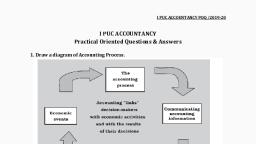
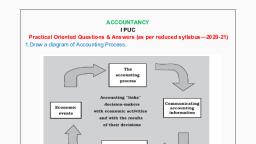
2, , 1.1, , Accountancy, , Meaning of Accounting, , In 1941, The American Institute of Certified Public Accountants (AICPA) had, defined accounting as the art of recording, classifying, and summarising in a, significant manner and in terms of money, transactions and events which, are, in part at least, of financial character, and interpreting the results thereof’., With greater economic development resulting in changing role of accounting,, its scope, became broader. In 1966, the American Accounting Association, (AAA) defined accounting as ‘the process of identifying, measuring and, communicating economic information to permit informed judgments and, decisions by users of information’., , Fig. 1.1 : Showing the process of accounting, , In 1970, the Accounting Principles Board of AICPA also emphasised that, the function of accounting is to provide quantitative information, primarily, financial in nature, about economic entities, that is intended to be useful in, making economic decisions., Accounting can therefore be defined as the process of identifying,, measuring, recording and communicating the required information relating, to the economic events of an organisation to the interested users of such, , 2018-19
Page 3 :
Introduction to Accounting, , 3, , information. In order to appreciate the exact nature of accounting, we must, understand the following relevant aspects of the definition:, • Economic Events, • Identification, Measurement, Recording and Communication, • Organisation, • Interested Users of Information, Box 1, History and Development of Accounting, Accounting enjoys a remarkable heritage. The history of accounting is as old as, civilisation. The seeds of accounting were most likely first sown in Babylonia and, Egypt around 4000 B.C. who recorded transactions of payment of wages and taxes, on clay tablets. Historical evidences reveal that Egyptians used some form of, accounting for their treasuries where gold and other valuables were kept. The incharge, of treasuries had to send day wise reports to their superiors known as Wazirs (the, prime minister) and from there month wise reports were sent to kings. Babylonia,, known as the city of commerce, used accounting for business to uncover losses, taken place due to frauds and lack of efficiency. In Greece, accounting was used for, apportioning the revenues received among treasuries, maintaining total receipts,, total payments and balance of government financial transactions. Romans used, memorandum or daybook where in receipts and payments were recorded and, wherefrom they were posted to ledgers on monthly basis. (700 B.C to 400 A.D)., China used sophisticated form of government accounting as early as 2000 B.C., Accounting practices in India could be traced back to a period when twenty three, centuries ago, Kautilya, a minister in Chandragupta’s kingdom wrote a book named, Arthashasthra, which also described how accounting records had to be maintained., Luca Pacioli’s, a Franciscan friar (merchant class), book Summa de, Arithmetica, Geometria, Proportion at Proportionality (Review of Arithmetic and Geometric, proportions) in Venice (1494) is considered as the first book on double entry bookkeeping. A portion of this book contains knowledge of business and book-keeping., However, Pacioli did not claim that he was the inventor of double entry book-keeping, but spread the knowledge of it. It shows that he probably relied on then–current, book-keeping manuals as the basis for his masterpiece. In his book, he used the, present day popular terms of accounting Debit (Dr.) and Credit (Cr.). These were the, concepts used in Italian terminology. Debit comes from the Italian debito which comes, from the Latin debita and debeo which means owed to the proprietor. Credit comes, from the Italian credito which comes from the Latin ‘credo’ which means trust or belief, (in the proprietor or owed by the proprietor. In explaining double entry system, Pacioli, wrote that ‘All entries… have to be double entries, that is if you make one creditor, you, must make some debtor’. He also stated that a merchants responsibility include to, give glory to God in their enterprises, to be ethical in all business activities and to, earn a profit. He discussed the details of memorandum, journal, ledger and specialised, accounting procedures., , 2018-19
Page 4 :
4, , Accountancy, , 1.1.1 Economic Events, Business organisations involves economic events. An economic event is known, as a happening of consequence to a business organisation which consists of, transactions and which are measurable in monetary terms. For example,, purchase of machinery, installing and keeping it ready for manufacturing is, an event which comprises number of financial transactions such as buying a, machine, transportation of machine, site preparation for installation of a, machine, expenditure incurred on its installation and trial runs. Thus,, accounting identifies bunch of transactions relating to an economic event. If, an event involves transactions between an outsider and an organisation, these, are known as external events. The following are the examples of such, transactions:, • Sale of merchandise to the customers., • Rendering services to the customers by ABC Limited., • Purchase of materials from suppliers., • Payment of monthly rent to the landlord., An internal event is an economic event that occurs entirely between the, internal wings of an enterprise, e.g., supply of raw material or components by, the stores department to the manufacturing department, payment of wages, to the employees, etc., 1.1.2 Identification, Measurement, Recording and Communication, Identification : It means determining what transactions to record, i.e., to identity, events which are to be recorded. It involves observing activities and selecting, those events that are of considered financial character and relate to the, organisation. The business transactions and other economic events therefore, are evaluated for deciding whether it has to be recorded in books of account., For example, the value of human resources, changes in managerial policies, or appointment of personnel are important but none of these are recorded in, books of account. However, when a company makes a sale or purchase, whether, on cash or credit, or pays salary it is recorded in the books of account., Measurement : It means quantification (including estimates) of business, transactions into financial terms by using monetary unit, viz. rupees and, paise as a measuring unit. If an event cannot be quantified in monetary, terms, it is not considered for recording in financial accounts. That is why, important items like the appointment of a new managing director, signing of, contracts or changes in personnel are not shown in the books of accounts., Recording : Once the economic events are identified and measured in financial, terms, these are recorded in books of account in monetary terms and in a, chronological order. Recording is done in a manner that the necessary financial, , 2018-19
Page 5 :
Introduction to Accounting, , 5, , information is summarised as per well-established practice and is made available, as and when required., Communication : The economic events are identified, measured and recorded, in order that the pertinent information is generated and communicated in a, certain form to management and other internal and external users. The, information is regularly communicated through accounting reports. These, reports provide information that are useful to a variety of users who have an, interest in assessing the financial performance and the position of an, enterprise, planning and controlling business activities and making necessary, decisions from time to time. The accounting information system should be, designed in such a way that the right information is communicated to the, right person at the right time. Reports can be daily, weekly, monthly, or, quarterly, depending upon the needs of the users. An important element in, the communication process is the accountant’s ability and efficiency in, presenting the relevant information., 1.1.3 Organisation, Organisation refers to a business enterprise, whether for profit or not-forprofit motive. Depending upon the size of activities and level of business, operation, it can be a sole-proprietory concern, partnership firm, cooperative, society, company, local authority, municipal corporation or any other, association of persons., 1.1.4 Interested Users of Information, Accounting is a means by which necessary financial information about, business enterprise is communicated and is also called the language of, business. Many users need financial information in order to make important, decisions. These users can be divided into two broad categories: internal users, and external users. Internal users include: Chief Executive, Financial Officer,, Vice President, Business Unit Managers, Plant Managers, Store Managers,, Line Supervisors, etc. External users include: present and potential Investors, (shareholders), Creditors (Banks and other Financial Institutions, Debentureholders and other Lenders), Tax Authorities, Regulatory Agencies (Department, of Company Affairs, Registrar of Companies, Securities Exchange Board of, India, Labour Unions, Trade Associations, Stock Exchange and Customers,, etc. Since the primary function of accounting is to provide useful information, for decision-making, it is a means to an end, with the end being the decision, that is helped by the availability of accounting information. You will study, about the types of accounting information and its users later in this chapter., , 2018-19
Page 6 :
6, , Accountancy, Box, , 2, , Why do the Users Want Accounting Information?, •, , The owners/shareholders use them to see if they are getting a satisfactory return, on their investment, and to assess the financial health of their company/business., , •, , The directors/managers use them for making both internal and external, comparisons in their attempts to evaluate the performance. They may compare, the financial analysis of their company with the industry figures in order to, ascertain the company’s strengths and weaknesses. Management is also, concerned with ensuring that the money invested in the company/organisation, is generating an adequate return and that the company/organisation is able to, pay its debts and remain solvent., , •, , The creditors (lenders) want to know if they are likely to get paid and look, particularly at liquidity, which is the ability of the company/organisation to pay, its debts as they become due., , •, , The prospective investors use them to assess whether or not to invest their, money in the company/organisation., , •, , The government and regulatory agencies such as Registrar of companies, Custom, departments IRDA, RBI, etc. require information for the payment of various taxes, such as Value Added Tax (VAT), Income Tax (IT), Customs and Excise duties for, protecting the interests of investors, creditors(lenders), and also to satisfy the, legal obligations imposed by The Companies Act 2013 and SEBI from time-totime., , 1.2, , Accounting as a Source of Information, , As discussed earlier, accounting is a definite processes of interlinked activities,, (refer figure 1.1) that begins with the identification of transactions and ends, with the preparation of financial statements. Every step in the process of, accounting generates information. Generation of information is not an end, in itself. It is a means to facilitate the dissemination of information among, different user groups. Such information enables the interested parties to, take appropriate decisions. Therefore, dissemination of information is an, essential function of accounting. To be useful, the accounting information should, ensure to:, • provide information for making economic decisions;, • serve the users who rely on financial statements as their principal source, of information;, • provide information useful for predicting and evaluating the amount,, timing and uncertainty of potential cash-flows;, • provide information for judging management’s ability to utilise resources, effectively in meeting goals;, , 2018-19
Page 7 :
Introduction to Accounting, , 7, , • provide factual and interpretative information by disclosing underlying, assumptions on matters subject to interpretation, evaluation, prediction,, or estimation; and, • provide information on activities affecting the society., Test Your Understanding - I, Complete the following sentences with appropriate words:, (a) Information in financial reports is based on ....................., (b) Internal users are the ..................... of the business entity., (c) A ..................... would most likely use an entities financial report to determine, whether or not the business entity is eligible for a loan., (d) The Internet has assisted in decreasing the ..................... in issuing financial, reports to users., (e) ..................... users are groups outside the business entity, who uses the, information to make decisions about the business entity., (f), , Information is said to be relevent if it is ......................, , (g) The process of accounting starts with ............ and ends with ............, (h) Accounting measures the business transactions in terms of ............ units., (i), , Identified and measured economic events should be recording in ............ order., , The role of an accountant in generating accounting information is to observe,, screen and recognise events and transactions to measure and process them,, and thereby compile reports comprising accounting information that are, communicated to the users. These are then interpreted, decoded and used, by management and other user groups. It must be ensured that the information, provided is relevant, adequate and reliable for decision-making. The apparently, divergent needs of internal and external users of accounting information have, resulted in the development of sub-disciplines within the accounting discipline, namely, financial accounting, cost accounting and management accounting (refer, box 3)., Financial accounting assists keeping a systematic record of financial, transactions the preparation and presentation of financial reports in order to, arrive at a measure of organisational success and financial soundness. It, relates to the past period, serves the stewardship function and is monetary in, nature. It is primarily concerned with the provision of financial information to, all stakeholders., Cost accounting assists in analysing the expenditure for ascertaining the, cost of various products manufactured or services rendered by the firm and, , 2018-19
Page 8 :
8, , Accountancy, , fixation of prices thereof. It also helps in controlling the costs and providing, necessary costing information to management for decision-making., Management accounting deals with the provision of necessary accounting, information to people within the organisation to enable them in decision-making,, planning and controlling business operations. Management accounting draws, the relevant information mainly from financial accounting and cost accounting, which helps the management in budgeting, assessing profitability, taking pricing, decisions, capital expenditure decisions and so on. Besides, it generates other, information (quantitative and qualitative, financial and non-financial) which, relates to the future and is relevant for decision-making in the organisation., Such information includes: sales forecast, cash flows, purchase requirement,, manpower needs, environmental data about effects on air, water, land, natural, resources, flora, fauna, human health, social responsibilities, etc., As a result, the scope of accounting has become so vast, that new areas, like human resource accounting, social accounting, responsibility accounting, have also gained prominance., Let’s Do It, Many People in today’s society think of an accountant as simply a glorified bookkeeper. But the role of an accountant is continually changing. Discuss in the, classroom what really the role of accounting is?, , 1.2.1 Qualitative Characteristics of Accounting Information, Qualitative characteristics are the attributes of accounting information which, tend to enhance its understandability and usefulness. In order to assess, whether accounting information is decision useful, it must possess the, characteristics of reliability, relevance, understandability and comparability., Reliability, Reliability means the users must be able to depend on the information. The, reliability of accounting information is determined by the degree of, correspondence between what the information conveys about the transactions, or events that have occurred, measured and displayed. A reliable information, should be free from error and bias and faithfully represents what it is meant, to represent. To ensure reliability, the information disclosed must be credible,, verifiable by independent parties use the same method of measuring, and be, neutral and faithful (refer figure 1.3)., , 2018-19
Page 9 :
Introduction to Accounting, , 9, Box, , 3, , Branches of Accounting, The economic development and technological advancements have resulted in an, increase in the scale of operations and the advent of the company form of business, organisation. This has made the management function more and more complex and, increased the importance of accounting information. This gave rise to special branches, of accounting. These are briefly explained below :, Financial accounting : The purpose of this branch of accounting is to keep a, record of all financial transactions so that:, (a) the profit earned or loss sustained by the business during an accounting period, can be worked out,, (b) the financial position of the business as at the end of the accounting period, can be ascertained, and, (c), the financial information required by the management and other interested, parties can be provided., Cost Accounting : The purpose of cost accounting is to analyse the expenditure so, as to ascertain the cost of various products manufactured by the firm and fix the, prices. It also helps in controlling the costs and providing necessary costing, information to management for decision-making., Management Accounting : The purpose of management accounting is to assist the, management in taking rational policy decisions and to evaluate the impact of its, decisons and actions., , Relevance, To be relevant, information must be available in time, must help in prediction, and feedback, and must influence the decisions of users by :, (a), helping them form prediction about the outcomes of past, present or, future events; and/or, (b), confirming or correcting their past evaluations., Understandability, Understandability means decision-makers must interpret accounting, information in the same sense as it is prepared and conveyed to them. The, qualities that distinguish between good and bad communication in a message, are fundamental to the understandability of the message. A message is said, to be effectively communicated when it is interpreted by the receiver of the, message in the same sense in which the sender has sent. Accountants should, present the comparable information in the most intenlligible manner without, sacrificing relevance and reliability., , 2018-19
Page 10 :
10, , Accountancy, , Comparability, It is not sufficient that the financial information is relevant and reliable at a, particular time, in a particular circumstance or for a particular reporting entity., But it is equally important that the users of the general purpose financial reports, are able to compare various aspects of an entity over different time period and, with other entities. To be comparable, accounting reports must belong to a, common period and use common unit of measurement and format of reporting., Test Your Understanding - II, You are a senior accountant of Ramona Enterprises Limited. What three steps would, you take to make your company’s financial statements understandable and decision, useful?, 1. ——————————————————————————————, 2. ——————————————————————————————, 3. ——————————————————————————————, [Hint : Refer to qualitative characteristics of accounting information], , 1.3, , Objectives of Accounting, , As an information system, the basic objective of accounting is to provide useful, information to the interested group of users, both external and internal. The, necessary information, particularly in case of external users, is provided in, the form of financial statements, viz., profit and loss account and balance, sheet. Besides these, the management is provided with additional information, from time to time from the accounting records of business. Thus, the primary, objectives of accounting include the following:, 1.3.1 Maintenance of Records of Business Transactions, Accounting is used for the maintenance of a systematic record of all financial, transactions in book of accounts. Even the most brilliant executive or manager, cannot accurately remember the numerous amount of varied transactions, such as purchases, sales, receipts, payments, etc. that takes place in business, everyday. Hence, a proper and complete records of all business transactions, are kept regularly. Moreover, the recorded information enables verifiability, and acts as an evidence., 1.3.2 Calculation of Profit and Loss, The owners of business are keen to have an idea about the net results of their, business operations periodically, i.e. whether the business has earned profits, , 2018-19
Page 11 :
Introduction to Accounting, , 11, , Qualitative Characteristics of Accounting Information, , Decision Makers, (Users of Accounting Information), , Understandability, , Decision Usefulness, , Relevance, , Relability, , Timliness, Dedicative, Value, , Feedback, Value, , Verifiability, , Faithfulness, , Nutrality, Comparability, Fig. 1.3 : The qualitative characteristics of accounting information, , or incurred losses. Thus, another objective of accounting is to ascertain the, profit earned or loss sustained by a business during an accounting period, which can be easily workout with help of record of incomes and expenses, relating to the business by preparing a profit or loss account for the period., Profit represents excess of revenue (income), over expenses. If the total revenue, of a given period is Rs 6,00,000 and total expenses are Rs. 5,40,000 the profit, will be equal to Rs. 60,000(Rs. 6,00,000 – Rs. 5,40,000). If however, the total, expenses exceed the total revenue, the difference reflects the loss., 1.3.3 Depiction of Financial Position, Accounting also aims at ascertaining the financial position of the business, concern in the form of its assets and liabilities at the end of every accounting, period. A proper record of resources owned by business organisation (Assets), , 2018-19
Page 12 :
12, , Accountancy, , and claims against such resources (Liabilities) facilitates the preparation of a, statement known as balance sheet position statement., 1.3.4, , Providing Accounting Information to its Users, , The accounting information generated by the accounting process is, communicated in the form of reports, statements, graphs and charts to the, users who need it in different decision situations. As already stated, there are, two main user groups, viz. internal users, mainly management, who needs, timely information on cost of sales, profitability, etc. for planning, controlling, and decision-making and external users who have limited authority, ability, and resources to obtain the necessary information and have to rely on financial, statements (Balance Sheet, Profit and Loss account). Primarily, the external, users are interested in the following:, •, Investors and potential investors-information on the risks and return on, investment;, •, Unions and employee groups-information on the stability, profitability, and distribution of wealth within the business;, •, Lenders and financial institutions-information on the creditworthiness of, the company and its ability to repay loans and pay interest;, •, Suppliers and creditors-information on whether amounts owed will be, repaid when due, and on the continued existence of the business;, •, Customers-information on the continued existence of the business and, thus the probability of a continued supply of products, parts and after, sales service;, •, Government and other regulators- information on the allocation of, resources and the compliance to regulations;, •, Social responsibility groups, such as environmental groups-information, on the impact on environment and its protection;, •, Competitors-information on the relative strengths and weaknesses of their, competition and for comparative and benchmarking purposes. Whereas, the above categories of users share in the wealth of the company,, competitors require the information mainly for strategic purposes., Test Your Understanding - III, Which stakeholder g roup…, _____________________________, _____________________________, _____________________________, _____________________________, _____________________________, _____________________________, , would be most interested in, (a) the VAT and other tax liabilities of the firm, (b) the potential for pay awards and bouns deals, (c) the ethical or environmental activities of the firm, (d) whether the firm has a long-term future, (e) profitability and share performance, (f) the ability of the firm to carry on providing a, service or producing a product., , 2018-19
Page 13 :
Introduction to Accounting, , 1.4, , 13, , Role of Accounting, , For centuries, the role of accounting has been changing with the changes in, economic development and increasing societal demands. It describes and, analyses a mass of data of an enterprise through measurement, classification, and summarisation, and reduces those date into reports and statements, which, show the financial condition and results of operations of that enterprise. Hence,, it is regarded as a language of business. It also performs the service activity by, providing quantitative financial information that helps the users in various ways., Accounting as an information system collects and communicates economic, information about an enterprise to a wide variety of interested parties. However,, accounting information relates to the past transactions and is quantitative and, financial in nature, it does not provide qualitative and non-financial information., These limitations of accounting must be kept in view while making use of the, accounting information., Test Your Understanding - IV, Tick the Correct Answer, 1. Which of the following is not a business transaction?, a. Bought furniture of Rs.10,000 for business, b. Paid for salaries of employees Rs.5,000, c. Paid sons fees from her personal bank account Rs.20,000, d. Paid sons fees from the business Rs.2,000, 2. Deepti wants to buy a building for her business today. Which of the following is the, relevant data for his decision?, a. Similar business acquired the required building in 2000 for Rs. 10,00,000, b. Building cost details of 2003, c. Building cost details of 1998, d. Similar building cost in August, 2005 Rs. 25,00,000, 3. Which is the last step of accounting as a process of information?, a. Recording of data in the books of accounts, b. Preparation of summaries in the form of financial statements, c. Communication of information, d. Analysis and interpretation of information, 4. Which qualitative characteristics of accounting information is reflected when, accounting information is clearly presented?, a. Understandability, b. Relevance, c. Comparability, d. Reliability, 5. Use of common unit of measurement and common format of reporting promotes;, a. Comparability, b. Understandability, c. Relevance, d. Reliability, , 2018-19
Page 14 :
14, , Accountancy, Box 4, Different Roles of Accounting, , ü, ü, ü, ü, , ü, , 1.5, , As a language – it is perceived as the language of business which is used to, communicate information on enterprises;, As a historical record- it is viewed as chronological record of financial transactions, of an organisation at actual amounts involved;, As current economic reality- it is viewed as the means of determining the true, income of an entity namely the change of wealth over time;, As an information system – it is viewed as a process that links an information, source (the accountant) to a set of receivers (external users) by means of a channel, of communication;, As a commodity- specialised information is viewed as a service which is in demand, in society, with accountants being willing to and capable of providing it., , Basic Terms in Accounting, , 1.5.1 Entity, Entity means a reality that has a definite individual existence. Business entity, means a specifically identifiable business enterprise like Super Bazaar, Hire, Jewellers, ITC Limited, etc. An accounting system is always devised for a specific, business entity (also called accounting entity)., 1.5.2, , Transaction, , A event involving some value between two or more entities. It can be a purchase, of goods, receipt of money, payment to a creditor, incurring expenses, etc. It, can be a cash transaction or a credit transaction., 1.5.3 Assets, Assets are economic resources of an enterprise that can be usefully expressed, in monetary terms. Assets are items of value used by the business in its, operations. For example, Super Bazar owns a fleet of trucks, which is used by, it for delivering foodstuffs; the trucks, thus, provide economic benefit to the, enterprise. This item will be shown on the asset side of the balance sheet of, Super Bazaar. Assets can be broadly classified into two types: current and, Non-current (Figure 1.4)., , 2018-19
Page 15 :
Figure 1.4 :, , Classification of Assets, , Introduction to Accounting, 15, , 2018-19
Page 16 :
16, , Accountancy, , 1.5.4 Liabilities, Liabilities are obligations or debts that an enterprise has to pay at some time in, the future. They represent creditors’ claims on the firm’s assets. Both small and, big businesses find it necessary to borrow money at one time or the other, and, to purchase goods on credit. Super Bazar, for example, purchases goods for Rs., 10,000 on credit for a month from Fast Food Products on March 25, 2005. If, the balance sheet of Super Bazaar is prepared as at March 31, 2005, Fast Food, Products will be shown as creditors on the liabilities side of the balance sheet. If, Super Bazaar takes a loan for a period of three years from Delhi State Co-operative, Bank, this will also be shown as a liability in the balance sheet of Super Bazaar., Liabilities are classified as current and non-current (Figure 1.5)., Liabilities, , Non-Current, Liabilities, , Long Term, Borrowings, , Deferred Tax Other Long, Term, Liabilities, Liabilities, (Net), , Current, Liabilities, , Long Terms, Provisions, , Short Term, Borrowings, , Trade, Other Current, Payables, Liabilities, , Short Term, Provisions, , Figure 1.5 : Classification of Liabilities, Box 5, Distinction between current and non-current items:, 1. Current assets or liabilities are involved in operating cycle., 2. Current assets or liabilities are realised/settled within 12 months., 3. Current items are primarily for trading., 4. Current items are cash or cash equivalent., , 1.5.5, , Capital, , Amount invested by the owner in the firm is known as capital. It may be brought, in the form of cash or assets by the owner for the business entity capital is an, obligation and a claim on the assets of business. It is, therefore, shown as capital, on the liabilities side of the balance sheet., 1.5.6, , Sales, , Sales are total revenues from goods or services sold or provided to customers., Sales may be cash sales or credit sales., , 2018-19
Page 17 :
Introduction to Accounting, , 1.5.7, , 17, , Revenues, , These are the amounts of the business earned by selling its products or providing, services to customers, called sales revenue. Other items of revenue common to, many businesses are: commission, interest, dividends, royalities, rent received,, etc. Revenue is also called income., 1.5.8, , Expenses, , Costs incurred by a business in the process of earning revenue are known as, expenses. Generally, expenses are measured by the cost of assets consumed or, services used during an accounting period. The usual items of expenses are:, depreciation, rent, wages, salaries, interest, cost of heater, light and water,, telephone, etc., 1.5.9, , Expenditure, , Spending money or incurring a liability for some benefit, service or property, received is called expenditure. Purchase of goods, purchase of machinery,, purchase of furniture, etc. are examples of expenditure. If the benefit of, expenditure is exhausted within a year, it is treated as an expense (also called, revenue expenditure). On the other hand, the benefit of an expenditure lasts for, more than a year, it is treated as an asset (also called capital expenditure) such, as purchase of machinery, furniture, etc., 1.5.10, , Profit, , The excess of revenues of a period over its related expenses during an accounting, year is profit. Profit increases the investment of the owners., 1.5.11, , Gain, , A profit that arises from events or transactions which are incidental to business, such as sale of fixed assets, winning a court case, appreciation in the value of, an asset., 1.5.12 Loss, The excess of expenses of a period over its related revenues its termed as loss. It, decreases in owner’s equity. It also refers to money or money’s worth lost (or, cost incurred) without receiving any benefit in return, e.g., cash or goods lost by, theft or a fire accident, etc. It also includes loss on sale of fixed assets., , 2018-19
Page 18 :
18, , 1.5.13, , Accountancy, , Discount, , Discount is the deduction in the price of the goods sold. It is offered in two ways., Offering deduction of agreed percentage of list price at the time selling goods is, one way of giving discount. Such discount is called ‘trade discount’. It is generally, offered by manufactures to wholesellers and by wholesellers to retailers. After, selling the goods on credit basis the debtors may be given certain deduction in, amount due in case if they pay the amount within the stipulated period or earlier., This deduction is given at the time of payment on the amount payable. Hence, it, is called as cash discount. Cash discount acts as an incentive that encourages, prompt payment by the debtors., 1.5.14, , Voucher, , The documentary evidence in support of a transaction is known as voucher. For, example, if we buy goods for cash, we get cash memo, if we buy on credit, we get, an invoice; when we make a payment we get a receipt and so on., 1.5.15, , Goods, , It refers to the products in which the business unit is dealing, i.e. in terms of, which it is buying and selling or producting and selling. The items that are, purchased for use in the business are not called goods. For example, for a, furniture dealer purchase of chairs and tables is termed as goods, while for, other it is furniture and is treated as an asset. Similarly, for a stationery merchant,, stationery is goods, whereas for others it is an item of expense (not purchases), 1.5.16, , Drawings, , Withdrawal of money and/or goods by the owner from the business for personal, use is known as drawings. Drawings reduces the investment of the owners., 1.5.17, , Purchases, , Purchases are total amount of goods procured by a business on credit and on, cash, for use or sale. In a trading concern, purchases are made of merchandise, for resale with or without processing. In a manufacturing concern, raw materials, are purchased, processed further into finished goods and then sold. Purchases, may be cash purchases or credit purchases., 1.5.18, , Stock, , Stock (inventory) is a measure of something on hand-goods, spares and other, items in a business. It is called Stock in hand. In a trading concern, the stock on, hand is the amount of goods which are lying unsold as at the end of an accounting, , 2018-19
Page 19 :
Introduction to Accounting, , 19, , period is called closing stock (ending inventory). In a manufacturing company,, closing stock comprises raw materials, semi-finished goods and finished goods, on hand on the closing date. Similarly, opening stock (beginning inventory) is, the amount of stock at the beginning of the accounting period., 1.5.19, , Debtors, , Debtors are persons and/or other entities who owe to an enterprise an amount, for buying goods and services on credit. The total amount standing against, such persons and/or entities on the closing date, is shown in the balance sheet, as sundry debtors on the asset side., 1.5.20 Creditors, Creditors are persons and/or other entities who have to be paid by an enterprise, an amount for providing the enterprise goods and services on credit. The total, amount standing to the favour of such persons and/or entities on the closing, date, is shown in the Balance Sheet as sundry creditors on the liabilities side., Test Your Understanding - V, Mr. Sunrise started a business for buying and selling of stationery with Rs. 5,00,000, as an initial investment. Of which he paid Rs.1,00,000 for furniture, Rs. 2,00,000 for, buying stationery items. He employed a sales person and clerk. At the end of the, month he paid Rs.5,000 as their salaries. Out of the stationery bought he sold some, stationery for Rs.1,50,000 for cash and some other stationery for Rs.1,00,000 on, credit basis to Mr.Ravi. Subsequently, he bought stationery items of Rs.1,50,000, from Mr. Peace. In the first week of next month there was a fire accident and he lost, Rs. 30,000 worth of stationery. A part of the machinery, which cost Rs. 40,000, was, sold for Rs. 45,000., From the above, answer the following :, 1. What is the amount of capital with which Mr. Sunrise started business., 2. What are the fixed assets he bought?, 3. What is the value of the goods purchased?, 4. Who is the creditor and state the amount payable to him?, 5. What are the expenses?, 6. What is the gain he earned?, 7. What is the loss he incurred?, 8. Who is the debtor? What is the amount receivable from him?, 9. What is the total amount of expenses and losses incurred?, 10. Determine if the following are assets, liabilities, revenues, expenses or none of, the these: sales, debtors, creditors, salary to manager, discount to debtors,, drawings by the owner., , 2018-19
Page 20 :
20, , Accountancy, Summary with Reference to Learning Objectives, 1., , 2., , 3., , 4., , 5., , 6., , Meaning of Accounting : Accounting is a process of identifying, measuring,, recording the business transactions and communicating thereof the required, information to the interested users., Accounting as a source of information : Accounting as a source of information, system is the process of identifying, measuring, recording and communicating, the economic events of an organisation to interested users of the information., Users of accounting information : Accounting plays a significant role in society, by providing information to management at all levels and to those having a, direct financial interest in the enterprise, such as present and potential, investors and creditors. Accounting information is also important to those, having indirect financial interest, such as regulatory agencies, tax authorities,, customers, labour unions, trade associations, stock exchanges and others., Qualitative characteristics of Accounting : To make accounting information, decision useful, it should possess the following qualitative characteristics., • Reliability, • Understandability, • Relevance, • Comparability, Objective of accounting : The primary objectives of accounting are to :, •, maintain records of business;, •, calculate profit or loss;, •, depict the financial position; and, •, make information available to various groups and users., Role of accounting : Accounting is not an end in itself. It is a means to an, end. It plays the role of a :, •, Language of a business, •, Historical record, •, Current economic reality, •, Information system, •, Service to users, Questions for Practice, , Short Answers, 1., 2., 3., 4., 5., 6., 7., 8., 9., 10., , Define accounting., State the end product of financial accounting., Enumerate main objectives of accounting., Who are the users of accounting information., State the nature of accounting information required by long-term lenders., Who are the external users of information?, Enumerate information needs of management., Give any three examples of revenues., Distinguish between debtors and creditors; profit and gain, ‘Accounting information should be comparable’. Do you agree with this, statement. Give two reasons., , 2018-19
Page 21 :
Introduction to Accounting, , 21, , 11., , If the accounting information is not clearly presented, which of the qualitative, characteristic of the accounting information is violated?, 12. “The role of accounting has changed over the period of time”- Do you agree?, Explain., 13. Giving examples, explain each of the following accounting terms :, • Fixed assets, • Revenue, • Expenses, • Short-term liability, • Capital, 14. Define revenues and expenses?, 15. What is the primiary reason for the business students and others to, familiarise themselves with the accounting discipline?, Long Answers, 1., 2., 3., 4., 5., 6., 7., , What is accounting? Define its objectives., Explain the factors which necessitated systematic accounting., Describe the informational needs of external users., What do you mean by an asset and what are different types of assets?, Explain the meaning of gain and profit. Distinguish between these two terms., Explain the qualitative characteristics of accounting information., Describe the role of accounting in the modern world., Checklist to Test Your Understanding, , Test Your Understanding – I, (a), (d), (g), (h), , Economic Transactions (b) Management/Employees (c) Creditor, Time-gap, (e) External, (f) Free from bias, Identifying the transactions and communicating information, Monetary, (i) Chronological, , Test Your Understanding - II, 1., 2., 3., , Reliability, i.e. Verifiability, Faithfulness, Nutrality, Relevance, i.e. Timeliness, Understandability and Comparibility, , Test Your Understanding - III, (a), (b), (c), (d), (e), (f), , Government and other regulators, Management, Social responsibility groups, Lenders, Suppliers and Creditors, Customers, , Test Your Understanding - IV, 1. (c), , 2. (a), , 3. (c), , 4. (a), , 5. (a), , 2018-19
Page 22 :
22, , Accountancy, , Test Your Understanding - V, 1., 4., 7., 10., , Rs. 5,00,000, 2., Mr. Reace, Rs. 1,50,000, 5., Rs. 30,000, 8., Assets : debtors; Liabilities, discount, salary., , Rs. 1,00,000,, Rs. 5,000, Mr. Ravi, Rs. 1,00,000, : creditors; drawings;, , 3. Rs. 2,00,000, 6. Rs. 5,000, 9. Rs. 35,000, Revenues : sales expenses,, , Hints to ‘Let’s Do It’, Accountants today can work in exciting new growth areas such as forensic accounting,, budget accounting, cost accounting, environmental accounting,, e-commerce and the various agencies within the public sector.The advent of, information technology have resulted in the development of necessary skills for today’s, accountant include the ability to:, • Develop competence in systems analysis and computer technology;, • Develop facilitation skills, such as persuasion and communication skills;, • Acquire a broad business knowledge in strategy, operations, human resources,, marketing, finance and economics;, • Develop analytical skills;, • Develop a willingness to embrace change and assume risk;, • Complete an internship in business and/or public accounting;, • Develop proficiency in accounting and tax issues., Activity : Tick (ü) the appropriate one:, Items, , Current, Assets, , Non-Current, Assets, , Machinery, Sundry Creditors, Cash at Bank, Goodwill, Bills Payable, Land & Building, Furniture, Computer Software, Motor Vehicles, Inventory, Investments, Loan from Bank, Sundry Debtors, Patents, Air-Conditioners, Loose tools, , 2018-19, , Current, Liabilities, , Non-Current, Liabilities
Page 23 :
Theory base of Accounting, , 23, , Theory Base of Accounting, , A, , LEARNING OBJECTIVES, After studying this chapter,, you will be able to:, •, , identify the need for, theory base of accounting;, , •, , explain the nature of, Generally Accepted, Accounting Principles, (GAAP);, , •, , state the meaning and, purpose of the basic, accounting concepts;, , •, , list the accounting, standards issued by, Institute of Chartered, Accountants of India;, , •, , describe the systems, of accounting; and, , •, , describe the basis of, accounting., , 2, , s discussed in the previous chapter, accounting, is concerned with the recording, classifying and, summarising of financial transactions and events, and interpreting the results thereof. It aims at, providing infor mation about the financial, performance of a firm to its various users such as, owners, managers employees, investors, creditors,, suppliers of goods and services and tax authorities, and help them in taking important decisions. The, investors, for example, may be interested in knowing, the extent of profit or loss earned by the firm during, a given period and compare it with the performance, of other similar enterprises. The suppliers of credit,, say a banker, may, in addition, be interested in, liquidity position of the enterprise. All these people, look forward to accounting for appropriate, useful, and reliable information., For making the accounting information, meaningful to its internal and external users, it is, important that such information is reliable as well, as comparable. The comparability of information is, required both to make inter-firm comparisons, i.e., to see how a firm has performed as compared to, the other firms, as well as to make inter-period, comparison, i.e. how it has performed as compared, to the previous years. This becomes possible only if, the information provided by the financial statements, is based on consistent accounting policies, principles, and practices. Such consistency is required, throughout the process of identifying the events and, transactions to be accounted for, measuring them,, communicating them in the book of accounts,, , 2018-19
Page 24 :
24, , Accountancy, , summarising the results thereof and reporting them to the interested parties., This calls for developing a proper theory base of accounting., The importance of accounting theory need not be over-emphasised as no, discipline can develop without a sound theoretical base. The theory base of, accounting consists of principles, concepts, rules and guidelines developed, over a period of time to bring uniformity and consistency to the process of, accounting and enhance its utility to different users of accounting information., Apart from these, the Institute of Chartered Accountants of India, (ICAI), which, is the regulatory body for standardisation of accounting policies in the country, has issued Accounting Standards which are expected to be uniformly adhered, to, in order to bring consistency in the accounting practices. These are discussed, in the sections to follow., 2.1 Generally Accepted Accounting Principles, In order to maintain uniformity and consistency in accounting records, certain, rules or principles have been developed which are generally accepted by the, accounting profession. These rules are called by different names such as, principles, concepts, conventions, postulates, assumptions and modifying, principles., The term ‘principle’ has been defined by AICPA as ‘A general law or rule, adopted or professed as a guide to action, a settled ground or basis of conduct, or practice’. The word ‘generally’ means ‘in a general manner’, i.e. pertaining to, many persons or cases or occasions. Thus, Generally Accepted Accounting, Principles (GAAP) refers to the rules or guidelines adopted for recording and, reporting of business transactions, in order to bring uniformity in the, preparation and the presentation of financial statements. For example, one of, the important rule is to record all transactions on the basis of historical cost,, which is verifiable from the documents such as cash receipt for the money, paid. This brings in objectivity in the process of recording and makes the, accounting statements more acceptable to various users., The Generally Accepted Accounting Principles have evolved over a long period, of time on the basis of past experiences, usages or customs, statements by, individuals and professional bodies and regulations by government agencies, and have general acceptability among most accounting professionals. However,, the principles of accounting are not static in nature. These are constantly, influenced by changes in the legal, social and economic environment as well as, the needs of the users., These principles are also referred as concepts and conventions. The term, concept refers to the necessary assumptions and ideas which are fundamental, to accounting practice, and the term convention connotes customs or traditions, as a guide to the preparation of accounting statements. In practice, the same, rules or guidelines have been described by one author as a concept, by another, as a postulate and still by another as convention. This at times becomes confusing, , 2018-19
Page 25 :
Theory base of Accounting, , 25, , to the learners. Instead of going into the semantics of these terms, it is important, to concentrate on the practicability of their usage. From the practicability view, point, it is observed that the various terms such as principles, postulates,, conventions, modifying principles, assumptions, etc. have been used interchangeably and are referred to as Basic Accounting Concepts in the present, chapter., 2.2 Basic Accounting Concepts, The basic accounting concepts are referred to as the fundamental ideas or basic, assumptions underlying the theory and practice of financial accounting and, are broad working rules for all accounting activities and developed by the, accounting profession. The important concepts have been listed as below:, •, •, •, •, •, •, , Business entity;, Money measurement;, Going concern;, Accounting period;, Cost, Dual aspect (or Duality);, , 2.2.1, , •, •, •, •, •, •, •, , Revenue recognition (Realisation);, Matching;, Full disclosure;, Consistency;, Conservatism (Prudence);, Materiality;, Objectivity., , Business Entity Concept, , The concept of business entity assumes that business has a distinct and separate, entity from its owners. It means that for the purposes of accounting, the business, and its owners are to be treated as two separate entities. Keeping this in view,, when a person brings in some money as capital into his business, in accounting, records, it is treated as liability of the business to the owner. Here, one separate, entity (owner) is assumed to be giving money to another distinct entity (business, unit). Similarly, when the owner withdraws any money from the business for his, personal expenses(drawings), it is treated as reduction of the owner’s capital, and consequently a reduction in the liabilities of the business., The accounting records are made in the book of accounts from the point of view, of the business unit and not that of the owner. The personal assets and liabilities, of the owner are, therefore, not considered while recording and reporting the, assets and liabilities of the business. Similarly, personal transactions of the owner, are not recorded in the books of the business, unless it involves inflow or outflow, of business funds., 2.2.2, Money Measurement Concept, The concept of money measurement states that only those transactions and, happenings in an organisation which can be expressed in terms of money, such as sale of goods or payment of expenses or receipt of income, etc. are to, be recorded in the book of accounts. All such transactions or happenings which, , 2018-19
Page 26 :
26, , Accountancy, , can not be expressed in monetary terms, for example, the appointment of a, manager, capabilities of its human resources or creativity of its research, department or image of the organisation among people in general do not find a, place in the accounting records of a firm., Another important aspect of the concept of money measurement is that the, records of the transactions are to be kept not in the physical units but in the, monetary unit. For example, an organisation may, on a particular day, have a, factory on a piece of land measuring 2 acres, office building containing 10 rooms,, 30 personal computers, 30 office chairs and tables, a bank balance of Rs.5, lakh, raw material weighing 20-tons, and 100 cartons of finished goods. These, assets are expressed in different units, so can not be added to give any meaningful, information about the total worth of business. For accounting purposes,, therefore, these are shown in money terms and recorded in rupees and paise. In, this case, the cost of factory land may be say Rs. 2 crore; office building Rs. 1, crore; computers Rs.15 lakh; office chairs and tables Rs. 2 lakh; raw material, Rs. 33 lakh and finished goods Rs. 4 lakh. Thus, the total assets of the enterprise, are valued at Rs. 3 crore and 59 lakh. Similarly, all transactions are recorded in, rupees and paise as and when they take place., The money measurement assumption is not free from limitations. Due to the, changes in prices, the value of money does not remain the same over a period of, time. The value of rupee today on account of rise in prices is much less than, what it was, say ten years back. Therefore, in the balance sheet, when we add, different assets bought at different points of time, say building purchased in, 1995 for Rs. 2 crore, and plant purchased in 2005 for Rs. 1 crore, we are in fact, adding heterogeneous values, which can not be clubbed together. As the change, in the value of money is not reflected in the book of accounts, the accounting, data does not reflect the true and fair view of the affairs of an enterprise., 2.2.3, , Going Concern Concept, , The concept of going concern assumes that a business firm would continue to, carry out its operations indefinitely, i.e. for a fairly long period of time and would, not be liquidated in the foreseeable future. This is an important assumption of, accounting as it provides the very basis for showing the value of assets in the, balance sheet., An asset may be defined as a bundle of services. When we purchase an, asset, for example, a personal computer, for a sum of Rs. 50,000, what we are, buying really is the services of the computer that we shall be getting over its, estimated life span, say 5 years. It will not be fair to charge the whole amount of, Rs. 50,000, from the revenue of the year in which the asset is purchased. Instead,, that part of the asset which has been consumed or used during a period should, be charged from the revenue of that period. The assumption regarding continuity, , 2018-19
Page 27 :
Theory base of Accounting, , 27, , of business allows us to charge from the revenues of a period only that part of, the asset which has been consumed or used to earn that revenue in that period, and carry forward the remaining amount to the next years, over the estimated, life of the asset. Thus, we may charge Rs. 10,000 every year for 5 years from the, profit and loss account. In case the continuity assumption is not there, the whole, cost (Rs. 50,000 in the present example) will need to be charged from the revenue, of the year in which the asset was purchased., 2.2.4, , Accounting Period Concept, , Accounting period refers to the span of time at the end of which the financial statements, of an enterprise are prepared, to know whether it has earned profits or incurred, losses during that period and what exactly is the position of its assets and liabilities at, the end of that period. Such information is required by different users at regular, interval for various purposes, as no firm can wait for long to know its financial results, as various decisions are to be taken at regular intervals on the basis of such, information. The financial statements are, therefore, prepared at regular interval,, normally after a period of one year, so that timely information is made available to the, users. This interval of time is called accounting period., The Companies Act 2013 and the Income Tax Act require that the income, statements should be prepared annually. However, in case of certain, situations, preparation of interim financial statements become necessary., For example, at the time of retirement of a partner, the accounting period can, be different from twelve months period. Apart from these companies whose, shares are listed on the stock exchange, are required to publish quarterly, results to ascertain the profitability and financial position at the end of every, three months period., Test Your Understanding - I, Choose the Correct Answer, 1. During the life-time of an entity accounting produce financial statements in, accordance with which basic accounting concept:, (a) Conservation, (b) Matching, (c), Accounting period, (d) None of the above, 2. When information about two different enterprises have been prepared presented, in a similar manner the information exhibits the characteristic of:, (a) Verifiability, (b) Relevance, (c), Reliability, (d) None of the above, , 2018-19
Page 28 :
28, , Accountancy, 3. A concept that a business enterprise will not be sold or liquidated in the near, future is known as :, (a) Going concern, (b) Economic entity, (c), Monetary unit, (d) None of the above, 4. The primary qualities that make accounting information useful for decision-making, are :, (a) Relevance and freedom from bias, (b) Reliability and comparability, (c), Comparability and consistency, (d) None of the above, , 2.2.5 Cost Concept, The cost concept requires that all assets are recorded in the book of accounts, at their purchase price, which includes cost of acquisition, transportation,, installation and making the asset ready to use. To illustrate, on June 2005, an, old plant was purchased for Rs. 50 lakh by Shiva Enterprise, which is into the, business of manufacturing detergent powder. An amount of, Rs. 10,000 was spent on transporting the plant to the factory site. In addition,, Rs. 15,000 was spent on repairs for bringing the plant into running position, and Rs. 25,000 on its installation. The total amount at which the plant will be, recorded in the books of account would be the sum of all these, i.e., Rs. 50,50,000., The concept of cost is historical in nature as it is something, which has, been paid on the date of acquisition and does not change year after year. For, example, if a building has been purchased by a firm for Rs. 2.5 crore, the, purchase price will remain the same for all years to come, though its market, value may change. Adoption of historical cost brings in objectivity in recording, as the cost of acquisition is easily verifiable from the purchase documents. The, market value basis, on the other hand, is not reliable as the value of an asset, may change from time to time, making the comparisons between one period to, another rather difficult., However, an important limitation of the historical cost basis is that it does, not show the true worth of the business and may lead to hidden profits. During, the period of rising prices, the market value or the cost at (which the assets, can be replaced are higher than the value at which these are shown in the, book of accounts) leading to hidden profits., 2.2.6 Dual Aspect Concept, Dual aspect is the foundation or basic principle of accounting. It provides the, very basis for recording business transactions into the book of accounts. This, concept states that every transaction has a dual or two-fold effect and should, , 2018-19
Page 29 :
Theory base of Accounting, , 29, , therefore be recorded at two places. In other words, at least two accounts will be, involved in recording a transaction. This can be explained with the help of an, example. Ram started business by investing in a sum of Rs. 50,00,000 The, amount of money brought in by Ram will result in an increase in the assets, (cash) of business by Rs. 50,00,000. At the same time, the owner’s equity or, capital will also increase by an equal amount. It may be seen that the two, items that got affected by this transaction are cash and capital account., Let us take another example to understand this point further. Suppose the, firm purchase goods worth Rs. 10,00,000 on cash. This will increase an asset, (stock of goods) on the one hand and reduce another asset (cash) on the other., Similarly, if the firm purchases a machine worth Rs. 30,00,000 on credit from, Reliable Industries. This will increase an asset (machinery) on the one hand, and a liability (creditor) on the other. This type of dual effect takes place in, case of all business transactions and is also known as duality principle., The duality principle is commonly expressed in terms of fundamental, Accounting Equation, which is as follows :, Assets = Liabilities + Capital, , In other words, the equation states that the assets of a business are always, equal to the claims of owners and the outsiders. The claims also called equity, of owners is termed as Capital(owners’ equity) and that of outsiders, as, Liabilities(creditors equity). The two-fold effect of each transaction affects in, such a manner that the equality of both sides of equation is maintained., The two-fold effect in respect of all transactions must be duly recorded in, the book of accounts of the business. In fact, this concept forms the core of, Double Entry System of accounting, which has been dealt in detail, in, chapter 3., 2.2.7 Revenue Recognition (Realisation) Concept, The concept of revenue recognition requires that the revenue for a business, transaction should be included in the accounting records only when it is realised., Here arises two questions in mind. First, is termed as revenue and the other,, when the revenue is realised. Let us take the first one first. Revenue is the, gross inflow of cash arising from (i) the sale of goods and services by an, enterprise; and (ii) use by others of the enterprise’s resources yielding interest,, royalties and dividends. Secondly, revenue is assumed to be realised when a, legal right to receive it arises, i.e. the point of time when goods have been sold, or service has been rendered. Thus, credit sales are treated as revenue on the, day sales are made and not when money is received from the buyer. As for the, income such as rent, commission, interest, etc. these are recongnised on a, time basis. For example, rent for the month of March 2017, even if received in, April 2017, will be taken into the profit and loss account of the financial year, ending March 31, 2017 and not into financial year beginning with April 2017., , 2018-19
Page 30 :
30, , Accountancy, , Similarly, if interest for April 2017 is received in advance in March 2017, it will, be taken to the profit and loss account of the financial year ending, March 2018., There are some exceptions to this general rule of revenue recognition. In, case of contracts like construction work, which take long time, say 2-3 years to, complete, proportionate amount of revenue, based on the part of contract, completed by the end of the period is treated as realised. Similarly, when goods, are sold on hire purchase, the amount collected in installments is treated as, realised., 2.2.8 Matching Concept, The process of ascertaining the amount of profit earned or the loss incurred, during a particular period involves deduction of related expenses from the, revenue earned during that period. The matching concept emphasises exactly, on this aspect. It states that expenses incurred in an accounting period should, be matched with revenues during that period. It follows from this that the, revenue and expenses incurred to earn these revenues must belong to the, same accounting period., As already stated, revenue is recognised when a sale is complete or service, is rendered rather when cash is received. Similarly, an expense is recognised, not when cash is paid but when an asset or service has been used to generate, revenue. For example, expenses such as salaries, rent, insurance are recognised, on the basis of period to which they relate and not when these are paid. Similarly,, costs like depreciation of fixed asset is divided over the periods during which, the asset is used., Let us also understand how cost of goods are matched with their sales, revenue. While ascertaining the profit or loss of an accounting year, we should, not take the cost of all the goods produced or purchased during that period, but consider only the cost of goods that have been sold during that year. For, this purpose, the cost of unsold goods should be deducted from the cost of the, goods produced or purchased. You will learn about this aspect in detail in the, chapter on financial statement., The matching concept, thus, implies that all revenues earned during an, accounting year, whether received during that year, or not and all costs incurred,, whether paid during the year, or not should be taken into account while, ascertaining profit or loss for that year., 2.2.9 Full Disclosure Concept, Information provided by financial statements are used by different groups of, people such as investors, lenders, suppliers and others in taking various, financial decisions. In the corporate form of organisation, there is a distinction, , 2018-19
Page 31 :
Theory base of Accounting, , 31, , between those managing the affairs of the enterprise and those owning it., Financial statements, however, are the only or basic means of communicating, financial information to all interested parties. It becomes all the more important,, therefore, that the financial statements makes a full, fair and adequate, disclosure of all information which is relevant for taking financial decisions., The principle of full disclosure requires that all material and relevant facts, concerning financial performance of an enterprise must be fully and completely, disclosed in the financial statements and their accompanying footnotes. This, is to enable the users to make correct assessment about the profitability and, financial soundness of the enterprise and help them to take informed decisions., To ensure proper disclosure of material accounting information, the Indian, Companies Act 1956 has provided a format for the preparation of profit and, loss account and balance sheet of a company, which needs to be compulsorily, adhered to, for the preparation of these statements. The regulatory bodies like, SEBI, also mandates complete disclosures to be made by the companies, to, give a true and fair view of profitability and the state of affairs., 2.2.10 Consistency Concept, The accounting information provided by the financial statements would be, useful in drawing conclusions regarding the working of an enterprise only, when it allows comparisons over a period of time as well as with the working of, other enterprises. Thus, both inter-firm and inter-period comparisons are, required to be made. This can be possible only when accounting policies and, practices followed by enterprises are uniform and are consistent over the period, of time., To illustrate, an investor wants to know the financial performance of an, enterprise in the current year as compared to that in the previous year. He, may compare this year’s net profit with that in the last year. But, if the, accounting policies adopted, say with respect to depreciation in the two years, are different, the profit figures will not be comparable. Because the method, adopted for the valuation of stock in the past two years is inconsistent. It is,, therefore, important that the concept of consistency is followed in preparation, of financial statements so that the results of two accounting periods are, comparable. Consistency eliminates personal bias and helps in achieving results, that are comparable., Also the comparison between the financial results of two enterprises would, be meaningful only if same kind of accounting methods and policies are adopted, in the preparation of financial statements., However, consistency does not prohibit change in accounting policies., Necessary required changes are fully disclosed by presenting them in the, financial statements indicating their probable effects on the financial results, of business., , 2018-19
Page 32 :
32, , Accountancy, , 2.2.11 Conservatism Concept, The concept of conservatism (also called ‘prudence’) provides guidance for recording, transactions in the book of accounts and is based on the policy of playing safe., The concept states that a conscious approach should be adopted in ascertaining, income so that profits of the enterprise are not overstated. If the profits ascertained, are more than the actual, it may lead to distribution of dividend out of capital,, which is not fair as it will lead to reduction in the capital of the enterprise., The concept of conservatism requires that profits should not to be recorded, until realised but all losses, even those which may have a remote possibility,, are to be provided for in the books of account. To illustrate, valuing closing, stock at cost or market value whichever is lower; creating provision for doubtful, debts, discount on debtors; writing of intangible assets like goodwill, patents,, etc. from the book of accounts are some of the examples of the application of, the principle of conservatism. Thus, if market value of the goods purchased, has fallen down, the stock will be shown at cost price in the books but if the, market value has gone up, the gain is not to be recorded until the stock is sold., This approach of providing for the losses but not recognising the gains until, realised is called conservatism approach. This may be reflecting a generally, pessimist attitude adopted by the accountants but is an important way of, dealing with uncertainty and protecting the interests of creditors against an, unwanted distribution of firm’s assets. However, deliberate attempt to, underestimate the value of assets should be discouraged as it will lead to, hidden profits, called secret reserves., 2.2.12 Materiality Concept, The concept of materiality requires that accounting should focus on material, facts. Efforts should not be wasted in recording and presenting facts, which, are immaterial in the determination of income. The question that arises here is, what is a material fact. The materiality of a fact depends on its nature and the, amount involved. Any fact would be considered as material if it is reasonably, believed that its knowledge would influence the decision of informed user of, financial statements. For example, money spent on creation of additional, capacity of a theatre would be a material fact as it is going to increase the, future earning capacity of the enterprise. Similarly, information about any, change in the method of depreciation adopted or any liability which is likely to, arise in the near future would be significant information. All such information, about material facts should be disclosed through the financial statements and, the accompanying notes so that users can take informed decisions. In certain, cases, when the amount involved is very small, strict adherence to accounting, principles is not required. For example, stock of erasers, pencils, scales, etc., are not shown as assets, whatever amount of stationery is bought in an, accounting period is treated as the expense of that period, whether consumed, or not. The amount spent is treated as revenue expenditure and taken to the, profit and loss account of the year in which the expenditure is incurred., , 2018-19
Page 33 :
Theory base of Accounting, , 33, , 2.2.13 Objectivity Concept, The concept of objectivity requires that accounting transaction should be recorded, in an objective manner, free from the bias of accountants and others. This can, be possible when each of the transaction is supported by verifiable documents, or vouchers. For example, the transaction for the purchase of materials may be, supported by the cash receipt for the money paid, if the same is purchased on, cash or copy of invoice and delivery challan, if the same is purchased on credit., Similarly, receipt for the amount paid for purchase of a machine becomes the, documentary evidence for the cost of machine and provides an objective basis, for verifying this transaction. One of the reasons for the adoption of ‘Historical, Cost’ as the basis of recording accounting transaction is that adherence to the, principle of objectivity is made possible by it. As stated above, the cost actually, paid for an asset can be verified from the documents but it is very difficult to, ascertain the market value of an asset until it is actually sold. Not only that, the, market value may vary from person to person and from place to place, and so, ‘objectivity’ cannot be maintained if such value is adopted for accounting, purposes., Test Your Understanding - II, Fill in the correct word:, 1. Recognition of expenses in the same period as associated revenues is called, _______________concept., 2. The accounting concept that refers to the tendency of accountants to resolve, uncertainty and doubt in favour of understating assets and revenues and, overstating liabilities and expenses is known as _______________., 3. Revenue is generally recongnised at the point of sale denotes the concept, of _______________., 4. The _______________concept requires that the same accounting method should, be used from one accounting period to the next., 5. The_______________concept requires that accounting transaction should be free, from the bias of accountants and others., , 2.3 Systems of Accounting, The systems of recording transactions in the book of accounts are generally, classified into two types, viz. Double entry system and Single entry system., Double entry system is based on the principle of “Dual Aspect” which states, that every transaction has two effects, viz. receiving of a benefit and giving of a, benefit. Each transaction, therefore, involves two or more accounts and is, recorded at different places in the ledger. The basic principle followed is that, every debit must have a corresponding credit. Thus, one account is debited and, the other is credited., Double entry system is a complete system as both the aspects of a transaction, are recorded in the book of accounts. The system is accurate and, , 2018-19
Page 34 :
34, , Accountancy, , more reliable as the possibilities of frauds and mis-appropriations are minimised., The arithmetic inaccuracies in records can mostly be checked by preparing the, trial balance. The system of double entry can be implemented by big as well as, small organisations., Single entry system is not a complete system of maintaining records of, financial transactions. It does not record two-fold effect of each and every, transaction. Instead of maintaining all the accounts, only personal accounts, and cash book are maintained under this system. In fact, this is not a system, but a lack of system as no uniformity is maintained in the recording of, transactions. For some transactions, only one aspect is recorded, for others,, both the aspects are recorded. The accounts maintained under this system are, incomplete and unsystematic and therefore, not reliable. The system is, however,, followed by small business firms as it is very simple and flexible (you will study, about them in detail later in this book)., 2.4, , Basis of Accounting, , From the point of view the timing of recognition of revenue and costs, there can, be two broad approaches to accounting. These are:, (i) Cash basis; and, (ii) Accrual basis., Under the cash basis, entries in the book of accounts are made when cash is, received or paid and not when the receipt or payment becomes due. Let us say, for, example, if office rent for the month of December 2014, is paid in January 2015, it, would be recorded in the book of account only in January 2015., Similarly sale of goods on credit in the month of January 2015 would not be, recorded in January but say in April, when the payment for the same is received., Thus this system is incompatible with the matching principle, which states that, the revenue of a period is matched with the cost of the same period. Though, simple, this method is inappropriate for most organisations as profit is calculated, as a difference between the receipts and disbursement of money for the given, period rather than on happening of the transactions., Under the accrual basis, however, revenues and costs are recognised in the, period in which they occur rather when they are paid. A distinction is made, between the receipt of cash and the right to receive cash and payment of cash, and legal obligation to pay cash. Thus, under this system, the monitory effect of, a transaction is taken into account in the period in which they are earned rather, than in the period in which cash is actually received or paid by the enterprise., This is a more appropriate basis for the calculation of profits as expenses are, matched against revenue earned in relation thereto. For example, raw material, consumed are matched against the cost of goods sold., , 2018-19
Page 35 :
Theory base of Accounting, , 2.5, , 35, , Accounting Standards, , Accounting standards are written policy documents covering the aspects of, recognition, measurement, treatment, presentation and disclosure of accounting, transactions in financial statements. Accounting standard is an authoritative, statement issued by ICAI, a professional body of accounting in our country., The objective of accounting standard is to bring uniformity in different, accounting policies in order to eliminate non comparability of financial, statements for enhancing reliability of financial statements. Secondly, the, accounting standard provides a set of standard accounting policies, valuation, norms and disclosure requirements. In addition to improving credibility of, accounting data, accounting standard enhances comparability of financial, statements, both intra and inter enterprises. Such comparisons are very effective, and widely used for assessment of firms’ performance by the users of accounting., Need for Accounting Standards, Accounting extends information to various users of information. Accounting, information can serve the interest of different users only if it possesses uniformity, and full disclosure of relevant information. There can be alternate accounting, treatment and valuation norms which may be used by any business entity., Accounting standard facilitate the scope of those alternatives which fulfil the, basic qualitative characteristics of true and fair financial statement., Benefits of Accounting Standards, 1. Accounting standard helps in eliminating variations in accounting, treatment to prepare financial statements., 2. Accounting standard may call for disclosures of certain information which, may not be required by law, but such information might be useful for, general public, investors and creditors., 3. Accounting standard facilitate comparability between financial, statements of inter and intra companies., Limitations of Accounting Standards, 1. Accounting standard makes choice between different alternate, accounting treatments difficult to apply., 2. It is rigidly followed and fails to extend flexibility in applying accounting, standards., 3. Accounting standard cannot override the statue. The standards are, required to be farmed within the ambit of prevailing status., , 2018-19
Page 36 :
36, , Accountancy, , Applicability of Accounting Standards, Except the purely charitable organisation which does not have any commercial,, industrial and business activity, accounting standard is applicable to:, 1. Sole proprietorship unit, 2. Partnership firm, 3. Societies, 4. Trusts, 5. Hindu undivided family, 6. Association of persons, 7. Cooperative societies, 8. Companies, 9. International Financial Reporting System, 10. There have been vast changes in the global economic scenario with the, emergence of globalisation, liberalisation and privatization. The advent, of translational corporations in search of funds in order to sustain their, ongoing operations in addition to fuelling the growth of economy has, resulted in raising capital globally, i.e., cutting across international, boundaries. Since each country has its own set of rules and regulations, for maintaining business records for accounting purposes and financial, reporting, it becomes a cumbersome and complex exercise to comply, with the existing accounting rules and regulations of the country in case, the business enterprise decides to raise its capital needs from foreign, country. In order to make economy more dynamic, competitive and to, boost confidence amongst international analysts and investors, it is, important that the financial statements put forward by the business, organisations across the countries are comparable on similar parameters,, investor friendly, fair, transparent and decisions worthy. In view of this, a, trend towards global convergence of accounting standards is seeking, momentum for international financial reporting., Need for IFRS, 1. The important economic decisions are made on the basis of financial, statements. In order to avoid manipulations of figures in the financial, accounts, there is a need for consistent way of deciding which elements, require recognition and measurement and how information is presented, in the financial statements. Hence, IFRS helps to prevent material, manipulation or errors in financial statements., 2. IFRS helps in global harmonisation. Unless accounting activities are, regulated, different countries will apply different set of accounting rules, and regulations are prevalent in each country. This will restrict uniformity, , 2018-19
Page 37 :
Theory base of Accounting, , 37, , and comparability of financial statements. Hence, IFRS promotes global, standards for each of business growth., 3. It facilitates global investment. The convergence of financial reporting, and accounting standards is a valuable process that contributes to the, free flow of global investments and achieves substantial benefits for all, capital market stakeholders., To uniform accounting policies and procedures almost all countries have, agreed to apply IFRS. But the name of this IFRS has been converged as Ind, AS. In substance , Ind AS is not different from IFRS. Ind AS is accounting, standard notified by ministry of corporate affairs and has wide range of, convergence as compared to existing accounting standards., The list of Ind AS and existing standards for comparative analysis is given, below:, Ind_AS, Title, AS, Title, 1, Presentation of Financial, 1, Disclosure of accounting, Statements, policies, —Framework for preparation, and presentation of financial, statements, 2, Inventories, 2, Valuation of inventories, 7, Cash Flow Statements, 3, Cash flow statements, 8, Accounting Policies, Changes 5, Net profit or loss for the period,, in Accounting Estimates and, prior period items and changes, Errors, in accounting policies, 10, Events after the Balance, 4, Contingencies and events, Sheet Date, occurring after the balance, sheet date, 11, Construction Contracts, 7, Construction contracts, 12, Income Taxes, 22, Accounting for taxes on income, 16, Property, Plant and, 10, Accounting for fixed assets, Equipment, 6, Depreciation accounting, 17, Leases, 19, Leases, 18, Revenue, 9, Revenue recognition, 19, Employee Benefits, 15, Employee Benefits, 20, Accounting for Government 12, Accounting for government, Grants and Disclosure of, grants, Government Assistance, 21, The Effects of Changes in, 11, The effects of changes in, Foreign Exchange Rates, foreign exchange rates, 23, Borrowing Costs, 16, Borrowing Costs, 24, Related Party Disclosures, 18, Related Party Disclosures, , 2018-19
Page 38 :
38, , 27, 28, 29, 31, 32, 33, 34, 36, 37, , 38, 39, , 40, 101, , 102, 103, 104, 105, , 106, , 107, 108, , Accountancy, , Consolidated and Separate, Financial Statements, Investments in Associates, , 21, , Financial Reporting in, Hyperinflationary Economics, Interests in Joint Ventures, , —-, , Financial Instruments:, Presentation, Earnings Per Share, Interim Financial Reporting, Impairment of assets, Provisions, contingent, liabilities and contingent, assets, Intangible assets, Financial instruments:, Recognition and, measurement, , 31, , Investment property, First time adoption of, international financial, reporting standards, Share-based payments, Business combinations, Insurance Contracts, Non-current Assets held for, Sale and Discontinued, Operations, Exploration for and, Evaluation of Mineral, Resources, Financial Instruments:, Disclosures, Operating Segments, , 23, , 27, , 20, 25, 28, 29, , Consolidated Financial, Statements, Accounting for Investment in, Associates in CFS, , Financial reporting of interest, in joint venture, Financial instrument:, Presentation, Earnings Per Share, Interim Financial reporting, Impairment of Asset, Provisions, contingent, liabilities and contingent assets, , 30, 13, , Intangible assets, Financial instruments:, Recognition and measurement, , 13, 13, ---, , Accounting for investments, Accounting for investments, , ---, , G.N. on employee share based, payment, Accounting for amalgamations, , 14, —24, —-, , Discontinuing Operation, , ---, , 32, 17, , 2018-19, , Financial Instrument :, Disclosure, Segment Reporting
Page 39 :
Theory base of Accounting, , 39, , Goods and Services Tax, (One Country One Tex), GST is a destination based tax on consumption of goods and services. It is, proposed to be levied at all stages right from manufacture up to final, consumption with credit of taxes paid at previous stages available as setoff. In, a nutshell, only value addition will be taxed and burden of tax is to be borne by, the final consumer. The concept of destination based tax on consumption implies, has the tax would accrue to the taxing authority which has jurisdiction over, the place of consumption which is also termed as place of supply., GST has a dual aspect with the Centre and States simultaneously levying, on a common tax base. There are three main components of GST which are, CGST, SGST, CGST means Central Goods and Services Tax. Taxes collected, under CGST will constitute the revenues of the Central Government . The present, central taxes like central excise duty, additional excise duty, special excise, duty, central sales tax etc., will be subsumed under CGST. SGST means State, Good and Services Tax. A collection of SGST is the revenue of the State, Government. With GST all state taxes like VAT, entertainment tax, luxury tax,, entry tax etc, will be merged with GST. For example, Ramesh a dealer in Punjab, sell goods to Seema in Punjab worth Rs. 10,000. If the GST rate is 18%, i.e., 9%, CGST and 9% SGST, Rs. 900 will go to Central Government and 900 will go to, Punjab Government., IGST means Integrated Goods and Services Tax. Revenue collected under, IGST is divided between Central and State Government as per the rates specified, by the Government. IGST is charged on transfer of goods and services from one, state to another. Import of goods and services are also covered under IGST. For, example, if the goods are transferred from Madhya Pradesh to Rajasthan then, this transaction will attract IGST. Lets extend the above example to understand, SGST. If Ramesh in Madhya Pradesh sell goods to Anand in Rajasthan worth Rs., 1,000,000. Applicable GST late is 18% i.e., 9% CGST and 9% SGST. In this case,, the dealer will charge 18,000 as IGST and will go the Central Government., India is a federal country where both the Centre and the States, have been assigned the powers to levy and collect taxes through, appropriate legislation. Both the levels of government have distinct, responsibilities to perform according to the division of powers, prescribed in the Constitution for which they need to rise, resources. A dual GST will, therefore, be in keeping with the, Constitutional requirement of fiscal federalism. Hence, Centre will, levy and administer CGST & IGST while respective states will, levy and administer SGST. The Constitution of India has been, amended for this purpose., , 2018-19
Page 40 :
40, , Accountancy, , Characteristics of Goods and Services Tax, 1. GST is a common law and procedure throughout the country under, single administration., 2. GST is a destination based tax and levied at a single point at the time of, consumption of goods and services by the end consumer., 3. GST is a comprehensive levy and collection on both goods and services, at the same rate with benefit of input tax credit or subtraction of value., 4. Minimum number of rates of tax does not exceed two., 5. There is no scope for levy of cess, resale tax, additional tax, turnover tax, etc., 6. There is no multiple levy of tax on goods and services, such as sales tax,, entry tax, octroi, entertainment tax or luxury tax etc., Do it yourself, State how the GST rates will be applicable if CGST is 9%, SGST is 9% and, IGST 18% in each of the following situations:, 1. Goods worth Rs. 10,000 is sold by a Manufacturer 1 in Maharashtra, to a Dealer A in Maharastra., 2. Dealer A sell goods worth Rs. 25,000 to Dealer B in Gujarat., 3. Dealer B sell goods to Sunita in Gujarat worth Rs. 30,000., 4. Sunita sell goods to Ravindra in Rajasthan worth Rs. 65,000., , 2018-19
Page 41 :
Theory base of Accounting, , 41, , Advantages, 1. Introduction of GST has resulted in the abolition of multiple types of, taxes in goods and services., 2. GST widens the tax base and increased revenue to Centre and State, thereby reducing administrative cost for the Government., 3. GST has reduced compliance cost and increases voluntary compliance., 4. GST has affected rates of tax to the maximum of two floor rates., 5. GST has removed the cascading effect on taxation., 6. GST will result in enhancing manufacturing and distribution system, affecting the cost of production of goods and services and consequently, the demand and production of goods and services will increase., 7. It will eventually promote economic efficiency and sustainable long term, economic growth as GST is neutral to business processes, business, models, organisational structure and geographical location., 8. GST would help to extend competitive edge in international market for, goods and services produced in the country leading to increased exports., GST, , Intra-State, Movement, , Inter-State, Movement, , IGST, CGST, , SGST, , GST levied by the, Centre, , GST levied by the, State, , GST levied by the Centre, and States Concurrently, , Test your Understanding-III, State the applicability of GST rate under given situation if:, 1. Amrit Raj is a manufacturing unit for cotton trousers where customers, give fabric to convert into trouser., 2. Dress materials are sold by length. They include up to 3 pieces. These, can be plain or embroidered (can be further worked upon)., 3. The GST norms have changed overtime., , 2018-19
Page 42 :
42, , Accountancy, Key Terms Introduced in the Chapter, , •, •, •, •, •, •, •, , Cost, Matching, Materiality, Objectivity, Consistency, Dual aspect, Conservatism(Prudence), , •, •, •, •, •, •, , Going concern, Comparibility, Full discloser, Generally accepted, Revenue Relisation, Operating guidelines, , •, •, •, •, •, •, , Accounting period, Money measurement, Accounting concept, Accounting Principles (GAAP), GAAP, GST, , Summary with Reference to Learning Objectives, 1. Generally Accepted Accounting Principles (GAAP) : Generally Accepted Accounting, principles refer to the rules or guidelines adopted for recording and reporting of business, transactions in order to bring uniformity in the preparation and presentation of, financial statements. These principles are also referred to as concepts and conventions., From the practicality view point, the various terms such as principles, postulates,, conventions modifying principles, assumptions, etc. have been used interchangeably, and are referred to as basic accounting concepts, in the present book., 2. Basic Accounting Concepts : The basic accounting concepts are referred to as the, fundamental ideas or basic assumptions underlying the theory and practice of financial, accounting and are broad working rules of accounting activities., 3. Business Entity : This concept assumes that business has distinct and separate, entity from its owners. Thus, for the purpose of accounting, business and its owners, are to be treated as two separate entities., 4. Money Measurement : The concept of money measurement states that only those, transactions and happenings in an organisation, which can be expressed in terms of, money are to be recorded in the book of accounts. Also, the records of the transactions are, to be kept not in the physical units but in the monetary units., 5. Going Concern : The concept of going concern assumes that a business firm would, continue to carry out its operations indefinitely (for a fairly long period of time) and, would not be liquidated in the near future., 6. Accounting Period : Accounting period refers to the span of time at the end of which, the financial statements of an enterprise are prepared to know whether it has earned, profits or incurred losses during that period and what exactly is the position of its, assets and liabilities, at the end of that period., 7. Cost Concept : The cost concept requires that all assets are recorded in the book of, accounts at their cost price, which includes cost of acquisition, transportation,, installation and making the asset ready for the use., 8. Dual Aspect : This concept states that every transaction has a dual or two-fold effect, on various accounts and should therefore be recorded at two places. The duality, principle is commonly expressed in terms of fundamental accounting equation, which, is :, Assets, , =, , Liabilities + Capital, , 9. Revenue Recognition : Revenue is the gross in-flow of cash arising from the sale of, goods and services by an enterprise and use by others of the enterprise resources, yielding interest royalities and divididends. The concept of revenue recognition requires, that the revenue for a business transaction should be considered realised when a, legal right to receive it arises., , 2018-19
Page 43 :
Theory base of Accounting, , 43, , 10. Matching : The concept of matching emphasises that expenses incurred in an accounting, period should be matched with revenues during that period. It follows from this that, the revenue and expenses incurred to earn these revenue must belong to the same, accounting period., 11. Full Disclosure : This concept requires that all material and relevant facts concerning, financial performance of an enterprise must be fully and completely disclosed in the, financial statements and their accompanying footnotes., 12. Consistency : This concepts states that accounting policies and practices followed by, enterprises should be uniform and consistent one the period of time so that results, are composable. Comparability results when the same accounting principles are, consistently being applied by different enterprises for the period under comparison,, or the same firm for a number of periods., 13. Conservatism : This concept requires that business transactions should be recorded, in such a manner that profits are not overstated. All anticipated losses should be, accounted for but all unrealised gains should be ignored., 14. Materiality : This concept states that accounting should focus on material facts. If, the item is likely to influence the decision of a reasonably prudent investor or creditor,, it should be regarded as material, and shown in the financial statements., 15. Objectivity : According to this concept, accounting transactions should be recorded, in the manner so that it is free from the bias of accountants and others., 16. Systems of Accounting : There are two systems of recording business transactions,, viz. double entry system and single entry system. Under double entry system every, transaction has two-fold effects where as single entry system is known as incomplete, records., 17. Basis of Accounting : The two broad approach of accounting are cash basis and, accrual basis. Under cash basis transactions are recorded only when cash are received, or paid. Whereas under accrual basis, revenues or costs are recognises when they, occur rather than when they are paid., 18. Accounting Standards : Accounting standards are written statements of uniform, accounting rules and guidelines in practice for preparing the uniform and consistent, financial statements. These standards cannot over ride the provisions of applicable, laws, customs, usages and business environment in the country., 19. GST is a destination tax on the consumption of goods and services levied at all stages, right from manufacturing up to the final consumption with credit of taxes paid at, previous stages., Questions for Practice, Short Answers, 1., Why is it necessary for accountants to assume that business entity will remain a, going concern?, 2., When should revenue be recognised? Are there exceptions to the general rule?, 3., What is the basic accounting equation?, 4., The realisation concept determines when goods sent on credit to customers are to be, included in the sales figure for the purpose of computing the profit or loss for the, accounting period. Which of the following tends to be used in practice to determine, , 2018-19
Page 44 :
44, , 5., , Accountancy, when to include a transaction in the sales figure for the period. When the goods have, been:, a. dispatched, b. invoiced, c. delivered, d. paid for, Give reasons for your answer., Complete the following work sheet:, (i), If a firm believes that some of its debtors may ‘default’, it should act on this by, making sure that all possible losses are recorded in the books. This is an example, of the ___________ concept., (ii) The fact that a business is separate and distinguishable from its owner is best, exemplified by the ___________ concept., (iii) Everything a firm owns, it also owns out to somebody. This co-incidence is, explained by the ___________ concept., (iv) The ___________ concept states that if straight line method of depreciation is, used in one year, then it should also be used in the next year., (v) A firm may hold stock which is heavily in demand. Consequently, the market, value of this stock may be increased. Normal accounting procedure is to ignore, this because of the ___________., (vi) If a firm receives an order for goods, it would not be included in the sales figure, owing to the ___________., (vii) The management of a firm is remarkably incompetent, but the firms accountants, can not take this into account while preparing book of accounts because of, ___________ concept., , Long Answers, 1., ‘The accounting concepts and accounting standards are generally referred to as the, essence of financial accounting’. Comment., 2., , Why is it important to adopt a consistent basis for the preparation of financial, statements? Explain., , 3., , Discuss the concept-based on the premise ‘do not anticipate profits but provide for, all losses’., , 4., , What is matching concept? Why should a business concern follow this concept?, Discuss., , 5., , What is the money measurement concept? Which one factor can make it difficult to, compare the monetary values of one year with the monetary values of another year?, Project Work, , Activity 1, Ruchica’s father is the sole proprietor of ‘Friends Gifts’, a firm engaged in the sale of gift, items. In the process of preparing financial statements, the accountant of the firm Mr., Goyal fell ill and had to proceed on leave. Ruchica’s father was urgently in need of the, statements as these had to be submitted to the bank, in pursuance of a loan of Rs. 5 lakh, applied for the expansion of the business of the firm. Ruchica who is studying Accounting, in her school, volunteered to complete the work. On scrutinising the accounts, the banker, found that the value of building bought a few years back for Rs. 7 lakh has been shown in, the books at Rs. 20 lakh, which is its present market value. Similarly, as compared to the, last year, the method of valuation of stock was changed, resulting in value of goods to be, , 2018-19
Page 45 :
Theory base of Accounting, , 45, , about 15 per cent higher. Also, the whole amount of Rs. 70,000 spent on purchase, of personal computer (expected life 5 years) during the year had been charged to, the profits of the current year. The banker did not rely on the financial data, provided by Ruchica. Advise Ruchica for the mistakes committed by her in the, preparation of financial statements in the context of basic concepts in accounting., Activity 2, A customer has filed a suit against a trader who has supplied poor quality goods, to him. It is known that the court judgment will be in favour of the customer and, the trader will be required to pay the damages. However, the amount of legal, damages is not known with certainity. The accounting year has already been ended, and the books are now finalised to ascertain true profit or loss. The accountant of, the trader has advised him not to consider the expected loss on account of payment, of legal damages because the amount is not certain and the final judgment of the, court is not yet out. Do you think the accountant is right in his approach., Checklist to Test Your Understanding, Test Your Understanding - I, 1. (c), , 2. (d), , 3. (a), , 4. (b), , Test Your Understanding - II, 1. Matching, , 2. Conservatism, , 4. Consistency, , 5. Objectivity, , 3. Revenue Realisation, , Test Your Understanding - III, 1. 18%, , 3. 5%, , 2. Dress material sale value not exceeding Rs. 100 @ 5% and exceeding, Rs.1,000 @12%, , 2018-19
Page 46 :
46, , Accountancy, , Recording of Transactions-I, , 3, , I, , L EARNING O BJECTIVES, After, studying, this, chapter, you will be able, to:, • describe the nature of, transaction and source, documents;, • explain the preparation of accounting, vouchers;, • apply, accounting, equation to explain the, effect of transactions;, • record transactions, using rules of debit, and credit;, • explain the concept of, book of original entry, and recording of, transactions in journal;, • explain the concept of, ledger and posting of, journal entries to the, ledger accounts., , n chapter 1 and 2, while explaining the, development and importance of accounting as a, source of disseminating the financial information, along with the discussion on basic accounting, concepts that guide the recording of business, transactions, it has been indicated that accounting, involves a process of identifying and analysing the, business transactions, recording them, classifying, and summarising their ef fects and finally, communicating it to the interested users of, accounting information., In this chapter, we will discuss the details of each, step involved in the accounting process. The first, step involves identifying the transactions to be, recorded and preparing the source documents, which are in turn recorded in the basic book of, original entry called journal and are then posted to, individual accounts in the principal book called, ledger., 3.1 Business Transactions and Source Document, After securing good percentage in your previous, examination, as promised, your father wishes to, buy you a computer. You go to the market along, with your father to buy a computer. The dealer gives, a cash memo along with the computer and in, exchange your father makes cash payment of, Rs. 35,000. Purchase of computer for cash is an, example of a transaction, which involves reciprocal, exchange of two things: (i) payment of cash,, (ii) delivery of a computer. Hence, the transaction, , 2018-19
Page 47 :
Recording of Transactions - I, , 47, , involves this aspect, i.e. Give and Take. Payment of cash involves give aspect, and delivery of computer is a take aspect. Thus, business transactions are, exchanges of economic consideration between parties and have two-fold effects, that are recorded in at least two accounts., Business transactions are usually evidenced by an appropriate documents, such as Cash memo, Invoice, Sales bill, Pay-in-slip, Cheque, Salary slip, etc. A, document which provides evidence of the transactions is called the Source, Document or a Voucher. At times, there may be no documentary for certain items, as in case of petty expenses. In such case voucher may be prepared showing the, necessary details and got approved by appropriate authority within the firm. All, such documents (vouchers) are arranged in chronological order and are serially, numbered and kept in a separate file. All recording in books of account is done, on the basis of vouchers., Transaction Voucher, Name of Firm :, Voucher No, :, Date, :, Debit account :, Credit account :, Amount (Rs.) :, Narration, :, , Authorised By :, , Prepared By :, , Fig. 3.1 : Showing specimen transaction voucher, , 3.1.1 Preparation of Accounting Vouchers, Accounting vouchers may be classified as cash vouchers, debit vouchers, credit, vouchers, journal vouchers, etc. There is no set format of accounting vouchers., A specimen of a simple transaction voucher is used in practice is shown in, figure 3.1., These must be preserved in any case till the audit of the accounts and tax, assessments for the relevant period are completed. Now a days, accounting is, computerised and the necessary accounting vouchers showing the code, number and name of the accounts to be debited and credited are prepared for, the purpose of necessary recording of transactions. A transaction with one, debit and one credit is a simple transaction and the accounting vouchers, prepared for such transaction is known as Transaction Voucher, the format of, , 2018-19
Page 48 :
48, , Accountancy, , which is shown in figure 3.1. Voucher which records a transaction that entails, multiple debits/credits and one credit/debit is called compound voucher., Compound voucher may be: (a) Debit Voucher or (b) Credit Voucher; the specimen, is shown in figure 3.2., Debit Voucher, Name of Firm :, Voucher No, :, Credit Account :, Amount, :, , Date :, , Debit Accounts, S. No. Code Account Name, , Amount, Rs., , Narration (i.e. Explanation), , Prepared By :, , Authorised By :, , Credit Voucher, Name of Firm :, Voucher No, :, Debit Account :, Amount, :, , Date :, , Credit Accounts, S. No. Code Account Name, , Amount, Rs., , Authorised By :, , Narration (i.e. Explanation), , Prepared By :, , Fig. 3.2 : Showing debit and credit vouchers, , 2018-19
Page 49 :
Recording of Transactions - I, , 49, , Transactions with multiple debits and multiple credits are called complex, transactions and the accounting voucher prepared for such transaction is, known as Complex Voucher/ Journal Voucher. The format of a complex, transaction voucher is shown in figure 3.3., Journal Voucher, Name of Firm :, Voucher No, , :, , Date :, Debit Accounts, , S. No. Code Account Name, , Amount, Rs., , Narration (i.e. Explanation), , Credit Accounts, S. No. Code Account Name, , Amount, Rs., , Narration (i.e. Explanation), , Prepared By :, , Authorised By :, , Fig. 3.3 : Showing specimen of complex transaction voucher, , The design of the accounting vouchers depends upon the nature, requirement, and convenience of the business. There is no set format of an accounting, voucher. To distinguish various vouchers, different colour papers and different, fonts of printing are used. Some of the specimen of the accounting vouchers, are given in the earlier pages. A accounting voucher must contain the following, essential elements :, •, It is written on a good quality paper;, •, •, •, •, , Name of the firm must be printed on the top;, Date of transaction is filled up against the date and not the date of recording, of transaction is to be mentioned;, The number of the voucher is to be in a serial order;, Name of the account to be debited or credited is mentioned;, , 2018-19
Page 50 :
50, , •, •, •, •, , Accountancy, , Debit and credit amount is to be written in figures against the amount;, Description of the transaction is to be given account wise;, The person who prepares the voucher must mention his name along with, signature; and, The name and signature of the authorised person are mentioned on the, voucher., , 3.2 Accounting Equation, Accounting equation signifies that the assets of a business are always equal, to the total of its liabilities and capital (owner’s equity). The equation reads as, follows:, A=L+C, Where,, A = Assets, L = Liabilities, C = Capital, The above equation can also be presented in the following forms as its, derivatives to enable the determination of missing figures of Capital(C) or, Liabilities(L)., (i) A – L = C, (ii) A – C = L, Since, the accounting equation depicts the fundamental relationship among, the components of the balance sheet, it is also called the Balance Sheet, Equation. As the name suggests, the balance sheet is a statement of assets,, liabilities and capital., At any point of time resources of the business entity must be equal to the, claims of those who have financed these resources. The proprietors and, outsiders provide the resources of the business. The claim of the proprietors, is called capital and that of the outsides is known as liabilities. Each element, of the equation is the part of balance sheet, which states the financial position, of the business on a particular date. When we analyse the transactions, we, actually try to know that how balance sheet of a business entity gets affected., Asset side of the balance sheet is the list of assets, which the business, entity owns. The liabilities side of the balance sheet is the list of owner’s, claims and outsider’s claims, i.e., what the business entity owes. The equality, of the assets side and the liabilities side of the balance sheet is an undeniable, fact and this justifies the name of accounting equation as balance sheet, equation also., , 2018-19
Page 51 :
Recording of Transactions - I, , 51, , For example, Rohit started business with a capital of Rs. 5,00,000. From the, accounting point of view, the resources of this business entity is in the form of, cash, i.e., Rs. 5,00,000. Sources of this business entity is the contribution by, Rohit (Proprietor) Rs. 5,00,000 as Capital ., (For the purpose of understanding we will refer this example as example 1,, throughout the chapter) ., If we put this information in the form of equality of resources and sources,, the picture would emerge somewhat as follows:, Books of Rohit, Balance Sheet as at .........., Liabilities, Capital, , Amount, Rs., , Assets, , 5,00,000, , Cash in hand, , 5,00,000, , Amount, Rs., 5,00,000, 5,00,000, , In the above balance sheet, the total assets are equal to the liabilities of, the business. Since, the business has not yet started its activities and has not, earned any profits; the amount invested in business is still Rs. 5,00,000. In, case any profits are earned, it will increase the invested amount in business., On the other hand, if business suffers any losses, it will decrease the invested, amount in business., We will now analyse the transactions listed in example 1 and its effect on, different elements and you will observe that the accounting equation always, remain balanced:, Example 1., 1., , Opened a bank account in State Bank of India with an amount of, Rs. 4,80,000., Analysis of transaction: This transaction increases the cash at bank (assets), and decreases cash (asset) by Rs. 4,80,000., , 2., , Bought furniture for Rs. 60,000 and cheque was issued on the same day., Analysis of transaction: This transaction increases furniture (assets) and, decreases bank (assets) by Rs. 60,000., , 3., , Bought plant and machinery for the business for Rs. 1,25,000 and an, advance of Rs. 10,000 in cash is paid to M/s Ramjee Lal., Analysis of transaction: This transaction increases plant and machinery, (assets) by Rs. 1,25,000, decreases cash by Rs. 10,000 and increases, liabilities (M/s Ramjee lal as creditor) by Rs. 1,15,000., , 2018-19
Page 52 :
52, , Accountancy, , 4., , Goods purchased from M/s Sumit Traders for Rs. 55,000., Analysis of transaction: This transaction increases goods (assets) and, increases liabilities (M/s Sumit Traders as creditors) by Rs. 55,000., Goods costing Rs. 25,000 sold to Rajani Enterprises for Rs. 35,000., Analysis of transaction: This transaction decreases stock of goods (assets), by Rs. 25,000 and increases assets (Rajani Enterprises as debtors, Rs. 35,000) and capital (with the profit of Rs. 10,000), , 5., , The final equation as per the above analysis table can be summarised in, the form of a balance sheet as under:, Balance Sheet as at.....2017, Liabilities, Outsider’s Claims (Creditors), Capital, , Amount, Rs., 1,70,000, 5,10,000, , 6,80,000, , Assets, Cash, Bank, Debtors, Stock, Furniture, Plant & Machinery, , Amount, Rs., 10,000, 4,20,000, 35,000, 30,000, 60,000, 1,25,000, 6,80,000, , In terms of accounting equation, A=L+C, Rs. 6,80,000 = Rs. 1,70,000 + Rs. 5,10,000, , 3.3 Using Debit and Credit, As already stated every transaction involves give and take aspect. In double, entry accounting, every transaction affects and is recorded in at least two, accounts. When recording each transaction, the total amount debited must, equal to the total amount credited. In accounting, the terms — debit and credit, indicate whether the transactions are to be recorded on the left hand side or, right hand side of the account. In its simplest form, an account looks like the, letter T. Because of its shape, this simple form called a T -account (refer, figure 3.4). Notice that the T format has a left side and a right side for recording, increases and decreases in the item. This helps in ascertaining the ultimate, position of each item at the end of an accounting period. For example, if it is, an account of a customer all goods sold shall appear on the left (debit) side of, customer’s account and all payments received on the right side. The difference, between the totals of the two sides called balance shall reflect the amount due, to the customer. In a T account, the left side is called debit (often abbreviated, as Dr.) and the right side is known as credit (often abbreviated as Cr.). To, , 2018-19
Page 53 :
2018-19, , Final, Equation, , 1., Post Trans., Equation, 2., Post Trans., Equation, 3., Post Trans., Equation, 4., Post Trans., Equation, 5., , Transaction, No., , 55,000, 55,000, , 10,000, , 4,20,000, , 35,000, , 30,000, , (25,000), 60,000, , 60,000, , 1,25,000, , 1,25,000, , 4,20,000, , 10,000, , 6,80,000, , 10,000, , 55,000, 6,70,000, , 1,15,000, 6,15,000, , 4,20,000, , (10,000), 10,000, 60,000, , ......., 5,00,000, , 5,00,000, , Total, Assets, , (60,000), 4,20,000, 1,25,000, 1,25,000, , Plant and, Machinery, , ......., 20,000, , 60,000, 60,000, , Goods Furniture, (Stock), , ......., 5,00,000, , 35,000, , Assets, Debtors, , 4,80,000, 4,80,000, , Bank, , (4,80,000), 20,000, , 5,00,000, , Cash, , 1,70,000, , 55,000, 1,70,000, , 1,15,000, 1,15,000, , ......., , Liabilities, , 5,10,000, , 10,000, , 5,00,000, , 5,00,000, , ......., 5,00,,000, , ......., 5,00,000, , 5,00,000, , Capital, , 6,80,000, , 10,000, , 55,000, 6,70,000, , 1,15,000, 6,15,000, , ......., 5,00,000, , ......., 5,00,000, , 5,00,000, , Total, , (Figures in rupees), , The summary of effects of transactions on accounting equation is in the following analysis table:, , Recording of Transactions - I, 53
Page 54 :
54, , Accountancy, , enter amount on the left side of an account is to debit the account. To enter, amount on the right side is to credit the account., Account Title, (Left Side), , (Right Side), Fig. 3.4 : Showing T-account, , 3.3.1 Rules of Debit and Credit, All accounts are divided into five categories for the purposes of recording the, transactions: (a) Asset (b) Liability (c) Capital (d) Expenses/Losses, and (e), Revenues/Gains., Two fundamental rules are followed to record the changes in these accounts:, (1) For recording changes in Assets/Expenses (Losses):, (i) “Increase in asset is debited, and decrease in asset is credited.”, (ii) “Increase in expenses/losses is debited, and decrease in expenses/, losses is credited.”, (2) For recording changes in Liabilities and Capital/Revenues (Gains):, (i) “Increase in liabilities is credited and decrease in liabilities is debited.”, (ii) “Increase in capital is credited and decrease in capital is debited.”, (iii) “Increase in revenue/gain is credited and decrease in revenue/gain, is debited.”, The rules applicable to the different kinds of accounts have been, summarised in the following chart:, Rules of Debit and Credit, Asset, (Increase), +, Debit, , Liabilities, (Decrease), –, Credit, , (Decrease), –, Debit, , (Increase), +, Credit, , Capital, (Decrease), –, Debit, , (Increase), +, Credit, Revenues/Gains, , (Decrease), –, Debit, , Expenses/Losses, (Increase), +, Debit, , (Increase), +, Credit, , 2018-19, , (Decrease), –, Credit
Page 55 :
Recording of Transactions - I, , 55, , The transactions in Example 1 on page 46 will help you to learn how to, apply these debit and credit rules. Observe the analysis table given on page 48, carefully to be sure that you understand before you go on to the next one. To, illustrate different kinds of events, three more transactions have been added, (transactions 7 to 9)., 1., , Rohit started business with cash Rs. 5,00,000, Analysis of Transaction : The transaction increases cash on one hand and increases, capital on the other hand. Increases in assets are debited and increases in capital, are credited. Therefore record the transaction with debit to Cash and credit to Rohit’s, Capital., Cash Account, Capital Account, , (1) 5,00,000, , (1) 5,00,000, (6) 10,000, , 2., , Opened a bank account with an amount of Rs. 4,80,000, Analysis of Transaction: The transaction increases the cash at bank on one hand, and decreases cash in hand on the other hand. Increases in assets are debited and, a decreases in assets are credited. Therefore, record the transactions with debit to, Bank account and credit to Cash account., Cash Account, , (1) 5,00,000, , 3., , Bank Account, , (2) 4,80,000, , (2) 4,80,000, , Bought furniture for Rs. 60,000 and issued cheque for the same, Analysis of Transaction : This transaction increases furniture (assets) on one hand, and decreases bank (assets) on the other hand by Rs. 60,000. Increases in assets are, debited and decreases are credited. Therefore record the transactions with debit to, Furniture account and credit to Bank account., Furniture Account, , (1) 60,000, , 4., , Bank Account, (2) 4,80,000, , (3) 60,000, , Bought Plant and Machinery from Ramjee lal for the business for Rs. 1,25,000, and an advance of Rs. 10,000 in cash is given., Analysis of Transaction : This transaction increases plant and machinery (assets) by, Rs. 1,25,000, decreases cash by Rs. 10,000 and increases liabilities (M/s Ramjee, Lal as creditor) by Rs. 1,15,000. Increases in assets are debited whereas decreases, in assets are credited. On the other hand increases in liabilities are credited. Therefore,, record the transaction with debit to furniture account and with credit to Cash and, Ramjee Lal’s account., , 2018-19
Page 56 :
56, , Accountancy, Plant and Machinery Account, , Cash Account, (1) 5,00,000, , (2) 4,80,000, (4), 10,000, , (4) 1,25,000, , Ramjee Lal’s Account, (4) 1,15,000, , 5., , Goods purchased from Sumit Traders for Rs. 55,000, Analysis of transaction : This transaction increases purchases (expenses) and, increases liabilities (M/s Sumit Traders as creditors) by Rs. 55,000. Increases in, expenses are debited and increases in liabilities are credited. Therefore record the, transaction with debit to Purchases account and credit to Sumit Traders account., Sumit Traders Account, , Purchases Account, , (5) 55,000, , (5) 55,000, , 6. Goods costing Rs. 25,000 sold to Rajani Enterprises for Rs. 35,000, Analysis of transaction : This transaction increases sales (Revenue) and increases, assets (Rajani Enterprises as debtors). Increases in assets are debited and increases, in revenue are credited. Therefore record the entry with credit to Sales account and, debit to Rajani Enterprises account., Sales Account, , Rajani Enterprises Account, (6) 35,000, , 7., , (6) 35,000, , Paid the monthly store rent Rs. 2,500 in cash, Analysis of transaction : The payment of rent is an expense which decreases capital, thus, are recorded as debits. Credit cash to record decrease in assets., Cash Account, , Rent Account, (7) 2,500, , 8., , (7) 5,00,000, , (2) 4,80,000, (4) 10,000, (7), 2,500, , Paid Rs. 5,000 as salary to the office employees, , Analysis of transaction : The payment of salary is an expense which decreases capital, thus, are recorded as debits. Credit Cash to record decrease in assets., , 2018-19
Page 57 :
Recording of Transactions - I, , 57, , Salary Account, , Cash Account, , (8) 5,000, , 9., , (2) 4,80,000, (4) 10,000, (7), 2,500, (8), 5,000, , (1) 5,00,000, , Received cheque as full payment from Rajani Enterprises and deposited same, day into bank, Analysis of transaction : This transaction increase assets (Bank) on the one hand and, decreases assets (Rajani Enterprises as debtors) on the other hand. Increase in assets, is debited whereas decrease in assets is credited. Therefore record the entry with debit, to Bank account and credit to Rajani Enterprises account., Rajani Enterprises Account, , Bank’s Account, , (9) 35,000, , (6) 35,000, , (2) 4,80,000, (9), 35,000, , (3) 60,000, , Test Your Understanding - I, 1. Double entry accounting requires that :, (i) All transactions that create debits to asset accounts must create credits to, liability or capital accounts;, (ii) A transaction that requires a debit to a liability account require a credit to an, asset account;, (iii), , Every transaction must be recorded with equal debits equal total credits., , 2. State different kinds of transactions that increase and decrease capital., 3. Does debit always mean increase and credit always mean decrease?, 4. Which of the following answers properly classifies these commonly used accounts:, (1) Building (2) Wages (3) Credit sales (4) Credit purchases (5) Electricity charges, due but not yet paid (outstanding electricity bills) (6) Godown rent paid in, advance (prepaid godown rent) (7) Sales (8) Fresh capital introduced (9) Drawings, (10) Discount paid, (i), (ii), (iii), , Assets, , Liabilities, , Capital, , Revenue, , Expense, , 5,4,, 1, 6, 2,10,4, , 3,, 4, 5, 4,6, , 9,6, 8, 8, , 2,10, 7, 3, 7,5, , 8,7, 2,9,10, 1,3,9, , Illustration 1, Analyse the effect of each transaction on assets and liabilities and show that the both, sides of Accounting Equation (A = L + C) remains equal :, (i) Introduced Rs. 8,00,000 as cash and Rs. 50,000 by stock., , 2018-19
Page 58 :
58, (ii), (iii), (iv), (v), (vi), (vii), (viii), (ix), (x), , Accountancy, Purchased plant for Rs. 3,00,000 by paying Rs. 15,000 in cash and balance at a, later date., Deposited Rs. 6,00,000 into the bank., Purchased office furniture for Rs. 1,00,000 and made payment by cheque., Purchased goods worth Rs. 80,000 for cash and for Rs. 35,000 in credit., Goods amounting to Rs. 45,000 was sold for Rs. 60,000 on cash basis., Goods costing to Rs. 80,000 was sold for Rs. 1,25,000 on credit., Cheque issued to the supplier of goods worth Rs. 35,000., Cheque received from customer amounting to Rs. 75,000., Withdrawn by owner for personal use Rs. 25,000., , Solution, Transaction (i) It affects Cash and Inventory on the assets side and Capital on the other, hand. There is increase in cash by Rs. 8, 00,000 and Inventory of goods by Rs. 50,000 on, assets side of the equation. Capital is increased by Rs. 8, 50,000., Rs., Assets, Cash, +, 8,00,000 +, Total, , =, Inventory(Stock), 50,000, , Liabilities + Capital, , =, , 8,50,000, , =, , 8,50,000, 8,50,000, , Transaction (ii) It affects Cash and Plant and Machinery on the assets side and liabilities, on the other side of the equation. There is an increase in plant and machinery by, Rs. 3, 00,000 and decrease in cash by Rs. 15,000. Liability to pay to the supplier of plant, and machinery increases by Rs. 2,85,000., Rs., Assets, Cash, +Inventory + Plant and Machinery, 8,00,000 + 50,000, (15,000), 3,00,000, 7,85,000 + 50,000 +3,00,000, , =, , Liabilities + Capital, , =, =, =, , 8,50,000, 2,85,000, 2,85,000 + 8,50,000, , Total, , =, , 11,35,000, , 11,35,000, , Transaction (iii) It affects assets side only. The composition of the asset side changes., Cash decreases by Rs. 6,00,000 and by the same amount bank increases., Rs., Assets, Cash, , + Inventory + Plant and +, Bank, Machinery, 7,85,000 +, 5,0000 + 3,00,000, (6,00,000), + 6,00,000, 1,85,000 + 50,000 + 3,00,000 + 6,00,000, , Total, , 11,35,000, , =, =, , Liabilities + Capital, , =, , 2,85,000, , =, , 2,85,000 + 8,50,000, , =, , 11,35,000, , + 8,50,000, , Transaction (iv) It affects assets side only. The composition of the asset side changes., Furniture increases by Rs. 1,00,000 and by the same amount bank decreases., , 2018-19
Page 59 :
Recording of Transactions - I, , 59, Rs., , Assets, Cash, , = Liabilities +, , + Inventory + Plant and, Machinery, 1,85,000+ 50,000 + 3,00,000 + 6,00,000, (1,00,000), 1,85,000+, 50,000 +3,00,000 +5,00,000, Total, , + Bank, , Capital, , + Furniture, =, , + 1,00,000, +1,00,000, , 11,35,000, , 2,85,000 + 8,50,000, , = 2,85,000+ 8,50,000, = 11,35,000, , Transaction (v) It affects Cash and Inventory on the assets side and liability on the other, side. There is decrease in cash by Rs. 80,000 and increase of inventory of goods by, Rs. 1,15,000 on the assts side of the equation. Liabilities increases by Rs. 35,000., Rs., Assets, Cash, , = Liabilities +, , Capital, , + Inventory +Plant and +, Bank + Furniture, Machinery, 1,85,000 + 50,000 + 3,00,000 + 5,00,000 + 1,00,000, (80,000) + 1,15,000, 1,05,000 + 1,65,000 +3,00,000 +5,00,000 + 1,00,000, , = 2,85,000 + 8,50,000, =, 35,000, = 3,20,000 + 8,50,000, , Total, , = 11,70,000, , 11,70,000, , Transaction (vi) It affects Cash and Inventory on the assets side and capital on the other, side. There is an increase in cash by Rs. 60,000 and decrease in inventory of goods by, Rs. 45,000 on the assets side of the equation. Capital increases by Rs. 15,000., Rs., Assets, Cash, , = Liabilitie +, , Capital, , + Inventory + Plant and +, Bank + Furniture, Machinery, 1,05,000 + 1,65,000 + 3,00,000 + 5,00,000 + 1,00,000, 60,000 + (45,000), 1,65,000 + 1,20,000 +3,00,000 +5,00,000 + 1,00,000, , 3,20,000 + 8,50,000, + 15,000, = 3,20,000 + 8,65,000, , Total, , = 11,85,000, , 11,85,000, , =, , Transaction (vii) It affects Debtors and Inventory on the assets side and capital on the, other side. There is increase in debtors by Rs. 1, 25,000 and decrease in Inventory of, goods by Rs. 80,000 on the assets side of the equation. Capital increases by Rs.45, 000., Rs., Assets, Cash, , = Liabilities +, , Capital, , + Inventory +Plant and +, Bank + Furniture + Debtors, Machinery, 1,65,000 + 1,20,000 + 3,00,000 + 5,00,000 + 1,00,000, (80,000), + 1,25,000, 1,65,000 + 40,000 +3,00,000 +5,00,000 + 1,00,000 + 1,25,000, , = 3,20,000 + 8,65,000, =, + 45,000, = 3,20,000 + 9,10,000, , Total, , = 12,30,000, , 12,30,000, , Transaction (viii) It affects Bank on the assets side on one side and liability on the other, side. There is decrease in bank by Rs. 35,000 on the assets side and liability also decreases, by Rs. 35,000., , 2018-19
Page 60 :
60, , Accountancy, Rs., , Assets, Cash, , = Liabilities +, , Capital, , + Inventory +Plant and +, Bank + Furniture + Debtors, Machinery, 1,65,000 +, 40,000 + 3,00,000 + 5,00,000 + 1,00,000 + 1,25,000 = 3,20,000 + 9,10,000, (35,000), = (35,000), 1,65,000 + 40,000 + 3,00,000 +4,65,000 + 1,00,000 + 1,25,000= 2,85,000 + 9,10,000, Total, , 11,95,000, , = 11,95,000, , Transaction (ix) It affects assets side only. The composition of the assets side changes., Bank increases by R. 75,000 and by the same amount Debtors decreases., Rs., Assets, Cash, , = Liabilities +, , Capital, , + Inventory +Plant and +, Bank + Furniture + Debtors, Machinary, 1,65,000 + 40,000 + 3,00,000 + 4,65,000 + 1,00,000 + 1,25,000, + 75,000, (75,000), 1,65,000 +, 40,000 + 3,00,000 + 5,40,000 + 1,00,000 +, 50,000, , = 2,85,000 + 9,10,000, , Total, , = 11,95,000, , 11,95,000, , =, , 2,85,000 + 9,10,000, , Transaction (x) It affects Cash on the asset side and Capital on the other hand. There, is decrease in Cash by Rs. 25,000 on the assets side whereas capital decreases, by Rs. 25,000., Rs., Assets, Cash, , = Liabilities +, , + Inventory +Plant and +, Bank + Furniture +, Machinery, 1,65,000 + 40,000 + 3,00,000 + 5,40,000 + 1,00,000 +, (25,000), 1,40,000+ 40,000 +3,00,000 +5,40,000 + 1,00,000 +, Total, , 11,95,000, , Capital, , Debtors, 50,000, 50,000, , =, , 2,85,000 + 9,10,000, + (25,000), = 2,85,000 + 8,85,000, = 11,95,000, , 3.4 Books of Original Entry, In the preceding pages, you learnt about debits and credits and observed how, transactions affect accounts. This process of analysing transactions and recording, their effects directly in the accounts is helpful as a learning exercise. However, real, accounting systems do not record transactions directly in the accounts. The book in, which the transaction is recorded for the first time is called journal or book of original, entry. The source document, as discussed earlier, is required to record the transaction, in the journal. This practice provides a complete record of each transaction in one, place and links the debits and credits for each transaction. After the debits and, credits for each transaction are entered in the journal, they are transferred to the, individual accounts. The process of recording transactions in journal is called, journalising. Once the journalising process is completed, the journal entry provides, , 2018-19
Page 61 :
Recording of Transactions - I, , 61, , a complete and useful description of the event’s effect on the organisation. The process, of transferring journal entry to individual accounts is called p o s t i n g., This sequence causes the journal to be called the Book of Original Entry and, the ledger account as the Principal Book of entry. In this context, it should be, noted that on account of the number and commonality of most transactions,, the journal is subdivided into a number of books of original entry as follows:, (a) Journal Proper, (b) Cash book, (c) Other day books:, (i) Purchases (journal) book, (ii) Sales (journal) book, (iii) Purchase Returns (journal) book, (iv) Sale Returns (journal) book, (v) Bills Receivable (journal) book, (vi) Bills Payable (journal) book, In this chapter you will learn about the process of journalising and their, posting into ledger. The cash book and other day books are dealt in detail in, chapter 4., 3.4.1 Journal, This is the basic book of original entry. In this book, transactions are recorded, in the chronological order, as and when they take place. Afterwards,, transactions from this book are posted to the respective accounts. Each, transaction is separately recorded after determining the particular account to, be debited or credited. The format of Journal is shown is figure 3.5, Journal, Date, , Particulars, , L.F., , Debit, Amount, Rs., , Credit, Amount, Rs., , Fig. 3.5 : Showing the format of journal, , The first column in a journal is Date on which the transaction took place. In, the Particulars column, the account title to be debited is written on the first line, beginning from the left hand corner and the word ‘Dr.’ is written at the end of the, column. The account title to be credited is written on the second line leaving, sufficient margin on the left side with a prefix ‘To’. Below the account titles, a, , 2018-19
Page 62 :
62, , Accountancy, , brief description of the transaction is given which is called Narration. Having, written the Narration a line is drawn in the Particulars column, which indicates, the end of recording the specific journal entry. The column relating to Ledger, Folio records the page number of the ledger book on which relevant account is, appears. This column is filled up at the time of posting and not at the time of, making journal entry., The Debit amount column records the amount against the account to be, debited and similarly the Credit Amount column records the amount against, the account to be credited. It may be noted that, the number of transactions, is very large and these are recorded in number of pages in the journal book., Hence, at the end of each page of the journal book, the amount columns are, totaled and carried forward (c/f) to the next page where such amounts are, recorded as brought forward (b/f) balances., The journal entry is the basic record of a business transaction. It may be, simple or compound. When only two accounts are involved to record a, transaction, it is called a simple journal entry., For Example, Goods Purchased on credit for Rs.30,000 from M/s Govind Traders, on December 24, 2017, involves only two accounts: (a) Purchases A/c (Goods), (b), Govind Traders A/c (Creditors). This transaction is recorded in the journal as, follows :, Journal, Date, , Particulars, , L.F., , Debit, Amount, Rs., , Credit, Amount, Rs., , 2014, Dec.24, , Purchases A/c, To Govind Traders A/c, (Purchase of goods- in-trade from, Govind Traders), , Dr., , 30,000, 30,000, , It will be noticed that although the transaction results in an increase in stock, of goods, the account debited is purchases, not goods. In fact, the goods account, is divided into five accounts, viz. purchases account, sales account, purchases, returns account, sales returns account, and stock account. When the number of, accounts to be debited or credited is more than one, entry made for recording the, transaction is called compound journal entry. That means compound journal, entry involves multiple accounts. For example, Office furniture is purchased from, Modern Furniture’s on July 4, 2017 for Rs. 25,000 and Rs. 5,000 is paid by cash, immediately and balance of Rs. 20,000 is still payable. It increases furniture (assets), by Rs. 25,000, decreases cash (assets) by Rs. 5,000 and increases liability by Rs., 20,000. The entry made in the journal on July 4, 2017 is :, , 2018-19
Page 63 :
Recording of Transactions - I, , 63, Journal, , Date, , Particulars, , L.F., , 2017, July 4, , Office Furniture A/c, To Cash A/c, To Modern Furniture A/c, (Purchase of office furniture from, Modern Furnitures), , Dr., , Debit, Amount, Rs., , Credit, Amount, Rs., , 25,000, 5,000, 20,000, , Now refer to example 1on page 46 again and observe how the transactions, listed are recorded in the journal:, Books of Rohit, Journal, Date, , Particulars, , L.F., , Cash A/c, To Capital A/c, (Business started with cash), , Dr., , Debit, Amount, Rs., , Credit, Amount, Rs., , 5,00,000, 5,00,000, , Bank A/c, Dr., To Cash A/c, (Opened bank account with State, Bank of India), Furniture A/c, To Bank A/c, (Purchased furniture and made, payment through bank), , Dr., , 4,80,000, 4,80,000, , 60,000, 60,000, , Plant and Machinery A/c, Dr., To Cash A/c, To Ramjee Lal, (Bought Plant and Machinery from, M/s Ramjee Lal, made an advance, payment by cash for Rs. 10,000 and, balance at the later date), Purchases A/c, To M/s Sumit Traders A/c, (Goods bought on credit), , Dr., , Rajani Enterprises A/c, To Sales A/c, (Goods sold on profit), , Dr., , 1,25,000, 10,000, 1,15,000, , 55,000, 55,000, 35,000, 35,000, , Total, , 2018-19, , 12,55,000, , 12,55,000
Page 64 :
64, , Accountancy, , Illustration 2., Soraj Mart furnishes the following information :, Transactions during the month of April, 2017 are as under :, Date, , Details, , 01.4.2017, 01.4.2017, 01.4.2017, 02.4.2017, 02.4.2017, 03.4.2017, 05.4.2017, 08.4.2017, 10.4.2017, 14.4.2017, 18.4.2017, 20.4.2017, 24.4.2017, 29.4.2017, 30.4.2017, 30.4.2017, 30.4.2017, 30.4.2017, 30.4.2017, , Business started with cash Rs. 1,50,000., Goods purchased form Manisha Rs. 36,000., Stationery purchased for cash Rs. 2,200., Open a bank account with SBI for Rs. 35,000., Goods sold to Priya for Rs. 16,000., Received a cheque of Rs. 16,000 from Priya., Sold goods to Nidhi Rs. 14,000., Nidhi pays Rs. 14,000 cash., Purchased goods for Rs. 20,000 on credit from Ritu., Insurance paid by cheque Rs. 6,000., Paid rent Rs. 2,000., Goods costing Rs. 1,500 given as charity., Purchased office furniture for Rs. 11,200., Cash withdrawn for household purposes Rs. 5000., Interest received cash Rs.1,200., Cash sales Rs.2,300., Commission paid Rs. 3,000 by cehque., Telephone bill paid by cheque Rs. 2,000., Payment of salaries in cash Rs. 12,000., , Journalise the transactions., Solution, Books of Saroj Mart, Journal, Date, , 2017, Apr.01, , Apr.01, , Apr.01, , Particulars, , L.F., , Cash A/c, To Capital A/c, (Business started with cash), , Dr., , Purchases A/c, To Manisha A/c, (Goods purchase on credit), , Dr., , Stationery A/c, To Cash A/c, (Purchase of stationery for cash), , Dr., , Debit, Amount, Rs., , Credit, Amount, Rs., , 1,50,000, 1,50,000, 36,000, 36,000, , Total c/f, , 2018-19, , 2,200, 2,200, 1,88,200, , 1,88,200
Page 65 :
Recording of Transactions - I, , 65, Total b/f, , Apr.02, , Apr.02, , Apr.03, , Apr.05, , Apr.08, , Apr.10, , Apr.14, , Apr.18, , Apr.20, , Apr.24, , 1,88,200, , Bank A/c, Dr., To Cash A/c, (Opened a bank account with SBI), , 35,000, , Priya A/c, To Sales A/c, (Goods sold to Priya On Credit), , Dr., , 16,000, , Bank A/c, To Priya A/c, (Cheque Received from Priya), , Dr., , Nidhi A/c, To Sales A/c, (Sale of goods to Nidhi on credit), , Dr., , Cash A/c, To Nidhi A/c, (Cash received from Nidhi), , Dr., , Purchases A/c, To Ritu A/c, (Purchase of goods on credit), , Dr., , 35,000, , 16,000, 16,000, 16,000, 14,000, 14,000, 14,000, 14,000, 20,000, 20,000, , Insurance Premium A/c, Dr., To Bank A/c, (Payment of Insurance premium by, cheque), , 6,000, , Rent A/c, To Cash A/c, (Rent paid), , Dr., , 2,000, , Charity A/c, To Purchases A/c, (Goods given as charity), , Dr., , Furniture A/c, , Dr., , 6,000, , 2,000, 1,500, 1,500, 11,200, , To Cash A/c, (Purchase of office furniture), Apr.29, , Apr.30, , Apr.30, , 1,88,200, , 11,200, , Drawings A/c, Dr., To Cash A/c, (With drawl of cash from the business, for personal use of the proprietor), , 5,000, , Cash A/c, To Interest received A/c, (Interest received), Cash A/c, To Sales A/c, (Sale of goods for cash), , 1,200, , Dr., , 5,000, , 1,200, Dr., , 2,300, 2,300, , Total c/f, , 2018-19, , 3,32,400, , 3,32,400
Page 66 :
66, , Apr.30, , Apr.30, , Apr.30, , Accountancy, Total c/f, Commission A/c, To Bank A/c, (Commission paid by cheque), Telephone expenses A/c, To Cash A/c, (Payment of telephone bill), , 3,32,400, 3,000, , Dr., , 3,32,400, 3,000, , Dr., , 2,000, 2,000, , Salaries A/c, Dr., To Cash A/c, (Payment of salary to the office persons), , 12,000, 12,000, , Total, , 3,49,400, , 3,49,400, , Illustration 3, Prove that the accounting equation is satisfied in all the following transactions of Sita, Ram house by preparing the analysis table. Also record the transactions in Journal., (i), (ii), (iii), (iv), (v), (vi), (vii), (viii), (ix), (x), , Business commenced with a capital of Rs. 6,00,000., Rs. 4,50,000 deposited in a bank account., Rs. 2,30,000 Plant and Machinery Purchased by paying Rs. 30,000 cash, immediately., Purchased goods worth Rs. 40,000 for cash and Rs. 45,000 on account., Paid a cheque of Rs. 2, 00,000 to the supplier for Plant and Machinery., Rs. 70,000 cash sales (of goods costing Rs. 50,000)., Withdrawn by the proprietor Rs. 35,000 cash for personal use., Insurance paid by cheque of Rs. 2,500., Salary of Rs. 5,500 outstanding., Furniture of Rs. 30,000 purchased in cash., , Solution, Journal, Date, , Particulars, , (i), , Cash A/c, To Capital A/c, (Business started with cash), , Dr., , Bank A/c, To Cash A/c, (Cash deposited into the bank), , Dr., , (ii), , L.F., , Debit, Amount, Rs., , Credit, Amount, Rs., , 6,00,000, 6,00,000, , Total c/f, , 2018-19, , 4,50,000, 4,50,000, 10,50,000, , 10,50,000
Page 67 :
Recording of Transactions - I, , (iii), , (iv), , (v), , (vi), , (vii), , (viii), , (ix), , (x), , 67, , Total c/f, Plant and Machinery A/c, Dr., To Cash A/c, To Creditors A/c, (Purchase of plant and machinery by, paying Rs. 30,000 cash and balance, on a later date), , 10,50,000, 2.30,000, , Purchases A/c, Dr., To Cash A/c, To Creditors A/c, (Bought goods for cash as well as on, credit), , 85,000, , Creditor’s A/c, Dr., To Bank A/c, (Payment made to the supplier of plant, and machinery), , 2,00,000, , Cash A/c, To Sales A/c, (Sold goods on profit), , Dr., , Drawings A/c, To Cash A/c, (Withdrew cash for personal use), , Dr., , Insurance A/c, To Bank A/c, (Paid insurance by cheque), , Dr., , Salary A/c, To Outstanding salary A/c, (Salary outstanding), , Dr., , Furniture A/c, To Cash A/c, (Furniture purchased for cash), , Dr., , 10,50,000, 30,000, 2,00,000, , 40,000, 45,000, , 2,00,000, , 70,000, 70,000, 35,000, 35,000, 2,500, 2,500, 5,500, 5,500, 30,000, 30,000, , Total, , 17,08,000, , 17,08,000, , Test Your Understanding - II, State the title of the accounts affected, type of account and the account to be debited, and account to be credited :, Rs, 1., Bhanu commenced business with cash, 1,00,000, 2., Purchased goods on credit from Ramesh, 40,000, 3., Sold goods for cash, 30,000, 4., Paid salaries, 3,000, 5., Furniture purchased for cash, 10,000, , 2018-19
Page 68 :
2018-19, , 10, , 9, , 8, , 7, , 6, , 5, , 4, , 3, , 2, , 1, , No., , Bank, , Stock, , 85,000, , 1,15,000, (30,000), 2,47,500, , 35,000, , 2,47,500 35,000, -, , 6,00,000, 6,00,000, (4,50,000) 4,50,000, 1,50,000 4,50,000, -(30,000), 1,20,000 4,50,000, (40,000), - 85,000, 80,000 4,50,000 85,000, - (2,00,000), 80,000 2,50,000 85,000, 70,000, - (50,000), 1,50,000 2,50,000 35,000, (35,000), 1,15,000 2,50,000 35,000, (2,500), 1,15,000 2,47,500 35,000, , Cash, , 30,000, , 30,000, , -, , -, , --, , -, , 2,30,000, , 2,30,000, -, , 2,30,000, , 2,30,000, , 2,30,000, 2,30,000, 2,30,000, 2,30,000, 2,30,000, , -, , Fur- Plant and, niture Machinery, , 6,27,500, , 6,27,500, -, , 6,00,000, 2,00,000, 8,00,000, 45,000, 8,45,000, (2,00,000), 6,45,000, 20,000, 6,65,000, (35,000), 6,30,000, (2,500), 6,27,500, , 6,00,000, 6,00,000, , Total, , =, , =, , =, , =, , =, , =, , =, , =, , =, , =, =, , =, , 5,500, , 5,500, 5,500, -, , -, , 2,00,000, 2,00,000, 2,00,000, (2,00,000), -, , -, , Non-trade, Creditors, , 45,000, , 45,000, 45,000, -, , 45,000, , 45,000, 45,000, 45,000, 45,000, , -, , Trade, Creditors, , 5,77,000, , 6,00,000, 600,000, 600,000, 6,00,000, 20,000, 6,20,000, (35,000), 5,85,000, (2,500), 5,82,500, (5,500), 5,77,000, -, , 6,00,000, 6,00,000, , Capital, , 6,27,500, , 6,27,500, , 6,00,000, 2,00,000, 8,00,000, 45,000, 8,45,000, (2,00,000), 20,000, 20,000, 6,65,000, (35,000), 6,30,000, (2,500), 6,27,500, , 6,00,000, 6,00,000, , Total, , Statement showing the effect of various transaction on accounting equation, (Figures in rupees), , 68, Accountancy
Page 69 :
Recording of Transactions - I, 6., 7., 8., 9., , 69, , Borrowed from bank, Sold goods to Sarita, Cash paid to Ramesh on account, Rent paid, , Transaction, No., , Name of Accounts, Affected, 1, , 2, , 50,000, 10,000, 20,000, 1,500, , Type of Accounts, (Assets, Liabilities Capital,, Revenues and Expenses), 1, , 2, , Affected Accounts, Increase/Decrease, 1, , 2, , 1., 2., 3., 4., 5., 6., 7., 8., 9., , Accounting Entries under Goods and Services Tax, Illustration : 4, Record necessary Journal entries assuming CGST @ 5% and SGST @ 5% and all transactions, are occurred within Delhi), i. Shobit bought goods Rs. 1,00,000 on credit, ii. He sold them for Rs. 1,35,000 in the same state on credit, iii. He paid for Railway transport Rs. 8,000, iv., v., , He bought computer printer for Rs. 10,000, Paid postal charges Rs. 2000, , 2018-19
Page 70 :
70, , Accountancy, , Solution, Journal, Date, , Particulars, , (i), , Purchases A/c, Input CGST A/c, Input SGST A/c, To Creditors A/c, (Being Goods bought on credit), , Dr., Dr., Dr., , Debtors A/c, To Sales A/c, To Output CGST A/c, To Output SGST A/c, (Being Goods sold on credit), , Dr., , Transport Charges A/c, Input CGST A/c, Input SGST A/c, To Bank A/c, (Being tranport charges paid), , Dr., Dr., Dr., , Computer printer A/c, Input CGST A/c, Input SGST A/c, To Bank A/c, (Being Computer-Printer bought), , Dr., Dr., Dr., , Postal charges A/c, Input CGST A/c, Input SGST A/c, To Bank A/c, (Being Paid for Portage), , Dr., Dr., Dr., , (ii), , (iii), , (iv), , (v), , (vi), , L.F., , =, =, =, =, =, =, , Credit, Amount, Rs., , 1,00,000, 5,000, 5,000, 1,10,000, 1,48,500, 1,35,000, 6,750, 6,750, 8,000, 400, 400, 8,800, 10,000, 500, 500, 11,000, 2,000, 100, 100, 2,200, , Output CGST A/c, Dr., Output SGST A/c, Dr., To Input CGST A/c, To Input SGST A/c, To Electronic Cash Ledger A/c, (Being GST set off and balance paid), , Working Notes :Total Input CGST, Total Input SGST, Total Output CGST, Total Output SGST, Net CGST Payable, Net SGST Payable, , Debit, Amount, Rs., , 6,7503, 6,7504, 6,0001, 6,0002, 1,500, , Rs. 5,000 + Rs. 400 + Rs.500 + Rs.100 = Rs.6,0001, Rs. 5,000 + Rs. 400 + Rs.500 + Rs.100 = Rs.6,0002, Rs. 6,7503, Rs. 6,7504, Rs. 6,750 - Rs.6,000 = Rs.750, Rs. 6,750 - Rs.6,000 = Rs.750, , Illustration : 5, Record necessary Journal entries in the books of Suman of Bihar assuming CGST @ 9%, and SGST @ 9% :, a. Bought goods Rs. 3,50,000 from Jharkhand., b. Sold goods for Rs. 2,00,000 Uttar Pradesh., c. Sold goods for Rs. 4,00,000 locally., d. Paid Insurance premium Rs. 30,000., e. Bought furniture for office Rs. 50,000., , 2018-19
Page 71 :
Recording of Transactions - I, , 71, , Solution, , Date, , Particulars, , (i), , Purchases A/c, Input IGST A/c, To Bank A/c, (Being goods bought), , (ii), , (iii), , (iv), , (v), , (vi), , (vii), , (viii), , (ix), , Books of Suman, Journal, L.F., , Dr., Dr., , Debit, Amount, Rs., , Credit, Amount, Rs., , 3,50,000, 63,000, 4,13,000, , Bank A/c, Dr., To Sales A/c, To Output IGST A/c, (Being goods sold outside the state), , 2,36,000, , Debtors A/c, Dr., To Sales A/c, To Output CGST A/c, To Output SGST A/c, (Being goods sold on credit locally), , 4,72,000, , Insurance Premium A/c, Input CGST A/c, Input SGST A/c, To Bank A/c, (Being insurance premium paid), , Dr., Dr., Dr., , Furniture A/c, Input CGST A/c, Input SGST A/c, To Bank A/c, (Being furniture bought), , Dr., Dr., Dr., , Output CGST A/c, To Input CGST A/c, To Input IGST A/c, (Being set off against CGST ouput, made), Output SGST A/c, To Input SGST A/c, (Being set off against SGST output, made), Output IGST A/c, To Input IGST A/c, (Being set off against SGST output, made), Output CGST A/c, Output SGST A/c, To Electronic Cash Ledger A/c, (Being final payment made), , Dr., , 2,00,000, 36,000, , 4,00,000, 36,000, 36,000, 30,000, 2,700, 2,700, 35,400, 50,000, 4,500, 4,500, 59,000, 34,200, 7,200, 27,000, , Dr., , 7,200, 7,200, , Dr., , 36,200, 36,000, , Dr., , 2018-19, , 1,800, 28,800, 30,600
Page 72 :
72, , Accountancy, , Working Notes :, Calculation Sheet, Particulars, , CGST, , Output liability, 36,000, Loss : Input tax Credit, CGST, 7,200, SGST, IGST, 27,000, Amount Payable, , 1,800, , SGST, , IGST, , 36,000, , 36,000, , 7,200, 36,000, 28,800, , NIL, , • Any IGST credit will first be applied to set off IGST and then CGST. Balance,, if any, will be applied to set off SGST., 3.5 The Ledger, The ledger is the principal book of accounting system. It contains different accounts, where transactions relating to that account are recorded. A ledger is the collection of all, the accounts, debited or credited, in the journal proper and various special journal, (about which you will learn in chapter 4). A ledger may be in the form of bound register,, or cards, or separate sheets may be maintained in a loose leaf binder. In the ledger, each, account is opened preferably on separate page or card., Utility, A ledger is very useful and is of utmost importance in the organisation. The net, result of all transactions in respect of a particular account on a given date can, be ascertained only from the ledger. For example, the management on a particular, date wants to know the amount due from a certain customer or the amount the, firm has to pay to a particular supplier, such information can be found only in, the ledger. Such information is very difficult to ascertain from the journal because, the transactions are recorded in the chronological order and defies classification., For easy posting and location, accounts are opened in the ledger in some definite, order. For example, they may be opened in the same order as they appear in the, profit and loss account and in balance sheet. In the beginning, an index is also, provided. For easy identification, in big organisations, each account is also, allotted a code number., Format of the account is shown in figure 3.6., , 2018-19
Page 73 :
Recording of Transactions - I, , 73, Name of the Account, , Dr., , Cr., , Date, , Particulars, , J.F., , Amount, Rs., , Date, , Particulars, , J.F., , Amount, Rs., , Fig. 3.6 : Showing format of a ledger, , According to this format the columns will contain the information as given below:, An account is debited or credited according to the rules of debit and credit, already explained in respect of each category of account., Title of the account : The Name of the item is written at the top of the format as, the title of the account. The title of the account ends with suffix ‘Account’., Dr./Cr. : Dr. means Debit side of the account that is left side and Cr. means, Credit side of the account, i.e. right side., Date : Year, Month and Date of transactions are posted in chronological order in, this column., Particulars : Name of the item with reference to the original book of entry is, written on debit/credit side of the account., Journal Folio : It records the page number of the original book of entry on which, relevant transaction is recorded. This column is filled up at the time of posting., Amount : This column records the amount in numerical figure, corresponding, to what has been entered in the amount column of the original book of entry., Test Your Understanding - III, Choose the Correct Answer :, 1., , The, (a), (b), (c), (d), , ledger folio column of journal is used to:, Record the date on which amount posted to a ledger account., Record the number of ledger account to which information is posted., Record the number of amounts posted to the ledger account., Record the page number of the ledger account., , 2., , The, (a), (b), (c), (d), , journal entry to record the sale of services on credit should include:, Debit to debtors and credit to capital., Debit to cash and Credit to debtors., Debit to fees income and Credit to debtors., Debit to debtors and Credit to fees income., , 3., , The journal entry to record purchase of equipment for Rs. 2,00,000 cash and a, balance of Rs. 8,00,000 due in 30 days include:, (a) Debit equipment for Rs. 2,00,000 and Credit cash 2,00,000., , 2018-19
Page 74 :
74, , Accountancy, (b), (c), (d), , Debit equipment for Rs. 10,00,000 and Credit cash Rs. 2,00,000 and creditors Rs., 8,00,000., Debit equipment Rs. 2,00,000 and Credit debtors Rs. 8,00,000., Debit equipment Rs. 10,00,000 and Credit cash Rs. 10,00,000., , 4., , When a entry is made in journal:, (a) Assets are listed first., (b) Accounts to be debited listed first., (c) Accounts to be credited listed first., (d) Accounts may be listed in any order., , 5., , If a, (a), (b), (c), (d), , 6., , The journal entry to record payment of monthly bill will include:, (a) Debit monthly bill and Credit capital., (b) Debit capital and Credit cash., (c) Debit monthly bill and Credit cash., (d) Debit monthly bill and Credit creditors., Journal entry to record salaries will include:, (a) Debit salaries Credit cash., (b) Debit capital Credit cash., (c) Debit cash Credit salary., (d) Debit salary Credit creditors., , 7., , transaction is properly analysed and recorded:, Only two accounts will be used to record the transaction., One account will be used to record transaction., One account balance will increase and another will decrease., Total amount debited will equals total amount credited., , Distinction between Journal and Ledger, The Journal and the Ledger are the most important books of the double entry, mechanism of accounting and are indispensable for an accounting system., Following points of comparison are worth noting :, 1. The Journal is the book of first entry (original entry); the ledger is the, book of second entry., 2. The Journal is the book for chronological record; the ledger is the book, for analytical record., 3. The Journal, as a book of source entry, gets greater importance as, legal evidence than the ledger., 4. Transaction is the basis of classification of data within the Journal;, Account is the basis of classification of data within the ledger., 5. Process of recording in the Journal is called Journalising; the process, of recording in the ledger is known as Posting., , 2018-19
Page 75 :
Recording of Transactions - I, , 75, , 3.5.1 Classification of Ledger Accounts, We have seen earlier that all ledger accounts are put into five categories namely,, assets, liabilities, capital, revenues/gains and expense losses. All these accounts, may further be put into two groups, i.e. permanent accounts and temporary, accounts. All permanent accounts are balanced and carried forward to the next, accounting period. The temporary accounts are closed at the end of the, accounting period by transferring them to the trading and profit and loss account., All permanent accounts appears in the balance sheet. Thus, all assets, liabilities, and capital accounts are permanent accounts and all revenue and expense, accounts are temporary accounts. This classification is also relevant for preparing, the financial statements., 3.6 Posting from Journal, Posting is the process of transferring the entries from the books of original entry, (journal) to the ledger. In other words, posting means grouping of all the, transactions in respect to a particular account at one place for meaningful, conclusion and to further the accounting process. Posting from the journal is, done periodically, may be, weekly or fortnightly or monthly as per the, requirements and convenience of the business., The complete process of posting from journal to ledger has been discussed below:, Step 1 : Locate in the ledger, the account to be debited as entered in the journal., Step 2 : Enter the date of transaction in the date column on the debit side., Step 3 : In the ‘Particulars’ column write the name of the account through which, it has been debited in the journal. For example, furniture sold for cash Rs. 34,000., Now, in cash account on the debit side in the particulars column ‘Furniture’ will, be entered signifying that cash is received from the sale of furniture. In Furniture, account, in the ledger on the credit side is the particulars column, the word,, cash will be recorded. The same procedure is followed in respect of all the entries, recorded in the journal., Step 4 : Enter the page number of the journal in the folio column and in the journal, write the page number of the ledger on which a particular account appears., Step 5 : Enter the relevant amount in the amount column on the debit side., It may be noted that the same procedure is followed for making the entry on the, credit side of that account to be credited. An account is opened only once in the, ledger and all entries relating to a particular account is posted on the debit or, credit side, as the case may be., We will now see how the transactions listed in example on page 46-47 are, posted to different accounts from the journal., , 2018-19
Page 76 :
76, , Accountancy, Cash Account, , Dr., Date, , Particulars, , J.F., , Capital, , Amount, Rs., , Date, , 5,00,000, , Particulars, , J.F., , Bank, Plant and, Machinery, , Cr., Amount, Rs., 4,80,000, 10,000, , Capital Account, D r., Date, , C r., Particulars, , J.F., , Amount, Rs., , Date, , Particulars, , J.F., , Cash, , Amount, Rs., 5,00,000, , Bank Account, D r., Date, , Cr., Particulars, , J.F., , Cash, , Amount, Rs., , Date, , 4,80,000, , Particulars, , J.F., , Furniture, , Amount, Rs., 60,000, , Furniture Account, D r., Date, , Cr., Particulars, , J.F., , Bank, , Amount, R s., 60,000, , Date, , Particulars, , J.F., , Amount, Rs., , J.F., , Amount, Rs., , Plant and Machinery Account, D r., Date, , Cr., Particulars, , J.F., , Cash, Ramjee lal, , Amount, Rs., 10,000, , Date, , Particulars, , 1,15,000, Ramjee Lal’s Account, , Dr., Date, , Cr., Particulars, , J.F., , Amount, Rs., , Date, , Particulars, Plant and, Machinery, , 2018-19, , J.F., , Amount, Rs., 1,15,000
Page 77 :
Recording of Transactions - I, , 77, Purchases Account, , Dr., Date, , Cr., Particulars, , J.F., , Sumit, Traders, , Amount, Rs., , Date, , Particulars, , J.F., , Amount, Rs., , 55,000, , Sumit Traders Account, D r., Date, , Cr., Particulars, , J.F., , Amount, Rs., , Date, , Particulars, , J.F., , Purchases, , Amount, Rs., 55,000, , Rajani Enterprises Account, D r., Date, , Cr., Particulars, , J.F., , Sales, , Amount, Rs., , Date, , Particulars, , J.F., , Amount, Rs., , Particulars, , J.F., , Amount, Rs., , 35,000, , Sales Account, D r., Date, , Cr., Particulars, , J.F., , Amount, Rs., , Date, , Rajani Enter, prises, , 35,000, , Test Your Understanding - IV, Fill in the blanks:, 1. Issued a cheque for Rs.8,000 to pay rent. The account to be debited is ............, 2. Collected Rs. 35,000 from debtors. The account to be credited is ............, 3. Purchased office stationary for Rs. 18,000. The account to be credited is ..........., 4. Purchased new machine for Rs. 1,70,000 and issued cheque for the same., The account to be debited is ............, 5. Issued cheque for Rs. 70,000 to pay off on of the creditors. The account to, be debited is ............, 6. Returned damaged office stationary and received Rs. 50,000. The account, to be credited is ............, 7. Provided services for Rs. 65,000 on credit. The account to be debited is ..........., , 2018-19
Page 78 :
78, , Accountancy, , Illustration 4, Journalise the following transactions of M/s Mallika Fashion House and post the entries, to the Ledger:, Date, 2017, June 05, June 08, June 12, June 12, June 18, June 20, June 22, June 25, June 28, June 30, , Details, Business started with cash, Opened a bank account with Syndicate Bank, Goods purchased on credit from M/s Gulmohar Fashion House, Purchase office machines, paid by cheque, Rent paid by cheque, Sale of goods on credit to M/s Mohit Bros, Cash sales, Cash paid to M/s Gulmohar Fashion House, Received a cheque from M/s Mohit Bros, Salary paid in cash, , Amount, Rs., 2,00,000, 80,000, 30,000, 20,000, 5,000, 10,000, 15,000, 30,000, 10,000, 6,000, , Solution, (i), , Recording the transactions, Books of Mallika Fashion House, Journal, , Date, , Particulars, , L.F., , 2017, June 05 Cash A/c, To Capital A/c, (Business started with cash), , Dr., , June 18, , June 20, , Credit, Amount, Rs., , 2,00,000, 2,00,000, , June 08 Bank A/c, Dr., To Cash A/c, (Opened a current account with, syndicate bank), June 12 Purchases A/c, Dr., To Gulmohar Fashion House A/c, (Goods purchased on credit), June 12, , Debit, Amount, Rs., , Office Machines A/c, To Bank A/c, (Office machine purchased), , Dr., , Rent A/c, To Bank A/c, (Rent paid), , Dr., , Mohit Bros A/c, To Sales A/c, (Goods sold on credit), , Dr., , 80,000, 80,000, , 30,000, 30,000, 20,000, 20,000, 5,000, 5,000, 10,000, 10,000, , Total c/f, , 2018-19, , 3,45,000, , 3,45,000
Page 79 :
Recording of Transactions - I, , 79, Total b/f, , June 22, , June 25, , 3,45,000, , Cash A/c, To Sales A/c, (Goods sold for cash), , Dr., , Gulmohar Fashion House A/c, , Dr., , 3,45,000, , 15,000, 15,000, 30,000, , To Cash A/c, (Cash paid to Gulmohar, Fashion House), , 30,000, , June 28 Bank A/c, To Mohit Bros A/c, (Payment received in full and, final settlement), , Dr., , June 30, , Dr., , Salary A/c, To Cash A/c, (Monthly salary paid), , 10,000, , 6,000, 6,000, , Total, (ii), , 10,000, , 4,06,000, , 4,06,000, , Posting in the Ledger Book, Cash Account, , Dr., Date, 2017, June 5, June 22, , Particulars, , J.F., , Capital, Sales, , Amount, Rs., 2,00,000, 15,000, , Date, 2017, June 8, June 25, June 30, , Particulars, , J.F., , Bank, Gulmohar, Fashion House, Salary, , Cr., Amount, Rs., 80,000, 30,000, 6,000, , Capital Account, D r., Date, , C r., Particulars, , J.F., , Amount, Rs., , Date, , Particulars, , 2017, June 5, , Cash, , J.F., , Amount, Rs., 2,00,000, , Bank Account, Dr., Date, , Cr., Particulars, , J.F., , Amount, Rs., , 2017, June 08, June 28, , Date, , Particulars, , J.F., , Amount, Rs., , 2017, Cash, Mohit Bros., , 80,000, 10,000, , June 12, June 18, , 2018-19, , Office Machines, Rent, , 30,000, 5,000
Page 80 :
80, , Accountancy, Purchases Account, , Dr., Date, , Cr., Particulars, , J.F., , Amount, Rs., , 2017, June 12, , Date, , Particulars, , J.F., , Amount, Rs., , 2017, Gulmohar, Fashion House, , 30,000, , Gulmohar Fashion House Account, Dr., , Cr., , Date, , Particulars, , 2017, June 25, , Cash, , J.F., , Amount, Rs., 30,000, , Date, , Particulars, , 2017, June 12, , Purchases, , J.F., , Amount, Rs., 30,000, , Office Machines Account, D r., Date, 2017, June 12, , Particulars, , J.F., , Bank, , Amount, Rs., , Particulars, , J.F., , C r., Amount, Rs., , Particulars, , J.F., , Cr., Amount, Rs., , Date, , Particulars, , J.F., , 2017, June 28, , Cash, , Date, , 20,000, Rent Account, , Dr., Date, 2017, June 18, , Particulars, , J.F., , Bank, , Amount, Rs., , Date, , 5,000, Mohit Bros. Account, , D r., , C r., , Date, , Particulars, , 2017, June 20, , Sales, , J.F., , Amount, Rs., 10,000, , Amount, Rs., 10,000, , Sales Account, D r., Date, 2017, June 20, , C r., Particulars, , J.F., , Amount, Rs., , Date, , Particulars, , 2017, June 20, June 22, , Mohit Bros., Cash, , 2018-19, , J.F., , Amount, Rs., 10,000, 15,000
Page 81 :
Recording of Transactions - I, , 81, Salary Account, , Dr., , Cr., , Date, , Particulars, , 2017, June 30, , Cash, , J.F., , Amount, Rs., , Date, , Particulars, , J.F., , Amount, Rs., , 6,000, , Illustrtion 5, Journalise the following transactions of M/s Time Zone and post them to the ledger accounts :, Date, 2017, , Details, , Dec., Dec., Dec., Dec., Dec., Dec., Dec., Dec., Dec., Dec., , 01, 02, 04, 10, 12, 14, 16, 18, 19, 20, , Dec., Dec., Dec., Dec., Dec., Dec., Dec., , 22, 24, 26, 28, 29, 30, 31, , Amount, Rs., , Business started with cash, Opened a bank account with ICICI, Goods purchased for cash, Paid cartage, Goods sold on credit to M/s Lara India, Cash received from M/s Lara India, Goods returned from Lara India, Paid trade expenses, Goods purchased on credit from Taranum, Cheque received from M/s Lara India for final settlement, and deposited sameday into bank, Goods returned to Taranum, Paid for stationery, Cheque given to Taranum on account, Paid rent by cheque, Drew cash for personal use, Cash sales, Goods sold to M/s Rupak Traders, , 1,20,000, 4,00,00, 12,000, 500, 25,000, 10,000, 3,000, 700, 32,000, 11,500, 1,500, 1,200, 20,000, 4,000, 10,000, 12,000, 11,000, , Solution, Books of Time Zone, Journal, Date, , 2017, Dec. 01, , 02, , 04, , Particulars, , L.F., , Cash A/c, To Capital A/c, ( Business started with cash), Bank A/c, To Cash A/c, (Opened a current account with, ICICI bank), Purchases A/c, To Cash A/c, (Goods purchased for cash), Total c/f, , Dr., , Debit, Amount, Rs., , Credit, Amount, Rs., , 1,20,000, 1,20,000, , Dr., , 40,000, 40,000, , Dr., , 2018-19, , 12,000, 12,000, 1,72,000, , 1,72,000
Page 82 :
82, , Accountancy, Total b/f, , 10, , 12, , 14, , 16, , 18, , 19, , 20, , 22, , 24, , 26, , 28, , 29, , 30, , 31, , 1,72,000, , Cartage A/c, To Cash A/c, (Cartage paid), , Dr., , Lara India A/c, To Sales A/c, (Goods sold on credit), Cash A/c, To Lara India A/c, (Cash received from Lara India), Sales Return A/c, To Lara India A/c, (Goods returned from Lara India), , Dr., , 1,72,000, , 500, 500, 25,000, 25,000, , Dr., , 10,000, 10,000, , Dr., , 3,000, 3,000, , Trade Expenses A/c, To Cash A/c, (Trade expenses paid), , Dr., , Purchases A/c, To Tranum’s A/c, (Goods purchased on credit), , Dr., , 700, 700, 32,000, 32,000, , Bank A/c, Dr., Discount A/c, Dr., To Lara India A/c, (Cheque received for final settlement), Taranum’s A/c, Dr., To Purchase Return’s A/c, (Goods returned to Tranum), Stationery A/c, Dr., To Cash A/c, (Cash paid for stationery), , 11,500, 500, , Taranum’s A/c, Dr., To Bank A/c, (Cheque given to Tranum), Rent A/c, Dr., To Bank A/c, (Rent paid by cheque), Drawings A/c, Dr., To Cash A/c, (Cash withdrawn for personal use), Cash A/c, Dr., To Sales A/c, (Goods sold for cash), , 20,000, , Rupak Trader A/c, To Sales A/c, (Goods sold on credit), , Dr., , 12,000, 1,500, 1,500, 1,200, 1,200, , 20,000, 4,000, 4,000, 10,000, 10,000, 12,000, 12,000, 11,000, 11,000, , Total, , 2018-19, , 3,14,900, , 3,14, 900
Page 83 :
Recording of Transactions - I, , 83, , Posting in the Ledger Book :, Cash Account, Dr., , Cr., , Date, , Particulars, , 2017, Dec. 01, Dec. 14, Dec. 30, , Capital, Lara India, Sales, , J.F., , Amount, Rs., 1,20,000, 10,000, 12,000, , Date, 2017, Dec. 02, Dec. 04, Dec. 10, Dec. 18, Dec. 24., Dec. 29, , Particulars, , J.F., , Bank, Purchase, Cartage, Trade, Expenses, Stationery, Drawings, , Amount, Rs., 40,000, 12,000, 500, 700, 1,200, 1,000, , Capital Account, D r., Date, , C r., Particulars, , J.F., , Amount, Rs., , Date, 2017, Dec.01, , Particulars, , J.F., , Cash, , Amount, Rs., 1,20,000, , Bank Account, D r., , C r., , Date, , Particulars, , 2017, Dec.02, Dec.20, , Cash, Lara India, , J.F., , Amount, Rs., 40,000, 11,500, , Date, , Particulars, , 2017, Dec.26, Dec.28, , Taranum’s, Rent, , J.F., , Amount, Rs., 20,000, 4,000, , Purchases Account, D r., , C r., , Date, , Particulars, , 2017, Dec.04, Dec.19, , Cash, Taranum, , J.F., , Amount, Rs., , Date, , Particulars, , J.F., , Amount, Rs., , Particulars, , J.F., , Amount, Rs., , 12,000, 32,000, Cartage Account, , D r., , C r., , Date, , Particulars, , 2017, Dec.10, , Cash, , J.F., , Amount, Rs., , Date, , 500, , 2018-19
Page 84 :
84, , Accountancy, Lara India Account, , Dr., , Cr., , Date, , Particulars, , 2017, Dec.12, , Sales, , J.F., , Amount, Rs., 25,000, , Date, 2017, Dec. 14, Dec. 16, Dec. 20, , Particulars, , J.F., , Cash, Sales return, Bank, Discount, , Amount, Rs., 10,000, 3,000, 11,500, 500, , Sales Account, D r., Date, , C r., Particulars, , J.F., , Amount, Rs., , Date, , Particulars, , 2017, Dec.12, Dec.30, Dec.31, , Lara India, Cash, Rupak Traders, , J.F., , Amount, Rs., 25,000, 12,000, 11,000, , Sales Return Account, D r., , C r., , Date, , Particulars, , 2017, Dec.16, , Lara India, , J.F., , Amount, Rs., , Date, , Particulars, , J.F., , Amount, Rs., , 3,000, Trade Expenses Account, , D r., Date, 2017, Dec.18, , Particulars, , J.F., , Cash, , Amount, Rs., , Date, , Particulars, , J.F., , C r., Amount, Rs., , Particulars, , J.F., , C r., Amount, Rs., , 700, Taranum Account, , D r., Date, 2017, Dec.22, Dec.26, , Particulars, , Purchase, Return, Bank, , J.F., , Amount, Rs., 1,500, , Date, 2017, Dec.19, , 20,000, , 2018-19, , Purchase, , 32,000
Page 85 :
Recording of Transactions - I, , 85, Discount Paid Account, , Dr., , Cr., , Date, , Particulars, , 2017, Dec.20, , Lara India, , J.F., , Amount, Rs., , Date, , Particulars, , J.F., , Amount, Rs., , J.F., , Amount, Rs., , 500, Purchases Return Account, , D r., Date, , C r., Particulars, , J.F., , Amount, Rs., , Date, , Particulars, , 2017, Dec.22, , Taranum, , 1,500, , Stationery Account, D r., Date, 2017, Dec., , C r., Particulars, , J.F., , Cash, , Amount, Rs., , Date, , Particulars, , J.F., , Amount, Rs., , Particulars, , J.F., , Amount, Rs., , Particulars, , J.F., , Amount, Rs., , 1,200, Rent Account, , D r., Date, 2017, Dec. 28, , C r., Particulars, , J.F., , Bank, , Amount, Rs., , Date, , 4,000, Drawings Account, , D r., Date, 2017, Dec. 29, , C r., Particulars, , J.F., , Cash, , Amount, Rs., , Date, , 10,000, Rupak Traders Account, , D r., Date, 2017, Dec. 31, , C r., Particulars, , Sales, , J.F., , Amount, Rs., , Date, , 11,000, , 2018-19, , Particulars, , J.F., , Amount, Rs.
Page 86 :
86, , Accountancy, Test Your Understanding - V, Select Right Answer:, 1. Voucher is prepared for:, (i), Cash received and paid, (ii) Cash/Credit sales, (iii) Cash/Credit purchase, (iv) All of the above, 2. Voucher is prepared from:, (i), Documentary evidence, (ii) Journal entry, (iii) Ledger account, (iv) All of the above, 3. How many sides does an account have?, (i), Two, (ii) Three, (iii) one, (iv) None of These, 4. A purchase of machine for cash should be debited to:, (i), Cash account, (ii) Machine account, (iii) Purchase account, (iv) None of these, 5. Which of the following is correct?, (i), Liabilities = Assets, + Capital, (ii) Assets, = Liabilities –, Capital, (iii) Capital, = Assets, –, Liabilities, (iv) Capital, = Assets, + Liabilities., 6. Cash withdrawn by the Proprietor should be credited to:, (i), Drawings account, (ii) Capital account, (iii) Profit and loss account, (iv) Cash account, 7. Find the correct statement:, (i), Credit a decrease in assets, (ii) Credit the increase in expenses, (iii) Debit the increase in revenue, (iv) Credit the increase in capital, 8. The book in which all accounts are maintained is known as:, (i), Cash Book, (ii) Journal, (iii) Purchases Book, (iv) Ledger, 9. Recording of transaction in the Journal is called:, (i), Casting, (ii) Posting, (iii) Journalising, (iv) Recording, , 2018-19
Page 87 :
Recording of Transactions - I, , 87, , Key Terms Introduced in the Chapter, •, •, •, •, •, , Source Documents, Accounting Equation, Books of Original Entry, Journalising and Posting, Double Entry Book Keeping·, , •, •, •, •, •, , Credit, Debit, Account, Ledger, Journal, , Summary with Reference to Learning Objectives, 1., , Meaning of source documents : Various business documents such as invoice,, bills, cash memos, vouchers, which form the basis and evidence of a business, transaction recorded in the books of account, are called source documents., , 2., , Meaning of accounting equation : A statement of equality between debits and, credits signifying that the assets of a business are always equal to the total, liabilities and capital., , 3., , Rules of debit and credit : An account is divided into two sides. The left side of, an account is known as debit and the credit. The rules of debit and credit, depend on the nature of an account. Debit and Credit both represent either, increase or decrease, depending on the nature of an account. These rules are, summarised as follows :, Name of an account, Assets, Liabilities, Capital, Revenues, Expenses, , Debit, Increase, Decrease, Decrease, Decrease, increase, , Credit, Decrease, Increase, Increase, Increase, Decrease, , 4., , Books of Original entry : The transactions are first recorded in these books in, a chronological order. Journal is one of the books of original entry. The process, of recording entries in the journal is called journalising., , 5., , Ledger : A book containing all accounts to which entries are transferred from, the books of original entry. Posting is process of transferring entries from, books of original entry to the ledger., Questions for Practice, , Short Answers, 1. State the three fundamental steps in the accounting process., 2. Why is the evidence provided by source documents important to accounting?, 3. Should a transaction be first recorded in a journal or ledger? Why?, 4. Are debits or credits listed first in journal entries? Are debits or credits indented?, 5. Why are some accounting systems called double accounting systems?, 6. Give a specimen of an account., , 2018-19
Page 88 :
88, , Accountancy, 7. Why are the rules of debit and credit same for both liability and capital?, 8. What is the purpose of posting J.F numbers that are entered in the journal at, the time entries are posted to the accounts., 9. What entry (debit or credit) would you make to: (a) increase revenue (b) decrease, in expense, (c) record drawings (d) record the fresh capital introduced by the, owner., 10. If a transaction has the effect of decreasing an asset, is the decrease recorded, as a debit or as a credit? If the transaction has the effect of decreasing a, liability, is the decrease recorded as a debit or as a credit?, Long Answers, 1. Describe the events recorded in accounting systems and the importance of, source documents in those systems?, 2. Describe how debits and credits are used to analyse transactions., 3. Describe how accounts are used to record information about the effects of, transactions?, 4. What is a journal? Give a specimen of journal showing at least five entries., 5. Differentiate between source documents and vouchers., 6. Accounting equation remains intact under all circumstances. Justify the, statement with the help of an example., 7. Explain the double entry mechanism with an illustrative example., Numerical Questions, Analysis of Transactions, 1. Prepare accounting equation on the basis of the following :, (a) Harsha started business with cash, Rs.2,00,000, (b) Purchased goods from Naman for cash, Rs. 40,000, (c) Sold goods to Bhanu costing Rs.10,000/Rs. 12,000, (d) Bought furniture on credit, Rs. 7,000, (Ans: Asset = cash Rs. 1,60,000 + Goods Rs. 30,000 + Debtors Rs. 12,000 +, Furniture Rs. 7,000 = Rs. 2,09,000; Liabilities = Creditors Rs. 7,000 +, Capital Rs. 2,02,000 = Rs. 2,09,000), 2., , Prepare accounting equation from the following:, (a) Kunal started business with cash, Rs.2,50000, (b) He purchased furniture for cash, Rs. 35,000, (c) He paid commission, Rs. 2,000, , 2018-19
Page 89 :
Recording of Transactions - I, , 89, , (d) He purchases goods on credit, , Rs. 40,000, , (e) He sold goods (Costing Rs.20,000) for cash, , Rs. 26,000, , (Ans: Asset = Cash Rs. 2,39,000 + Furniture Rs. 35,000 + Goods Rs. 20,000, = Rs. 2,94,000; Liabilities = Creditors Rs. 40,000 + Capital Rs. 2,54,000=, Rs. 2,94,000), 3., , Mohit has the following transactions, prepare accounting equation:, (a) Business started with cash, , Rs. 1,75,000, , (b) Purchased goods from Rohit, , Rs. 50,000, , (c) Sales goods on credit to Manish (Costing Rs. 17,500), , Rs. 20,000, , (d) Purchased furniture for office use, , Rs. 10,000, , (e) Cash paid to Rohit in full settlement, , Rs. 48,500, , (f) Cash received from Manish, , Rs. 20,000, , (g) Rent paid, , Rs. 1,000, , (h) Cash withdrew for personal use, , Rs. 3,000, , (Ans: Cash Rs. 1,32,500 + Goods Rs. 32,500 + Furniture Rs. 10,000, = Rs. 1,75,000; Liabilition = Capital Rs. 1,75,000), 4., , Rohit has the following transactions :, (a) Commenced business with cash, , Rs.1,50,000, , (b) Purchased machinery on credit, , Rs. 40,000, , (c) Purchased goods for cash, , Rs. 20,000, , (d) Purchased car for personal use, , Rs. 80,000, , (e) Paid to creditors in full settlement, , Rs. 38,000, , (f) Sold goods for cash costing Rs. 5,000, , Rs. 4,500, , (g) Paid rent, , Rs. 1,000, , (h) Commission received in advance, , Rs. 2,000, , Prepare the Accounting Equation to show the effect of the above transactions, on the assets, liabilities and capital., (Ans: Assets = Cash Rs. 17,500 + Machine Rs. 40,000 + Goods Rs. 15,000, = Rs. 72,500; Liabilities = Commission Rs. 2,000 + Capital Rs. 70,500, = Rs. 72,500), 5., , Use accounting equation to show the effect of the following transactions of, M/s Royal Traders:, (a) Started business with cash, (b) Purchased goods for cash, , Rs.1,20,000, Rs. 10,000, , (c) Rent received, , Rs. 5,000, , (d) Salary outstanding, , Rs. 2,000, , (e) Prepaid Insurance, , Rs. 1,000, , (f) Received interest, , Rs. 700, , 2018-19
Page 90 :
90, , Accountancy, (g) Sold goods for cash (Costing Rs. 5,000), (h) Goods destroyed by fire, , Rs. 7,000, Rs. 500, , (Ans: Assets = Cash Rs. 1,21,200 + Goods Rs. 4,500 + Prepaid insurance, Rs. 1,000; Liabilities = Outstanding salary Rs. 2,000 + Capital Rs. 1,25,200), 6., , Show the accounting equation on the basis of the following transaction:, (a), , Udit started business with:, , (b), (c), (d), (e), (f), (g), (h), (i), (j), (k), , (i) Cash, (ii) Goods, Purchased building for cash, Purchased goods from Himani, Sold goods to Ashu (Cost Rs. 25,000), Paid insurance premium, Rent outstanding, Depreciation on building, Cash withdrawn for personal use, Rent received in advance, Cash paid to himani on account, Cash received from Ashu, , Rs. 5,00,000, Rs. 1,00,000, Rs. 2, 00,000, Rs. 50,000, Rs. 36, 000, Rs. 3,000, Rs. 5,000, Rs. 8,000, Rs. 20,000, Rs. 5,000, Rs. 20,000, Rs. 30,000, , (Ans : Assets = Cash Rs. 2,92,000 + Goods Rs. 1,25,000 + Building, Rs. 1,92,000 + Debtors Rs. 6,000 = 6,15,000: Laibilities = Creditors, Rs. 30,000 + Outstanding Rent Rs. 5,000 + Accounts receiavable Rs. 5,000 +, Capital Rs. 5,75,000 = Rs. 6,15,000), 7., , Show the effect of the following transactions on Assets, Liabilities and, Capital through accounting equation:, (a) Started business with cash, , Rs. 1,20,000, , (b) Rent received, , Rs. 10,000, , (c) Invested in shares, , Rs. 50,000, , (d) Received dividend, , Rs. 5,000, , (e) Purchase goods on credit from Ragani, (f) Paid cash for house hold Expenses, , Rs. 35,000, Rs. 7,000, , (g) Sold goods for cash (costing Rs.10,000), , Rs. 14,000, , (h) Cash paid to Ragani, , Rs. 35,000, , (i) Deposited into bank, , Rs. 20,000, , (Ans: Assets = Cash Rs. 37,000 + Shares Rs. 50,000 + Goods Rs. 25,000 +, Bank Rs. 20,000 = Rs. 1,32,000; Liabilities = Capital Rs. 1,32,000), 8. Show the effect of following transaction on the accounting equation:, (a) Manoj started business with, (i), , Cash, , Rs. 2,30,000, , (ii), , Goods, , Rs. 1,00,000, , (iii) Building, , Rs. 2,00,000, , 2018-19
Page 91 :
Recording of Transactions - I, , 91, , (b) He purchased goods for cash, , Rs. 50,000, , (c) He sold goods (costing Rs.20,000), , Rs. 35,000, , (d) He purchased goods from Rahul, , Rs. 55,000, , (e) He sold goods to Varun (Costing Rs. 52,000), , Rs. 60,000, , (f) He paid cash to Rahul in full settlement, , Rs. 53,000, , (g) Salary paid by him, , Rs. 20,000, , (h) Received cash from Varun in full settlement, , Rs. 59,000, , (i) Rent outstanding, , Rs. 3,000, , (j) Prepaid Insurance, , Rs. 2,000, , (k) Commission received by him, (l) Amount withdrawn by him for personal use, , Rs. 13, 000, Rs. 20,000, , (m) Depreciation charge on building, , Rs. 10,000, , (n) Fresh capital invested, , Rs. 50,000, , (o) Purchased goods from Rakhi, , Rs. 10,000, , (Ans: Assets = Cash Rs. 2,42,000 + Goods Rs. 1,43,000 +Building Rs.1,90,000, + Prepaid Insurouce Rs. 2,000 = Rs. 5,77,000; Liabilities = Outstanding Rent, Rs. 3,000 + Creditor Rs. 10,000 + Capital Rs. 5,64,000 = Rs. 5,77,000), 9. Transactions of M/s Vipin Traders are given below., Show the effects on Assets, Liabilities and Capital with the help of accounting, Equation., (a) Business started with cash, , Rs. 1,25,000, , (b) Purchased goods for cash, , Rs. 50,000, , (c) Purchase furniture from R.K. Furniture, , Rs. 10,000, , (d) Sold goods to Parul Traders (Costing Rs. 7,000 vide, bill no. 5674), (e) Paid cartage, , Rs.9,000, Rs. 100, , (f) Cash Paid to R.K. furniture in full settlement, (g) Cash sales (costing Rs.10,000), (h) Rent received, , Rs. 9,700, Rs. 12,000, Rs. 4,000, , (i) Cash withdrew for personal use, , Rs. 3,000, , (Ans: Asset = cash Rs. 78,200 + Goods Rs. 33,000 + Furniture Rs. 10,000, Debtors Rs. 9,000 = Rs. 1,30,200; Liabilities = Capital Rs. 1,30,200), 10., , Bobby opened a consulting firm and completed these transactions during, November, 2017:, (a) Invested Rs. 4,00,000 cash and office equipment with Rs. 1,50,000 in a, business called Bobbie Consulting., (b) Purchased land and a small office building. The land was worth, Rs. 1,50,000 and the building worth Rs. 3, 50,000. The purchase price, , 2018-19
Page 92 :
92, , Accountancy, was price was paid with Rs. 2,00,000 cash and a long term note payable, for Rs. 3,00,000., (c) Purchased office supplies on credit for Rs. 12,000., (d) Bobbie transferred title of motor car to the business. The motor car, was worth Rs. 90,000., (e) Purchased for Rs. 30,000 additional office equipment on credit., (f) Paid Rs. 75,00 salary to the office manager., (g) Provided services to a client and collected Rs. 30,000, (h) Paid Rs. 4,000 for the month’s utilities., (i) Paid supplier created in transaction c., (j) Purchase new office equipment by paying Rs. 93,000 cash and trading, in old equipment with a recorded cost of Rs. 7,000., (k) Completed services of a client for Rs. 26,000. This amount is to be paid, within 30 days., (l) Received Rs. 19,000 payment from the client created in transaction k., (m) Bobby withdrew Rs. 20,000 from the business., Analyse the above stated transactions and open the following T-accounts:, Cash, client, office supplies, motor car, building, land, long term payables,, capital, withdrawals, salary, expense and utilities expense., Journalising, 11., , Journalise the following transactions in the books of Himanshu:, 2017, , 12., , Rs., , Dec.01, , Business started with cash, , 75,000, , Dec.07, , Purchased goods for cash, , 10,000, , Dec.09, , Sold goods to Swati, , 5,000, , Dec.12, , Purchased furniture, , 3,000, , Dec.18, , Cash received from Swati In full settlement, , 4,000, , Dec.25, , Paid rent, , 1,000, , Dec.30, , Paid salary, , 1,500, , Enter the following Transactions in the Journal of Mudit :, 2017, , Rs., , Jan.01, , Commenced business with cash, , 1,75,000, , Jan.01, , Building, , 1,00,000, , Jan.02, , Goods purchased for cash, , 75,000, , Jan.03, , Sold goods to Ramesh, , 30,000, , Jan.04, , Paid wages, , Jan.06, , Sold goods for cash, , Jan.10, , Paid for trade expenses, , 500, , 2018-19, , 10,000, 700
Page 93 :
Recording of Transactions - I, Jan.12, , 93, , Cash received from Ramesh, , 29,500, , Discount allowed, , 500, , Jan.14, , Goods purchased for Sudhir, , Jan.18, , Cartage paid, , 27,000, 1,000, , Jan.20, , Drew cash for personal use, , 5,000, , Jan.22, , Goods use for house hold, , Jan.25, , Cash paid to Sudhir, , 2,000, 26,700, , Discount allowed, 13., , 300, , Journalise the following transactions:, 2017, , Rs., , Dec. 01, , Hema started business with cash, , Dec. 02, , Open a bank account with SBI, , 1,00,000, 30,000, , Dec. 04, , Purchased goods from Ashu, , 20,000, , Dec.06, , Sold goods to Rahul for cash, , 15,000, , Dec.10, , Bought goods from Tara for cash, , 40,000, , Dec.13, , Sold goods to Suman, , 20,000, , Dec.16, , Received cheque from Suman, , 19,500, , Dec.20, , Cheque given to Ashu on account, , Dec.22, , Rent paid by cheque, , 2,000, , Dec.23, , Deposited into bank, , 16,000, , Dec.25, , Machine purchased from Parigya, , 10,000, , Dec.26, , Trade expenses, , Dec.28, , Cheque issued to Parigya, , Dec.29, , Paid telephone expenses by cheque, , 1,200, , Dec.31, , Paid salary, , 4,500, , Discount allowed, , 14., , 500, 10,000, , 2,000, 10,000, , Jouranlise the following transactions in the books of Harpreet Bros.:, (a) Rs.1,000 due from Rohit are now bad debts., (b) Goods worth Rs.2,000 were used by the proprietor., (c) Charge depreciation @ 10% p.a for two month on machine costing, Rs.30,000., (d) Provide interest on capital of Rs. 1,50,000 at 6% p.a. for 9 months., (e) Rahul become insolvent, who owed is Rs. 2,000 a final dividend of, 60 paise in a rupee is received from his estate., , 15., , Prepare Journal from the transactions given below :, (a) Cash paid for installation of machine, (b) Goods given as charity, , Rs. 500, Rs. 2,000, , 2018-19
Page 94 :
94, , Accountancy, (c) Interest charge on capital @7% p.a. when total, capital were, , Rs.70,000, , (d) Received Rs.1,200 of a bad debts written-off last year., (e) Goods destroyed by fire, , Rs. 2,000, , (f) Rent outstanding, , Rs. 1,000, , (g) Interest on drawings, , Rs. 900, , (h) Sudhir Kumar who owed me Rs. 3,000 has failed to pay the amount., He pays me a compensation of 45 paise in a rupee., (i) Commission received in advance, , Rs. 7,000, , Posting, 16., , Journalise the following transactions, post to the ledger:, 2017, , Rs., , Nov. 01, , Business started with (i) Cash, (ii) Goods, , 50,000, , Nov. 03, , Purchased goods from Harish, , 30,000, , Nov. 05, , Sold goods for cash, , 12,000, , Nov. 08, , Purchase furniture for cash, , Nov. 10, , Cash paid to Harish on account, , 15,000, , Nov., Nov., Nov., Nov., Nov., Nov., Nov., Nov., Nov., , Paid sundry expenses, Cash sales, Deposited into bank, Drew cash for personal use, Cash paid to Harish in full settlement of account, Good sold to Nitesh, Cartage paid, Rent paid, Received cash from Nitesh, Discount allowed, Salary paid, , 200, 15,000, 5,000, 1,000, 14,700, 7,000, 200, 1,500, 6,800, 200, 3,000, , 13, 15, 18, 20, 22, 25, 26, 27, 29, , Nov. 30, 17., , 1,50,000, , Journalise the following transactions is the journal of M/s Goel, Brothers and post them to the ledger., 2017, Jan., Jan., Jan., Jan., Jan., Jan., , 01, 02, 04, 05, 08, 10, , Started business with cash, Opened bank account in PNB, Goods purchased from Tara, Goods purchased for cash, Goods sold to Naman, Cash paid to tara, , 2018-19, , 5,000, , Rs., 1,65,000, 80,000, 22,000, 30,000, 12,000, 22,000
Page 95 :
Recording of Transactions - I, Jan. 15, Jan., Jan., Jan., Jan., Jan., Jan., Jan., Jan., Jan., Jan., Jan., , 16, 18, 20, 22, 23, 24, 26, 27, 28, 29, 30, , 95, , Cash received from Naman, Discount allowed, Paid wages, Furniture purchased for office use, withdrawn from bank for personal use, Issued cheque for rent, goods issued for house hold purpose, drawn cash from bank for office use, Commission received, Bank charges, Cheque given for insurance premium, Paid salary, Cash sales, , 11,700, 300, 200, 5,000, 4,000, 3,000, 2,000, 6,000, 1,000, 200, 3,000, 7,000, 10,000, , 18 Give journal entries of M/s Mohit traders, Post them to the Ledger, from the following transactions :, August 2017, 1., 2., 3., 7., 8., 10., 14., 16., 18., 20., 22., 23., 25., 30., 19., , Rs., , Commenced business with cash, Opened bank account with H.D.F.C., Purchased furniture, Bought goods for cash from M/s Rupa Traders, Purchased good from M/s Hema Traders, Sold goods for cash, Sold goods on credit to M/s. Gupta Traders, Rent paid, Paid trade expenses, Received cash from Gupta Traders, Goods return to Hema Traders, Cash paid to Hema Traders, Bought postage stamps, Paid salary to Rishabh, , 1,10,000, 50,000, 20,000, 30,000, 42,000, 30,000, 12,000, 4,000, 1,000, 12,000, 2,000, 40,000, 100, 4,000, , Journalise the following transaction in the Books of the M/s Bhanu, Traders and Post them into the Ledger., December, 2017, Rs., 1. Started business with cash, 92,000, 2. Deposited into bank, 60,000, 4. Bought goods on credit from Himani, 40,000, 6. Purchased goods from cash, 20,000, 8. Returned goods to Himani, 4,000, 10. Sold goods for cash, 20,000, 14. Cheque given to Himani, 36,000, , 2018-19
Page 96 :
96, , Accountancy, 17., 19., 21., 22., 26., 28., 29., 30., 31., 20., , 3,50,000, 2,000, 3,500, 20,000, 31,500, 2,000, 3,000, 7,000, 3,000, , Journalise the following transaction in the Book of M/s Beauti, traders. Also post them in the ledger., 1., 2., 3., 5., 6., 8., 9., 12., 14., 15., 16., 18., 20., 22., 24., 26., 28., 29., 30., , 21., , Goods sold to M/s Goyal Traders., Drew cash from bank for personal use, Goyal traders returned goods, Cash deposited into bank, Cheque received from Goyal Traders, Goods given as charity, Rent paid, Salary paid, Office machine purchased for cash, , Dec. 2017, Started business with cash, Bought office furniture, Paid into bank to open an current account, Purchased a computer and paid by cheque, Bought goods on credit from Ritika, Cash sales, Sold goods to Karishna on credit, Cash paid to Mansi on account, Goods returned to Ritika, Stationery purchased for cash, Paid wages, Goods returned by Karishna, Cheque given to Ritika, Cash received from Karishna on account, Insurance premium paid by cheque, Cheque received from Karishna, Rent paid by cheque, Purchased goods on credit from Meena Traders, Cash sales, , Rs., 2,00,000, 30,000, 1,00,000, 2,50,000, 60,000, 30,000, 25,000, 30,000, 2,000, 3,000, 1,000, 2,000, 28,000, 15,000, 4,000, 8,000, 3,000, 20,000, 14,000, , Journalise the following transaction in the books of Sanjana and, post them into the ledger :, January, 2017, Rs., 1. Cash in hand, 6,000, Cash at bank, 55,000, Stock of goods, 40,000, Due to Rohan, 6,000, Due from Tarun, 10,000, , 2018-19
Page 97 :
Recording of Transactions - I, 3., 4., 6., 8., 10., 14., 15., 16., 20., 22., 25., 26., 27., 28., 29., 30., , 97, , Sold goods to Karuna, Cash sales, Goods sold to Heena, Purchased goods from Rupali, Goods returned from Karuna, Cash received from Karuna, Cheque given to Rohan, Cash received from Heena, Cheque received from Tarun, Cheque received from to Heena, Cash given to Rupali, Paid cartage, Paid salary, Cash sale, Cheque given to Rupali, Sanjana took goods for Personal use, , 31. Paid General expense, , 15,000, 10,000, 5,000, 30,000, 2,000, 13,000, 6,000, 3,000, 10.000, 2,000, 18,000, 1,000, 8,000, 7,000, 12,000, 4,000, 500, , 22. Record journal entries for the following transactions in the books of, Anudeep of Delhi:, (a) Bought goods Rs. 2,00,000 from Kanta of Delhi (CGST @ 9%, SGST @ 9%), (b) Bought goods Rs. 1,00,000 for cash from Rajasthan (IGST @ 12%), (c) Sold goods Rs. 1,50,000 to Sudhir of Punjab (IGST @ 18%), (d) Paid for Railway Transport Rs. 10,000 (CGST @ 5%, SGST @ 5%), (e) Sold goods Rs. 1,20,000 to Sidhu of Delhi (CGST @ 9%, SGST @ 9%), (f) Bought Air-Condition for office use Rs. 60,000 (CGST @ 9%, SGST @ 9%), (g) Sold goods Rs. 1,50,000 for cash to Sunil to Uttar Pradesh (IGST 18%), (h) Bought Motor Cycle for business use Rs. 50,000 (CGST 14%, SGST @ 14%), (i) Paid for Broadband services Rs. 4,000 (CGST @ 9%, SGST @ 0%), (j), , Bought goods Rs. 50,000 from Rajesh, Delhi (CGST @ 9%, SGST @ 9%), Checklist to Test Your Understanding, , Test Your Understanding - I, 1. (iii), 2 (Capital increases by net profit and fresh capital introduced, decreases by drawings, and net loss), 3 (No), 4 (ii), Test Your Understanding - II, 1. Cash account and capital account, Assets and Liabilities, Assest increase, and capital increase., 2. Purchase account and Remesh account, Expenses and Liabilities, Expenses, and Liabilities increases., , 2018-19
Page 98 :
98, , Accountancy, , 3. Cash account and sales account, Assets and Revenues, Assets and Revenues, increases., 4. Salaries account and cash account, Expense and Assets, Expenses increases A s s e t s, decreases., 5. Furniture account and Cash account, Asset increases Asset decreases., 6. Loan account and Bank, Liability and Asset, Liabilities increases Asset, decreases., 7. Sarita account and Sales account, Asset and Revenue, Assets decreases, Revenue decreases., 8. Ramesh account and Cash, liabilities and Assets, Liabilities decreases Assets, increases., 9. Rent account and Cash account, Expense and Assets, Expenses increases Assets, decreases., Test Your Understanding - III, 1(d),, , 2(d),, , 3(b),, , 4(b),, , 5(d),, , 6(c),, , 7(a), , Test your understanding - IV, 1. Rent, 4. Machine, 7. Debtors, , 2. Debtors, 5. Creditors, , 3. Cash, 6. Office stationary, , Test Your Understanding - V, 1 (iv),, , 2 (i),, , 3 (i),, , 4 (ii),, , 5 (iii),, , 6 (iv),, , 7 (iv),, , 2018-19, , 8 (iv),, , 9 (iii).
Page 99 :
Recording of Transactions-II, , I, , LEARNING OBJECTIVES, After studying this, chapter, you will be able, to :, • state the need for, special purpose books;, • record the transactions, in cash book and post, them in the ledger;, • prepare the petty cash, book;, • record the transactions, in the special purpose, books;, • post the entries in the, special purpose book, and to the ledger;, • balance the ledger, accounts., , 4, , n chapter 3, you learnt that all the, business transactions are first recorded in the, journal and then they are posted in the ledger, accounts. A small business may be able to record, all its transactions in one book only, i.e., the journal., But as the business expands and the number of, transactions becomes large, it may become, cumbersome to jour-nalise each transaction. For, quick, efficient and accurate recording of business, transactions, Journal is sub-divided into special, journals. Many of the business transactions are, repetitive in nature. They can be easily recorded in, special journals, each meant for recording all the, transactions of a similar nature. For example, all, cash transactions may be recorded in one book, all credit, sales transactions in another book and all credit, purchases transactions in yet another book and so on., These special journals are also called daybooks or, subsidiary books. Transactions that cannot be recorded, in any special journal are recorded in journal called the, Journal Proper. Special journals prove economical and, make division of labour possible in accounting work. In, this chapter we will discuss the following special purpose, books:, • Cash Book, • Purchases Book, • Purchases Return (Return Outwards) Book, • Sales Book, • Sales Return (Return Inwards) Book, • Journal Proper, , 2018-19
Page 100 :
100, , Accountancy, , 4.1 Cash Book, Cash book is a book in which all transactions relating to cash receipts and cash, payments are recorded. It starts with the cash or bank balances at the beginning, of the period. Generally, it is made on monthly basis. This is a very popular, book and is maintained by all organisations, big or small, profit or not-forprofit. It serves the purpose of both journal as well as the ledger (cash) account., It is also called the book of original entry. When a cashbook is maintained,, transactions of cash are not recorded in the journal, and no separate account, for cash or bank is required in the ledger., 4.1.1 Single Column Cash Book, The single column cash book records all cash transactions of the business in a, chronological order, i.e., it is a complete record of cash receipts and cash, payments. When all receipts and payments are made in cash by a business, organisation only, the cash book contains only one amount column on each, (debit and credit) side. The format of single column cash book is shown in, figure 4.1., Cash Book, Dr., , Cr., , Date, , Receipts, , L.F., , Amount, Rs., , Date, , Payments, , L.F., , Amount, Rs., , Fig. 4.1 : Format of single column cash book, , Recording of entries in the single column cash book and its balancing is, illustrated by an example. Consider the following transactions of M/s Roopa, Traders observe how they are recorded in a single column cash book., Date, , Details, , Amount, Rs., , 2017, Nov. 01, Nov. 04, Nov. 08, Nov. 13, Nov. 16, Nov. 17, Nov. 20, Nov. 24, , Cash in hand, Cash received from Gurmeet, Insurance paid (Annual Instalment), Purchased furniture, Sold goods for cash, Purchased goods from Mudit in cash, Purchase stationery, Cash paid to Rukmani in full settlement of account, , 30,000, 12,000, 6,000, 13,800, 28,000, 17,400, 1,100, 12,500, , 2018-19
Page 101 :
Recording of Transactions - II, Nov., Nov., Nov., Nov., , 27, 30, 30, 30, , 101, , Sold goods to Kamal for cash, Paid monthly rent, Paid salary, Deposited in bank, , 18,200, 2,500, 3,500, 8,000, , Roopa Traders, Cash Book, Dr., , Cr., , Date, , Receipts, , 2017, Nov. 01, Nov. 04, Nov. 16, Nov. 27, , Balance b/d, Gurmeet, Sales, Sales, , L.F., , Amount, Rs., 30,000, 12,000, 28,000, 18,200, , Date, , Payments, , 2017, Nov. 08, Nov. 13, Nov. 17, Nov. 20, Nov. 24, Nov. 30, Nov. 30, Nov. 30, Nov. 30, , Insurance, Furniture, Purchases, Stationery, Rukmani, Rent, Salary, Bank, Balance c/d, , 88,200, Dec.01, , Balance b/d, , L.F., , Amount, Rs., 6,000, 13,800, 17,400, 1,100, 12,500, 2,500, 3,500, 8,000, 23,400, 88,200, , 23,400, , Posting of the Single Column Cash Book, As evident from figure 4.1, the left side of the cash book shows the receipts of, the cash whereas the right side of the cash book shows all the payments, made in cash. The accounts appearing on then debit side for the cash book, are credited in the respective ledger accounts because cash has been received, in respect of them. Thus, in our example, an entry ‘cash received from Gurmeet’, appears on the debit side of the cash book conveys that the cash has been, received from Gurmeet. Therefore, in the ledger, Gurmeet’s account will be, credited by writing ‘Cash’ in the particulars column on the credit side. Similarly,, all the account names appearing on the credit side of the cash book are debited, as cash/cheque has been paid in respect of them. Now, notice, how the, transactions in our example are posted to the related ledger accounts:, , 2018-19
Page 102 :
102, , Accountancy, Books of Roopa Traders, Gurmeet’s Account, , Dr., Date, , Cr., Particulars, , J.F., , Amount, Rs., , Date, , Particulars, , 2017, Nov.04, , Cash, , J.F., , Amount, Rs., 12,000, , Sales Account, Dr., Date, , Cr., Particulars, , J.F., , Amount, Rs., , Date, , Particulars, , 2017, Nov. 16, Nov. 27, , Cash, Cash, , J.F., , Amount, Rs., 28,000, 18,200, , Insurance Account, Dr., , Cr., , Date, , Particulars, , 2017, Nov. 08, , Cash, , J.F., , Amount, Rs., , Date, , Particulars, , J.F., , Amount, Rs., , 6,000, Furniture Account, , Dr., Date, 2017, Nov. 13, , Particulars, , J.F., , Cash, , Amount, Rs., , Date, , Particulars, , J.F., , Cr., Amount, Rs., , Particulars, , J.F., , Cr., Amount, Rs., , Particulars, , J.F., , Cr., Amount, Rs., , 13,800, Purchases Account, , Dr., Date, 2017, Nov. 17, , Particulars, , J.F., , Cash, , Amount, Rs., , Date, , 17,400, Stationery Account, , Dr., Date, 2017, Nov. 20, , Particulars, , Cash, , J.F., , Amount, Rs., , Date, , 1,100, , 2018-19
Page 103 :
Recording of Transactions - II, , 103, Rukmani’s Account, , Dr., Date, 2017, Nov.24, , Particulars, , J.F., , Cash, , Amount, Rs., , Date, , J.F., , Cr., Amount, Rs., , Particulars, , J.F., , Cr., Amount, Rs., , Particulars, , J.F., , Cr., Amount, Rs., , Particulars, , J.F., , Cr., Amount, Rs., , Particulars, , 12,500, Rent Account, , Dr., Date, 2017, Nov.30, , Particulars, , J.F., , Cash, , Amount, Rs., , Date, , 2,500, Salary Account, , Dr., Date, 2017, Nov. 30, , Particulars, , J.F., , Cash, , Amount, Rs., , Date, , 3,500, Bank’s Account, , Dr., Date, 2017, Nov.30, , Particulars, , Cash, , J.F., , Amount, Rs., , Date, , 8,000, , 4.1.2 Double Column Cash Book, In this type of cash book, there are two columns of amount on each side of the, cash book. In fact, now-a-days bank transactions are very large in number. In, many organisations, as far as possible, all receipts and payments are affected, through bank., A businessman generally opens a current account with a bank. Bank, do, not allow any interest on the balance in current account but charge a small, amount, called incidental charges, for the services rendered., For depositing cash/cheques in the bank account, a form has to be filled,, which is called a pay-in-slip. (refer figure 4.2) It contains a counterfoil also, which is returned to the customer (depositor) with the signature of the cashier,, as receipt., The bank issues blank cheque forms, to the account holder for withdrawing, money. (refer figure 4.3) The depositor writes the name of the party to whom, payment is to be made after the words Pay printed on the cheque. Cheque, , 2018-19
Page 104 :
104, , Accountancy, , Fig. 4.2 : A pay-in-slip, , Fig. 4.3 : A cheque, , forms have the printed word bearer, which means payment is to be made to the, person whose name has been written after the words “pay” or the bearer of the, cheques. When the world ‘bearer’ is struck off by drawing a line, the cheque, becomes an order cheque. It means payment is to be made to the person whose, name is written on the cheque or to his order after proper identification., Cheques are generally crossed in practice. The payment of a crossed cheque, cannot be made direct to the party on the counter. It is to be paid only through, a bank. When two parallel lines are drawn across the cheque, it is said to be, crossed. The various types of crossing providing different degrees of safety to, the payment are shown in figure 4.4., , 2018-19
Page 105 :
Recording of Transactions - II, , 105, , Ne, , ly, , ia,, , On, , Ind, , ee, , of, , ay, , nk, , cP, Sta, , te, , Ba, , A/, , No, tN, eg, oti, ab, le, , &, , Co, , ., , w, , De, , lhi, , In case of an A/c payee only crossing, the amount of the cheque can be, deposited only in the account of the person whose name appears on the cheque., When the name of the bank is written between two parallel lines, it becomes a, special crossing and the payment can be made only to the bank whose name, has been written between the two lines., Though this is rarely done, a cheque can be transferred by the payee (the, person in whose favour the cheque has been drawn) to another person, if it is, not crossed A/c payee only. A bearer cheque can be passed on by mere delivery., An order cheque can be transferred by endorsement and delivery. Endorsement, means the writing of instructions to pay the cheque to a particular person, and then singing it on the back of the cheque., , Fig. 4.4 : Types of crossing, , When the number of bank transactions is large; it is convenient to have a, separate amount column for bank transactions in the cash book itself instead of, recording them in the journal. This helps in getting information about the position, of the bank account from time to time. Just like cash transactions, all payments, into the bank are recorded on the left side and all withdrawals/payments through, the bank are recorded on the right side. When cash is deposited in the bank or, cash is withdrawn from the bank, both the entries are recorded in the cash, book. This is so because both aspects of the transaction appear in the cash, book itself. When cash is paid into the bank, the amount deposited is written on, the left side in the bank column and at the same time the same amount is entered, on the right side in the cash column. The reverse entries are recorded when cash, is withdrawn from the bank for use in the office. Against such entries the word, C, which stands for contra is written in the L.F. column indicating that these, entries are not to be posted to the ledger account., , 2018-19
Page 106 :
106, , Accountancy, , The bank column is balanced in the same way as the cash column. However,, in the bank column, there can be credit balance also because of overdraft taken, from the bank. Overdraft is a situation when cash withdrawn from the bank, exceeds the amount of deposit. Entries in respect of cheques received should be, made in the bank column of the cash book. When a cheque is received, it may be, deposited into the bank on the same day or it may be deposited on another day., In case, it is deposited on the same day the amount is recorded in the bank, column of the cash book on the receipts side. If the cheque is deposited on, another day, in that case, on the date of receipt it is treated as cash received and, hence recorded in the cash column on the receipts side. On the day of deposit to, the bank, it is shown in the Bank Column on receipt (Dr.) side and in the Cash, Column on the payment (Cr.) side. This is a contra entry., If a cheque received from a customer is dishonoured, the bank will return, the dishonoured cheque and debit the firm’s account. On receipt of such, cheque or intimation from the bank, the firm will make an entry on the credit, side of the cash book by entering the amount of the dishonoured cheque in, the bank column and the name of the customer in the particulars column., This entry will restore the position prevailing before the receipt of the cheque, form the customer and its deposit in the bank. Dishonour of a cheque means, return of the cheque unpaid, generally due to insufficient funds in the, customer’s account with the bank., If the bank debits the firm on account of interest, commission or other, charges for bank services, the entry will be made on the credit side in bank, column. If the bank credits the firm’s account, the entry will be made on the, debit side of the cash book in the appropriate column. The format of double, column cash book is shown in figure 4.5., Cash Book, Dr, Date, , Cr, Receipts, , L.F., , Cash, Rs., , Bank Date, Rs., , Payments, , L.F., , Fig. 4.5 : Format of a double column cashbook, , 2018-19, , Cash, Rs., , Bank, Rs.
Page 107 :
Recording of Transactions - II, , 107, , We will now learn how the transactions are recorded in the double column, cash book., Consider the following example:, The following transactions related to M/s Tools India :, Date, , Details, , Amount, Rs., , 2017, Sept. 01, Sept. 01, Sept. 04, Sept. 08, Sept. 13, Sept. 16, Sept. 17, Sept. 20, Sept. 24, Sept. 27, Sept. 30, Sept. 30, , Bank balance, Cash balance, Purchased goods by cheque, Sales of goods for cash, Purchased machinery by cheque, Sold goods and received cheque (deposited same day), Purchase goods from Mriaula in cash, Purchase stationery by cheque, Cheque given to Rohit, Cash withdrawn from bank, Rent paid by cheque, Paid salary, , 42,000, 15,000, 12,000, 6,000, 5,500, 4,500, 17,400, 1,100, 1,500, 10,000, 2,500, 3,500, , The double column cash book based upon above business transactions will, prepared as follows :, Cash Book, Dr., Date, 2017, Sept., 01, 08, 16, 27, , Oct., 01, , Cr., Receipts, , Balance b/d, Sales, Sales, Bank, , Balance b/d, , L.F., , Cash, Rs., , 15,000, 6,000, C, , 10,000, , Bank Date, Rs., 2017, Sept., 42,000 04, 13, 4,500 17, 20, 24, 27, 30, 30, 30, , 31,000, , 46,500, , 10,100, , 13,900, , 2018-19, , Payments, , Purchases, Machine, Purchase, Stationery, Rohit, Cash, Rent, Salary, Balance c/d, , L.F., , Cash, Rs., , Bank, Rs., , 12,000, 5,500, 17,400, , C, , 1,100, 1,500, 10,000, 2,500, 3,500, 10,100 13,900, 31,000 46,500
Page 108 :
108, , Accountancy, , When the bank column is maintained in the cash book, the bank account also, is not opened in the ledger. The bank column serves the purpose of the bank, account. Entries marked C (being contra entries as explained earlier) are ignored, while posting from the cash book to the ledger. These entries represent debit or, credit of cash account against the bank account or vice-versa. We will now see, how the transactions recorded in double column cash book are posted to the, individual accounts., Purchases Account, Receipts, , Payments, , Date, , Particulars, , 2017, Sept.04, Sept. 17, , Bank, Cash, , J.F., , Amount, Rs., , Date, , Particulars, , J.F., , Date, , Particulars, , J.F., , 2017, Sept. 08, Sept. 16, , Cash, Bank, , Amount, Rs., , 12,000, 17,400, Sales Account, , Receipts, Date, , Payments, Particulars, , J.F., , Amount, Rs., , Machinery, , 6,000, 4,500, , Account, , Receipts, Date, , Amount, Rs., , Payments, Particulars, , J.F., , Amount, Rs., , Date, , Particulars, , J.F., , Amount, Rs., , 2017, Sept. 13, , Bank, , 5,500, Stationery Account, , Receipts, , Payments, , Date, , Particulars, , 2017, Sept.20, , Bank, , J.F., , Amount, Rs., , Date, , 1,100, , 2018-19, , Particulars, , J.F., , Amount, Rs.
Page 109 :
Recording of Transactions - II, , 109, Rohit’s Account, , Receipts, , Payments, , Date, , Particulars, , 2017, Sept.24, , Bank, , J.F., , Amount, Rs., , Date, , Particulars, , J.F., , Amount, Rs., , 1,500, Rent Account, , Receipts, , Payments, , Date, , Particulars, , 2017, Sept.30, , Bank, , J.F., , Amount, Rs., , Date, , Particulars, , J.F., , Particulars, , J.F., , Amount, Rs., , 2,500, Salary Account, , Receipts, , Payments, , Date, , Particulars, , 2017, Sept.30, , Cash, , J.F., , Amount, Rs., , Date, , Amount, Rs., , 3,500, , 4.1.3 Petty Cash Book, In every organisation, a large number of small payments such as conveyance,, cartage, postage, telegrams and other expenses (collectively recorded under, miscellaneous expenses) are made. These are generally repetitive in nature. If, all these payments are handled by the cashier and are recorded in the main, cash book, the procedure is found to be very cumbersome. The cashier may, be overburdened and the cash book may become very bulky. To avoid this,, large organisations normally appoint one more cashier (petty cashier) and, maintain a separate cash book to record these transactions. Such a cash, book maintained by petty cashier is called petty cash book., The petty cashier works on the Imprest system. Under this system, a definite, sum, say Rs. 2,000 is given to the petty cashier at the beginning of a certain, period. This amount is called imprest amount. The petty cashier goes on making, all small payments out of this imprest amount and when he has spent the, substantial portion of the imprest amount say Rs.1,780, he gets reimbursement, of the amount spent from the head cashier. Thus, he again has the full imprest, amount in the beginning of the next period. The reimbursement may be made, on a weekly, fortnightly or monthly basis, depending on the frequency of small, payments. (In certain cases, the petty cash system is operated through the, , 2018-19
Page 110 :
110, , Accountancy, , main cash book itself. In such instances, the petty cash book is not maintained, independently.), The petty cash book generally has a number of columns for the amount on, the payment side (credit) besides the first other amount column. Each of the, amount columns is allotted for items of specific payments, which are most, common. The last amount column is designated as ‘Miscellaneous’ followed by, a ‘Remarks’ column. In the miscellaneous column those payments are recorded, for which a separate column does not exist. In the ‘Remarks’ the nature of, payment is recorded. At the end of the period, all amount columns are totaled., The total amount column l shows the total amount spent and to be reimbursed., On the receipt (debit) side, there is only one amount column. Columns for the, date, voucher number and particulars are common for both receipts and, payments., Box, , 1, , Advantages of Maintaining Petty Cash Book, 1., , Saving of Time and efforts of chief cashier: The chief cashier is not required to, deal with petty disbursements. He can concentrate on cash transactions involving, large amount of cash. It saves time and labour and helps chief cashier to discharge, his duties more effectively, 2. Effective control over cash disbursements: Cash control becomes easy because of, division of work. The head cashier can control big payments directly and petty, payments by keeping a proper check on the petty cashier. This way the chances, of making frauds and embezzlements become very difficult., 3. Convenient recording: Recording of petty disbursements in the main cash book, makes it bulky and unmanageable. Further, the materiality principle requires, that insignificant details need not be given in the main cashbook. This way the, cash book reveals only material and useful information., Recording of such small payments becomes easy as the totals of different types, of expenses are posted to ledger. It also saves time and effort of posting individual, items in the ledger. In nutshell it can be stated that preparation of petty cash, book is a cost reduction control measure., , For example, Mr. Mohit, the petty cahier of M/s Samaira Traders received, Rupees 2,000 on May 01, 2017 from the Head Cashier. For the month, details, of petty expenses are listed here under:, , 2018-19
Page 111 :
Recording of Transactions - II, Date, , 111, , Details, , Amount, Rs., , 2017, May, 02, 03, 04, 05, 06, 08, 08, 10, 12, 13, 14, 16, 19, 19, 20, 22, 23, 28, 29, 30, , Auto fare, Courier services, Postal stamps, Erasers/Sharpeners/Pencils/Pads, Speed post charges, Taxi fare (Rs.105 + Rs.90), Refreshments, Auto fare, Registered postal charges, Telegram, Cartage, Computer stationery, Bus fare, STD call charges, Office sanitation including disinfectant (Rs. 36 + Rs. 24), Refreshment, Photo stating charges, Courier services, Unloading charges, Bus fare, , 55, 40, 105, 225, 98, 195, 85, 60, 42, 34, 25, 165, 24, 87, 60, 45, 47, 40, 40, 15, , Posting from the Petty Cash Book, The petty cash book is balanced periodically. The difference between the total, receipts and total payments is the balance with the petty cashier. The balance is, carried to the next period and the petty cashier is paid the amount actually spent., A petty cash account is opened in the ledger. It is debited with the amount given, to petty cashier. Each expense account is individually debited with the periodic, total as per the respective column by writing “petty cash account” and the petty, cash account is credited with the total expenditure incurred during the period by, writing sundries as per petty cash book. The petty cash account is balanced. It, reflect the actual cash with the petty cashier., , 2018-19
Page 112 :
112, , The petty cash book for the month will be prepared as follows :, Book of Samaira Traders, Petty Cash Book, Amount Date, Received, Rs., 2017, May, 2,000 01, 02, 03, 04, 05, , Particulars, , 31, , Balance c/d, , 06, 08, 08, 10, 12, 13, 14, 16, 19, 19, 20, , 2,000, , Amount, paid, Rs., , Analysis of Payments, Postage, , 55, 40, 105, 225, 98, 195, 85, 60, 42, , 513, 2,000, , Jun., 513 01, Balance b/d, 1,487 01, Cash received, , 2018-19, , Conveyance, , Stationery, , Misc., , 55, 40, 105, 225, 98, 195, 85, 60, 42, , 34, 25, 165, 24, 87, 60, , 45, 47, 40, 40, 15, 1,487, , Telephone, & Telegram, , 34, 25, 165, 24, 87, 60, , 45, 47, 40, 40, 325, , 121, , 15, 349, , 390, , 302, , Accountancy, , 22, 23, 28, 29, 30, , Cash received, Auto fare, Courier services, Postal stamps, Erasers/Sharpeners, /Pencils, Speed post charges, Taxi fare (105 + 90), Refreshments, Auto fare, Registered postal, charges, Telegram, Cartage, Computer stationery, Bus fare, STD call charges, Office sanitation, including disinfectant, (36+24), Refreshment, Photo stating charges, Courier services, Unloading charges, Bus fare, , Voucher, No.
Page 113 :
Recording of Transactions - II, , 113, Books of Samaira Traders, Journal, , Date, , 2017, May 01, , May 31, , Particulars, , L.F., , Petty cash A/c, To Cash A/c, (Cash paid to petty cashier), Postage A/c, Telephone & Telegram A/c, Conveyance A/c, Stationary A/c, Miscellaneous expenses A/c, To Petty cash A/c, (Petty expenses posted to petty, cash account), Petty cash A/c, To Cash A/c, (Cash paid to petty cashier), , Debit, Amount, Rs., , Dr., , Credit, Amount, Rs., , 2,000, 2,000, , Dr., Dr., Dr., Dr., Dr., , 325, 121, 349, 390, 302, 1,487, , Dr., , 1,487, 1,487, , Petty Cash Account, Dr., Date, 2017, May 01, , Particulars, , J.F., , Amount, Rs., , Cash, , 2,000, , Balance b/d, Cash, , 2,000, 513, 1,487, , Date, 2017, May 31, May 31, , Jun. 01, Jun. 01, , Particulars, , J.F., , Sundries as, per petty cash, book, Balance c/d, , Cr., Amount, Rs., 1,487, 513, 2,000, , Books of Samaria Traders, Postage Account, Dr., , Cr., , Date, , Particulars, , 2017, May 31, , Petty cash, , J.F., , Amount, Rs., , Date, , Particulars, , J.F., , Amount, Rs., , 325, Telephone and Telegram Account, , Dr., Date, 2017, May 31, , Particulars, , Petty cash, , J.F., , Amount, Rs., , Date, , 121, , 2018-19, , Particulars, , J.F., , Cr., Amount, Rs.
Page 114 :
114, , Accountancy, Conveyance Account, , Dr., , Cr., , Date, , Particulars, , 2017, May 31, , Petty cash, , J.F., , Amount, Rs., , Date, , Particulars, , J.F., , Amount, Rs., , Particulars, , J.F., , Amount, Rs., , 349, Stationery Account, , Dr., , Cr., , Date, , Particulars, , 2017, May 31, , Petty cash, , J.F., , Amount, Rs., , Date, , 390, Miscellaneous Expenses Account, , Dr., , Cr., , Date, , Particulars, , 2017, May 31, , Petty cash, , J.F., , Amount, Rs., , Date, , Particulars, , J.F., , Amount, Rs., , 302, , 4.1.4 Balancing of Cash Book, On the left side, all cash transactions relating to cash receipts (debits) and on, the right side all transactions relating to cash payments (credits) are entered, date-wise. When a cash book is maintained, a separate cash book in the, ledger is not opened. The cash book is balanced in the same way as an account, in the ledger. But it may be noted that in the case of the cash book, there will, always be debit balance because cash payments can never exceed cash receipts, and cash in hand at the beginning of the period., The source document for cash receipts is generally the duplicate copy of, the receipt issued by the cashier. For payment, any document, invoice, bill,, receipt, etc., on the basis of which payment has been made, will serve as a source, document for recording transactions in the cash book. When payment has been, made, all these documents, popularly known as vouchers, are given a serial, number and filed in a separate file for future reference and verification., Illustration 1, From the following transactions made by M/s Kuntia Traders, prepare the single column, cashbook., , 2018-19
Page 115 :
Recording of Transactions - II, Date, , 115, , Details, , Amount, Rs., , 2017, Sept. 01, Sept. 02, Sept. 04, Sept. 05, Sept. 06, Sept. 06, Sept. 07, Sept. 07, Sept. 07, Sept. 10, Sept. 11, Sept. 12, Sept. 14, Sept. 17, Sept. 21, Sept. 24, Sept. 26, Sept. 28, Sept. 29, Sept. 29, Sept. 30, , Cash in hand, Deposited in bank, Received from Puneet in full settlement of claim, of Rs. 12,000., Cash paid to Rukmani in full settlement of claim of, Rs.7,000, Sold goods to Sudhir for cash, Paid quarterly insurance premium on policy for, proprietor’s wife, Purchased office furniture, Purchased stationery, Paid cartage, Paid Kamal, discount allowed by him Rs. 200, Received from Gurmeet, discount allowed to him Rs.500, Amount withdrawn for house hold use, Electricity bill paid, Goods sold for cash, Bought goods from Kamal on cash basis, Paid telephone charges, Paid postal charges, Paid monthly rent, Paid monthly wages and salary, Bought goods for cash, Sold goods for cash, , 40,000, 16,000, 11,700, 6,850, 14,800, 2,740, 8,000, 1,700, 120, 6,800, 14,500, 5,000, 1,160, 23,000, 17,000, 2,300, 520, 4,200, 8,250, 11,000, 15,600, , Solution, Books of Kuntia Traders, Cash Book, Dr, , Cr, , Date, 2017, Sept., Sept., Sept., Sept., Sept., Sept., , Receipts, , 01, 04, 06, 11, 17, 30, , Balance b/d, Puneet, Sales, Gurmeet, Sales, Sales, , L.F., , Amount, Rs., 40,000, 11,700, 14,800, 14,500, 23,000, 15,600, , Date, 2017, Sept., Sept., Sept., Sept., Sept., Sept., Sept., Sept., Sept., Sept., , 2018-19, , Payments, , 02, 05, 06, 07, 07, 07, 10, 12, 14, 21, , Bank, Rukmani, Drawings, Office furniture, Stationery, Cartage, Kamal, Drawings, Electric charges, Purchases, , L.F., , Amount, Rs., 16,000, 6,850, 2,740, 8,000, 1,700, 120, 6,800, 5000, 1,160, 17,000
Page 116 :
116, , Accountancy, Sept. 24, Sept. 28, Sept. 29, Sept. 29, Sept. 30, Sept. 30, , Telephone, charges, Postal charges, Rent, Wages & Salary, Purchases, Balance c/d, , 2,300, 520, 4,200, 8,250, 11,000, 27,960, 1,19,600, , 1,19,600, Oct. 01, , Balance b/d, , 27,960, , Illustration 2, Record the following transactions in double column cash book and balance it., Date, , Details, , Amount, Rs., , 2017, Aug. 01, Aug. 03, Aug. 08, Aug. 09, Aug. 09, Aug. 10, Aug. 14, Aug. 16, Aug. 20, Aug. 23, Aug. 24, Aug. 25, Aug. 25, Aug. 28, Aug. 31, Aug. 31, Aug. 31, Aug. 31, , Cash balance, Bank balance, Paid insurance premium by cheque, Cash sales, Cash discount, Payment for cash purchases, Cash discount, Cash deposited in bank, Telephone bill paid by cheque, Withdrawn from bank for personal use, Withdrawn from bank office use, Received cheque from John in full and final settlement, and deposited the same in the bank, Received cash from Michael, Discount allowed, Stationery purchased for cash, Cartage paid in cash, Cheque received from Kumar, Cheque received from Kumar deposited in Bank, Cheque deposited on Aug. 28 dishonoured and returned, by the bank, Rent paid by cheque, Paid wages to the watchman in cash, Paid cash for postage, , 2018-19, , 15,000, 10,000, 4,200, 22,000, 750, 21,000, 700, 15,000, 2,300, 6,000, 14,500, 10,700, 6,850, 150, 1,800, 350, 4,500, 4,500, , 4,000, 3,000, 220
Page 117 :
Recording of Transactions - II, , 117, , Solution, Cash Book, Dr., Date, , Receipts, , L.F., , 2017, Aug., 01, 08, 09, 16, , Balance b/d, Sales, Cash, Bank, , 20, 23, 25, , John, Michael, Kumar, , 28, 31, , Cash, Balance c/d, , Cash, Rs., , 15,000, 22,000, C, C 14,500, , Bank Date, Rs., 2017, Aug., 10,000 03, 09, 15,000 09, 10, 10,700, , 6,850, 4,500, C, , Sept., 01, Balance b/d, , 4,500, 6,000, , 62,850, , 40,200, , 16,980, , 4,700, , 14, 16, 24, 25, 28, 31, 31, 31, 31, 31, , Payments, , Insurance, Purchases, Bank, Telephone, expenses, Drawings, Cash, Printing and, stationery, Cartage, Bank, Kumar, Rent, Wages, Postage, Balance c/d, , L.F., , Cash, Rs., , Cr., Bank, Rs., , 4,200, C, , 21,000, 15,000, 2,300, 6,000, 14,500, , C, 1,800, , C, , 350, 4,500, 4,500, 4,000, 3,000, 220, 16,980, , 4,700, , 62,850 40,200, , Illustration 3, Prepare bank column cash book from the following tansactions of M/s Laser Zone for the, month of January 2014 and post them to the related ledger accounts :, Date, , Details, , 2017, Jan. 01, Jan., Jan., Jan., Jan., Jan., Jan., Jan., Jan., , 04, 05, 07, 09, 11, 13, 14, 16, , Amount, Rs., , Cash in hand, Bank overdraft, Wage paid, Cash sales, Purchased goods by cheque, Purchased furniture for cash, Cash paid to Rohit, Cash sales, Deposited into bank, Bank charged interest on overdraft, , 2018-19, , 4,000, 3,200, 400, 7,000, 2,000, 2,200, 2,000, 4,500, 7,000, 200
Page 118 :
118, , Accountancy, Jan. 20, Jan. 25, Jan., Jan., Jan., Jan., , Paid telephone bill by cheque, Sale of goods and received cheque, (deposited same day), Paid rent, Drew cash for personal use, Paid salary, Interest collected by bank, , 27, 29, 30, 31, , 600, 3,000, 800, 500, 1,000, 1,700, , Solution, Books of Laser Zone, Cash Book, D r., Date Receipts, 2017, Jan., 01, 05, 13, 14, 25, 31, , L.F., , Balance b/d, Sales, Sales, Cash, Sales, Interest, , Cash, Rs., , Bank, Rs., , 4,000, 7,000, 4,500, C, , 7,000, 3,000, 1,700, , Date, 2017, Jan., 01, 04, 07, 09, 11, 14, 16, 20, 27, 29, 30, 01, , Oct., 01, , Balance b/d, , 15,500, , 11,700, , 1,600, , 5,700, , Payments, , L.F., , Balance b/d, Wages, Purchase, Furniture, Rohit, Bank, Overdraft, interest, Telephone, Rent, Drawings, Salary, Balance c/d, , Cash, Rs., , C r., Bank, Rs., , 3,200, 400, 2,000, , C, , 2,200, 2,000, 7,000, 200, 600, 800, 500, 1,000, 1,600 5,700, 15,500 11,700, , Wages Account, Dr., , Cr., , Date, , Particulars, , 2017, Jan.04, , Cash, , J.F., , Amount, Rs., , Date, , 400, , 2018-19, , Particulars, , J.F., , Amount, Rs.
Page 119 :
Recording of Transactions - II, , 119, Sales Account, , Dr., Date, , Cr., Particulars, , J.F., , Amount, Rs., , Date, , Particulars, , 2017, Jan. 05, Jan.13, Jan.25, , Cash, Cash, Bank, , Purchases, , J.F., , Amount, Rs., 7,000, 4,500, 3,000, , Account, , Dr., , Cr., , Date, , Particulars, , 2017, Jan.07, , Bank, , J.F., , Amount, Rs., , Date, , Particulars, , J.F., , Amount, Rs., , 2,000, Furniture Account, , Dr., , Cr., , Date, , Particulars, , 2017, Jan. 09, , Cash, , J.F., , Amount, Rs., , Date, , Particulars, , J.F., , Amount, Rs., , Particulars, , J.F., , Amount, Rs., , J.F., , Amount, Rs., , 2,200, Rohit Account, , Dr., , Cr., , Date, , Particulars, , 2017, Jan. 11, , Cash, , J.F., , Amount, Rs., , Date, , 2,000, Ovedraft Interest (Paid) Account, , Dr., , Cr., , Date, , Particulars, , 2017, Jan.16, , Bank, , J.F., , Amount, Rs., , Date, , Particulars, , 200, Telephone Expenses Account, , Dr., , Cr., , Date, , Particulars, , 2017, Jan.20, , Bank, , J.F., , Amount, Rs., , Date, , 600, , 2018-19, , Particulars, , J.F., , Amount, Rs.
Page 120 :
120, , Accountancy, Rent Account, , Dr., , Cr., , Date, , Particulars, , 2017, Jan.27, , Cash, , J.F., , Amount, Rs., , Date, , Particulars, , J.F., , Amount, Rs., , Particulars, , J.F., , Cr., Amount, Rs., , J.F., , Cr., Amount, Rs., , J.F., , Cr., Amount, Rs., , 800, Drawings Account, , Dr., Date, , Particulars, , 2017, Jan.29, , J.F., , Cash, , Amount, Rs., , Date, , 500, Salary Account, , Dr., Date, , Particulars, , 2017, Jan.30, , J.F., , Cash, , Amount, Rs., , Date, , Particulars, , 1,000, Interest (Received) Account, , Dr., Date, , Particulars, , J.F., , Amount, Rs., , Date, , Particulars, , 2017, Jan.31, , Bank, , 1,700, , Illustration 4, Prepare double column cash book of M/s Advance Technology Pvt. Ltd. for the month of, December 2014 from the following transactions :, Date, , Details, , 2017, Dec. 01, Dec., Dec., Dec., Dec., Dec., Dec., Dec., Dec., , 02, 03, 04, 05, 06, 08, 10, 12, , Amount, Rs., , Cash in hand, Cash at bank, Cash paid to petty cashier, Received cheque from Priya, Cash sales, Deposited into bank, Priya’s cheque deposited into bank, Purchased furniture by cheque, Paid trade expenses, Cash sales, , 2018-19, , 3,065, 6,780, 1,000, 3,000, 2,000, 1,200, 3,000, 6,500, 400, 9,000
Page 121 :
Recording of Transactions - II, Dec., Dec., Dec., Dec., Dec., Dec., , 13, 15, 16, 17, 19, 21, , Dec., Dec., Dec., Dec., Dec., Dec., Dec., Dec., Dec., , 22, 23, 24, 25, 26, 27, 28, 29, 30, , Dec. 31, , 121, , Bank charges, Dividend collected by bank, Paid electric bill by cheque, Cash purchases, Paid for advertising, Goods sold and received a cheque, (deposited same day), Paid legal charges, Drew from bank for personal use, Paid establishment expenses, Paid for printing of bill book, Paid insurance premium by cheque, Cash sales, Paid salary by cheque, Rent paid, Commission received by cheque, (deposited same day), Paid for charity by cheque, , 300, 1,200, 600, 2,000, 1,000, 6,000, 500, 2,000, 340, 850, 2,150, 7,200, 4,000, 3,000, 2,500, 800, , Solution, Books of Advance Technology, Cash Book, D r., , C r., , Date Receipts, 2016, Dec., 01, 03, 04, 05, 06, 12, 15, 21, 27, 30, , Balance b/d, Priya, Sales, Cash, Cash, Sales, Dividend, Sales, Sales, Commission, , L.F., , Cash, Rs., , 3,065, 3,000, 2,000, C, C, , Bank Date, Rs., , 6,780, , 1,200, 3,000, 9,000, 1,200, 6,000, 7,200, 2,500, , 2016, Dec., 02, 05, 06, 08, 10, 13, 16, 17, 19, 22, 23, 24, 25, 26, 28, 29, , 2018-19, , Payments, , L.F., , Petty Cashier, Bank, C, Bank, C, Furniture, Trade expenses, Bank charges, Electric charges, Purchases, Advertisement, Legal charges, Drawings, Establishment, expenses, Printing, Insurance, premium, Salary, Rent, , Cash, Rs., , Bank, Rs., , 1,000, 1,200, 3,000, 6,500, 400, 300, 600, 2,000, 1,000, 500, 2,000, 340, 850, 2,150, 4,000, 3,000
Page 122 :
122, , Accountancy, 31, 31, , 2017, Jan., 01, Balance b/d, , 24,265, , 20,680, , 10,975, , 4,330, , Charity, Balance c/d, , 10,975, , 800, 4,330, , 24,265, , 20,680, , (ii) Ledger Posting, Petty Cashier’s Account, Dr., Date, 2016, Dec.02, , Particulars, , J.F., , Cash, , Amount, Rs., , Date, , Particulars, , J.F., , Date, , Particulars, , J.F., , 2016, Dec. 03, , Cash, , Cr., Amount, Rs., , 1,000, Priya’s Account, , Dr., Date, , Cr., Particulars, , J.F., , Amount, Rs., , Amount, Rs., 3,000, , Sales Account, Dr., Date, , Cr., Particulars, , J.F., , Amount, Rs., , Date, , Particulars, , 2016, Dec.04, Dec.12, Dec.21, Dec.27, , Cash, Cash, Bank, Cash, , J.F., , Amount, Rs., 2,000, 9,000, 6,000, 7,200, , Furniture Account, Dr., , Cr., , Date, , Particulars, , 2016, Dec.08, , Bank, , J.F., , Amount, Rs., , Date, , 6,500, , 2018-19, , Particulars, , J.F., , Amount, Rs.
Page 123 :
Recording of Transactions - II, , 123, Trade Expenses Account, , Dr., , Cr., , Date, , Particulars, , 2016, Dec.10, , Cash, , J.F., , Amount, Rs., , Date, , Particulars, , J.F., , Amount, Rs., , 400, Bank Charges Account, , Dr., , Cr., , Date, , Particulars, , 2016, Dec.13, , Bank, , J.F., , Amount, Rs., , Date, , Particulars, , J.F., , Amount, Rs., , 300, Dividend Account, , Dr., Date, , Cr., Particulars, , J.F., , Amount, Rs., , Date, , Particulars, , 2016, Dec.15, , Bank, , J.F., , Amount, Rs., 1,200, , Electric Charges Account, Dr., , Cr., , Date, , Particulars, , 2016, Dec.16, , Bank, , J.F., , Amount, Rs., , Date, , Particulars, , J.F., , Amount, Rs., , 600, Purchases Account, , Dr., , Cr., , Date, , Particulars, , 2016, Dec. 17, , Cash, , J.F., , Amount, Rs., , Date, , Particulars, , J.F., , Amount, Rs., , 2,000, Advertisement Account, , Dr., , Cr., , Date, , Particulars, , 2016, Dec. 19, , Cash, , J.F., , Amount, Rs., , Date, , 1,000, , 2018-19, , Particulars, , J.F., , Amount, Rs.
Page 124 :
124, , Accountancy, Legal Charges Account, , Dr., , Cr., , Date, , Particulars, , 2016, Dec. 22, , Cash, , J.F., , Amount, Rs., , Date, , Particulars, , J.F., , Amount, Rs., , Particulars, , J.F., , Amount, Rs., , 500, Drawings Account, , Dr., , Cr., , Date, , Particulars, , 2016, Dec. 23, , Bank, , J.F., , Amount, Rs., , Date, , 2,000, Establishment Expenses Account, , Dr., , Cr., , Date, , Particulars, , 2016, Dec. 24, , Cash, , J.F., , Amount, Rs., , Date, , Particulars, , J.F., , Amount, Rs., , 340, Printing Account, , Dr., , Cr., , Date, , Particulars, , 2016, Dec. 25, , Cash, , J.F., , Amount, Rs., , Date, , Particulars, , J.F., , Amount, Rs., , Particulars, , J.F., , Amount, Rs., , Particulars, , J.F., , Amount, Rs., , 850, , Insurance Premium Account, Dr., , Cr., , Date, , Particulars, , 2016, Dec. 26, , Bank, , J.F., , Amount, Rs., , Date, , 2,150, Salary Account, , Dr., , Cr., , Date, , Particulars, , 2016, Dec. 28, , Bank, , J.F., , Amount, Rs., , Date, , 4,000, , 2018-19
Page 125 :
Recording of Transactions - II, , 125, Rent Account, , Dr., , Cr., , Date, , Particulars, , 2016, Dec. 29, , Cash, , J.F., , Amount, Rs., , Date, , Particulars, , J.F., , Amount, Rs., , 3,000, Commission Received Account, , Dr., Date, , Cr., Particulars, , J.F., , Amount, Rs., , Date, , Particulars, , 2016, Dec. 30, , Bank, , J.F., , Amount, Rs., 2,500, , Charity Account, Dr., , Cr., , Date, , Particulars, , 2016, Dec. 31, , Bank, , J.F., , Amount, Rs., , Date, , Particulars, , J.F., , Amount, Rs., , 800, , 4.2 Purchases (Journal) Book, All credit purchases of goods are recorded in the purchases journal whereas, cash purchases are recorded in the cash book. Other purchases such as, purchases of office equipment, furniture, building, are recoded in the journal, proper if purchased on credit or in the cash book if purchased for cash. The, source documents for recording entries in the book are invoices or bills received, by the firm from the supplies of the goods. Entries are made with the net, amount of the invoice. Trade discount and other details of the invoice need, not be recorded in this book. The format of the purchases journal is shown in, figure 4.6., Purchases (Journal) Book, Date, , Invoice, No., , Name of Supplier, (Account to be credited), , L.F., , Amount, Rs., , Fig. 4.6 : Format of purchases (journal) book, , The monthly total of the purchases book is posted to the debit of purchases, account in the ledger. Individual suppliers accounts may be posted daily., Consider the following details obtained from M/s Kanika Traders and observe, how the entries are recorded in the purchase journal., , 2018-19
Page 126 :
126, , Accountancy, , Date, Details, 2017, Aug. 04 Purchased from M/s Neema Electronics (invoice no. 3250): 20 Mini-size T.V., @ Rs.2,000 per piece, 15 Tape recorders @ Rs. 12,500 per piece. Trade discount, on all items @ 20%., Aug. 10 Bought from M/s Pawan Electronics (invoice no. 8260): 10 Video cassettes @, Rs. 150 per piece, 20 Tape recorders @ Rs. 1,650 per piece. Trade discout, @ 10% on purchases., Aug. 18 Purchased from M/s. Northern Electronics (invoice no. 4256): 15 Northern, stereos @ Rs. 4,000 per piece, 20 Northern colour T.V. @ Rs. 14,500 per piece., Trade discount @ 12.5%., Aug. 26 Purchased from M/s Neema Electronics (Invoice No. 3294): 10 Mini-size T.V. @, Rs. 1,000 per piece, 5 Colour T.V. @ Rs. 12,500 per piece. Trade discount, @ 20%., Aug. 29 Bought from M/s Pawan Electronics: (Invoice No. 8281) 20 Video cassettes @, 150 per piece 25 Tape recorders @ Rs. 1,600 per piece. Trade discount @ 10%, on purchases., Books of Kanika Traders, Purchases (Journal) Book, Date, 2017, Aug.04, Aug.10, Aug.18, Aug.26, Aug.29, Aug.31, , Invoice, No., 3250, 8260, 4256, 3294, 8281, , Name of Supplier, (Account to be credited), , L.F., , Neema Electronics, Pawan Electronics, Northern Electronics, Neema Electronics, Pawan Electronics, , Amount, Rs., 1,82,000, 31,050, 3,06,250, 54,000, 38,700, 6,12,000, , Posting from the purchases journal is done daily to their respective accounts, with the relevant amounts on the credit side. The total of the purchases journal, is periodically posted to the debit of the purchases account normally on the, monthly basis. However, if the number of transactions is very large, this total, may be done and posted at some other convenient time interval such as daily,, weekly or fortnightly. The posting from the purchases journal to the ledger, from is illustrated as follows:, Books of Kanika Electronics, Neema Electronics, Dr., Date, , Particulars, , J.F., , Amount, Rs., , Date, , Particulars, , 2017, Aug.04, Aug. 26, , Purchases, Purchases, , 2018-19, , J.F., , Cr., Amount, Rs., 1,82,000, 54,000
Page 127 :
Recording of Transactions - II, , 127, Pawan Electronics, , Dr., , Cr., , Date, , Particulars, , J.F., , Amount, Rs., , Date, , Particulars, , 2017, Aug. 10, Aug. 29, , Purchases, Purchases, , J.F., , Amount, Rs., 31,050, 38,700, , Northern Electronics, Dr., , Cr., , Date, , Particulars, , J.F., , Amount, Rs., , Date, , Particulars, , 2017, Aug.18, , Purchases, , J.F., , Amount, Rs., 3,06,250, , Purchases Account, Dr., , Cr., , Date, , Particulars, , 2017, Aug. 31, , Sundries as, per Purchases, Journal, , J.F., , Amount, Rs., , Date, , Particulars, , J.F., , Amount, Rs., , 6,12,000, , 4.3 Purchases Return (Journal) Book, In this book, purchases return of goods are recorded. Sometimes goods, purchased are returned to the supplier for various reasons such as the goods, are not of the required quality, or are defective, etc. For every return, a debit, note (in duplicate) is prepared and the original one is sent to the supplier for, making necessary entries in his book. The supplier may also prepare a note,, which is called the credit note. The source document for recording entries in, the purchases return journal is generally a debit note. A debit note will contain, the name of the party (to whom the goods have been returned) details of the, goods returned and the reason for returning the goods. Each debit note is, serially numbered and dated. The format of the purchases return journal is, shown in figure 4.7(a)., Purchases Return (Journal) Book, Date, , Debit, Note No., , Name of the Supplier, (Account to be debited), , Fig 4.7(a) : Format of Purchases return (journal) book, , 2018-19, , L.F., , Amount, Rs.
Page 128 :
128, , Accountancy, Box 2, Debit and Credit Notes, , A Debit note is a document evidencing a debit to be raised against a party for reasons, other than sale on credit. On finding that goods supplied are not as per the terms of, the order placed, the defective goods are returned to the supplier of the goods and a, note is prepared to debit the supplier; or when an additional sum is recoverable, from a customer such a note is prepared to debit the customer with the additional, dues. In these two situations the note is called a debit note (refer figure 4.7(b))., A Credit note is prepared, when a party is to be given a credit for reasons other, than credit purchase. It is a common practice to make it in red ink. When goods are, received back from a customer, a credit note should be sent to him. The suggested, proforma of credit note is shown in figure 4.7(c)., , Name of the Firm Issuing the Note, , Address of the Firm, Date of Issue ........., , No., , DEBIT NOTE, Against : Supplier’s Name, Goods returned as per delivery, Amount (Rs), Challan No., (Details of goods returned), (Rupees ...........only), Signature of the Manager with date, Fig. 4.7(b) : Showing a specimen of debit note, Name of the Firm Issuing the Note, , Address of the Firm, Date of Issue ........., , No., , CREDIT NOTE, Against : Customer’s Name, Goods returned by the customer, Amount (Rs), Challan No., (Details of goods returned), (Rupees ...........only), Signature of the Manager with date, Fig. 4.7(c) : Showing a specimen credit note, , 2018-19
Page 129 :
Recording of Transactions - II, , 129, , Refer to the purchases (journal) book of Kanika Traders you will notice that, 20 mini size T.V.’s and 15 tape- recorders were bought from Neema Electronics, for Rs. 1,82,000 However, on delivery 2 mini T.V.’s and tape recorders were, found defective and were returned back vide debit note no. 03/2017. In this case,, the purchases return books will be prepared as follows :, Purchases Return (Journal) Book, Date, , Debit, Note, No., 03/2017, , Name of the Supplier, (Account to be debited), , L.F., , Neema Electronics, , Amount, Rs., 13,200, 13,200, , Posting from the purchases returns journal requires that the supplier’s, individual accounts are debited with the amount of returns and the purchases, returns account is credited with the periodical total., Neema Electronics Account, Dr., Date, , Cr., Particulars, , J.F., , Purchases, Return, , Amount, Rs., , Date, , Particulars, , J.F., , Amount, Rs., , 13,200, , Purchases Return Account, Dr., Date, , Cr., Particulars, , J.F., , Amount, Rs., , Date, , Particulars, Sundries as, per purchase, returns book, , J.F., , Amount, Rs., 13,200, , 4.4 Sales (Journal) Book, All credit sales of merchandise are recorded in the sales journal. Cash sales are, recorded in the cash book. The format of the sales journal is similar to that of, the purchases journal explained earlier. The source document for recording, entries in the sales journal are sales invoice or bill issued by the firm to the, customers. The date of sale, invoice number, name of the customer and amount, of the invoice are recorded in the sales journal. Other details about the sales, transaction including terms of payment are available in the invoice. In fact, two, or more than two copies of a sales invoice are prepared for each sale. The book, , 2018-19
Page 130 :
130, , Accountancy, , keeper makes entries in the sales journal from one copy of the sales invoice. The, format of the sales joournal is shown in figure 4.8. In the sales journal, one, additional column may be added to record sales tax recovered from the customer, and to be paid to the government within the stipulated time. Periodically, at the, end of each month the amount column is total led and posted to the credit of, sales account in the ledger. Posting to the debit side of individual customer’s, accounts may be made daily., Sales (Journal) Book, Date, , Invoice, No., , Name of the Customer, (Account to be debited), , L.F., , Amount, Rs., , Fig. 4.8 : Format of sales (journal) cash book, , For example M/s Koina Supplies sold on credit:, (i) Two water purifiers @ Rs. 2,100 each and five buckets @ Rs 130 each to, M/s Raman Traders (Invoice no. 178 dated April 06, 2017)., (ii) Five road side containers @ Rs 4,200 each to M/s Nutan enterprises, (Invoice no 180 dated April 09, 2017) ., (iii) 100 big buckets @ Rs 850 each to M/s Raman traders (Invoice no. 209,, dated April 28, 2017)., The above stated transactions will be entered in a sales journal as follows:, Books of Koina Suppliers, Sales (Journal) Book, Date, 2017, April 06, April 09, April 28, , Invoice, No., 178, 180, 209, , Name of the customer, (Account to be debited), Raman Traders, Nutan Enterprises, Raman Traders, , L.F., , Amount, Rs., 4,850, 21,000, 85,000, , April 30, , 1,10,850, , Posting from the sales journal are done to the debit of customer’s accounts, kept in the ledger. Like the purchases journal, individual customer’s accounts, are generally posted daily, with the amount involved. The sales journal is also, totaled periodically (generally monthly), and this total is credited to sales, account in the ledger. The sales (journal) book illustrated above will be posted, in the related ledger account in the following manner:, , 2018-19
Page 131 :
Recording of Transactions - II, , 131, Raman Traders Account, , Dr., , Cr., , Date, , Particulars, , 2017, Apr. 06, Apr. 28, , Sales, Sales, , J.F., , Amount, Rs., , Date, , Particulars, , J.F., , Amount, Rs., , 4,850, 85,000, Nutan Enterprises Account, , Dr., , Cr., , Date, , Particulars, , 2017, Apr.01, , Sales, , J.F., , Amount, Rs., , Date, , Particulars, , J.F., , Amount, Rs., , 21,000, Sales Account, , Dr., Date, , Cr., Particulars, , J.F., , Amount, Rs., , Date, 2017, Apr. 30, , Particulars, , J.F., , Sundries as, per sales book, , Amount, Rs., 1,10,850, , 4.5 Sales Return (Journal) Book, This journal is used to record return of goods by customers to them on credit., On receipt of goods from the customer, a credit note is prepared, like the debit, note referred to earlier. The difference between the credit not and the debit, note is that the former is prepared by the seller and the latter is prepared by, the buyer. Like the debit note, the credit note is also prepared in duplicate, and contains detail relating to the name of the customer, details of the, merchandise received back and the amount. Each credit note is serially, numbered and dated. The source document for recording entries in the sales, return book is generally the credit note. The format of the sales return book is, shown in figure 4.9, Sales Return (Journal) Book, Date, , Credit, No., , Name of the customer, (Account to be credited), , Fig. 4.9 : Format of sales return (journal) book, , 2018-19, , L.F., , Amount, Rs.
Page 132 :
132, , Accountancy, , Refer to the sales (journal) book of Koina Supplier of you will find that two, water purifiers were sold to Raman Traders for Rs 2,100 each, out of which, one purifier was returned back due to the manufacturing defect (credit note, no. 10/2017). In this case, the sales return (Journal) book will be prepared, as follows :, Sales Return (Journal) Book, Date, , Credit, No., 10/2017, , Name of the customer, (Account to be credited), Raman Traders, , L.F., , Amount, Rs., 2,100, 2,100, , Posting to the sales return journal requires that the customer’s account be, credited with the amount of returns and the sales return account be debited, with the periodical total in the same way as is done in case of posting from the, purchases journal., Raman Traders Account, Dr., Date, , Cr., Particulars, , J.F., , Amount, Rs., , Date, , Particulars, , J.F., , Sales Return, , Amount, Rs., 2,100, , Sales Return Account, Dr., Date, , Cr., Particulars, Sundries, as per sales, return book, , J.F., , Amount, Rs., , Date, , Particulars, , J.F., , Amount, Rs., , 2,100, , Illustration 5, Enter the following transactions of M/s Hi-Life Fashions in purchases and purchases, return book and post them to the ledger accounts for the month of September 2014:, Date, , Details, , 2017, Sept. 01, , Purchase of following goods on credit from M/s Ratna Traders,, as per Invoice No.714:, 25 Shirts @ Rs.300 per shirt, 20 Pants @ Rs.700 per pant, Less 10% trade discount, Purchase of following goods on credit from M/s Bombay Fashion House,, as per Invoice No.327 ;, , Sept. 08, , 2018-19
Page 133 :
Recording of Transactions - II, , Sept. 10, , Sept. 15, , Sept. 20, , Sept. 24, , Sept. 28, , 133, , 10 Fancy Trousers @ Rs.500 per trouser, 20 Fancy Hat @ Rs. 100 per hat, Less 5% trade discount, Goods returned to M/s Ratana Traders, as per debit note No.102 :, 3 shirts @ Rs.300 per shirt, 1 Pant @ Rs.700 per pant, Less 10% trade discount, Purchase of following goods on credit from M/s Zolta Fashions,, as per Invoice No.6781 :, 10 Jackets @ Rs.1000 per jacket, 5 Plain shirts Rs.200 per shirts, Less 15% trade discount., Purchase of following goods on cr edit fr om M/s Bride Palace,, as per Invoice No.1076 :, 10 Fancy Lengha @ Rs.2,000 per lengha, Less 5% trade discount., Goods returned to M/s Bombay Fashion House as per debit note No.103 :, 2 Fancy Trousers @ Rs.500 per trouser, 4 Fancy Hat @ Rs.100 per hat, Less 5% trade discount., Goods returned to M/s Bride Palace as per debit note No.105 :, 1 Fancy Lengha @ Rs.2,000 per lengha, Less 5% trade discount., , Solution, Books of Hi-life Fashions, Purchases (Journal) Book, Date, , Invoice, No., , 2017, Sept.01, Sept.08, Sept.15, Sept.20, Sept.30, , 714, 327, 6781, 1076, , Name of the Supplier, (Account to be credited), , L.F., , Ratana Traders, Bombay Fashion House, Zolta Fashions, Bride Palace, , Amount, Rs., 19,350, 6,650, 9,350, 19,000, 54,350, , Purchases Return (Journal) Book, Date, 2017, Sept., Sept., Sept., Sept., , Invoice, No., 10, 24, 28, 30, , 102, 103, 106, , Name of the Supplier, (Account to be debited), Ratana Traders, Bombay Fashion House, Bride Palace, , 2018-19, , L.F., , Amount, Rs., 1,440, 1,330, 1,900, 4,670
Page 134 :
134, , Accountancy, , (ii) Ledger Posting, Books of M/s Hi-Life Fashions, Ratana Traders Account, Dr., Date, 2017, Sept. 10, , Cr., Particulars, , J.F., , Purchases, return, , Amount, Rs., 1,440, , Date, , Particulars, , 2017, Sept.01, , Purchases, , J.F., , Amount, Rs., 19,350, , Bombay Fashion House Account, Dr., Date, 2017, Sept. 24, , Cr., Particulars, , J.F., , Purchases, return, , Amount, Rs., 1,330, , Date, , Particulars, , 2017, Sept. 08, , Purchases, , J.F., , Amount, Rs., 6,650, , Zolta Fashions Account, Dr., Date, , Cr., Particulars, , J.F., , Amount, Rs., , Date, , Particulars, , 2017, Sept. 15, , Purchases, , J.F., , Amount, Rs., 9,350, , Bride Palace Account, Dr., Date, 2017, Sept. 28, , Cr., Particulars, , J.F., , Purchases, return, , Amount, Rs., 1,900, , Date, , Sept. 20, , Particulars, , J.F., , Purchases, , Amount, Rs., 19,000, , Purchases Account, Dr., Date, 2017, Sept. 30, , Cr., Particulars, , Sundries as, per purchases, journal, , J.F., , Amount, Rs., , Date, , 54,350, , 2018-19, , Particulars, , J.F., , Amount, Rs.
Page 135 :
Recording of Transactions - II, , 135, Purchases Return Account, , Dr., Date, , Cr., Particulars, , J.F., , Amount, Rs., , Date, 2017, Sept. 30, , Particulars, , J.F., , Amount, Rs., , Sundries as, per purchases, return book, , 4,670, , Illustration 6, Enter the following transactions in the Sales and Sales Return book of M/s Vineet Stores:, Date, , Details, , 2017, Dec.01., , Sold goods on credit to M/s Rohit Stores as per invoice no.325 :, 30 Kids Books @ Rs. 60 each., 20 Animal Books @ Rs. 50 each, Sold goods on credit to M/s Mera Stores as per invoice no.328 :, 100 Greeting Cards @ Rs.12 each., 50 Musical Cards @ Rs. 50 each, Less 5% trade discount., Sold Goods on credit to M/s Mega Stationers as per invoice no.329 :, 50 Writing Pads @ Rs. 20 each., 50 Colour Books @ Rs. 30 each, 20 Ink Pads @ 16 each, Goods Returned from M/s Rohit Stores as per credit note no.201:, 2 Kids Books @ Rs. 60 each, 1 Animal Book @ Rs. 50 each, Sold goods on credit to M/s Abha Traders as per invoice no.355 :, 100 Cards Books @ Rs. 10 each., 50 Note Books @ Rs. 35 each, Less 5% trade discount., Goods returned from M/s Mega Stationers as per credit note no.204:, 2 Colour Books @ Rs. 30 each, Sold goods on credit to M/s Bharti Stores as per invoice no.325 :, 100 Greeting Cards @ Rs. 20 each., 100 Fancy Envelopes @ Rs. 5 each, Goods returned from M/s Abha Traders as per credit note no.207 :, 20 Cards Books @ Rs. 10 each, 5 Note Book@ Rs. 35 each, Less 5% trade discount, , Dec. 05, , Dec. 10, , Dec. 15, , Dec. 19, , Dec. 22, Dec. 26, , Dec. 30, , 2018-19
Page 136 :
136, , Accountancy, , Solution, Books of Veneet Stores, Sales (Journal) Book, Date, 2017, Dec.01, Dec.05, Dec.10, Dec.19, Dec.26, Dec. 31, , Invoice, No., 325, 328, 329, 335, 340, , Name of the Customer, (Account to be debited), , J.F., , Rohit Stores, Mera Stores, Mega Stationers, Abha Traders, Bharti Stores, , Amount, Rs., 2,800, 3,515, 2,820, 2,375, 2,500, 14,010, , Sales Return (Journal) Book, Date, 2017, Dec. 15, Dec. 22, Dec. 30, Dec. 31, , Credit, Note No., 201, 204, 206, , Name of the Customer, (Account to be credited), , L.F., , Rohit Stores, Mega Stationers, Abha Traders, , Amount, Rs., 170, 150, 333, 653, , (ii) Ledger Posting, Rohit Stores Account, Dr., Date, 2017, Dec. 01, , Particulars, , J.F., , Sales, , Amount, Rs., 2800, , Date, , Particulars, , 2017, Dec.15, , Sales return, , J.F., , Cr., Amount, Rs., 170, , Mera Stores Account, D r., , C r., , Date, , Particulars, , 2017, Dec. 05, , Sales, , J.F., , Amount, Rs., , Date, , Particulars, , J.F., , Amount, Rs., , 3,515, Mega Stationers Account, , D r., , C r., , Date, , Particulars, , 2017, Dec.10, , Sales, , J.F., , Amount, Rs., 2,820, , Date, , Particulars, , 2017, Dec.22, , Sales return, , 2018-19, , J.F., , Amount, Rs., 150
Page 137 :
Recording of Transactions - II, , 137, Abha Traders Account, , Dr., , Cr., , Date, , Particulars, , 2017, Dec.19, , Sales, , J.F., , Amount, Rs., 2,375, , Date, , Particulars, , Dec.30, , Sales return, , J.F., , Amount, Rs., 333, , Bharti Stores Account, Dr., , Cr., , Date, , Particulars, , 2017, Dec.26, , Sales, , J.F., , Amount, Rs., , Date, , Particulars, , J.F., , Amount, Rs., , Date, , Particulars, , J.F., , Amount, Rs., , Dec. 31, , Sundries as, per sales book, , 2,500, Sales Account, , Dr., Date, , Cr., Particulars, , J.F., , Amount, Rs., , 2017, 14,010, , Sales Return Account, Dr., , Cr., , Date, , Particulars, , 2017, Dec.31, , Sundries as, per sales, return book, , J.F., , Amount, Rs., 653, , Date, , Particulars, , J.F., , Amount, Rs., , Illustration: 7, Prepare Purchases book and Purchases Return Book firm the following transactions:, 2017, Aug. 05, Aug. 07, Aug. 20, , Purchased from M/s Ramakant, Delhi (Invoice No. 6780) 20 Television @ Rs., 15,000 each, 05 DVD Players @ Rs. 10,000 each, trade discount @ 10%., 02 Television returned to M/s Ramakant, Delhi (found defective) Debit Note, No. 211, Bought from M/s Samay Electronics, Haryana (Invoice No. 1011) 10 Washing, Machines @ 5,000 each and 5 Television @ 25,000 each trade discount @ 5%, Rate of GST applicable on above purchase are:, CGST @ 9%, SGST @ 9%, IGST @ 18%, , 2018-19
Page 138 :
138, , Accountancy, Purchases Book (Analytical), , Date Invoice, , Name of Supplier, , L.F. Detail, , 2017 6780, Aug., 05, , M/s Ramakant, Delhi, 20 T.V. @ Rs. 15,000, each, 05 DVD Players @ 10,000, each, , 1011, , CGST, , SGST, , IGST, , 50,000, 3,50,500, 35,000, 3,15,000, 28,350, 28,350 3,71,700 3,15,000 28,350 28,350, , M/s Samay Electronics,, Haryana, 10 Washing Machines, @ 5,000 each, 5 T.V. @ Rs.25,000 each, , 50,000, 1,25,000, 1,75,000, 8,750, 1,66,250, 29,925 1,96,175 1,66,250 ——, , Less : Trade Discount, @ 5%, Add : IGST @ 18%, Aug. 31, , Purchases, , 3,00,000, , Less : Trade Discount, @ 10%, Add : CGST @ 9%, SGST @ 9%, Aug, 20, , Total, (Rs.), , Total, , ——, , ——, , 29,925, , 5,67,875 4,81,250 28,350 28,350 29,925, , Purchases Return Book, Date, , Debit, Note No., , Name of Supplier, , L.F., , Detail, , Total, (Rs.), , Pur- CGST SGST, chases, , IGST, , Return, 2017 311, Aug., 05, , M/s Ramakant, Delhi, 02 T.V. @ Rs. 15,000 each, , 30,000, , Less : Trade Discount @10%, , 3,000, 27,000, 2,430, , Add : CGST @ 9%, SGST @ 9%, Aug. 31, , 2,430 31,860 27,000 2,430 2,430, , —, , 31,860 27,000 2,430 2,430, , –, , Total, , Illustration : 8, Prepare Sales book and Sales Return Book of M/s Akash of Rajasthan from the following, transactions :, 2017, Aug. 07 Sold to M/s Rahul Bros., Delhi (Invoice No. 3620), 25 shirts @ 300 per shirt, 20 pants @ Rs. 700 per pant, Trade Discount @ 8%, Aug. 10 Returned 05 Shirts to M/s Rahul Bros., Delhi (Credit Note No. 612), Aug. 18 Sold to M/s Kishan Traders, Jaipur (Invoice No.-3621, 10 jackets @ Rs. 900 per, 05 plain shirts @ Rs. 400 per shirt, Trade Discount @ 8%, GST Rates applicable on Readymade Clothes, CGST @ 2.5%, SGST @ 2.5%, IGST @ 5%, , 2018-19
Page 139 :
Recording of Transactions - II, , 139, Sales Book (Analytical), , Date Invoice, , Name of Customer, , 2017 3620, Aug., 07, , M/s Rahul Bros., Delhi, 25 Shirt @ Rs. 300 Per Shirts, 20 Pants @ Rs. 700 Per Pant, , L.F., , Add :, 3621, , IGST @ 5%, , Sales CGST SGST IGST, , 989 10,626 10,120, , M/s Kishan Traders, Jaipur, 10 Jackets @ Rs. 900 Per, 5 Plain Shirt @ Rs. 700 Per Pant, , CGST @ 2.5%, , 253, , ——, , 253 20,769 19,780 ——, , ——, , 987, , 253, 31,395 29,900 253, , 253, , 989, , CGST @ 2.5%, Aug. 31, , 253, , 9,000, 2,000, 11,000, 880, 10,120, , Less : Trade Discount @ 8%, Add :, , Total, ( Rs.), , 7,500, 14,000, 21,500, 1,720, 19,780, , Less : Trade Discount @ 8%, , Aug., 18, , Detail, , Total, , Sales Return Book, Date Credit, Note No., 2017 612, Aug., 10, , Name of Supplier, , L.F., , Detail, , M/s Rahul Bros., Delhi, 05 Shirt @ Rs. 300 each, , 1,500, , Less : Trade Discount @ 8%, Add :, Aug. 31, , Total Sales CGST SGST IGST, (Rs.) Return, , CGST @ 9%, , 120, 1,380, 69, , Total, , 1,449, , 1,380, , ——, , ——, , 69, , 1,449, , 1,380, , ——, , ——, , 69, , 4.6 Journal Proper, A book maintained to record transactions, which do not find place in special, journals, is known as Journal Proper or Journal Residual., Following transactions are recorded in this journal:, 1. Opening Entry: In order to open new set of books in the beginning of new, accounting year and record therein opening balances of assets, liabilities, and capital, the opening entry is made in the journal., 2. Adjustment Entries: In order to update ledger account on accrual basis,, such entries are made at the end of the accounting period. Such as Rent, outstanding, Prepaid insurance, Depreciation and Commission received, in advance., , 2018-19
Page 140 :
140, , Accountancy, , 3. Rectification entries: To rectify errors in recording transactions in the, books of original entry and their posting to ledger accounts this journal is, used., 4. Transfer entries: Drawing account is transferred to capital account at the, end of the accounting year. Expenses accounts and revenue accounts, which are not balanced at the time of balancing are opened to record specific, transactions. Accounts relating to operation of business such as Sales,, Purchases, Opening Stock, Income, Gains and Expenses, etc., and drawing, are closed at the end of the year and their Total/balances are transferred, to Trading and Profit and Loss account by recording the journal entries., These are also called closing entries., 5. Other entries: In addition to the above mentioned entries in the points, number 1 to 4, recording of the following transaction is done in the, journal proper :, (i) At the time of a dishonour of a cheque the entry for cancellation for, discount received or discount allowed earlier., (ii) Purchase/sale of items on credit other than goods., (iii) Goods withdrawn by the owner for personal use., (iv) Goods distributed as samples for sales promotion., (v) Endorsement and dishonour of bills of exchange., (vi) Transaction in respect of consignment and joint venture, etc., (vii) Loss of goods by fire/theft/spoilage., Test Your Understanding - I, Select the Correct Answer, (a) When a firm maintains a cash book, it need not maintain ;, (i) Journal Proper, (ii) Purchases (journal) book, (iii) Sales (journal) book, (iv) Bank and cash account in the ledger, (b), , Double column cash book records:, (i) All transactions, (ii) Cash and bank transactions, (iii) Only cash transactions, (iv) Only credit transactions, , (c), , Goods purchased on cash are recorded in the :, (i) Purchases (journal) book, (ii) Sales (journal) book, (iii) Cash book, (iv) Purchases return (journal) book, , 2018-19
Page 141 :
Recording of Transactions - II, (d), , Cash book does not record transaction of :, , (i), (ii), (iii), (iv), (e), (i), (ii), (iii), (iv), (f), , 141, , Cash nature, Credit nature, Cash and credit nature, None of these, , Total of these transactions is posted in purchase account :, Purchase of furniture, Cash and credit purchase, Purchases return, Purchase of stationery, , The periodic total of sales return journal is posted to :, (i) Sales account, (ii) Goods account, (iii) Purchases return account, (iv) Sales return account, , (g), , Credit balance of bank account in cash book shows :, (i) Overdraft, (ii) Cash deposited in our bank, (iii) Cash withdrawn from bank, (iv) None of these, , (h), (i), (ii), (iii), (iv), (i), , The periodic total of purchases return journal is posted to :, Purchase account, Profit and loss account, Purchase returns account, Furniture account, , Balancing of account means :, (i) Total of debit side, (ii) Total of credit side, (iii) Difference in total of debit & credit, (iv) None of these, , 4.7 Balancing the Accounts, Accounts in the ledger are periodically balanced, generally at the end of the accounting, period, with the object of ascertaining the net position of each amount. Balancing of, an account means that the two sides are totaled and the difference between them is, shown on the side, which is shorter in order to make their totals equal. The words, ‘balance c/d’ are written against the amount of the difference between the two sides., The amount of balance is brought (b/d) down in the next accounting period indicating, that it is a continuing account, till finally settled or closed., In case the debit side exceeds the credit side, the difference is written on the, credit side, if the credit side exceeds the debit side, the difference between the two, appears on the debit side and is called debit and credit balance respectively. The, , 2018-19
Page 142 :
142, , Accountancy, , accounts of expenses losses and gains/revenues are not balanced but are closed, by transferring to trading and profit and loss account. The balancing of the an, account is illustrated below with the help of an example explaining the complete, process of recording the transactions, posting to ledger and balancing there of., Date, 2017, Apr. 01, Apr.02, Apr. 02, Apr.l 03, Apr. 04, , Apr.l 04, Apr. 05, Apr. 05, Apr. 06, , Apr. 07, , Apr. 08, , Apr. 10, , Apr. 11, Apr. 11, Apr. 12, , Apr. 15, Apr. 16, , Details, Commenced business with cash Rs. 1,00,000., Deposited in bank Rs. 40,000., Purchased for cash furniture Rs. 6,000;, Land Rs. 42,000., Paid cheque to M/s Malika & Brothers for purchase of electric wires and, plugs Rs. 17,000., Bought of M/s Handa Co. vide invoice no. 544:, (i) 28 Immersion Heaters 1,000 Watt of Smg. Ltd. @ Rs. 50, and, (ii) 40 Tube lights @ Rs.35. trade discount @ 12.5%., Purchased stationery for cash Rs. 2,300., Loan from M/s Dayal Traders. @ 6% Rs. 25,000 and deposited money in the, bank on the next day., Paid cartage Rs. 80 and other charges Rs. 20., Bought of M/s Burari. Ltd. on account vide Invoice No. 125:, (i) 50 Table lamps (Universal) @ Rs. 80 :, (ii) 20 Electric kettles (General) @ Rs. 125., (iii) 5 Electric iron@ Rs. 300. trade discount 20%., Sales to M/s Ramneek on account vide invoice no. 871:, (i) 10 Immersion heaters1000 watt @ Rs. 60., (ii) 5 Table lamps @ Rs. 100:, (iii) 2 Electric irons @ 320., Sales to M/s Kapadia on credit vide invoice no. 880, (i) 15 Immersion heaters @ 60:, (ii) 15 Tube lights @ Rs. 38., Return inwards from Ramneek :, (i) 2 Immersion heaters,, (ii) 1 Electric iron., Paid rent by cheque Rs. 4,000., Purchased from M/s Rungta for cash:, (i) 5 Immersion heaters 1000 watt @ Rs. 45., Returned goods to Burari Ltd. :, (i) 3 Table lamps (Universal), (ii) 2 Electric kettles, (iii) 1 Electric iron., Purchased on account furniture from quality Furniture Ltd. Rs. 8,000., Paid for advertisement Rs. 1,200., , 2018-19
Page 143 :
Recording of Transactions - II, Apr. 18, Apr. 19, , Apr. 20, Apr. 21, Apr. 21, , Apr. 23, Apr. 23, Apr. 24, Apr. 25, Apr. 25, Apr. 26, Apr. 27, , Apr. 28, Apr. 30, Apr. 30, Apr. 30, Apr. 30, , 143, , Sales to M/s Daman on account vide invoice no. 902:, (i) 10 Electric kettles (General) @ Rs. 130., Purchased from M/s Kochhar Co. on credit vide invoice no.205:, (i) 25 Electric Mixers @ Rs. 600., (ii) 40 Electric irons (Special) @ Rs. 540. trade discount 20%., Sales to M/s Ramneek on account vide bill no.925: 4 Electric Mixers, @ Rs. 600., Received cheque of Rs.3,700 from M/s Ramneek for full and final settlement, of claim. The cheque deposited in bank after two days., Purchased from M/s Burari Ltd. on credit vide invoice no.157:, (i) 10 Electric kettles @ Rs. 125, (ii) 20 Electric lamps @ Rs. 80 trade discount @ 20%., Sales to M/s Nutan on account vide invoice no.958:, (i) 2 Electric Mixers @ Rs. 600., Cash sales of Electric wires and plugs Rs. 14,500, cash discount allowed, Rs. 200., Cash purchases from M/s Hitesh:, (i) 5 Electric fans @ Rs. 740., Paid electricity bill Rs. 1,320., Made full and final payment to M/s Burari Ltd. by cheque discount allowed, by them Rs. 320., Purchased stationery on account from M/s Mohit Mart Rs. 3,200., Sales to M/s Daman on account vide Invoice No. 981:, (i) 15 Table lamps @ Rs. 100, (ii) 10 Immersion heaters 1000 watt @ Rs. 80., Deposited in bank Rs. 5,000., Withdrew Rs. 8,000 for personal use., Paid telephone bill Rs. 2700 by cheque., Paid insurance Rs. 1,600 by cheque., Paid to M/s Handa Co. Rs.2,450 by cheque; and Rs. 28,000 to M/s Kochhar, and co. by cheque who allowed Rs. 1,280 as discount., Purchases (Journal) Book, , Date, 2017, Apr. 04, Apr. 06, Apr. 19, Apr. 21, , Invoice, No., 544, 125, 205, 157, , Name of the Supplier, (Account to be credited), Handa Co., Burari Ltd., Kochhar Co., Burari Ltd., , L.F., , Amount, Rs., 2,450, 6,400, 29,280, 2,280, , Apr. 30, , 40,410, , 2018-19
Page 144 :
144, , Accountancy, Sales (Journal) Book, , Date, 2017, Apr. 07, Apr. 08, Apr. 18, Apr. 20, Apr. 23, Apr. 27, , Invoice, No., 871, 880, 902, 925, 958, 981, , Name of the Customer, (Account to be debited), , L.F., , Ramneek, Kapadia, Daman, Ramneek, Nutan, Daman, , Amount, Rs., 1,740, 1,470, 1,300, 2,400, 1,200, 2,300, , Apr. 30, , 10,410, Purchases Return (Journal) Book, , Date, , Debit, , 2017, Apr. 12, Apr. 30, , Name of the Supplier, (Account to be debited), , L.F., , Burari Ltd., , Amount, , 632, 632, , Sales Return (Journal) Book, Date, 2017, Apr. 10, Apr. 30, , Credit, , Name of the customer, (Account to be credited), , L.F., , Ramneek, , Amount, Rs., 440, 440, , Journal Proper, Date, , 2017, Apr. 15, , Apr. 25, , Apr. 26, , Apr. 30, , Particulars, , L.F., , Furniture A/c, Dr., To Quality Furniture A/c, (Purchase of furniture on credit), Burari Ltd. A/c, Dr., To Discount A/c, (Discount received), Stationery A/c, Dr., To Mohit Mart A/c, (Purchase of Stationery items on credit), Kochhar A/c, To Discount A/c, (Discount received), Total, , 2018-19, , Debit, Amount, Rs., , Credit, Amount, Rs., , 8,000, 8,000, 320, 320, 3,200, 3,200, 1,280, 1,280, 12,800, , 12,800
Page 145 :
Recording of Transactions - II, , 145, Cash Book, , Date Particulars L.F., 2017, Apr., 01, 02, 05, 06, 21, 23, , Capital, Cash, 6% Loan, Cash, Ramneek, Cash, , 23, 28, , Sales, Cash, , Cash, Rs., , 1,00,000, C, 25,000, C, 3,700, C, , Bank, Rs., , 2017, April, 02, 40,000 02, 02, 25,000 03, 04, 3,700 05, , 14,500, C, , Date, , 5,000, , 06, 11, 11, 16, 23, 24, 25, 25, 28, 30, 30, 30, 30, 30, 30, , May, 01, , Balance b/d, , 1,43,200, , 73,700, , 4,655, , 10,222, , Particulars, , L.F., , Bank, Furniture, Land, Purchases, Stationery, Miscellaneous, expenses, Bank, Rent, Purchases, Advertisement, Bank, Purchases, Electric, charges, Burari Ltd., Bank, Drawings, Telephone, charges, Insurance, Handa Co., Kochhar & Co., Balance c/d, , C, , Cash, Rs., , Bank, Rs., , 40,000, 6,000, 42,000, 17,000, 2,300, 100, , C, , 25,000, , C, , 225, 1,200, 3,700, 3,700, 1,320, , 4,000, , 7,728, C, , 5,000, 8,000, 2,700, 1,600, 2,450, 28,000, 4,655 10,222, 1,43,200 73,700, , The recorded transactions will be posted in the ledger., Capital Account, D r., , C r., , Date, , Particulars, , 2017, Apr. 30, , Balance c/d, , J.F., , Amount, Rs., 1,00,000, , Date, , Particulars, , 2014, Apr. 01, , Cash, , 1,00,000, , 2018-19, , J.F., , Amount, Rs., 1,00,000, 1,00,000
Page 146 :
146, , Accountancy, 6% Loan Account, , Dr., Date, 2017, Apr. 30, , Cr., Particulars, , J.F., , Balance c/d, , Amount, Rs., 25,000, 25,000, , Date, , Particulars, , 2017, April 05, , Cash, , J.F., , Amount, Rs., 25,000, 25,000, , Ramneek’s Account, Dr., , Cr., , Date, , Particulars, , 2017, Apr. 07, Apr. 20, , Sales, Sales, , J.F., , Amount, Rs., 1,740, 2,400, 4,140, , Date, , Particulars, , 2017, April 10, April 21, , Sales return, Cash, , J.F., , Amount, Rs., 440, 3,700, 4,140, , Sales Account, Dr., Date, , Cr., Particulars, , J.F., , Amount, Rs., , Date, , Particulars, , 2017, Apr. 23, Apr. 30, , Cash, Sundries, , J.F., , Amount, Rs., 14,500, 10,410, 24,910, , Furniture Account, Dr., Date, 2017, Apr. 02, Apr. 15, , Cr., Particulars, , Cash, Quality, Furniture, , J.F., , Amount, Rs., 6,000, 8,000, , Date, 2017, Apr. 30, , 14,000, , 2018-19, , Particulars, , Balance c/d, , J.F., , Amount, Rs., 14,000, , 14,000
Page 147 :
Recording of Transactions - II, , 147, Land Account, , Dr., , Cr., , Date, , Particulars, , 2017, Apr. 02, , Cash, , J.F., , Amount, Rs., 42,000, 42,000, , Date, 2017, Apr.30, , Particulars, , J.F., , Balance c/d, , Amount, Rs., 42,000, 42,000, , Purchases Account, Dr., , Cr., , Date, , Particulars, , 2017, Apr. 03, Apr. 11, Apr. 24, Apr. 30, , Bank, Bank, Cash, Sundries, , J.F., , Amount, Rs., , Date, , Particulars, , J.F., , Amount, Rs., , Particulars, , J.F., , Cr., Amount, Rs., , J.F., , Cr., Amount, Rs., , 17,000, 225, 3,700, 40,410, 61,335, Stationery Account, , Dr., Date, 2017, Apr. 04, Apr. 26, , Particulars, , J.F., , Cash, Mohit mart, , Amount, Rs., , Date, , 2,300, 3,200, 5,500, Miscellaneous Expenses Account, , Dr., Date, 2017, Apr. 05, , Particulars, , Cash, , J.F., , Amount, Rs., , Date, , 100, 100, , 2018-19, , Particulars
Page 148 :
148, , Accountancy, Rent Account, , Dr., Date, 2017, Apr. 04, , Particulars, , J.F., , Bank, , Amount, Rs., , Date, , Particulars, , J.F., , Cr., Amount, Rs., , J.F., , Cr., Amount, Rs., , J.F., , Cr., Amount, Rs., , 4,000, 4,000, Advertisement Account, , Dr., Date, 2017, Apr.16, , Particulars, , J.F., , Cash, , Amount, Rs., , Date, , Particulars, , 1,200, 1,200, Electric Charges Account, , Dr., Date, 2017, Apr. 25, , Particulars, , J.F., , Cash, , Amount, Rs., , Date, , Particulars, , 1,320, 1,320, Drawings Account, , Dr., , Cr., , Date, , Particulars, , 2017, Apr. 30, , Cash, , J.F., , Amount, Rs., , Date, , Particulars, , J.F., , Amount, Rs., , 8,000, 8,000, Telephone Charges Account, , Dr., , Cr., , Date, , Particulars, , 2017, Apr. 30, , Bank, , J.F., , Amount, Rs., , Date, , 2,700, 2,700, , 2018-19, , Particulars, , J.F., , Amount, Rs.
Page 149 :
Recording of Transactions - II, , 149, Insurance Account, , Dr., , Cr., , Date, , Particulars, , 2017, Apr. 30, , Bank, , J.F., , Amount, Rs., , Date, , Particulars, , J.F., , Amount, Rs., , J.F., , Amount, Rs., , 1,600, 1,600, Quality Furniture Account, , Dr., Date, 2017, Apr. 30, , Cr., Particulars, , J.F., , Balance c/d, , Amount, Rs., 8,000, 8,000, , Date, 2017, Apr. 15, , Particulars, , Furniture, , 8,000, 8,000, , Mohit Mart Account, Dr., Date, 2017, Apr. 30, , Cr., Particulars, , J.F., , Balance c/d, , Amount, Rs., 3,200, 3,200, , Date, 2017, Apr. 26, , Particulars, , J.F., , Stationery, , Amount, Rs., 3,200, 3,200, , Purchases Return Account, Dr., Date, , Particulars, , J.F., , Amount, Rs., , Date, , Particulars, , 2017, Apr. 30, , Sundries, , J.F., , Cr., Amount, Rs., 632, 632, , Handa Company Account, D r., Date, 2017, Apr. 30, , Particulars, , Bank, , J.F., , Amount, Rs., 2,450, 2,450, , Date, , Particulars, , 2017, Apr. 04, , Purchases, , 2018-19, , J.F., , C r., Amount, Rs., 2,450, 2,450
Page 150 :
150, , Accountancy, Burari Ltd. Account, , Dr., Date, 2017, Apr. 12, Apr. 25, , Particulars, , J.F., , Purchases, return, Bank, Discount, , Amount, Rs., 632, 7,728, 320, 8,680, , J.F., , Cr., Amount, Rs., , Date, , Particulars, , 2017, Apr. 06, , Purchases, , 6,400, , Apr. 21, , Purchases, , 2,280, 8,680, , Kochhar Account, D r., Date, 2017, Apr. 30, , Particulars, , J.F., , Bank, Discount, , Amount, Rs., 28,000, 1,280, 29,280, , Date, , Particulars, , 2017, Apr. 19, , Purchases, , J.F., , C r., Amount, Rs., 29,280, 29,280, , Sales Return Account, Dr., Date, 2017, Apr. 30, , Particulars, , J.F., , Sundries, ., , Amount, Rs., , Date, , Particulars, , J.F., , Cr., Amount, Rs., , 440, 440, Kapadia Account, , D r., Date, 2017, Apr. 08, , C r., Particulars, , J.F., , Sales, , Amount, Rs., 1,470, 1,470, , Date, 2017, Apr. 30, , Particulars, , J.F., , Balance c/d, , Amount, Rs., 1,470, 1,470, , Daman Account, Dr., , Cr., , Date, , Particulars, , 2017, Apr. 18, Apr. 27, , Sales, Sales, , J.F., , Amount, Rs., 1,300, 2,300, 3,600, , Date, 2017, Apr. 30, , 2018-19, , Particulars, , Balance c/d, , J.F., , Amount, Rs., 3,600, 3,600
Page 151 :
Recording of Transactions - II, , 151, Nutan Account, , Dr., , Cr., , Date, , Particulars, , 2017, Apr. 23, , Sales, , J.F., , Amount, Rs., 1,200, 1,200, , Date, 2017, Apr. 30, , Particulars, , J.F., , Balance c/d, , Amount, Rs., 1,200, 1,200, , Discount Received Account, D r., Date, , C r., Particulars, , J.F., , Amount, Rs., , Date, , Particulars, , 2017, Apr. 25, Apr. 30, , Burari Ltd, Kochhar, , J.F., , Amount, Rs., 320, 1,280, 1,600, , Test Your Understanding - II, 1. Fill in the Correct Words :, (a) Cash book is a ......... journal., (b) In Journal proper, only.........discount is recorded., (c) Return of goods purchased on credit to the suppliers will be entered in ......, Journal., (d) Assets sold on credit are entered in ........., (e) Double column cash book records transaction relating to .........and ........., (f) Total of the debit side of cash book is .........than the credit side., (g) Cash book does not record the .........transactions., (h) In double column cash book .........transactions are also recorded., (i) Credit balance shown by a bank column in cash book is ........., (j) The amount paid to the petty cashier at the beginning of a period is known as, .........amount., (k) In purchase book goods purchased on .........are recorded., 2. State whether the following statements are True or False :, (a) Journal is a book of secondary entry., (b) One debit account and more than one credit account in a entry is called, compound entry., (c) Assets sold on credit are entered in sales journal., (d) Cash and credit purchases are entered in purchasejJournal., (e) Cash sales are entered in sales journal., (f) Cash book records transactions relating to receipts and payments., (g) Ledger is a subsidiary book., (h) Petty cash book is a book having record of big payments., , 2018-19
Page 152 :
152, , Accountancy, (i), (j), , Cash received is entered on the debit side of cash book., Transaction recorded both on debit and credit side of cash book is known as, contra entry., Balancing of account means total of debit and credit side., Credit purchase of machine is entered in purchase journal., , (k), (l), , Key Terms Introduced in the Chapter, •, •, •, •, •, , Posting, •, Day books, •, Cash book, •, Petty Cash book, •, Sales return (Journal) Book, , Sales (Journal) Book, Balancing of Accounts, Purchase (Journal) book, Purchases return (Journal) Book, , Summary with Reference to Learning Objectives, 1., 2., 3., 4., 5., 6., 7., , Journal : Basic book of original entry., Cash book : A book used to record all cash receipts and payments., Petty cash book : A book used to record small cash payments., Purchase journal : A special journal in which only credit purchases are recorded, Sales journal : A special journal in which only credit sales are recorded, Purchases Return Book : A book in which return of merchandise purchased is, recorded., Sales Return Book : A special book in which returns of merchandise sold on, credit are recorded., Questions For Practice, , Short Answers, 1., 2., 3., 4., 5., 6., 7., 8., 9., 10., 11., , Briefly state how the cash book is both journal and a ledger., What is the purpose of contra entry?, What are special purpose books?, What is petty cash book? How it is prepared?, Explain the meaning of posting of journal entries?, Define the purpose of maintaining subsidiary journal., Write the difference between return Inwards and return ouwards., What do you understand by ledger folio?, What is difference between trade discount and cash discount?, Write the process of preparing ledger from a journal., What do you understand by Imprest amount in petty cash book?, , Long Answers, 1., 2., 3., , Explain the need for drawing up the special purpose books., What is cash book? Explain the types of cash book., What is contra entry? How can you deal this entry while preparing double, column cash book?, , 2018-19
Page 153 :
Recording of Transactions - II, 4., 5., 6., , 153, , What is petty cash book? Write the advantages of petty cash book?, Describe the advantages of sub-dividing the Journal., What do you understand by balancing of account?, Numerical Questions, , Simple Cash Book, 1., , Enter the following transactions in a simple cash book for December 2016:, Rs., 01, Cash in hand, 12,000, 05, Cash received from Bhanu, 4,000, 07, Rent Paid, 2,000, 10, Purchased goods Murari for cash, 6,000, 15, Sold goods for cash, 9,000, 18, Purchase stationery, 300, 22, Cash paid to Rahul on account, 2,000, 28, Paid salary, 1,000, 30, Paid rent, 500, , 2., , Record the following transaction in simple cash book for November 2016:, Rs, 01, Cash in hand, 12,500, 04, Cash paid to Hari, 600, 07, Purchased goods, 800, 12, Cash received from Amit, 1,960, 16, Sold goods for cash, 800, 20, Paid to Manish, 590, 25, Paid cartage, 100, 31, Paid salary, 1,000, , 3., , Enter the following transaction in Simple cash book for December 2017:, Rs., 01, Cash in hand, 7,750, 06, Paid to Sonu, 45, 08, Purchased goods, 600, 15, Received cash from Parkash, 960, 20, Cash sales, 500, 25, Paid to S.Kumar, 1,200, 30, Paid rent, 600, (Ans. Cash in hand Rs. 6,765), , (Ans. Cash in hand Rs. 13,200), , (Ans. Cash in hand Rs. 12,170), , Bank Column Cash Book, 4. Record the following transactions in a bank column cash book for December, 2016:, Rs., 01, Started business with cash, 80,000, 04, Deposited in bank, 50,000, , 2018-19
Page 154 :
154, , Accountancy, 10, 15, 22, 25, 30, 31, (Ans., 5., , Rs., Started business with cash, 1,20,000, Cash paid into bank, 50,000, Purchased goods from Sushmita, 20,000, Sold goods to Dinker and received a cheque, 20,000, Paid to Sushmita cash, 20,000, Cheque received on December 06, 2016 deposited into bank, Sold goods to Rani, 12,000, Cartage paid in cash, 500, Received cash from Rani, 12,000, Commission received, 5,000, Drew cash for personal use, 2,000, Cash in hand Rs. 64,500 : Cash at bank Rs. 70,000), , Enter the following transactions in double column cash book of M/s Ambica, Traders for July 2017:, 01, 03, 05, 10, 15, 18, 20, 22, 25, 30, (Ans., , 7., , 1,000, 8,000, 10,000, 20,000, 2,000, 1,000, , Prepare a double column cash book with the help of following information, for December 2016:, 01, 03, 05, 06, 10, 14, 18, 20, 22, 27, 30, (Ans., , 6., , Received cash from Rahul, Bought goods for cash, Bought goods by cheque, Paid to Shyam by cash, Drew from Bank for office use, Rent paid by cheque, Cash in hand Rs. 5,000: cash at bank Rs. 37,000), , Commenced business with cash, Opened bank account with ICICI, Purchased goods for cash, Purchased office machine for cash, Sales goods on credit from Rohan and received chaeque, Cash sales, Rohan’s cheque deposited into bank, Paid cartage by cheque, Cash withdrawn for personal use, Paid rent by cheque, Cash in hand Rs. 11,000, Cash at bank Rs. 35,500), , Rs., 50,000, 30,000, 10,000, 5,000, 7,000, 8,000, 500, 2,000, 1,000, , Prepare double column cash book from the following information for, July 2017:, 01, 03, 05, 10, 15, 20, , Cash In hand, Bank overdraft, Paid wages, Cash sales, Cash deposited into bank, Goods purchased and paid by cheque, Paid rent, , 2018-19, , Rs., 7,500, 3,500, 200, 7,000, 4,000, 2,000, 500
Page 155 :
Recording of Transactions - II, , 155, , 25, Drew from bank for personal use, 30, Salary paid, (Ans. Cash in hand Rs. 8,800, Bank overdraft Rs. 1,900), 8., , Enter the following transaction in a double column cash book of M/s.Mohit, Traders for January 2017:, 01, , Cash in hand, Bank overdraft, 03, Goods purchased for cash, 05, Paid wages, 10, Cash sales, 15, Deposited into bank, 22, Sold goods for cheque which was deposited into, bank same day, 25, Paid rent by cheque, 28, Drew from bank for personal use, 31, Bought goods by cheque, (Ans. Cash in hand Rs. 4,100 Cash at bank Rs. 2,500), , 9., , Rs., 3,500, 2,300, 1,200, 200, 8,000, 6,000, 2,000, 1,200, 1,000, 1,000, , Prepare double column cash book from the following transactions for the, year August 2017:, 01, , Cash in hand, Cash at bank, 03, Purchased goods for cash, 05, Received cheque from Jasmeet, 08, Sold goods for cash, 10, Jasmeet’s cheque deposited into bank, 12, Purchased goods and paid by cheque, 15, Paid establishment expenses through bank, 18, Cash sales, 20, Deposited into bank, 24, Paid trade expenses, 27, Received commission by cheque, 29, Paid Rent, 30, Withdrew cash for personal use, 31, Salary paid, (Ans. Cash in hand Rs. 8,800 cash at bank Rs. 10,000), 10., , 400, 1,000, , Rs., 17,500, 5,000, 3,000, 10,000, 7,000, 20,000, 1,000, 7,000, 10,000, 500, 6,000, 2,000, 1,200, 6,000, , M/s Ruchi trader started their cash book with the following balances on, July 2017: cash in hand Rs.1,354 and balance in bank current account, Rs.7,560. He had the following transaction in the month of July 2017:, 03, 05, 08, 12, 15, 18, , Cash sales, Purchased goods, paid by cheque, Cash sales, Paid trade expenses, Sales goods, received cheque (deposited same day), Purchased motor car paid by cheque, , 2018-19, , Rs., 2,300, 6,000, 10,000, 700, 20,000, 15,000
Page 156 :
156, , Accountancy, 20, 22, 25, 28, 29, 31, , Cheque received from Manisha (deposited same day), Cash Sales, Manisha’s cheque returned dishonoured, Paid Rent, Paid telephone expenses by cheque, Cash withdrawn for personal use, Prepare bank column cash book, (Ans. Cash in hand Rs. 15,954 cash at bank Rs. 6,060), , 10,000, 7,000, 2,000, 500, 2,000, , Petty Cash Book, 11., , Prepare petty cash book from the following transactions. The imprest amount, is Rs.2,000., 2017, Rs., January, 01, Paid cartage, 50, 02, STD charges, 40, 02, Bus fare, 20, 03, Postage, 30, 04, Refreshment for employees, 80, 06, Courier charges, 30, 08, Refreshment of customer, 50, 10, Cartage, 35, 15, Taxi fare to manager, 70, 18, Stationery, 65, 20, Bus fare, 10, 22, Fax charges, 30, 25, Telegrams charges, 35, 27, Postage stamps, 200, 29, Repair on furniture, 105, 30, Laundry expenses, 115, 31, Miscellaneous expenses, 100, (Ans. Cash balance Rs. 935), , 12., , Record the following transactions during the week ending Dec.30, 2014, with a weekly imprest Rs. 500., 2017, January, 24, Stationery, 25, Bus fare, 25, Cartage, 26, Taxi fare, 27, Wages to casual labour, 29, Postage, (Ans. Cash balance Rs. 98), , Rs., 100, 12, 40, 80, 90, 80, , Other Subsidiary Books, 13., , Enter the following transactions in the Purchase Journal (Book) of, M/s Gupta Traders of July 2017:, , 2018-19
Page 157 :
Recording of Transactions - II, 01, , 15, , 23, , 25, , 157, , Bought from Rahul Traders as per invoice no.20041, 40 Registers @ Rs.60 each, 80 Gel Pens @ Rs.15 each, 50 note books @ Rs.20 each, Trade discount 10%., Bought from Global Stationers as per invoice no.1132, 40 Ink Pads @ Rs.8 each, 50 Files @ Rs.10 each, 20 Color Books @ Rs. 20 each, Trade Discount 5%, Purchased from Lamba Furniture as per invoice no. 3201, 2 Chairs @ 600 per chair, 1 Table @ 1000 per table, Bought from Mumbai Traders as per invoice no.1111, 10 Paper Rim @ Rs.100 per rim, 400 drawing Sheets @ Rs.3 each, 20 Packets waters colour @ Rs.40 per packet, , (Ans: Total of purchases book Rs. 8,299), 14., , Enter the following transactions in sales (journal) book of M/s.Bansal, electronics:, 2014, September, 01, Sold to Amit Traders as per bill no.4321, 20 Pocket Radio @ 70 per Radio, 2, T.V. set, B&W.(6”) @ 800 Per T.V., 10. Sold to Arun Electronics as per bill no.4351, 5 T.V. sets (20”) B&W @ Rs.3,000 per T.V., 2 T.V. sets (21”) Colour @ Rs. 4,800 per T.V., 22, Sold to Handa Electronics as per bill no.4,399, 10 Tape recorders @ Rs. 600 each, 5 Walkman @ Rs. 300 each, 28, Sold to Harish Trader as per bill no.4430, 10 Mixer Juicer Grinder @ Rs. 800 each., (Ans. Total of sales book Rs. 43,100), , 15., , Prepare a purchases return (journal) book from the following transactions, for April 2017., 2017, April, 05, Returned goods to M/s Kartik Traders, 10, Goods returned to Sahil Pvt. Ltd., 17, Goods returned to M/s Kohinoor Traders., for list price Rs.2,000 less 10% trade discount., 28, Return outwards to M/s Handa Traders, (Ans. Total of purchases return book Rs. 6,150), , 2018-19, , Rs., 1,200, 2,500, , 550
Page 158 :
158, 16., , Accountancy, Prepare Return Inward Journal (Book) from the following transactions of, M/s Bansal Electronics for July 2017:, 2017, July, 04, M/s Gupta Traders returned the goods, 10, Goods returned from M/s Harish Traders, 18, M/s Rahul Traders returned the goods not as per, specifications, 28, Goods returned from Sushil Traders, (Ans : Total of sales return Rs. 4,500), , Rs., 1,500, 800, 1,200, 1,000, , Recording, Posting and Balancing, 17., , Prepare proper subsidiary books and post them to the ledger from the following, transactions for the month of February 2017:, 2017, February, 01, Goods sold to Sachin, 04, Purchase from Kushal Traders, 06, Sold goods to Manish Traders, 07, Sachin returned goods, 08, Returns to Kushal Traders, 10, Sold to Mukesh, 14, Purchased from Kunal Traders, 15, Furniture purchased from Tarun, 17, Bought of Naresh, 20, Return to Kunal Traders, 22, Return inwards from Mukesh, 24, Purchased goods from Kirit & Co. for list price of, less 10% trade discount, 25, Sold to Shri Chand goods, less 5% trade discount, 26, Sold to Ramesh Brothers, 28, Return outwards to Kirit and Co., less 10% trade discount, 28, Ramesh Brothers returned goods Rs. 500., Ans : (Total of sales book Rs.20,670, purchases book Rs.16,870,, Purchases return book Rs.1,380, sales return book Rs.1,350)., , 18., , Rs., 5,000, 2,480, 2,100, 600, 280, 3,300, 5,200, 3,200, 4,060, 200, 250, 5,700, 6600, 4,000, 1,000, , The following balances of ledger of M/s Marble Traders on April 01, 2017, 2017, Rs., April, Cash in hand, 6,000, Cash at bank, 12,000, Bills receivable, 7,000, Ramesh (Cr.), 3,000, , 2018-19
Page 159 :
Recording of Transactions - II, , 159, , Stock (Goods), Bills payable, Rahul (Dr.), Himanshu (Dr.), Transactions during the month were:, April, 01, Goods sold to Manish, 02, Purchased goods from Ramesh, 03, Received cash from Rahul in full settlement, 05, Cash received from Himanshu on account, 06, paid to Remesh by cheque, 08, Rent paid by cheque, 10, Cash received from manish, 12, Cash sales, 14, Goods returned to Ramesh, 15, Cash paid to Ramesh in full settlement, Discount received, 18, Goods sold to Kushal, 20, Paid trade expenses, 21, Drew for personal use, 22, Goods return from Kushal, 24, Cash received from Kushal, 26, Paid for stationery, 27, Postage charges, 28, Salary Paid, 29, Goods purchased from Sheetal Traders, 30, Sold goods to Kirit, Goods purchased from Handa Traders, Journlise the above transactions and post them to the ledger., , 5,400, 2,000, 9,700, 10,000, Rs., 3,000, 8,000, 9,200, 4,000, 6,000., 1,200, 3,000, 6,000, 1,000, 3,700, 300, 10,000, 200, 1,000, 1,200, 6,000, 100, 60, 2,500, 7,000, 6000, 5,000, , Checklist to Test Your Understanding, Test Your Understanding - I, a. (iv), , b. (ii), , c. (iii), , d. (ii), , e. (ii), , f. (iv), , g .(ii), , h. (iii) i. (iii), , Test Your Understanding - II, 1., , (a) subsidiary, (e) cash, bank, (i) overdraft, , (b) cash, (f) more, (j) imprest, , (c) purchases return, (g) credit, (k) credit, , (d) journal proper, (h) bank, , 2., , (a) False, (e) False, (i) True, , (b) True, (f) True, (j) True, , (c) False, (g) True, (k) False, , (d) False, (h) False, (l) False, , 2018-19
Page 160 :
160, , Accountancy, , Bank Reconciliation Statement, , I, , LEARNING OBJECTIVES, After studying this, chapter, you will be able, to :, • state the meaning and, need for the preparation, of bank reconciliation, statement;, • identify causes of, difference between, bank balance as per, cash book and pass, book;, • prepare the bank, reconciliation statement;, • ascertain the correct, bank balance as per, cash book;, , 5, , n chapter 4, you have learnt that, the business organisations keep a record of their, cash and bank transactions in a cash book. The, cash book also serves the purpose of both the cash, account and the bank account and shows the, balance of both at the end of the period., Once the cash book has been balanced, it is, usual to check its details with the records of the, firm’s bank transactions as recorded by the bank., To enable this check, the cashier needs to ensure, that the cash book is completely up to date and a, recent bank statement (or a bank passbook) has, been obtained from the bank. A bank statement, or a bank passbook is a copy of a bank account as, shown by the bank records. This enable the bank, customers to check their funds in the bank, regularly and update their own r ecords of, transactions that have occurred. An illustrative, bank passbook of a current account is shown in, figure 5.1., The amount of balance shown in the passbook, or the bank statement must tally with the balance, as shown in the cash book. But in practice, these, are usually found to be different. Hence, we have, to ascertain the causes for such difference. It will, be observed that a bank statement/passbook, shows all deposits in the credit column and, withdrawals in the debit column. Thus, if deposits, exceed withdrawals it shows a credit balance and, if withdrawals exceed deposits it will show a debit, balance (overdraft)., , 2018-19
Page 161 :
Bank Reconciliation Statement, , 161, , 5.1 Need for Reconciliation, It is generally experienced that when a comparison is made between the bank, balance as shown in the firm’s cash book, the two balances do not tally., Hence, we have to first ascertain the causes of difference thereof and then, reflect them in a statement called Bank Reconciliation Statement to reconcile, (tally) the two balances., In order to prepare a bank reconciliation statement we need to have a, bank balance as per the cash book and a bank statement as on a particular, day along with details of both the books. If the two balances differ, the entries, in both the books are compared and the items on account of which the, difference has arisen are ascertained with the respective amounts involved so, that the bank reconciliation statement may be prepared. Its format shown in, figure 5.5., Particulars, , Add:, , Less:, , Amount, Rs., , Balance as per cash book, Cheques issued but not presented, Interest credited by the bank, Cheques deposited but not credited by the bank, Bank charges not recorded in the cash book, , ......., ......., ......., ......., ......., ......., , Balance as per the passbook, , xxxx, , Fig. 5.2 : Proforma of bank reconciliation statement, , It can also be prepared with two amount columns one showing additions, (+ column) and another showing deductions (-column). For convenience, we, usually adopt this treatment., Particulars, , Amount, Rs., (+), , Balance as per cash book, Cheques issued but not presented `, Interest credited by the bank, Cheque deposited but not credited by the bank, Bank charges not recorded in the cash book, , Amount, Rs., (–), , ......, ......, ......, , Balance as per the passbook., , ......, ......, xxxx, , Fig. 5.3 : Proforma of bank reconcitiation statement (table form), , 2018-19
Page 162 :
MULTI-MODULE PACKAGE, STATEMENT OF ACCOUNT, FROM 01/08/2016 TO 30/09/2016, , DATE : 30/09/2016, OP.ID : GK, PAGE NO. : 1, , 162, , DHERENDRA NATIONAL BANK, CONNAUGHT PLACE, ACCOUNT NO. 03355, NAME : DEV PANDIT, KHADWAI, RUNAKUTA, DELHI-34, , DATE, , PARTICULARS, , CHEQUE, No., , DEBIT, Rs. P., , CREDIT, Rs. P., Opening, Balance :, , 04/08/2016, 07/08/2016, 13/08/2016, 13/08/2016, 17/08/2016, 21/08/2016, 26/08/2016, 02/09/2016, 04/09/2016, 08/09/2016, 09/09/2016, 13/09/2016, 15/09/2016, 15/09/2016, 16/09/2016, 21/09/2016, 25/09/2016, 27/09/2016, , DELHI PLA, TO SELF, BY CLG, BY CLG, TO SELF, BY CLG, BY CLG, To SELF, DELHI PLASTIC, ICICI, BY CLG, TO SELF, BY CLG, BY CLG, TO SERVICE CHARGES, TO SELF, TO SELF, BY CLG, , 356376, 356377, , 35,000.00, 10,000.00, 10,673,00, 9,143.00, , 356378, , 20,000.00, 25,808.00, 32,949.00, , 356381, 356382, 657755, , 30,000.00, 10,000.00, 6,074.00, , 356380, , 9,500,00, , 3,146.00, 5,320.00, 18,564.00, 356383, 356385, , 120.00, 20,000.00, 10,000.00, 16,198.00, , Fig. 5.1 : Specimen of bank statement (current account), , 2018-19, , 50,782.30, , +, , 15,782.30, 5,782.30, 16,455,30, 25,598.30, 5,598.30, 31,406.30, 64,355,30, 34,355.30, 24,355.30, 18,281.30, 21,427.30, 11,927.30, 17,247.30, 35,811.30, 35,691.30, 15,691.30, 5,691.30, 21,889.30, , +, +, +, +, +, +, +, +, +, +, +, +, +, +, +, +, +, +, , Accountancy, , FOR DHERENDRA NATIONAL BANK, ACCOUNTANT/MANAGER, , BALANCE + REMARKS, Rs. P.
Page 163 :
Bank Reconciliation Statement, , 163, , Reconciliation of the cash book and the bank passbook balances amounts, to an explanation of differences between them. The differences between the, cash book and the bank passbook is caused by:, • timing differences on recording of the transactions., • errors made by the business or by the bank., 5.1.1 Timing Differences, When a business compares the balance of its cash book with the balance, shown by the bank passbook, there is often a difference, which is caused, by the time gap in recording the transactions relating either to payments, or receipts. The factors affecting time gap includes :, 5.1.1(a) Cheques issued by the bank but not yet presented for payment, When cheques are issued by the firm to suppliers or creditors of the firm,, these are immediately entered on the credit side of the cash book. However,, the receiving party may not present the cheque to the bank for payment, immediately. The bank will debit the firm’s account only when these cheques, are actually paid by the bank. Hence, there is a time lag between the issue of, a cheque and its presentation to the bank which may cause the difference, between the two balances., 5.1.1(b) Cheques paid into the bank but not yet collected, When firm receives cheques from its customers (debtors), they are, immediately recorded in the debit side of the cash book. This increases, the bank balance as per the cash book. However, the bank credits the, customer account only when the amount of cheques are actually realised., The clearing of cheques generally takes few days especially in case of, outstation cheques or when the cheques are paid-in at a bank branch, other than the one at which the account of the firm is maintained. This, leads to a cause of difference between the bank balance shown by the, cash book and the balance shown by the bank passbook., 5.1.1(c) Direct debits made by the bank on behalf of the customer, Sometimes, the bank deducts amount for various services from the account, without the firm’s knowledge. The firm comes to know about it only when, the bank statement arrives. Examples of such deductions include: cheque, collection charges, incidental charges, interest on overdraft, unpaid cheques, deducted by the bank – i.e., stopped or bounced, etc. As a result, the balance, as per passbook will be less than the balance as per cash book., , 2018-19
Page 164 :
164, , Accountancy, , 5.1.1(d) Amounts directly deposited in the bank account, There are instances when debtors (customers) directly deposits money into firm’s, bank account. But, the firm does not receive the intimation from any source till, it receives the bank statement. In this case, the bank records the receipts in the, firm’s account at the bank but the same is not recorded in the firm’s cash book., As a result, the balance shown in the bank passbook will be more than the, balance shown in the firm’s cash book., 5.1.1(e) Interest and dividends collected by the bank, When the bank collects interest and dividend on behalf of the customer, then these, are immediately credited to the customers account. But the firm will know about, these transactions and record the same in the cash book only when it receives a, bank statement. Till then the balances as per the cash book and passbook will, differ., 5.1.1(f) Direct payments made by the bank on behalf of the customers, Sometimes the customers give standing instructions to the bank to make some, payment regularly on stated days to the third parties. For example, telephone, bills, insurance premium, rent, taxes, etc. are directly paid by the bank on behalf, of the customer and debited to the account. As a result, the balance as per the, bank passbook would be less than the one shown in the cash book., 5.1.1(g) Cheques deposited/bills discounted dishonoured, If a cheque deposited by the firm is dishonoured or a bill of exchange drawn by, the business firm is discounted with the bank is dishonoured on the date of, maturity, the same is debited to customer’s account by the bank. As this, information is not available to the firm immediately, there will be no entry in, the firm’s cash book regarding the above items. This will be known to the firm, when it receives a statement from the bank. As a result, the balance as per, the passbook would be less than the cash book balance., 5.1.2 Differences Caused by Errors, Sometimes the difference between the two balances may be accounted for by, an error on the part of the bank or an error in the cash book of the business., This causes difference between the bank balance shown by the cash book, and the balance shown by the bank statement., , 2018-19
Page 165 :
Bank Reconciliation Statement, , 165, , 5.1.2(a) Errors committed in recording transaction by the firm, Omission or wrong recording of transactions relating to cheques issued, cheques, deposited and wrong totalling, etc., committed by the firm while recording entries, in the cash book cause difference between cash book and passbook balance., 5.1.2(b) Errors committed in recording transactions by the bank, Omission or wrong recording of transactions relating to cheques deposited, and wrong totalling, etc., committed by the bank while posting entries in the, passbook also cause differences between passbook and cash book balance., Test Your Understanding - I, I., , Read the following transactions and identify the cause of difference on the basis of, time gap or errors made by business firm/bank. Put a sign ( ) for the correct, cause., , S.No. Transactions, , Time Gap, , 1., , Cheques issued to customers but not, presented for payment., , 2., , Cheque amounting to Rs. 5,000 issued, to M/s. XYZ but recorded as Rs. 500, in the cash book., Interest credited by the bank but yet, not recorded in the cash book., Cheque deposited into the bank but, not yet collected by the bank., Bank charges debited to firm’s current, account by the bank., , 3., 4., 5., , II., , Errors, made by, business/, bank, , Fill in the blanks :, (i) Passbook is a copy of.............as it appears in the ledger of the bank., (ii) When money is with drawn from the bank, the bank ............. the account of, the customer., (iii) Nor mally, the cash book shows a debit balance, passbook shows, .............balance., (iv) Favourable balance as per the cash book means .............balance in the bank, column of the cash book., , 2018-19
Page 166 :
166, , Accountancy, (v) If the cash book balance is taken as starting point the items which make the, cash book balance smaller than the passbook must be .............for the purpose, of reconciliation., (vi) If the passbook shows a favourable balance and if it is taken as the starting, point for the purpose of bank reconciliation statement then cheques issued, but not presented for payment should be .............to find out cash balance., (vii) When the cheques are not presented for payment, favourable balance as per, the cash book is .............than that of the passbook., (viii) When a banker collects the bills and credits the account passbook overdraft, shows .............balance., (ix) If the overdraft as per the passbook is taken as the starting point, the cheques, issued but not presented are to be .............in the bank reconciliation, statement., (x) When the passbook balance is taken as the starting point items which makes, the passbook balance .............than the balance in the cash book must be, deducted for the purpose of reconciliation., , 5.2 Preparation of Bank Reconciliation Statement, After identifying the causes of difference, the reconciliation may be done in, the following two ways:, (a) Preparation of bank reconciliation statement without adjusting cash book, balance., (b) Preparation of bank reconciliation statement after adjusting cash book, balance., It may be noted that in practice, the bank reconciliation statement is, prepared after adjusting the cash book balance, about which you will study, later in the chapter., 5.2.1 Preparation of Bank Reconciliation Statement without adjusting Cash, Book Balance, To prepare bank reconciliation statement, under this approach, the balance, as per cash book or as per passbook is the starting item. The debit balance as, per the cash book means the balance of deposits held at the bank. Such a, balance will be a credit balance as per the passbook. Such a balance exists, when the deposits made by the firm are more than its withdrawals. It indicates, the favourable balance as per cash book or favourable balance as per the, passbook. On the other hand, the credit balance as per the cash book indicates, bank overdraft. In other words, the excess amount withdrawn over the amount, deposited in the bank. It is also known as unfavourable balance as per cash, book or unfavourable balance as per passbook., , 2018-19
Page 167 :
Bank Reconciliation Statement, , 167, , We may have four different situations while preparing the bank reconciliation, statement. These are :, 1. When debit balance (favourable balance) as per cash book is given and, the balance as per passbook is to be ascertained., 2. When credit balance (favourable balance) as per passbook is given and, the balance as per cash book is to be ascertained., 3. When credit balance as per cash book (unfavourable balance/overdraft, balance) is given and the balance as per passbook is to ascertained., 4. When debit balance as per passbook (unfavourable balance/overdraft, balance) is given and the cash book balance as per is to ascertained., 5.2.1(a) Dealing with favourable balances, The following steps may be initiated to prepare the bank reconciliation, statement:, (i) The date on which the statement is prepared is written at the top, as, part of the heading., (ii) The first item in the statement is generally the balance as shown by the, cash book. Alternatively, the starting point can also be the balance as, per passbook., (iii) The cheques deposited but not yet collected are deducted., (iv) All the cheques issued but not yet presented for payment, amounts, directly deposited in the bank account are added., (v) All the items of charges such as interest on overdraft, payment by bank, on standing instructions and debited by the bank in the passbook but, not entered in cash book, bills and cheques dishonoured etc. are, deducted., (vi) All the credits given by the bank such as interest on dividends collected,, etc. and direct deposits in the bank are added., (vii) Adjustment for errors are made according to the principles of rectification, of errors. (The rectification of errors has been discussed in detail in, chapter 6.), (viii) Now the net balance shown by the statement should be same as shown, by the passbook., It may be noted that treatment of all items shall be the reverse of the above, if we adjust passbook balance as the starting point. (see illustration 3), The following solved illustrations will help you understand dealing with, favourable balance as per cash book and passbook., , 2018-19
Page 168 :
168, , Accountancy, , Illustration 1, From the following particulars of Mr. Vinod, prepare bank reconciliation statement as on, March 31, 2017., 1. Bank balance as per cash book Rs. 50,000., 2. Cheques issued but not presented for payment Rs. 6,000., 3. The bank had directly collected dividend of Rs. 8,000 and credited to bank account, but was not entered in the cash book., 4. Bank charges of Rs. 400 were not entered in the cash book., 5. A cheques for Rs. 6,000 was deposited but not collected by the bank., Solution, Bank Reconciliation Statement of Mr. V inod as on March 31, 2017, Particulars, , 1., 2., 3., 4., 5., 6., , +, Rs., , Balance as per cash book, Cheques issued but not presented for payment, Dividends collected by the bank, Cheque deposited but not credited by the bank, Bank charges debited by the bank, Balance as per passbook., , –, Rs., , 50,000, 6,000, 8,000, 6,000, 400, 57,600, 64,000, , 64,000, , Illustration 2, From the following particulars of Anil & Co. prepare a bank reconciliation statement as, on August 31, 2017., 1. Balance as per the cash book Rs. 54,000., 2. Rs. 100 bank incidental charges debited to Anil & Co. account, which is not recorded, in cash book., 3. Cheques for Rs. 5,400 is deposited in the bank but not yet collected by the bank., 4. A cheque for Rs. 20,000 is issued by Anil & Co. not presented for payment., Solution, Bank Reconciliation Statement of Anil & Co. as on August 31, 2017, Particulars, , 1., 2., 3., 4., 5., , Balance as per cash book, Cheqeus issued but not presented for payment, Cheques deposited but not credited by the bank, Bank incidental charges debited by the bank, Balance as per passbook, , 2018-19, , (+), Amount, Rs., , (–), Amount, Rs., , 54,000, 20,000, -, , 5,400, 100, 68,500, , 74,000, , 74,000
Page 169 :
Bank Reconciliation Statement, , 169, , Illustration 3, The bank passbook of M/s. Boss & Co. showed a balance of Rs. 45,000 on May 31, 2017., 1. Cheques issued before May 31, 2017, amounting to Rs. 25,940 had not been presented, for encashment., 2. Two cheques of Rs. 3,900 and Rs. 2,350 were deposited into the bank on May 31 but, the bank gave credit for the same in June, 2017., 3. There was also a debit in the passbook of Rs. 2,500 in respect of a cheque dishonoured, on 31.5.2017. Prepare a bank reconciliation statement as on, May 31, 2017., Solution, Bank Reconciliation Statement of Bose & Co as on May 31, 2017, Particulars, , 1., 2., , (+), Amount, Rs., , 3., 4., , Balance as per passbook, Cheques deposited but not collected by the bank, (Rs. 3,900+ Rs. 2,350), Cheque dishonoured recorded only in passbook, Cheques issued but not presented for payment, , 5., , Balance as per cash book, , (–), Amount, Rs., , 45,000, 6,250, 2,500, 25,940, 27,810, 53,750, , 53,750, , 5.2.1(b) Dealing with overdrafts, So far we have dealt with bank reconciliation statement where bank balances, has been positive – i.e., there has been money in the bank account. However,, businesses sometimes have overdrafts at the bank. Overdrafts are where the, bank account becomes negative and the businesses in effect have borrowed, from the bank. This is shown in the cash book as a credit balance. In the, bank statement, where the balance is followed by Dr. (or sometimes OD) means, that there is an overdraft and called debit balance as per passbook., An overdraft is treated as negative figure on a bank reconciliation statement., The following solved illustration will help you understand the preparation of, bank reconciliation statement when there is an overdraft., Illustration 4, On March 31, 2017, Rakesh had on overdraft of Rs. 8,000 as shown by his cash book., Cheques amounting to Rs. 2,000 had been paid in by him but were not collected by the, bank. He issued cheques of Rs. 800 which were not presented to the bank for payment., There was a debit in his passbook of Rs. 60 for interest and Rs. 100 for bank charges., Prepare bank reconciliation statement., , 2018-19
Page 170 :
170, , Accountancy, , Solution, Bank Reconciliation Statement of Rakesh as on April 01, 2017, Particulars, , 1., 2., 3., 4., 5., , (+), Amount, Rs., , Overdraft as per cash book, Cheques deposited but not yet collectedcharged by the bank, Bank charges, Cheques issued but not presented for payment, Balance as per bank passbook (overdraft), , 800, 9,360, 10,160, , (–), Amount, Rs., 8,000, 2,000, 60, 100, 10,160, , Illustration 5, On March 31, 2017 the bank column of the cash book of Agrawal Traders showed a credit, balance of Rs. 1,18,100 (Overdraft). On examining of the cash book and the bank statement,, it was found that :, 1. Cheques received and recorded in the cash book but not sent to the bank of collection, Rs. 12,400., 2. Payment received from a customer directly by the bank Rs. 27,300 but no entry, was made in the cash book., 3. Cheques issued for Rs. 1,75,200 not presented for payment., Interest of Rs. 8,800 charged by the bank was not entered in the cash book. Prepare, bank reconciliation statement., Solution, Bank Reconciliation Statement of Agarwal Traders as on March 31, 2017, Particulars, , 1., 2., , (+), Amount, Rs., , 4., 5., 6., , Overdraft as per cash book, Cheques received and recorded in the cash book but not, sent to the bank for collection, Interest on bank overdraft debited by the bank but not, entered in the cash book, Payment received from the customer directly, 27,300, Credited in the bank a/c but not entered in the cash book 1,75,200, Cheques issued but not presented for payment, , 7., , Balance as per the passbook (favourable balance), , 3., , 8,800, , 63,200, 2,02,500, , 2018-19, , (–), Amount, Rs., 1,18,100, 12,400, , 2,02,500
Page 171 :
Bank Reconciliation Statement, , 171, , Illustration 6, From the following particulars of Asha & Co. prepare a bank reconciliation statement on, December 31, 2017., Rs., Overdraft as per passbook, 20,000, Interest on overdraft, 2,000, Insurance Premium paid by the bank, 200, Cheque issued but not presented for payment, 6,500, Cheque deposited but not yet cleared, 6,000, Wrongly debited by the bank, 500, Solution, Bank Reconciliation Statement of Asha & Co as on December 31, 2017, Particulars, , 1., 2., 3., 4., 5., 6., 7., , (+), Amount, Rs., , Overdraft as per passbook, Interest on overdraft, Insurance premium paid by the bank, Cheque issued but not presented for payment, Cheques deposited but not yet cleared, Wrongly debited by the bank, Balance as per the cash book (overdraft), , (–), Amount, Rs., 20,000, , 2,000, 200, 6,500, 6,000, 500, 17,800, 26,500, , 26,500, , Illustration 7, From the following particulars, prepare a bank reconciliation statement as on, March 31, 2017., (a) Debit balance as per cash book is Rs. 10,000., (b) A cheque for Rs. 1,000 deposited but not recorded in the cash book., (c) A cash deposit of Rs. 200 was recorded in the cash book as if there is not bank,, column therein., (d) A cheque issued for Rs. 250 was recorded as Rs. 205 in the cash column., (e) The debit balance of Rs. 1,500 as on the previous day was brought forward as a, credit balance., (f) The payment side of the cash book was under cast by Rs. 100., (g) A cash discount allowed of Rs. 112 was recorded as Rs. 121 in the bank column., (h) A cheque of Rs. 500 received from a debtor was recorded in the cash book but not, deposited in the bank for collection., (i) One outgoing cheque of Rs. 300 was recorded twice in the cash book., , 2018-19
Page 172 :
172, , Accountancy, , Solution, Bank Reconciliation statement as on September 30, 2017, Particulars, , 1., 2., 3., 4., 5., 6,, 7., 8., 9., 10., , (+), Amount, Rs., , Debit balance as per cash book, Error in carrying forward, Cheque recorded twice in cash book, Cheque deposit not record in bank column, Cheque deposit but not recorded, Under casting of payment side, Cheque issued but not entered, A cash discount wrongly recorded in bank column, Cheque recorded but not deposited, Credit balance as per passbook, , (–), Amount, Rs., , 10,000, 3,000, 300, 200, 1,000, , 14,500, , 100, 250, 121, 500, 13,529, 14,500, , Illustration 8, From the following particulars, prepare the bank reconciliation statement of Shri Krishan, as on March 31, 2017., (a) Balance as per passbook is Rs. 10,000., (b) Bank collected a cheque of Rs. 500 on behalf of Shri Krishan but wrongly credited, it to Shri Kishan’s account., (c) Bank recorded a cash book deposit of Rs. 1,589 as Rs. 1,598., (d) Withdrawal column of the passbook under cast by Rs. 100., (e) The credit balance of Rs. 1,500 as on the pass-book was recorded in the debit, balance., (f) The payment of a cheque of Rs. 350 was recorded twice in the passbook., (g) The pass-book showed a credit balance for a cheque of Rs. 1,000 deposited by Shri, Kishan., Solution, Bank Reconciliation Statement as on March 31, 2017, Particulars, , 1., 2., 3., 4., 5., 6., 7., 8., , (+), Amount, Rs., , Credit balance as per passbook, Cheque wrongly credited to another customer account, Error in carrying forward, Cheque recorded twice, Excess credit for cash deposit, Under casting of withdrawal column, Wrong credit, Debit balance as per cash book, , 10,000, 500, 3,000, 350, 9, 100, 1,000, 12,741, 13,850, , 2018-19, , (–), Amount, Rs., , 13,850
Page 173 :
Bank Reconciliation Statement, , 173, , Test Your Understanding - II, Select the Correct Answer:, 1. A bank reconciliation statement is prepared by :, (a) Creditors, (b) Bank, (c) Account holder in a bank, (d) Debtors, 2. A bank reconciliation statement is prepared with the balance :, (a) Passbook, (b) Cash book, (c) Both passbook and cash book, (d) None of these, 3. Passbook is a copy of :, (a) Copy of customer Account, (c) Cash column of cash book, , (b) Bank column of cash book, (d) Copy of receipts and payments, , 4. Unfavourable bank balance means :, (a) Credit balance in passbook, (c) Debit balance in cash book, , (b) Credit balance in cash book, (d) None of these, , 5. Favourable bank balance means :, (a) Credit balance in the cash book, (c) Debit balance in the cash book, , (b) Credit balance in passbook, (d) Both b and c, , 6. A bank reconciliation statement is mainly prepared for :, (a) Reconcile the cash balance of the cash book., (b) Reconcile the difference between the bank balance shown, by the cash book and bank passbook, (c) Both a and b, (d) None of these, , 5.2.2 Preparation of Bank Reconciliation Statement with, Adjusted Cash Book, When we look at the various items that normally cause the difference between, the passbook balance and the cash book balance, we find a number of items,, which appear only in the passbook. Why not first record such items in the, cash book to work out the adjusted balance (also known as amended balance), of the cash book and then prepare the bank reconciliation statement. This, shall reduce the number of items responsible for the difference and have the, correct figure of balance at bank in the balance sheet. In fact, this is exactly, what is done in practice whereby only those items which cause the difference, on account of the time gap in recording appear in bank reconciliation statement., These are as (i) cheques issued but not yet presented, (ii) cheques deposited, but not yet collected, and (iii) due to an error in the passbook. The step wise, preparation of bank reconciliation statement is shown in figure 5.4., , 2018-19
Page 174 :
174, , Accountancy, , Illustration 9, The following is the summary of a cash book for December, 2016., Cash Book (Bank Column), Receipts, Balance c/d, , Rs., 13,221, 4,986, , Balance b/d, Payments, , 18,207, , Rs., 6,849, 11,358, 18,207, , All receipts are banked and payments are made by cheques. On investigation the, following are observed:, 1. Bank charges of Rs. 1,224 entered in the bank statement have not been entered in, cash book., 2. Cheques drawn amounting to Rs. 2,403 have not been presented to the bank for, payment., 3. Cheques received totalling Rs. 6,858 have been entered in the cash book and deposited, in the bank, but have not been credited by the bank until January, 2017., 4. A cheque for Rs. 198 has been entered as a receipt in the cash book instead of as, payment., 5. A cheque for Rs. 225 has been debited by the bank in error., 6. A cheque received for Rs. 720 has been returned by the bank and marked “No, funds available”, no adjustment had been made in the cash book., 7. All dividends receivable are credited directly to the bank account. During December,, an amount of Rs. 558 was credited by the bank and no entry is made in the cash book., 8. A cheque drawn for Rs. 54 has been incorrectly entered in the cash book as Rs.594., 9. The balance brought forward should have been Rs. 6399., 10. The bank statement as on December, 31, 2016 showed an overdraft of Rs. 10,458., (a) You are required to prepare an amended cash book and, (b) Prepare a bank reconciliation statement as on Dec. 31, 2016., Solution, Amended Cash Book, (Bank column), Dr., Date Receipts, , L.F. Amount Date Payments, Rs., , Dividends received, , 558, , Adj. for cheque drawn for, Rs.54 entered as Rs.594, Adj. of balance brought, forward, Balance c/d, , 540, 450, , Balance b/d, Bank charges, Adj. regarding cheque, entered as receipt, Adj. regarding cheque, returned, , 5,778, 7,326, , 4,986, 1,224, 396, 720, , 7,326, Balance b/d, , 2018-19, , Cr., L.F. Amount, Rs., , 5,778
Page 175 :
Bank Reconciliation Statement, , 175, , Bank Reconciliation Statement as on Dec. 31, 2016, Rs., Add:, , Overdraft as per bank statement, Cheque issued but not yet presented for payment, , Less:, , Cheques deposited but not yet credited, , Rs., 10,458, 2,403, 12,861, , 6,858, , Cheque debited in error, Balance as per cash book, , 225, , 7,083, 5,778, , Illustration 10, The bank overdraft of Smith Ltd., on December 31, 2016 as per cash book is Rs.18,000, From the following information, asscertain the adjusted cash balance and prepare bank, reconciliation statement, Rs., (i) Unpresented cheques, 6,000, (ii) Uncleared cheques, 3,400, (iii) Bank interest debited in the passbook only, 1,000, (iv) Bills collected and credited in the passbook only, 1,600, (v) Cheque of Arun traders dishonoured, 1,000, (vi) Cheque issued to Kapoor & Co. not yet entered in the, 600, of cash book., Amended Cash Book (Bank Column), Dr., , Cr., , Date Receipts, , L.F. Amount Date Payments, Rs., , Bills collected as per, passbook, Balance c/d, , 1,600, 19,000, , L.F. Amount, Rs., , Balance b/d, , 18,000, , Interest, Cheque dishonoured, (Arun Traders), Kapoor and Co., (cheque), , 20,600, , 19,000, , Bank Reconciliation Statement as on December 31, 2016, , Less, , Bank overdraft as per cash book, Uncleared cheques, Unpresented cheques, Bank overdraft as per passbook, , 2018-19, , 1,000, 600, 20,600, , Balance b/d, , Add, , 1,000, , 19,000, 3,400, 22,400, 6,000, 16,400
Page 176 :
176, , Accountancy, Rahuvansh Wholesale Limited, Bank Reconciliation Statement as at October 31, 2017, (As in practice), Rs., Start with the cash book balance, updated from the bank statement, , Balance at bank as per, Cash book, Add : Unpresented cheques, by Oct. 31, 2017, (i) Samprada Trading Company, (ii) Kanishk Partnership, (iii) Parcha Limited, Less : Cheques deposited but not, cleared by Oct. 31, 2017, , Add cheques that have been issued, but, which are not the bank statement, , Deduct any amounts paid in but which, are not on the bank statement, , This should agree with the final balance, on the bank statement, , Balance at bank as per, bank statement, , Fig. 5.4 : Showing the step wise preparation of bank reconcilation statement, , A Small Project — An Activity of Preparation of Bank Reconcilation Statement, Kamlesh works as a cashier for Aqua Products Co. His responsibilities include, maintainance of the firm’s. The firm’s cash book for July 2017 which Kamlesh, has just finished entering and balancing for the month is shown in exhibit 1., Help Kamlesh to prepare the bank reconciliation statement., Note : the cash column is omitted). A copy of firm’s bank statement dated July 31, 2017 is, also illustrated in exhibiy 2. The numerical difference between the two is Rs. 261.30., (Bank statement Rs. 903.00 – Cash book Rs. 641.70)., Solution, Aqua Products – Cash Book, Dr., , Cr., , Date, , Receipts, , 2017, July 01, July 03, July 15, July 31, , Balance b/d, Kanishk Enterprises, Rampaul and Sons, Sarin Bros, , Bank, Rs., 756.20, 220.00, 330.00, 63.00, , Date, 2017, July 02, July 02, July 02, July 08, July 14, July 14, July 15, July 26, July 31, , 1,369.20, July 31, , Balance b/d, , 641.70, Exhibit-1, , 2018-19, , Payments, , Aditya, 004450, Verma & Co. 004451, Gytri & Co. 004452, Mehta Ltd. 004453, Subash & Co., Kaushik, 004454, Kriosk Ltd. 004455, Insurance premium, (SO), Balance c/d, , Bank, Rs., 50.00, 130.00, 10.00, 27.50, 89.00, 49.00, 250.00, 122.00, 641.70, 1,369.20
Page 177 :
Bank Reconciliation Statement, , 177, Bank Statement, , Account, Account Number, Ledger No., Date, , Aqual Products Co., 79014456, 17, July 31, 2017, , Date, , Details, , Debit, Rs., , 2017, July 01, July 04, July 09, July 14, July 16, July 19, July 24, July 26, July 30, July 31, July 31, , Balance, Cheques, 004450, 004452, Subash & Co. (DD), Cheques, 004455, Insurance Premium, 004454, Bank charges, Ruchita Limited, , Credit, Rs., , 220.00 , 50.00, 10.00, 89.00, 330.00 , 250.00, 122.00, 49.00, 12.95, 179.75, , Balance, Rs., 756.20, 976.20, 926.20, 916.20, 827.20, 1,157.20, 907.20, 785.20, 736.20, 723.25, 903.00, , Cr., Cr., Cr., Cr., Cr., Cr., Cr., Cr., Cr., Cr., Cr., , Exhibit 2, , Step 1 : Tick off the items in both cash book and bank statement (as shown in Exhibit 2)., Step 2 : Updating the cash book from the bank statement., The unticked items on the bank statement indicate items that have not yet been entered, in Aqua Products Co.’s cash book. These are :, (i) Receipt on July 31 by Ruchita Limited amounting to Rs. 179.75, (ii) Bank charges debited by bank on July 31 amounting to Rs. 12.95, These items needs to be entered in the cash book to up date it (refer exhibit 3 – The new, entries are shown in darker type)., Aqua Products Cash Book (Extract), Dr., Date, , Cr., Receipts, , 2017, July 31 Balance b/d, July 31 Ruchita Limited, , Bank, Rs., 641.70, 179.75, , Date, , Payments, , 2017, July 31, Jul. 31, , Bank charges, Balance c/d, , 821.45, Aug. 01, , Balance b/d, , 808.50, Exhibit 3, , 2018-19, , Bank, Rs., 12.95, 808.50, 821.45
Page 178 :
178, , Accountancy, , Step 3 : Balance the cash book bank columns to produce an updated balance., As shown in exhibit 3, the balance of the bank column stands at Rs. 808.50. But then, a difference is Rs. 94.50 (i.e. Rs. 903.00 – 808.50) still exists., Step 4 : Identify the remaining unticked items from the cash book., These are, Rs., 1. Receipts on July 31 from Sarin Bros, 63.00, 2. Payments made on July 02 to Verma & Co., 130.00, (Cheque No. 004457), 3. Payments made on July 08 to Mehta Ltd., 27.50, (Cheque No. 004453), These above three items will appear in next month’s bank statement as these are due to, time gap. These are the items which will appear in the bank reconciliation statement., Aqua Products Co., Bank Reconciliation Statement as on July 31, 2017, , Balance at bank as per cash book, Add Unpresented cheques, Verma and Co., Mehta and Co., Less Outstanding lodgement, Balance at bank as per bank statement, , Rs., 808.50, 130.00, 27.50, , 157.50, 966.00, 63.00, 903.00, , Do it Yourself, You are a trainee accountant for Kamraj Limited, a small printing company. One of, your tasks is to enter transactions in the company’s cash book, check the entries on, receipt of the bank statement, update the cash book and make any amendments as, necessary. You are then asked to prepare a bank reconciliation statement at the end, of the month., The company’s cash book (showing the bank money columns only) and the bank, statement are given on page no. 169 (refer exhibit 1)., You are required to :, • compare the cash book with the bank statement as on August 31, 2014, (refer exhibit 2 on page no. 169)., • Make the entries necessary to update the cash book., • Calculate the adjusted bank balance as per cash book., , 2018-19
Page 179 :
Bank Reconciliation Statement, , 179, Kamraj Ltd. – Cash Book, , Date, , Particulars, , 2017, Aug. 01 Balance b/d, Aug. 01, Aug. 05, Aug. 08, Aug. 10, Aug. 18, Aug. 27, Aug. 30, , Kapoor & Co., V. S. Rao, S. K. Alok, E. Norries Ltd., Samaira Ltd., Harsh Vardan, IBP Partners, , Sep. 01, , Balance b/d, , Bank Date, Rs., 1,946, 249, 188, 150, 440, 65, 520, 82, , Particulars, , Bank, Rs., , 2017, Aug. 02 XYZ Insurance, Aug. 02, Aug. 04, Aug. 07, Aug. 09, Aug. 13, Aug. 20, Aug. 27, Aug. 31, , 75, , Nanda & Co. 200100, Daily Ltd., 200101, Garage Charges 200102, M.D. Finance, Hill Bros, 200103, Akshey Ltd., 200104, Kalakriti Ltd., Balance c/d, , 3,640, , 206, 315, 211, 120, 22, 137, 270, 2,284, 3,640, , 2,284, Exhibit 1, , ABC, 12, Mall Road, Gurgaon., Account Kamraj Limited, Date, August 31, 2017, , Date, , Particulars, , 2014, Aug. 01, Aug. 02, Aug. 04, Aug. 04, Aug. 05, Aug. 08, Aug. 09, Aug. 12, Aug. 12, Aug. 20, Aug. 27, Aug. 30, Aug. 31, Aug. 31, , Balance, Cheques, XYZ Insurance (DD), 200101, V. S. Rao, Cheques, 200102, Cheques, N. P. Finance (SO), Cheques, Kalakriti Ltd., Tony Bros, Bank charges, Surya Finance (SO), , STATEMENT, Account No. 78300582, , Debit, , Credit, , 249, 75, 315, 188, 150, 211, 440, 120, 65, 270, 92, 55, 1,000, Exhibit 2, , 2018-19, , Balance, Rs., 1,946 CR, 2,195 CR, 2,120 CR, 1,805 CR, 1,993 CR, 2,143 CR, 1,932 CR, 2,372 CR, 2,252 CR, 2,317 CR, 2,047 CR, 2,139 CR, 2,084 CR, 1,084 CR
Page 180 :
180, , Accountancy, Name of business.........., Bank Reconciliation Statement as at .........., Balance at bank as per cash book, , .........., , Add : unpresented cheque(s), , .........., , Less : outstanding lodgement(s) not yet entered on bank statement, Balance at bank as per bank statement, , .........., , Note : show the working clearly and step-wise, Test your Understanding - III, State whether each of the following statements is True or False, 1., 2., , 3., 4., 5., 6., 7., 8., , 9., , Passbook is the statement of account of the customer maintained by the bank., A business firm periodically prepares a bank reconciliation statement to reconcile, the bank balance as per the cash book with the passbook as these two show, different balances for various reasons., Cheques issued but not presented for payment will reduce the balance as per, the passbook., Cheques deposited but not collected will result in increasing the balance of the, cash book when compared to passbook., Overdraft as per the passbook is less than the overdraft as per cash book when, there are cheques deposited but not collected by the banker., The debit balance of the bank account as per the cash book should be equal to, the credit balance of the account of the business in the books of the bank., Favourable bank balance as per the cash book will be less than the bank passbook, balance when there are unpresented cheques for payment., Direct collections received by the bank on behalf of the customers would increase, the balance as per the bank passbook when compared to the balance as per the, cash book., When payments made by the bank as per the standing instructions of the, customer, the balance in the passbook will be more when compared to the cash, book., Key Terms Introduced in the Chapter, 1., 2., , Bank Reconciliation Statement, Cash book and Passbook, , 2018-19
Page 181 :
Bank Reconciliation Statement, , 181, , Summary with Reference to Learning Objectives, 1., , 2., , 3., , Bank Reconciliation Statement : A statement prepared to reconcile the bank, balance as per cash book with the balance as per passbook or bank statement,, by showing the items of difference between the two accounts., Causes of difference :, –, timing of recoding the transaction., –, error made by business or by the bank., Correct cash balance: It may happens that some of the receipts or payments, are missing from either of the books and errors, if any, need to be rectified., This arise the need to look at the entries/errors recorded in both statements, and other information available and compute the correct cash balance before, reconciling the statements., Questions for Practice, , Short Answers, 1. State the need for the preparation of bank reconciliation statement?, 2. What is a bank overdraft?, 3. Briefly explain the statement ‘wrongly debited by the bank’ with the help of, an example., 4. State the causes of difference occurred due to time lag., 5. Briefly explain the term ‘favourable balance as per cash book’, 6. Enumerate the steps to ascertain the correct cash book balance., Long Answers, 1. What is a bank reconciliation statement. Why is it prepared?, 2. Explain the reasons where the balance shown by the bank passbook does, not agree with the balance as shown by the bank column of the cash book., 3. Explain the process of preparing bank reconciliation statement with, amended cash balance., Numerical Questions, Favourable balance of cash book and passbook –, 1. From the following particulars, prepare a, bank reconciliation statement, as at March 31, 2017., (i) Balance as per cash book Rs. 3,200, (ii) Cheque issued but not presented for payment Rs. 1,800, (iii) Cheque deposited but not collected upto March 31, 2014 Rs. 2000, (iv) Bank charges debited by bank Rs. 150, (Ans: Balance as per passbook Rs. 2,850), 2., , On March 31, 2017 the cash book showed a balance of Rs. 3,700 as cash at, bank, but the bank passbook made up to same date showed that cheques, for Rs. 700, Rs. 300 and Rs. 180 respectively had not presented for payment,, , 2018-19
Page 182 :
182, , Accountancy, Also, cheque amounting to Rs. 1,200 deposited into the account had not, been credited. Prepare a bank reconciliation statement., (Ans : Balance as per passbook Rs. 3,680)., 3. The cash book shows a bank balance of Rs. 7,800. On comparing the cash, book with passbook the following discrepancies were noted :, (a) Cheque deposited in bank but not credited Rs. 3,000, (b) Cheque issued but not yet present for payment Rs. 1,500, (c) Insurance premium paid by the bank Rs. 2,000, (d) Bank interest credit by the bank Rs. 400, (e) Bank charges Rs. 100, (d) Directly deposited by a customer Rs. 4,000, (Ans: Balance as per passbook Rs. 8,600)., 4. Bank balance of Rs. 40,000 showed by the cash book of Atul on December, 31, 2016. It was found that three cheques of Rs. 2,000, Rs. 5,000 and, Rs. 8,000 deposited during the month of December were not credited in, the passbook till January 02, 2017. Two cheques of Rs. 7,000 and Rs. 8,000, issued on December 28, were not presented for payment till January 03,, 2017. In addition to it bank had credited Atul for Rs. 325 as interest and, had debited him with Rs. 50 as bank charges for which there were no, corresponding entries in the cash book., Prepare a bank reconciliation statement as on December 31, 2016., (Ans: Balance as per passbook Rs. 40,275)., 5. On comparing the cash book with passbook of Naman it is found that on, March 31, 2014, bank balance of Rs. 40,960 showed by the cash book differs, from the bank balance with regard to the following :, (a) Bank charges Rs 100 on March 31, 2017, are not entered in the cash book., (b) On March 21, 2017, a debtor paid Rs. 2,000 into the company’s bank in, settlement of his account, but no entry was made in the cash book of, the company in respect of this., (c) Cheques totaling Rs. 12,980 were issued by the company and duly, recorded in the cash book before March 31, 2017, but had not been, presented at the bank for payment until after that date., (d) A bill for Rs. 6,900 discounted with the bank is entered in the cash, book without recording the discount charge of Rs. 800., (e) Rs. 3,520 is entered in the cash book as paid into bank on March 31st,, 2017, but not credited by the bank until the following day., (f) No entry has been made in the cash book to record the dishon or on, March 15, 2017 of a cheque for Rs. 650 received from Bhanu., Prepare a reconciliation statement as on March 31, 2017., (Ans: Balance as per passbook Rs. 50,870)., 6. Prepare bank reconciliation statement as on December 31, 2017. This day, the passbook of Mr. Himanshu showed a balance of Rs. 7,000., (a) Cheques of Rs. 1,000 directly deposited by a customer., , 2018-19
Page 183 :
Bank Reconciliation Statement, , 183, , (b) The bank has credited Mr. Himanshu for Rs. 700 as interest., (c) Cheques for Rs. 3000 were issued during the month of December but of, these cheques for Rs. 1,000 were not presented during the month of, December., (Ans: Balance as per cash book Rs. 3,300)., 7. From the following particulars prepare a bank reconciliation statement, showing the balance as per cash book on December 31, 2016., (a) Two cheques of Rs. 2,000 and Rs. 5,000 were paid into bank in October,, 2016 but were not credited by the bank in the month of December., (b) A cheque of Rs. 800 which was received from a customer was entered in, the bank column of the cash book in December 2016 but was omitted, to be banked in December, 2016., (c) Cheques for Rs. 10,000 were issued into bank in November 2016 but, not credited by the bank on December 31, 2016., (d) Interest on investment Rs. 1,000 collected by bank appeared in the, passbook., Balance as per Passbook was Rs. 50,000, (Ans: Balance as per cash book Rs. 47,800), 8. Balance as per passbook of Mr. Kumar is 3,000., (a) Cheque paid into bank but not yet cleared, Ram Kumar Rs. 1,000, Kishore Kumar Rs. 500, (b) Bank Charges Rs. 300, (c) Cheque issued but not presented, Hameed Rs. 2,000, Kapoor Rs. 500, (d) Interest entered in the passbook but not entered in the cash book Rs. 100, Prepare a bank reconciliation statement., (Ans: Balance as per cash book Rs. 2,200)., 9. The passbook of Mr. Mohit current account showed a credit Balance of, Rs. 20,000 on dated December 31, 2016. Prepare a Bank Reconciliation, Statement with the following information., (i) A cheque of Rs. 400 drawn on his saving account has been shown on, current account., (ii) He issued two cheques of Rs. 300 and Rs. 500 on of December 25, but, only the Ist cheque was presented for payment., (iii) One cheque issued by Mr. Mohit of Rs. 500 on December 25, but it was, not presented for payment whereas it was recorded twice in the cash, book., (Ans: Balance as per cash book Rs. 18,900)., , 2018-19
Page 184 :
184, , Accountancy, Unfavourable balance of cash book, 10., , On Ist January 2017, Rakesh had an overdraft of Rs. 8,000 as showed by, his cash book. Cheques amounting to Rs. 2,000 had been paid in by him, but were not collected by the bank by January 01, 2017. He issued cheques, of Rs. 800 which were not presented to the bank for payment up to that, day. There was a debit in his passbook of Rs. 60 for interest and Rs. 100, for bank charges. Prepare bank reconciliation statement for comparing, both the balance., (Ans : Overdraft as per passbook Rs. 9,360), 11. Prepare bank reconciliation statement., (i) Overdraft shown as per cash book on December 31, 2017 Rs. 10,000., (ii) Bank charges for the above period also debited in the passbook, Rs. 100., (iii) Interest on overdraft for six months ending December 31, 2017, Rs. 380 debited in the passbook., (iv) Cheques issued but not incashed prior to December 31, 2017, amounted to Rs. 2,150., (v) Interest on Investment collected by the bank and credited in the, passbook Rs. 600., (vi) Cheques paid into bank but not cleared before December, 31, 2017, were Rs. 1,100., (Ans: overdraft as per passbook Rs. 8,830)., 12. Kumar find that the bank balance shown by his cash book on December, 31, 2017 is Rs. 90,600 (Credit) but the passbook shows a difference due, to the following reason:, A cheque (post dated) for Rs. 1,000 has been debited in the bank column, of the cash book but not presented for payment. Also, a cheque for, Rs. 8,000 drawn in favour of Manohar has not yet been presented for, payment. Cheques totaling Rs. 1,500 deposited in the bank have not yet, been collected and cheque for Rs. 5,000 has been dishonoured., (Ans: overdraft as per passbook Rs. 90,100)., 13. On December 31, 2017, the cash book of Mittal Bros. Showed an overdraft, of Rs. 6,920. From the following particulars prepare a Bank Reconciliation, Statement and ascertain the balance as per passbook., (1) Debited by bank for Rs. 200 on account of Interest on overdraft and, Rs. 50 on account of charges for collecting bills., (2) Cheques drawn but not encashed before December, 31, 2017 for, Rs. 4,000., (3) The bank has collected interest and has credited Rs. 600 in passbook., (4) A bill receivable for Rs. 700 previously discounted with the bank, had been dishonoured and debited in the passbook., (5) Cheques paid into bank but not collected and credited before, December 31, 2017 amounted Rs. 6,000., (Ans : Overdraft as per passbook Rs. 9,170)., , 2018-19
Page 185 :
Bank Reconciliation Statement, , 185, , Unfavourable balance of the passbook, 14., , Prepare bank reconciliation statement of Shri Bhandari as on March, 31, 2017, (i) The Payment of a cheque for Rs. 550 was recorded twice in the, passbook., (ii) Withdrawal column of the passbook under cast by Rs. 200, (iii) A Cheque of Rs. 200 has been debited in the bank column of the, Cash Book but it was not sent to bank at all., (iv) A Cheque of Rs. 300 debited to Bank column of the cash book was, not sent to the bank., (v) Rs. 500 in respect of dishonoured cheque were entered in the passbook, but not in the cash book., Overdraft as per passbook is Rs. 20,000., (Ans: Overdraft as per cash book Rs. 21,350)., 15. Overdraft shown by the passbook of Mr. Murli is Rs. 20,000. Prepare, bank reconciliation statement on dated March 31, 2017., (i) Bank charges debited as per passbook Rs. 500., (ii) Cheques recorded in the cash book but not sent to the bank for, collection Rs. 2,500., (iii) Received a payment directly from customer Rs. 4,600., (iv) Cheque issued but not presented for payment Rs. 6,980., (v) Interest credited by the bank Rs. 100., (vi) LIC paid by bank Rs. 2,500., (vii) Cheques deposited with the bank but not collected Rs. 3,500., (Ans: Overdraft as per cash book Rs. 22,680)., 16. Raghav & Co. have two bank accounts. Account No. I and Account No. II., From the following particulars relating to Account No. I, find out the balance, on that account of March 31, 2017 according to the cash book of, the firm., (i) Cheques paid into bank prior to March 31, 2017, but not credited for, Rs. 10,000., (ii) Transfer of funds from account No. II to account no. I recorded by, the bank on March 31, 2017 but entered in the cash book after that, date for Rs. 8,000., (iii) Cheques issued prior to March 31, 2017 but not presented until after, that date for Rs. 7,429., (iv) Bank charges debited by bank not entered in the cash book for, Rs. 200., (v) Interest Debited by the bank not entered in the cash book Rs. 580., (vi) Overdraft as per Passbook Rs. 18,990., (Ans: Overdraft as per cash book Rs. 23,639)., , 2018-19
Page 186 :
186, , Accountancy, 17., , Prepare a bank reconciliation statement from the following particulars, and show the balance as per cash book., (i) B a l a n c e a s p e r p a s s b o o k o n March 3 1 , 2 0 1 7 o v e r d r a w n, Rs. 20,000., (ii) Interest on bank overdraft not entered in the cash book Rs. 2,000., (iii) Rs. 200 insurance premium paid by bank has not been entered in, the cash book., (iv) Cheques drawn in the last week of March 2017, but not cleared till, date for Rs. 3,000 and Rs. 3,500., (v) Cheques deposited into bank on February 2017, but yet to be credited, on dated March 31, 2017 Rs. 6,000., (vii) Wrongly debited by bank Rs. 500., (Ans: Overdraft as per cash book Rs. 17,800)., 18. The passbook of Mr. Randhir showed an overdraft of Rs. 40,950 on March, 31, 2017., Prepare bank reconciliation statement on March 31, 2017., (i) Out of cheques amounting to Rs. 8,000 drawn by Mr. Randhir on, March 27 a cheque for Rs. 3,000 was encashed on April 2017., (ii) Credited by bank with Rs. 3,800 for interest collected by them, but, the amount is not entered in the cash book., (iii) Rs. 10,900 paid in by Mr. Randhir in cash and by cheques on March,, 31 cheques amounting to Rs. 3,800 were collected on April, 07., (iv) A Cheque of Rs. 780 credited in the passbook on March 28 being, dishonoured is debited again in the passbook on April 01, 2017. There, was no entry in the cash book about the dishonour of the cheque until, April 15., (Ans: Overdraft as per cash book Rs. 43,170), , 2018-19
Page 187 :
Bank Reconciliation Statement, , 187, Project, , 1., , You are employed by Silk and Carpets as their cashier. Your main, responsibility is to maintain the company’s cash book and prepare a bank, reconciliation statement at the end of each month., The cash book (showing the bank money columns only) is set out below, together with a copy of the bank statement for February 2017., , You are required to :, •, •, •, •, •, , Reconcile the cash book with the bank statement., Make the entries necessary to update the cash book.., Start with the balance as per the cash book, list any unpresented cheques and, sub-total on the reconciliation statement., Enter details of bank lodgements., Calculate the balance as per the bank statement and check your total against, the bank statement for accuracy., Silk & Carpets Ltd. Cash Book, , Dr., Date, 2017, Feb. 01, Feb. 01, Feb. 04, Feb. 08, Feb. 13, Feb. 20, Feb. 28, , Particulars, , Bank, Rs., , Balance b/d 1,425, Brown & Co., 157, Brindas, 243, Robinson Ltd., 91, Morris, 75, Kinki and Co., 420, Howell Ltd., 94, , Date, , Particulars, , 2017, Feb. 01, Feb. 01, Feb. 03, Feb. 09, Feb. 09, Feb. 10, Feb. 16, Feb. 23, Feb. 27, Feb. 28, , Bhargav Bros, Maruti Ltd. (400460), Jackson Ltd. (400461), Spencer Partners (400462), Ivory Computer (400463), Surya Insurance, Shankar Garage (400464), Petty cash (400465), Swaroop & Co. (400466), Balance c/d, , 2,505, Mar. 01 Balance b/d, , Cr., Bank, Rs., 98, 50, 540, 42, 490, 300, 110, 50, 120, 705, 2,505, , 705, , 2018-19
Page 188 :
188, , Accountancy, ROHTAGI BANK, 10, Shastri Road, New Delhi., , STATEMENT, , Account Brooklyn Limited, Date, , February 28, 2017, , Date, 2017, Feb. 01, Feb. 02, Feb. 04, Feb. 02, Feb. 06, Feb. 10, Feb. 12, Feb. 14, Feb. 14, Feb. 23, Feb. 26, Feb. 26, Feb. 27, Feb. 28, 2., , Account No. 29842943, , Particulars, , Debit, , Balance, Cheques, Maruti Ltd., 400460, Brindas, Cheques, Surya Insurance (DD), Morris, 400463, Cheques, Rajeshwar, 400465, Soumya, Bank charges, , Credit, , 157, 50, 98, 243, 91, 300, 75, 490, 420, 103, 50, 220, 38, , Balance, 1,425 Cr., 1,582 Cr., 1,532 Cr., 1,434 Cr., 1,677 Cr., 1,768 Cr., 1,468 Cr., 1,543 Cr., 1,053 Cr., 1,473 Cr., 1,370 Cr., 1,320 Cr., 1,540 Cr., 1,502 Cr., , As accounts assistant for Chinnar Limited your main task is to enter, transactions into the company’s cash book, check the entries against the, bank statement and prepare a monthly bank reconciliation statement., The cash book (showing the bank money columns only) and bank statement, for October 2014 are set out below., , You are required to :, •, •, •, •, •, •, , Reconcile the cash book with the bank statement., Make the entries necessary to update the cash book., Balance the bank columns of the cash book and calculate the revised bank, balance., Start with the balance as per the cash book, list any unpresented cheques, and sub-total on the reconciliation statement., Enter details of bank lodgements., Calculate the balance as per the bank statement and check your total against, the bank statement for accuracy., , 2018-19
Page 189 :
Bank Reconciliation Statement, , 189, , Chinnar Limited – Cash Book, , Date, , Particulars, , Bank, Rs., , 2017, Oct. 01, Oct. 04, Oct. 08, Oct. 11, Oct. 11, Oct. 12, Oct. 20, Oct. 25, Oct. 31, , Balance b/d, 2,521, Allen Rogers, 620, Moore & Kale, 27, Howard Limited, 48, Barrett & Bryson, 106, D Patel, 301, Cohen & Co., 58, J McGilvery, 209, Balance c/d, 604, , Date, , Particulars, , Bank., Rs., , 2017, Oct. 01, Oct. 04, Oct. 05, Oct. 08, Oct. 13, Oct. 14, Oct. 22, Oct. 25, Oct. 30, , Sharp & Co Rent, I. Oswal 210526, Health & Sports 210527, Evon & Son 210528, Khare Garage 210529, J. Choudrey 210530, Astha Insurance (DD), Soma Computers 210531, Rastogi, , 400, 367, 1,108, 320, 32, 28, 139, 1,800, 300, , 4,494, , 4,494, Nov. 01 Balance b/d, , OM BANK, 99, Jawahar Marg, Account Chinnar Limited, Date, October 31, 2017, , 604, , STATEMENT, Account No. 06618432, , Date, , Particulars, , Debit, , 2017, Oct. 01, Oct. 01, Oct. 04, Oct. 07, Oct. 11, Oct. 13, Oct. 15, Oct. 18, Oct. 18, Oct. 22, Oct. 27, Oct. 28, Oct. 29, Oct. 29, Oct. 29, , Balance, Sharp & Co, Allen Rogers, 210526, Cheques, D Patel (BGC), Cheques, 210528, 210527, Astha Insurance (DD), 210531, Bharadwaj’s, Rastogi, Bank Interest, Bank Charges, , 2018-19, , Credit, , 400, 620, 367, 154, 301, 27, 320, 1,108, 139, 1,800, 114, 300, 53, 45, , Balance, Rs., 2,521, 2,121, 2,741, 2,374, 2,528, 2,829, 2,856, 2,536, 1,428, 1,289, 511, 397, 697, 750, 795, , Cr., Cr., Cr., Cr., Cr., Cr., Cr., Cr., Cr., Cr., Dr., Dr., Dr., Dr., Dr.
Page 190 :
190, , Accountancy, Checklist to Test Your Understanding, Test Your Understanding - I, (I) 1. Time gap, 4. Time gap, (II), (i) Customer account, (iv) Debit, (vii) loss, (x) Higher, , 2. Error, 5. Time gap, (ii) Debit, (v) Added, (viii) Loss, , 3. Time gap, (iii) Credit, (vi) Deducted, (ix) Added, , 4. (a), , 5. (c), , 6. (b), , 4. (T), , 5. (F), , 6. (T), , Test Your Understanding - II, 1., , (b), , 2. (c), , 3. (a), , Test Your Understanding - III, 1., , (T), , 2. (T), , 3. (F), , 2018-19, , 7. (T), , 8. (T), , 9. (F)
Page 191 :
Trial Balance and Rectification of Errors, , 6, , I, , LEARNING OBJECTIVES, After studying this chapter,, you will be able to :, • state the meaning of, trial balance;, • enumerate the objectives, of preparing trial, balance ;, • prepare trial balance;, • explain the types of, errors;, • state various process, of locating errors ;, • identify the errors which, affect the agreement of, trial balance and those, which do not affect the, agreement of trial, balance;, • rectify the errors, without preparing, suspense account;, and, • rectify the errors with, suspense account., , n the earlier chapters, you have learnt about the, basic principles of accounting that for every debit, there will be an equal credit. It implies that if the, sum of all debits equals the sum of all credits, it is, presumed that the posting to the ledger in terms, of debit and credit amounts is accurate. The trial, balance is a tool for verifying the correctness of, debit and credit amounts. It is an arithmetical, check under the double entry system which verifies, that both aspects of every transaction have been, recorded accurately. This chapter explains the, meaning and process of preparation of trial balance, and the types of errors and their rectification., 6.1 Meaning of Trial Balance, A trial balance is a statement showing the, balances, or total of debits and credits, of all the, accounts in the ledger with a view to verify the, arithmatical accuracy of posting into the ledger, accounts. Trial balance is an important statement, in the accounting process as it shows the final, position of all accounts and helps in preparing the, final statements. The task of preparing the, statements is simplified because the accountant, can take the balances of all accounts from the trial, balance instead of going through the whole ledger., It may be noted that the trial balance is usually, prepared with the balances of accounts., , 2018-19
Page 192 :
192, , Accountancy, Trial Balance of ......as on March 31, 2014, Account Title, , L.F., , Debit, Balance, Rs., , Credit, Balance, Rs., , Total, Fig. 6.1 : Showing format of a trial balance, , It is normally prepared at the end of an accounting year. However, an, organisation may prepare a trial balance at the end of any chosen period,, which may be monthly, quarterly, half yearly or annually depending upon its, requirements., In order to prepare a trial balance following steps are taken:, •, Ascertain the balances of each account in the ledger., •, List each account and place its balance in the debit or credit column, as, the case may be. (If an account has a zero balance, it may be included in, the trial balance with zero in the column for its normal balance)., •, Compute the total of debit balances column., •, Compute the total of the credit balances column., •, Verify that the sum of the debit balances equal the sum of credit balances., If they do not tally, it indicate that there are some errors. So one must check, the correctness of the balances of all accounts. It may be noted that all, assets expenses and receivables account shall have debit balances whereas, all liabilities, revenues and payables accounts shall have credit balances, (refer figure 6.2)., 6.2 Objectives of Preparing the Trial Balance, The trial balance is prepared to fulfill the following objectives :, 1. To ascertain the arithmetical accuracy of the ledger accounts., 2. To help in locating errors., 3. To help in the preparation of the financial statements. (Profit & Loss account, and Balance Sheet)., , 2018-19
Page 193 :
Trial Balance and Rectification of Errors, , 193, , Account Title, , L.F., , Debit, Balance, Rs., , Credit, Balance, Rs., , , •, •, •, , Capital, Land and Buildings, Plant and Machinery, , , , , •, •, •, •, , Equipment, Furniture and Fixtures, Cash in Hand, Cash at Bank, , , , , , , •, •, •, •, , Debtors, Bills Receivable, Stock of Raw Materials, Stock of Finished Goods, , , , , , , •, •, •, •, •, , Purchases, Carriage Inwards, Carriage Outwards, Sales, Sales Return, , , , , , •, •, •, •, , Purchases Return, Interest Paid, Commission/Discount Received, Salaries, , •, , Long Term Loan, , , , •, , Bills Payable, , , , •, •, , Creditors, Advances from Customers, , , , , •, , Drawings, , , , , Total, , , , , , , , xxx, , xxx, , Fig. 6.2 : Illustrative trial balance, , 6.2.1 To Ascertain the Arithmetical Accuracy of Ledger Accounts, As stated earlier, the purpose of preparing a trial balance is to asceitain whether, all debits and credit are properly recorded in the ledger or not and that all, accounts have been correctly balanced. As a summary of the ledger, it is a list, of the accounts and their balances. When the totals of all the debit balances, , 2018-19
Page 194 :
194, , Accountancy, , and credit balances in the trial balance are equal, it is assumed that the posting, and balancing of accounts is arithmetically correct. However, the tallying of the, trial balance is not a conclusive proof of the accuracy of the accounts. It only, ensures that all debits and the corresponding credits have been properly recorded, in the ledger., 6.2.2 To Help in Locating Errors, When a trial balance does not tally (that is, the totals of debit and credit columns, are not equal), we know that at least one error has occured. The error (or errors), may have occured at one of those stages in the accounting process: (1) totalling, of subsidiary books, (2) posting of journal entries in the ledger, (3) calculating, account balances, (4) carrying account balances to the trial balance, and (5), totalling the trial balance columns., It may be noted that the accounting accuracy is not ensured even if the, totals of debit and credit balances are equal because some errors do not affect, equality of debits and credits. For example, the book-keeper may debit a correct, amount in the wrong account while making the journal entry or in posting a, journal entry to the ledger. This error would cause two accounts to have, incorrect balances but the trial balance would tally. Another error is to record, an equal debit and credit of an incorrect amount. This error would give the, two accounts incorrect balances but would not create unequal debits and, credits. As a result, the fact that the trial balance has tallied does not imply, that all entries in the books of original record (journal, cash book, etc.) have, been recorded and posted correctly. However, equal totals do suggest that, several types of errors probably have not occured., 6.2.3 To Help in the Preparation of the Financial Statements, Trial balance is considered as the connecting link between accounting records, and the preparation of financial statements. For preparing a financial, statement, one need not refer to the ledger. In fact, the availability of a tallied, trial balance is the first step in the preparation of financial statements. All, revenue and expense accounts appearing in the trial balance are transferred, to the trading and profit and loss account and all liabilities, capital and assets, accounts are transferred to the balance sheet., (Preparation of the financial statements is explained in chapters, 9 and 10)., , 2018-19
Page 195 :
Trial Balance and Rectification of Errors, , 195, , 6.3 Preparation of Trial Balance, Theoritically spreading, a trial balance can be prepared in the following three, ways :, (i) Totals Method, (ii) Balances Method, (iii) Totals-cum-balances Method, 6.3.1 Totals method, Under this method, total of each side in the ledger (debit and credit) is ascertained, separately and shown in the trial balance in the respective columns. The total of, debit column of trial balance should agree with the total of credit column in the, trial balance because the accounts are based on double entry system. However,, this method is not widely used in practice, as it does not help in assuming accuracy, of balances of various accounts and and preparation of the fianancial statements., 6.3.2 Balances Method, This is the most widely used method in practice. Under this method trial balance, is prepared by showing the balances of all ledger accounts and then totalling up, the debit and credit columns of the trial balance to assure their correctness. The, account balances are used because the balance summarises the net effect of all, transactions relating to an account and helps in preparing the financial, statements. It may be noted that in trial balance, normally in place of balances, in individual accounts of the debtors, a figure of sundry debtors is shown, and, in place of individual accounts of creditors, a figure of sundry creditors is shown., 6.3.3 Totals-cum-balances Method, This method is a combination of totals method and balances method. Under, this method four columns for amount are prepared. Two columns for writing, the debit and credit totals of various accounts and two columns for writing, the debit and credit balances of these accounts. However, this method is also, not used in practice because it is time consuming and hardly serves any, additional or special purpose., Let us now learn how will the trial balance be prepared using each of, these methods with the help of the following example :, Mr. Rawat’s ledger shows the following accounts for his business. Help him, in preparing the trial balance using : (i) Totals method,, (ii) Balances method, (iii) Totals-cum-Balances method., , 2018-19
Page 196 :
196, , Accountancy, Rawat’s Capital Account, , Dr., , Cr., , Date, , Particulars, , 2014, Dec. 31, , Balance c/d, , J.F., , Amount, Rs., 60,000, 60,000, , Date, 2014, Jan. 01, 2015, Jan. 01, , Particulars, , J.F., , Balance b/d, Cash, , Amount, Rs., 40,000, 20,000, 60,000, 60,000, , Balance b/d, , Rohan’s Account, Dr., Date, , Cr., Particulars, , J.F., , Amount, Rs., , 2014, Dec. 31, , Date, , Particulars, , J.F., , Amount, Rs., , 2014, Cash, Balance c/d, , 40,000, 20,000, , Jan. 01, , 60,000, , 2015, Jan. 1, , Balance b/d, Purchases, , 10,000, 50,000, 60,000, , Balance b/d, , 20,000, , Machinery Account, Dr., Date, 2014, Dec. 31, , Particulars, , J.F., , Amount, Rs., , Date, , Particulars, , J.F., , 2014, Balance b/d, , 20,000, Dec. 31, , Depreciation, Balance c/d, , 3,000, 17,000, 20,000, , 20,000, 2015, Jan. 01, , Cr., Amount, Rs., , Balance b/d, , 17,000, Rahul’s Account, , Dr., Date, 2014, Jan. 01, , Cr., Particulars, , Amount, Rs., , Date, , Particulars, , J.F., , Amount, Rs., , 2014, Balance b/d, Sales, , 15,000, 60,000, 75,000, , Balance b/d, , 20,000, , 2015, Jan. 01, , J.F., , Dec. 31, , 2018-19, , Cash, Balance c/d, , 55,000, 20,000, 75,000
Page 197 :
Trial Balance and Rectification of Errors, , 197, , Sales Account, Dr., Date, , Cr., Particulars, , J.F., , Amount, Rs., , Date, , Particulars, , J.F., , Amount, Rs., , 2014, Rahul, Cash, , 60,000, 10,000, 70,000, , Cash Account, Dr., Date, 2014, Jan. 01, , Cr., Particulars, , J.F., , Amount, Rs., , Date, , Particulars, , J.F., , 2014, Balanc e b/d, Capital, Rahul, Sales, , 15,000, 20,000, 55,000, 10,000, , Dec. 31, , Rohan, Wages, Purchases, Balance c/d, , 40,000, 5,000, 12,000, 43,000, , 1,00,000, 2015, Jan. 01, , Amount, Rs., , Balance b/d, , 1,00,000, , 43,000, , Wages Account, Dr., Date, , Cr., Particulars, , J.F., , Amount, Rs., , Date, , Particulars, , J.F., , Amount, Rs., , 2014, Cash, , 5,000, 5,000, Depreciation Account, , Dr., Date, , Cr., Particulars, , J.F., , Amount, Rs., , Date, , 2014, Machinery, , 3,000, 3,000, , 2018-19, , Particulars, , J.F., , Amount, Rs.
Page 198 :
198, , Accountancy, Purchases Account, , Dr., Date, , Cr., Particulars, , J.F., , Amount, Rs., , Date, , Particulars, , J.F., , 2014, Rohan, Cash, , 50,000, 12,000, 62,000, , The trial balance under the three methods is illustrated below:, (i) Trial Balance as at March 31, 2014, (Using Totals Method), Account, Title, , L.F., , Debit, Total, Rs., , Rawat, Rohan, Machinery, Rahul, Sales, Cash, Wages, Depreciation, Purchases, , 40,000, 20,000, 75,000, 1,00,000, 5,000, 3,000, 62,000, 3,05,000, , Credit, Total, Rs., 60,000, 60,000, 3,000, 55,000, 70,000, 57,000, , 3,05,000, , (ii) Trial Balance as at March 31, 2014, (Using Balances Method), Account Title, , Rawat’s Capital, Rohan’s Capital, Machinery, Rahul, Sales, Cash, Wages, Depreciation, Purchases, Total, , L.F., , Debit, Balance, Rs., , Credit, Balance, Rs., 60,000, 20,000, , 17,000, 20,000, 70,000, 43,000, 5,000, 3,000, 62,000, 1,50,000, , 2018-19, , 1,50,000, , Amount, Rs.
Page 199 :
Trial Balance and Rectification of Errors, , 199, , (iii) Trial Balance as at March 31, 2014, (Using Totals-cum-Balances Method), Account Title, , L.F., , Debit, Total, Rs., , Rawat’s Capital, Rohan, Machinery, Rahul, Sales, Cash, Wages, Depreciation, Purchases, Total, , 40,000, 20,000, 75,000, 1,00,000, 5,000, 3,000, 62,000, 3,05,000, , Credit, Total, Rs., 60,000, 60,000, 3,000, 55,000, 70,000, 57,000, , Debit, Balance, Rs., , Credit, Balance, Rs., 60,000, 20,000, , 17,000, 20,000, 70,000, 43,000, 5,000, 3,000, 62,000, 1,50,000, , 3,05,000, , 1,50,000, , Test Your Understanding - I, Indicate against each amount wheather it is a debit or a credit balance, and prepare, a trial balance as at March 31, 2014 based on the following balances:, Accounts T itle, , Amount, Rs., 1,00,000, 16,000, 20,000, 2,00,000, 2,10,000, 20,000, 30,000, 40,000, 60,000, 15,000, 6,000, 22,000, 90,000, , Capital, Drawings, Machinery, Sales, Purchases, Sales return, Purchases return, Wages, Goodwill, Interest received, Discount allowed, Bank overdraft, Bank loan, Debtors :, Nathu, Roopa, Creditors :, Reena, Ganesh, Cash, Stock on April 01, 2013, , 55,000, 20,000, 35,000, 25,000, 54,000, 16,000, , 2018-19
Page 200 :
200, , Accountancy, , 6.4. Significance of Agreement of Trial Balance, It is important for an accountant that the trial balance should tally. Normally a tallied, trial balance means that both the debit and the credit entries have been made correctly, for each transaction. However, as stated earlier, the agreement of trial balance is not, an absolute proof of accuracy of accounting records. A tallied trial balance only proves,, to a certain extent, that the posting to the ledger is arithmetically correct. But it does, not guarantee that the entry itself is correct. There can be errors, which affect the, equality of debits and credits, and there can be errors, which do not affect the equality, of debits and credits. Some common errors include the following:, • Error in totalling of the debit and credit balances in the trial balance., • Error in totalling of subsidiary books., • Error in posting of the total of subsidiary books., • Error in showing account balances in wrong column of the tiral balance, or, in the wrong amount., • Omission in showing an account balance in the trial balance., • Error in the calculation of a ledger account balance., • Error while posting a journal entry: a journal entry may not have been posted, properly to the ledger, i.e., posting made either with wrong amount or on the, wrong side of the account or in the wrong account., • Error in recording a transaction in the journal: making a reverse entry, i.e.,, account to be debited is credited and amount to be credited is debited, or an, entry with wrong amount., • Error in recording a transaction in subsidiary book with wrong name or wrong, amount., 6.4.1 Classification of Errors, Keeping in view the nature of errors, all the errors can be classified into the, following four categories:, • Errors of Commission, • Errors of Omission, • Errors of Principle, • Compensating Errors, 6.4.2 Errors of Commission, These are the errors which are committed due to wrong posting of transactions,, wrong totalling or wrong balancing of the accounts, wrong casting of the, subsidiary books, or wrong recording of amount in the books of original entry,, etc. For example: Raj Hans Traders paid Rs. 25,000 to Preetpal Traders (a, supplier of goods). This transaction was correctly recorded in the cashbook., , 2018-19
Page 201 :
Trial Balance and Rectification of Errors, , 201, , But while posting to the ledger, Preetpal’s account was debited with Rs. 2,500, only. This constitutes an error of commission. Such an error by definition is of, clerical nature and most of the errors of commission affect in the trial balance., 6.4.3 Errors of Omission, The errors of omission may be committed at the time of recording the transaction, in the books of original entry or while posting to the ledger. These can be of two, types:, (i) error of complete omission, (ii) error of partial omission, When a transaction is completely omitted from recording in the books of, original record, it is an error of complete omission. For example, credit sales, to Mohan Rs. 10,000, not entered in the sales book. When the recording of, transaction is partly omitted from the books, it is an error of partial omission., If in the above example, credit sales had been duly recorded in the sales book, but the posting from sales book to Mohan’s account has not been made, it, would be an error of partial omission., 6.4.4 Errors of Principle, Accounting entries are recorded as per the generally accepted accounting, principles. If any of these principles are violated or ignored, errors resulting, from such violation are known as errors of principle. An error of principle may, occur due to incorrect classification of expenditure or receipt between capital, and revenue. This is very important because it will have an impact on financial, statements. It may lead to under/over stating of income or assets or liabilities,, etc. For example, amount spent on additions to the buildings should be treated, as capital expenditure and must be debited to the asset account. Instead, if, this amount is debited to maintenance and repairs account, it has been treated, as a revenue expense. This is an error of principle. Similarly, if a credit purchase, of machinery is recorded in purchases book instead of journal proper or rent, paid to the landlord is recorded in the cash book as payment to landlord,, these errors of principle. These errors do not affect the trial balance., 6.4.5 Compensating Errors, When two or more errors are committed in such a way that the net effect of these, errors on the debits and credits of accounts is nil, such errors are called, compensating errors. Such errors do not affect the tallying of the trial balance., For example, if purchases book has been overcast by Rs. 10,000 resulting in, excess debit of Rs. 10,000 in purchases account and sales returns book is, undercast by Rs. 10,000 resulting in short debit to sales returns account is a, , 2018-19
Page 202 :
202, , Accountancy, , case of two errors compensating each other’s effect. One plus is set off by the, other minus, the net effect of these two errors is nil and so they do not affect the, agreement of trial balance., 6.5 Searching of Errors, If the trial balance does not tally, it is a clear indication that at least one error, has occured. The error (or errors) needs to be located and corrected before, preparing the financial statements., If the trial balance does not tally, the accountant should take the following, steps to detect and locate the errors :, • Recast the totals of debit and credit columns of the trial balance., • Compare the account head/title and amount appearing in the trial balance,, with that of the ledger to detect any difference in amount or omission of an, account., • Compare the trial balance of current year with that of the previous year to, check additions and deletions of any accounts and also verify whether, there is a large difference in amount, which is neither expected nor, explained., • Re-do and check the correctness of balances of individual accounts in, the ledger., • Re-check the correctness of the posting in accounts from the books of, original entry., • If the difference between the debit and credit columns is divisible by 2,, there is a possibility that an amount equal to one-half of the difference, may have been posted to the wrong side of another ledger account. For, example, if the total of the debit column of the trial balance exceeds by Rs., 1,500, it is quite possible that a credit item of Rs.750 may have been, wrongly posted in the ledger as a debit item. To locate such errors, the, accountant should scan all the debit entries of an amount of Rs. 750., • The difference may also indicate a complete omission of a posting. For, example, the difference of Rs. 1,500 given above may be due to omissions, of a posting of that amount on the credit side. Thus, the accountant should, verify all the credit items with an amount of Rs. 1,500., • If the difference is a multiple of 9 or divisible by 9, the mistake could be due, to transposition of figures. For example, if a debit amount of Rs. 459 is posted, as Rs. 954, the debit total in the trial balance will exceed the credit side by, Rs. 495 (i.e. 954 – 459 = 495). This difference is divisible by 9. A mistake, due to wrong placement of the decimal point may also be checked by this, method. Thus, a difference in trial balance divisible by 9 helps in checking, the errors for a transposed mistake., , 2018-19
Page 203 :
Trial Balance and Rectification of Errors, , 203, , 6.6 Rectification of Errors, From the point of view of rectification, the errors may be classified into the, following two categories :, (a) errors which do not affect the trial balance., (b) errors which affect the trial balance., This distinction is relevant because the errors which do not affect the trial, balance usually take place in two accounts in such a manner that it can be, easily rectified through a journal entry whereas the errors which affect the, trial balance usually affect one account and a journal entry is not possible for, rectification unless a suspense account has been opened. Such errors are rectified, by passing a nullifying entry in the respective account as explained before under, 6.6.2., 6.6.1 Rectification of Errors which do not Affect the Trial Balance, These errors are committed in two or more accounts. Such errors are also known, as two sided errors. They can be rectified by recording a journal entry giving the, correct debit and credit to the concerned accounts., Examples of such errors are – complete omission to record an entry in the, books of original entry; wrong recording of transactions in the book of accounts;, complete omission of posting to the wrong account on the correct side, and, errors of principle., The rectification process essentially involves:, • Cancelling the effect of wrong debit or credit by reversing it; and, • Restoring the effect of correct debit or credit., For this purpose, we need to analyse the error in terms of its effect on the, accounts involved which may be:, (i), Short debit or credit in an account ; and/or, (ii), Excess debit or credit in an account., Therefore, rectification entry can be done by :, (i), debiting the account with short debit or with excess credit,, (ii), crediting the account with excess debit or with short credit., The procedure for rectification for such errors is explained with the help of, following examples :, (a), , Credit sales to Mohan Rs. 10,000 were not recorded in the sales book. This is an, error of complete omission. Its affect is that Mohan’s account has not been debited, and Sales account has not been credited. Accordingly, recording usual entry for, credit sales will rectify the error., , 2018-19
Page 204 :
204, , Accountancy, Mohan’s A/c, To Sales A/c, , (b), , Dr., , 10,000, 10,000, , Credit sales to Mohan Rs. 10,000 were recorded as Rs. 1,000 in the sales book., This is an error of commission. The effect of wrong recording is shown below:, Mohan’s A/c, , Dr., , 1,000, , To Sales A/c, , 1,000, , Correct effect should have been:, Mohan’s A/c, , Dr., , 10,000, , To Sales A/c, , 10,000, , Now that Mohan’s account has to be given an additional debit of Rs. 9,000, and sales account has to be credited with additional amount of Rs. 9,000,, rectification entry will be :, Mohan’s A/c, , Dr., , 9,000, , To Sales A/c, , 9,000, , (c) Credit sales to Mohan Rs. 10,000 were recorded as Rs. 12,000. This is an error of, commission. The effect of wrong entry made has been :, Mohan’s A/c, , Dr., , 12,000, , To Sales A/c, , 12,000, , Correct effect should have been :, Mohan’s A/c, , Dr., , 10,000, , To Sales A/c, , 10,000, , You can see that there is an excess debit of Rs. 2,000 in Mohan’s account, and excess credit of Rs. 2,000 in sales account., The, rectification entry will be recorded as follows:, Sales A/c, , Dr., , To Mohan‘s A/c, , 2,000, 2,000, , 2018-19
Page 205 :
Trial Balance and Rectification of Errors, (d), , 205, , Credit sales to Mohan Rs. 10,000 was correctly recorded in the sales book but was, posted to Ram’s account. This is an error of commission. The effect of wrong posting, has been :, Ram’s A/c, , Dr., , 10,000, , To Sales A/c, , 10,000, , Correct effect should have been :, Mohan’s A/c, , Dr., , 10,000, , To Sales A/c, , 10,000, , Notice that there is no error in sales account. But Ram’s account has been, debited with Rs. 10,000 instead of Mohan’s account., Hence rectification entry will be :, Mohan’s A/c, , Dr., , 10,000, , To Ram’s A/c, (e), , 10,000, , Rent paid Rs. 2,000 was wrongly shown as payment to landlord in the, cash book:, The effect of wrong posting has been :, Landlord’s A/c, , Dr., , 2,000, , To Cash A/c, , 2,000, , Correct effect should have been :, Rent A/c, , Dr., , 2,000, , To Cash A/c, , 2,000, , Landlord’s account has been wrongly debited instead of Rent account., Hence, rectification entry will be :, Rent A/c, , Dr., , To Landlord’s A/c, , 2,000, 2,000, , 2018-19
Page 206 :
206, , Accountancy, Test Your Understanding - II, , Record the rectification entry for the following transactions:, 1. Credit sales to Rajni Rs. 5,000 recorded in Purchases book:, This is an error of .........................................., State the wrong entry recorded in the book of accounts, , Correct effect should have been:, , The rectification entry will be:, , 2. Furniture purchased from M/s Rao Furnishigs for Rs. 8,000 was entered into, the purchases book., This is the error of ........................................, State the wrong entry recorded in the book of accounts, , Correct effect should have been:, , The rectification entry will be:, , 3. Cash sales to Radhika Rs. 15,000 was shown as receipt of commission in the, cash book., This is the error of .............................................., State the wrong entry recorded in the book of accounts, , 2018-19
Page 207 :
Trial Balance and Rectification of Errors, , 207, , Correct effect should have been :, , The rectificatin entry will be:, , 4., , Cash received from Karim Rs. 6,000 posted to Nadeem., This is the error of ........................................, State the wrong entry recorded in the book of accounts:, , Correct effect should have been:, , The rectification entry will be:, , 6.6.2 Rectification of Errors Affecting Trial Balance, The errors which affect only one account can be rectified by giving an exaplanatory, note in the account affected or by recording a journal entry with the help of the, Suspense Account. Suspense Account is explained later in this chapter. Examples, of such errors are error of casting; error of carrying forward; error of balancing;, error of posting to correct account but with wrong amount; error of posting to the, correct account but on the wrong side; posting to the wrong side with the wrong, amount; omitting to show an account in the trial balance., An error in the books of original entry, if discovered before it is posted to the, ledger, may be corrected by crossing out the wrong amount by a single line and, writing the correct amount above the crossed amount and initialling it. An error, in an amount posted to the correct ledger account may also be corrected in a, , 2018-19
Page 208 :
208, , Accountancy, , similar way, or by making an additional posting for the difference in amount, and giving an explanatory note in the particulars column. But errors should, never be corrected by erasing or overwriting reduces the authenticity of, accounting records and give an impression that something is being concealed., A better way therefore is by noting the correction on the appropriate side for, neutralising the effect of the error. Take for example a case where Shyam’s, account was credited short by Rs. 190. This will be rectified by an additional, entry for Rs. 190 on the credit side of his account as follows., Shyam’s Account, Dr., Date, , Cr., Particulars, , J.F., , Amount, Rs., , Date, , Particulars, , J.F., , Difference in, amount posted, short on....., , Amount, Rs., 190, , Take another example, purchases book was undercast by Rs. 1,000. The effect, of this entry is on purchases account (debit side) where the total of purchases, book is posted, Purchases Account, Dr., Date, , Cr., Particulars, Undercasting, purchases, book for the, month of...., , J.F., , Amount, Rs., , Date, , Particulars, , J.F., , Amount, Rs., , 1,000, , Suspese Account, Even if the trial balance does not tally due to the existence of one sided errors,, accountant has to carry forward his accounting process prepare financial, statements. The accountant tallies his trial balance by putting the difference, on shorter side as ‘suspense account’., The process of opening of suspense account can be understood with the help, of the following example :, Consider the sales book of an organisation., , 2018-19
Page 209 :
Trial Balance and Rectification of Errors, , 209, , Sales Book (Journal), Date, , Invoice, No., , Name of customers, (Accounts to be debited), , L.F., , Ashok traders, Bimal service centre, Chopra enterprises, Diwakar and sons, , Amount, Rs., 20,000, 10,000, 5,000, 15,000, 50,000, , If sales to Diwakar and sons were not posted to his account, ledger will show, the following position :, Ashok Traders Account, Dr., Date, , Cr., Particulars, , J.F., , Sales, , Amount, Rs., , Date, , 20,000, 20,000, , Particulars, , J.F., , Balance c/d, , Amount, Rs., 20,000, 20,000, , Bimal Service Centre’s Account, Dr., Date, , Cr., Particulars, , J.F., , Sales, , Amount, Rs., 10,000, , Date, , Particulars, , J.F., , Balance c/d, , 10,000, , Amount, Rs., 10,000, 10,000, , Chopra Enterprises Account, Dr., Date, , Cr., Particulars, , J.F., , Sales, , Amount, Rs., 5,000, 5,000, , Date, , Particulars, , J.F., , Balance c/d, , Amount, Rs., 5,000, 5,000, , Sales Account, Cr., Date, , Dr., Particulars, , J.F., , Amount, Rs., , Date, , Particulars, Sundries, , 2018-19, , J.F., , Amount, Rs., 50,000
Page 210 :
210, , Accountancy, , The trial balance when prepared on the basis of above balances will not, tally. Its credit column total will amount to Rs. 50,000 and debit column total, to Rs. 35,000. The trial balance would differ with Rs. 15,000. This difference, will be temporarily put to suspense account and trial balance will be made to, agree in the ledger., In the above case, difference in trial balance has arisen due to one sided, error (omission of posting to Diwakar and sons’s account). In a real situation,, there can be many other such one-sided errors which cause a difference in, trial balance and thus result in opening of the suspense account. Till the all, errors affecting agreement of trial balance are not located it is not possible to, rectify them and tally the trial balance in such a situation, is shown in the, Suspense account, make the total of debit and credit columns and proceed, further with the accounting process., When the errors are located and the specific accounts and amounts involved, are identified, the amounts are transferred from suspense account to the, relevant accounts thereby closing the suspense account. Thus, suspense, account is not placed in any particular category of accounts and is just a, temporary phenomenon., While rectifying one-sided errors using suspense account, the following steps, are taken:, (i) Identify the account affected due to error., (ii) Ascertain the amount of excess debit/credit or short debit/credit in the, affected account., (iii) If the error has resulted in excess debit or short credit in the affected, account, credit the account with the amount of excess debit or short, credit., (iv) If the error has resulted in excess credit or short debit in the affected, account, debit the account with the amount of excess credit or short, debit., (v) Complete the journal entry by debiting or crediting the suspense account, as another account affected otherwise., We will now discuss the process of rectification using suspense account:, (a) Credit sales to Mohan Rs. 10,000 were not posted to his account. This is, an error of partial omission comitted while posting entries of the sales, book., Wrong effect has been :, Mohan’s A/c, To Sales A/c, , Dr., , Nil, 10,000, , 2018-19
Page 211 :
Trial Balance and Rectification of Errors, , 211, , Correct effect should have been :, Mohan’s A/c, To Sales A/c, , Dr., , 10,000, 10,000, , The rectification entry will be :, Mohan’s A/c, To Suspense A/c, (b), , Dr., , 10,000, 10,000, , Credit sales to Mohan Rs. 10,000 were posted to his account as Rs. 7000. This is, an error of commission. Mohan’s account has been debited with Rs. 7,000 instead, of Rs. 10,000 resulting in short debit of Rs. 3,000., The wrong effect has been :, Mohan’s A/c, To Sales A/c, , Dr., , 7,000, 10,000, , Correct effect should have been :, Mohan’s A/c, To Sales A/c, , Dr., , 10,000, 10,000, , Hence, rectification entry will be:, Mohan’s A/c, To Suspens A/c, (c), , Dr., , 3,000, 3,000, , Credit sales to Mohan Rs. 10,000 were posted to his account as Rs. 12,000., This is an error of commission. The wrong effect has been :, Mohan’s A/c, To Sales A/c, , Dr., , 12,000, 10,000, , Correct effect should have been, Mohan’s A/c, To Sales A/c, , Dr., , 10,000, 10,000, , The rectification entry will be :, Suspense A/c, To Mohan’s A/c, (d), , Dr., , 2,000, 2,000, , Purchases book overcast by Rs. 1,000. Errors in casting of subsidiary books, affect only those accounts where totals of the subsidiary books involved are, , 2018-19
Page 212 :
212, , Accountancy, posted. The accounts of individual parties are not affected. Consider the, following example., Purchases (Journal) Book, Date, , Invoice, No., , Name of suppliers, (Accounts to be credited), , L.F., , Dheru, Chandraprakash, Sachin, , Amount, Rs., 8,000, 7,000, 6,000, 21,000, , Wrong total, due to overcasting., , 22,000, , Dheru’s Account, Dr., Date, , Cr., Particulars, , J.F., , Amount, Rs., , Date, , Particulars, , J.F., , Purchases, , Amount, Rs., 8,000, , Chandraprakash’s Account, Dr., Date, , Cr., Particulars, , J.F., , Amount, Rs., , Date, , Particulars, , J.F., , Purchases, , Amount, Rs., 7,000, , Sachin’s Account, Dr., Date, , Particulars, , J.F., , Amount, Rs., , Date, , Particulars, , J.F., , Purchases, , Cr., Amount, Rs., 6,000, , Purchases Account, Dr., Date, , Cr., Particulars, Sundries, , J.F., , Amount, Rs., , Date, , Particulars, , J.F., , Amount, Rs., , 22,000, , As you can notice that there is no error in accounts of Dheeru, Chanderprakash and, Sachin. Only purchases account has been debited with Rs. 1,000 extra. Hence, rectification, entry will be :, , 2018-19
Page 213 :
Trial Balance and Rectification of Errors, , Suspense A/c, , 213, , Dr., , 1,000, , To Purchases A/c, , 1,000, , 6.6.3 Rectification of Errors in the Next Accounting Year, If some errors committed during an accounting year are not located and, rectified before the finalisation of financial statements, suspense account, cannot be closed and its balance will be carried forward to the next accounting, period. When the errors committed in one accounting year are located and, rectified in the next accounting year, profit and loss adjustment account is, debited or credited in place of accounts of expenses/losses and incomes/, gains in order to avoid impact on the income statement of next accounting, period. You will learn about this aspect at an advanced stage of your studies, in accounting., Box 1, Guiding Principles of Rectification of Errors, 1. If error is committed in books of original entry then assume all postings are, done accordingly., 2. If error is at the posting stage then assume that recording in the subsidiary, books has been correctly done., 3. If error is in posting to a wrong account (without mentioning side and amount of, posting) then assume that posting has been done on the right side and with the, right amount., 4. If posting is done to a correct account but with wrong amount (without mentioning, side of posting) then assume that posting has been done on the correct side., 5. If error is posting to a wrong account on the wrong side (without mentioning, amount of posting) then assume that posting has been done with the amount as, per the original recording of the transaction., 6., , If error is of posting to a wrong account with wrong amount (without mentioning, the side of posting) then assume that posting has been done on the right side., , 7. If posting is done to a correct account on the wrong side (without mentioning, amount of posting) then assume that posting has been done with correct amount, as per original recording., 8., , Any error in posting of individual transactions in subsidiaries books relates to, individual account only, the sales account, purchase account, sales return, account or purchases return account are not involved., , 2018-19
Page 214 :
214, 9., , Accountancy, If a transaction is recorded in cash book, then the error in posting relates to the, other affected account, not to cash account/bank account, , 10. If a transaction is recorded through journal proper, then the phrase ‘transaction, was not posted’ indicates error in both the accounts involved, unless stated, otherwise., 11. Error in casting of subsidiary books will affect only that account where total of, the particular book is posted leaving the individual personal accounts unaffected., Test Your Understanding - III, Show the effect through Journal entries :, 1. Credit sales to Mohan Rs. 10,000 were posted to his account as Rs. 12,000, This is an error of .................................., The wrong effect has been :, , The correct effect should have been :, , The rectification entry will be., , 2. Cash paid to Neha Rs. 2,000 was not posted to her account. This is an error of, .................................., The wrong effect has been :, , The correct effect should have been :, , The rectification entry will be :, , 2018-19
Page 215 :
Trial Balance and Rectification of Errors, 3., , 215, , Sales returns from Megha Rs. 1,600 were posted to her account as Rs. 1,000., This is an error of .................................., The wrong effect has been :, , The correct effect should have been :, , The rectification entry will be :, , 4. Depreciation written off on furniture Rs. 1,500 was not posted to depreciation, account. This is an error of ................, The wrong effect has been :, , The correct effect should have been :, , The rectification entry :, , Illustration 1, Rectify the following errors :, Credit purchases from Raghu Rs. 20,000, (i) were not recorded., (ii) were recorded as Rs. 10,000., (iii) were recorded as Rs. 25,000., (iv) were not posted to his account., (v) were posted to his account as Rs. 2,000., (vi) were posted to Reghav’s account., (vii) were posted to the debit of Raghu’s account., (viii) were posted to the debit of Raghav., (ix) were recorded through sales book., , 2018-19
Page 216 :
216, , Accountancy, , Solution, (i), Purchases A/c, Dr., 20,000, To Raghu’s A/c, 20,000, (Credit purchases from Raghu omitted to be recorded, now corrected), (ii), Purchases A/c, Dr., 10,000, To Raghu’s A/c, 10,000, (Credit purchases from Raghu recorded as Rs. 10,000 instead of Rs 20,000,, now corrected), (iii), Raghu’s A/c, Dr., 5,000, To Purchases A/c, 5,000, (Credit purchases from Raghu recorded as Rs. 25,000 instead of, Rs. 20,000)., (iv), Suspense A/c, Dr., 20,000, To Raghu’s A/c, 20,000, (Credit purchases from Raghu not posted to his account now corrected)., (v), Suspense A/c, Dr., 18,000, To Raghu’s A/c, 18,000, (Credit purchases from Raghu Rs. 20,000 posted to his account as, Rs. 2,000, (vi), Raghav’s A/c, Dr., 20,000, To Raghu’s A/c, 20,000, (Credit purchases from Raghu wrongly credited to Raghav, now corrected), (vii), Suspense A/c, Dr., 40,000, To Raghu’s A/c, 40,000, (Credit purchases from Raghu Rs. 20,000 wrongly posted to the debit of, his account, now corrected)., , 2018-19
Page 217 :
Trial Balance and Rectification of Errors, , 217, , (viii), Suspense A/c, Dr., 40,000, To Raghav’s A/c, 20,000, To Raghu’s A/c, 20,000, (Credited purchases from Raghu Rs. 20,000 wrongly debited to Raghav,, now corrected)., (ix), Sales A/c, Dr., 20,000, Purchases A/c, Dr., 20,000, To Raghu’s A/c, 40,000, (Credit purchases from Raghu wrongly recorded through sales book, now, corrected)., , Illustration 2, Rectify the following errors :, Cash sales Rs. 16,000, (i) were not posted to sales account., (ii) were posted as Rs. 6,000 in sales account., (iii) were posted to commission account., Solution, (i), Suspense A/c, Dr., 16,000, To Sales A/c, (Cash sales not posted to sales account now rectified), , 16,000, , (ii), , Suspense A/c, Dr., 10,000, To Sales A/c, 10,000, (Cash sales Rs. 16,000 were posted to sales account as Rs. 6,000, now, rectified), (iii), Commission A/c, Dr., 16,000, To Sales A/c, 16,000, (Cash sales posted to commission account instead of sales account,, now corrected), , 2018-19
Page 218 :
218, , Accountancy, , Illustration 3, Depreciation written-off as the machinery Rs. 2,000, (i) was not posted at all, (ii) was not posted to machinery account, (iii) was not posted to depreciation account, Solution, (i), , It was recorded through journal proper. From journal proper posting to all the, accounts are made individually. Hence, no posting was made to depreciation account, and machinery account. Therefore, rectification entry will be :, Depreciation A/c, Dr., 2,000, To Machinery A/c, (Depreciation on machinery not posted, now corrected), , 2,000, , (ii) In this case posting was not made to machinery account. It is to be assumed that, depreciation account should have been correctly debited. Therefore, rectification, entry shall be :, Suspense A/c, Dr., 2,000, To Machinery A/c, 2,000, (Depreciation on machinery not posted to Machinery account, now, corrected)., (iii) In this case depreciation account was not been debited. However, machinery account, must have been correctly credited. Therefore, rectification entry shall be :, Depreciation A/c, Dr., 2,000, To Suspense A/c, 2,000, (Depreciation on machinery not posted to Depreciation account, now, corrected)., , Illustration 4, Trial balance of Anurag did not agree. It showed an excess credit Rs. 10,000. Anurag put, the difference to suspense account. He located the following errors :, (i) Sales return book over cast by Rs. 1,000., (ii) Purchases book was undercast by Rs. 600., (iii) In the sales book total of page no. 4 was carried forward to page 5 as Rs. 1,000, instead of Rs. 1,200 and total of page 8 was carried forward to page 9 as, Rs. 5,600 instead of Rs. 5,000., (iv) Goods returned to Ram Rs. 1,000 were recorded through sales book., (v) Credit purchases from M & Co. Rs. 8,000 were recorded through sales book., (vi) Credit purchases from S & Co. Rs. 5,000 were recorded through sales book., However, S & Co. were correctly credited., (vii) Salary paid Rs. 2,000 was debited to employee’s personal account., , 2018-19
Page 219 :
Trial Balance and Rectification of Errors, , 219, , Solution, (i), Suspense A/c, Dr., 1,000, To Sales Return A/c, (Sales returns book overcast by Rs. 1,000, now corrected)., , 1,000, , (ii), Purchases A/c, Dr., 600, To Suspense A/c, (Purchases book undercast by Rs. 600, now corrected), , 600, , (iii), Sales A/c, Dr., 400, To Suspense A/c, (Error in carry forward of sales book, now corrected)., , 400, , Note : Errors in carry forward the total of one page to another during, a period finally affects the total of that book resulting in error of under/overcastting., In this case, carry forward from page 4 to 5 resulted in undercasting of Rs. 200 and, carry forward from page 8 to page 9 resulted in overcasting of Rs. 600. Overall, overcastting being Rs. 600–200 = Rs. 400., (iv), Sales A/c, Dr., 1,000, To Return Outwards A/c, 1,000, (Return Outwards wrongly recorded through sales book, now rectified)., (v), Purchases A/c, Dr., 8,000, Sales A/c, Dr., 8,000, To M & Co.’s A/c, 16,000, (Credit purchases wrongly recorded through sales book, now rectified)., (vi), Purchases A/c, Dr., 5,000, Sales A/c, Dr., 5,000, To Suspense A/c, 10,000, (Credit purchases wrongly recorded through sales book, however suppliers, account correctly credited, now rectified)., , 2018-19
Page 220 :
220, , Accountancy, (vii), Salary A/c, Dr., 2,000, To Employee’s personal A/c, 2,000, (Salary paid wrongly debited to employee’s personal account, now, corrected), , Suspense Account, Dr., , Cr., , Date Particulars, Difference as per, trial balance, Sales return, , J.F., , Amount Date Particulars, Rs., , J.F., , Amount, Rs., , 10,000, 1,000, , Purchases, Sales, Purchases, Sales, , 11,000, , 600, 400, 5,000, 5,000, 11,000, , Illustration 5, Trial balance of Rahul did not agree. Rahul put the difference to suspense account., Subsequently, he located the following errors :, (i) Wages paid for installation of Machinery Rs. 600 was posted to wages account., (ii) Repairs to Machinery Rs. 400 debited to Machinery account., (iii) Repairs paid for the overhauling of second hand machinery purchased Rs. 1,000, was debited to Repairs account., (iv) Own business material Rs. 8,000 and wages Rs. 2,000 were used for construction, of building. No adjustment was made in the books., (v) Furniture purchased for Rs. 5,000 was posted to purchase account as Rs. 500., (vi) Old machinery sold to Karim at its book value of Rs. 2,000 was recorded through, sales book., (vii) Total of sales returns book Rs. 3,000 was not posted to the ledger., Rectify the above errors and prepare suspense account to ascertain the original, difference in trial balance., (i), Machinery A/c, Dr., 600, To Wages A/c, 600, (Wages paid for installation of machinery wrongly debited to wages account,, now rectified), (ii), Repairs A/c, Dr., 400, To Machinery A/c, 400, (Repairs paid wrongly debited to machinery account now rectified), , 2018-19
Page 221 :
Trial Balance and Rectification of Errors, , 221, , (iii), Machinery A/c, Dr., 1,000, To Repairs A/c, 1,000, (Repairs for overhauling of second hand machinery purchased, wrongly, debited to repairs account, now rectified)., (iv), Building A/c, Dr., 10,000, To Purchases A/c, 8,000, To Wages A/c, 2,000, (Material and wages used for construction of Building, not debited to, building account)., (v), Furniture A/c, Dr., 5,000, To Purchases A/c, 500, To Suspense A/c, 4,500, (Furniture purchased for Rs. 5,000 wrongly debited to purchases account, as Rs. 500, now rectified)., (vi), Sales A/c, Dr., 2,000, To Machinery, 2,000, (Sale of machinery wrongly recorded in sales book, now rectified)., (vii), Sales Return A/c, Dr., 3,000, To Suspense A/c, 3,000, (Total of sales returns book not posted to ledger, now rectified)., , Suspense Account, Date Particulars, Difference as per, trial balance, , J.F., , Amount Date Particulars, Rs., 7,500, , J.F., , Amount, Rs., , Furniture, Sales return, , 7,500, Hence, original difference in Trial Balance was Rs. 7,500 excess on the Credit side., , 2018-19, , 4,500, 3.000, 7,500
Page 222 :
222, , Accountancy, , Illustration 6, Trial balance of Anant Ram did not agree. It showed an excess credit of Rs. 16,000. He put, the difference to suspense account. Subsequently the following errors were located:, (i), (ii), , Cash received from Mohit Rs. 4,000 was posted to Mahesh as Rs. 1,000., Cheque for Rs. 5,800 received from Arnav in full settlement of his account of Rs., 6,000, was dishonoured. No entry was passed in the books on dishonour of the, cheque., , (iii) Rs. 800 received from Khanna, whose account had previously been written off as, bad, was credited to his account., (iv) Credit sales to Manav for Rs. 5,000 was recorded through the purchases book as, Rs. 2,000., (v), , Purchases book undercast by Rs. 1,000., , (vi) Repairs on machinery Rs. 1,600 wrongly debited to Machinery account as Rs. 1,000., (vii) Goods returned by Nathu Rs. 3,000 were taken into stock. No entry was recorded, in the books., Solution, (i), Mahesh’s A/c, Dr., 1,000, Suspense A/c, Dr., 3,000, To Mohit’s A/c, 4,000, (Cash received from Mohit Rs. 4,000 wrongly posted to Mahesh as, Rs.1,000, now rectified), (ii), Arnav’s A/c, Dr., 6,000, To Bank A/c, 5,800, To Discount Allowed A/c, 200, (Cheque received from Arnav for Rs. 5,800 in full settlement of his account, of Rs. 6,000, dishonoured but no entry made in books, now rectified), (iii), Khanna’s A/c, Dr., 800, To Bad debts recovered A/c, 800, (Bad debts recovered wrongly credited to Khanna’s account, now rectified), , 2018-19
Page 223 :
Trial Balance and Rectification of Errors, , 223, , (iv), Manav’s A/c, Dr., 7,000, To Purchases A/c, 2,000, To Sales A/c, 5,000, (Credit sales to Manav Rs. 5,000 wrongly recorded through purchases, book as Rs. 2,000, now rectified), (v), Purchases A/c, Dr., To Suspense A/c, (Purchases book undercast by Rs. 1,000), , 1,000, 1,000, , (vi), Repairs A/c, Dr., 1,600, To Machinery A/c, 1,000, To Suspense A/c, 600, (Repairs on machinery Rs. 1,600 wrongly debited to machinery account, as Rs. 1,000, now rectified), (vii), Sales Return A/c, Dr., To Nathu’s A/c, (Sales return from Nathu not recorded), , 3,000, 3,000, , Suspense Account, Dr., , Cr., , Date Particulars, Difference as per, trial balance, Mohit, , J.F., , Amount Date Particulars, Rs., 16,000, 3,000, 19,000, , Purchases, Repairs, Balance c/d, , J.F. Amount, Rs., 1,000, 600, 17,400, 19,000, , Note : Even after rectification of errors suspense account is showing a debit balance of, Rs. 17,400. This is due to non-detection of errors affecting trial balance. Balance, of suspense account will be carried forward to the next year and will be eliminated, as and when all the remaining errors affecting trial balance are located., , 2018-19
Page 224 :
224, , Accountancy, , Illustration 7, Trial balance of Kailash did not agree. He put the difference to suspense account. The, following errors were discovered :, (i), , Goods withdrawn by Kailash for personal use Rs. 500 were not recorded in the, books., (ii) Discount allowed to Ramesh Rs.60 on receiving Rs. 2,040 from him was not recorded, in the books., (iii) Discount received from Rohan Rs. 50 on paying Rs. 3,250 to him was not posted at all., (iv) Rs. 700 received from Khalil, a debtor, whose account had earlier been written-off, as bad, were credited to his personal account., (v) Cash received from Govil, a debtor, Rs. 5,000 was posted to his account as Rs. 500., (vi) Goods returned to Mahesh Rs. 700 were posted to his account as Rs. 70., (vii) Bill receivable from Narayan Rs. 1,000 was dishonoured and wrongly debited to, allowances account as Rs. 10,000., Give journal entries to rectify the above errors and prepare suspense account to ascertain, the amount of difference in trial balance., Solution., (i), Drawings A/c, Dr., 500, To Purchases A/c, 500, (Goods withdrawn by proprietor for personal use not recorded, now, rectified)., (ii), Discount allowed A/c, Dr., 60, To Ramesh’s A/c, (Discount allowed to Ramesh not recorded, now rectified), , 60, , (iii), Rohan’s A/c, Dr., 50, To Discount received A/c, (Discount received from Rohan not posted , now corrected), , 50, , (iv), Khalil’s A/c, Dr., 700, To Bad debts recovered A/c, 700, (Bad debts recovered wrongly credited to debtor’s personal account, now, corrected), , 2018-19
Page 225 :
Trial Balance and Rectification of Errors, , 225, , (v), Suspense A/c, Dr., 4,500, To Govil’s A/c, 4,500, (Cash received from Govil Rs. 5,000 wrongly posted to his account as, Rs. 500), (vi), Mahesh’s A/c, Dr., 630, To Suspense A/c, 630, (Goods returned to Mahesh Rs. 700 wrongly posted to his account as, Rs. 70, now corrected), (vii), Narayan’s A/c, Dr., 1,000, Suspense A/c, Dr., 9,000, To Allowances A/c, 10,000, (Bill receivables from Narayan Rs. 1,000 wrongly debited to allowances, account as Rs. 10,000)., , Suspense Account, Dr., , Cr., , Date Particulars, Govil, Allowances, , J.F. Amount Date Particulars, Rs., 4,500, Mahesh, 9,000, Difference as per, trial balance, 13,500, , J.F. Amount, Rs., 630, 12,870, 13,500, , Test Your Understanding - IV, Tick the Correct Answer, (1) Agreement of trial balance is affected by:, (a) One sided errors only., (b) Two sided errors only., (c) Both a and b., (d) None of the above., (2), , Which of the following is not an error of principle:, (a) Purchase of furniture debited to purchases account., (b) Repairs on the overhauling of second hand machinery purchased debited to, repairs account., , 2018-19
Page 226 :
226, , (3), , (4), , (5), , (6), , (7), , (8), , (9), , Accountancy, (c) Cash received from Manoj posted to Saroj., (d) Sale of old car credited to sales account., Which of the following is not an error of commission:, (a) Overcasting of sales book., (b) Credit sales to Ramesh Rs. 5,000 credited to his account., (c) Wrong balancing of machinery account., (d) Cash sales not recorded in cash book., Which of following errors will be rectified through suspense account:, (a) Sales return book undercast by Rs. 1,000., (b) Sales return by Madhu Rs. 1,000 not recorded., (c) Sales return by Madhu Rs 1,000. recorded as Rs,100., (d) Sales return by Madhu Rs. 1,000 recorded through purchases returns book, If the trial balance agrees, it implies that:, (a) There is no error in the books., (b) There may be two sided errors in the book., (c) There may be one sided error in the books., (d) There may be both two sided and one sided errors in the books., If suspense account does not balance off even after rectification of errors it implies, that:, (a) There are some one sided errors only in the books yet to be located., (b) There are no more errors yet to be located., (c) There are some two sided errors only yet to be located., (d) There may be both one sided errors and two sided errors yet to be located., If wages paid for installation of new machinery is debited to wages Account, it is:, (a) An error of commission., (b) An error of principle., (c) A compensating error., (d) An error of omission., Trial balance is:, (a) An account., (b) A statement., (c) A subsidiary book., (d) A principal book., A Trial balance is prepared:, (a) After preparation financial statement., (b) After recording transactions in subsidiary books., (c) After posting to ledger is complete., (d) After posting to ledger is complete and accounts have been balanced,, Key Terms Introduced in the Chapter, •, •, •, , Trial Balance, Error of Commission, Error Omission, , •, •, •, , Compensating Error, Error of Principle, Suspense Account, , 2018-19
Page 227 :
Trial Balance and Rectification of Errors, , 227, , Summary with Reference to Learning Objectives, 1., 2., , 3., , 4., , 5., , 6., , 7., , Meaning of trial balance : A statement showing the abstract of the balance, (debit/credit) of various accounts in the ledger., Objectives of trial balance : The main objectives of preparing the trial balance, are : (i) to ascertain the arithmetical accuracy of the ledger accounts; (ii) to, help in locating errors; and (iii) to help in the preparatioon of the final accounts., Preparation of trial balance by the balance method : In this method, the trial, balance has three columns. The first column is for the head of the account,, the second column for writing the debit balance and the third for the credit, balance of each account in the ledger., Various types of errors :, (i) Errors of commission : Errors caused due to wrong recording of a, transaction, wrong totalling, wrong casting, wrong balancing, etc., (ii) Errors of Omission : Errors caused due to omission of recording a, transaction entirely or party in the books of account., (iii) Errors of Principle : Errors arising due to wrong classificatrion of receipts, and payments between revenue and capital receipts and revenue and, capital expenditure., (iv) Compensating errors : Two or more errors committed in such a way that, they nullify the effect of each other on the debits and credits., Rectification of errors : Errors affecting only one account can be rectified by, giving an explanatory note or by passing a journal entry. Errors which affect, two or more accounts are rectified by passing a journal entry., Meaning and utility of suspense account : An account in which the difference, in the trial balance is put till such time that errors are located and rectified., It facilitates the preparation of financial statements even when the trial balance, does not tally., Disposal of suspense account : When all the errors are located and rectified, the suspense account stands disposed off., Questions for Practice, , Short Answers, 1., 2., 3., 4., 5., , State the meaning of a trial balance?, Give two examples of errors of principle?, Give two examples of errors of commission?, What are the methods of preparing trial balance?, What are the steps taken by an accountant to locate the errors in the trial, balance?, 6. What is a suspense account? Is it necessary that is suspense account will, balance off after rectification of the errors detected by the accountant? If, not, then what happens to the balance still remaining in suspense account?, 7. What kinds of errors would cause difference in the trial balance. Also list, examples that would not be revealed by a trial balance?, 8. State the limitations of trial balance?, , 2018-19
Page 228 :
228, , Accountancy, Long Answers, 1. Describe the purpose for the preparation of trial balance., 2. Explain errors of principle and give two examples with measures to rectify, them., 3. Explain the errors of commission and give two examples with measures to, rectify them., 4. What are the different types of errors that are usually committed in recording, business transaction., 5. As an accountant of a company, you are disappointed to learn that the, totals in your new trial balance are not equal. After going through a careful, analysis, you have discovered only one error. Specifically, the balance of, the Office Equipment account has a debit balance of Rs. 15,600 on the, trial balance. However, you have figured out that a correctly recorded credit, purchase of pendrive for Rs 3,500 was posted from the journal to the ledger, with a Rs. 3,500 debit to Office Equipment and another Rs. 3,500 debit to, creditors accounts. Answer each of the following questions and present the, amount of any misstatement :, (a) Is the balance of the office equipment account overstated, understated,, or correctly stated in the trial balance?, (b) Is the balance of the creditors account overstated, understated, or, correctly stated in the trial balance?, (c) Is the debit column total of the trial balance overstated, understated,, or correclty stated?, (d) Is the credit column total of the trial balance overstated, understated,, or correctly stated?, (e) If the debit column total of the trial balance is Rs. 2,40,000 before, correcting the error, what is the total of credit column., Numerical Questions, 1., , Rectify the following errors :, (i) Credit sales to Mohan Rs. 7,000 were not recorded., (ii) Credit purchases from Rohan Rs. 9,000 were not recorded., (iii) Goods returned to Rakesh Rs. 4,000 were not recorded., (iv) Goods returned from Mahesh Rs. 1,000 were not recorded., 2. Rectify the following errors :, (i) Credit sales to Mohan Rs. 7,000 were recorded as Rs.700., (ii) Credit purchases from Rohan Rs. 9,000 were recorded. as Rs.900., (iii) Goods returned to Rakesh Rs. 4,000 were recorded as Rs 400., (iv) Goods returned from Mahesh Rs. 1,000 were recorded as Rs.100., 3. Rectify the following errors :, (i) Credit sales to Mohan Rs. 7,000 were recorded as Rs.7,200., (ii) Credit purchases from Rohan Rs. 9,000 were recorded as Rs. 9,900., (iii) Goods returned to Rakesh Rs. 4,000 were recorded as Rs 4,040., (iv) Goods returned from Mahesh Rs. 1,000 were recorded as Rs.1,600., , 2018-19
Page 229 :
Trial Balance and Rectification of Errors, 4., , 5., , 6., , 7., , 8., , 9., , 229, , Rectify the following errors :, (a) Salary paid Rs. 5,000 was debited to employee’s personal account., (b) Rent Paid Rs. 4,000 was posted to landlord’s personal account., (c) Goods withdrawn by proprietor for personal use Rs. 1,000 were debited, to sundry expenses account., (d) Cash received from Kohli Rs. 2,000 was posted to Kapur’s account., (e) Cash paid to Babu Rs. 1,500 was posted to Sabu’s account., Rectify the following errors :, (a) Credit Sales to Mohan Rs. 7,000 were recorded in purchases book., (b) Credit Purchases from Rohan Rs. 9,00 were recorded in sales book., (c) Goods returned to Rakesh Rs. 4,000 were recorded in the sales return, book., (d) Goods returned from Mahesh Rs. 1,000 were recorded in purchases, return book., (e) Goods returned from Nahesh Rs. 2,000 were recorded in purchases book., Rectify the following errors :, (a) Sales book overcast by Rs. 700., (b) Purchases book overcast by Rs. 500., (c) Sales return book overcast by Rs. 300., (d) Purchase return book overcast by Rs. 200., Rectify the following errors :, (a) Sales book undercast by Rs.300., (b) Purchases book undercast by Rs.400., (c) Return Inwards book undercast by Rs.200., (d) Return outwards book undercast by Rs.100., Rectify the following errors and ascertain the amount of difference in trial, balance by preparing suspense account :, (a) Credit sales to Mohan Rs. 7,000 were not posted., (b) Credit purchases from Rohan Rs. 9,000 were not posted., (c) Goods returned to Rakesh Rs. 4,000 were not posted., (d) Goods returned from Mahesh Rs. 1,000 were not posted., (e) Cash paid to Ganesh Rs. 3,000 was not posted., (f) Cash sales Rs. 2,000 were not posted., (Ans : Difference in trial balance Rs. 2,000 excess credit)., Rectify the following errors and ascertain the amount of difference in trial, balance by preparing suspense account :, (a) Credit sales to Mohan Rs. 7,000 were posted as Rs. 9,000., (b) Credit purchases from Rohan Rs. 9,000 were posted as Rs. 6,000., (c) Goods returned to Rakesh Rs. 4,000 were posted as Rs. 5,000., (d) Goods returned from Mahesh Rs. 1,000 were posted as Rs. 3,000., (e) Cash sales Rs. 2,000 were posted as Rs. 200., (Ans : Difference in trial balance Rs. 5,800 excess debit.), , 2018-19
Page 230 :
230, , Accountancy, 10., , Rectify the following errors :, (a) Credit sales to Mohan Rs. 7,000 were posted to Karan., (b) Credit purchases from Rohan Rs. 9,000 were posted to Gobind., (c) Goods returned to Rakesh Rs. 4,000 were posted to Naresh., (d) Goods returned from Mahesh Rs. 1,000 were posted to Manish., (e) Cash sales Rs. 2,000 were posted to commission account., 11. Rectify the following errors assuming that a suspense account was opened., Ascertain the difference in trial balance., (a) Credit sales to Mohan Rs. 7,000 were posted to the credit of his account., (b) Credit purchases from Rohan Rs. 9,000 were posted to the debit of his, account as Rs. 6,000., (c) Goods returned to Rakesh Rs. 4,000 were posted to the credit of his, account., (d) Goods returned from Mahesh Rs. 1,000 were posted to the debit of his, account as Rs. 2,000., (e) Cash sales Rs. 2,000 were posted to the debit of sales account as Rs. 5,000., (Ans : Difference in trial balance Rs. 3,000 excess debit)., 12. Rectify the following errors assuming that a suspense account was opened., Ascertain the difference in trial balance., (a) Credit sales to Mohan Rs. 7,000 were posted to Karan as Rs. 5,000., (b) Credit purchases from Rohan Rs. 9,000 were posted to the debit of, Gobind as Rs 10,000., (c) Goods returned to Rakesh Rs. 4,000 were posted to the credit of Naresh, as Rs 3,000., (d) Goods returned from Mahesh Rs. 1,000 were posted to the debit of, Manish as Rs. 2,000., (e) Cash sales Rs. 2,000 were posted to commission account as Rs. 200., (Ans : Difference in trial balance Rs. 14, 800 excess debit)., 13. Rectify the following errors assuming that suspense account was opened., Ascertain the difference in trial balance., (a) Credit sales to Mohan Rs. 7,000 were recorded in Purchase Book., However, Mohan’s account was correctly debited., (b) Credit purchases from Rohan Rs. 9,000 were recorded in sales book., However, Rohan’s account was correctly credited., (c) Goods returned to Rakesh Rs. 4,000 were recorded in sales return, book. However, Rakesh’s account was correctly debited., (d) Goods returned from Mahesh Rs. 1,000 were recorded through, purchases return book. However, Mahesh’s account was correctly, credited., (e) Goods returned to Naresh Rs. 2,000 were recorded through purchases, book. However, Naresh’s account was correctly debited., (Ans : Difference in trial balance Rs. 6,000 excess debit)., , 2018-19
Page 231 :
Trial Balance and Rectification of Errors, 14., , 15., , 16., , 17., , 18., , 231, , Rectify the following errors :, (a) Furniture purchased for Rs. 10,000 wrongly debited to purchases, account., (b) Machinery purchased on credit from Raman for Rs. 20,000 was, recorded through purchases book., (c) Repairs on machinery Rs. 1,400 debited to machinery account., (d) Repairs on overhauling of secondhand machinery purchased Rs. 2,000, was debited to Repairs account., (e) Sale of old machinery at book value of Rs. 3,000 was credited to sales account., Rectify the following errors assuming that suspension account was opened., Ascertain the difference in trial balance., (a) Furniture purchased for Rs. 10,000 wrongly debited to purchase, account as Rs. 4,000., (b) Machinery purchased on credit from Raman for Rs. 20,000 recorded, through Purchases Book as Rs. 6,000., (c) Repairs on machinery Rs. 1,400 debited to Machinery account as, Rs. 2,400., (d) Repairs on overhauling of second hand machinery purchased Rs. 2,000, was debited to Repairs account as Rs. 200., (e) Sale of old machinery at book value Rs. 3,000 was credited to sales, account as Rs. 5,000., (Ans : Difference in trial balance Rs. 8,800 excess credit)., Rectify the following errors :, (a) Depreciation provided on machinery Rs. 4,000 was not posted., (b) Bad debts written off Rs. 5,000 were not posted., (c) Discount allowed to a debtor Rs. 100 on receiving cash from him was not, posted., (d) Discount allowed to a debtor Rs. 100 on receiving cash from him was, not posted to discount account., (e) Bill receivable for Rs. 2,000 received from a debtor was not posted., Rectify the following errors :, (a) Depreciation provided on machinery Rs. 4,000 was posted as Rs. 400., (b) Bad debts written off Rs. 5,000 were posted as Rs. 6,000., (c) Discount allowed to a debtor Rs. 100 on receiving cash from him was, posted as Rs. 60., (d) Goods withdrawn by proprietor for personal use Rs. 800 were posted, as Rs. 300., (e) Bill receivable for Rs. 2,000 received from a debtor was posted as, Rs. 3,000., Rectify the following errors assuming that suspense account was opened., Ascertain the difference in trial balance., (a) Depreciation provided on machinery Rs. 4,000 was not posted to, Depreciation account., , 2018-19
Page 232 :
232, , Accountancy, (b) Bad debts written-off Rs. 5,000 were not posted to Debtors account., (c) Discount allowed to a debtor Rs. 100 on receiving cash from him was, not posted to discount allowed account., (d) Goods withdrawn by proprietor for personal use Rs. 800 were not posted, to Drawings account., (e) Bill receivable for Rs. 2,000 received from a debtor was not posted to, Bills receivable account., (Ans : Difference in trial balance Rs. 1,900 excess credit)., 19. Trial balance of Anuj did not agree. It showed an excess credit of Rs. 6,000., He put the difference to suspense account. He discovered the following, errors., (a) Cash received from Ravish Rs. 8,000 posted to his account as, Rs. 6,000., (b) Returns inwards book overcast by Rs. 1,000., (c) Total of sales book Rs. 10,000 was not posted to Sales account., (d) Credit purchases from Nanak Rs. 7,000 were recorded in sales Book., However, Nanak’s account was correctly credited., (e) Machinery purchased for Rs. 10,000 was posted to purchases account, as Rs. 5,000. Rectify the errors and prepare suspense account., (Ans : Total of suspense account Rs. 19,000)., 20. Trial balance of Raju showed an excess debit of Rs. 10,000. He put the, difference to suspense account and discovered the following errors :, (a) Depreciation written-off the furniture Rs. 6,000 was not posted to, Furniture account., (b) Credit sales to Rupam Rs. 10,000 were recorded as Rs. 7,000., (c) Purchases book undercast by Rs. 2,000., (d) Cash sales to Rana Rs. 5,000 were not posted., (e) Old Machinery sold for Rs. 7,000 was credited to sales account., (f) Discount received Rs. 800 from kanan on playing cash to him was not, posted. Rectify the errors and prepare suspense account., (Ans : Balance carried forward in suspense account Rs. 1,000 (cr.))., 21. Trial balance of Madan did not agree and he put the difference to, suspense account. He discovered the following errors:, (a) Sales return book overcast by Rs. 800., (b) Purchases return to Sahu Rs. 2,000 were not posted., (c) Goods purchased on credit from Narula Rs. 4,000 though taken into, stock, but no entry was passed in the books., (d) Installation charges on new machinery purchased Rs. 500 were debited, to sundry expenses account as Rs. 50., (e) Rent paid for residential accommodation of madam (the proprietor), Rs. 1,400 was debited to Rent account as Rs. 1,000., Rectify the errors and prepare suspense account to ascertain the, difference in trial balance., (Ans : Difference in trial balance Rs. 2,050 excess credit)., , 2018-19
Page 233 :
Trial Balance and Rectification of Errors, , 233, , 22., , Trial balance of Kohli did not agree and showed an excess debit of Rs., 16,300. He put the difference to a suspense account and discovered the, following errors:, (a) Cash received from Rajat Rs. 5,000 was posted to the debit of Kamal, as Rs. 6,000., (b) Salaries paid to an employee Rs. 2,000 were debited to his personal, account as Rs. 1200., (c) Goods withdrawn by proprietor for personal use Rs. 1,000 were credited, to sales account as Rs. 1,600., (d) Depreciation provided on machinery Rs. 3,000 was posted to Machinery, account as Rs. 300., (e) Sale of old car for Rs. 10,000 was credited to sales account as, Rs. 6,000. Rectify the errors and prepare suspense account., (Ans : total of suspense account : Rs. 17,700)., 23. Give journal entries to rectify the following errors assuming that suspense, account had been opened., (a) Goods distributed as free sample Rs. 5,000 were not recorded in the, books., (b) Goods withdrawn for personal use by the proprietor Rs. 2,000 were, not recorded in the books., (c) Bill receivable received from a debtor Rs. 6,000 was not posted to his, account., (d) Total of Returns inwards book Rs. 1,200 was posted to Returns, outwards account., (e) Discount allowed to Reema Rs. 700 on receiving cash from her was, recorded in the books as Rs. 70., (Ans : Difference in trial balance Rs. 3,600 excess debit)., 24. Trial balance of Khatau did not agree. He put the difference to suspense account, and discovered the following errors :, (a) Credit sales to Manas Rs. 16,000 were recorded in the purchases book, as Rs. 10,000 and posted to the debit of Manas as Rs. 1,000., (b) Furniture purchased from Noor Rs. 6,000 was recorded through, purchases book as Rs. 5,000 and posted to the debit of Noor Rs. 2,000., (c) Goods returned to Rai Rs. 3,000 recorded through the Sales book as, Rs. 1,000., (d) Old machinery sold for Rs. 2,000 to Maneesh recorded through sales, book as Rs. 1,800 and posted to the credit of Manish as Rs. 1,200., (e) Total of Returns inwards book Rs. 2,800 posted to Purchase account., Rectify the above errors and prepare suspense account to ascertain, the difference in trial balance., (Ans : Difference in trial balance Rs. 15,000 excess debit)., 25. Trial balance of John did not agree. He put the difference to suspense, account and discovered the following errors :, (a) In the sales book for the month of January total of page 2 was carried, forward to page 3 as Rs. 1,000 instead of Rs. 1200 and total of page 6, was carried forward to page 7 as Rs. 5,600 instead of Rs. 5,000., , 2018-19
Page 234 :
234, , Accountancy, (b) Wages paid for installation of machinery Rs. 500 was posted to wages, account as Rs. 50., (c) Machinery purchased from R & Co. for Rs. 10,000 on credit was entered, in Purchase Book as Rs. 6,000 and posted there from to R & Co. as, Rs. 1,000., (d) Credit sales to Mohan Rs. 5,000 were recorded in Purchases Book., (e) Goods returned to Ram Rs. 1,000 were recorded in Sales Book., (f) Credit purchases from S & Co. for Rs. 6,000 were recorded in sales, book. However, S & Co. was correctly credited., (g) Credit purchases from M & Co. Rs. 6,000 were recorded in Sales Book, as Rs. 2,000 and posted there from to the credit of M & Co. as, Rs. 1,000., (h) Credit sales to Raman Rs. 4,000 posted to the credit of Raghvan as, Rs. 1,000., (i) Bill receivable for Rs. 1,600 from Noor was dishonoured and posted to, debit of Allowances account., (j) Cash paid to Mani Rs. 5,000 against our acceptance was debited to, Manu., (k) Old furniture sold for Rs. 3,000 was posted to Sales account as, Rs. 1,000., (l) Depreciation provided on furniture Rs. 800 was not posted., (m) Material Rs. 10,000 and wages Rs. 3,000 were used for construction, of building. No adjustment was made in the books., Rectify the errors and prepare suspense to ascertain the difference in, trial balance., (Ans : Difference in trial balance Rs. 13,850 excess credit)., Checklist to Test Your Understanding, Test your understanding - I, Trial Balance Total Rs. 5,17,000, Test your understanding - II, 1., , 2., , Purchases A/c, To Rajni’s A/c, , Dr., , Rajni’s A/c, To Sales A/c, , Dr., , Rajni’s A/c, To Sales A/c, To Purchases A/c, , Dr., , Purchases A/c, To Rao’s A/c, , Dr., , 5,000, 5,000, 5,000, 5,000, 10,000, 5,000, 5,000, 8,000, 8,000, , 2018-19
Page 235 :
Trial Balance and Rectification of Errors, , 3., , 4., , 235, , Furniture A/c, To Purchases A/c, , Dr., , Cash A/c, To Commission A/c, , Dr., , Cash A/c, To Sales A/c, , Dr., , Commission A/c, To Sales A/c, , Dr., , Cash A/c, To Nadeem’s A/c, , Dr., , Cash A/c, To Karim’s A/c, , Dr., , 8,000, 8,000, 15,000, 15,000, 15,000, 15,000, 15,000, 15,000, 6, 000, 6,000, 6,000, 6,000, , Test Your Understanding - III, 1., , 2., , Error of Commission, Mohan’s A/c, To Sales A/c, , Dr., , 12, 000, 12,000, , Mohan’s A/c, To Sales A/c, , Dr., , 10,000, , Suspense A/c, To Mohan’s A/c, , Dr., , 10,000, 2,000, 2,000, , Error of Partial omission, xxx A/c, , Dr., , 2,000, , To Cash A/c, , 2,000, , Neha’s A/c, To Suspense A/c, , Dr., , Neha’s A/c, To Suspense A/c, , Dr., , 2,000, 2,000, 2,000, 2,000, , 2018-19
Page 236 :
236, , Accountancy, 3., , 4., , Error of Commission, Sales Return A/c, To Megha’s A/c, , Dr., , Sales Returns A/c, To Megha’s A/c, , Dr., , Suspense A/c, To Megha’s A/c, , Dr., , 1,600, 1,600, , 1,600, 1,600, , 600, 600, , Error of Commission, xxx, To Furniture A/c, , Dr., , 1,500, 1,500, , Depreciation A/c, To Furniture A/c, , Dr., , Depreciation A/c, To Suspense A/c, , Dr., , 1,500, 1,500, , 1,500, 1,500, , Test Your Understanding - IV, 1. (c), , 2. (c), , 3. (d), , 4. (a), , 5. (b), , 6. (a), , 2018-19, , 7. (b), , 8. (b), , 9. (d)
Page 237 :
Depreciation, Provisions and Reserves, , 7, , M, , LEARNING OBJECTIVES, After studying this chapter,, you will be able to :, • explain the meaning of, depreciation, and, distinguish it from, amortisation, and, depletion;, • state the need for, charging depreciation, and identify its causes;, • compute depreciation, using straight line and, written down value, methods;, • record transactions, relating to depreciation, and disposition of, assets;, • explain the meaning, and purpose of creating, provisions and reserves;, , atching principle requires that the revenue of, a given period is matched against the expenses, for the same period. This ensures ascertainment of, the correct amount of profit or loss. If some cost is, incurred whose benefit extend to more than one, accounting period, it is not justified to charge the, entire cost as expense in the year in which it is, incurred. In fact, such a cost must be spread over, the periods in which it provides benefits., Depreciation, on fixed assets, which is the main, subject matter of the present chapter, deals with such, a situation. Further, it may not always be possible, to ascertain with certainty the amount of some, particular expense. Recall the principle of, conservatism (prudence) which requires that instead, of ignoring such items of costs, adequate provision, must be made and charged against profits of the, current period. Moreover, a part of profit may be, retained in the business in the form of reserves to, provide for growth, expansion or meeting certain, specific needs of the business in future. This chapter, deals with two distinct topics and hence is being, presented in two different sections. First section deals, with depreciation and second section deals with, provisions and reserves., , • distinguish between, reserves and provisions;, • explain the nature of, various, types, of, provisions and reserves, including secret reserve., , SECTION – I, 7.1 Depreciation, Now you are aware that fixed assets are the assets, which are used in business for more than one, , 2018-19
Page 238 :
238, , Accountancy, , accounting year. Fixed assets (technically referred to as “depreciable assets”), tend to reduce their value once they are put to use. In general, the term, “Depreciation” means decline in the value of a fixed assets due to use, passage, of time or obsolescence. In other words, if a business enterprise procures a, machine and uses it in production process then the value of machine declines, with its usage. Even if the machine is not used in production process, we can, not expect it to realise the same sales price due to the passage of time or, arrival of a new model (obsolescence). It implies that fixed assets are subject, to decline in value and this decline is technically referred to as depreciation., As an accounting term, depreciation is that part of the cost of a fixed asset, which has expired on account of its usage and/or lapse of time. Hence,, depreciation is an expired cost or expense, charged against the revenue of a, given accounting period. For example, a machine is purchased for Rs.1,00,000, on April 01, 2017. The useful life of the machine is estimated to be 10 years. It, implies that the machine can be used in the production process for next 10, years till March 31, 2016. You know that by its very nature, Rs. 1,00,000 is a, capital expenditure during the year 2017-18. However, when income statement, (Statement of Profit and Loss) is prepared, the entire amount of Rs.1,00,000 can, not be charged against the revenue for the year 2017-18, because of the reason, that the capital expenditure amounting to Rs.1,00,000 is expected to derive, benefits (or revenue) for 10 years and not one year. Therefore, it is logical to, charge only a part of the total cost say Rs.10,000 (one tenth of Rs. 1,00,000), against the revenue for the year 2017-18. This part represents the expired cost, or loss in the value of machine on account of its use or passage of time and is, referred to as ‘Depreciation’. The amount of depreciation, being a charge against, profit, is debited to Income Statement (Statement of Profit and Loss)., 7.1.1 Meaning of Depreciation, Depreciation may be described as a permanent, continuing and gradual, shrinkage in the book value of fixed assets. It is based on the cost of assets, consumed in a business and not on its market value., According to Institute of Cost and Management Accounting, London (ICMA), terminology “The depreciation is the diminution in intrinsic value of the asset, due to use and/or lapse of time.”, Accounting Standard-6 issued by The Institute of Chartered Accountants, of India (ICAI) defines depreciation as “a measure of the wearing out, consumption, or other loss of value of depreciable asset arising from use, effluxion of time or, obsolescence through technology and market-change. Depreciation is allocated, so as to charge fair proportion of depreciable amount in each accounting period, during the expected useful life of the asset. Depreciation includes amortisation, of assets whose useful life is pre-determined”., , 2018-19
Page 239 :
Depreciation, Provisions and Reserves, , 239, Box 1, , AS-6 (Revised): Depreciation, •, , •, , •, , •, •, , •, •, , •, , •, , Depreciation is “a measure of the wearing out, consumption or other loss of, value of depreciable asset arising from use, effluxion of time or obsolescence, through technology and market-change. Depreciation is allocated so as to charge, fair proportion of depreciable amount in each accounting period during the, expected useful life of the asset. Depreciation includes amortisation of assets, whose useful life is pre-determined”., Depreciation has a significant effect in determining and presenting the financial, position and results of operations of an enterprise. Depreciation is charged in, each accounting period by reference to the extent of the depreciable amount., The subject matter of depreciation, or its base, are ‘depreciable’ assets which., • “are expected to be used during more than one accounting period., • have a limited useful life; and, • are held by an enterprise for use in production or supply of goods and services,, for rental to others, or for administrative purposes and not for the purpose of, sale in the ordinary course of business.”, The amount of depreciation basically depends upon three factors, i.e. Cost, Useful, life and Net realisable value., Cost of a fixed asset is “the total cost spent in connection with its acquisition,, installation and commissioning as well as for add item or improvement of the, depreciable asset”., Useful life of an asset is the “period over which it is expected to be used by the, enterprise”., There are two main methods of calculating depreciation amount., • straight line method, • written down value method, Selection of appropriate method depends upon the following factors:, • type of the asset, • nature of the use of such asset, • circumstances prevailing in the business., The selected depreciation method should be applied consistently from period to, period. Change in depreciation method may be allowed only under specific, circumstances., , Depreciation has a significant effect in determining and presenting the, financial position and results of operations of an enterprise. Depreciation is, charged in each accounting period by reference to the extent of the depreciable, amount. It should be noted that the subject matter of depreciation, or its, base, are ‘depreciable’ assets which:, •, “are expected to be used during more than one accounting period;, •, have a limited useful life; and, •, are held by an enterprise for use in production or supply of goods and, services, for rental to others, or for administrative purposes and not for, the purpose of sale in the ordinary course of business.”, , 2018-19
Page 240 :
240, , Accountancy, , Examples of depreciable assets are machines, plants, furnitures, buildings,, computers, trucks, vans, equipments, etc. Moreover, depreciation is the, allocation of ‘depreciable amount’, which is the “historical cost”, or other, amount substituted for historical cost less estimated salvage value., Another point in the allocation of depreciable amount is the ‘expected useful, life’ of an asset. It has been described as “either (i) the period over which a, depreciable asset is expected to the used by the enterprise, or (ii) the number, of production of similar units expected to be obtained from the use of the, asset by the enterprise.”, 7.1.2 Features of Depreciation, Above mentioned discussion on depreciation highlights the following features, of depreciation:, 1. It is decline in the book value of fixed assets., 2. It includes loss of value due to effluxion of time, usage or obsolescence., For example, a business firm buys a machine for Rs. 1,00,000 on April, 01, 2017. In the year 2017, a new version of the machine arrives in the, market. As a result, the machine bought by the business firm becomes, outdated. The resultant decline in the value of old machine is caused by, obsolescence., 3. It is a continuing process., 4. It is an expired cost and hence must be deducted before calculating taxable, profits. For example, if profit before depreciation and tax is Rs. 50,000,, and depreciation is Rs. 10,000; profit before tax will be:, Profit before depreciation & tax, (-) Depreciation, Profit before tax, , (Rs.), 50,000, (10,000), 40,000, , 5. It is a non-cash expense. It does not involve any cash outflow. It is the, process of writing-off the capital expenditure already incurred., , Do it Yourself, Look at your surroundings and identify at least five depreciable assets in your home,, school, hospital, printing press and in a bakery., , 2018-19
Page 241 :
Depreciation, Provisions and Reserves, , 241, , 7.2 Depreciation and other Similar Terms, There are some terms like ‘depletion’ and ‘amortisation’, which are also used in, connection with depreciation. This has been due to the similar treatment given, to them in accounting on the basis of similarity of their outcome, as they represent, the expiry of the usefulness of different assets., 7.2.1 Depletion, The term depletion is used in the context of extraction of natural resources like, mines, quarries, etc. that reduces the availability of the quantity of the material, or asset. For example, if a business enterprise is into mining business and, purchases a coal mine for Rs. 10,00,000. Then the value of coal mine declines, with the extraction of coal out of the mine. This decline in the value of mine is, termed as depletion. The main difference between depletion and depreciation is, that the former is concerned with the exhaution of economic resources, but the, latter relates to the usage of an asset. In spite of this, the result is erosion in the, volume of natural resources and expiry of the service potential. Therefore,, depletion and depreciation are given similar accounting treatment., 7.2.2 Amortisation, Amortisation refers to writing-off the cost of intangible assets like patents,, copyright, trade marks, franchises, goodwill which have utility for a specified, period of time. The procedure for amortisation or periodic write-off of a portion, of the cost of intangible assets is the same as that for the depreciation of fixed, assets. For example, if a business firm buys a patent for Rs. 10,00,000 and, estimates that its useful life will be 10 years then the business firm must writeoff Rs. 10,00,000 over 10 years. The amount so written- off is technically referred, to as amortisation., 7.3 Causes of Depreciation, These have been very clearly spelt out as part of the definition of depreciation in, the Accounting Standard 6 and are being elaborated here., 7.3.1 Wear and Tear due to Use or Passage of Time, Wear and tear means deterioration, and the consequent diminution in an assets, value, arising from its use in business operations for earning revenue. It reduces, the asset’s technical capacities to serve the purpose for, which it has been meant., Another aspect of wear and tear is the physical deterioration. An asset, deteriorates simply with the passage of time, even though they are not being put, to any use. This happens especially when the assets are exposed to the rigours, of nature like weather, winds, rains, etc., , 2018-19
Page 242 :
242, , Accountancy, , 7.3.2 Expiration of Legal Rights, Certain categories of assets lose their value after the agreement governing their, use in business comes to an end after the expiry of pre-determined period., Examples of such assets are patents, copyrights, leases, etc. whose utility to, business is extinguished immediately upon the removal of legal backing to them., 7.3.3 Obsolescence, Obsolescence is another factor leading to depreciation of fixed assets. In ordinary, language, obsolescence means the fact of being “out-of-date”. Obsolescence, implies to an existing asset becoming out-of-date on account of the availability, of better type of asset. It arises from such factors as:, • Technological changes;, • Improvements in production methods;, • Change in market demand for the product or service output of the asset;, • Legal or other description., 7.3.4 Abnormal Factors, Decline in the usefulness of the asset may be caused by abnormal factors, such as accidents due to fire, earthquake, floods, etc. Accidental loss is, permanent but not continuing or gradual. For example, a car which has been, repaired after an accident will not fetch the same price in the market even if it, has not been used., Test Your Understanding - I, 1. You are looking at the profit and loss account of three business enterprises. You, find the term depletion in first case and amortisation in third case. State the type, of business of two enterprises are into., 2. A pharmaceutical manufacturer has just developed and registered a patent for a, rare medicine. Which term will appear in its profit and loss account regarding the, cost of patent written-off., , 7.4 Need for Depreciation, The need for providing depreciation in accounting records arises from conceptual,, legal, and practical business consideration. These considerations provide, depreciation a particular significance as a business expense., 7.4.1 Matching of Costs and Revenue, The rationale of the acquisition of fixed assets in business operations is that, these are used in the earning of revenue. Every asset is bound to undergo, , 2018-19
Page 243 :
Depreciation, Provisions and Reserves, , 243, , some wear and tear, and hence lose value, once it is put to use in business., Therefore, depreciation is as much the cost as any other expense incurred in the, normal course of business like salary, carriage, postage and stationary, etc. It is, a charge against the revenue of the corresponding period and must be deducted, before arriving at net profit according to ‘Generally Accepted Accounting, Principles’., 7.4.2 Consideration of Tax, Depreciation is a deductible cost for tax purposes. However, tax rules for the, calculation of depreciation amount need not necessarily be similar to current, business practices,, 7.4.3 True and Fair Financial Position, If depreciation on assets is not provided for, then the assets will be over valued, and the balance sheet will not depict the correct financial position of the, business. Also, this is not permitted either by established accounting practices, or by specific provisions of law., 7.4.4 Compliance with Law, Apart from tax regulations, there are certain specific legislations that indirectly, compel some business organisations like corporate enterprises to provide, depreciation on fixed assets., Test Your Understanding - II, State whether the following statements are true or false:, 1. Depreciation is a non-cash expense., 2. Depreciation is also charged on current assets., 3. Depreciation is decline in the market value of tangible fixed assets., 4. The main cause of depreciation is wear and tear caused by its usage., 5. Depreciation must be charged so as to ascertain true profit or loss of the, business., 6. Depletion term is used in case of intangible assets., 7. Depreciation provides fund for replacement., 8. When market value of an asset is higher than book value, depreciation is not, charged., 9. Depreciation is charged to reduce the value of asset to its market value., 10. If adequate maintenance expenditure is incurred, depreciation need not be, charged., , 2018-19
Page 244 :
244, , Accountancy, , 7.5 Factors Affecting the Amount of Depreciation, The determination of depreciation depends on three parameters, viz. cost,, estimated useful life and probable salvage value., 7.5.1 Cost of Asset, Cost (also known as original cost or historical cost) of an asset includes invoice, price and other costs, which are necessary to put the asset in use or working, condition. Besides the purchase price, it includes freight and transportation, cost, transit insurance, installation cost, registration cost, commission paid, on purchase of asset add items such as software, etc. In case of purchase of a, second hand asset it includes initial repair cost to put the asset in workable, condition. According to Accounting Standand-6 of ICAI, cost of a fixed asset is, “the total cost spent in connection with its acquisition, installation and, commissioning as well as for addition or improvement of the depreciable asset”., For example, a photocopy machine is purchased for Rs. 50,000 and Rs. 5,000, is spent on its transportation and installation. In this case the original cost of, the machine is Rs. 55,000 (i.e. Rs. 50,000 + Rs.5,000 ) which will be writtenoff as depreciation over the useful life of the machine., 7.5.2 Estimated Net Residual Value, Net Residual value (also known as scrap value or salvage value for accounting, purpose) is the estimated net realisable value (or sale value) of the asset at the, end of its useful life. The net residual value is calculated after deducting the, expenses necessary for the disposal of the asset. For example, a machine is, purchased for Rs. 50,000 and is expected to have a useful life of 10 years. At, the end of 10th year it is expected to have a sale value of Rs. 6,000 but, expenses related to its disposal are estimated at Rs. 1,000. Then its net residual, value shall be Rs. 5,000 (i.e. Rs. 6,000 – Rs. 1,000)., 7.5.3 Depreciable Cost, Depreciable cost of an asset is equal to its cost (as calculated in point 7.5.1, above) less net residual value (as calculated in point 7.5.2,) Hence, in the, above example, the depreciable cost of machine is Rs. 45,000 (i.e., Rs. 50,000, – Rs. 5,000.) It is the depreciable cost, which is distributed and charged as, depreciation expense over the estimated useful life of the asset. In the above, example, Rs. 45,000 shall be charged as depreciation over a period of 10, years. It is important to mention here that total amount of depreciation charged, over the useful life of the asset must be equal to the depreciable cost. If total, amount of depreciation charged is less than the depreciable cost then the, , 2018-19
Page 245 :
Depreciation, Provisions and Reserves, , 245, , capital expenditure is under recovered. It violates the principle of proper matching, of revenue and expense., 7.5.4 Estimated Useful Life, Useful life of an asset is the estimated economic or commercial life of the asset., Physical life is not important for this purpose because an asset may still exist, physically but may not be capable of commercially viable production. For, example, a machine is purchased and it is estimated that it can be used in, production process for 5 years. After 5 years the machine may still be in good, physical condition but can’t be used for production profitably, i.e., if it is still, used the cost of production may be very high. Therefore, the useful life of the, machine is considered as 5 years irrespective of its physical life. Estimation of, useful life of an asset is difficult as it depends upon several factors such as, usage level of asset, maintenance of the asset, technological changes, market, changes, etc. As per Accounting Standard – 6 useful life of an asset is normally, the “period over which it is expected to be used by the enterprise”. Normally,, useful life is shorter than the physical life. The useful life of an asset is expressed, in number of years but it can also be expressed in other units, e.g., number of, units of output (as in case of mines) or number of working hours. Useful life, depends upon the following factors :, • Pre-determined by legal or contractual limits, e.g., in case of leasehold asset,, the useful life is the period of lease., • The number of shifts for which asset is to be used., • Repair and maintenance policy of the business organisation., • Technological obsolescence., • Innovation/improvement in production method., • Legal or other restrictions., 7.6 Methods of Calculating Depreciation Amount, The depreciation amount to be charged for during an accounting year depends, upon depreciable amount and the method of allocation. For this, two methods, are mandated by law and enforced by professional accounting practice in, India. These methods are straight line method and written down value method., Besides these two main methods there are other methods such as – annuity, method, depreciation fund method, insurance policy method, sum of years, digit method, double declining method, etc. which may be used for determining, the amount of depreciation. The selection of an appropriate method depends, upon the following :, , 2018-19
Page 246 :
246, , Accountancy, , •, , Type of the asset;, , •, , Nature of the use of such asset;, , •, , Circumstances prevailing in the business;, , As per Accounting Standard-6, the selected depreciation method should be, applied consistently from period to period. Change in depreciation method may, be allowed only under specific circumstances., 7.6.1 Straight Line Method, This is the earliest and one of the widely used methods of providing depreciation., This method is based on the assumption of equal usage of the asset over its, entire useful life. It is called straight line for a reason that if the amount of, depreciation and corresponding time period is plotted on a graph, it will result, in a straight line (figure 7.1)., It is also called fixed installment method because the amount of depreciation, remains constant from year to year over the useful life of the asset. According, to this method, a fixed and an equal amount is charged as depreciation in, every accounting period during the lifetime of an asset. The amount annually, charged as depreciation is such that it reduces the original cost of the asset to, its scrap value, at the end of its useful life. This method is also known as fixed, percentage on original cost method because same percentage of the original, cost (infact depreciable cost) is written off as depreciation from year to year., The depreciation amount to be provided under this method is computed, by using the following formula:, Depreciation =, , Cost of asset - Estimated net residential value, Estimated useful life of the asset, , Rate of depreciation under straight line method is the percentage of the total, cost of the asset to be charged as deprecation during the useful lifetime of the, asset. Rate of depreciation is calculated as follows:, Rate of Depreciation =, , Annual depreciation amount, Acquisition cost, , × 100, , Consider the following example, the original cost of the asset is Rs. 2,50,000., The useful life of the asset is 10 years and net residual value is estimated to, be Rs. 50,000. Now, the amount of depreciation to be charged every year will be, computed as given below:, , 2018-19
Page 247 :
Depreciation, Provisions and Reserves, , 247, , Annual Depreciation Amount, Acqusition cost of asset, , Estimated net residential value, , Estimated life of asset, i.e., , Rs. 2,50,000, , Rs. 50,000, , 10, , 25,000, , 20,000, , Rs. 20, 000, , 20,000, , 20,000, , 20,000, 15,000, 10,000, 5,000, 0, 2002, Year, , 2001, , 2003, , Fig. 7.1 : Depreciation amount under straight line method, , The rate of depreciation will be calculated as :, (i), , Rate of Depreciation, , Annual depreciation amount, Acquisition cost, , 100, , From point (i), the annual depreciation amounts to Rs. 20,000., Thus, the rate of depreciation will be =, , Rs. 20, 000, Rs. 2,50,000, , 100, , 8%, , 7.6.1.1 Advantages of Straight Line Method, Straight Line method has certain advantages which are stated below:, • It is very simple, easy to understand and apply. Simplicity makes it a, popular method in practice;, • Asset can be depreciated upto the net scrap value or zero value. Therefore,, this method makes it possible to distribute full depreciable cost over useful, life of the asset;, • Every year, same amount is charged as depreciation in profit and loss, account. This makes comparison of profits for different years easy;, • This method is suitable for those assets whose useful life can be estimated, accurately and where the use of the asset is consistent from year to year, such as leasehold buildings., , 2018-19
Page 248 :
248, , Accountancy, , 7.6.1.2 Limitations of Straight Line Method, Although straight line method is simple and easy to apply it suffers from, certain limitations which are given below., • This method is based on the faulty assumption of same amount of the utility, of an asset in different accounting years;, • With the passage of time, work efficiency of the asset decreases and repair, and maintenance expense increases. Hence, under this method, the total, amount charged against profit on account of depreciation and repair taken, together, will not be uniform throughout the life of the asset, rather it will, keep on increasing from year to year., 7.6.2 Written Down Value Method, Under this method, depreciation is charged on the book value of the asset. Since, book value keeps on reducing by the annual charge of depreciation, it is also, known as ‘reducing balance method’. This method involves the application of a, pre-determined proportion/percentage of the book value of the asset at the, beginning of every accounting period, so as to calculate the amount of, depreciation. The amount of depreciation reduces year after year., For example, the original cost of the asset is Rs. 2,00,000 and depreciation, is charged @ 10% p.a. at written down value, then the amount of depreciation, will be computed as follows:, (i), , Depreciation (I year) = Rs. 20, 00, 000, , 10, 100, , Rs. 20,000, , (ii) Written down value = Rs. 2,00,000 – 20,000 = Rs.1,80,000, (at the end of the I year), 10, = Rs. 18,000, 100, (iv) Written down value = Rs. 1,80,000 – Rs.18,000 = 1,62,000, (at the end of the II year), , (iii) Depreciation (II year) = Rs. 1,80,000 ×, , (v) Depreciation (III year) = Rs. 1, 62, 000, , 10, 100, , Rs. 16, 200, , (vi) Written down value = Rs. 1,62,000 – Rs. 16,200 = Rs. 1,45,800, (at the end of III year), , As evident from the example, the amount of depreciation goes on reducing, year after year. For this reason, it is also known ‘reducing installment’ or, ‘diminishing value’ method. This method is based upon the assumption that, the benefit accruing to business from assets keeps on diminishing as the, asset becomes old (refer figure 7.2). This is due to the reason that a predetermined percentage is applied to a gradually shrinking balance on the, , 2018-19
Page 249 :
Depreciation, Provisions and Reserves, , 249, , asset account every year. Thus, large amount is recovered depreciation charge, in the earlier years than in later years., , Fig. 7.2 : Depreciation amount using written down value method, , Under written down value method, the rate of depreciation is computed by using, the following formula:, R, , Where,, , 1, , n, , s, c, , 100, , r = Rate of depreciation, n = Expected useful life, s = Scrap value, c = Cost of an asset, , For example, the original cost of a truck is Rs. 9,00,000 and its net salvage, value after 16 years of useful life is Rs. 50,000 then the appropriate rate of, depreciation will be computed as under:, R, , 1 16, , 50,000, 9,00,000, , 100, , (1 0.834) 100 16.6%, , 7.6.2.1 Advantages of Written Down Value Method, Written down value method has the following advantages:, •, , •, , This method is based on a more realistic assumption that the benefits from, asset go on diminishing (reducing) with the passage of time. Hence, it calls, for proper allocation of cost because higher depreciation is charged in earlier, years when asset’s utility is higher as compared to later years when it becomes, less effective., It results into almost equal burden of depreciation and repair expenses taken, together every year on profit and loss account;, , 2018-19
Page 250 :
250, , •, •, •, , Accountancy, , Income Tax Act accept this method for tax purposes;, As a large portion of cost is written-off in earlier years, loss due to obsolescence, gets reduced;, This method is suitable for fixed assets which last for long and which require, increased repair and maintenance expenses with passage of time. It can also, be used where obsolescence rate is high., , 7.6.2.2 Limitations of Written Down Value Method, Although this method is based upon a more realistic assumption it suffers from, the following limitations., • As depreciation is calculated at fixed percentage of written down value,, depreciable cost of the asset cannot be fully written-off. The value of the, asset can never be zero;, • It is difficult to ascertain a suitable rate of depreciation., 7.7 Straight Line Method and Written Down Method: A Comparative Analysis, Straight line and written down value methods are generally used for calculating, depreciation amount in practice. Following are the points of differences between, these two methods., 7.7.1 Basis of Charging Depreciation, In straight line method, depreciation is charged on the basis of original cost or, (historical cost). Whereas in written down value method, the basis of charging, depreciation is net book value (i.e., original cost less depreciation till date) of, the asset, in the beginning of the year., 7.7.2 Annual Charge of Depreciation, The annual amount of depreciation charged every year remains fixed or, constant under straight line method. Whereas in written down value method, the annual amount of depreciation is highest in the first year and subsequently, declines in later years. The reason for this difference, is the difference in the, basis of charging depreciation under both methods. Under straight line method, depreciation is calculated on original cost while under written down value, method it is calculated on written down value., 7.7.3 Total Charge Against Profit and Loss Account on Account of, Depreciation and Repair Expenses, It is a well-accepted phenomenon that repair and maintenance expenses, increase in later years of the useful life of the asset. Hence, total charge against, , 2018-19
Page 251 :
Depreciation, Provisions and Reserves, , 251, , profit and loss account in respect of depreciation and repair expenses increases, in later years under straight line method. This happens because annual, depreciation charge remains fixed while repair expenses increase. On the other, hand, under written down value method, depreciation charge declines in later, years, therefore total of depreciation and repair charge remains similar or, equal year after year., 7.7.4 Recognition by Income Tax Law, Straight line method is not recognised by Income Tax Law while written down, value method is recognised by the Income Tax Law., 7.7.5 Suitability, Straight line method is suitable for assets in which repair charges are low the, possibility of obsolescence is low and scrap value depends upon the time period, involved, such as freehold land and buildings, patents, trade marks, etc. Written, down value method is suitable for assets which are affected by technological, changes and require more repair expenses with passage of time such as plant, and machinery, vehicles, etc., Basis of Difference, , Straight Line Method, , Written Down Value, Method, , 1., , Basis of charging depreciation, , Original cost, , 2., , Annual depreciation charge, , Fixed (Constant) year, , 3., , Total charge against, profit and loss account in, respect of depreciation, and repairs, Recognition by income, tax law, Suitablity, , Unequal year after year., It increases in later years., , Almost equal every year., , Not recognised, , Recognised, , It is suitable for assets in, which repair charges are, less, the possibility of, and obsolescence is low, scrap value depends upon, the time period involved., , It is suitable for assets,, which ar e af fected by, technological changes, and require more repair, expenses with passage of, time., , 4., 5., , Book Value (i.e. original, cost less depr eciation, char ged, till, date), Declines year after year, , Fig. 7.3 : Comparison of straight line and written down value method, , 2018-19
Page 252 :
252, , Accountancy, , Test Your Understanding - III, There are two dentists Dr. Aggarwal and Dr. Mehta in your locality who are, competitors. Both of them have recently bought an equipment for treatment of, patients. Dr. Aggarwal has decided to write-off an equal amount of depreciation, every year while Dr. Mehta wants to write-off a larger amount in earlier years. They, do not know anything about the methods of depreciation. Who is wise in your opinion?, Give reasons in support of your answer., , 7.8 Methods of Recording Depreciation, In the books of account, there are two types of arrangements for recording, depreciation on fixed assets:, • Charging depreciation to asset account or, • Creating Provision for depreciation/Accumulated depreciation account., 7.8.1 Charging Depreciation to Asset account, According to this arrangement, depreciation is deducted from the depreciable, cost of the asset (credited to the asset account) and charged (or debited) to profit, and loss account. Journal entries under this recording method are as follows:, 1., , For recording purchase of asset, Asset A/c, Dr., , (only in the year of purchase), (with the cost of asset including, installation, freight, etc.), , To Bank/Vendor A/c, 2. Following two entries are recorded at the end of every year, (a) For deducting depreciation amount from the cost of the asset., Depreciation A/c, Dr., (with the amount of depreciation), To Asset A/c, (b) For charging depreciation to profit and loss account., Profit & Loss A/c, Dr., (with the amount of depreciation), To Depreciation A/c, 3. Balance Sheet Treatment, When this method is used, the fixed asset appears at its net book value (i.e. cost, less depreciation charged till date) on the asset side of the balance sheet and not at, its original cost (also known as historical cost)., , 7.8.2 Creating Provision for Depreciation Account/Accumulated, Depreciation Account, This method is designed to accumulate the depreciation provided on an asset in, a separate account generally called ‘Provision for Depreciation’ or ‘Accumulated, , 2018-19
Page 253 :
Depreciation, Provisions and Reserves, , 253, , Depreciation’ account. By such accumulation of depreciation the asset account, need not be disturbed in any way and it continues to be shown at its original, cost over the successive years of its useful life. There are some basic characteristic, of this method of recording depreciation. These are given below:, • Asset account continues to appear at its original cost year after year over its, entire life;, • Depreciation is accumulated on a separate account instead of being adjusted, in the asset account at the end of each accounting period., The following journal entries are recorded under this method:, 1., , For recording purchase of asset, Asset A/c, , Dr., , To Bank/Vendor A/c, 2., , (only in the year of purchase), (with the cost of asset including, installation, expenses etc.), (cash/credit purchase), , Following two journal entries are recorded at the end of each year:, (a), , For crediting depreciation amount to provision for depreciation account, Depreciation A/c, Dr., (with the amount of depreciation), To Provision for depreciation A/c, , (b), , For charging depreciation to profit and loss account, Profit & Loss A/c, Dr., (with the amount of depreciation), To Depreciation A/c, , 3., , Balance sheet treatment, , In the balance sheet, the fixed asset continues to appear at its original cost on the, asset side. The depreciation charged till that date appears in the provision for depreciation, account, which is shown either on the “liabilities side” of the balance sheet or by way of, deduction from the original cost of the asset concerned on the asset side of the balance, sheet., Illustration 1, M/s Singhania and Bros. purchased a plant for Rs. 5,00,000 on April 01, 2017, and spent, Rs. 50,000 for its installation. The salvage value of the plant after its useful life of 10 years, is estimated to be Rs. 10,000. Record journal entries for the year 2016-17 and draw up, Plant Account and Depreciation Account for first three years given that the depreciation is, charged using straight line method if :, (i), (ii), , The books of account close on March 31 every year; and, The firm charges depreciation to the asset account., , 2018-19
Page 254 :
254, , Accountancy, , Solution, Books of Singhania and Bros., Journal, Date, , 2016, Apr. 01, , Apr. 01, , Particulars, , L.F., , Debit, Amount, Rs., , Plant A/c, Dr., To Bank A/c, (Purchased plant for Rs. 5,00,000), , 5,00,000, , Plant A/c, Dr., To Bank A/c, (Expenses incurred on installation), , 50,000, , Depreciation A/c, To Plant A/c, (Depreciation charged on asset), , 54,000, , Credit, Amount, Rs., , 5,00,000, , 50,000, , 2017, Mar. 31, , Mar. 31, , Dr., , 54,000, , Profit and Loss A/c, Dr., To Depreciation A/c, (Depreciation debited to profit and, loss account), , 54,000, 54,000, , Plant Account, Dr., , Cr., , Date, , Particulars, , 2016, Apr. 01, , Bank, Bank, (Installation, expenses), , J.F., , Amount, Rs., 5,00,000, , Date, 2017, Mar. 31, , Particulars, , Depreciation, Balance c/d, , Balance b/d, , Balance b/d, , 4,96,000, , 2018, Mar. 31, , Depreciation, Balance c/d, , 4,42,000, , Balance b/d, , 54,000, 4,42,000, 4,96,000, , 2019, Mar. 31, , 4,42,000, 2019, Apr. 01, , 54,000, 4,96,000, , 5,50,000, , 4,96,000, 2018, Apr. 01, , Amount, Rs., , 50,000, , 5,50,000, 2017, Apr. 01, , J.F., , 3,88,000, , 2018-19, , Depreciation, Balance c/d, , 54,000, 3,88,000, 4,42,000
Page 255 :
Depreciation, Provisions and Reserves, , 255, , Depreciation Account, Dr., , Cr., , Date, , Particulars, , 2017, Mar. 31, 2018, Mar. 31, 2019, Mar. 31, , J.F., , Amount, Rs., , Plant, , 54,000, , Plant, , 54,000, , Plant, , 54,000, , Date, , Particulars, , 2017, Mar. 31, 2018, Mar. 31, 2019, Mar. 31, , J.F., , Amounts, Rs., , Profit and Loss, , 54,000, , Profit and Loss, , 54,000, , Profit & Loss, , 54,000, , Workings Notes, (1) Calculation of original cost, (Rs.), 5,00,000, 50,000, 5,50,000, 10,000, 10 years, , Purchase cost, Add: Installation cost, Original cost, Salvage value, Useful life, (2), , Depreciation amount =, , Rs. 5,50,000, , Rs. 10, 000, , 10, , Rs. 54, 000 p.a., , Illustration 2, M/s Mehra and Sons acquired a machine for Rs. 1,80,000 on October 01, 2016, and spent, Rs 20,000 for its installation. The firm writes-off depreciation at the rate of 10% on original, cost every year. Record necessary journal entries for the year 2017 and draw up Machine, Account and Depreciation Account for first three years given that:, (i) The book of accounts closes on March 31 every year; and, (ii) The firm charges depreciation to asset account., Solution, Books of Mehra and Sons, Journal, Date, 2016, Oct. 01, , Oct. 01, , Particulars, , L.F., , Debit, Amount, Rs., , Machine A/c, Dr., To Bank A/c, (Purchased machine for Rs.1,80,000), , 1,80,000, , Machine A/c, Dr., To Bank A/c, (Expenses incurred on installation), , 20,000, , 2018-19, , Credit, Amount, Rs., , 1,80,000, , 20,000
Page 256 :
256, 2017, Mar. 31, , Mar. 31, , 2018, Mar. 31, , Mar. 31, , 2019, Mar. 31, , Mar. 31, , Accountancy, , Depreciation A/c, Dr., To Machine A/c, Depreciation charged on machine), Profit and Loss A/c, Dr., To Depreciation A/c, (Depreciation debited to profit and loss, account), , 10,000, , Depreciation A/c, Dr., To Machine A/c, (Depreciation charged on machine), , 20,000, , Profit and Loss A/c, Dr., To Depreciation A/c, (Depreciation debited to profit and loss, account), , 20,000, , Depreciation A/c, Dr., To Machine A/c, (Depreciation charged on machine), , 20,000, , Profit and Loss A/c, Dr., To Depreciation A/c, (Depreciation debited to profit and, loss account), , 20,000, , 10,000, 10,000, 10,000, , 20,000, , 20,000, , 20,000, , 20,000, , Books of M/s Mehra and Sons, Machine Account, Dr., Date, 2016, Oct. 01, Oct. 01, , Cr., Particulars, , Bank, Bank, (Installation, expenses), , J.F., , Amount, Rs., 1,80,000, 20,000, , Date, 2017, Mar. 31, , Particulars, , Depreciation, (for 6 months), Balance c/d, , Balance b/d, , Amount, Rs., 10,000, 1,90,000, , Mar. 31, 2,00,000, , 2017, Apr. 01, , J.F., , 1,90,000, , 2,00,000, 2018, Mar. 31, , Depreciation, , 20,000, 1,70,000, , Balance c/d, 1,90,000, 2018, Apr. 01, , Balance b/d, , 1,70,000, , 1,90,000, 2019, Mar. 31, , 1,70,000, , 2018-19, , Depreciation, Balance c/d, , 20,000, 1,50,000, 1,70,000
Page 257 :
Depreciation, Provisions and Reserves, , 257, , Depreciation Account, Dr., , Cr., , Date, , Particulars, , 2017, Mar. 31, , Machine, , J.F., , Amount, Rs., 10,000, 10,000, , 2018, , Date, , Particulars, , J.F., , Amount, Rs., , 2017, Mar. 31, , Profit & Loss, , 10,000, 10,000, , Mar. 31, , Profit & Loss, , 20,000, 20,000, , 2019, Dec. 31, , Profit & Loss, , 20,000, , 2018, , Mar. 31, , Machine, , 20,000, 20,000, , 2019, Dec. 31, , Machine, , 20,000, 20,000, , 20,000, , Working Notes, (1), , Calculation of original cost of the machine, Rs., Purchase cost, 1,80,000, Add Installation cost, 20,000, Original cost, , (2), , 2,00,000, , (3), , Depreciation expense = 10% of Rs. 2,00,000 every year, = Rs. 20,000 p.a., During the year 2016, depreciation shall be charged only for 6 months, as, acquisition date is October 01, 2016, i.e., the asset is used only for 6 months, during the year 2016-17., , (4), , Depreciation (2016-17) = Rs.20,000 x, , 6, = Rs.10,000, 12, , Illustration 3, Based on data given in question number 2 record journal entries and prepare Machine, account, Depreciation account and Provision for Depreciation account for the first 3 years, if provision for depreciation account is maintained by the firm., Solution, Books of Mehra and Sons, Machine Account, Dr., Date, 2016, Oct. 1, Oct. 1, , Particulars, , Bank, Bank, (Installation, expenses), , J.F., , Amount, Rs., 1,80,000, , Date, 2017, Mar. 31, , Particulars, , Balance c/d, , J.F., , Cr., Amounts, Rs., 2,00,000, , 20,000, 2,00,000, , 2018-19, , 2,00,000
Page 258 :
258, 2017, Apr. 01, , Accountancy, , Balance b/d, , 2,00,000, , 2018, Mar. 31, , Balance c/d, , 2,00,000, , 2,00,000, , 2,00,000, , Provision for Depreciation Account, Dr., , Cr., , Date, , Particulars, , 2016, Mar. 31, , Balance c/d, , J.F., , Amount, Rs., 10,000, , Date, , Particulars, , 2016, Mar. 31, , Depreciation, , J.F., , 10,000, , 10,000, 2017, Mar. 31, , Balance c/d, , 30,000, , 10,000, 2017, Apr. 01, Mar. 31, , Balance b/d, Depreciation, , 10,000, 20,000, , 30,000, 2018, Mar. 31, , Amounts, Rs., , 30,000, 2018, , Balance c/d, , 50,000, , Apr. 1, , Balance b/d, , 30,000, , 2017, Mar. 31, , Depreciation, , 20,000, , 50,000, , 50,000, , Depreciation Account, Dr., Date, 2017, Mar. 31, , Cr., Particulars, , Provision for, Deprection, , J.F., , Amount, Rs., 10,000, , Date, , Particulars, , 2017, Mar.31, , Profit & Loss, , 10,000, 2018, Mar. 31, , Provision for, Depreciation, , 20,000, , Provision for, Depreciation, , 20,000, , Amount, Rs., 10,000, 10,000, , 2018, Mar.31, , Profit & Loss, , 20,000, 2019, Mar. 31, , J.F., , 20,000, 20,000, , 2019, Mar.31, , 20,000, , Profit & Loss, , 20,000, 20,000, , Illustration 4, M/s. Dalmia Textile Mills purchased machinery on April 01, 2016 for Rs. 2,00,000 on, credit from M/s Ahuja and sons and spent Rs. 10,000 for its installation. Depreciation is, , 2018-19
Page 259 :
Depreciation, Provisions and Reserves, , 259, , provided @10% p.a. on written down value basis. Prepare Machinery Account for the first, three years. Books are closed on March 31, every year., Solution, Books of Dalmia Textiles mills, Machinery Account, D r., , C r., , Date, 2016, Apr. 01, , Particulars, , Bank, Bank, , J.F., , Amount, Rs., 2,00,000, 10,000, , Date, 2017, Mar. 31, , Particulars, , Depreciation, Balance c/d, , 2,10,000, 2017, Apr. 01, , Balance b/d, , 1,89,000, , Balance b/d, , 1,70,100, , 2018, Mar. 31, , Balance b/d, , 21,0001, 1,89,000, , Depreciation, Balance c/d, , 18,9002, 1,70,100, 1,89,000, , 2019, Mar. 31, , 1,70,100, 2020, , Amount, Rs., , 2,10,000, , 1,89,000, 2018, Apr. 01, , J.F., , Depreciation, Balance c/d, , 17,0103, 1,53,090, 1,70,100, , 1,53,090, , Working Notes, 1., , Calculation of the amount of depreciation, Original cost on 01.04.2016, Less: Depreciation for 2016-17, WDV on 01.04.2017, Less: Depreciation for 2017-18, WDV on 01.04.2018, Less: Depreciation for 2018-19, WDV on 01.04.2017, , (Rs.), 2,10,000 (i.e. 2,00,000 + 10,000), (21,000), 1,89,000, (18,900), 1,70,100, (17,010), 1,53,090, , Illustration 5, M/s Sahani Enterprises acquired a printing machine for Rs. 40,000 on July 01, 2014 and, spent Rs. 5,000 on its transport and installation. Another machine for Rs. 35,000 was, purchased on January 01, 2016. Depreciation is charged at the rate of 20% on written, down value. Prepare Printing Machine account., , 2018-19
Page 260 :
260, , Accountancy, , Solution, Books of Sahani Enterprises, Printing Machine Account, D r., , C r., , Date, 2014, Jul. 01, , Particulars, , J.F., , Bank, Bank, , Amount, Rs., 40,000, 5,000, 45,000, , 2015, , Date, 2015, Mar. 31, , Particulars, , Amount, Rs., , Depreciation, Balance c/d, , 6,7501, 38,250, 45,000, , Depreciation, Balance c/d, , 9,4002, 63,850, 73,250, , Depreciation, Balance c/d, , 12,7703, 51,080, 63,850, , 2016, , Apr. 01, Jan. 01, , Balance b/d, Bank, , 38,250, 35,000, 73,250, , 2016, Apr. 01, , Balance b/d, , 63,850, , Mar. 31, , 2017, Mar.31, , 63,850, 2017, Apr. 01, , J.F., , Balance b/d, , 51,080, , Working Notes, Orignal cost machine purchased on July 01, 2014, (–) Depreciation till Mar. 31, 2015 (for 9 months @ 20%), + Cost of new machine purchased on Jan. 01, 2016, (–) Depreciation for the year 2015-2016, (20% of 38,250 + 20% of Rs. 35,000 for 3 month), WDV on Mar. 31, 2016, (–) Depreciation for the year 2016 – 17 (20% of Rs. 63,850), WDV on Mar. 31, 2017, , (Rs.), 45,000, (6,750)1, 38,250, 35,000, 73,250, (9,400)2, 63,850, (12,770)3, 51,080, , Test Your Understanding - IV, Basaria Confectioner bought a cold storage plant on July 01, 2014 for Rs.1,00,000., Compare the amount of depreciation charged for first three years using:, 1. Rate of depreciation @ 10% on original cost basis;, 2. Rate of depreciation @ on written down value basis;, 3. Also, plot the computed amount of depreciation on a graph., , 2018-19
Page 261 :
Depreciation, Provisions and Reserves, , 261, , 7.9 Disposal of Asset, Disposal of asset can take place either (a) at the end of its useful life or (b) during, its useful life (due to obsolescence or any other abnormal factor)., If it is sold at the end of its useful life, the amount realised on account of the sale, of asset as scrap should be credited to the asset account and the balance is, transferred to profit and loss account. In this regard the following journal entries, are recorded., 1., , 2., , For sale of asset as scrap, Bank A/c, To Asset A/c, , Dr., , For transfer of balance in asset account, (a) In case of profit, Asset A/c, To Profit and Loss A/c, (b) In case of loss, Profit and Loss A/c, To Asset A/c, , Dr., , Dr., , In case, however, the provision for depreciation account has been in use, for recording the depreciation, then before passing the above entries transfer, the balance of the provision for depreciation account to the asset account by, recording the following journal entry:, Provision for depreciation A/c, To Asset A/c, , Dr., , For example, R.S. Limited purchased a vehicle for Rs. 4,00,000. After, 4 years its salvage value is estimated at Rs. 40,000. To find out the amount of, depreciation to be charged every year based on straight line basis, and show, as to how the vehicle account would appear for four years assuming it is sold, for Rs. 50,000 at the end when, (a) depreciation is charged to asset account; and, (b) provision for depreciation account is maintained., Consider the following entries in the book of account of R.S. Limited, (a), , When depreciation is charged to assets account, Books of R.S. Limited, Vehicle Account, , Dr., , Cr., , Date, , Particulars, , I, year, , Bank, , J.F., , Amount, Rs., 4,00,000, , Date, , Particulars, , End of, the year, , Depreciation, Balance c/d, , 4,00,000, , 2018-19, , J.F., , Amount, Rs., 90,000, 3,10,000, 4,00,000
Page 262 :
262, , Accountancy, , II, year, , Balance b/d, , 3,10,000, , III, year, , Balance b/d, , 2,20,000, , IV, year, , Balance b/d, Profit and, loss (Profit on, sale of vehicle), , End of, the year, , Depreciation, Balance c/d, , End of, the year, , Depreciation, Balance c/d, , 90,000, 2,20.000, , 3,10,000, , 3,10,000, , 2,20,000, 1,30,000, 10,000, , 90,000, 1,30,000, 2,20,000, 99,000, 50,000, , Depreciaton, Bank, , 1,40,000, (b), , 1,40,000, , When Provision for depreciation account is maintained., Books of R.S. Limited, Vehicle Account, , Dr., , Cr., , Date, , Particulars, , I, year, , Bank, , J.F., , Amount, Rs., 4,00,000, , Date, , Particulars, , End of, the year, , Balance c/d, , J.F., , 4,00,000, , 4,00,000, II, year, , Balance b/d, , 4,00,000, , 4,00,000, End of, the year, , Balance c/d, , 4,00,000, , 4,00,000, III, year, , Balance b/d, , 4,00,000, , 4,00,000, End of, the year, , Balance c/d, , 4,00,000, , 4,00,000, IV, year, , Balance b/d, Profit and loss, (Profit on Sale, of Vehicle), , Amount, Rs., , 4,00,000, , 4,00,000, 10,000, , Provison for, depreciation, Bank, , 3,60,000, 50,000, , 4,10,000, , 4,10,000, , Provision for Depreciation, Dr., , Cr., , Date, , Particulars, , Ist, year, , Balance b/d, , J.F., , Amount, Rs., 90,000, , Date, , Particulars, , End of, year, , Depreciation, , 90,000, , 2018-19, , J.F., , Amount, Rs., 90,000, 90,000
Page 263 :
Depreciation, Provisions and Reserves, II, year, , Balance b/d, , III, year, , Balance b/d, , 263, , 1,80,000, , End of, the year, , Balance c/d, Depreciation, , End of, the year, , Balance c/d, Depreciation, , 1,80,000, 2,70,000, , 1,80,000, , 2,70,000, IV, year, , Machinery, , 3,60,000, , 90,000, 90,000, 1,80,000, 90,000, 2,70,000, , End of, the year, , Balance c/d, Provison for, Depreciation, , 3,60,000, , 2,70,000, 90,000, 3,60,000, , 7.9.1 Use of Asset Disposal Account, Asset disposal account is designed to provide a complete and clear view of all, the transactions involved in the sale of an asset under one account head. The, concerned variables are the original cost of the asset, depreciation accumulated, on the asset upto date, sale price of the asset, value of the parts of the asset, retained for use, if any and the resultant profit or loss on disposal. The balance, of this amount is transferred to the profit and loss account., This method is generally used when a part of the asset is sold and provision, for depreciation account exists., Under this method, a new account titled Asset Disposal Account is opened., The original cost of the asset being sold is debited to the asset disposal account, and accumulated depreciation amount appearing in provision for depreciation, account relating to that asset till the date of disposal is credited to the asset, disposal account. The net amount realised from the sale of the asset is also, credited to this account. The balance of asset disposal account shows profit, or loss which is transferred to profit and loss account. The advantage of this, method is that it gives a full picture of all the transactions related to asset, disposal at one place. The journal entries required for the preparation of asset, disposal account is as follows:, 1., , Asset Disposal A/c, To Asset A/c, , Dr. (with the original cost of asset,, being sold), , 2., , Provision for Depreciation A/c Dr. (with the accumulated balance in, To Asset Disposal A/c, provision for depreciation account), , 3., , Bank A/c, To Asset Disposal A/c, , Dr. (with the net sales proceeds), , Asset Disposal Account may ultimately show a debit or credit balance., The debit balance on the account indicate loss on disposal and would be dealt, with as follows:, , 2018-19
Page 264 :
264, , Accountancy, Profit and Loss A/c, To Asset Disposal A/c, , Dr. (with the amount of loss on sale), , The credit balance of the account, profit on disposal and would be closed, by the following journal entry:, Asset Disposal A/c, To Profit and Loss A/c, , Dr. (with the amount of profit on sale), , For example, Karan Enterprises has the following balances in its books, as on March 31, 2017, Machinery (gross value):, Provision for depreciation:, , Rs. 6,00,000, Rs. 2,50,000, , A machine purchased for Rs. 1,00,000 on November 01, 2013, having, accumulated depreciation amounting to Rs. 60,000 was sold on April 1, 2017 for, Rs. 35,000. The Asset Disposal account will be prepared in the following manner:, Books of Karan Enterprises, Machinery Disposal Account, Dr., , Cr., , Date, , Particulars, , 2017, Apr. 01, , Machinery, , J.F., , Amount, Rs., 1,00,000, , Date, 2017, Apr. 01, Apr. 01, 2018, Mar. 31, , Particulars, , Provision for, depreciation, Bank, Profit & Loss, (Loss on sale), , 1,00,000, , L.F., , Amount, Rs., 60,000, 35,000, , 5,0001, 1,00,000, , Machinery Account, Dr., Date, 2017, April 01, , Particulars, , Balance b/d, , Amount, Rs., 6,00,000, , Date, 2017, Apr. 01, 2018, Mar. 31, , Particulars, , Machine, Disposal, Balance c/d, , 6,00,000, Working Notes, (1), , Computation of loss on sale of machinery, Original cost of the asset being sold, Less: accumulated depreciation, , 2018-19, , Rs., 1,00,000, (60,000), 40,000, , Cr., Amount, Rs., , 1,00,000, 5,00,000, 6,00,000
Page 265 :
Depreciation, Provisions and Reserves, (2), , 265, , Sales value realised, Loss on sale (i.e. Rs. 40,000 – Rs. 35,000), , (35,000), 5,0001, , Illustration 6, On January 01, 2015, Khosla Transport Co. purchased five trucks for Rs. 20,000 each., Depreciation has been provided at the rate of 10% p.a. using straight line method and, accumulated in provision for depreciation acount. On January 01, 2016, one truck was, sold for Rs. 15,000. On July 01, 2017, another truck (purchased for Rs. 20,000 on Jan, 01,, 2014) was sold for Rs. 18,000. A new truck costing Rs. 30,000 was purchased on October, 01, 2016. You are required to prepare trucks account, Provision for depreciation account, and Truck disposal account for the years ended on December 2015, 2016 and 2017 assuming, that the firm closes its accounts in December every year., Solution, Book of Khosla Transport Co., Trucks Account, Dr., Date, , Cr., Particulars, , J.F., , Amount, Rs., , 2015, Jan. 01, , 2016, Jan. 01, , Date, , Particulars, , J.F., , 2015, Bank, , 1,00,000, , (Purchase of, truck), , 1,00,000, , Balance b/d, , 1,00,000, , Dec. 31, , Balance c/d, , 1,00,000, 1,00,000, , 2016, Jan. 01, Dec 31, , Truck disposal, Balance c/d, , 20,000, 80,000, , 1,00,000, 2017, Jan. 01, Oct. 01, , Amount, Rs., , Balance b/d, Bank, (Purchase of, new truck), , 80,000, 30,000, , 1,00,000, 2017, Jul. 01, Dec. 31, , Truck disposal, Balance c/d, , 20,000, 90,000, , 1,10,000, , 1,10,000, , Truck Disposal Account, Dr., Date, 2016, Jan. 01, , Particulars, , Machinery, , J.F., , Amount, Rs., 20,000, , Date, 2016, Jan. 01, Jan. 01, Jan. 01, , 20,000, , 2018-19, , Particulars, , Provision for, Depreciation, Bank (Sale), Profit & Loss, (Loss on sale), , J.F., , Cr., Amount, Rs., 2,000, 15,000, 3,0004, 20,000
Page 266 :
266, , Accountancy, , 2017, Jul. 01, Jul. 01, , Machinery, Profit & Loss, (Profit on sale)5, , 20,000, 3,000, , 2017, Jul. 01, , Jul. 01, , Provision for, Depreciation, (Rs. 2,000 +, 2,000 +1,000), Bank (Sale), , 5,000, 18,000, , 23,000, , 23,000, , Provision for Depreciation Account, D r., , C r., , Date, , Particulars, , 2015, Dec. 31 Balance c/d, , J.F., , Amount, Rs., 10,000, , Date, , Particulars, , 2015, Dec. 31, , Depreciation, , 10,000, 2016, Jan. 01, Dec. 31, , Truck Disposal, Balance c/d, , 2,000, 16,000, , Truck Disposal, Balance c/d, , 5,000, 18,750, , Balance b/d, Depreciation, , 2017, Jan. 01, Dec. 31, , Balance b/d, Depreciation, (Rs. 6000+, 1000+750), , 10,000, 8,0002, , Calculation of amount of depreciation, Year - 2015, 10% on Rs. 1,00,000 for one year, Year - 2016, 10% on Rs. 80,000 for one year, Year – 2017, 10% on Rs. 60,000 for 1 year, 10% on Rs. 20,000 for six months, 10% on Rs. 30,000 for three months, Loss on sale of first truck, Original cost on January 01, 2015, Less depreciation at 10%, Book value on January 1, 2016, Sales price realised on 01.01.2016, Loss on sale of first machine, , 2018-19, , 16,000, , 7,7503, 23,750, , Working Notes, , 2., , 10,0001, , 18,000, , 23,750, , 1., , Amount, Rs., , 10,000, 2016, Jan. 01, Dec. 31, , 18,000, 2017, Jan. 01, Dec. 31, , J.F., , Rs., 10,0001, 80002, 6,000, 1,000, 7,50, 7,7503, 20,000, (2,000), 18,000, (15,000), 3,0004
Page 267 :
Depreciation, Provisions and Reserves, 3., , 267, , Profit on sale of second truck, Original Cost of second truck, (Less) depreciation charged, 2015, 2016, 2017 (upto June, 2016), Book value of second truck, Sale price of second truck, Profit on sale, , Rs., 20,000, 2,000, 2,000, 1,000, , 5,000, 15,000, 18,000, 3,000, , Illustration 7, On April 01, 2015, following balances appeared in the books of M/s Kanishka Traders:, Furniture account Rs. 50,000, Provision for depreciation on furniture Rs. 22,000. On, October 01, 2015 a part of furniture purchased for Rupees 20,000 in April 01, 2011 was, sold for Rs. 5,000. On the same date a new furniture costing Rs. 25,000 was purchased., The depreciation was provided @ 10% p.a. on original cost of the asset and no depreciation, was charged on the asset in the year of sale. Prepare furniture account and provision for, depreciation account for the year ending March 31, 2016., Solution, Books of Kanishka Traders, Furniture Account, Dr., , Cr., , Date, , Particulars, , 2015, Apr. 01, Oct. 01, , Balance b/d, Bank, , J.F., , Amount Date, Rs., 2015, 50,000 Oct.01, 25,000 2016, March 31, , Particulars, , J.F, , Bank, Provision for, depreciation, Profit and Loss, (Loss on sale), Balance c/d, , Amount, Rs., 5,000, 8,000, 7,0001, , 55,000, , 75,000, , 75,000, , Provision for Depreciation on Furniture Account, Dr., Date, 2015, Oct. 01, , 2016, Mar. 31, , Particulars, , Furniture, (Accumulated, depreciation on, furniture sold), Balance c/d, , J.F., , Amount, Rs., , Particular, , 8,000, , 2015, Apr. 01, , Balance b/d, , 22,000, , 18,250, , 2016, Mar. 31, , Depreciation, (Rs. 3,000 +, 1,250), , 4,250, 26,250, , 26,250, , 2018-19, , J.F., , Cr., Amount, Rs., , Date
Page 268 :
268, , Accountancy, , Working Notes, 1., , 2., , Calculation of amount of depreciation, Calculation of loss on sale, Original cost of furniture on 01.10.2015, Less: Depreciation for 4 year from 01.04.2011 to, 31.04.2015 (no depreciation for the year of sale, @10% p.a. on original cost, Value as on 01.10.2015, Sale price, , Rs., 20,000, , 8,000, 12,000, 5,000, , Loss on sale, Depreciation for the year 2015-16, 10% of Rs. 30,000 (Rs. 50,000 – Rs. 20,000) for full year, 10% of Rs. 25,000 for 6 month, , 7,0001, 3,000, 1,250, 4,250, , Illustration 8, Solve illustration 07, if the firm maintains furniture disposal account prepared along with, furniture account and provision for depreciation on furniture account., Books of Anil Traders, Furniture Account, Dr., , Cr., , Date, , Particulars, , J.F., , Amount, Rs., , 2015, Apr. 01, , Balance b/d, , 50,000, , Oct.01, , Bank, , 25,000, , Date, 2015, Apr. 01, 2016, Mar. 31, , Particulars, , J.F., , Amount, Rs., , Furniture, disposal, , 20,000, , Balance c/d, , 55,000, 75,000, , 75,000, , Provision for Depreciation on Furniture Account, Dr., Date, 2015, Oct.01, 2016, Mar. 31, , Cr., Particulars, , Furniture, disposal, Balance c/d, , J.F., , Amount, Rs., , Date, , Particular, , 8,000, , 2015, Apr.01, , Balance b/d, , 18,250, , 2016, Mar.31, , Depreciation, , 26,250, , 2018-19, , J.F., , Amount, Rs., 22,000, , 4,250, 26,250
Page 269 :
Depreciation, Provisions and Reserves, , 269, , Furniture Disposal Account, Dr., , Cr., , Date, , Particulars, , 2015, Oct.01, , Furniture, , J.F., , Amount, Rs., 20,000, , Date, 2015, Oct.01, , Particular, , J.F., , Provision for, Depreciation, Bank, Profit & Loss, (Loss on sale), , Amount, Rs., , 8,000, 5,000, 7,000, 20, 000, , 20,000, Illustration 9, , On Jan 01, 2012 Jain & Sons purchased a second hand plant costing Rs. 2,00,000 and, spent Rs. 10,000 on its overhauling. It also spent Rs. 5,000 on transportation and, installation of the plant. It was decided to provide for depreciation @ of 20% on written, down value. The plant was destroyed by fire on July 31, 2015 and an insurance claim of, Rs. 50,000 was admitted by the insurance company. Prepare plant account, accumulated, depreciation account and plant disposal account assuming that the company closes its, books on December 31, every year., Solution, Books of Jain & Sons., Plant Account, Dr., , Cr., , Date, , Particulars, , 2012, Jan. 01, , Bank, , J.F., , Amount, Rs., 2,15,000, , Date, , Particulars, , 2012, Dec. 31, , Balance c/d, , 2,15,000, 2013, Jan. 01, , Balance b/d, , 2,15,000, , Balance b/d, , 2,15,000, , 2013, Dec. 31, , Balance c/d, , Balance b/d, , 2,15,000, , 2,15,000, , 2,15,000, 2,15,000, , 2014, Dec. 31, , Balance c/d, , 2,15,000, 2015, Jan. 01, , Amount, Rs., , 2,15,000, , 2,15,000, 2014, Jan. 01, , J.F., , 2,15,000, 2,15,000, , 2015, Jul. 31, , 2,15,000, , 2018-19, , Plant disposal, , 2,15,000, 2,15,000
Page 270 :
270, , Accountancy, Accumulated Depreciation Account, , Dr., , Cr., , Date, , Particulars, , 2012, Dec. 31, , Balance c/d, , J.F., , Amount, Rs., 43,000, , Date, , Particulars, , 2012, Dec. 31, , Depreciation, , J.F., , 43,0001, , 43,000, 2013, Jan. 01, , Balance c/d, , 77,400, , 43,000, 2013, Jan. 01, , Balance b/d, Depreciation, , 43,000, 34,4002, , 77,400, 2014, Dec. 31, , Balance c/d, , 1,04,920, , 77,400, 2014, Jan. 01, Dec. 31, , Balance b/d, Depreciation, , 77,400, 27,5203, 1,04,920, , 2015, Jan. 01, July 31, , Balance b/d, Depreciation, , 1,04,920, 12,8434, , 1,04,920, 2015, Jul. 31, , Plant disposal, , 1,17,763, , Amount, Rs., , 1,17,763, , 1,17,763, , Plant Disposal Account, Dr., , Cr., , Date, , Particulars, , 2015, Jul. 31, , Plant, , J.F., , Amount, Rs., 2,15,000, , Date, 2015, Jul. 31, , 2,15,000, , Particulars, , Accumulated, depreciation, Insurance Co., Profit & Loss, (Loss on sale), , J.F., , Amount, Rs., 1,17,763, 50,000, 47,2375, 2,15,000, , Working Notes:, 1., , Calculation of Depreciation Amount, Original cost on 01.01.2012, (2,00,000 + 10,000+ 5,000), Depreciation for the year 2012, (@20% of Rs. 2,15,000), , 2018-19, , (Rs.), 2,15,000, , (43,0001), 1,72,000
Page 271 :
Depreciation, Provisions and Reserves, , 271, , Depreciation for the year 2013, (@20% of Rs. 1,72,000), Depreciation for the year 2014, (@20% of Rs. 1,37,600), , (34,4002), 1,37,600, 27,5203, 1,10,080, (12,8434), 97,237, , Depreciation till 31.07.15, (@20% of Rs. 1,10,080), Insurance claim, Loss on disposal, , (50,000), 47,2375, , 7.10 Effect of any Addition or Extension to the Existing Asset, An existing asset may require some additions or extensions for being suitable, for operations. Such additions/extensions may or may not become an integral, part of the asset. The amount incurred on such additions/extensions is, capitalised and written off as depreciation over the life of the asset. It is, important to mention here that the amount so incurred is in addition to usual, repair and maintenance expenses. AS-6 (Revised) mentions that, •, , Any addition or extension, which becomes an integral part of the existing, asset should be depreciated over the useful life of that asset;, , •, , The depreciation on such addition or extension may also be provided, at the rate applied to the existing asset;, , •, , Where an addition or extension retains a separate identity and is capable, of being used after the existing asset is disposed off, depreciation, should, be provided independently on the basis of its own useful life., , Illustration 10, M/s Digital Studio bought a machine for Rs. 8,00,000 on April 01, 2013. Depreciation, was provided on straight-line basis at the rate of 20% on original cost. On April 01, 2015, a substantial modification was made in the machine to make it more efficient at a cost of, Rs. 80,000. This amount is to be depreciated @ 20% on straight line basis. Routine, maintenance expenses during the year 2013-14 were Rs. 2,000., Draw up the Machine account, Provision for depreciation account and charge to profit, and loss account in respect of the accounting year ended on March 31, 2016., , 2018-19
Page 272 :
272, , Accountancy, , Solution, Books of Digital Studio, Machine Account, Dr., , Cr., , Date, 2015, Apr 01, , Particulars, , J.F., , Balance b/d, Bank, , Amount, Rs., 800,000, 80,000, , Date, , Particulars, , 2016, Mar 31, , Balance c/d, , J.F., , Amount, Rs., 8,80,000, , 8,80,000, , 8,80,000, , Provision for Depreciation Account, Dr., , Cr., , Date, , Particulars, , 2014, Mar 31, , Balance c/d, , J.F., , Amount, Rs., 4,96,000, , Date, 2015, April 01, 2016, Mar 31, , 4,96,000, , Particulars, , J.F., , Amount, Rs., , Balance b/d, , 3,20,0001, , Depreciation, , 1,76,0002, 4,96,000, , Working Notes, 1., 2., , 3., , 4., , Cost of modification is capitalised but routine repair expenses are treated as, revenue expenditure., Calculation of balance of provision for depreciation account on 01.04.2014., Original Cost on 01.04.2013, = Rs. 8,00,000, Depreciation for the years 2013-14 and 2014-15, = Rs 3,20,0001, (@ 20% of Rs. 8,00,000 ), Depreciation for the year 2015-16 is calculated as under:, 20% of 8,00,000, = Rs. 1,60,000, 20% of Rs. 80,000, = Rs. 16,000, Total Depreciation for 2015-16, = Rs. 1,76,0002, Amount to be charged to profit and loss account, Depreciation, Rs. 1,76,000, Repair and maintenance, Rs. 2,000, , Illustration 11, M/s Nishit printing press bought a printing machine for Rs. 6, 80,000 on April 01, 2015., Depreciation was provided on straight line basis at the rate of 20% on original cost. On, April 01, 2017 a modification was made in the machine to increase its technical reliability, for Rs 70,000. On the same date, an important component of the machine was replaced for, , 2018-19
Page 273 :
Depreciation, Provisions and Reserves, , 273, , Rs. 20,000 due to excessive wear and tear. Routine maintenance expenses during the year, are Rs. 5,000, Prepare machinery account, provision for depreciation account. Show the working notes, accordingly for the year ending March 31, 2018., Machinery Account, Date, 2017, Apr. 01, , Particular, , J.F., , Balance b/d, Bank, Bank, , Account, Rs., 6,80,000, 70,000, 20,000, , Date, , Particular, , J.F., , 2018, Mar. 31, , Balance c/d, , Account, Rs., 7,70,000, , 7,70,000, , 7,70,000, , Provision for Depreciation Account, Date, , Particulars, , 2018, Mar.31, , Balance c/d, , J.F., , Amount, Rs., 4,26,000, , Date, 2017, Apr.01, 2018, Mar.31, , Particulars, , J.F., , Balance b/d, , 2,72,000, , Depreciation, , 1,54,000, , 4,26,000, , Working Notes, 1., , Amount, Rs., , 4,26,000, , Rs., , Cost of Machine for the year 2015, , =, , 6,80,000, , =, , 2, , =, , 2,72,000, , Depreciation for the year 2017-18, , =, , Rs. 6,80,000, , 20% of 6,80,000, , =, , 1,36,000, , 20% of 90,000, , =, , 18,000, , =, , 1,54,000, , Depreciation Charged for the, Years 2015-16 and 2016-17, , 2., , 20, 100, , × 6,80,000, , (i.e., Rs. 70,000 + Rs. 20,000), Depreciation for the year 2017-18, , 2018-19
Page 274 :
274, , Accountancy, , SECTION – II, Provisions and Reserve, 7.11 Provisions, There are certain expenses/losses which are related to the current accounting, period but amount of which is not known with certainty because they are not, yet incurred. It is necessary to make provision for such items for ascertaining, true net profit. For example, a trader who sells on credit basis knows that, some of the debtors of the current period would default and would not pay or, would pay only partially. It is necessary to take into account such an expected, loss while calculating true and fair profit/loss according to the principle of, Prudence or Conservatism. Therefore, the trader creates a Provision for Doubtful, Debts to take care of expected loss at the time of realisation from debtors. In, a similar way, Provision for repairs and renewals may also be created to provide, for expected repair and renewal of the fixed assets. Examples of provisions, are :, • Provision for depreciation;, • Provision for bad and doubtful debts;, • Provision for taxation;, • Provision for discount on debtors; and, • Provision for repairs and renewals., It must be noted that the amount of provision for expense and loss is a, charge against the revenue of the current period. Creation of provision ensures, proper matching of revenue and expenses and hence the calculation of true, profits. Provisions are created by debiting the profit and loss account. In the, balance sheet, the amount of provision may be shown either:, • By way of deduction from the concerned asset on the assets side. For example,, provision for doubtful debts is shown as deduction from the amount of, sundry debtors and provision for depreciation as a deduction from the, concerned fixed assets;, • On the liabilities side of the balance sheet alongwith current liabilities, for, example provision for taxes and provision for repairs and renewals., , 2018-19
Page 275 :
Depreciation, Provisions and Reserves, , 275, , 7.11.1 Accounting Treatment for Provisions, The accounting treatment of all types of provisions is almost similar. Therefore,, the accounting treatment is explained here taking up the case of provision for, doubtful debts., As already stated that when business transaction takes place on credit, basis, debtors account is created and its balance is shown on the asset-side, of the balance sheet. These debtors may be of three types:, •, •, •, , Good Debtors are those from where collection of debt is certain., Bad Debts are those debtors from where collection of money is not, possible and the amount of credit given is a certain loss., Doubtful Debts are those debtors who may pay but business firm is not, sure about the collection of full amount from them. In fact, as a matter, of business experience, some percentage of such debtors are not likely, to pay, hence treated as doubtful debts. To consider this possible loss, on account of non-payment by some debtors, it is a common practice, (and necessary also) to make a suitable provision for doubtful debts at, the time of ascertaining true profit or loss. The provision for doubtful, debts is usually calculated as a certain percentage of the total amount, due from sundry debtors after deducting/writing-off all known bad, debts. Provision for doubtful debts is also called ‘Provision for bad and, doubtful debts’. It is created by debiting the amount of required provision, to the profit and loss account and crediting it to provision for doubtful, debts account., For creating a provision for doubtful debts the following journal entry, is recorded:, Profit and Loss A/c, , Dr., , (with the amount of provision), , To Provision for doubtful debts A/c, , This is explained with the help of the following example, Observe an extract of the trial balance from the books of Trehan Traders, on March 31, 2014 is given below:, Date, , Account title, , L.F., , Sundry Debtors, , Debit, Amount, Rs., 68,000, , 2018-19, , Credit, Amount, Rs.
Page 276 :
276, , Accountancy, , Additional Information, • Bad debts proved bad but not recorded amounted to Rs. 8,000, • Provision is to be maintained at 10% of debtors., In order to create the provision for doubtful debts, the following journal, entries will be recorded:, Journal, Date, 2014, Mar. 31, , Mar. 31, , Mar. 31, , Particulars, , L. F., , Bad debts A/c, To Sundry debtors A/c, (Bad debts written off), , Dr., , Profit & Loss A/c, To Bad debts A/c, (Bad debts debited to profit and, loss account), , Dr., , Amount, Rs., , Amount, Rs., , 8,000, 8,000, , Profit and Loss A/c, Dr., To Provision for doubtful debts a/c, (For creating provision for doubtful debts), , 8,000, 8,000, , 6,0001, 6,0001, , Working Notes, Provision for doubtful debts @10% of sundry debtors i.e., Rs. 68,000 – Rs. 8000 = Rs. 60,000, 10, Rs. 6000 ×, = Rs. 60001, 100, , 7.12 Reserves, A part of the profit may be set aside and retained in the business to provide for, certain future needs like growth and expansion or to meet future contingencies, such as workmen compensation. Unlike provisions, reserves are the, appropriations of profit to strengthen the financial position of the business., Reserve is not a charge against profit as it is not meant to cover any known, liability or expected loss in future. However, retention of profits in the form of, reserves reduces the amount of profits available for distribution among the, owners of the business. It is shown under the head Reserves and Surpluses on, the liabilities side of the balance sheet after capital.Examples of reserves are:, • General reserve;, • Workmen compensation fund;, • Investment fluctuation fund;, • Capital reserve;, , 2018-19
Page 277 :
Depreciation, Provisions and Reserves, , •, •, , 277, , Dividend equalisation reserve;, Reserve for redemption of debenture., , 7.12.1 Difference between Reserve and Provision, The points of difference between reserve and provision are explained below:, 1. Basic nature : A provision is a charge against profit whereas reserve is an, appropriation of profit. Hence, net profit cannot be calculated unless all, provisions have been debited to profit and loss account, while a reserve is, created after the calculation of net profit., 2. Purpose : Provision is made for a known liability or expense pertaining to, current accounting period, the amount of which is not certain. On the, other hand reserve is created for strengthening the financial position of, the business. Some reserves are also mandatory under the law., 3. Presentation in balance sheet: Provision is shown either (i) by way of, deduction from the item on the asset side for which it is created, or (ii) on, the liabilities side along with current liabilities. On the other hand, reserve, is shown on the liabilities side after capital., 4. Effect on taxable profits : Provision is deducted before calculating taxable, profits. Hence, it reduces taxable profits. A reserve is created from profit, after tax and therefore it has no effect on taxable profit., 5. Element of compulsion : Creation of provision is necessary to ascertain, true and fair profit or loss in compliance with ‘Prudence’ or ‘Conservatism’, concept. It has to be made even if there are no profits. Whereas creation of, a reserve is generally at the discretion of the management. However, in, certain cases law has stipulated for the creation of specific reserves such, as Debenture Redemption Reserve. Reserve cannot be created unless there, are profits., 6. Use for the payment of dividend : Provision cannot be used for distribution, as dividends while general reserve can be used for dividend distribution., Basis of Difference, 1. Basic nature, 2. Purpose, , 3. Effect on taxable, profits., , Provision, Charge against profit., It is created for a known, liability or expense pertaining, to current accounting period,, the amount of which is not, certain., It reduces taxable profits., , 2018-19, , Reserve, Appropriation of profit., It is made for strengthening, the financial position of, the business.Some reserves, are also mandatory under law., It has no effect on taxable, profit.
Page 278 :
278, , Accountancy, , 4. Presentations in, Balance sheet, , It is shown either (i) by way, It is shown on the liabilities., of deduction from the item on side after capital amount., the asset side for which it is, created, or (ii) In the liabilities, side along with current, liabilities., , 5. Element of, compulsion, , Creation of provision is, necessary to ascertain true, and fair profit or loss in, compliance ‘Prudence’ or, ‘Conservatism’ concept., It must be made even, if there are no profits., , 6. Use for the payment, of dividend, , It can not be used for, dividend distribution., , Generally, creation of a Reserve, is at the discretion of the management. Reserve cannot be, created unless there are profits., However, in certain cases law, has stipulated for the creation, of specific reserves such as, ‘Debenture’ ‘Redemption ’, reserve., It can be used for divided, distribution., , Fig. 7.4 : Showing comparison between provisions and reserves, , 7.12.2 Types of Reserves, A reserve is created by retention of profit of the business can be for either a, general or a specific purpose., 1. General reserve : When the purpose for which reserve is created is not, specified, it is called General Reserve. It is also termed as free reserve, because the management can freely utilise it for any purpose. General, reserve strengthens the financial position of the business., 2. Specific reserve : Specific reserve is the reserve, which is created for some, specific purpose and can be utilised only for that purpose. Examples of, specific reserves are given below :, (i) Dividend equalisation reserve: This reserve is created to stabilise or, maintain dividend rate. In the year of high profit, amount is transferred, to Dividend Equalisation reserve. In the year of low profit, this reserve, amount is used to maintain the rate of dividend., (ii) Workmen compensation fund: It is created to provide for claims of the, workers due to accident, etc., (iii) Investment fluctuation fund: It is created to make for decline in the, value of investment due to market fluctuations., (iv) Debenture redemption reserve: It is created to provide funds for, redemption of debentures., Reserves are also classified as revenue and capital reserves according to, the nature of the profit out of which they are created., , 2018-19
Page 279 :
Depreciation, Provisions and Reserves, , 279, , (a) Revenue reserves : Revenue reserves are created from revenue profits which, arise out of the normal operating activities of the business and are otherwise, freely available for distribution as dividend. Examples of revenue, reserves are:, •, General reserve;, •, Workmen compensation fund;, •, Investment fluctuation fund;, •, Dividend equalisation reserve;, •, Debenture redemption reserve;, (b) Capital reserves: Capital reserves are created out of capital profits which, do not arise from the normal operating activities. Such reserves are not, available for distribution as dividend. These reserves can be used for, writing off capital losses or issue of bonus shares in case of a company., Examples of capital profits, which are treated as capital reserves, whether, transferred as such or not, are :, •, Premium on issue of shares or debenture., •, Profit on sale of fixed assets., •, Profit on redemption of debentures., •, Profit on revaluation of fixed asset & liabilities., •, Profits prior to incorporation., •, Profit on reissue of forfeited shares, 7.12.3 Difference between Revenue and Capital Reserve, Revenue reserves and capital reserves are differentiated on the following grounds:, 1. Source of creation : Revenue reserve is created out of revenue profits, which, arise out of the normal operating activities of the business and are otherwise, available for dividend distribution. On the other hand capital reserve is created, primarily out of capital profit, which do not arise from the normal operating, activities of the business and are not available for distribution as dividend., But revenue profits may also be used for creation of capital reserves., 2. Purpose : Revenue reserve is created to strengthen the financial position, to, meet unforeseen contingencies or for some specific purposes. Whereas capital, reserve is created for compliance of legal requirements or accounting practices., 3. Usage : A specific revenue reserve can be utilised only for the earmarked, purpose while a general reserve can be utilised for any purpose including, distribution of dividend. Whereas a capital reserve can be utilised for specific, purposes as provided in the law in force, e.g., to write off capital losses or, issue of bonus shares., , 2018-19
Page 280 :
280, , Accountancy, , Basis of Difference, , Revenue Reserve, , Capital Reserve, , 1. Source of creation, , It is created out of revenue, profits which arise out of, normal operating activities, of the business and are, otherwise available for, dividend distribution., , It is created primarily out of, capital profit which do not arise, out of the normal operating, activities of the business and not, available for dividend distribution., But revenue profits may also be, used for this purpose., , 2. Purpose, , It is created to strengthen, the financial position, to, meet unforeseen, contingencies or for some, specific purposes., , It is created for compliance of, legal requirements or accounting, practices., , 3. Usage, , A specific revenue reserve, can be utilised only for the, earmarked purpose while a, general reserve can be, utilised for any purpose, including distribution of, dividend., , It can be utilised for specific, purposes as provided in the law, in force e.g., to write off capital, losses or issue of bonus shares., , Fig. 7.5 : Difference between capital reserve and revenue reserve, , 7.12.4 Importance of Reserves, A business firm may consider it proper to set up some mechanism to protect, itself from the consequences of unknown expenses and losses, it may be, required to bear in future. It may also regard it as more appropriate in certain, cases to reduce the amount that can be drawn by the proprietors as profit in, order to conserve business resource to meet certain significant demands in, future. An example of such a demand is the much needed expansion in the, scale of business operations. This is presented as the justification for reserves, in business activities and in accounting. The amount so set aside may be, meant for the purpose of :, •, •, •, , Meeting a future contingency, Strengthening the general financial position of the business;, Redeeming a long-term liability like debentures, etc., , 7.13 Secret Reserve, Secret reserve is a reserve which does not appear in the balance sheet. It may, also help to reduce the disclosed profits and also the tax liability . The secret, reserve can be merged with the profits during the lean periods to show improved, , 2018-19
Page 281 :
Depreciation, Provisions and Reserves, , 281, , profits. Management may resort to creation of secret reserve by charging higher, depreciation than required. It is termed as ‘Secret Reserve’, as it is not known to, outside stakeholders. Secret reserve can also be created by way of :, • Undervaluation of inventories/stock, • Charging capital expenditure to profit and loss account, • Making excessive provision for doubtful debts, • Showing contingent liabilities as actual liabilities, Creation of secret reserves within reasonable limits is justifiable on grounds of, expediency, prudence and preventing competition from other firms., Test Your Understanding - V, I State with reasons whether the following statements are True or False ;, (i) Making excessive provision for doubtful debits builds up the secret reserve in, the business., (ii) Capital reserves are normally created out of free or distributable profits., (iii) Dividend equalisation reserve is an example of general reserve., (iv) General reserve can be used only for some specific purposes., (v) ‘Provision’ is a charge against profit., (vi) Reserves are created to meet future expenses or losses the amount of which is, not certain., (vii) Creation of reserve reduces taxable profits of the business., II Fill in the correct words :, (i) Depreciation is decline in the value of ..........., (ii) Installation, freight and transport expenses are a part of ..........., (iii) Provision is a ........... against profit., (iv) Reserve created for maintaining a stable rate of dividend is termed as..........., , Key Terms Introduced in the Chapter, •, •, •, •, •, •, •, , Depreciation, Depreciable cost, original cost, useful life;, Depletion, Obsolescence, Amortisation;, Salvage value/Residual value/Scrap value;, Written down value/Reducing balance value/Diminishing value;, Straight Line/Fixed Installment Method;, Asset Disposal Account;, Accumulated Depreciation/Provision for Depreciation Account, Reserve,, Provision, Capital Reserve, Revenue Reserve, General Reserve, Specific, Reserve, Secret Reserve, Provision for Doubtful Debts., Summary With Reference to Learning Objectives, , 1., , Meaning of depreciation : Depreciation is decline in the value of a tangible, fixed asset. In accounting, depreciation is the process of allocating depreciable, cost over useful life of a fixed asset., , 2018-19
Page 282 :
282, , Accountancy, 2., , 3., , 4., , 5., , 6., , 7., , 8., , Depreciation and similar terms : Depreciation term is used in the context of, tangible fixed assts. Depletion (in the context of extractive industries), and, amortisation (in the context of intangible assets) are other related terms., Factors Affecting Depreciation :, •, Wear and Tear due to use and/or passage of time, •, Expiration of Legal Rights, •, Obsolescence, Importance of depreciation :, • Depreciation must be charged to ascertain true and fair profit or loss., • Depreciation is a non-cash operating expense., Methods of charging depreciation : Depreciation amount can be calculated using :, • Straight line method, or, • Written down value method, Factors affecting the amount of depreciation :, Depreciation amount is determined by —, • Original cost, • Salvage value, and, • Useful life of the asset, Provisions and Reserves : A provision is a charge against profit. It is created, for a known current liability the amount of which is uncertain. Reserve on, the other hand, is an appropriation of profit. It is created to strengthen the, financial position of the business., Types of Reserves : Reserves may be —, •, General reserve and specific reserve;, •, Revenue reserve and capital reserve., Secret Reserve : When total depreciation charged is higher than the total, depreciable cost, Secret reserve’ is created. Secret reserve is not explicitly, shown in the balance sheet., Questions for Practice, , Short Answers, 1., 2., 3., 4., 5., 6., , 7., 8., 9., 10., , What is ‘Depreciation’?, State briefly the need for providing depreciation., What are the causes of depreciation?, Explain basic factors affecting the amount of depreciation., Distinguish between straight line method and written down value method, of calculating depreciation., “In case of a long term asset, repair and maintenance expenses are expected, to rise in later years than in earlier year”. Which method is suitable for, charging depreciation if the management does not want to increase burden, on profits and loss account on account of depreciation and repair., What are the effects of depreciation on profit and loss account and balance, sheet?, Distinguish between ‘provision’ and ‘reserve’ ., Give four examples each of ‘provision’ and ‘reserves’., Distinguish between ‘revenue reserve’ and ‘capital reserve’., , 2018-19
Page 283 :
Depreciation, Provisions and Reserves, 11., 12., 13., , 283, , Give four examples each of ‘revenue reserve’ and ‘capital reserves’., Distinguish between ‘general reserve’ and ‘specific reserve’., Explain the concept of ‘secret reserve’., , Long Answers, 1., 2., , 3., 4., 5., 6., , Explain the concept of depreciation. What is the need for charging, depreciation and what are the causes of depreciation?, Discuss in detail the straight line method and written down value method, of depreciation. Distinguish between the two and also give situations where, they are useful., Describe in detail two methods of recording depreciation. Also give the, necessary journal entries., Explain determinants of the amount of depreciation., Name and explain different types of reserves in details., What are ‘provisions’. How are they created? Give accounting treatment in, case of provision for doubtful Debts., , Numerical Problems, 1., , On April 01, 2010, Bajrang Marbles purchased a Machine for Rs. 1,80,000, and spent Rs. 10,000 on its carriage and Rs. 10,000 on its installation. It is, estimated that its working life is 10 years and after 10 years its scrap value, will be Rs. 20,000., (a) Prepare Machine account and Depreciation account for the first four, years by providing depreciation on straight line method. Accounts are, closed on March 31st every year., (b) Prepare Machine account, Depreciation account and Provision for, depreciation account (or accumulated depreciation account) for the first, four years by providing depreciation using straight line method accounts, are closed on March 31 every year., (Ans: [a], Balance of Machine account on April 1, 2014 Rs.1,28,000., [b], Balance of Provision for depreciation account as on 1.04.2014, Rs.72,000.), , 2., , On July 01, 2010, Ashok Ltd. Purchased a Machine for Rs. 1,08,000 and, spent Rs. 12,000 on its installation. At the time of purchase it was estimated, that the effective commercial life of the machine will be 12 years and after 12, years its salvage value will be Rs. 12,000., Prepare machine account and depreciation Account in the books of Ashok, Ltd. For first three years, if depreciation is written off according to straight, line method. The account are closed on December 31st, every year., (Ans: Balance of Machine account as on 1.01.2013 Rs.97,500)., , 3., , Reliance Ltd. Purchased a second hand machine for Rs. 56,000 on October, 01, 2011 and spent Rs. 28,000 on its overhaul and installation before putting, it to operation. It is expected that the machine can be sold for Rs. 6,000 at, the end of its useful life of 15 years. Moreover an estimated cost of Rs. 1,000, is expected to be incurred to recover the salvage value of Rs. 6,000. Prepare, machine account and Provision for depreciation account for the first three, , 2018-19
Page 284 :
284, , Accountancy, years charging depreciation by fixed installment Method. Accounts are closed, on March 31, every year., (Ans: Balance of provision for depreciation account as on 31.03.15 Rs.18,200)., 4., , Berlia Ltd. Purchased a second hand machine for Rs. 56,000 on July 01,, 2015 and spent Rs. 24,000 on its repair and installation and Rs. 5,000 for its, carriage. On September 01, 2016, it purchased another machine for, Rs. 2,50,000 and spent Rs. 10,000 on its installation., (a) Depreciation is provided on machinery @10% p.a on original cost method, annually on December 31. Prepare machinery account and depreciation, account from the year 2015 to 2018., (b) Prepare machinery account and depreciation account from the year 2011, to 2018, if depreciation is provided on machinery @10% p.a. on written, down value method annually on December 31., (Ans: [a] Balance of Machine account as on 1.01.19 Rs.2,54,583., [b] Balance of Machine account as on 1.01.19 Rs.2,62,448)., , 5., , Ganga Ltd. purchased a machinery on January 01, 2014 for Rs. 5,50,000 and, spent Rs. 50,000 on its installation. On September 01, 2014 it purchased, another machine for Rs. 3,70,000. On May 01, 2015 it purchased another, machine for Rs. 8,40,000 (including installation expenses)., Depreciation was provided on machinery @10% p.a. on original cost method, annually on December 31. Prepare:, (a) Machinery account and depreciation account for the years 2014, 2015,, 2016 and 2017., (b) If depreciation is accumulated in provision for Depreciation account, then prepare machine account and provision for depreciation account, for the years 2014, 2015, 2016 and 2017., (Ans: [a], Balance of machine account as on 01.01.15 Rs. 12,22,666., [b], Balance of provision for dep. account as on 01.01.15 Rs. 5,87,334)., Azad Ltd. purchased furniture on October 01, 2014 for Rs. 4,50,000. On, March 01, 2015 it purchased another furniture for Rs. 3,00,000. On July 01,, 2016 it sold off the first furniture purchased in 2014 for Rs. 2,25,000., Depreciation is provided at 15% p.a. on written down value method each, year. Accounts are closed each year on March 31. Prepare furniture account,, and accumulated depreciation account for the years ended on March 31,, 2015, March 31, 2016 and March 31, 2017. Also give the above two accounts, if furniture disposal account is opened., (Ans. Loss on sale of furniture Rs.1,15,546,, Balance of provision for depreciation account as on 31.03.15 Rs. 85,959.), , 6., , 7., , M/s Lokesh Fabrics purchased a Textile Machine on April 01, 2011 for, Rs. 1,00,000. On July 01, 2012 another machine costing Rs. 2,50,000 was, purchased . The machine purchased on April 01, 2011 was sold for Rs. 25,000, on October 01, 2015. The company charges depreciation @15% p.a. on straight, line method. Prepare machinery account and machinery disposal account for, the year ended March 31, 2016., (Ans. Loss on sale of Machine account Rs.7,500., Balance of machine account as on 1.04.15 Rs.1,09,375)., , 2018-19
Page 285 :
Depreciation, Provisions and Reserves, , 285, , 8., , The following balances appear in the books of Crystal Ltd, on Jan 01, 2015, Rs., Machinery account on, 15,00,000, Provision for depreciation account, 5,50,000, On April 01, 2015 a machinery which was purchased on January 01, 2012 for, Rs. 2,00,000 was sold for Rs. 75,000. A new machine was purchased on July, 01, 2015 for Rs. 6,00,000. Depreciation is provided on machinery at 20% p.a., on Straight line method and books are closed on December 31 every year., Prepare the machinery account and provision for depreciation account for, the year ending December 31, 2015., (Ans. Profit on sale of Machine Rs. 5,000., Balance of machine account as on 31.12.15 Rs. 19,00,000., Balance of Provision for depreciation account as on 31.12.15 Rs. 4,90,000)., , 9., , M/s. Excel Computers has a debit balance of Rs. 50,000 (original cost, Rs. 1,20,000) in computers account on April 01, 2010. On July 01, 2010 it, purchased another computer costing Rs. 2,50,000. One more computer was, purchased on January 01, 2011 for Rs. 30,000. On April 01, 2014 the computer, which has purchased on July 01, 2010 became obselete and was sold for, Rs. 20,000. A new version of the IBM computer was purchased on August 01,, 2014 for Rs. 80,000. Show Computers account in the books of Excel Computers, for the years ended on March 31, 2011, 2012, 2013, 2014 and 2015. The, computer is depreciated @10 p.a. on straight line method basis., (Ans: Loss on sale of computer Rs. 1,36,250., Balance of computers account as on 31.03.15 Rs. 83,917)., , 10., , Carriage Transport Company purchased 5 trucks at the cost of Rs. 2,00,000, each on April 01, 2011. The company writes off depreciation @ 20% p.a. on, original cost and closes its books on December 31, every year. On October 01,, 2013, one of the trucks is involved in an accident and is completely destroyed., Insurance company has agreed to pay Rs. 70,000 in full settlement of the, claim. On the same date the company purchased a second hand truck for Rs., 1,00,000 and spent Rs. 20,000 on its overhauling. Prepare truck account and, provision for depreciation account for the three years ended on December 31,, 2013. Also give truck account if truck disposal account is prepared., (Ans: Loss of settlement of Truck Insurance Rs.30,000., Balance of Provision for depreciation A/c as on 31.12.13 Rs.4,46,000., Balance of Trucks account as on 31.12.13 Rs.9,20,000)., , 11., , Saraswati Ltd. purchased a machinery costing Rs. 10,00,000 on January 01,, 2011. A new machinery was purchased on 01 May, 2012 for Rs. 15,00,000 and, another on July 01, 2014 for Rs. 12,00,000. A part of the machinery which, originally cost Rs. 2,00,000 in 2011 was sold for Rs. 75,000 on April 30, 2014., Show the machinery account, provision for depreciation account and machinery, disposal account from 2011 to 2015 if depreciation is provided at 10% p.a. on, original cost and account are closed on December 31, every year., (Ans: Loss on sale of Machine Rs.58,333., Balance of Provision for dep. A/c as on 31.12.15 Rs. 11,30,000., Balance of Machine A/c as on 31.12.15 Rs. 35,00,000)., , 2018-19
Page 286 :
286, , Accountancy, 12., , On July 01, 2011 Ashwani purchased a machine for Rs. 2,00,000 on credit., Installation expenses Rs. 25,000 are paid by cheque. The estimated life is 5, years and its scrap value after 5 years will be Rs. 20,000. Depreciation is to, be charged on straight line basis. Show the journal entry for the year 2011, and prepare necessary ledger accounts for first three years., (Ans: Balance of Machine A/c as on 31.12.13 Rs.1,22,500)., , 13., , On October 01, 2010, a Truck was purchased for Rs. 8,00,000 by Laxmi, Transport Ltd. Depreciation was provided at 15% p.a. on the diminishing, balance basis on this truck. On December 31, 2013 this Truck was sold for, Rs. 5,00,000. Accounts are closed on 31st March every year. Prepare a Truck, Account for the four years., (Ans: Profit on Sale of Truck Rs.58,237)., , 14., , Kapil Ltd. purchased a machinery on July 01, 2011 for Rs. 3,50,000. It, purchased two additional machines, on April 01, 2012 costing Rs. 1,50,000, and on October 01, 2012 costing Rs. 1,00,000. Depreciation is provided @10%, p.a. on straight line basis. On January 01, 2013, first machinery become, useless due to technical changes. This machinery was sold for Rs. 1,00,000., prepare machinery account for 4 years on the basis of calendar year., (Ans: Loss on sale of machine Rs. 1,97,500., Balance of Machine account as on 31.12.14 Rs. 1,86,250)., , 15., , On January 01, 2011, Satkar Transport Ltd., purchased 3 buses for, Rs. 10,00,000 each. On July 01, 2013, one bus was involved in an accident, and was completely destroyed and Rs. 7,00,000 were received from the, Insurance Company in full settlement. Depreciation is written off @15% p.a., on diminishing balance method. Prepare bus account from 2011 to 2014., Books are closed on December 31 every year., (Ans: Profit on insurance claim Rs. 31,687., Balance of Bus account as on 1.01.15 Rs. 10,44,013)., , 16., , On October 01, 2011 Juneja Transport Company purchased 2 Trucks for, Rs. 10,00,000 each. On July 01, 2013, One Truck was involved in an accident, and was completely destroyed and Rs. 6,00,000 were received from the, insurance company in full settlement. On December 31, 2013 another truck, was involved in an accident and destroyed partially, which was not insured., It was sold off for Rs. 1,50,000. On January 31, 2014 company purchased a, fresh truck for Rs. 12,00,000. Depreciation is to be provided at 10% p.a. on, the written down value every year. The books are closed every year on March, 31. Give the truck account from 2011 to 2014., (Ans: Loss on Ist Truck Insurance claim Rs. 3,26,250., Loss on IInd Truck Rs. 7,05,000., Balance of Truck account as on 31.03.14 Rs. 11,80,000)., , 17., , A Noida based Construction Company owns 5 cranes and the value of this, asset in its books on April 01, 2017 is Rs. 40,00,000. On October 01, 2017 it, sold one of its cranes whose value was Rs. 5,00,000 on April 01, 2017 at a, 10% profit. On the same day it purchased 2 cranes for Rs. 4,50,000 each., , 2018-19
Page 287 :
Depreciation, Provisions and Reserves, , 287, , Prepare cranes account. It closes the books on December 31 and provides for, depreciation on 10% written down value., (Ans: Profit on sale of crane Rs. 47,500., Balance of Cranes account as on 31.12.17 Rs. 41,15000)., 18., , 19., , Shri Krishan Manufacturing Company purchased 10 machines for Rs. 75,000, each on July 01, 2014. On October 01, 2016, one of the machines got destroyed, by fire and an insurance claim of Rs. 45,000 was admitted by the company., On the same date another machine is purchased by the company for Rs., 1,25,000., The company writes off 15% p.a. depreciation on written down value basis., The company maintains the calendar year as its financial year. Prepare the, machinery account from 2014 to 2017., (Ans: Loss on settle of insurance claim Rs. 7,735., Balance of Machine account as on 31.12.17 Rs. 4,85,709)., On January 01, 2014, a Limited Company purchased machinery for, Rs. 20,00,000. Depreciation is provided @15% p.a. on diminishing balance, method. On March 01, 2016, one fourth of machinery was damaged by fire, and Rs. 40,000 were received from the insurance company in full settlement., On September 01, 2016 another machinery was purchased by the company, for Rs. 15,00,000., Write up the machinery account from 2010 to 2013. Books are closed on, December 31, every year., (Ans: Loss on settle of insurance claim Rs. 3,12,219., Balance of Machine account as on 31.12.17 Rs. 19,94,260)., , 20., , A Plant was purchased on 1st July, 2015 at a cost of Rs. 3,00,000 and, Rs. 50,000 were spent on its installation. The depreciation is written off at, 15% p.a. on the straight line method. The plant was sold for Rs. 1,50,000 on, October 01, 2017 and on the same date a new Plant was installed at the cost, of Rs. 4,00,000 including purchasing value. The accounts are closed on, December 31 every year., Show the machinery account and provision for depreciation account for 3 years., (Ans: Loss on sale of Plant Rs. 81,875., Balance of Machine account as on 31.12.17 Rs. 4,00,000., Balance of Provision for Depreciation account as on 31.12.17 Rs. 15,000.)., , 21., , An extract of Trial balance from the books of Tahiliani and Sons Enterprises, on March 31, 2017 is given below:, Name of the Account, Debit Amount, Credit Amount, Rs., Rs., Sundry debtors., Bad debts, Provision for doubtful debts, , 50,000, 6,000, 4,000, , Additional Information:, •, Bad Debts proved bad but not recorded amounted to Rs. 2,000., •, Provision is to be maintained at 8% of Debtors., , 2018-19
Page 288 :
288, , Accountancy, Give necessary accounting entries for writing off the bad debts and creating, the provision for doubtful debts account. Also show the necessary accounts., (Ans: New provision for Bad debts Rs. 3,840, profit and loss account [Dr.], Rs. 7,840.), 22., , The following information are extract from the Trial Balance of M/s Nisha, traders on 31 March 2017., Sundry Debtors, 80,500, Bad debts, 1,000, Provision for bad debts, 5,000, Additional Information, Bad Debts, Rs. 500, Provision is to be maintained at 2% of Debtors., Prepare bad debts accound, Provision for bad debts account and profit and, loss account., (Ans: New provision Rs. 1,600 Profit and loss account [Cr.] Rs. 1,900)., Checklist to Test Your Understanding, , Test Your Understanding - I, 1. Fixed assets, exhaustion of natural resources, specific contracted business., 2. Amortisation, Test Your Understanding - II, 1. T,, , 2. F,, , 3. F,, , 4. T,, , 5. T,, , 6. F,, , 7. T,, , 8. F,, , 9. F,, , 10. F,, , Test Your Understanding - III, Written down value method is more appropriate because this method is suitable, for those assets which are affected by technological changes. Moreover, this method, is recognised by income tax hand., Test Your Understanding - V, 1., , (i), (v), , 2., , (i), (iii), , True, True, , (ii), (vi), , False, False, , (iii), (vii), , Assets, Charge, , (ii), (iv), , Acquisition cost, Dividend equilisation fund., , 2018-19, , False, False, , (iv), , False
Page 289 :
8, , Bill of Exchange, , G, LEARNING OBJECTIVES, After studying this chapter,, you will be able to :, • state the meaning of, bill of exchange and a, promissory note;, • distinguish between a, bill of exchange and a, promissory note;, • state the advantages, of bill of exchange;, • explain the meaning of, different terms involved, in the bill transaction,, • record bill of exchange, transactions, in, journal;, • record transactions, relating to dishonour,, retirement and renewal, of bill;, • describe the uses of, bill receivable and bill, payable book;, • state the meaning and, use of accommodation, bill., , oods can be sold or bought for cash or on, credit. When goods are sold or bought for, cash, payment is received immediately. On the, other hand, when goods are sold/bought on credit, the payment is deferred to a future date. In such a, situation, normally the firm relies on the party to, make payment on the due date. But in some cases,, to avoid any possibility of delay or default, an, instrument of credit is used through which the, buyer assures the seller that the payment shall be, made according to the agreed conditions. In India,, instruments of credit have been in use since time, immemorial and are popularly known as Hundies., The hundies are written in Indian languages and, have a large variety (refer box1)., Box 1, Hundies and its Types, There are a variety of hundies used in our country., Let us discuss some of the most common ones., Shahjog Hundi: This is drawn by one merchant on, another, asking the latter to pay the amount to a, Shah. Shah is a respectable and responsible person,, a man of worth and known in the bazaar. A shah-jog, hundi passes from one hand to another till it reaches, a shah, who, after reasonable enquiries, presents it, to the drawee for acceptance of the payment., Darshani Hundi: This is hundi payable at sight. It, must be presented for payment within a reasonable, time after its receipt by the holder. It is similar to a, demand bill., , 2018-19
Page 290 :
290, , Accountancy, , Muddati Hundi: A muddati or miadi hundi is payable after a specified period of time., This is similar to a time bill., There are few other varieties of hundies like Nam-jog hundi, Dhani-jog hundi, Jawabee, hundi, Hokhami hundi, Firman-jog hundi, and so on., , Now a days these instruments of credit are called bills of exchange or, promissory notes. The bill of exchange contains an unconditional order to pay, a certain amount on an agreed date while the promissory note contains an, unconditional promise to pay a certain sum of money on a certain date. In, India these instruments are governed by the Indian Negotiable Instruments, Act 1881., 8.1 Meaning of Bill of Exchange, According to the Negotiable Instruments Act 1881, a bill of exchange is defined, as an instrument in writing containing an unconditional order, signed by the, maker, directing a certain person to pay a certain sum of money only to, or to, the order of a certain person or to the bearer of the instrument. The following, features of a bill of exchange emerge out of this definition., • A bill of exchange must be in writing., • It is an order to make payment., • The order to make payment is unconditional., • The maker of the bill of exchange must sign it., • The payment to be made must be certain., • The date on which payment is made must also be certain., • The bill of exchange must be payable to a certain person., • The amount mentioned in the bill of exchange is payable either on, demand or on the expiry of a fixed period of time., • It must be stamped as per the requirement of law., A bill of exchange is generally drawn by the creditor upon his debtor. It has to, be accepted by the drawee (debtor) or someone on his behalf. It is just a draft, till its acceptance is made., For example, Amit sold goods to Rohit on credit for Rs. 10,000 for three months., To ensure payment on due date Amit draws a bill of exchange upon Rohit for, Rs. 10,000 payable after three months. Before it is accepted by Rohit it will be, called a draft. It will become a bill of exchange only when Rohit writes the word, “accepted” on it and append his signature thereto communicate his acceptance., , 2018-19
Page 291 :
Bill of Exchange, , 291, , 8.1.1 Parties to a Bill of Exchange, There are three parties to a bill of exchange:, (1) Drawer is the maker of the bill of exchange. A seller/creditor who is entitled, to receive money from the debtor can draw a bill of exchange upon the, buyer/debtor. The drawer after writing the bill of exchange has to sign it, as maker of the bill of exchange., (2) Drawee is the person upon whom the bill of exchange is drawn. Drawee is, the purchaser or debtor of the goods upon whom the bill of exchange is, drawn., (3) Payee is the person to whom the payment is to be made. The drawer of, the bill himself will be the payee if he keeps the bill with him till the date, of its payment. The payee may change in the following situations:, (a) In case the drawer has got the bill discounted, the person who has, discounted the bill will become the payee;, (b) In case the bill is endorsed in favour of a creditor of the drawer, the, creditor will become the payee., Normally, the drawer and the payee is the same person. Similarly, the drawee, and the acceptor is normally the person. For example, Mamta sold goods worth, Rs.10,000 to Jyoti and drew a bill of exchange upon her for the same amount payable, after three months. Here, Mamta is the drawer of the bill and Jyoti is the drawee. If, the bill is retained by Mamta for three months and the amount of, Rs. 10,000 is received by her on the due date then Mamta will be the payee. If Mamta, gives away this bill to her creditor Ruchi, then Ruchi will be the payee. If Mamta gets, this bill discounted from the bank then the bankers will become the payee., In the above mentioned bill of exchange, Mamta is the drawer and Jyoti is, the drawee. Since Jyoti has accepted the bill, she is the acceptor. Suppose in, place of Jyoti the bill is accepted by Ashok then Ashok will become the acceptor., Mamta, New Delhi, Rs.10,000, April 01, 2017, Three months after date pay to me or my order, the sum of Rupees Ten Thousand, only, for value received., Stamp, Accepted, (signed), Jyoti, 1.4.2017, 73-B, Mahipalpur, New Delhi 110 037, , (Signed), Mamta, 196, Karol Bagh, New Delhi, To, Jyoti, 73-B, Mahipalpur, New Delhi 110 037, , Figure 8.1 : Showing specimen of bills of exchange, , 2018-19
Page 292 :
292, , Accountancy, Test Your Understanding - I, Write ‘Ture’ or ‘False’ against each statement regarding a bill of exchange:, (i), , A bill of exchange must be accepted by the payee., , (ii), , A bill of exchange is drawn by the creditor., , (iii) A bill of exchange is drawn for all cash transaction., (iv), , A bill payable on demand is called Time bill;, , (v), , The person to whom payment is to be made in a bill or exchange is called, payee., , (vi), , A negotiable instrument does not require the signature of its maker., , (vii) The hundi Payable at sight is called Darshani hundi., (viii) A negotiable instrument is not freely transferable., (ix), , Stamping of promissory note is not mandatory., , (x), , The time of payment of a negotiable instrument need not be certain., , 8.2 Promissory Note, According to the Negotiable Instruments Act 1881, a promissory note is defined, as an instrument in writing (not being a bank note or a currency note),, containing an unconditional undertaking signed by the maker, to pay a certain, sum of money only to or to the order of a certain person, or to the bearer of the, instrument. However, according to the Reserve Bank of India Act, a promissory, note payable to bearer is illegal. Therefore, a promissory note cannot be made, payable to the bearer., This definition suggests that when a person gives a promise in writing to, pay a certain sum of money unconditionally to a certain person or according, to his order the document is called is a promissory note., Following features of a promissory note emerge out of the above definition:, • It must be in writing, • It must contain an unconditional promise to pay., • The sum payable must be certain., • It must be signed by the maker., • The maker must sign it., • It must be payable to a certain person., • It should be properly stamped., A promissory note does not require any acceptance because the maker of the, promissory note himself promises to make the payment., , 2018-19
Page 293 :
Bill of Exchange, , 293, , Ashok Kumar, Rs. 30,000, , New Delhi, 01 April, 2017, , Three months after date I promise to pay Sh. Harish Chander or order, a sum of Rupees Thirty Thousand only for value received., Stamp, To, Harish Chander, 24, Ansari Road, Darya Ganj, New Delhi 110 002, , Ashok Kumar, 2, Dariba Kalan, Candani Chowk, Delhi 110 006, , Fig. 8.2 : Showing specimen of promissory note, , 8.2.1 Parties to a Promissory Note, There are two parties to a promissory note., •, Maker or Drawer is the person who makes or draws the promissory, note to pay a certain amount as specified in the promissory note. He is, also called the promisor., •, Drawee or Payee is the person in whose favour the promissory note is, drawn. He is called the promisee., Generally, the drawee is also the payee, unless, it is otherwise mentioned in, the promissory note. In the specimen of promissory note(refer figure 8.2),, Ashok Kumar is the drawer or maker who promises to pay Rs.30,000 and, Harish Chander is the drawee or payee to whom payment is to made. If Harish, Chander endorses this promissory note in favour of Rohit then Rohit will, become the payee. Similarly, if Harish Chander gets this promissory note, discounted from the bank then the bank will become the payee., Box 2, Distinction between a Bill of Exchange and Promissory Note, Both a bill of exchange and a promissory note are instruments of credit and are similar, in many ways. However, there are certain basic differences between the two., S. No, , Basis, , Bill of Exchange, , 1., , Drawer, , It is drawn by the creditor, , 2., , Order or Promise It contains an order to make, and Parties, payment. There can be three, parties to it, viz. the drawer,, the drawee and the payee., , 2018-19, , Promissory Note, It is drawn by the debtor, It contains a promise to make, payment. There are only two, parties to it, viz. the drawer, and the payee.
Page 294 :
294, , Accountancy, , 3., , Acceptance, , It requires acceptance by the, drawee or someone else on his, behalf., , It does not require any, acceptance., , 4., , Payee, , Drawer and payee can be the, same party., , Drawer cannot be the payee, of it., , 5., , Notice, , In case of its dishonour due, No notice needs to be givenin, notice of dishonour is to be, case of its dishonour., given by the holder to the drawer, , Fig. 8.3 Distinction between bills of exchange and promissory note, , 8.3 Advantages of Bill of Exchange, The bills of exchange as instruments of credit are used frequently in business, because of the following advantages:, •, , Framework for relationships: A bill of exchange represents a device, which, provides a framework for enabling the credit transaction between the seller/, creditor and buyer/debtor on an agreed basis., , •, , Certainty of terms and conditions: The creditor knows the time when he, would receive the money so also debtor is fully aware of the date by which, he has to pay the money. This is due to the fact that terms and conditions, of the relationships between debtor and creditor such as amount required, to be paid; date of payment; interest to be paid, if any, place of payment, are clearly mentioned in the bill of exchange., , •, , Convenient means of credit: A bill of exchange enables the buyer to buy the, goods on credit and pay after the period of credit. However, the seller of goods, even after extension of credit can get payment immediately either by, discounting the bill with the bank or by endorsing it in favour of a third party., , •, , Conclusive proof: The bill of exchange is a legal evidence of a credit, transaction implying thereby that during the course of trade buyer has, obtained credit from the seller of the goods, therefore, he is liable to pay to, the seller. In the event of refusal of making the payment, the law requires, the creditor to obtain a certificate from the Notary to make it a conclusive, evidence of the happening., Easy transferability: A debt can be settled by transferring a bill of, exchange through endorsement and delivery., , •, , 2018-19
Page 295 :
Bill of Exchange, , 295, Test Your Understanding - II, , Fill in the blanks with suitable word(s), (i) The person to whom the amount mentioned in the promissory note is, payable is known as _____________., (ii) Transfer of a negotiable instrument to another person by signing on it, is, known as _____________., (iii) In a promissory note, the person who makes the promise to pay is called, as ____________., (iv) A person who endorses the promissory note in favour of another is known, as____________., , 8.4 Maturity of Bill, The term maturity refers the date on which a bill of exchange or a promissory, note becomes due for payment. In arriving at the maturity date three days,, known as days of grace, must be added to the date on which the period of, credit expires instrument is payable. Thus, if a bill dated March 05 is payable, 30 days after date it, falls due on April 07, i.e., 33 days after March 05 If it were, payable one month after date, the due date would be April 08, i.e., one month, and 3 days after March 05. However, where the date of maturity is a public, holiday, the instrument will become due on the preceding business day. In this, case if April 08, falls on a public holiday then the April 07 will be the maturity, date. But when an emergent holiday is declared under the Negotiable, Instruments Act 1881, by the Government of India which may happen to be the, date of maturity of a bill of exchange, then the date of maturity will be the next, working day immediately after the holiday. For example, the Government declared, a holiday on April 08 which happened to be the day on which a bill of exchange, drawn by Gupta upon Verma for Rs.20,000 became due for payment, Since, April 08, has been declared a holiday under the Negotiable Instruments Act,, therefore, April 09, will be the date of maturity for this bill., 8.5 Discounting of Bill, If the holder of the bill needs funds, he can approach the bank for encashment, of the bill before the due date. The bank shall makes the payment of the bill, after deducting some interest (called discount in this case). This process of, encashing the bill with the bank is called discounting the bill. The bank gets, the amount from the drawee on the due date., , 2018-19
Page 296 :
296, , Accountancy, , 8.6 Endorsement of Bill, Any holder may transfer a bill unless its transfer is restricted, i.e., the bill has, been negotiated containing words prohibiting its transfer. The bill can be, initially endorsed by the drawer by putting his signatures at the back of the, bill along with the name of the party to whom it is being transferred. The act, of signing and transferring the bill is called endorsement., 8.7 Accounting Treatment, For the person who draws the bill of exchange and gets it back after its due, acceptance, it is a bill receivable. For the person who accepts the bill, it is a bills, payable. In case of a promissory note for the maker it is a bills payable and for, the person in whose favour the promissory note is drawn it is a bills receivable., Bills receivables are assets and Bills payable are liabilities. Bills and Notes are, used interchangeably., 8.7.1 In the Books of Drawer/Promissor, A bill receivable can be treated in the following four ways by its receiver., 1. He can retain it till the date of maturity, and, (a) get it collected on date of maturity directly, or, (b) get it collected through the banker., 2., , He can get the bill discounted from the bank., , 3., , He can endorse the bill in favour of his Creditor., , The accounting treatment in the books of receiver under all the four, alternatives is given below under the assumption that the bill is duly honoured, on maturity by the acceptor., (1) When the bill of exchange is retained by the receiver with him till date of, its maturity:, On receiving the bill, Bills Receivable A/c, To Debtors A/c, , Dr., , On maturity of the bill, Cash/Bank A/c, To Bills Receivable A/c, , Dr., , However, when the bill of exchange is retained by the receiver with him, and sent to bank for collection a few days before maturity, the following, two entries are recorded:, On sending the bill for collection, Bills Sent for Collection A/c, To Bills Receivable A/c, , Dr., , 2018-19
Page 297 :
Bill of Exchange, , 297, , On receiving the advice from the bank that the bill has been collected, Bank A/c, Dr., To Bills Sent for Collection A/c, , (2) When the receiver gets the bill discounted from the bank:, On receiving the bill, Bills Receivable A/c, To Debtors A/c, On discounting the bill, Bank A/c, Discount A/c, , Dr., , Dr., Dr., , To Bills Receivable A/c, , On Maturity, No entry is recorded because the bill becomes the property of the bank,, therefore, the bank collects the amount of the bill from the acceptor and, no journal entry is recorded in the books of the drawer., (3) When the bill is endorsed by the receiver in favour of his creditor:, On receiving the bill, Bills Receivable A/c, To Debtor’s A/c, , Dr., , On endorsing the bill, Creditor’s A/c, To Bills Receivable A/c, , Dr., , On Maturity, No entry is recorded because the bill has been transferred in favour of the, creditor, therefore the creditor becomes its owner and will receive the, payment on maturity. Hence, no entry is recorded in the books of drawer, or endorser., 8.7.2 In the Books of Acceptor/Promissor, The following journal entries are recorded in the books of the acceptor or, promisesor under all the four alternatives. It makes no difference whether the, bill is retained discounted, endorsed or pledged., On accepting the bill, Creditor’s A/c, To Bills Payable A/c, , Dr., , On Maturity of the bill, Bills Payable A/c, To Bank A/c, , Dr., , 2018-19
Page 298 :
298, , Accountancy, Box 3, , 1., , When the drawer retains the bill with him till the date of its maturity and, gets the same collected directly, Transaction, Books of Creditor/Drawer Books of Debtor/, Acceptor, Sale/Purchase of goods, Debtor’s A/c, Dr., Purchases A/c Dr., To Sales A/c, To Creditor’s A/c, Receiving/Accepting the bill, , Bills Receivable A/c Dr., To Debtor’s A/c, , Creditor’s A/c Dr., To Bills Payable A/c, , Collection of the bill, , Cash/Bank A/c, Dr., Bills Payable A/c Dr., To Bills Receivable A/c, To Cash/Bank A/c, , 2. When the bill is retained by the drawer with him and sent to bank for collection, a few days before maturity, Transaction, , Books of Creditor/Drawer, , Books of Debtor/, Acceptor, , Sale/Purchase of goods, , Debtor’s A/c, To Sales A/c, , Purchases A/c Dr., To Creditor’s A/c, , Receiving /Accepting the bill, , Bills Receivable A/c Dr., To Debtor’s A/c, , Creditor’s A/c Dr., To Bills Payable A/c, , Sending the bill for collection, , Bills sent for, collection A/c, Dr., To Bill Receivable A/c, , No entry, , On Receiving from the bank, advice that the bill has been, collected, , Dr., , Bank A/c, Dr., To Bill Sent for, Collection A/c, , Bills Payable A/c Dr., To Bank A/c, , 3. When the drawer gets the bill discounted from the bank, Transaction, , Books of Creditor/Drawer, , Books of Debtor/, Acceptor, , Sale/Purchase of goods, , Debtor’s A/c, To Sales A/c, , Purchases A/c, Dr., To Creditor’s A/c, , Receiving /Accepting the bill, , Bills Receivable A/c Dr., To Debtor’s A/c, , Discounting the bill, , Bank A/c, Dr., No entry, Discount A/c, Dr., To Bills Receivable A/c, , On maturity of the bill, , No entry, , 2018-19, , Dr., , Creditor’s A/c, Dr., To Bills payable A/c, , Bills payable A/c Dr., To Bank A/c
Page 299 :
Bill of Exchange, 4., , 299, , When the bill is endorsed by the drawer in favour of his creditor, , Transaction, , Books of Creditor/Drawer, , Books of Debtor/, Acceptor, , Sale/Purchase of goods, , Debtor’s A/c, To Sales A/c, , Purchase A/c, Dr., To Creditor’s A/c, , Receiving /Accepting the bill, , Bills Receivable A/c Dr., To Debtor’s A/c, , Endorsing the bill, , Creditor’s A/c, Dr., No entry, To Bills Receivable A/c, , On maturity of the bill, , No entry, , Dr., , Creditor’s A/c, Dr., To Bills payable A/c, , Bills payable A/c Dr., To Bank A/c, , The journal entries to be recoded in the books of the drawer and the acceptor, under all the four cases have been summarised below., Illustration 1, Amit sold goods for Rs.20,000 to Sumit on credit on Jan 01, 2017. Amit drew a bill of, exchange upon Sumit for the same amount for three months. Sumit accepted the bill and, returned it to Amit. Sumit met his acceptance on maturity. Record the necessary journal, entries under the following circumstances:, (i), , Amit retained the bill till the date of its maturity and collected directly, , (ii), , Amit discounted the bill @ 12% p.a from his bank, , (iii) Amit endorsed the bill to his creditor Ankit, (iv) Amit retained the bill and on March 31, 2017 Amit sent the bill for collection to, its bank. On April 05, 2017 bank advice was received., Solution, Books of Amit, Journal, (i), , When the bill was retained till its maturity., Date, , Particulars, , 2017, Jan 01 Sumit’s A/c, To Sales A/c, (Sold goods to Sumit’s on credit), Jan 01 Bills Receivable A/c, To Sumit’s A/c, (Received Sumit’s acceptance payable, after three months), , 2018-19, , L.F., , Dr., , Debit, Amount, Rs., , Credit, Amount, Rs., , 20,000, 20,000, , Dr., , 20,000, 20,000
Page 300 :
300, , Accountancy, , Apr.05, , (ii), , Bank A/c, To Bills Receivable A/c, (Sumit met his acceptance on maturity), , Dr., , 20,000, 20,000, , When the bill was discounted from the book., Journal, Date, , Particulars, , 2017, Jan 01 Sumit’s A/c, To Sales A/c, (Sold goods to Sumit’s), , L.F., , Dr., , Debit, Amount, Rs., , Credit, Amount, Rs., , 20,000, 20,000, , Jan 01 Bills Receivable A/c, Dr., To Sumit’s A/c, (Received Sumit’s acceptance three months), , 20,000, , Jan 01 Bank A/c, Dr., Discount A/c, Dr., To Bills Receivable A/c, (Sumit’s acceptance discounted with the bank), , 19,400, 600, , 20,000, , 20,000, , (iii) When Amit endorsed the bill in favour of his creditor Ankit., Journal, Date, , Particulars, , 2017, Jan. 01 Sumit’s A/c, To Sales A/c, (Sold goods to Sumit’s on credit), Jan. 01 Bills Receivable A/c, To Sumit’s A/c, (Received Sumit’s acceptance for, three months), Jan. 01, , L.F., , Dr., , Credit, Amount, Rs., , 20,000, 20,000, , Dr., , Ankit’s A/c, Dr., To Bills Receivable A/c, (Sumit acceptance endorsed in favour of Ankit), , 2018-19, , Debit, Amount, Rs., , 20,000, 20,000, , 20,000, 20,000
Page 301 :
Bill of Exchange, (iv), , 301, , When the bill was sent for collection by Amit to the bank., Journal, Date, , Particulars, , 2017, Jan. 01 Sumit’s A/c, To Sales A/c, (Sold goods to Sumit’s on credit), , L.F., , Dr., , Credit, Amount, Rs., , 20,000, 20,000, , Jan. 01 Bills Receivable A/c, To Sumit’s A/c, (Received Sumit’s acceptance payable, after three months), , Dr., , Mar. 31 Bills Sent for Collection A/c, To Bills Receivable A/c, (Bills sent for collection), , Dr., , Apr. 05, , Debit, Amount, Rs., , 20,000, 20,000, , 20,000, 20,000, , Bank A/c, Dr., To Bills sent for collection A/c, (Bills sent for collection collected by the bank), , 20,000, 20,000, , The following journal entries will be made in the books of Sumit under all the four, circumstances:, In the books of Sumit, Journal, Date, , Particulars, , 2017, Jan. 01 Purchases A/c, To Amit’s A/c, (Purchases goods from Amit on credit), , L.F., , Dr., , Debit, Amount, Rs., , 20,000, 20,000, , Jan. 01 Amit’s A/c, Dr., To Bill’s Payable A/c, (Accepted bill drawn by Amit payable after, three months), , 20,000, , Apr. 04, , 20,000, , Bills payable A/c, To Bank A/c, (Met acceptance maturity), , Credit, Amount, Rs., , Dr., , 20,000, , 20,000, , 2018-19
Page 302 :
302, , Accountancy, , Illustration 2, On March 15, 2017 Ramesh sold goods for Rs. 8,000 to Deepak on credit. Deepak accepted, a bill of exchange drawn upon him by Ramesh payable after three months. On April, 15, Ramesh endorsed the bill in favour of his creditor Poonam in full settlement of her debt of, Rs. 8,250. On May 15, Poonam discounted the bill with her bank @ 12% p.a. On the due, date Deepak met the bill. Record the necessary journal entries in the books of Ramesh,, Deepak, Poonam., Books of Ramesh, Journal, Date, , 2017, Mar.15, , Mar.15, , Apr.15, , Particulars, , Deepak A/c, To Sales A/c, (Sold goods to Deepak on credit), , L.F., , Dr., , Debit, Amount, Rs., , Credit, Amount, Rs., , 8,000, 8,000, , Bills Receivable A/c, Dr., To Deepak A/c, (Received Deepak’s acceptance for three months), , 8,000, , Poonam’s A/c, To Bills Receivable A/c, To Discount Received A/c, (Bill endorsed in favour of Poonam in full, settlement of her debt of Rs. 8,250), , 8,250, , 8,000, , Dr., , 8,000, 250, , Book of Deepak, Journal, Date, , 2017, Mar.05, , Mar.05, , Jun.18, , Particulars, , L.F., , Purchases A/c, To Ramesh A/c, (Sold goods to Deepak on credit), , Dr., , Ramesh’s A/c, To Bills Payable A/c, (Accepted Ramesh’s draft payable, after three months), , Dr., , Bills Payable A/c, To Bank A/c, (Met the acceptance in favour of Ramesh, on maturity), , Dr., , 2018-19, , Debit, Amount, Rs., , Credit, Amount, Rs., , 8,000, 8,000, 8,000, 8,000, , 8,000, 8,000
Page 303 :
Bill of Exchange, , 303, Books of Poonam, Journal, , Date, , 2017, Mar.15, , Mar.15, , Particulars, , L.F., , Debit, Amount, Rs., , Bills Receivable A/c, Dr., Discount Allowed A/c, Dr., To Ramesh’s A/c, (Ramesh endorsed Deepak’s acceptance in, our favour for discharge his dept of, Rs. 8,250 in full settlement), , 8,000, 250, , Bank A/c, Discount Allowed A/c, To Bills Receivable A/c, (Biils receivable encashed on maturity), , 7,920, 80, , Dr., Dr., , Credit, Amount, Rs., , 8,250, , 8,000, , 8.8 Dishonour of a Bill, A bill is said to have been dishonoured when the drawee fails to make the, payment on the date of maturity. In this situation, liability of the acceptor is, restored. Therefore, the entries made on the receipt of the bill should be, reversed. For example, Anju received bill of exchange duly accepted by Manju,, which was dishonoured. The entries of dishonour will be as follows in the, books of Anju (receiver):, When the bill was kept by Anju with her till maturity, Manju’s A/c, Dr., To Bill Receivables A/c, When the bill had been endorsed by Anju in favour of Sandhya, Manju’s A/c, Dr., To Sandhaya’s A/c, When the bill was discounted by Anju with his bank, Manju’s A/c, Dr., To Bank A/c, When the bill was sent for collection by Anju, Manju’s A/c, Dr., To Bill Sent for Collection A/c, Illustration 3, On Jan 01, 2017 Shieba sold goods to Vishal for Rs. 10,000 and drew upon him a bill of, exchange for 2 months. Vishal accepted the bill and returned it to Shieba. On the date of, maturity the bill was dishonoured by Vishal. Record the necessary entries in all the cases, listed below in the books of Shieba and Vishal:, , 2018-19
Page 304 :
304, , Accountancy, (i) When the bill kept by Shieba till its maturity;, (ii) When the bill is discounted by Shieba for Rs. 200;, (iii) When the bill is endorsed to Lal Chand by Shieba., , Solution, (i), , When the bill was kept by Shieba till its maturity., Books of Shieba, Journal, Date, , 2017, Jan.01, , (ii), , Particulars, , L.F., , Vishal’s A/c, To Sales A/c, (Sold goods to Vishal), , Dr., , Jan. 01 Bills Receivable A/c, To Vishal’s A/c, (Received Vishal’s acceptance), , Dr., , Mar. 04 Vishal’s A/c, To Bills Receivable A/c, (Vishal dishonoured his acceptance), , Dr., , Debit, Amount, Rs., , Credit, Amount, Rs., , 10,000, 10,000, 10,000, 10,000, 10,000, 10,000, , When the bill was discounted by shieba, Journal, Date, , 2017, Jan.01, , Particulars, , L.F., , Vishal’s A/c, To Sales A/c, (Sold goods to Vishal), , Dr., , Jan. 01 Bills Receivable A/c, To Vishal’s A/c, (Received Vishal’s acceptance), , Dr., , Credit, Amount, Rs., , 10,000, 10,000, , Vishal’s A/c, To Bank A/c, (Discounted bill dishonoured by Vishal), , 2018-19, , 10,000, 10,000, , Jan. 01 Bank A/c, Dr., Discount A/c, Dr., To Bills Receivable A/c, (Vishal’s Bill dishonoured his acceptance), Mar.04, , Debit, Amount, Rs., , Dr., , 9,800, 200, 10,000, 10,000, 10,000
Page 305 :
Bill of Exchange, (iii), , 305, , When the bill was endorsed by Shieba to Lal Chand, Journal, Date, , 2017, Jan.01, , Particulars, , L.F., , Vishal’s A/c, To Sales A/c, (Sold goods to Vishal), , Dr., , Jan. 01 Bills Receivable A/c, To Vishal’s A/c, (Received Vishal’s acceptance), , Dr., , Jan. 01 Lal Chand A/c, To Bills Receivable A/c, (Vishal’s acceptance endorsed, in favour of Lal Chand), , Dr., , Mar.04, , Dr., , Debit, Amount, Rs., , Credit, Amount, Rs., , 10,000, 10,000, , Vishal’s A/c, To Lal Chand A/c, (Endorsed bill dishonoured by Vishal), , 10,000, 10,000, 10,000, 10,000, , 10,000, 10,000, , Whereas, in the book of Vishal, the following entries will be recorded, Books of Vishal, Journal, Date, , 2017, Jan.01, , Particulars, , Purchases A/c, To Shieba’s A/c, (Purchased good from shieba), , Jan. 01 Shieba’s A/c, To Bills Payable A/c, (Accepted Shieba’s draft), , L.F., , Dr., , Debit, Amount, Rs., , Credit, Amount, Rs., , 10,000, 10,000, , Dr., , 10,000, 10,000, , Mar. 04 Bills Payable A/c, Dr., To Shieba’s A/c, (Acceptance in favour of shieba dishonoured), , 10,000, 10,000, , 8.8.1 Noting Charges, A bill of exchange should be duly presented for payment on the date of its, maturity. The drawee is absolved of his liability if the bill is not duly presented., , 2018-19
Page 306 :
306, , Accountancy, , Proper presentation of the bill means that it should be presented on the date of, maturity to the acceptor during business working hours. To establish beyond, doubt that the bill was dishonoured, despite its due presentation, it may, preferably to be got noted by Notary Public. Noting authenticates the fact of, dishonour. For providing this service, a fees is charged by the Notary Public, which is called Noting Charges., The following facts are generally noted by the Notary:, •, Date, fact and reasons of dishonour;, •, If the bill is not expressly dishonoured, the reasons why he treats it, as dishonoured and;, •, The amount of noting charges., The entries recorded for noting charges in the drawers book are as follows:, When Drawer himself pays, Drawee’s A/c, To Cash A/c, , Dr., , Where endorsee pays, Drawee’s A/c, To Endorsee A/c, , Dr., , When the bank pays on discounted bill, Drawee’s A/c, To Bank A/c, , Dr., , When the bank pays in the event of sending the bill for collection to the bank, Drawee’s A/c, Dr., To Bank A/c, , It may be noticed that whosoever pays the noting charges, ultimately these, have to be borne by the drawee. That is why the drawee is invariably debited in, the drawer’s books. This is because he is responsible for the dishonour of the, bill and, hence, he has to bear these expenses. For recording the noting charges, in his book the drawee opens Noting Charges Acccount. He debits the Noting, Charges Account and credits the Drawer’s Account. For example, Azad sold, goods for Rs. 15,000 to Bunty and immediately drew a bill upon him on Jan., 01, 2017 payable after 3 months. On maturity the bill was dishonoured and Rs., 50 were paid by the holder of the bill as noting charges. The journal entries will, be recorded in the books of Azad and Bunty as given below under the following, circumstances:, (a), , When the bill was kept by Azad till maturity., , (b) When the bill was discounted by Azad with his bank immediately, @ 12% p.a., (c), , When the bill was endorsed by Azad in favour of his creditor Chitra., , In the books of Azad, entries will be recorded as:, , 2018-19
Page 307 :
Bill of Exchange, (i), , 307, , When the bill was retained till its maturity, Books of Azad, Journal, Date, , 2017, Jan.01, , (ii), , Particulars, , L.F., , Bunty’s A/c, To Sales A/c, (Sold goods to Bunty), , Dr., , Jan. 01 Bills Receivable A/c, To Bunty’s A/c, (Received Bunty’s acceptance), , Dr., , Apr. 04, , Dr., Dr., , Debit, Amount, Rs., , Credit, Amount, Rs., , 15,000, 15,000, , Bunty’s A/c, To Bills Receivable A/c, To Cash A/c, (Bunty dishonoured his acceptance and, paid Rs. 50 as noting charges), , 15,000, 15,000, 15,050, 15,000, 50, , When the bill was discounted with the bank., Journal, Date, , 2017, Jan.01, , Particulars, , Bunty’s A/c, To Sales A/c, (Sold goods to Bunty), , L.F., , Dr., , Credit, Amount, Rs., , 15,000, 15,000, , Jan. 01 Bills Receivable A/c, To Bunty’s A/c, (Received Bunty’s acceptance payable, after three months), , Dr., , Jan. 01 Bank A/c, Discount A/c, To Bills Receivable A/c, (Bunty’s acceptance discounted), , Dr., Dr., , Apr. 04, , Debit, Amount, Rs., , 15,000, , Bunty’s A/c, Dr., To Bank A/c, (Bunty dishonoured his acceptance on maturity, and bank paid noting charges), , 2018-19, , 15,000, , 14,550, 450, 15,000, 15,050, 15,050
Page 308 :
308, (iii), , Accountancy, When the bill was endorsed to Chitra, Journal, , Date, , Particulars, , 2017, Jan. 01 Bunty’s A/c, To Sales A/c, (Sold goods to Bunty), Jan.01, , L.F., , Dr., , Debit, Amount, Rs., , Credit, Amount, Rs., , 15,000, 15,000, , Bill’s Receivable A/c, To Bunty’s A/c, (Received Bunty’s acceptance), , Dr., , Jan. 01 Chitra’s A/c, To Bills Receivable A/c, (Bunty’s acceptance endorsed in favour, of Chitra), , Dr., , Apr. 04, , Dr., , Bunty’s A/c, To Chitra’s A/c, (Bunty dishonoured his acceptance on, maturity and chitra paid Rs. 50 as, noting charges), , 15,000, 15,000, 15,000, 15,000, , 15,050, 15,050, , The following journal entries will be made in the books of Bunty in all the three cases., Book of Bunty, Journal, Date, , Particulars, , 2017, Jan.01, , Purchases A/c, To Azad’s A/c, (Purchase goods from Azad), Jan. 01 Azad’s A/c, To Bills Payable A/c, (Accepted Azad’s draft), Apr. 04, , L.F., , Dr., , Debit, Amount, Rs., , Credit, Amount, Rs., , 15,000, 15,000, , Dr., , 15,000, 15,000, , Bills Payable A/c, Dr., Noting charges A/c, Dr., To Azad’s A/c, (Acceptance in favour of Azed dishonoured), , 15,000, 50, 15,050, , 8.9 Renewal of the Bill, Sometimes, the acceptor of the bill foresees that it may be difficult to meet the, obligation of the bill on maturity and may, therefore, approach the drawer, with the request for extension of time for payment. If it is so, the old bill is, , 2018-19
Page 309 :
Bill of Exchange, , 309, , cancelled and the fresh bill with new terms of payment is drawn and duly accepted, and delivered. This is called renewal of the bill. Since the cancellation of bill is, mutually agreed upon noting of the bill is not required., The dreawee may have to pay interest to the drawer for the extended period, of credit. The interest is paid in cash or may be included in the amount of the, new bill. Sometimes, a part of the amount due may be paid and the new bill may, be drawn only for the balance. For example, a bill of Rs. 10,000 is cancelled on, a cash payment of Rs. 3,000 and acceptance of a new bill for the balance of Rs., 7,000 plus interest as agreed between the parties. The journal entries in the, books of the drawer and the drawee will be the same as that of dishonour of bill., As for the interest invalued, if it is not paid in cash, the drawer debits the drawee’s, account and credits the interest account, and the drawee debits the interest, and credits the drawer’s account in his books., The journal entries recorded in case of renewal for the cancellation of the, old bill, for interest and for the acceptance of the new bill in the books of the, drawer and drawee are given below:, Transaction, , Books of Drawee, , Books of Drawer, , Cancellation of old bill, , Drawee’s A/c, Dr., To Bills Receivable A/c, , Bills Payable A/c Dr., To Drawer’s A/c, , Interest, , Drawee’s A/c, To Interest A/c, , Dr., , Interest A/c, Dr., To Drawer’s A/c, , New bill, , Bill Receivable A/c, To Drawee’s A/c, , Dr., , Drawer’s A/c, Dr., To Bills Payable A/c, , For example on February 01, 2017 Ravi sold goods to Mohan for Rs.18,000;, Rs. 3,000 were paid by Mohan immediately and for the balance he accepted, three months bill drawn upon him by Ravi. On the date of maturity of the bill, Mohan requested Ravi to cancel the old bill and a new bill upon him for a, period of 2 months. He further agreed to pay interest in cash to Ravi @ 12%, p.a. Ravi agreed to Mohan’s request and cancelled the old bill and drew a new, bill. The new bill was met on maturity by Mohan. In this case, the following, entries will be recorded in the books of Ravi and Mohan., Books of Ravi, Journal, Date, , Particulars, , 2017, Feb. 01 Mohan’s A/c, To Sales A/c, (Sold goods to Mohan), , L.F., , Dr., , Debit, Amount, Rs., , Credit, Amount, Rs., , 18,000, 18,000, , 2018-19
Page 310 :
310, Feb. 01, , Accountancy, Cash A/c, Dr., Bills Receivable A/c, Dr., To Mohan’s A/c, (Received Rs. 3,000 in cash from Ravi and, an acceptance for the balance), , 3,000, 15,000, , Mohan’s Account, To Bills Receivable A/c, To Interest A/c, (Cancelled old bill on renewal, Rs. 300 as interest), , Dr., , 15,300, , May 04 Bill’s Receivable A/c, Cash A/c, To Mohan’s A/c, (Received new acceptance from Mohan), , Dr., Dr., , Jul. 07, , Dr., , May 01, , Bank A/c, To Bills Receivable A/c, (Mohan met his new acceptance), , 18,000, , 15,000, 300, , 15,000, 300, 15,300, 15,000, 15,000, , Book of Mohan, Journal, Date, , Particulars, , 2017, Feb. 01 Purchases A/c, To Ravi A/c, (Purchased goods from Ravi), Feb.01, , L.F., , Dr., , Debit, Amount, Rs., 18,000, , 18,000, , Ravi’s A/c, Dr., To Cash’s A/c, Bills Payable A/c, (Received cash from Ravi and his acceptance), , 18,000, , May 04 Bill Payable A/c, Dr., Interest A/c, Dr., To Ravi A/c, (Old bill cancelled on renewal,, Rs. 300 charged as interest), May 04 Ravi’s A/c, Dr., To Bills Payable A/c, To Cash A/c, (Accepted new bill and paid cash for interest), , 15,000, 300, , Jul. 07, , 15,000, , Bill Payable A/c, Dr., Bank A/c, (Met acceptance of the new bill on maturity), , 2018-19, , Credit, Amount, Rs., , 3,000, 15,000, , 15,300, , 15,300, 15,000, 300, , 15,000
Page 311 :
Bill of Exchange, , 8.10, , 311, , Retiring of the Bill, , There are instances when a bill of exchange is arranged to be retired before the, due date by mutual understanding between the drawer and the drawee. This, happens when the drawee of the bill has funds at his disposal and makes a, request to the drawer or holder to accept the payment of the bill before its, maturity. If the holder agrees to do so, the bill is said to have been retired., The retiring of a bill draws a curtain on the bill transactions before the, expiry of its normal term. To encourage the retirement of the bill, the holder, allows some discount called Rebate on bills for the period between date of, retirement and maturity. The rebate is calculated at a certain rate of interest., The accounting treatment on the retirement of a bill is similar to the, accounting treatment when a bill is honoured by the acceptor on the due date, in the ordinary course. The only difference between the two relates to the, granting of rebate. The following journal entries are recorded:, In the books of the holder, On retiring the acceptance and rebate allowed, Cash A/c, Dr., Rebate on bills A/c, Dr., To Bills Receivables A/c, In the books of the drawee, Bills Payable A/c, Cash A/c, To Rebate on Bills A/c, , Dr., Dr., , Amit sold goods Rs. 10,000 to Babli on Jan. 01, 2015 and immediately drew a, bill on Babli for three month for the same amount, Babli accepted the bill and, returned it to Amit. On March 04, 2017 Babli retired her acceptance under, rebate of 6% per annum., In the books of Amit, Journal, Date, , Particulars, , L.F., , 2017, Jan. 01 Babli’s A/c, Dr., To Sales A/c, (Sold goods to Babli), Jan. 01 Bills Receivable A/c, Dr., To Babli’s A/c, (Received Babli’s acceptance for three months), Mar. 04 Bank A/c, Rebate on bills A/c, To Bills Receivable A/c, (Babli retired her acceptance and rebate, allowed to him), , 2018-19, , Dr., Dr., , Debit, Amount, Rs., , Credit, Amount, Rs., , 10,000, 10,000, 10,000, 10,000, 9,950, 50, 10,000
Page 312 :
312, , Accountancy, , The recorded entries will be posted to the following ledger acounts, Babli’s Account, Dr., , Cr., , Date, , Particulars, , 2017, Jan. 01, , Sales, , J.F., , Amount, Rs., 10,000, 10,000, , Date, 2017, Jan 06, , Particulars, , J.F., , Bills Receivable, , Amount, Rs., 10,000, 10,000, , Bill Receivable Account, Dr., , Cr., , Date, , Particulars, , 2017, Jan. 01, , Babli, , J.F., , Amount, Rs., 10,000, , Date, 2017, Mar 04, , Particulars, , J.F., , Cash, Rebate on bill, , Amount, Rs., 9,950, 50, 10,000, , 10,000, Book of Babli, Journal, Date, , Particulars, , L.F., , 2017, Jan. 01 Purchases A/c, To Amit A/c, (Purchased goods from Amit), Jan.01, , Dr., , Debit, Amount, Rs., , Credit, Amount, Rs., , 10,000, 10,000, , Amit’s A/c, To Bills Payable A/c, (Accepted Amit’s draft payable after, three months), , Mar. 04 Bill Payable A/c, To Cash A/c, To Rebate on bills A/c, (Acceptance in favour of Amit retired, and rebate received), , Dr., , 10,000, 10,000, , Dr., , 10,000, 9,950, 50, , Amit’s Account, Dr., , Cr., , Date, , Particulars, , 2017, Jan. 01, , Bills Payable, , J.F., , Amount, Rs., 10,000, 10,000, , Date, , Particulars, , 2017, Jan. 04, , Purchases, , 2018-19, , J.F., , Amount, Rs., 10,000, 10,000
Page 313 :
Bill of Exchange, , 313, Bills Payable Account, , Dr., Date, , Cr., Particulars, , J.F., , Amount, Rs., , 2017, Jan. 01 Cash, Rebate on bills, , 9950, 50, , Date, , Particulars, , 2017, Jan. 01, , Amit, , J.F., , Amount, Rs., 10,000, , 10,000, , 10,000, , 8.11 Bills Receivable and Bills Payable Books, When large number of bills are drawn and accepted, their recording by means, of journal entry for every transaction relating to the bills become a very, cumbersome and time consuming exercise. It is then advisable to record them, separately in special subsidiary books, the bills receivables in the Bills, Receivable Book and the bills payable in the Bills Payable Book. The reason, for the use of subsidiary books for recording bill transactions is the same as, that in the case of other subsidiary books for cash, purchases, etc. An important, point in connection with bill receivables and bills payable books is that they, only record the transactions relating to drawing and acceptance of bills, all, other transactions do not record the entire range of transactions relating to, the bills, e.g., relating to bills discounted, endorsement, retirement, renewal etc.;, simply have a passing reference in these books and the entries relating thereto, are recorded as usual in the journal. It may be noted that the entry relating to, honouring of bills appear in cash book., 8.11.1 Bills Receivable Book, It has been designed as a summary of information regarding a duly accepted, bill received by a drawer. All the details of the bill-date, acceptor’s name,, amount, term, place of payment, etc., are entered in the bills receivable book for, presentation and further reference., The performa of a bills receivable book is given in Figure 8.3:, Bills Receivable Book, Date, No. Date, of Received of, Bill, Bill, , From, Whom, received, , Drawer, , Acceptor, , Where Term Due, payable, Date, , Ledger Amount, Folio, , Fig. 8.3: Showing Format of Bills Receivable Book, , 2018-19, , Cash, Book, Folio, , Remarks
Page 314 :
314, , Accountancy, , The bills receivable book, like any other subsidiary book, is totaled periodically., This total is debited to the “Bills Receivable Account” whereas the account of, every individual debtor whom the bills received is credited in the ledger. The, Bills Receivable Account is the account of an asset and would always have a, debit balance. This balance on any date would represent the amount of bills, receivable unmatured and on hand., 8.11.2 Bills Payable Book, It is maintained like a bills receivable book. It is meant to record all the details,, relating to the bills accepted by a person or a party, which are retained for, being use in the future, in case of need., The proforma of a bills payable book is given in Fig.8.4, Bills Payable Book, No. Date To, Drawer, of, of, Whom, Bill Bill given, , Payee, , Where Term, payable, , Due Ledger Amount Date Cash Remarks, date Folio, paid, Book, Folio, , Fig. 8.4: Showing specimen Bills Payable Book, , The posting from this books are made to the debit of the account of every, creditor to whom acceptance has been given and the periodical total of the, books is credited to the ‘Bills Payable Account’ in the ledger. The bills payable, account representing the liability of the acceptor in respect of bills accepted, by him, always has a credit balance, if any. The credit balance of this account, on any particular date must be the same as the total amount worth of bills, payable yet to be presented for payment as ascertained from the bills payable, book. For example, consider the following transactions and observe how these, are recorded in bill receivable and bills payable book along with postings in, the ledger accounts., 2017, (i), Jan. 07, Received from S. Mitra bill duly accepted for Rs. 1,32,500 dated, January 04, payable three months after date., (ii) Jan. 09, Accepted S. Warden’s draft for Rs. 9,70,000 at two months., (iii) Jan. 13, Pradhan drew on his trader at three months date and the same was accepted for, Rs. 39,000., , 2018-19
Page 315 :
No. Date, of, Bill, 2017, , Date, Received, , From Whom Drawer, of Bill, Whom, received, , Acceptor, , Where, , Term, payable, , Due, Date, , 2017, , 01 Jan.07, , Jan.04, , Ledger, Folio, , Amount Cash Re-marks, Rs. Book, Folio, , S.Mitra, , Self, , S.Mitra, , Bombay, , 3 month, , Apr.17, , 02 Jan.15 Jan.14, , R.Rakesh, , Do, , R.Rakesh, , Amritsar 1 month, , Feb.17, , 25,500, , 03 Jan.21 Jan.21, , G.Ghosh, , Do, , G.Ghosh, , Calcutta, , 2 month, , Mar.24, , 31,000, , Bill of Exchange, , Bills Receivable Book, , 2017, 1,32,500, , 04 Jan.22 Jan.17, , D.Dhiman, , D.Dhiman, , A.vakil, , Bombay, , 3 month, , Apr.20, , 20,000, , 05 Jan.23 Jan.23, , D.Kanga, , Self, , K.Kanga, , Bangalore 1 month, , Feb.26, , 30,000, , 06 Jan.27 Jan.20, , C.Shah, , M.Meyers, , P.Parson, , Madras, , Mar.23, , 2 month, , Total, , 35,000, Rs. 2,73,500, , Bills Payable Book, , No. Date, of, of Bill, Bill, 2017, , To Whom, given, , Drawer, , Payee Where, payable, , Term, , Due, Date, , Ledger, , Amount, , 01, , Jan.09, , S.Warden, , S.Warden -, , 2 month, , Mar.31, , 97,000, , 02, , Jan.13, , Pradhan, , Pradhan, , -, , 3 month, , Apr.16, , 39,000, , 03, , Jan.18, , S.Parkar, , S.Parker, , -, , 2 month, , Mar.21, , 42,000, , 04, , Jan.31, , A.Roberts, , A.Robert, , -, , 1 month, , Mar.03, , Date, Paid, , Cash Remarks, Book, Folio, , 2017, , Total, , 21,000, Rs. 1,99,500, , 315, , 2018-19
Page 316 :
316, , Accountancy, , (iv), , Jan. 14, Drew on R. Rakesh at one month for Rs.25,000 and he accepted the next day., (v) Jan. 18, Gave acceptance at two months for Rs.42,000 to S. Parkar., (vi) Jan. 21, Received from G.Ghosh his acceptance for Rs.31,000 at two months., (vii) Jan. 22, Received from D.Dhiman, A.Vakil’s acceptance for Rs.20,000 at three months from, Jan. 17., (viii) Jan. 23, K. Kanga accepted my draft at one month for Rs.30,000., (ix) Jan. 27, Received from C.Shah bill for Rs. 35,000 dated January 20, accepted by, P. Parson and drawn by M.Meyers., payable two months after date., (x) Jan. 31, Gave acceptance for Rs. 21,500 at one month to A. Roberts., , Posting of recorded entries are as follow:, S. Mitra’s Account, Dr., , Cr., , Date, , Particulars, , 2017, Jan. 01, , Sales, , J.F., , Amount, Rs., 1,32,500, , Date, , Particulars, , 2017, Jan. 07, , Bills Receovable, , J.F., , Amount, Rs., 1,32,500, , 1,32,500, , 1,32,500, , R. Rakesh’s Account, Dr., , Cr., , Date, , Particulars, , 2017, Jan. 14, , Sales, , J.F., , Amount, Rs., 25,000, , Date, , Particulars, , 2017, Jan. 15, , Bill Receivable, , J.F., , Amount, Rs., 25,000, , 25,000, , 25,000, , G. Ghosh’s Account, Dr., , Cr., , Date, , Particulars, , 2017, Jan. 21, , Sales, , J.F., , Amount, Rs., 31,000, , Date, , Particulars, , 2017, Jan. 21, , Bills Receivable, , 31,000, , 2018-19, , J.F., , Amount, Rs., 31,000, 31,000
Page 317 :
Bill of Exchange, , 317, D. Dhiman’s Account, , Dr., , Cr., , Date, , Particulars, , 2017, Jan. 17, , Sales, , J.F., , Amount, Rs., 20,000, , Date, , Particulars, , 2017, Jan. 22, , Bills Receivable, , J.F., , Amount, Rs., 20,000, , 20,000, , 20,000, , K. Kanga’s Account, Dr., , Cr., , Date, , Particulars, , 2017, Jan. 23, , Sales, , J.F., , Amount, Rs., 30,000, 30,000, , Date, , Particulars, , 2017, Jan. 23, , Bills Receivable, , J.F., , Amount, Rs., 30,000, 30,000, , C. Shah’s Account, Dr., , Cr., , Date, , Particulars, , 2017, Jan. 20, , Sales, , J.F., , Amount, Rs., 35,000, , Date, , Particulars, , 2017, Jan. 27, , Bill Receivable, , J.F., , Amount, Rs., 35,000, , 35,000, , 35,000, , Bill Receivables Account, Dr., , Cr., , Date, , Particulars, , 2017, Jan. 31, , Sundries, , J.F., , Amount, Rs., 2,73,500, , Date, , Particulars, , 2017, Jan. 31, , Balance c/d, , J.F., , Amount, Rs., 2,73,500, , 2,73,500, , 2,73,500, , S. Warden’s Account, Dr., , Cr., , Date, , Particulars, , 2017, Jan. 09, , Bills payable, , J.F., , Amount, Rs., 97,000, , Date, , Particulars, , 2017, Jan. 09, , Purchases, , 97,000, , 2018-19, , J.F., , Amount, Rs., 97,000, 97,000
Page 318 :
318, , Accountancy, Pradhan’s Account, , Dr., , Cr., , Date, , Particulars, , 2017, Jan. 13, , Bills payable, , J.F., , Amount, Rs., 39,000, 39,000, , Date, , Particulars, , 2017, Jan. 13, , Purchases, , J.F., , Amount, Rs., 39,000, 39,000, , S. Parkar’s Account, Dr., , Cr., , Date, , Particulars, , 2017, Jan. 18, , Bills payable, , J.F., , Amount, Rs., 42,000, 42,000, , Date, , Particulars, , 2017, Jan. 18, , Purchases, , J.F., , Amount, Rs., 42,000, 42,000, , A. Robert’s Account, Dr., , Cr., , Date, , Particulars, , 2017, Jan. 31, , Bills payable, , J.F., , Amount, Rs., 21,500, 21,500, , Date, , Particulars, , 2017, Jan. 31, , Purchases, , J.F., , Amount, Rs., 21,500, 21,500, , Bill Payables Account, Dr., , Cr., , Date, , Particulars, , 2017, Jan. 01, , Balance c/d, , J.F., , Amount, Rs., 1,99,500, , Date, 2017, Jan. 04, , 1,99,500, , Particulars, , Sundries, Receivable, , J.F., , Amount, Rs., , 1,99,500, 1,99,5000, , Note: The drawing and acceptance of a bill always pre-supposes some background of sale, or purchase transaction. Therefore, in posting bill transactions from the two books to the, accounts of debtors and creditors, it is supposed that the necessary sales and purchases, entries have been duly recorded., Illustration 4, On Jan. 15, 2017 Sachin sold goods Rs.30,000 to Narain and drew upon the later a bill for, the same amount payable after 3 months. The bill was accepted by Narain. The bill was, discounted by Sachin from his bank for Rs.29,250 on Jan. 31, 2017. on maturity the bill, was dishonoured. He further agreed to pay Rs.10,500 in cash including Rs. 500 interest, and accept a new bill for two months for the remaining Rs.20,000., , 2018-19
Page 319 :
Bill of Exchange, , 319, , The new bill was endorsed by sachin in favour of his creditor Kapil for settling a debt of Rs., 20,800. The new bill was duly met by Narain on maturity., Record the necessary journal entries in the books of Sachin and Narain., Solution, Books of Sachin, Journal, Date, , Particulars, , 2017, Jan. 15 Narain A/c, To Sales A/c, (Sold goods to Narain), Jan.15, , L.F., , Dr., , Debit, Amount, Rs., 30,000, , 30,000, , Bill’s Receivable A/c, To Narain’s A/c, (Received Bunty’s acceptance), , Dr., , 30,000, 30,000, , Jan. 31 Bank A/c, Dr., Discount A/c, To Bill receivable A/c, (Narains’ acceptance discounted with bank), , 29,250, 750, , Apr. 19, , 30,500, , Apr.19, , Apr.19, , Credit, Amount, Rs., , Narain’s A/c, To Bank A/c, To Interest A/c, (Narain’s acceptance cancelled), , Dr., , Bank A/c, Bills Receivavble A/c, To Narain A/c, (Received cash from Narain and a new, acceptance for the balace), , Dr., Dr., , 30,000, , 30,000, 500, 10,500, 20,000, 30,500, , Kapil A/c, Dr., To Bill Receivable A/c, To Discount Received A/c, (Narain’s acceptance endorsed in favour of, kapil and he allowed discount), , 20,800, 20,000, 800, , Books of Narain, Journal, Date, , Particulars, , 2017, Jan. 15 Purchases A/c, To Sachin A/c, (Purchased goods from sachin), , 2018-19, , L.F., , Dr., , Debit, Amount, Rs., , Credit, Amount, Rs., , 30,000, 30,000
Page 320 :
320, Jan.15, , Jan.19, , Apr. 19, , Apr.22, , Accountancy, Sachin A/c, To Bills Payable A/c, (Accepted Sachin’s draft), , Dr., , 30,000, 30,000, , Bill Payable A/c, Dr., Interest A/c, To Sachin A/c, (Cancelled old bill & Sachin charged interest), , 30,000, 500, , Sachin’s A/c, To Bank A/c, To Bill Payable A/c, (Paid Sachin and accepted a new draft, for the balance), , Dr., , 30,500, , Bills Receivavble A/c, To Bank A/c, (Met new acceptance on Maturity), , Dr., , 30,500, , 10,500, 20,000, , 20,000, 20,000, , Illustration 5., Ashok sold goods Rs.14,000 to Bishan on October 30, 2016 and drew three bills for Rs.2,000,, Rs.4,000 & Rs.8,000 payable after two, three, and four months respectively. The first bill, was kept by Ashok with him till maturity. He endorsed the second bill in favour of his, creditor Chetan. The third bill was discounted on December 03, 2016 at 12% p.a. The first, and second bills were duly met on maturity but the third bill was dishonoured and the, bank paid Rs.50 as noting charges. On March 03, 2017 Bishan paid Rs.4,000 and noting, charges in cash and accepted a new bill at two months after date for the balance plus, interest Rs.100. The new bill was met on maturity by Bishan., You are required to give the journal entries in the books of both Ashok ans Bishan and, prepare Bishan’s account in Ashok’s books and Ashok’s account in Bishan’s books., Solution, Books of Ashok, Journal, Date, , 2016, Oct. 30, , Oct. 30, , Particulars, , Bishan’s A/c, Dr., To Sales A/c, (Sold goods to Bishan on credit), Bills Receivable A/c, Dr., To Bishan’s A/c, (Received three acceptances from Bishan., First for Rs. 2,000 payable after two months,, second for Rs. 4,000 payable after three months, and the third for Rs. 8,000 payable after, four months), , 2018-19, , L.F., , Debit, Amount, Rs., , Credit, Amount, Rs., , 14,000, 14,000, 14,000, 14,000
Page 321 :
Bill of Exchange, Oct. 30, , 321, , Chetan’s A/c, To Bills receivable A/c, (Endorsed second bills in favour of, creditor Chetan), , Dr., , 4,000, 4,000, , Dec. 03 Bank A/c, Dr., Discount A/c, To Bill receivable A/c, (Third bill discounted at 12% p.a.), 2016, Jan.02 Bank A/c, Dr., Bills receivable A/c, (Bishan met his first acceptance on due date), , 7,760, 240, , Mar. 03 Bishan A/c, Dr., To Bank A/c, (Bishan dishonoured his third acceptance, and bank paid Rs.50 as noting charges), , 8,050, , Mar. 03 Cash A/c, To Bishan’s A/c, (Cash received from Bishan), , Dr., , 4,050, , Mar. 03 Bishan’s A/c, To Interest A/c, (Interest charged from Bishan for the, extended period), , Dr., , 8,000, , 2,000, 2,000, , 8,050, , 4,050, 100, 100, , Mar. 03 Bills Receivable A/c, Dr., To Bishan’s A/c, (Received new acceptance from Bishan for, two months), , 4,100, , May 06, , 4,100, , Bank A/c, Dr., To bills Receivable A/c, (Bishan met his new acceptance on maturity), , 4,100, , 4,100, , Bishan’s Account, Dr., Date, 2016, Oct. 30, 2017, Mar. 03, Mar. 09, , Particulars, , Sales, Bank, Interest, , J.F., , Amount, Rs., 14,000, 8,050, 100, , Date, 2016, Oct. 30, 2017, Mar. 03, Mar. 03, , 22,150, , 2018-19, , Particulars, , J.F., , Cr., Amount, Rs., , Bills Receivable, , 14,000, , Cash, Bills Receivable, , 4,050, 4,100, 22,150
Page 322 :
322, , Accountancy, Books of Bishan, Journal, , Date, , 2016, Oct. 30, , Oct. 30, , Particulars, , Purchases A/c, To Ashok’s A/c, (Purchases goods on credit from Ashok), , L.F., , Dr., , Mar. 03 Bill Payable A/c, Noting charges A/c, To Ashok A/c, (Third acceptance in favour of Ashok, dishonoured and noting charges Rs. 50), , Dr., , 14,000, , 14,000, 14,000, , 2,000, 2,000, , Dr., Dr., , 8,050, 50, 8,050, , Mar. 03 Ashok’s A/c, Dr., To Cash A/c, (Paid to Ashok Rs. 4,000 plus noting charges), Mar. 03 Interest A/c, To Ashok’s A/c, (Interest allowed to Ashok), , Credit, Amount, Rs., , 14,000, , Ashok’s A/c, Dr., To Bills Payable A/c, (Accepted three drafts of Ashok, the first for, Rs. 2,000 payable after 2 months, second for, Rs. 4,000 Payable after 3 months and the third, for Rs. 8,000 Payable after 4 months), , 2017, Jan. 02 Bills Payable A/c, To Bank A/c, (Met first acceptance for Rs. 2,000 in, favour of Ashok.), , Debit, Amount, Rs., , Dr., , 4,050, 4,050, 100, 100, , Mar. 03 Ashok’s A/c, Dr., To Bills Payable A/c, (New draft of Ashok for two months accepted), , 4,100, , May 03, , 4,100, , Bills Payable A/c, Dr., To Bank A/c, (Met new acceptance for Rs. 4,100 in favour, of Ashok on maturity), , 2018-19, , 4,100, , 4,100
Page 323 :
Bill of Exchange, , 323, Ashok’s Account, , Dr., , Cr., , Date, 2016, Oct. 30, 2017, Mar. 03, Mar. 09, , Particulars, , Bills payable, Cash, Bills Payable, , J.F., , Amount, Rs., 14,000, 4,050, 4,100, 22,150, , Date, 2016, Oct. 30, 2017, Mar. 03, Mar. 09, , Particulars, , J.F., , Amount, Rs., , Purchases, , 14,000, , Bills Payable, Noting charges, Interest, , 8,000, 50, 100, 22,150, , Illustration 6., Aashirwad draws on Aakarshak a Bill of exchange for 3 months for Rs.10,000 which, Aakarshak accepts on January 01, 2016. Aashirwad endorses the bill in favour of Aakarti., Before maturity Aakarshak approaches Aashirwad with the request that the bill be renewed, for a further period of 3 months at 18 per cent per annum interest. Aashirwad pays the, sum to Aakriti on the due date and agrees to the proposal of Aakarshak. Record journal, entries in the books of Aashirwad, assuming that the second bill is duly met., Solution, Book of Ashirwad, Journal, Date, , Particulars, , L.F., , 2016, Jan. 01 Bills Receivable A/c, Dr., To Aakarshak’s A/c, (The Bill of exchange received from Aakarshak), Jan.01, , Apr. 04, , Apr. 04, , Apr. 04, , Aakarati’s A/c, Dr., To Bills Receivable A/c, (The bill of exchange received from Aakarshak,, endorsed to Aakarati), , Debit, Amount, Rs., 10,000, , 10,000, 10,000, 10,000, , Aakarshak’s A/c, Dr., To Aakarati’s A/c, (Cancellation of the bill of exchange received, from Aakarshak now with Aakarati), , 10,000, , Aakarati’s A/c, To Bank A/c, (Payment of the amount due to Aakarati), , 10,000, , Dr., , Aakarshak’s A/c, Dr., To Interest A/c, (Interest due from Aakarshak on Rs.10,000, for 3 months at 18% p.a.), , 2018-19, , Credit, Amount, Rs., , 10,000, , 10,000, 450, 450
Page 324 :
324, Apr. 04, , July 07, , Accountancy, Bills Receivable A/c, To Aakarshak’s A/c, (The new bill received from Aakarshak for, the amountdue for him), Bank A/c, To Bills Receivable A/c, (The amount received from Aakarshak in, respect of the renewed bill), , Dr., , 10,450, 10,450, , Dr., , 10,450, 10,450, , Illustration 7., Ankit owes Nikita a sum of Rs.6,000. On April 01, 2016 Ankit gives a promissory note for, the amount for 3 months to Nikita who gets it discounted with her bankers for Rs.5,760., on the due date the bill is dishonoured, the bank paid Rs.15 as noting charges. Ankit, then pays Rs.2,000 in cash and accepts a bill of exchange drawn on him for the balance, together with Rs.100 as interest. This bill of exchange is for 2 months and on the due date, the bill is again dishonoured, Nikita paid Rs.15 as noting charges., Draft the journal entries to be recorded in Nikita’s books., Solution, Books of Nikita, Journal, Date, , 2016, Apr. 01, , Apr. 01, , July 04, , Particulars, , Bills Receivable A/c, To Ankit’s A/c, (Ankit’s promissory note received in, settlement of his account), , L.F., , Dr., , Ankit A/c, Dr., To Bank A/c, (The promissory note dishonoured by Ankit, the amount of the bill and the noting charges, recoverable from Ankit and payable to bank), Dr., , July 04 Ankit’s A/c, Dr., To Interest A/c, (Interest due from Ankit for the second bill), , 2018-19, , Credit, Amount, Rs., , 6,000, 6,000, , Bank A/c, Dr., Discount A/c, Dr., To Bills Receivable A/c, (Ankit’s Promissory note discounted for Rs.5,760), , July 04 Cash A/c, To Ankit’s A/c, (The amount received from Ankit), , Debit, Amount, Rs., , 5,760, 240, 6,000, 6,015, 6,015, , 2,000, 2,000, 100, 100
Page 325 :
Bill of Exchange, July 04, , 325, , Bills Receivable A/c, To Ankit’s A/c, (Ankit’s acceptance for 2 monthsin, settlement of amount due), , Dr., , 4,115, 4,115, , Sept.07 Ankit’s A/c, Dr., To Bills Receivable A/c, (The dishonour by Ankit of his acceptance), Sept.07 Ankit’s A/c, To Cash A/c, (Payment of noting charges, recoverable, from Ankit), , 4,115, 4,115, , Dr., , 15, 15, , Illustraion 8., On May 01, 2016 Mohit sends his promissory note of Rs. 6000 for 3 months to Rohit., Rohit gets it discounted with his bankers at 18 percent per annum on May 04. On the due, date the bill is dishonoured, the bank paying Rs.10 as noting charges. Rohit agrees to, accept Rs.2,130 in cash (including Rs.130 for noting charges and interest) and another, promissory note for Rs.4,000 at 2 months. On the due date, Mohit approaches Rohit again, and asks for renewal of the bill for a further period of 3 months. Rohit agrees to the, request, provided Mohit pays Rs.200 as interest in cash. This last bill is paid on maturity., Draft journal entries in the books of Mohit and Rohit., Solution, Books of Mohit, Journal, Date, , 2016, May 01, , Aug.04, , Particulars, , Rohit’s A/c, To Bills Payable A/c, (The amount of the promissory note sent, to Rohit), , L.F., , Dr., , Bills Payable A/c, Dr., Noting charges A/c, Dr., To Rohit’s A/c, (The dishonour of the promissory note and, Rs.10 being payable as noting charges to Rohit), , Aug. 04 Interest A/c, Dr., Rohit’s A/c, (Interest due to Rohit from part renewal of, the promissory), , 2018-19, , Debit, Amount, Rs., , Credit, Amount, Rs., , 6,000, 6,000, , 6,000, 10, 6,010, , 120, 120
Page 326 :
326, Aug.04, , Oct.07, , Oct.07, , Oct.07, , 2017, Jan.10, , Accountancy, Rohit’s A/c, Dr., To Bills Payable A/c, To Cash A/c, (Payment of Rs. 2,130 in cash and a new, promissory note for Rs. 4,000 sent to Rohit to, settle his account), , 6,130, , Bill Payable A/c, To Rohit’s A/c, (Cancellation of the bill due today), , 4,000, , 4,000, 2,130, , Dr., , 4,000, , Interest A/c, Dr., To Rohit’s A/c, (The amount due as interest ot Rohit on the, renewed bill), , 200, , Rohit’s A/c, Dr., To Cash A/c, To Bills Payable A/c, (The new acceptance and cash sent to Rohit), , 4,200, , Bills Payable A/c, Dr., To Cash A/c, (Payment made to meet the bill due this day), , 4,000, , 200, , 200, 4,000, , 4,000, , Book of Rohit, Journal, Date, , 2016, May 01, , May 04, , Aug.04, , Aug.04, , Particulars, , L.F., , Debit, Amount, Rs., , Bills Receivable A/c, Dr., To Mohit’s A/c, (Mohit’s promissory note received this day), , 6,000, , Bank’s A/c, Dr., Discount A/c, Dr., To Bills Receivable A/c, (The discounting of the promissory note by, Mohit at 18% on Rs. 6,000 for 3 months), , 5,730, 270, , Mohit’s A/c, Dr., To Bank A/c, (The dishonour of the promissory not by Mohit, Rs. 10 being charged by bank for noting charges), , 6,000, , Mohit’s A/c, Dr., Interest A/c, (The amount agreed to be paid as interest, by Mohit), , 2018-19, , Credit, Amount, Rs., , 6,000, , 6,000, , 6,010, , 120, 120
Page 327 :
Bill of Exchange, Aug.04, , Oct.07, , Oct.07, , Oct.07, , 327, , Cash A/c, Bills Receivable A/c, To Mohit’s A/c, (Cash and promissory note received from, Mohit for the amount due from him), , Dr., , Mohit’s A/c, To Bills Receivable A/c, (Cancellation of the bill due today), , Dr., , Mohit’s A/c, To Interest A/c, (The amount due from Mohit as interest), , Dr., , Cash A/c, Bills Receivable A/c, To Mohit’s A/c, , Dr., Dr., , 2,130, 4,000, 6,130, , 4,000, 4,000, 200, 200, 200, 4,000, 4,200, , (Cash and promissory not received from Mohit), 2017, Jan. 10 Cash/Bank A/c, Dr., To Bills Receivable A/c, (Mohit met his acceptance on maturity), , 4,000, 4,000, , Test Your Understanding - III, Fill in the blanks:, (i), (ii), (iii), (iv), (v), (vi), , A bill of exchange is a ___________________________________instrument., A bill of exchange is drawn by the ________________upon his___________., A promissory note is drawn by ______________in favour of his__________., There are ____________________parties to a bill of exchange., There are ____________________parties to a promissory note., Drawer and ______________can not be the same parties in case of a bill of, exchange., (vii) Bill of exchange in India languages is called _____________, (viii) __________days of grace are added in terms of the bill to calculate the date, of its__________., , 8.12 Accommodation of Bills, Normally, bills of exchange or promissory notes are drawn to finance the actual, transactions in goods, i.e., an acceptance is made to settle a trade debt owing to, the drawer by the drawee in case of a bill of exchange and the bill is called a, trade bill. As it originates from genuine trade transaction it is for value received, and is enforceable. For example, Ankit buys goods from Bishan, he may postpone, the payment by accepting a draft drawn by Bindu upon him. Bindu can if he, wants, get the money immediately by getting Ankit’s acceptance discounted with, , 2018-19
Page 328 :
328, , Accountancy, , his bank. But, apart from financing transaction in goods, bills of exchange promissory, notes may also be used for raising funds temporarily. Such a bill is called an, ‘accommodation bill’ as it is accepted by the drawee to accommodate the drawer., Hence, the drawee is called the ‘accommodating party’ and the drawer is called the, ‘accommodation party’., For example, Raj draws upon Pal a bill for Rs.10,000 on April 01, 2016 for three, months and the latter accepts the same to accommodate Raj. Raj discounts it, with his bank at 6% per annum on the same date. Raj remitted the amount one, day before the maturity of the bill to Pal. Pal met the bill on the date of its maturity., The journal entries in the books of Raj and Pal will be recorded as follows:, Book of Raj, Journal, Date, , Particulars, , 2016, Apr. 01 Bills Receivable A/c, To Pal’s A/c, (Received Pal’s acceptance), , L.F., , Dr., , Debit, Amount, Rs., , Credit, Amount, Rs., , 10,000, 10,000, , Apr. 01 Bank A/c, Discount A/c, To Bills Receivables A/c, (Discount Pal acceptance), , Dr., Dr., , Jul. 03 Pal’s A/c, To Bank A/c, (Remittance to Pal for paying off, accommodation bill), , Dr., , 9,850, 150, 10,000, 10,000, 10,010, , Books of Pal, Journal, Date, , Particulars, , L.F., , 2016, Apr.01 Raj’s A/c, Dr., To Bill Payable A/c, (Acceptance of accommodation bill drawn by Raj), Jul.03, , Jul.03, , Bank A/c, To Raj’s A/c, (Received Raj’s remittance), , Dr., , Bill Payable A/c, To Bank A/c, (Discharge of accommodation), , Dr., , Debit, Amount, Rs., , Credit, Amount, Rs., , 10,000, 10,000, 10,000, 10,000, , 2018-19, , 10,000, 10,000
Page 329 :
Bill of Exchange, , 329, , Sometimes, the accommodation parties agree to raise the funds through an, accommodation bill for mutual benefits. It can be done in any of the following, two ways:, (a) The drawer and the drawee share the proceeds in an agreed ratio, (b) Each draws a bill and each accepts a bill, In the case (a) the discounting changes are shared by drawer and drewee in the, ratio in which they share the proceeds. But in the case (b) the discount is not, shared as each party retains the entire proceeds of the bill drawn and discounted, by him. On maturity, each party meets his acceptance out of his own resources, if everyone draws and accepts bills of the same denomination and tenure. But, where they share the proceeds of the same bill, the drawer should remit, just, before maturity, the balance due to the drawee, so that the latter could duly, meet his acceptance. Based upon the above discussion, it can be stated that an, accommodation bill helps both the parties to the instrument to temporarily, raise the necessary funds from discounting institutions., Illustaration 9, Ashu and Mudit were in need of funds. On October 01, 2016 Ashu drew upon a bill for, Rs. 9,000 for 2 months. Mudit accepted the bill and returned to Ashu. Ashu got it, discounted at 5% from Bank same day. Half of the amount were remitted to Mudit. On the, due date Ashu sent the required sum to Mudit, who met the bill. Journalise the transactions, in the books of Ashu and Mudit., Books of Ashu, Journal, Date, , 2016, Oct. 01, , Oct. 01, , Oct. 01, , Oct. 01, , Particulars, , L.F., , Bills Receivable A/c, To Mudit’s A/c, (Mutual accommodation bill receipts, from Mudit), , Dr., , Bank A/c, Discount A/c, To Bill Receivable A/c, (Bill discounted from bank), , Dr., Dr., , Mudit’s A/c, To Cash A/c, To Discount A/c, (Half the proceeds remitted to Mudit), , Dr., , Mudit’s A/c, To Cash A/c, (Half amount of the bill sent to Mudit to, enable him to meet it), , Dr., , Debit, Amount, Rs., , Credit, Amount, Rs., , 9,000, 9,000, , 8,925, 75, 9,000, , 2018-19, , 4,500, 4,462.50, 37.50, 4,500, 4,500
Page 330 :
330, , Accountancy, Books of Mudit, Journal, , Date, , 2016, Oct. 01, , Oct. 01, , Particulars, , L.F., , Ashu’s A/c, To Bills Payable A/c, (Mutual Accommodation bill accepted), , Dr., , Cash A/c, Discount A/c, To Ashu’s A/c, (half amount of Discounted Bill received, from Ashu), , Dr., Dr., , Debit, Amount, Rs., , Credit, Amount, Rs., , 9,000, 9,000, 4,462.50, 37.50, 4,500, , Dec. 04 Cash A/c, Dr., To Auhu’s A/c, (Amount retained by Ashu now received from him), , 4,500, , Dec. 05 Bill Payable A/c, To Bank A/c, (Acceptance honoured), , 9,000, , 4,500, , Dr., , 9,000, , Illustration 10, Rohan and Rohit were both in need to temporary accommodation. On November 01, 2016,, Rohan accepted Rohit draft for Rs. 5,000 for 3 months and Rohit accepted Rohan draft for, Rs. 4,000 for 3 months. The both bills were discounted at the respected banks for Rs 4,800, and Rs. 3,850. Before maturity of the bill Rohit sent Rs. 1,000 to Rohan for difference in, accommodation bill. Rohan and Rohit met his acceptance on the due date. Records the, transaction in the journal of Rohan and Rohit., Books of Rohan, Journal, Date, , Particulars, , 2016, Nov. 01 Rohit’s A/c, To Bills Payable A/c, (Rohan accepted bill accommodation), , L.F., , Dr., , Debit, Amount, Rs., , Credit, Amount, Rs., , 5,000, 5,000, , Nov. 01 Bill Receivable A/c, To Rohit’s A/c, (Accommodated bill received), , Dr., , Nov. 01 Bank A/c, Discount A/c, To Bill Receivable A/c, (Bill discounted by bank), , Dr., Dr., , 4,000, 4,000, 3,850, 150, 4,000, , 2018-19
Page 331 :
Bill of Exchange, Feb. 04, , Feb. 04, , 331, , Cash A/c, To Rohit’s A/c, (Cash received for meet the bill), , Dr., , Bill Payable A/c, To Bank A/c, (Bill met on maturity), , Dr., , 1,000, 1,000, 5,000, 5,000, , Books of Rohit, Journal, Date, , Particulars, , 2016, Nov. 01 Rohan’s A/c, To Bills Payable A/c, (Rohit accepted bill accommodation), , L.F., , Dr., , Credit, Amount, Rs., , 4,000, 4,000, , Nov. 01 Bill Receivable A/c, To Rohan’s A/c, (Accommodated bill received), , Dr., , Nov. 01 Bank A/c, Discount A/c, To Bill Receivable A/c, (Bill discounted by bank), , Dr., Dr., , Feb. 04, , Rohan’s A/c, To cash A/c, (Sent cash to Rohan), , Dr., , Bill Payable A/c, To Bank A/c, (Bill met on due date), , Dr., , Feb. 04, , Debit, Amount, Rs., , 5,000, 5,000, 4,800, 200, 5,000, 1,000, 1,000, 4,000, 4,000, , Key Terms Introduced in the Chapter, , (a), (b), (c), (d), (e), (f), (g), (h), , Drawer, Drawee, Payee, Bill Receivable, Bill Payable, Drawing of a Bill, Acceptance of a Bill, Payment of a bill, Summary with Reference to Learning Objectives, 1., , Bill of exchange as an Instrument : A bill of exchange is a device by, which the purchaser or debtor in a credit transaction is not required to, , 2018-19
Page 332 :
332, , Accountancy, make immediate payment but satisfies the seller or creditor by accepting, in writing the liability to pay the amount due from him., 2., , Meaning of bill of exchange and promissory note: A bill of exchange is, an acknowledgement of debt given by one person to another, incorporating, all the terms and conditions of payments. A promissory note is an, undertaking in writing given by the debtor to the creditor to pay the, latter a certain sum of money in accordance with the conditions stated, therein., , 3., , Difference between a bill and a note., (a) A bill is prepared by the creditor and accepted by the debtor; a note, is prepared by the debtor., (b) There are three parties to a bill; there are only two parties to a note., (c) A bill requires acceptance to acquire financial status; a note in, itself has financial status., , 4., , Features and advantages of a bill : A bill is a written unconditional order;, it is signed by the creditor and accepted by the debtor; the amount of, the bill is payable either on demand or at a fixed period., Questions for Practice, , Short Answers, 1., , Name any two types of commonly used negotiable instruments., , 2., , Write two points of distinction between bills of exchange and promissory, note., , 3., , State any four essential features of bill of exchange., , 4., , State the three parties involved in a bill of exchange., , 5., , What is meant by maturity of a bill of exchange?, , 6., 7., 8., 9., 10., 11., 12., 13., 14., 15., , What is meant by dishonour of a bill of exchange?, Name the parties to a promissory note, What is meant by acceptance of a bill of exchange?, What is Noting of a bill of exchange., What is meant by renewal of a bill of exchange?, Give the performa of a Bills Receivable Book., Give the performa of a Bills Payable Book., What is retirement of a bill of exchange?, Give the meaning of rebate., Give the performa of a Bill of Exchange., , Long Answers, 1., , A bill of exchange must contain “an unconditional promise to pay” Do, you agree with a statement?, , 2018-19
Page 333 :
Bill of Exchange, 2., 3., 4., 5., 6., 7., , 333, , Briefly explain the effects of dishonour and noting of a bill of exchange., Explain briefly the procedure of calculating the date of maturity of a bill, of exchange? Give example., Distinguish between bill of exchange and promissory note., Briefly explain the purpose and benefits of retiring a bill of exchange to, the debtor and the creditor., Explain briefly the purpose and advantages of maintaining of a Bills, Receivable Book., Briefly explain the benefits of maintaining a Bills Payable Book and, state how is its posting is done in the ledger?, , Numerical Questions, 1., , On Jan 01, 2016 Rao sold goods Rs.10,000 to Reddy. Half of the payment, was made immediately and for the remaining half Rao drew a bill of, exchange upon Reddy payable after 30 days. Reddy accepted the bill, and returned it to Rao. On the due date Rao presented the bill to Reddy, and received the payment., Journalise the above transactions in the books Rao and prepare of, Rao’s account in the books of Reddy., , 2., , On Jan 01, 2016, Shankar purchased goods from Parvati for Rs.8,000, and immediately drew a promissory note in favour of Parvati payable, after 3 months. On the date of maturity of the promissory note, the, Government of India declared holiday under the Negotiable Instrument, Act 1881. Since, Parvati was unaware about the provision of the law, regarding the date of maturity of the bill, she handed over the bill to, her lawyer, who duly presented the bill and received the payment. The, amount of the bill was handed over by the lawyer to Parvati immediately., Recore the necessary Journal entries in the books of Parvati and, Shankar., , 3., , Vishal sold goods for Rs.7,000 to Manju on Jan 05, 2016 and drew upon, her a bill of exchange payable after 2 months. Manju accepted Vishal’s, draft and handed over the same to Vishal after acceptance. Vishal, immediately discounted the bill with his bank@12% p.a. On the due, date Manju met her acceptance., Journalise the above transactions in the books of Vishal and Manju., On Feb 01, 2016, John purchased goods for Rs.15,000 from Jimmi. He, immediately made a payment of Rs.5,000 by cheque and for the balance, accepted the bill of exchange drawn upon him by Jimmi. The bill of, exchange was payable after 40 days. Five days before the maturity of, the bill, Jimmi sent the same to his bank for collection. The bank duly, presented the bill to John on the due date who met the bill. The bank, informed the same to Jimmi., Prepare John’s account in the books of Jimmi and Jimmi account in, the books of John., , 4., , 2018-19
Page 334 :
334, , Accountancy, 5., , 6., , 7., , 8., , On Jan 15, 2015, Kartar Sold goods for Rs.30,000 to Bhagwan and drew, upon him three bills of exchanges of Rs.10,000 each payable after one, month, two month, and three months respectively. The first bill was, retained by Kartar till its maturity. The second bill was endorsed by him, in favour of his creditor Ratna and the third bill was discounted by him, immediately @ 6% p.a. All the bills were met by Bhagwan. Journalise, the above transactions in the books of Kartar and Bhagwan. Also prepare, ledger accounts in books of Kartar and Bhagwan., On Jan. 01, 2016 Arun sold goods for Rs.30,000 to Sunil. 50% of the, payment was made immediately by Sunil on which Arun allowed a cash, discount of 2%. For the balance Sunil drew a promissory note in favour, of Arun payable after 20 days. Since, the date of maturity of bill was a, public holiday, Arun presented the bill on a day, as per the provisions, of Negotiable Instrument Act which was met by Sunil. State the date on, which the bill was presented by Arun for payment and Jounalise the, above transactions in the books of Arun and Sunil., Darshan sold goods for Rs. 40,000 to Varun on 8.1.2016 and drew upon, him a bill of exchange payable after two months. Varun accepted the, bill and returned the same to Darshan. On the due date the bill was, met by Varun. Record the necessary Journal entries in the books of, Darshan and Varun in the following circumstances., •, When the bill was retained by Darshan till the date of its maturity., •, When Darshan immediately discounted the bill @ 6% p.a. with, his bank., •, When the bill was endorsed immediately by Darshan in favour of, his creditor Suresh., •, When three days before its maturity, the bill was sent by Darshan, to his bank for collection., Bansal Traders allow a trade discount of 10% on the list price of the, goods purchased from them. Mohan traders, who runs a retail shop, made the following purchases from Bansal Traders., Date, Amount, (Rs.), Dec. 21, 2016, 1,000, Dec. 26, 2016, 1,200, Dec. 18, 2016, 2,000, Dec. 31, 2016, 5,000, For all the purchases Mohan Traders drew promissory note in favour of, Bansal Traders payable after 30 days. The promissory note for the sale, of Dec. 21, 2016 was retained by Bansal Traders with them till the date, of its maturity. The promissory note drawn on 26.12.2016 was discounted, by Bansal Traders from their bank at 12% p.a. The promissory note, drawn on Dec. 28, 2016 was endorsed by Bansal Traders in favour of, their creditor Dream Soaps in full settlement of a purchase amounting, to Rs. 1,900. On 25.1.2017 Bansal Traders sent the promissory note, drawn on Dec. 31, 2016 to their bank for collection. All the promissory, , 2018-19
Page 335 :
Bill of Exchange, , 335, , notes were met by Mohan Traders. Record the necessary journal entries, for the above transactions in the books of Bansal Traders and Mohan, Traders and prepare Mohan Traders account in the books of Bansal, Traders and Bansal Traders account in the books of Mohan Traders., 9., Narayanan purchased goods for Rs.25,000 from Ravinderan on Feb. 01,, 2016. Ravinderan drew upon Narayanan a bill of exchange for the same, amount payable after 30 days. On the due date Narayanan dishonoured, his acceptance., Record the necessary journal entries in the books of Ravinderan and, Narayanan in following cases:, • When the bill was retained by Ravinderan with him till the date of, its maturity., • When the bill was discounted by Ravinderan immediately with his, bank @ 6% p.a., • When the bill was endorsed to his creditor Ganeshan., • When the bill was sent by Ravinderan to his bank for collection a, few days before it maturity., 10. Ravi sold goods for Rs.40,000 to Sudershan on Feb 13, 2016. He drew, four bills of exchange upon Sudershan. The first bill was for Rs.5,000, payable after one month. The second bill was for Rs.10,000 payable after, 40 days; the third bill was for Rs.12,000 payable after three months and, fourth bill was for the balance amount payable after 19 days. Sudershan, accepted all the bills and returned the same to Ravi. Ravi discounted the, first bill with his bank at 6% p.a. He endorsed the second bill to his, creditor Mustaq for the full settlement of a debt of Rs.10,200. The third, bill was kept by Ravi with him till the date of maturity. Five days before, the maturity of the fourth bill, Ravi sent the bill to his bank for collection., All the four bills were dishounoured by Sudarshan on maturity. Sudershan, settled Ravi’s claim in cash three days after the dishonour of each bill, along with interest @ 12% p.a. for the terms of the bills., You are requested to record the necessary journal entries in the books, to Ravi, Sudershan, Mustaq and bank for the above transaction. Also, prepare Sudershan’s account and Mustaq’s account in the books, of Ravi., 11. On Jan 01, 2016 Neha sold goods for Rs.20,000 to Muskan and drew, upon her a bill of exchange payable after two months. One month before, the maturity of the bill Muskan approached Neha to accept the payment, against the bill at a rebate @ 12% p.a. Neha agreed to the request of, Muskan and Muskan retired the bill under the agreed rate of rebate., Journalise the above transaction in the books of Neha and Muskan., 12. On Jan 15, 2016 Raghu sold goods worth Rs. 35,000 to Devendra and, drew upto the latter three bills of exchanges. The first bill was for, Rs.5,000 payable after one month, the second bill was for Rs.20,000, payable after three months and third bill for balance amount for 4, months. Raghu endorsed the first bill in favour of his creditor Dewan in, full settlement of a debt of Rs.5,200. The second bill was discounted by, Raghu @ 6 % p.a. and the third bill was retained by Raghu till the date, , 2018-19
Page 336 :
336, , Accountancy, , 13., , 14., , 15., , 16., , of maturity. Devendra dishonoured the bill on maturity and the bank, paid Rs. 30 as noting charges. Four days before the maturity of the, third bill Raghu, sent the same for collection to his bank. The third bill, was also dishonored by Devendra and the bank paid Rs.200 as noting, charges. Five days after the dishonour of the bill Devendra paid the, entire amount due to Raghu along with interest Rs.1,000 for this purpose, Devendra obtained a short term loan from his bank., You are requested to record the necessary journal entries in the books, of Raghu Devendra and Dewan and also prepare Devendra’s account in, Raghu’s books and Raghu’s account in Devendra’s account., Viaml purchased goods Rs.25,000 from Kamal on Jan 15, 2016 and, accepted a bill of exchange drawn upon him by Kamal payable after, two months. On the date of the maturity the bill was duly presented for, payment. Vimal dishonoured the bill., record the necessary journal entries in the books of Kamal and Vimal, when., • The bill was retained by Kamal till the date of its maturity., • The bill was immediately discounted by Kamal with his bank @ 6% p.a., • The bill was endorsed by Kamal in favour of his creditor Sharad., • Five days before its maturity the bill was sent by Kamal to his bank, for collection., Abdulla sold goods to Tahir on Jan 17, 2017 for Rs.18,000. He drew a, bill of exchange for the same amount on Tahir for 45 days. On the same, date Tahir accepted the bill and returned it to Abdulla. On the due date, Abdulla presented the bill to Tahir which was dishonoured. Abdulla, paid Rs.40 as noting charges. Five days after the dishonour of his, acceptance Tahir settled his debt by making a payment of Rs.18,700, including interest and noting charges., Record the necessary journal entries in the books of Abdulla and Tahir., Also prepare Tahir’s account in the books of Abdulla and Abdulla’s, account in the books of Tahir., Asha sold goods worth Rs.19,000 to Nisha on March 02, 2017. Rs.4,000, were paid by Nisha immediately and for the balance she accepted a bill, of exchange drawn upon her by Asha payable after three months. Asha, discounted the bill immediately with her bank. On the due date Nisha, dishonoured the bill and the bank paid Rs.30 as noting charges., Record the necessary journal entries in the books of Asha and Nisha., On Feb. 02, 2017, Verma purchased from Sharma goods for Rs.17,500., Verma paid Rs.2,500 immediately and for the balance gave a promissory, note to Sharma payable after 60 days. Sharma immediately endorsed, the promissory note in favour of his creditor., Gupta for the full settlement of a debt of Rs.15,400. On the due date of, the bill Gupta presented the bill to Verma which the latter dishonoured, and Gupta paid Rs.5,000 noting charges. On the same date Gupta, informed Sharma about the dishonour of the bill. Sharma settled his, debt to Gupta by cheque for Rs.15,500 which includes noting charges, , 2018-19
Page 337 :
Bill of Exchange, , 337, , and interest. Verma settled Sharma’s claim by cheque for the same, amount., , 17., , 18., , 19., , 20., , Record the necessary journal entries is the books of Sharma, Gupta, and Verma for the above transaction and prepare Verma’s and Gupta’s, accounts in the books of Sharma. Sharma’s account in the books of, Verma. And also Sharma’s account in the books of Gupta., Lilly sold goods to Methew on 1.3.2017 for Rs.12,000 and drew upon, Methew a bill of exchange for the same amount payable after two months., Lilly immediately discounted the bill with her bank at 9% p.a. The, maturity date of the bill was a non business day (holiday), therefore,, Lilly had to present the bill as per the provisions of the Indian, Instruments Act.1881. The bill was dishonoured by Methew and Lilly, paid Rs.45 as noting charges. Methew settled the claim of Lilly five, days after the disonour of the bill by a cheque, whch includes interest, @ 12% for the term of the bill., Journalise the above transactions in the books of Lilly and Methew and, prepare Mathew’s account in the books of Lilly and Lilly’s account in, the books of Mathew., Kapil purchased goods for Rs.21,000 from Gaurav on 1.2.2017 and, accepted a bill of exchange drawn by Gaurav for the same amount. The, bill was payable after one month. On 25.2.2017 Gaurav sent the bill to, his bank for collection. The bill was duly presented by the bank. Kapil, dishonoured the bill and the bank paid Rs.100 as noting charges., Record the necessary journal entries for the above transactions in the, books of Kapil and Gourav., On Feb. 14, 2017 Rashmi sold good Rs.7,500 to Alka. Alka paid Rs.500, in cash and for the bank balance accepted a bill of exchange drawn, upon her by Rashmi payable after two months. On Apr.10, 2017 Alka, approached Rashmi to cancel the bill since she was short of funds. She, further requested Rashmi to accept Rs.2,000 in cash and draw a new, bill for the balance including interest Rs.500. Rashmi accepted Alka’s, request and drew a new bill for the amount due payable after 2 months., The bill was accepted by Alka. The new bill was duly met by Alka on, maturity., Record the necessary journal entries in the books of Rashmi and Alka, and prepared Alka’s account in the books of Rashmi’s and Rashmi’s, account in the books of Alka’s, Nikhil sold goods for Rs.23,000 to Akhil on Dec. 01, 2017. He drew upon, Akhil a bill of exchange for the same amount payable after 2 months., Akhil accepted the bill and sent it back to Nikhil. Nikhil discounted the, bill immediately with his bank @12 p.a. On the due date Akhil, dishonoured the bill of exchange and the bank paid Rs.100 as noting, charges. Akhil requested Nikhil to draw a new bill upon him with interest, @10% p.a. which he agreed. The new bill was payable after two months., A week before the maturity of the second bill Akhil requested Nikhil to, cancel the second bill. He further requested to accept Rs.10,000 in cash, , 2018-19
Page 338 :
338, , Accountancy, , 21., , 22., , immediately and drew a third bill upon him including interest of Rs.500., Nikhil agreed to Akhil’s request. The third bill was payable after one, month. Akhil met the third bill on its maturity. record the necessary, journal entries in the books of Nikhil and Akhil and also prepare Akhil’s, account in the books of Nikhil and Nikhil’s account in the books of, Akhil., On Jan 01, 2017 Vibha sold goods worth Rs.18,000 to Sudha and drew, upon the latter a bill of exchange for the same amount payable after, two months. Sudha accepted Vibha’s draft and returned the same to, Vibha after acceptance. Vibha endorsed the bill immediately in favour, of her creditor Geeta. Five days before the maturity of the bill Sudha, requested Vibha to cancel the bill since she was short of funds. She, further requested to draw a new bill upon her including interest of, Rs.200. Vibha accepted Sudha’s request. Vibha took the bill from Geeta, by making the payment to her in cash and cancelled the same. Then, she drew a new bill upon Sudha as agreed. The new bill was payable, after one month. The new bill was duly met by Sudha on maturity., Record the necessary journal entries in the books of Vibha., Following was the position of debtor and creditor of Gautam as, on 1.1.2017., Debtors, Creditors, Rs., Rs., Babu, 5,000, Chanderkala, 8,000, Kiran, 13,500, Anita, 14,000, Anju, 5,000, Sheiba, 12,000, Manju, 6,000, The following transactions took place in the month of Jan 2017:, Jan 2, Drew on Babu at two months after date at full settlement for Rs.4,800., Babu accepted the bill and returned it on 5.1.2017 ., Jan. 04, Babu’s bill discounted for Rs.4,750., Jan. 08, Chanderkala sent a promissory note for Rs.8,000 payable three months, after date., Jan. 10, Promissory note received from Chanderkala discounted for Rs.7,900., Jan. 12, Accepted Sheiba draft for the amount due payable two months after, date., Jan. 22, Anita sent his promissory note payable after two months., , 2018-19
Page 339 :
Bill of Exchange, , 23., , 24., , 25., , 26., , 339, , Jan. 23, Anita’s promissory note endorsed in favour of Manju., Jan. 25, Accepted Anju’s draft payable after three months., Jan. 29, Kiran sent Rs.2,000 in cash and a promissory note for the balance payable, after three months., Record the above transactions in the proper subsidiary books., On Jan. 01, 2017 Harsh accepted a months bill for Rs. 10,000 drawn, on him by tanu for latter’s benefit. Tanu discounted the bill on same, day @ 8% p.a On the due date tanu sent a cheque to Harsh for honour, the bill. Harsh duly honoured his acceptance., Record the journal entries in the Books of Tanu and Harsh., Ritesh and Naina were in need of funds temporarily. On August 01 2017, Ritesh drew upon Naina a bill for Rs. 12,000 for 4 months. Naina Accepted, the bill and returned to Ritesh. Ritesh discounted the Bill @ 8% p.a., Half amount of the discounted bill remitted to Naina. On due date,, Ritesh sent the required sum to Naina, who met the bill. Journalise the, transaction in the books of both the parties., On Jan. 01, 2016, bhanu and Naman drew on each other a bill for Rs., 8,000 payable 3 months after the due date for their Mutual benefit. On, January 02 they discounted with their bank each other’s bill at 5% p.a., on the due date each met his Own’s acceptance. Give journal entry in, the books of Bhanu and Naman., On Nov. 01, 2016 Sonia drawn a bill on sunny for Rs. 15,000 for 3, months for mutual accommodation. Sunny accepts the bill and return, it to sonia. Sonia discounted the same with his bankers @ 6% p.a. The, proceeds are shared between sonia and sunny in proportion of 2/3rd,, 1/3rd respectively. On the due date sonia remits his proportion to sunny, who fails to met the bill and as a result sonia has to meet it. Sunny Give, a fresh acceptance for the amount due to sonia plus interest of Rs. 100, sunny meet his second acceptance on due date. Record the necessary, journal entries in the books of sonia and sunny., Checklist to test Your Understanding, , Test your understanding-I, (i), (vi), , False, False, , (ii), (vii), , True, True, , (iii), (viii), , False, False, , (iv), (ix), , False, False, , (v), (x), , True, False, , Test Your Understanding-II, (i)Promisee, , (ii) Endorsement, , (iii) Promissor, , (iv) Endorser, , Test Your Understanding-III, (i) Negotiable, (ii) Drawer, Drawee, (v) Two., (vi) Drawee, , (iii) Debtor, Creditor, (vii) Hundi, , 2018-19, , (iv) Three, (viii) 3, Maturity
Page 340 :
340, , Accountancy, , NOTE, , 2018-19
Page 341 :
340, , Accountancy, , NOTE, , 2018-19
Page 342 :
Bill of Exchange, , 341, , NOTE, , 2018-19