Page 1 :
PhysicalEducation a n d, , for, , 4, , (Childre, Divyan, , CWSN, , Sports, , with Special Needs-Divy, , LE ARNING OB.JECTIVES, , and, , 41, 4.2, , Disability, Concept of, Tvpes of, , Disability,, , their, , Disorder, , Causes, , Physical Disabity), Disorder,, 4.3 Types of, , their Causes, , and, , 4.4 Disabilty Etiquettes, , Physical, , Activities, , (Cognitive, , and, , Nature, , (ADHD, SPD,, , for Children, , the, , right, , ASD, ODD,, , OCD, , Needs, with Special, , of, 4.5 Advantages, Accessible, Activities, Make Physical, to, 4.6 Strategies, , differently-abled, in modern world. every, , intellectual Disability, , Dis., , Nature, , for, , individual, , Children, , with Special Needs, , has, , physical, participate in the programmes of, and sports. Sports for differently-abled, , to, , education, , are played by individuals with a disability, including, physical cognitive and intellectual disabilities. Most, , of the sports for differently-abled are just modified, forms of the normally existing sports in order to meet, the Deeds of individuals with certain, disability and, , they are usually referred to as adapted sports., Nowadays. sports for differently-abled individuals, ure organiserd, officially. These are called organised, sports fur the sportspersons with a, disability which is, generally d)vided into, thus, , three main, disability, , An athlete in Paralympcs, , with physical disabilities and persons with, intellectual, the deafdisabilities. Physical o Ders, groups:, , (hearing impairmenn P, , and syorts provide ample opportunities to differently-abled persons to lead a r uduca, , energetie ife, , ful s, , CONCEPT OF DISABILITY, AND, here, DISORDER, .1, , no one i, , i1aly, , this planet, who does not, weli-adjusted and, want to be, tionally, , RAA, , H, , AND, , physically, , fit,, , menttally, balanced. Every, meth, ery individual, individual wants, to remaln, wants to, PHY8IAL., , EuucaTION-XII, , ae
Page 2 :
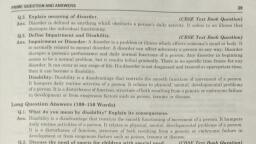
onious, , development. Nobody nts, wants any hindrance, her lite, life. We all want to, , ain harmonious, , a, , or, , the, obstacle in, , and pleasure. However, , h i s / h e r, , of, way, , neople who are unable, , people, , are, there, , enjoy life, which is full of joy and, to meet their desires and longingspie, due, , to a disability, , Generally, it is seen that these two words, i.e., disability and als, , o rd i s o r d e r ., , orchangeably., rchangeably. However, it is not right. So, it is essential to understand the exac, , usedin, , of these, , meanings o fthese, , two terms., , Meaning of Disability, mental,, , bility is, , Disability, , etc., , physical, ete., , impairment that may be cognitive, developmental, intellectual., amount., It affects everyday activities of the individual to a considerable, , an, , It, , nas, , individual from birth or occur during one's lifetime. Disability, present, restricts, in different societies of the world. Disability is an injury that, different m e a n i n, meanings, iferent, causea, or movements of an individual. It is the consequence of an impairment, functions, the, does not, It can be said that it is essentially a medical condition which, individual., an, may be present, , in, , an, , to, , permit a n, , Disability, , individual to, means, , perform any activity or movement in a, , inabihty to do work. In, , normal way., , fact, it is the state of an, , individual, when he/she, , annot work efficiently., , Disability is the, , reduction, , of functional ability to lead daily fruitful life.", , is a restriction or lack (resulting from, "A, According to World Health Organisation, disability, the range considered, to perform an activity in the manner or within, ability, of, impairment), normal for a human being.", developmental, intellectual, mental,, "Disability is an impairment that may be cognitive,, these. It substantially affects a person's life, combination, , of, physical, sensory or some, or occur during a person 's lifetime.", activities and may be present from birth, an individual's ability, A disability is a functional limitation or restriction of, , to, , perform, , an activity., obstructions in normal functions, that it is an impairment that creates, restricts the activities of a person., movements of an individual. It limits and, , or, , lt means, , Meaning of Disorder, Disorder is, , usually used for mental, , disabilities. Disorder is any ailment that disturbs, , The health of an individual. Most probably, disorders create hindrance in an individual's, performance and reduce his efficiency. In the beginning, disorders seem to be ordinary, 0ut they usually grow or spread in a harmful manner in an individual. Most probably, a, sorder cannot be detected on time, as a result of which, a simple disorder is changed into, a disability., t can be said that a disorder disrupts the normal functioning of an individual., , srder can be defined as blip in the usual functioning of a person., PHYSICAL EDuCATION AND SPORTS FOR..
Page 3 :
TYPES, , 4.2, , OF, , DISABILITY, THEIR, , DISABI1LITY,, , INTELLECTUAL, , Types of Disability, R b i l t y orcurs, , nre, the, , dsnbled, course, , ity,, , right, , many ways and, , nt, , are, , with, , disabled, , get, three types, , obstruction, , affect, , for, , an, , an, , Indeed. it is, , a, , neurological, , store. process, individual to, , ot, , rURE (coGNt, (COGNIT, NATURE, , DISABIL, , DIS, , PHYSICAL, , varied, , there, of their lives. Mainlv,, disability., and physical, intellectual disability, , Cognitive Disability:, , Can, , DISABILITY,, , to individuals in, individuals, birth while other, , below, ., , AND, , CAUSES, , severity., , Some, Some indi.., individi,, , some events, ents ddur,, such as c, disabilities a, r e d., are, , owing t0, , disabilities, , These, , disorder, , descri}, , that creates hindn.., cance, rmation. This di, disa, , information., and produce, , capability to, individual's ability or, , read, compute,, , disability, , because, , speak and, unlike, , write, , So,, , other, other disal, disabili, , invisible, be called, disability c a n also, at the individual,, of, type, condition by just looking, the, a, s, s, e, s, s, able to, have tollowing symptoms, vou may not be, of disability, usualy, , the, , individuale, , Gen, , who have this type, problems, who has auditory, An individual, , or, , era, , difficult, , s a w s o m e time ago., heard, said or, that he/she, something, attons, remembering, may not have, with cognitive disability, individual, An, at o n e place. As a matter, (ii) Hyperactivity:, finds it difficult to stay, He/she, for a long period., c o n c e n t r a t i o n frequently., he/she usually loses, It, an, disability may exhibit dyslexia., individual with cognitive, An, etc., (iit) Dyslexia:, in writing, reading, speaking,, difficulty, have, he/she may, characterised t, Intellectual disability is a disability, , ), , Memory, , Disorder:, , of, , mea, , 2. Intellectual, , Disability:, , learning, probler, in intellectual functioning (reasoning,, significant, of everyday social a, behaviour, which covers a range, in, adaptive, and, solving), processe, is related to the individual's thought, practical skills. Indeed, this disability, and judgement. It also include, communication, money, learning, problem solving, disabilities such #, to the individual's social, related, is, which, psychiatric disability, the age:, intellectual disability begins before, beheviour, emotions and thinking. The, limitations both, , 18 year., , individual's physie, A physical disability is a limitation on a n, Disability:, Physical, 3.functioning. mobility, dexterity or stamina. Other impairments such as respirat, dieorders, blindness, epilepsy and sleep disorders, which limit other facets of aau, life are als0 included in physical disabilities. Physical disability may either be mo, deficieney (mobility impairment) or a sensory impairment. Motor deficiency 1s rela, , tu spinal cord, causing paralysis to some or all the limbs i.e., hands and legs., , ma, birt', , aiso be related to brain damage, which may occur before birth, during or art, or, , after, , a, , stroke., , mparmente., , Sensory impairment is related, , In bimple words, a, , to an, , individual's, , physical disability is one, , mobiity or dexterity., , SAABWAT HEALTH AND PHYSICAL, EDuCATION-XII, , visual, , or, , t h a t affects a, , hearik, p, , son
Page 4 :
CausesofD, Disability, Ca, arious causes of dinnbility that are stated below., T h e r ea r e v a r i, , netic, Causes: Some, etic Car, , known to be inherited such as spinal muscular, 11ophy, and muscular dystrophy. Abnormalities in genes and genetic inheritance c a u s e, atrophyand., intellectual, disability in children. Sometimes, diseases, illnesses and o v e r exposure to, ectual dis, c a u s e genetic disorder., -rays may, Poverty 18 one of the major causes of disability. Generally, it is seen that, Poverty:, P, o, 2., , disabilities, , are, , sons are the most vulnerable to disability because they live and work in unsate, with poor sanitation. They don't have good living conditíons. They usually, , poor, , anvironment, , nutrition. Owing to, hoRe conditions they fall prey to such diseases that lead them towards disability. Many, be born with disabilities. This may be because they did not get enough, have, , little, , access to, , education, safe drinking, , water and proper, , habies may, , nutrition during gesttation., , such as depression, bipolar, Mental Health Problems: Mental health problems, the causes of mental health, disorder, etc., may lead to disability. As a matter of fact,, difficult to diagnose. They tend to be some of the most misunderstood, problems are very, disabilities., , Accidents: Nowadays, life is, , so, , fast that accidents may, , at, anyone. These accidents may happen, accidents may lead to disability., to, , workplace,, , occur, , on, , anywhere, anytime and, , the roads, , or, , in the air. These, , disabilities. If the immunity, to fall sick or contact more serious illnesses., power of a child is low, he is susceptible, infectious diseases like, If a child is not immunised well, he becomes vulnerable to, which can cause hearing impairment or polio, which c a n cripple the child., , also, 5. Infectious Diseases: Infectious diseases may, , cause, , mumps,, , 6. Disturbance in Endocrine Glads: Disturbance in endocrine glands may also lead, to disability. Owing to such disturbance, a child may suffer from various physical and, , mental deficiency., 7. Malnutrition: Malnutrition is another significant cause of disability, especially in, Our country. If a child does not get appropriate nutrition, he may be physically weak., deficiency of calcium leads to malformation of bones. Deficiency of iodine may, , ven, , diminish the growth of body. Similarly, deficiency of vitamin "A' may cause blindness, , in children. Deficiency of vitamin B, may lead to loss of memory and cause paralysis., d. Foor Approach to H e a l t h Care: Many disabilities can be prevented easily if there, , 1s proper access or approach to health care facilities. Sometimes, good health care, Tacilities are not available during difficult labour and birth. It may cause a baby, , o, , born with a disability such as cerebral palsy. Professionally trained persons, d handle such emergencies. They can prevent babies from being born with such, TDties. Proper immunisation can also help in preventing many disabilities., p e o p l e who live in remote areas, do not have proper access to health care, , facilities, nd thus, sometimes babies suffer disabilities., PHYSICA, , EDucaTION, , AND, , SroRTs, , FOR.., , 99
Page 5 :
9. Nuclear, , Accidents: Many persons have suffered after being exposed, , rad, , to, , because of accidents in nuclear power plants in USA and Ukraine in 1979, and, respectively. It also happened in 1945 in Japan during IInd World War., M, places, there has also been an increase in the number of children born with co, gni, disabilities such as Down Syndrome., 10. Toxic Materials Pesticides and Insecticides: Toxic materials like, , lead, , mercury, ete. found in various products, use of insecticides and pesticides and, , harmful chemicals may cause disabilities in people and birth defects in babies, matter of fact such toxic materials may cause damage to brain which ultimatelv, e, to disabilities., , 11., , Illnesses: The illnesses like, , cancer,, , heart attack, diabetes, etc.,, , cause a, , numhe, long-term disabilities. Arthritis, back pain, musculoskeletal disorders. etc. are, significant causes of disability. Some illnesses to pregnant woman may cause phis., or learning problems to her baby when born., , 12. Lack of Education: Lack of education may lead to disability. Generally. labou, are not educated. They fall prey to certain diseases which can be avoided by u, , scientific methods or by taking precautions. But due to ignorance they do not a, such precautionary methods. Hence, their chances to get a disability are on the re, 13. Wars: It is usually seen in wars that the most of the civilians are killed or disat, , along with the soldiers. omb explosions cause people to become deaf, dumb ands, their limbs. Not only the physical health but mental health of the individuals is a, , badly affected by nuclear, biological and atomic weapons., 14. Medicines and Vaccines: No doubt medicines and vaccines, , essential to prot, ealth and prevent disability but there are a number of practitioners in the medi, are, , field who are not qualified or registered. They don't take proper care while dea, , with patients. The use of unclean syringes may cause serious diseases like, hepatit, HIVAIDS. Improperly stored as well as wrong vaccines may cause, allergic reac, poisoning and deafness to child., 15., , Dangerous Working Environment: If individuals work in factories,, mine, agricultural fields under improper working environment, they may be, , expos, , dangerous machinery, tools or chemicals and wide variety of health hazards. In s*, conditions they may get disabilities on the, , long-run., , 43 TYPES OF DISORDER, THEIR CAUSES AND NATURE (ADHD. "S, , ASD, ODD. OCD), The types of disorder, their, , C, causes, , and nature, , are, , stated below., , Attention Deficit Hyperactivity Disorder (ADHD), , Attention, , deticat, , irnattentivenees,, RANWAT, , hyperactivity disurder is a group of behavioural, nyperactuvity and impulsiveness. In fact, it is symptoms that, a medical, cond, HATH, , AND, , PHYSCAL, , E»uCATON-XII, , Inch
Page 6 :
h o w, , well, , aftects, , sit still, focus, Generally, ADHD affected, , can someone, , sfeattention., , differences in the parts of their, control activity and attention. It, such individuals may have some, , have, c h i l a, , chthat, , brains t h a t, , means t h a t, , mes focussing in some activities. They may, p, , r, , o, , b, , l, , e, , m, , s, , peractive, , e, , or, , may, , be, , unable, , to, , control their, , i m p u l s e s ., , Symptoms ofADHD, symptoms, Thereaare, diffe, r e different, children, , and adults which are, , of ADHD in, , stated, , disorder, Attention deficit hyperactivity, , below., , Symptoms in Children, , about daily activities., They usually forget, routine activities., Therhave difficulties in organising, , 3.They usually indulge in daydreaming., activities that, , the, 4.Theydo not like to perform, distracted., 5.They are easily, 6. They usually bounce when sitting., , require sitting still., , .Theybecome restless., , . They have some problem in playing quietly., , Theyusually talk excessively., , make careless, hey do not pay attention and usually, , mistakes., , Symptoms in Adults, ,ptoms may, , change with the, , advancement of age. In, , adults, following symptoms, , may, , De 90served., , hey may have anxiety attacks., , eymay be impulsive., ey may have problem in controlling anger., , bey usually have low self-esteem., hey usually remain unorganised., e y are, easily frustrated., , ModWings and depression are common in such adults., , &, , hey aveproblem in concentrating, especially while reading, U5e of ADHD, , ex.at cau, , AD areause, t of ADHD is unknown but, , some, , factors that may have, , some, , role to, , play, , in, , stated below., there is a strong genetic link, Research studies have indicated that, Factor:, A, t 16 not a disorder that is passed socially. Research studies indicate that, PHYSICAI. EDuCATION AND SPorTs FOR.., , 101
Page 7 :
with ADHD may be un toi, up to five, parents, siblings and children of people, ti th, to have the disorder than people who are not related to someone wimes, , mes moe, , 2. Brain Injuries: When a baby's brain is damaged before, after, or after, efore or, to develop ADHD later on., the, , baby, , more, , likely, , ADHD, , birth. it could, , 3. Low Birth Weight: It is observed that children with low birth weioh, aremore, to develop ADHD., , 4. Trauma and Brain Diseases: Trauma during birth and brain diso, , diseases may, , to ADHD., , 5. Lack of Discipline in the F'amily: Research studies conducted :, , indicate that lack of discipline in the family and chaotic family life may be tis field, , ADHD in a family. In fact, lack of harmony in family, lower socio-economicthe Cau, , status;, , hostile relationships between parents and children are also causes of ADHD, , 6. Diet: There are a number of evidences which show that taking a partieula, ular, food or food additives play a significant role in causing ADHD., 7., , t, , toxic substance mav ale., lee, disorder. Smoking, alcohol or drug abuse during pregnancy may cause ADH, , Exposure, , to Toxic Substance:, , Exposure, , to, , some, , the offspring., , Sensory Processing Disorder (SPD), Sensory processing disorder is a condition in which the brain has difficulty in receivina, responding to information that comes in through the senses. In fact, it refers to ther, the nervous system receives messages from the senses and then turns them into pr, motor and behavioural responses. Generally, all the activities such as reading a bod, riding a bicycle requires accurate processing of sensation. It is some sort of neuru, , traffic jam that prevents certain parts of the brain from receiving the information requ, to interpret sensory information accurately., , SENSORY PROCESSING DISORDER, O rm o v e m, , Sensory processing disorder may affect a sense such as touch, sight, taste, , when tou, In this disorder, the person may, may, ouls, outs, blower, or may vomit or dive under the table after, ofa, leaf, sound, hearing the, window. In some cases, the person with SPD may remain unresponsive , nvthins, ain., him. Even he may 1all to give any response to extreme heat or cola, OP, , It may also, , affect multiple, , scream, s c r e a m, , senses., , aru, , 102, , SARASWATI HEALTH, , AND, , PHYSICAL, , EDuCATION-XII
Page 8 :
Causes, , of Sensory, , ACCurate, , Processing Disorder, , Theaccurate.cause for, , sensory, , processing disorder is still unknown. However, some of the, , potential causes are stated below:, 1., , Genetic Cause: Research studies indicate that children born to adults who, autism spectrum disorders (ASD) may be at the higher risk for developing, , have, , SrD, Scientists allude that the cause of SPD are coded into the child's genetic materia., , 9. Low Birth Weight: Low birth weight is also considered one of the causes of sensory, processing disorder., , 3. Environmental Factor: Usually, children who are adopted often experience sensory, processing disorder due to some restrictions in their early lives or poor prenatal care, 4. Physical Cause: Research studies have indicated that individuals with SPD have, abnormal brain activity when exposed to certain stimuli. Individuals with SPD, , have differences in brain structure which provide a biological basis for the onset, , of this disorder., , Autism Spectrum Disorder (ASD), Autism spectrum disorder is a disorder that, affects development. Here, the word spectrum, , refers to the range of symptoms and their, severity. Generally, the young children with, ASD have difficulties with communication,, language, social skill and behaviour. In, other words, autism spectrum disorders are, , characterised by social interaction difficulties,, communication challenges and a tendency to, engage in repetitive behaviours. As a matter of, , fact, children with ASD may behave differently, , A child with autism spectrum disorder (ASD), , or repeat same activities over and over again, ike touching the same object repeatedly. However, all the children with ASD don't have the, same problems or behaviours. Usually, the affected children with ASD may show symptoms., , They avoid eye contact and prefer to be alone. They don't like to be embraced. They repeat, Words and actions. They feel difficulties in expressing their needs and emotions. They are, , very sensitive to taste, smell and sound., , Causes of Autism Spectrum Disorder, Fesearch studies show that there is no single cause of this disorder. However, the available, from different sets of casual, ata related to this field suggest that this disorder results, actors such as genetic and environmental., ienetie Factors; Genetic problems seem to play a significant role in ASD. These, , problems can happen in two ways., The first is that something happens during fetal development that alters a gene., , ne second way is that the child inherits problematic gene/genes from one or both parents., PHYSICAL EDUcaTION AND SPoRTS FOR., , 103
Page 9 :
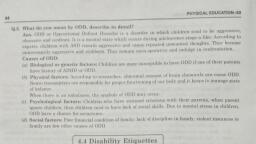
likely to have ASD if a parent is affected with, with ASD., n fnct that at lenst 10% children with ASD have a form of genetic disorder such, , That is why, , a, , child is, , Ac, , more, , Down Syndrome., , In fact, there 18 no solid evidence to show that ASn, 2. Environmental Factors:, environment like diet or exposure to certain drugs, ugs or, CAused by anything in the, levels, to, of, high, pesticides, that mothers exposed, les, However, it is also averred, a child with ASD., of, risk, having, a, pollution may also be at higher, brain of children u iith, sl, It has been observed that the, 3. Brain Development:, children. In such children, brain grows at a, develops differently in growing childhood., Such children have more cells tha a the, three years of, rate during the first, between the cells are not proper. It may be one aof t, require. Even the connections, , that ASD cani, o, toxin, and, , causes of ASD., , mind that these factors, by themselves, don't cause, It is important to keep in, factors, they appear to increase risk., Rather. in combination with genetic, , as., , itisn, , Disorder (ODD), Oppositional Defiant, , Oppositional defiant disorder is, , a, , set, , or, , called, of behavioural disorders, is called, disruptive behaviour disorders. It, who have, by this n a m e because children, these disorders always tend to disrupt those, , group, , around them., , Oppositional defiant disorder, , of the most c o m m o n mental health, disorders found in children and adolescents., , is one, , Physicians define this disorder, , as, , a, , pattern of disobedient, hostile and defiant, behaviour directed toward authority, figures. Individuals affected by this disorder, , usually behave like rebel,, , argue with, , A child with ODD (oppositional defiant, , disorder, , adults, refuse to obey and are obstinate. They exhibit angry outbursts and have hard, n, , controiling their anger or aggression. It has also been seen that even children ot De, , behaviourcan be uncooperative and hostile at times. Such children argue with parents, defy authority from time to time, specially when they are tired, hungry or under stres, Lension. The children affected with ODD show various symptoms. They refuse to co, , with requests. They deliberately annoy and upset other individuals. They also trytobitude, , other individuals for their mistakes. They show resentment and have revengeful att, , They have difficulty in making friends and have low self-esteem. They have negativi, their behaviours. They display angry and irritable moods as well as vindictive beha, 7, , Causes of Oppositional Defiant Disorder, In fact, there is no specific or clear-cut cause of oppositional defiant disorder. It 15, , o, , u, , s, , e, , bebeved that a combination of various factors such as biological or genetic, p n h, , pEychological, social risk factors play a significant role in the development of ODD, VArious causes/factors of ODD are described subsequently., , 104, , SARASWATI HLALTH AND PHYSICAL EDuCATION-XII
Page 10 :
1.Biological or Genetic Factors: Children are more usceptible to developing ODD, affected, a parent with a history of ADHD or ODD. Also, children may be, 1.e, i ftheyhave, toxins or, th ODD if their parent had depression or bipolar disorder, or posure to, poornutrition., , Factors: "The presence of ODD traits, Dhysical, P abnormal amounts of some brain chemicals., 2., , existence, have been linked to the, These brain chemicals, known as, , activities and, responsible for proper functioning of our body, balance in our brain. When an, well-being to have them in a state of, or, with other parts, and, are not communicated properly, , of, , neurotransmitters,, , are, , best for our, imbalance exists, , it is, , messages, the symptoms of ODD may, , occur., , brain,, have good relation, Factors: Children may develop ODD if they don't, relationships., 3. Psychological, to develop social, or have neglectful parents or have inability, parents, with, inconsistent discipline,, defiant disorder may be due to, family and exposure, , Factors: Oppositional, 4. Social, environment in the, chaotic, diyorce, poverty,, , Disorder (OCD), Obsessive Compulsive, disorder, , is, , a, , to violence., , mental health disorder that affects, , people of all, , ages, obsessions and, , Obsessive compulsive, in a cycle of, life. It occurs when an individual gets caught, of, walks, constant thoughts of, and, with OCD are plagued by, that, persons, said, be, can, a r e called, compulsions. It, routines. The disturbing thoughts, them to perform rituals, , or, , fears that cause, called compulsions., obsessions and rituals are, of mental disorder, In simple words, OCD is a type, To get, that causes repeated unwanted thoughts., the, rid of the unwanted thoughts, he/she performs, For example,, same task/activity again and again., person may fear that, nas germs, it. So, to, , a, , on, , touches, , everything he/she, fear, get rid of that, , he/she, , Persons, his/her hands again and again., understand that their, Buifering from OCD might, to stop or, OD8essions are unreasonable, but trying There, are, gnore them causes anxiety and stress., , washes, , 8Ome symptoms of OCD, which may range rom, and compulsions, Bevere. Some of the obsessions, , OCD-washing hands repeatedly, , are, , mentioned below., , Main obsessions, A fear of harm to yourself or loved one., , A fear, of contamination by germs., ti) Aforceful or driving need to perform things perfectly or correctly., , iv) Having excessive doubton any individual., , ), , A fear of, beingembarrassed., , Afear of, ) Afear of getting dirty., making mistakes., , PHYsICAL EDuCATION AND SPoRTs FOR.., , 105
Page 11 :
Main compulsions, , ), , Repeating things or always moving items to keep them in exact order., , (ii) Bathing or washing hands several times., iii) Checking things over and over again., , iv) Repeating specific words., (v) Hoarding., (vi) Constant praying., (vii) Persistently counting while doing usual tasks., , Causes of Obsessive Compulsive Disorder (OCD), The exact cause of obsessive compulsive disorder is still unknown. Researo, h, suggest that there may be a problem with the way one part of the brain sends info, to, , another part. Serotonin is the chemical in the brain that sends messages from, , stu, , one, , to another. Insufficiency of serotonin may help in causing OCD. Stress and anxiety d, , do ta, , cause OCD but they may worsen the symptoms of OCD., Recent studies have indicated that there may be considerable genetic basis for, Depression is also thought to be the cause of OCD but the experts' opinion is split,, , s, , OC, , 4.4 DISABILITY ETIQUETTES, Disability etiquette is, , a, , guidelines dealing specifically with how to approach person, knowing about disability etiquettes, it is essential to understani, , set of, , with disabilities. Before, , certain basic things such as if someone has a disability don't assume he/she needs help.k, fact, adults with disabilities want to be treated a s independent persons. So, offer help, if the person with, , disability, , need it., , seems to, , Physical, , contact should be avoided., , on, Alway, , speak directly to the person with a disability, not to his/her friend. Persons with disabilitie, are, , the best, , judge, , of what they, , can or, , can't do., , General Disability Etiquettes, The, 1., , general disability etiquettes, , are, , stated below:, , Always put the person first, i.e., say 'person with disability' rather than 'disable, person'. Always avoid the outdated words like handicapped, retarded, physicay, challenged or differently-abled. For example, refer to 'person who are blind' ratne, , than blind person'., 2. In, , case, , of introduction to, , a, , person with, , a, , disability, it is appropriate to shake hana, always identify yourself and otne, , 3. When you meet a person with a visual, impairment,, who may be with you., 4. Leaning or hanging o n a person's, wheelchair, act is, , should always be avoided, , space of the person who uses it., 106, , because s, , generally considered annoying. In fact, the chair is the part of the personal, , SARASWATI HEALTH, , AND, , PHYs1cAL EDUCATION-XII
Page 12 :
ully as well as attentively when you are having conversation with a, Arays listen carefull, , wh, o has, has difficulty in speaking. Have patience and wait for the person to finish, who, than correcting or speaking for that person. Generally, ask short questions that, , r a t h e rt h a n, , i r e short answers., , ben talking with, who, wheelchair, talking, n, a person who is, Ourself at eye level in front of the person to facilitate the talk., on a, , or a person, , uses, , crutches,, , yourself a, , keep, , t h e attention of a person who is deaf or having hearing impairment, tapt, the person ana, non the shoulder or wave your hand. You should look directly at, , person, , speakclearly., , aer patronize person who use wheelchairs by patting, , them, , on, , the head, , or, , shoulder., , troduce yourself to persons who are blind using your name, , Aways intro, ., , 1fou need, him if he, , to leave a person who, , is, , blind,, , inform him that you, , are, , leaving and, , ask, , needs anything before you leave., , individual who is differently-abled., asking personal questions to an, avoid, something., Alwars, disability to do or to say, additional time to a person with any, to such, Aiwaysgive, Don't talk in high pitch, normal tone, , Awarshave, , conversation, , individuals., , Don't pretend, , of voice., , ata, , to understand, , if you are facing problem, , PHYSICAL ACTIVITIES, ADVANTAGES OF, SPECIAL NEEDS, , significant, , as, , well, , as, , in, , doing so., , FOR CHILDREN, , WITH, , life of children with, children, physical activities for, , positive role in the, , iel activities can play, evidence to support, that, a wealth of, studies have revealed, Ral needs. In fact, there is, decades a number of, three, children, cdisabilities. During the past, of life among, functional status and quality, TCal activities result in improved, a, , special needs., , with special, benefits for the children, significant, provide, for children with, of physical activities, , can, physical activities advantages/benefits, Folowing are the, l needs., , ysical, , disabilities, , are, , most, , cognitive, Children, who suffer from, Improvemnents:, children have substantial, as well. These, , activities, physical impairments, etc. Involvement in physical, jumping,, hopping,, fitness skills., 9Dlems with motor skills in, fundamental motor and physical, develop, help these individuals to levels of well-being and physical health. Physical, activities improve the, strength, endurance and, coordination, flexibility,, ectivit, with disabilities to fight, eg enhance the hand-eye, activities help children, These, diseases. In fact, physical, Cardiovascular efficiency., and other lifestyle, as obesity, such, and better overall fitness., gainst problems, , ely to suffer from, , healthier bone density, tivitie, maintaining, in, help, not only good for a, , ental, he are, , mprovements:, , Physical, , activities are, , too. In fact, physical, for their mind, needs., children with special, , activities, , child's, , body but, , improve general, , e beneficial, awellness of, , PHYSICAL EDUCATION AND SPORTS, , FOR..., , 107
Page 13 :
3. Self-esteem: Physical activities are beneficial for children with special needs, as ho, becau, , such activities develop a sense of self-esteem and self-confidence. As a matter of, interaction and involvement with other students in physical activities help, elp, , to gitag, , children a sense of accomplishment and confidence., 4. Reduce the Level of Anxiety, Stress and Depression: Physical activities may h, he, in reducing the level of anxiety, stress and depression of children with, es, 5. Cognitive Benefits: Physical activities lead to cognitive skill improvement in chili, , disabilitie, , with disabilities. These activities allow them to discover and access strengths t, , cannot be challenged in the classroom setting., , the, , 6. Improved Social Interaction: Physical activities provide ample opportunities, improving social interaction among children with special needs. Social relationsa, , s are, , developed during involvement in physical activities., 7. Better Emotional and Psychological Health: Physical activities are benefic, , ficu, , for children with special needs because such activities improve emotional a, psychological health., , 8. Reduce Risk of Health Complications: Physical activities are beneficial, children with special needs because these activitios reduce or decrease the iske, various health complications like high blood pressure, diabetes and at the same, tine, improve appetite and quality of sleep., , 4.6, , STRATEGIES TO MAKE, , PHYSICAL ACTIVITIES, CHILDRENWITH SPECIAL NEEDS, , Children with special needs, , or, , hearing impairment, speech, , ACCESSIBLE FOR, , with various types of disabilities such, , as, , mental disabilit;, , language impairment, blindness, autism or poor bo", mechanics, health impairment, etc., have the right to, develop their abilities in a democra", or, , society through the process of education., , So, the following strategies should be taken into, consideration to make physical activiu, accessible for the children with special needs., 1. Medical Check-up: First of, all, it is essential to have a medical check-up of al, children with special needs or with various, disabilities. Because without dica, check-up, the teachers of physical education cannot come to know about themeaped, ty, disability the child is facing. Indeed, if we really want to make, ivities, physical, ac, ype a, accessible for the children with special needs, we need to, the, understand, disabilities of the children., 2. Physical Activities Must Be Based on, Interests of Children: Indeed, pny, ant, activities must be based on the interests,, , y'sica, , aptitudes, abilities,, limitations of children with special needs. So, the teachers of previous experiea, physical educatlob, have a deep knowledge of limitations, interests and, aptitudes of children., , thal, , AT easi, physical activities can be made accessible for children with 8pecial needs more, more, dso, , 3., , Equipment Related to Physical Activities Should be According to the Ner, , Children: The equipment/objects related to physical activities should be accor, the needs of children. These equipment should vary in size, shape, colour and, , 108, , SARASWATI HEalLTH AND PHYSICAL EDUCATION-XII
Page 14 :
child, be necording to the, capability and level of children. A, visual impairment should use bright coloured ball. A yarn should be tied to tne, , equipnent should, , Thesee q u i p m o n t, , these, , wth, , alto, , ball back to children. So, various types of equipment, the, with special neods., , wll to brin, bring, to, , children, , must, , be provided, , activities, Specific Environment Should be Provided: The area of physical, are, hould be limited as movement capabilities of children with special needs limitea, playing, Sped, , who have autism, they must be provided specific, vital for, need some time to relax. Light and sound are also, may, they, because, aw, environment for such children., making good, Instructional Strategies Should be Used: For performing, AVariety of Different, strategies such, activities, a variety of different instructional, of, physiCal, various types, children the opportunity, visual and peer teaching should be used. It can give, as verbal,, Pictorial books are also, own and become more independent., their, on, to start learning, activities., vital in terms of înstructions regarding physical, with Disabilities:, to the Needs of Children, &Rules Should be Modified According, on these, activities should be simple but later, In the beginning, rules of the physical, extra, children. They can be provided, the, of, needs, to, the, rules can be modified according, additional resting, can also be given, a physical activity. They, to, time, perform, or, attempt, , Aeialy, in case of ehildren, , time before, i., , doing the ext physical activity., , be Taken into, , Consideration:, , For making, , Children's Previous Experience Must, the concerned teacher, for children with special needs,, accessible, more, activities, physical, and knowledge of, comprehensive understanding, have, should, education, ot physical, activities., cmldren's previous experience about physical, are significant to, above mentioned strategies, in conclusion, it can be said that the, needs., ake, , physical, , children with, activities accessible for, , special, , Exercises, etve, , Type/Multip, ive one, , Choice Questions, , (Carrying 1 Mark), , word answers., , Which type of, disability, , information?, , Which, p e ofdisablity, , can, , reates hindrance, , for, , an individual, , to store, process and, , produce, , to read, compute, speak and write?, affect individual's ablty, , or stamina?, hichYpe, t, indivldual's physlcal functioning, mobllity, an, limits, ofdisability, S. In, and pay attention properly?, which rder,, children cannot sit, focus, disorder,, Mh, chlldre, In receiving and responding to information that, disorder the brain has difficulty, of, ype, Somes, , in, , n, , through, , around them?, which disorder senses, tend to disrupt those, hlldren, always, chile, , hich disorder causer, , repeated, the, ve thefcauses, full form of, ADHD., We the, full form of, ODD., , unwanted thoughts?, , PHYSICAL EDUCAriON AND SPOrTs FOR., , 109