Page 1 :
NATIONAL INCOME AND RELATED AGGREGATES:, , KEY CONCEPTS, • Macro Economics: Its meaning, • Consumption goods, capital goods, final goods, intermediate goods, stock and flow,, gross investment and depreciation., • Circular flow of income, • Methods of calculation of national income, • Value added method (product method), • Expenditure method, • Income method, • Concepts and aggregates related to national income, • Gross national product, • Net National product, • Gross and Net domestic product at market price and at factor cost., • National disposable income (Gross and net), • Private income, • Personal income, • Personal disposable income, • Real and Nominal GDP, • GDP and welfare, Macro Economics: - Macroeconomics is the study of aggregate economic variables of an, economy., Consumption goods:- Are those which are bought by consumers as final or ultimate goods to, satisfy their wants., Eg: Durable goods car, television, radio etc., Non-durable goods and services like fruit, oil, milk, vegetable etc., Semi durable goods such as crockery etc., Capital goods – capital goods are those final goods, which are used and help in the process, of production of other goods and services. E.g.: plant, machinery etc., , Final goods: Are those goods, which are used either for final consumption or for investment., It includes final consumer goods and final production goods. They are not meant for resale., So, no value is added to these goods. Their value is included in the national income., Intermediate goods intermediate goods are those goods, which are used either for resale or, for further production. Example for intermediate good is- milk used by a tea shop for selling, tea., Stock: - Quantity of an economic variable which is measured at a particular point of time., Stock has no time dimension. Stock is static concept., Eg: wealth, water in a tank.
Page 2 :
Flow: Flow is that quantity of an economic variable, which is measured during the period of, time., Flow has time dimension- like per hr, per day etc., Flow is a dynamic concept., Eg: Investment, water in a stream., Investment: Investment is the net addition made to the existing stock of capital., Net Investment = Gross investment – depreciation., Depreciation: - depreciation refers to fall in the value of fixed assets due to normal wear and, tear, passage of time and expected obsolescence., Circular flow in a two sector economy., Payment for goods and services (Money Flow), , Firms, , Supply of goods and services, (Real Flow), , House hold, , Supply of Factors of Production (Real Flow), , Payment for Factor services (Money Flow), , Producers (firms) and households are the constituents in a two sectors economy., Households give factors of production to firm and firms in turn supply goods and services to, households., , Related aggregates, Gross Domestic product at market price, It is the money value of all final goods and services produced during an accounting year with, in the domestic territory of a country., Gross National product at market price:, It is a money value of all final goods and services produced by a country during an, accounting year including net factor income from abroad., Net factor income from abroad:, Difference between the factor incomes earned by our residents from abroad and factor, income earned by non-residents with in our country., Components of Net factor income from abroad, • Net compensation of employees, • Net income from property and entrepreneurship (other than retained earnings of, resident companies of abroad), • Net retained earnings of resident companies abroad
Page 4 :
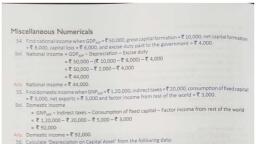
Concept of domestic (economic) territory, Domestic territory is a geographical territory administered by a government within which, persons, goods and capital circulate freely. (Areas of operation generating domestic income,, freedom of circulation of persons, goods and capital), Scope identified as, *Political frontiers including territorial waters and air space., *Embassies, consulates, military bases etc. located abroad but including those locates within, the political frontiers., *Ships, aircrafts etc., operated by the residents between two or more countries., *Fishing vessels, oil and natural gas rigs etc. operated by the residents in the international, waters or other areas over which the country enjoys the exclusive rights or jurisdiction., Resident (normal resident):Normal resident is a person or an institution who ordinarily resides in that country and, whose center of economic interest lies in that country., (The Centre of economic interest implies :-( 1) the resident lives or is located within the, economic territory. (2) The resident carries out the basic economic activities of earnings,, spending and accumulation from that location 3. His center of interest lies in that country., Relation between national product and Domestic product., Domestic product concept is based on the production units located within domestic, (economic) territory, operated both by residents and non-residents., National product concept based on resident and includes their contribution to production both, within and outside the economic territory., National product = Domestic product + Residents contribution to production outside the, economic territory (Factor income from abroad) - Non- resident contribution to production, inside the economic territory (Factor income to abroad), Methods of calculation of national income, I - PRODUCT METHOD (Value added method):, • Sales + change in stock = value of output, • Change in stock = closing stock – opening stock, • Value of output - Intermediate consumption = Gross value added (GDPMp), • NNP Fc (N.I) = GDPMp (-) consumption of fixed capital (depreciation), (+) Net factor income from abroad, ( -) Net indirect tax.
Page 5 :
Income method:, 1. Compensation of employees., 2. Operating surplus : Rent, Interest, Royalty and Profit, 3. Mixed income of self-employed., • NDP fc = (1) + (2) + (3), • NNP fc = NDP fc (+) Net factor income from abroad, • GNP mp = NDP fc + consumption of fixed capital + Net indirect tax, (Indirect tax – subsidy), Expenditure method:, 1. Government final consumption expenditure., 2. Private final consumption expenditure., 3. Net Export., 4. Gross domestic capital formation., Gross Domestic fixed, +, Capital formation, GDPmp = (1) + (2) + (3) + (4), , Change in stock, , NNP fc = GDPmp - consumption of fixed capital + NFIA- Net indirect taxes, Note: If capital formation is given as Net domestic capital formation we arrive at NDPmp., Capital formation = Investment
Page 6 :
Personal Income, , PI is the income Actually, received by the individuals, and households from all, sources in the form of, factor income and current, transfers., Personal income = Private, Income (-) corporation tax., (-) Corporate Savings OR, Undistributed profits, , Private Income, , Factor income from net domestic, product accruing to private, sector, includes income from enterprises, owned and controlled by the private, individual., Excludes:1. Property and entrepreneurial, income of the Gov. departmental, enterprise, 2. Savings of the Non-departmental, enterprise, Private Income Includes, * Factor income from net domestic, product accruing to private sector., + Net factor income from abroad, + Interest on National Debt, + Current transfer from Govt., + Current transfer from rest of the, world.
Page 7 :
One Mark questions., 1. When will the domestic income be greater than the national income?, Ans: When the net factor income from abroad is negative., 2. What is national disposable income?, Ans.It is the income, which is available to the whole economy for spending or disposal, NNP Mp + net current transfers from abroad = NDI, 3. What must be added to domestic factor income to obtain national income?, Ans. Net factor income from abroad., 4. Explain the meaning of non-market activities, Ans. Non marketing activities refer to acquiring of many final goods and services not through, regular market transactions. E.g. vegetable grown in the backyard of the house., 5. Define nominal GNP, Ans. GNP measured in terms of current market prices is called nominal GNP., 6. Define Real GNP., Ans. GNP computed at constant prices (base year price) is called real GNP., 7. Meaning of real flow., Ans. It refers to the flow of goods and services between different sectors of the economy. Eg., Flow of factor services from household to firm and flow of goods and services from firm to, household., 8. Define money flow., It refers to the flow of money between different sectors of the economy such as firm,, household etc. Eg. Flow of factor income from firm to house hold and consumption, expenditure from house hold to firm.
Page 8 :
3- 4 Mark Questions, 1. Distinguish between GDPMp and GNP FC, Ans. The difference between both arise due to (1) Net factor income from abroad. and 2) Net, indirect taxes. In GDPMp Net factor income from abroad is not included but it includes net, indirect taxes., GNP FC = GDPMp + net factor income from abroad – net indirect taxes, 2. Distinguish between personal income and private income, Ans. Personal income: -It is the sum total of earned income and transfer incomes received by, persons from all sources within and outside the country., Personal income = private income – corporate tax –corporate savings (undistributed profit), Private income consists of factor income and transfer income received from all sources by, private sectors within and outside the country., 3. Distinguish between nominal GNP and real GNP, Ans. Nominal GNP is measured at current prices. Since this aggregate measures the value of, goods and services at current year prices, GNP will change when volume of product changes, or price changes or when both changes., Real GNP is computed at the constant prices. Under real GNP, value is expressed in terms of, prices prevailing in the base year. This measure takes only quantity changes. Real GNP is the, indicator of real income level in the economy., 4. Explain the main steps involved in measuring national income through product, method, Ans., a) Classify the producing units into industrial sectors like primary, secondary and, tertiary sectors., b) Estimate the net value added at the factor cost., c) Estimate value of output by sales + change in stock, d) Estimate gross value added by value of output – intermediate consumption, e) Deduct depreciation and net indirect tax from gross value added at market price to, arrive at net value added at factor cost = NDP Fc, f) Add net factor income received from abroad to NDP Fc to obtain NNP FC which is, national income, , 5. Explain the steps involved in calculation of national income through income method, a) Classify the producing enterprises into industrial sectors like primary, secondary and, tertiary., b) Estimate the following factor income paid out by the producing units in each sector, i.e., *Compensation of employees, *Operating surplus, *Mixed income of self employed
Page 9 :
c) Take the sum of the factor income by all the industrial sectors to arrive at the NDP Fc, (Which is called domestic income), d) Add net factor income from abroad to the net domestic product at factor cost to arrive, at the net national product at factor cost., 6. Explain the main steps involved in measuring national income through expenditure, method., a) Classify the economic units incurring final expenditure into distant groups like, households, government, firms etc., b) .Estimate the following expenditure on final products by all economic units, • Private final consumption expenditure, • Government final consumption expenditure, • Gross domestic capital formation, • Net export, (Sum total of above gives GDPMp), c) Deduct depreciation, net indirect taxes to get NDP Fc, d) Add net factor income from abroad to NDP Fc to arrive at NNP FC., 7. What are the precautions to be taken while calculating national income through, product method (value added method), a) Avoid double counting of production, take only value added by each production unit., b) The output produced for self-consumption to be included, c) The sale & purchase of second hand goods should not be included., d) Value of intermediate consumption should not be included, e) The value of services rendered in sales must be included., 8. Precautions to be taken while calculating national income through income method., a) Income from owner occupied house to be included., b) Wages & salaries in cash and kind both to be included., c) Transfer income should not be included, d) Interest on loans taken for production only to be included. Interest on loan taken for, consumption expenditure is non-factor income and so not included., 9. Precautions to be taken while calculations N.I under expenditure method., a) Avoid double counting of expenditure by not including expenditure on intermediate, product, b) Transfer expenditure not to be included, c) Expenditure on purchase of second hand goods not to be included., 10. Write down the limitations of using GDP as an index of welfare of a country, 1) The national income figures give no indications of the population, skill and resources, of the country. A country may be having high national income but it may be consumed, by the increasing population, so that the level of people’s wellbeing or welfare standard, of living remains low., 2) High N. I may be due to greater area of the country or due to the concentration of, some resources in out particular country., 3) National income does not consider the level of prices of the country. People may be having, income but may not be able to enjoy high standard of living due to high prices., 4) High N. I may be due to the large contribution made by a few industrialists, 5) Level of unemployment is not taken into account., 6) National income does not care to reduce ecological degradation. Due to excess of, economic activity which leads to ecological degradation reduces the welfare of the people., Hence GNP and economic welfare are not positively related. Income in GNP does not bring, about increase in economic welfare.
Page 10 :
11. ‘Machine purchased is always a final good’ do you agree? Give reason for your, answer, Whether machine is a final good or it depends on how it is being used (end use). If machine is, bought by a household, then it is a final good. If machine is bought by a firm for its own use,, then also it is a final good. If the machine is bought by a firm for resale then it is an, intermediate good., 12. What is double counting? How can it be avoided?, Counting the value of commodities at every stage of production more than one time is called, double counting., It can be avoided by, a) taking value added method in the calculation of the national income., b) By taking the value of final commodity only while calculating N.I, 6 Mark questions, 1. State whether following is true or false. Give reason for your answer., a) Capital formation is a flow, True, because it is measured over a period of time., b) Bread is always a consumer good., False, it depends upon the end use of bread. When it is purchased by a household it is a, consumer good. When purchased by restaurant for making sandwich, it is an intermediate, (producer) good., c) Nominal GDP can never be less that real GDP, False. Nominal GDP can be less than the real GDP when the prices in the base year is more, than the current year., d) Gross domestic capital formation is always greater than gross fixed capital formation., False, gross domestic capital formation can be less than gross fixed capital formation if, change in stock is negative., 2. Why are exports included in the estimation of domestic product by the expenditure, method? Can the gross domestic product be greater than the gross national product?, Explain, Expenditure method estimates expenditure on domestic product i.e., expenditure on final, goods and services produced within the economic territory of the country. It includes, expenditure by residents and non-residents both. Exports, though purchased by non, residents are produced within the economic territory and therefore a part of domestic product., Domestic product can be greater than national product, if the factor income paid to the rest of, the world is greater than the factor income received from the rest of the world i.e, when net, factor income received from abroad is negative., 3. How will you treat the following while estimating domestic product of India?, a) Rent received by resident Indian from his property in Singapore., No, it will not be included in domestic product as this income is earned outside the economic, territory of India., b) Salaries of Indians working in Japanese Embassy in India, It will not be included in domestic product of India as embassy of Japan is not a part of, economic territory of India.
Page 11 :
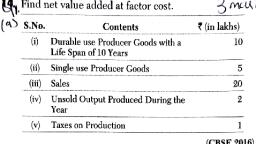
c) Profits earned by branch of American bank in India., Yes, it is included as part of domestic product since the branch of American bank is located, within the economic territory of India., d) Salaries paid to Koreans working in the Indian embassy in Korea, Yes, it will be part of domestic product of India because the income is earned within the, economic territory of India. Indian embassy in Korea is a part of economic territory of India., 4 How are the following treated in estimating national income from expenditure, method? Give reason., a) Purchase of new car by a household: purchase of car is included in the national income, because it is final consumption expenditure, which is part of national income., b) Purchase of raw material by purchase unit: purchase of raw material by purchase unit is, not included in the national income because raw material is intermediate goods and, intermediate goods and service are excluded from the national income. Purchase of raw, material, if included in national income will result in double counting., c) Expenditure by the government on scholarship to student is not included in the national, income because it is a transfer payment and no productive service is rendered by the student, in exchange., 5 Are the following item included in the estimating a country‘s national income? Give, reasons, 1) Free cloth given to workers: free cloth given to worker is a part of wages in kind i.e., compensation to employee such compensation to employee is paid for the productive services, in the economy, it is included in the national income., 2) Commission paid to dealer in old car: commission paid to dealer in old car is included in, the estimation of national income because it is the income of the dealer for his productive, services to various parties., 3) Growing vegetable in a kitchen garden of the house: growing vegetable in a kitchen garden, of the house amount to production, though not for sale for self-consumption. It is included in, the national income because it adds to the production of goods., NATIONAL INCOME – NUMERICALS, 1. Calculate Value Added at factor cost from the following., ITEMS, Rs. CRORES, a., Purchase of raw materials, 30, b., Depreciation, 12, c., Sales, 200, d., Excise tax, 20, Opening stock, 15, e., f., Intermediate consumption, 48, g., Closing stock, 10
Page 12 :
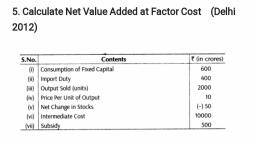
Ans:, , Sales + ∆ in stock = value of output, 200 + (cl. St – op. st), 200 + (10 -15), = 200 -5=195, Value of output – intermediate consumption, = value added at MP, 195-48 = 147, V.A at FC = V.A at MP – Net indirect tax, 147 – 20, 127 crores, , 2. Calculate (a) Net National Product at MP, and (b) Gross National Disposable Income, ITEMS, Rs. crores, a., Private final Consumption expenditure, 200, b., Net indirect taxes, 20, c., Change in stocks, (--)15, d., Net current transfers from abroad, (--)10, e., Govt. final consumption expenditure, 50, f., Consumption of fixed capital, 15, g., Net domestic capital formation, 30, h., Net factor income from abroad, 5, i., Net imports, 10, Ans: (a) + (e) + (g) + (-i) = NDP MP, 200 + 50+ 30 -10, 280 -10 = 270 crores, NNP MP = NDP MP + NFIFA, 270 + 5 = 275, NNP MP + 275 crores, GNDI = NNP PC + NFIFA + Net indirect taxes + Net current transfers from abroad +, Depreciation (comp of fixed capital), NNP MP – net in tax = 275 – 20 =255 crores, GNDI = 255 + 20 + 5 + (-10) + 15, = 295 – 10 = 285 crores, GNDI = 285 crores
Page 13 :
3. Calculate Net National Disposable Income from the following data., ITEMS, Rs. crores, a., Gross domestic product at MP, 1000, b., Net factor income from abroad, (-) 20, c., Net indirect taxes, 120, d., Consumption of fixed capital, 100, e., Net current transfers from abroad, 50, Ans: NNDI = GDP MP – consumption of fixed capital + Net FIFA + Net current transfer, from abroad, = 1000- 100 + 50 + (-20), = 880 + 50 = 930 crores, 4. Calculate Gross National Disposable Income from the following., ITEMS, Rs. crores, a), National Income, 2000, b), Net current transfers from rest of the world, 200, c), Consumption of fixed capital, 100, d), Net factor income from abroad, (-) 50, e), Net indirect taxes, 25, Ans: GNDI= (a) + (b) +(c) + (e), = 2000 + 200 + 100 + 250, GNDI = 2550 crores, 5. ESTIMATE NATIONAL INCOME BY, (a) EXPENDITURE METHOD (b) INCOME METHOD FROM THE FOLLOWING, Rs. in crores, DATA, 210, 1. Private final consumption expenditure, 50, 2. Govt: final consumption expenditure, 40, 3. Net domestic capital formation, (-) 5, 4. Net exports, 170, 5. Wages & Salaries, 10, 6. Employer’s contribution, 45, 7. Profit, 20, 8. Interest, 30, 9. Indirect taxes, 05, 10. Subsidies, 10, 11. Rent
Page 14 :
12. Factor income from abroad, 03, 13. Consumption of fixed capital, 25, 14. Royalty, 15, Ans: National Income (NNP FC), Expenditure Method, (1) + (2) + (3) + (4) = NDP MP, 210 + 50 + 40 + (-5) = 295, NNP FC = NDP MP + factor Income from abroad – net Indirect tax ( Indirect tax – subsidy), 295 + 3 – (30 -5), 295 + 3 – 25, = 298 – 25 = 273, NNP FC= 273 crores, Income method:, (5) + (6) + (7) + (8) + (11) + (15), 170 + 10 + 45 + 20 + 10 + 15, = 270 (NDP FC), NDP FC = NDP FC + FIFA, = 270 + 3= 273 crores, 6. FROM THE FOLLOWING DATA CALCULATE, (a) NATIONAL INCOME (b) PERSONAL DISPOSIBLE INCOME., 1., Profit, 500, 2., Rent, 200, 3., Private income, 2000, 4., Mixed income of self-employed, 800, 5., Compensation of employers, 1000, 6., Consumption of fixed capital, 100, 7., Net factor income from abroad, -(50), 8., Net retained earnings of private employees’, 150, 9., Interest, 250, 10., Net exports, 200, 11., Co-operation, 100, 12., Net indirect tax, 160, 13., Direct taxes paid by houses hold’s, 120, 14., Employers contribution to social security scheme. 60, Ans: NNP FC (N. I) = (5) + (9) + (4) + (1) + (2), 1000 + 250+ 800 + 500 + 200, NDP FC = 2750 crores, NNP FC = NDP FC + (7), = 2750 + (-50), NNP Fc = 2700 crores, PDI = (3) – (8) – (11) – (13), 2000 – 150 – 100 -120, PDI = 2000 – 370 = 1630 crores, 7. CALCULATE NATIONAL INCOME AND GROSS NATIONAL DISPOSABLE, INCOME FROM THE FOLLOWING DATA., Net indirect tax, 05
Page 15 :
Net domestic fixed capital formation, Net exports, Gov.: final consumption expenditure, Net current transfer from abroad, Private final consumption expenditure, Change in stock, Net factor from abroad, Gross domestic fixed capital formation, , 100, (-) 20, 200, 15, 600, 10, 05, 125, , Ans: National Income (NNP FC), = (4) + (6) + (2) + (7) + (3) = NDP MP, = 200 + 600 + 100 + 10 + (-20), = 910 -20 = 890, NDP MP = 890 crores, NNP FC = NDP MP + (8) – (1), = 890 + 5 -5, NNP FC = 890, Depreciation = (9) – (2), 125 – 100 = 25 crores, GNDI = NNP FC + Net Indirect Tax + Net Current transfers from abroad + depreciation, = 890 = 05+ 15 + 25, GNDI = 935 crores, 8. CALCULATE NNP AT MARKET PRICE BY PRODUCTION METHOD AND, INCOME METHOD, Crores, 1., Inter mediate consumption, 500, (a) primary sector, (b) Secondary sector, 400, 300, (c) tertiary sector, Value of output of, 2., 1,000, (a) primary sector, (b) Secondary sector, 900, (c) tertiary sector, 700, Rent, 10, 3., 4., 400, Emoluments of employers, 5., Mixed income, 650, 6., Operating surplus, 300, 7., -20, Net factor income from abroad, 8., Interest, 05, 9., Consumptive of fixed capital, 40, 10., Net indirect tax, 10, Ans: NNP MP by production method, (2) Value of output – (1) Intermediate conspn = value added at MP, (2) a + b+ c – (1) a + b + c, 1000 + 900 + 700 – 500 + 400 + 300, 2600 – 1200, 1400 = GDP MP, , NNP MP = GDP MP – (9) + (7)
Page 16 :
= 1400 – 40 + (-20), NNP MP = 1340, Income Method:, NNP MP = (4) + (5) + (6) + (10) + (7), = 400 + 650 + 300 + 10 + (-20), NNP MP = 1350 + 10 – 20, 9. CALCULATE GNP at FACTOR COST BY INCOME METHOD AND, EXPENDITURE METHOD., Rupees in crores, 1. Private final consumption expenditure, 1000, 2. Net domestic capital formation, 200, 3. Profit, 400, 4. Compensation of employers, 800, 5. Rent, 250, 6. Gov.: final consumption expenditure, 500, 7. Consumption of fixed capital, 60, 8. Interest, 150, 9. Net current transfer from row, (-)80, 10. Net factor income from abroad, (-)10, 11. Net exports, (-)20, 12. Net indirect taxes, 80, Ans: GNP FC by Income method, GNP FC = 4 + 3 + 5 + 8 + 10 + 7, 800 + 400 +250 + 150 + (-10) + 60, GNP FC = 1650 crores, GNP FC by Expenditure Method, GNP FC = 1 + 2 + 6 + 10 + 11 -12 + 7, = 1000 + 200 + 500 + (-10) + (-20) -80 + 60, = 1700 -110 + 60, GNP FC = 1650 crores, 10. CALCULATE PRIVATE INCOME AND PERSONAL DISPOSABLE INCOME, FROM THE FOLLOWING DATA, ., Rupees in crores, 1. National income, 5050, 2. Income from property and entrepreneurship to gov., 500, administrative department, 3. Saving of non-department public enterprises, 100, 4. Corporation tax, 80, 5. Current transfer from govt: administrative depart, 200, 6. Net factor income from abroad, -50, 7. Direct personal tax, 150, 8. Indirect taxes, 220, 9. Current transfer from Raw, 80, 10. Saving of private corporate sector, 500, , Ans: Private Income = 1 – 2- 3 + 5 + 9
Page 17 :
5050 – 500 – 100 + 200 + 80, 5430 – 500, Private Income = 4930 crores, PDI = Private Income – 4 -10 -7, 4930 -80 -500 -150, PDI = 4200 crores, 11. Calculate private income, 1. Income from domestic product accruing to private sector, 2. Net current transfer from raw, 3Net current transfer from govt: administrative dept, 4. National debt interest, 5. Net factor income from abroad, Ans: Private Income = 1 + 2+ 3 + 4 + 5, 250 + 40 + 10 + 20 + 5, = 325 crores, , 250, 40, 10, 20, 05, 12. CALCULATE NET NATIONAL DISPOSABLE INCOME AND PERSONAL, INCOME FROM THE FOLLOWING DATA, Rs. In crores, 1. Net indirect taxes, 90, 2. Compensation of employers, 400, 3. Personal taxes, 100, 4. Operating surplus, 200, 5. Corporation profit tax, 80, 6. Mixed income of self-employed, 500, 7. National debt interest, 70, 8. Saving of non-departmental enterprises, 40, 9. Current transfer from govt, 60, 10. Income from property and entrepreneurship to govt administrative, Department, 30, 11. Net current transfer from RAW, 20, 12. Net factor income from abroad, -50, 13. saving of private corporate sector, 20, Ans: NDPfc = (2) + (4) + (6), 400 + 200 + 500 = 1100 crores, NNDI = NDP fc + (12) + (1) + (11), =1100 + (-50) + 90 + 20, NNDI = 1210 – 50, = 1160 crores, , Personal Income, Ans:, Private Income = NDP FC –(8) – (10), 1160 -40 – 30=1090 crores, 1090 + 7 + 9 +11 +12, 1090 + 70 + 60 + 20 + (-50) = 1190 crores, Personal income = Private Income – Corporation Profit Tax – Savings of private corporate, sectors, 1190 – 80 – 20= 1090 crores
Page 18 :
13. CALCULATE FROM THE FOLLOWING DATA (A) PRIVATE INCOME (B), PERSONAL INCOME (C) PERSONAL DISPOSABLE INCOME., RS IN CRORES, 1. Factor income from NDP accruing to private sector, 300, 2. Income from entrepreneurship and property, 70, 3. Accruing to govt administrative departmental, 60, 4. Savings of non-departmental enterprises, 20, 5. Factor income from abroad, 35, 6. Consumption of fixed capital, 15, 7. Current transfer from rest of the world, 25, 8. Corporation taxes, 30, 9. Factor income to abroad, 10. Current transfer from govt governmental admi depart, 11. Direct taxes paid by house hold, 12. National dept interest, 13. saving of private corporate sector, Ans Private Income = 1 + 5 + 7 -9 + 10 + 12, 300 + 20 + 15 -30 + 40 + 05, Private Income = 350 crores, Personal Income = Private income – 8 – 13, = 350 – 25 – 80, Personal Income = 245 crores, PDI = Personal Income - 11, 245 – 20, PDI = 225 crores, 14., , 40, 20, 05, 80, , From the following data, calculate:, (a) Gross national Disposable Income, (b) Private Income, (c) Personal Disposable Income, , (1) Net national product at factor cost, (2) Indirect taxes, (3) Subsidies, (4) Consumption of fixed capital, (5) Income from property and entrepreneurship, Accruing to government administrative departments, (6) Current transfers from rest of the world, (7) Profits, (8) Direct tax paid by households, (9) Savings of private corporate sector, (10) Saving of non-departmental enterprises, (11) Current transfer from govt: administrative departments, (12) A factor income abroad, (13) Factor income to abroad, (14) Corporation tax, Ans GNDI = 1 + 2 -3 + 6 + 4, , (Rs. In Crores), 700, 60, 10, 40, , 700 + 60 – 10 + 45 + 40= 805 -10 + 40 GNDI = 835 crores, , b) Private Income = 1 – 5 -10 + 6 +11, , 50, 45, 100, 50, 60, 25, 70, 20, 30, 35
Page 19 :
700 – 50 -25 + 45 +70, Private Income = 740 crores, c) PDI = Private Income – 14 – 9 – 8, 740 – 35 – 60 – 50, PDI = 594 crores, 15. Calculate Gross National Disposable Income from the following data:, (Rs. In Crores), (1) National income, 2000, (2) Net current transfer from rest of the world, 200, (3) Consumption of fixed capital, 100, (4) Net factor income from abroad, (-)50, (5) Net indirect taxes, 250, Ans: GNDI = 1 + 5 + 2 + 3, 2000 + 250 + 200 + 100, GNDI = 2550 crores, 16. Calculate Net National Disposable Income from the Following Data:, (Rs. In Crores), (1) Gross national product at factor cost, 800, 50, (2) Net current transfer from rest of the world, (3) Net indirect taxes, 70, (4) Consumption of fixed capital, 60, (-)10, (5) Net factor income from abroad, Ans: NNDI = 1 + 2 + 3 -4, 800 + 50 + 70 -60, = 860 crores, NUMERICALS TO BE CALCULATED BY STUDENTS, 1. Calculate Net National Disposable Income From The Following Data:, (Rs. In Crores), (i) Gross domestic product at market price, 1,000, (ii) Net factor income from abroad, (-)20, (iii) Net indirect taxes, 120, (iv) Consumption of fixed capital, 100, (v) Net current transfer from rest of the world, 70, 2. Calculate Gross National Disposable Income The Following Data:, (Rs. In Crores), (i) National income (or NNPfc), 800, (ii) Net indirect taxes, 100, (iii) Net factor income from abroad, 30, (iv) Net current transfer from rest of the world, 50, (v) Consumption of fixed capital, 70, 3. Calculate Gross National Disposable Income And net National Disposable Income, from the Following Data:, (Rs. In Crores)
Page 20 :
(i) Consumption of fixed capital, (ii) Net national product at market price, (iii) Net Indirect taxes, (iv) Net current transfers from rest of the world, (v) Net factor income from abroad, , 30, 240, 40, (-)20, (-) 10, , 4.Find Out GNPMP, NDPFC And Gross National Disposable Income., (Rs. In Crores), (i) National income, 520, (ii) Net factor income from abroad, 10, (iii) Indirect taxes, 40, (iv) Subsidies, 10, (v) Consumption of fixed capital, 50, (vi) Net current transfer received from abroad, 20, 5.Calculate NNPFC, net National Disposable Income and Gross National Disposable, Income from following data:, (Rs. In Crores), 1000, (i) GNPMP, 100, (ii) Net Indirect taxes, (-)20, (iii) Net current transfer received from rest of the world, 25, (iv) Subsidies, 50, (v) Consumption of fixed capital, (-)10, (vi) Net factor income paid to the rest of the world, 6. Find Out (a) Personal Income and (b) Personal Disposable Income from following, data:, (Rs. In Crores), 1.Private income, 48,800, (ii) Interest on national debit, 1,000, (iii) Net factor income from abroad, 300, (iv) Corporate Savings, 800, (v) ) Corporation tax, 210, (vi) Personal income tax, 540, 7.From The Following Data Calculate:, Private Income and (b) Personal disposable income., (Rs. In Crores), (i) Income from Domestic product accruing to the private sector 4,000, (ii) Savings of non-departmental public enterprises, 200, (iii) Current transfer from government administrative departments 150, (iv) Savings of private corporate sector, 400, (v) Current transfers from rest of the world, 50, (vi) Net factor income from abroad, (-) 4, (vii) Corporation tax, 60, (viii) Direct Personal tax, 140, 8. Calculate (a) Personal Income (b) Personal Disposable Income from following data:, (Rs. In Crores)
Page 21 :
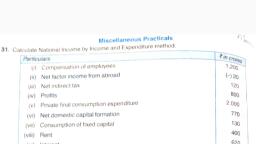
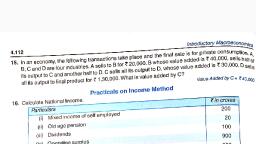
(i) Income from property and entrepreneurship accruing to, Government administrative department, 500, 100, (ii) Savings of non-departmental public enterprises, 80, (iii) Corporation tax, (iv) Income from Domestic product accruing to the private sector 4,500, (v) Current transfer from government administrative departments 200, (vi) Net factor income from abroad, (-)50, (vii) Direct Personal tax, 150, (viii) Indirect taxes, 220, (ix) Current transfers from rest of the world, 80, (x) Savings of private corporate sector, 500, 9.From the following data calculate National Income by, (i) Income method and (ii) Expenditure method., (Rs. In Crores), (i) Compensation of employees, 1,200, (ii) Net factor income from abroad, (-)20, (iii) Net indirect taxes, 120, (iv) Profit, 800, (v) Private final consumption expenditure, 2,000, (vi) Net domestic capital formation, 770, (vii) Consumption of fixed capital, 130, (viii) Rent, 400, (ix) Interest, 620, (x) Mixed income of self- employed, 700, (xi) Net exports, (-)30, (xii) Government final consumption expenditure 1,100, 10.From the following data, calculate Gross national product at Market Price by, (i) Income method. (ii) Expenditure method:, (Rs. In Crores), 400, (i) Mixed income of self-employed, 500, (ii) Compensation of employees, 900, (iii) Private final consumption expenditure, (-)20, (iv) Net factor income from abroad, 100, (v) Net indirect taxes, 120, (vi) Consumption of fixed capital, 280, (vii) Net domestic capital formation, (-)30, (viii) Net exports, 350, (ix) Profits, 100, (x) Rent, 150, (xi) Interest, (xii) Government final consumption expenditure 450, 11.Calculate (a) National Income and (b) Gross National Disposable Income from the, following data, (Rs. In Crores), (i) Net factor income from abroad, (-)20, (ii) Government final consumption expenditure, 200, 77
Page 22 :
(iii) Subsidies, 10, (iv) Private final consumption expenditure, 800, (v) Net current transfers from the rest of the world 30, (vi) Net domestic fixed capital formation, 100, (vii) Indirect taxes, 80, (viii) Consumption of fixed capital, 40, (ix) Change in stock, (-)10, (x) Net exports, (-)50, 12.From the following data, calculate ‘gross value added at factor cost’, (Rs. In Crores), (i) Sales, 500, 30, (ii) Change in stock, (iii) Subsidies, 40, (iv) Consumption of fixed capital, 60, (v) Purchases of intermediate products, 350, (vi) Profit, 70, 13.From the following data, calculate:, (a) National income, and (b) Personal disposable income, (Rs. In Crores), 1,200’, (i) Compensation of employees, 400, (ii) Rent, 800, (iii) Profit, 300, (iv) Consumption of fixed capital, 1,000, (v) Mixed income of self- employed, 3,600, (vi) private income, (-)50, (vii) net factor income from abroad, 200, (viii) net trained earnings of private enterprises, 250, (ix)interest, 350, (x) net indirect taxes, (-)60, (xi) net exports, 150, (xii) direct taxes paid by households, 100, (xiii) corporation tax, 14. From the following data calculate national income by, (a) Income method and (b) Expenditure method., (Rs. In cores), (i) Private final consumption expenditure, 2,000, (ii) Net capital formation, 400, (iii) Change in stock, 50, (iv) Compensation of employees, 1,900, (v) Rent, 200, (vi) Interest, 150, (vii) operating surplus, 720, (viii) Net indirect tax, 400, (x) Employers’ contribution to social security schemes, 100, (xi) Net exports, 20, (xii) Net factor income from aboard, (-)20
Page 23 :
(xii) Government final consumption expenditure, (xvi) Consumption of fixed capital, , 600, 100, , 15., Find gross national product at market price by income method and expenditure, method., Rs. CRORES, ITEMS, a., Mixed income of the self-employed, 400, b., Compensation of employees, 500, c., Private final consumption expenditure, 900, d., Net factor income from abroad, (-)20, e., Net indirect taxes, 100, f., Consumption of fixed capital, 20, g., Net domestic capital formation, 280, h., Net exports, (--) 30, i., Rent, 100, j., Interest, 150, k., Government final consumption expenditure, 450, FREQUENTLY ASKED CBSE BOARD QUESTIONS, 1., 2., 3., 4., 5., 6., , 7., 8., , Give two examples of macro economics, Differentiate between micro and macroeconomics, Distinguish between intermediate goods and final goods., Distinguish between domestic product and national product, What do you understand by net factor income from abroad? Explain, While estimating national income how will you treat the following? Give reasons for, your answer, a) Imputed rent of self occupied houses., b) Interest received on debentures, c) Financial help received by flood victims, d) Capital gains, Distinguish between transfer payments and factor payments. Give an example of each., , (1), (3), (3), (3), (3), (4), , (4), From the following data calculate national income by income method and expenditure, (6), method, Rs in Crores, a), b), c), d), e), f), g), h), i), j), k), , Interests, Rent, Govt. final consumption expenditure, Private final consumption expenditure, Profit, Compensation of employees, Net factor income from abroad, Net indirect taxes, Net exports, Depreciation, Net domestic capital formation, , 150, 250, 600, 1200, 640, 1000, 30, 60, (-) 40, 50, 340