Page 2 :
SOURCES, • Archaeological remains of Iron Age and Early historic, period., • Roman and Chera coins., • Epigraphs., • Literary evidences like Tamil heroic poems, Sanskrit, works like Mushakavamsakavya, Malayalam literature, including oral traditions, Granthavaris, travel accounts, which include Greek, Roman, Chinese, Arabs,, Portuguese etc.
Page 3 :
Antecedents, • Kerala is a narrow strip of land that include highland, middle, land and coastal plains that lay between Arabian sea in the, west and Western Ghats in the east., • People began their life in this area in the Stone Age., • The Paleolithic people depended mainly on hunting and food, gathering for subsistence., • During the Mesolithic period, they engaged in fishing along, with hunting and food gathering., • During the Neolithic times, a revolutionary change occurred, with the beginning of agriculture all over the world. In, Kerala, it was a combination of gathering and primitive, cultivation supplemented by hunting and fishing.
Page 4 :
Antecedents, • The people camped in the natural roc, shelters, especially during the rainy seasons., • Such rock shelters with pre-historic art and, paintings found at Marayur (Idukki), Edakkal, (Wynad), Tovari (Ambalavayal), Ankode, (Tvm), and Thenmala (Kollam). However, it, is difficult to make a conclusive remark on, the lithic phase of Kerala due to the scarcity, of the material evidences., • The earliest known phase of Kerala about, which we have a plenty of evidences is the, Megalithic Phase or Iron Age and the Early, historic period.
Page 5 :
Iron Age and Early Historic phase (300 BC – 500 AD), • Evidences to study this Phase – Archaeological and Literary evidences., • Burial monuments like rock-cut chamber, Kudakkals, Toppikkal,, Dolmans, cists, burial urns, sarcophagus, menhirs, stone circles etc.
Page 6 :
Rock cut chambers
Page 7 :
Rock cut chamber
Page 9 :
Rock cut chamber
Page 15 :
Stone circle
Page 23 :
Urn Burials
Page 24 :
Black, , Red ware pottery
Page 25 :
Iron age and Early Historic Phase, • The burial good from these monuments include potteries, iron objects, like knife, sickle, sword, spear heads, stone beads and bone fragments., • The Megaliths and the burial goods indicate that people believed in the, life after death., • Roughly, a period between 500 BC and 500 AD has been identified as, the period of Megaliths in Kerala., • The Early Tamil anthologies, generally called Sangam literature, are the, next major source materials that ranges a period between 300 BC and, 500 AD., • Other source is the punch marked coins and Roman coins., • During this time, Kerala was a part of Tamizhakam- an area covering, present Kerala, Tamilnadu, Karnataka and southern part of Andhra, Pradesh.
Page 27 :
Forms of subsistence, • The people of this period practiced multiple, subsistence forms such as hunting, food gathering,, cattle rearing, plunder or robbery, slash and burn, cultivation, wet land agriculture, pottery making,, metal smelting, fishing and salt making., • Five Tinais are mentioned in the Sangam poemsKurinji (Hilly forest region), Mullai (pastoral tracts),, Palai (dry land), Marutam (Wet plains) and Neythal, (Coastal zone). Forms of subsistence varied from Tinai, to Tinai.
Page 30 :
Social Order, , • Ur was the basic kin based settlement unit. It was the, grouping a number of Kutis., • There are references on Perur (big settlement), Cirur (small, settlement), Mutur (old traditional settlement) and Putur, (new settlement). The prosperous Ur was known a Nallur., • Nadu was the wider resourceful settlement area., • There are also a few references of Brahmins and Sramanas, (probably Budha or Jain groups)., • Akananuru refers to the Brahmin village of Perinchellur, (modern Taliparamba in Kannur district), which was the early, Brahmin settlement of Kerala.
Page 31 :
Exchange, , • Internal and external exchange of commodities., • Redistribution of the paddy among various tribal groups., • The exchange of goods for goods are frequently mentioned in the Sangam, poem as Noduttal., • The local exchange centres were known as chantai, angadi etc., • Fish and salt from the coastal zone (Neythal) were frequently moved to the, long distance destinations., • Overseas trade was very active in Kerala and it reached its climax during the, beginning of the Christian Era., • Periplus of Erytrean Sea of an unknown navigator refers to the port cities of, the Kerala coast like Naura, Tindis, Muziris, Nelcynada, Bacare etc., • There are so many evidences for proving the brisk trade networks between, Kerala and the outside world.(especially, Greece, Rome, Egypt and west Asia).
Page 35 :
Consolidation of Agrarian settlement and, Formation of stratified society, , • Expansion of agriculture in the post Sangam period- Along with the, expansion of wet land paddy cultivation, the garden land (Parambu), and the surroundings of the home site (Purayidam) were also, extensively brought under cultivation., • This phase is considered as the early medieval period in Kerala history, (7th to 12th C.AD)., • This period also witnessed the expansion of Brahmin settlements., • According to Keralolpathi tradition, there are 32 settlements in Kerala., • Brahmins received land as grants from the local chiefs. These lands, (Brahmaswam) were also brought under cultivation with the help of, the neighboring clans.
Page 36 :
Consolidation of Agrarian settlement and, Formation of stratified society, , • The Brahmin settlements in Kerala also influenced the, expansion of structural temples, which marked further, expansion of agriculture., • The temple inscriptions of 9th to 11th century give details about, land grants to the temples., • These lands (Devaswam) were cultivated under the control of, the temples., • The Brahmins and temples were able to establish superior land, rights over the cultivating settlements of the tillers., • This led to the formation of two classes in the society: the land, holders and the landless cultivators.
Page 37 :
Consolidation of Agrarian settlement and, Formation of stratified society, , • This led to the emergence of an intermediary class- lease holding, groups called Karalar. The Devswam and Brahmaswam land were, leased out to Karalar., • The cultivators were called kuti and the labour was labour was, mainly provided by the Pulayas, Al, Alatiyar etc. They were, transferred along with the land., • Adiyayma as a forced labour emerged during this period., • Kilimanur and Perinchellur inscriptions refer to Al, literally means, slave or forced labourer., • Inscriptions also refer to the artisans and craftsmen in the society, such as Tachar (carpenters), Kalavaniayar (potters), Vaniyar (oil, mongers), Vannar) washer men) etc.
Page 38 :
Consolidation of Agrarian settlement and, Formation of stratified society, , • With the influence of temple centered brahmin settlements, a new, social order emerged. The early occupational Kutis were, transformed into seperate caste groups., • Temples maintained a number of Brahmin and non-Brahmin, occupational groups for its service., • The surplus produced in the temple lands and the incomes, generated in the temple from various offerings were redistributed, among the temple functionaries as the reward of their service., , • The Bhakti movement of the Alvar (Vaishnavite) and the, Nayanar (Shaivite) sects was fundamentally connected with, the expansion of Brahmin settlements and construction of, temples.
Page 41 :
Formation multi-cultural settlements, , • St.Thomas tradition of the first Century CE and the Syrian Christian copper plate, of 849 CE show the formation of Christian settlements in Kerala., • The copper plate refers to the foundation of Tarisappalli by Mar Sapir Iso who, was associated with the Manigramam merchant corporation of Kollam., • The Jewish copper plate (1000 CE) mentions about the Jewish merchant of Joseph, Rubban who was associated with the merchant corporation Anchuvannam at, Kodungallur., • The mosque inscription from Panthalayani Kollam, Muchunti (Calicut), Madayi, (Kannur) and the Cheraman Mosque at Kodungallur prove the spread of Islam in, the region., • It is argued that the traditional policy of religious tolerance was a byproduct of, trade., • The cultural exchanges through the internal and external trade created social, cohesion among different creeds, which led to the formation of a multi-cultural, society.
Page 43 :
Nadu and Nattudayavar, • Nadus were the cultivated resource area- later developed, as a political unit., • The chief of the Nadu was known as Nattudayavar or, Naduvalumavar., • Nattudayavar directly controlled the land called Cherikkal, and they maintained their own warrior groups., • Nadus were divided into Desas and controlled by, Desavazhis., • The lowest unit of administration was the Kara controlled, by the Panchayath.
Page 44 :
Nakara and Ur or Grama, , • There were a number semi-autonomous local bodies, urban as well as rural,, like nakara and Ur or grama., • The assemblies of the Brahmin Urs were known as Ur, Sabhai, Paradai etc., The assemblies of the non Brahmin Ur were also known as Ur or Urpattar., • The management of the Nakara was done by organization like, Anchuvannam and Manigramam., • They were exempted from several dues and taxes and had crucial role in, fixing duties and prices for commodities. They were authorized to collect, taxes and tribute within the nakara., • They also had exercised judicial powers such as the award of punishment, and collected fines., • The epigraphs mention about the presence of other trade guilds like, Valanchiar and Nanadesi in Kerala.
Page 45 :
Code of conduct or Kaccam, , • We have no precise evidence about the legal code of the Perumal period. But, there are indications about the code of conduct called Kaccam followed by the, temple and Urs or Gramas., • The major Kaccam was Mulikkalam Kaccam or Mulikkala vyavasthai., • This generally prescribe several punishments like excommunication, expulsion, from position, confiscation of property etc.., Taxes and Dues, Patavaram - Land tax, Thalaikkanam - Tax for toddy tappers, Enikkanam - Tax for Using ladder, Menipponnu - Tax for wearing ornamnets, Polipponnu - A kind of sales tax, Attaikkol and Arantai – annual dues from a Brahmin village, Rakshabhoga - From villages or temples
Page 46 :
SOCIO-ECONOMIC AND POLITICAL TRANSFORMATIONS, (1200-1800 CE), , • The period between 12th and 18th centuries witnessed the continuity and, change in the agricultural production and exchange, structure of polity,, system of land tenure, land holding rights and revenue system in Kerala., • This period also saw the advent of Europeans, the Mysorean invasion and, finally the establishment of the British colonial power in Kerala., • Multi-crop Production continued with substantial increase. Paddy continued, as the main food crop. The medieval Malayalam texts refer to paddy fields, yielding one, two or three crops per year., • Unnuneelisandesam refers to paddy varieties like Kuruva, Channel, Ponkali,, Kadan, Modan etc., • There are some indications about the import of paddy from outside Kerala, like Cholan, Pandi etc
Page 47 :
Multi-crop production, • Sugarcane was grown in some pockets., • Pepper was the major cash crop., • Cardamom, Ginger, Cinnamon, turbots, turmeric etc were also, cultivated in the garden land., • Coconut was an item of consumption and trade., • By 16th C coconut had become an important item of trade and, by 18th C arecanut cultivation had spread all over Kerala., • The gathering from forest wealth continued to be the major, sustaining factor of Kerala economy., • Timbers like teak, rosewood etc were in great demand in, foreign countries.
Page 48 :
Trade: inland and overseas, • The surplus production from the multi-crop lands resulted in, the growth of internal and external trade., • The goods of daily consumption like rice, millets, vegetables,, coconut oil, salt, fish etc were exchanged at local markets., • Barter was the most common form of exchange in the local, markets., • The period also witnessed the active trade between Kerala, and different parts of India. The merchants from the region, of Tamil, Karnataka, Konkan, Andhra, Kalinga, Ujjain and, Bengal appear in the interior markets of Kerala.
Page 49 :
Foreign Trade, , • Kerala’s contact with Arabian countries further developed in the medieval, period. Calicut was the main center of Arab trade., • Arab writers like Al-Idrisi, AL-Qaizmi etc refer to Malabar as the land of, pepper. Some of these Arab merchants had settled in the coastal belts of, Malabar like Calicut, Koyilandy, Kannur etc., • Arabs monopolized this far eastern trade till the advent of Portuguese., Spices from Kerala were in great demand in China. Chinese silks, ceramics,, mercury, tin etc were brought in return. A number of Chinese ceramics were, discovered from several sites of Kerala coast like Valapattanam, Kannur,, Panthalayani, Kodungallur, Pattanam, Kollam and Vizhinjam., • The travelers’ accounts also testify the presence of Jews., • The advent of the Portuguese resulted in the decline of Arab and Chinese, trade and the beginning of contact with European countries.
Page 51 :
Naduvazhi Swarupams, , • The Sanketham of Brahmins and temple also acquired much popularity, during this period., • Sanketham was a semi-autonomous territory consisting of several, villages organized around a Brahmanical temple., • There were two kinds of Sanketa, those constituted by Brahmin, landholder and those established by the rulers as a sign of their, devotion to gods and Brahmins., • Many Sanketams were governed by an assembly of Brahmins called, Yogam., • The expansion of Swarupam and Sanketham led to the growth of, different kinds of landholding rights in Kerala, which caused further, expansion in the food and cash crop cultivation as well as changes in, agrarian relations mediated by caste system.
Page 52 :
Growth of landholding rights and agrarian relations, , • Besides the landholding rights over the Brahmaswam, Devaswam and, the Cherikkal land, various landholding rights over land such as, Janmam, Verumpattam, Kanam, Kuzhikkanam etc also evolved during, this period., Janmam: Hereditary rights over the land and production process., Verumpattam: simple leases., Kanam: controlling right obtained through mortgage., Kuzhikkanam: land holding rights over garden land., oThe land owner-tenant relations was organized according to the, traditional customs and practices called Maryadai, Kizhmaryadai,, Kizhvazhakkam etc., oThis ensured the ties of dependence and service obligations between, the landlords and tenants and other sections of the society., oThe system continued until the British legal system was introduced in, Kerala.
Page 53 :
Growth of landholding rights and agrarian relations, • During this period a hierarchy of land rights developed with the, landlord at the top, layers of tenants or Kudiyan under them and, at the bottom Adiyar or Aladiyar, the actual labour force in the, land., • The relation between these factions was regulated by the rigid, caste rules., • The emergence of the concepts of purity (Sudham) and pollution, (Asudham) based on caste hierarchy became dominant in this, period., • The downtrodden classes were considered as the polluted caste, groups and they had to maintain a prescribed distance from the, higher caste.
Page 55 :
Growth of landholding rights and agrarian relations, • The service of carpenters, masons, goldsmiths and, other metal workers were used by temples and ruling, families., • Christians and Muslims communities continued, mainly as traders but also began to involve in, cultivation., • While Muslims and Christians appear to hold cash, crop land in Travancore, the Muslims in south Malabar, were mainly tenant cultivators.
Page 56 :
Advent of Europeans, • The arrival of Vasco da Gama at Kappad near Calicut in 1498 marked, the beginning of an epoch of European domination which lasted for, about 500 years., • Portuguese was the first European power who came through the Cape, of Good Hope to Kerala coast and they destroyed the supremacy of the, Arab merchants in Malabar trade and established monopoly over the, trade in Indian Ocean by issuing Cartaz., • Cartaz was a pass issued by the Portuguese officials to prevent other, ships from conducting trade with any part of India., • They entered into trade contact with the rulers of Kozhikode, Kannur,, Kochi and Kollam and monopolized eastern trade till the end of the, 17th C when the Dutch became powerful.
Page 58 :
Advent of Europeans, • A Dutch fleet also reached at Kozhikode in 1604 to made, contract with Zamorin., • They obtained trade monopoly at Kollam by defeating the, Portuguese., • Dutch also established a settlement at Kolachal in, Kanyakumari. Later it was fortified by Marthanda Varma,, the ruler of Travancore. Dutch tried to conquer it from, Travancore which led to the Battle of Kolachal in 1741., • The defeat in the battle led to the decline of the Dutch, power in India.
Page 59 :
Advent of Europeans, • English came to Kerala in the beginning of the 17th Century., • Capt.Keeling concluded a treaty with Zamorin by which they, ensured the support of Zamorin to expell the Portugese from, central Kerala., • They exported pepper from Cochin to England for the first time, and obtained permission from ruler of Venad to build a factory at, Vizhinjam., • Similar factories were also set up at Attingal, Anjengo and, Thalassery., • French was another colonial power who interested in profitable, spices trade., • They obtained permission for trade at Mahe from the ruler of, Vadakara.
Page 60 :
Advent of Europeans, • Thus Kerala came to be a battle ground between different, European powers for commercial domination., • By the end of 18thC, the British were able to oust all the rival, powers from the scene and establish their supremacy in, Kerala., • But, all these European companies had to face resistance of, the natives., • The resistance of Kunjali Marakkars (1524-1600) against the, Portuguese, Marthanda Varma against the Dutch(1741) and, Attingal Queen against the British (1721) were significant, among them.
Page 61 :
Kerala during the 18th century, • The 18th witnessed far reaching political and economic transformations in, Travancore, Kochi and Malabar., • The accession of Marthanda Varma in 1792 inaugurated a new era in Travancore., He is considered as the founder of modern Travancore., Reforms of Marthandavarma, (1) He suppressed the powerful feudatories like Pillamar and Madampis., (2) He introduced land survey and settlement for the proper maintenance of, account., (3) He initiated a programme for auditing the temple accounts., (4) Classification of land as Devaswam, Brahmaswam and Pandaravaka., (5) State monopoly on trade especially pepper, salt, tobacco and arecanut., (6) Introduction of Budget (Pathivukanakku)., (7) Reorganization of the army-armed and disciplined.
Page 62 :
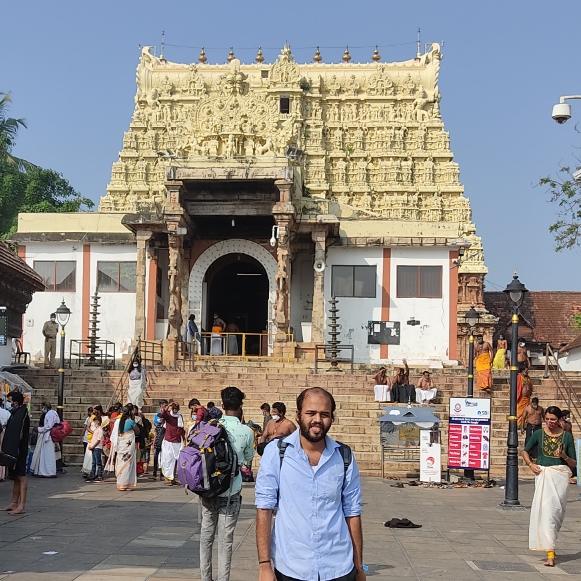
Trippadidanam, • The dedication of the Travancore state to, the deity Sri.Padmanabhan on 3rd January, 1750 was one of the important acts of, Marthandavarma., • With this act the deity became the lord of, the land and the king became the, controller of the land., • Any kind of revolts or criticism against king, would be considered as irreligious act.
Page 63 :
Transformation in Kochi, • In Kochi Sakthan Thampuran(1790-1805) followed the same policy, of Marthandavarma against the nobles., • Nobles were deprived their power and property., • The survey and assessment of land was started., • Markets were opened in all major canters., • Temples were renovated. The Thrissur Pooram was instituted., • Construction of roads, bridges, lakes, rest houses etc., • Thus the act of Marthandavarma and Sakthan Thampuran made, Travancore and Kochi as the prominent princely states in Kerala, during colonial period.
Page 64 :
Transformation in Malabar, • Quiet Different that of Travancore and Kochi., • The peculiar political condition tempted the Mysorean rulers to invade, Malabar., • The invasion of Hyder Ali and Tippu Sulthan in the 18th C brought about, drastic changes in the agrarian relations of Malabar., • Taxation on the basis of assessment of actual produce and collected, directly from the tenant through officials., • The Janmis lost domination and tenant got an added dignity., • Only wet land was taxed and the dry land and temple lands were, exempted from taxation., • Later taxation was extended to all Nair landlords and other chiefs-they, were forced to pay dues.
Page 65 :
Transformation in Malabar, • To increase export, cultivation of cash crops, was encouraged., • The cash crops like tobacco, sandalwood,, teakwood, coconut and pepper were made, state monopolies., • For facilitating trade, attempts were made by, Tippu to improve transport infrastructure in, Malabar., • Tippu is regarded as the pioneer of roads in, Malabar. He built extensive chain of roads, which connect all the principal places in, Malabar.
Page 66 :
British colonial Power, • By 19th Century further changes occurred in the land relation in, Malabar under the British rule-the rights of all chiefs of Malabar, were taken over by the British and they were given Malikahans or, pensions., • The British reversed the revenue settlements of Mysore rulers and, treated Janmi as the land owner., • With the failure of indirect land collection through local chieftains, the EEIC appointed Joint Commissioners for direct collection of taxes., • In the mean time Travancore and Kochi rulers accepted the British, supremacy and company appointed a Resident to control the area., Colonel Munro was the first British resident for Travancore and, Kochi.
Page 68 :
THANK YOU