Page 1 :
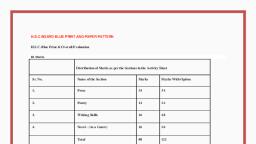
H.S.C BOARD BLUE PRINT AND PAPER PATTERN, H.S.C. Blue Print & Overall Evaluation, 80 Marks, Distribution of Marks as per the Sections in the Activity Sheet, Sr. No., , Name of the Section, , Marks, , Marks With Option, , 1., , Prose, , 34, , 34, , 2., , Poetry, , 14, , 14, , 3., , Writing Skills, , 16, , 48, , 4., , Novel - (As a Genre), , 16, , 16, , Total, , 80, , 112, , Distribution of Marks as per the Questions in the Activity Sheet, , Sr. No., , Type of the Question, , Marks, , %, , Marks With Option, , 1., , Objective Type, , 18, , 22.50, , 18, , 2., , Short Answer Type, , 36, , 45.00, , 36, , 3., , Long Answer Type, , 26, , 32.50, , 58, , Total, , 80, , 100%, , 112, , Distribution of Marks as per the Objectives in the Activity Sheet, , Sr. No., , Name of the Question, , Marks, , %, , Marks With Option, , 1., , Knowledge and Understanding, , 33, , 41.25, , 33, , 2., , Application, , 23, , 28.75, , 23, , 3., , Skills, , 11, , 13.25, , 31, , 4., , Creativity, , 13, , 16.25, , 25, , Total, , 80, , 100%, , 112
Page 2 :
H.S.C. Activity Sheet Format (80 Marks) Subject : Compulsory English, Class - XII, SECTION I : Prose, (Reading for Comprehension, Language Study, Summary, Mind Mapping) [16], Q A) Read the extract and complete the activities given below :, .1, (Seen extract from Section No.1 consisting of 275-300 words), , [12], , Al) Global understanding, , 02, , A2) Complex factual, , 02, , A3) Inference / Interpretation / Analysis, , 02, , A4) Personal response, , 02, , A5) Language study, , 02, , A6) Vocabulary, , 02, , B) Language Study (Non - textual Grammar), , [04], , B1) Do as directed / Transformation of Sentence, , 03, , B2) Spot the error, , 01, , Q.2 A), , [18], Read the extract and complete the activities given below: (Unseen extract consisting of 275-300 words), , Al) Global understanding, , 02, , A2) Complex factual, , 02, , A3) Inference / Interpretation / Analysis, , 02, , A4) Personal response, , 02, , A5) Language study, , 02, , A6) Vocabulary, , 02, , B), Summary Writing:, , Write the summary of the above extract with a suitable title with the help of the given points/hints., , C), , Mind Mapping:, (03) Develop a ‘Mind Mapping’ frame/design using your ideas / thoughts / concepts to illustrate /, develop on the given topic., SECTION II - POETRY (POETRY AND, APPRECIATION), , (03)
Page 3 :
Q.3 A) Read the extract and complete the activities given below: (Seen extract from a poem of about of 10 —15, lines), , [10], , A1) Global understanding, , 02, , A2) Inference / Interpretative / Analysis, , 02, , A3) Personal Response, , 02, , A4) Poetic Device, , 02, , A5) Creativity (compose 2-4lines), , 02, , B), , (04), , APPRECIATION, Read the extract and write as per the instructions:, (Seen extract of 10 — 15 lines from another poem, not asked in Q.3 A), SECTION III, (WRITING SKILLS), , Q.4 Complete the activities as per the instructions given below:, , [16], , A., , Drafting Virtual Messages / Statement of Purpose/Group Discussion, , (04), , B., , Email / Report Writing/Interview, , (04), , C., , Speech / Comparing /Expansion of Ideas, , (04), , D., , Review / Blog / Appeal, , (04), , Note :, (In A, B, C and D paper setter should frame activities on all types in each set as options. Students are required to attempt any, one activity from each set), SECTION IV, ( LITERARY GENRE — NOVEL ), , [16], , Q. 5, , (A) Complete the activities given below as per the instructions: (04), , 1., , Activities on History of English Novel, , 02, , 2., , Activities on History of English Novel, , 02, , (B), , (Activities to be framed on MCQ / Match the columns/Chronological order / Fill in the Blanks / True, False/Elements of Novel OR any other novel activity) (Activities should not be repeated in the sub-questions), (Please Note : Activities in Q.5 A should be framed on textbook content no. 4.1), Answer in about 50 words to the questions given below :, (04), 1., 2., , (C), , (Questions to be framed on elements such as Plot / Structure / Theme / Setting / Language / Character), Describe / Explain / Compare / Contrast / Name / Discuss, 02, Illustrate / Interpret / Narrate / Justify / Find / Identify, 02, (Please Note: Activities in Q.5 B should be framed on textbook content no. 4.2), , Answer in about 50 words to the questions given below :, , (04), , (Questions to be framed on elements such as Plot / Structure / Theme / Setting / Language / Character), 1. Describe / Explain / Compare / Contrast / Name / Discuss, 02, 2. Illustrate / Interpret / Narrate / Justify / Find / Identify 02 (Please Note: Activities in Q.5 C should be framed on, textbook content no. 4.3), (D), , Answer in about 50 words to the questions given below:, , (04)
Page 4 :
(Questions to be framed on elements such as Plot / Structure / Theme / Setting / Language / Character), 1. Describe / Explain / Compare / Contrast / Name / Discuss, 02, 2. Illustrate / Interpret / Narrate / Justify / Find / Identify 02 (Please Note: Activities in Q.5 D should be framed on, textbook content no. 4.4), Note / instructions for paper setters:, , Q. 1 to Q.4 are purely activity based questions., Grammar activities should be functional (in activity format) and not in a plain instruction based type., In case of mind mapping - the model answer will be just for reference and cannot be treated as exact., Activities should not be repeated by any means throughout the activity sheet. Varieties/Novel activities are expected, , throughout the activity sheet., Sec V - Q.5 B, C, D are purely memory based questions. Though varieties of options are mentioned at each place, similar, format should not be repeated throughout Section V., DRAFTING A VIRTUAL MESSAGE, DRAFTING A VIRTUAL MESSAGE, [FOR QUE.NO 4(A): 04 MARKS], FORMS OF COMMUNICATION:, 1) Oral, 2) Written, 3) Virtual, A message is an informal means of communication.The receiver of the message has to go through the given message and pick out the, most vital bits of information., TYPES OF MESSAGES;, I) POSITIVE MESSAGES:, Good feelings,thanks,greetings,appreciation, expression of interests, sympathy,extended help,solace., II) NEGATIVE MESSAGES:, Disappointment, disapproval,dissatisfaction, disagreement, denial, refusal, cancellations etc., III) NEUTRAL MESSAGES:, No feelings,no emotions,no sentiments, dry messages,messages showing neither joy nor sorrow,messages without any conclusion etc., IV) PERSUASIVE MESSAGES:, act that communicates persuasively ,agreement on the writer's point of view,use of convincing language or words., SAMPLE ACTIVITY NO 01., Rajat comes home from school/college and finds the door locked.Since he has a duplicate key he enters and finds a note from his, mother kept on the table.In it,she explains that she had to rush to the hospital with Mrs, Manohar ,their neighbour who had met with, an accident,she has also written that he should have the rice and curry kept on the dining table for lunch.He could heat the food in the, microwave oven if he wanted to,but he should be very careful while handling the switch.
Page 5 :
Draft a message which Rajat's mother left for him., FORMAT FOR DRAFTING A VIRTUAL MESSAGE:, , , , Date, , , , Time, , , , Name of a person to whom the message is directed, , , , Body of the message, , , , Name of the writer/sender, , POINTS TO REMEMBER FOR DVM, Only the most important points., , , , No new information, , , , Grammatically correct, , , , Indirect or Reported speech, , , , Use of simple language without abbreviations, , , , Rough draft, , , , Be friendly and polite, , , , Be clear,concise,precise avoid ambiguity., , SAMPLE ANSWER, Time 10.45 a.m., Dear Rajat,, Mrs. Manohar (our neighbour) has met with an accident., I am rushing to AIMS Hospital with her as Mr. Manohar is out of station due to his office work.I have kept rice and curry on the, dining table for your lunch.Heat it in the microwave.Be careful while handling the oven and switch.Don’t worry I will be back at the, earliest.I called Mrs. Manohar’s relative.Take care., Mom, SAMPLE ACTIVITY NO 02., You are Madhura, a personal secretary to Mrs. Kapoor. She was away attending a meeting when Mr. Banerjee rang up.You spoke, to him and jotted down his message in your notepad., Draft a message for Mrs. Kapoor using the information in your notes given below., [ Mr. Banerjee-rang up - 11.45 am - has received the documents,tenders-coming tomorrow-to thank Mrs Kapoor, - hand over the cheque.]
Page 6 :
SAMPLE ANSWER 02, 11.45 am., , [ 26th July], , Madam,, Mr. Banerjee rang up at 11.45 am in the morning while you were away attending the meeting.He said he had received the, documents,tenders and would come tomorrow to express his gratitude to you.He said he would also hand over the cheque to, you personally., Madhura., ( Personal Secretary), SAMPLE ACTIVITY NO 03, Template for completion Activity, , MARKING SCHEME FOR DVM:, , , , Content (C): 02 Marks, , , , Sequence/flow of ideas (S/FI): 01 Mark, , , , Appropriateness/Language correctness( A/Lc): 01 Mark, , SPEECH WRITING, SPEECH WRITING, FOR QUE.NO 4(C): 04 MARKS, How to Write a Good Speech:, 1. Have an inspiring OPENING and ENDING., 2. Appropriate(suitable)TONE of VOICE., 3.Adapt speech for PURPOSE and AUDIENCE.
Page 7 :
4.Organise IDEAS logically and do not confuse the audience., 5. Use EMOTIVE language to CONVINCE your audience., 6. Use Rhetorical Questions – asking a question for persuasive effect., 7. Make sure you are writing in the CORRECT PERSON., 8. Use interesting facts and figures., Before Drafting a speech Remember:, 1) Salutations - speaker greets Chief-guest,Fellow speakers and listeners., 2) A speech must begin with a catchy introduction in the form of a quotation, statistical data or a thought-provoking Rhetorical, question., 3) Persuasive and powerful language, use the word “you” and Rhetorical questions., 4) A speech must have clarity of thought and accuracy of facts., 5) Sum up by suggestions / measures to improve the situation ., Sample Answer:, Respected Principal,vice Principal, supervisor,teachers and all my dear friends!, Today, I welcome one and all on the occasion of the world Environment day.On this auspicious occasion I am going to share my views, on the topic," Tree Conservation"., Respected Dignitaries on and off the dias, as we all know Trees are the best friends of human beings from ages and saviours of, Mankind.Trees provide us Food,shelter, oxygen, fruits,Wood, medicinal herbs unconditionally.We have been worshipping trees from, generations as they give us everything without expecting anything., It is rightly written by someone,, "Poems are made by a Fool like me but God can only make a Tree" how true is this! Trees maintain the ecological balance of the, Environment.Trees prevent soil erosion.Trees Invite rainfall.Trees attract people travellers,birds, animals. Forests and jungles help to, reduce pollution., " Woods are lovely, Dark and deep but, I have many promises, To keep before I sleep,, before I sleep,, before I sleep!, Unfortunately,in some parts of the world human beings start deforestration at a large scale for making a living.Loss of flora and, fauna,species, extinction of rarest of rare birds, animals affect the biodiversity.It results in degradation of the environment. Depletion, of Natural Resources cause damage to Mother Earth.The large scale industrialisation, urbanisation influenced the beauty of Nature., If we do not seize it, It's curtains on our, Living things., But the Questions arise....., Do we really feel concerned about it? Are we really serious about this issue?
Page 8 :
Remeber ,we have a little time so, think, introspect and act.we only can stop this degradation by realising the value of Nature and, Trees.On this pious day,Let's take a pledge to Protect the Environment,Trees,Nature,, Each one plant one and protect one is the need of the time. I am very optimistic that with United and collective efforts we will surely do, this., Thank you for your patient hearing!, Exercise, 1. You are Deepika Patil, a member of the NSS unit of your college,on the occasion of World Health Day, prepare a speech which you, will deliver in your college Auditorium., 2. You have taken part in an elocution competition where the topic chosen by you is ‘Beauty without cruelty towards animals’ write a, speech to put forward your views., 3. You are the NSS co-ordinator of your college. Deliver a speech to the NSS cadets about the literacy programme that you are going to, undertake and motivate more and more people to come forward to join the project., 4. On the occasion of world Environment Day; your college has organised a one day seminar. You are one of the speakers. Write a, speech how Mother Earth is being polluted everyday by our foolish activities., 5. On the occasion of International Women’s Day, your college has organised a programme. You are Divya / Deepak and you have been, chosen to deliver the welcome speech where you want to talk about. “Improvement of the position of women in Indian society” as you, want to start on a positive note. Write the speech which you are going to deliver., 6. Prepare a speech on ‘People who have inspired me’., 7. Imagine you are a class-representative. Your college has arranged a Blood Donation Camp. Write a speech appealing to the students, to donate blood generously for a good cause.( Feb. 2008 ), 8. As a students representative at Junior College, prepare a speech to Welcome the F.Y.J.C. students who have just joined the college., Tell them something about the college campus, library, canteen, sports and other extra curricular activities., 9. Prepare a speech for ‘World Environment Day’. The topic is ‘Save trees’ - Tree save’ Highlight the growth and preservation of trees in, your speech., 10. Imagine that your college has organized an elocution competition on ‘Higher Education in Maharashtra’. Prepare your speech., 11. Prepare a speech on the topic “How can we lead people from the poverty-ridden world to the poverty., 12. Prepare a speech on “The changes that I want in the syllabus of English subject.”, 13. Prepare a draft for a speech on ‘Status of old women’in ‘Indian society’., 14. Imagine that you are an ardent bird watcher. You have noticed that the number of birds have diminished over the years. Write a, speech of about 100 word on “Why should we save birds.”, 15. Prepare a brief speech about 100 words on the value of Money. Imagine you are addressing your children., 16. You are the secretary of a youth organization and it is your duty to welcome the Chief Guest at the annual youth festival. Draft your, speech in about 100 words welcoming the chief guest., 17. ‘Failure is always the first step to success’. Write a brief speech encouraging class X students who are about to appear for a Board, Exam., 18. You have been invited to speak to a gathering of your entrepreneurs (Businessmen). Draft your speech highlighting honesty in, business dealings, gender equality and child labour.
Page 9 :
19. You have been invited and speak to a gathering of young college going boys and girls. The topic given tto you is ‘The advantages and, disadvantages of the cell phone.’ Draft your speech in about 100 words., 20. As the President of the local youth club you are expected to make a speech congratulating a member who has received ‘The youth, of the year award.’Draft your speech in about 100 words., 21. Imagine you are the ‘Captain of your college cricket team’. Your teammates are nervous about the next match afraid that they will, lose. Draft a speech in about 100 words boosting their morale and motivating them., 22. Preparing a speech stating the ‘Importance of eye donation.’ (Feb. 2013), i) Organisation of a meeting to explain the importance of eye donation., ii) When and who can donate the eyes., iii) Concluding lines with an appeal., 23. Write a short speech to be delivered in your college on ‘Tree Conservation’ on the occasion of ‘The World Earth Day’with the help of, the following points (about 100 words) (Feb. 2014), i) Air, water and noise pollution., ii) Depletion of natural resources., iii) Trees prevent soil erosion., iv) Live in harmony with nature., 24. You wish to take part in the Elocution contest in your Junior College. One of the topics therein is “Disadvantages of Television.”, Prepare a speech on it in about 100 words. (Oct. 2014), 25. You intend to take part in the intercollegiate elocution contest. One of the topics therein is ‘Stop cruelty to Animals and Birds :, Prepare a speech on it in about 100 words. (Feb. 2015), 26. Your Junior College is going to arrange a ‘Blood Donation Camp’. As a General Secretary. Prepare a peech to appeal the students to, donate Blood for noble cause. (in about 100 words.) (Oct. 2014), 27. Imagine you have to give a speech on the topic ‘India’s changing villages’, write a speech on it in about 100 words. (Feb. 2016), 28. You are the captain of your college cricket team. You have your final match on Sunday. Your teammates are nervous. Prepare a, speech motivating them to face the challenge courageously. (About 100 words) (July 2016), 29. Prepare a speech on ‘Father’s Day’ with the help of the following points. (Feb. 2017), 1) Man of practical attitude., 2) Thinker of future, 3) Pillar of family., 4) Greatest family support., 30. You wish to take part in an elocution contest organised by the Rotary Club of your town. One of the topics therein is ‘Save water, ....... save life’. (Prepare a speech on it in about 100 words) (July 2017), 31. Prepare a speech on ‘World Literacy Day’ (8 September) with the help of the following points., i) Importance of the day., ii) How you can help to eradicate illiteracy in your area., iii) Benefits of being literate for an individual., iv) How literate India will help an individual.
Page 10 :
v) How literate India will help the country to progress., 32. Your college has observed Dr. A. P. J. Abdul Kalam’s birthday (15th October) as the ‘World Students’Day. Prepare a speech in about, 100 words with the help of the following points., i) Importance of the day, ii) Overcoming the challenges in your learning., iii) Dr. Kalam’s inspiration to students., iv) Your idea of serving India in various capacities., 33. You are the captain of your college cricket team. You have your final match on Sunday. Your teammates are nervous. Prepare a, speech motivating them to face the challenge courageously. (About 100 words), i) Talk about your team’s strong points., ii) Point out the opposing team’s weak points., iii) Mention past victories., iv) Mention the important of having a positive attitude., 34. You wish to take part in the elocution contest in your Junior college. One of the topics there in is ‘My Idea of an Ideal student’., Prepare a speech on it in about 100 words., 35. Your college has planned to celebrate ‘Children’s Day’. You are asked to deliver a speech on this occasion. Prepare a speech of, about 100 words to be delivered on the occasion., 36. Prepare a speech on Women’s Day (8 March) with the help of the following day., i) Importance of the day., ii) The status of women in the past., iii) The progress of woman and her status in the society., iv) Women empowerment., 37. Prepare a speech on the occasion of ‘International Yoga Day’ (21st June) with the help of the following points., i) Importance of the day., ii) Benefits of Yoga., iii) The need for Yoga for Better & healthy life., iv) How you can motivate people to practice yoga., v) How Yoga helps build a healthy nation., 38. Prepare a speech on ‘World Environment Day’(05th June) with the help of the following points., i) Importance of the day., ii) Air, Water and Noise pollution., iii) Need of the protection of environment., iv) Add your own points., 39. Prepare a speech on ‘The world Earth Day’ with the help of the following points.
Page 11 :
i) Importance of the day., ii) Adverse effect of various pollutions., iii) Loss of natural resources., iv) Live in harmony with nature., 40. Prepare a speech on “How can we lead people from the poverty ridden world to the poverty free world” in about 100 words with, the help of the following points., i) BPL(Below poverty line), ii) Poverty is a curse on humanity., iii) Fulfillment of Basic life needs., iv) How can we eradicate poverty from the world., 41. Prepare a speech on ‘International Day of Disabled Persons’ (03 December) with the help of the following points :, i) Importance of the day., ii) Empowerment of disabled persons., iii) How disabled persons help the country to progress., iv) Protection of their status / prestige., 42. Write a short speech to be delivered in your Junior College on ‘BETI BACHAO, BETI PATHAO’(BBBP) campaign with the help of, following points., i) Importance of the campaign., ii) Need of female education & empowerment., iii) Benefits of educating girl child., iv) Honour, dignity & career of girls., v) Importance of women in society., 43. Prepare a speech on ‘National Science Day’ (28th February) with the help of the following points., i) Importance of the day / theme of the year., ii) Arrangement of various programmes., iii) Importance of science in daily life., iv) Introduction of new technologies of science., v) Encouragement to people and popularize the science and technology., 44. Imagine that your college has organised an ‘Elocution competition’ and the topic for the competition is ‘Save Trees, Trees Save’., Prepare a speech with the help of the points given below.(Feb 2018), i) Providers of human needs., ii) Ecological balance., iii) Rain showers etc.
Page 12 :
45. You wish to take part in the Inter collegiate elocution competition. One of the topics therein is‘Importance of cleanliness’ (July, 2018), Prepare a speech on it in about 100 words., 46. Imagine your college is organising a speech competition on the topic ‘Disappearing Birds’. Prepare a speech in about 100 words with, the help of the following points. (Feb. 2020), i) Role of birds., ii) Causes behind their disappearance., iii) Ways to call them back., iv) Add your ideas., BLOG WRITING, For Q. No 4( D) Topic 1, , What is a Blog?, A blog( weblog) is a website, online journal, platform. Each entry is called as Post., Blog structure, Common features of blogs, , , , Header with the menu or Navigation bar, , , , Main content area, , , , Sidebar with profiles, popular posts or favourite content, , , , Footer with relevant links privacy policy, disclaimer, contact page etc.
Page 13 :
Gasping for Oxygen, A. Gasping for Oxygen ......., Whew ! Just today I saw a most short-sighted and stupid act. I saw a number of people–seemed like the local municipal workers –, hacking down some healthy green trees., Why did I not stop them ? I was travelling in a bus, that’s why !, As I was proceeding homewards, upset and depressed at this prime example of stupidity,, I began to wonder. What would happen if there were no trees on earth ? An earth without trees?, Then I realised that this is merely a hypothetical question – if there were no trees, we would not be there ! But just to imagine it was, scary. Many animals would become extinct. This would disturb the food chain. There would be no rain, and hence very little water. Half, the world would perish and the other half would fight for those few lakes with water. Everybody would have to wear-masks, for there, would be only carbon-dioxide and no oxygen. There would be only concrete structures everywhere, and people-those who still survived, – would be at loggerheads with each other, for there would be lack of food, lack of water, lack of oxygen ...... And here we are, cutting, trees left and right ? When will we learn – we need to plant lakhs of trees, not cut them ! What do you think ? We start another Chipko, movement ?, 2. Say no to tobacco
Page 14 :
A. Say no to tobacco., Humans are supposed to be the most evolved creatures on this planet. True ? No, absolutely false ! If, after knowing the various, harmful effects of tobacco, man still uses it, it does not speak well of his mental capabilities. Which other animal chews tobacco ?, Which other animal uses’ gutka’ or paan masala’, or smokes cigarettes, cigars and ‘beedis’?, “It’s my life”, some may say. Yes, it is. But it affects the people around too. Tobacco use is one of the biggest public health hazards of, recent times. Tobacco is one of the primary causes of cancer and heart attacks. People in the 1950s and 60s did not know about this,, and hence they smoked. But not that we know it, and know that it can lead to a horrible and painful death, can’t we, the species with, the most highly developed brains, stop its use ? Stop growing it altogether ?, Can’t the governments ban its farming ?, The frightening bit is that many youngsters are getting addicted to tobacco. And once addicted, withdrawal is very difficult. So why not, we all join hands and say no to tobacco ? ‘No’ to using it, and ‘No’ to growing it too., 3. Man V/s Nature, A. MAN V/S NATURE, It’s pouring outside and the roads are again flooded. It reminds me of that unforgettable day 26 th July 2005, when Mumbai almost, drowned. It seemed to be a battle of man versus nature; this time, man finally won. But will man always win ? When I watch TV or, browse through the net, I begin to wonder about such things as ‘the end of the world’ and so on., This ‘man versus nature’ conflict is the theme of Ernest Hemingway’s classic, ‘The Oldman and the Sea’, where the old man battles, against a marlin. Today, we are willy-nilly challenging nature by our practices; global warning has already given us a warning of things, to come. Maybe in a few years we will be battling for survival. By destroying mangroves, cutting down rainforests, building huge, edifices indiscriminately, allowing the population to explode and using up the natural resources without a second thought, we are, inviting trouble and nature is cruel, not kind., To add to my woes, I have just seen a TV warning of a storm and danger of flooding in far away New Orleans, I look out of my window, and it is still pouring. Will we win our battle against nature ? But then, Why should we fight nature ? We should work hand-in-hand, not, against each other ! But who can be more foolish than human beings ?, 4. Child Labour - a curse to humanity, A. Child Labour - a curse to humanity, The words ‘Child Labour’ itself make me shudder. Childhood is a time to be enjoyed, to have fun and games; not to labour. But the, unfortunate fact is that children in India, and in many other countries too, are made to do the worst forms of labour. In India, lakhs of, poor children are forced to work, baking bricks, making fireworks, weaving carpets, rolling beedis, picking rags, working as domestic, servants, waiters, etc. And this is just the tip of the iceberg. Children are also sexually exploited or made to work as beggars. Things are, worse now with terrorist camps apparently recruiting children for training., While we condemn child labour, we also know the cause of this malady. It is due to poverty, natural disasters, family debts, and the, like. Well then, what can we, as concerned citizens, do to prevent this ? In addition to talking and writing about it ? First of all, we can, boycott those goods made by using child labour, high on this being fireworks. We can complain to authorities when we see a child, being forced to work. We can report beggars; we can contribute or volunteer to work for NGOs., However, the most sure-fire method of eradicating this problem is through education., Education is the only single solution, and through education many of the ills bogging down our nation can be cured. So, those who see a, child employed somewhere, please raise your voice. Child labour is certainly a curse to humanity., Marking Scheme for ‘Blog Writing, Main Content (Mc) = 2 Mark, Header / Menu / Navigation Bar (HMN) = 1 Mark, Footer (F) = 1 Mark.
Page 15 :
Exercise for practice., 1) Write a blog in a proper format on ‘Unity in Diversity’in India, with the help of the following points., (Write in about 100-150 words), * Multiple languages, cultures, religions, * Variety in food, clothes, festivals., * Social harmony among Indians, * National festivals and unity., * Appeal for unity., 2) Prepare a blog in a proper format on ‘Save Trees, trees will save us’ with the help of the following, points., (Write in about 100-150 words), * Trees are the only saviours of mankind., * Importance of trees in Human life., * Appeal to plant trees / stop, deforestation., * Save trees, Save the world, save the environment., * Add your own points., 3) Write a blog in a proper format on the topic “The status of women in Indian society’’ with the help of, the following points., (Write in about 100-150 words), * Status of women in the past, offences against women, evil traditions etc., * Equality - Education - Empowerment of women., * Leading women in different fields., * Present status of women-rights of women., * The Present & Future belongs to women., * Add your views., 4) Prepare a blog in a proper format on the topic, “Mother’s Day” with the help of the following points., (Write in about 100-150 words), * God cannot be everywhere, so he made ‘MOTHER’, * Mother’s contribution in my life., * Mother : A multi-tasker, symbol of selfless & unconditional love., * Respect parents, duty to look after them., * Add your own points.
Page 16 :
5) Write a blog in a proper format on “Cleanliness is next to Godliness” with the help of the following, points., (Write in about 100-150 words), * Keeping our environment clean and green is our responsibility., * Green city / Village : Clean city / Village our motto., * ‘Cleanliness campaign / Swachcha Bharat Abhiyaan etc. should be organised regularly., * Cleanliness : A weapon to prevent epidemics, pandemics, diseases etc., * Add your own points., 6) Prepare a blog in a proper format on “Corona Virus : Prevention is better than cure” to create health, awareness in society with the help of the following points., (Write in about 100-150 words), * Inculcate good habits like washing hands, using sanitizers etc., * Health care is the key., * Statistical data about the pandemic disease., * Need to fight collectively against this threat., Add your own points., 7) Write a blog in a proper format on ‘Plight of farmers in India’, with the help of the following points., (Write in about 100-150 words), * India is an agrarian country., * Farmers are backbone of our society, culture., * Plight of farmers & natural calamities, no prices for their crops / yield., * Farmers suicide in Maharashtra and other states ., * Add your own points., 8) Prepare a blog in a proper format on the topic “Media : A double edged sword” with the help of the, following points., (Write in about 100-150 words), * Media : Social media like Whatsapp, Facebook, Instagram, Twitter are fastest means of, communication., * Authentic Reliable information is senders responsibility., * Can be effective if use it constructively for a cause / purpose., * Add your own points.
Page 17 :
9) Write a blog in a proper format on the topic, “India of my dreams” with the help of the following, points., (Write in about 100-150 words), * India : developing country to developed country., * Challenges before our nation., * Development in all fields, growth., * India : A superpower in coming years., * Add your own points., 10) Prepare a blog in a proper format on “Health is wealth”, with the help of the following points., (Write in about 100-150 words), * One must keep himself / herself fit and healthy., * Regular exercise, Yoga, Meditation, walking, running., * Proper balanced diet is must., * Healthy mind resides in Healthy body., * Add your own points., FILM �REVIEW, FILM REVIEW, For Q.No 4 ( D), , A film review is a critical appraisal of a film published in a newspaper, magazine or online. It analyses a film and its components. It, provides some basic information about the film, which includes the film’s name,year, director, story line, major actors, some special, features etc. It evaluates the film based on its strong and weak points, sometimes ending with a recommendation or a dismissal., Steps before actually writing a film review :, Step I : Before watching the movie., 1) Note the relavance of the title., 2) Note the year of release, if it is not a new movie.
Page 18 :
3) Find the names of the writer, director, actors, music director etc. If they are new to you, do some research on them., 4) Find the genre of the film (the type of film : fantasy, a thriller, a romance, comedy etc.), Step II : While watching the movie, 1) Writing a film review often requires multiple viewings of the film. Plan to watch the film two or even three times., 2) The first time, watch the complete movie without any distractions, without taking down any notes (or as few as possible), as this, may make you miss some vital parts of the movie, or lose out on continuity., 3) During your second or third viewing, make notes about the events, scenes, plot, locations,, Characterizations, acting etc., Step III : After watching the movie, 1) Make an outline based on your notes. Your review should have an introduction, body and conclusion., 2) Decide the format for writing the review. Although there is no set formula to follow when writing a film review, there are certain, common elements that most film reviews include,like genre, title and year, names of the major actors, name of the director, title of the, book(if it was based on a book), story line, special features, if any etc., 3) Organise the notes that you have taken down, according to their importance., 4) Write / type the actual report and present it / send it to the relevant person / periodical /newspaper, using suitable language and, vocabulary. Avoid writing lengthy sentences. Use idiomatic language and code mixing wherever necessary., Format of the Review :, Although there is flexibility and no fixed formula to follow when writing a film review, there are certain common elements that most, film reviews include., They are :, 1) Introduction - At the start, provide some basic information about the film. This may include film’s name, year, director and major, actors., 2) Plot summary - Keep this brief. Remember that most readers of the review have not yet seen the film., Do not give away the ending or any secrets, and spoil the viewing for your readers. Keep the reader curious., 3) Analysis - Analyse the cinematography, lighting, music and sound, direction, characterization, acting,dialogues, setting etc. in brief., The review should not be too long., 4) Conclusion / Evaluation - The conclusion of your film review should give the reader your general thoughts and impression of the film., This may include your personal impression of what the film looks,feels and sounds like. In other words, what stands out in your mind, when you think about this particular film ? You may also state implicity or explicity whether you recommend the film or not. Make sure, to remind the reader of why the film is or is not worth seeing., Give stars on scale of 1 to 5, (*****) (1 being very poor), Explanation and use of terms in film reviews :, 1) The Genre : ‘Genre’is the term for any category of literature or other forms of art or entertainment, e.g. music, films, paintings etc. It, basically means the ‘type’of film. The ‘genre’can be action, adventure, comedy, fantasy, historical, musical, sci-fi, drama, horror, crime,, romance etc., 2) Plot analysis : Give a brief summary of the plot / story. While doing this, identify the main characters, describe the setting briefly,, but do not give away too much, especially if it is a thriller or a murder mystery. Give an idea of the central conflict in the movie. While, you can give the plot summary, keep this brief and avoid specific details that would spoil the viewing for others.
Page 19 :
3) Characterization : Characterization means how the characters are described or portrayed. It is a representation of person / other, beings in the movie. This may be done through a commentary or more often from the characters’ actions, dialogues, the way they, speak, appearance,behaviour etc. The reviewer has to understand the subtle distinctions in the characters., 4) Cinematography : This is the art of photography and camerawork in film-making. Here you write about the lighting, the special, effects, the action scenes, the close-up shots, special location, the CGI, (Computer Generated Image) Photorealism, etc. and how they, are relevant to the particular scenes., 5) Music and Sound : Discuss the music and sound effects of the movie in brief. Sound can be used in a variety of ways for dramatic, effect. A director can employ music, sound effects or even the lack of sound altogether to produce an effect on the viewer. If the movie, is a musical, or a horror movie, more importance should be given to the music. Was the music up to expectations ? Was it repetitive ?, Were the sound effects impressive ?, 6) Direction : The direction means directing each member of the cast and crew while shooting a shot / film . It is the crucial part of a, film. It is ultimately the director’s responsibility to communicate what he or she wants. It is the director’s job to make sure that, everything falls into place and to know when to make any necessary changes., (7) Acting : The actors are obviously a very important part of the film. It is the job of the actor to make sure that his / her performance, is consistent with whatever the goal of the film is. Acting is probably the easiest thing to judge when watching a film critically. What is, the character’s goal ? What is his or her character development ? Have the goals been achieved successfully ? Why / Why not ?, (8) Script Writer : The script is the words / dialogues of the film. Evaluate the script,including dialogue and characterization. Did you, feel like the plot was original and unpredictable, or boring and weak ? Were the dialogues powerful and interesting ? Was there clarity, ?, Sample Film Review one (01), Name of the film: TITANIC, Director: - Steven Spielberg, of Jurassic Park fame, Theme: The film is a real life tragic drama, enacted more than one hundred and fifty years ago, on the luxurious and invincide ship, ‘Titanic’, that struck in an iceberg. It sank in the pacific ocean, with more than one thousand and five hundred people on board. The, director ingeniously weaves a love story against the backdrop of this tragedy., Plot:It is the story of a poor girl‘Rose’ who falls in love with a young lad “Jack” emigrating to America for work. Rose’s mother, an, ambitious woman, wants her to marry a wealthy young man, travelling aboard the shop. The drama has the usual twists and turns,, with the wealthy man conspiring and accusing Jack of stealling a diamond necklace. ‘The Heart of the ocean’. At this juncture, the ship, collides with an iceberg, and starts to sink gradually. There is a wild scramble, as people behave like animals for their own selfpreservation, fighting for life jackets and lifeboats. The young & couple on the other hand risk their lives to save each other. The hero, finally succumbing to the icy waters, to save his beloved., Casting, acting: It goes to the credit of the director who has been able to extract a stellar performance from Kate Winslet, “Rose” and, Leonardo Di caprio “Jack”, in their debut performance, Camera work: The film has good cinematography with excellent camera work Sound effects making some scenes like the sinking of the, ship, look real and breathtaking. The digital stereophonic sound effects give a ‘true to life’ experience. So mush so, that one can, actually feel the emotions of the people struck by the calamity., Dialogues, settings: The smooth screenplay and effective dialogue delivery is costumes engrossing. The elaborate costumes, make-up, and props, truly reflects the period of the tragedy., Stars/Ratings:, **** 4½ Excellent
Page 20 :
Sample Film Review Two (02), Name of the film: GANDHI, Written by John Briley, Produced and directed by Richard Attenborough, Plot: In 1893, the 23 years old Mohandas Karamchand Gandhi is thrown off a south African train for being on Indian sitting in a firstclass carriage despite having a first-class ticket. He realised that the laws are biased against Indians. He decided to start a non-violent, protest compaign for the right of all Indians in South Africa. In 1915 as a result of his victory in South Africa. Gandhi is invited back to, India. He is urged to take up the fight for India’s independence (Swaraj, Quit India) from the British Empire. The 1919 Jallianwala Bagh, massacre is also depicted in the film., Cast, acting :The lead role is played by Ben Kingsley as Mahatma Gandhi. Rohini Hattangadi played the role of Kasturba Gandhi. The, other characters like Jawaharlal Nehru and Vallabhai Patel were played by Roshan Seth and Saeed Jaffrey,Ben Kingsley as Gandhi is, simply outstanding., Settings / Dialogues: More filming took place at the Aga Khan palace, Pune Nagar Highway, Pune. It is now designated as Gnadhi, memorial. It is an epic historical drama. Bhanu Athaiya, The costume designer of Richard Attenborough’s 1982 classic done a fantastic, job of costume designing. The dialogues are best suited for the occasions and thought provoking., Stars / Rating: *****Excellent movie.
Page 21 :
Marking scheme for Review, Presentation of the theme – 02, Novel Aspects – 01, Overall Presentation – 01 =, Total – 04 Marks, Exercise:, 1) Write a review of a film that you have recently seen based on any Four points given below., * Names of the characters (Main / lead and supporting roles), * About the sotry / theme of the film., * Why did you like / not like the firm ?, * Special features / novalties / novel ideas, * Music / Dance / Songs / Action / Direction, * Should others watch this film / would you recommend your friends to enjoy / watch, this film ? Why ?, 2) Write a review of a short film that you have seen recently based on the following points., * Story line, * Producer / Director / Music Director, * Characters (Lead Roles / Supporting roles etc), * Setting / Location
Page 22 :
* Conflict / Social message etc., 3) Write a review of a Documentary film that you have watched recently. You can make use of the following points to wrie film., Review., * Title / Director / Producer / Year of Release., * Plot of the film / story outline., * Casting / Acting., * Cinematography, musical sound effects., * Overall review of the film., * Critics rating., 4) Write a review of a film that you have seen recently. You can make use of the following points to write film, review., * Plot and plausibility., * Theme / settings, * Acting / Characters, * Dialogues / Cinematography, * Music / Background score / songs, 5) Write a review of a short film which you have watched recently with the help of the following points., * Title / screenwriter / Director / Year of Release., * Direction, * Cinematography., GROUP DISCUSSION, GROUP DISCUSSION, For Q No 4 (A): 04 Marks, A group discussion is a formal discussion conducted on a topic among a group of ten or twelve participants., Group Discussions are usually conducted on topics of Four kinds:, 1)Factual, 2) Social or Political issue, 3) Abstract, 4) Case Study based., Useful Expressions for Group Discussion:, Expressing opinions, I believe…… I think……., Could I make a point, please? In my opinion……
Page 23 :
It seems to me……, Expressing agreement, Absolutely You’re right……, I fully agree with….., Expressing disagreement, I’m afraid I don’t agree with….. I’m sorry but I see it a little differently., I can see your point but….. You may have something there but….., I respect your point of view, but I’m sorry I can’t go along with you on……, Suggesting, I think we should…… Why don’t we…..?, Let’s…… Couldn’t we……?, Don’t you think we could….?, Asking for opinion, What is your opinion on….? What do you feel about…?, I wonder what do you think about…..? I’d like to know your stand on….., Interrupting, I’m sorry to interrupt but…., Excuse me. Could I add something, please?, That’s true. Sorry, but….., Handling Interruptions, Just a moment please. Could I finish what I am saying?, If you would just let me finish……. Could you wait for a minute, please., Concluding, To summarise/conclude,…… We can conclude by saying……, Let’s run quickly through the main ideas before concluding the discussion., Sample Group Discussion, Do you think teenagers should be given Personal mobile phone?, Evaluator : You’ve all been given a few minutes to think on your topic for today’s group discussion.The topic for Group Discussion is,‘Do, you think teenagers should be given personal mobile phone?’You may now begin the discussion., Who would like to start?, Manisha : I think the topic of this discussion is very relevant to all of us here. As teenagers, we are so fond of our mobile phones, and its, different features that have become irresistible to us. I feel mobile phones are quite necessary, they are quite helpful for educational, purpose, we can get support for their various subjects just at the click of a button.
Page 24 :
Anamika : I also agree with Manisha because now-a-days people use smartphones and they can get access to any information they, want like travel information, recipes, courses, colleges etc, John : Yes, I would like to add to it. I don’t think students use the mobile phones only for seeking useful information. They use it for, entertainment too. They listen to songs, watch movies etc. I am afraid they see unsuitable things too. Moreover they spend long hours, on phone., Anamika : Yes John, you are absolutely right. But, I think parents have made them aware of the abuses of the mobiles and they are, mature enough to understand how to use mobile phone productively., Ananya : Yes, all this is true but don’t you all agree that they do see unwanted things and waste their time in things not suitable for, their age group., John : I agree with what Ananya says. It is a sheer wastage of time, money and energy., Anamika : I feel that most of the students have forgotten the basic use of mobile phones; they have to travel long distances for tuitions, and other purposes. The parents can keep a track of their children. That is the main reason why parents have given them mobiles., John : Yes, but students have become lazy. They lack concentration, they don’t read books, the phone keeps ringing and disturbs them, now and then., Manisha : Parents, institutions block some sites so that students are not able to view unwanted material. The risk is there but with, advantages there are disadvantages too., Evaluator : All right, everyone. Your time’s nearly up. Could someone conclude, please?, John : Taking the points into consideration mobile is a good and useful tool but a time period should be allotted to the students to use, mobile so that students do not become couch potatoes. Eye problems, posture problems, psychological problems have increased. They, sometimes become violent if mobile phones are taken away from them. They can use these phones but they should be made to use, them judiciously.
Page 25 :
Sample Activities For Practice, 1)Rahul, Natasha, Jija and Gaurang are participating in a Group Discussion.The evaluator has given them a topic, “Online Education is, better than offline Education,” write suitable dialogues for each participant giving his/her opinion, on the topic., 2)There is an inter-College Cricket tournamentat and your college is losing. As you are the captain, have a group discussion with your, teammates in the tea break about the strategy to be followed to save your college from losing the match., Give at least four to five suggestions., 3)Imagine that your E.V.S Teacher has given different topics to all the students for preparing EVS project as a part of Annual Project, submission for the Board Examination., Prepare a short Group discussion between you (Rahul) and your friends Rohit,Vicky on the project and other details., E-MAIL WRITING, E-MAIL WRITING, , , , What is an E- Mail?, , , , Electronic Mail also known as email or e-mail. It was invented by Ray Tomlinson in 1972., , , , Why use E-Mail, , , , simple way,fastest means of communication,it can be send to several people at once., , , , E- Mail Basics:, , , , content is the most important thing in E-Mail., , , , Readable font 10/12 point size is an ideal size., , , , professional email address should be used for sending job search-related matters., , , , E-Mail address should include combination of your first and last name or first initial and last name., Subject Line, , Don't forget to include a clear Subject Line in your E-Mail., Purpose of writing the mail should be mentioned., Salutation, Use an appropriate salutation, Dear Mr./Mrs. Last Name or Dear ........, First Paragraph, The purpose of writing the mail should be mentioned in the first paragraph., Be clear and direct., Middle paragraph, content paragraph,carries the most important information.keep it concise and flawless with relevant punctuations., Final Paragraph
Page 26 :
Conclude your email by thanking the person., E mail Signature, First Name,Last Name, E Mail address, phone/contact number, How to CC/BCC Properly.
Page 27 :
Format For E Mail writing
Page 28 :
Dos and Don’ts for Email Etiquettes., , Dos:, 1. Have a clear subject line., 2. Use a professional salutation., 3. Recheck your e-mail., 4. Keep private material confidential., 5. Keep your email short and flawless. Stay, concise., 6. Check your attachments before sending., 7. Include your name or a signature with, additional details and contact information., Don't s:, 1.Don’t forget your signature., 2.Don’t use humour and sarcasm., 3.Don’t assume the recipient knows what you, are talking about., 4.Don’t punctuate poorly., 5.Don’t hit ‘Reply All’., 6.Don’t think that no one but the intended recipient will see your email., (No predictions), 7.Don’t forward email without permission.
Page 29 :
Format For E-mail Writing, From : Sender’s e-mail id, To : Recipient’s e-mail id, CC : Other individual’s receiving the same mail with visible ids, BCC : Other individual’s receiving the same mail with invisible ids., Subject : Title or the reason of writing mail, Salutation: Words like Dear, Respected, till etc., Main body : The main content of the e-mail., 1.Introduction, 2. Matter in detail, 3.Conclusion, Closing : Ending statement / concluding lines, Attachments : Attached filed with e-mails, Signature line : Sender’s name, signature and other details of contact., Exercise, 1) Imagine you have to draft an e-mail to your friend inviting him / her to attend your Birthday party. You can, make use of the following points., *Birthday invitation, *Date / Venue / Time, *Theme / Dress code / Special attraction, *Add your own points., 2) You are a contingent leader (CL) of your college and you have been assigned the task of informing the, students of Jr. Colleges and inviting the entries for the Inter-collegiate debate competition to be held in, your college., Draft and E-mail with the help of the following points., * About the event., * Date / Venue / Time / Event, * Topic will be given half on hour before the event., Prizes / Participation certificates / final date for entries, * Add your points, 3) Write an e-mail to the Principal of a neighbouring Junior college requesting him / her to sent a panel of
Page 30 :
teachers (Language) for judging on Inter-college event to be organised in your college., 4) You want a bonafide cerfiticate in order to register your name in the Employment Exchange Office of your, district-Draft on e-mail to the principal of your college with CC to Vice Principal and Supervisor, requesting him / her to issue you the same at the earliest., 5) You are a student of Junior Std. XII Studying in Div-C. Your Roll number is 3070. You were suffering from, fever for the last few days. You were not able to attend lectures as well as Unit Test Exam due to this., Draft an e-mail to the Examination Committee Conyenor requesting him/her to allow you to appear for Reexam and attend regular lectures., 6) You come to know that the personal computer you purchased is of poor quality with blurred images. Its, warranty period is not yet over. You want it to be replaced with another one Prepare an e-mail in this regard., 7) You are residing at Mahaveer Nagar, S. V. Road, Kandivali (West), Mumbai. The condition of S.V. Road is, extremely bad resulting in increasing road mishaps and inconvenience to people. Draft an email to the, Editor of a newspaper drawing attention of the authorities to take prompt action., Attachment : Actual photographs of S.V.Road with Potholes on the road., 8) Draft an e-mail to the Sub-Engineer of the Maharashtra State Electricity Board regarding the problem of, irregular electric supply (load shading) in your area. You can request him / her to look into the matter as the, examination (summer season) is going on., 9) Prepare an e-mail to be sent to the District Health Officer of your town regarding improper drainage system, of your area. People are facing hygenic problems due to this. Make a request to him / her to take, necessary steps to overcome the problems., 10) Imagine that your college is situated few kilometres away from the town without sufficient facilities to, enable students to attend college. Write an e-mail to the Manager of Bus depot of your town / village for immediate action.
Page 31 :
FRAMING INTERVIEW QUESTIONS, FRAMING INTERVIEW QUESTIONS, ( FOR Q.NO 4(B): 04 MARKS ), REMEMBER, Preferably Use "wh" questions., Questions must be open-ended., Efforts should be made for an interaction rather than descriptive interview., Write Some background before framing a question., Have some logical / sequence questions (for example Past - Present - Future), Message for today’s generation / dream / vision / goal/suggestions etc., , Activity : 1., Imagine,you have to conduct an interview of a distinguished personality in the field of your own choice.With the help of the given table, and points draft questions on the given fields associated with the personality., ( Do not change the sequence of the questions), Interview Format with Expected Sample answer.
Page 32 :
Activity: 2., Imagine,you have to conduct an interview of a distinguished personality in the field of your own choice.With the help of the given table, and points draft questions on the given fields associated with the personality., (Do not change the sequence of the questions.), Interview Format with Expected Sample answer, , EXCERCISE:, Q. 4(B), 1.Imagine that you have to interview an old woman who lives in an old-age home.prepare a set of questions for the interview., 2.Imagine you are going to interview some important personality. Prepare a set of 8-10 questions focussing on his / her social, behaviour and the activities he / she carried out.(Feb. 2014), 3.You intend to know about a reputed doctor in your area. Prepare a set of at least 8 questions for taking his / her interview. You may, include the points like-choice of his / her career, his / her social work, his / her message etc., 4. A college in your area is well-known for its innovative academic activities. Imagine you are a newspaper reporter and assigned to, take the interview of the Principal. Frame a set of a least 8 questions regarding Teachers ‘Motivation, Students’ Discipline, Academic,, Excellence, Extra Curricular Activities etc.(Feb. 2015)
Page 33 :
5.A social activist will be the Chief Guest for the ‘Prize Distribution Ceremony’ of your college. As a students’ representative. You intend, to know more about him/ her. Prepare a set of Eight to Ten questions to interview him / her. You may include the points like a social, work, problems faced, awards future plans and ,message.(Oct. 2015), 6.Imagine you have to interview an old woman who lives in an ‘Old-age home’ Write a set of 8 to 10 questions for the interview. You, may take help of the following points. Her family, reasons for being in an old age home, her feelings and expectations, her advice, etc.(Feb. 2016), 7.Election of your village ‘Gram Panchayat’ is just over. You have to take a interview of the newly elected ‘Sarpanch’. Frame at least 8, questions related with his future planning for the welfare of your college. (July 2016), 8.Imagine that you are a journalist and you have been assigned the task of interviewing a film actor / actress. Frame a set of 8 to 10, questions to interview him / her. (Feb. 2017), 9.You intend to know about a farmer who lives in a poverty stricken region. Frame a set of at least 8 questions for taking his / her, interview. You may include the following points.His / her nature of work, problems, expectations from society and the government, his, / her message., 10.On the occasion of ‘Annual sports prize distribution programme,’ a well-known sports personality is invited in your college as a Chief, Guest. As a sports secretary, you have got an opportunity to interview him / her achievements, inspirations, best moment and prizes he, / she has won. (Feb. 2018), 11.A leading Indian Cricket player has scored a double century in an International test match. Imagine, you are a newspaper reporter, and assigned to take interview of that cricketer.Frame a set of 8 to 10 questions regarding his achievements, his motivation, a turning, point in his career, his relation with his team-mates and his message to the youth.(July 2018), 12.Your college has invited a dietitian on the occasion of ‘World Health Day’. Imagine you are the editor of your college magazine,, taking interview of the dietician. Frame a set of 8 to 10 questions to interview him / her. (Feb. 2020), 13.Imagine you have to interview the topper of the HSC Board at the recent examination. Write a set of 8 to 10 questions for the, interview. You may take help of the following points.Percentage - teachers and parents help - Study pattern - difficulties and planning, of career.Prepare one introductory question. Some probing questions and one concluding question., 14.You intend to visit and interview Dr. Prakash Amte, a social worker & reformer. You are assigned the task of interviewing him for, your school/college magazine, frame a set of 8 to 10 questions Prepare one introductory question, some probing questions and one, concluding question. You should focus on his parents, charitable institution, work and various activities he carries out., 15.Your college has set-up a career for the students with special needs. The State Education Minister will be coming to inaugurate it. As, the General Secretary of the students council’you have been asked to interview him in the presence of the audience invited for the, function. Prepare a set of introductory, some probing questions and some concluding questions., 16.Imagine you are going to interview a well-known doctor in your area. Prepare a set of 8 to 10 questions focusing on his career,, practise, social behaviour and the activities he carries out. Frame one introductory question. Some probing questions and one, concluding question., 17.Your English Teacher has recently retired after 30 years of long service from Jr. College.You have been asked to interview him / her, for the college magazine. Prepare a set of 8 to 10 questions to interview him / her.Prepare one introductory question. Some probing, questions and one concluding question., 18.On the occasion of the ‘National Farmers Day’ (23rd December) a farmer is the chief guest at your Junior college function. You are, assigned the task of interviewing him for your Junior college magazine. Frame a set of 8 to 10 questions to interview him. Prepare one, introductory question, some probing questions and one concluding question., 19.On the occasion of the Annual Day Gathering function, a famous actor / actress is going to be the Chief Guest at your Junior College., You are assigned the task of interviewing him / her for your college. Magazine, Frame a set of 8 to 10 questions., REPORT WRITING, Prerequisites for report writing, Heading- A descriptive title that is expressive of the contents of the report., By line- Remember, you are not supposed to mention your personal details in your answer.It is advisable to write "By Our student, correspondent".If Name is given in the Activity sheet,write the same in By line.
Page 34 :
The opening paragraph (introduction) –, It may include answers of '5 Ws' namely, WHAT,, WHY, WHEN, and WHERE along with WHO ., The account of the event in detail- The proper sequence of events that occurred along with their description. It is the main paragraph, and can be split into two short paragraphs if required., Conclusion- This will include a description of how the event ended. It may include quote excerpts from the Chief Guest's speech or how, did the event wind up along with prize distribution ceremony,vote of thanks etc., Points to Remember:, , , , Mention the place, date, time and other relevant facts about the event., , , , Include information collected from the people around or affected by the event., , , , Provide a suitable title/heading., , , , Write in past tense., , , , Write in reported speech and use passive form of expression., , , , Develop ideas (causes, reasons, consequences, opinions) logically., , , , Write in a less formal and more descriptive manner, while writing a report for a school/college magazine., , , , Present your ideas and impressions to make the report interesting., , Before writing a Report, , , , Know your purpose., , , , Know your readers., , , , Know your objective., , , , Choose an approach., , , , Decide the structure., , , , Use the right style/ formal, , language., , , , Consider the layout/word, , limit., , , , Leave time to refine., , A written report of a function, a programme or an event to be prepared in this question.
Page 35 :
SAMPLE ACTIVITY, i) You have visited a science exhibition on Environmental pollution organised by the Education Department. A number of Carts,, models, slides etc. were on display. Prepare a report of about 20 lines for the college magazine appreciating the work of the students., SAMPLE ANSWER, Headline------ A VISIT TO A SCIENCE EXHIBITION, Mumbai: 18th December 2019. A science Exhibition called Tech-Expo 2019 was organised by K.J. Somaiya college of science and, commerce.It was organised by the Department of Education in association with B.A.R.C Mumbai at Somaiya Grounds last week.The, primary objective of this event was to create a scientific awareness among the students., The three day long Exhibition was inaugurated by the famous scientist Dr. Jayant Naralikar. In his inaugural address,he emphasised the, need to have a scientific approach in life.Many Student Participants from various colleges across Maharashtra participated in this, Exhibition.Many posters,charts,models,presentations were displayed by the students highlighting scientific issues affecting our lives., The issues like Global Warming,Ozone layer, Air Pollution, water pollution,Noise Pollution,Acid Rain,climate change were, prominent.The students of Wilson College Prepared a Mechanical Robot whereas students of Somaiya college displayed a Solar, operated Battery car. It was really a fun to have a special programme organised by T.I.F.R on daily use of science around us., The Exhibition was concluded with the Prize distribution ceremony.The chief Guest of this function,renowned scientist, Dr. Raghunath, Mashelkar gave away the prizes and certificates to the winners.He congratulated one and all. Dr. Vijay Joshi, Principal of K.J. Somaiya, College of science and commerce thanked one and all in the end.He announced a special prize for young aspiring Scientist., Byline------ By our student correspondent., MARKING SCHEME FOR REPORT WRITING, , ACTIVITIES ASKED IN THE EXAMINATIONS, ii) In the Inter-college sports competition, your college has won the General Championship. This was possible due to the hard efforts of, the pupils and the physical education teacher and the guidance given by your principal. Prepare a report of 20 lines for the Local, Newspaper, stating how your college was able to win the position., iii) You are helping your teacher in implementing the literacy programme in your area. Almost all the illiterates have been taught. The, students of other colleges want to know the methods you have followed to make this scheme a grand success. Prepare a report in, about 20 lines explaining how you have done it successfully., iv) You are the secretary of the ‘Cultural club’ in your college. You had arranged for a speech on “Saving Environment” A social Need by, a famous environmentalist. Being the secretary of the club, write a brief report for your college magazine about the effectiveness of, the speech., v) A fire broke out in your locality which caused a lot of destruction. Write a report on this incident to be published in the local, newspaper., vi) Your class has visited an institute for the disabled children. Prepare a report in about twenty sentences.
Page 36 :
vii) Prepare a report of the Republic Day celebration in your college in about twenty lines., viii) As a part of your social service activities. You had to take part in a social service camp. Write a report of the camp., ix) Your college has arranged ‘‘ Blood donation camp.’’ A well known doctor in your area presided over the function. Many students, voluntarily donated blood. You are the student’s representative write a report on this event., x) Prepare a report on the inaugural function of sports day in your college. (Feb.2013), i) Day and date of function ii) Welcoming the chief guest and the other invitees.iii) introductory speech iv) Inauguration of sports day. v), Chief guest’s address vi) Vote of thanks, xi) The ‘Annual day gathering function’ was arranged in your Junior College. It was a grand function with a variety of activities like funfare, games and sports, cultural activities etc., Write a report on it in about 120 words. (Feb. 2015), xii) Write a report about the celebration of the ‘Republic Day’ in your college. (July 2016), xiii) The N.S.S. Unit of your college has arranged the ‘Save Girl Child Campaign" (Beti Bacchao Abhiyan’). As a volunteer, write a report, of it for your college magazine using the following points (in about 120 words), i) Day and date of the function., ii) Introductory speech., iii) The chief guest’s address, iv) Vote of thanks., xiv) Imagine that your college arranged a cleanliness Drive in which your Principal, a social activist, a local MLA, doctors, teachers and, students participated on a large scale. The event was a grand success as it made people aware of cleanliness and social hygiene., Prepare a short report for your college Magazine with the help of the following points :, Venue, Chief Guest, Inauguration, Unique participation and conclusion. (Feb. 2018), xv) Write a report on a ‘Tree plantation Drive’ organised successfully in your college with the help of the following points. (July 2018), i) Inauguration of the function., ii) Chief Guest’s address., iii) Actual tree plantation., iv) Vote of thanks., Exercise for Practice, 1. St. Xavier College recently organized a course in origami for students of senior classes. A student of Class XII writes a report on the, program giving necessary details in the college magazine. Write the report in 120–150 words., 2. The Art and Craft Club of your college has organized a special clay-modeling competition in the college. As the Secretary of the club,, write a report in 120–150 words covering details of the competition. You are Deepika of Jawahar Nehru Vidyalaya, Mumbai., 3. You are Neeraj/Nandita working for a leading magazine. Last week you attended a seminar on ‘Pleasures of Eye Donation’, organized, by the Young Buzz of your college. Write a report on this seminar not more than 120-150 words for publication in the magazine., 4. You are Abhinav/Akanksha student correspondent of your college. You were invited by the organizers to cover the Drive in Covid19vaccination Mumbai. Write a report on this historic event giving necessary details in not more than 120-150 words for the benefit of, the Society., 5. You are Rohit/ Ruchira of Swami Vivekananda College,Mumbai. Your college has recently conducted a charity show in aid of the, flood-affected people of Andhra Pradesh. As Cultural Secretary of the Students’ Council of your College, write a brief report in not more, than 120–150 words on this activity of the college for publication in your local daily.
Page 37 :
7. You are Nikhil/Nikhila of Lala Lajpat Rai college, Pune. Your college just celebrated its Silver Jubilee on completion of its meritorious, services to the cause of education. Now write a report in not more than 120–150 words on the programmes that your college, conducted on this occasion to be published in The Indian Chronicler., 7. You were a member of your college quiz team which won the All India Quiz Contest at the national level. Draft a report about it to, be published in your college magazine in about 120–150 words., COMPERING, THE ART OF COMPERING, A ‘compere’ (also called ‘The Master of Ceremonies’, MC/emcee, or an anchor) is a person whose job is to introduce performers in a, television, radio or stage show. A compere introduces the programme and the participants; he / she is the mediator, announcer and, coordinator of the events in a programme. A compere is also the formal host and felicitator of an event., , Role of a compere :, The compere is the formal host and felicitator of an event., 1.He / she is the mediator, announcer and coordinator of the events in a programme., The compere has to stimulate an interest in the crowd and give them an idea about the programme ahead., 2.He / she has to glorify the performance of all the performers with his / her appropriate, positive comments and appreciation., 3.He / She has to ensure enthusiasm among the viewers with active response in the form of an applause or interaction., 4.He / She has to make sure that there are smooth transitions between different segments of the programme., 5.He / She should control the timing of the proceedings, and be assertive where necessary., 6.He / She should have the ability to deal / work with the technicians, event organisers, guest speakers etc.Should there be any hiccups,, the compere still has to ensure the smooth movement of the programme., 7.He / She has to master the skill of coordinating and stringing / weaving the whole event in one artistic thread maintaining continuity., 8.Finally, the compere must never forget that the most important thing is to keep the audience engaged. The compere can use ‘fillers’, for this purpose. ‘Fillers’ are small performances / enactments such as jokes, anecdotes, mimicry items, riddles, fun-facts etc. to fill in, the gap between two performances, or if there is a delay or disturbance in a performance for some reason. These fillers should be kept, ready beforehand the same way the script is kept ready. This will ensure continuity in the programme, besides keeping the audience, happy., , Preparation to be made before you compere a programme :, 1)Understand the complete programme from the organizers - the type of programme (music, dance, award etc.) the time duration,, what are the exact events etc., 2)Be clear about your role , and what you are supposed to do. Is it to merely introduce the guests ? Or do you have to give a welcome, speech ? Who gives the vote of thanks ? Who will present the bouquet ? If there is prize distribution, who will award the prizes ? Clarify, this with the organizers in detail. Every step must be clear.
Page 38 :
3)Find out the details of the audience you are going to address. Is it a young audience or senior citizens ? Is audience participation, expected ? You have to accordingly modulate your speech, voice, clothes and behaviour., 4)Find out the correct pronunciation of the name you are going to announce. Never get the names of people wrong; especially those of, guests. Find out their professions and qualifications, and introduce them correctly. Clarify this with the organizers, or with the guests, themselves if possibles., 5)Write down the entire script after discussing with the organizers. Cross-check to see if there are any mistakes. Use words and, language you are comfortable with, and which your audience is comfortable with. Do not try to impress by using big words. Type or, write your script leaving a lot of margin and lots of space in between for comments and notes. You should be able to understand at a, glance what you have written or typed., 6)Collect extra information about the guests or audience that will help you in your Compering. For example, if the Chief Guest is a, scientist, look up the net for more information about him. You may not use it, but it will help you understand the person better, and, improve your compering., 7)Keep fillers, jokes etc. ready for times when there are gaps in the programme, like someone is late or the programme is delayed., Make arrangement for some music too, in case the gaps are very long., 8)Keep a pleasant face and maintain eye contact with the audience. Be lively and enthusiastic. Dress appropriately for the event. Keep, a calm mind at all times. Breathe deeply if you feel that you are getting jittery. Do not forget to introduce yourself., 9)Coordinate with the technicians, guest speakers, other speakers, etc. For example, if someone else is to give the vote of thanks, you, will have to invite the person at the correct moment., 10)Practise, practise, practise. Road from your script and practise before the event, either in front of your family / friends or in front of, a mirror. If possible, in the beginning, tape your practice readings so that you can judge for yourself. Finally, try to practise your, compering on stage at the actual venue a day before the event., , Areas or sectors in which a compere is a must :, A compere is needed for award functions, cultural functions, college annual days, freshers’ parties, formal functions, exhibitions,, weddings, events in the hospitality sector, TV programmes, radio programmes, parties etc., Special skills needed to take up compering as a career, *Good communication skills language fluency and clarity of thoughts.A simple but dignified style with words that comes from the, heart; a good sense of humour, must be able to hold the attention of the audience., Confidence - about one’s knowledge, language, apperance etc. about one’s capability in handling the audience and keeping them, interested and happy., Good empathy and understanding of audience behaviour and needs, the audience is the key., Good general knowledge of what is happening in the world around., Appropriate body language and good sense of dressing., Ability to exhibit spontaneity, originality and genuineness; should also be assertive., Ability to ensure smooth movement of the programme; presence of mind; must be alert., Ability to deal / work with the technicians, event organisers, guest speakers, etc. Must have diplomacy and tact for this., , How to acquire these skills:, , A)Obtain a Bachelor’s degree, preferably in journalism / mass communications / mass media, etc. : Needs of the industry keep, changing. Find out from the internet about the requirements to become a TV / radio compere, or anything that you are interested in, at, that particular point in time., , B)Participate in school / college programmes to gain experience : The first real experience many students get is through school / college, programmes. Participate in debates, elocution competitions, college festivals etc. This can help you develop confidence and clarity of, speech., , C)Opt for internships to gain field experience : Internships during college vacations can be extremely beneficial; even if the stipend is, less and the work is more, it will help. Many newspapers and TV channels hire students during vacations. These internships help you to, learn and understand how the mass media functions before pursuing a full-time career. While working in these internships, students, can also acquire and maintain work contacts for future use., , D)Work in the field : If you do not get the event / job of your choice initially, start with small events or small TV channels. You will get, the experience and confidence so essential to the job and also build up a good CV.
Page 39 :
E)Build up your health, stamina and general knowledge : Compering requires a lot of stamina and hard work. You cannot afford to fall, sick at the last moment or reveal your tiredness on stage. Hence it is essential that you take care of your health and are fit and fine. In, addition to this, you must learn the art of looking good and dressing well. Read a lot and keep abreast of the developments in the, world., , G)Watch other comperes : Watch other comperes, and learn from their experiences. If you are a part of the audience at some, programme, find out how the audience reacts to that particular compere and why. Learn from the mistakes of others., Qualities of a compere for a cultural event :, Good communication skills., Knowledge of the subject., Proper attire., Understanding of the nature and tone of the event, Understanding of the audience, and keeping them interested and responsive., Appropriate body language., Ability to ensure smooth movement of the programme even when there are hurdles., Should have spontaneity, originality and genuineness., , Sample 01 THE ART OF COMPERING, , 1) Imagine that you are a compere of a ‘Prize Distribution Ceremony’ of your college. Write a script for the same. You can take the help, of the following points., 1)Introduction - A brief introduction of the programme / function / show., 2)Welcome speech - Welcome of all the guests, felicitation of the guests, (Principal, vice-principal etc., 3)Lighting the lamp, 4)Welcome song, 5) Main events, 6) Vote of thanks., Sample Answer:, Introduction - Good evening to all present here today on this special occasion. Today is the day we acknowledge and appreciate the, hardwork and effort put in by so many of our students through the year. Yes, today is the long-awaited ‘Prize Distribution Ceremony’,, the day when we decorate with awards prizes and medals all those students who have performed par excellence in different fields,, shining in academics and sports or even in arts., Welcome speech : On behalf of the Principal, teachers and students of our college, I take pleasure in welcoming our Chief Guests, Mr., Siddharth Nayak and Ms. Urmila Nayak Welcome Sir, Ma’am. I also warmly welcome all the parents, who have been the backbone of, their children’s success; without their efforts, we would never have achieved all that we did during the year. Welcome to one and all,, once again., Lighting the lamp : Let us begin this wonderful programme in the traditional Indian way. For this, I request all the honourable members, on the dais to kindly light the traditional lamp and offer prayers. Sir, Ma’am, please., Welcome song : Thank you, I request our guests to please take their seats in the auditorium and enjoy the cultural programme., We begin the cultural events for the day with a heartfelt and cheerful welcome song. I invite on stage our star singers, Shilpa, Varsha,, Mihir and Yogesh. For musical accompaniment, we have Sumeet on the guitar and Raunak playing the table., , Main events :, A big round of applause, please, for our singers and musicians. Thank you. The next item on our programme is a light one-act play, presented by students of Std. XII. I request the audience to maintain complete silence so as not to miss the surprise ending ......., That was indeed a surprise ending ! I can see that you have enjoyed this offering by our students. Well, now we go on to the most, eagerly awaited part of the programme - the prize distribution. May I request our Chief Guests and the Pricipal of our college to please, step onstage and hand over the prizes to the winners .... Thank you, Sir, Ma’am., I now request our Chief Guest to address the audience., Thank you, Sir. Your speech has indeed given us wonderful insights on the various aspects and responsibilities of social networking. We, are immensely grateful to you for your invaluable words of enlightenment and advice., We proceed to the next part of the programme. India, as we all know, is a country that has many diverse ways and customs. And where, is this more obvious than in the dances of the different states ? Yes, we now present a quartet of dances from the east, west, north and
Page 40 :
south of India. Let us see, how it ends ! Please give a big hand to welcome the students of Std. XII, presenting the dances., That was indeed a wonderful performance ! Thank you, audience, for your appreciative response., , Vote of thanks : Before we conclude this programme I take the opportunity to thank all those who have lent a helping hand to make, this Prize Distribution Ceremony a grand success. For the formal vote of thanks I invite our Cultural Secretary, Ms. Seema Pai. I take my, leave of you with a big ‘Thank you’. You have indeed been a wonderful audience ! Thank you once again., , Sample 02 THE ART OF COMPERING, Q. Imagine you are a compare of a ‘Annual day programme’ of your college. Write / prepare a script for the same. You can take help of, the following points., Introduction :, 1)A brief introduction of the programme / function / show., 2)Welcome address : Welcome of all the guests / dignitaries / felicitation of the guests (Principal, Vice Principal etc.), 3)Lighting the lamp, 4)Welcome song, 5)Main cultural events., 6)Vote of thanks, Sample Answer:, Respected Principal, Vice Principal, Supervisor, Teachers and all my dear friends, I, Rahul Singh, cultural Secretary your host for today’s, event welcome one and all on this special occasion. Today is the long-awaited mega event called ‘TARANG’ of our college. This is the, platform where we can exhibit our talent and potential. On behalf of the college Management, Principal, I take pleasure in welcoming, our Chief Guests for todays function. Mr. Prakash Amte and Mrs. Sindhutai Sakpal. The renowned social workers from Maharashtra. I, also warmly welcome all the parents,distinguished guests gathered over here. welcome to and all once again., As per our tradition, we always begin our programme by soliciting the blessings of the almighty in the traditional Indian way. For this, I, request all the honourable members on the dais and off the dais to light the traditional lamp and offer prayers ‘Let the darkness of, ignorance be dispelled and let there be light everywhere'., Thank you all the dignitaries, I request all our guests to take their seats in the auditorium and enjoy our cultural treat. We begin our, cultural event with a welcome song, I invite on stage our star singers, Miss. Shraddha Sawant, Sachin Patil, Atul Parab, Ameeta Sinha, for musical accompaniment, we have Sumeet Deshpande on the Tabla and Raunak Sharma on the casio., A big round of applause for our singers and musicians. Thank you, The next item on our programme is a group dance. May I invite our, dance group from XII G Division to perform folk dance. I request the audience to maintain silence and enjoy the performance., That was indeed a breathtaking performance!. Give a big round of applause for all the artists. We have a surprise package for you dear, friends our commerce students now going to perform a skit on the topic “Save Girl child” to create an awareness I hope you will surely, like this skit as it has a social message for all of us it was indeed a fabulous performance!. It is an eye-opener for all of us, isn’t it ?, I now request our Chief Guests to felicitate the student of the year award. The student of the year, award for this year goes to Miss Nikita Hiwalkar from FYJC division H. A big round of applause I request our guest to address the, audience. Thank you Sir, Your speech has indeed given us wonderful insights and responsibilities of social networking. We are highly, indebted to you for giving us your valuable time., Before we conclude this programme, I take the opportunity to Thank our Management, Principal, Vice Principal, Supervisor, Teacher, and all the Volunteers who have lent helping hands to make this event a grand one. You have indeed been a wonderful audience., Thank you one and all once again. Good night ! Shubh Ratri ! Take care.
Page 41 :
EXERCISE, 1.Imagine that you are a compere of ‘Independence Day Celebration’ of your college. Write / prepare a script for the same. You can, take help of the following points., a) Introduction : Importance of Independence day.
Page 42 :
b)Welcome / Guest of honour, Principal, Vice Principal., Flag hoisting ceremony - national anthem - parade, guard of honour., c)Address of the Chief Guest., d)Cultural programme, patriotic songs., e)Vote of Thanks., 2.Imagine you are going to compere a programme on ‘Teacher’s day celebration’ in your college. Prepare a script in about 100-150, words for the same. You can take help of the following points., a) Introduction - A brief introduction of the programme., Welcome speech - Welcome of all the teachers, guests for the function., b)Lighting the lamp., c)Teacher’s Day - Importance and role of teachers / Gurus in our life., d)Main event - Performance by the student in the honour of teachers., e)Vote of thanks., , 3.Imagine you are going to compare for the ‘Orientation Programme / Induction Programme’ for Freshers (F.Y.J.C. Students) Prepare a, script in about 100-150 words for the same. You can take help of the following points., , 1)Introduction - A brief introduction of the programme., 2)Welcome speech - Welcome address by the Principal, 3)felicitation of the guests., 4)Speeches by dignitaries / ex-students of college / Alumini of the college / institution., 5)Vote of Thanks., , 4.Imagine that you are compere of “Republic Day Celebration” of your college write / Prepare a script in 100-150 words for the, programme., You can make use of the following points., , 1)Introduction : Importance of Republic Day., 2)Welcome / Guest of honour, Principal, Vice Principal, Supervisor, Dignitaries etc., 3)Flag hoisting ceremony, national anthem, parade ground of honour., 4)Address / Speech of Chief Guest, Patriotic songs, cultural programme / NCC students show 5)Vote of thanks., , 5.Imagine you are going to compere for the “Prize distribution function” of the final match of a Inter collegiate cricket tournament, organised in your college. Prepare a script for the same. You can take help of the following points :, , 1.Introduction : A brief history of the Inter-collegiate cricket tournament., 2.Welcome of all the guests, cricket teams, players, spectators etc., 3.Announcement of Runner up team and its captain / felicitation of the team., 4.Man of the match award / felicitation of the player., 5.Announcement of winning team, felicitation of the team / Trophies and medals., 6.Few words by the winning captain., 7.Vote of thanks etc., EXPANSION OF IDEA, ‘Expansion of idea’ is a short composition. One is expected to take the idea embodied in a proverb, a maxim, a quotation, a saying, a, slogan or an idiom and elaborate on it in the form of paragraphs., Template for ‘Expansion of Idea’ :, 1) Title - A suitable title is essential/, 2) Introductory paragraph - (1st paragraph) : A suitable introduction should be given, through which the reader knows what you are, going to write about. This paragraph may contain the topic sentence with a brief explanation.
Page 43 :
Topic sentence : A sentence that expresses the main idea or central theme of the piece of writing., 3) Core content - (2nd paragraph) : The topic sentence / the central idea is explained in detail. You can, add relevant experiences, brief instances and anecdotes. There should be unity in the ideas and clarity of thought. Discourse markers, may be used to maintain coherence and a logical link in the ideas., Discourse Markers : Discourse Markers are words or phrases that play a role in managing the, flow and structure of oral or written communication. They link the narrative or conversation., They also emphasise and explain what you are saying. Thus, they bring clarity to the communication, besides adding to its beauty., Some examples of Discourse Markers : anyway, nevertheless, therefore, similarly, thus, by the, time, on the other hand, oh, well, now, you know, I mean etc., 4) Concluding paragraph - (3rd paragraph) : The whole composition is summed up concisely.Another proverb / saying with the same, meaning as the one you are writing about may be used. For example, if the given sentence is ‘Birds of a feather flock together,’ you, may end with a similar one, like ‘A man is known by the company he keeps’.
Page 46 :
* Expand the idea inherent in the following proverbs :, Sample Activity:, 1) A Bad workman blames his tools., Sample Answer:, A. A bad workman blames his tools., When a workman does not have required skills for a particular job, or does not use his skills in the, right way, he will not succeed. He then starts blaming his tools saying that the tools are faulty, hence he has failed. He fails to accept his, shortcomings or take the responsibility for his failure. He tries to cover up his lack of skill by putting the blame on the tools at his, disposal.This is applicable in all spheres of life. A person who is talented and good at his job will know how to use the opportunities at, his disposal. Even if these opportunities are not very good, he makes the best use of them and succeeds. On the other hand, a person, who is lazy, does not use the opportunities provided to him, however good they are, and then fails.It is rightly said by someone that a, pessimist always find a difficulty in every opportunity whereas an Optimistic always find an opportunity in every difficulty.A bad, workman conveniently finds, someone or something to blame for his failure. He does not want to admit that it is he himself who is at, fault.It does not matter what ‘tools’ we have, what matters is the way we use them; the use we make of, our opportunities. For doesn’t everyone know that a ‘bad dancer blames the floor’ ?, 2) One should eat to live, not live to eat - Franklin., A. One should eat to live, not live to eat., Nothing is more important in life than good health. We cannot be really happy and contented without good health, and our health, depend to a large extent on what we eat, and how much we eat.we must have a balanced diet as per our body requirements. Our, purpose of eating should be to maintain our health, and not as an activity in itself. We must eat to nourish our bodies, not just for the, enjoyment of our palate. People have the tendency to take meal full of plates and most of the time it is wasted. We must always, remember that" Money is ours but the Resources belong to the society." We must not waste food.Millions of children die each day, around the world due to lack of Food or Malnutrition. According to the statistics,45000 children die each day around the world due to, starvation., If we ‘live to eat’ we are being gluttons. We are eating not because we are hungry, but for some, other reason like boredom or depression, or plain greed. Too much of anything is bad’ while eating too,we must always eat in, moderation. It is applicable everywhere as a pinch of salt is the key. Or we will slowly but surely become obese. This will lead to a, multitude to health problems. We will be prey to a variety of diseases, and we cannot enjoy life if we are ill.Instead, if we eat just what, is needed to live a healthy life, if we eat in moderation, if we eat to life,, we will remain healthy and wealthy. For, it is truly said ‘Health is wealth.’, 3) If winter comes, can spring be far behind ? - Shelley., A. If winter comes, can spring be far behind ?, This line is from P.B. Shelley’s famous poem ‘Ode to the West Wind,’ in which the poet depicts the terrible effect of the west wind in, different spheres and seasons.As seasons are cyclical and they effuse., It is extremely cold throughout the winter in many countries. Roads are blocked by snow,, temperatures go down freezing point, and it is difficult to even go out. Senior citizens, children and sick people suffer because of the, intense cold. This goes on for some time. It can be related to good times and bad times.Every cloud has a silver lining.After the, tunnel,there is light.one fine day, the winter is over and it is spring. New leaves sprout, flowers begin to bloom, birds begin to chirp and, the numbing cold vanishes.The gloomy days are over. It is bright and pleasant again.Similarly, in life, periods of sorrow, misery and, despair have at last to come to an end. and happier days have to make their appearance. One should not be worried about the, obstacles and difficulties.one must realise that the path of success is always full of thorns.The long night is followed by the bright day., Hence, we must always be optimistic and positive about our lives. we must have self-confidence and a positive attitude, and look, forward to a better tomorrow. There is no need to get depressed or lose hope. For, if winter comes, can spring be far behind ?
Page 47 :
4) Beauty is truth, truth is beauty - John Keats, A. Beauty is truth, truth is beauty, Through this statement, the poet Keats explains his ideals of beauty and truth. In his eyes, real, beauty lies in things that are true. Anything that is not true, that is , anything that is false, is not, beautiful.Beauty lies in the beholders eyes.The poet means to tell us that if we are true to our work, honest and sincere in what we are, doing, it will turn out to be beautiful. Whereas, if we are false or dishonest, if we are corrupt, the, outcome of our work or life will never be beautiful. It may be successful or beautiful superficially and temporarily, but in the long run, one will see the true colours. Mythology has always shown us that all that is true is successful in the end.Hence, you must always be, truthful in your life, and honest and sincere in your work. This will, make people respect you, trust you and love you. What could be more beautiful than that ? Besides,, haven’t we always seen that honesty is the best policy ?Let the truth prevail.Let there be light.Let the darkness of ignorance be, dispelled with light., 5) Fool rush in where angels fear to tread - Alaxander Pope., , A. Fools rush in where angels fear to tread, The line ‘Fools rush in where angels fear to tread’ by Alexander Pope refers to foolish and, inexperienced people trying to do things that clevrer and more experienced people refrain from, doing. Here, where he talks of ‘angels’ it means intelligent, experienced people.Experience is the best teacher,but a wise man always, learn from the mistakes of others. He may not wait for the unsuccessful experience., A person, before doing or saying anything, should look around him to see if anyone has done it, before, and what the consequences have been. He should weigh the pros and cons. Only when he is, very sure that what he is doing or saying will be successful, should be proceed. For example. if, someone new to the business tries to open a bakery in an area where others more experienced then him, have failed. he too will most probably fail. He should survey and do some research before attempting such a thing. He should learn, from the experiences of others. Life is too short to make all the mistakes ourselves., Hence, a person shoulder ‘look before he leaps’. He should first analyse the merits and demerits, of what he is doing, and then decide to do it or not. Only then will be succeed., EXERCISE:, Expand the idea inherent in the following proverbs quotations :, 1. Rom was not built in a day., 2. Old is Gold., 3. Cut your coat according to your cloth., 4. Time and tide wait for no man., 5. Every dark cloud has a silver lining., 6. Empty vessels make more noise., 7. Little knowledge is a dangerous thing.
Page 48 :
8. All work and no play makes, jack a dull boy., 9. Rolling stone gathers no moss., 10. Nothing succeeds like success., 11. Health is wealth., 12. Ask not what your country has done for you,, Ask yourself what you have done for your country., 13. Practice makes man perfect., 14. A stich in time saves Nine., 15. Necessity is the mother of invention., 16. Don’t put all your eggs in one basket., 17. Charity begins at home., 18. Handsome is as handsome does., 19. ‘A thing of beauty is a joy forever.’ - John Keats., 20. ‘The world has enough for every man’s need, but not for every man’s greed’. - Mahatma Gandhi, APPEAL MAKING, Sample Activity with Answer 1
Page 49 :
Sample Activity 2 for Covid 19 Precautions images
Page 50 :
EXERCISE FOR PRACTICE, Q. 4(D) i) Prepare an appeal for seeking help from the people in the area. Mention the type of help you need and the ways of sending, their help seek permission from the authority to collect such help use, attractive slogans and illustrations., ii) You are a member of the young India club of your town. You have arranged a rally for Blind, Relief Fund (BRF). Prepare a handout appealing to the public for generous donation., 1.Use slogans, 2.Time of the rally,, 3.Famous personality to lead the rally, 4.Make an appeal l Add your own ideas., iii) Your town / village is having a rally for the Kargil fund meant for soldiers. Prepare on appeal in, the form of an advertisement write up with the help of the following points., 1.Use slogans,, 2.Make a persuasive appeal for generous donations,, 3. Time of rally,, 4.Famous personality to lead the rally,, 5.Add your own points., iv) Prepare an appeal in the form of a handout about how the people in the vicinity can come, together to face the challenge of the monsoon rains. Take the help of the following points., 1.Make a list of the doctors in the area for immediate help, 2.Prepare a list of doctors,, 3.Identify the shelter places with the necessary arrangements for drinking water and sanitation facilities, 4.Ask for help of storing necessary medicines, 5.Make an appeal to the people for contribution /donations, 6.Add your own points., v) Prepare an appeal for seeking help for the flood-affected people of Konkan. Mention the type of, help you need and the ways of sending that help. Use attractive slogans and illustrations., (Oct. 2008), vi) Your college has organised a drive against smoking and chewing tobacco in your area. Prepare, an appeal in the form of a handout to create an awareness with the help of the following points., – Prepare an effective slogan, – Use a logo / picture, – Stress the evils of smoking and chewing tobacco.
Page 51 :
– Use attractive language., vii) Prepare an appeal for making the people of your area aware about the importance of cleanliness, and personal hygiene. Use attractive slogans and illustrations., (Oct. 2009), viii) Prepare an Appeal for ‘eye-donation’ with the help of the following points :i) Prepare an effective slogan, ii) Use a logo / picture chart., iii) Advantages of eye-donation, iv) Make a persuasive appeal (Feb. 2015), ix) Prepare an appeal seeking help for the ‘flood-affected people of Uttarkhand’ with the help of the, following points :, i) Attractive slogan, ii) Use of logo, illustrations, iii) Dire consequences of flood, iv) Rally led by well-known personality., v) Make a persuasive appeal (Oct. 2015), x) Your college is going to arrange a rally to raise funds to help ‘drought affected farmers’., Prepare a short appeal for people to join the rally with the help of the following points., i) Use slogans., ii) Make a persuasive appeal for generous donation., iii) Time and place of the rally, iv) Famous personality to lead the rally., v) Add your own points. (Feb. 2017), xi) In the horrible flood situation, the Kerala state suffered a huge loss. Your organisation has, arranged a rally to raise funds to help the flood-affected people in Kerala. Prepare an appeal, for the people to contribute to the funds with the help of the following points., i) Purpose of the rally., ii) Time and place of the rally., iii) Leading personalities, iv) Request for donation., v) Add your own points. (Feb. 2020), UNIT 4.1 HISORY OF NOVEL, Section Four : Genre- Novel
Page 52 :
Unit 4.1 History of Novel, The eighteenth century has gifted English literature two entirely new forms which are without any traces in the ancient classical, heritage. One of those was ‘The Periodical Essay’ and the other was ‘NOVEL’. Both of these forms, especially ‘novel’, caught the spirit of, the eighteenth century as the age of intellectual, sentimental and realistic plane and tried to instruct the readers, which would help, them to a more purposeful and virtuous life. Since the time of its origin, novel has been gaining popularity and growing gradually., Today, it is recognized as the most dominant literary genre., A novel is a relatively long narrative fiction which describes intimate human experiences normally in a prose form. The present English, word ‘novel’ is derived from the Italian ‘novella’, meaning ‘new’. A novel narrates a story embellishing it with more details of time,, place, nature, people and their minds, their gestures and activities. It creates the picture of the society of that time. Novel makes life, easier to understand than in drama and poetry. In modern era novel has adopted literary prose., The novel as a literary genre has a history of about two thousand years. Among the early precursors of novel a collection of tales known, as Greek Romances dating from the second to sixth century may top the list. These imaginative and delightful stories of ideal love and, marvellous adventures profoundly affected the creative writing for the next thousand years. Though novel in the modern era usually, makes use of a literary prose the earlier threads of the genre can be found in Virgil’s Ecologues or Malory’s ‘Morte De Arthur’ or, Geoffrey Chaucer’s ‘The Canterbury Tales’., Murasaki Shikibu’s ‘Tale of Genji’ (1010) has been described as the world’s first novel. The European novel is often said to begin with, ‘Don Quixote’ by Spanish writer Miguel de Cervantes which was published in two parts between 1605 and1615. In the 18th century, the, appearance of newspaper and magazines attracted a large number of readers from the middle class. These new readers had little, interest in romances and tragedies, which were appreciated by the upper class. Thus, need for a new typeof literature arose that would, express the new ideas of the 18th century. The 18th century new literature was characterized by the spirit of realism and denial of, romantic features like enthusiasm, passion and imagination. The foreground for the novel was prepared by all these factors. After 1740,, novel originated as the literary form in England. Increase in trade and commerce, along with the Industrial Revolution, had given rise to, the middle class. A class of people had emerged to occupy an elite status. The realistic picture of everyday life and problems of common, people depicted in the novels appealed to the newly educated class and was regarded by them as respectable reading material. Thus,, novel as a form appears to have been designed for both to voice the aspirations of the middle and lower classes and meet their, longings. The spread of machines could provide a time to the educated middle class for reading and discussions about the books., Drama and poetry were the two literary forms that were fading away. Novel was a combination of some features of them and some, new features were added to the form. It was the prominent form in the eighteenth century and onwards to encompass the social,, political and cultural happenings and scientific progress., ‘The Pilgrim’s Progress’ by John Bunyan (1678) and ‘Oroonoku’ by Aphra Behn (1688) initiated the plenteous and colourful tradition of, English novel and was followed by Daniel Defoe ( Robinson Crusoe, Mall Flanders), and Jonathan Swift (‘Gulliver’s Travels’ - a famous, satire). Other major novelists of 18th century are Samuel Richardson, (‘Pamela, or Virtue Rewarded’ and ‘Clarissa,’ both epistolary, novels), Henry Fielding, Lawrence Sterne and Tobias Smollett. The tradition was enriched by many other stalwart novelists such as, Charles Dickens, Walter Scott, Nathaniel Hawthorne, Horace Walpole, Thomas Hardy, Willkie Collins and H.G. Wells. The 20th century is, marked by the modern topics and innovative styles and techniques and widened angles of the views by the novelists like E.M. Forster,, James Joyce, Joseph Conrad, Henry James, George Orwell, Graham Greene, D.H. Lawrence, William Golding and Anthony Burgess. They, widened the circumference of the genre by writing political, social, psychological and other modern issues in their novels. There are, immigrant authors like Salman Rushdie (India), V.S. Naipaul (Trinidad), Kazuo Ishigura (Japan) and many others., The contribution of women novelists to this great pageant cannot be neglected. The novel of manners ‘Evelina’ by Frances Burney,, Gothic novels by Ann Radcliffe, a novel based on Science of the age ‘Frankenstein’ by Mary Shelley are landmark novels. Jane Austen, has been ruling over the minds of the people through her novels. Bronte sisters Emily and Charlotte have created their own place by
Page 53 :
their incomparable works ‘The Wuthering Heights’ and ‘Jane Eyre’. Mary Ann Evans alias George Eliot wrote the novels reflecting, psychological insight. Virginian Woolf is the pioneer of the Stream of Consciousness technique in English novel. Agatha Christie created, her own place by writing many novels based on crime. Hercule Poirot and Miss Marple are the evergreen detectives created by her., Harper Lee, Margaret Atwood, Toni Morrison and Alice Walker have elevated the tradition further to prosperity., Indian Scenario :‘Rajmohan’s Wife’, by Bankim Chandra Chattopadhyaya serialized in ‘The Indian Field’ was the first novel in English written by an, Indian. The period after that is marked by few more novels written by the Indian writers. These novels bore either nationalistic virtues, or social issues as their main framework. Mulkraj Anand, R.K. Narayan and Raja Rao were the major trio who prevailed in the period, after that. Novelists like Anita Desai, Nayantara Sahgal and Arun Joshi and Manohar Malgaonkar changed the current of Indian English, novel through their works. Amitav Ghosh, Vikram Seth and Upamanyu Chatterjee ameliorated the Indian novel in English by adding, new features to it. Recent years have witnessed the dazzling performance by Indian novelists like Salman Rushsie, Arvind Adiga,, Arundhati Roy, Kiran Desai and Kiran Nagarkar. The tradition of Indian English novel has undergone a vital change since its birth and it, has undoubtedly very bright future., N NOVELLA:•, A Novella, the word originated from the Italian word ‘novelle’, is a type of prose fiction which is shorter than a full length, novel and longer than short stories. It is a well-structured yet short narrative, often satiric or realistic in tone. It usually focuses on one, incident or issue with one or two main characters and takes place at a single tradition. Some of the famous novellas in English are –, •, , ‘The Heart of Darkness’ by Joseph Conrad, , •, , ‘The Turn of the Screw’ by Henry James, , •, , ‘Billy Budd’ by Hermann Melville, , •, , ‘Death in Venice’ by Thomas Mann, , •, , ‘Seize the Day’ by Saul Bellow, , •, , ‘Pearl’ by John Steinbeck, , Elements of Novel/ Novella :, There are six elements essential of ‘Novel’ or “Novella’. All these factors may be related to one another in the work by an author., Theme :, Theme is the central idea in the novel which can be expressed in a nutshell. It is a philosophical statement or a truth which the writer, has put forth through the narration of the series of events in the story and characters acting in the particular setting., Plot :, Plot is essentially the story or the course of events that make up the theme. It is created by the conflict either internal (inside the mind, of the character) or external (with other characters or entities). Plot may be simple (one plot) or complex (consisting the interweaving, of many subplots)., Character :, Characterization is related to the plot as the course of events take place because of the certain behaviour of the characters., Depiction of character can range from a thumbnail sketch to deep, wordy, highly, detailed verbal sketch. The important character may have been described in its every aspect by the writer. The minor characters are not, given much importance. The reader follows the actions of one main character throughout the novel. This character is referred to as the, ‘protagonist’. Protagonist (main character) is in conflict with a character or an entity or a force (internal or external) which is known as, antagonist., Setting :, Setting is the background in which the story takes place. There are several aspects of the setting. It includes place, period, time, climate, or weather and lifestyle. Plot and character are the two major elements that are affected due to setting.
Page 54 :
Conflict :, The struggle between the opposite forces in the story is called ‘conflict.’ Conflict in the story provides interest and curiosity about the, plot., Language / Style :, The language and the techniques used by the author for the narration of the course of events is known as the ‘style’. An author can use, extensive vocabulary and high phrases or he may be laconic and would write only to the point or he may mix both according to the, requirement for meeting his purpose. He may use linguistic devices to make the narrative effective. All these factors decide the, ‘texture’ of the narration and create an impact on the readers., Types of Novel, Realistic novel :, The realistic novel is a fiction that gives the effect of realism. Sometimes this is also called a novel of manner. It can be characterized by, its complex characters with mixed motives that are rooted in the social class. The characters in the realistic novel interact with other, characters and undergo plausible and everyday experiences., Picaresque novel :, The word ‘picaresque’ is originated from the Spanish word ‘picaro,’ which means a rogue. A picaresque novel narrates the adventures, of the protagonist, who is an eccentric or a disreputable person, in an episodic form. Historical novel: A historical novel is a novel set in, a period earlier than that of the writing., Epistolary novel :, The word ‘epistolary’ derives from the Latin word ‘epistola,’ which means a letter. The epistolary novel is that in which the writer, presents the narrative through a series of correspondence or other documents. Although letters are the most common basis for, epistolary novel, diary entries are also a popular form of this type. Gothic novel: The novels that include terror, mystery, horror, thriller,, supernatural, doom, death or decay or haunted buildings are called The Gothic novels., Autobiographical novel :, The autobiographical novel is the novel based on the life of the author. However, the author changes the places and names of, characters or even may change or avoid certain details of his life. It may or may not be in the first person narration., Allegorical novel :, An allegory is a story that bears more than one level of meaning. The surface meaning of such novel is different from the symbolic, meaning of it. The symbolic meaning of an allegory may be political, religious, historical or philosophical., Utopian / Dystopian novel :, Utopia is an imaginary community or society possessing the ideal qualities. It is a common literary theme, especially in science fiction or, speculative fiction., Psychological novel :, Psychological novel is the work of fiction that treats the internal life of the protagonist or even the other characters as much as the, external factors., Stream of Consciousness novel :, Stream of consciousness is a phrase coined by William James in his treatise ‘Principles of Psychology.’ (1890). It means the flow of the, thoughts. Incidents in the plot are in the sequence of their occurrences. The novelist narrates them as they enter the mind of the, character., ‘Bildungsroman’ novel :, The German word ‘bildungsroman’ indicates growth. The fictional biography or autobiography is concerned with the growth of the, protagonist’s mind, spirit and characters from their childhood to adulthood. In the first half of the 20th century a cult of ‘pulp, magazines’ became popular in which fantastic fiction for the general entertainment of the masses was printed on the cheap pulp paper.
Page 55 :
The pulp fiction era provided a building ground for the detective novels and science fiction. Science fiction is a genre of speculative, fiction dealing with imaginative concepts such as futuristic setting, futuristic science and technology, space travel, time travel, parallel, universes and extra-terrestrial life. Science fiction often explores the potential consequences of scientific and other innovations., ‘Frankenstein’ by Mary Shelly (1823) is considered the first novel based on science and technology. The genre flourished in the second, half of the 19th century., Detective fiction is a subgenre of crime fiction and mystery fiction in which an investigator or a detective-either professional or, amateur-investigates a crime, often a murder., A1., , Match the columns :, , A, , (02), , B, , a), , Murasakin shikabu, , 1), , b), , Novella, , Bankimchandra chattopadhyaya, , c), , Don Quixote, , 3), , Tale of Ginji, , d), , Rajmohan’s wife, , 4), , New, , 2), , Cervantes, , Answer : a) - 3), b) - 4), c) - 1), d) - 2), A1., , Match the columns :, , (02), , A, , B, , a), , The pilgrim’s progress, , b), , Oroonoku 2), , Robinson Crusoe, , c), , Daniel Defoe, , 3), , Aphr Behn, , d), , Jonathan swift, , 4), , John Bunyan, , 1), , Gulliver’s Travels, , Answer : a) - 4), b) - 3), c) - 2), d) - 1), A1., A, , Match the columns :, , (02), , B, , a), , Samuel Richardson, , 1), , Salmon Rushdie, , b), , Immigrant Authors, , 2), , Epistolary Novels, , c), , Frances Burney, , 3), , Frankenstein, , d), , Mary Shelley, , 4), , Evelina, , Answer : a) - 2), b) - 1), c) - 4), d) - 3), A1., A, , Match the columns :, , (02), , B, , a), , Bronte sisters, , 1), , Psychological insights, , b), , George Eliot, , 2), , Novels on crime, , c), , Agatha Christie, , 3), , Bankim Chandra Chattopadhyaya, , d), , Rajmohan’s wife, , 4), , The wuthering Heights, , Answer : a) - 4), b) - 1), c) - 2), d) - 3)
Page 56 :
A1., , Match the columns :, , A, , (02), , B, , a), , Rajmohan’s wife, , 1), , Salmon Rushdie, V.S.Naipaul, , b), , Immigrant authors, , 2), , First Novel in English by an Indian, , c), , The heart of Darkness, , 3), , Henry James, , d), , The Turn of the screw, , 4), , Joseph Conrad, , Answer : a) - 2), b) - 1), c) - 4), d) - 3), A1., , Match the columns :, , A, , (02), , B, , a), , Herman Melville, , 1), , Pearl, , b), , Thomas Mann, , 2), , Seize of the day, , c), , Saul Bellow, , 3), , Billy Budd, , d), , John Steinbeck, , 4), , Death in Venice, , Answer : a) - 3), b) - 4), c) - 2), d) - 1), A1., , Match the columns :, , A, , (02), , B, , a), , Realistic Novel, , 1), , Terror, mystery, supernatural, , b), , Picaresque Novel, , 2), , Letters, Diary entries, documents, , c), , Epistolary Novel, , 3), , Manner or realism, , d), , Gothic Novel, , 4), , Rogue or disreputable person, , Answer : a) - 3), b) - 4), c) - 2), d) - 1), A1., , Match the columns :, , A, , (02), , B, , a), , Theme, , 1), , struggle, , b), , Plot, , 2), , Central idea in a nutshell, , c), , Setting, , 3), , story or the course of events, , d), , Conflict, , 4), , Background, , Answer : a) - 2), b) - 3), c) - 4), d) - 1), A1., A, , Match the columns :, , (02), , B, , a), , Based on the life of the author 1), , Allegorical Novel, , b), , More than one level of meaning 2), , Utopian/Dystopian Novel, , c), , Science fiction/speculative fiction, , 3), , Autobiographical Novel
Page 57 :
d), , William James, , 4), , Principles of psychology, , Answer : a) - 3), b) - 1), c) - 2), d) - 4), A1., , Match the columns :, , (02), , A, , B, , a), , Bildungsroman Novel 1), , Entertainment of the mass, , b), , Psychological Novel 2), , period earlier than that of writing, , c), , Historical Novel, , 3), , Internal/external life of the protagonist, , d), , Pulp Magazines, , 4), , Growth of the protagonist, , Answer : a) - 4), b) - 3), c) - 2), d) - 1), A1., , True or false :, , (02), , State whether the following statements are True or false. Correct the false statement., 1), , Novel makes life easier to understand than in drama and poetry. (T), , 2), , “Tale of Ginji’ has been described as the world’s first Novel., , 3), , The spread of machines was the reason that the readers could not get time to read, novel., (F), , (T), , CORRECT STATEMENT The spread of machines could provide a time to the educated middle class for reading and discussion about the, novels., 4), , Agatha Christie was the most famous Romantic Novelist., , (F), , CORRECT STATEMENT Agatha Christie used to write novels on crime., A1., , True or False :, , (02), , State whether the following statements are True or false. Correct the false statement., 1), , “Rajmohan’s wife” by Bankim Chandra Chattopadhyay was the first novel in English written by an Indian., (T), , 2), , Novella is a short narrative often satire or realistic in tone., , 3), plot., , The language and the techniques used by the author for the narrator is known as, (F), , (T), , CORRECT STATEMENT The language and the techniques used by the author for the narrator is known as Style., 4), , Realistic Novels are dealing with imaginative things. (F), , CORRECT STATEMENT Realistic Novels are dealing with Realism/manner., A1., , True or False :, , (02), , State whether the following statements are True or false. Correct the false statement., 1), , Picaresque novels are related to pictures, images., , (F), , CORRECT STATEMENT Picaresque novels are related to Rogue/ disreputable person, 2), , Epistolary novels are about Epics/ Mythology etc., , (F), , CORRECT STATEMENT Epistolary novels are related to correspondence/documents/ letters/ diary entries.
Page 58 :
3), , Autobiographical novel is based on the life of the author., , (T), , 4), , Stream of consciousness novel means flow of the thoughts., , (T), , A1., , True or False :, , (02), , State whether the following statements are True or false. Correct the false statement., 1), , Growth of the protagonist’s mind is the major theme of Bildungsroman Novel., , (T), , 2), , Pulp magazines were very popular for the general entertainment of the masses., , (T), , 3), , Imaginary community possessing ideal qualities is a common theme in science fiction or speculative fiction., (T), , 4), , “Frankenstein” by Mary shelly is considered the first Novel based on science and technology., , A1., , Choose :, , (02), , Choose the correct alternatives and rewrite the sentences., 1), , The present English word,” Novel” is derived from the Italian ……………………, , a), , Novelty, , b), , Nationality, , c), , Novella, , d), , Noel., , 2), , The ………………………………….. is written by Geoffrey Chaucer., , a), , Canterbury Tales, , b), , Tales of Grandmother, , c), , Cadbury stories, , d), , Romantic stories, , 3), , Salman Rashdie.V.S Naipaul,Kazao Ishigura are considered as …………………, , a), , Romantic writers, , c), , Autobiographical writers, , 4), , ……………………… is the pioneer of the stream of consciousness technique., , a), , Ketan patel, , b), , Virginia Woolf, , c), , R.K Narayan, , d), , Arundhatti Roy., , A1., , Choose :, , b), , Historical writers, d), , Immigrant Authors., , (02), , Choose the correct alternatives and rewrite the sentences., 1), , Agatha christie’s Novels are based on …………………………………., , a), , Crime, , c), , suspense, , 2), , ………………. by Bankim Chandra chattopadhay was the first Novel in English Written by an Indian., , a), , India of my dreams b), , c), , Swami, , 3), , There are ……………………………………….. Elements of Novel., , a), , Two, , b), , Romance, d), , d), , b), , History., , Rajmohan’s wife, , who is afraid of him?, , three, , (T)
Page 59 :
c), , six, , d), , ten, , 4), , Plots may be of two types ……………………… and …………………….., , a), , Open plot/close plot, , c), , primary/secondary, , A1., , Choose :, , b), d), , First/second, , simple/complex, (02), , Choose the correct alternative and rewrite the sentences., 1), , The word picaresque is originated from the Spanish word,”picaro” which means…….., , a), , Pictures, , b), , picnic, , c), , Rogue, , d), , paintings, , 2), , Epistolary derives from the Latin word epistola means the word ………………, , a), , Letter, , c), , English culture, , 3), , …………………………….is the principle of stream of consciousness Novel., , a), , Flow of love, , b), , flow of thoughts, , c), , war and loss, , d), , science and technology., , 4), , “Frankenstein” by ………………………… is considered the first novel based on science and technology., , a), , R. K. Narayan, , b), , Jayant Naralikar, , c), , Chetan Bhagat, , d), , Mary shelley., , A2., , Pick out :, , b), , Epic, d), , palaces, , (02), , Pick out the odd element from the group., 1), , Arun joshi , vikram seth, Graham Greene, kiran Nagarkar, , Odd element : Graham Greene., 1), , Arun joshi , vikram seth kiran Nagarkar, , 2), , Anita Desai, Nayantara Sehgal,R. K Narayan, Herman Melville., , Odd element : Herman Melville., Anita Desai, Nayantara Sehgal ,R. K Narayan, 3), , Place, period, Theme, climate, life-style., , Odd element : Theme, Place, period, climate, life-style., 4), , Theme, language / style, character, stream of consciousness, setting., , Odd element; stream of consciousness., Theme, language / style, character
Page 60 :
5), , Realistic, psychological, Autobiographical, complex, picaresque., , Odd element : Complex, Realistic, psychological, autobiographical, picaresque, 6), , Theme, plot, character, Novella, , Odd element: Novella, Theme, plot, character, 7), , Salmon Rushdie, V.S.Naipaul, Kazao Ishigura, John Banyan, , Odd element: John Banyan., Salmon Rushdie,V.S. Naipaul, Kazao ishigura., 8), , Mulkraj Anand,R.k Narayan,Raja Rao,joseph Conrad, , Odd element: Joseph Conrad, Mulkraj Anand,R.K Narayan,Raja rao, 9), , Frances Burney,Ann Redcliffe,Mary shelly,Raja Rao, , Odd element: Raja Rao, Frances Burney, Ann Redcliffe, Mary shelly, A3., , Complete the following sentences., , (02), , 1), , The two types of conflicts that the plot may have are simple or complex., , 2), , Periodical Essay and Novel were two new forms predominant in eighteenth century., , 3), , The present English word Novel is derived from the Italian word Novella means New., , 4), , The spread of machines could provide a time to the educated middle class for reading and discussion about the books., , 5), , Salmon Rushdie, V.S.Naipaul and Kazao Ishigura are called as immigrant authors., , 6), , Hercule poirot and Miss.Marple are the evergreen detectives created by Agatha Christie., , 7), , The indian Novels of olden times either had nationalistic virtues or social issues as their Main framework., , 8), , Novelle is a type of prose fiction which is shorter than a full length Novel and longer than short stories., , 9), The reader follows the actions of the main character and it is referred to as the Protagonist is in conflict with a character or a, force known as antagonist., 10), , Plot and character are the major elements that are affected due to setting., , 11), , The language and the techniques used by the author for the narration of the course of events are known as the style., , 12), , Realistic Novel is a fiction that gives the effect of Realism and it is also called a novel of Manner., , 13), , The adventures of the protagonist who is an eccentric or a disreputable person in an epistolary Novel., , 14), , Letters, diary entries and other documents are the most common basis for epistolary Novel., , 15), , The symbolic meaning of allegory may be Political, religious, historical or philosophical, , 16), An imaginary community or society possessing ideal qualities is a common literary theme especially in Science fiction or, speculative fiction.
Page 61 :
17), , The pulp fiction era provided a building ground for the detective novels and science fiction., , 18), , The word,” Picaresque’ is originated from Spanish word Picaro which means a Rogue., , 19), , The epistolary novel represents the narrative through a series of correspondence or other documents., , 20), In the eighteenth century, middle class could get the time for reading and discussing the novels because of the spread of, machines., A4., , Write short notes on :, , 1), , Novella :, , (02), , The present English word,” Novel” is derived from the Italian,” Novella” meaning,” new”. A novel narrates a story embellishing it with, more details of the place, nature, people and their minds and their gestures and activities. It creates the picture of the society of that, time., 2), , The contribution of women Novelists:, , The novel of manners,” Evelina” by Frances Burney”and “Frankenstein” by Mary shelly are landmark novels. Jane Austene has been, ruling over the minds of the people through her novels.Emily Bronte,charloote Bront have created their own place by their works., 3), , Novels on crime :, , Agatha Christie created her own place by writing many novels based on crime “ Hercule poirot” and “Miss. Marple’ are the evergreen, detectives created by her. Herper Lee, Margaret Atwood, Toni Morrison and Alie walkers elevated the tradition., 4), , Indian tradition of Novels :, , “Rajmohan’s wife” by bankim Chandra chattopadhyay serialized in the “ Indian field” was the first nvel in English by an Indian writer., Mulkraj Anand,R.K Narayan,Raja Rao were the major trio who prevailed in the period after that Novelists like Anita Desai,Nayantara, Sehgal,Arun Joshi and Manohar Malgaonkar changed the current of Indian English Novel., 5), , Elements of Novel :, , 1) Theme, 2) plot, 3) character, 4) setting, 5) conflict, 6) language, style, 6), , Types of Novel :, , 1), , Realistic novel, , 2), , Picaresque novel, , 3), , Historical novel, , 4), , Epistolary novel, , 5), , Gothic novel, , 6), , Autobiographical novel, , 7), , Allegorical novel, , 8), , Utopian/ Dystopian novel, , 9), , Psychological novel 10), , 11), , Bildungsroman novel, , 7), , Style of the Novel :, , Stream of consciousness novel, , The language and the techniques used by the author for the narration of events is known as the style, 8), Theme of the Novel : Theme is the central idea in the novel which can be expressed in a nutshell. It is a philosophical, statement or a truth which the writer has put forth through the narration of the series of events in the story and characters acting in, the particular setting., 9), Plot of the Novel : Plot is essentially the story or the course of events that make up the theme. It is created by the conflict, either internal (inside the mind of the character) or external (with other characters or entities). Plot may be simple (one plot) or, complex (consisting the interweaving of many subplots)., 10), Character of the Novel : Characterization is related to the plot as the course of events take place because of the certain, behaviour of the characters.
Page 62 :
Depiction of character can range from a thumbnail sketch to deep, wordy, highly detailed verbal sketch. The important character may, have been described in its every aspect by the writer. The minor characters are not given much importance. The reader follows the, actions of one main character throughout the novel. This character is referred to as the ‘protagonist’. Protagonist (main character) is in, conflict with a character or an entity or a force (internal or external) which is known as antagonist., 11), Setting of the Novel: Setting is the background in which the story takes place. There are several aspects of the setting. It, includes place, period, time, climate or weather and lifestyle. Plot and character are the two major elements that are affected due to, setting., 12), Conflict in the Novel: The struggle between the opposite forces in the story is called ‘conflict.’ Conflict in the story provides, interest and curiosity about the plot, . UNIT 4.2 TO SIR WITH LOVE, , Unit 4.2 To Sir, with Love, , E. R. Braithwaite, , Character, Major Characters, , Minor Characters, , •, , Ricky Braithwaite, Narrator, , •, , Gillian Blanchard, , •, , Mrs. Dale-Evans, , •, , Denham, , •, , Pamela Dare, , •, , Mr. Florian, , • Palmer, , • Bob Belmont, , • Jacqueline Bender, • Clinty, , • Selma Drew, , • Jess Belmont, , • Buckley, , • Josy Dawes, • Patrick Fernman, , • Hackman, , • Tich Jackson, , • Moira Joseph, , • Monica Page, , • Barbera Pegg, , • Euphema Phillips, • Jane Purcell, • Larence Seales, , • Potter, , • Sapiano, • Theo Watson, , Summary of the Novel, ‘To Sir, with Love’ is a work of fiction based on the life of the author, E.R.Braithwaite. The main character, E. R.Braithwaite, works as an, engineer in an oil refinery. He served in the Royal British Air Force in the war. After the war, being a black person, he was unable to
Page 63 :
findemployment. As a last resort, he applied in a school to become a teacher. Surprisingly, he is accepted at the Greenslade School in, London’s East End, and is set to teach the senior classes of the school., While reading the novel, we have to understand that the time period in which the story takes place is very important. Braithwaite finds, that even though he considers himself British and has served in the Royal Air Force (RAF), the English do not consider him to be one of, them. This leads Braithwaite to feel bitter about the English and colonialism, as well as about his white students., Braithwaite’s teaching position starts out roughly and is embarrassed time and again. He considers his students disrespectful, illmannered and mischievous while his students consider him to be an arrogant outsider, unfamiliar with the social environment in which, they have grown up. The students harass him from day one, slamming their desks during his lecture, using foul language, and bullying, him to a great extent. Even the girl students do not spare a moment to harass Braithwaite. In a reaction to that Braithwaite verbally, scolds the girls for acting in an unlady like manner and being unruly in the class., When he understands that his outburst has not gained him any respect and, co-operation from the students, he changes his teaching and handling tactics and he decides to interact with them as though they are, adults and respectable persons. He requires every girl be referred to as ‘Miss’ and that his students call him ‘Sir.’ At first, the students, find this level of deference ridiculous and unnecessary; however, they come around after only a few weeks, completely changing both, their hygiene and their attitudes towards one another. This marks the success of Braithwaite in handling the students in a very, amicable way., To increase the class cultural exposure, he takes them on field trips and excursions to museums and theatres, to everyone’s surprise, many of the students have never been. A white female teacher, Gillian Blanchard, accompanies the class on these excursions; this, marks the beginning of a friendship between Blanchard and Braithwaite. Similarly, Braithwaite’s relationship with his students is tested, many a times., Although his students frequently disappoint and hurt him, he learns to forgive them; the students constantly surprise him with their, maturity, empathy and knowledge., Another facet of the story which greatly affects its narrative lies is the heavy history of colonialism, its dark consequences, mental and, physical trauma that increases Braithwaite’s hatred and wrath for British. He constantly feels the prejudicial effects of colonialism while, living in England after World War II, and these negative experiences frequently shape his thoughts and actions. Braithwaite is surprised, and shocked by the conditions in which these students live, and also the physical trauma of the war that can be seen throughout his his, teaching environment., Theme of the Novel, Students-teacher relationship, prejudice and racism are the major themes of the novel., E. R. Braithwaite gets a job of a teacher in a rather rough and notorious school. He finds that the students belong to a background that, is not suitable for learning and their overall development and progress. He notices that the students are in no mood to change their, attitude and behaviour. Braithwaite with his novel and creative ideas, innovative techniques and understanding the students’, psychology, ultimately wins their hearts in no time. Though he was bullied, harassed, mentally and physically tortured many times, he, didn’t lose his patience and continued implementing his novel ideas and techniques that helped him to bring a significant change in his, students’ lives., The racism prevalent in Great Britain during the mid-1940s, the time period during which ‘To Sir, with Love’ takes place, is of primary, significance in the novel. The narrator cites repeated incidents in which he experiences the racism of white Britons, including, encounters on the bus, at job interviews, at Greenslade School, when searching for housing, at a restaurant with his girlfriend and so, on., At the outset, Braithwaite is struck by the unexpectedness of such prejudice. He was brought up in British Guiana and he viewed, himself as a British citizen, not as a black British citizen in a British colony. When he served Great Britain in the Royal Air Force that gave, him respect and esteem in the society. The day he left the job, he finds himself to be an outsider., Braithwaite’s extensive experience and education was of no use in job interviews, where he is informed that the job has already been, filled or he is overqualified for it. This heightens Braithwaite’s sense of betrayal for the British. Interestingly, he never lashes out, physically and only rarely does he do so verbally. He exhibits patient endurance at times, and at others he describes the way the rage, inside him is transforming into hatred so strong that he desires to hurt those who treat him unfairly. As a result of such experiences,, Braithwaite finds the students at the Greenslade School to be a bit notorious and rough in behavior but with proper care and, treatment, all the students would surely achieve success and desired goals in their lives., Synopsis of the Extract
Page 64 :
In this extract, Braithwaite recounts the half-yearly report of the Students’ Council, in which the students of the school report to the, faculty and other students on what they have been studying thus far. Braithwaite’s class representatives speak knowledgeably about, their coursework and place a considerable amount of emphasis on how much they have learnt about different people, cultures,, customs, and the importance of international and interracial cooperation., Miss Joseph and Denham, both students of Braithwaite’s class, preside over the meeting. At the outset, Mr. Florian, the headmaster,, addresses the meeting with a lengthy, but well-received presentation. One after another, each class gives a brief report of their, progress, through their chosen representatives, on what they have been studying in each subject so far. A panel of teachers is chosen, for each class to answer any questions regarding the report submitted by the class. The lowest class begins first, and it is obvious that, as the students’ progress through the ranks there is ‘a marked development in their ability to express themselves’. Mr. Braithwaite’s, class, being the oldest, was the last to present their report., Miss Joseph begins the highest class’s proceedings by clarifying that the common theme underlying all their studies this term is the, interdependency of mankind. Potter speaks in the field of math, focusing on how greater understanding in the world is fostered by the, use of common weights and measures. Miss Pegg and Jackson speak on geography, and Miss Dare and Fernman discuss the subject of, physiology, with Fernman stealing the show by exhibiting a model of a human skeleton and stressing the class conclusion that, “basically all people were the same. “Miss Dodd reports on history and Miss Joseph on domestic science. Denham creates a stir by, speaking on the required subject of P.T. and games, complaining that the class ‘was ill-conceived and pointless.’, Mr. Weston, Mrs. Dale-Evans, and Miss Phillips are chosen at random to answer students’ questions arising from the senior, presentations. When Denham pursues his inquiry on the necessity of requiring all students to take P.T., Mr. Weston responds quite, ridiculously, trying to bluster his way out of the subject, and offering no coherent argument. Unexpectedly, the quiet and hesitant Miss, Phillips steps in and gives a sturdy defines of the practice, and Denham, knowing that he has been outwitted, has no choice but to, respectfully cease his heated protest. Braithwaite is immensely satisfied with the progress of the students of his class., To Sir, with Love, Chapter 17, The half-yearly report of the Students’ Council was on November 15th, and was one of the important days in the calendar of, Greenslade School. I had heard quite a deal about these occasions and became as excited as the children as the day approached. It was, entirely their day, arranged, presented and controlled by them. I observed the activities of my class as they prepared for it, noting with, pride the business-like way in which tasks were allocated and fitted into a neat programme. There were whispered conferences with, members of other classes in the arrangement of it. On that day there was no assembly. The children arrived smartly dressed and, polished, and Miss Joseph and Denham, who seemed to be the important officials for the occasion, moved about among their, colleagues ensuring that each one was ready to play his (her) part., A bell was rung at 10.00 a.m. and everyone trooped into the auditorium to sit together in classes. Miss Joseph and Denham, the two, most senior students, sat on the stage, one on each side of Mr.Florian, who, as soon as everyone was seated and silent, stood and, addressed the school. He spoke at length, reiterating the aims and policy of the school and of the important contribution each child, could make to the furtherance of those aims. He gave praise wherever it was indicated, but insisted that there was yet a great deal to, be done, by themselves, towards a general improvement in conduct, cleanliness and the pursuit of knowledge. As I listened I realized, that this man was in no way remote from his school; his remarks all showed that he identified himself with it and everyone in it. He, then wished them success with the Council Meeting and left the stage to tremendous applause., Things now moved quickly into gear. First, Miss Joseph stood up, and gave a short explanation of the Council’s purpose and its, activities. Each class would report, through its representatives, on the studies pursued during the half year which began after Easter, a, representative having been chosen for each subject. When all the classes had completed their reports a panel of teachers would be, invited to occupy the stage and answer questions from the body of the hall on matters arising out of the various reports. The selection, of the panel, as with everything else, was entirely at the discretion of the children and no members of the staff knew either how many, or which teachers would be invited to sit. The reports began with the lowest or youngest class first. These were mainly twelve-yearolds who had joined the school the previous summer. Most of them were shy and rather frightened at standing up before the entire, school, but nevertheless they managed it creditably; they had been newly introduced to the difficulties of seeking information for, themselves, so their report was understandably rather short., Class after class was represented, and it was obvious that with each succeeding term there was a marked development in their ability, to express themselves. Much of the work was rather elementary, but to them it loomed large because they understood it and, something of its relationship to themselves. Throughout all the reports, the emphasis was on what they understood rather than on, what they were expected to learn. When the turn of my class came I sat up anxiously. From the list he held in his hand, Denham called, out the names of the representatives, together with the subjects on which they would report., Potter — Arithmetic
Page 65 :
Sapiano — Nature Study, Miss Pegg and Jackson — Geography, Miss Dare and Fernman — Physiology, Miss Dodd — History, Denham — P.T. and Games, Miss Joseph — Domestic Science, I felt terribly pleased and proud to see the confident courtesy with which Denham used the term ‘Miss’ in addressing each of the senior, girls; I felt sure that this would in itself be something for the younger ones to aim at, a sort of badge of young adulthood. As their, names were called they walked up to the stage and took their seats with commendable gravity. Miss Joseph then gave a short address., She said that their lessons had a particular bias towards the brotherhood of mankind, and that they had been learning through each, subject how all mankind was interdependent in spite of geographical location and differences in colour, races and creeds. Then she, called on Potter. Potter went on to speak of the work they had done on weights and measures; of the relationship between the, kilograms and the pound, the meter and the foot. He said that throughout the world one or other of those two methods was either in, use or understood, and that it was a symbol of the greater understanding which was being accomplished between peoples. Sapiano, spoke of the study the class had made of pests, especially black rot on wheat, boll weevil on cotton, and the Colorado beetle on, potatoes. He showed how many countries had pooled their knowledge and results of research on the behaviour, breeding habits and, migration of these pests, and were gradually reducing the threat they represented to these important products. Miss Pegg and Jackson, divided the report on Geography between them. Jackson spoke first on the distribution of mineral deposits and vegetable produce over, the earth’s surface, how a country rich in one was often deficient in the other; and of the interchange and interdependence which, inevitably followed. Miss Pegg dealt with human relationships, stressing the problems facing the post-war world for feeding, clothing, and housing its populations. She also made a reference to the thousands of refugees, stateless and unwanted; and to the efforts and, programs of U.N.I.C.E.F. Fernman as usual had a trump card up his sleeve. When called he made a signal to someone off-stage, and, Welsh and Alison appeared bearing a skeleton between them, together with a sort of gallows., When this arrangement had been set up there was the skeleton hanging from a hook screwed into the top of its skull, gently revolving, at the end of a cord. This was somewhat in the nature of comic relief, and the school showed its approval by laughing uproariously. But, levity soon evaporated when Fernman began to speak; his voice was clear and precise and he had a strong sense of the dramatic., Calmly he told them that it was a female skeleton; that was a fact and could easily be proved. But he could not say with any assurance, whether she had been Chinese or French or German or Greek; nor could he say if she had been brown or white or a mixture of both., And from that, he said, the class had concluded that basically all people were the same; the trimmings might be different but the, foundations were all laid out according to the same blue- print. Fernman was wonderful; he had them eating out of his hand. Miss, Dare’s contribution was something of an anti- climax after Fernman’s Performance, and she seemed to realise it. She spoke about the, problems which all humanity has to face in terms of sickness and disease, and of the advantages gained by interchange of knowledge,, advice and assistance., Miss Dodd reported on the period of History the class had studied – the Reformation in England. She told of the struggles of men of, independent spirit against clerical domination and of their efforts to break from established religious traditions. From those early, beginnings gradually grew the idea of tolerance for the beliefs and cultures of others, and the now common interest in trying to study, and understand those cultures. Denham’s report was a bit of a shock. He severely criticised the general pattern of P.T. and games,, emphasising the serious limitations of space obtaining and the effect of that limitation on their games activities. He complained that, the P.T. was ill-conceived and pointless, and the routine monotonous; he could see no advantage in doing it; a jolly good game was far, better. Apparently he was voicing the opinions of all the boys, for they cheered him loudly. When the reports were over, Denham, called two children at random from the audience and asked them to write the name of each teacher, including the Head on a slip of, paper., These slips were folded and placed in a hat, juggled vigorously, and then withdrawn one by one. The names were called: Mr. Weston,, Mrs. Dale-Evans, Miss Phillips Denham and Miss Joseph led the others off the stage and the teachers took their seats, Weston big and, bushily untidy between the two women. Then the questioning began. I believe I would have gone a long way to see what followed; it, was an experience which I shall not easily forget. The questions were mostly from the two top classes, probably because the young, children were either too timid or too uninformed to formulate their questions. The teachers had no briefing, and were often caught out, stammering in their indecision. But here again, I received a big surprise. The frilly, seemingly brainless Miss Euphemia Phillips proved to, be the coolest and best informed of the three. She dealt with questions put to her with candor and authority, and would often, intervene skillfully to assist one of the others without causing embarrassment. Weston cut a very ridiculous figure. In the face of, Denham’s blunt criticisms and Fernman’s adroit questioning, he found himself completely nonplussed and tried to bluster his way out, with a show of offended dignity. He could not effectively support the P.T. exercises, for which he was partly responsible, as having any, definite physical advantage. Denham was a trained boxer, and insisted that such exercises were only advantageous if practiced daily, and for more sustained periods; P.T. twice weekly for twenty minutes was a waste of time, he asserted. Once again Miss Phillips took
Page 66 :
the reins and her stock promptly shot up a hundredfold. She reminded the school that every subject, including P.T. and games, had, been carefully considered and fitted into the teaching timetable so that each student received maximum benefit from it. The school, with its limited facilities must be considered in terms of the greatest good for the greatest number, and it would be beyond anyone’s, powers to please everybody. ‘Some of you,’ she concluded, fixing Denham with innocent eyes, ‘are fortunate in your own fine physical, development and do not really need the few meagre helpings of P.T. and games which this school can offer; try to remember that there, are others for whom our program is ideally suited. It may be that some of you older boys might even be able to help in that respect.’, Denham was not to be put off by these sugary remarks, and rose in reply. ‘Then why do we have to do P.T.? Why don’t they take only, the kids who need it? The rest of us can have a game of football or something, ’stead of doing a lot of daft things that’s no good to us!’, This was a poser, but she came right back at him, her baby-blue eyes twinkling in her delight at this crossing of staves. ‘Let’s say it is as, much an exercise of the mind as it is of the body, Denham. The whole timetable in this school is meant to help you in the world after, you leave here, and doing what you are told in spite of not liking it, is part of the training. I feel sure that you will see the point in that.’, That stopped him. Poor Denham knew that he’d been outwitted but he could do nothing about it and sat looking rather rueful, while, Miss Phillips’ smile broadened; this frilly, innocent-looking puss had gobbled her canary without leaving the tiniest feather., I began to understand how it was that so slight a creature could cope so effectively with her class. Soon after this, as the morning, ended, the Head went on to the stage and closed the proceedings, expressing his pride in all the children and his deep appreciation of, their efforts., - E. R. Braithwait, Source:, , SYJC TEXTBOOK, , (B), , Write the answers of the following questions in about 50 words :, , (4), , 1., , Write a short note on the ‘Theme’ of the novel/extract “To Sir with Love”., , Ans., Student teacher relationship, prejudices and racism are some of the major themes of this novel. When the protagonist E R, Braithwaite gets a job of teacher in East End school he notices that the students coming to his class were notorious and had no, schooling background. They were not in a mood to change their behaviour and attitude. Braithwaite with his innovative ideas and by, understanding student’s psychology wins their heart in a short time. Though students harassed him, bullied him, he didn’t lose his, patience. He continued with his novel methods of teaching and it brings change in behaviour of his students., During the first half of the 20th century racism was prevalent in Great Britain and during this time only the noel has set up. Hence it is, of primary importance in the novel. At many occasions narrator has cited examples of racism with him by white Britons, including, encounters on the bus, at job interviews, at Greens lade School, when searching for housing, at a restaurant with his girlfriend and so, on. Initially he was shocked by these unexpected prejudices as he was brought up in British Guiana and he used to see himself as, British Citizen and not as a black British citizen in a British colony. When he had served in British Air Force that had given him respect, and honour in society but the bitter truth he found the day he left the job he found himself as an outsider in Britain., Even at job interviews he was always told that the job has already been filled or he is overqualified for the job. This increases his hatred, for British. He never showed it openly. He desired to hurt those who treat him unfairly. Because of this he finds his students bit, notorious and rough in behaviour but with proper behaviour and care and treatment all his students would achieve success and desired, goals in their lives., 2., , Write a short character sketch of Ricky Braithwaite, narrator of the novel “To Sir with Love”., , Ans., E R Braithwaite is a British man who tells the story of his first year of teaching at Greens lade secondary school. Prior to, become a teacher, he served six years in the military and after the military he applied for many engineering jobs. He had trouble to find, job of prejudice. An encounter with a stranger on a park bench led Braithwaite towards a teaching career. The man believed that the, skin colour would not matter in a teaching profession and post-war London had a teaching shortage. Braithwaite had some insecurity, when he starts teaching but slowly he become confident of his teaching abilities. He genuinely cares about the students and earns their, respect. By the end of the school year, Braithwaite is a beloved, warmly accepted teacher who becomes well-known in the community., Braithwaite is an intelligent, sensitive man who is able to motivate his students., 3., , Half – yearly report of the student’s council :, , Ans., The half yearly council report of the student’s council was on Nov. 15 th.It was one of the most important days in the, calendar of Greenlade school. It was entirely students’ day,arranged,presented and controlled by them. There was an assembly on that, day. Miss Joseph and Denham who seemed to be important official for the occasion. At 10.00 a.m. everyone gathered together into the, auditorium. Mr. Florian spoke at length reiterating the aims and policy of the school and of the important contribution each child could, make to the future of the school. After the speech, there was a thunderous applause. Miss joseph gave a short explanation of the, student’s councils purpose and its activities. When all the classes had completed their reports, a panel of teachers would be insisted to, occupy the stage and answer the questions from the body of the hall on matters arising out of the various reports.
Page 67 :
4., , Fernman bought a comic relief in the students’ council .Explain., , Ans. Fernman as usual had a trump card up his sleeves, when called he made a signal to someone off stage, and welsh and Alison, appeared bearing a skeleton between them together with a sort of gallo9ws., When this arrangement had been set up there was the skeleton hanging from a hook screed into the top of its skull, gently revolving at, the end of a cord. This was somewhat in the Nature of comic relief, and the school showed its approval by laughing uproariously. But, levity soon evaporated, when Fernman began to speak, his voice was clear and precise and he had a strong sense of the dramatic., Calmly he told them that it was a female skeleton that was a fact and could easily be proved. But he could not say with any assurance, whether she had been Chinese or French or German or Greek nor could he say if she had been brown or white or mixture of both., 5., , Give a brief character sketch of Denham., , Ans. Denham criticised the general pattern of P.T and games, emphasising the serious limitations of space obtaining and the effect of, that limitations on their games activities. He explained that the P.T was ill-conceived and pointless, and the routine monotonous. He, could see no advantage in doing it; a jolly good game was for better. Apparently, he was voicing the opinions of all the boys, for they, cheered him loudly. Denham was a trained boxer and insisted that such exercises were only advantageous if practised daily and for, more sustained periods. According to him, P.T twice a week for twenty minutes was a waste of time., 6. Miss.Phillips’ opinion about the importance of P.T., Ans. According to Miss.Phillips, every subject, including P.T and games had been carefully considered and fitted into the teaching, timetable so that each student received maximum benefit from it to the school with its limited facilities must be considered in terms of, the greatest good for the greatest number and it would be beyond anyone’s powers to please everybody,’ some of you” she concluded,, fixing Denham with innocent eyes “ are fortunate in your own fine physical development and do not really need the few meagre, helping of P.T and games which this school can after. She insisted that there are others for whom our programme is ideally suited., 7. Miss.Dodd on the periods of History., Ans. Miss.Dodd reported on the period of History the class had studied, the Reformation in England. She told of the struggles of men of, independent spirit against clerical domination and of their efforts to break from established religious traditions. From those early, beginnings gradually grew the idea of tolerance for the beliefs and cultures of others and the now common interest in trying to study, and understand their culture., 8. Braithwaites’ approach towards his students., Ans. Braithwaite’s teaching position starts out roughly and is embarrassed time and again. Initially, he considered his students, disrespectful, ill-mannered and mischievous while his students consider him to be an arrogant outsider, unfamiliar with the social, environment in which they have grown up. The students harass him from day one, slamming their desks during his lecture, using foul, language, do not spare a moment to harass Braithwaite. In a reaction to that Braithwaite verbally scolds the girls for acting in an, unladylike manner and being unruly in the class., But when Braithwaite understood that his outbursts have not gained him any respect and cooperation from the students, he changed, his teaching and handling tactics and decided to interact with them as though they are adults and respectable persons. He expected, every girl be referred as, “Miss’ and that his students call him, “sir” ,At first, the students from this level of deference ridicules him., However, they came around after only a few weeks, completely changing both their hygiene and their attitudes towards one another., Although his students frequently disappoint and hurt him, he learnt to forgive them. The students constantly surprised him with their, maturity, empathy and knowledge., 9., , Character sketch of Mr. Florian., , Ans. Mr.Florian is the headmaster of Greens lades school. On the half-yearly report of the students’ council he addressed the students., It was a lengthy but well-received presentation. He spoke at length, reiterates the aims and policy of the schools and of the important, contribution each child could make to the furtherance of those aims. He gave praise wherever it was indicated but insisted that there, was yet a great deal to be done by themselves towards a general improvement in conduct, cleanliness and the pursuit of knowledge., 10., , Describe the discussion between Miss. Joseph and Denham., , Ans. Denham severely criticised the general pattern of P.T and games emphasising the serious limitations of space obtaining and the, effect of that limitation on their games activities. He insisted that such exercises were only advantageous if practised daily and for more, sustained periods.P.T twice weekly for twenty minutes was a waste of time. Miss Joseph reminded that school that every subject, including P.T and games had been carefully considered and fitted into the teaching timetable so that students received maximum
Page 68 :
benefit from it. Denham insisted that those who need should opt P.T. Rest of the boys can play other sports. For Miss. Joseph it is as, much UNIT 4.3 AROUND THE WORLD IN EIGHTY DAYS, Unit 4.3 Around the World in Eighty Days, Jules Gabriel Verne, , Character, Major Characters Minor Characters, • Phileas Fogg • Sir Francis Cromarty, • Passepartout • John Bunsby, • Aouda • The Reform Club Members, • Detective Fix • The Parsee Guide, • Colonel Stamp Proctor, • Mr. Camerfield, • Mr. Mandiboy, • Elder William Hitch, • Mudge, • Captain Speedy, Theme, The novel is full of adventure and the excitement which the readers come across and enjoy from the beginning to the end. Phileas Fogg,, the major character in the novel, accepts the challenge to go around the world in eighty days and in accomplishing this feat he goes, through various lands and meets with diverse adventures. Thus the novel proceeds at a fast pace and there is always some excitement, resulting from the various encounters. The beauty of the novel is that the writer takes the readers to a journey of many hair-raising, incidents and exciting, adventurous, thrilling yet beautiful places in the world., The most important feature of this adventure novel is ‘Time’. It illustrates repeatedly that time is fickle, and either works for or against, them. In many cases, time foils their plans, when the delays build up and ships and trains leave without them that sometimes land the, characters in trouble. In the end, Fogg wins the bet as he gained a day when crossing the International Date Line. The ultimate message, is that no one can control time; time will work the way it wants to work, and humans are at its mercy. Before his journey around the, world, Fogg lived a solitary life. He closed himself off to others and cared little about the way he was perceived by other people. By the
Page 69 :
end of the trip, though, he recognizes the importance of human connections, both in the form of love, with Aouda, and friendship and, loyalty, with Passepartout. Above all, this new understanding and appreciation is the greatest thing he has gained from this trip., Though he has the opportunity to double his fortune, Fogg’s motivation to embark on such a crazy adventure has little to do with the, money. Instead, he wants to preserve his honour and prove his worth to the men of the Reform Club, to show that he can do what he, sets out to do. Fogg spends nearly all of his money along the way, showing that riches are not what he is truly out for. For Phileas Fogg,, honour is more important than money., Throughout the entire trip, Fogg and his group encounter various obstacles standing in their way. These challenges allow them to use, their quick thinking to come up with innovative solutions to even the most complicated of problems, relaying the message that no, problem is unsolvable. It is not only Fogg who shows his clever wit in coming up with solutions; Passe-partout, too, shows his ingenuity, in multiple situations., Plot, Around the World in Eighty Days begins at the Reform Club in England with Phileas Fogg, Thomas Flanagan, Samuel Fallentin, and John, Sullivan sitting by a fireplace reading newspapers. We are introduced to Fogg, a very precise man who regularly goes to the Reform, Club every evening. At the Reform Club, Fogg, Flanagan, Fallentin, and Sullivan are talking about a recent bank robbery. This, conversation leads to a wager. Fogg is quite sure he can travel around the world in eighty days, while Sullivan doesn’t believe it can be, done. Sullivan, Flanagan, and Fallentin think Fogg is not considering the unexpected; all of the men accept the wager for twentythousand pounds., This is the beginning of the entire plot and from then on we see how Fogg goes around the world and we witness the amazing, adventures that he has with his companions. The main plot is based on Fogg’s travels, while other such plots merely support the central, theme. Fix, the detective, follows Fogg all over. He believes that Fogg is the bank robber who has robbed a great sum from the bank of, England. He puts obstacles in Fogg’s path just so that he can arrest him whenever he gets the warrant from England. The suspicion that, Fogg might be a clever gentleman robber is the sub-theme of the book and the author makes the reader also suspicious. Passepartout, too wonders whether his master might be a robber though in his heart he has ample trust in Fogg’s integrity., The plot moves ahead with Fogg striving through various obstacles to reach London in time. He goes through Brindisi, Suez, Bombay, (Now Mumbai), Calcutta (Now Kolkata), Hong Kong, Yokohama, San Francisco, New York and finally Liverpool. Fix arrests Fogg at, Liverpool and this delays Fogg a bit. He thinks that he has missed the deadline and hasn’t reached London in time when in reality he, reached a full day earlier. Thus Fogg wins the wager and in the course of his travels, finds himself a worthy charming, beautiful wife, too., Synopsis of the Extract, As soon as Fogg, Aouda and Passepartout arrive in Liverpool, Fix arrests Fogg. Phileas is thrown in jail. Several hours later, though, Fix, learns that another man was responsible for the bank robbery, and he releases Fogg, who orders a special train. However, he arrives in, London late,making everyone disappointed., Phileas and company are now broke, the deadline for the bet has passed, and there’s nothing to do but go home and pout. Phileas, locks himself in his room and, for the first time, allows himself to be seriously depressed. Aouda and Passepartout are so worried that, they too can’t eat or sleep., The following evening Fogg apologizes to Aouda for being unable to provide for her comfort as a result of losing the bet. She in turn, proposes marriage to him, and he joyfully agrees. Passepartout is sent to engage a clergyman, he runs off to get a reverend to marry, Fogg and Aouda the next day (which they all think is Monday). While running to grab the nearest preacher (to marry Phileas and, Aouda), Passepartout finds out that it’s actually Sunday, not Monday, like the group has been thinking. By travelling eastward around, the world, Phileas Fogg, master calculator and obsessive organizer, has forgotten the time he’s gained by journeying through all those, time zones., He learns that their journey through the time zones had gained them a day and that they are not at all late. Passepartout races home,, grabs Phileas by the collar, shoves him into a cab, and deposits him at the club. Phileas presents himself with minutes to spare and, effectively wins the bet. He’s rich once more, but more important (as he says to himself), he has won the heart of a “charming” woman., Around the World in Eighty Days, Chapter XXXIV (34), In which Phileas Fogg at last reaches London, Phileas Fogg was in prison. He had been shut up in the Custom House, and he was to be transferred to London the next day.
Page 70 :
Passepartout, when he saw his master arrested, would have fallen upon Fix had he not been held back by some policemen. Aouda was, thunderstruck at the suddenness of an event which she could not understand. Passepartout explained to her how it was that the, honest and courageous Fogg was arrested as a robber. The young woman’s heart revolted against so heinous a charge, and when she, saw that she could attempt to do nothing to save her protector, she wept bitterly., As for Fix, he had arrested Mr. Fogg because it was his duty, whether Mr. Fogg was guilty or not., The thought then struck Passepartout, that he was the cause of this new misfortune! Had he not concealed Fix’s errand from his, master? When Fix revealed his true character and purpose, why had he not told Mr. Fogg? If the latter had been warned, he would no, doubt have given Fix proof of his innocence, and satisfied him of his mistake; at least, Fix would not have continued his journey at the, expense and on the heels of his master, only to arrest him the moment he set foot on English soil. Passepartout wept till he was blind,, and felt like blowing his brains out., Aouda and he had remained, despite the cold, under the portico of the Custom House. Neither wished to leave the place; both were, anxious to see Mr. Fogg again., That gentleman was really ruined, and that at the moment when he was about to attain his end. This arrest was fatal. Having arrived at, Liverpool at twenty minutes before twelve on the 21st of December, he had till a quarter before nine that evening to reach the Reform, Club, that is, nine hours and a quarter; the journey from Liverpool to London was six hours., If anyone, at this moment, had entered the Custom House, he would have found Mr. Fogg seated, motionless, calm, and without, apparent anger, upon a wooden bench. He was not, it is true, resigned; but this last blow failed to force him into an outward betrayal, of any emotion. Was he being devoured by one of those secret rages, all the more terrible because contained, and which only burst, forth, with an irresistible force, at the last moment? No one could tell. There he sat, calmly waiting—for what? Did he still cherish, hope? Did he still believe, now that the door of this prison was closed upon him, that he would succeed?, However that may have been, Mr. Fogg carefully put his watch upon the table, and observed its advancing hands. Not a word escaped, his lips, but his look was singularly set and stern. The situation, in any event, was a terrible one, and might be thus stated: if Phileas, Fogg was honest he was ruined; if he was a knave, he was caught., Did escape occur to him? Did he examine to see if there was any practicable outlet from his prison? Did he think of escaping from it?, Possibly; for once he walked slowly around the room. But the door was locked, and the window heavily barred with iron rods. He sat, down again, and drew his journal from his pocket. On the line where these words were written, “21st December, Saturday, Liverpool,”, he added, “80th day, 11.40 a.m.,” and waited., The Custom House clock struck one. Mr. Fogg observed that his watch was two hours too fast., Two hours! Admitting that he was at this moment taking an express train, he could reach London and the Reform Club by a quarter, before nine p.m. his forehead slightly wrinkled., At thirty-three minutes past two he heard a singular noise outside, then a hasty opening of doors. Passepartout’s voice was audible,, and immediately after that of Fix. Phileas Fogg’s eyes brightened for an instant., The door swung open, and he saw Passepartout, Aouda, and Fix, who hurried towards him., Fix was out of breath, and his hair was in disorder. He could not speak. “Sir,” he stammered, “Sir-forgive me-most- unfortunate, resemblance-robber arrested three days ago-you are free!”, Phileas Fogg was free! He walked to the detective, looked him steadily in the face, and with the only rapid motion he had ever made in, his life, or which he ever would make, drew back his arms, and with the precision of a machine, knocked Fix down., “Well hit!” cried Passepartout, “Parbleu! that’s what you might call a good application of English fists!”, Fix, who found himself on the floor, did not utter a word. He had only received his desserts. Mr. Fogg, Aouda, and Passepartout left the, Custom House without delay, got into a cab, and in a few moments descended at the station., Phileas Fogg asked if there was an express train about to leave for London. It was forty minutes past two. The express train had left, thirty-five minutes before. Phileas Fogg then ordered a special train., There were several rapid locomotives on hand; but the railway arrangements did not permit the special train to leave until three, o’clock., At that hour Phileas Fogg, having stimulated the engineer by the offer of a generous reward, at last set out towards London with Aouda, and his faithful servant.
Page 71 :
It was necessary to make the journey in five hours and a half; and this would have been easy on a clear road throughout. But there, were forced delays, and when Mr. Fogg stepped from the train at the terminus, all the clocks in London were striking ten minutes, before nine., Having made the tour of the world, he was behind-hand five minutes. He had lost the wager!, Chapter XXXV (35), In which Phileas Fogg does not have to repeat his orders to Passepartout twice, THE dwellers in Saville Row would have been surprised the next day, if they had been told that Phileas Fogg had returned home. His, doors and windows were still closed, no appearance of change was visible., After leaving the station, Mr. Fogg gave Passepartout instructions to purchase some provisions, and quietly went to his domicile., He bore his misfortune with his habitual tranquility. Ruined! And by the blundering of the detective! After having steadily traversed, that long journey, overcome a hundred obstacles, braved many dangers, and still found time to do some good on his way, to fail near, the goal by a sudden event which he could not have foreseen, and against which he was unarmed; it was terrible! But a few pounds, were left of the large sum he had carried with him. There only remained of his fortune the twenty thousand pounds deposited at, Barings, and this amount he owed to his friends of the Reform Club. So great had been the expense of his tour that, even had he won, it, would not have enriched him; and it is probable that he had not sought to enrich himself, being a man who rather laid wagers for, honour’s sake than for the stake proposed. But this wager totally ruined him., Mr. Fogg’s course, however, was fully decided upon; he knew what remained for him to do., A room in the house in Saville Row was set apart for Aouda, who was overwhelmed with grief at her protector’s misfortune. From the, words which Mr. Fogg dropped, she saw that he was meditating some serious project., Knowing that Englishmen governed by a fixed idea sometimes resort to the desperate expedient of suicide, Passepartout kept a narrow, watch upon his master, though he carefully concealed the appearance of so doing., He had found a bill from the gas company., First of all, the worthy fellow had gone up to his room, and had extinguished the gas burner, which had been burning for eighty days., He had found in the letter- box a bill from the gas company, and he thought it more than time to put a stop to this expense, which he, had been doomed to bear., The night passed. Mr. Fogg went to bed, but did he sleep? Aouda did not once close her eyes. Passepartout watched all night, like a, faithful dog, at his master’s door., Mr. Fogg called him in the morning, and told him to get Aouda’s breakfast, and a cup of tea and a chop for himself. He desired Aouda to, excuse him from breakfast and dinner, as his time would be absorbed all day in putting his affairs to rights. In the evening he would ask, permission to have a few moment’s conversation with the young lady., Passepartout, having received his orders, had nothing to do but obey them. He looked at his imperturbable master, and could scarcely, bring his mind to leave him. His heart was full, and his conscience tortured by remorse; for he accused himself more bitterly than ever, of being the cause of the irretrievable disaster. Yes! If he had warned Mr. Fogg, and had betrayed Fix’s projects to him, his master, would certainly not have given the detective passage to Liverpool, and then _, Passepartout could hold in no longer., “My master! Mr. Fogg!” he cried “why do you not curse me? It was my fault that”, “I blame no one,” returned Phileas Fogg, with perfect calmness. “Go!”, Passepartout left the room, and went to find Aouda, to whom he delivered his master’s message., “Madam,” he added, “I can do nothing myself—nothing! I have no influence over my master; but you, perhaps—”, “What influence could I have?” replied Aouda. “Mr. Fogg is influenced by no one. Has he ever understood that my gratitude to him is, overflowing? Has he ever read my heart? My friend, he must not be left alone an instant! You say he is going to speak with me this, evening?”, “Yes, madam; probably to arrange for your protection and comfort in England.”
Page 72 :
“We shall see,” replied Aouda, becoming suddenly pensive., Throughout this day (Sunday) the house in Saville Row was as if uninhabited, and Phileas Fogg, for the first time since he had lived in, that house, did not set out for his club when Westminster clock struck half-past eleven., Why should he present himself at the Reform? His friends no longer expected him there. As Phileas Fogg had not appeared in the, saloon on the evening before (Saturday, the 21st of December, at a quarter before nine), he had lost his wager. It was not even, necessary that he should go to his bankers for the twenty thousand pounds; for his antagonists already had his cheque in their hands,, and they had only to fill it out and send it to the Barings to have the amount transferred to their credit., Mr. Fogg, therefore, had no reason for going out, and so he remained at home. He shut himself up in his room, and busied himself, putting his affairs in order. Passepartout continually ascended and descended the stairs. The hours were long for him. He listened at his, master’s door, and looked through the keyhole, as if he had a perfect right so to do, and as if he feared that something terrible might, happen at any moment. Sometimes he thought of Fix, but no longer in anger. Fix, like all the world, had been mistaken in Phileas Fogg,, and had only done his duty in tracking and arresting him; while he, Passepartout. This thought haunted him, and he never ceased, cursing his miserable folly., Finding himself too wretched to remain alone, he knocked at Aouda’s door, went into her room, seated himself, without speaking, in a, corner, and looked ruefully at the young woman. Aouda was still pensive., About half-past seven in the evening Mr. Fogg sent to know if Aouda would receive him, and in a few moments he found himself alone, with her., Phileas Fogg took a chair, and sat down near the fireplace, opposite Aouda. No emotion was visible on his face. Fogg returned was, exactly the Fogg who had gone away; there was the same calm, the same impassibility., He sat several minutes without speaking; then, bending his eyes on Aouda, “Madam,” said he, “will you pardon me for bringing you to, England?”, “I, Mr. Fogg!” replied Aouda, checking the pulsations of her heart., “Please let me finish,” returned Mr. Fogg. “When I decided to bring you far away from the country which was so unsafe for you, I was, rich, and counted on putting a portion of my fortune at your disposal; then your existence would have been free and happy. But now I, am ruined.”, “I know it, Mr. Fogg,” replied Aouda; “and I ask you in my turn, will you forgive me for having followed you, and—who knows?—for, having, perhaps, delayed you, and thus contributed to your ruin?”, “Madam, you could not remain in India, and your safety could only be assured by bringing you to such a distance that your persecutors, could not take you.”, “So, Mr. Fogg,” resumed Aouda, “not content with rescuing me from a terrible death, you thought yourself bound to secure my comfort, in a foreign land?”, “Yes, madam; but circumstances have been against me. Still, I beg to place the little I have left at your service.”, “But what will become of you, Mr. Fogg?”, “As for me, madam,” replied the gentleman, coldly, “I have need of nothing.”, “But how do you look upon the fate, sir, which awaits you?”, “As I am in the habit of doing.”, “At least,” said Aouda, “want should not overtake a man like you. Your friends—”, “I have no friends, madam.”, “Your relatives—”, “I have no longer any relatives.”, “I pity you, then, Mr. Fogg, for solitude is a sad thing, with no heart to which to confide your griefs. They say, though, that misery itself,, shared by two sympathetic souls, may be borne with patience.”
Page 73 :
“They say so, madam.”, “Mr. Fogg,” said Aouda, rising and seizing his hand, “do you wish at once a kinswoman and friend? Will you have me for your wife?”, Mr. Fogg, at this, rose in his turn. There was an unwonted light in his eyes, and a slight trembling of his lips. Aouda looked into his face., The sincerity, rectitude, firmness, and sweetness of this soft glance of a noble woman, who could dare all to save him to whom she, owed all, at first astonished, then penetrated him. He shut his eyes for an instant, as if to avoid her look. When he opened them again,, “I love you!” he said, simply. “Yes, by all that is holiest, I love you, and I am entirely yours!”, “Ah!” cried Aouda, pressing his hand to her heart., Passepartout was summoned and appeared immediately. Mr. Fogg still held Aouda’s hand in his own; Passepartout understood, and, his big, round face became as radiant as the tropical sun at its zenith., Mr. Fogg asked him if it was not too late to notify the Reverend Samuel Wilson, of Marylebone parish, that evening., Passepartout smiled his most genial smile, and said, “Never too late.”, It was five minutes past eight., “Will it be for to-morrow, Monday?”, “For to-morrow, Monday,” said Mr. Fogg, turning to Aouda., “Yes; for to-morrow, Monday,” she replied., Passepartout hurried off as fast as his legs could carry him., Chapter XXXVI (36), In which Phileas Fogg’s name is once more at a premium on ‘change’, It is time to relate what a change took place in English public opinion when it transpired that the real bank robber, a certain James, Strand, had been arrested, on the 17th day of December, at Edinburgh. Three days before, Phileas Fogg had been a criminal, who was, being desperately followed up by the police; now he was an honorable gentleman, mathematically pursuing his eccentric journey round, the world., The papers resumed their discussion about the wager; all those who had laid bets, for or against him, revived their interest, as if by, magic; the “Phileas Fogg bonds” again became negotiable, and many new wagers were made. Phileas Fogg’s name was once more at a, premium on ‘Change., His five friends of the Reform Club passed these three days in a state of feverish suspense. Would Phileas Fogg, whom they had, forgotten, reappear before their eyes! Where was he at this moment? The 17th of December, the day of James Strand’s arrest, was the, seventy- sixth since Phileas Fogg’s departure, and no news of him had been received. Was he dead? Had he abandoned the effort, or, was he continuing his journey along the route agreed upon? And would he appear on Saturday, the 21st of December, at a quarter, before nine in the evening, on the threshold of the Reform Club saloon?, The anxiety in which, for three days, London society existed, cannot be described. Telegrams were sent to America and Asia for news of, Phileas Fogg. Messengers were dispatched to the house in Saville Row morning and evening. No news. The police were ignorant what, had become of the detective, Fix, who had so unfortunately followed up a false scent. Bets increased, nevertheless, in number and, value. Phileas Fogg, like a racehorse, was drawing near his last turning-point. The bonds were quoted, no longer at a hundred below, par, but at twenty, at ten, and at five; and paralytic old Lord Albemarle bet even in his favour., A great crowd was collected in Pall Mall and the neighbouring streets on Saturday evening; it seemed like a multitude of brokers, permanently established around the Reform Club. Circulation was impeded, and everywhere disputes, discussions, and financial, transactions were going on. The police had great difficulty in keeping back the crowd, and as the hour when Phileas Fogg was due, approached, the excitement rose to its highest pitch., The five antagonists of Phileas Fogg had met in the great saloon of the club. John Sullivan and Samuel Fallentin, the bankers, Andrew, Stuart, the engineer, Gauthier Ralph, the director of the Bank of England, and Thomas Flanagan, the brewer, one and all waited, anxiously., When the clock indicated twenty minutes past eight, Andrew Stuart got up, saying, “Gentlemen, in twenty minutes the time agreed, upon between Mr. Fogg and ourselves will have expired.”
Page 74 :
“What time did the last train arrive from Liverpool?” asked Thomas Flanagan., “At twenty-three minutes past seven,” replied Gauthier Ralph; “and the next does not arrive till ten minutes after twelve.”, “Well, gentlemen,” resumed Andrew Stuart, “if Phileas Fogg had come in the 7:23 train, he would have got here by this time. We can,, therefore, regard the bet as won.”, “Wait; don’t let us be too hasty,” replied Samuel Fallentin. “You know that Mr. Fogg is very eccentric. His punctuality is well known; he, never arrives too soon, or too late; and I should not be surprised if he appeared before us at the last minute.”, “Why,” said Andrew Stuart nervously, “if I should see him, I should not believe it was he.”, “The fact is,” resumed Thomas Flanagan, “Mr. Fogg’s project was absurdly foolish. Whatever his punctuality, he could not prevent the, delays which were certain to occur; and a delay of only two or three days would be fatal to his tour.”, “Observe, too,” added John Sullivan, “that we have received no intelligence from him, though there are telegraphic lines all along is, route.”, “He has lost, gentleman,” said Andrew Stuart, “he has a hundred times lost! You know, besides, that the China the only steamer he, could have taken from New York to get here in time arrived yesterday. I have seen a list of the passengers, and the name of Phileas, Fogg is not among them. Even if we admit that fortune has favored him, he can scarcely have reached America. I think he will be at, least twenty days behind-hand, and that Lord Albemarle will lose a cool five thousand.”, “It is clear,” replied Gauthier Ralph; “and we have nothing to do but to present Mr. Fogg’s cheque at Barings to-morrow.”, At this moment, the hands of the club clock pointed to twenty minutes to nine., “Five minutes more,” said Andrew Stuart., The five gentlemen looked at each other. Their anxiety was becoming intense; but, not wishing to betray it, they readily assented to, Mr. Fallentin’s proposal of a rubber., “I wouldn’t give up my four thousand of the bet,” said Andrew Stuart, as he took his seat, “for three thousand nine hundred and ninetynine.”, The clock indicated eighteen minutes to nine., The players took up their cards, but could not keep their eyes off the clock. Certainly, however secure they felt, minutes had never, seemed so long to them!, “Seventeen minutes to nine,” said Thomas Flanagan, as he cut the cards which Ralph handed to him., Then there was a moment of silence. The great saloon was perfectly quiet; but the murmurs of the crowd outside were heard, with, now and then a shrill cry. The pendulum beat the seconds, which each player eagerly counted, as he listened, with mathematical, regularity., “Sixteen minutes to nine!” said John Sullivan, in a voice which betrayed his emotion., One minute more, and the wager would be won. Andrew Stuart and his partners suspended their game. They left their cards, and, counted the seconds., At the fortieth second, nothing. At the fiftieth, still nothing. At the fifty-fifth, a loud cry was heard in the street, followed by applause,, hurrahs, and some fierce growls., The players rose from their seats., “Here I am, gentlemen!”, At the fifty-seventh second the door of the saloon opened; and the pendulum had not beat the sixtieth second when Phileas Fogg, appeared, followed by an excited crowd who had forced their way through the club doors, and in his calm voice, said, “Here I am,, gentlemen!”, Chapter XXXVII (37)
Page 75 :
In which it is shown that Phileas Fogg gained nothing by his tour around the world, unless it were happiness Yes; Phileas Fogg in person., The reader will remember that at five minutes past eight in the evening—about five and twenty hours after the arrival of the travellers, in London—Passepartout had been sent by his master to engage the services of the Reverend Samuel Wilson in a certain marriage, ceremony, which was to take place the next day., With his hair in disorder, and without his hat, he ran..., Passepartout went on his errand enchanted. He soon reached the clergyman’s house, but found him not at home. Passepartout waited, a good twenty minutes, and when he left the reverend gentleman, it was thirty-five minutes past eight. But in what a state he was!, With his hair in disorder, and without his hat, he ran along the street as never man was seen to run before, overturning passers- by,, rushing over the sidewalk like a waterspout., In three minutes he was in Saville Row again, and staggered back into Mr. Fogg’s room., He could not speak., “What is the matter?” asked Mr. Fogg., “My master!” gasped Passepartout— “marriage—impossible—”, “Impossible?”, “Impossible—for to-morrow.”, “Why so?”, “Because to-morrow—is Sunday!”, “Monday,” replied Mr. Fogg., “No—to-day is Saturday.”, “Saturday? Impossible!”, “Yes, yes, yes, yes!” cried Passepartout. “You have made a mistake of one day! We arrived twenty-four hours ahead of time; but there, are only ten minutes left!”, Passepartout had seized his master by the collar, and was dragging him along with irresistible force., Phileas Fogg, thus kidnapped, without having time to think, left his house, jumped into a cab, promised a hundred pounds to the, cabman, and, having run over two dogs and overturned five carriages, reached the Reform Club., The clock indicated a quarter before nine when he appeared in the great saloon., Phileas Fogg had accomplished the journey round the world in eighty days!, Phileas Fogg had won his wager of twenty thousand pounds!, How was it that a man so exact and fastidious could have made this error of a day? How came he to think that he had arrived in London, on Saturday, the twenty-first day of December, when it was really Friday, the twentieth, the seventy- ninth day only from his, departure?, The cause of the error is very simple., Phileas Fogg had, without suspecting it, gained one day on his journey, and this merely because he had travelled constantly eastward;, he would, on the contrary, have lost a day had he gone in the opposite direction, that is, westward., In journeying eastward he had gone towards the sun, and the days therefore diminished for him as many times four minutes as he, crossed degrees in this direction. There are three hundred and sixty degrees on the circumference of the earth; and these three, hundred and sixty degrees, multiplied by four minutes, gives precisely twenty-four hours—that is, the day unconsciously gained. In, other words, while Phileas Fogg, going eastward, saw the sun pass the meridian eighty times, his friends in London only saw it pass the, meridian seventy-nine times. This is why they awaited him at the Reform Club on Saturday, and not Sunday, as Mr. Fogg thought.
Page 76 :
And Passepartout’s famous family watch, which had always kept London time, would have betrayed this fact, if it had marked the days, as well as the hours and the minutes!, Phileas Fogg, then, had won the twenty thousand pounds; but, as he had spent nearly nineteen thousand on the way, the pecuniary, gain was small. His object was, however, to be victorious, and not to win money. He divided the one thousand pounds that remained, between Passepartout and the unfortunate Fix, against whom he cherished no grudge. He deducted, however, from Passepartout’s, share the cost of the gas which had burned in his room for nineteen hundred and twenty hours, for the sake of regularity., That evening, Mr. Fogg, as tranquil and phlegmatic as ever, said to Aouda: “Is our marriage still agreeable to you?”, “Mr. Fogg,” replied she, “it is for me to ask that question. You were ruined, but now you are rich again.”, “Pardon me, madam; my fortune belongs to you. If you had not suggested our marriage, my servant would not have gone to the, Reverend Samuel Wilson’s, I should not have been apprised of my error, and—”, “Dear Mr. Fogg!” said the young woman., “Dear Aouda!” replied Phileas Fogg., It need not be said that the marriage took place forty-eight hours after, and that Passepartout, glowing and dazzling, gave the bride, away. Had he not saved her, and was he not entitled to this honor?, The next day, as soon as it was light, Passepartout rapped vigorously at his master’s door. Mr. Fogg opened it, and asked, “What’s the, matter, Passepartout?”, “What is it, sir? Why, I’ve just this instant found out—”, “What?”, “That we might have made the tour of the world in only seventy-eight days.”, “No doubt,” returned Mr. Fogg, “by not crossing India. But if I had not crossed India, I should not have saved Aouda; she would not, have been my wife, and—”, Mr. Fogg quietly shut the door., Phileas Fogg had won his wager, and had made his journey around the world in eighty days. To do this he had employed every means, of conveyance—steamers, railways, carriages, yachts, trading- vessels, sledges, elephants. The eccentric gentleman had throughout, displayed all his marvelous qualities of coolness and exactitude. But what then? What had he really gained by all this trouble? What, had he brought back from this long and weary journey?, Nothing, say you? Perhaps so; nothing but a charming woman, who, strange as it may appear, made him the happiest of men!, Truly, would you not for less than that make the tour around the world, c) Write the answers of the following questions in about 50 words : (4), 1. Write in short about the ‘Plot’ of the novel “Around the World in 80 Days”., Ans., ‘Around the world in Eight Days’, begins on the Reform Club in England with Phileas Fogg, Thomas Flanagan, Samuel Fallenten, and John Sullivan sitting by a fireplace reading a newspaper. Here only we are introduced with Fogg as a precise man who regularly, goes to the Reform Club. There these four were talking about a bank robbery and the discussion led to a bet. Fogg is quite sure that he, can travel around the world in just 80 days whereas Sullivan can’t believe that it is possible. According to them Fogg was not, considering something unexpected. Finally the bet is accepted for 20,000 pounds. This the beginning of the entire plot from then on we, see hoe Fogg goes around the world and we all witness the amazing adventures that he has with his companions. The main plot of this, novel is based on Fogg’s Travel where as other minor plots only support the central theme. Fix the detective follows the Fogg all over, believing that he is a bank robber and has robbed a great sum tries his best to arrest him by putting obstacles in his way m of money, from the bank of England. He had an arrest warrant against Fogg. We can say this is also a sub-theme of this novel as the author makes, the reader suspicious that Fogg might be that intelligent robber. The plot moves ahead with trying through various obstacles to reach, London. He goes through Brindisi, Suez, Bombay, Calcutta, Hong Kong, Yokohama, and San Francisco. New York and Liverpool. Fix, arrests Fogg at Liverpool which delays his arrival at London. Fogg feels that he has missed the deadline and has not reached in time, whereas the reality was that he had reached a day in advance. Finally Fogg wins the bet and in the course of his travel, he finds himself, a warm, charming beautiful wife in Aouda.
Page 77 :
2. Write a short summary of Chapter 34 and 35 of the novel “Around the World in 80 Days”., Ans., In 34th chapter as soon as Fogg, Aouda and Passepartout arrive in Liverpool, detective Fix arrests Fogg. Phileas is thrown in jail., After many hours Fix realises his mistake that it was not Fogg who has robbed the bank but somebody else has done it who was looking, somewhat similar to Fogg. Fix releases Fogg. Fogg, Aouda and Passepartout reaches at Liverpool railway station and orders for special, train for London, however they arrive late in London making everyone disappointed including themselves., Phileas and company are now broke, the deadline for the bet has passed, and there’s nothing to do but go home and pout. Phileas, locks himself in the room and for the first time allows himself to be seriously depressed. Aouda and Passepartout are also worried and, they too can’t eat or sleep the whole night. The following evening Fogg apologise to Aouda for being unable to provide for her comfort, as a result of losing the bet. She in turn proposes marriage to him and Fogg joyfully agrees to that. Passepartout is sent to engage a, clergyman, he runs off to get a reverend to marry Fogg and Aouda., 3. Character sketch of Phileas Fogg - This precise and intelligent man is one of the most Memorable characters of Verne. When we are, introduced to him, he is an English man who lives a very regularised life. He is impeccable in his manners and is very punctual as well as, particular about what he wants. If it weren’t for the title we would never have guessed that he Makes a plan to go around the world., What is most distinct about his character is his eccentricity and even his trip around the world results out of a stubborn quirk and not, out of a greed for the wager money.While Fogg does travel around the world he does not really bother to find out more about the, possible sources of tourist interest that he passes through. Surprisingly if anyone had a conversation with Fogg regarding the very same, places, he would know a lot about them. It is the volatility and fire beneath the calm exterior that makes Fogg so very, attractive.Another outstanding trait of Fogg is his large heartedness. He decides to help the sacrificial victim, Aouda and risks his own, life in the bargain. The same attribute in Fogg enables him to pardon Passepartout despite the latter’s many blunders. Towards the end, of the novel, Fogg even forgives the detective who had put so many hurdles in Fogg’s path. Fogg goes to the extent of giving Fix some, money, while anyone else in Fogg’s place would have been livid with anger.As the protagonist of the story, Fogg demands a great deal, of attention. It is he who sets most of the action rolling and it is he who initiates the entire adventure. He never gives up despite all, odds and hires boats, captures ships, rides on a snow mobile and even hires a train in order to attain his goal.Verne adds an unexpected, twist in the story when the precise Fogg slips up and mistakes the time. He thinks he has reached London late, when in fact; he reaches, it a full day earlier. The entire England and the readers too cheer, when Fogg wins the wager and manages to go around the world in, the stipulated period.Verne shows growth in Fogg’s character. While Verne celebrates Fogg’s rationality and his detachment at the end, Verne maintains that Fogg attains nothing but love through his entire endeavour. He may have won a wager, which is good for his pride, but more than anything else he finds lasting love, which is wonderful for his heart. Aouda would have kept Fogg very happy and we are, glad that the ex-shipman marries the exotic Indian princess., 4. Character sketch of Passepartout - Fogg’s valet, Passepartout is a foil to Fogg’s character. This interesting Frenchman is an integral, part of the story, from the very first chapter. He is shown as a man, who is on the lookout for some peace and quiet after having had a, very exciting and adventurous life. It is for this reason that he decides to serve the impeccable Fogg, who comes across as a meticulous, man, who will not undertake travels. Passepartout soon realises that he is completely wrong for Fogg suddenly plans a journey around, the world and Passepartout is tugged along. This journey is not undertaken at a leisurely pace but is completed at a hectic gallop, complete with many bumps.While Passepartout is very loyal, it is he who serves to delay his master several times. Passepartout is, naive to a certain extent and tends to get carried away at several occasions. While Fogg, Aouda and Passepartout are at Hong Kong,, Passepartout gets opted in the company of Fix and is unable to inform his master about the change in the departure time of the, Carnatic. Fogg is thus forced to hire a special boat to Shanghai. Later in the story while the group is traversing America, Passepartout is, taken captive by the Sioux. Fogg’s journey is delayed yet again, while he decides to rescue his menial-Passepartout. But the worst blow, comes when Fogg is arrested by detective Fix in England. Passepartout can be greatly held blame for this arrest. He should have warned, his master about Fix’s suspicions regarding the robbery, but he didn’t. Passepartout does feel guilty that he is a major source of delay as, well as financial loss to his master. On the other hand, he makes up for his errors by his jovial nature and his unflinching love and, loyalty for his master. Moreover it is Passepartout who takes the most crucial step in the rescue of Aouda. It is he who manages to lift, her from the sacrificial pyre by pretending to be the dead Rajah reawakened. Thus while Aouda’s rescue is Fogg’s idea, it is, Passepartout who makes it possible.At the end of the book Fogg is grateful to Passepartout again. It is Passepartout who goes to the, Reverend Samuel Wilson, of the Parish of Marylebone, in order to tell him about Fogg and Aouda’s planned wedding. When he, requests the priest to marry the couple, he realizes that the next day is Sunday, not Monday. He rushes back to his master and drags, him to the Reform Club. Fogg wins the wager as a result of his menial’s last minute realization of their joint mistake.Both Fogg and, Aouda are fond of the funny Passepartout. Fogg gives Passepartout a part of the money he wins, while Aouda gives thisFrench man her, affection and care.Passepartout serves to add a comic touch to the story with his antics. He is all the more interesting because he has, been an acrobat before. His little role as a long nosed acrobat in Japanese clothes is a very bright cameo. His light-heartedness and his, blunders are in complete contrast to Fogg’s seriousness and meticulousness. Together they make an unforgettable pair. Passepartout, enthrals the audience and the readers grow to like this crazy, eccentric Frenchman.
Page 78 :
5. Chracter sketch of Detective Fix - He is the closest to being termed the ‘antagonist’ in this story of a challenge to travel around the, world in eighty days. He appears in the fifth chapter and is then a permanent feature in the story till the very end. Mr. Fix is one of the, many detectives who are on the trail of the infamous robber of the Bank of England. Somehow he gets suspicious of Mr. Fogg and starts, to believe passionately that it is none other than Fogg who is guilty of the bank robbery. Fix has a drawing of the suspected culprit that, is given to all detectives. The portrait happens to resemble Fogg’s persona and this strengthens Fix’s conviction about Fogg’s Guilt., Thus, Fix decides to obtain a warrant to arrest Fogg. The catch is that the warrant takes time to reach Fix and till then he has to shadow, Fogg all over the world. He succeeds in placing many obstacles in Fogg’s path without Fogg ever realizing that Fix is out to ruin his plans., Fix Befriends Passepartout with the sole aim of keeping a tab on Fogg. Passepartout’s naiveté and innocence makes him incapable of, smelling a rat in Fix’s pretended friendly behavior.Fix is not at all a straightforward man. In his desperation to get hold of the reward, money that a detective gets for arresting a robber, he even goes to the extent of intoxicating Passepartout with opium. Passepartout is, then unable to inform his master about the change in the departure time of a ship and Fogg is delayed as a result. Previously it was Fix,, who encouraged the Indian priests of a pagoda at Malabar Hill, to pursue Passepartout till Calcutta in order to arrest the latter on the, change of desecrating a holy place. Indeed, Fix’s antics make the reader detest him. We are even more frustrated, when Passepartout, does not tell his master about Fix after having learnt the latter’s true identity. Thus Fix continues to accompany Fogg and his group on, their travels. He is shameless in that he accepts Fogg’s offer to travel with the group on special ships and trains, without contributing to, the finances that make these exclusive conveyances possible.While viewing Fogg’s gallantry in America, Fix does have a twinge of, embarrassment at whether his suspicious are mistaken but these thoughts remain passing whims only. The only place where Fix does, help Fogg is when he arranges for a unique mode of conveyance from Fort Kearney to Omaha Station and that is by a sledge. There is of, course a very selfish reason behind this extended help. Fix too wishes to reach English soil as soon as possible, so that he may arrest, Fogg. He cannot arrest Fogg in America. Fix finally does arrest Fogg at Liverpool and Fogg is imprisoned. When Fogg is released with due, apologies, he hits Fix and this is a blow that Fix very much deserves.What is most amazing is that despite Fix’s misbehavior, Fogg feels, sorely sorry for the defeated Fix and gives him some part of the wager money that he wins. We can imagine how Fix would have been, indebted to Fogg and his generously for the rest of his life., 6. Chracter sketch of Aouda - Aouda, as a beautiful and exotic Indian princess is a major source of glamour in the novel. In a story,, which is mainly about men, Aouda is the sole source of femininity. Fogg and his group come across her while traveling through India. In, fact, the story of her rescue is one of the most dramatic episodes in the novel. She is a rich princess who is forcibly married to an old, rajah after her father’s death. When the rajah too passes away, she is forced to commit ‘suttee’- that is sacrifice of the wife’s life on the, funeral pyre of the husband’s. Being young and intelligent, she obviously does not want to sacrifice herself but she is literally, intoxicated with opium by the fanatic priests and is trapped by them.Fogg and his companions had hired an elephant to take them to, Allahabad. The guide relates Aouda’s story to them when they see the procession of priests with Aouda. Fogg in a rare emotional, moment insists on trying to rescue Aouda. Finally through the courageous daring of Passepartout the princess is saved from the jaws of, death. She is then eternally grateful to both Fogg and Passepartout for the rest of her life.It is decided that she will travel with Fogg till, Hong Kong,where she will ask one of her rich relatives for aid. But when they reach Hong Kong, they find out that the relative has, moved away. Thus Aouda accompanies Fogg in his journey around the world. Despite Fogg’s cold exterior Aouda senses a warm heart, beneath and falls in love with him. Passepartout alone can sense that Aouda’s feelings for Fogg surpass mere gratefulness but Fogg, shows no apparent sign of reciprocity. But nevertheless, we learn that Fogg does love Aouda and he confess his love towards the end of, the novel. Aouda and Fogg do marry and Passepartout is especially happy to see two of his favourite people yoked together.Aouda, seems to be the perfect companion for a man such as Fogg. She is shown as beautiful, polished in manners and kind at heart., Moreover, she is just as self-respecting as Fogg himself is and is also equally brave. When they are attacked by the Sioux in America, she, puts up a courageous fight. She gets hold of arms and defends herself magnificently. She refuses to be left with Passepartout at, Kearney station and braves the acute suffering of a journey in the open air in order to accompany Fogg to Omaha station.Verne uses, the character of Aouda to drive home a crucial Point. In the last chapter titled-‘In which it is shown that Phileas Fogg gained nothing by, traveling round the world unless it were happiness, Verne points out that Fogg’s ultimate victory was not the one of the wager, but one, in which he attained Aouda’s love. Verne goes on to write that Aouda was a charming woman, who made Fogg the happiest of men! In, Verne’s own words-‘And forsooth, who would not go round the world for less?’ the author refers to Aouda as being a more important, attainment than the completion of a successful journey round the world. Aouda reiterates the fact that human relationships and love, are more important than any number of worldly challenges, wagers., an exercise of the mind as it is of the body