Page 1 :
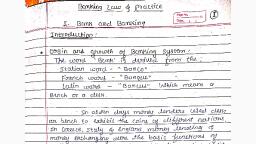
Banking, The Monetary System of credit and debit controlled by the authority of the, government is known as Banking., There are two types of bank in India namely:1. Commercial bank, 2. Central Bank, , Types of Banks, • Central Bank: There is only one central bank known as the Reserve, Bank of India (RBI) which controls the credit system of the country., • Commercial Bank: A Financial Institution which accepts cheques, and cash deposits from the people and offer different kinds of loans for, the purpose of consumption or investment is termed as commercial Bank., It works on the principle of profit motive., , Functions of commercial Bank, • Acceptance of Deposit: - A bank accept deposits from the public. Bank, accepts mainly three types of deposits., 1. Current account deposits-> It is also known as demand deposits, as, amount are payable as and on demand. No interest are paid on these, deposits as they are short term deposit. These accounts are mostly held by, traders and businessman., 2. Saving Account Deposits ->, In this type of account bank imposes, restriction on the amount and number of withdrawals made during a, particular period of time. Bank pays certain amount of interest on this, type of account. These accounts are generally held by household, general, public, salaried class etc., 3. Fixed deposit Accounts -> Money in these accounts is deposited for a, fixed period of time. These are interest earning deposits, so here the rate, of interest is also high compared to other deposits.
Page 2 :
Advancing of Loans: -, , commercial banks give loans and, advances to the public. Bank charges interest from the borrowers which is, more than the interest they pay to their depositors. They make profits out of, this transaction. The types of load banks gives are as follow: 1. Cash Credit->, It is a type of loan which is given to the borrowers, against his current assets such as bonds, shares goods, etc. It is popular, with the Indian Businessman., 2. Outright loans and Advances-> It is a short and medium term loan for a, fixed period of time. Interest has to be paid on the entire amount no, matter how much amount he has used., 3. Overdraft facilities->, It means that the customer is allowed to issue, cheque in excess to his balance in current account. It ids generally given, to reliable customers against appropriate securities for a short period., 4. Discounting bill of exchange-> When a creditor cannot get the bill from, the debtor before 90 days, then he gets it discounted from a commercial, bank. The bank makes the payment by deducting its commission. It is a, type of bank lending., , • Facilities of payment through cheques: - Banks provide a very, convenient system of payment through cheque. It is convenient, cheap, and safe means of making payment., • Transfer of Fund: Banks helps in transfer of fund safely from one, place to another through cheques, drafts, pay orders, mail transfer. Ebanking etc., • Agency functions: It provides various kind of functions to its, customers such as: It collect cheques and make payment on behalf of its, customers. It also helps in sale and purchase of shares and stocks etc., • General Utility services: Bank provide locker facilities for the, safety of the valuables. It also issues gift cheques. Travelling cheques,, and gives financial advices to its customers., • Credit Creation: -In the process of acceptance of deposits and granting, of loans, commercial banks are able to create credit. It means that they, are able to grant more loan than the amount of deposits made by the, customers.
Page 3 :
Other Types of banks, • Central Bank, • Co-operative Bank, • Regional Rural bank, • Land Development Bank, • Exchange Bank, • Export Import Bank, • Development Bank (IBDI), (HDFC), (ICICI)