Notes of Class XII (2021-22), Commercial Art THE MUGHAL SCHOOL - Study Material
Page 1 :
(16TH CENTURY A.D. TO 19TH CENTURY A.D.), PAINTING 049(UNIT-2)
Page 2 :
(Period :16th century to 1800 A.D.), , , , ., , , INDIAN ART(RAJASTHANI TRADITIONAL ART) + PERSIAN ART= MUGHAL ART
Page 3 :
ORIGIN AND DEVELOPMENT OF, , , , ,
Page 4 :
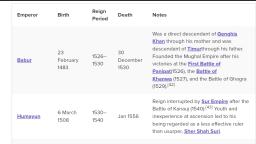
BABUR, , (1526–1530), , , , Babur was from Timur Dynasty, founder of Mughal empire, in INDIA., , , , Babur was not only a brave soldier and an able, commander but he also had a great liking for painting., , , , Babur was mostly in the battle field and died in 1530A.D.
Page 6 :
(1556–1605), , , , Humayun died in 1556 A.D. after ascending the throne of Delhi and left his, son, AKBAR, only child as his successor., , , , Akbar was only THIRTEEN at that time., , , , Emperor Akbar was keenly interested in the art of Painting and, Architecture as well as Sculpture also., , , , Akbar was a man of great strength of character and had a broad vision., The MUGHAL SCHOOL of Painting was organized and reached it’s zenith, during this time., , , , A large number of Indian artists from all over India were recruited to work, in his court. There are many manuscripts that were illustrated in his time.
Page 8 :
SOME MORE ABOUT AKBAR, , , ➢ Akbar had started a new religion “DEEN-E-ILAHI” the aim of which was, to compromise or “SULEH KUL”. He became very popular in very short, time because of his greatness and liberality.
Page 9 :
LIST OF PAINTERS IN AKBAR’S COURT
Page 11 :
JAHANGIR (1605–1625), , , , , ,
Page 12 :
MORE ABOUT JAHANGIR, , , , , ,
Page 15 :
(1658–1707), , , , , ,
Page 17 :
CHARACTERISTICS OF, MUGHAL PAINTING, , , Profile of face is the main characteristic of Mughal School. Almost, all the portraits are EK CHASHM., , , , This is the main effect of Iranian art on Mughal painting., All the paintings have been decorated with the borders around it which are more ornamented., The Mughal emperors craved for royal splendour and discipline. We find, typical atmosphere of royalty even in the gathering for pleasure., Mostly historical scenes have been painted in Mughal School. Maximum, painting of historical scenes was done in Akbar’s time, because he gave much importance to, the manuscripts paintings such as, etc., The beautiful thin & thick fine lines can be judged by portraits of the style., The artist has tried to paint each and every facial hard of the persons which is really wonderful., Garments are beautifully and ornamentally painted in the Mughal painting., Transparent chunni have been painted. Most of the garments are of summer season. The male, figures are shown wearing Angarkha and chudidar pajamas. The use of stripling (Pardaz) is, shown with delicate shading., , , , , , , ,
Page 21 :
➢, , , Artist, , : Miskin, , , , Medium, , : Tempera (Water Colour on paper), , , , Period, , : 1585-90 A.D. (Mughal School), , , , Courtesy, , : National Museum (New Delhi), , This painting is based on the story of lord Krishna. Theme, has been taken from Bhagavata Purana. This painting scene is of that time, when Krishna once lifting Goverdhan mountain on his little finger to save, the people of Gokul from the wrath of Lord Indra., , It is an early painting of Akbar’s time. In this vertical painting Krishna was shown lifting mount, Goverdhan on the lifting on the little finger on his left hand. A big multi coloured mountain with deer, monkeys, trees,, shrubs and grassy has been painted. The handling of the huge mountains shows Persian influence. Under the, mountains, all “Brijvasi” have gathered with their cattle to get shelter from the deluge by the angry rain God Indra. On, the top, sky is shown with blue colour. Even under the mountain dark blue colour sky is shown. Lord Krishna is, painted in large size (Virat Roopa). Krishna is dressed in his “pitamber” (Deep yellow) with a large garland of white, flower s, standing in a relaxed posture lifting the huge mountain effortlessly. Mostly figures are one and half chasm, which an influence of Persian art. is also on the right side of Krishna, a tree is shown in bright green colour.
Page 22 :
, , Artist, , : Miskin, , , , Medium, , : Tempera (Water Colour on paper), , , , Period, , : 1585-90 A.D. (Mughal School), , , , Courtesy, , : National Museum (New Delhi)
Page 23 :
➢, , , , , , SUBJECT MATTER : This painting is based on Jahangir’s love for bird &, , animals. He was a keen falconer & treasured fine specimens of Falcons,, brought from different places. A superb falcon brought from Persia was, moulded by a cat and died. Jahangir asked his painters to paint his, precious pet falcon to be preserved in ‘Jahangir Nama’., DISCRIPTION : Ustad Mansoor knew the fondness of emperor for his pet falcon. In this painting a, , tamed falcon is sitting on a cushioned bird rest. On the bird rest, Nadir – ul – As is signed by Ustad, Mansoor who was awarded this title. The cruel eye of falcon can be seen in this painting. The falcon is, painted in white against a yellow background with brown details of its folded wings, a sharp beak and, round vigilant eyes is painted in light brown and yellow ochre deep colour., Three words Jahangir, Pata, Syah at top, Bahari near the falcon and Uttam on the bottom are written., Bahari means falcon and Uttam means excellent.
Page 25 :
➢, Painter, : Ustad Faquirullah Khan, Medium, : Tempera (water colour) on Paper, Period, : Circa 1640 A.D. (Shahjahan), Collection : The National Museum, New Delhi, , , DISCRIPTION : This horizontal painting of saint KABEER shows him weaving a garment on his, , loom, in a meditating mood. The other saint, RAIDAS sitting closed by, is also in the same, mood. Both are meditating on a same religious topic. The painting brings simple and peaceful, Indian village life, where work is worship. The huts of the saints are in rural Indian villages. The, colours used are brown and light blue. The border of the painting is light brown and shades are, very fine. DARA SHIKOH (son of shahjahan) resected both Hindu and Muslim saints. This is the, master piece of the paintings painted during that time.
Page 27 :
, , Painter, , : Haji Madni, , , , Medium, , : water colour (Tempera), , , , Period, , : 1740 – 50 A.D (Provincial Mughal), , , , Collection, , : National Museum, New Delhi, , SUBJECT MATTER : This painting is based on the marriage procession of Dara Sikoh. This, painting suggests that the Artist was aware of historical account of Dara Sikoh’s fabulous, marriage involving a cost of Rs. Thirty two lacs, the half of which amount was spent by his elder, sister Jahanara Begum. Dara Sikoh got married to Nadira Begum in 1633 A.D., DISCRIPTION :This magnificent painting, an all-time master piece, is a vertical brilliant depiction of the marriage, procession of Dara Shikoh who is riding alert on a decorated horse. While his father is also riding on another, decorated horse, just behind Dara Shikoh’s horse. He is followed by three attendant one bearing a candle, the, second one holding the horse and the third one is carrying a chowri. The royal people are shown riding horses and, some are on foot proceeding towards the bride’s house. A large gathering of men and woman is joyfully receiving the, Barat. All the figures are ek-chasm. Marvellous depiction of various types of fireworks can be seen in the, background. Well decorated border is there. White, Red, Green, Maroon, Turquoise blue with a touch of Greyish, black colour have been used. Golden colour has also been used at important places. This meticulously done, painting brings forth all the gaiety and joy of the festive occasion.



 Learn better on this topic