Notes of Plus Two, Chemistry d and f Block Elements - Study Material
Page 1 :
The d and f Block Elements
Page 4 :
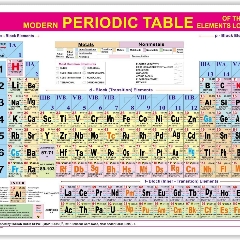
d block elements, • Elements from 3rd group to 12th group in the, Modern Periodic table are called d-block, elements., • In these elements their last electron enters in the, penultimate d- sub shell. They are placed in, between sblock and p-block elements. They show, a regular transition from the highly, electropositive metals of S block elements to the, less electropositive P-block elements. So they are, called transition elements.
Page 5 :
• Transition elements can be defined as, elements which contain partially filled d, orbitals in their atomic state or in any of their, oxidation state. This definition does not, include Zn, Cd and Hg. So they are not, regarded as transition elements. Or, they are, called pseudo transition elements.
Page 6 :
There are four series of transition, elements., • 1) 3d series [from Sc (z = 21) to Zn (z = 30)], • 2) 4d series [from Y (z = 39) to Cd (z = 48)], • 3) 5d series [from La (z =57), Hf (z = 72) to Hg, (z=80)], • 4) 6d series [from Ac (z=89), Rf (z=104) to Cp, (z=112)]
Page 7 :
Electronic Configuration, • General outer electronic configuration of d-block, elements is (n-1) d 1-10ns1-2. There is only a small, difference in energy between (n-1)d orbital and ns, orbital. So in some cases ns electrons are also, • transferred to (n-1)d level., • The electronic configurations of Cr and Cu in the 3d, series show some exceptions., • 24Cr – [Ar] 3d5 4s1, • 29Cu – [Ar] 3d10 4s1, • This is due to the extra stability of half-filled and, completely-filled electronic configurations. (d5 or d10)
Page 8 :
General characteristics of, transition elements, • 1. Atomic and ionic radii, In a given transition series, the atomic and ionic radii first, decreases, then become constant and increases towards the, end of the series. This is because in transition elements the, new electron enters in a d orbital. Initially since there is a few, numbers of d electrons, the shielding effect is very poor. As, the atomic number increases, the nuclear charge also, increases, so the atomic radius decreases. Towards the middle, of the series, the increase in nuclear charge is balanced by the, shielding effect and so the atomic radius becomes constant., Towards the end of the series, as the e- - e- repulsion, increases the atomic radius also increases
Page 9 :
• The atomic and ionic radii of 2nd and 3rd row, transition metals are quite similar. This is due, to the Lanthanide contraction. In between the, 2nd and 3rd row transition elements, 4f, electrons are present. The 4f electrons have, very poor shielding effect and as a result the, atomic and ionic radii of Lanthanides decrease, from left to right (Lanthanide contraction).
Page 10 :
2. Melting and boiling points, • In a given transition series the melting and boiling, points 1st increases up to the middle and then, decreases. This can be explained in terms of, metallic bond strength which depends on the, number of unpaired electrons. As the number of, unpaired electron increases, the metallic bond, strength increases., • Hence the melting point also increases. In a given, transition series, the number of unpaired, electrons increases up to the middle and then, decreases.
Page 11 :
3. Ionisation enthalpy, • The ionisation enthalpy of transition elements generally, increases from left to right. This is due to increase in, nuclear charge. But the increase is not regular;, • After the removal of one electron, the relative energies, of 4s and 3d orbitals get changed., • Hence the remaining electron in the 4S level is, transferred to 3d level. So the unipositive ions have dn, configuration with no 4s electrons. During this reorganisation of electrons, some energy is released and, it is known as exchange energy. So the net energy, required to remove the 1st electrons is equal to the, sum of ionisation enthalpy and exchange energy.
Page 12 :
4. Oxidation State, • Transition metals show variable oxidation states. This is, because in these elements d and s electrons have, comparable energies. So in chemical reaction along, with s-electrons, d-electrons also participate. In a given, transition series, the maximum oxidation state, increases up to the middle and then decreases. This is, due to the half-filled or noble gas configuration. The, common oxidation state of 1st row transition elements, is +2. The maximum oxidation state increases from top, to bottom in a group. In lower oxidation state, the, transition element mainly forms ionic compounds
Page 13 :
5. Electrode Potential, • The electrode potential values of first row, transition series generally increases from left to, right with some exceptions. The E0(Cu2+/Cu) is, positive (+0.34V), while the E0 values of all the, other first row transition elements are –ve. This is, because the high energy to transform Cu(s) to, Cu2+(aq) is not balanced by its hydration, enthalpy. So Cu does not easily reacts with acid, and liberate H2. Only oxidizing acids [HNO3 and, hot Conc. H2SO4] react with Cu and the acid get, reduced
Page 15 :
6. Magnetic Properties, • Transition metals show mainly two types of, magnetic properties- paramagnetism and, diamagnetism., • Paramagnetism arises from the presence of, unpaired electrons. Each unpaired e- is associated, with a spin magnetic moment and an orbital, magnetic moment. For the compounds of 1st row, transition elements, the contribution of orbital, magnetic moment is effectively cancelled and so, only spin magnetic moment is considered
Page 16 :
• It is determined by the no. of unpaired e-s and is, calculated by the spin only formula:, μs = √n(n+2), where n is the no. of unpaired electrons, μs is the spin only magnetic moment in the unit of, Bohr Magneton (B.M)., • The magnetic moment increases with increase in, no. of unpaired e-s. Thus the observed magnetic, moment gives an idea about the no. of unpaired, e-s present in the atom or ion
Page 17 :
7. Formation of coloured ions or, compounds, • Most of the Transition metals ions or, compounds are coloured. This is because of, the presence of partially filled d orbitals., When an electron from a lower energy d, orbital is exited to higher d level, it absorbs, energy and this is equal to the energy of, certain colours in visible region. So the colour, observed is the complementary colour of the, light absorbed.
Page 18 :
8. Formation of Complexes, • Transition metals form a large no. of, complexes. This is due to:, • 1. Comparatively smaller size, • 2. High ionic charge, • 3. Presence of partially filled d orbitals, • 4. Ability to show variable oxidation state, • Eg: K4[Fe(CN)6], K3[Fe(CN)6], [Ni(CO)4] etc
Page 19 :
9. Catalytic Property, • Transition metals act as catalysts in a large no., of chemical reactions. This is due to their large, surface area and their ability to show variable, oxidation state.
Page 20 :
10. Interstitial Compound Formation, • These are formed when smaller atoms like H,, N, C, B etc. are trapped inside the crystal, lattice of the metal. They are usually nonstoichiometric and neither typically ionic nor, covalent., • E.g.: Fe3H, Mn4N, TiC, VH0.56, TiH1.7 etc.
Page 21 :
•, •, •, •, •, , Some the properties of these compounds are:, 1) They have high melting point., 2) They are very hard., 3) They retain metallic conductivity., 4) They are chemically inert.
Page 22 :
11. Alloy Formation, • Alloys are homogeneous solid solutions of, elements in which at least one element is a, metal. They are formed by atoms with metallic, radii within about 15% of each other. Because, of similar radii and other characteristics of, Transition metals, they readily form alloys. The, alloys formed are hard and have high m.p., e.g.: Bronze (Cu, Zn), Stainless steel (Fe, C, Ni,, Mn and Cr).
Page 27 :
• The structures of chromate ion, CrO42– and, the dichromate ion, Cr2O7 2– are shown, below. The chromate ion is tetrahedral, whereas the dichromate ion consists of two, tetrahedra sharing one corner with Cr–O–Cr, bond angle of 126°.
Page 32 :
• Uses: It is used as an oxidising agent in acidic,, basic and neutral medium. It is used as a, primary standard in volumetric analysis. It is, used for the bleaching of wool, cotton, silk, and other textile fibres and also for the, decolourisation of oils.
Page 33 :
THE INNER TRANSITION ELEMENTS ( fBLOCK), • The elements in which the last electron enters, in the anti-penultimate f-subshell are called fblock elements. They include lanthanides of, the 6th period and actinides of the 7th period., They are also called inner transition elements., Since lanthanum (57La) closely resembles, lanthanides, it is also included along with, them. Similarly, actinium (89Ac) is included, along with actinoids because of its close, resemblance with them.
Page 34 :
The Lanthanoids or lanthanides, • The 14 elements after lanthanum of the 6th, period are called lanthanides or lanthanoids, or lanthanones or rare earths. They include, elements from 58Ce to 71Lu. They are, generally represented as Ln.
Page 35 :
Atomic and ionic radii - Lanthanide, Contraction, • In lanthanides, the atomic and ionic radii, decrease regularly from lanthanum to, lutetium. This regular decrease in the atomic, and ionic radii along lanthanide series (though, very slightly) is called lanthanide contraction.
Page 37 :
• Reason: In lanthanides, as the atomic, number increases, the nuclear charge, increases one by one and the electrons are, added to the anti-penultimate f subshell. Due, to its diffused shape, f orbitals have poor, shielding effect. So the nucleus can attract the, outer most electrons strongly and as a result, the radii decreases.
Page 38 :
Consequences, • 1) Due to Lanthanide Contraction the 2nd and 3rd, row transition series elements have similar radii., E.g. Zr – 160pm and Hf -159pm, • 2) Lanthanides have similar physical properties, and they occur together in nature. So their, isolation is difficult., • 3) The basic character of their hydroxides, decreases from lanthanum to lutetium. i.e,, La(OH)3 is more basic than Lu(OH)3.
Page 39 :
Oxidation number, • In lanthanoids, the most common oxidation state, is +3. However, +2 and +4 ions in solution or in, solid compounds are also obtained. This, irregularity arises mainly from the extra stability, of empty, half-filled or filled f subshells. Cerium, shows the oxidation state +4 due to its noble gas, configuration. Pr, Nd, Tb and Dy also exhibit +4, state but only in oxides, MO2. Eu and Yb shows, +2 oxidation state because of the stable f7 or f14, configuration. Sm shows +2 oxidation state also.
Page 40 :
Uses of Lanthanides, • The main use of the lanthanoids is for the, production of alloy steels. An important alloy is, mischmetall which consists of a lanthanoid metal, (~ 95%) and iron (~ 5%) and traces of S, C, Ca and, Al. A great deal of mischmetall is used in, Magnesium based alloy to produce bullets, shell, and lighter flint. Mixed oxides of lanthanoids are, employed as catalysts in petroleum cracking., Some Ln oxides are used as phosphors in, television screens and similar fluorescing surfaces
Page 41 :
The Actinoids or Actinones, • The 14 elements after actinium in the 7th, period of modern periodic table are called, actinides or actinoids or actinones. They, include elements from 90Th to 103Lr. Most of, them are artificially prepared and are short, lived. They are radioactive. The elements after, Uranium are artificially prepared and so they, are called trans-uranium elements or transuranic elements
Page 42 :
Atomic and ionic radii, • In actinoid series the atomic and ionic radii, decreases regularly from left to right. This is, known as Actinoid contraction.
Page 43 :
Oxidation state, • Common oxidation state of actinoids is +3., The elements in the first half of the series, show higher oxidation states. The maximum, oxidation state increases from +4 in Th to +5,, +6 and +7 respectively in Pa, U and Np but, decreases in succeeding elements. The, actinoids resemble the lanthanoids in having, more compounds in +3 state than in the +4, state.
Page 44 :
Comparison between lanthanoids and, acinoids, • 1. Most of the actinoids are artificially, prepared and are radioactive., • 2. The first ionisation enthalpy of early, actinoids is lower than those of lanthanoids., • 3. Actinoid contraction is greater from, elements to elements than lanthanoid, contraction. This is due to greater shielding, effect of 5f electrons.



 Learn better on this topic