Notes of +2 Zoology 22-23, Zoology living world PPT1 (1).pdf - Study Material
Page 1 :
THE LIVING, WORLD, PLUS ONE
Page 2 :
THE LIVING WORLD, , THE LIVING WORLD, COMPRISES AN AMAZING DIVERSITY OF LIVING ORGANISMS, , TLB’S Biology Classes
Page 3 :
THE LIVING WORLD, , We can see living organisms in, extraordinary habitats like, cold mountains......, , TLB’S Biology Classes
Page 4 :
THE LIVING WORLD, We can see living organisms in extraordinary habitats, like deciduous forests......, , TLB’S Biology Classes
Page 5 :
THE LIVING WORLD, We can see living organisms in, extraordinary habitats like oceans, , TLB’S Biology Classes, , .....
Page 6 :
THE LIVING WORLD, We can see living organisms in extraordinary, habitats like deserts......., , TLB’S Biology Classes
Page 7 :
THE LIVING WORLD, , We can see living organisms in extraordinary habitats, like hot springs...., , TLB’S Biology Classes
Page 8 :
THE LIVING WORLD, , WHAT IS ‘LIVING’?, , TLB’S Biology Classes
Page 9 :
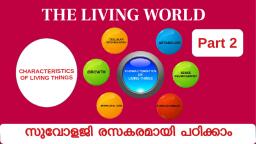
THE LIVING WORLD, , CHARACTERS OF LIVING ORGANISMS, , TLB’S Biology Classes
Page 10 :
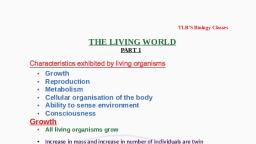
THE LIVING WORLD, , Growth,, Reproduction,, Ability to sense environment, Metabolism,, Ability to self-replicate,, Self-organise, etc, Let us try to understand each of these., TLB’S Biology Classes
Page 11 :
THE LIVING WORLD, , Growth, All living organisms grow., , TLB’S Biology Classes
Page 12 :
THE LIVING WORLD, , GROWTH, Increase in mass and increase in number of individuals are twin, characteristics of growth., , TLB’S Biology Classes
Page 13 :
THE LIVING WORLD, , GROWTH, Unicellular organisms and multi cellular organism grow by cell division., , TLB’S Biology Classes
Page 14 :
THE LIVING WORLD, , GROWTH, , What is the difference between the growth of Plants and Animals ?, , TLB’S Biology Classes
Page 15 :
THE LIVING WORLD, , GROWTH, In plants, growth by cell division occurs continuously throughout their life span., , TLB’S Biology Classes
Page 16 :
THE LIVING WORLD, , GROWTH, • In animals, growth is seen only up to a certain age., • However, cell division occurs in certain tissues to replace lost cells., , TLB’S Biology Classes
Page 17 :
THE LIVING WORLD, , GROWTH, Non-living objects, also grow if we take, increase in body, mass as a criterion, for growth., Mountains grow., , TLB’S Biology Classes
Page 18 :
THE LIVING WORLD, , GROWTH, , Boulders grow., , TLB’S Biology Classes
Page 19 :
THE LIVING WORLD, , GROWTH, , Sand mounds, grow., , TLB’S Biology Classes
Page 20 :
THE LIVING WORLD, , GROWTH, Non-living objects also grow if we take, increase in body mass as a criterion for, growth., ●, Mountains, boulders and sand mounds do, grow., ●, However, this kind of growth exhibited by nonliving objects is by accumulation of material on, the surface., ●, , TLB’S Biology Classes
Page 21 :
THE LIVING WORLD, , GROWTH, ●, ●, , ●, , ●, , In living organisms, growth is from inside., In non living things growth is an external, property., Growth, therefore, cannot be taken as a, defining property of living organisms., A dead organism does not grow., , So growth is not a defining property of living things., , TLB’S Biology Classes
Page 22 :
THE LIVING WORLD, , Reproduction is a characteristic of living organisms., , TLB’S Biology Classes
Page 23 :
THE LIVING WORLD, , REPRODUCTION, • In multicellular organisms, reproduction refers to the production of, progeny possessing features more or less similar to those of, parents., , TLB’S Biology Classes
Page 24 :
THE LIVING WORLD, , REPRODUCTION, , Two types of Reproduction, • Sexual reproduction, • Asexual reproduction, , TLB’S Biology Classes
Page 25 :
THE LIVING WORLD, , REPRODUCTION, • Fungi multiply and spread, easily due to the millions, of asexual spores they, produce., , TLB’S Biology Classes
Page 26 :
THE LIVING WORLD, , REPRODUCTION, , • In lower organisms like yeast and hydra, reproduction is, by budding., , TLB’S Biology Classes
Page 27 :
THE LIVING WORLD, , REPRODUCTION, • In Planaria (flat worms),, reproduction is by, regeneration., • (A fragmented organism, regenerates the lost part, of its body and becomes, a, new organism.), , TLB’S Biology Classes
Page 28 :
THE LIVING WORLD, , REPRODUCTION, • The fungi,, • the filamentous algae,, • the protonema of mosses,, all easily multiply by fragmentation., , TLB’S Biology Classes, , 28
Page 29 :
THE LIVING WORLD, , REPRODUCTION, , • The fungi, multiply by fragmentation., , TLB’S Biology Classes, , 29
Page 30 :
THE LIVING WORLD, , REPRODUCTION, , The filamentous, algae multiply by, fragmentation., , TLB’S Biology Classes, , 30
Page 31 :
THE LIVING WORLD, , REPRODUCTION, , The protonema of, mosses multiply by, fragmentation., , TLB’S Biology Classes, , 31
Page 32 :
THE LIVING WORLD, , REPRODUCTION, • Unicellular organisms like, bacteria, unicellular algae, or Amoeba, reproduction, is synonymous with, growth, i.e., increase in, number of cells., , TLB’S Biology Classes
Page 33 :
THE LIVING WORLD, , REPRODUCTION, ●, , We have already defined growth as equivalent to, increase in cell number or mass., , ●, , Hence, we notice that in single-celled organisms,, we are not very clear about the usage of these two, terms – growth and reproduction., , TLB’S Biology Classes
Page 34 :
THE LIVING WORLD, , REPRODUCTION, • There are many organisms, which do not reproduce, (mules, sterile worker bees,, infertile human couples, etc)., Hence, reproduction also, cannot be an all-inclusive, defining characteristic of living, organisms., • Of course, no non-living object, is capable of reproducing or, replicating by itself., TLB’S Biology Classes
Page 35 :
THE LIVING WORLD, , Another characteristic of life is metabolism., , TLB’S Biology Classes
Page 36 :
THE LIVING WORLD, Features of living organisms., , Growth, ●, ●, , All living organisms grow., Increase in mass and increase in number of individuals are twin, characteristics of growth., , Difference between growth of plants and animals, ●, , ●, , In plants, growth by cell division occurs continuously, throughout their life span., In animals, this growth is seen only up to a certain age., , TLB’S Biology Classes
Page 37 :
THE LIVING WORLD, Why Growth cannot be taken as a defining property of, living organisms ?, if we take increase in body mass as a criterion for growth,, non-living objects also grow., Eg: Mountains, boulders and sand mounds do grow., , Growth exhibited by non-living objects is by accumulation, of material on the surface., In living organisms, growth is from inside., , Growth, therefore, cannot be taken as a defining property, of living organisms., TLB’S Biology Classes
Page 38 :
THE LIVING WORLD, Features of living organisms., , REPRODUCTION, Reproduction refers to the production of progeny possessing, features more or less similar to those of parents., , Organisms reproduce by asexual means also., ●, , Fungi multiply by asexual spores, , ●, , In lower organisms like yeast and hydra by budding., , ●, , ●, , In Planaria by regeneration., The fungi, the filamentous algae, the protonema of mosses multiply, by fragmentation., , TLB’S Biology Classes
Page 39 :
THE LIVING WORLD, Why reproduction cannot be considered as a, defining characteristic of living organisms?, ●, , In unicellular organisms like bacteria, unicellular algae or, Amoeba, reproduction is synonymous with growth., , ●, , There are many organisms which do not reproduce, (mules, sterile worker bees, infertile human couples, etc)., , ●, , Hence, reproduction also cannot be a defining characteristic, of living organisms., , TLB’S Biology Classes
Page 40 :
THE LIVING WORLD, , Another characteristic of life is metabolism., , TLB’S Biology Classes
Page 41 :
THE LIVING WORLD, , METABOLISM, • All living organisms are, made of chemicals., • The sum total of all the, chemical reactions, occurring in our body is, metabolism., • There are thousands of, metabolic reactions, occurring simultaneously, inside all living organisms., TLB’S Biology Classes
Page 42 :
THE LIVING WORLD, , METABOLISM, ●, ●, , ●, , ●, , ●, , No non-living object exhibits metabolism., Metabolic reactions can be demonstrated outside the body in, cell-free systems., An isolated metabolic reaction(s) outside the body of an, organism, performed in a test tube is neither living nor nonliving., , Hence metabolism is a defining feature of all living, organisms, , Isolated metabolic reactions in vitro are not living things but, surely living reactions., , Hence, cellular organisation of the body is the defining, feature of life forms., TLB’S Biology Classes
Page 43 :
THE LIVING WORLD, , METABOLISM, All metabolic reactions, taking place inside the, cells., , Hence, cellular, organisation of the, body is the defining, feature of life forms., , TLB’S Biology Classes
Page 44 :
THE LIVING WORLD, , CONSCIOUSNESS, • The most obvious and, technically, complicated, feature of all living organisms, is the ability to sense their, surroundings or environment, and, respond, to, these, environmental stimuli which, could be physical, chemical or, biological., , TLB’S Biology Classes
Page 45 :
THE LIVING WORLD, , CONSCIOUSNESS, , We sense our environment, through our sense organs., , TLB’S Biology Classes
Page 46 :
THE LIVING WORLD, , CONSCIOUSNESS, • Plants respond to external, factors like light, water,, temperature, other, organisms, pollutants, etc., • All organisms, from the, prokaryotes to the most, complex eukaryotes can, sense and respond to, environmental cues., TLB’S Biology Classes
Page 47 :
THE LIVING WORLD, , CONSCIOUSNESS, • All organisms handle, chemicals entering their, bodies. All organisms, therefore, are ‘aware’ of, their surroundings., • Human being is the only, organism who is aware of, himself, i.e., has selfconsciousness., TLB’S Biology Classes
Page 48 :
THE LIVING WORLD, , CONSCIOUSNESS, Consciousness therefore, becomes the, defining property of living organisms., , TLB’S Biology Classes
Page 49 :
THE LIVING WORLD, , When it comes to human beings, it is all the more difficult, to define the living state., , TLB’S Biology Classes
Page 50 :
THE LIVING WORLD, ●, , We observe patients lying in coma, in hospitals virtually supported by, machines which replace heart and, lungs., , ●, , The patient is otherwise brain-dead., , ●, , The, , patient, , has, , no, , self-, , consciousness., ●, , Are such patients who never come, back to normal life, living or nonliving?, TLB’S Biology Classes
Page 51 :
THE LIVING WORLD, , ●, , All, , living, , phenomena, , are, , due, , to, , underlying interactions., ●, , Properties of tissues are not present in, the constituent cells but arise as a result, of interactions among the constituent, cells., , TLB’S Biology Classes
Page 52 :
THE LIVING WORLD, , ●, , Similarly, properties of cellular, organelles are not present in, the molecular constituents of, the organelle but arise as a, result of interactions among, the, , molecular, , components, , comprising the organelle., , TLB’S Biology Classes
Page 53 :
THE LIVING WORLD, , WHAT ARE LIVING ORGANISMS ?, Living organisms are, self-replicating, evolving and self-regulating, interactive systems capable of responding to, external stimuli., , TLB’S Biology Classes
Page 54 :
THE LIVING WORLD, , DIVERSITY IN THE, LIVING WORLD, , TLB’S Biology Classes
Page 55 :
THE LIVING WORLD, If we look around we will, see a large variety of, living organisms, like, ●, ●, ●, ●, ●, ●, , Plants., Animals, Birds, Insects,, Potted plants,, Pets etc, TLB’S Biology Classes
Page 56 :
THE LIVING WORLD, , There are also several, organisms that we cannot, see with our naked eye, like, ●, ●, , Bacteria, Virus etc, , TLB’S Biology Classes
Page 57 :
THE LIVING WORLD, , Each different kind of plant,, animal or organism that we see,, represents a species., , TLB’S Biology Classes
Page 58 :
THE LIVING WORLD, The number of species that are, known and described range, between 1.7-1.8 million., , This refers to, , biodiversity, or the number and, types of organisms, present on earth., TLB’S Biology Classes
Page 59 :
THE LIVING WORLD, , Nomenclature, , TLB’S Biology Classes
Page 60 :
THE LIVING WORLD, , TLB’S Biology Classes
Page 62 :
THE LIVING WORLD, , we know the plants and, animals in our own area, by their local names., These local names would, vary from place to place,, even within a country., , TLB’S Biology Classes
Page 63 :
THE LIVING WORLD, Nomenclature, Nomenclature is the standardization, of naming of living things so that a, particular organism is known by the, same name all over the world., , English, , - Crow, , Chinees, , -Wūyā, , Malayalam - Kakka, Hindi, TLB’S Biology Classes, , - kaua
Page 64 :
THE LIVING WORLD, Identification, , The first step in, nomenclature or, naming is identification., , TLB’S Biology Classes
Page 65 :
THE LIVING WORLD, International Code for Botanical Nomenclature (ICBN), provide agreed principles and criteria for naming plants., , TLB’S Biology Classes
Page 66 :
THE LIVING WORLD, , International Code of, Zoological Nomenclature, (ICZN), provide agreed principles and, criteria for naming animals., , TLB’S Biology Classes
Page 67 :
THE LIVING WORLD, , Binomial nomenclature, , TLB’S Biology Classes
Page 68 :
THE LIVING WORLD, , Binomial nomenclature, system is, given by, Carolus Linnaeus, , TLB’S Biology Classes
Page 69 :
THE LIVING WORLD, Binomial nomenclature, The system of providing a name to an organism, with, , two, , components, , is, , called, , nomenclature., Each name has two components –, ●, , The Generic name, , ●, , and the specific epithet., TLB’S Biology Classes, , Binomial
Page 70 :
THE LIVING WORLD, Example for, , Binomial nomenclature, , ●, , The scientific name of mango is, written as Mangifera, , indica., , TLB’S Biology Classes
Page 71 :
THE LIVING WORLD, Example for, , Binomial nomenclature, ●, , The scientific name of mango is, written as Mangifera, , ●, , indica., , In this name Mangifera represents, the genus, , ●, , indica, is a particular species, or, a specific epithet., , TLB’S Biology Classes
Page 72 :
THE LIVING WORLD, , Universal Rules of Nomenclature, , TLB’S Biology Classes
Page 73 :
THE LIVING WORLD, Universal Rules of Nomenclature, 1. Biological names are generally in Latin and written in, , italics.They are Latinised or derived from Latin irrespective of, their origin., , Panthera tigris (Tiger), Solanum tuberosum (Potato), Mangifera indica (mango), Homo sapience (man), , TLB’S Biology Classes
Page 74 :
THE LIVING WORLD, Universal Rules of Nomenclature, 2. The first word in a biological name represents the genus while, the second component denotes the specific epithet., , Panthera tigris (Tiger), Solanum tuberosum (Potato), Mangifera indica (mango), Homo sapience (man), , TLB’S Biology Classes
Page 75 :
THE LIVING WORLD, Universal Rules of Nomenclature, 3. When handwritten,both the words in a biological name are separately, underlined, or printed in italics to indicate their Latin origin., , Panthera tigris (Tiger), Solanum tuberosum (Potato), , TLB’S Biology Classes
Page 76 :
THE LIVING WORLD, Universal Rules of Nomenclature, 4. The first word denoting the genus starts with a capital letter, while the specific epithet starts with a small letter., Example, , Mangifera indica, , TLB’S Biology Classes
Page 77 :
THE LIVING WORLD, Universal Rules of Nomenclature, 1. Biological names are generally in Latin and written in italics., , 2. The first word in a biological name represents the genus while, the second component denotes the specific epithet., 3. When handwritten,both the words in a biological name are separately, underlined, or printed in italics to indicate their Latin origin., 4. The first word denoting the genus starts with a capital letter, while the specific epithet starts with a small letter., , TLB’S Biology Classes
Page 78 :
THE LIVING WORLD, Name of the author appears after the specific epithet, i.e., at the, end of the biological name and is written in an abbreviated form,, , Example, , Mangifera indica Linn., It indicates that this species was first described by Linnaeus., , TLB’S Biology Classes
Page 79 :
THE LIVING WORLD, Classification, Classification is the process by which anything is grouped, into convenient categories based on some easily, observable characters., , TLB’S Biology Classes
Page 80 :
THE LIVING WORLD, Taxa, The scientific term, for these, categories is taxa, , TLB’S Biology Classes
Page 81 :
THE LIVING WORLD, , TAXONOMY, External and internal, structure, along with the, structure of cell, development, process and ecological, information of organisms are, essential and form the basis, of modern taxonomic studies., TLB’S Biology Classes
Page 82 :
THE LIVING WORLD, , TAXONOMY, Based on characteristics, all, living organisms can be, classified into different taxa, (categories). This process of, classification is taxonomy., , TLB’S Biology Classes
Page 83 :
THE LIVING WORLD, Basic processes of taxonomy., , ●, , Characterisation,, , ●, , Identification,, , ●, , ●, , Classification and, Nomenclature, are the processes that are basic to, taxonomy., , TLB’S Biology Classes
Page 84 :
THE LIVING WORLD, Systematics, ●, , The branch of study about the different, kinds of organisms, their diversities and, relationship among them are called, , systematics., ●, , The word systematics is derived from the, Latin word ‘systema’ which means, systematic arrangement of organisms., , ●, , Linnaeus used Systema Naturae as the, title of his publication., TLB’S Biology Classes
Page 85 :
THE LIVING WORLD, , TAXONOMIC CATEGORIES, , TLB’S Biology Classes
Page 86 :
THE LIVING WORLD, , TAXONOMIC CATEGORIES, The, , hierarchy, , taxonomic, , of, , steps, , arrangement, , is, , in, , the, , called, , taxonomic Categories., All taxonomic categories together called, , taxonomic hierarchy, TAXON, It is the unit of classification which represents a, rank in classification, TLB’S Biology Classes
Page 87 :
THE LIVING WORLD, , Taxonomic Categories, showing, Hierarchial, arrangement in, ascending order, , TLB’S Biology Classes
Page 88 :
THE LIVING WORLD, , SPECIES, , TLB’S Biology Classes
Page 89 :
THE LIVING WORLD, SPECIES, , A group of individual, organisms with, fundamental, similarities are called, as a species., Panthera tigris (Tiger), TLB’S Biology Classes
Page 94 :
THE LIVING WORLD, , SPECIES, • Human beings belong to, the species sapiens which, is grouped in genus Homo., The scientific name thus,, for human being, is written, as Homo sapiens., , TLB’S Biology Classes
Page 95 :
THE LIVING WORLD, , GENUS, • Genus is a group of related species., • Each genus may have one or more than, one specific epithets representing different, organisms, but having morphological, similarities., , TLB’S Biology Classes
Page 96 :
THE LIVING WORLD, , GENUS, , TLB’S Biology Classes
Page 99 :
THE LIVING WORLD, , FAMILY, , TLB’S Biology Classes
Page 100 :
THE LIVING WORLD, , FAMILY, Family, has a group of, related genera with still, less number of similarities, as compared to genus and, species., , TLB’S Biology Classes
Page 101 :
THE LIVING WORLD, , FAMILY, • Among animals,, genus Panthera,, comprising lion,, tiger, leopard is put, along with genus,, Felis (cats) in the, family Felidae., , TLB’S Biology Classes
Page 102 :
THE LIVING WORLD, , FAMILY, • Similarly, cat and, a dog, are, separated into, two different, families – Felidae, and Canidae,, respectively., , TLB’S Biology Classes
Page 103 :
THE LIVING WORLD, , FAMILY, Among plants three, different genera, • Solanum,, • Petunia and, • Datura are placed in, the family, , Solanaceae., , TLB’S Biology Classes
Page 104 :
THE LIVING WORLD, , ORDER, , TLB’S Biology Classes
Page 105 :
THE LIVING WORLD, , ORDER, • Order is the assemblage of, families which exhibit a few, similar characters., • Plant families like, Convolvulaceae,, Solanaceae are included in, the order Polymoniales, mainly based on the floral, characters., TLB’S Biology Classes
Page 106 :
THE LIVING WORLD, , ORDER, The animal order,, , Carnivora, includes, families like Felidae, and Canidae., , TLB’S Biology Classes
Page 107 :
THE LIVING WORLD, , Class, , TLB’S Biology Classes
Page 108 :
THE LIVING WORLD, Class, • Includes related orders., • For example, order Primata, comprising monkey, gorilla, and gibbon is placed in class, Mammalia along with order, Carnivora that includes, animals like tiger, cat and, dog., , TLB’S Biology Classes
Page 109 :
THE LIVING WORLD, , PHYLUM, , TLB’S Biology Classes
Page 110 :
THE LIVING WORLD, , PHYLUM, • Classes comprising animals like fishes,, amphibians, reptiles, birds along with, mammals constitute the next higher, category called Phylum., , TLB’S Biology Classes
Page 111 :
THE LIVING WORLD, , PHYLUM, • Based on the common features like presence of notochord, and dorsal hollow neural system, fishes, amphibians,, reptiles, birds and mammals are included in phylum, Chordata., , TLB’S Biology Classes
Page 112 :
THE LIVING WORLD, Division, In case of plants, classes with a, few similar characters are, assigned to a higher category, called Division., , 112
Page 113 :
THE LIVING WORLD, , KINGDOM, , TLB’S Biology Classes, , 113
Page 114 :
THE LIVING WORLD, , KINGDOM, , Kingdom Animalia, All animals belonging to various phyla are, assigned to the highest category called, Kingdom Animalia, , Kingdom Plantae,, Includes comprises all plants from various, divisions., , TLB’S Biology Classes, , 114
Page 115 :
THE LIVING WORLD, , ORGANISMS WITH THEIR TAXONOMIC CATEGORIES, , TLB’S Biology Classes
Page 117 :
THE LIVING WORLD, , TLB’S Biology Classes
Page 118 :
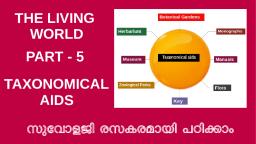
THE LIVING WORLD, , These aids help to identify, the species, helps to place, the, , organism, , in, , taxonomical hierarchy and, also to store the specimen, for future use., , TLB’S Biology Classes
Page 120 :
THE LIVING WORLD, TAXONOMICAL, AIDS, Herbarium is a store house of, , Herbarium, , collected plant specimens that, are, , dried,, , pressed, , and, , preserved on sheets., , TLB’S Biology Classes
Page 123 :
THE LIVING WORLD, TAXONOMICAL, AIDS, , Herbarium, , Date of collection :, Place of collection:, English Name, , :, , Local Name, , :, , Botanical Name, , :, , Collector’s Name :, TLB’S Biology Classes
Page 124 :
THE LIVING WORLD, Herbarium, Herbarium sheets are arranged according to universally, accepted system of classification., • These specimens become a store house for future use and serve, ●, , as a quick referral system in taxonomy., , TLB’S Biology Classes
Page 125 :
TAXONOMICAL, THE LIVING WORLD, AIDS, Herbarium, The herbarium sheets carry a label providing, information, , about, , collection,, , English,, , date, local, , and, and, , place, , of, , botanical, , names, collector’s name etc., Date of collection :, Place of collection:, English Name, , :, , Local Name, , :, , Botanical Name, , :, , Collector’s Name :, TLB’S Biology Classes
Page 127 :
TAXONOMICAL AIDS, Botanical Gardens, , Specialised gardens have collections of, living plants for reference., , TLB’S Biology Classes
Page 128 :
TAXONOMICAL AIDS, Botanical Gardens, • Plant species in these gardens, are grown for identification, purposes and each plant is, labelled, , indicating, , its, , botanical/scientific name and, its family., , TLB’S Biology Classes
Page 130 :
TAXONOMICAL AIDS, Botanical Gardens, , Indian Botanical, Garden, Howrah, (India), , TLB’S Biology Classes
Page 131 :
TAXONOMICAL AIDS, Botanical Gardens, , National Botanical, Research Institute,, Lucknow (India)., , TLB’S Biology Classes
Page 133 :
TAXONOMICAL AIDS, , MUSEUM, • Museums have collections, of preserved plant and, animal specimens for, study and reference., , TLB’S Biology Classes
Page 134 :
TAXONOMICAL AIDS, , Museum, • Specimens are, preserved in the, containers or jars, in preservative, solutions., , TLB’S Biology Classes
Page 135 :
TAXONOMICAL AIDS, , Museum, • Plant and animal, specimens may also be, preserved as dry, specimens., , TLB’S Biology Classes
Page 136 :
TAXONOMICAL AIDS, , Museum, • Insects are preserved, in insect boxes after, • collecting,, • killing and, • pinning., , TLB’S Biology Classes
Page 137 :
TAXONOMICAL AIDS, , Museum • Larger animals like birds and mammals are, usually stuffed and preserved., , TLB’S Biology Classes
Page 138 :
TAXONOMICAL AIDS, , Museum, Museums have, collections of, skeletons of animals, too., , TLB’S Biology Classes
Page 140 :
TAXONOMICAL AIDS, Zoological Parks, , • Places where wild animals, are kept in protected, environments under, human care and which, enable us to learn about, their food habits and, behaviour., , TLB’S Biology Classes
Page 142 :
TAXONOMICAL AIDS, Key, ●, , Key is a taxonomical aid used for, identification of plants and animals, based, , on, , the, , similarities, , and, , based, , the, , dissimilarities., ●, , The, , keys, , are, , on, , contrasting characters generally in a, pair called couplet., , TLB’S Biology Classes
Page 143 :
TAXONOMICAL AIDS, Key, ●, , Each statement in the key is called a, , lead., ●, , Separate taxonomic keys are required, for each taxonomic category such as, family,, , genus, , and, , species, , for, , identification purposes., ●, , Keys are generally analytical in nature., , TLB’S Biology Classes
Page 144 :
TAXONOMICAL AIDS, Flora, Flora contains the actual account of habitat and distribution of, plants of a given area., These provide the index to the plant species found in a, particular area., , ●, , ●, , Manuals, ●, , Manuals are useful in providing information for identification of, names of species found in an area., , Monographs, ●, , Monographs contain information on any one taxon., , TLB’S Biology Classes, , 144



 Learn better on this topic