Notes of +2 Zoology 22-23, Zoology Biomolecules ppt - Study Material
Page 4 :
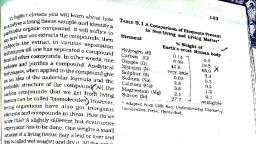
BIOMOLECULES, Are all living organisms made of the same chemicals ?, •, , If we perform such an analysis on a, plant tissue, animal tissue or a, microbial paste, we obtain a list of, elements like, , •, , carbon,, , •, , hydrogen,, , •, , oxygen and several others …., , •, , If the same analysis is performed on a, piece of earth’s crust as an example of, non-living matter, we obtain a similar, list., TLB’S Biology Classes
Page 5 :
BIOMOLECULES, What are the differences between the two lists?, , •, , In absolute terms, no such differences could, be made out., , •, , All the elements present in a sample of, earth’s crust are also present in a sample of, living tissue., , •, , However, a closer examination reveals that, the relative abundance of carbon and, hydrogen with respect to other elements is, higher in any living organism than in, earth’s crust., , TLB’S Biology Classes
Page 6 :
BIOMOLECULES, THE, LIVING WORLD, , HOW TO ANALYSE CHEMICAL, COMPOSITION OF LIVING ORGANISMS?, , TLB’S Biology Classes
Page 7 :
BIOMOLECULES, THE, LIVING WORLD, HOW TO ANALYSE CHEMICAL COMPOSITION?, • Take any living tissue, (a vegetable or a piece of liver,, etc.), • grind it in trichloroacetic acid, (Cl3CCOOH) using a mortar and, a pestle., • Obtain a thick slurry., , TLB’S Biology Classes
Page 8 :
BIOMOLECULES, THE, LIVING WORLD, HOW TO ANALYSE CHEMICAL COMPOSITION?, ●, , Strain the slurry through a, cheese cloth or cotton., , ●, , ●, , ●, , Obtain two fractions., one is called the filtrate or the acid-soluble, pool, and the second, the retentate or the, acid-insoluble fraction., Thousands of organic compounds, are, present in the acid-soluble pool known as, , ‘biomolecules.’, ●, , The biomolecules which are insoluble in, acids and have very high molecular weight, are called biomacromolecules., , TLB’S Biology Classes
Page 9 :
BIOMOLECULES, THE, LIVING WORLD, , LIVING ORGANISMS HAVE ALSO GOT, INORGANIC ELEMENTS AND COMPOUNDS IN THEM., HOW DO WE KNOW THIS?, , TLB’S Biology Classes
Page 10 :
BIOMOLECULES, THE, LIVING WORLD, LIVING ORGANISMS HAVE ALSO GOT INORGANIC ELEMENTS AND, COMPOUNDS IN THEM. HOW DO WE KNOW THIS?, • Weighs a small amount of a living, tissue (say a leaf or liver and this is, called wet weight) and dry it., • All the water, evaporates. The, remaining material gives dry weight., , TLB’S Biology Classes
Page 11 :
BIOMOLECULES, THE, LIVING WORLD, LIVING ORGANISMS HAVE ALSO GOT INORGANIC ELEMENTS AND, COMPOUNDS IN THEM. HOW DO WE KNOW THIS?, ●, , ●, , ●, , Now the tissue is fully burnt, during the burning of dried tissue , all the, carbon compounds are oxidised to, gaseous form (CO2, water vapour) and are, removed., The remaining is called ‘ash’., , TLB’S Biology Classes
Page 12 :
BIOMOLECULES, THE, LIVING WORLD, LIVING ORGANISMS HAVE ALSO GOT INORGANIC ELEMENTS AND, COMPOUNDS IN THEM. HOW DO WE KNOW THIS?, , ●, , This ash contains inorganic, elements, like, calcium,, magnesium etc., , TLB’S Biology Classes
Page 14 :
BIOMOLECULES, THE, LIVING WORLD, MICROMOLECULES, , ●, , There is one feature common to all, those compounds found in the acid, soluble pool., , ●, , They, , have, , molecular, , weights, , ranging from 18 to around 800, daltons (Da) approximately., , TLB’S Biology Classes
Page 16 :
BIOMOLECULES, THE, LIVING WORLD, BIOMACROMOLECULES, ●, , The acid insoluble fraction, has, only four types of organic, compounds ie.,, , ●, , proteins,, , ●, , nucleic acids,, , ●, , polysaccharides and, , ●, , lipids., TLB’S Biology Classes
Page 18 :
BIOMOLECULES, THE, LIVING WORLD, , The Molecular Weight of Lipids are Below 800, Dalton but it is included in Biomacromolecules., Why?, , TLB’S Biology Classes
Page 19 :
BIOMOLECULES, THE, LIVING WORLD, The Molecular Weight of Lipids are Below 800 Dalton but it is included in, Biomacromolecule Why?, , ●, , Lipids, , are, , smaller, , molecular, , weight compounds., ●, , It is present as such in cells and, also the chief component of cell, membranes and cell organelles., , TLB’S Biology Classes
Page 20 :
BIOMOLECULES, THE, LIVING WORLD, The Molecular Weight of Lipids are Below 800 Dalton but it is included in, Biomacromolecule Why?, ●, , While we grind tissue, cell membranes and, other membranes are broken into pieces and, form vesicles which are insoluble in acid., , TLB’S Biology Classes
Page 21 :
BIOMOLECULES, THE, LIVING WORLD, The Molecular Weight of Lipids are Below 800 Dalton but it is included in, Biomacromolecule Why?, ●, , These vesicles get separated along with the acid, insoluble, , pool, , and, , hence, , included, , in, , the, , macromolecular fraction. Lipids are not strictly, macromolecules., , TLB’S Biology Classes
Page 22 :
BIOMOLECULES, THE, LIVING WORLD, ●, , The acid soluble pool represents roughly, the cytoplasmic composition., , ●, , The macromolecules from cytoplasm and, organelles become the acid insoluble, fraction., , ●, , Together, , they, , represent, , chemical, , Component, , of, , the, the, , entire, total, , composition of living tissues or organisms., , TLB’S Biology Classes
Page 23 :
BIOMOLECULES, THE, LIVING WORLD, , Which is the most abundant, chemical in living organisms ?, , TLB’S Biology Classes
Page 24 :
BIOMOLECULES, THE, LIVING WORLD, Which is the most abundant chemical in living organisms ?, ●, , If we represent the chemical composition of, living tissue from abundance point of view and, arrange them class-wise, we observe that, , ●, , water is the most abundant chemical in living, organisms., , TLB’S Biology Classes
Page 25 :
BIOMOLECULES, THE, LIVING WORLD, , PRIMARY AND SECONDARY METABOLITES, , TLB’S Biology Classes
Page 26 :
BIOMOLECULES, THE, LIVING WORLD, The biomolecules which occur in all living cells are, called metabolites. They are classified into two., , 1. Primary Metabolites, 2. Secondary Metabolites, , TLB’S Biology Classes
Page 27 :
BIOMOLECULES, THE, LIVING WORLD, PRIMARY AND SECONDARY METABOLITES, , 1. Primary Metabolites, ●, , Metabolites like, , ●, , carbohydrate,, , ●, , proteins,, , ●, , nucleic acids,, , ●, , lipids, etc. are present in all animal, tissues, , and, , are, , called, , primary, , metabolites., , TLB’S Biology Classes
Page 28 :
BIOMOLECULES, THE, LIVING WORLD, 2. Secondary Metabolites, , ●, , In plants, fungus and microbial cells in, addition, , ●, ●, ●, ●, ●, ●, ●, ●, ●, ●, , to, , primary, , metabolites, , they, , posses the substances like, alkaloids,, flavonoids,, rubber,, Essential oils,, antibiotics,, coloured pigments,, scents,, gums,, spices, etc., These substances are called secondary, metabolites., TLB’S Biology Classes
Page 30 :
BIOMOLECULES, THE, LIVING, WORLD, Proteins, , • Each protein is a polymer of, amino acids., • They are linear chains of, amino acids linked by peptide, bonds., • So proteins are polypeptides., , TLB’S Biology Classes
Page 31 :
BIOMOLECULES, THE, LIVING, WORLD, Proteins, ●, , Proteins are hetero polymer with different type of amino acids., , ●, , homopolymer has only one type of monomer repeating ‘n’ number of, times., , TLB’S Biology Classes
Page 32 :
BIOMOLECULES, THE, LIVING, WORLD, Proteins, There are 20 different types of amino acids, They are classified into, , ●, , Essential amino acids and, , ●, , Non-essential amino acids., , TLB’S Biology Classes
Page 33 :
BIOMOLECULES, THE, LIVING, WORLD, Proteins, Essential Amino Acids, ●, , ●, , These are amino acids that we get from food or, diet., Dietary proteins are the source of essential amino, acids., , TLB’S Biology Classes
Page 34 :
BIOMOLECULES, THE, LIVING, WORLD, Proteins, , Non Essential Amino Acids, ●, , These, , are, , amino, , acids, , synthesized by the body, , TLB’S Biology Classes
Page 35 :
BIOMOLECULES, THE, LIVING, WORLD, Proteins, , STRUCTURE OF AMINO ACIDS, , TLB’S Biology Classes
Page 36 :
BIOMOLECULES, THE, LIVING, WORLD, Proteins, STRUCTURE OF AMINO ACIDS, ●, , ●, , Each amino acid has a central carbon atom, known as Alpha carbon atom.(α-carbon), To the alpha carbon atom, one carboxyl, group (COOH), one amino group (NH2),, one hydrogen atom and a side chain, denoted ‘R’ is attached., , TLB’S Biology Classes
Page 37 :
BIOMOLECULES, THE, LIVING, WORLD, Proteins, STRUCTURE OF AMINO ACIDS, ●, , ●, , The side chains are generally carbon chains or rings to which various, functional groups may be attached., Based on the nature of R group there are many amino acids., , TLB’S Biology Classes
Page 38 :
BIOMOLECULES, THE, LIVING, WORLD, Proteins, , EXAMPLES OF AMINO ACIDS, , TLB’S Biology Classes
Page 39 :
BIOMOLECULES, THE, LIVING, WORLD, Proteins, EXAMPLES OF AMINO ACIDS, 1. Glycine, ●, , This is the simplest amino acid., , ●, , In the position of the R group, glycine has hydrogen atom., , TLB’S Biology Classes
Page 40 :
BIOMOLECULES, THE, LIVING, WORLD, Proteins, EXAMPLES OF AMINO ACIDS, Alanine, ●, , This is the amino acid in, which the side chain is, methyl group (CH3)., , TLB’S Biology Classes
Page 41 :
BIOMOLECULES, THE, LIVING, WORLD, Proteins, EXAMPLES OF AMINO ACIDS, , Serine, ●, , This is the amino acid in which, R group is Hydroxy methyl, (CH2- OH)., , TLB’S Biology Classes
Page 42 :
BIOMOLECULES, THE, LIVING, WORLD, Proteins, PROPERTIES OF AMINO ACIDS, , The chemical and physical, properties of amino acids are, essentially, , of, , the, , amino,, , carboxyl and the R functional, groups., , TLB’S Biology Classes
Page 43 :
BIOMOLECULES, THE, LIVING, WORLD, Proteins, CLASSIFICATION OF AMINO ACIDS, Based on the number of amino and, carboxyl, , groups, , Amino, , acids, , are, , classified into the following groups., 1. Acidic Amino Acids:- Eg: Glutamic acid., 2. Basic Amino Acids:- Eg: Lysine., 3. Neutral Amino Acids:- Eg: Valine., , TLB’S Biology Classes
Page 44 :
BIOMOLECULES, THE, LIVING, WORLD, Proteins, CLASSIFICATION OF AMINO ACIDS, Amino acids with aromatic, ring are called aromatic, amino acids., Examples of aromatic amino acids, ●, , Phenylalanine, , ●, , Tyrosine and, , ●, , Tryptophan., , TLB’S Biology Classes
Page 45 :
BIOMOLECULES, THE, LIVING, WORLD, Proteins, , Peptide bonds, , TLB’S Biology Classes
Page 46 :
BIOMOLECULES, THE, LIVING, WORLD, Proteins, Peptide bonds, The, , chemical, , bond, , which, , connect, , amino acids are known as peptide bond., ●, , Each peptide bond is formed by the, reaction between the carboxyl group, (COOH) of one amino acid with the, amino group (NH2) of next amino acid, with, , the, , elimination, , of, , water, , (dehydration reaction ), , TLB’S Biology Classes
Page 48 :
BIOMOLECULES, THE, LIVING, WORLD, Proteins, Ionisation Nature of Amino Acids, ●, , A particular property of amino acids is the ionizable, nature of –NH2 and –COOH groups., , ●, , Hence in solutions of different pH, the structure of amino acids, changes., , TLB’S Biology Classes
Page 49 :
BIOMOLECULES, THE, LIVING, WORLD, Proteins, Ionisation Nature of Amino Acids, ●, , The common nature of amino acids is in zwitter ion form., , ●, , Chemical compounds that carries a total net charge of Zero are zwitter ions., , ●, , Zwitter ions are electrically neutral but carry formal positive and negative, charges on different atoms., , TLB’S Biology Classes
Page 50 :
BIOMOLECULES, THE, LIVING, WORLD, Proteins, , Functions of Proteins, , TLB’S Biology Classes
Page 51 :
BIOMOLECULES, THE, LIVING, WORLD, Proteins, Functions of Proteins, Proteins carry out many functions in, living organisms,, ●, , some transport nutrients across cell, membrane,, , ●, , some fight infectious organisms,, , ●, , some are hormones,, , ●, , some are enzymes,etc., , TLB’S Biology Classes
Page 53 :
BIOMOLECULES, THE, LIVING, WORLD, Proteins, , Structural Levels of Proteins, , TLB’S Biology Classes
Page 54 :
BIOMOLECULES, THE, LIVING, WORLD, Proteins, Structural Levels of Proteins, Proteins exists at 4 structural levels, , 1)Primary structure, 2)Secondary structure, 3)Tertiary structure, 4)Quaternary structure, , TLB’S Biology Classes
Page 55 :
BIOMOLECULES, THE, LIVING, WORLD, Proteins, , Primary structure of Proteins, , TLB’S Biology Classes
Page 56 :
BIOMOLECULES, THE, LIVING, WORLD, Proteins, Primary structure of Proteins, ●, , Primary structure refers to the, linear sequence of amino acids in a, protein molecule., , ●, , A protein is imagined as a line, the, left end represented by the first, amino acid and the right end, represented by the last amino acid., , TLB’S Biology Classes
Page 57 :
BIOMOLECULES, THE, LIVING, WORLD, Proteins, Primary structure of Proteins, , ●, , The first amino acid is also called, as N-terminal amino acid., , ●, , The last amino acid is called the, C- terminal amino acid., , TLB’S Biology Classes
Page 58 :
BIOMOLECULES, THE, LIVING, WORLD, Proteins, , Secondary Structure of Proteins, , TLB’S Biology Classes
Page 59 :
BIOMOLECULES, THE, LIVING, WORLD, Proteins, Secondary Structure of Proteins, , ●, , The right handed helical form of, proteins are known as secondary, structure., , ●, , In this form proteins are folded in, the form of a revolving staircase, known as helix., , TLB’S Biology Classes
Page 60 :
BIOMOLECULES, THE, LIVING, WORLD, Proteins, , Tertiary Structure of Proteins, , TLB’S Biology Classes
Page 61 :
BIOMOLECULES, THE, LIVING, WORLD, Proteins, Tertiary Structure of Proteins, , ●, , The polypeptide chains of protein, molecules bend and fold to attain a, three, , dimensional, , shape, , called, , Tertiary structure., ●, , Tertiary, , structure, , is, , absolutely, , necessary for the many biological, activities of proteins., , TLB’S Biology Classes
Page 62 :
BIOMOLECULES, THE, LIVING, WORLD, Proteins, , Quaternary Structure of Proteins, , TLB’S Biology Classes
Page 63 :
BIOMOLECULES, THE, LIVING, WORLD, Proteins, Quaternary Structure of Proteins, , ●, , More than one polypeptide, chains unite together to form, the, , complicated, , folded, , structure called Quaternary, structure of protein., , TLB’S Biology Classes
Page 64 :
BIOMOLECULES, THE, LIVING, WORLD, Proteins, Quaternary Structure of Proteins, Eg: Human haemoglobin, ●, , Adult, , human, , Haemoglobin, , has, , 4, , polypeptide chains., ●, , Two are identical known as alpha chains, and other two are also identical known as, beta chains., , ●, , The alpha and beta chains folded together, to form a compact globular structure of, haemoglobin, , TLB’S Biology Classes
Page 65 :
BIOMOLECULES, THE, LIVING, WORLD, Proteins, Structural Levels of Proteins, , TLB’S Biology Classes
Page 68 :
BIOMOLECULES, THE, LIVING, WORLD, Lipids, LIPIDS, • Lipids are biological molecules which, are insoluble in water., • Lipids include, • fattyacids,, • glycerol,, • triglycerides,, • Phospholipids,, • cholesterol etc., TLB’S Biology Classes
Page 70 :
BIOMOLECULES, THE, LIVING, WORLD, Lipids, Fattyacids, •, , Fatty acids are composed of a long hydrocarbon chain called tail and a, terminal carboxyl group called head., , •, , Long hydrocarbon chain is called R group., , •, , The R group could be a methyl (–CH3 ), or ethyl (–C2 H5) or, higher number of –CH2 groups (1 carbon to 19 carbons), , TLB’S Biology Classes
Page 72 :
BIOMOLECULES, THE, LIVING, WORLD, Lipids, , Fattyacids, •, , Based on the type of carbon – carbon bonds, fatty acids are classified into, , saturated fatty acids and unsaturated fatty acids., Saturated Fatty Acids, ●, , Fatty acids in which all carbon-carbon bonds are single bonds., , ●, , No double bonds are present., , Eg: Palmitic Acid, , TLB’S Biology Classes
Page 73 :
BIOMOLECULES, THE, LIVING, WORLD, Lipids, , Fattyacids, Unsaturated Fatty Acids, ●, , Fatty acids in which one or more carbon-carbon double bonds are present., , ●, , Eg: Linoleic Acid., , ●, , Unsaturated fatty acids are more common in nature especially in higher plants., , TLB’S Biology Classes
Page 75 :
BIOMOLECULES, THE, LIVING, WORLD, Lipids, , Glycerols, , ●, , Glycerol is a simple lipid., , ●, , It is chemically tri-hydroxy propane., , ●, , Many lipids have both glycerol and fatty, acids., , TLB’S Biology Classes
Page 76 :
Lipids, , GLYCERIDES, fatty acids combines with glycerol to form glycerides, 1, Glycerol, , 1 Fatty, acid, , Monoglyceride, , 1, Glycerol, , 2 Fatty, acids, , Diglyceride, , 1, Glycerol, , 3 Fatty, acids, TLB’S Biology Classes, , Triglyceride, 76
Page 78 :
Lipids, , DIGLYCERIDE, (has two fatty acid chain), , TLB’S Biology Classes, , 78
Page 79 :
Lipids, , TRIGLYCERIDE, (has three fatty acid chain), , TLB’S Biology Classes, , 79
Page 80 :
Lipids, , FATS AND OILS, • Monoglyceride, diglyceride and, triglycerides are also called fats, and oils based on melting point., • Oils have lower melting point, (e.g., gingely oil) and hence, remain as oil in winters., , TLB’S Biology Classes
Page 82 :
Lipids, , PHOSPHOLIPIDS, •, , Some lipids have phosphorous and a phosphorylated, organic compound in them., , •, , These are phospholipids., , •, , They are found in cell membrane., Eg:, , Lecithin, , TLB’S Biology Classes, , 82
Page 83 :
Lipids, , CHOLESTEROL, , TLB’S Biology Classes, , 83
Page 84 :
Lipids, , TLB’S Biology Classes, , 84
Page 86 :
BIOMOLECULES, , POLYSACCHARIDES (CARBOHYDRATES), • These are long chains of, sugars, • It is formed of, polymerization of, monosaccharides, , TLB’S Biology Classes, , 86
Page 91 :
BIOMOLECULES, , POLYSACCHARIDES -EXAMPLE CELLULOSE, • Plant cell walls are made of, cellulose., • Paper made from plant pulp is, cellulose., • Cotton fibre is cellulose., , TLB’S Biology Classes, , 91
Page 92 :
BIOMOLECULES, , POLYSACCHARIDES -EXAMPLES, , Starch, , • Starch is the store house of, energy in plants, , TLB’S Biology Classes, , 92
Page 93 :
BIOMOLECULES, , POLYSACCHARIDES -EXAMPLES, , Starch, , • Starch forms helical secondary, structures., • In fact, starch can hold I2, molecules in the helical portion., • The starch-I2 is blue in colour., , TLB’S Biology Classes, , 93
Page 100 :
BIOMOLECULES, Two types of nucleic acids, found in living systems., , Deoxyribonucleic acid (DNA), Ribonucleic acid (RNA), DNA and RNA function, as genetic material., , TLB’S BIOLOGY CLASSES
Page 101 :
BIOMOLECULES, Nucleotides, • The building blocks of nucleic acids, are called nucleotides., • A nucleotide consists of, , • nitrogenous base ,, • pentose sugar and, • Phosphate., , TLB’S Biology Classes, , 101
Page 102 :
Chemical Structure of a Polynucleotide chain (DNA or RNA), , A nucleotide has three components, A nitrogenous base, , A pentose sugar, , Ribose (RNA), , Phosphate group., , Deoxyribose(DNA), , TLB’S BIOLOGY CLASSES
Page 103 :
Chemical Structure of a Polynucleotide chain (DNA or RNA), , There are two types of nitrogenous bases, Purines, , Adenine, , Pyrimidines, , Guanine, , Cytosine, Common for, , DNA and RNA, , TLB’S BIOLOGY CLASSES, , Thymine, Present in DNA, , Uracil, Present in RNA
Page 104 :
BIOMOLECULES, , NITROGEN BASES, Nitrogenous bases in nucleic acids are pyrimidines and purines, , Purines, • Adenine,, • Guanine, , Pyrimidine, • Thymine,, • Uracil,, • Cytosine, Pyrimidines have a single heterocyclic ring and purines have two fused rings, TLB’S Biology Classes, , 104
Page 105 :
BIOMOLECULES, NITROGEN BASES IN DNA, , • Adenine,, • Guanine, • Thymine,, • Cytosine, NITROGEN BASES IN RNA, , • Adenine,, • Guanine, ●, , Uracil,, , ●, , Cytosine, www.sblifescience.in, , TLB’S Biology Classes, , 105
Page 111 :
BIOMOLECULES, PHOSPHODIESTER BOND, , • In nucleic acid phosphate is, attached to the sugar by an, ester bond., , TLB’S Biology Classes, , 111
Page 113 :
BIOMOLECULES, PHOSPHODIESTER BOND, •, , In a nucleic acid a phosphate moiety links the, 3’-carbon of one sugar of one nucleotide to the, 5’-carbon of the sugar of the succeeding, nucleotide., , •, , The bond between the phosphate and hydroxyl, group of sugar is an ester bond., , •, , As there is one such ester bond on either side,, it is called phosphodiester, , bond, , TLB’S Biology Classes, , 113
Page 115 :
BIOMOLECULES, In 1953 , James Watson, and, Francis, Crick,, proposed, Double, Helix, model for the structure of, DNA., , James Watson and Francis Crick, , TLB’S BIOLOGY CLASSES
Page 116 :
Chemical Structure, Double-helix, of a Polynucleotide, structure ofchain, DNA (DNA or RNA), , The salient features of the Double-helix structure of DNA, , TLB’S BIOLOGY CLASSES
Page 117 :
Chemical Structure, Double-helix, of a Polynucleotide, structure ofchain, DNA (DNA or RNA), , (i) DNA is made of two, polynucleotide, chains,, where the backbone is, constituted, by, sugarphosphate, and the bases, project inside., , TLB’S BIOLOGY CLASSES
Page 118 :
Chemical, The salient, Structure, features, ofof, a Polynucleotide, the Double-helix, chain, structure, (DNA of, or DNA, RNA), , (ii) The two chains have anti-parallel polarity., It means, if one chain has the polarity 5'-->3' , the other, has 3'--> 5'., , TLB’S BIOLOGY CLASSES
Page 119 :
Chemical, The salient, Structure, features, ofof, a Polynucleotide, the Double-helix, chain, structure, (DNA of, or DNA, RNA), (iii) The bases in two strands are paired through hydrogen bond, (H-bonds) forming base pairs (bp)., Adenine forms two hydrogen bonds with Thymine from opposite strand ., Similarly, Guanine is bonded with Cytosine with three H-bonds., , A=T, Base pair, , C, , G, , Base pair, , TLB’S BIOLOGY CLASSES
Page 120 :
Chemical, The salient, Structure, features, ofof, a Polynucleotide, the Double-helix, chain, structure, (DNA of, or DNA, RNA), , (iv) Each strand appears like a helical staircase., ●, , Each step of ascent is represented by a pair of, bases., , ●, , At each step of ascent, the strand turns 36°., , ●, , One full turn of the helical strand would involve, ten steps or ten base pairs., , TLB’S BIOLOGY CLASSES
Page 121 :
Chemical, The salient, Structure, features, ofof, a Polynucleotide, the Double-helix, chain, structure, (DNA of, or DNA, RNA), , (vi) The two chains are coiled in a, right-handed fashion., The pitch of the helix is 34Å, (10-9 m) and there are roughly, 10 bp in Each turn., Consequently, the distance, between a bp in a helix is, approximately equal to 3.4Å, , TLB’S BIOLOGY CLASSES
Page 122 :
Chemical Structure, Double-helix, of a Polynucleotide, structure ofchain, DNA (DNA or RNA), , This form of DNA with the above, mentioned salient features is, called B- DNA, , TLB’S BIOLOGY CLASSES
Page 123 :
Chemical, The salient, Structure, features, ofof, a Polynucleotide, the Double-helix, chain, structure, (DNA of, or DNA, RNA), (i) DNA is made of two polynucleotide chains, where the backbone is, constituted by sugar-phosphate, and the bases project inside., (ii) The two chains have anti-parallel polarity., It means, if one chain has the polarity 5'-->3' , the other has 3'--> 5'., (iii) The bases in two strands are paired through hydrogen bond, (H-bonds) forming base pairs (bp)., ●, , Adenine forms two hydrogen bonds with Thymine from, opposite strand ., , ●, , Similarly, Guanine is bonded with Cytosine with three Hbonds., TLB’S BIOLOGY CLASSES
Page 124 :
Chemical, The salient, Structure, features, ofof, a Polynucleotide, the Double-helix, chain, structure, (DNA of, or DNA, RNA), (iv) Each strand appears like a helical staircase., ●, , ●, ●, , Each step of ascent is represented by a pair of bases., At each step of ascent, the strand turns 36°., One full turn of the helical strand would involve ten, steps or ten base pairs., , (v) The two chains are coiled in a right-handed fashion., ●, , The pitch of the helix is 34Å (10-9 m) and there are, roughly 10 bp in Each turn., , ●, , Consequently, the distance between a bp in a helix is, approximately equal to 3.4Å, , TLB’S BIOLOGY CLASSES
Page 125 :
BIOMOLECULES, , END OF PART 4, PLEASE WATCH PART 5, , TLB’S Biology Classes, , 125
Page 127 :
BIOMOLECULES, THE, LIVING WORLD, , CONCEPT OF METABOLISM, , TLB’S Biology Classes
Page 128 :
BIOMOLECULES, THE, LIVING WORLD, , CONCEPT OF METABOLISM, ●, , ●, , We have learnt, that living, organisms contain thousands of, organic compounds., One of the greatest discoveries, ever made was the observation, that all these biomolecules have a, turn over., , TLB’S Biology Classes
Page 129 :
BIOMOLECULES, THE, LIVING WORLD, WHAT IS TURN OVER, OF A BIOMOLECULE ?, ●, , ●, , Turn over means that they are, constantly being changed into, some other biomolecules and also, made, from, some, other, Biomolecules., This breaking and making is, through, chemical, reactions, Biomolecules, constantly occurring in living, organisms., , TLB’S Biology Classes
Page 130 :
BIOMOLECULES, THE, LIVING WORLD, , WHAT IS METABOLISM?, All the chemical reactions taking place inside the living organisms are, collectively called metabolism., , TLB’S Biology Classes
Page 131 :
BIOMOLECULES, THE, LIVING WORLD, , METABOLISM, ●, , Each of the metabolic reactions results in the transformation of, biomolecules., , Examples, ●, , Removal of CO2 from amino acids making an amino acid into an amine., , TLB’S Biology Classes
Page 132 :
BIOMOLECULES, THE, LIVING WORLD, , METABOLISM, Examples, , ●, , removal of amino group in, a nucleotide base, , TLB’S Biology Classes
Page 134 :
BIOMOLECULES, , Metabolic Pathways, Majority of these metabolic reactions do not occur in, isolation but are always converted into each other in a, series of linked reactions called metabolic pathways., , TLB’S Biology Classes
Page 136 :
BIOMOLECULES, Metabolic Pathways, , This metabolite flow is called the dynamic state, of body constituents., , TLB’S Biology Classes
Page 137 :
BIOMOLECULES, THE, LIVING WORLD, Metabolic Pathways, ●, , Another feature of these metabolic reactions, is that every chemical reaction is a catalysed, reaction., , ●, , There, , is, , no, , uncatalysed, , metabolic, , conversion in living systems., ●, , The catalysts which hasten the rate of a, given, , ●, , metabolic, , conversation, , are, , also, , proteins., These proteins with catalytic power are, named enzymes., TLB’S Biology Classes
Page 139 :
BIOMOLECULES, Anabolic pathways, Metabolic pathways which lead to a, more, , complex, , structure, , from, , a, , simpler structure is anabolic pathway, or biosynthetic pathways., , Example, ●, , Formation of cholesterol from acetic acid, , ●, , Assembly of a protein from amino acids., , TLB’S Biology Classes, , 139
Page 140 :
BIOMOLECULES, Catabolic Pathways, Metabolic pathways which leads to a simpler, structure from a complex structure is called, catabolic pathways., , Example, Formation of lactic acid in our skeletal, muscle from glucose ., , TLB’S Biology Classes
Page 141 :
BIOMOLECULES, , METABOLISM, Anabolism, ●, , Catabolism, , It includes constructive or, , ●, , building up processes., ●, , down processes., , Energy is used and stored, , ●, , as potential energy., ●, , Energy is released as kinetic, energy., , Eg . Assembly of a protein, from amino acids., , It includes destructive or break, , ●, , Eg . Degradation of glucose in, to lactic acid in our skeletal, muscle., , TLB’S Biology Classes, , 141
Page 142 :
BIOMOLECULES, , How energy is stored in living systems ?, , TLB’S Biology Classes, , 142
Page 143 :
BIOMOLECULES, How energy is stored in living systems ?, ●, , Living, , organisms, , trap, , the, , energy, , liberated during degradation and store it, in the form of chemical bonds., , TLB’S Biology Classes, , 143
Page 144 :
BIOMOLECULES, How energy is stored in living systems ?, , As and when needed, this bond, energy is utilised for biosynthetic,, osmotic and mechanical work, that we perform., , TLB’S Biology Classes, , 144
Page 145 :
BIOMOLECULES, How energy is stored in living systems ?, The most important form of energy, currency in living systems is the bond, energy in a chemical called, , adenosine triphosphate (ATP)., , TLB’S Biology Classes, , 145
Page 147 :
BIOMOLECULES, , WHAT ARE ENZYMES ?, ●, , Enzymes are biological catalysts, which, speeds up a chemical reaction without, itself, , undergoing, , any, , permanent, , change., ●, , Almost all enzymes are proteins., , TLB’S Biology Classes, , 147
Page 149 :
BIOMOLECULES, ENZYMES, , What are Active sites ?, ●, , These are the regions of enzymes which, react with the substrate molecule in, chemical reaction., , TLB’S Biology Classes, , 149
Page 150 :
ENZYMES, How Active sites are formed ?, ●, , An enzyme like any protein has a, primary, , structure,secondary, , and, , the, , tertiary structure., ●, , In the tertiary structure protein chain, folds upon itself, the chain criss-crosses, itself, , and, , hence,, , many, , crevices, , or, , pockets are made., ●, , One such pocket is the ‘active site’., , ●, , An active site of an enzyme is a crevice, or pocket into which the substrate fits., , TLB’S Biology Classes, , 150
Page 151 :
ENZYMES, , What is the difference between Enzyme, catalysts and inorganic catalysts ?, , TLB’S Biology Classes, , 151
Page 152 :
ENZYMES, What is the difference between Enzyme catalysts and inorganic catalysts ?, ●, , One major difference between Enzyme catalysts and, inorganic catalysts is , Inorganic catalysts work, efficiently at high temperatures and high pressures., , ●, , While enzymes get damaged at high temperatures, (say above 40°C)., , ●, , However, enzymes isolated from organisms who, normally live under extremely high temperatures, (e.g., hot vents and sulphur springs), are stable and, retain, , their, , catalytic, , power, , even, , at, , high, , temperatures (upto 80°-90°C)., ●, , Thermal stability is thus an important quality of such, enzymes isolated from thermophilic organisms., , TLB’S Biology Classes, , 152
Page 153 :
ENZYMES, , Some Basic ideas about Chemical, Reactions and Rate of a Chemical Reaction., , TLB’S Biology Classes, , 153
Page 154 :
ENZYMES, Chemical Reactions, What is a chemical Reaction?, ●, , ●, ●, , ●, , ●, , Chemical compounds undergo two types of, changes., Physical changes and chemical change, Physical changes simply refers to a change, in shape without breaking of bonds or, change in state of matter., Eg: ice melts into water, or, water, becomes a vapour., when bonds are broken and new bonds, are formed during transformation, this, will be called a chemical reaction., TLB’S Biology Classes, , 154
Page 155 :
ENZYMES, Chemical Reactions, , c, , Examples of chemical Reaction, ●, , ●, , Inorganic chemical reaction, , Organic chemical reaction, , hydrolysis of starch into glucose, , TLB’S Biology Classes, , 155
Page 156 :
ENZYMES, Rate of Reactions, ●, , Rate of a physical or chemical process refers to the amount of, product formed per unit time., , ●, , It can be expressed as, , ●, , Rates of physical and chemical processes are influenced by temperature ., , ●, , Generally rate doubles or decreases by half for every 10°C change in either, direction., , ●, , Catalysed reactions proceed at faster rates than that of uncatalysed ones., , TLB’S Biology Classes, , 156
Page 157 :
ENZYMES, Rate of Reactions, ●, , When enzyme catalysed reactions are observed, the rate would be vastly higher than the, same but uncatalysed reaction., , Example, , Carbonic anhydrase, , ●, , It is the enzyme which involved in the formation of carbonic acid in tissue respiration., , ●, , Carbonic anhydrase catalyse the combination of CO 2 and H2O to carbonic acid, , ●, , ●, , This is the fastest enzyme in the living world , with a speed of 6 lakhs molecules per second, (in the absence of the enzyme the reaction rate is only 200 molecules per hour ), , TLB’S Biology Classes
Page 158 :
ENZYMES, Metabolic Pathway, ●, , There are thousands of types of enzymes each, catalysing, , a, , unique, , chemical, , or, , metabolic, , reaction., ●, , A multistep chemical reaction, when each of the, steps is catalysed by the same enzyme complex or, different enzymes, is called a metabolic pathway., , Example, , TLB’S Biology Classes
Page 159 :
BIOMOLECULES, , How enzyme bring about high, rate of chemical conversions?, , Mechanism of Enzyme Action, , TLB’S Biology Classes, , 159
Page 160 :
BIOMOLECULES, How enzyme bring about high rate of chemical conversions?, Mechanism of Enzyme Action, ●, , In chemical reactions enzymes convert, substrates (S) into products (P)., , ●, , During the action of enzymes, the active, site of the enzyme combines with substrate, and forms enzyme substrate complex (ES)., , TLB’S Biology Classes, , 160
Page 161 :
BIOMOLECULES, Mechanism of Enzyme Action, ●, , This complex formation is a transient, phenomenon., , ●, , During the state where substrate is bound, to the enzyme active site, a new structure, of the substrate called transition state, structure is formed., , ●, , After the expected bond breaking/making, is completed, the product is released from, the active site., , TLB’S Biology Classes, , 161
Page 162 :
BIOMOLECULES, , Graphical representation of, Mechanism of Enzyme Action, , TLB’S Biology Classes, , 162
Page 163 :
BIOMOLECULES, Mechanism of Enzyme Action, , ●, , The y-axis represents the potential energy, content., , ●, , The x-axis represents the progression of, the structural transformation of substrate, into product or the ‘transition state’., , ●, , There is energy level difference between, S and P., , TLB’S Biology Classes, , 163
Page 164 :
BIOMOLECULES, Mechanism of Enzyme Action, ●, , For attaining transition state, Substrate has to, attain a higher energy level., , Activation energy, ●, , The minimum amount of energy that is, required to activate atoms or molecules to a, condition in which they can undergo chemical, transformation is known as activation energy., , ●, , Enzymes lower activation energy of the, substrate, , molecules, , to, , attain, , the, , transition state., TLB’S Biology Classes, , 164
Page 165 :
ENZYMES, , NATURE OF ENZYME ACTION, , TLB’S Biology Classes, , 165
Page 166 :
ENZYMES, NATURE OF ENZYME ACTION, ●, , Each enzyme (E) has a substrate (S), binding site in its molecule so that a, highly, , reactive, , enzyme-substrate, , complex (ES) is produced., ●, , This, , complex, , is, , short-lived, , and, , dissociates into its product(s) P and, the, , unchanged, , enzyme, , with, , an, , intermediate formation of the enzymeproduct complex (EP)., , TLB’S Biology Classes, , 166
Page 167 :
ENZYMES, NATURE OF ENZYME ACTION, ●, , ●, , The catalytic cycle of an enzyme action can be described in the following steps:, , 1. First, the substrate binds to the active, site of the enzyme, fitting into the active, site., , ●, , 2. The binding of the substrate induces, the enzyme to alter its shape, fitting, more tightly around the substrate., , TLB’S Biology Classes, , 167
Page 168 :
ENZYMES, NATURE OF ENZYME ACTION, , ●, , 3. The active site of the enzyme, breaks the, chemical bonds of the substrate and the new, , enzyme- product complex is formed., ●, , 4. The enzyme releases the products of, the reaction and the free enzyme is, ready to bind to another molecule of the, substrate and run through the catalytic, cycle once again., , TLB’S Biology Classes, , 168
Page 169 :
ENZYMES, , Factors Affecting Enzyme Activity, , Enzyme Inhibition, Classification and Nomenclature of Enzymes, , Co-factors, TLB’S Biology Classes, , 169
Page 170 :
ENZYMES, , Factors Affecting Enzyme Activity, , TLB’S Biology Classes, , 170
Page 171 :
ENZYMES, , Factors Affecting Enzyme Activity, ●, , The activity of an enzyme can be affected by a change, in the conditions which can alter the tertiary, structure of the protein., , These include, ●, , Temperature,, , ●, , pH,, , ●, , change in substrate concentration or, , ●, , binding of specific chemicals that regulate, its activity., TLB’S Biology Classes, , 171
Page 172 :
ENZYMES, Temperature and pH, ●, , Enzymes generally function in a narrow range of, temperature and pH., , ●, , Each enzyme shows its highest activity at a particular, temperature, , and, , pH, , called, , the, , optimum, , temperature and optimum pH., ●, , Activity declines both below and above the optimum, value., , ●, , Low, , temperature, , preserves, , the, , enzyme, , in, , a, , temporarily inactive state whereas high temperature, destroys enzymatic activity because proteins are, denatured by heat., , TLB’S Biology Classes, , 172
Page 173 :
ENZYMES, Factors Affecting Enzyme Activity, Concentration of Substrate, , ●, , With the increase in substrate concentration, the, velocity of the enzymatic reaction rises at first., , ●, , The reaction ultimately reaches a maximum, velocity(Vmax) which is not exceeded by any, further rise in concentration of the substrate., , TLB’S Biology Classes, , 173
Page 174 :
ENZYMES, Factors Affecting Enzyme Activity, Concentration of Substrate, ●, , This is because the enzyme molecules are fewer, than the substrate molecules and after saturation, of these molecules, there are no free enzyme, molecules to bind with the additional substrate, molecules., , TLB’S Biology Classes, , 174
Page 175 :
ENZYMES, , Enzyme Inhibition, , TLB’S Biology Classes, , 175
Page 176 :
ENZYMES, Enzyme Inhibition, ●, , Activity of the enzyme is inhibited by the, presence of certain specific chemicals which, bind with the enzyme., , ●, , The, , process, , is, , called, , inhibition, , and, , chemicals are called inhibitors., , TLB’S Biology Classes, , 176
Page 177 :
ENZYMES, Enzyme Inhibition, ●, , When the inhibitor closely resembles the, substrate in its molecular structure and, inhibits the activity of the enzyme is, known as, , ●, , competitive inhibition., , Due to the similarity the inhibitor, competes with the substrate for the, substrate binding site of the enzyme., , ●, , Consequently, the substrate cannot bind, and as a result, the enzyme action, declines., , TLB’S Biology Classes, , 177
Page 178 :
ENZYMES, Competitive inhibition-Example, ●, , Inhibition of succinic dehydrogenase by malonate which closely resembles the, substrate succinate in structure., , Such competitive inhibitors are often used in the control of bacterial pathogens., TLB’S Biology Classes, , 178
Page 179 :
ENZYMES, , Classification and Nomenclature of Enzymes, , TLB’S Biology Classes, , 179
Page 180 :
ENZYMES, Classification and Nomenclature of Enzymes, , ●, , Enzymes have been classified, into different groups based on, the, , type, , of, , reactions, , they, , catalyse., ●, , Enzymes, , are, , divided, , into, , 6, , classes, , TLB’S Biology Classes, , 180
Page 182 :
ENZYMES, Classification and Nomenclature of Enzymes, 2.Transferases:, ●, , Enzymes catalysing a transfer of a group, G (other than hydrogen) between a, pair of substrate S and S’, Example, , TLB’S Biology Classes, , 182
Page 183 :
ENZYMES, Classification and Nomenclature of Enzymes, 3.Hydrolases:, ●, , Enzymes catalysing hydrolysis of ester, ether, peptide, glycosidic, C-C, C-halide, or P-N bonds., Example, , TLB’S Biology Classes, , 183
Page 184 :
ENZYMES, Classification and Nomenclature of Enzymes, 4.Lyases:, ●, , Enzymes that catalyse removal of groups from substrates by mechanisms other, than hydrolysis leaving double bonds., Example, , TLB’S Biology Classes, , 184
Page 185 :
ENZYMES, Classification and Nomenclature of Enzymes, 5.Isomerases:, ●, , Includes all enzymes catalysing inter-conversion of optical, geometric or, positional isomers., , Example, , TLB’S Biology Classes, , 185
Page 186 :
ENZYMES, Classification and Nomenclature of Enzymes, 6.Ligases:, ●, , Enzymes catalysing the linking, together of 2 compounds,, , ●, , e.g.,enzymes, , which, , catalyse, , joining of C-O, C-S, C-N, P-O, etc. bonds., , TLB’S Biology Classes, , 186
Page 187 :
ENZYMES, , Co-factors, , TLB’S Biology Classes, , 187
Page 188 :
ENZYMES, , Co-factors, ●, , Enzymes are composed of one or several polypeptide chains., , ●, , However, there are a number of cases in which non-protein constituents called, co-factors are bound to the the enzyme to make the enzyme catalytically active., , Apoenzyme, The protein part of the enzyme is, called apoenzyme., , Co-Factors, The non-protein parts associated with, enzyme are called co-factors., TLB’S Biology Classes, , 188
Page 189 :
ENZYMES, , Co-factors, Three kinds of cofactors may be identified:, ●, , prosthetic groups,, , ●, , co-enzymes and, , ●, , metal ions, , TLB’S Biology Classes, , 189
Page 190 :
ENZYMES, , Prosthetic Group, ●, , Prosthetic groups are organic compounds that are tightly bound to the apoenzyme., Example, , ●, , The prosthetic group Haem is a part of the enzyme Peroxidase and Catalase,bwhich, catalyse the breakdown of hydrogen peroxide to water and oxygen., , TLB’S Biology Classes, , 190
Page 191 :
ENZYMES, , Co-Enzymes, ●, , The organic compounds which are, not firmly bound to the, apoenzyme are called co-enzymes., , ●, , Many co-enzymes are vitamins., , TLB’S Biology Classes, , 191
Page 193 :
ENZYMES, , Metal Ions, ●, , ●, , Catalytic activity is lost when the cofactor is removed from the enzyme., , A number of enzymes require metal ions, for their activity, , ●, , metal ions form coordination bonds with, side chains at the active site and at the, same time form one or more cordination, bonds with the substrate., , Example, ●, , zinc is a cofactor for the proteolytic, enzyme carboxypeptidase., TLB’S Biology Classes, , 193



 Learn better on this topic