Page 1 :
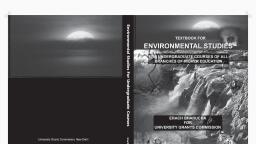
MOST IMPORTANT TOPICS AND STUDY MATERIAL FOR ENVIRONMENTAL, STUDIES, These questions are indicative only. Not a complete list; For complete coverage, refer, Textbook for Environmental Studies For Undergraduate Courses of all Branches of Higher, Education by Erach Bharucha, Part A: Important Questions (2 marks; one or two sentences), 1. Renewable resources, 2. Non renewable resources, 3. Ecosystem, 4. Food chain, 5. Food web, 6. Energy pyramid, 7. Estuary, 8. Biodiversity, 9. Climate change, 10. Global warming, 11. Acid rain, 12. Population explosion, 13. AIDS, 14. Infectious diseases, 15. Environmental health, Part B Important Questions (5 marks; one page write up), 1. Difference between renewable and non renewable energy resources, 2. Structure and functions of an ecosystem Eg Aquatic Ecosystem; Marine ecosystem, etc, 3. Food chains (elaborate with diagram and relationship), 4. Grassland ecosystem (elaborate with diagram and relationship), 5. Genetic, Species, Ecosystem Diversity, 6. Hotspots Of Biodiversity, 7. Threats To Biodiversity, 8. Conservation Of Biodiversity, 9. Solid Waste Management, 10. Role Of Individuals In Pollution Prevention, 11. Disaster Management, 12. From Unsustainable To Sustainable Development, 13. Urban Problems Related To Energy, 14. Climate change and global warming
Page 2 :
15. Environmental And Human Health, 16. Role Of Information Technology In Environment And Human Health, 17. Solid waste management, 18. Vermicomposting, Part C: Major questions 14 marks 4 pages write up, 1. Different types of natural resources, 2. Explain about forest resources, 3. Structure and functions of any one of the ecosystem in details; Most important, ecosystems are, (a) aquatic ecosystem, (b) marine ecosystem, (c) and forest ecosystem., 4. Producers, Consumers and Decomposers-Details with examples, 5. Values of Biodiversity –very important, 6. Threats and conservation of biodiversity, 7. Cause effect and control measures of any one of the pollution in detail important are, (a) Water pollution, (b) Air pollution, (c) Marine Pollution, (d) Land pollution, 8. Solid waste management, 9. Disaster Management
Page 3 :
IMPORTANT TOPICS AND STUDY MATERIAL FOR ENVIRONMENTAL STUDIES, These questions are indicative only. Not a complete list; For complete coverage, refer, Textbook for Environmental Studies For Undergraduate Courses of all Branches of Higher, Education by Erach Bharucha, Part A: Important Questions (2 marks; one or two sentences), 16. Renewable resources, 17. Non renewable resources, 18. Deforestation, 19. Afforestation, 20. Ecosystem, 21. Producer, 22. Consumer, 23. Decomposer, 24. Food chain, 25. Food web, 26. Energy pyramid, 27. Keystone species, 28. Flagship species, 29. Ecological succession, 30. Climax, 31. Estuary, 32. Biodiversity, 33. Genetic diversity, 34. Biogeography, 35. Endangered species, 36. Pollution, 37. Pollutant, 38. Point source of pollution, 39. Non point source of pollution, 40. Municipal solid waste, 41. Composting, 42. Vermicomposting, 43. Landslide, 44. Energy crisis, 45. Climate change, 46. Global warming, 47. Acid rain, 48. Ozone depletion
Page 4 :
49. Consumerism, 50. Environment Protection Act., 51. Wildlife Protection Act, 52. Population explosion, 53. AIDS, 54. Infectious diseases, 55. Environmental health, 56. HIV, Part B Important Questions (5 marks; one page write up), 19. Difference between renewable and non renewable energy resources, 20. Forest Resources, 21. Energy Resources, 22. Structure and functions of an ecosystem Eg Aquatic Ecosystem; Marine ecosystem, etc, 23. Energy flow in the ecosystem-Link all the natural cycles such as water cycle, 24. Food chains (elaborate with diagram and relationship), 25. Food webs (elaborate with diagram and relationship), 26. Ecological pyramids (elaborate with diagram and relationship), 27. Grassland ecosystem (elaborate with diagram and relationship), 28. Genetic, Species, Ecosystem Diversity, 29. Genetic, Species, Ecosystem Diversity, 30. Biodiversity At Global, National And Local Levels, 31. Hotspots Of Biodiversity, 32. Threats To Biodiversity, 33. Conservation Of Biodiversity, 34. Solid Waste Management, 35. Role Of Individuals In Pollution Prevention, 36. Disaster Management, 37. From Unsustainable To Sustainable Development, 38. Urban Problems Related To Energy, 39. Water Conservation Explain about rain water harvesting and water shed, management, 40. Environmental Ethics: Issues And Possible Solutions, 41. Climate change and global warming, 42. Nuclear disaster, 43. Any one of the pollution Like Noise pollution, marine pollution etc, 44. Role of information technology in environment and human health, 45. Wasteland Reclamation, 46. Air (Prevention And Control Of Pollution) Act
Page 5 :
47. Water (Prevention And Control Of Pollution) Act, 48. Environment Protection Act, 49. Wildlife Protection Act, 50. Forest Conservation Act, 51. Population Explosion, 52. Environmental And Human Health, 53. Infectious diseases, 54. Water related diseases, 55. Role Of Information Technology In Environment And Human Health, 56. Solid waste management, 57. Vermicomposting, 58. Environmental value education, Part C: Major questions 14 marks 4 pages write up, 10. Different types of natural resources, 11. Sustainable use of natural resources, 12. Conservation of natural resources, 13. Explain about forest resources, 14. Structure and functions of any one of the ecosystem in details; Most important, ecosystems are, (a) aquatic ecosystem, (b) marine ecosystem, (c) and forest ecosystem., 15. Producers, Consumers and Decomposers-Details with examples, 16. Megabiodiversity countries and their importance, 17. Values of Biodiversity –very important, 18. Biogeographical classification of India, 19. Threats and conservation of biodiversity, 20. Cause effect and control measures of any one of the pollution in detail important are, (a) Water pollution, (b) Air pollution, (c) Marine Pollution, (d) Land pollution, 21. Solid waste management, 22. Disaster Management, 23. Unsustainable to sustainable development, 24. Water conservation, 25. Climate and change and effect on environment, 26. Population growth and effect on environment, 27. All the Acts related to environment. Question may have subdivisions
Page 6 :
28. A case study may be given; For example you may have to provide a solution for a, realtime environmental problem, 29. Role of IT in disaster management, 30. Role of individual in prevention and control of environmental pollution
Page 7 :
ANSWERS, 1. Renewable resources, A renewable resource is an organic natural resource which can replenish to, overcome usage and consumption, either through biological reproduction or other, naturally recurring processes. Eg food grains, 2. Non renewable resources, A non-renewable resource (also called a finite resource) is a resource that does, not renew itself at a sufficient rate for sustainable economic extraction in, meaningful human time-frames. Eg-Petrol, 3. Deforestation, Deforestation is the permanent destruction of forests in order to make the land, available for other uses, 4. Afforestation, Afforestation is the establishment of a forest or stand of trees in an area where, there was no forest, 5. Ecosystem, An ecosystem is a community of living organisms (plants, animals and microbes), in conjunction with the nonliving components of their environment (things like, air, water and mineral soil), interacting as a system. Eg Marine ecosystem, 6. Producer, Producers are organisms that can make their own energy through biochemical, processes (a process in living things that involves chemical reactions). Eg Plants, 7. Consumer, Consumers are organisms of an ecological food chain that receive energy by, consuming other organisms. Eg Animals, 8. Decomposer, Decomposers are organisms that break down dead or decaying organisms, and in, doing so, carry out the natural process of decomposition Eg. Earthworms, bacteria, mushrooms, 9. Food chain, A food chain is a linear sequence of links in a food web starting from "producer", species (such as grass or trees) and ending at apex predator species (like grizzly, bears or killer whales) or decomposer species (such as fungi or bacteria)., 10. Food web, A food web (or food cycle) is the natural interconnection of food chains and, generally a graphical representation (usually an image) of what-eats-what in an, ecological community., 11. Energy pyramid
Page 8 :
An energy pyramid is a graphical model of energy flow in a community. The, different levels represent different groups of organisms that might compose a food, chain, 12. Keystone species, A keystone species is a species that has a disproportionately large effect on its, environment relative to its abundance. Such species are described as playing a, critical role in maintaining the structure of an ecological community, affecting, many other organisms in an ecosystem and helping to determine the types and, numbers of various other species in the community. Eg tiger, 13. Flagship species, The flagship species concept holds that by raising the profile of a particular, species, it can successfully leverage more support for biodiversity conservation at, large in a particular context., 14. Ecological succession, Ecological succession is the observed process of change in the species structure of, an ecological community over time., 15. Climax, In ecology, climax community, or climatic climax community, is a historic term, that expressed a biological community of plants and animals and fungi which,, through the process of ecological succession the development of vegetation in an, area over time, had reached a steady state., 16. Estuary, An estuary is a body of water formed where freshwater from rivers and streams, flows into the ocean, mixing with the seawater., 17. Biodiversity, Biodiversity is the variety of different types of life found on earth. It is a measure, of the variety of organisms present in different ecosystems., 18. Genetic diversity, Genetic diversity refers to the total number of genetic characteristics in the, genetic makeup of a species., 19. Biogeography, Biogeography is the study of the distribution of species and ecosystems in, geographic space and through geological time., 20. Endangered species, An Endangered species is a species which has been categorized by, the International Union for Conservation of Nature (IUCN) Red List as likely to, become extinct., 21. Pollution, Pollution is the introduction of contaminants into the natural environment that, causes adverse change.
Page 9 :
22. Pollutant, A 'pollutant is a substance or energy introduced into the environment that has, undesired effects, or adversely affects the usefulness of a resource., 23. Point source of pollution, A point, source, of, pollution is, a, single, identifiable, source, of air, water, thermal, noise or light pollution., 24. Non point source of pollution, Non-point source (NPS) pollution refers to both water and air pollution from, diffuse sources. Although these pollutants have originated from a point source,, the long-range transport ability and multiple sources of the pollutant make it a, non-point source of pollution., 25. Municipal solid waste, Municipal solid waste includes commercial and residential wastes generated in a, municipal or notified area in either solid or semi-solid form excluding industrial, hazardous wastes but including treated bio-medical wastes, 26. Composting, Composting involves collecting organic waste, such as food scraps and yard, trimmings, and storing it under conditions designed to help it break down, naturally. This resulting compost can then be used as a natural fertilizer., 27. Vermicomposting, Vermicompost is the product or process of composting using various worms,, usually red, wigglers, white, worms,, and, other earthworms to, create, a heterogeneous mixture of decomposing vegetable or food waste, bedding, materials, and vermicast. The process of producing vermicompost is, called vermicomposting., 28. Landslide, Landslide, also known as a landslip, is a geological phenomenon that includes a, wide range of ground movements, such as rock falls, deep failure of slopes and, shallow debris flows., 29. Energy crisis, An energy crisis is any great bottleneck (or price rise) in the supply, of energy resources to an economy., 30. Climate change, Climate change is a change in the statistical distribution of weather patterns when, that change lasts for an extended period of time (i.e., decades to millions of, years)., 31. Global warming
Page 10 :
Global warming is the term used to describe a gradual increase in the average, temperature of the Earth's atmosphere and its oceans, a change that is believed to, be permanently changing the Earth's climate., 32. Acid rain, Acid rain is caused by a chemical reaction that begins when compounds like, sulfur dioxide and nitrogen oxides are released into the air. These substances can, rise very high into the atmosphere, where they mix and react with water, oxygen,, and other chemicals to form more acidic pollutants, known as acid rain., 33. Ozone depletion, Ozone depletion is the steady decline of ozone in Earth's stratosphere (the ozone, layer), due to pollutants, 34. Consumerism, Consumerism refers to protection or promotion of the interests of consumers. The, growth of consumerism has led to many organizations improving their service to, the customer., 35. Environment Protection Act., The Environment (Protection) Act was enacted in 1986 with the objective of, providing for the protection and improvement of the environment. The Act was, last amended in 1991.It empowers the Central Government to establish authorities, to tackle specific environmental problems that are peculiar to different parts of the, country., 36. Wildlife Protection Act, The Government enacted Wildlife (Protection) Act 1972 with the objective of, effectively protecting the wildlife of this country and to control poaching,, smuggling and illegal trade in wildlife and its derivatives. The Act was amended, in January 2003., 37. Population explosion, A, rapid, increase, in, the, size, of, a, population, or, the geometric expansion of a biological population caused by such factors as a, sudden decline in infant mortality or an increase in life expectancy., 38. AIDS, Acquired immune deficiency syndrome (HIV/AIDS) is a spectrum of conditions, caused by Human immunodeficiency virus infection. It is a sexually transmitted, disease, 39. Infectious diseases, Infectious diseases, also known as transmissible diseases or communicable, diseases, are caused by pathogenic microorganisms, such as bacteria, viruses,
Page 11 :
parasites or fungi; the diseases can be spread, directly or indirectly, from one, person to another., 40. Environmental health, Environmental health is the branch of public health that is concerned with all, aspects of the natural and built environment that may affect human health., Part B Important Questions (4 marks; half a page to one page write up), 1. Difference between renewable and non renewable energy resources, Define-Renewable Energy and non renewable energy, Advantages of Renewable, Sources, Disadvantages of Renewable Sources, Advantages of Non Renewable Sources,, Disadvantages of Non Renewable Sources., Renewable Energy, , non renewable energy, , Renewable energy is energy which is, generated from natural sources i.e. sun,, wind, rain, tides and can be generated again, and again as and when required., , Renewable energy is energy which is taken, from the sources that are available on the, earth in limited quantity and will vanish, fifty-sixty years from now. Non-renewable, sources are not environmental friendly and, can have serious affect on our health., , They are available in plenty and by far, most the cleanest sources of energy, available on this planet. For e.g., Energy, that we receive from the sun can be used to, generate electricity. Similarly, energy from, wind, geothermal, biomass from plants,, tides can be used this form of energy to, another form., , They are called non-renewable because, they can be re-generated within a short, span of time Non-renewable sources exist, in the form of fossil fuels, natural gas oil, and coal., , Advantages of Renewable Sources:, , Disadvantages of Non Renewable Sources:, , 1. The sun, wind, geothermal, ocean energy 1. Non-renewable sources will expire some, are available in the abundant quantity and, day and we have to us our endangered, free to use., resources to create more non-renewable, sources of energy., 2. The non-renewable sources of energy, that we are using are limited and are bound, to expire one day., 3. Renewable sources have low carbon, emissions, therefore they are considered as, , 2. The speed at which such resources are, being utilized can have serious, environmental changes., 3. Non-renewable sources release toxic
Page 12 :
green and environment friendly., 4. Renewable helps in stimulating the, economy and creating job opportunities., The money that is used to build these, plants can provide jobs to thousands to, lakhs of people., , gases in the air when burnt which are the, major cause for global warming., 4. Since these sources are going to expire, soon, prices of these sources are soaring, day by day., , 5. You don’t have to rely on any third, country for the supply of renewable sources, as in case of non-renewable sources., 6. Renewable sources can cost less than, consuming the local electrical supply. In, the long run, the prices of electricity are, expected to soar since they are based on the, prices of crude oil, so renewable sources, can cut your electricity bills., 7. Various tax incentives in the form of tax, waivers, credit deductions are available for, individuals and businesses who want to go, green., , Disadvantages of Renewable Sources:, , Advantages of Non Renewable Sources:, , 1. It is not easy to set up a plant as the, initial costs are quite steep., , 1. Non-renewable sources are cheap and, easy to use. You can easily fill up your car, tank and power your motor vehicle., , 2. Solar energy can be used during the day, time and not during night or rainy season., 3. Geothermal energy which can be used to, generate electricity has side effects too. It, can bring toxic chemicals beneath the earth, surface onto the top and can create, environmental changes., 4. Hydroelectric provide pure form of, energy but building dams across the river, which is quite expensive can affect natural, flow and affect wildlife., 5. To use wind energy, you have to rely on, strong winds therefore you have to choose, , 2. You can use small amount of nuclear, energy to produce large amount of power., 3. They are considered as cheap when, converting from one type of energy to, another.
Page 13 :
suitable site to operate them. Also, they can, affect bird population as they are quite, high., 2. Forest Resources, Forest resources:, , , , , , , , Use and over-exploitation,, Deforestation- case studies,, Timber extraction,, Mining and dams ,, Their effects on forest and tribal people,, Forest Conservation Act., , 3. Energy Resources, Energy resources:, , , , , , Growing energy needs,, renewable and non renewable energy sources,, use of alternate energy sources,, Case studies., , 4. Structure and functions of an ecosystem Eg Aquatic Ecosystem; Marine ecosystem, etc, Structural aspects- Inorganic aspects – C, N, CO2, H2O, Organic compounds – Protein,, Carbohydrates,Lipids ,link abiotic to biotic aspects, Climatic regimes – Temperature,, Moisture,Light & Topography, Producers – Plants, Macro consumers – Phagotrophs –, Large Animals, Micro consumers – Saprotrophs, absorbers– fungi., Functional aspects Energy cycles- Food chains,Diversity-interlinkages between, organisms,Nutrient cycles-biogeochemical cycles, Evolution., E,g-Aquatic Ecosystem; Marine ecosystem,etc., 5. Energy flow in the ecosystem-Link all the natural cycles such as water cycle, , , , , , , , The water cycle,, The Carbon cycle,, The Oxygen cycle,, The Nitrogen cycle,, The energy cycle,, Integration of cycles in nature., , 6. Food chains (elaborate with diagram and relationship)
Page 14 :
Food chain is a series of groups of organisms called trophic levels, in which, there is, repeated eating and eaten by so as to transfer food energy, Components of a Food Chain:, Plants - 'base' of the food chain,, Herbivores - feed on plants; many are adapted to live on a diet high in cellulose, Omnivores - feed on both plants and animals, Carnivores - feed on herbivores, omnivores, & other carnivores, o lst level carnivore - feeds on herbivores, o 2nd level carnivore - feeds on 1st level carnivores, , , , Decomposers, o the 'final' consumer group, o use energy available in dead plants and animals, o transform organic material into inorganic material, , , , , elaborate with diagram and relationship, Eg;- grazing food chain- grassland ecosystem Grass→Rabbit→Fox→Wolf→Tiger ,etc., , 7. Food webs (elaborate with diagram and relationship), A food web (or food cycle) is the natural interconnection of food chains and generally a, graphical representation (usually an image) of what-eats-what in an ecological, community., , , , , Taxonomy of a food web- Trophic levels, Trophic dynamics, Energy flow and biomass ,, Food chain, Ecological pyramids, Material flux and recycling, Kinds of food webs, elaborate with diagram and relationship, , 8. Ecological pyramids (elaborate with diagram and relationship), An ecological pyramid (also trophic pyramid, energy pyramid, or sometimes food, pyramid) is a graphical representation designed to show the biomass or biomass, productivity at each trophic level in a given ecosystem., , , Primary producers, Primary consumers, Secondary consumers, tertiary, consumers.
Page 15 :
9. Grassland ecosystem (elaborate with diagram and relationship), , , , , , Define-grassland ecosystem,, Grassland Types in India,, Threats to grassland ecosystems,, Conservation of grassland ecosystems ., , 10. Genetic, Species, Ecosystem Diversity, , , , , , Genetic -gene pool diversity, Importance of genetic diversity, Survival and, adaptation, Agricultural relevance, Farm animal biodiversity, Coping with poor, genetic diversity, Measures of genetic diversity, Species-Alpha diversity, Beta diversity, Gamma diversity., Ecosystem Diversity- Types of Biodiversity, Importance of ecosystem, biodiversity., , 11. Biodiversity At Global, National And Local Levels, , , , , , , , , , Conservative estimates, species occur on land, fresh and marine waters,, Greater efficiency in use of land, energy and fresh water to meet growing, demand,, Use of market incentives and avoidance of perverse subsidies,, Strategic planning,, Restoration of ecosystems,, Equitable sharing of benefits from use of and access to genetic resources and, associated traditional knowledge ,, Support and facilitate local action,, Communication, education and awareness-raising., , 12. Hotspots Of Biodiversity, , , , , , Define hotspots of biodiversity,, Initiatives for conservation of biodiversity,, Distribution by regions,, Critics of hotspots of biodiversity.., , 13. Threats To Biodiversity, , , , Habitat Loss/Destruction/Fragmentation, Invasive Non-Native Species
Page 16 :
, , , , , Pollution/Litter, Land Use Change/Increased Infrastructure Development, Intensive Farming Practices, Climate Change, , 14. Conservation Of Biodiversity, , , Biological Resources,, , , , Ecosystem Services,, , , , Species-Based Conservation, , , , Threatened species, , , , Ecologically important species, , , , Species useful to humans, , , , Species with non-use value., , 15. Solid Waste Management, , , , , , , , , , , , , , , , Generation of waste, Waste minimization, Waste removal, Waste transportation, Waste treatment, Recycling and reuse, Storage, collection, transport, and transfer, Treatment, Landfill disposal, Environmental considerations, Financial and marketing aspects, Policy and regulation, Education and training, Planning and implementation., , 16. Role Of Individuals In Pollution Prevention, , , , , , , Recycling,, Preventing hazardous materials from reaching waterways,, Making informed choices to prevent waste and pollution,, Control of environmental pollution,, Conservation of natural resources,
Page 17 :
, , , , , Land management,, Development of non polluting sources of energy,, Environmental education,, Environmental laws., , 17. Disaster Management, , , , , , , , , Prevention,, Mitigation,, Preparedness,, Local Emergency Planning Committees,, Preparedness measures,, Response,, Recovery., , 18. From Unsustainable To Sustainable Development, , , , , , , Sustainable Development,, Causes for Unsustainable Development., True sustainable development,, Measures for sustainable Development,, Social issues and Environment., , 19. Urban Problems Related To Energy, , , , , , , , Energy is the basis of all activity. Without energy, nothing moves nor transforms;, and so a sustainable society can only exist based on a sustainable energy system., Though highly concentrated forms of energy found in nature allow the free time, to make ever more sophisticated tools, their use is not sustainable. The practice of, extracting naturally concentrated energy causes 4 interrelated fundamental, problems:, Disrupting natural energy flows,, Depletion,, Centralization,, Resource wars., , 20. Water Conservation Explain about rain water harvesting and water shed, management, Strategies, Social solutions, Household applications, Commercial applications, Agricultural, applications, Minimum water network target and design- rain water harvesting and water, shed management.
Page 18 :
21. Environmental Ethics: Issues And Possible Solutions, , , Environmental destruction is largely caused by the consumption of the rich., , , , The worst sufferers of environmental destruction are the poor., , , , Even where nature is being ‘recreated’, as in afforestation, it is being transformed, away from the needs of the poor and towards those of the rich., , , , Even among the poor, the worst sufferers are the marginalized cultures and, occupations., , , , There cannot be proper economic and social development without a holistic, understanding, of society and nature., , , , If we care for the poor, we cannot allow the Gross Nature Product to be destroyed, any further. Conserving and recreating nature has become our highest priority., , , , Gross Nature Product will be enhanced only if we can arrest and reverse the, growing, alienation between the people and the common property resources. In this we will, have, to learn a lot from our traditional cultures., , , , It is totally inadequate to talk only of sustainable rural development, as the World, Conservation Strategy does. We cannot save the rural environment or rural people, dependent on it, unless we can bring about sustainable urban development., , 22. Climate change and global warming, The meaning of 'climate change' is fairly straightforward—a clear, sustained, change (over several decades or longer) in the components of climate, such as, temperature, precipitation, atmospheric pressure, or winds. Such changes must constitute, a clear trend, and be clearly distinguished from the small random variation in these, parameters that takes place all the time. Climate may change in a single region or across, the whole planet. Throughout earth's history, climates have changed. The causes are, various. Change can be brought about by a variety of factors. These include natural, external factors, such as changes in solar emission or slow changes in the earth's orbit; or, natural internal processes of the climate or earth system such as volcanic activity; or, as, has occurred recently, human-induced (anthropogenic) factors. To help separate out the, difference between human-induced and natural factors, the United Nations Framework, Convention on Climate Change (UNFCCC) uses the term 'climate change' to refer to
Page 19 :
changes that can be attributed to human activity that has changed the composition of the, atmosphere and, thereby, the functioning of the earth's climate system. The UNFCCC, uses the term 'climate variability' to refer to natural alterations in the earth's climate., Global warming (which is not considered a technical term) refers to an increase in the, average temperature at the surface of the earth, or the lower part of the atmosphere. Most, climatologists consider that the global warming that we are now experiencing is mainly, the result of human actions changing the composition of the atmosphere. However, global, warming and cooling have occurred naturally throughout the history of the earth, as a, result of natural climate variability. Such changes in the past were usually much slower, than the rate of warming that has occurred in the last few decades. The increase in global, temperatures measured over recent decades, if it continues, has the potential to seriously, disrupt many of the environmental, economic and urban structures upon which human, society depends. Whilst it is possible that some of this warming may have a natural, cause, there is mounting evidence that human activity is responsible for most of the, measured warming. The principal contributor to the present phase of global warming is, considered to be the enhancement of the natural greenhouse effect. Global surface, warming is just one consequence of the changes to the climate being caused by human, activity. The various components of the climate and earth system are inextricably linked, through complex feedback mechanisms, and a change in one component such as, temperature will induce changes and adjustments in other components. Other changes, that have either already been observed or are projected to occur as a result of human, activity include sea level rise; changes in rainfall patterns; increases in extreme weather, events; decreases in ice mass of glaciers, ice sheets and sea ice; ocean warming and, acidification; changes in ocean circulation; and drying of the land., 23. Nuclear disaster, , , Nuclear power plant accidents,, , , , Nuclear reactor attacks, , , , Radiation and other accidents and incidents, , , , Worldwide nuclear testing summary Trafficking and thefts, , , , , Accident categories ,, Nuclear safety, , 24. Any one of the pollution Like Noise pollution, marine pollution etc, Marine pollution, , , Pollution due to organic wastes,, , , , Control measures,
Page 20 :
, , Primary treatment,, , , , Secondary treatment,, , , , Pollution due to oil,, , , , Control measures for oil pollution,, , , , Effects of marine pollution., , 25. Role of information technology in environment and human health, , , Definitions, , , , Environmental health profession, , , , Disciplines, , , , Concerns, , , , Information, , , , Mapping, , 26. Wasteland Reclamation, , , Methods of reclamation, , , , Habitation, , , , Agriculture, , , , Beach restoration, , , , Landfill, , , , Environmental impact, , , , Dangers, , , , Land amounts added, , 27. Air (Prevention And Control Of Pollution) Act, , , To provide for the Prevention, Control and abatement of air pollution., , , , To provide for the establishment of central and State Boards with a view to implement, the Act., , , , To confer on the Boards the powers to implement the provisions of the Act and assign to, the Boards functions relating to pollution., , 28. Water (Prevention And Control Of Pollution) Act
Page 21 :
, , Provide for prevention, control and abatement of water pollution and the maintenance or, restoration of the wholesomeness of water. It is designed to assess pollution levels and, punish polluters. The Central Government and State Governments have set up Pollution, Control Boards that monitor water pollution., Functions of the Pollution Control Boards, , , , The Government has given the necessary powers to the PCBs to deal with the problems, of water pollution in the country. The Government has also suggested penalties for, violation of the provisions of the Act. Central and State water testing laboratories have, been set up to enable the Boards to assess the extent of water pollution and standards, have been laid down to establish guilt and default., , 29. Environment Protection Act, Environment Protection Act, 1986 is an Act of the Parliament of India. In the wake of, the Bhopal Tragedy, the Government of Indiaenacted the Environment Protection Act of, 1986 under Article 253 of the Constitution. The purpose of the Act is to implement the, decisions of the United Nations Conference on the Human Environments they relate to, the protection and improvement of the human environment and the prevention of hazards, to human beings, other living creatures, plants and property. The Act is an “umbrella”, legislation designed to provide a framework for central government coordination of the, activities of various central and state authorities established under previous laws, such as, the Water Act and the Air Act., , , To co-ordinate the activities of the various regulatory agencies already in, existence., , , , Creation of an authority or authorities with adequate powers for environmental, protection., , , , Regulation of discharge of environmental pollutants and handling of hazardous, substance., , , , Speedy response in the event of accidents threatening environmental and, deterrents punishment to those who endanger human environment, safety and, health., , 30. Wildlife Protection Act, The Wildlife Protection Act, 1972 is an Act of the Parliament of India enacted for protection, of plants and animal species. Before 1972, India only had five designated national parks., Among other reforms, the Act established schedules of protected plant and animal species;, hunting or harvesting these species was largely outlawed. The Act provides for the protection, of wild animals, birds and plants; and for matters connected therewith or ancillary or, incidental thereto. It extends to the whole of India, except the State
Page 22 :
of Jammu and Kashmir which has its own wildlife act. It has six schedules which give, varying degrees of protection. Schedule I and part II of Schedule II provide absolute, protection - offences under these are prescribed the highest penalties. Species listed, in Schedule III and Schedule IV are also protected, but the penalties are much, lower. Schedule V includes the animals which may be hunted. The plants in Schedule VI are, prohibited from cultivation and planting. The hunting to the Enforcement authorities have the, power to compound offences under this Schedule (i.e. they impose fines on the offenders)., Up to April 2010 there have been 16 convictions under this act relating to the death of tigers., , , animal" includes amphibians, birds, mammals, and reptiles, and their young, and also, includes, in the cases of birds and reptiles, their eggs., , , , "animal article" means an article made from any captive or wild animal, other than, vermin, and includes an article or object in which the whole or any part of such, animal has been used and an article made therefrom., , , , "hunting" includes, , , capturing, killing, poisoning, snaring, or trapping any wild animal, and, every attempt to do so, , , , driving any wild animal for any of the purposes specified in sub clause, , , , injuring, destroying or taking any body part of any such animal, or in, the case of wild birds or reptiles, disturbing or damaging the eggs or, nests of such birds or reptiles., , , , "taxidermy" means the curing, preparation or preservation of trophies., , , , "trophy" means the whole or any part of any captive or wild animal (other than, vermin) which has been kept or preserved by any means, whether artificial or natural., This includes:, o rugs, skins, and specimens of such animals mounted in whole or in part, through a process of taxidermy, o antler, horn, rhinoceros horn, feather, nail, tooth, musk, eggs, and nests., , , , "uncured trophy" means the whole or any part of any captive animal (other than, vermin) which has not undergone a process of taxidermy. This includes a freshly, killed wild animal, ambergris, musk and other animal products., , , , "vermin" means any wild animal specified in Schedule V., , , , "wildlife" includes any animal, bees, butterflies, crustacean, fish and moths; and, aquatic or land vegetation which forms part of any habitat
Page 23 :
31. Forest Conservation Act, The Indian Forest Act, 1927 was largely based on previous Indian Forest Acts, implemented under the British. The most famous one was the Indian Forest Act of 1878., Both the 1878 act and the 1927 one sought to consolidate and reserve the areas having, forest cover, or significant wildlife, to regulate movement and transit of forest produce,, and duty leviable on timber and other forest produce. It also defines the procedure to be, followed for declaring an area to be a Reserved Forest, a Protected Forest or a Village, Forest. It defines what is a forest offence, what are the acts prohibited inside a Reserved, Forest, and penalties leviable on violation of the provisions of the Act., , , Reserved Forest, , , , Protected Forest, , , , Village Forest, , 32. Water related diseases, Waterborne diseases are caused by pathogenic microorganisms that most commonly are, transmitted in contaminated fresh water. Infection commonly results during bathing,, washing, drinking, in the preparation of food, or the consumption of food thus infected., Various forms of waterborne diarrheal disease probably are the most prominent, examples, and affect mainly children in developing countries; according to the World, Health Organization, such diseases account for an estimated 4.1% of the, total DALY global burden of disease, and cause about 1.8 million human deaths, annually. The World Health Organization estimates that 88% of that burden is, attributable to unsafe water supply, sanitation and hygiene., , , Socioeconomic impact, , , , Protozoal infections, , , , Parasitic infections, , , , Bacterial infections, , , , Viral infections, , , , Algal Infections, , Part C: Major questions 14 marks 4 pages write up, 1. Different types of natural resources, Renewable and non-renewable resources :, Natural resources and associated problems., a) Forest resources : Use and over-exploitation, deforestation, case studies. Timber, extraction, mining, dams and their effects on forest and tribal people.
Page 24 :
b) Water resources : Use and over-utilization of surface and ground water, floods,, drought, conflicts over water, dams-benefits and problems., c) Mineral resources : Use and exploitation, environmental effects of extracting and using, mineral resources, case studies., d) Food resources : World food problems, changes caused by agriculture and, overgrazing, effects of modern agriculture, fertilizer-pesticide problems, water logging,, salinity, case studies., e) Energy resources : Growing energy needs, renewable and non renewable energy, sources, use of alternate energy sources. Case studies., f) Land resources : Land as a resource, land degradation, man induced landslides, soil, erosion and desertification., , 2. Conservation of natural resources, Conservation of natural resources, is the wise use of the earth's resources by humanity., The various approaches applied to natural resource management include:, Top-down (command and control), Community-based natural resource management, Adaptive management, Precautionary approach, Integrated natural resource management, Biodiversity Conservation, Precautionary Biodiversity Management, Concrete "policy tools", Land management, 1. "Ecosystem based Management" including "more risk-averse and precautionary management",, where "given prevailing uncertainty regarding ecosystem structure, function, and inter-specific, interactions, precaution demands an ecosystem rather than single-species approach to, management"., 2. "Adaptive management" is "a management approach that expressly tackles the uncertainty and, dynamism of complex systems"., 3. "Environmental impact assessment" and exposure ratings decrease the "uncertainties" of, precaution, even though it has deficiencies, and
Page 25 :
4. "Protectionist approaches", which "most frequently links to" biodiversity conservation in, natural resources management., 3. Structure and functions of any one of the ecosystem in details; Most important, ecosystem is aquatic ecosystem, marine ecosystem and forest ecosystem., Components that make up the structural aspects of an ecosystem include:, 1) Inorganic aspects – C, N, CO2, H2O., 2) Organic compounds – Protein, Carbohydrates, Lipids – link abiotic to, bioticaspects., 3) Climatic regimes – Temperature, Moisture, Light & Topography., 4) Producers – Plants., 5) Macro consumers – Phagotrophs – Large animals., 6) Micro consumers – Saprotrophs, absorbers – fungi., Functional aspects, 1) Energy cycles., 2) Food chains., 3) Diversity-interlinkages between organisms., 4) Nutrient cycles-biogeochemical cycles., 5) Evolution., 4. Producers, Consumers and Decomposers-Details with examples, Plants are the ‘producers’ in the ecosystem as they manufacture their food by using energy from, the sun., Primary producers are organisms in an ecosystem that produce biomass from inorganic, compounds (autotrophs). In almost all cases these are photosynthetically active organisms, (plants, cyanobacteria and a number of other unicellular organisms; see article on, photosynthesis)., Consumers are organisms of an ecological food chain that receive energy by consuming other, organisms. These organisms are formally referred to as heterotrophs, which include animals,, bacteria and fungus. Such organisms may consume by various means, including predation,, parasitization, and biodegradation., Consumers dominate most of a food chain. Consumers have important roles to play, within an ecosystem such as balancing the food chain by keeping animal populations at a, reasonable number. Without proper balance, an ecosystem can collapse and cause the decline of
Page 26 :
all affected species. This will lead to a severely disrupted ecosystem, and a nonfunctional, consumer web., , Types of Consumers, Herbivores, Carnivores, Omnivores, , Decomposers are organisms that break down dead or decaying organisms, and in doing so, carry, out the natural process of decomposition., Like herbivores and predators, decomposers are heterotrophic, meaning that they use organic, substrates to get their energy, carbon and nutrients for growth and development., Decomposers can break down cells of other organisms using biochemical reactions that convert, the prey tissue into metabolically useful chemical products, without need for internal digestion., Decomposers use dead organisms and non-living organic compounds as their food source., Decomposition thus is a vital function in nature, as without this, all the nutrients would be tied, up in dead matter and no new life could be produced., , 5. Megabiodiversity countries and their importance, , Countries with diversities higher than India are located in South America such as Brazil,, and, South East Asian countries such as Malaysia and Indonesia. The species found in these, countries,, however, are different from our own. This makes it imperative to preserve our own, biodiversity, as a major economic resource. While few of the other ‘megadiversity nations’ have, developed, the technology to exploit their species for biotechnology and genetic engineering, India is, apable, of doing so., World Heritage Convention attempt to protect and support such areas. India is a signatory, to the convention and has included several protected Areas as World Heritage sites.
Page 27 :
INDIA AS A MEGA DIVERSITY NATION, , Among the biologically rich nations, India stands among the top 10 or 15 countries for its, great variety of plants and animals, many of which are not found elsewhere., India has 350 different mammals (rated eight highest in the world), 1,200 species of birds, (eighth in the world), 453 species of reptiles (fifth in the world) and 45,000 plant species,, of which most are angiosperms, (fifteenth in the world)., These include especially high species diversity of ferns (1022 species) and orchids (1082, species)., India has 50,000 known species of insects, including 13,000 butterflies and moths., It is estimated that the number of unknown species could be several times higher., It is estimated that 18% of Indian plants are endemic to the country and found, nowhereelse in the world., , 6. Values of Biodiversity –very important, Consumptive use value : The direct utilisation of timber, food, fuel wood, fodder by local, communities. Eg Fishing, Productive use value: Marketable goods-Herbal drugs, Honey etc, Biological prospecting or Bioprospecting: identifying compounds of great economic value from, the wide variety of living organisms, Social values: Traditional Knowledge; Sustainable utilization; Equity sharing; Participatory, Conservation; Ecosystem People, Ethical and moral values, Aesthetic value
Page 28 :
Knowledge and an appreciation of the presence of biodiversity for its own sake is another reason, to preserve it. Symbols-religious; regional; Lord Ganesh; Gangaroo, Option value, Keeping future possibilities open for their use is called option value. Biodieseal - Jatropha;, Algae, General Values, Production of oxygen, Reducing carbon dioxide, Maintaining the water cycle, Protecting soil fertility, Prime focus-Rain forests –Tropical rain forests, 6% of forests are rain forests, Holds more than 70% of Biodiversity, 80% of food resources-Directly or indirectly, We have identified somewhere around 200 fruits edible; Rain forests still have, 800 edible fruits, Everyday we are loosing 137 organisms-rain forest destruction, 7. Biogeographical classification of India, India’s Biogeographic Zones, 1. The cold mountainous snow covered Trans Himalayan region of Ladakh., 2. The Himalayan ranges and valleys of Kashmir, Himachal Pradesh,, Uttarakhand, Assam, and other North Eastern States., 3. The Terai, the lowland where the Himalayan rivers flow into the plains., , 4. The Gangetic and Bhramaputra plains., 5. The Thar Desert of Rajasthan., 6. The semi arid grassland region of the Deccan plateau Gujarat, Maharashtra,, Andra Pradesh, Karnataka and Tamil Nadu., 7. The Northeast States of India,, 8. The Western Ghats in Maharashtra, Karnataka and Kerala.
Page 29 :
9. The Andaman and Nicobar Islands., 10. The long western and eastern coastal belt with sandy beaches, forests and, mangroves., , 8. Threats and conservation of biodiversity, THREATS, Habitat loss-Habitat loss and fragmentation, Poaching of wildlife,, Man-wildlife conflicts, Invasive alien species, Pollution, Over exploitation, Human populations, , , Biodiversity refers to the number and variety of species, of ecosystems, and of the genetic, variation contained within species., , , , Roughly 1.4 million species are known to science, but because many species are, undescribed, an estimated 10-30 million species likely exists at present., , , , Biodiversity is threatened by the sum of all human activities. It is useful to group threats, into the categories of over-hunting, habitat destruction, invasion of non-native species,, domino effects, pollution, and climate change., , , , Habitat loss presents the single greatest threat to world biodiversity, and the magnitude of, this threat can be approximated from species-area curves and rates of habitat loss. The, spread of non-native species threatens many local species with extinction, and pushes the, world's biota toward a more homogeneous and widely distributed sub-set of survivors., Climate change threatens to force species and ecosystems to migrate toward higher, latitudes, with no guarantee of suitable habitat or access routes. These three factors thus, are of special concern., , In Situ Conservation Methods, In-situ conservation, the conservation of species in their natural habitats, is considered the most, appropriate way of conserving biodiversity., Conserving the areas where populations of species exist naturally is an underlying condition for, the conservation of biodiversity. That's why protected areas form a central element of any, national strategy to conserve biodiversity., Ex Situ Conservation Methods
Page 30 :
Ex-situ conservation is the preservation of components of biological diversity outside their, natural habitats. This involves conservation of genetic resources, as well as wild and cultivated, or species, and draws on a diverse body of techniques and facilities. Some of these include:, , , Gene banks, e.g. seed banks, sperm and ova banks, field banks;, , , , In vitro plant tissue and microbial culture collections;, , , , Captive breeding of animals and artificial propagation of plants, with possible, reintroduction into the wild; and, , , , Collecting living organisms for zoos, aquaria, and botanic gardens for research and public, awareness., , Ex-situ conservation measures can be complementary to in-situ methods as they provide, an "insurance policy" against extinction. These measures also have a valuable role to play in, recovery programmes for endangered species. The Kew Seed Bank in England has 1.5 per cent, of the world's flora - about 4,000 species - on deposit., In agriculture, ex-situ conservation measures maintain domesticated plants which cannot survive, in nature unaided., Ex-situ conservation provides excellent research opportunities on the components of biological, diversity. Some of these institutions also play a central role in public education and awareness, raising by bringing members of the public into contact with plants and animals they may not, normally come in contact with. It is estimated that worldwide, over 600 million people visit zoos, every year., Ex situ conservation measures should support in-situ conservation measures (in-situ conservation, should be the primary objective), 9. Cause effect and control measures of any one of the pollution in detail, 10. Solid waste management, Solid waste is the unwanted or useless solid materials generated from combined residential,, industrial and commercial activities in a given area. It may be categorised according to its origin, (domestic, industrial, commercial, construction or institutional); according to its contents, (organic material, glass, metal, plastic paper etc); or according to hazard potential (toxic, nontoxin, flammable, radioactive, infectious etc)., , Management of solid waste reduces or eliminates adverse impacts on the environment and, human health and supports economic development and improved quality of life. A number of, processes are involved in effectively managing waste for a municipality. These include, monitoring, collection, transport, processing, recycling and disposal.
Page 31 :
Reduce, Reuse, Recycle, Methods of waste reduction, waste reuse and recycling are the preferred options when managing, waste., There are many environmental benefits that can be derived from the use of these methods., They reduce or prevent green house gas emissions, reduce the release of pollutants, conserve, resources, save energy and reduce the demand for waste treatment technology and landfill space., Therefore it is advisable that these methods be adopted and incorporated as part of the waste, management plan., 11. Disaster Management, The United Nations defines a disaster as a serious disruption of the functioning of a community, or a society. Disasters involve widespread human, material, economic or environmental impacts,, which exceed the ability of the affected community or society to cope using its own resources., The Red Cross and Red Crescent societies define disaster management as the organisation and, management of resources and responsibilities for dealing with all humanitarian aspects of, emergencies, in particular preparedness, response and recovery in order to lessen the impact of, disasters., , Types of disasters, There is no country that is immune from disaster, though vulnerability to disaster varies. There, are four main types of disaster., , , Natural disasters: including floods, hurricanes, earthquakes and volcano eruptions that, have immediate impacts on human health and secondary impacts causing further death, and suffering from (for example) floods, landslides, fires, tsunamis., , , , Environmental emergencies: including technological or industrial accidents, usually, involving the production, use or transportation of hazardous material, and occur where, these materials are produced, used or transported, and forest fires caused by humans., , , , Complex emergencies: involving a break-down of authority, looting and attacks on, strategic installations, including conflict situations and war., , , , Pandemic emergencies: involving a sudden onset of contagious disease that affects, health, disrupts services and businesses, brings economic and social costs.
Page 32 :
Principles and methods of Disaster Management, Disaster prevention, These are activities designed to provide permanent protection from disasters. Not all disasters,, particularly natural disasters, can be prevented, but the risk of loss of life and injury can be, mitigated with good evacuation plans, environmental planning and design standards. In January, 2005, 168 Governments adopted a 10-year global plan for natural disaster risk reduction called, the Hyogo Framework. It offers guiding principles, priorities for action, and practical means, for achieving disaster resilience for vulnerable communities., Disaster preparedness, These activities are designed to minimise loss of life and damage – for example by removing, people and property from a threatened location and by facilitating timely and effective rescue,, relief and rehabilitation. Preparedness is the main way of reducing the impact of disasters., Community-based preparedness and management should be a high priority in physical therapy, practice management., Disaster relief, This is a coordinated multi-agency response to reduce the impact of a disaster and its long-term, results. Relief activities include rescue, relocation, providing food and water, preventing disease, and disability, repairing vital services such as telecommunications and transport, providing, temporary shelter and emergency health care., Disaster recovery, Once emergency needs have been met and the initial crisis is over, the people affected and the, communities that support them are still vulnerable. Recovery activities include rebuilding, infrastructure, health care and rehabilitation. These should blend with development activities,, such as building human resources for health and developing policies and practices to avoid, similar situations in future., Disaster management is linked with sustainable development, particularly in relation to, vulnerable people such as those with disabilities, elderly people, children and other marginalised, groups. Health Volunteers Overseas publications address some of the common, misunderstandings about disaster management., 12. Unsustainable to sustainable development, Sustainable development is not a new concept., It means living in harmony with the nature in full recognition of the needs of all other species. It, is no just "the survival of the fittest", we must help even the weakest of the species to survive, because each species has a role to play that is ultimately beneficial to the earth and all its human, population.
Page 33 :
Our forefathers preached us the need to coexist with the environment in a balanced manner. The, needs of the people in different parts of the world may be different, but our dependence on the, Nature is similar., The most important thing to remember is that we have only one earth and if we destroy it by our, actions, our children will not have a place to live., 13. Water conservation, Water conservation encompasses the policies, strategies and activities to manage fresh water as a, sustainable resource, to protect the water environment, and to meet current and future human, demand. Population, household size and growth and affluence all affect how much water is used., Factors such as climate change will increase pressures on natural water resources especially in, manufacturing and agricultural irrigation, Rainwater harvesting, It is the accumulation and deposition of rainwater for reuse on-site, rather than allowing it to run, off. Its uses include water for garden, water for livestock, water for irrigation, water for domestic, use with proper treatment, and indoor heating for houses etc. In many places the water collected, is just redirected to a deep pit with percolation. The harvested water can be used as drinking, water as well as for storage and other purpose like irrigation., Watershed management, It is the study of the relevant characteristics of a watershed aimed at the sustainable distribution, of its resources and the process of creating and implementing plans, programs, and projects to, sustain and enhance watershed functions that affect the plant, animal, and human communities, within a watershed boundary., , Features of a watershed that agencies seek to manage include water supply, water quality,, drainage, stormwater runoff, water rights, and the overall planning and utilization of watersheds., Landowners, land use agencies, stormwater management experts, environmental specialists,, water use surveyors and communities all play an integral part in watershed management., Check dams, Check dams are relatively small, temporary structures constructed across a swale or channel., They are used to slow the velocity of concentrated water flows, a practice that helps reduce, erosion. As stormwater runoff flows through the structure, the check dam catches sediment from, the channel itself or from the contributing drainage area. However, check dams should not be, used as a substitute for other sediment-trapping and erosion-control measures. Check dams are, typically constructed out of gravel, rock, sandbags, logs or treated lumber, or straw bales. They, are most effective when used with other stormwater, erosion, and sediment-control measures.
Page 34 :
14. Climate and change and effect on environment, Define and elaborate following aspects, CLIMATE CHANGE,, GLOBAL WARMING,, ACID RAIN,, OZONE LAYER DEPLETION,, NUCLEAR ACCIDENTS, Describe about, Erratic climate and weather extremes, Altered ecosystems and habitats, Risks to human health and society, 15. Polulation growth and effect on environment, , , Public health: Unclean water, along with poor sanitation, kills over 12 million people, each year, most in developing countries. Air pollution kills nearly 3 million more. Heavy, metals and other contaminants also cause widespread health problems., , , , Food supply: Will there be enough food to go around? In 64 of 105 developing countries, studied by the UN Food and Agriculture Organization, the population has been growing, faster than food supplies. Population pressures have degraded some 2 billion hectares of, arable land — an area the size of Canada and the U.S., , , , Freshwater: The supply of freshwater is finite, but demand is soaring as population, grows and use per capita rises. By 2025, when world population is projected to be 8, billion, 48 countries containing 3 billion people will face shortages., , , , Coastlines and oceans: Half of all coastal ecosystems are pressured by high population, densities and urban development. A tide of pollution is rising in the world’s seas. Ocean, fisheries are being overexploited, and fish catches are down., , , , Forests: Nearly half of the world’s original forest cover has been lost, and each year, another 16 million hectares are cut, bulldozed, or burned. Forests provide over US$400, billion to the world economy annually and are vital to maintaining healthy ecosystems., Yet, current demand for forest products may exceed the limit of sustainable consumption, by 25%., , , , Biodiversity: The earth’s biological diversity is crucial to the continued vitality of, agriculture and medicine — and perhaps even to life on earth itself. Yet human activities, are pushing many thousands of plant and animal species into extinction. Two of every, three species is estimated to be in decline.
Page 35 :
, , Global climate change: The earth’s surface is warming due to greenhouse gas emissions,, largely from burning fossil fuels. If the global temperature rises as projected, sea levels, would rise by several meters, causing widespread flooding. Global warming also could, cause droughts and disrupt agriculture., , 16. All the Acts related to environment. Question may have subdivisions, Key policies relating to the environment in India, There are three key policies relating to environmental protection in India. They are:, The National Forest Policy, 1988, Policy statement for Abatement of Pollution, 1992, National Conservation Strategy and Policy Statement on Environment and Development,, 1992, Environment’ defined under Indian Law?, According to Section 2(a) of the Environmental Protection Act, 1986, ‘Environment’ includes, a) Water, air and land, b) The inter-relationship which exists among and between,, i) water, air, land, and, ii) human beings, other living creatures, plants, microorganisms and property, Other Acts for protecting environment in India, The Water (Prevention and Control of Pollution) Act, 1974, The Air (Prevention and Control of Pollution) Act, 1981, The Environment (Protection) Act, 1986, Hazardous Wastes (Management and Handling) Rules, 1989, The Forest (Conservation) Act, 1980, The Wildlife Protection Act, 1972, The National Environment Tribunal Act, 1995, The National Environment Appellate Authority Act, 1997, 17. A case study may be given; For example you may have to provide a solution for a, realtime environmental problem
Page 36 :
Additional Information B Section, 1. Forest Resources, Use and over-exploitation:, Scientists estimate that India should ideally have 33 percent of its land under, forests. Today we have only about 12 percent., Thus we need not only to protect existing forests but also to increase our forest, cover., Deforestation- case studies:, One of India’s serious environmental problems is forest degradation due to timber, extraction and our dependence on fuelwood., A large number of poor rural people are still highly dependent on wood to cook, their meals and heat their homes. We have not been able to plant enough trees to, support the need for timber and fuelwood., Timber extraction, Mining and dams, Timber extraction, mining and dams are invariably parts of the needs of a developing, country., If timber is overharvested the ecological functions of the forest are lost., Unfortunately forests are located in areas where there are rich mineral resources. Forests, also cover the steep embankments of river valleys, which are ideally suited to develop, hydel and irrigation projects., 2. Energy Resources, Energy is defined by physicists as the capacity to do work. Energy is found on our, planet in a variety of forms, some of which are immediately useful to do work, while others, require a process of transformation., Growing energy needs:, Energy has always been closely linked to man’s economic growth and development., Present strategies for development that have focused on rapid economic growth have, used energy utilization as an index of economic development., This index however, does not take into account the long-term ill effects on society of, excessive energy utilisation., renewable and non renewable energy sources:, Non-Renewable Energy Sources: These consist of the mineral based hydrocarbon fuels coal,, oil and natural gas, that were formed from ancient prehistoric forests. These are called ‘fossil, fuels’ because they are formed after plant life is fossilized. At the present rate of extraction there
Page 37 :
is enough coal for a long time to come. Oil and gas resources however are likely to be used up, within the next 50 years., Renewable energy systems use resources that are constantly replaced and are usually less, polluting., Examples include hydropower, solar, wind, and geothermal (energy from the heat inside the, earth). We also get renewable energy from burning trees and even garbage as fuel and processing, other plants into biofuels., use of alternate energy sources, We use energy for household use, agriculture, production of industrial goods and for running, transport. Modern agriculture uses chemical fertilizers, which require large amounts of energy, during their manufacture. Industry uses energy to power manufacturing units and the urban, complexes that support it., , 3. Structure and functions of an ecosystem Eg Aquatic Ecosystem; Marine ecosystem, etc, Structural aspects- Inorganic aspects – C, N, CO2, H2O, Organic compounds – Protein,, Carbohydrates,Lipids ,link abiotic to biotic aspects, Climatic regimes – Temperature,, Moisture,Light & Topography, Producers – Plants, Macro consumers – Phagotrophs –, Large Animals, Micro consumers – Saprotrophs, absorbers– fungi., Functional aspects Energy cycles- Food chains,Diversity-interlinkages between, organisms,Nutrient cycles-biogeochemical cycles, Evolution., E,g-Aquatic Ecosystem; Marine ecosystem,etc., 4. Energy flow in the ecosystem-Link all the natural cycles such as water cycle, The water cycle:, When it rains, the water runs along the ground and flows into rivers or falls directly into the sea., A part of the rainwater that falls on land percolates into the ground. This is stored underground, throughout the rest of the year. Water is drawn up from the ground by plants along with the, nutrients from the soil., The Carbon cycle:, The carbon, which occurs in organic compounds, is included in both the abiotic and biotic parts, of the ecosystem. Carbon is a building block of both plant and animal tissues. In the atmosphere,, carbon occurs as carbon dioxide (CO2). In the presence of sunlight, plants take up carbon, dioxide from the atmosphere through their leaves. In the presence of sunlight they are able to, form carbohydrates that contain carbon. This process is known as photosynthesis., The Oxygen cycle,
Page 38 :
Oxygen is taken up by plants and animals from the air during respiration. The plants return, oxygen to the atmosphere during photosynthesis. This links the Oxygen Cycle to the Carbon, Cycle. Deforestation is likely to gradually reduce the oxygen levels in our atmosphere. Thus, plant life plays an important role in our lives which we frequently do not appreciate. This is an, important reason to participate in afforestation programs., The Nitrogen cycle:, Carnivorous animals feed on herbivorous animals that live on plants. When animals defecate,, this waste material is broken down by worms and insects mostly beetles and ants. These small, ‘soil animals’ break the waste material into smaller bits on which microscopic bacteria and fungi, can act. This material is thus broken down further into nutrients that plants can absorb and use, for their growth. Thus nutrients are recycled back from animals to plants. Similarly the bodies of, dead animals are also broken down into, nutrients that are used by the plants for their growth. Thus the nitrogen cycle on which life is, dependent is completed., The energy cycle, The energy cycle is based on the flow of energy through the ecosystem. Energy from sunlight is, converted by plants themselves into growing new plant material which includes leaves, flowers,, fruit, branches, trunks and roots of plants. Since plants can grow by converting the sun’s energy, directly into their tissues, they are known as producers in the ecosystem., 46.Food chains (elaborate with diagram and relationship), The transfer of energy from the source in plants through a series of organisms by eating and, being eaten constitutes food chains. At each transfer, a large proportion of energy is lost in the, form of heat. These food chains are not isolated sequences, but are interconnected with each, other. The most obvious aspect of nature is that energy must pass from one living organism to, another. When herbivorous animals feed on plants, energy is transferred from plants to animals., In an ecosystem, some of the animals feed on other living organisms, while some feed on dead, organic matter. The latter form the ‘detritus’ food chain. At each linkage in the chain, a major, part of the energy from the food is lost for daily activities. Each chain usually has only four to, five such links. However a single species may be linked to a large number of species., Components of a Food Chain:, , , Plants - 'base' of the food chain,, , , , Herbivores - feed on plants; many are adapted to live on a diet high in cellulose, , , , Omnivores - feed on both plants and animals, , , , Carnivores - feed on herbivores, omnivores, & other carnivores, o lst level carnivore - feeds on herbivores
Page 39 :
o 2nd level carnivore - feeds on 1st level carnivores, , , Decomposers, o the 'final' consumer group, o use energy available in dead plants and animals, o transform organic material into inorganic material, , , , elaborate with diagram and relationship, , , , Eg;- grazing food chain- grassland ecosystem Grass→Rabbit→Fox→Wolf→Tiger ,etc., , The food webs, In an ecosystem there are a very large number of interlinked chains. This forms a food web. If, the linkages in the chains that make up the web of life are disrupted due to human activities that, lead to the loss or extinction of species, the web breaks down., The ecological pyramids, In an ecosystem, green plants – the producers, utilize energy directly from sunlight and convert, it into matter. A large number of these organisms form the most basic, or first ‘trophic level’ of, the food pyramid. The herbivorous animals that eat plants are at the second trophic level and are, called primary consumers. The predators that feed on them form the third trophic level and are, known as secondary consumers. Only a few animals form the third trophic level consisting of, carnivores at the apex of the food pyramid. This is how energy is used by living creatures and, flows through the ecosystem from its base to the apex. Much of the energy is used up in, activities of each living organism., 5. Food webs (elaborate with diagram and relationship), A food web (or food cycle) is the natural interconnection of food chains and generally a, graphical representation (usually an image) of what-eats-what in an ecological, community., , , , , Taxonomy of a food web- Trophic levels, Trophic dynamics, Energy flow and biomass ,, Food chain, Ecological pyramids, Material flux and recycling, Kinds of food webs, elaborate with diagram and relationship, , 6. Ecological pyramids (elaborate with diagram and relationship)
Page 40 :
An ecological pyramid (also trophic pyramid, energy pyramid, or sometimes food, pyramid) is a graphical representation designed to show the biomass or biomass, productivity at each trophic level in a given ecosystem., , , Primary producers, Primary consumers, Secondary consumers, tertiary, consumers., , 7. Grassland ecosystem (elaborate with diagram and relationship), Grassland ecosystem:, A wide range of landscapes in which the vegetation is mainly formed by grasses and small, annual plants are adapted to India’s various climatic conditions. These form a variety of, grassland ecosystems with their specific plants and animals., , , , , Grassland Types in India,, Threats to grassland ecosystems,, Conservation of grassland ecosystems .