Page 1 :
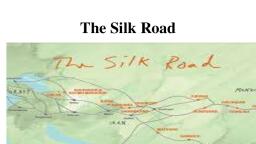
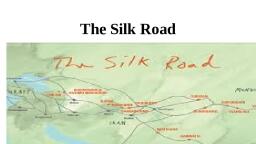
The Silk Road
Page 2 :
About The Author, •, , •, , Nick Middleton is an award-winning geographer,, writer, TV presenter, environmental scientist and, university lecturer. His curiosity about how planet, Earth works and how people interact with it was, fuelled from an early age by his family’s world, atlas, Herge’s Adventures of Tintin and an endless, flow of Willard Price novels. Now he works and, communicates on a wide variety of environmental, issues and travel topics for a broad range of, audiences, from government policy-makers to, primary-school children. He also teaches at the, University of Oxford where he is a Fellow of St, Anne’s College., Nick is the author of seven travel books, including, the bestseller, Going to Extremes, which, accompanied a television series he wrote and, presented for Channel 4 and the National, Geographic Channel on extreme environments and, the people who live in them. His TV documentaries, have been broadcast all over the world and his, books translated into more than a dozen languages.
Page 3 :
Introduction to the lesson, • The story is written by Nick, Middleton. This chapter is, about the narrator’s journey, from slopes of Ravu to Mount, Kailash to complete the kora., To bid him farewell, Lhamo, gave him a long sleeve, sheepskin coat. He hired, Tsetan’s car for his journey, and took Daniel along to, , escort him to Darchen.
Page 4 :
•, , •, , Silk Road Lesson and Explanation, Page no 74,75,76 & 77, , A FLAWLESS half-moon floated in a perfect blue, sky in the morning we said our goodbyes., Extended banks of cloud-like long French loaves, glowed pink as the sun emerged to splash the, distant mountain tops with a rose-tinted blush., Now that we were leaving Ravu, Lhamo said she, wanted to give me a farewell present. One, evening I’d told her through Daniel that I was, heading towards Mount Kailash to complete the, kora, and she’d said that I ought to get some, warmer clothes. After ducking back into her tent,, she emerged carrying one of the long-sleeved, sheepskin coats that all the men wore. Tsetan, sized me up as we clambered into his car. “Ah,, yes,” he declared, “drokba, sir.”, We took a short cut to get off the Changtang., Tsetan knew a route that would take us southwest, almost directly towards Mount Kailash. It, involved crossing several fairly high mountain, passes, he said. “But no problem, sir”, he assured, us, “if there is no snow.” What was the likelihood, of that I asked. “Not knowing, sir, until we get, there, , •, •, •, , •, •, •, , Loaves – bread shaped and baked, in one piece which is usually, sliced before being eaten, Kora – meditation performed by, Buddhist believers, Ducking Back – going inside and, then coming out, Size me up – to look at someone, attentively, Clambered – move or climb in an, awkward way, Drokba – Shepherd
Page 5 :
• From the gently rolling hills of Ravu, the, short cut took us across vast open plains, with nothing in them except a few gazelles, that would look up from nibbling the arid, pastures and frown before bounding away, into the void. Further on, where the plains, became more stony than grassy, a great herd, of wild ass came into view. Tsetan told us, • New Words, we were approaching them long before they • Gazelles – an African or Asian mammal, with large eyes that moves quickly and, hoofs, appeared. “Kyang,” he said, pointing, •, Nibbling – take a small bite from, towards a far-off pall of dust. When we drew • Arid – having little or no rain, •, Pastures – land covered with grass, near, I could see the herd galloping en, •, Frown – to disapprove of something, •, Frown – to disapprove of something, masse, wheeling and turning in tight, •, Bounding – jump; hop; bounce, •, Wild ass – an animal who have ears, formation as if they were practising, shorter than a horse and smaller in size, – a large group of animal, manoeuvres on some predetermined course. •• Herd, Galloping – progressing in an, manner, Plumes of dust billowed into the crisp, clean • uncontrollable, En masse – in a group, •, Manoeuvres – military exercises, air., •, Plumes - Trails, •, , Billowed – filled with air; swelled out
Page 6 :
•, , As hills started to push up once more from the, rocky wilderness, we passed solitary drokbas, tending their flocks. Sometimes men, sometimes, women, these well-wrapped figures would pause, and stare at our car, occasionally waving as we, passed. When the track took us close to their, animals, the sheep would take evasive action,, veering away from the speeding vehicle., , •, , We passed nomads’ dark tents pitched in splendid, isolation, usually with a huge black dog, a Tibetan, mastiff, standing guard. These beasts would cock, their great big heads when they became aware of, our approach and fix us in their sights. As we, continued to draw closer, they would explode into, action, speeding directly towards us, like a bullet, from a gun and nearly as fast., , •, •, •, •, •, •, •, •, , •, •, •, •, •, •, , Gazelles – an African or Asian mammal, with large eyes that moves quickly and, hoofs, Nibbling – take a small bite from, Arid – having little or no rain, Pastures – land covered with grass, Frown – to disapprove of something, Frown – to disapprove of something, Bounding – jump; hop; bounce, Wild ass – an animal who have ears, shorter than a horse and smaller in size, Herd – a large group of animal, Galloping – progressing in an, uncontrollable manner, En masse – in a group, Manoeuvres – military exercises, Plumes - Trails, Billowed – filled with air; swelled out
Page 7 :
•, , •, , These shaggy monsters, blacker than the darkest, night, usually wore bright red collars and barked, furiously with massive jaws. They were, completely fearless of our vehicle, shooting, straight into our path, causing Tsetan to brake, and swerve. The dog would make chase for a, hundred metres or so before easing off, having, seen us off the property. It wasn’t difficult to, understand why ferocious Tibetan mastiffs, became popular in China’s imperial courts as, hunting dogs, brought along the Silk Road in, ancient times as tribute from Tibet., By now we could see snow-capped mountains, gathering on the horizon. We entered a valley, where the river was wide and mostly clogged, with ice, brilliant white and glinting in the, sunshine. The trail hugged its bank, twisting, with the meanders as we gradually gained height, and the valley sides closed in., , •, •, •, •, •, •, •, •, •, •, •, •, •, •, , Gazelles – an African or Asian mammal, with large eyes that moves quickly and, hoofs, Nibbling – take a small bite from, Arid – having little or no rain, Pastures – land covered with grass, Frown – to disapprove of something, Frown – to disapprove of something, Bounding – jump; hop; bounce, Wild ass – an animal who have ears shorter, than a horse and smaller in size, Herd – a large group of animal, Galloping – progressing in an, uncontrollable manner, En masse – in a group, Manoeuvres – military exercises, Plumes - Trails, Billowed – filled with air; swelled out
Page 8 :
•, , •, , •, , The turns became sharper and the ride bumpier, Tsetan, now in third gear as we continued to climb. The track, moved away from the icy river, labouring through steeper, slopes that sported big rocks daubed with patches of, bright orange lichen. Beneath the rocks, hunks of snow, clung on in the near permanent shade. I felt the pressure, building up in my ears, held my nose, snorted and cleared, them., We struggled round another tight bend and Tsetan, stopped. He had opened his door and jumped out of his, seat before I realised what was going on. “Snow,” said, Daniel as he too exited the vehicle, letting in a breath of, cold air as he did so., A swathe of the white stuff lay across the track in front of, us, stretching for maybe fifteen metres before it petered, out and the dirt trail reappeared. The snow continued on, either side of us, smoothing the abrupt bank on the, upslope side. The bank was too steep for our vehicle to, scale, so there was no way round the snow patch. I joined, Daniel as Tsetan stepped on to the encrusted snow and, began to slither and slide forward, stamping his foot from, time to time to ascertain how sturdy it was. I looked at my, wristwatch. We were at 5,210 metres above sea level., , • New Words, •, •, , •, •, •, •, •, , Daubed – spread a thick sticky, substance on a surface, carelessly, Lichen – a slow-growing plant, which grows on walls, trees or, rocks, Clung – hold tightly onto, something, Swathe – a long strip of land, Petered out – to diminish, gradually and stop, Encrusted – decorated with a, hard surface layer, Slither – to move smoothly, over a surface
Page 9 :
•, , The snow didn’t look too deep to me, but the danger, wasn’t its depth, Daniel said, so much as its icy top, layer. “If we slip off, the car could turn over,” he, suggested, as we saw Tsetan grab handfuls of dirt, and fling them across the frozen surface. We both, pitched in and, when the snow was spread with soil,, Daniel and I stayed out of the vehicle to lighten, Tsetan’s load. He backed up and drove towards the, dirty snow, eased the car on to its icy surface and, slowly drove its length without apparent difficulty., , •, , Ten minutes later, we stopped at another blockage., “Not good, sir,” Tsetan announced as he jumped out, again to survey the scene. This time he decided to, try and drive round the snow. The slope was steep, and studded with major rocks, but somehow Tsetan, negotiated them, his four-wheel drive vehicle, lurching from one obstacle to the next. In so doing, he cut off one of the hairpin bends, regaining the, trail further up where the snow had not drifted., , • Fling – throw, • Lurching – listing
Page 10 :
•, , I checked my watch again as we continued to climb in, the bright sunshine. We crept past 5,400 metres and my, head began to throb horribly. I took gulps from my, water bottle, which is supposed to help a rapid ascent., , •, , We finally reached the top of the pass at 5,515 metres., It was marked by a large cairn of rocks festooned with, white silk scarves and ragged prayer flags. We all took, a turn round the cairn, in a clockwise direction as is the, tradition, and Tsetan checked the tyres on his vehicle., He stopped at the petrol tank and partially unscrewed, the top, which emitted a loud hiss. The lower, atmospheric pressure was allowing the fuel to expand., It sounded dangerous to me. “Maybe, sir,” Tsetan, laughed “but no smoking., , •, •, •, , Throb - pulsate, Ascent – climb on an upward slope, Cairn of rocks – the pile of stone on the top of the, mountain, especially where someone is buried., Festooned – decorated, , •, •
Page 11 :
•, , My headache soon cleared as we careered down, the other side of the pass. It was two o’clock by the, time we stopped for lunch. We ate hot noodles, inside a long canvas tent, part of a workcamp, erected beside a dry salt lake. The plateau is, pockmarked with salt flats and brackish lakes,, vestiges of the Tethys Ocean which bordered Tibet, before the great continental collision that lifted it, skyward. This one was a hive of activity, men with, pickaxes and shovels trudging back and forth in, their long sheepskin coats and salt-encrusted boots., All wore sunglasses against the glare as a steady, stream of blue trucks emerged from the blindingly, white lake laden with piles of salt., , •, , By late afternoon we had reached the small town, of Hor, back on the main east-west highway that, followed the old trade route from Lhasa to, Kashmir. Daniel, who was returning to Lhasa,, found a ride in a truck so Tsetan and I bade him, farewell outside a tyre-repair shop. We had, suffered two punctures in quick succession on the, drive down from the salt lake and Tsetan was eager, to have them fixed since they left him with no, spares. Besides, the second tyre he’d changed had, been replaced by one that was as smooth as my, bald head., , •, •, •, •, •, •, , Careered down – sinking the, slope, Salt flats – thatched roof, covered with snow, Pockmarked – disfigured with, a scar, Brackish – slightly salty water, Vestiges – a trace of, something that is disappearing, Laden - loaded
Page 12 :
•, , •, , Hor was a grim, miserable place. There was no, vegetation whatsoever, just dust and rocks,, liberally scattered with years of accumulated, refuse, which was unfortunate given that the, town sat on the shore of Lake Manasarovar,, Tibet’s most venerated stretch of water. Ancient, Hindu and Buddhist cosmology pinpoints, Manasarovar as the source of four great Indian, rivers: the Indus, the Ganges, the Sutlej and the, Brahmaputra. Actually only the Sutlej flows, from the lake, but the headwaters of the others, all rise nearby on the flanks of Mount Kailash., We were within striking distance of the great, mountain and I was eager to forge ahead., But I had to wait. Tsetan told me to go and, drink some tea in Hor’s only cafe which, like, all the other buildings in town, was constructed, from badly painted concrete and had three, broken windows. The good view of the lake, through one of them helped to compensate for, the draught., , •, •, •, •, , •, •, , Grim – ugly or grey, Accumulated – gathered, Venerated – respected, Cosmology – science, about the origin and, development of the, universe, Flanks - sides, Forge – put together;, build-up
Page 14 :
The Silk Road, Part 2
Page 15 :
• The snow didn’t look too deep to me,, but the danger wasn’t its depth,, Daniel said, so much as its icy top, layer. “If we slip off, the car could, turn over,” he suggested, as we saw, Tsetan grab handfuls of dirt and fling, them across the frozen surface. We, both pitched in and, when the snow, was spread with soil, Daniel and I, stayed out of the vehicle to lighten, Tsetan’s load. He backed up and, drove towards the dirty snow, eased, the car on to its icy surface and, • Fling – throw, slowly drove its length without, • Lurching – listing, apparent difficulty.
Page 16 :
• Ten minutes later, we stopped, at another blockage. “Not, good, sir,” Tsetan announced, as he jumped out again to, survey the scene. This time he, decided to try and drive round, the snow. The slope was steep, and studded with major rocks,, but somehow Tsetan, negotiated them, his fourwheel drive vehicle lurching, from one obstacle to the next., In so doing he cut off one of, the hairpin bends, regaining, the trail further up where the, snow had not drifted.
Page 17 :
• I checked my watch again, as we continued to climb, in the bright sunshine. We, crept(slowly) past 5,400, metres and my head, began to throb(Beat), horribly. I took, gulps(swallow) from my, water bottle, which is, supposed to help a rapid, ascent(upward slope).
Page 18 :
• We finally reached the top of, the pass at 5,515 metres. It was, marked by a large cairn of, rocks(the pile of stone on the, top of the mountain), festooned(decorate) with white, silk scarves and ragged prayer, flags. We all took a turn round, the cairn, in a clockwise, direction as is the tradition, and, Tsetan checked the tyres on his, vehicle. He stopped at the, petrol tank and partially, unscrewed the top, which, emitted a loud hiss. The lower, atmospheric pressure was, allowing the fuel to expand. It, sounded dangerous to me., “Maybe, sir,” Tsetan laughed, “but no smoking.
Page 19 :
• My headache soon cleared as we careered, down(sinking the slope) the other side of, the pass. It was two o’clock by the time we, stopped for lunch. We ate hot noodles, inside a long canvas tent, part of a, workcamp erected beside a dry salt lake., The plateau is pockmarked with salt flats, and brackish lakes, vestiges(trace) of the, Tethys Ocean which bordered Tibet before, the great continental collision that lifted it, skyward. This one was a hive of activity,, men with pickaxes and shovels trudging, (Walk with heavy steps) back and forth in, their long sheepskin coats and saltencrusted ( covered) boots. All wore, sunglasses against the glare as a steady, stream of blue trucks emerged from the, blindingly white lake laden with piles of
Page 20 :
• By late afternoon we had reached, the small town of Hor, back on the, main east-west highway that, followed the old trade route from, Lhasa to Kashmir. Daniel, who was, returning to Lhasa, found a ride in a, truck so Tsetan and I bade him, farewell outside a tyre-repair shop., We had suffered two punctures in, quick succession on the drive down, from the salt lake and Tsetan was, eager to have them fixed since they, left him with no spares. Besides, the, second tyre he’d changed had been, replaced by one that was as smooth, as my bald head., , •, •, •, •, •, •, , Careered down – sinking the, slope, Salt flats – thatched roof, covered with snow, Pockmarked – disfigured with, a scar, Brackish – slightly salty water, Vestiges – a trace of, something that is disappearing, Laden - loaded
Page 21 :
• Hor was a grim, miserable place. There was, no vegetation whatsoever, just dust and, rocks, liberally scattered with years of, accumulated(gather) refuse, which was, unfortunate given that the town sat on the, shore of Lake Manasarovar, Tibet’s most, venerated (respected ) stretch of water., Ancient Hindu and Buddhist cosmology (–, science about the origin and development of, the universe) pinpoints Manasarovar as the, source of four great Indian rivers: the Indus,, the Ganges, the Sutlej and the Brahmaputra., Actually only the Sutlej flows from the lake,, but the headwaters of the others all rise, nearby on the flanks of Mount Kailash. We, were within striking distance of the great, mountain and I was eager to forge(put, together) ahead.
Page 22 :
• But I had to wait. Tsetan, told me to go and drink, some tea in Hor’s only, cafe which, like all the, other buildings in town,, was constructed from, badly painted concrete, and had three broken, windows. The good view, of the lake through one of, them helped to, compensate for the, draught.
Page 23 :
• I was served by a Chinese youth, in military uniform who spread, the grease around on my table, with a filthy( dirty) rag ( Scrap, cloth) before bringing me a, glass and a thermos of tea., • Half an hour later, Tsetan, relieved me from my solitary, confinement (captivity )and we, drove past a lot more rocks and, rubbish westwards out of town, towards Mount Kailash.
Page 24 :
• My experience in Hor came as, a stark contrast to accounts I’d, read of earlier travellers’ first, encounters with Lake, Manasarovar. Ekai Kawaguchi,, a Japanese monk who had, arrived there in 1900, was so, moved by the sanctity (pure), of the lake that he burst into, tears. A couple of years later,, the hallowed waters had a, similar effect on Sven Hedin, a, Swede who wasn’t prone, (susceptible) to sentimental, outbursts.
Page 25 :
• It was dark by the time we finally left again, and after 10.30 p.m. we drew up outside a, guest house in Darchen for what turned out to, be another troubled night. Kicking around in, the open-air rubbish dump that passed for the, town of Hor had set off my cold once more,, though if truth be told it had never quite, disappeared with my herbal tea. One of my, nostrils was blocked again and as I lay down, to sleep, I wasn’t convinced that the other, would provide me with sufficient oxygen. My, watch told me I was at 4,760 metres. It wasn’t, much higher than Ravu, and there I’d been, gasping for oxygen several times every night., I’d grown accustomed to these nocturnal, disturbances by now, but they still scared me., , New Word, •Nocturnal – night time
Page 26 :
• Tired and hungry, I started, breathing through my mouth., After a while, I switched to, single-nostril power which, seemed to be admitting enough, oxygen but, just as I was, drifting off, I woke up abruptly., • Something was wrong. My, chest felt strangely heavy and I, sat up, a movement that cleared, my nasal passages almost, instantly and relieved the, feeling in my chest. Curious, I, thought., , Abruptly=, Suddenly, Curious =, Zeal
Page 27 :
• I lay back down and tried again., Same result. I was on the point, of disappearing into the land of, nod when something told me, not to. It must have been those, emergency electrical impulses, again, but this was not the, same as on previous occasions., This time, I wasn’t gasping for, breath, I was simply not allowed, to go to sleep., •Gasping – breathlessness, •Propping – to hold up
Page 28 :
• Sitting up once more, immediately made me feel, better. I could breathe freely, and my chest felt fine. But as, soon as I lay down, my sinuses, filled and my chest was odd. I, tried propping myself upright, against the wall, but now I, couldn’t manage to relax, enough to drop off. I couldn’t, put my finger on the reason, but, I was afraid to go to sleep. A, little voice inside me was saying, that if I did I might never wake, up again. So I stayed awake all, night.
Page 29 :
• Tsetan took me to the Darchen medical, college the following morning. The, medical college at Darchen was new, and looked like a monastery from the, outside with a very solid door that led, into a large courtyard. We found the, consulting room which was dark and, cold and occupied by a Tibetan doctor, who wore none of the paraphernalia, that I’d been expecting. No white coat,, he looked like any other Tibetan with a, thick pullover and a woolly hat., , New Word, •Paraphernalia – miscellaneous articles
Page 30 :
• When I explained my, sleepless symptoms and my, sudden aversion to lying, down, he shot me a few, questions while feeling the, veins in my wrist., “It’s a cold,” he said finally, through Tsetan. “A cold, and the effects of altitude., I’ll give you something for, it.”, , • I asked him if he thought, I’d recover enough to be, able to do the kora. “Oh, yes,” he said, “you’ll be, fine.”
Page 31 :
• I walked out of the medical college, clutching a brown envelope stuffed with, fifteen screws of paper. I had a five-day, course of Tibetan medicine which I, started right away. I opened an after, breakfast package and found it contained, a brown powder that I had to take with, hot water. It tasted just like cinnamon., The contents of the lunchtime and, bedtime packages were less obviously, identifiable. Both contained small,, spherical brown pellets. They looked, suspiciously like sheep dung, but of, course I took them. That night, after my, first full day’s course, I slept very, soundly. Like a log, not a dead man., , New Words, •Pellets – shots, •Derelict – ruined, •Heaps – loads, •Wisp – a small amount of, something
Page 32 :
• Once he saw that I was going to, live Tsetan left me, to return to, Lhasa. As a Buddhist, he told, me, he knew that it didn’t really, matter if I passed away, but he, thought it would be bad for, business., Darchen didn’t look so horrible, after a good night’s sleep. It was, still dusty, partially derelict and, punctuated by heaps of rubble, and refuse, but the sun shone, brilliantly in a clear blue sky and, the outlook across the plain to, the south gave me a vision of the, Himalayas, commanded by a, huge, snow-capped mountain,, Gurla Mandhata, with just a wisp, of cloud suspended over its, summit., , New Words, •Pellets – shots, •Derelict – ruined, •Heaps – loads, •Wisp – a small amount of something
Page 33 :
• The town had a couple of rudimentary, general stores selling Chinese cigarettes,, soap and other basic provisions, as well, as the usual strings of prayer flags. In, front of one, men gathered in the, afternoon for a game of pool, the battered, table looking supremely incongruous in, the open air, while nearby women, washed their long hair in the icy water of, a narrow brook that babbled down past, my guest house. Darchen felt relaxed and, unhurried but, for me, it came with a, significant drawback. There were no, pilgrims., , New Words, •Rudimentary – basic or, primary, •Incongruous – strange, •Brook – a small stream, •Pondering - thinking
Page 34 :
• I’d been told that at the, height of the pilgrimage, season, the town was, bustling with visitors., Many brought their own, accommodation,, enlarging the settlement, round its edges as they set, up their tents which, spilled down on to the, plain. I’d timed my, arrival for the beginning, of the season, but it, seemed I was too early.
Page 35 :
• One afternoon I sat, pondering my options, over a glass of tea in, Darchen’s only cafe., After a little, consideration, I, concluded they were, severely limited., Clearly I hadn’t made, much progress with my, self-help programme, on positive thinking.
Page 36 :
• In my defence, it hadn’t been, easy with all my sleeping, difficulties, but however I, looked at it, I could only wait., The pilgrimage trail was welltrodden, but I didn’t fancy, doing it alone. The kora was, seasonal because parts of the, route were liable to blockage, by snow. I had no idea whether, or not the snow had cleared,, but I wasn’t encouraged by the, chunks of dirty ice that still, clung to the banks of, , New Words, •Well-trodden – much, frequented by travellers, •Well-trodden – much, frequented by travellers, •Cavernous – vast, •Wreathed – twisted, •Stout - firm
Page 37 :
• Darchen’s brook. Since Tsetan, had left, I hadn’t come across, anyone in Darchen with enough, English to answer even this most, basic question., • Until, that is, I met Norbu. The, cafe was small, dark and, cavernous, with a long metal, stove that ran down the middle., The walls and ceiling were, wreathed in sheets of multicoloured plastic, of the, • striped variety— broad blue,, red and white—that is made into, stout, voluminous shopping bags, sold all over China, and in many, other countries of Asia as well, as Europe. As such, plastic must, rate as one of China’s most, successful exports along the Silk, Road today.
Page 38 :
• The cafe had a single window, beside which I’d taken up, position so that I could see the, pages of my notebook. I’d also, brought a novel with me to help, pass the time., • Norbu saw my book when he, came in and asked with a, gesture if he could sit opposite, me at my rickety table. “You, English?” he enquired, after, he’d ordered tea. I told him I, was, and we struck up a
Page 39 :
• I didn’t think he was from those, parts because he was wearing a, windcheater and metal-rimmed, spectacles of a Western style. He, was Tibetan, he told me, but worked, in Beijing at the Chinese Academy, of Social Sciences, in the Institute, of Ethnic Literature. I assumed he, was on some sort of fieldwork., , • “Yes and no,” he said. “I have come, to do the kora.” My heart jumped., Norbu had been writing academic, papers about the Kailash kora and, its importance in various works of, Buddhist literature for many years,, he told me, but he had never, actually done it himself.
Page 40 :
•, , •, , •, , When the time came for me to tell him what, brought me to Darchen, his eyes lit up. “We could, be a team,” he said excitedly. “Two academics who, have escaped from the library.” Perhaps my, positive-thinking strategy was working after all., My initial relief at meeting Norbu, who was also, staying in the guest house, was tempered by the, realisation that he was almost as ill-equipped as I, was for the pilgrimage. He kept telling me how fat, he was and how hard it was going to be. “Very, high up,” he kept reminding me, “so tiresome to, walk.” He wasn’t really a practising Buddhist, it, transpired, but he had enthusiasm and he was, of, course, Tibetan., Although I’d originally envisaged making the trek, in the company of devout believers, on reflection I, decided that perhaps Norbu would turn out to be, the ideal companion. He suggested we hire some, yaks to carry our luggage, which I interpreted as a, good sign, and he had no intention of prostrating, himself all round the mountain. “Not possible,” he, cried, collapsing across the table in hysterical, laughter. It wasn’t his style, and anyway his, tummy was too big., , New Words, •Tiresome – dull and boring, •Transpired – leaked, •Envisaged – predicted, •Devout – deep, •Prostrating – lying down
Page 41 :
• Silk Road Question and Answers, • I. Give reasons for the following statements., , • 1. The article has been titled ‘Silk Road.’, • Ans: The article has been titled ‘Silk Road'’ because the, protagonist explored the region of old silk route which was one of, the historical routes for trade. The route connected Afro-Eurasian, land. Trade of Chinese silk, spices, teas and porcelain, Indian, textiles, pepper and precious stones, Roman Empire’s gold, silver,, glassware, wine, carpets, and jewels were done., • 2. Tibetan mastiffs were popular in China’s imperial courts., • Ans: Tibetan mastiffs were popular in China’s imperial courts as, big hunting dogs. They were fearless and furious with big jaws., They were brought along the Silk Road as a watchdog from Tibet., They were a tribute in ancient times.
Page 42 :
•, , 3. The author’s experience at Hor was in stark contrast to earlier accounts, of the place., , •, , Ans: Hor was an ugly and miserable place which had no vegetation and just dust, and rocks. It was scattered with gathered refuse and it is luckless that it was on, the shore of Lake Mansarovar which is Tibet’s most respected water. Ekai, Kawaguchi was a Japanese monk who arrived in the town in 1900, he was so, moved with the purity of the lake that he cried. After a few years, similar effect, was on Sven Hedin a Swedish who didn’t have such an emotional outburst. The, protagonist’s car suffered from two punctures in that place. When he reached that, place’s only café to have some tea, the place was filled with badly painted, concrete and three broken windows., , •, , 4. The author was disappointed with Darchen., , •, , Ans: He was disappointed with Darchen because he was having health, issues due to change in altitude. He had a cold and was unable to sleep at, night. The place had no pilgrims and it was filled with loads of remains and, trash.