Page 1 :
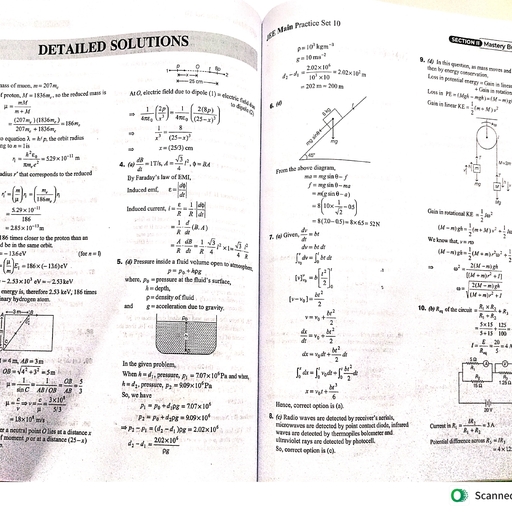
/, , 4, , 4, , 4, , , , y —, , Ss, , 18,, , a= sam, , ie has 1s? configuration. T), es have the general configuration so nob, Inert gS configuration is ns’np® or 182 ‘, she 38°3p°, Li” = 1s’, AI* = 262256, 7 22h n5d Pp, o = 1s2s 2p’, Zero group elements have n, either lose, gain or share el oe : », atoms of other elements, i.e. their combini le, : 1 : the ining, capacity or valency is zero. This is due to thei, high stability [1s° in case of helium] ns? me, coed (0) inthe outermost shell., (A) ane are reactive elemen :, pility by forming various oon’ waain, through chemical bonding, pou, Valence electrons of an atom are the number, of electrons present in the outermost shell, whereas the number of electrons required for, completion of the octet in the outermost shell, is known as its valency or valence., Since valence electrons take part in bond, . formation, chemical properties are determined, by them., If the electronegativity values differ, the bond, will develop polarity and partial ionic nature., Electronegativity is the property by which an, atom attracts an electron towards itself. Hence,, a pure covalent bond, which requires equal, sharing of electrons, is formed between, elements having the same electronegativity., Si (2, 8, 4) has 4 valence electrons. It cannot, lose its 4 electrons, hence it shares electrons to, attain stable configuration. Only strongly, electropositive metals can lose electrons and, strongly electronegative elements can gain, electrons. Si is a-metalloid. So it neither gains, nor loses electrons., Cl— Cl is formed from the atoms, element. The E.N difference is Zero., the highest bond energy. Hence clstrongest covalent bond., , X+X—> X, Metal + Metal (Metallic bond), 3X+Y¥—+ XY, , Metal + Non metal (Ionic bond), Z+Z—> Z :, Non-metal + Non-metal (Covalent bond), X+Z—» XZ :, , Metal + Non—metal (Ionic bond), , of the same, CI-Cl has, Cl is the, , , , 23., , 25., , 29., , 34., , 36., , 39., , , , , Nitrogen (2, 5) has five valence electrons and, it requires 3 electrons to complete its octet, state, so it shares three electrons with other, nitrogen atom for stable configuration., , Thus, the total number of electrons that take, part in triple bond formation are six., , CO), , Oxygen 08 (1s” 2s? 2p’), 2 electrons are unpaired and available, , for sharing, it forms dor, of oxygen., Fluorine F? (1s? 2s” 2p*) valency is one, F, molecule is formed by single bond., Nitrogen N’ (1s”2s” 2p’) valency is three, as it has three unpaired electrons, , Np molecule is formed by triple bond., Hydrogen H' (1s') valency is one, , Hy, is formed by single bond., , Diamond is one of the allotropes of carbon., Carbon (2s?2p’) has four valence electrons., These four electrons are shared by other four, carbon atoms to form a stable configuration,, having a solid tetrahedral geometry., , Tt has been observed that, + when, electronegativity difference is more than 1.7,, the bond is generally ionic., , (A), uble bond with another atom, (B), (), , ), , Electronegativity of the halogens decreases in, the following order F > Cl > Br >I. The, electronegativity difference is the least in, H — I bond. Hence the covalent character of, , H-Iis maximum., Ammonium chloride is NH,Cl, H a, H 4 > HICr, i, , Here, nitrogen forms 3 covalent bonds wi, with, , hydrogen atoms, a co-ordinate bond by, , donating the lone pair of electrons to dnoihiee, , hydrogen ion, thus forming a cation of NHt, which forms ionic bond with CI- anion. 4>, , 217
Page 2 :
’, , 42., , K (C=N), , Potassium (K) has 1 valence electron in its, Outermost shell (2, 8, 8, 1)., , Carbon (C) has 4 valence electrons in its, outermost shell (2, 4)., , Nitrogen (N) has 5 electrons (2, 5) in, outermost shell., , To attain stability nitrogen shares its three, electrons with three electrons of carbon to, form a triple covalent bond., , One electron of potassium is transferred to, carbon, thus both K as well as C accomplish, their octet states. Hence bond between K* and, (CN) is ionic while the triple bond between C, and N is covalent. In option ‘A’ and ‘B’ all the, , bonds are covalent, while in ‘D’ the bond is, ionic., , Calcium (Ca) has two electrons in the valence, shell (2, 8, 8, 2), whereas hydrogen has one, valence electron. Ca achieves the stable octet, state by transferring one each of the two valence, electrons to the two hydrogen atoms. Thus,, bonding in CaH, is electrovalent in nature., Carbon atom has four electrons in the, valence shell (2, 4) and chlorine has seven, valence electrons. Carbon achieves the, stable octet by sharing its four electrons, with four Cl atoms. Bonding in CCl, is, covalent in nature., Carbon cannot form electrovalent bonds with, chlorine because losing four electrons is, possible only for strongly electropositive, metals. Ca does not have lone pairs in its, , outermost shell to donate. Hence, it cannot, form coordinate bonds., , Water molecule is formed by two lone pairs, and two bond pairs with two hydrogen atoms., The correct representation of H.O molecule is, HiO%H, XxX, 48., , This is the definition of the octet rule. The, Aufbau’s principle states that, in the filling up, of orbitals by the electrons, the electrons first, enter the lowest energy orbitals and then the, higher energy orbitals. The Hund’s rule states, that, if many orbitals of equal energy are, available, then the electrons occupy them, Singly first before pairing up. According to the, Newland’s law, the elements when arranged in, order of their increasing atomic masses, the, , eighth succeeding element has properties, similar to first., , _—, , , , 49., , 52., , 53., , “x, , BF3 = :F xBx F:, , :Cl:, , “C1 XP¥ CL, , oe ex Kee®, , cl: :Cl:, , (A) PCls, , (P has 10-electrons in valence shell.), , (B) SFe °F:, , °F, , x, Ss, xe, , °F:, , rE, , eX eX, x &X, , oe, , ., , (S has 12-electrons in valence shell.), (©) BeCh #Cl*Be*-C}!, (Be has 4—electrons in valence shell.), (D) GH, H¥CxxC*H, x Xe, H H, , (Both C and H-—atoms fulfill the, condition of octet rule.), In carbon dioxide molecule, carbon has four, valence electrons and oxygen has six. To, complete the octet, carbon shares two of its, , valence electrons with one oxygen atom and, two with other oxygen atom., , 208, , X08 or O=C=O, , , , Thus, there are two double bonds in CO: —, molecule, and each atom has a completed octet, BPX BXF, , xe, , F, , = 6 electrons in the valence shell of, B. (incomplete Octet), , PF, F, °x, FUP XF, F Sef F, , = 10 electrons in the valence shell of, P. (expanded octet) a
Page 3 :
5A., , 55., , 56., , 61., , 68., 69., , 71., , 73,, , 1%., , , , IF: F F, \l et, Rs, F | F, F, , = 14 electrons in the valence shell of, I. (expanded octet), , Line structure of 5, , [i ty, , 3 electrons from chlorine and 3 electrons from, aluminium., , In SF¢, sulphur (central atom) has more than 8, electrons i.e. 12 electrons in its outermost, shell. Hence SF. has an expanded octet., , , , The octet rule does not explain:, , (i) Nature of forces between atoms after, gain or loss of electrons, , (ii) Geometry of molecules: Bond length,, bond angle, spatial dimensions are not, , explained., (iii) The reactivity of bonds: It does not, explain why free atoms are less reactive, , than molecules, but octet rule can, e molecule formed by ionic,, , explain th, covalent and co-ordinate linkage., The anions and cations attract each other with, extends in all, , electrostatic force that, directions. The ions are bonded to a number of, , oppositely charged ions around them., , It requires just one electron to complete the octet., Electronegativity decreases down the group., Hence, amongst the halogens, fluorine has the, , most electronegativityF = 1s"2s°2p°, Metal atom and 4 non-metal, , widely in electronegativity values., In an ionic compound out of the two atoms,, one is strongly electropositive and the other is, , strongly electronegative., , X=x, Y=x+1, , Z=x+2 (alkali metal) .,, If Z is an alkali metal, then Y is an inert gas and, , X will be a halogen. An, ionic bond can be, formed when one electron from Z is transferred, th X and Z acquire the, , to X whereby bot, electronic configuration of the noble gas Y., , atom differ, , —_——-