Page 3 :
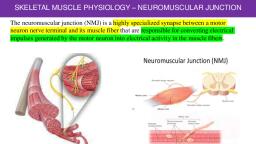
air “er U5, nis given below ‘, M tons from the synaptic cleft, , A brief Ceactipion of = mechanism of synaptic transmissio, (i) When an impulse arrives at a presynaptic knob, calciu, enter the cytoplasm of the presynaptic knob., , (ii) The calcium ions cause the movement of the synaptic vecic, knob. The synaptic vesicles are fused with the servant tnt a of the, (exocytosis) to discharge their contents (neurotransmitter) into the idk., , (ii) The synaptic vesicles then return to the cytoplasm of the synaptic knob where they, are refilled with neurotransmitter., , (iv) The neurotransmitter of the synaptic cleft binds with protein receptor molecules on, the post synaptic membrane. This binding action changes the membrane potential of the, postsynaptic membrane, opening channels in the membrane and allowing sodium ions to, enter the cell. This causes the depolarization and generation of action potential in the, post-synaptic membrane. Thus the impulse is transferred to the next neuron., , (v) Having produced a change in the permeability of the postsynaptic membrane the, neurotransmitter is immediately lost from the synaptic cleft. In the case of cholinergic, synapses, acetylcholine (ACh) is hydrolysed by an enzyme acetylcholinesterase (AChE), which is present in high concentration at the synapse., , (vi) The products of the hydrolysis are acetate and choline which are reabsorbed into, the synaptic knob where they are resynthesized into acetylcholine, using energy from ATP., , Scanned with CamScanner