Page 4 :
Administration by Local, Rulers & Chieftains,
Page 7 :
Thru Subsidiary Alliance, Lord Wellesley Helped them,
Page 9 :
British Rule, Malabar, , Direct Rule, , Travancore, &, Kochi, , Paramountcy, of the British.
Page 10 :
Subsidiary Alliance, Subsidiary AllianceSubsidiary, Alliance, , Lord Wellesley, Native States under their control, Protection by British army, Expenditure by the Native States, Couldn't keep their own army, Foreign policy by British, A British Resident,
Page 11 :
British Rule....., Political Domination, Economic Exploitation, Intellectual Hegemony
Page 12 :
Malabar..., Ruled as provinces., Malabar was under the Bombay, Presidency till 1800, Then under Madras Presidency, Anti People Policies - High Taxes, Revolt by Kerala Varma Pazhassi, Raja,
Page 15 :
Kurichia Revolt (Vayanad), Against the Revenue Reforms, To pay Tax in Cash than Kind, Exploited & Punished, Popular Resistance,
Page 16 :
Effects of British Rule, Self-Sufficient Villages &, Indigenous Production Declined, Took Raw Materials at cheap price, English Products were Imposed, Roads, Bridges & Rail for Them, Rural Economy Ruined, Many Under Starvation, Monopoly in Trade, (salt, tobacco,timber, spices, etc),
Page 18 :
More Taxes......, Houses, Shops, Cattle, Ferry,, Fishing Net, Looms, Toddy,, Arrack, Knives,
Page 19 :
These kinds of taxes, too!, Collecting firewood from the, forests, , , To cross rivers had to pay, a tax,
Page 20 :
Renewal of lease and, Superimposition, , , Polichezhuthu → Renew the, , contract with the lord every 12 years, , , Melcharth → Assigning the land, , held by one tenant to another
Page 21 :
Effects of Land Laws, Land Revenue in Cash, LR was Increased Many Times, Actual Peasants were Denied, Ownership of Land, Rights over Land for Landlords, More Rights & Powers for, Landlords, The exploitation & cruelties of,, landlords increased.,
Page 22 :
Peasants were Harassed.., By the British Govt.,, Landlords,, Police ,, Judiciary, Peasants Protested, Organised, Revolts,
Page 23 :
Peasant Uprisings of Malabar, The Revolts against the British in, Malabar, Tenants,Agricultural Labourers,, Artisans, Petty Traders.., Eranad & Valluvanad (Muslims), Mysorean invasion – Flee &, Return of chieftains and landlords, British Support for the landlords, and chieftains – Mutual Benefit,
Page 25 :
Pandarappattam, Proclamation, Land Relations of Travancore, State-owned Land was Leased, (Marthanda Varma) – to meet the, British Army Expense, Rich (thru Trade) asked right of, ownership of the Land –, Travancore agreed,
Page 26 :
Pandarappattam Proclamation,, Janmi Kudiyan proclamation, Actual peasant did not get any, right of ownership, They were left out & Harassed, The British Officials, Police, &, Judiciary stood for the Landlords, Sale, Purchase & Change in the, use of agricultural land.,
Page 27 :
Transformation in the, field of Agriculture........., Cash Crops than Paddy, Crops linked to industry, High Ranges & Forests, opened for Cash Crops &, Plantation Crops, Migrations Spread
Page 28 :
Influence of Capital Investment, in Economic & Social fields, Plantations,Trade and Banking, Connection with World Market, Moved to Industrial Fields, Job-Public works, Police, Military, Changes in Social Relations, Expansion of Education, Changes in Land Relations,
Page 31 :
Education in Kerala ...., Took Measures in Education, To manage their Affairs, The Church Mission Society Travancore and Cochin, Basel Evangelical MissionMalabar, Schools in Western Style., No Separation on Caste,Creed,
Page 32 :
Education By Our Govt. ...., Then Govt. entered this Field, Only Upper Castes got Chance, Lower Castes in Private Schools, Press helped them to raise Voice, against this, Economic prosperity helped, Spreading Education, Free Primary education to all, children in 1904.,
Page 33 :
Education in Malabar, Work of Dr. Hermann Gundert, Primary – College Education, University of Travancore in 1937, in Trivandrum, Denigrating Native Knowledge, Modern Knowledge reached here
Page 34 :
Healthcare in Kerala ...., Ayurveda, Unani, Siddha, Medicine were the Treatments, Arrival of Allopathy, For the Treatment of employees, & the soldiers of British, Effective in Preventing, Contagious diseases (small pox,cholera),
Page 35 :
Travancore Model in, Healthcare, Scientific policy of Public Health, Hospitals with Modern Facilities, Hospital for Women & Children, Factory of Small pox vaccine in 1888, Scholarships to women for, Medical Education,
Page 36 :
Social Transformation, To fight against the Social Evils
Page 37 :
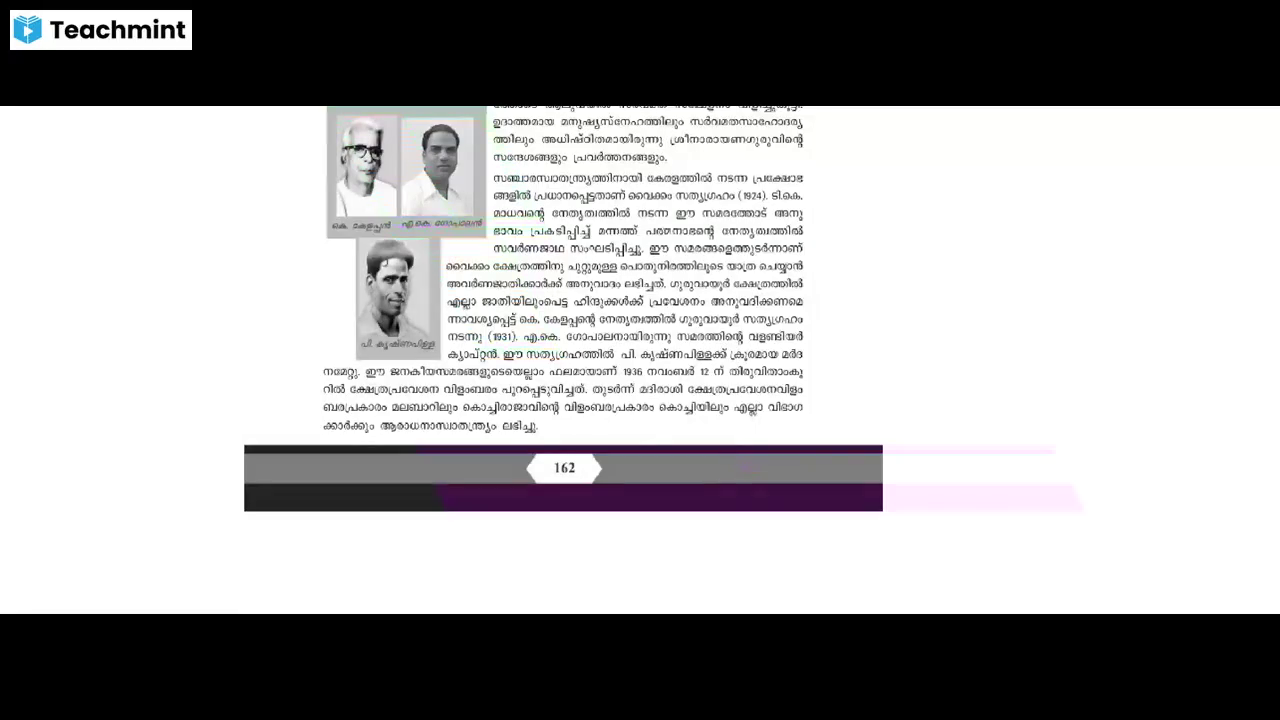
The Channar Revolt, 1822-1859, Vaikunthaswami, Right to wear upper clothes, women, , , to
Page 39 :
Sree Narayana, Guru, To free from, complex caste, system &, patterns of, worship based, on, superstitions
Page 43 :
Social Movements were.., Part of Freedom Movement, Against Imperialism., Against the Social Inequality,
Page 46 :
National Movement in Kerala, Arrival of, Gandhi, Non-violent,
Page 47 :
The Decision by Nagpur Congress, Arrange states - Linguistic Basis, Native states within the purview, of the states, Not to admit children to British, schools, Lawyers should stop practice, Not to use Foreign clothes, Use Only Swadeshi Articles, Removal of Untouchability
Page 48 :
Simon Go Back .....(1928), A, ,
Page 49 :
Civil Disobedience (1930)
Page 50 :
National, 1928→The Railway Strike, 1931→Weaving Mill Strike, 1935→Feroke Tile Factory struck, 1935→Calicut Cotton strike, 1942→'Quit India', 1941→Kayyoor Peasant Revolts, 1946→Karivalloor, 1946→Punnappra-Vayalar Revolt,
Page 55 :
EMS, Land Bill,, Education Bill.., Liberation, Struggle, Dismissel of, the Ministry by, President (Article.356), 1960 - Midterm, Election,
Page 57 :
The Kerala Model Development, Landlordism came to an End, Land Reforms Act in 1969, School Education was made free, Arrangements for public health, Welfare Activities, Total Literacy in 1990, Three-Tier Panchayat, Decentralization, Socio- Economic Development,
Page 59 :
End