Page 1 :
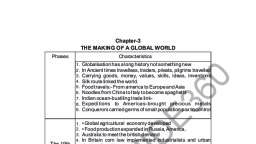
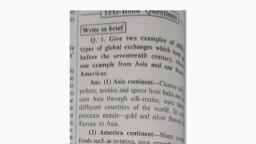
Chapter 3: The Making of a Global World, Write in Brief, , 1. Give two examples of different types of, global exchanges which took place before the, seventeenth century, choosing one example, , from Asia and one from the Americas., , Answer: Examples of the different types of, global exchanges which took place before the, , seventeenth century are:, , Example from the Americas: America was rich in, foods and minerals. Today's common foods like, potatoes, tomatoes, chillies, soya, maize,, groundnuts, etc., came to Europe and then Asia, from America after Christopher Columbus, accidentally discovered this continent., , Example from Asia: Noodles are believed to reach, Europe from China. China exported pottery and, textile to India and Southeast Asia. Precious, metals like Gold and Silver flowed from Europe to, Asia via Silk Route.
Page 2 :
2. Explain how the global transfer of disease in, the pre-modern world helped in the colonisation, , of the Americas., , Answer: The global transfer of disease in the, pre-modern world helped in the colonisation of, the Americas because the native Americans, , had no immunity against the disease that con, from Europe. Before the discovery of America,, , it had been cut off from the rest of the world for, millions of years. So, they had no defence, against the disease. In particular, Smallpox, proved a deadly killer. It killed and decimated, whole communities, paving the way for, , conquest.
Page 3 :
3. Write a note to explain the effects of the, following:, , (a) The British government's decision to abolish, the Corn Laws., , (b) The coming of rinderpest to Africa., , (c) The death of men of working-age in Europe, because of the World War., , (d) The Great Depression on the Indian, economy., , (e) The decision of MNCs to relocate production, , to Asian countries., , Answer: (a) The British government's decision, to abolish the Corn Laws resulted in the inflow, of cheaper food in, , Britain. British agriculture was unable to, compete with imports. Vast areas of land were, left uncultivated. Thousands of men and, women, who were thrown out of work, migrated, to town and cities. This indirectly led to global, agriculture and rapid urbanisation, a, , prerequisite of industrial growth.
Page 4 :
(b) Rinderpest arrived in Africa in the late, 1880s. Within two years, it spread in the whole, continent reaching Cape Town within five years., Rinderpest had a terrifying impact on people’s, livelihoods and the local economy. It killed, about 90 percent of the cattle. Planters, mine, owners and colonial governments became, successful to strengthen their power and to, , force Africans into the labour market., , (c) The death of men of working-age in Europe, because of the World War reduced the ablebodied workforce in Europe, thereby reducing, household income. Due to this the women, stepped in to undertake the jobs that earlier, only men were expected to do. It increased the, role of women that led to a demand for their, equal status in the society. It made the feminist, , movement even stronger.
Page 5 :
(d) By the early twentieth century, the global, economy had become an integral one. The, depression immediately affected Indian trade., India was a British colony that exported, agricultural goods and imported manufactured, goods. Under the impact of Great Depression,, the Indian economy was closely becoming, integrated into the global economy. As, international prices crashed so did the prices in, India. Between 1928 and 1934, wheat prices in, India fell by 50 percent. The fall in agricultural, price led to a reduction of farmers’ income and, agricultural export. The government did not, decrease their taxes due to which peasants’, indebtedness increased all across India. In, these depression years, India became an, , exporter of precious metals, notably gold.