Page 1 :
Political Parties, , Po l i t i c a l Pa r t i e s, , In this tour of democracy, we have come across political parties several, times. In Class IX, we noticed the role of political parties in the rise of, democracies, in the formation of constitutional designs, in electoral, politics and in the making and working of governments. In this, textbook, we have glanced at political parties as vehicles of federal, sharing of political power and as negotiators of social divisions in, the arena of democratic politics. Before concluding this tour, let us, take a close look at the nature and working of political parties,, especially in our country. We begin by asking two common questions:, Why do we need parties? How many parties are good for a democracy?, In the light of these, we introduce the national and regional political, parties in today’s India and then look at what is wrong with political, parties and what can be done about it., , Chapter 6, , Overview, , 71, , 2020-21
Page 2 :
Why do we need political parties?, So, you agree, with me. Parties, are partial,, partisan and lead, to partitions., Parties do, nothing but, divide people., That is their real, function!, , Political parties are easily one of the most, visible institutions in a democracy. For, most ordinary citizens, democracy is equal, to political parties. If you travel to remote, parts of our country and speak to the, less educated citizens, you could come, across people who may not know, anything about our Constitution or about, the nature of our government. But, chances are that they would know, something about our political parties. At, the same time this visibility does not mean, popularity. Most people tend to be very, critical of political parties. They tend to, , blame parties for all that is wrong with, our democracy and our political life., Parties have become identified with, social and political divisions., Therefore, it is natural to ask – do, we need political parties at all? About, hundred years ago there were few, countries of the world that had any, political party. Now there are few that, do not have parties. Why did political, parties become so omnipresent in, democracies all over the world? Let us, first answer what political parties are and, what they do, before we say why we need, them., , © (1) M Govarthan (2) A Muralidharan (3) M Moorthy (4) T Singaravelou, The Hindu, , D e m o c ratic Politics, , Meaning, A political party is a group of people, who come together to contest elections, and hold power in the government. They, agree on some policies and programmes, for the society with a view to promote, the collective good. Since there can be, different views on what is good for all,, (1), , (3), , (2), , Election Commission has officially banned wall, writing by parties during election times. Most, political parties argue that was the cheapest way for, their campaign. These election times used to, create amazing graffiti on the walls. Here are some, examples from Tamil Nadu., , 72, , 2020-21, , (4)
Page 3 :
© RK Laxman - Brushing up the years, , Thus, parties reflect fundamental, political divisions in a society. Parties are, about a part of the society and thus, involve PARTISANSHIP. Thus a party is, known by which part it stands for, which, policies it supports and whose interests, it upholds. A political party has three, components:, l the leaders,, l the active members and, l the followers, , Functions, What does a political party do? Basically,, political parties fill political offices and, exercise political power. Parties do so, by performing a series of functions:, 1 Parties contest elections. In most, democracies, elections are fought mainly, , among the candidates put up by political, parties. Parties select their candidates in, different ways. In some countries, such, as the USA, members and supporters, of a party choose its candidates. Now, more and more countries are following, this method. In other countries like India,, top party leaders choose candidates for, contesting elections., 2 Parties put forward different, policies and programmes and the, voters choose from them. Each of us, may have different opinions and views, on what policies are suitable for the, society. But no government can handle, such a large variety of views. In a, democracy, a large number of similar, opinions have to be grouped together, to provide a direction in which policies, can be formulated by the governments., This is what the parties do. A party, reduces a vast multitude of opinions into, , Partisan: A person, who is strongly, committed to a party,, group or faction., Partisanship is marked, by a tendency to take a, side and inability to take, a balanced view on an, issue., , Po l i t i c a l Pa r t i e s, , parties try to persuade people why their, policies are better than others. They seek, to implement these policies by winning, popular support through elections., , 73, , 2020-21
Page 4 :
a few basic positions which it supports., A government is expected to base, its policies on the line taken by the, RULING PARTY., 3 Parties play a decisive role in making, laws for a country. Formally, laws are, debated and passed in the legislature. But, since most of the members belong to a, party, they go by the direction of the, party leadership, irrespective of their, personal opinions., 4 Parties form and run governments., As we noted last year, the big policy, decisions are taken by political executive, that comes from the political parties., Parties recruit leaders, train them and then, make them ministers to run the, government in the way they want., , D e m o c ratic Politics, , Okay, granted, that we can’t live, without political, parties. But tell, me on what, grounds do, people support a, political party?, , Ruling Party: Political, party that runs, government., , 5 Those parties that lose in the elections, play the role of opposition to the parties, in power, by voicing different views and, criticising government for its failures or, wrong policies. Opposition parties also, mobilise opposition to the government., 6 Parties shape public opinion. They, raise and highlight issues. Parties have, lakhs of members and activists spread, all over the country. Many of the pressure, groups are the extensions of political, parties among different sections of, society. Parties sometimes also launch, movements for the resolution of, problems faced by people. Often, opinions in the society crystallise on the, lines parties take., 7 Parties provide people access to, government machinery and welfare, schemes implemented by governments., For an ordinary citizen it is easy to, approach a local party leader than a, government officer. That is why, they feel, close to parties even when they do not, fully trust them. Parties have to be, , 74, , 2020-21, , responsive to people’s needs and, demands. Otherwise people can reject, those parties in the next elections., , Necessity, This list of functions in a sense answers, the question asked above: we need, political parties because they perform all, these functions. But we still need to ask, why modern democracies cannot exist, without political parties. We can, understand the necessity of political, parties by imagining a situation without, parties. Every candidate in the elections, will be independent. So no one will be, able to make any promises to the people, about any major policy changes. The, government may be formed, but its, utility will remain ever uncertain. Elected, representatives will be accountable to their, constituency for what they do in the, locality. But no one will be responsible, for how the country will be run., We can also think about it by looking, at the non-party based elections to the, panchayat in many states. Although, the, parties do not contest formally, it is, generally noticed that the village gets split, into more than one faction, each of, which puts up a ‘panel’ of its candidates., This is exactly what the party does. That, is the reason we find political parties in, almost all countries of the world,, whether these countries are big or small,, old or new, developed or developing., The rise of political parties is directly, linked to the emergence of, representative democracies. As we have, seen, large societies need representative, democracy. As societies became large, and complex, they also needed some, agency to gather different views on, various issues and to present these to, the government. They needed
Page 5 :
some ways, to bring various, representatives together so that a, responsible government could be, formed. They needed a mechanism, to support or restrain the, government, make policies, justify or, , oppose them. Political parties fulfill, these needs that every representative, government has. We can say that, parties are a necessary condition for, a democracy., , © (1) C V Subrahmanyan (2) K Gopinathan, (3) A Chakrabarty, The Hindu, , Categorise these photographs by the functions of political parties they, illustrate. Find one photograph or news clipping from your own area for, each of the functions listed above., , 2, , 1, , 3, , 1: Activists of BJP Mahila Morcha demonstrate against hike in prices of onions and LPG in, Visakhapatnam., 2: Minister distributes Rs One lakh cheque to the families of hooch victims at their houses., 3: Activists of CPI (M), CPI, OGP and JD (S) take out a rally in Bhubaneswar to protest against, POSCO, the Korean steel company for being permitted by the State Government to export iron, ore from Orissa to feed steel plants in China and Korea., , In a democracy any group of citizens is, free to form a political party. In this, formal sense, there are a large number, of political parties in each country. More, than 750 parties are registered with the, Election Commission of India. But not, all these parties are serious contenders in, the elections. Usually only a handful of, , parties are effectively in the race to win, elections and form the government. So, the question, then is: how many major, or effective parties are good for a, democracy?, In some countries, only one party is, allowed to control and run the government., These are called one-party systems., , Po l i t i c a l Pa r t i e s, , How many parties should we have?, , 75, , 2020-21
Page 6 :
A, moral force, in, politics?, , The inspiration behind the following imaginary narrative is, Shri Kishen Patnaik (1930–2004), also known as Kishenji. He was, elected as a Member of Parliament from Sambalpur, Odisha in 1962., , What did Kishenji mean by an alternative political formation?, The question came up in a conversation between Sudha, Karuna,, Shaheen and Gracy. All four women had led very powerful, people’s movements in different parts of the country. They were meeting in a village in, Odisha, away from their day-to-day struggles, to think afresh the future of people’s, movements., , The discussion naturally turned to Kishenji, who was regarded as a friend, political, philosopher and moral guide by all the movement groups in the country. He had argued, that people’s movement should embrace politics openly. His argument was simple yet, powerful. Movements focused on a single issue are suitable as long as we wish to achieve, limited changes in a particular aspect of life. But if we wish to bring about a fundamental, social transformation, or basic change even in one aspect of life, we would need a political, organisation. People’s movement must establish a new political formation to act as a moral, force in politics. This was an urgent task, he said, because all the existing political parties, had become irrelevant for social transformation., “But Kishenji never clarified what that organisation will be. He talked of an alternative, political formation or a third force in politics. But did he mean a political party?” said, Gracy. She felt that an old style political party was not the right instrument for social, change., Sudha agreed with her. “I have thought about it several times. I agree that all the struggles, that we are involved with – the struggle against displacement, against globalisation, against, caste and gender oppression and for an alternative kind of development – all this is political., But the moment we form a party, all the goodwill we, have earned all these years will be lost. People will, think of us as no different from other politicians.”, , Shaheen did not agree with them: “Let us be very, clear. Kishenji wanted all the people’s movements to, forge a new political party. Of course he wanted this, party to be a different kind of a party. He was not, for political alternatives, but for an alternative kind, of politics.”, © Zuban, , D e m o c ratic Politics, , “Besides”, added Karuna, “we have seen that a lot, can be achieved by putting pressure on the existing, political parties. We tried putting up candidates in, panchayat elections, but the results were not very, encouraging. People respect our work, they even, adore us, but when it comes to voting they go for, the established political parties.”, , Kishenji is no more. What would be your advice, to these four activists? Should they form a new, political party? Can a political party become a, moral force in politics? What should that party, be like?, , 76, , 2020-21
Page 7 :
In some countries, power usually, changes between two main parties., Several other parties may exist, contest, elections and win a few seats in the, national legislatures. But only the two, main parties have a serious chance of, winning majority of seats to form, government. Such a party system is called, two-party system. The United States of, America and the United Kingdom are, examples of two-party system., If several parties compete for, power, and more than two parties, have a reasonable chance of coming, to power either on their own strength, or in alliance with others, we call it a, multiparty system. Thus in India, we, have a multiparty system. In this, system, the government is formed by, various parties coming together in a, , coalition. When several parties in a, multi-party system join hands for the, purpose of contesting elections and, winning power, it is called an alliance, or a front. For example, in India there, were three such major alliances in 2004, parliamentary elections– the National, Democratic Alliance, the United, Progressive Alliance and the Left Front., The multiparty system often appears, very messy and leads to political, instability. At the same time, this system, allows a variety of interests and, opinions to enjoy political, representation., So, which of these is better? Perhaps, the best answer to this very common, question is that this is not a very good, question. Party system is not something, any country can choose. It evolves over, a long time, depending on the nature of, society, its social and regional divisions,, its history of politics and its system of, elections. These cannot be changed very, quickly. Each country develops a party, system that is conditioned by its special, circumstances. For example, if India has, evolved a multiparty system, it is because, the social and geographical diversity in, such a large country is not easily, absorbed by two or even three parties., No system is ideal for all countries and, all situations., , I wonder how, politicians, manage these, coalitions. I can’t, even remember, the names of all, the parties., , Let us apply what we have learnt about party systems to the various, states within India. Here are three major types of party systems that, exist at the State level. Can you find the names of at least two States for each, of these types?, l Two-party system, l Multiparty system with two alliances, l Multiparty system, , Po l i t i c a l Pa r t i e s, , In Class IX, we noted that in China, only, the Communist Party is allowed to rule., Although, legally speaking, people are, free to form political parties, it does not, happen because the electoral system does, not permit free competition for power., We cannot consider one-party system as, a good option because this is not a, democratic option. Any democratic, system must allow at least two parties, to compete in elections and provide a, fair chance for the competing parties to, come to power., , 77, , 2020-21
Page 8 :
Popular, participation It is often said that political parties are facing, in, a crisis because they are very unpopular and, the citizens are indifferent to political parties., political parties, The available evidence shows that this belief is only, partly true for India. The evidence, based on a series of, large sample surveys conducted over several decades, shows, that:, l Political parties do not enjoy much trust among the people in, South Asia. The proportion of those who say their trust in political, parties is ‘not much’ or ‘not at all’ is more than those who have, ‘some’ or ‘great’ trust., l The same is true of most other democracies as well. Political, parties are one of the least trusted institutions all over the world., l Yet the level of participation in the activities of political parties, was fairly high. The proportion of those who said they were, members of some political party was higher in India than many, advanced countries like Canada, Japan, Spain and South Korea., l Over the last three, decades the proportion of, those who report to be, members of political parties, in India has gone up, steadily., , D e m o c ratic Politics, , l The proportion of those, who say they feel ‘close to, a political party’ has also, gone up in India in this, period., , Source: SDSA Team, State of Democracy in South Asia, Delhi: Oxford University Press, 2007, , 78, , 2020-21
Page 9 :
© Tab - The Calgary Sun, Cagle Cartoons Inc., , Crunching the Numbers, , Does the cartoon reflect the data graphics shown on the, previous page?, , National parties, , Every party in the country has to, register with the Election Commission., While the Commission treats all parties, equally, it offers some special facilities to, large and established parties. These, parties are given a unique symbol – only, the official candidates of that party can, use that election symbol. Parties that get, this privilege and some other special, , facilities are ‘recognised’ by the Election, Commission for this purpose. That is, why these parties are called, ‘recognised, political parties’. The Election, Commission has laid down detailed, criteria of the proportion of votes and, seats that a party must get in order to be, a recognised party. A party that secures, at least six per cent of the total votes in, an election to the Legislative Assembly, of a State and wins at least two seats is, recognised as a State party. A party that, secures at least six per cent of the total, votes in Lok Sabha elections or Assembly, elections in four States and wins at least, four seats in the Lok Sabha is recognised, as a national party., According to this classification, there, were seven recognised national parties, in the country in 2018. Let us learn, something about each of these parties., , For more details, about registration and, recognition of political, parties by the Election, Commission of India,, visit https://eci.gov.in, , Po l i t i c a l Pa r t i e s, , Democracies that follow a federal system, all over the world tend to have two kinds, of political parties: parties that are present, in only one of the federal units and, parties that are present in several or all, units of the federation. This is the case in, India as well. There are some countrywide parties, which are called ‘national, parties’. These parties have their units in, various states. But by and large, all these, units follow the same policies,, programmes and strategy that is decided, at the national level., , 79, , 2020-21
Page 10 :
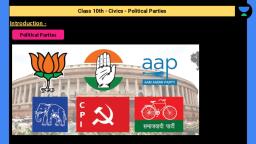
D e m o c ratic Politics, , All India Trinamool, Congress (AITC):, Launched on 1 January 1998, under the leadership of, Mamata Banerjee. Recognised as a, national party in 2016. The party’s symbol, is flowers and grass. Committed to, secularism and federalism. Has been in, power in West Bengal since 2011. Also, has a presence in Arunachal Pradesh,, Manipur and Tripura. In the General, Elections held in 2019, it got 4.07 per cent, votes and won 22 seats, making it the, fourth largest party in the Lok Sabha., Bahujan Samaj, Party, (BSP):, Formed in 1984, under the leadership, of Kanshi Ram., Seeks to represent and secure power, for the bahujan samaj which includes, the dalits, adivasis, OBCs and religious, minorities. Draws inspiration from, the ideas and teachings of Sahu, Maharaj, Mahatma Phule, Periyar, Ramaswami Naicker and Babasaheb, Ambedkar. Stands for the cause of, securing the interests and welfare of, the dalits and oppressed people. It has, its main base in the state of Uttar, Pradesh and substantial presence in, neighbouring states like Madhya, Pradesh, Chhattisgarh, Uttarakhand,, Delhi and Punjab. Formed, government in Uttar Pradesh several, times by taking the support of, different parties at different times. In, the Lok Sabha elections held in 2019,, it polled about 3.63 per cent votes and, secured 10 seats in the Lok Sabha., Bharatiya Janata Party, (BJP): Founded in 1980, by reviving the erstwhile, Bharatiya Jana Sangh,, formed by Syama Prasad, Mukherjee in 1951. Wants to build a, strong and modern India by drawing, , 80, , 2020-21, , inspiration from India’s ancient culture, and values; and Deendayal, Upadhyaya’s ideas of integral, humanism and Antyodaya. Cultural, nationalism (or ‘Hindutva’) is an, important element in its conception of, Indian nationhood and politics. Wants, full territorial and political integration, of Jammu and Kashmir with India, a, uniform civil code for all people living, in the country irrespective of religion,, and ban on religious conversions. Its, support base increased substantially in, the 1990s. Earlier limited to north and, west and to urban areas, the party, expanded its support in the south, east,, the north-east and to rural areas. Came, to power in 1998 as the leader of the, National Democratic Alliance (NDA), including several regional parties., Emerged as the largest party with 303, members in the 2019 Lok Sabha, elections. Currently leads the ruling, NDA government at the Centre., Communist Party of, India (CPI): Formed, in 1925. Believes in, Marxism-Leninism,, secularism and democracy. Opposed to, the forces of secessionism and, communalism. Accepts parliamentary, democracy as a means of promoting the, interests of the working class, farmers, and the poor. Became weak after the, split in the party in 1964 that led to the, formation of the CPI(M). Significant, presence in the states of Kerala, West, Bengal, Punjab, Andhra Pradesh and, Tamil Nadu. Its support base had, gradually declined over the years. It, secured less than 1 per cent votes and 2, seats in the 2019 Lok Sabha elections., Advocates the coming together of all, left parties to build a strong left front., Communist Party of, India - Marxist (CPI-M):, Founded in 1964., Believes in Marxism-
Page 11 :
Leninism. Supports socialism, secularism, and democracy and opposes imperialism, and communalism. Accepts democratic, elections as a useful and helpful means, for securing the objective of socioeconomic justice in India. Enjoys strong, support in West Bengal, Kerala and, Tripura, especially among the poor,, factory workers, farmers, agricultural, labourers and the intelligentsia. Critical, of the new economic policies that allow, free flow of foreign capital and goods, into the country. Was in power in West, Bengal without a break for 34 years. In, the 2019 Lok Sabha elections, it won, about 1.75 per cent of votes and 3 seats., Indian National Congress, (INC): Popularly known as, the Congress Party. One of, the oldest parties of the, world. Founded in 1885 and, has experienced many splits., Played a dominant role in Indian politics, at the national and state level for several, decades after India’s Independence., Under the leadership of Jawaharlal, Nehru, the party sought to build a, modern secular democratic republic in, , India. Ruling party at the centre till 1977, and then from 1980 to 1989. After 1989,, its support declined, but it continues to, be present throughout the country,, cutting across social divisions. A centrist, party (neither rightist nor leftist) in its, ideological orientation, the party espouses, secularism and welfare of weaker sections, and minorities. The INC supports new, economic reforms but with a human, face. Leader of the United Progressive, Alliance (UPA) government from 2004, to 2019. In the 2019 Lok Sabha election, it won 52 seats., Nationalist Congress Party, (NCP): Formed in 1999, following a split in the, Congress party. Espouses, democracy, Gandhian secularism, equity,, social justice and federalism. Wants that, high offices in government be confined, to natural born citizens of the country., A major party in Maharashtra and has a, significant presence in Meghalaya,, Manipur and Assam. A coalition partner, in the state of Maharashtra in alliance, with the Congress. Since 2004, a member, of the United Progressive Alliance., , Other than these seven parties, most of, the major parties of the country are, classified by the Election Commission, as ‘State parties’. These are commonly, referred to as regional parties. Yet these, parties need not be regional in their, ideology or outlook. Some of these parties, are all India parties that happen to have, succeeded only in some states. Parties like, the Samajwadi Party and Rashtriya Janata, Dal have national level political organisation with units in several states. Some, of these parties like Biju Janata Dal, Sikkim, Democratic Front, Mizo National Front, and Telangana Rashtra Samithi are, conscious about their State identity., , Over the last three decades, the, number and strength of these parties has, expanded. This made the Parliament of, India politically more and more diverse., No one national party is able to secure, on its own a majority in the Lok Sabha,, until 2014. As a result, the national parties, are compelled to form alliances with, State parties. Since 1996, nearly every one, of the State parties has got an, opportunity to be a part of one or the, other national level coalition government., This has contributed to the strengthening, of federalism and democracy in our, country. (See the map on the next page, for details of these parties)., , Po l i t i c a l Pa r t i e s, , State parties, , 81, , 2020-21
Page 12 :
D e m o c ratic Politics, , Map not to scale, , 82, , 2020-21
Page 13 :
Challenges to political parties, , © Riber Hansson - Svenska Dagbladet, Cagle Cartoons Inc., , Berlusconi Puppet Theatre, , working of political parties. Political, parties need to face and overcome these, challenges in order to remain effective, instruments of democracy., The first challenge is lack of, internal democracy within parties. All, over the world there is a tendency in, political parties towards the, concentration of power in one or few, leaders at the top. Parties do not keep, membership registers, do not hold, organisational meetings, and do not, conduct internal elections regularly., Ordinary members of the party do not, get sufficient information on what, happens inside the party. They do not, have the means or, the connections, needed to influence, the decisions. As a, result the leaders, assume greater, power to make, decisions in the, name of the party., Since one or few, leaders exercise, paramount power, in the party, those, who disagree with, the leadership find it, , Berlusconi was the Prime, Minister of Italy. He is also, one of the top businessmen, in Italy. He is the leader of the, Forza Italia founded in 1993., His company owns TV, channels, the most important, publishing company, a foot, ball club (AC Milan) and a, bank. This cartoon was, made during the last, elections., , Why don’t parties, give enough, tickets to, women? Is that, also due to lack, of internal, democracy?, , Po l i t i c a l Pa r t i e s, , We have seen how crucial political parties, are for the working of democracy. Since, parties are the most visible face of, democracy, it is natural that people blame, parties for whatever is wrong with the, working of democracy. All over the, world, people express strong, dissatisfaction with the failure of political, parties to perform their functions well., This is the case in our country too., Popular dissatisfaction and criticism has, focussed on four problem areas in the, , 83, , 2020-21
Page 14 :
difficult to continue in the party. More, than loyalty to party principles and, policies, personal loyalty to the leader, becomes more important., , © Huffaker - Cagle Cartoons Inc., 16 June 2004, , D e m o c ratic Politics, , The second challenge of dynastic, succession is related to the first one. Since, most political parties do not practice, open and transparent procedures for, their functioning, there are very few ways, for an ordinary worker to rise to the top, in a party. Those who happen to be the, leaders are in a position of unfair, advantage to favour people close to, them or even their family members. In, many parties, the top positions are always, controlled by members of one family., This is unfair to other members of that, party. This is also bad for democracy,, since people who do not have adequate, experience or popular support come to, occupy positions of power. This, tendency is present in some measure all, over the world, including in some of, the older democracies., , The third challenge is about the, growing role of money and muscle, power in parties, especially during, elections. Since parties are focussed only, on winning elections, they tend to use, short-cuts to win elections. They tend to, nominate those candidates who have or, can raise lots of money. Rich people and, companies who give funds to the parties, tend to have influence on the policies and, decisions of the party. In some cases,, parties support criminals who can win, elections. Democrats all over the world, are worried about the increasing role of, rich people and big companies in, democratic politics., The fourth challenge is that very, often parties do not seem to offer a, meaningful choice to the voters. In, order to offer meaningful choice, parties, must be significantly different. In recent, years there has been a decline in the, ideological differences among parties in, most parts of the world. For example,, the difference between the, Labour Party and the, Conservative Party in Britain is, very little. They agree on more, fundamental aspects but differ, only in details on how policies, are to be framed and, implemented. In our country, too, the differences among all the, major parties on the economic, policies have reduced. Those, who want really different policies, have no option available to them., Sometimes people cannot even, elect very different leaders either,, because the same set of leaders, keep shifting from one party to, another., , This cartoon was drawn during the Presidency of George Bush of the Republican, Party in the USA. The party’s symbol is elephant. The cartoon seems to suggest, that the Corporate America controls all major institutions of the country., , 84, , 2020-21
Page 15 :
© Manjul - DNA, , Does this, suggest that in, democracies, people contest, elections only, to make money?, But isn’t it true, that there are, politicians, committed to, the well-being, of the people?, , Can you identify which of the challenges described in this section are being, highlighted in these cartoons (on pages 83 to 85)? What are the ways to curb, the misuse of money and muscle power in politics?, , How can parties be reformed?, them do not wish to reform, how can, anyone force them to change?, Let us look at some of the recent, efforts and suggestions in our country, to reform political parties and its leaders:, l The Constitution was amended to, prevent elected MLAs and MPs from, changing parties. This was done because, many elected representatives were, indulging in DEFECTION in order to, become ministers or for cash rewards., Now the law says that if any MLA or, , Defection: Changing, party allegiance from, the party on which a, person got elected (to a, legislative body) to a, different party., , Po l i t i c a l Pa r t i e s, , In order to face these challenges, political, parties need to be reformed. The, question is: Are political parties willing, to reform? If they are willing, what has, prevented them from reforming so far?, If they are not willing, is it possible to, force them to reform? Citizens all over, the world face this question. This is not, a simple question to answer. In a, democracy, the final decision is made by, leaders who represent political parties., People can replace them, but only by, another set of party leaders. If all of, , 85, , 2020-21
Page 16 :
clear if this step has led to greater internal, democracy in political parties., Besides these, many suggestions are, often made to reform political parties:, , © Keshav - The Hindu, , l A law should be made to regulate, the internal affairs of political parties. It, should be made compulsory for political, parties to maintain a register of its, members, to follow its own constitution,, to have an independent authority, to act, as a judge in case of party disputes, to, hold open elections to the highest posts., , Do you agree that this form of reforming political parties will be, acceptable to them?, , D e m o c ratic Politics, , MP changes parties, he or she will lose, the seat in the legislature. This new law, has helped bring defection down. At the, same time this has made any dissent even, more difficult. MPs and MLAs have to, accept whatever the party leaders decide., l The Supreme Court passed an order, to reduce the influence of money and, criminals. Now, it is mandatory for every, candidate who contests elections to file, an AFFIDAVIT giving details of his property, and criminal cases pending against him., The new system has made a lot of, information available to the public. But, there is no system of check if the, information given by the candidates is, true. As yet we do not know if it has led, to decline in the influence of the rich and, the criminals., Affidavit: A signed, document submitted to, an officer, where a, person makes a sworn, statement regarding her, personal information., , l The Election Commission passed an, order making it necessary for political, parties to hold their organisational, elections and file their income tax returns., The parties have started doing so but, sometimes it is mere formality. It is not, , 86, , 2020-21, , l It should be made mandatory for, political parties to give a minimum, number of tickets, about one-third, to, women candidates. Similarly, there should, be a quota for women in the decision, making bodies of the party., l There should be state funding of, elections. The government should give, parties money to support their election, expenses. This support could be given in, kind: petrol, paper, telephone etc. Or it, could be given in cash on the basis of, the votes secured by the party in the last, election., These suggestions have not yet been, accepted by political parties. If and when, these are accepted these could lead to, some improvement. But we must be, very careful about legal solutions to, political problems. Over-regulation of, political parties can be counterproductive. This would force all parties, to find ways to cheat the law. Besides,, political parties will not agree to pass a, law that they do not like., There are two other ways in which, political parties can be reformed. One,, people can put pressure on political, parties. This can be done through, petitions, publicity and agitations.
Page 17 :
The quality of democracy depends on, the degree of public participation. It is, difficult to reform politics if ordinary, citizens do not take part in it and simply, criticise it from the outside. The problem, of bad politics can be solved by more, and better politics. We shall return to this, theme in the final chapter., , Ordinary citizens, pressure groups and, movements and the media can play an, important role in this. If political parties, feel that they would lose public support, by not taking up reforms, they would, become more serious about reforms., Two, political parties can improve if, those who want this join political parties., , 1. State the various functions political parties perform in a, democracy., , 4. What is a political party?, 5. What are the characteristics of a political party?, 6. A group of people who come together to contest elections and, hold power in the government is called a _____________________., 7. Match List I (organisations and struggles) with List II and select, the correct answer using the codes given below the lists:, List I, , List II, , 1., , Congress Party, , A. National Democratic, Alliance, , 2., , Bharatiya Janata Party, , B. State party, , 3., , Communist Party of India, (Marxist), , C. United Progressive, Alliance, , 4., , Telugu Desam Party, , D. Left Front, , (a), (b), (c), (d), , 1, C, C, C, D, , 2, A, D, A, C, , 3, B, A, D, A, , 4, D, B, B, B, , 8. Who among the following is the founder of the Bahujan Samaj Party?, A. Kanshi Ram, B. Sahu Maharaj, C. B.R. Ambedkar, D. Jotiba Phule, 9. What is the guiding philosophy of the Bharatiya Janata Party?, A. Bahujan Samaj, B. Revolutionary democracy, C. Integral humanism, D. Modernity, , Po l i t i c a l Pa r t i e s, , 3. Suggest some reforms to strengthen parties so that they perform, their functions well?, , Exercises, , 2. What are the various challenges faced by political parties?, , 87, , 2020-21
Page 18 :
10. Consider the following statements on parties., , A. Political parties do not enjoy much trust among the people., B. Parties are often rocked by scandals involving top party leaders., C. Parties are not necessary to run governments., Which of the statements given above are correct?, (a) A, B, and C, , (b) A and B, , (c) B and C, , (d) A and C, , Exercises, , D e m o c ratic Politics, , 11. Read the following passage and answer the questions given below:, Muhammad Yunus is a famous economist of Bangladesh. He, received several international honours for his efforts to, promote economic and social development for the benefit of, the poor. He and the Grameen Bank he started jointly,, received the Nobel Peace Prize for the 2006. In February, 2007, he decided to launch a political party and contest in the, parliamentary elections. His objective was to foster proper, leadership, good governance and build a new Bangladesh. He, felt that only a political party different from the traditional, ones would bring about new political culture. His party would, be democratic from the grassroots level., The launching of the new party, called Nagarik Shakti, (Citizens’ Power), has caused a stir among the Bangladeshis., While many welcomed his decision, some did not like it. “Now I, think Bangladesh will have a chance to choose between good, and bad and eventually have a good government,” said, Shahedul Islam, a government official. “That government, we, hope, would not only keep itself away from corruption but also, make fighting corruption and black money a top priority.”, But leaders of traditional political parties who dominated, the country’s politics for decades were apprehensive. “There, was no debate (over him) winning the Nobel, but politics is, different – very challenging and often controversial,” said a, senior leader of the Bangladesh Nationalist Party. Some others, were highly critical. They asked why he was rushing into, politics. “Is he being planted in politics by mentors from, outside the country,” asked one political observer., Do you think Yunus made a right decision to float a new political, party?, Do you agree with the statements and fears expressed by various, people? How do you want this new party organised to make it, different from other parties? If you were the one to begin this, political party how would you defend it?, , 88, , 2020-21