Notes of Be An English, English Grammar Tense Note Revision.pdf - Study Material
Page 1 :
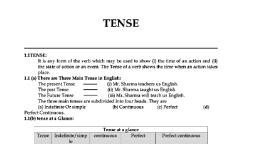
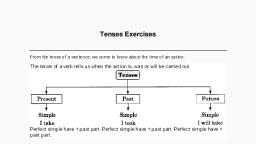
TENSES, , are the different forms of a, verb that provide a, Time, relation between the time and the actlon, place. Time can broadly be classified into, which takes, three, phases, namely Past (the time which has passed),, is, now)., and future (the time to come)., time that, Present (the, s, , classification of Tenses, he three, The, , main tenses show extremely, broad sections of time. They, are further divided into 12 basic tenses., , Continuous, , Simple, , Tenses, , Perfect, , Progressive), Past, , Present, , Future, , was/were staying, (was/were +verb+, , stayed/ did stay, (verb+-ed), stays, (verb+ -s), will/shall stay, (will/shall +, verb), , Perfect Continuous, , hadstayed, , ing), , participle), , had been staying, (had been + verb + ing), , is/am/are stoying, is/am/are + verb +, ing), , has/have stayed, (has/have+past, , has/have been stayin9, (has/have been + verb, , participle), , + ing), , will/shall be staying, (will/shall be + verb, +-ing), , will/shall have, stayed, (will/shall +, past participle), , will/shall have been, staying, (will/shall+ have + been, +verb + ing), , (had+ past, , PAST TENSE, , 1. Simple Past Tense, The simple past, , moment., , tense is used to indicate an action that happened and was completed before the present, , Present, Past, , Future, I, , taught English last month, , The form of the verb in the past tense, the verb + -ed., , is, , usually, , Example: She, , danced to her favourite song., tis often used in narratives and recounts., Example: In those days, it used to be colder., , It, , can also be used to talk about old habits., Example:l used to pick my nose when I was six., It, can be used without the time marker., Example:/ learnt Spanish in Madrid., , Rules, AfTirmative Sentences: He danced well in, yesterday. (Subject + second form of verb +, , Negative, , the party, , Sentences: She did not complete, nomework (Subject+ did not + first form of verb +, , Interrogative Sentences: Did he win the competition, , yesterday? (Did, her, , +, , Subject+firstform of verb), , Interrogative Sentences: When did mother bake this, cake? (Question word + did + subject + first form of verb
Page 2 :
2. Past Continuous Tense, , time in the pas The., action that was happening for some, an, indicate, to, used, The past continuous tense, be specified., of the action may or may not, is, , 11, , Present, , am, , Future, , Past, I, , tense is- subject +, .The form of post continuous, auxiliary was/were + verb + -ing., Example: We were watching movies last night, 'continually, etc. to, It is also used with 'always,, tolk obout perennial habits of the past, Example: He was always cribbing about his work, , Rules, Sheetal Was swimmin9, yesterdoy. (Singular Subject + was + first form of verb +, , Sentences, , Affirmative, , am, , was teaching English yesterday at 11, , ing+, Affirmative Sentences: They were cooking their own, meal (Plural Subject + were + first form of verb +ing +, , Sentences: He was not feeling well (Singulor, Subject + Was + not + first form of verb + ing+, , Negative, , t can also be used to indicate an acion, , which wi, , going on for some time the past, Exomple: Priya was cooking while her, were sleeping in the aternoon, in, , chilre, , Negative Sentences They were not ecting the baied, vegetables. (Plural Subject + were + not + first fom, , verb+ing+, Interrogotive Sentences: Was he going to the marie?, (Was/Were subject + first form of verb + ing+-), Interrogative Sentences: When were they fighting?, vero, (Question word + was/were Subject+ first form of, +ing?), , 3. Past Perfect Tense, , in, got completed before ancther, The past perfect tense is used to indicate an action that happened the past and, event in the past, , Present, Future, , Past, Ihad already tought when you arrived, , The past perfect tense is made from the verb had, and the past participle of a verb., Example: He had exercised before it started to, rain., It can also be used to express wishes or desires in, the past which have not been fulfilled., , can also be used to express those conditions of, the past that were impossible to fulfil, Example: If you would have scolded your son, earlier, his behaviour would have improved., It, , wish I had visited my aunt when she, was in the hospital, Example:, , I, , Rules, Affrirmative Sentences: Manika had eaten all the, mangoes. (Subject + had + third form of verb ), Negative Sentences: Rajkumar had not gone to office, (Subject+ had + not + third form of verb, , Interrogative Sentences: Had Palash written his poper, third form of verb +-?, Interrogative Sentences: When had they begun their, test? (Question word, had + subject + third form or, (Had + subject, , Verh +, , 2)
Page 3 :
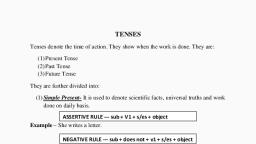
4. Past Perfect Continuous Tense, The, The Past Perfect Continuous Tense is used to indicote an action which, certain time in the past., , happened in the past and continued up to, , a, , Present, , 2 years ago, , Past, I, , Future, , had been teaching English for 2 years, , formed using had been + verb + -ing., Example: When we met at the coffee shop, she had been waiting for 30 minutes, It is, , Rules, Affirmative Sentences: Raunak had been playing cricket, for two hours. (Subject + had been + first form, , Interrogative Sentences: Had he been hiding, +, village since last month? (Hod subject, , of verb +, , been, , in, , the, first, , form of verb + ing++ since/for+-?), Interrogative Sentences: Where had they been, Had, wandering since moning? (Question word, +, sinceffor+-), verb, ing+-+, subject been + first form of, , ing++ince/for+-), Negative Sentences: Heeru had not been sleeping wel, since a week (Subject + had + not +been + first form of, , verb+ing++ Sinceffor+), , PRESENT TENSE, , 1.Simple Present Tense, The simple, , present tense, , is, , used to indicate an action which, , Past, , It, , teach English, , happening every day. a habit, or a custom., , Present, , xxxX, I, , is, , Future, , to my students everyday, , formed using the verb + -S., Example: Karan wakes up at 9 o'clock every, is, , morning., is also used to expressa general or a universal, It, truth., Example: The sun sets in the west, It can also be used to indicate a future event which, is a part of a plan or an arrangement, Example: My school reopens next week, , It, , can also be used to state quotes with the verb, , says., wandered lonely as, a cloud', .It can be used in storytelling in order to make it, more engaging and as a substitute for the simple, past., Example: King Dashratha grants his wife three, Example: Wordsworth says,, , 1, , boons., , Exclamatory sentences which begin with there or, here also use the simple present tense., Example: Here they are!, , Rules, Affirmative Sentences: Rani sings beautifully. (Subject+, first form of verb +s/es, , +, , Negative Sentences: She does not know German, (Subject+ does/do + not+ first form of verb+), , Interrogative Sentences: Does Divesh play basketball?, (Do/Does +Subject + first form of verb+?), Interrogative Sentences: Where does mother keep her, , perfumes? (Question word, form of verb), , do/does+ subjectfirst
Page 4 :
Present Continuous Tense, , 2., , happenina.at, Currently or not happening, the moment, actions that are nappening, the, to, refers, Present continuous tense, but are in progress., , Present, , Future, , Past, lam teaching English, , .It, , is formed using is/am/are, , +, , verb, , +, , .It, , ing., , Example: Meena is studying., which are, can also be used to describe actionsfuture., place in the near, , can also be used with the adverbs continuais, always, etc. to describe a persistent and, undesirable habit., Example: You are always critcicising me., , .It pre-arranged to take, , place on Sunday., Example: The wedding is taking, , Rules, Interrogative Sentences: Is Reena cooking pasta? (s/Are!, Am+subject + first form of verb + ing+ 2), , I, working on my report., Affirmative Sentences: am, ing t.), (Subject+ is/am + first form of verb +, , Interrogative Sentences: Where is she staying? (Question, word+is/are/am + subject + first form of verb + ing +2), , participating in the, Negative Sentences: She is not, of verb + ing +), webinar. (Subject+ is/am+ not + first form, , ACaution, , of thinking. Example think, suppose, believe, agree,, consider, forget, know imagine, mean, etc, love, Verbs of emotion. Example want, wish, desire, feel, , Verbs, , continuous, Some verbs are not generally used in the present, tense due to their meaning, hear, smell, Verbs of perception or senses. Example see,, notice, recognise, etc, Verbs of appearance. Example appear, look, seem, etc, , etc., in, Verbs such as have, own, possess (except when used, the passive), , 3. Present Perfect Tense, , Present Perfect Tense presents an action that has recently been completed., , Present, Future, , Past, Ihave taught English., , It, , is, , formed using has/have + past participle ofthe, , verb., Example: She has just completed her homework., , .It, , is, , also used to describe an action of which the, , time is not given., Example: Have you read Yeats?, , It, , can be used to describe actions which started in, the past and are continuing until now and possibly, will continue into the future., Example:I have already tried this brand of, perfume; it is really nice., It can also be used to show how the past situation, relates to the present., Example:1 have done my homework, so I can play, now, , Rules, , I, , Sentences: have eaten my breakfast, properly (Subject + has/have + third form of verb +.), Negative Sentences: She has not learnt driving yet., (Subject+ has/have + not + third form of verb +.), , Affirmative, , Interrogative, , Sentences: Has he left already? (Has/hove, +Subject+ third form of verb..?), Interrogative Sentences: Where has father kept his keys, (Question word + has/have, subject + third form O, , verb..)
Page 5 :
4. PTese, Present, , Brtect, PeneeondnuOus, Continuous, , Tense, Perfec Continuous, Tense, Tense refers, to an action, , that sstarted in the past and, continues at the present time., , 2 months ago, , Past, , Present, Future, , Thave been teaching, , English for 2 months, used in Present Perfect, now, Continuous, ishas/have + been+ verb +, Tense, ing, It can also be used to describe, Example: He, an action that has, le has been sleeping, completed but its effect is still, for an hour., continuing., Example: Mother, has been cooking since morning., and now she is tired., The form, , Rules, , Affirmative Sentences:, Rintu has, friends since, afternoon. (Subject been playing with his, form of verb + ing . for/since..) + has/have been + first, , Negotive Sentences:, , Interrogative Sentences:, Have they been staying in, a, hotel since then? (Has/have, +subject + been +first form, of verb + ing.. for/since .), Interrogative Sentences: Where, has Rita been studying, since she completed, her schooling? (Question word+, has/have + subject + been + first, form of verb +ing.. for, since .), , Mimi, , has not been talking, to us, month. (Subject+, firstform of verb + ing... for/since.has/have + not been +, since the past, , FUTURE TENSE, , 1.Simple Future Tense, The, , simple future, , tense is used to express, , what we think or believe will, , happen in the future., , Present, Past, Future, , Itis formed using will/shall +, first form of verb., Example:I will, learn French next month., t can, , also be used to express an, instant decision:, will get married to Suman., , Example:, , I, , .It, , will teach English., , is, , also used to state, facts that are beyond our, control, Example: It will rain, , tomorrow, , Rules, Affirmative Sentences:, competition. (Subject, , Raj, , will, , will/shall, , win, , the debate, , first form of verb, , Negative Sentences: Priya shall not attend the farewell, party.(Subject + will/shall + not+ first form of verb+, , Interrogative Sentences:, Will, further studies? (Will/Shall+ she go to Canada for, subject + first form of verb, , Interrogative Sentences:, When will the class, begin?, Question word + wilyShall, + subject + first form, of verb, , 2. Future Continuous Tense, The, ne future, , continuous tense is used to indicate an action that will be, completed, , Present, , in, , the due course oftime., , 11 am., , Past, , Future, I, , will be teaching English tomorrow, , at 11 am.
Page 6 :
is formed using will/shall be, , It, , +, , first form of the, , verb +ing9, Example: l will be meeting, , my parents, , tomorrow, , Rules, , playing9, , school will be, Affirmative Sentences: Our, wil/shall, month. (Subject+, next, school, rival, against the, ing, , be + first form of verb+, the, be dancing on, Sentences: Seema will not + be + first formn, Negative (Subject + willyshall + not, annual day, , ofverb+ing, , 3., , It, , is also used to indicate an action, progress at d given point of time in thot wilt., , the futire n, Example: At this time tomorrow, we wil, partying in Vegas., be, , Interrogative Sentences:, , Will, , we be shifting to Mui, mbai, next year? (Will/Shall+ subject + be + first form of, , f, , +ing+.7), , Interrogative, , Sentences: When will we be reoding, the, next chapter? (Question word + Wil/Shall + subject, te, +firstform of verb + ing+..), , Future Perfect Tense, , The future perfect tense, future., , is, , verb, , ti, which will be completed at some point of, action, an, describe, used to, , in the, , 12 pm., , Present, , Future, Past, pm., Iwill have taught English by 12, + third form of verb., It is formed using will + have, London tomorrow., Example: Diya shall have reached, , Rules, , book by, Affirmative Sentences: I will have read this, verb +, evening.(Subject+ will/shall have +third form of, , the email, Negotive Sentences: Freya will not have sent, + third, before noon. (Subject + will/shall + not + have, form of verb+, , we have saved enough, money by next month? (WilyShall + subject have, third form of verb .), Sentences: When will we have baked all, , Sentences:, , Interrogative, , Interrogative, , themuffins?, have, , +, , (Question word, third form of verb +.), , 4. Future Perfect Continuous Tense, The future perfect continuous tense is used to express an action, which will end in the future., , Present, , Will, , that will be, , 10 a.m, X, , 1, , in, , +, , will/shall, , subject-, , progress over a period of time, , pm, , Past, , Future, , I willhavebeen teaching Englishfor 3 hours by 1 pm, formed using will + have + been +first form of the verb+ ing., Example: In November, I will have been working at my company for three years., It is, , Rules, Sentences: By December, I will have been, exercising for 2 months. (Subject+ will/shall have + been, , Affirmative, first, , form of verb, , + ing, , ince/for +), Saha will not have been, , Negative, Sentences: Mr, gardening for so long. (Subject + will/shall + not, +been+first form of verb + ing+.. since/for +, , +, , have, , Interrogative, , Sentences:, , Will, , she have been playing tne, , piano for three hours now? (WilyShall+ subject, been + first form of verb + ing + since/for +), , +, , have, , Interrogative Sentences: Where will she have been, for 30 years next month? (Question word *, Wilyshall + Subject + have been + first form of verb +ing, teaching, , +.Since/for +.)



 Learn better on this topic