Notes of B.Tech 1st Year, Soft skills Quantum Notes SS-1.pdf - Study Material
Page 1 :
PUBLISHED BY: Apram Singh, Quantum Publications®, (A Unit of Quantum Page Pvt. Ltd.), Plot No. 59/2/7, Site - 4, Industrial Area,, Sahibabad, Ghaziabad-201 010, , Phone : 0120- 4160479, , Email:
[email protected] Website: Www.quantumpage.co.in, Delhi Office : 1/6590, East Rohtas Nagar, Shahdara, Delhi-110032, , © Aut Ricuts RESERVED, No part of this publication may be reproduced or transmitted,, , in any form or by any means, without permission., , , , , , Information contained in this work is derived from sources, believed to be reliable. Every effort has been made to ensure, accuracy, however neither the publisher nor the authors, guarantee the accuracy or completeness of any information, published herein, and neither the publisher nor the authors, shall be responsible for any errors, omissions, or damages, arising out of use of this information., , , , , , Soft Skills - I (Sem-1), 1* Edition : 2020-21, , Price: Rs. 60/- onl:, , , , Printed at : Mayank Enterprises, Delhi., , , , SRSLY, KNC101 : Soft Skills - I, , , , , , , , , , UNIT-1 : BASICS OF APPLIED GRAMMAR & USAGE (i-1 K to 1-18 K), Tenses: Part of Speech, Active & Passive Voice, Articles, Subjectverb agreement, Antonyms, Synonyms, Prefix and Suffix, pearratees, Conditional sentences, Concord, Tag questions, punctuation marks, , UNIT-2 : PRESENTATION & INTERACTION SKILLS = (2-1 K to 2-17 K), Speech Delivery, Interjecting: Objectives & Methodology: Gos, Discussion: Objectives & Methods; Theme Presentation: N fet ods, Argumentative skills: Pattern and Ingredients; Debate &, Discussion: Unity, Coherence & Emphasis. Public Speaking:, Audience Analysis: Approach and Style. Interviews: Types; Focus, , & Objectives., , UNIT-3 : INTERPERSONAL COMMUNICATION SKILLS (3-1 K to 3-12 K), Features: Methods; Principles; Requisites; Team- work; Skills:, Empathy, Emotional Intelligence, empathy and listening skills. Time, Management; Attitude; Responsibility. Leadership qualities:, Integrity; Values; Trust; SelfConfidence & Courage; Communication, and Networking; Speed reading; Problem Solving & Trouble , Shooting., , UNIT-4 : PERSUASION & NEGOTIATION SKILLS (4-1 K to 4-14 K), Definition; Understanding Attitude, Beliefs, Values and Behavior;, The process of Persuasion: Analysis of Audience; Classification, of Audience; Egoistic and Non-Egoistic; Specific Techniques for, Specific Audience; Skills of Persuasion, Steps to Persuasion/, Influence, Negotiation: Definition; Process of Negotiation:, , Characteristics; Qualities of good negotiator; Approaches to, Negotiation., , UNIT-5 : COMMUNICATION SKILLS (5-1 K to 5-17 K), Introduction to oral communication, Nuances & Modes of Speech, Delivery, Public speaking: confidence, clarity, and fluency, Non, verbal Communication: Kinesics, Paralinguistic features of VoiceDynamics, Proxemics, Chronemics, and Presentation Strategies:, Planning, preparation, organization, delivery., , SHORT QUESTIONS, , , , (SQ-1 K to SQ-15 K)
Page 2 :
‘Tenses : Part of Spee, Active & Passive ae, Articles, Subject-Verb, Agreement, Antonyms,, Synonyms, , vores LZ to 1-9K, , Part-2 : Prefix and Suffix, Narration... =, , tol-Ii, io 1-9K to 1-18K, , , , 1-1K (Sem-1), , >» _eeeeeeeeee, , 1-2 K (Sem) Hanien of Applied Grammar & Usewe, PART-1, Voice, Articles,, Part of Specoh, Active & Passive, Taner aye Verb Agreement, ANONYM? Synonyms, , , , ? Mention, , he term ‘tense’, , , , Que Ld, | What do you understand by #, , various forms of tense:, , aan, , 1. Tense expresses time ref, 2. The main tenses are present,, 3. Each tense has four forms., , [s.No| ‘Tense Forms, , 1. _| Simple Present, , ference of an action oF event, past, and future., , , , , ‘Actions that are habitual or, routine, , 2, General, timeless facts, , 3, Narrative style, , 4. The “real” present (things, that are happening right, , now), , 1. The “real” present (things, that are happening right, now), , 2, ‘Temporary actions that may, not be happening right now,, but have not yet been, completed., , 1. Actions that started in the, past, continue into the, present, and may continue, into the future., , 2. Separate actions that, happened in the past and may, happen again in the future., , 3. Recently completed actions, that still influence things, happening in the present., , , , 2. Present Continuous, , , , 3. Present Perfect
Page 3 :
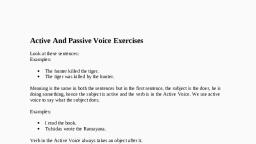
Soft Skills - I, , 13K em.), , , , , , , , , , , , , , , , , , , , , , , , , , , , , , , , , , , , , , , , , , , , , , , 4. | Present Perfect Continuous | 1. Actions that, si ;, past, continue int he, ws, Present, and ma into the, into the future Y continue, S.No. Tense Forms Ueee, 1. _ | Simple Past 1. Action compl, ‘ompleted in th, ata definite tim le past, 2. Action that oceus,, of time. Pied a peroid, 3. Apast habit., 2. Past Continuo, us A Express acontinuous., 2. Action in present., 3. Past Perfect, 1. Express complete actions, that started in the past., 4 Past Perfect Conti i, ontinuous 1. Actions that started in the, past, continue into the, present., §.No.| Tense Forms" Uses, | 1. | Simple Future Express simple action in the, future., | 2 | Future Continuous Express the action that will be in, progress at a time in the future., 3. Future Perfect Express the action that will be, completed by or before a certain, future time., 4. Future Perfect Continuous | Express the action that will be in, progress over a period of time and, will end in future., , , , , , , , , , , , , , , Que 1.2. ] Write a short note on : Parts of Speech., , Parts of speech are the classification of words categorized by their, roles and functions within the structure of the language., , L., , 1-4K (Sem-1), , Basics of Applied Grammar & Usage, , , , Parts of speech encompass everything a language has in itself., , In English, there are eight parts of speech :, , 1. Noun: Noun refers to people, places, things, ideas, concepts, ete., Example : Kabir is a good boy., , 2 Pronoun : A pronoun is used to refer to a noun., Example : Kabir is a good boy. He gets up early in the morning., , & Verb: Verb shows an action or an ongoing condition., Example : Kabir is going home., , 4 Adjective : Adjective modifies or describes noun in asentence., Example : Kabir loves his beautiful daughters. His daughters, also love their caring father, 5 Adverb : Adverbs modify or describe adjectives, verbs, or other, aiverbs. It answers the questions When ? Where 2 How ? or How, , much?, Example : He is running fast., & Preposition : Preposition gives context to nouns in relationship, to other nouns or pronouns., Example : I am going to France. France is in Europe., , , , 7. Conjunetion : A conjunction connects nouns, noun phrases,, clauses or sentences together., Example : Kabir love chocolate and chips., , & _Interjection : Interjections are brief and abrupt pauses in speech,, usually used for expressing emotions., , Example: Wow! That feels great., , What do you mean by active and passive voice ? What is, , the difference between active and passive voice ?, , L, , ‘Active voice : Active voice means that a sentence has @ subject that, acts upon its verb., , Passive voice : Passive voice means that a subject is @ recipient of a, verb's action.
Page 4 :
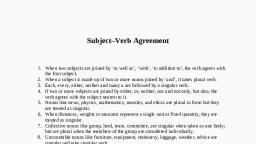
Soft Skills - |, , Difference. 1, , , , , , , , , , , , , , , , , , , , , , , , , , , a 5, 8s. 'assive voicg _, =e. Active voice Py, , nes the subject of a | Asent =, schhene ; entence is j i, stn Peay tn | Gein a, = acted, Sentence is in | ™, aus the active, +—__|, 2 Sentences i i, ces in active voice, i are i, more concise, me nas a, 3. Active voi =, voice i, eee reports action Passive voice re; i, c ti . Ports action, S ntence in active voice is Sentence in i i, 8enerally shorter than mma ees —, Passive voice., 5. Active voice i, Voice is used for most | Passi ice i, mon-scientific writing, | scientife writing, wet "OF mast, , eee ween |, Quera | What are articles ?, =, , , , , , , Anewer |, , LS, 2., A, L, 2., , ~, , Articles are words that define a noun as specific or unspecific., There are two types of articles: definite and indefinite., The Definite Article :, The definite article is the word the., It limits the meaning of anoun to one parti i, ts particular thing. F< le:, you going to the party this weekend ? a, , The definite article can be used with singular, plural, or uncountable, nouns., , The Indefinite Article :, The indefinite article indicates that a noun refers to a general idea, rather than a particular thing., , The indefinite article takes two forms. It’s the word a when it precedes, a word that begins with a consonant. For example : Should I bring a gift, to the party?, , It’s the word an when it precedes a word that begins with a vowel. For, example : J am going to bring an apple pie., , The indefinite article only appears with singular nouns., , , , 1-6 K (Sem-1), , Basics of Applied Grammar & Usage, , , , , , Que 1.5. | Give usage of subject-verb agreement ? Mention subjectverb agreement rules., , 1, , 2., , Subject-verb agreement rules : Following are subject, , Subjects and verbs must AGREE with one another in number (singular, or plural)., If a subject is singular, its verb must also be singular, if a subject is, , plural, its verb must also be plural., -verb agreement, , rules ;, , i,, , When the subject of a sentence is composed of two or more nouns or, pronouns connected by and, use a plural verb., , For Example : She and her friends are at the fair., When two or more singular nouns or pronouns are connected by or or, nor, use a singular verb., , For Example : The book or the pen is in the drawer., , When a compound subject contains both a singular and a plural noun, or pronoun joined by or or nor, the verb should agree with the part of, the subject that is nearer the verb., , For Example : The boy or his friends run every day., , Doesn't is a contraction of does not and should be used only with a, singular subject. Don’t is a contraction of do not and should be used, only with a plural subject., , For Example :, , i. He doesn’t like it., , ii They don’t like it., , Do not be misled by a phrase that comes between the subject and the, , verb. The verb agrees with the subject, not with a noun or pronoun in, the phrase., , For Example :, i. One of the boxes is open, ii, The people who listen to that music are few., , The words each, each one, either, neither, everyone, everybody,, , anybody, anyone, nobody, somebody, someone, and no one are singular, and require a singular verb., , For Example :, i. Everybody knows Mr. Sharma., ii, Either is correct.
Page 5 :
Soft Skills - I 17K Goma), , , mathematics, measles, and news require singular, , , , , , Nouns such as cit, verbs., , For Example : The news is on at six., , 8. Nouns such as scissors, tweezers, trousers, and shears require plural, verbs., , , , For Example : These scissors are dull., , 9. _Insentences beginning with “there is” or “there are,” the subject follows, the verb. Since “there” is not the subject, the verb agrees with what, follows., , For Example :, i. There are many questions., ii, There is a question., 10. Collective nouns are words that imply more than one person but that, , are considered singular and take a singular verb, such as group, team,, committee, class, and family., , For Example :, i. The teamruns during practice., ii The committee decides how to proceed., , 11. Expressions such as with, together with, including, accompanied by, in, addition to, or as well do not change the number of the subject. If the, subject is singular, the verb is too., , For Example : The President, accompanied by his wife, is traveling to, India., , (GReTAA] wnat are antonyms ? Give the types of antonyms., , Anawer |, , Antonyms are words that have contrasting, or opposite, meanings (for, , example, close and open)., , ‘Types of antonyms : There are three different kinds of antonyms :, , 1. Complementary : Complementary antonyms have no middle ground., For Example :, , , , i. boy-girl,, ii, off—on,, iii, night—day,, , iv. true —false., 2 Relational : These are similar to complementary antonyms, except, that both must exist for them to be antonyms of each other., , For Example :, i above — below,, , 3. Graded : These antonyms deal with I, , 4, It's possible to cre’, , 1-8 K (Sem-1) Basics of Applied Grammar & Usage, , , , doctor — patient,, iii, husband — wife,, , iv. servant — master., levels of comparison and they can, , elative terms, which can be, , ‘a scale, Many are r, bectwo vords 08 le. For Example :, , interpreted differently by different peop!, i. young-elderly,, , ii, hard—easy,, , iii, happy — wistful,, , iv. wise — foolish., ate an antonym simply by adding a prefix to the word., For Example :, , i. Agree > disagree, , Appear — disappear, , iii Belief —> disbelief, , iv. Honest - dishonest, , i, , , , "| What are synonyms ?, , 1. Synonyms are words that are similar to another word or have a related, , meaning (for example, shut and close)., , 2. They are used to avoid repeating the same word over and over., , Certain skill is required in choosing the most appropriate synonym., , 4. It isimportant to consider the connotative meaning of the word because, , some synonyms can inject a different meaning than what was intended., Synonym Examples :, , ability - capability, competence, skill, , baffle - bewilder, confuse, perplex, puzzle, , challenge - dispute, question, , develop - enlarge, evolve, expand, grow, , effective - functional, operational, successful, , fair - just, objective, impartial, unbiased, , goal - intent, purpose, target, , happy - content, joyful, mirthful, upbeat, , important - required, vital, essential, primary, significant, critical, job - position, occupation, role, , key - critical, crucial, fundamental



 Learn better on this topic