Page 1 :
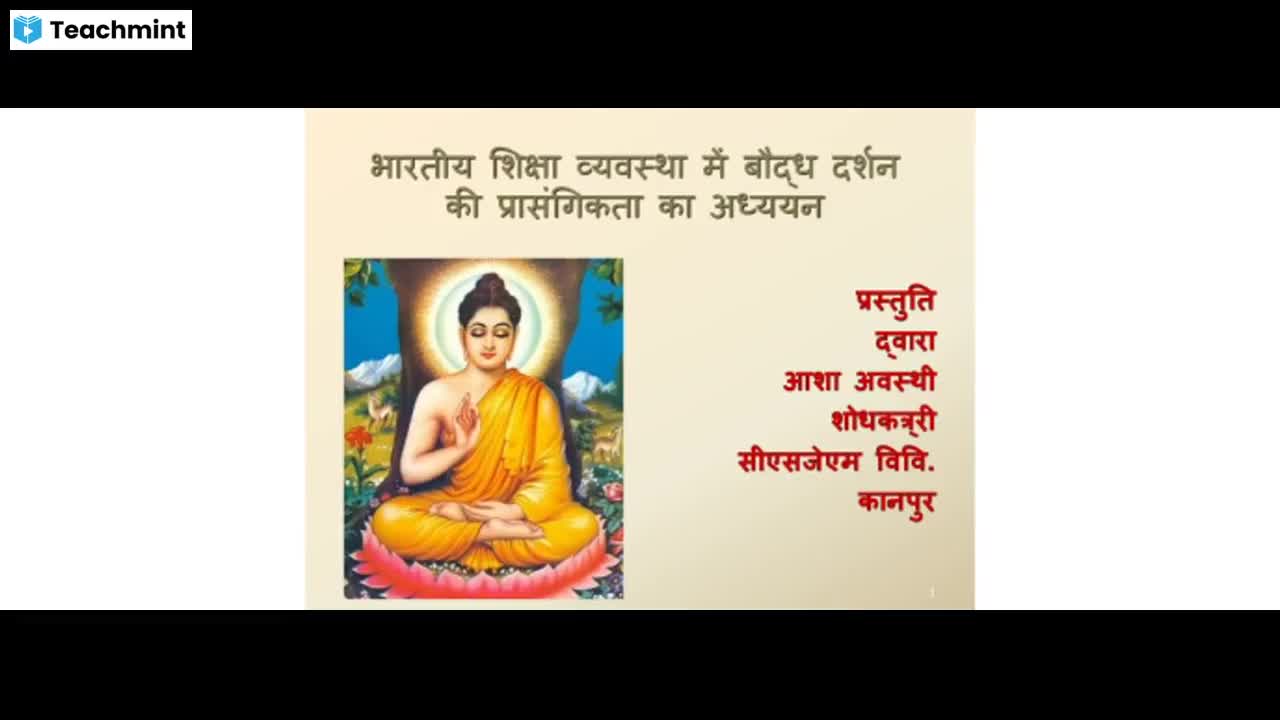
Buddhist Philosophy of, Education, , :;;,,, , _.....,, , ....::, , 3, l, . - : c.:J:!!L.---~-~-=--=~-:':-=-=-=-=-=-=-==-=-=-=--=-=-=-=-=-=-=-~-~-~-~-~-=-=-==---, , ,,,,. -:- e weakness, death and sorrow - these were the four scenes that made, ' sorrowful. Shaken by sorrow,, ( 01seas, 's mind, he renounced home at the age of, 1, autal1 years leaving behind all luxuries and comforts of the royal life, to find a, . eteen, ', n f remedY for sorrow. He undertook severe penan<;e in the forest at Vela, but, 0, ay : satisfied, so he werit to _Bodh Gaya to undertake penance once again. Due, as .0~ard penance, the dirt accumulated in births.was washed away to make his, . lUS mind pure and he attained Bodhi or .salvation. He became envisioned and, iDD~eeded in his goal. His sorrow was destroyed. H_, aving given up all his sorrows,, suet ok upon himself the task of. freeing people of all their sorrows, Mahatma, ~o, ., ., Buddha protected his body _and delivered s~~~ns to people at S~ath and other, places. He told people that 1n order to get nd of sorrow for ever, 1t 1s necessary to, destroy the causes which produce sorrows. 'Die _message that Mahatma Buddha, gavefor freedom from sorro~ bec_ame the:~uddh~st reli_gion, ~~d the truth ~ound in, bis senn01is became Buddl:ust philosophy. The Buddhist rehg1on and philosophy, have emphasized on the purity of conduct and made effort to raise the social life,, due to which it made an important place in history; and it continues to be popular, even today., Buddhist Philosophy is Philosophy of Moral Life : ~uddha has been silent, on metaphysics. According to I.C. Sharma', Buqdha knowingly kept explanation, apart from eternity of the world, -spiritual immortality, body and mind relati'on~hip,, ~tc., b~cause such thoughts were not related to practical values thenl!!!_e, unmed1ate need was that to know about sorrow and to find ways to eliminate it so, that humanity could be salvaged from sorrow and sufferin~, , Four Noble Truths in Buddhism, , -, , Buddhism exists in the four noble truths as advocated by Mahatma Buddha :, \ -1-:---'fh, ., · e world 1s sorrpwful. (Sarvam dukham) ., ., ·, J. There is a ca~se of sorrows. (Dukha s-amuday)
Page 2 :
294, , \ 3. Sorroµ •~ destroyed. (Dukho nirodhnh), ,, 4 Th, ·, f d t oying sorrow. (Dukhnmrodhn gnmin' 11, v ., ere 1s a way o cs r, ·, t Pr•, (1), , First Noble TrUth : Sorrow Exlata, , ~, , Lord Buddha says 1h01 sontl\\' ts 111~i11g h!tth, gcllit.•g _old,_dying, crying, suffering. worrying. n<'I getting a dcsncd tlung, ser1i111tmg t~mn near an i, etc. Sorro\l peivadcs c,•,,iywhcrc in life. Thr world is 'he t~linitc sea (o;'Th~re are live ;kandhas - slwiir (body). ve~nna (suf fcrmg), sanina, , sanskar (quality) and vijnan (science). These tiv~ skundhus arc PH~lu (i•, desire. and desire is sorrow. Not only this, plea~ure is ulso sorrow virtuallycec1, seYeral troubles have to be undertaken for gcttu~g pleasure, and all these, sorrowful. Pleasure is momentary, its destruetton causes great sorrow. ~°'11, ., ., us, ', firs t no b] e truth 1s that sorrow exists., , er~, , (2), , Second Noble Truth : There ls a Cause of Sonow, , Lord Buddha says that not only sorrow peivades the world, there is, cause behind this. Nothing can exist without a cause. When there is so aiio, there has to be a cause for it. There is one or the other cause behind every inci, Sorrow is also an incident or task, there should, for, ·1 be, d a cause, ·, h' 1t. The basic cause, sorrow is ignorance. Ignorance causes ev1 ten en.c1es'. w 1ch are called 5an!, Sanskar produces vijnan. Vijnan conceives the body m the womb, which bai, name. By body is meant existence of six senses which 1s calle<I touch. Touch, when senses come in the contact of objects. Touch produces ,sensual pleas, which is called ~ a . Sensual pleasure strengthens the desire for consum •, which is called trishna (desire); desire produces love or want, which is the, The cause produces the tendency to take birth, which is called bhav. Bhav is, cause of race, and the production of race entangles an individual in the cycle, sorrows. The cause of sorrow has these twelve steps or diagnoses. These can, classified under three periods thus :, Related to past, , Related to present, , Related to future, , 1. Avidya, 2. Sanskar, 3. Vijnan, , 4., 5., 6., 7., 8., 9., 10., 11., 12, , ., , Namrup, Shadayatan ·, SP,arsh (touch), Vedana, , Trishna, Upadan (cause), Bhav, Jati, ·Fnu.1ty-weakness, , t,e ')),--O _.!3) Third Noble 'Ihltb : Sorrow c:aJi be Eliminated, ~ ~,-. Lord ~lddha says that the third noble truth.1s that th.e sorrows prodllllW, __,1, e, o, er, ignorance can be destroyed. There is one or th th cause behind, . sorrow. If, , (, , t
Page 3 :
opbJ' ofEducation, 295, d f/10oS then the sorrow will be dcstro, yed as well. The destruction of all, 15 croted,. d kh nirodh Th', ., . ts sorrow.. Jess st8t ., .de,:, w 1s ~, ,~,r soffO dtthism, by salvation is meant the d~ e ~s called Nirvana or, ~cll~n or freedom from, ' l 111 8? can be attained during the life tim, 0, ,111iP5fl1,11nof Ji,ianmukta, an individual has c e, w ,ch ts called Jivanmukta., e ·1 · l'k, · onqueted over his, ~~· ate o ·, - VI traits I e, , ·,~c ~t · nnt anger. etc .. and this destroys all bo - d, k, - un s of action In J, ., ,,,l,LI· ·, ru!, . . · tvanmu ta, 011!)· dee.ire for acllon and due to lack of d ., esire, rebirth 1s not sed I, .t0 •,. 0o ~, cau . n, .,rf(' ,. ' tion has been called the supreme goa] of 1·', 11, , •1,1, , ,, , •, , ,, , 81, n, , he., , 1>lll~urtb Noble Truth_: There Is aWay to Destroy Sorrows, . -. ,, (4) dha says that there 1s a remedy to destroy, sorrows, which 1s called, •, &, · h, sod, ., t steps 1or elimination of, .ord _ , 'fhcre are e1g, sorrows and attainment of, Ah, 1 Jdh "·a) ·, , :11otrl •hich is called the s tang Marg (The Eight Noble Path). Following are, ,na, " ..10 the Ashtang Marg :, •, ,rep:,, cifhl • prishti (Right View), False ., ·, the basic cause of sorrow as ignorance., ,tnyak, ., d 5uu:adba has considered, Due to strong false view, the unrea1thing, ·nto 1,eing due. to ignorance., 1P~, th, :'O!lles l, ~ ted as re,al, What 1~ not e soul is accepted as the soul due to this false, ~pffeeted by false view, man considers mortal world as immortal and, ··.~ce of sorro~ as pleasur~. Pals~ vie~ can be eliminated by right view. To, •eets in their real form is the nght view. Lord Buddha has accepted right, firSt step of the Ashtang Marg., , "';b~e, , ·, , ·, , yak sanblpa (Right Resolve), , ~(!opting the four noble truths in life is right resolve. In order to attain Nirvana,, -tator should resolve ~o keep away from sensual pleasures, jealousy, enmity, . nee for others, desire for worldly pleasures which are inauspicious and a, ', •, • •, e, v101, Ive to not do them is nght resolve. It composes the spirit of renunciation and, ·, ' well-being., SaJDyak vat (Right Speech), Right speech is the expression of right resolve. An individual can abide by right, honly when he speaks truth and good. Only speaking truth is not enough for, t speech, rather it is necessary to speak pleasing. Not slandering others, not, · gmore than needed, not using evil or improper dialogue, not talking false, t any thing, etc. ar:e included under the right speech. It is necessary to give up, those things which make others suffer., t Samyak Iarmanta (Right Ac~on), Besides dght view, right resolve and right speech, right action is also necessary, for attaining Nirvana. By right action is meant to give up evil actions. A meditator, should do right actions and keep away from evil actions. Non-violence, non-stealing, ~d control over senses are good actions. An individual should not indulge in, Violence, take others' property forcibly and should give up sensual pleasure., , UamyatAjlvlb (Right Uvelihood), , ·, , ., , 8YrightJivelihood is meant to earn livelihood honestly, morally and from fair, ·lleci. bribery, robbery, violence, oppression, etc. should not be made
Page 5 :
,n/n' ofEducation, , nUoSOr . ., ., •st P, .~ stage 1s decorated wuh a name; this stage • be, _1, , _!Jh)jµ, , iO. th•_.. the state of Nirvana, htS 1S, (, , f"- ~•c. l, , ;J'° ··, , •, , Main Tenets of Buddhism, , ainutpada, , •~, , m, , Yond ell pleasure,, , (f..,.,Y'f',p ), , 5, , dt1', umada is the foundation of Buddhism The ety, •, ., . , ~:1111 •t ., f, ·, mo1og1ca1meanmg, 11, , 11e presence o some other obiect event t • th', 1st, r•~ , ~tlJlllitn-ida, t ', ., ., •, J, ,, , op1c or, mg on, , aitttt), , 0 a~nl'C of an ob.1ec~, event. topic or t~mg; that is, the advent of one produces, , ~urrc-'c1..·t1l·din'-':::- to. Lord, Buddha, . there 1s one or• the other cause beh'Jnd every, , l"'w, , .r', blect 1s dependent on its cause, and 1t leaves behind f, faCh t1 . ., . • f ,, ac 10n .after .1t., •t. ct ~ 1it, ...,·es· 111 the senes, o t:ause and effect · According to it , there 1s, · noth'mg, ., ., t~renorpcnnanent in tlus universe, but ~othing is fully destroyed also. Nothing is, al, al or fully mortal. All obJects are relative. Thus. the tenet of, tlY eternutpada is a theory of the middle path between mortaiity and immortality., , ·,va~ain, ·, , ·, , da, , isbanik'11, dhi, h, · the um·verse 1s, · mobile, changeable and, ..1:ng to Bud sm, eac ob.~ect m, , /\CCOflllU- ., ", . h l, ., ., 'ental'Y· Universal ~h~ge 1~ t e a~ of natu~e.' Every ~bj.ect,_ whether live or, 1, Ill . ortal. Not much a.me 1s taken m the ongm and elimination of an object., d. is ro, . . dd, . f, ., ecertainty in the on~m an esn:uctton ~ al~ objects proves that birth and death, the nature ~f the u~verse; that 1~, noth1~g m the worl? is pei:manent, eternal,, ono· it 1s certam for every object to d1e out. The object which appears to be, verlalas and0 'permanent 1s, •, mortal too; an ob'~ect whi ch appears to be great will fa]] out, , ro, ~'ItI nedaY·, 1es1,, Anatmavada, '. ~·~ Buddhism is an atheist philosophy. This philosophy does not believe in the, l\'~1. • ortality of the soul. Lord Buddha says that as an individual desires for woman,, !!Uc1 man, offspring and wealth, in the same manner he desires for the soul also. All, types of desires have to be given up for the attainment of salvation. If an individual, gives up the worldly objects but does not give up the desire for the soul, then he, ti , cannot attain salvation. Thus, the desire for soul is like a desire for worldly objects,, ~ ~ it is not eternal an d'munorta1., uellit, 11,11,: 4. Karmavada, ry[, According to Buddhism, an individual has to taste the fruits of actions. He takes, sra~ birth according to fruits of action. The present'life is the fmit of the a~tions in the, d past, and the future life is constructed on the basis of actions being done in the, 0, present. An individual constructs his fortune on the basis of his actions. Thus, the, :s~ frui~ for actions is not given by God, it is the action itself which gives its fruit., d, (a) body actions, (b) speech actions, 11ei~ Bu dhism considers three types of actions t lW/ an~ (c) mental actions. Body actions arouse the desire to do some activity. Speech, I;1~ ~cti_on is done by senses and mental action occurs with the internal feelings. On the, ~~ asis of outcome, actions are of two types according to Buddhism, first those which, ,~ :e_done under the influence of selfishness, desire, love, consumption, etc., these, ,a~ 0~~on~ bound an individual; second those actions which are done selflessly for the, ,: ~ ers Well-being; these selfles~ actions do not bind an individual.
Page 7 :
FA":a~, , pt,yof, a,, _..._, ~ goal ~f life'? Buddhism 11 111e-. 2, tf8(1icatJon of 1gnormu. ~, r-i••illpw IJIIIII, of', , ,.!.:..lllh._•••, , ~-, , Puncdonaor11c1ueaaoa, , • ....___, has given the Ashtang Marg forattlfl, 11, ~~hC educational functions. On this ..::•,_ llhilllun, • •, , 1 n . c : t i u t i i r 1 , 1 1 ._, , ,ato.,s :function of education is to provide ript, 1llt first can identify objects in their real form. Ylft to 1 ,taf It, "1, .,41id' be d function of education is to assist 8 Student fi •, 11fe ~ch"he can take a resolve to Jive a life of non-v· I or npa IIIOhe,, , ,o ence mercy ftih, 'd f 11, ~h•, bY uociation. love devot o _a ~ypes. of desires, enmities, ,efl ·rd function of educat10n 1s to inculcate the ability i . h1, th1, 4f11e denl, by which he has control over his speech and doeor ng .spee,ct., s not mvo ve, ., · . s111, ~ • fin unpleasmg and false conduct., · · a student for right action,, · to ms~ire, f d u·on 1s, ·, btl1lsel, , and jea~;;•, , fourth func.n.on o e uca, ,. 'lbe. the quahbes of truthfulness, non-violence, non-stealing patience, is. Politeness, gentleman1·mess, etc. have to be inculcated in' him. ', t11at, ~, •, o1, ., . ., f d, ., ,1rtUe•, fifth funcuon o e ucahon 1s to mculcate the spirit of following the, ~e~ 5. 1:>e ath and giving up the evil means., . ., ne:bt P, • sixth function of education is to preserve auspicious and good thoughts, 6. Jbetbe basis of right effort and give up evil.and inauspicious thoughts., _ ~e seventh functi?n of educatio~ is to keep right mindfulness by which, 4 '· be does not grope m the dark of ignorance., 'Ibe eighth function of education is to inculcate the ability in a student to, !,lli1, 8, · enter right concentration by which he can attain salvation., , J, , Aims of Education, On the basis of educational thoughts inherent in Buddhism, the following aims, education can ·be expressed :, , 0, , ~~, , 1. All-round Developmen~ of Personality : The foremost aim ~f Buddhist, ucation is all-round development of_personality. The three chief aspects of, onality are - cognitive, affective and conative. The aim of education was to, ect complete development of all three aspects. So, Budd_hist educational system, grates physical exercise, mental development, physical well-being and practice, moral life in its curriculum., 2. Moral Development : The chief aim of Buddhist education is to effect, ral and character development. In Buddhism, much emphasis was laid on moral, d pure conduct, so it was considered necessary that ·moral and character, velopment should be effected by education. An individual should have pure, ·, ·, · nund,, nduct 10, speech and deed this effort should be made by educat10n., •, ', · ., ccord'mg to Buddhism,, proper or selfless action occurs as a result of proper, 0, 1· ·, fi wledge, proper purpose and proper speech. Lord Buddha was a re 1g10us, onner and PfaCtical teacher, whose chief task was to develop the moral life of