Page 1 :
PRACTICAL «4, IDENTIFICATION AND STUDY O, , , , 1) FOSSILS, , Aim: To study various type of fossils,, , Back ground information:, , The remains or impression of an ancient plant or animal embedde, Spectacular skeletons to tiny sea shells as well as imprints, tracks an, like dinosaur footprints or worm burrows. By studying the remains of lif, can learn a lot about which animals and plants existed millions of years 4g0The fossils preserve the ancient life by natural processes, like, , 1) Freezing ( Refrigeration ), , 2) Drying ( Desicecation ), , 3) Deposition in Amber , Asphalt, etc., , 4) — Carbonization, , din the rock are known as fosgily,, d trails can also become fossilized,, fe and the traces it left behind we, , Requirements: Models, charts, pictograms or actual fossil (ifavailable) of various fossils under study,, , a. Arthropods : Trilobite, 1. Trilobites are an extinct group of arthropods known from more than 10,000 fossil species., 2. Thename Trilobita is derived from the three (tri-) lobed structure of the exoskeleton, which has a, raised central lobe (or axis) and a pair of side lobes, called pleurae., , 3. The first body fossils of trilobites appeared in the early Cambrian period, about 540 million years, ago., , 4. The trilobite body is also divided lengthwise into three regions or tegmata: a head or cephalon, a, middle region (thorax) composed of several articulated segments, and a tail plate called a pygidium,, which consists of fused segments. ats, , 5. It was already well established that Trilobita belonged to Arthropoda even before the first trilobite, with its legs fossilised was described in 1870,, , Evidences of Trilobites as arthropods, # 1. Trilobites had hard exoskeleton covering the dorsal surface of the body with distinct segme, as a significant feature in arthropods,, 2. — Thetrilobite exoskeleton was made up of calcite., 3. —_Intrilobite hypostome, a plate present below the head just in front of the mot, the labrum of arthropods. ‘, 4. — Apair of compound eyes with the arrangement of their units (omi, trilobites, being typical character of Arthropoda . Ae, 5. Growth in Trilobites was leaps and bounds type \, which is followed by growth found to be sim, _ 6. — Trilobites had a pair of many-jointed a
Page 3 :
N, , Mollusca - Ammonite: ; :, Ammonites belongs to the extinct order Ammonoidea, Phylum - Mollusca of Class : Cephalopoda,, They are relatives of today’s squid, octopus, and Nautilus., Ammonites first appeared in the late Silurian seas about 4, 300 million years in the oceans of the Paleozoic and Mesozoic. ;, single plane) external shells, and throughout their evolutionary history these plentiful predators shared, the seas with the nautiloids., , By the end of the Cretaceous Period, however extinction had wii, and left only one surviving nautiloid clade, the genus Nautilus., Today, the only living representatives of shelled cephalopods, These molluscs are slow-moving, restricted to deep water, and, to those of their fossil ancestors., , Ammonite were abundant, active and predatory molluscs that lived in shallow (100 meters or less), marine environments. j, They fed on fishes, molluscs (including other cephalopods) and any other prey they could catch., Most ammonites had large jaws capable of crushing shell, as well as grasping arms and excellent, vision., , Only cephalopods with external chambered shells have siphuncles, such as the extinct ammonites, and belemnites, and the living nautili and Spirula., , Sphenculae in nautiloids, runs through the center of the shell chambers, while in ammonoids, itis, found along the shell’s outer edge., , Innautiloids the septa are straight and are called simple sutures whereas in ammonite they are deep, and folded in undulations called lobes and saddles., , 15 million years ago, and survived for, Most had planispiral (coiled ing, ped out the ammonoids entirely, , area few species of Nautilus., have coiled shells that are similar —, , , , , , Ammonite, , Siphuncle Septum, , Dorsal mantle lobe, , Jaws, , Tentacle
Page 4 :
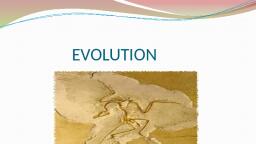
SS, , Aves - Archaeopteryx:, , The fossil of Archaeopteryx was discovered by Andreas Wagner in 1861. The specimen was, found at Bavaria in the fine grained lithographic limestone of the upper Jurassic about 140 million, years ago. It is a connecting link between reptiles and aves. Archaeopteryx is the example of mosaic, evolution, It was crow- sized, dwelling in forests and was leading an arboreal mode of life. Entire, body was covered with feathers and the body axis was elongated like that of lizard with a long, tapering tail., , Reptilian characters of Archaeopteryx:, , 1), 2), 3), , 4), , 6), 7), 8), 9), , 10), , 11), , The bones are solid with no air space., , Thecodont teeth like that of reptile having 26 teeth in upper jaw and 16 in the lower., , The forelimbs are reptilian in character, there are three well - formed digits with separate, phalanges, and there are 2 phalanges in the first, 3 in the second 4 in the third digit., , Vertebral column is elongated and vertebrae are free, with simple concave articulation as in, reptiles., , The vertebrae bear thin, single-headed ribs with no uncinate process., , Beside the cervical and thoracic ribs, there are abdominal ribs or gastralia in the ventral wall of, abdomenas in sphenodon and crocodilians, , The bones of pelvic girdle are not fused, the ileum is long, the pubis is directed posteriorly and, probably there is an ischiac symphysis., , Hindlimb has separate tibia and fibula of about equal size with no reduction in size of fibula., Proximal tarsals are free., , There is an elongated tail with 20 free caudal vertebrae tapering gradually in the distal end, there, being no pygostyle ., , The cerebral hemisphere is smooth long arid narrow and cerebrum walls were small, thus, the, brain is of reptilian type., , , , , , Wing claw, Toothed beak Reptilian character, , Reptilian character, , Wing with contour, feathers, Avian character, , Beak, Avian character, , Long tail with, many vertebrae, Reptilian character, , Figure. 4.5: Reptilian characters of Archaeopteryx, , 29 ¥
Page 5 :
Avian characters of Archaeopteryx, , 1) The skullis large, mono-condylic and bones are fused ;, , 2) There is a short, blunt beak formed by elongation SO Taal, , 3) The eyes are large and oval with a ring of scleriotic bones, , 4) Plight feather are attached only to the back of ulna and manus , ther, , secondary feathers., , , , e are 6 to 7 primaries and |, 5) scapula is slender and curved and areat right angle,, , In the pectoral girdle the coracoid is small, i, ‘ istal tarsel fused with meta tarsel to form, , 6) There is U-shaped furcula formed by fused clavicles d, slender tarso-metatarsus ‘, j uaa 3 wi II direct kwards, 7) Hind limb possess four clawed digits with 2,3,4,5 phalanges wtih Male a, and opposable., 8) Rectrices are attached to both side of the tail., , 9) Recent studies have shown that Archaeopteryx was endothermal or warm-blooded as other, , , , , , , , birds. Wing claw, eptilian, Toothed bea character, Reptilian characte, Airfoil wing, with contour feather, Aviancharacter, Long tail with, many vertebrae, Reptilian character, Figure. 4.6: Avian characters of Archaeopteryx, Laboratory exercise:, , Draw the diagrams of the fossils that you have studied., , 30.