Page 1 :
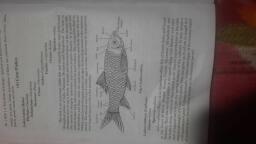
Culture of Pear], | Pearl and its“uses are well known to human beings since most ancient, times, it was Japan which has honour of developing the techniques to culture, | of pear! oyster and obtaining pearl out of them by introducing artificial deviees., The pearls achieved by this method are of fine quality and similar te that of, natural one. The pearl culture has come to such a success that has almost, captured the market of the world Japan is the chief producer of pearl and, dominated the world's market The basic method of pearl culture is te, introduce some foreign particles between mantle and shell of the oyster, whieh, , out of irritation will produce nacrous layers around the fore ign particles which, , in time will become pearl, PISCICULTURE (F, , Pisciculture is the most important, , , , SH-CULTURE), , and major portion of aquacaltare. 1t can, > defined as “the controlled breeding and rearing of fish by artifierl, means, mostly for food.” Fishes have been allotted, , be, , pecial importance as a, est suppliments food in the world. Fishes are most efficient at converting food, into muscle protein as compared to chicken and mammals, Protein deficiency is, , a serious human malnutritional problem and it can be ea sily solved with the, , inclusion of edible fishes as fish protein in the diet of normal person. Mewen=, , s, fish culture has acquired about 8 million hactares of land in India) Fiaiae, , , , a renewable food resource that can rejuvenate itself, , isciculture (fish-culture) was started for the first in West Bengal Prowimee, in India. In China, Pisciculture practices probably back of 2000 B.C. Tm Imdsa,, fish-culture was practiced for self-consumption in small ponds attached te houses, It has been expanded to Indonesia, Cambodia, U.S.A., China and Vietnam The, , cultivation of edible fishes, artificial fertilization and induced breeding has g, , , , , , , , ble Fishes, , sre are following fishes that it can be easily cultivated in fF, , marine waters, , , , , , , , fishes—Wallago allu (Parhin), Mystus seenghala (Tengra), Masts, cavasius, Heteropneustis fossiles (Singhi), Clanias batraehus:, s—Ophiocephalus marulius, Ophiocephalus punctatus, Anaoas, , s, Channa striatus., , , , , , , , , , -Notopetrus chitala, Notopterus notopterus., ts—Mugil corsula., , ishes—Common carp, Chinese carp, Crucian carp and Mirror, , (7) Marine fishes—Hilsa hilsa, Setipinna phasa,, , The important food fishes are freshwater fishes which provide valuable, source of food supply to the countrymen of tropical regions: Plesh of fish is, constituted by 70-80% water and about 20-30% protein with some amount of fat, in addition to phosphorus and vitamins. Fish provide 1,000-1,500 Calories of