Page 1 :
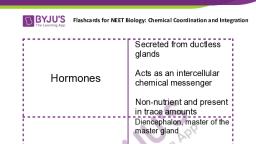
HORMONESCLASSIFICATION, , PROPERTIES,, , FUNCTIONS, , AND, , Hormones:, Hormones are the chemical messenger produced in small amount by endocrine, glands, secreted into blood stream to control metabolism and biological activities in, target cell or organs., Characteristics or properties of hormone:, Low molecular weight, Small soluble organic molecules, , , , Rate of diffusion is very high and are readily oxidized but the effect does not remains, constant, It is effective in low concentration, , , , Travels in blood, , , , It has its target site different from where it is produce and is specific to a particular, target, , , , Hormones are non-specific for organisms and may influences body process of other, individuals, , , , Functions of hormones, Regulatory and homeostasis functions, Maintain consistency of interior of cell, Permissive functions; movement of substance in and out of cell, , , , Integrative function; usually balance two system, Developmental function; helps in development of foetus, , Classification of hormone, Hormones are classified, 1. On the basis of chemical nature, 2. On the basis of mechanism of hormone action, 1. Group I hormone, 2. Group II hormone, A. On the basis of chemical nature:, 1. Protein hormones: insulin, glucagon, 2. Steroid hormone: sex hormones, glucocorticoids, 3. Aminoacids derivatives hormones: epinephrine, nor epinephrine etc, B. On the basis of mechanism of hormone action, 1. Group I hormone (lipophilic hormone):, , , These hormones are lipophilic in nature.
Page 2 :
, , , , They are mostly derivatives of cholesterol., These hormones binds to intracellular receptors, Example: Steroid hormones, Estrogen, androgen, glucocorticoids, cholcalciferol,, thyroxine etc, , 2. Group II hormones (water soluble hormone):, , , These hormones binds to cell surface receptors and stimulates the release of certain, molecules (secondary messengers) to perform biochemical functions, , On the basis of secondary messengers group II hormones are of 3 types;, i. Secondary messenger is cAMP:, , , eg. Adrenocorticotropic hormone, FSH, LH, PTH,ADH, calcitonin, glucagon,, , ii. Secondary messenger is phosphotidylinocitol/calcium or both:, , , eg. Acetylcholine, vasopressin, cholecystokinin, gastrin, gonadotropin releasing, hormone, thyrotropin releasing hormone,, , , , Insulin, chorynoic somato mamotropin, epidermal growth factors, fibroblast growth, factors, GH, prolactin, , iii. Secondary messenger is cGMP:, , , Atrial natriuretic peptide (ANP), , Group I and Group II hormones and their mechanism of action, , On the basis of location of the receptors to which they bind and the signals used to, mediate their action, hormones are classified into two broad groups;, a. Group I hormones:, Group I hormones bind to the receptors present inside the target cells to form, receptor hormone complexes. These hormone-receptor complexes act as, intracellular messengers through which the biochemical functions of such, hormones are mediated., These hormones are lipophilic in nature and are mostly derived from cholesterol, (exception T3 and T4)., Androgens, Estrogen, Glucocorticoids, Calcitriol etc. are few examples., b. Group II hormones:, These hormones bind to the receptors present on the plasma membrane also called, cell surface receptors and stimulate the release of certain molecules, namely second, messengers which, in turn, perform the biochemical functions., Thus, hormones themselves are the first messengers., Group II hormones are further subdivided into three categories based on the chemical, nature of the second messengers.
Page 3 :
1. The second messenger is cAMP. E.g. ACTH, FSH, LH, PTH, Glucagon, Calcitonin, etc., 2. The second messenger is phosphatidyl-inositol/calcium. E.g. TRH, GnRH,, Gastrin, CCK etc., 3. The second messenger is unknown. E.g. growth hormone (Somatotropin),, Insulin, Oxytocin, Prolactin etc., Mechanism of action of Group I hormones:, Since these hormones are lipophilic in nature, they can easily pass across the plasma, membrane and bind to the intracellular receptors located either in the cytosol or the, nucleus., The hormone-receptor complex thus formed now binds to specific regions on the DNA, called hormone responsive element (HRE) and causes the increased expression of, specific genes., The interaction of hormone receptor complex with HRE is believed to promote, initiation and, to a lesser extent, elongation and termination of RNA synthesis, (transcription)., Ultimately, it results in the production of specific proteins (translation) in response to, hormonal action.
Page 4 :
Mechanism of action of Group II hormones:, These hormones are considered as the first messengers because their functions are, carried out through mediatory molecules which are collectively called second, messengers. The mechanism of action through a second messenger cAMP, is given, below:, a. Action of cAMP:, cAMP or cyclic Adenosine 3’, 5’ monophosphate is a ubiquitous molecule which, consists of adenine, ribose and a phosphate (linked by 3’, 5’ linkage on ribose sugar)., Majority of polypeptide hormones carry out their biochemical function with cAMP, acting as a second messenger., Adenylate cyclase is a membrane-bound enzyme that converts ATP to cyclic AMP., Enzyme phosphodiesterase hydrolyzes cAMP to 5’- AMP and makes it inactive., , , , , The activity of adenylate cyclase is influenced by a series of events occurring at the, membrane level that leads to the synthesis of cAMP from ATP., , , , This process is mediated by G- proteins, which have the ability to bind to guanine, nucleotides., Once cAMP is formed, it performs its role in carrying out biochemical responses., , , , , cAMP activates protein kinase A ,a hetero-tetramer of 2 regulatory subunits (R) and 2, catalytic subunits (C)., , , , cAMP binds to inactive protein kinase and results in the dissociation of R and C, subunits., , , , The active subunit (C) catalyzes the phosphorylation of serine and threonine residues, in CREB (cAMP response element-binding protein)., CREB is a cellular transcription factor. Phosphorylated CREB (CREB-P) binds to certain, DNA sequences called cAMP response elements (CRE), thereby increasing or, decreasing the transcription of the genes, ultimately causing the biochemical, response., , , , , , cAMP, however doesn’t act on all protein kinases. For example, Protein kinase C is, acted upon by a second messenger, diacylglycerol.
Page 5 :
Mechanism of action of Group II hormones, , b. Dephosphorylation of proteins:, Protein phosphatases (a group of enzymes) carry out the hydrolysis and removal of, phosphate groups added to CREB proteins by protein kinases once the biochemical, response is carried out., c. Degradation of cAMP:, When hormone is no more secreted, cAMP undergoes rapid hydrolysis. Enzyme, phosphodiesterase hydrolyzes cAMP to 5’- AMP which is inactive., Hence, the effect of cAMP will be shortlived if the hormone stimulating adenylate, cyclase is removed., , , Caffeine, and, theophylline, (methylxanthine, derivatives), phosphodiesterases and increase the intracellular level of cAMP., , can, , inhibit
Page 6 :
Pituitary gland (The master gland), , , The endocrine system is made up of tissues or organs (collectively called glands), which secrete a chemical substance called hormone., , , , Hormone is a specialized chemical substance secreted by endocrine glands (ductless, glands) and released into the blood stream., , , , They travel to all parts of the body through blood but are effective in extremely small, amount to produce a dramatic response in the target cells which are located far away, from the glands., , , , The study of endocrine glands, the hormones they secrete and their mode of action is, called endocrinology., The endocrine system:, , , , , , Regulates the concentration of chemicals in body fluids and the metabolism of, proteins, lipids and amino acids., , , , Co-ordinates with the nervous system to help the body react to stress and, stimuli properly., , , , Regulates growth and development, including sexual development and, reproduction., , Pituitary gland:, It is located directly just below the hypothalamus of brain and is held by an, infundibular stalk., , , It is about 1 cm long, 1 to 1.5 cm wide and 0.5 cm thick (about the size and shape of, a pea)., , , , It is also known as the master gland because the hormones released by this gland, regulates and controls the secretions of other endocrine glands in our body., , , , Pituitary gland itself is under the control of hypothalamus, hence also called, the hypophyseal gland., The pituitary gland has two distinct lobes:, The anterior lobe (Adenohypophysis), The posterior lobe (Neurohypophysis), Between these two lobes is a small zone called the pars intermedia., , , , , , , , The anterior lobe is larger with more than 75% of the total weight of the gland and, abundance of functional secretory cells., The posterior lobe has a greater supply of large nerve endings.
Page 7 :
Hormones of the Neurohypophysis:, , , It doesn’t secrete hormone but stores hormones secreted by the hypothalamus which is, brought to it by nerve fibers (hypothalamus-hypophyseal tract).
Page 8 :
It has spindle shaped cells called pituicytes. The hormones are:, , , , 1. Antidiuretic hormone (ADH):, , Antidiuretic hormone is the second hormone of the posterior pituitary, which, regulates urine formation., The hormone is responsible for maintaining water balance and prevents, dehydration and water overload in the body., The hormone is secreted by the hypothalamus under the influence of, osmoreceptors that monitors the level of solute in the blood., When the levels of solute increase in the blood, the osmoreceptors transmit, excitatory signals to the hypothalamus to release ADH., ADH targets the convoluted tubules and collecting the ducts of the nephrons, in the kidney, causing them to reabsorb water and release more solute into, the urine., , , , , , , , , , , , 2. Oxytocin:, , , It is a polypeotide., , , , , It stimulates parturition (the contraction of pregnant uterus), so called a birth hormone., It also induces lactation (milk ejection from breasts after childbirth), so called milk, ejection hormone., , Hormones of the Adenohypophysis:, , , It synthesizes 5 tropic or stimulating hormones (whose primary target is another, endocrine gland)., , , , The 2 non tropic hormones are growth hormone and prolactin, which are involved with, growth and milk production respectively., , 1. 1., , , , , , , , , , , Growth Hormone, , Growth hormone is produced by the somatotropic cells of the anterior lobe., The growth hormone is thus, also called somatotropin., The hormone is an anabolic or tissue-building hormone that has metabolic, and growth-inducing functions., Growth hormones exert a wide range of direct and indirect effects on, metabolism and other cellular functions., Growth hormone is responsible for the mobilization of fat in the body by, increasing the levels of fatty acids. Growth hormone from the pituitary also, affects the glycogen breakdown and the release of glucose into the blood., The hormone is also involved in growth-enhancing effects by the formation, of a group of growth-promoting proteins called insulin-like growth factors.
Page 9 :
, , , , These proteins influence cell division and differentiation in organs like the, liver, skeletal muscle, bones and connective tissues., The secretion of growth hormone by the anterior pituitary is regulated by two, hypothalamic hormones; growth hormone-releasing hormone and growth, hormone-inhibiting hormone., , 2. Thyroid Stimulating hormone, , , , , , , , , Thyroid-stimulating hormone is a hormone that stimulates the development, of the thyroid gland and the secretion of thyroid hormones. The hormone is a, tropic hormone and is also called thyrotropin., Like in the case of growth hormone, the activity and secretion of the thyroidstimulating hormone are influenced by the thyrotropin-releasing hormone, from the hypothalamus., Besides, the growth hormone-inhibiting hormone of the hypothalamus also, affects the activity of this hormone., The release of the regulatory hormone, in turn, is controlled by the levels of, thyroid hormones in the blood., , 3. Adrenocorticotropic Hormone, , , , , , , , , Adrenocorticotropic hormone or ACTH is secreted by the anterior pituitary, that regulates the release of adrenocortical hormones by the adrenal gland., The hormone is secreted by the corticotropic cells in the form of a, prohormone or precursor molecule., The most important function of the hormone is the activation of the adrenal, cortex for the release of glucocorticoids., The release of ACTH is regulated by the hypothalamic corticotrophinreleasing hormone. The hormone is released in a daily rhythm where the, levels are highest in the morning and decrease during the night., , 4. Gonadotropin, , , , , , , , , The gonadotropin hormone secreted by the anterior pituitary includes two, important hormones; luteinizing hormone and follicle-stimulating hormone., Both of these hormones are essential for the stimulation of gonads in males, and females., Follicle-stimulating hormone (FSH) is responsible for the production of, gametes, whereas the luteinizing hormone (LH) controls the production of, gonadal hormones., The function of FSH and LH in females is extended to the regulation of the, ovarian cycle and the release of ovarian hormones.
Page 10 :
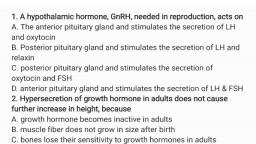
In males, LH also stimulates the testes to produce the male sex hormone,, testosterone., Gonadotropins are released in very small quantities before puberty; however,, the concentration of these hormones in the blood increases at puberty., At puberty, the gonadotropic cells of the anterior pituitary mature to increase, the level of gonadotropin in the blood., The release of these hormones is regulated by the gonadotropin-releasing, hormone released by the hypothalamus. Besides, the increased level of, gonadal hormones suppresses the release of these hormones., , , , , , , , , , 5. Prolactin, Prolactin is secreted by the prolactin cells of the anterior pituitary and is, responsible for the stimulation of mammary glands to release milk., The hormone is also produced in males, but its role in males is not yet, understood., The release of prolactin, unlike other pituitary hormones, is regulated by, prolactin-inhibiting hormone, also known as dopamine., , , , , , , , 6. Antidiuretic Hormone (ADH), Antidiuretic hormone is the second hormone of the posterior pituitary, which, regulates urine formation., The hormone is responsible for maintaining water balance and prevents, dehydration and water overload in the body., The hormone is secreted by the hypothalamus under the influence of, osmoreceptors that monitors the level of solute in the blood., When the levels of solute increase in the blood, the osmoreceptors transmit, excitatory signals to the hypothalamus to release ADH., ADH targets the convoluted tubules and collecting the ducts of the nephrons, in the kidney, causing them to reabsorb water and release more solute into, the urine., , , , , , , , , , , , 7. Melanocyte stimulating hormone (MSH):, , , It is also known as intermidin., , , , It is apparently involved with the distribution of melanin (skin pigment produced by, melanocytes) in combination with the ACTH., , Functions of Pituitary Gland, The following are some of the important functions of pituitary glands:
Page 11 :
1. The pituitary gland is called the master gland as it controls and regulates the, activity of almost all other endocrine glands in the body., 2. Hormones of the pituitary gland are essential for the normal functioning of, different organs and systems in the body., 3. The growth hormone of the anterior pituitary regulates cell division and, differentiation of different organs, especially bones and skeletal muscles., 4. The gonadotrophic hormones are essential for the proper development of the, reproductive system in both males and females., 5. The hormones of the posterior pituitary are essential during childbirth as well, as post-childbirth., 6. The pituitary gland acts as a connective link between other endocrine glands, and the nervous system (hypothalamus) in the body., , Diseases and Disorders of Pituitary Gland, The disorders and diseases associated with the pituitary gland are usually due to, the hypersecretion or hyposecretion of the hormones., The following are some of the disorders associated with the pituitary gland and, its secretions;, , 1. Gigantism, , , , , , , , , , , Gigantism is observed in children due to the excess of the growth hormone,, causing the epiphyseal cartilages of long bonds to keep growing., Gigantism is the most prominent in the bones of the limbs and extremities,, where an individual can grow up to 2.1 to 2.4 m in height., The increased secretion of growth hormone from the anterior pituitary is due, to the excess release of growth hormone-releasing hormone by the, hypothalamus., It might even cause enlargement of the internal organs and the formation of, excess connective tissue mass in the body., Even though gigantism results in abnormally large limbs, the body, proportions remain normal., , 2. Acromegaly, , , , , Acromegaly is similar to gigantism except that the increased secretion of, growth hormone takes place after bone ossification., The condition is characterized by abnormally thick bones along with the, thickening of soft tissues.
Page 12 :
, , , , Acromegaly is most prominent on the facial bones in the form of excessive, growth of the lower jaw and enlarged tongue., Unlike gigantism, the body of the individual doesn’t remain proportional., , 3. Ischemic necrosis, , , , , , , Ischemic necrosis is a condition caused due to the hypofunction of the, anterior pituitary and the deficiency of hormones., Usually, intense hypotensive shock results in ischemic necrosis, which can be, characterized by effects like deficient stimulation of the target glands and, deficiency of the respective hormones., The overall effect of the condition depends on the degree of pituitary, necrosis and the extent of hormone deficiency in different glands., , 4. Pituitary Dwarfism, , , , , , , , , Pituitary dwarfism is caused by the deficiency of the growth hormone and, other anterior pituitary hormones during childhood., The body of the individual is smaller than usual, but the body remains, normally proportioned. The cognitive and behavioral development of the, individual remains unaffected., If the deficiency is followed by the deficiency of gonadotrophin hormone,, puberty will be delayed, which affects the reproductive health of the, individual., The condition arises due to the deficiency of the growth-stimulating hormone, from the hypothalamus., , 5. Frohlich’s syndrome, , , , , , , , , The condition is caused due to hypopituitarism characterized by the, decreased release of all pituitary hormones., Bu the condition is most commonly observed with a deficiency of growth, hormone, follicle-stimulating hormone, and luteinizing hormone., Some of the common features include reduced growth, delayed sexual, development, and obesity in females. Some individuals might even develop, learning disabilities., The primary cause of the condition is often associated with the formation of, tumors in the anterior pituitary or the hypothalamus, but in many cases, the, cause is known., , 6. Diabetes insipidus, , , Diabetes insipidus is a rare condition caused due to the hyposecretion of, antidiuretic hormone by the posterior pituitary.
Page 13 :
, , , , , , The most common cause of the condition is the failure of the renal tubules to, respond to the hormone., The deficiency of the hormone results in the lack of reabsorption of water in, the renal tubules, resulting in dilute urine., The condition can lead to severe dehydration if an appropriate amount of, water is not taken to maintain the water balance., , 7. Pituitary adenoma, , , , , , , , , One of the most common diseases associated it the pituitary gland is a, pituitary adenoma. In this condition, tumors are observed in the sellar region, of the gland., The tumors are classified as microadenomas (size less than 10 mm) and, macroadenomas (size more than 10 mm)., The larger tumors can compress other organs of the area, which might create, other severe conditions., These are mostly asymptomatic or exhibit mild headaches.